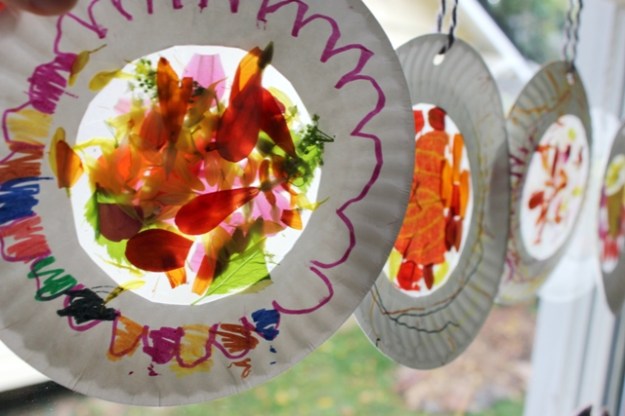
 Here are a collection of fun toddler activities, crafts, and books related to autumn.
Songs to Sing / Rhymes to Say
Apple Tree
[Miming gestures here; video here]
Way up high in the apple tree.
Two little apples smiled at me.
I shook that tree just as hard as I could.
Down came the apples
and mmm they were good.
5 Little Pumpkins
http://wiki.kcls.org/index.php/Five_Little_Pumpkins
Five little pumpkins sitting on a gate.
The first one says, “Oh, my. It’s getting late!”
The second one says, “There are witches in the air!”
The third one says, “But I don’t care.”
The fourth one says, “Let’s run & run & run.”
The fifth one says, “We’re ready for some fun!”
Ooooooooooo went the wind, and OUT went the light,
and five little pumpkins rolled out of sight.
Pumpkin, Pumpkin (tune of Twinkle Twinkle)
Pumpkin, Pumpkin on the ground (crouch down)
How’d you get so big and round? (stretch arms to make a circle)
Once you were a seed so small (pretend to hold a seed)
Now you are a great big ball (make a big circle with hands)
Homemade Toys to Make:
Play-dough: There are LOTS of recipes for Play-dough available online. Here’s one I like: Mix 1 1/2 cups water and 1/2 cup salt. Heat to almost boiling. Remove from the heat and add 2 TBS. vegetable oil, 2 TBS alum*, food coloring. Cool & knead in 2 – 3 cups of flour.
* You can find alum in the spices section of the grocery store. Or you can substitute cream of tartar.
Felt Tree: Cut a tree, leaves & apples from felt. Let your child stick them to a felt board.
Activities / Games to Play:
Sticky spider web. Use painter’s tape / masking tape to make a spider’s web across the doorway. Your child can throw things at the tape and see if they stick. Try cotton balls or wadded up newspaper or whatever small lightweight things you have handy. Source
Leaf Hunt. Go for a walk and collect fall leaves. Talk about the different colors and the different shapes, count how many points they have, compare small to large, and notice smooth edges versus serrated edges. Point out which tree each leaf fell from.
Pumpkins and golf tees: Get a pumpkin, golf tees, and a toy hammer. Kids ages 3 and up can hammer the tees into the pumpkin. For toddlers, you can hammer several golf tees in – they can take the tees out and put them back in – great small motor practice!
Crafts to Do:
Leaf Suncatchers. (See photo at top of page.) Take the prettiest leaves from your leaf hunt and sandwich them between two layers of clear Con-Tact paper. Frame (if desired) with a paper plate rim or construction paper, and hang in the window. Source
Sticky Apple Tree. Cut out a tree shape from brown contact paper for the trunk. Cut green paper leaves and red paper apples (or use green and red pompoms). Hang the contact paper on the wall, with the sticky side facing out. Let your child stick “leaves” and “apples” to the tree, take them off the tree, and stick on again. Inspiration
Apple prints. Put some paint on a tray. Cut an apple in half. Show your child how to make prints by dipping the apple in the paint, then pressing it on to a paper. Source
Pumpkin finger puppets. Make finger puppets to go with the five little pumpkins rhyme. You could make them with playdough or felt or mini post-it-notes stuck to your fingers.
Books to Read:
- Owl Babies
 by Martin Waddell. One of our favorites!! A sweet story about three baby owls who worry when mama goes hunting. But of course mama comes back!
- Five Little Pumpkins
 by Dan Yaccarino. An illustrated edition of the finger rhyme above.
- Apples and Pumpkins
 by Anne Rockwell. Simple book that features fall themes like apple picking, jack-o-lantern carving, and trick or treat.
- Apple Farmer Annie
 by Monica Wellington. For kids 4 and up. Talks about apple picking, counting, sorting, baking, and selling at a farmer’s market.
- The Very Busy Spider
 by Eric Carle. Lots of farm animal noises & repetitive lines for kids to join in on.
- The Itsy Bitsy Spider
 by Iza Trapani. Builds on the classic and familiar song as the spider goes on further adventures around a house
Printable handout of these fall activities here.
More ideas (and source citations) for this topic at: http://www.pinterest.com/bcparented
For my full collection of theme-based “Fun with Toddlers”, click on “Fun with Toddlers series” in the right hand side bar. Or if you would like them in printable handout form to share with students, click here.
photo at top of page from: http://artfulparent.com/2011/09/fall-nature-suncatchers.html

 i like this infographic from the Nature Kids’ Institute, which gives “recommended daily allowances” style of recommendations for getting your child outside. (They have a free five part series of short videos on “Let’s Bring Childhood Back Outside.”)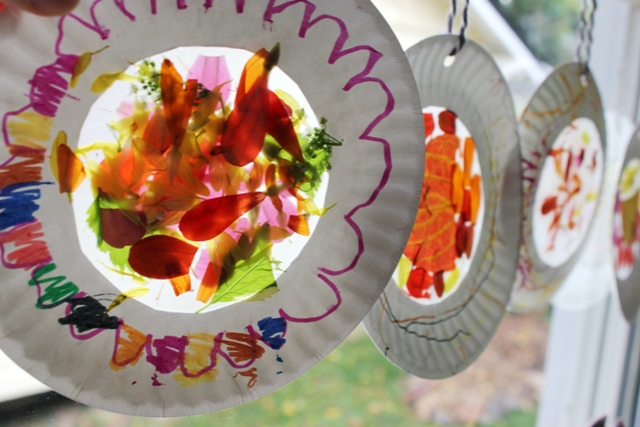
 by Martin Waddell. One of our favorites!! A sweet story about three baby owls who worry when mama goes hunting. But of course mama comes back!
 by Dan Yaccarino. An illustrated edition of the finger rhyme above.
 by Anne Rockwell. Simple book that features fall themes like apple picking, jack-o-lantern carving, and trick or treat.
 by Monica Wellington. For kids 4 and up. Talks about apple picking, counting, sorting, baking, and selling at a farmer’s market.
 by Eric Carle. Lots of farm animal noises & repetitive lines for kids to join in on.
 by Iza Trapani. Builds on the classic and familiar song as the spider goes on further adventures around a house
 More Good Days with Kids