Author Archives: Janelle Durham

Unknown's avatar

About Janelle Durham

I am a parent educator and social worker, and teach music and science to children age 1 - 8.

Fun with Toddlers: Pet Theme

This month’s theme was Pets, especially dogs and cats. Here are some fun pet-related things to do with your toddler:

Outings to Go On: Visit a pet store. Look at the fish, or the rodents, or the birds or reptiles. The pet store is just as educational as the zoo, and it’s free! It’s a great chance to talk to your child about animals, and to practice observation skills: “Can you find a yellow fish?” “Which is the biggest bird?” “These are all reptiles. What makes them different from the rodents we just looked at?” If you don’t have a pet at home, don’t feel like you have to buy anything. Most pet stores are used to parents coming in and hanging out with their children for a while. If you want, you could buy a bag of pet food to donate to the store’s pet food drive. (Look for a donation bin at the front of the store.)

Toys to make for your child

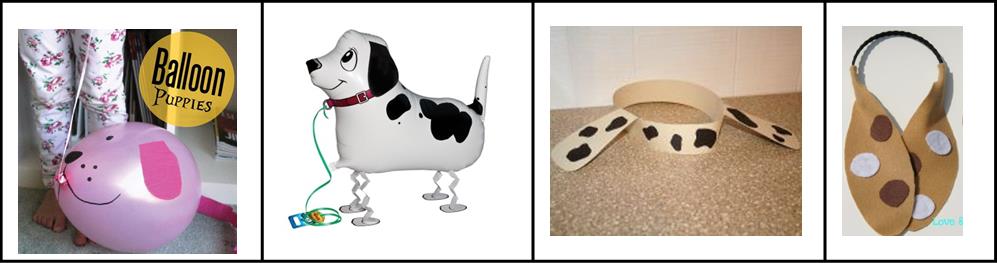
Balloon Puppies. Take a balloon. Blow it up. Draw animal features on, add a string and you have an instant pet for your child to take on a walk! If you want to be fancy, you could use a helium balloon and fasten on “legs” made of accordion-folder paper – the home made version of the toy pictured.

petsDoggy ears (or kitty ears). Make a circle of paper that fits around your child’s head and add ears, or turn a child’s headband into the base for ears.

Imagination Games to Play

The Dog House. Take a big cardboard box. Cut an arched doorway in it. Decorate it like a dog house. Add things to represent dog food dishes, dog bones, dog toys and more. Add stuffed puppies if you have them, and then let the play begin.

Pet Store. Set up a pet store with stuffed animals, and accessories for animals (food bowls, collars, treats, toys, and so on, and go shopping.

Songs to Sing / Rhymes to Say

Where has my little dog gone?
Oh where, oh where has my little dog gone?
Oh where, oh where can he be?
With his ears cut short and his tail cut long,
Oh where, oh where can he be?

How Much is that Doggie in the Window
How much is that doggie in the window? The one with the waggly tail?
How much is that doggie in the window? I do hope that doggie’s for sale.
[Search on YouTube for many videos of this song!]

I have a cat
I have a cat (stroke your fist); My cat is fat (arms form a stomach)
I have a cat (stroking); My cat wears a hat (hands on head)
I have a cat (stroking); My cat caught a bat (clap hands together above head)
I have a cat (stroking) Purrrrrr, Meowwww

Circle Time Ideas

Poor Kitty. There is a game that elementary school aged children love called “Poor Kitty”. One person pretends to be the kitty and goes around a circle, trying to make the other kids laugh (by purring rubbing against them, licking them…). The others are supposed to keep a straight face and just pet the “cat” and say “poor kitty” without laughing. You can adapt this for a one-on-one game with toddlers or preschoolers. (Though they probably won’t get the whole “you’re not supposed to laugh” idea.)

Puppy puppet. Bring a puppy puppet and some dog treats (or dog toys.) Give a treat to each child. Bring the puppy around the circle and have each child give the dog a treat. Have fun with pretending to be a happy puppy.

Purple cat, what do you see. Make a felt board collection of pets – brown dog, black cat, yellow bird, gold fish, etc. Give one animal to each child. Do the rhyme, similar in style to Eric Carle’s Brown Bear. Go around the circle to each child in turn, having them place their animal on the felt board. So, if you started with brown dog, and the first child has a black cat, you’d say “Brown Dog, Brown Dog, what do you see? I see a black cat looking at me.”

Books to Read

Roly-Poly Puppies by Elaine Moore. A counting book with a nice rhyming structure.

Pete the Cat by James Dean. There are lots of fun Pete books, but the best is I Love My White Shoes. (Check out our Pinterest page for lots of activities to go with Pete books!)

Aggie and Ben by Lori Ries. Ben’s dad takes him to the pet store to pick out a pet.

More ideas (and source citations) at: www.pinterest.com/bcparented

For my full collection of theme-based “Fun with Toddlers”, click on “Fun with Toddlers series” in the right hand side bar. Or if you would like them in printable handout form to share with students, click here.

Motivation, Punishment and Reward

starsOur kids are always learning from us. They learn by observing as we role model a variety of skills, they learn by interacting with us as we play, and they learn when we actively “teach” them. There are many things we teach casually, and aren’t too worried about the exact timeline when our child picks up the idea. Things like covering your mouth when you sneeze, saying please, or putting their dish in the sink. There are other things though that we may have a sense are REALLY IMPORTANT, or that we believe MUST BE DONE BY A CERTAIN AGE and those are the things we tend to stress about our child learning. Potty training and reading both fit in this category for many parents. What happens when there is something we really want our kids to learn?

The first thing I’d ask you to consider: Is this skill developmentally appropriate? Can we typically expect a child of this age to learn this thing? Once you’ve learned it is appropriate, then you can consider teaching it.

Motivation

There will be many times in your child’s life where you want them to do something they don’t want to do, or there’s a skill you want them to learn because it will be valuable in the long run, but they aren’t particularly interested in learning at this moment in time. How can you help them find their own internal motivation? Potty training is one of our first chances to explore this challenge, so we’ll use it as our example.

First, consider your motivations. Why do you want your child to learn this new skill? Here are some common reasons and some examples from the potty training process.

  • Outside demands: Is it pressure from a pre-school or daycare that requires it by a certain age?
  • Peer pressure: Is it because other families are doing it, and you’re feeling peer pressure to keep up? The media and social media can also create this pressure of what our child “should” do.
  • What you do or don’t want to do yourself: Are you just tired of changing diapers? Or tired of paying for diapers? Or washing them?
  • What you want for your child: You want to encourage your child toward independence in all areas?

The clearer your motivation, and the stronger your motivation, the more time and energy you’re likely to be willing to commit to the process. Some parents actually find that they’re not actually motivated to teach a skill. For example, the diaper routine might be working for their family’s schedule and commitments. This is fine for a while, but at some point (maybe three years old for potty training?) it’s time to help your child move forward.

Then ask yourself: What are your child’s motivations? Try to view things from your child’s perspective and understand why they might not be as interested in learning a new skill as you are in teaching it.

In our potty training example: Why might a child prefer to continue to use diapers? Some ideas: they’re used to eliminating in their diaper – it’s comfortable and familiar. They may be in a state of regressing a bit, and not feeling bold enough to be ‘a big kid’. They may not like interrupting play time with trips to the potty. They might be frightened of the potty. They might be rebellious toddlers, defying their parents ‘just because.’ They might have a desire to be completely in control of their bodies. They might also have been constipated at one point, and found that it hurt to have a bowel movement, and be afraid of repeating that experience.

Then ask: What might motivate your child to use the potty? Some options are punishment or rewards…

Punishment?

It’s best not to use punishment. Punishment can definitely work in the short term, in that a child who is punished for doing something (e.g. eliminating in a diaper) may well try hard to avoid that punishment in the future (e.g. by using the potty). But it could also shame them and damage their self-esteem. And it also means that they’re doing something only to avoid punishment – not for any positive reason.

On the other hand, logical consequences are appropriate, as long as they are done without shaming. For example, having them help with clean-up after an potty-training accident allows them to see the consequences. Or taking back the big kid underwear, saying ‘it looks like you’re not ready for this yet… let’s go back to diapers for a while’, helps them to see what the goal is and what the reward is of accomplishing it.

Rewards

Many people use a sticker chart, or other reward system when they want to shape behavior. The general idea is: talk with your child about what you want them to do, tell them that when they do it they’ll get a reward. Then involve them in setting up the system: pick out the reward, or make the chart, etc. For rewards, it’s best to choose something cheap and easy to obtain, like a sticker. (Not candy.) For a toddler, the reward needs to be immediate for them to understand “when I do this action, I get this reward.” Older kids can work toward a bigger reward over time – “if I do all my chores this week, we’ll watch a movie together on Friday night.”

Make sure they are clear about what the behavior is you are working on, and be consistent about the response. For example: “if you sit on the potty, you get a sticker whether or not you pee there” may be a good first level. Later on, when they’ve mastered that step, you ask more of them: they need to actually pee or poop to get the sticker. You may choose to also have a cumulative goal to work toward, like “once you’ve pooped in the potty 10 times, you will have filled the chart, then you get a new toy.” It’s important to think of these rewards as short-term reinforcement, not an on-going system! Over time you will phase out stickers completely. Rewards can be a very effective tool for toddlers. However, you don’t want to over-use rewards! And you want to make sure the focus is on accomplishing the goal for its own sake, not on just doing something so they get a reward.

Expectations

If you regularly say “If you do this [bad thing], then I will punish you by [negative consequence]”, your child might come to feel that you expect him to do bad things and you look forward to punishing him. Instead, try “When you do this good thing then you get this [positive consequence].” Make sure your tone of voice implies that you have confidence that they will do the good thing because that’s what you expect of them.

Praise

When your child accomplishes something for the first time, definitely praise them. If it’s a HUGE accomplishment, make the praise really big. But honestly, if it’s small accomplishment, the praise can be just a quiet observation that they accomplished it. As they start repeating a skill again and again, on the way to mastery, we can fade out our praise. It feels silly and a little embarrassing to get praised for something you’ve mastered (as you know if your child has told you something like “You peed in the potty! Good job mama!”) Praise them for what they have done, and the work it took to do it.

Read more about praise here.

The Downsides to Rewards & Praise

Critics of rewards say they are a short-term solution to gain compliance with parental requests, not a long-term path to instilling the behaviors, qualities, and values you want your child to attain. And, research has found that kids who are raised on a series of rewards can become more self-centered, materialistic, reward junkies looking for their next fix from parents who can become exhausted by coming up with new rewards.

Research has also shown praise can backfire. If we continually praise our child for being “smart”, “beautiful” or “strong”, then they may be afraid to take risks – not wanting to do anything that they might not succeed at… fearing that then we will realize they’re not so smart or strong or beautiful after all – and thus not lovable. Also, when a child is vigorously praised for every little thing she does, she may not know whether praise is genuine.

Experts recommend that when you want your child to learn a new skill, think about what it is you are really trying to teach and stay focused on that. Work with your child to find their motivation for learning this new skill. As they make attempts along the way, give specific praise for their efforts and their commitment, and specific recommendations for how they might improve. The emphasis is more on the process than the product, more on the work they do than on the “talent” they have. When they accomplish a goal that they set, then it is totally appropriate to celebrate that with something (Stickers? M&M’s? A special toy?) as long as the emphasis is on the value of the accomplishment itself, not on having done whatever they needed to do just to earn the reward.

Sources on Internal Motivation, Rewards and Praise

photo credit: Pewari via photopin cc

My Child Won’t Poop in the Potty!

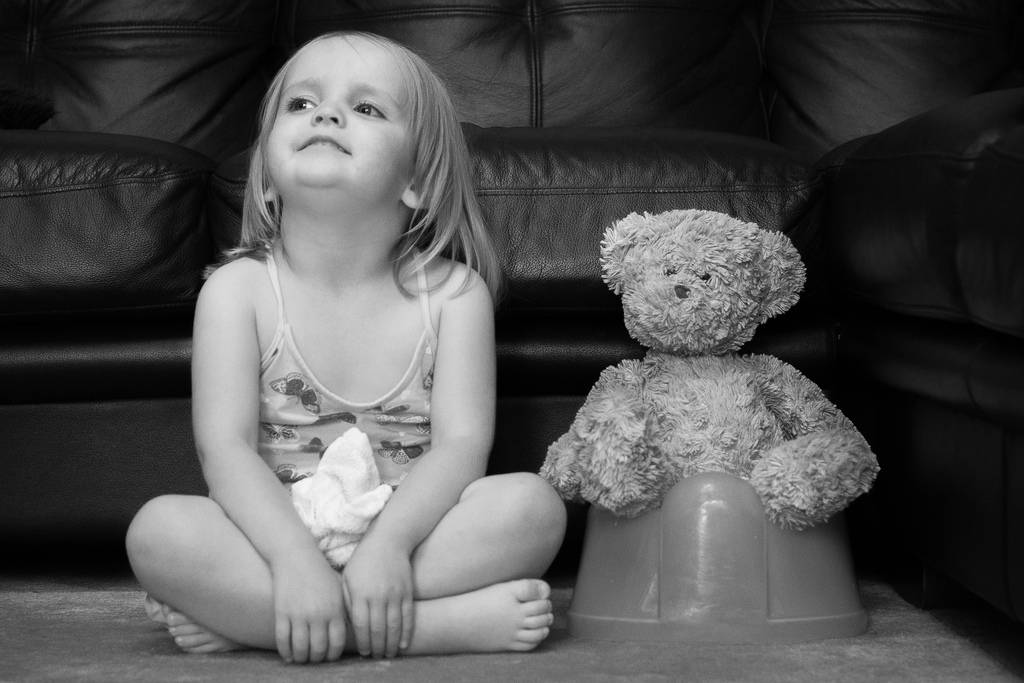
NoPottyDuring the potty training process, about 20% of children go through a phase of refusing to use the potty at all, or refusing to poop in the potty. For some the phase lasts a month or so. For others it can be a year. This is called “Toilet Refusal for Stool Only.” One scenario is a child that asks for a diaper at nap time or bed time, goes in their room and poops in the diaper, and then asks to be changed. Clearly, they have bowel control, and are making a very conscious choice about when and where to poop. It’s just not the choice you wish they were making.

An important note here: I’m not talking about “stool holding” here. That’s a child who refuses to poop at all, anytime, anywhere. That’s a different issue and it’s a medical issue that can cause constipation and bowel impaction and requires different treatment (see here).

I’m talking about kids who have regular, normal poop once or twice a day, just not in the potty. And I’m especially talking about a child who you know is developmentally capable of pooping in the potty because they’ve done it in the past… they’re just not doing it anymore.

So why does a child do this?

There are lots of proposed reasons. Most won’t make sense to you as an adult, but they may be what your child is feeling.

  • Fear of Pain: They may believe pooping in the potty will hurt. This sometimes follows an episode of constipation, when it did hurt. It’s hard for them to understand that the pain won’t always happen when they poop on the potty.
  • Fear of Falling In. Fear of being Flushed down the Toilet. Using a small, non-flushing potty rather than sitting on the big toilet may help with this one.
  • Fear of Losing a Part of Themselves: Some boys fear that if the poop falls out of them and into the potty, then maybe their penis could too. I also know of a girl who was terribly frightened the one time she saw the poop coming out while she was on the potty and then getting flushed down – she feared that part of her was gone forever.
  • Hate the sound of flushing. Some children are very frightened of a loud flush. Sometimes it helps if they are in charge of flushing so they know when it’s coming. Sometimes it’s better to let them leave the room / the stall before you flush. On auto-flush toilets in public bathrooms, you can cover the sensor with your hand or a post-it note until they’re done.
  • Desire for privacy. If you’re always with them in the bathroom, and they always poop when they’re alone, try just giving them a little privacy on the potty! (On the other hand, some kids want company in the bathroom and if you’ve been trying to send them in on their own to give them privacy, maybe they’d rather have you there.)
  • Sensory issues. They’re used to the poop staying next to them as it fills the diaper. Feeling cold air on their bottom and feeling the poop fall away from them may be uncomfortable to them. An intermediate step may be to have them sit on the potty with their diaper on until they can poop there, and then remove the diaper.
  • Shame. They’ve been taught that poop is disgusting and are ashamed of it. In one study, they encouraged parents to never use negative terms for feces, and – before they start potty training – to praise children for pooping successfully in their diaper. Some of these childre still went through a period of refusing to poop in the potty, but it was a shorter-term problem than it was for the control group in the study.
  • Power struggle. Many children go through periods of rebellion, and if they learn that this potty refusal really pushes your buttons, they may keep doing it to get a reaction.
  • Autism, developmental delay, or physical challenges can lead to this issue.
  • Emotional trauma or sexual abuse.
  • Temperament or Personal Preference. Some kids just like to use their diaper and see no reason to change.

Which one applies to your child? You may be able to guess, or if your child is old enough to talk about it, then ask them in a really non-judgmental open-ended way. “I notice that you always poop in your diaper and you won’t try pooping in the potty. Why is that – tell me more.” They may be able to tell you.

How NOT to respond…

Don’t punish. Don’t scold, shame, or publicly humiliate them.

Don’t show a lot of emotion about it. Be very matter-of-fact. “It looks like you pooped in your diaper again. Remember, I’d like you to use the potty. Let’s go get you changed.” Be bland and boring during the diaper change.

How do you get a child to poop in the potty?

It’s hard to make someone poop on command! And no, threats don’t work either, because when we’re scared, our sphincter muscles tighten up and it gets harder to poop.

What can you do? Here are some suggestions – don’t feel like you have to try them all. Some will feel right for you and your family’s situation. Others won’t.

  • Ask them why they don’t want to poop in potty. Address their fears. If they have any of the fears listed above, talk it over with them. Don’t expect to be able to just say “that’s a silly irrational fear” and have it go away. Take it seriously, validate it, ask them to help you figure out a plan for preventing that thing from happening.
  • Give them some motivation. Consider a reward system. Stickers? Big kid underwear? A cool toy they only have access to on days when they poop in the potty?
  • Withhold diapers. “Oops, we ran out of diapers. I guess you’ll have to use the potty.”
  • Or combine those two: say something like “This Sunday is our Happy No More Diapers Day. From then on, I want you to always poop in the potty. And hey, check out this cool doll house I got you. As long as you remember to poop in the potty, you can have it. If there’s a day when you ask for your diaper back, that’s fine. I’ll just put the dollhouse away for a while.”
  • Give up for a while. Give control back to them. Say “When you’re ready, you’ll poop in the potty. Until then, I will change your diaper when you poop.” And then just go on with your life without fretting about the potty. Once a week, check in with them to see if they’re interested in giving it a try. If they say no, say “OK, I’ll ask again in a week.” Try to just relax and let the worry go in between those checks. In one study where parents “gave up” on potty training, then 24 out of 27 kids started using the toilet spontaneously within three months.

Constipation

Your child may have some short-term issues with constipation. You should expect to see at least one stool a day, about the size of a small banana, and fairly soft. If your child is only passing small hard stools that hurt to poop, that’s constipation. Make sure they drink plenty of water, eat plenty of high fiber foods, and get lots of physical activity to help making bowel movements regular and easy to pass. If constipation persists or recurs often, check in with your child’s doctor.

Sources:

How to Deal with Your Child’s Stool Toileting Refusal; Toilet Training Problems; Toilet Training and Toileting Refusal – a Prospective Study; Toilet Training Resistance.

photo credit: Darren W via photopin

When should kids learn to read?

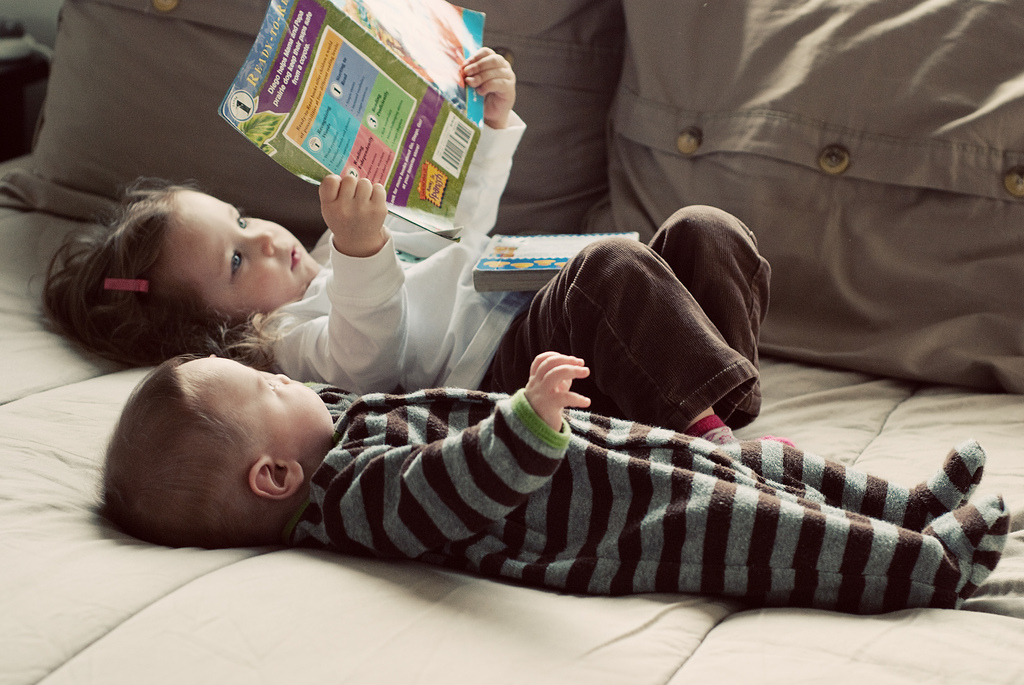
readThe Alliance for Childhood and Defending the Early Years just released a report called Reading Instruction in Kindergarten – Little to Gain, Much to Lose, discussed in a Washington Post article titled “Requiring kindergartners to read — as Common Core does — may harm some.” This post looks at what we know about children and early literacy learning.

When I was a child in the 60’s, I came into kindergarten knowing how to read – I could easily read any picture book. I was the only real reader in the class – but I came from a big family of early readers. By the end of the year, my classmates were all expected to have their alphabets down, and more kids were reading. By the end of first grade, most kids were reading. Those who weren’t got a little extra help in second grade and were caught up by the end of the year. That may reflect the normal range in developmental capabilities.

But today’s kindergartners are being taught to Common Core standards. In kindergarten, there are over 90 standards kids are expected to meet, including:

  • Recognize and name all upper- and lowercase letters of the alphabet.
  • Associate the long and short sounds with common spellings (graphemes) for the five major vowels.
  • Use the most frequently occurring inflections and affixes (e.g., -ed, -s, re-, un-, pre-, -ful, -less) as a clue to the meaning of an unknown word.
  • [And, by the end of the year:] Read emergent-reader texts with purpose and understanding.

Is this do-able for some kids? Absolutely. My kids all read before kindergarten. My youngest just turned 4 and has already mastered the standards I just listed. (And believe me, it’s not because we drilled him with flashcards or worked with worksheets for hours… we’re much too lazy as parents to do that! We just did simple things to create a good environment for literacy learning, and he took it from there.)

But NOT ALL KIDS are ready to read at this young age!

Kids develop in predictable patterns, but not at exactly the same rate. And they’re stronger in some areas at any given time than in others. For example, although my kids were early readers, they also each had areas they were “behind on” for their age, which were the challenges they needed to work on in kindergarten.

Dr. Arnold Gesell found that all children go on the same path of development; however, some go faster, some go slower, and all have spurts and set-backs
along the way. The obvious example is the age that children learn to walk. Some children learn to walk as early as nine months, some as late as 15 months. But that is all normal and we all agree that the early walker is not a better walker than the later walker. … Some children learn to read at age three or four years, others not until seven years or later. That range is quite normal. The most compelling part of the reading research is that by the end of third grade, early readers have no advantage over later readers. Some later readers even go on to become the top in their class. Reading early is not an indicator of higher intelligence. In fact, children at the top of their class in kindergarten only have a 40 percent chance of being at the top of their class at the end of third grade.

When we focus on academically based standards, it’s hard for kids who aren’t developmentally ready for that, but it’s also hard for kids like mine who needed skills that weren’t necessarily on the list of things a teacher is now “supposed” to teach. “In a survey… of early childhood teachers… 85% of the public school teachers reported that they are required to teach activities that are not developmentally appropriate for their students.”

And when teachers are asked to teach non-developmentally appropriate content, they have to do it in non-developmentally appropriate ways.

We hear increasing reports of kindergartens that use worksheets and drills, rely on lengthy whole-group lessons, and require teachers to frequently pull children out of the classroom to administer assessments. A parent recently wrote: “My 5-year-old son started Common Core Kindergarten this year in California. Even though it’s only been two months he is already far behind. … [W]e are required to do … [worksheets] four nights a week. It’s the same boring thing over and over again… I know he’s not stupid but I’m being told in not so clear terms that he is. It’s very disheartening.”

Drills and worksheets are not the way kids learn.

Well, in the short-term, they can be. Direct instruction CAN help children memorize specific facts and learn specific skills, but it doesn’t foster the curiosity and creativity that can be beneficial for learning in the long run. (Learn more in this article on “Why Preschool Shouldn’t Be Like School.”) And, the “boring” work can drain the passion for learning from our kids, which I believe is key for long-term academic success. And, for kids who aren’t developmentally ready for the work, it can make them feel stupid. I know of boys who weren’t ready to read at age 6 and 7. They learned at that age that they were “stupid” in school subjects and continue as young adults to think of themselves that way.

The report states: “We could find no research cited by the developers of the CCSS [Common Core] to support this reading standard for kindergarten… of the people on the committees that wrote and reviewed the CCSS, not one of those individuals was a
K-3rd grade teacher or an early childhood professional.”

What does the research show?

 There is no solid evidence showing long-term gains for children who are taught to read in kindergarten. In fact, by fourth grade and beyond, these children read at the same level as those who were taught to read in the first grade.

So, what is developmentally appropriate for preschool and kindergarten? Play-based learning.

Children learn best when they are engaged in activities geared to their developmental levels, prior experiences and current needs. As they construct their ideas through
play and hands-on activities that make sense to them, children’s knowledge builds in a gradual progression that is solid and unshakable. They build a foundation of meaning that provides the basis for understanding concepts in language, literacy, math, science and the arts. In active learning, their capacities for language development, social and emotional awareness, problem solving, self-regulation, creativity, and original thinking develop, transforming them into effective learners.

Being able to read well will also depend on the strength of a child’s oral language development. Active, play-based experiences in the early years foster strong oral language in children. As children engage in active learning experiences and play, they are talking and listening all the time. They attach words to their actions, talk with
peers and teachers, learn new vocabulary and use more complex grammar. As they build, make paintings, and engage in imaginative play, they deepen their understanding of word meanings. As they listen to and create stories, hear rich language texts, sing songs, poems and chants, their foundation for reading grows strong.

What’s the evidence that play-based preschool and kindergarten works in the long-run?

In one study, in the third grade there was little difference between students who had been in play-based preschools versus academic achievement programs. By 6th grade, the kids from the academic preschools earned lower grades than those who were in play-based preschools. A German study in the 70’s compared kids from play-based vs. academic preschools. In fourth grade, those from play-based programs excelled “on all 17 measures, including being more advanced in reading and mathematics and being better adjusted socially and emotionally in school.” So, they’re not only successful academically, but also socially. In an American study from the 60’s, children from impoverished households were assigned to either play-based preschools or to a scripted, direct-instruction approach. There were similar short-term gains for all children in the first year. But at age 23, there were significant differences. 47% of the kids from the direct instruction classroom needed special education for social difficulties versus 6% of the play-based alumni.

When looking for preschool or kindergarten for your child, you can look for play-based options. If they are in a kindergarten that follows Common Core standards, you can look for ways to balance that out at home with lots of child-directed free play. You can create a literacy-rich home environment without pushing reading. If your child is ready to read young, they will do so. If they’re not ready, they won’t feel stressed or stupid.

If you are the parent of a toddler, don’t feel any pressure to teach your child to read. But, you can create an environment full of literacy materials that show reading is exciting and fun.Read my ideas on this or follow this lead:

[In play-based settings] Teachers employ many strategies to expose children to rich oral language and print —without bombarding or overwhelming the child. These may include telling stories, reading picture books and big books, singing songs and reciting poems, reading from posted charts (using pointers to read along), drawing and writing with invented and conventional spellings, taking dictation from children, and helping children write their own stories. In organic and meaningful ways, teachers often use print — labeling block structures, cubbies, and interest areas, writing recipes, transcribing the children’s stories, and making charts for attendance or classroom jobs.

photo credit: ThomasLife via photopin cc

Living Up to Expectations

This post is about living up to expectations. Children… well, all human beings really… are good at doing what’s expected of them. But when the people around a child have limited expectations, they limit the possibilities for that child.

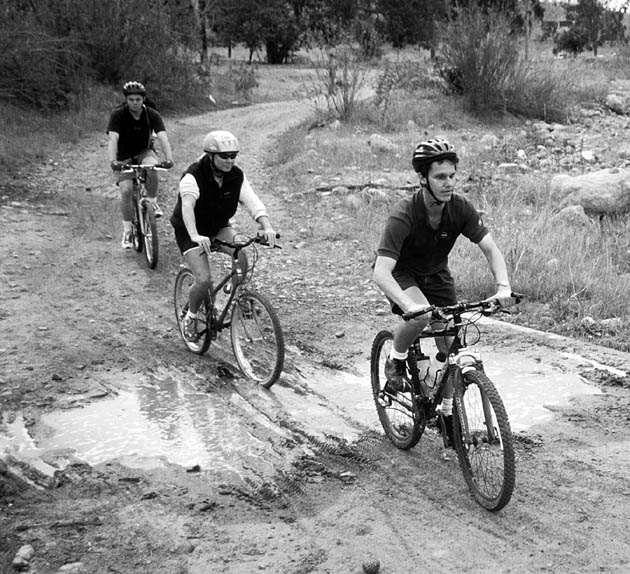
This week on the radio show This American Life, they had an episode called Batman. (Listen to it here. Or read the transcript.) They told the story of Daniel Kish, who has been blind since he was a toddler. The picture shows him – riding a bike. He navigates the world – hikes the woods, rides his bike, walks through cities – using echolocation. He clicks his tongue, and listens to how sound bounces back to determine what objects are nearby. This skill allows him to easily move about independently, with few limitations.

In the radio show, they interview author Robert Scott, who argues that blindness is a social construct. When we, as a society, have low expectations for what a blind person can accomplish, we limit what they can accomplish. He tells a story of a man who worked at a paint factory, then lost his vision. His co-workers told him: hey, we’d love for you to still work here. Go to an organization that serves the blind and get some training and come back. But the organization basically told him “blind people don’t do that” and offered him placement in a sheltered workshop for the blind. Robert Scott met him years later begging on a street. That’s what many people expect blind people to do.

This radio show was particularly striking to me because I have one leg. Technically, by just about any definition you can come up with, that makes me handicapped. But, I don’t really think of myself that way often. Certainly in my experience, handicaps are a social construct. I suppose I have to adapt things to do them, but truthfully, I rarely notice that I have to do anything differently than other people(other than finding a place to lean my crutches when I sit down). It doesn’t really limit my activities in any notable way. And I don’t see any reason why it should.

And yet… There’s a male amputee who hangs out on the 45th street on-ramp to I-5, asking for money, with his pant leg folded up to reveal his artificial leg and a sign saying he can’t work. There’s another one who hangs out by Bellevue Square. Same fashion choice. Same sign – “can’t work.” Here’s the thing. I seem to always see them as I’m driving to or from my work!

I just can’t understand why they think they can’t work. I have never had a problem finding a job. Now yes, I grasp that I came from a middle class background and went to a good college and grad school, and this helps in the job search. And I get that their job experience might be in fields that are harder to do with one leg. But what I don’t understand is their belief system. What is it that convinces them they can’t work?

Expectations. Handicaps as a social construct.

So how did I miss out on this societal message? I lost my leg to cancer when I was 15. I grew up in a military family in Wyoming which is a culture known for some fierce independence and a sincere desire never to be a burden to others. So, I had that influence going in to the experience. But also, after my amputation, I don’t remember ever really getting the message from anyone that I was now to be considered handicapped and incapable of an independent life. Now, maybe someone thought that about me along the way, but I never noticed if they did. It was just assumed, as far as I knew, that I would get healthy again, go back to high school, go on to college, go on to work, and marriage, and kids – all the same things that had been expected of me when I had two legs. There was no reason to change any of those expectations.

Since I’m a parent educator, and this is a blog about parenting, of course, I come around to thinking: And what lesson is there in all this for parents? And not just parents of kids with physical handicaps, but really for all parents.

Our children live up to our expectations. Maybe not always. Maybe not every day. And maybe not in every precise detail if you’re a person who gets really specific in your expectations… But over the long run, they live up to our big picture expectations.

I can’t just say “I expect my four year old to clean up his toys today” and then have that magically become reality. And I never set for my older ones a really specific expectation, like “I’ll only feel successful as  parent if she goes to Princeton and majors in physics.”

But I can tell you that over 21 years of parenting my eldest and 17 years with my second, that they have, in general lived up to our big picture expectations of them. They’re really good kids, with a strong ethical grounding, compassion for others, commitment to excellence and passion for learning.

We did have the broad expectation that they would do well in school, and go to college, and they have (well, my second child will start college next year…). “Research has shown that parental expectations for children’s academic achievement predict educational outcomes more than do other measures of parental involvement.” [Source]

I do think there’s a fine line with expectations. If we expect more of our kids than they are possibly capable of, and continually let them know that we’re disappointed at their failure to meet those expectations – well, that would be pretty miserable.

But we also don’t want to expect too little.

I confess – my oldest has done an excellent job of convincing us that she’s bad at washing dishes. So, we never ask her to do it. We just do it for her so it gets done “right.” But one does wonder how or when this pattern will ever change….

I think one of the things that limits what we ask of our kids is maybe a bit of parenting fatigue… it’s easier to do the dishes than ask her again to do them, or to show her again what we mean when we say clean…

But sometimes we try not to ask too much of our kids because we want to protect them. We want to protect them from the risk of failure.Yes, I told my children not to expect to be professional class or Olympics class athletes. Because I knew the statistical odds of them becoming that was really small, and I didn’t want them disappointed. But, did I also block any potential of them becoming that? Yeah, I did.

We also often limit our children to protect them from harm. We set limits on our expectations, and thus limits on our children because of a desire to keep them safe.

In the episode of This American Life, Daniel Kish tells this story… When Daniel was in fifth grade, he was a very independent kid – he walked to school, crossing major streets. He made his own breakfast and his own lunch. Then a new blind kid came to school. Adam. He was not independent – couldn’t do much of anything on his own. He had come from a school for the blind where people did everything for him – escorted him everywhere he went, carried his books, tied his shoes, made his lunch, brought it to him – because “blind kids can’t do those things.”

The people around Adam had done all those things for him to help him and to protect him from harm. On the episode, they interview Daniel Norris, who works for the Vermont Association for the Blind. He says that most parents of visually impaired kids have a hard time letting their kids risk trying things that “blind kids don’t do.”

Norris says “You can’t blame mom and dad for struggling and wanting to keep their child safe…They want their child to not suffer. And that’s very noble but holds the kids back.”

I try with my four-year-old to remain aware of developmental capabilities. What are reasonable things to expect of him? I try to expect that. And in the areas where he’s strongest, I stretch my expectations just a bit so he has to stretch just a bit. It’s in that pushing at the edge of his capabilities that he learns. But in the areas where he’s struggling a bit more, I try not to pressure him too much in the moment, while still holding the vision that someday he is going to get stronger in those areas too. In order for him to learn, I have to be willing to let him make mistakes, I have to let him sometimes fail so he learns how to get back up and try again. I have to be willing to let him take risks. I have to expect him to learn, change, grow, make reasonably smart choices, get a few bumps and bruises along the way, but be better for them in the long run. Because he’s likely to live up to those expectations.

On the radio show, host Lulu Miller says “And here’s where we get back to expectations. See, Daniel [Kish] thinks there is nothing amazing about him. He thinks that most blind people who don’t have other disabilities could do things like ride bikes. See, he thinks the reason that more blind people don’t [is] because the expectations that you or I are carrying around in our own heads about what blind people can do are simply way too low. Those expectations, those private thoughts in our heads, are extremely powerful things, because over time, they have the ability to change the blind person we are thinking about.”

If blindness is a social construct, and my “handicap” is a social construct, where else are we handicapping people through our beliefs and expectations… Where are you handicapping your child or other people you encounter?