Tag Archives: toys

Gift Guide: Toys to Build Toddler Brains

photo showing toys like Duplo train, Quadro climber

Parents often ask me for recommendations for “the best toys for toddlers”. It’s a little tricky for me, given that I often advocate for owning fewer toys. But, if you’d like a few special items for a child to unwrap for their birthday, Christmas, or another holiday, here are some thoughts on how to choose the best toys. I’m going to sort them into categories based on ways to build a variety of skills and multiple intelligences. (I also recommend you check out my handout on activities and free items which also help to build their brains.)

Word Play (Linguistic / Verbal Intelligence)

We go to the library a lot! And when my son was a toddler, we went to story-time at the library every week. This means we get to “try out” hundreds of books a year for free! We only buy copies of the very best. Here are my favorites for books that toddlers love, preschool level books about inventors and makers, and books that sing. (For your adult reading enjoyment, here’s my recommendations for recommended parenting books and resources for teaching STEM to kids.)

It’s also helpful to play a lot with letters: I like magnetic letters for the refrigerator (which you can use all over the house) and duplo letters.

I also recommend a Kindle Fire tablet with Kindle FreeTime installed, which includes lots of ABC games and literacy building apps. (Here are thoughts on making screen time work for your family.)

Doing the Numbers (Logical – Mathematical Intelligence)

Everything you have more than one of is a math toy! You can count how many blocks you have, figure out whether you have more trains than balls, and so on. A few helpful specialty math tools are: a set of Duplo numbers, which you can use for counting, number recognition, while mixing them into your building tools, Unifix Cubes, and a great app called Bedtime Math. Every night at bedtime, we read a story problem and solve some math puzzles related to that story.

Putting the Pieces Together (Spatial Intelligence)

I like wooden puzzles for younger children and jigsaw puzzles for older kids. Melissa and Doug is generally a reliable brand. Babies 6 – 18 months like stacking toys and shape sorters. Toddlers love wooden train tracksto assemble and a big collection of wooden trains.

There’s tons of great building toys for older kids (I list many here in my STEM Gift Guide) but my all-time favorite is building toy to give is a basic Duplo set. For a 5 – 6 year old, choose basic Legos.

Moving & Grooving (Bodily – Kinesthetic Intelligence)

I would recommend several balls of varying sizes and textures, a Nerf style baseball bat, a Strider bike, and plenty of time to run and play indoors and out.

Rather than buying a pre-made climber that can never change configurations, I recommend a climber built of Quadro (Quadro is a fabulous combination of building toy and playground equipment! We’ve had ours for 20 years now, in near constant use.)

Playing Well With Others (Interpersonal Intelligence)

Imaginary play and telling stories with characters is one way to build interpersonal intelligence. Choose a few stuffed animals or puppets,  a collection of finger puppets to tell stories with, a toy picnic basket with fake food.

Learning about Myself and How I Feel (Intrapersonal Intelligence)

This category of intelligence isn’t about tangible stuff. It’s more about interaction and emotion coaching, and also making sure your child has time for quiet contemplation and down time.

Song and Dance Routines (Musical Intelligence)music
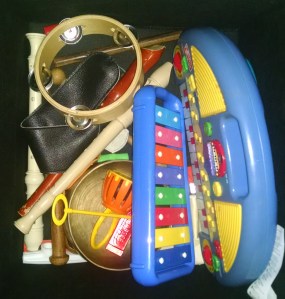
We have a box of miscellaneous musical instruments he can pull out anytime he wants. A few were purchased for him, but most are just items that have entered our lives over the years, like the plastic Yamaha recorder I had as a child, and the plastic Yamaha recorder I had to buy for my daughter’s class when I couldn’t find my old one… We also have a very old electric piano that’s in his room and he spends part of many “nap times” exploring the piano.

We listen to a lot of music together (one older sibling loves Broadway show tunes, one loves vintage jazz, Abuela loves classical and Spanish music) and sing songs A LOT, and enjoy circle-time songs at BC classes and library story times and hymns at church.

Fun with Flora and Fauna (Naturalistic Intelligence)

As you can guess if you’ve read other posts on my blog, we spend a lot of time outdoors. Camping, hikes, zoo trips, farmer’s markets, walks to the library and the pool. The only “tools” we use outdoors are a bucket and a shovel. (But, when we forget them, a stick and a rock can fill in as digging tools, and an empty Starbucks cup from the car makes a fine bucket.) Some day we’ll find our binoculars again, and pick up a new magnifying glass.

Expanding Horizons (Magic / Imagination / Religion / Cultures)

We have a big box of miscellaneous dress up – old Halloween costumes from his siblings, sunglasses, silly hats, etc. In all of our books and the videos we watch together, we aim for showing lots of diverse cultures and experiences, and we go to a church that talks a lot about diverse beliefs and appreciation of the sacred in all forms.

All the Pretty Colors (Artistic Skills and Appreciation)

This is the one area we have an abundance of STUFF.

One cabinet in the kitchen is over-flowing with art supplies: Model Magic clay, no-spill watercolors, pom poms, pipe cleaners, paint, paper, glitter glue, stickers, markers, crayons, beads, scissors, and so on. When he and I are in a relaxed, mellow mood, we pull these out and get to work.

I try not to do much art when I’m in a cranky mood, or when I won’t have time to deal with any mess that arises. I have to confess that I can have a hard time when he’s being really messy or “wasting” art supplies, or “messing up” art supplies – like when he dips the red-paint-covered paintbrush into the yellow paint. Because I know that about myself, I make sure that he has plenty of opportunity to do art in spaces that are designed for kids’ art and where it’s OK to make a mess. So, this year, he’s enrolled in Creative Development Lab, which is all about exploring and experimenting with art.

Child-Directed Play

In addition to buying stuff for your kid to play with, also make sure they have some time to play with you that is child-directed – where they get to decide what they want to play. Learn more about child-directed play.

If you have an older child, check out my Gift Guide to STEM Toys for Ages 3 – 6.

(Note: this post includes Amazon affiliate links. If you click through and purchase anything, I get a small referral fee. I spend any income from that on doing outreach to encourage more parents and educators to come check out what I offer here on this blog.)
Choosing Toys

4490832429_3ca567fee5

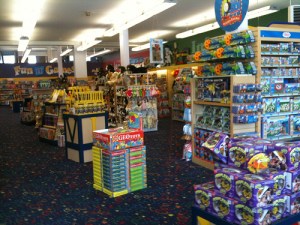
If you walk into any modern toy store, you’ll be overwhelmed by an insane number of toys to choose from.  Parents ask me all the time: how many toys are enough? How do I decide which toys to buy for my child? Which are the best toys? Are there toys I shouldn’t buy? What if my kid falls in love with toys that I think have no educational benefit or that don’t match our family values?

There’s no one right answer to these questions. I’m not going to give you a list of “most recommended toys for all children.” But, I will give you some things to think about when choosing toys…

  • Choose more open-ended toys. Open-ended toys are toys that can be played with in a wide variety of ways, such as a set of wooden blocks, versus closed-ended toys which are designed for only one thing, such as a superhero action figure. Open-ended toys are passive and require your child to be active and creative. (Learn more here.)
  • Choose toys which stimulate a wide variety of learning. If my child had only ten toys, I would want them to have some which stimulate each of the major intelligence styles: linguistic, mathematical, kinesthetic, artistic… Learn more at https://gooddayswithkids.com/2014/08/14/10-types-of-toys/
  • Don’t fill their lives with too many toys and too much entertainment. If every time achild expresses a whiff of boredom, we hand them a new toy, they learn to depend on new commercial goods to be happy. And they don’t learn the creativity that can be inspired by boredom and limited materials. Also, if there are too many toys to choose from, children tend to be distracted and over-stimulated. Having fewer toys helps build their attention span and focus. (Learn more here.)
  • Consider your family values. Where will you compromise, and where won’t you compromise?
    • My son is in love with Shopkins. They are everything I hate in a toy. They’re cheap plastic, lots of clutter, gender biased, and encourage consumerism values not in alignment with mine. The slogan for Shopkins is “once you shop you just can’t stop.” But… we have lots of Shopkins. Why? Because he fell in love with them at pretty much exactly the same time as we introduced allowance and the idea of having saving money, gift money, and spending money. (Learn more about financial literacy.) The rule for spending money is that he can spend it on anything that he chooses. He chooses Shopkins. Right now, my appreciation for what he’s learning about math and financial decision making are outweighing my dislike of Shopkins.
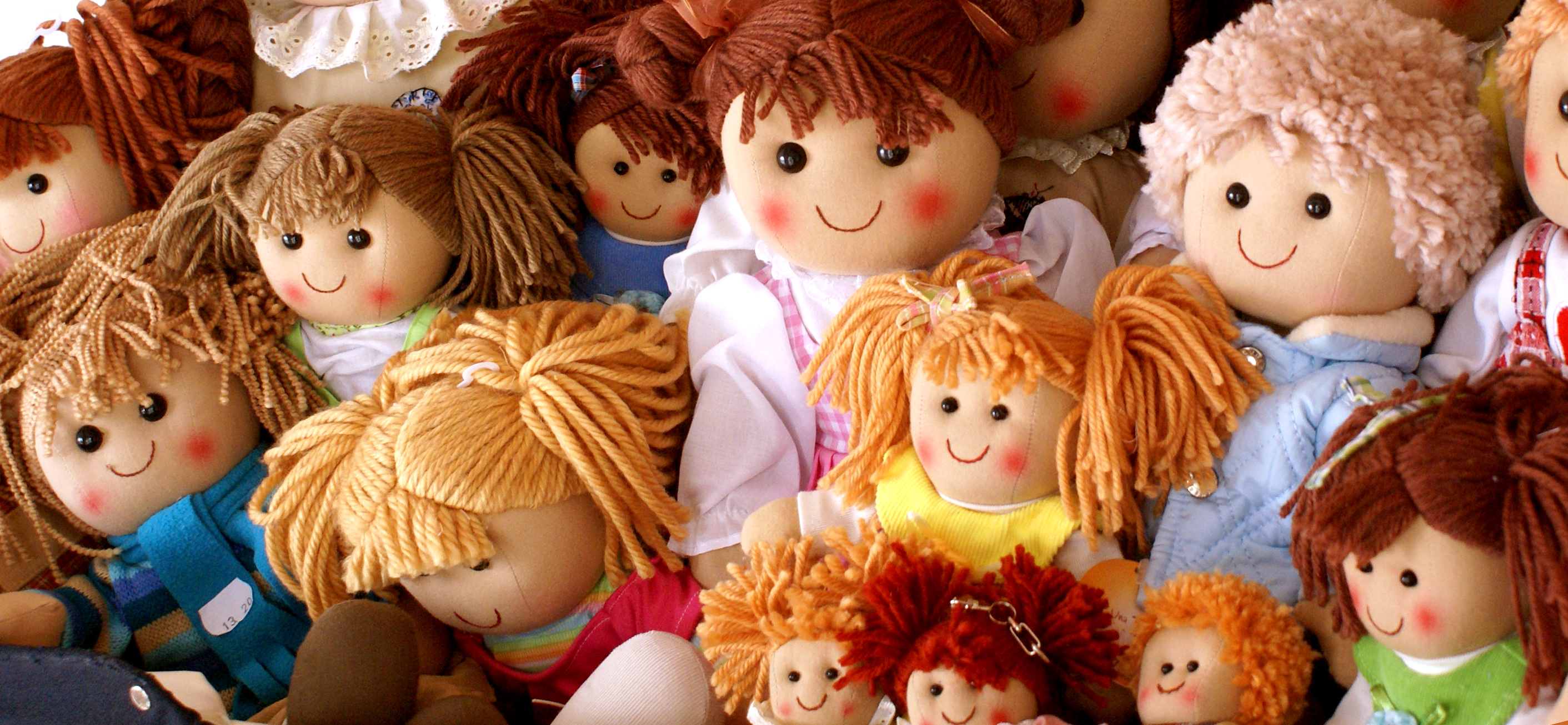
    • I am very much a pacifist and have never held or fired a real gun. However, I spent many hours of childhood playing with toy weapons, and I do allow my children to play with things such as light sabers, toy swords, and nerf guns. However, we do not buy anything that looks like a real weapon or like a real person firing real weapons at real people. (i.e. no first-person shooter games in our household!) For lots more thoughts, read about Gun Play here.
  • Think about gender and toys. Many toys are marketed to either girls or to boys, or are marketed as gender neutral. What are your preferences? (Read more on Gender)
  • Ask yourself from time to time: am I happy with the toys we now own? Does my child enjoy playing with them and do a good job (at a developmentally appropriate level) of taking care of them? Do I feel like we have enough toys to feel abundance and happiness, but not so many that we’re all on sensory overload? If you’re happy with your responses to those questions, you’re in a good place. If you’re not, then think about what you want to change.

How Much is Enough? How Much is Too Much?

Although there are plenty of families in America who struggle with the basic necessities of life like putting food on the table, many other parents have access to a huge array of options. Toys to buy, media to watch, vacations to go on, and activities to enroll in. The job of marketers is to convince us these things are ‘necessities’ and things “you can’t afford to pass up”. Sometimes they play to our fears of the future: “Playing with this toy will help your child get into college.” Sometimes they play on parental guilt: “Help your kid have a great Christmas – show them that they’re loved.” Sometimes they sell joy: “You work so hard – you deserve to have FUN!”

And here’s the thing. Lots of those toys and media are fun! Lots of fun! And going on vacations as a family can lead to fabulous connecting moments and can be part of a child’s memories of belonging in a loving, happy family. And lots of those classes and activities really will help build your child’s knowledge and skills, and help them reach their potential.

So how do we decide which options to take? What is enough? What is too much? Every family has to make their own decisions, based on their child’s needs and their own goals and values.

What do kids need, in order to learn?

Often parents choose toys and classes as enrichment tools to help their child learn and grow. When we go back to the basics of brain development, we know that children learn through: novelty and repetition, guided play and free play, and down time to process it all.

New toys and media offer novelty – lots of interesting stimuli to take in. But if kids are continually bombarded with new things, and not given the chance to play with the same thing over and over, they don’t gain the benefit of repetition, which is mastery. If a child only has access to a few toys, he may complain of boredom, but he gets really creative with those toys!

Classes, camps, activities, and sports teams are all guided play and guided learning. They help your child gain new knowledge and learn new skills. But kids also benefit from free play – just having free time with friends or siblings to goof off and play any game they can think up. And they need rest and quiet solitude to absorb everything and make their own connections.

Kim John Payne, author of Simplicity Parenting, talks about 4 keys to raising “happier, calmer, more secure kids”: the environment, rhythm and schedule, and unplugging. Let’s look at each.

Environment: De-cluttering to make space for creativity.

If there are too many toys, a child doesn’t focus on any of them. They flit from one to the next, never really settling down to play. Their little brains are overstimulated by all the choices. If you keep giving them more toys to “get them engaged” they will get even more distracted.

It is better to focus on having a small number of really excellent toys. Here are some things to think about and look for when choosing what toys to have in your home.

  • Think about toys that build diverse skills: if I had only a few toys, I’d want one in each of these areas: big motor skills (balls, bikes, tumbling mats), small motor skills (puzzles, shape sorters, craft supplies), imaginary play (dress-up clothes, toy kitchen), music toys, art supplies, a set of magnetic letters, some dice for math skills, something to nurture (doll, stuffed animal), and toys for playing outdoors (bucket and shovel).
  • Choose open-ended toys that can be played with in lots of ways and passive toys where the child has to be creative to use them. Things such as blocks, cardboard boxes and tape, puppets, measuring cups and containers. Minimize toys that can only be played with in one way, and active toys where you press the button and it does all the work.
  • Elizabeth Pantley recommends these criteria for choosing toys: long-term play value, durable, washable, solid simplicity, challenge (will teach but won’t frustrate), appropriate for your child’s current developmental abilities, stimulates creativity, engaging, versatile, fits your family values, novelty (different than what you already have), and fun.
  • Spend less time in stores, less time looking at catalogs and shopping online. When you shop, it’s easy to fall in love with toys and end up bringing more home than you need.
  • Try setting up a “toy rotation” system. Make bins of toys, where each bin has about ten toys in it. Keep one bin out to play with and store all the others in the garage or a closet. Whenever the whim strikes (once a week?), swap out the old bin for a new bin.
  • Let your child get bored of their toys…

Think of boredom as a ‘gift.’ Boredom is often the precursor to creativity. Think of a bridge between ‘doing nothing’ and deep creative play. The bridge is almost always paved with (the frustration of) boredom. “I’m bored!” Now *that* is when something interesting usually happens.  – Kim John Payne

Rhythm: Increase predictability by introducing rhythmic moments for connection and calm.

Read my handout on rituals and my post on daily routines. And here are some thoughts on making birthday parties more manageable.

Scheduling: Give kids the gift of unstructured time

You might have the option to enroll your child in anything from art classes to aikido, from piano lessons to pottery, ballet to baseball, soccer to Spanish, gymnastics to geo-caching, wilderness survival to web design. There are so many cool and exciting things to learn! (And, you can’t help but think… it’ll help someday when they fill out college applications…)

Plus there’s the things you have to do – doctor’s appointments, picking up the siblings from their activities, grocery shopping. And more things you want to do – movies, playdates, dinner out, outings to the playground, sporting events, farmer’s markets, hikes in the woods, vacations to the beach…

All of these are cool. And all of them are learning experiences. Just choose your activities wisely. And make sure you remember to make space in the schedule for down-time, and quiet contemplation, and spontaneous, creative play. And for self-care for them and for you: sleep, calm meals around a table, snuggling up with a book.

Unstructured time gives children the opportunity to explore their inner and outer worlds…  they learn to engage with themselves and the world, to imagine and invent and create.  Unstructured time also challenges children to explore their own passions. If we keep them busy with lessons and structured activity, or they “fill” their time with screen entertainment, they never learn to respond to the stirrings of their own hearts, which might lead them to study the bugs on the sidewalk, build a fort in the back yard, make a monster from clay, write a short story or song, or organize the neighborhood kids into making a movie.  These calls from our heart are what lead us to the passions that make life meaningful, and they are available to us… when we are given free rein to explore and pursue where our interests lead us.” (Dr. Laura Markham)

Unplugging: Reduce the influence of adult concerns, media and consumerism on children to increase resilience, social and emotional intelligence.

When allowing your child to use screens (TV, computers, smartphones, tablets, etc.) make conscious choices about the content and about how much, when, and where to use them.

Spend more time outdoors, relaxing, playing, and discovering together.

Allow for quality family time:

Families can benefit by doing things whose only purpose is the joy of spending time together, like playing Monopoly, shooting hoops (with no coaching), drawing pictures, or taking a walk. Being unproductive together tells the child that the parent likes the kid, as he or she is.  (Source)

Learn more:

Boy and Girl Toys

toysToy Selection

Every egalitarian parent has a story like “I bought my son some sweet little teddy bears – he had them roar and crash into each other. I bought my daughter trains, and she had the mama train take care of the baby train.” It is true that one of the biggest differences between boys and girls are in the toys they choose to play with, and how they play with them. “It’s bigger than [differences in] verbal skills, math, aggression and risk taking. [But] I think it is misleading because parents see the difference in toy selection and draw a line to everything else.” (Eliot)

The difference in interests may have some biological influence, but is also very much a product of culture. At 6 – 12 months, boys and girls are interested in the same toys. For example, both like dolls a lot, because all babies are enamored of the human face. Boys have a very slight preference for wheeled vehicles, but otherwise they’re mostly the same.

But by age 3, there are major differences in preferred toys, and even more so at 5, especially for boys. In an experiment, five year old boys would spend less than 10% of their play time with “girl” toys. Girls would split their time much more evenly between boy toys and girl toys.

Let’s look at how this developmental shift lines up with children’s growing understanding of their cultural gender.

When do children learn about gender? (Source)

  • 7 months. Start to tell the difference between male and female voices
  • 12 months. Start to tell the difference between male and female faces
  • 2 years. Girls begin to play with ‘girl toys’ and boys with ‘boy toys.’
  • 2- 3 years. Begin to label themselves and others as male or female
  • 3 – 4 years. Start actively categorizing things as boy things and girl things and talking about “boys like to do this” or “girls like to do that”
  • 4 – 6 years. Say “only boys can do this” or “only girls do that”
  • 6 – 7 years. Children understand that gender is constant: boys grow up to be men*; girls won’t ever be daddies; and that person up on the stage is a man even if he is dressed like a woman.

Toy Culture

It is telling that, in our modern culture, girls are still happy to play with “boy toys” even after they begin to internalize gender roles, but the boys avoid “girl toys.” This reflects a broader cultural reality that we now tell our girls they can do anything – wear pants, do math, climb trees, etc. But we still discourage our boys from doing “girly things”.

Parenting Choices

Each family makes their own choices about how to handle gender based toys. Some parents choose to buy only gender neutral toys, but then are surprised that their boys may play with them in “boy” ways – crashing them together, and their girls may play with them in more “girl” ways – cuddling them and creating characters.

Some parents only buy toys that are marketed to their child’s gender. So their girl’s room is filled with dolls, ponies, and pink. Their boy’s room is filled with balls, cars, and superheroes. If their child plays with toys aimed at the other gender, they may be surprised by this.

img_20160909_083736558_hdr-2 Others follow their child’s interests. My son is in many ways a stereotypical boy, and leans toward many “boy” toys – trains, cars, balls, Legos, and space toys. But he’s also wild about a toy called Shopkins – little anthropomorphized household goods that are very much marketed as “girl” toys. Here he is on the first day of kindergarten, confounding gender expectations with his combination of Lego astronaut t-shirt, and sparkly pink Shopkins backpack.
As a parent, you can choose your own path, and adapt it as you go along. There’s no right answer. It’s about finding a balance of what pleases your child and what fits in with your family values, and with the culture of peers that your child will encounter.

Learn more

For more on gender differences, click here. For more on how to make classes more gender inclusive, click here. For more on gender identity, and gender non-conforming children, click here.

Source: Big Think interview with Lise Eliot.

Photo credits: Action figure JD Hancock via photopin cc; Doll http://www.freeimages.com/browse.phtml?f=view&id=356461

—————-

* Note: transgender women and men are the exception to this general “rule.” For example, a transgender woman was born with male genitalia and labelled a boy, but at some point in childhood or adulthood, identifies herself as female. Estimates are that perhaps 1% of people are transgender, but it’s often very hard for cisgender people to understand this. Perhaps because we form this idea of gender as a constant at this young age of 6 or 7. It is easier for a child to understand things as absolutes… either a boy or a girl. But as they get older, we can help them understand that many things are not quite so binary.

Passive Toys = Active Kids

passiveThought for the day, from a workshop based on the principles of RIE (Resources for Infant Educarers.): the more active the toy, the more passive the child.

An active toy that does something entertains – all a child needs to do is press a button and sit back and watch passively. A passive toy that doesn’t do anything engages – a child needs to be active to enjoy it.

Or as Magda Gerber says about her recommended play objects – all passive toys: What do [they] have in common? None do anything. They will only respond when the infant activates them. In other words our active infant manipulates passive objects. In contrast, entertaining kinds of toys, such as mobiles or later on, windup toys, cause a passive infant to watch an active toy. This trains the child to expect to be amused and entertained, and sets the scene for later TV watching.

Active Toys

Active toys also include: LeapPads, stuffed animals or dolls where when you squeeze their hands they sing a song… most things with batteries.

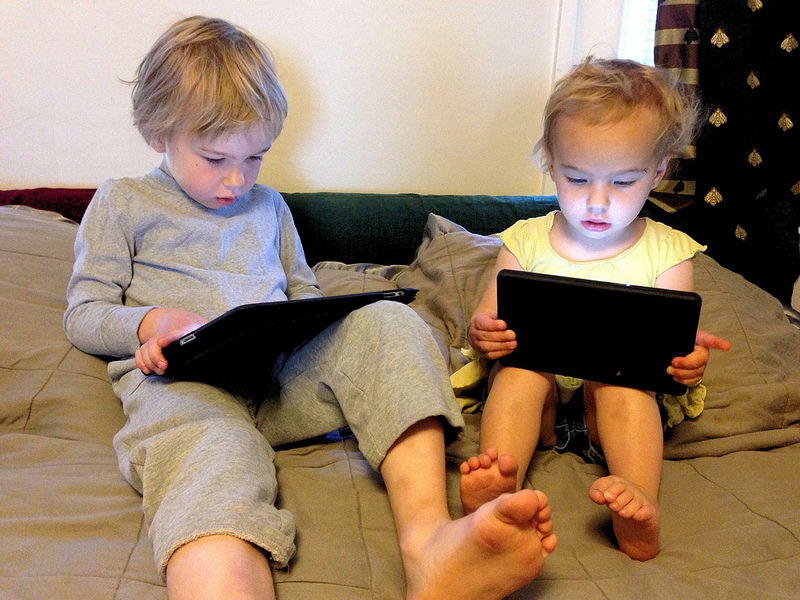
The ultimate in active toys is a touch screen device – I-Phone, tablet, etc. I’ve written before on the benefits and downsides of screen time, but the truly amazing things about these devices is their pacifying effect. My son can do an amazing transformation from Squirmy Whiny Disturbing-the-whole-restaurant Boy to Silent Child in less time than it would take to duck into a phone booth – all I need to do is hand him my Kindle or phone. And in moments he’s thoroughly entertained by a video or app. (Here’s thoughts on how to choose well-designed age appropriate materials.)

But, I think the corollary to the statement of “the more active the toy the more passive the child” should be something like: “the more effectively a toy pacifies the child, the more actively they will protest when you try to take it away.” Silent Child turns into Wild Screaming Misery Lad when I then try to take the Kindle away, or when, god forbid, the battery dies in a public place.

I do still use active toys (including the Kindle) at times, but I also try to balance them with a lot of “passive” toys – a lot of open-ended toys that encourage exploration and engagement. And I try to give him time – plenty of uninterrupted time – to explore them.

Some fabulous open-ended materials for toddlers and preschoolers:

Magda Gerber recommends (in The Best Toys for Babies Don’t Do Anything): balls, scarves, plastic bottle, containers (cups, bowls, baskets in many sizes and shapes). Or check out Geek Dad’s list: sticks, boxes, string, cardboard tubes, and dirt. And, of course, my favorite open-ended toy: nature.

Read more about open-ended toys: Here are a couple posts from Mamas in the Making, which are about toys for the 3 – 6 month old crowd, but most of their thoughts apply through the toddler years: Our Thoughts on Open-Ended Toys and Age Appropriate Toys. Check out this video, or many of the videos on Janet Lansbury’s YouTube channel for examples of babies at play with simple open-ended items.

Have enough toys… but not too many…

It’s easy to get excited about open-ended toys. Don’t go overboard though, filling the house or classroom with stuff…

Both at home and at work, I want to be sure there aren’t too many options for kids to explore. It’s great for kids to have some choices, but too many choices are stressful and overwhelming. When faced with too many choices, instead of engaging with one, kids may run from one to the next, never settling. Or, as someone said at my in-service yesterday: “If your child spends their playtime dumping all the toys out of the bucket, that means there’s too many toys in the bucket. Put at least half of them away for now, and the child will play more with what’s left.” Often, less is more. When we give kids the chance to really engage and explore open-ended toys, it’s amazing what they can come up with.

active

Just for fun: Check out this blog post on Being the Cool Kids on the Block, which talks about saying yes to your kids’ play ideas (within reasonable limits) and open-ended materials.
photo credit: ianus via photopin cc
photo credit: peterme via photopin