Tag Archives: toddler

Periods of Disequilibrium

Does it seem to you that there are periods of time when parenting is easy? That you’ve mastered it and you’re cruising along with a well-behaved child whose needs you understand? And are there other periods when it’s all really hard? When you feel like you’re incompetent, like your child is out of control, and you have no idea what they need and the things that used to work no longer work?

Did you know that’s totally normal?

And that all families experience this?

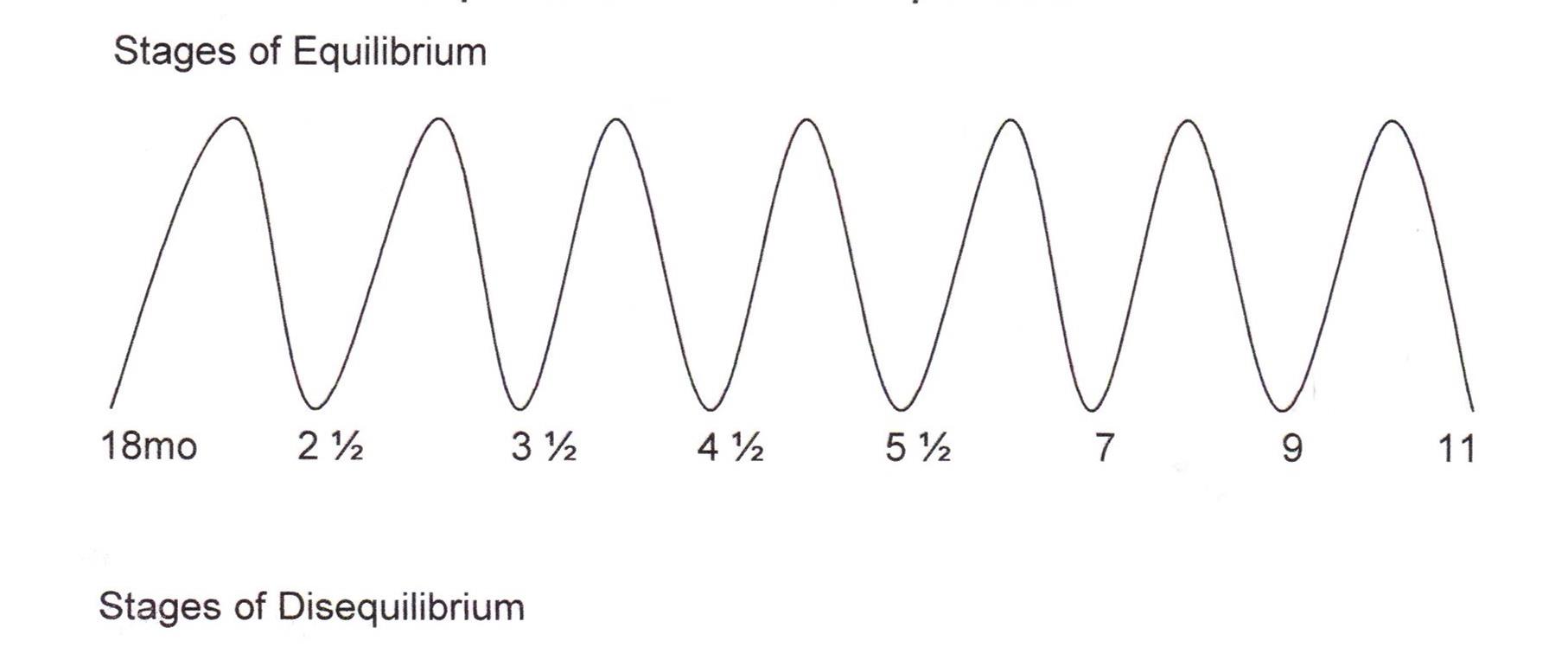
Children go through very predictable cycles, or developmental spurts. Sometimes they settle into a quiet period of equilibrium where they take time to incorporate all that they have learned and practice learned skills to the point of mastery. Whenever they’re on the verge of a new and exciting development, they go into a period of disequilibrium… there’s some new skill they can see and it’s just out of reach, and they are striving toward it with every part of their being and frustrated at everything else along the way.

One of the first developmental spurts is a 6 week old baby… they cry and cry and cry… and then…. they smile at your for the first time and really connect with another person. Lots of 6 month olds struggle with sleep – they’d much rather be figuring out how to crawl. Although we hear about the “terrible twos”, it’s really the one-and-a-halfs and the two-and-a-halfs. The 18 month old knows that other people talk and that helps them get what they want. And yet when she tries to speak, nobody understands! Meltdowns are common at this age. (Learn about toddler language development here.) At 2.5, they have discovered that you set rules and make them do things they don’t want to do. And they rebel against that. You’ll hear the word “No” a lot at this stage! And they get very angry or upset when you don’t do things like they want you to. (Something like cutting their sandwich into triangles when they wanted squares can lead to a huge tantrum.) The more you can follow routines and set clear limits the more manageable this period can be.

These cycles continue throughout our lives. But they get longer… we have longer periods of equilibrium and longer periods of disequilibrium… where that 6 week old baby was out of balance for a week or two, a midlife crisis could last a couple years. One of the most challenging situations is when multiple members of the household are in a disequilibrium stage at the same time!

Expect more hard times at 3.5, 4.5, 5.5, 7, 9, 11, 13, etc.

One hard time for kids is 4.5 years old. When my second child hit this stage, it was really hard. She had been on an easy cruise for a long time. And at 4.5, sometimes she was an absolute delight to be with – so many thoughts going on in her head, a great imagination, lots of budding passions and capabilities. And other times she was so exhausting to be around that I wanted someone to come and take her away!!

She was a rules negotiator and protester. She knew the rules – things like “only two sweets a day” (where a sweet equals a candy or a cookie or juice) and “you need to stay in your room at bedtime.” But, she would say “but today, I can have three sweets” or “tomorrow I’ll stay in my room.” And if I said no, she’d yell, hit, and more.

I thought “I need a book. A book about how to manage this.” I hadn’t felt like I needed to buy a parenting book in years, because I’d been feeling pretty competent. But now, I felt in over my head. So, I went looking for a book called something like “Your Five Year Old” that would tell me how to manage this.

And then, in the bookstore…  I realized I already owned that book.

I’d bought it when my first child was 4.5.

I’m not sure I really read it, because I think she may have moved out of that developmental stage into a period of equilibrium at about the same time as I bought that book. And we went into the smooth ease of parenting a five year old. Just remembering that I had bought the book and that she had moved on from that phase before I read it helped me realize I didn’t need to read a book to manage my second child… I just needed to be patient. It was, in fact, “just a phase”, and she soon moved through it.

And now, it’s child #3’s turn to be 4.5. He was sick about two weeks ago, and after that he became difficult to manage: some clinging, lots of wild behavior, lots of rule negotiating, lots of defying me when I enforce the rules (yesterday he head butted me when I said he couldn’t have a second bag of fruit snacks.) At first, we thought “well, it’s just because he’s been sick. It will get better soon.” But now, I’m coming to terms with the fact that no… it’s his period of disequilibrium. I’m trying to focus on all the joys of where he’s at developmentally (the language skills, the imagination, all the cool conclusions he’s coming to) and remember that “it’s just a phase… and this too shall pass….”

Read more:

Fun with Toddlers: Transportation Theme

transportThis month’s theme was Transportation: Boats, Planes, Trains, and Automobiles. Always a favorite theme, especially with the boys! Here are some ideas for transportation activities that toddlers and preschoolers love.

Learning Activities / Crafts

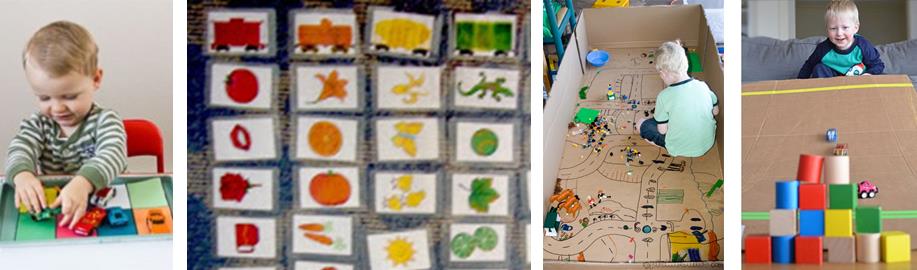
Sorting Cars. Make cardboard garages (or use colored paper to make “parking spaces”) for your child’s cars. Encourage your child to sort the cars by color. Sorting into categories is a great foundational skill for later learning.

Train Car Sort. Make colored train cars, or print a picture of a colorful train, and have your child sort objects by color into the right car.

Shape collage: Make cut-outs of truck bodies and tires they assemble littlefamilyfun.com/2014/01/build-truck.html

Sponge Printed Trains: Use sponges to print colorful rectangles for train cars, then use a black dot marker for the wheels. See on Buggy and Buddy.

Free Play Activities – You Prep, They Play

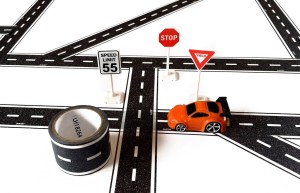
Draw a City. Use a big box your child can climb into, or flatten out a smaller box. Draw roads and buildings on it. They can drive cars around the roads. You can also build cardboard tunnels to drive through and bridges to go over. You could also try out PlayTape which is tape you stick to the floor which has an image of a road on it.

cars-and-roads2-opt

Ramps. Take a flat piece of cardboard. Tilt it by propping on a piece of furniture. Race cars down it. Even better, put a tower of blocks at the bottom to crash the cars into. You can play with angles – the steeper the inclined plane, the faster the car goes.

Magnet Car. Draw a road on a paper plate. Make a paper car with a magnet on it. Use a magnet wand under the paper plate to drive the car around.

Bubble Popping Car: Tape bubble wrap to a table. They can drive a toy car or truck over it to pop the bubbles. This is a good strength builder as they have to press hard to pop.

Taped Road Pretend Play: Use masking tape on the floor to mark out roads (or train tracks) wide enough that your child can crawl along them, pretending to be a car (or train). Add cardboard boxes for tunnels, garages, and more. Toddler Approved has great pictures for this idea.

Shoe Box Train: String together shoe boxes and kleenex boxes to make a pull toy train. The child can load up the cars and pull it behind them.

Family Project

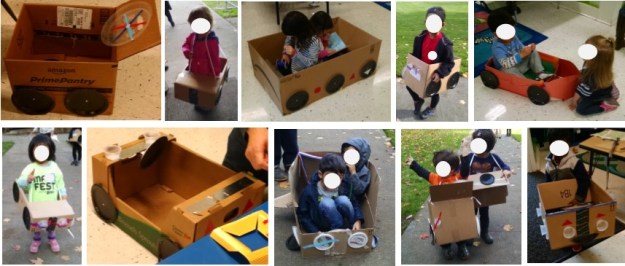
Build a Cardboard Car and Have a Drive-In Movie: Use a box big enough for your child to sit in comfortably, and decorate it to look like a car. This can be very simple, or as complex a project as you want. Find the tutorial for making a cardboard car.

Once the car project is complete, celebrate with a drive-in movie. Watch your favorite movie – you can sit on the couch, they sit in their car. Serve popcorn!

An Activity for Outside the Home

Counting Cars. Any time you find yourself with time to kill, count the cars going by. (Great counting practice!) Label them: blue car, red truck, gray car, delivery truck, and so on. (Great for building vocabulary and the idea of categories!)

Songs to Sing about Transportation

The Wheels on the Bus. https://kcls.org/content/wheels-on-the-bus/
(Also, search on YouTube for lots of fun videos of this song!)
The wheels on the bus go round and round, Round and round, round and round,
The wheels on the bus go round and round, All through the town.

Down by the Station https://kcls.org/content/down-by-the-station/
Down by the station early in the morning. See the little puffer bellies all in a row.
See the engine driver, pull his little lever. Puff puff! Toot toot! Off we go!

Drive the Fire Truck. https://kcls.org/content/hurry-hurry-drive-the-fire-truck/
Hurry, hurry! Drive the fire truck! Hurry, hurry! Drive the fire truck!
Hurry, hurry! Drive the fire truck! Ding, ding, ding, ding, ding!

Motorboat.  https://kcls.org/content/motorboat-motorboat/
Motorboat, Motorboat go so slow (set your child in front of you, their feet against yours… hold their hands, and rock back and forth as you sing)
Motorboat, Motorboat go so fast (rock faster!)
Motorboat, Motorboat step on the gas! (go really fast!)
(Repeat, but this time, end it with “run out of gas” and putter to a stop.)

Games to Play / Circle Time Activities

Motorboat Activity: Do the song above, but have them walk when you say slow, jog when you say fast, run when you say step on the gas, and fall down on run out of gas.

Train rhyme: I’m a choo-choo train; (walk in circle)
Chugging down the track. (rhythmically move arms)
First I go forward,  Then I go back. (walk forward and back)
Now my bell is ringing, (pretend to pull bell)
Hear my whistle blow. (cup hand to ear)
What a lot of noise I make (cover ears)
Everywhere I go!

Red Light, Green Light. When you say green light, they can walk. When you say red light, they need to stop. (Advanced version: when you say yellow light, they can keep walking, but need to slow down.) This is a fun game, but also great safety training. When your child is headed out into the street, you say “red light” and they know to stop!

Sensory Activities

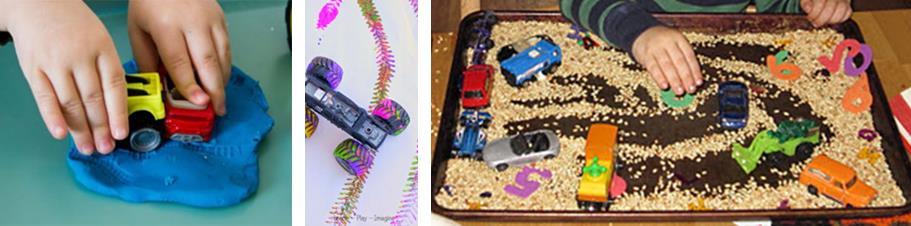
Tire Tracks. Drive toy cars on play-dough to make tire tracks. Or, squirt paint on a big piece of paper, and drive cars around. Or, drive them in a sensory bin full of dried rice, grains, or beans.

transport2

Bulldoze the Beans: Add toy bulldozers to a bin of beans.

Car Wash: A tub of soapy water and some toy cars is lots of fun.

Books to Read

Freight Train by Donald Crews. Teaches colors and names of train cars.

My CarTrucks, Planes, Boats, Machines at Work by Byron Barton.

Don’t Let the Pigeon Drive the Bus. by Mo Willems. Very silly. Best for 3 years and up.

There are many different illustrated books featuring The Wheels on the Bus lyrics (I like the Pete the Cat: The Wheels on the Bus) and Row Your Boat (I like Row, Row, Row Your Boat by Cabrera.)

More ideas (and source citations) at: www.pinterest.com/bcparented and https://gooddayswithkids.com/songs-and-activities/fun-with-toddlers/

Check out this article on: “Obsessions with trucks, trains, or cars make kids smarter.”

Resources for Choosing Child Care

from naeyc.org

from naeyc.org

I’m often asked for advice in choosing a child care or choosing a preschool. Here are some great resources about what to look for, and questions to ask. They also offer referrals to child cares in your area.

http://families.naeyc.org/ – The National Association for the Education of Young Children. They have great resources on choosing child care (see the infographic at the top of the post). I like that they divide off sections on quality care for infants, toddlers, and preschoolers, because although you’re looking for many of the same things, there are also differences in what counts as quality child care for a 3 month old and a 3 year old. They also have a directory to search for NAEYC accredited child care centers and preschools.

www.childcareaware.org: Child Care Aware of America. They have great articles on choosing child care, and also a state-by-state list of: agencies that do referrals, child care licensing regulations, inspection reports, resources for children with special needs, and more. A fabulous resource!

www.childcare.org: This is Child Care Resources, based in Washington state. They have lots of good info on making the choice, but some of their info (like about their referral line) is only relevant for Washington residents. They have an 18 page guide on Choosing a Nanny

For those who are using / will be using a family member to provide child care, here’s a couple good articles on setting clear expectations and resolving conflicts: Should you hire a family member for childcare, and When Family Members are your Child’s Caregiver.

Building a Wind Tube

Wind Tube For our Family Inventors’ Lab class (a STEM class for preschool and kindergarten age), we have built a fun tool, which encourages the kids to tinker – see my last post for how kids play with a wind tube. This post is about the tinkering process we used to build and refine our DIY wind tube.

Supplies

We started with the directions from Exploratorium. We ordered from Amazon:
    • a big, powerful fan – we use the Honeywell HF-910 Turbo Force. (My colleagues tried using a smaller Honeywell, and smaller hoops to save money, and their version can just barely lift a scarf up and out of the tube. It’s just not nearly as fun.) The HF-910 is no longer available but the Air Monster and the Comfort Zone Powrcurve look like they’d work. You need a big fan that can be tilted so it’s horizontal to the floor.
    • TWO 14″ embroidery/quilting hoops and
    • an acetate sheet  Ours is 40″ tall. It comes in a 12 foot roll, you’ll only need about 4 feet of it. Exploratorium’s directions called for .0075 ml thickness, we used .01. It’s a little pricier but it’s been very durable which is important to us because we transport it to several sites and has survived ten years of small children banging on it. (Other builders have used 1/32″ thick polycarbonate, but I haven’t found that in large sheets.)
    • spacers – see below

Assembly

We cut the acetate sheet, rolled it to make a tube, and assembled the tube with the hoops. Definitely a two person job. You can clamp the plastic between the inner and outer layer of the hoop, just like you would fabric. We then used clear packing tape to tape the seam. (We also taped over the metal clamps on the hoops, and the edges of the acetate sheet on one end, just so kids wouldn’t scrape themselves while playing.)

Spacers

You need spacers to lift the tube up off the fan. Exploratorium recommends wooden spacers that you cut a notch in. We built spacers with Duplos and set the tube on those. (You can see them in the videos in this post.) For our family, that worked fine, because it was easy to rebuild them if they got knocked off. For class, I wanted something I didn’t have to rebuild. I found some giant clothespins, which worked great. (You can find 6″ or 9″ options. Nine is better.)
For kids over age 5 or so, that’s all you need. You just set the tube on top of the fan, and you’re fine. They may knock it off a couple times, but quickly learn to be more careful. If it does get knocked off and lands on someone’s head, it’s startling but does not hurt.

Tie the Tube Down?

For kids under 5, you’ll want to tie the tube to the fan so it doesn’t get knocked off as much. Exploratorium recommended drilling holes in the spacers, disassembling the fan, and fastening the spacers on with zip ties. We decided it would be much easier to just thread pipe cleaners through the springs on the clothes pins, and loop those down under the fan and back up again (no dis-assembly required) and twist together to tighten. It was easy to do, worked great to tie them down, and is easy to undo later if desired. An advantage to the clothes pins is that it’s easy to clamp the tube onto the fan, then easy to un-clamp it for transport. ClipMeshTie

Cover with Mesh?

If you will be using the tube with young children, be aware that they may try to put small items into the fan openings (beans, coins, toys, etc.) I usually avoid this issue by putting the wind tube in a hallway or in a large motor play area where there just aren’t any small items to put in. But, if you’re in a classroom full of small smare parts, you may want to cover the fan so they can’t drop things into it. I bought 1.5 yards of black tulle with pretty sparkles (like this), and we wrapped it over the fan, tying it off below with a twisted pipe cleaner. The tulle does work great as safety proofing and looks fine, but it definitely does diffuse the air flow from the fan, so some of the heavier things that would fly without the mesh on just don’t fly well with the mesh on.

Play Value

I’ve watched countless children age 1 – 10 play with this for hours. The under-one-year olds love just watching things fly up and out of the tube. The two-year-olds love shoving things into the tube and watching them fly. The three-year-olds start to make observations on which items flew best. The four-and-ups experiment with building things, tying things together, trying to put things in from the top, and so on. Some of the parents get caught into the experimenting too, folding paper helicopters and such to test what will fly. The kids play really well together – part of the point of this game is to put something in and LET GO, so there aren’t many issues with having to share something that someone was holding on tight to. They all play happily side by side. They don’t really need to take turns, as it works fine to have four or five things flying at the same time. Here’s some of the items we have launched: scarves, ribbons, pipe cleaners twisted into spirals, dixie cups, plastic dishes, and paper cut into a variety of shapes. (See more video in my Wind Tube post.) I have also flown silk leaves for a fall theme, felt snowflakes in the winter. Toy parachutes are also great – if there’s ANY chance the plastic paratrooper will get caught in the fan, just cut him off and use the parachute alone. objects

Alternatives to our DIY wind tube

There is a DIY wind tube tutorial on Instructables. It requires that you own real tools, which I don’t. 🙂 babbledabbledo describes building a simple “vortex” by just rolling a tube of poster board and setting it directly on the fan. Kids put a scarf or a balloon above the tube where it gets caught up in the rush of air. Super simple! I like that with our tube, the kids can put the item in at the bottom and see it travel up the tube, but this simple alternative may meet your needs just as well Kodo Kids makes a wind tunnel that looks fabulous! And I know their materials are very high quality. I’d love to have it, but it costs $499 plus a $50 fan, versus the materials for my DIY tube are around $176 before tax. [Fan ~$55; hoops $20; acetate sheet $82; clothespins $19; optional tulle fabric.] Or you can buy the science museum version for $13,500. For lots of ideas for STEM enrichment activities with kids, check out my blog www.InventorsOfTomorrow.com.