Those of us who teach preschool often use the term “play-based preschool” and often forget that may not mean anything to the average first-time parent looking for their first preschool! You may be wondering: what does play-based preschool look like? And what do kids actually learn if they’re just “playing”?
The Big Picture
In a play-based preschool: The teacher sets the stage with engaging materials and supplies for fun activities. Then the children explore through play: observing, experiencing, wondering and discovering. The teacher is nearby to observe, ask questions, make suggestions, or play along. But each child decides which activities to do, which toys to play with, what to do with them, and for how long. Play is spontaneous, fun and creative, and the focus in on process, not product. Play is done for its own sake, not to accomplish a task. It involves lots of exploring of possibilities, experiments, trial and error, and repetition which reinforces learning.
In some settings, such as outdoor preschools, the teacher may do little “set-up.” They may just wander and learn about whatever they discover as they go. However, the majority of play-based preschools have a center-based approach, also known as activity centers or stations. The teacher makes a very conscious set of choices about what activities to offer so there are options that help children grow in all areas of development and build all types of intelligence. There are fresh new activities each day, but there is also a lot of consistency where the same materials may be available for many weeks straight. This respects what we know about brain development – children need a combination of novelty and repetition to learn.
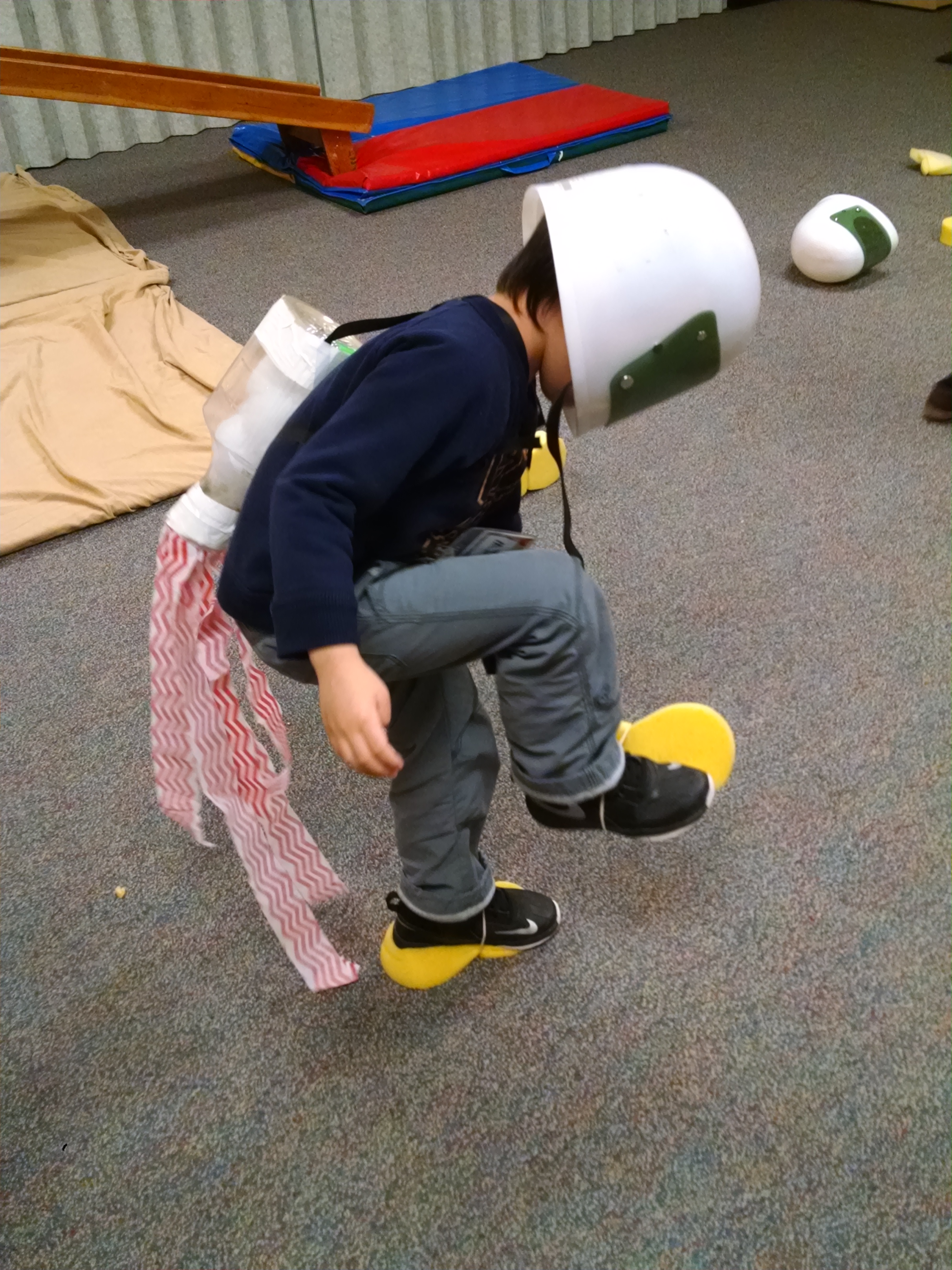
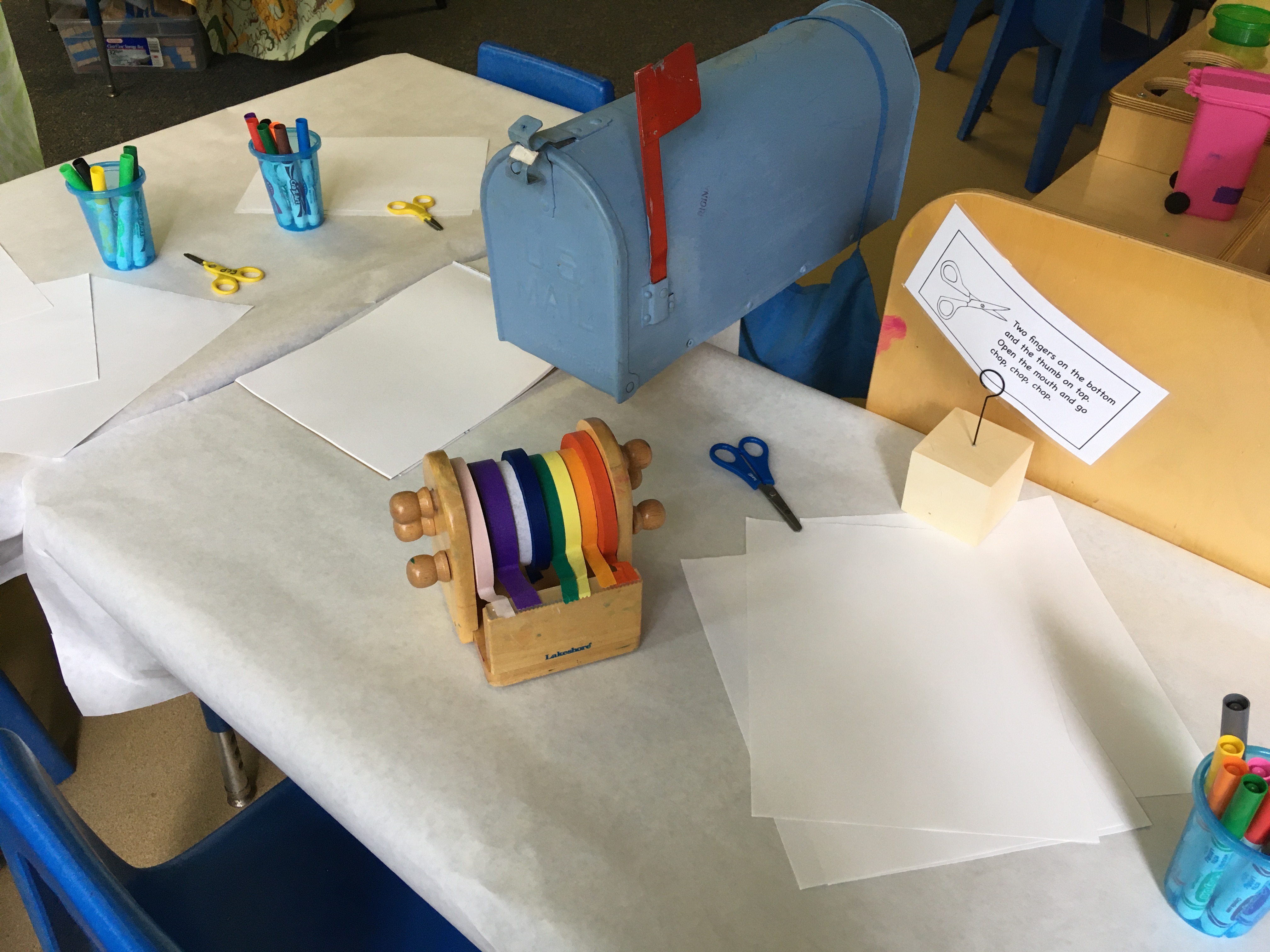
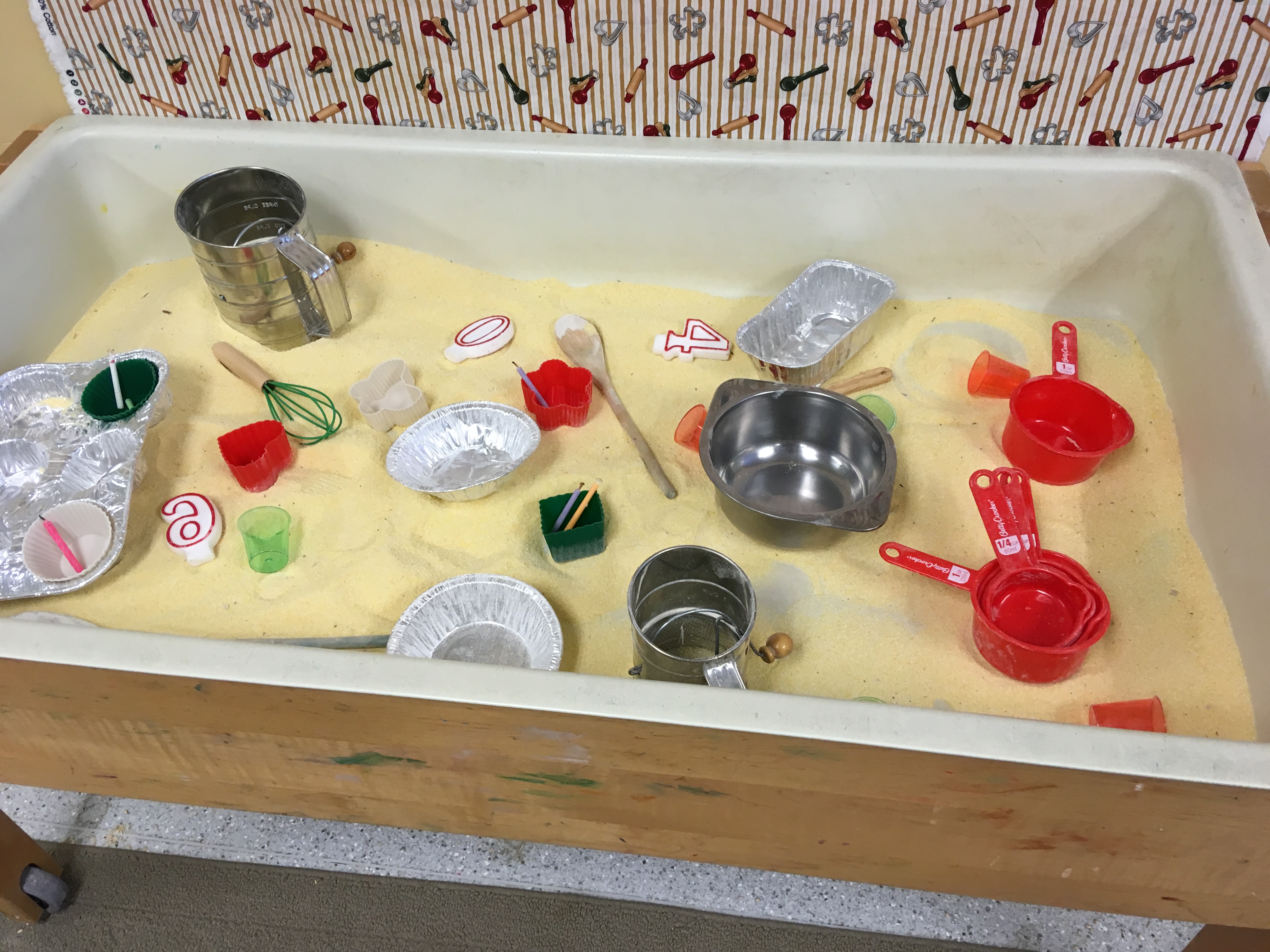
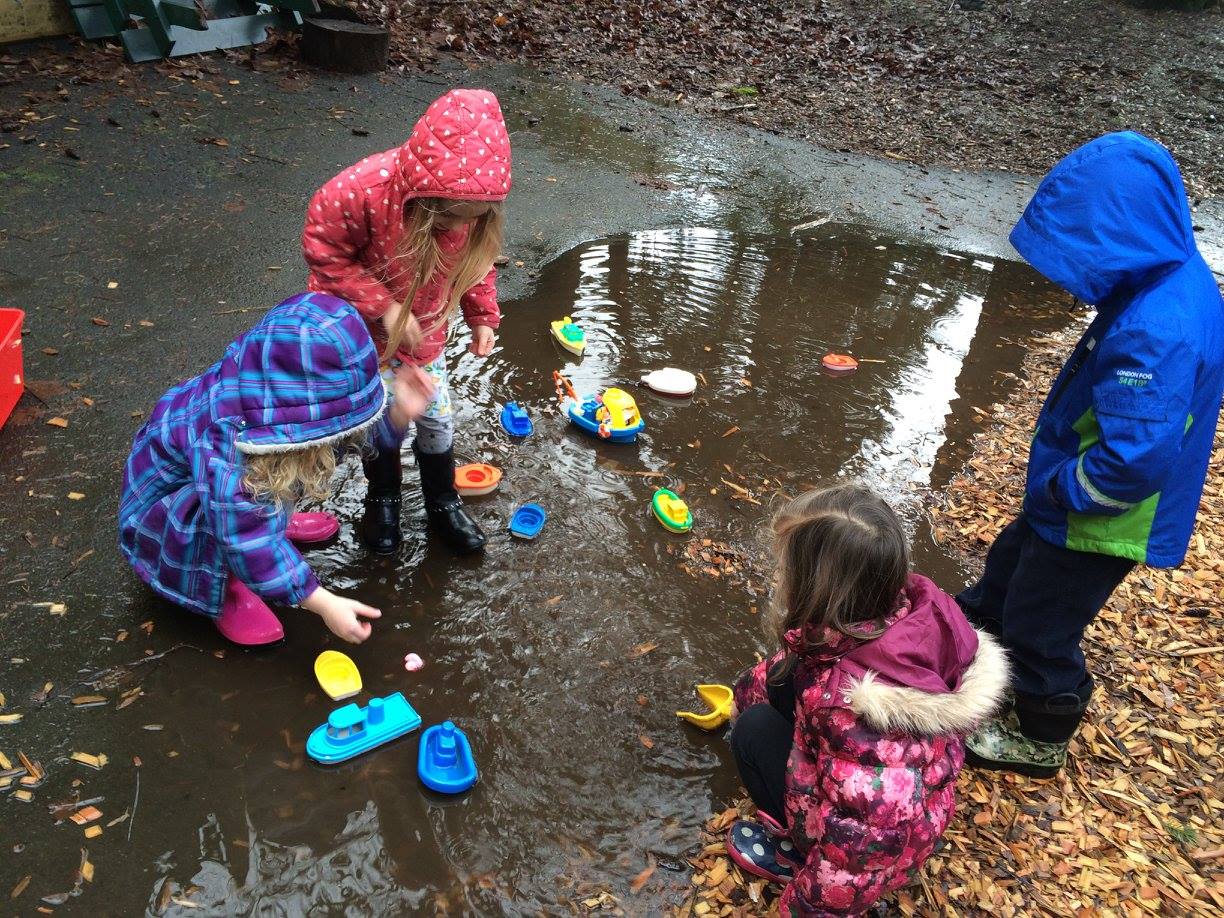
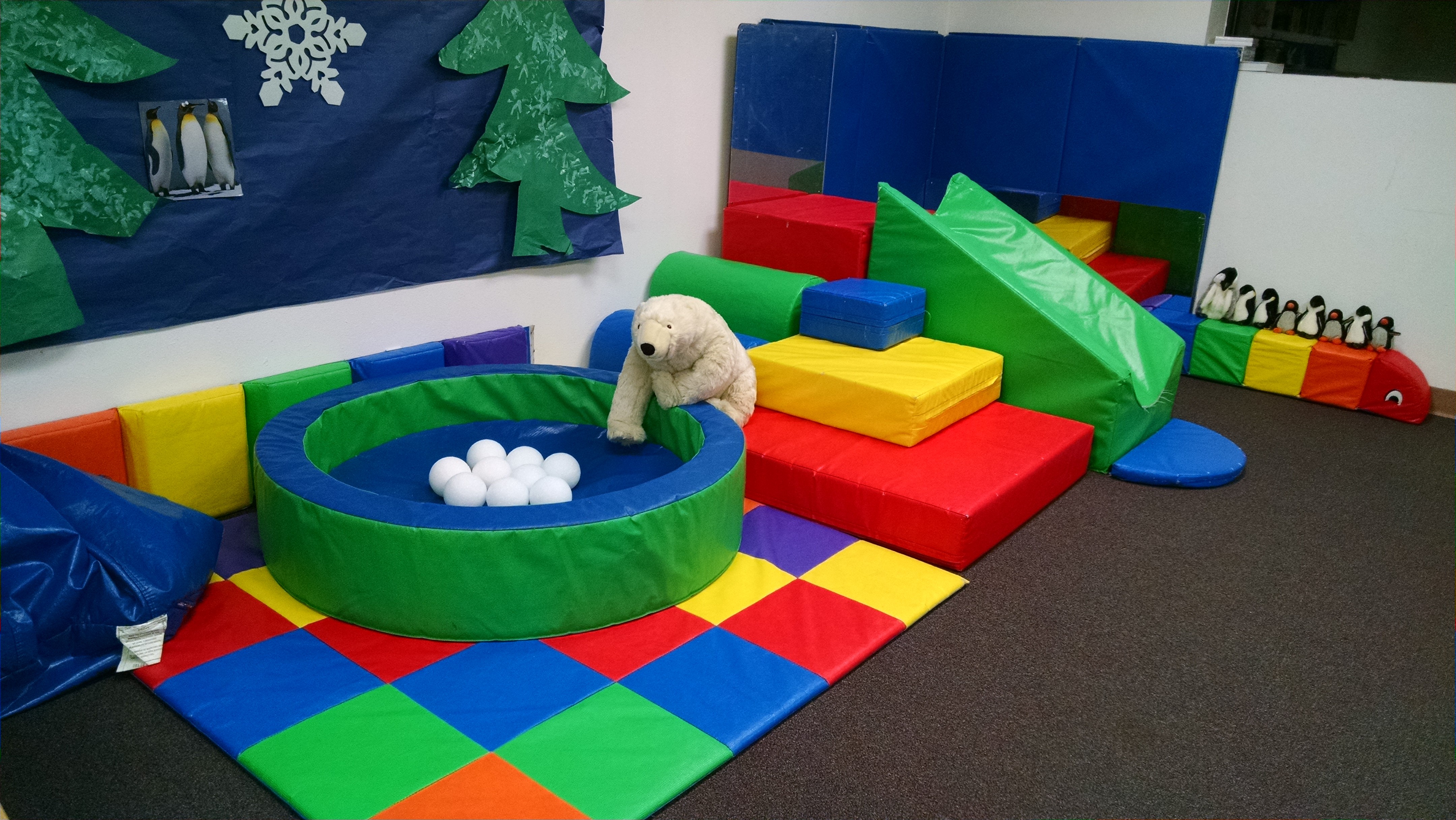

Stations and Classroom Set-Up
During free choice time, children are encouraged to move freely between stations. Some children will spend an entire class at one station if it’s really captured their attention. Some will flit between all the stations, trying everything out. A child might be playing alone for a long time, or they might be in the midst of group play. That freedom to move helps them self-regulate based on their mood and their energy level, lets them opt in or out of social play, lets them focus on what they most want/need to learn and allows for lots of practice with decision-making.
Typical activity centers include:
- blocks and other building toys
- sensory bins, water tables and light tables to explore with all of their senses
- art process activities like play-dough and painting at the easel
- craft projects where children practice following directions to create a specific product
- book corner, writing center, puzzles, and board games to learn pre-academic skills
- doll houses, dress-up clothes, and toy kitchens to tell stories and role play things they see in daily life and things they can only imagine
- large motor activities like climbers, tumbling mats and riding trikes to build physical strength and skills
- a snack station where they learn to prepare their own food and clean up after themselves
- a nature and science station for learning about the world around them
[In a separate post, I cover these stations in more depth, with more pictures and concrete examples of what the children learn at each: https://gooddayswithkids.com/2022/02/13/stations-at-a-play-based-preschool/]
Some teachers refer to the classroom materials as “the third teacher.” (Parents and teacher are the first two.) Setting up materials in an intentional way helps to guide children’s learning. Teachers consider the skills they want the children to work on and find ways to set up an “invitation to play” that will inspire kids to engage. For example, if a teacher notices a child is resistant to holding a pencil and lacking the finger strength to write well, they might choose a variety of small motor muscle building activities for that child, like using tweezers to pull sunflower seeds off the sunflower, and working with Legos and play-dough, and popping packing bubbles or pulling velcro open to make that cool noise.
The Teacher’s Role
You might envision “teaching” as a teacher sitting at the front of a classroom, teaching one skill to everyone at once. There is absolutely a time and place for this sort of direct instruction – it’s the best way to teach some specific skills or facts. However, during this time, as the teacher is active, the children are often passive. Some may be very engaged in the learning, some may be distracted. Some may have already mastered the material that is being taught, and some may not yet be ready for it.
During free choice time in a play-based school, the teacher’s role is very different and much more individualized to the learner. As the children play, the teacher moves around the room, facilitating play and extending learning. There might be two children working on cutting paper for a craft – one has mastered scissors, the other has not, so the teacher offers guidance to the child who needs it. If a child is building with blocks, the teacher might ask open-ended questions to extend the child’s learning, or scaffold learning by making a few suggestions about how to build a stronger foundation for their block tower. If children are engaged in pretend play in the “kitchen”, the teacher might pretend to be a customer and place an order, and encourage the children to write it down and to count the pretend money. Sometimes the teacher just follows along with child-led play, which is a great way to practice communication skills. Sometimes the teacher will encourage the child to move on and try new activities if they feel like one has been mastered.
(More about the role of the teacher in a play-based class: http://teachertomsblog.blogspot.com/2012/04/teaching-play-based-curriculum.html)
There is a lot of intentional planning and support that goes into a good play-based preschool, but sometimes it’s hard for the parents to see exactly what is being learned, so let’s look at some example activities and how children benefit.
Group Time / Music
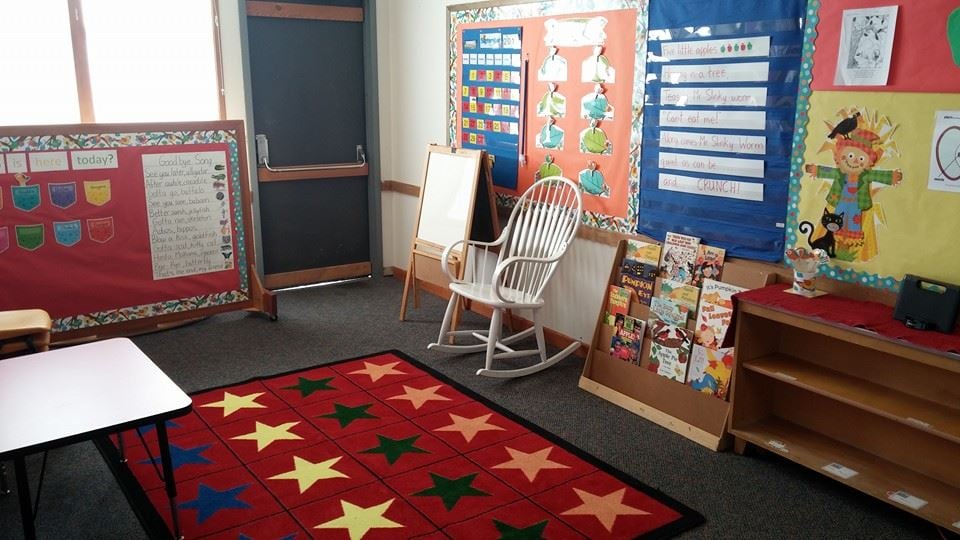
Most play-based preschools spend part of their day in group time. This might include: singing songs or playing instruments, story time, learning about the calendar, watching demos of activities they could choose to try during free choice time, learning about a key concept for the weekly or monthly time, celebrations like birthdays or VIP, and chances for children to show and tell.
Lots of school readiness practice is happening here: learning to sit still, listen to the teacher, wait while others are talking, take their turn when it’s time, take an instrument when offered and return it when asked. They are exposed to new ideas and new vocabulary during theme discussions, learn core music skills like rhythm and tone, and build their memory skills as they remember the words of songs and poems.
Don’t all preschools incorporate play?
Of course! (And if you find a preschool that doesn’t incorporate play, avoid it!) At almost all preschools and daycares you will find many of the elements described here. But some focus on this more than others.
You’ll get a sense of which schools truly embrace play-based learning by looking at their schedules and talking to their teachers.
For example, at one of the preschools I work with, they are very play-based – the schedule is a five minute group time for a good morning song and a little preview of the day, then 100 minutes of free choice time, clean-up, ten minutes for a story-time in a group, 20+ minutes of free play outdoors, then some music time outdoors to end the day. That adds up to less than a half hour of structured group learning, and over two hours free choice time indoors or outdoors, and the play-based learning has plenty of opportunity to unfold. They have several sessions on a theme, where the primary art project might change, but most of the other activities stay the same. The balance between novelty and repetition matches what we know best supports brain development. If you talk with the teacher, they will definitely share their view that free play in a rich environment is the best way for children to learn..
I lead a STEM enrichment class for 3-6 year olds that mixes direct instruction and play-based learning. We have 30 minutes of discovery time where the children explore the stations for the day, then a 30 minute group time where we use a non-fiction book, a song, and demos to teach the science concepts of the day, then 40 minutes of tinkering time where the children return to the stations to apply the concepts that they learned. After a quick snack break, we have 20 minutes of group time to wrap up the ideas for the day, read a fun book related to the topic and play a fun related game. So, that’s 50 minutes of structured direct instruction and 70 minutes of free choice play-based learning. And it’s a different theme every week, so there’s almost no repetition of activities. This is great for providing children with novelty – new experiences and new ideas – crystallized knowledge. But, it’s not as powerful as the preschool for providing the opportunity for children to stay with an activity for as long of periods of time over many class sessions – that repetition could build more mastery of the concepts and skills. So, my program is play-based… but not as pure about it as the preschool. (Note: the reason I feel OK with this is the class is a parent-child program where they participate together, and I encourage the parents to talk about the ideas outside of class, and watch optional videos to review or preview the ideas and repeat their favorite activities and games from class, so that parent involvement offers opportunities for reinforcement outside of the class.)
An example of play-based learning
Yesterday morning at the preschool, I had a spontaneous interaction that provides a good example. I didn’t have any particular plan in mind when this started. One girl had found our basket of plastic toy dogs and had picked out one dog. I said “you have one white poodle.” (number, color, and vocabulary learning) I asked: “are there any other white poodles in the basket?” She then looks through the basket until she finds all the white poodles and we count them together. (Practicing observation skills, sorting, and counting.) A couple other children have joined in. We decide which type of dogs each one will seek out, and we line them all up by category, counting how many we have of each type and comparing that. (Social negotiation, sorting, counting, organizing, and comparing quantities. I also taught the vocabulary of names of dog breeds and talked about their characteristics – color, size, fluffiness, etc.) We added up how many we had total. (56!)
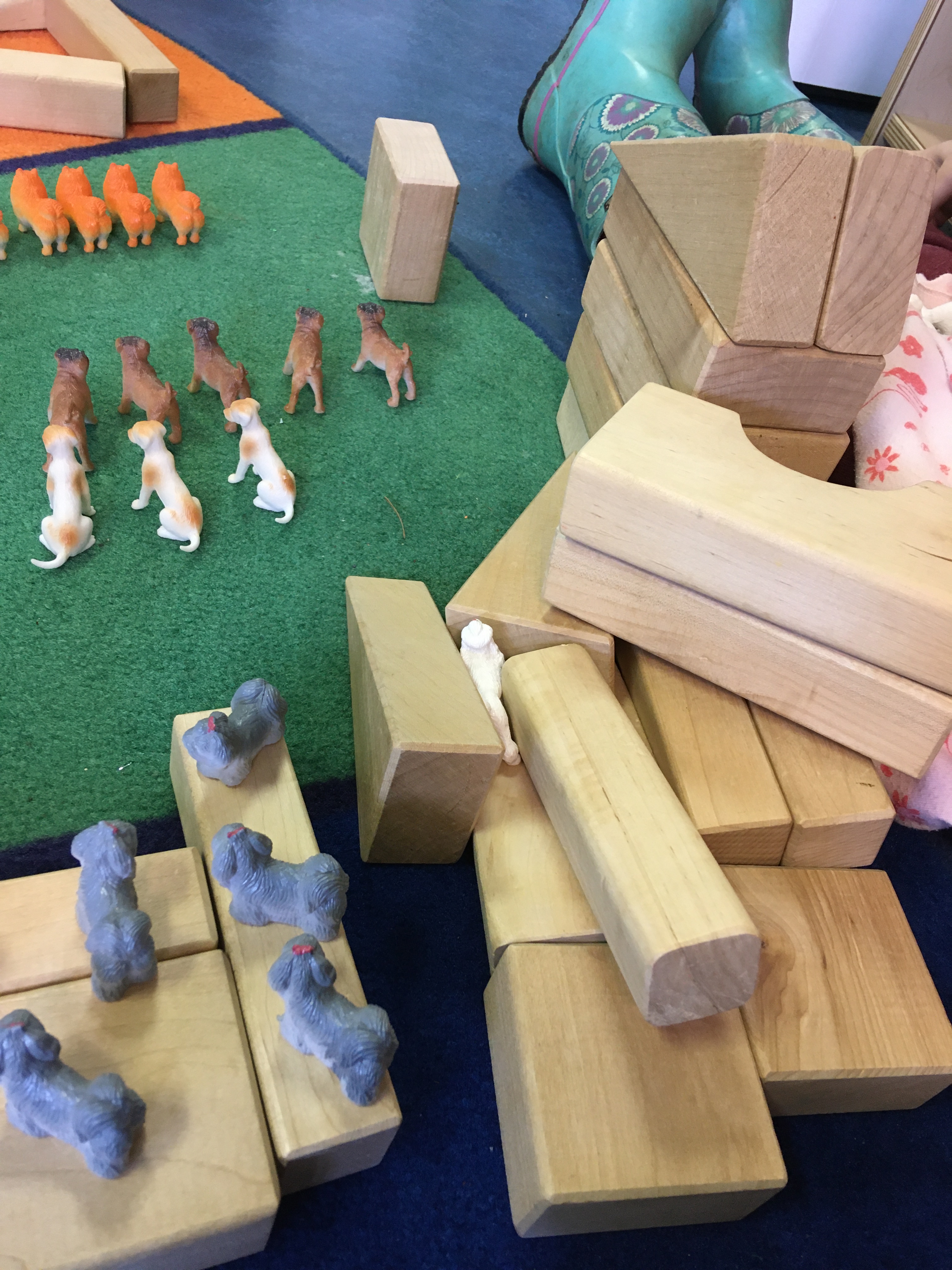
At this point, we are probably 10 minutes into this spontaneous exploration and I’ve got four kids completely captivated in this process even while other children were doing many other activities around us, and another who is enjoying the joke of adding his duplo horse into the mix as we try to count and we laugh that it doesn’t fit! I was ready to extend the play, so I suggested maybe we could use the blocks to build a zoo for all the types of dogs. That stretched into a 15 or 20 minute block session where all these children stayed with it the full time and a few others wandered in and out. I was closest to the blocks, so they would ask me to pass them blocks. I asked them to tell me what shape and size they wanted, so we got all sorts of practice in quantity, comparing sizes, and learning names of shapes.
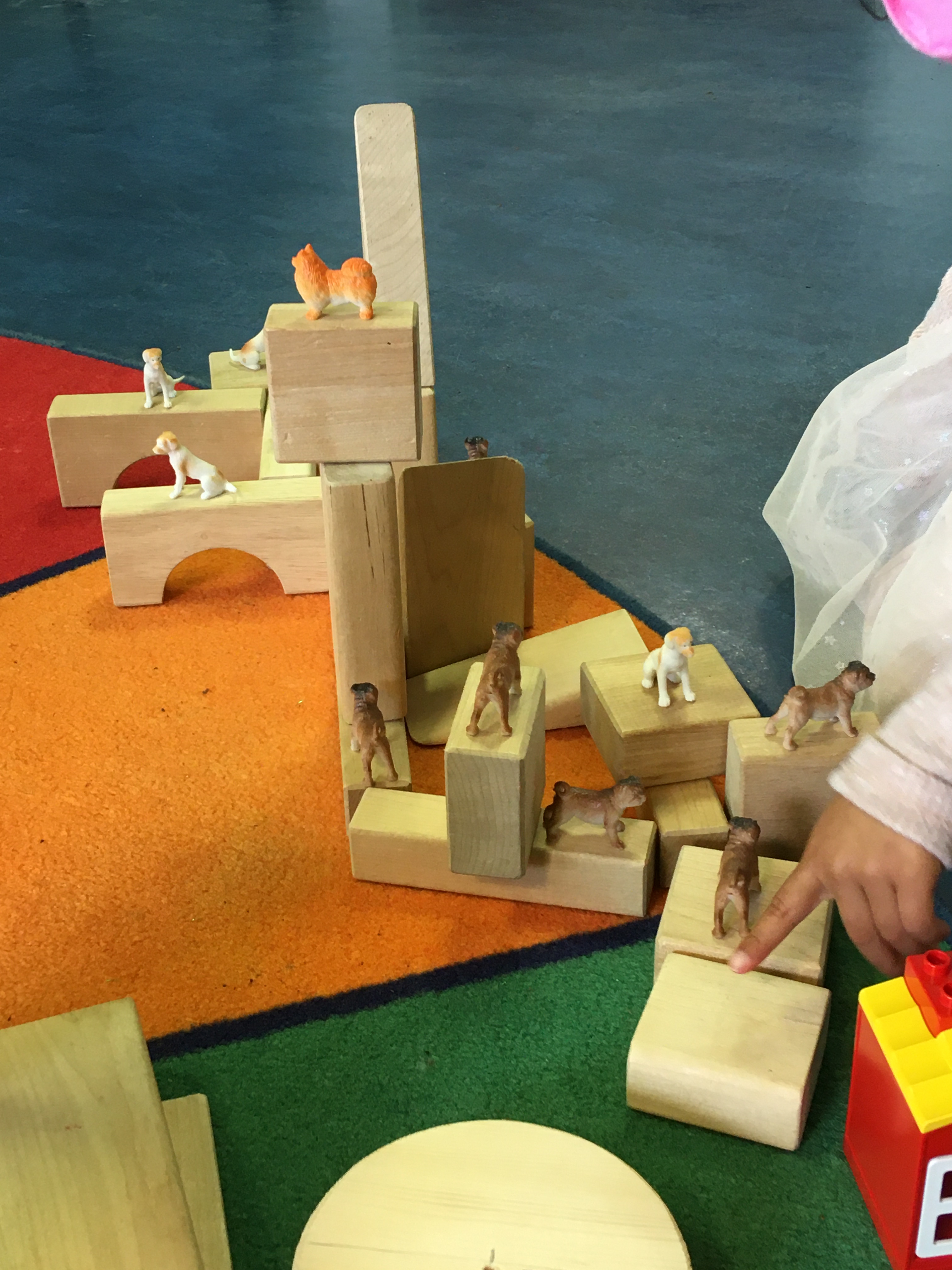
One child who rarely speaks aloud to anyone in the class was speaking to me easily and freely as it helped her get the materials she needed for our joint game. They practiced building skills, I suggested ways to make structures more stable, they negotiated for ways to share the materials when someone else had what they wanted. We managed the frustration of having someone accidentally knock over something you were working on. Other children brought over some dolls, and we added visitors to our zoo. They also brought signs so we practiced reading those and talked about which ones we could use. (Literacy practice.) The children were so relaxed and focused on play this whole time, even while they heard excited shrieking from the other room where there was a new piece of climbing equipment. I was ready to move on and check in with other children, but reminded them that we would all need to work together later on to put away the blocks, since we had used almost every block on the shelf in our big project. Later on they and the other children helped put back all those blocks – each type of block has a specific spot on the shelf, so they put all the squares in their zone, and all the arches here, and all the triangles there, and so on, and put all our dogs back in the basket. So much spontaneous learning, all starting with one question to one child.
But was this the only thing happening that day? Not at all! This was a co-op preschool with 20 kids, 3 staff, and 2 parent volunteers that morning. The kids who wanted to engage in what I was doing did so for as long as they wanted. But in the meantime, other children were in the “gym” climbing on the climber and rolling down the mats. Others were in the library looking at books and putting puzzles together. Others were stringing beads and putting heart stickers on valentines in the art area, and others were busy in the kitchen area making pretend soup. Each had the ability to choose whatever most inspired their curiosity and joy that day.
Where can I find a play-based preschool?
One great option is to see if you have co-op preschools in your community. They are almost always play-based. Forest kindergartens or outdoor preschools are play-based, with even less structure than the station based experience I describe here. You may also find some preschools that are what I call the “church basement” preschool – sometimes run by the church but sometimes rented out by a non-profit preschool that has been there for 40 years. Many public school districts offer a preschool but these tend NOT to be play-based as they are often taught and administered by people trained in k-5 education and standards-based curriculum and may not be as informed about the best learning methods for young children. For other preschools, you just have to check out their websites and brochures and see how they describe themselves and their schedules.
If you are in Washington state, check out the co-op preschools sponsored by parent education programs offered by our community colleges. (Full list of Washington programs: https://www.opepwa.org/contact.) Learn about these programs and find links to all the programs in King County here: https://gooddayswithkids.com/parent-ed-at-colleges/. I teach for Bellevue College Parent Education and the photos on this page are from our co-op preschools and our art and science enrichment classes.

 to assemble and a big
  .
. ,
,  , and plenty of time to run and play indoors and out.
 to tell stories with, a toy
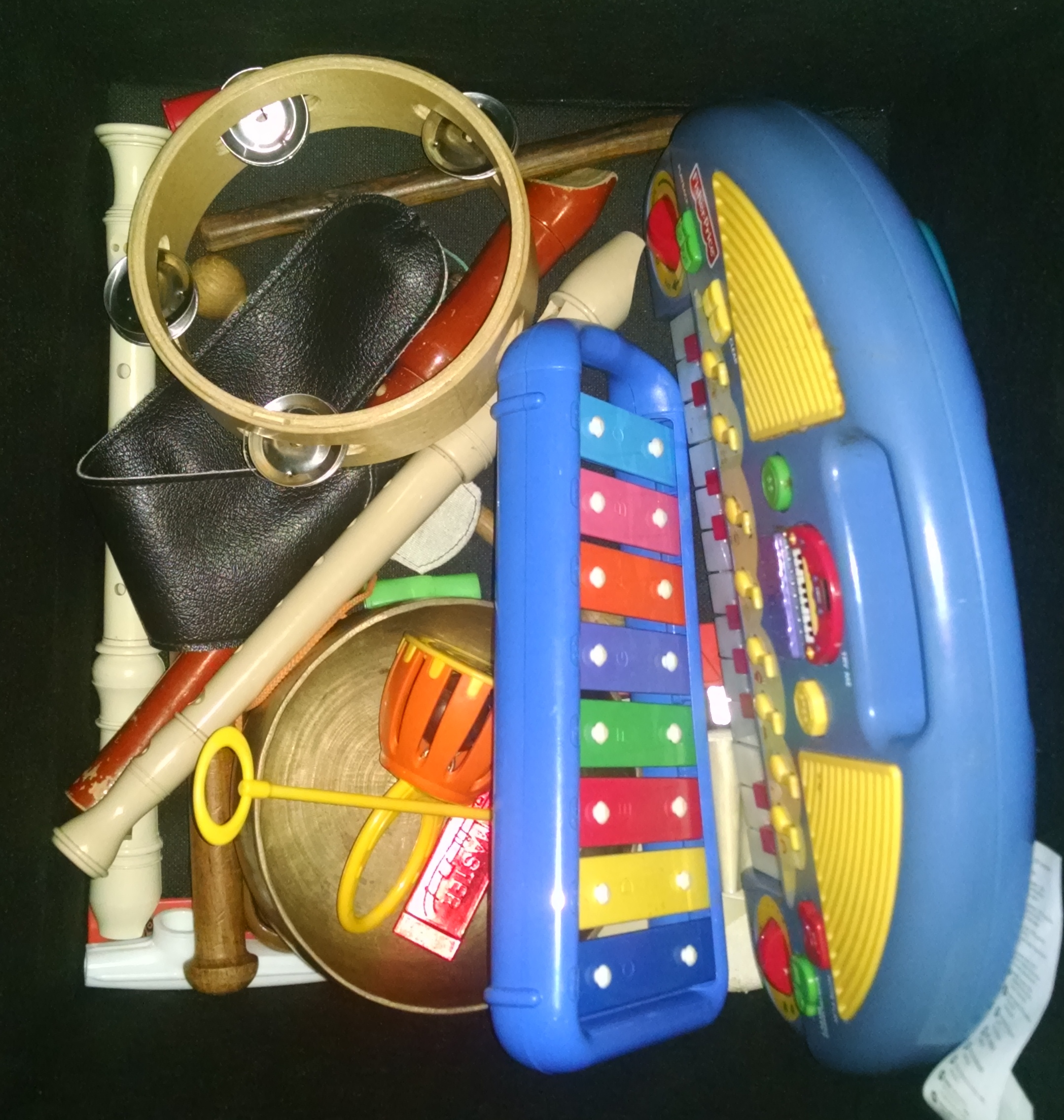
 he can pull out anytime he wants. A few were purchased for him, but most are just items that have entered our lives over the years, like the plastic Yamaha recorder I had as a child, and the plastic
  I had to buy for my daughter’s class when I couldn’t find my old one… We also have a very old electric piano that’s in his room and he spends part of many “nap times” exploring the piano.
 ,
,  ,
,  , paper, glitter glue, stickers, markers, crayons, beads, scissors, and so on. When he and I are in a relaxed, mellow mood, we pull these out and get to work.
 by Elaine Moore. A counting book with a nice rhyming structure.
 by James Dean. There are lots of fun Pete books, but the best is I Love My White Shoes. (Check out our Pinterest page for lots of activities to go with Pete books!)
 by Lori Ries. Ben’s dad takes him to the pet store to pick out a pet.
 More Good Days with Kids