Category Archives: Parenting

My Child Won’t Poop in the Potty!

NoPottyDuring the potty training process, about 20% of children go through a phase of refusing to use the potty at all, or refusing to poop in the potty. For some the phase lasts a month or so. For others it can be a year. This is called “Toilet Refusal for Stool Only.” One scenario is a child that asks for a diaper at nap time or bed time, goes in their room and poops in the diaper, and then asks to be changed. Clearly, they have bowel control, and are making a very conscious choice about when and where to poop. It’s just not the choice you wish they were making.

An important note here: I’m not talking about “stool holding” here. That’s a child who refuses to poop at all, anytime, anywhere. That’s a different issue and it’s a medical issue that can cause constipation and bowel impaction and requires different treatment (see here).

I’m talking about kids who have regular, normal poop once or twice a day, just not in the potty. And I’m especially talking about a child who you know is developmentally capable of pooping in the potty because they’ve done it in the past… they’re just not doing it anymore.

So why does a child do this?

There are lots of proposed reasons. Most won’t make sense to you as an adult, but they may be what your child is feeling.

  • Fear of Pain: They may believe pooping in the potty will hurt. This sometimes follows an episode of constipation, when it did hurt. It’s hard for them to understand that the pain won’t always happen when they poop on the potty.
  • Fear of Falling In. Fear of being Flushed down the Toilet. Using a small, non-flushing potty rather than sitting on the big toilet may help with this one.
  • Fear of Losing a Part of Themselves: Some boys fear that if the poop falls out of them and into the potty, then maybe their penis could too. I also know of a girl who was terribly frightened the one time she saw the poop coming out while she was on the potty and then getting flushed down – she feared that part of her was gone forever.
  • Hate the sound of flushing. Some children are very frightened of a loud flush. Sometimes it helps if they are in charge of flushing so they know when it’s coming. Sometimes it’s better to let them leave the room / the stall before you flush. On auto-flush toilets in public bathrooms, you can cover the sensor with your hand or a post-it note until they’re done.
  • Desire for privacy. If you’re always with them in the bathroom, and they always poop when they’re alone, try just giving them a little privacy on the potty! (On the other hand, some kids want company in the bathroom and if you’ve been trying to send them in on their own to give them privacy, maybe they’d rather have you there.)
  • Sensory issues. They’re used to the poop staying next to them as it fills the diaper. Feeling cold air on their bottom and feeling the poop fall away from them may be uncomfortable to them. An intermediate step may be to have them sit on the potty with their diaper on until they can poop there, and then remove the diaper.
  • Shame. They’ve been taught that poop is disgusting and are ashamed of it. In one study, they encouraged parents to never use negative terms for feces, and – before they start potty training – to praise children for pooping successfully in their diaper. Some of these childre still went through a period of refusing to poop in the potty, but it was a shorter-term problem than it was for the control group in the study.
  • Power struggle. Many children go through periods of rebellion, and if they learn that this potty refusal really pushes your buttons, they may keep doing it to get a reaction.
  • Autism, developmental delay, or physical challenges can lead to this issue.
  • Emotional trauma or sexual abuse.
  • Temperament or Personal Preference. Some kids just like to use their diaper and see no reason to change.

Which one applies to your child? You may be able to guess, or if your child is old enough to talk about it, then ask them in a really non-judgmental open-ended way. “I notice that you always poop in your diaper and you won’t try pooping in the potty. Why is that – tell me more.” They may be able to tell you.

How NOT to respond…

Don’t punish. Don’t scold, shame, or publicly humiliate them.

Don’t show a lot of emotion about it. Be very matter-of-fact. “It looks like you pooped in your diaper again. Remember, I’d like you to use the potty. Let’s go get you changed.” Be bland and boring during the diaper change.

How do you get a child to poop in the potty?

It’s hard to make someone poop on command! And no, threats don’t work either, because when we’re scared, our sphincter muscles tighten up and it gets harder to poop.

What can you do? Here are some suggestions – don’t feel like you have to try them all. Some will feel right for you and your family’s situation. Others won’t.

  • Ask them why they don’t want to poop in potty. Address their fears. If they have any of the fears listed above, talk it over with them. Don’t expect to be able to just say “that’s a silly irrational fear” and have it go away. Take it seriously, validate it, ask them to help you figure out a plan for preventing that thing from happening.
  • Give them some motivation. Consider a reward system. Stickers? Big kid underwear? A cool toy they only have access to on days when they poop in the potty?
  • Withhold diapers. “Oops, we ran out of diapers. I guess you’ll have to use the potty.”
  • Or combine those two: say something like “This Sunday is our Happy No More Diapers Day. From then on, I want you to always poop in the potty. And hey, check out this cool doll house I got you. As long as you remember to poop in the potty, you can have it. If there’s a day when you ask for your diaper back, that’s fine. I’ll just put the dollhouse away for a while.”
  • Give up for a while. Give control back to them. Say “When you’re ready, you’ll poop in the potty. Until then, I will change your diaper when you poop.” And then just go on with your life without fretting about the potty. Once a week, check in with them to see if they’re interested in giving it a try. If they say no, say “OK, I’ll ask again in a week.” Try to just relax and let the worry go in between those checks. In one study where parents “gave up” on potty training, then 24 out of 27 kids started using the toilet spontaneously within three months.

Constipation

Your child may have some short-term issues with constipation. You should expect to see at least one stool a day, about the size of a small banana, and fairly soft. If your child is only passing small hard stools that hurt to poop, that’s constipation. Make sure they drink plenty of water, eat plenty of high fiber foods, and get lots of physical activity to help making bowel movements regular and easy to pass. If constipation persists or recurs often, check in with your child’s doctor.

Sources:

How to Deal with Your Child’s Stool Toileting Refusal; Toilet Training Problems; Toilet Training and Toileting Refusal – a Prospective Study; Toilet Training Resistance.

photo credit: Darren W via photopin

Living Up to Expectations

This post is about living up to expectations. Children… well, all human beings really… are good at doing what’s expected of them. But when the people around a child have limited expectations, they limit the possibilities for that child.

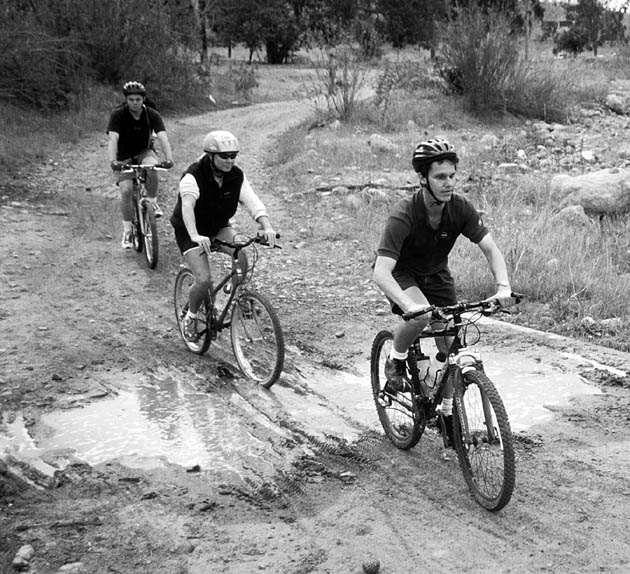
This week on the radio show This American Life, they had an episode called Batman. (Listen to it here. Or read the transcript.) They told the story of Daniel Kish, who has been blind since he was a toddler. The picture shows him – riding a bike. He navigates the world – hikes the woods, rides his bike, walks through cities – using echolocation. He clicks his tongue, and listens to how sound bounces back to determine what objects are nearby. This skill allows him to easily move about independently, with few limitations.

In the radio show, they interview author Robert Scott, who argues that blindness is a social construct. When we, as a society, have low expectations for what a blind person can accomplish, we limit what they can accomplish. He tells a story of a man who worked at a paint factory, then lost his vision. His co-workers told him: hey, we’d love for you to still work here. Go to an organization that serves the blind and get some training and come back. But the organization basically told him “blind people don’t do that” and offered him placement in a sheltered workshop for the blind. Robert Scott met him years later begging on a street. That’s what many people expect blind people to do.

This radio show was particularly striking to me because I have one leg. Technically, by just about any definition you can come up with, that makes me handicapped. But, I don’t really think of myself that way often. Certainly in my experience, handicaps are a social construct. I suppose I have to adapt things to do them, but truthfully, I rarely notice that I have to do anything differently than other people(other than finding a place to lean my crutches when I sit down). It doesn’t really limit my activities in any notable way. And I don’t see any reason why it should.

And yet… There’s a male amputee who hangs out on the 45th street on-ramp to I-5, asking for money, with his pant leg folded up to reveal his artificial leg and a sign saying he can’t work. There’s another one who hangs out by Bellevue Square. Same fashion choice. Same sign – “can’t work.” Here’s the thing. I seem to always see them as I’m driving to or from my work!

I just can’t understand why they think they can’t work. I have never had a problem finding a job. Now yes, I grasp that I came from a middle class background and went to a good college and grad school, and this helps in the job search. And I get that their job experience might be in fields that are harder to do with one leg. But what I don’t understand is their belief system. What is it that convinces them they can’t work?

Expectations. Handicaps as a social construct.

So how did I miss out on this societal message? I lost my leg to cancer when I was 15. I grew up in a military family in Wyoming which is a culture known for some fierce independence and a sincere desire never to be a burden to others. So, I had that influence going in to the experience. But also, after my amputation, I don’t remember ever really getting the message from anyone that I was now to be considered handicapped and incapable of an independent life. Now, maybe someone thought that about me along the way, but I never noticed if they did. It was just assumed, as far as I knew, that I would get healthy again, go back to high school, go on to college, go on to work, and marriage, and kids – all the same things that had been expected of me when I had two legs. There was no reason to change any of those expectations.

Since I’m a parent educator, and this is a blog about parenting, of course, I come around to thinking: And what lesson is there in all this for parents? And not just parents of kids with physical handicaps, but really for all parents.

Our children live up to our expectations. Maybe not always. Maybe not every day. And maybe not in every precise detail if you’re a person who gets really specific in your expectations… But over the long run, they live up to our big picture expectations.

I can’t just say “I expect my four year old to clean up his toys today” and then have that magically become reality. And I never set for my older ones a really specific expectation, like “I’ll only feel successful as  parent if she goes to Princeton and majors in physics.”

But I can tell you that over 21 years of parenting my eldest and 17 years with my second, that they have, in general lived up to our big picture expectations of them. They’re really good kids, with a strong ethical grounding, compassion for others, commitment to excellence and passion for learning.

We did have the broad expectation that they would do well in school, and go to college, and they have (well, my second child will start college next year…). “Research has shown that parental expectations for children’s academic achievement predict educational outcomes more than do other measures of parental involvement.” [Source]

I do think there’s a fine line with expectations. If we expect more of our kids than they are possibly capable of, and continually let them know that we’re disappointed at their failure to meet those expectations – well, that would be pretty miserable.

But we also don’t want to expect too little.

I confess – my oldest has done an excellent job of convincing us that she’s bad at washing dishes. So, we never ask her to do it. We just do it for her so it gets done “right.” But one does wonder how or when this pattern will ever change….

I think one of the things that limits what we ask of our kids is maybe a bit of parenting fatigue… it’s easier to do the dishes than ask her again to do them, or to show her again what we mean when we say clean…

But sometimes we try not to ask too much of our kids because we want to protect them. We want to protect them from the risk of failure.Yes, I told my children not to expect to be professional class or Olympics class athletes. Because I knew the statistical odds of them becoming that was really small, and I didn’t want them disappointed. But, did I also block any potential of them becoming that? Yeah, I did.

We also often limit our children to protect them from harm. We set limits on our expectations, and thus limits on our children because of a desire to keep them safe.

In the episode of This American Life, Daniel Kish tells this story… When Daniel was in fifth grade, he was a very independent kid – he walked to school, crossing major streets. He made his own breakfast and his own lunch. Then a new blind kid came to school. Adam. He was not independent – couldn’t do much of anything on his own. He had come from a school for the blind where people did everything for him – escorted him everywhere he went, carried his books, tied his shoes, made his lunch, brought it to him – because “blind kids can’t do those things.”

The people around Adam had done all those things for him to help him and to protect him from harm. On the episode, they interview Daniel Norris, who works for the Vermont Association for the Blind. He says that most parents of visually impaired kids have a hard time letting their kids risk trying things that “blind kids don’t do.”

Norris says “You can’t blame mom and dad for struggling and wanting to keep their child safe…They want their child to not suffer. And that’s very noble but holds the kids back.”

I try with my four-year-old to remain aware of developmental capabilities. What are reasonable things to expect of him? I try to expect that. And in the areas where he’s strongest, I stretch my expectations just a bit so he has to stretch just a bit. It’s in that pushing at the edge of his capabilities that he learns. But in the areas where he’s struggling a bit more, I try not to pressure him too much in the moment, while still holding the vision that someday he is going to get stronger in those areas too. In order for him to learn, I have to be willing to let him make mistakes, I have to let him sometimes fail so he learns how to get back up and try again. I have to be willing to let him take risks. I have to expect him to learn, change, grow, make reasonably smart choices, get a few bumps and bruises along the way, but be better for them in the long run. Because he’s likely to live up to those expectations.

On the radio show, host Lulu Miller says “And here’s where we get back to expectations. See, Daniel [Kish] thinks there is nothing amazing about him. He thinks that most blind people who don’t have other disabilities could do things like ride bikes. See, he thinks the reason that more blind people don’t [is] because the expectations that you or I are carrying around in our own heads about what blind people can do are simply way too low. Those expectations, those private thoughts in our heads, are extremely powerful things, because over time, they have the ability to change the blind person we are thinking about.”

If blindness is a social construct, and my “handicap” is a social construct, where else are we handicapping people through our beliefs and expectations… Where are you handicapping your child or other people you encounter?

Link

Check out this helpful resource on Screen Sense – Research-Based Guidelines for Screen Use for Children Under Three Years Old.

They make some familiar recommendations, such as

  • Avoid having the TV on in the background. Turn the TV off when no one is watching.
  • Avoid using screens as part of the bedtime routine
  • Be mindful of and limit your own screen media use when children are present.

However, they also say:

“Although children learn best through hands-on exploration… they can learn from [screens]. What is most important is that 1) content is age appropriate, 2) viewing time is limited, and 3) parents are involved, and help children make the connection between what they see on the screen and the real world.”

And, they offer great tips on how to choose content and how to extend your child’s learning. Some examples:

“Help your child make the connection between what she sees on a screen and the real world.Play games with her afterward using objects similar to what she has seen on the device, such as blocks or a ball. Point out and label objects in real life that she has seen on TV or on touchscreens, such as animals and flowers.”

“Create ways to extend your child’s learning from media.If a program focuses on animals—such as an armadillo—when it’s over, make up a pretend story about armadillos that you and your child can act out. Apply the colors your child has learned from an app by labeling the colors of the family’s clothes as you sort laundry together.”

What do we know about spanking?

We know it can work to increase compliance in the moment.

Parents who use physical punishment often experience that result. Their child misbehaves, then they spank, then the child stops misbehaving. It’s very effective in the short term, so the parents continue to use it. And some parents discover that a tiny swat on the butt is not always effective, but hitting hard enough to inflict pain is really good at eradicating behavior over the long run.

But, physical discipline can have other unintended effects in the long-run.

Of course many individuals who were spanked as children turn out just fine. However, research shows that on average, people who were spanked are more likely to be aggressive, less verbal, more likely to abuse substances, more likely to experience anxiety, depression, and other mental illnesses, more likely to be obese and have cardiovascular disease, and more likely to abuse their spouse and children (they’ve learned big people can hurt smaller people). They have less gray matter development in their brains.

Read this excellent infographic / article on the Psychology of Spanking to learn more.

spank

Spanking and Brain Science

From studying brain development, we know: When children are happy and feel safe, they learn, grow, explore and their brains develop. When they are stressed or frightened, their brain goes into survival mode. They can definitely earn what not to do.  (i.e. when I do this behavior, my parent hurts me, so I shouldn’t do that behavior again.) But they’re not learning much else. Like what TO DO. (Or how to read, how to throw a ball, how to eat neatly… whatever it is the parent hopes they will learn soon. The survival mode brain doesn’t care about any of those things) Daniel Siegel has written about this neurological effect in The Whole Brain Child and No-Drama Discipline. Watch a video about it here.

Alternatives to Physical Punishment

85% of parents say they would rather not spank if they had a discipline alternative they believe would work. You can read my take on positive discipline here, or advice from the CDC here, or follow the recommendations in the Psychology of Spanking article [excerpts below…]

1) Develop a positive, supportive, loving relationship between parent and child:

  • Maintain a positive emotional tone in the home.
  • Pay attention to the child to increase positive behavior…
  • Be consistent in daily activities to reduce resistance and make negative experiences less stressful…
  • Be flexible by listening, negotiation, and involving the child in decision-making. This has been associated with long- term enhancement in moral judgment.

2) Use positive reinforcement strategies to increase desired behaviors…

  • Listen carefully and help them learn to use words to express their feelings.
  • Provide children with opportunities to make choices and to understand the consequences of their choice.
  • Reinforce desirable behaviors with frequent praise and ignore trivial misdeeds…

3) Remove reinforcements or apply punishment to reduce or eliminate undesired behaviors.

  • Be consistent with… removal of privileges (increases compliance from 25% to 80%)
  • Be clear about what the bad behavior is and what the consequences will be.
  • Deliver instruction and correction calmly and with empathy.
  • Provide a strong and immediate consequence when the bad behavior first occurs…
  • Give a reason for the consequence. This helps children learn appropriate behavior

Learn lots more options for discipline tools that help you to teach your child how to be a good person – which should be the final goal of disciplining a child – in the Discipline Toolbox.

Speaking with the Voice of Authority

In class last week, a mom told me how overwhelmed she was by her kids. She felt like they didn’t listen to her. Not only did they not follow her rules, they would sometimes hit or bite when she tried to enforce those rules. She was feeling out of control and powerless. She asked: “How do you get that voice that puts ‘the fear of God’ in your kids?” In other words, that tone of command that says “That’s it. I mean business! You will now do what I am telling you to do.” It’s the “Stop – do NOT run out in traffic” tone or the “It’s not OK to hit” tone.

I said “It’s all in the voice” and demonstrated my sternest tone.

But really, it’s more than the voice. It’s the body language and the facial expressions too. Gone is the soft and gentle mama (or papa) who will let them get away with anything just because they’re so darn cute. Gone is the tired looking mama they know will let them get away with it because she’s too tired to do anything about it. (Believe me, I know you may FEEL this way, just try not to let it show.) This is the serious mama who Needs Them to Listen to Her Now. (Note: you don’t need to be a mean mama, or an angry mama… you can still be loving and respectful and in calm control of your own emotions when you are being authoritative.)

But really, it’s about much more than how you talk, stand, or look in the moment. It’s about your whole relationship with your kids. Are you generally respectful, loving, playful, and encouraging them to adventure and explore? Have you built a relationship of mutual trust? If so, then when you put on your serious tone, they trust that there’s a reason for it.

It’s also about your discipline style in general. The Voice only has power if they know there will be Actions that follow it up.

Do your children know that you set limits and stick to them? Do you tell them what’s expected of them and what the consequences will be if you disobey? Do you follow through on those consequences? Do you follow through every time? Even when you’re in public? Even when you’re tired? Even when you’re busy? Don’t set consequences unless you can follow through on them in that moment! Find a consequence you’re willing to enforce and enforce it.

This is where the discipline flow chart comes in: step 3 – tell child what to do; step 4 – alert child to the problem by putting on your command voice; step 5 – calmly enforce consequences, and step 6 – move on.

You might say: “When we are in the parking lot, you need to hold my hand. If you let go, I will pick you up.” Then, if she lets go, calmly pick her up and carry her. Even if she’s kicking and screaming. When she’s buckled into her car seat and calmed down, explain that your job is to keep her safe, and one thing you need her to do is hold your hand in a parking lot so the cars know she is there.

You might say: “I want you to use a gentle voice and nice touch with your sister. If you hit her, I will pick you up and carry you out of the room.” Then if he hits, calmly pick him up and carry him out of the room. Then help him take a few deep breaths and calm back down. Even if you have other things you need to do in that moment (like work on dinner), the consequences need to be there and need to be immediate.

You might say: “I want you to share the toys nicely. If you two fight over something, I will need to take it away and put it on the time-out shelf.” When they fight over something, calmly take it away. Then help them re-settle into playing with new toys. You do this even if you’re tired, and really just want them to play by themselves for a moment while you rest. You don’t give up and just toss the toy back down to them when they fuss about you taking it away. And if they bite or hit you, you should clearly say “It is not OK to hurt me. It’s never OK to hurt other people. I’m going to leave you here in your room by yourself for a while, and I’m going to go somewhere else.”

How do your kids know you mean business when you say something? They know because you consistently follow through with actions and consequences if they don’t listen to you when you say it. You “say it like you mean it” because you do mean it.

I promise I didn’t put the photo of Professor McGonagall from Harry Potter at the top of this post because I think you’re being a witch when you enforce limits. I put it there because I think this character (in both the books and the movies) exemplifies the gentle authority. There is no doubt that she loves the children. There’s also no doubt that she means business when she tells them what they need to do. You can find your own loving voice of authority with your kids. Your life will feel more in your control when you do this, and your child will also be reassured – although they may act like they want to be in charge, it’s actually a little scary for them to feel like they are. Kids prefer it when they have a strong loving authority in the house.