I teach Discovery Science Lab and Family Inventors' Lab, STE(A)M enrichment classes in Bellevue, Washington for ages 3 - 9. I am also a parent educator for Bellevue College, a childbirth educator for Parent Trust for Washington Children, former program designer for PEPS - the Program for Early Parent Support, and a social worker.
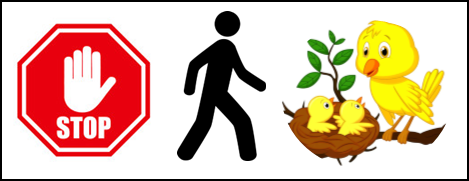
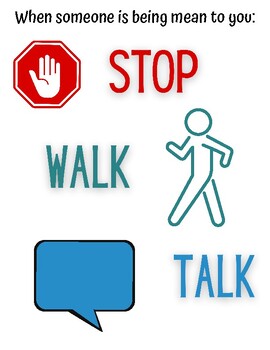
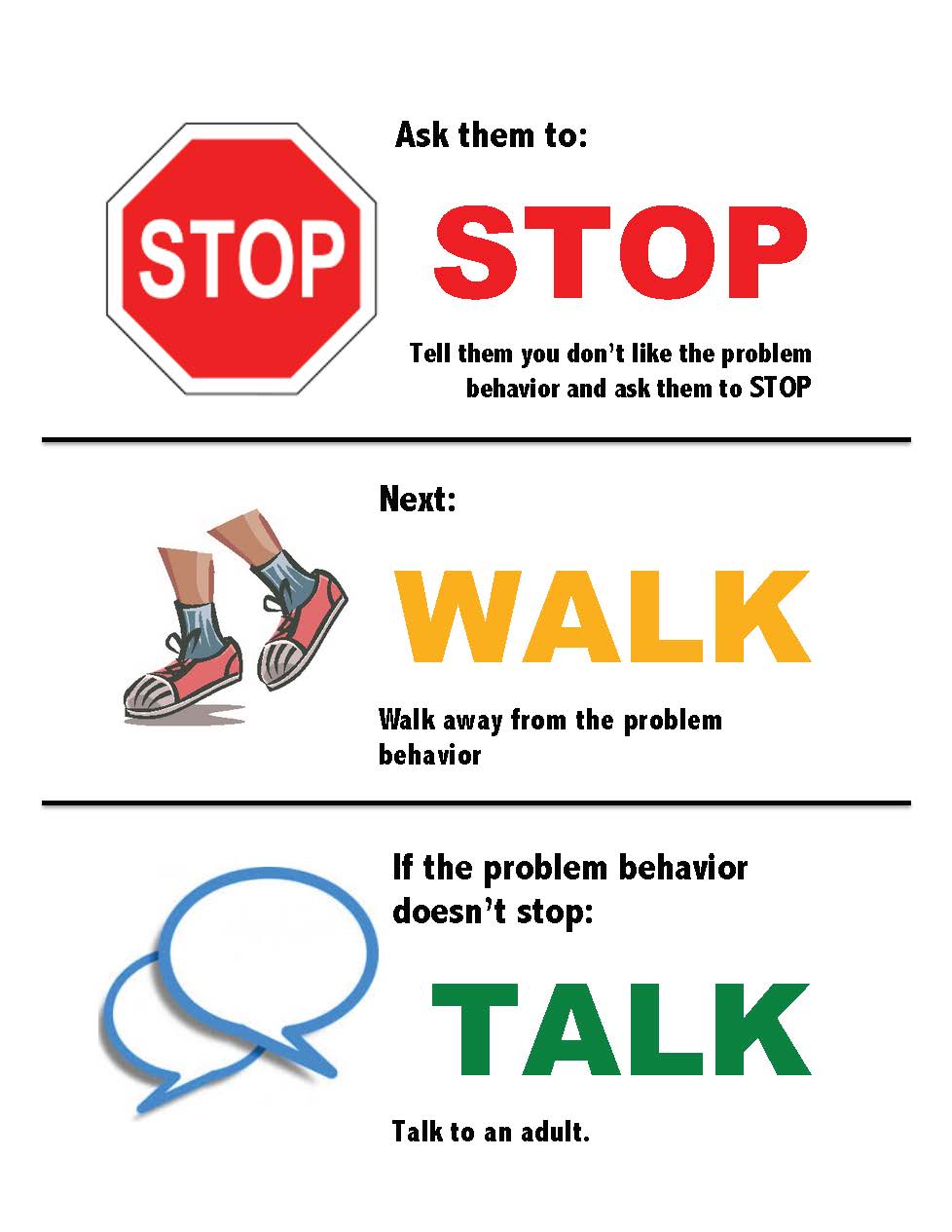
In a meeting yesterday, I learned something that was a new idea to me: teaching kids that when another child is doing something they don’t like, they should “Talk, Walk, Squawk.”
I have learned that it is a fairly common “bullying prevention strategy” taught to elementary school students. I think the method would also work well with preschoolers, but I would never present it as bully prevention at that age. When preschool age children push, or steal a toy, or say something that feels hurtful, it’s very rare that it’s an intentional “bullying.” They push because it’s hard to wait for your turn on the slide when your impulse control is still developing, they take a toy because they want to play with that toy and their empathy is still developing, they say whatever comes to mind without being aware how it could feel to someone else.
But I do like the basic idea at the preschool level, because it gives kids an easily understood collection of options for what to do when another child is doing something that bothers them. (Note: some examples describe this as “what to do when someone is being mean to you”, but that assumes ill intent from the other person.)
You could choose what order to teach them in: some start with a “walk away” plan – you can always choose to remove yourself from the situation; some start with “stop” – first you say “stop” to quickly let the other child know you don’t like what’s happening; some start with “talk” – explaining what you don’t like (although I’d recommend instead teaching to explain what you would like the other child to do instead – we know children are more likely to respond well if you tell them what TO DO, instead of what not to do).
It’s also important to teach “Squawk.” You could think of this as “tell a grown-up”, but I prefer “ask a grown-up to help you problem solve the situation.” The tell a grown up approach could fit into a more authoritarian model where the grown-up intervenes and punishes, the ask a grown up for help fits better in a model where you’re supporting the children in learning their own problem solving skills, and learning what it means to interact well with others.
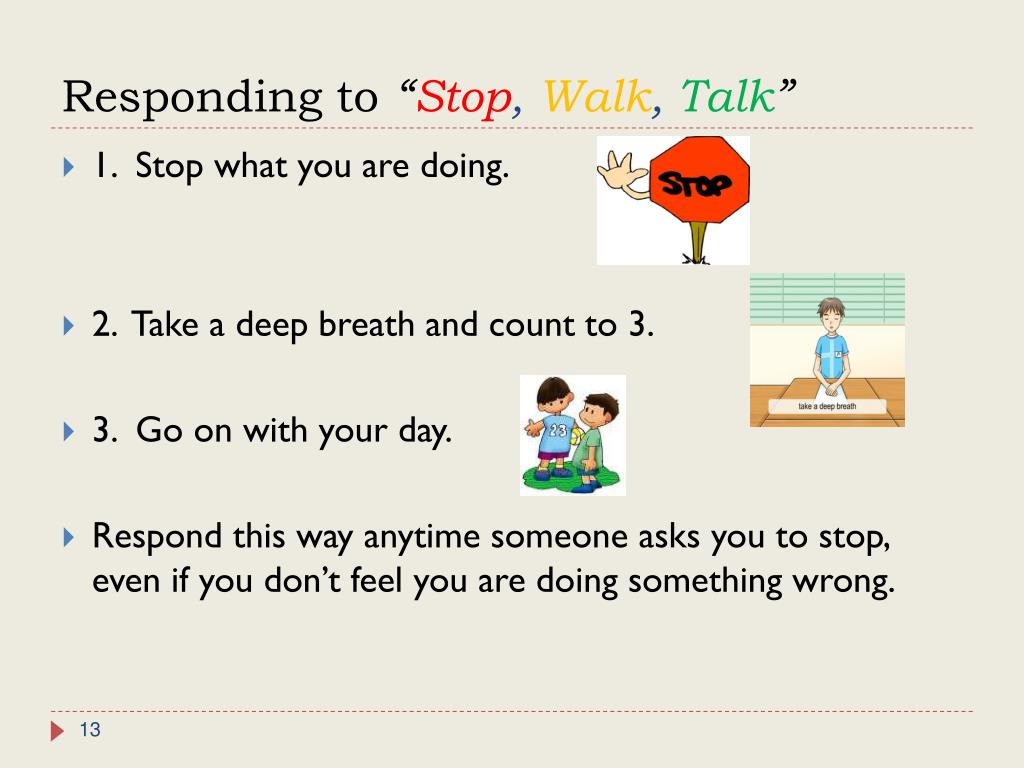
You can also teach children how to respond to being told to stop. Stop what you are doing, take a deep breath, try doing something different or asking a grown-up for help. They should know that if someone says stop, they should stop, even if they don’t think they’re doing anything wrong.
This post is the text of a handout I created for orientation at my co-operative preschool (I’ve added links for learning more), so it talks about how we do things in our classroom, but all of these 12 principles apply to parents and teachers in all settings.
Respect! Let’s commit to a fundamental belief that everyone here (kids and parents) is doing the best they can given their developmental level, skills and knowledge, and challenges in their past and current environment. And… we all have bad days. When you have a bad moment, call yourself on it, apologize as needed, forgive yourself and commit to doing better. When someone else is having a bad moment, don’t judge.
Kids do well if they can. If someone (kid or adult) is “mis-behaving”, ask yourself: What skills do they lack? What support do they need? What stressors are making it hard to do well right now? When those things are noticed and addressed, behavior improves.
Everyone does better when they know what to expect and what’s expected of them. Consistent routines, clearly explained expectations (not “unwritten rules” they need to guess), well thought-out limits and follow-through on promises (both promised rewards and promised consequences) create an environment where a child can do well.
All feelings are OK. (Not all behaviors are.) We all have lots of big feelings. We’re all learning how to manage them appropriately. When a child is calm, we can teach appropriate ways to express feelings. When someone has big feelings, it helps to validate that. If their feelings led to bad behavior, also address that: “Wow, you were mad she took your toy. I understand. But you hit her, and that was not OK.”
When someone flips their lid, co-regulate before anything else. When we are calm and feel safe, we have access to our whole fully developed brain. So a young child can speak in sentences, follow the rules, make fairly good choices. But, when we are really scared, or sad, or mad, or just overwhelmed by too much stimulus or too many demands, we “flip our lids.” We can’t speak, we can’t be reasoned with… If you have a child who is in full meltdown, it’s not the time to teach or to explain or to ask them to make better choices. Instead, co-regulate. Get yourself calm, get down to their level, speak in a quiet voice. Set clear limits and tell them what needs to happen next.
Every kid is unique and has different needs and capabilities. We are a multi-age class, so our kids are at different developmental stages. Development is asynchronous, so you might have a child with high skills in one area and low in another. Also, we all have different interests, different temperaments, different sensory and support needs, different degrees of flexibility before we hit a breaking point. If you find yourself worrying that your child is “behind” other children, or find yourself judging other children for areas they’re struggling in, remember this range. Judge each child’s progress based solely on – is this child progressing well from where they used to be?
These kids are little. They’re still learning. These kids are practicing everything. Practicing kindness, practicing sitting still and listening, practicing good choices, how to do things without making a mess. They’re going to make a lot of mistakes along the way or have days they’re not doing well. We’ll just keep working on it. Instead of telling them “don’t do that”, tell them what TO DO. Instead of assuming they know how to behave well, tell them what would be a positive action to do in that moment.
Growth Mindset/ Power of Yet. “You can’t do it yet, but you’ll get there.” At times, a child can almost do something – they’re working on a puzzle, and they know how it’s supposed to work, but just can’t do it. That is super frustrating!! Don’t feel like you have to rescue them – sit by their side for support and encourage them to keep trying – suggest things to try but don’t jump in and solve it. When they make mistakes, say “hmm, we learned something that doesn’t work. What else could we try.” But… also notice when something is just too hard (or at least too hard in this moment). Teach that it’s OK to say “I can’t do this yet. I can set it aside and try again some other time.”
Process over Product. With crafts, we might have a sample of what a final product could look like. But the process is always more important. We honor a child’s right to make their own choices about what to do. (As long as they’re following the “make don’t break” rule.) What they learn in the process of doing something is more important than the product. So, while you are welcome to help them to do it themselves, please don’t just jump in and do it for them so it will “turn out nicer.” That’s not the point!
We are child-led, play-based. We set up a variety of great learning opportunities, but it’s up to the child to decide what they want to try, and how long to do it. If they start a project and don’t want to finish, that’s OK. If they only try two activities in a day, they didn’t “miss out” on everything else. They focused on what mattered to them.
Freedom Within Limits. Everyone Gets to Feel Safe. Everyone Gets to Play. We try to give children lots of choices. They’ll make some good choices and some bad. We want to let that happen so they learn from their mistakes. But, for the sake of safety (physical and emotional) and fairness, parents and teachers must set appropriate limits. We decide what options are on the table, and they decide from amongst those good options. If they do something unsafe or unfair, we set limits. For example, rough and tumble play is tons of fun, but only if everyone has consented and everyone stays safe.
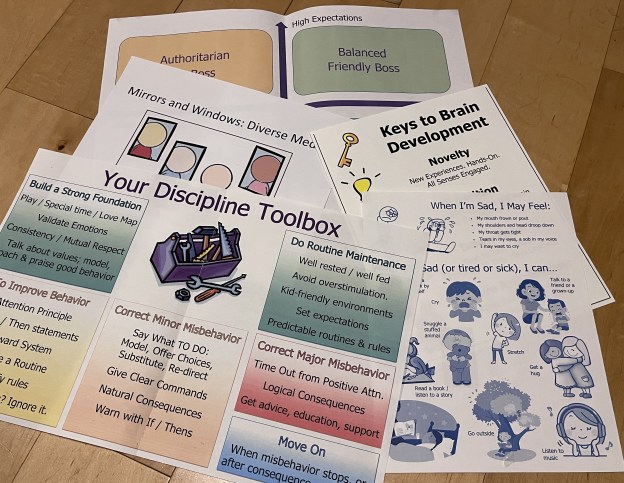
Four Keys to Brain Development: Novelty, Repetition, Downtime, and Safety. Every time we experience something for the first time, we make new connections in our brain. Novelty is so exciting! Every time we see something familiar or repeat something we’re good at, we build competence and confidence. Repetition and routine is soothing! None of us can be learning and doing all the time. We all need breaks to rest and integrate new learning. Finding a balance of novelty, repetition and downtime and ensuring a child always feels safe and loved is the best way to support learning.
Handout
Here’s the handout version of this post – feel free to share anywhere.
Check out my recent post on sound books for the big picture on interactive books where kids press a button to play a sound. This post focuses on some great music-themed sound books. (Pressing a button starts a song, pressing it again stops the song.)
At the bottom of the post, I have a video, where you can hear a sample of what each of these books sounds like.
Disclaimer: Pirouette Kids sent me two of their books to review. This post includes my unbiased review of those books, and info on books from other publishers for comparison.
Pirouette Kids
Their focus in on “music beyond nursery rhymes”. They have four books at this time, the two I review below, plus World Music and Classical Music.
Some overall impressions: I like the size of the books – easy to pack, easy for small hands to hold. The pages are sturdy. The buttons to activate the music can be a little tricky for a child to spot for the first time, and activating them requires pressing precisely on them (a fine motor skill builder) but they work reliably. The speaker is on the back – so, if it’s laying flat on a surface, it is much quieter than if held upright. (That can be an advantage if you’re holding the book as you can adjust the volume a bit. If the child is using it lying flat on carpet, it’s pretty quiet.)
This board book has snippets of 6 folk music tunes (Oh Susanna, This Land, Little Liza Jane, Sarasponda, Home on the Range, This Little Light). Each page has the lyrics for 3 or 4 lines of the song, and a button that plays a 15 second clip. They are all performed by the same musician – Daria, who is pleasant to listen to and not cutesy / chirpy as many performers are when doing children’s songs. The illustrations by Margarita Fomenko, which feature animals doing human things, are pretty cute.
I like the choice of songs – it expands outside the typical kid songs repertoire but still all quite accessible. The 15 seconds is really short. It works OK on some songs, like Little Liza Jane feels complete on its own, but many feel like a song is just getting started then gets cut off abruptly. (They do have full versions of each song available on Spotify and there’s a QR code on the back of the book that takes you there.) For me as an adult who knows these songs well, they leave me feeling a little incomplete, and I wish they could wrap up a full verse or chorus. But that likely won’t trouble a child who is new to these songs.
Overall, it’s a cute book with nice tunes you might not find elsewhere, and I would recommend it.
Pirouette’s I Discover Blues Music
This book has snippets of 6 blues songs – recordings by original artists. There are 3 vocal tracks: Goodnight Irene by Jerry Lee Lewis and his band (1958), Careless Love by Big Joe Turner (1958), See See Rider by Louis Armstrong and Velma Middleton, and 3 instrumental: John Henry Blues by Erskine Hawkins and his Orchestra (1950), Old Stack O’Lee Blues by Sydney Bechet and Nicholas Blue Five (1949), Jumping at the Woodside by Buddy Tate and his Celebrity Orchestra. I love that they included the “real” versions of these songs, and chose songs that children are unlikely to be exposed to elsewhere (a few of these are even new to me, and I thought I had listened to a lot of old blues!) I love the John Henry Blues especially.
Illustrations by Sakshi Mangal are cute, and show animals doing human things. Since many of the songs are instrumental, instead of having lyrics on the page, they have information about the tune, and questions to ask a child. Here are two examples.
and
On Pirouette’s website, they have links to where you can find full versions on Spotify. (Though there’s not a QR code on the book to point you to this page.) A caution though: these are blues songs, so some of the lyrics in the full vocal performance aren’t kid friendly, for example, See See Rider says “I’m gonna buy me a pistol, Just as long as I am tall… Kill my man.” But you can also find instrumental only versions of the tunes. For Good Night Irene, there are kid friendly versions of the lyrics.
These song clips are again only 15 second snippets, but it doesn’t bother me on these like it did on the folk music one… since I know they’re long songs it makes sense that it’s only a sample vs with the folk songs, sometimes I felt like if they’d just had one more line of the chorus it would have felt more complete.
I definitely appreciate the way this book helps to stretch our repertoire of “fun music for kids to listen to.” I recommend it.
Ditty Bird’s Chinese Children’s Songs
Ditty Bird has LOTS of books. Sounds, Songs, Bilingual… the one I reviewed was Chinese Childen’s Songs Volume 1 It includes 6 songs: Two Tigers, Where’s Spring, Little Donkey, Picking Radish, Good Little Rabbit, Where’s My Friend. I love that these are traditional Chinese songs. I do not speak Mandarin but the reviews say the pronunciation is good and that traditional Chinese instruments are used. The recordings are pleasant to listen to. They are as long as they need to be for the complete song, so 12 – 25 seconds.
They include the lyrics, in pinyin and traditional characters, and an English translation. (Unfortunately the English words don’t seem to scan to the tune.) I wish the lyrics were printed in a larger font for all of us who are over 40 to read! The illustrations are cute, showing animals in Chinese settings, wearing both traditional and modern clothing.
Like the Pirouette books, this is a nice small, sturdy board book, with the speaker on the back. The music buttons seem to be the same technology – so they work well, though do require a child to put their finger in a specific place. It is $19.99 on Amazon. (affiliate link). Reviews on Amazon say that durability can be an issue, with some reviewers reporting the buttons stopped working.
I purchased this book because I mean to learn some children’s songs in Mandarin, and although there are many YouTube videos and other resources online, I have not been remembering to use them. Having a physical book on the table reminds me to listen.
I recommend this book too.
Bao Bao Learns Chinese
This company has 3 Chinese books, plus similar books in: Tagalog, French, Spanish, Korean and English. I reviewed their Chinese Volume 1 which includes 6 songs – some traditional Chinese – Two Tigers, FInd a Friend, and Mama is the Best in the World, and some traditional English – Itsy Bitsy Spider, Row Your Boat, and Twinkle Twinkle. It includes lyrics in English, pinyin, and Mandarin. (In a larger font than Ditty Bird.) The Mandarin words do line up with the English tunes. But I can’t make the English words scan well to the tunes for the Chinese songs.
This is a bigger book – a little harder for little hands to hold. The soundbox is to the side of the pages. It does have two volume settings to choose from. Since the buttons are off to the side, a child has to figure out which one to press to get the song that matches that page – the image on the button is just some small portion of the image that’s on the page, so I’m not sure it’s obvious to kids which image goes with which page. (And the soundbox has random shaped openings for the buttons that don’t really line up with the illustrations.)
Songs repeat twice so recordings range from around 30 seconds to 85 seconds. The repetition helps with learning. They’re nice recordings and very pleasant to listen to. They offer super helpful resources on their webpage, like information on how to pronounce Mandarin words, and videos where they talk you through the lyrics of each song, clearly enunciated so you can get the pronunciation right. (I wish they had a QR code on the back that would take me right to that page.) $28.99 on Amazon.
For learning Mandarin songs, if I had to choose just one of Bao Bao or Ditty Bird, I would choose Bao Bao, but am happy to have both.
Singing with Go Go is Fun
There are LOTS of Go-Go books. Including English, Spanish, Mandarin and a Christian themed line. They are $29.99 each. I have the “9 Creative Nursery Rhymes” volume. (I’d swear that what I put in my Amazon cart was one of the Go Go Mandarin books, but this is what Amazon says I ordered and what they sent….) It has 9 songs – Humpty Dumpty, Itsy Bitsy Spider, Jack and Jill, Wheels on the Bus, London Bridge, Mulberry Bush, Muffin Man, I’m a Little Teapot, and Mary Quite Contrary. Many of the songs are pretty traditional, but on Itsy Bitsy and Jack and Jill, they added a little riff at the end, and the Wheels on the Bus became “the Go Go Bus goes round and round.”
This is another large board book, with the controls on buttons off to the right side. There are two volume settings, controlled on that side panel. The child needs to figure out which of the 9 buttons matches the song for the page they’re on (the 10th button is just announcing the name of the book). Songs are up to 60 or so seconds.
Personally, I don’t like the style of these recordings. They’re like Barney the Dinosaur vibe – just a little too enthusiastic / peppy with kiddie pronunciation. I’m not a fan.
At my toddler class and preschool, I have children who speak lots of different languages at home: including Spanish, Russian, Mandarin, Vietnamese, Hindi and diverse Indian dialects. I speak a little Spanish, French and German – enough that I can count to ten, and name some colors and some farm animals. That means that I can sometimes talk with children in their home language. I’m now trying to take on some Mandarin, and feel like I’m way out of my league. But here’s where I’m starting.
First, this helpful video which explains the whole idea of tones and reading pinyin – the romanized version of writing Mandarin that includes pronunciation cues:
This was an a-ha moment for me. Last year, I had a student in class that I asked his mother how his name was pronounced. She said it, I echoed back what I thought I heard, she said no, and said it again – after several attempts I couldn’t get it right and couldn’t hear what I was doing wrong – I worked with my teacher who speaks Mandarin, and she couldn’t explain what I was doing wrong. (There’s research that shows that young babies can hear any tone human mouths can make, but by the time they are toddlers, they have learned to ignore tonal differences that don’t matter in their language – for example, the difference between L and R sounds in English matters, but it doesn’t matter in Japanese.) Because I was raised in an English speaking home, these different vowel tones are just not something my brain easily hears, so I will have to actively teach it to notice these differences. This video helped with that.
I know that music helps us to learn, so, to embark on Mandarin, I’m starting with children’s songs.
Where is My Friend
Lyrics:
yī èr sān sì wǔ liù qī wǒ de pénɡ you zài nǎ lǐ zài zhè lǐ zài zhè lǐ wǒ de pénɡ you zài zhè lǐ
1, 2, 3, 4, 5, 6, 7 / Where is my friend? / Over here, over here / My friend is over here
The song starts with counting to 7, so it’s a great early one to learn. I also like the video from our local library.
This video includes really clear pronunciation on the song, then teaches each of the words. (You’ll also see how she uses the fingers one one hand to count to 10 in the Chinese way rather than the method I’m familiar with which requires both hands.)
Liǎng zhī lǎo hǔ, Liǎng zhī lǎo hǔ, Pǎo de kuài, Pǎo de kuài, Yī zhǐ méi yǒu yǎnjīng, (or: Yī zhī méiyǒu ěrduo) Yī zhī méi yǒu wěibā, Zhēn qí guài, Zhēn qí guài.
Two little tigers, two little tigers / Running fast, running fast / One without eyes (or one has no ears) / One has no tail / it’s very strange, it’s very strange
This uses the same tune as Frere Jacques.
There are additional recordings at Bao Bao, and lots more. Here is a pronunciation guide from Bao Bao Learns Chinese.
bá luó bo, bá luó bo; hāi yāo hāi yāo bá luó bo; hāi yāo hāi yāo bá bū dòng; lǎo tài pó, kuài kuài lái; kuài lǎi bāng wǒ men bá luó bo
Pull the radish, pull the radish / hey-o, hey-o, pull the radish. / hey-o, hey-o, we can’t pull / Old lady come, quickly come / Come help us pull up the radish now
This video translates the title as picking carrots, but everything else I’ve seen says radish… In repeat verses, instead of calling the old lady, you could call for little girl, little kitten, little mouse, etc.
Or here is another version – I like this song, because I really like the sound of the hāi yāo hāi yāo bá luó bo refrain. The song appears in Ditty Bird Chinese songs volume 1 sound book.
Row Your Boat – Huá xiăo chuán
I decided to try a Mandarin version of a traditional English children’s song.
Huà huà huà xiǎo chuán shùn zhe xiǎo hé liú Kuài lè ba (4X) Rén shēng shì gè mèng
Sound books are interactive picture books aimed at young children. They have buttons you press to hear a sound (like a dinosaur roar, first words in various languages, or farm animal sounds) or a song. There can be anywhere from 3 – 30 buttons per book. They combine a book reading experience with a “press a button to make something happen” toy, so are fun for kids.
Benefits and Uses
Some benefits of sound books: they are interactive learning, they build fine motor skills, the child can interact with them independently, and they are fun! Additional benefits of language-based and music books: they can help reinforce learning for the child (in things like “first word” books where the child sees the word and hears the word), the child speaking or singing along with the book builds language skills, and they encourage focus.
For home use, they can work well to entertain a child while you’re busy, or in the car. Or, for me, each of my kids had a period of time where they had given up naps, but I wanted them to still have “quiet time” in their rooms. If they played with something like this that made noise, I could hear that they were still awake, or if the toy was quiet, assume they had gone to sleep.
At my classes, I don’t use sound toys much in the main classroom, as they can be distracting or overstimulating when added to all the other sounds in there. I have used them in my parent-toddler class, where I have a “quiet room” where parents can take a child if they’re overwhelmed. I have books and puzzles in there, but the sound books are nice there, because they are sound a child can choose and control, which may give them more tolerance for returning to the main classroom with all the noise they can’t control.
What to Look For
Like all press-a-button toys, they have the potential to be annoying for parents if the sounds are too loud, or if the sounds are unpleasant to listen to. So, I would only buy ones where I could listen to what it sounded like before buying. (Either in person, by listening to clips on line (like videos on Amazon listings) or by going to YouTube and searching for “[book title] read aloud” to see if someone has made a video of it. Read reviews to learn about volume if you can’t hear it in person.
Most of these books are board books – a few are paper pages, which is much less durable. The books have a power on/off button – if it’s off, none of the buttons will work. They have batteries, which tend to last a long time. Make sure they can be replaced or re-charged (some have USB chargers).
On most the buttons are fairly easy for little fingers to find and to activate, but some are harder to find or to press on just right to activate the sound. Again, if possible test them in person, or read reviews. Once you find a brand that your child can easily work, you can buy more.
I review five different brands of sound books here: Music Books.