Tag Archives: toddler

Your Unique Child

Each September, as I begin a new parent-toddler class, one of our first parent education discussions is: “Your Unique Child: the Influence of Temperament, Gender, and Learning Styles on How you Parent Each Child.”

I start there, because I know that the parents in the class are looking around the room and comparing their child to the other children, and often wondering/worrying about whether their child is “behind” or if they are doing a good job as a parent.

I want them to realize that every child is a unique individual, parented by unique individuals, in unique settings. Although we should be aware of developmental milestones – the age at which the average child gains a skill, the reality is that there is huge variation in individuals.

Here are just some ideas to help you understand, and support, your unique child.

  • Children are born with distinct personalities. It is absolutely worth consdering ideas like Temperament, Learning Style / Multiple Intelligences and Gender and Introvert / Extrovert to help us better understand them.
  • However, we don’t want to “label” our children (as “the shy one” or “the wild one” or “the musician”) because that can them limit our expectations for them, which limits their ability to grow and develop into all that they are.
  • There are not good or bad temperaments. But, there are goodness of fit, and badness of fit. A high activity child has “goodness of fit” on the playground, but not in the library. A very regular, routine-oriented child might “fit” well with a similar parent, but not so well with the free-spirited parent.
  • It’s good to know your children’s strengths, so you can give them plenty of experiences that let them use those strengths to build their confidence.
  • It’s also good to know what your child struggles with. On a good day, we may gently push their comfort zones to encourage growth in those areas. But, on a day when we’re tired and they’re tired, or we’re away from home, it may be easiest to adapt to their temperament accommodating how we need to in order to make it through the day. (So, our sensitive child may need a quiet day at home. Our active child may need a day running at the park. Our routines kid needs to bring routines from home wherever he goes.)

Lots more resources on temperament listed here.

Gender Differences: Nature then Nurture

genderNature: boys and girls do develop differently

There are lots of anecdotes about how different boys and girls* are. And, for any point that you are trying to prove about gender differences, you’ll be able to find at least one study that supports it. But, when experts do a meta-analysis of all the studies, these are the main differences that show up consistently:

  • Emotional Development: Boys may get upset and explode more easily, and have a harder time self-soothing. Girls may show fear earlier: they’re more likely to startle, and more likely to become cautious when their parents look worried about something.
  • Spatial Learning: boys may be better at the ability to turn objects around in their mind to see how they could fit together differently (puzzles), and better at keeping track of moving objects and predicting motion (where the ball will land).
  • Physical Skills: Boys may be more physically active (although girls reach large motor milestones at about the same age). Boys may have shorter attention spans.
  • Language: Girls are better at perceptual speed tasks: identifying matching objects and pattern identification. They may pay more attention to the human voice than boys do. Girls often talk earlier.

However, although those differences are observable patterns, the differences from all boys to all girls are small. When we look at individuals, there is just as much variation from one boy to another as there is from any one boy to any one girl.

It is true that girls’ brains develop faster. At birth, a full-term girl is about one week “more mature” than a full-term boy. Girls reach the halfway point of their brain development before 11 years, and their brain is fully mature between 21 and 22 year old. Boys’ halfway point is 15 years, with full brain maturity by 25 to 30 years old. Source. This delay can make boys seem “not as bright” or “not as good at academic skills” as girls, but that’s not the case in the long run.

Nurture: Boys and girls are treated differently

So, there are, in fact, slight biological differences. But we as parents reinforce and amplify the differences. We tend to encourage our children to do the things that we expect they would be good at (boys to throw balls, girls to talk) and we don’t challenge them in other areas, because “well, girls are just not as physical, and we all know boys talk later.” Our assumptions “crystallize into… self-fulfilling prophecies.” (Eliot)

  • Emotional Development: Some believe that “girls are more empathic / tuned into people from day one – they are much more likely to establish eye contact.” But others point out that because newborn boys are fussier and harder to soothe (due to those less mature brains), their parents are less likely to establish eye contact, so boys don’t get as much practice at that skill.
  • Emotional Expression: Boys are seen as more likely to be angry and aggressive, but that’s considered normal. Angry girls are told not to be angry. When girls show fear, they receive empathic support. But fearful boys are told not to be scared.  Source.
  • Spatial Learning: Girls are, in fact, slightly less interested in puzzles and building toys. But when we give our boys lots of Legos, and give our girls toy animals, having fewer opportunities to practice spatial skills can turn into a bigger gap in skills which influences learning advanced math later on.
  • Physical: Boys are expected to be more physical and more interested in balls and bikes, so when they show these interests, they are more actively encouraged. Boys are dressed in clothes they can move well in. Girls are dressed in “pretty” clothes, and assumed to be less physically capable. There was a study of 11 month olds. The mothers were asked how steep a slope their child could crawl down. Then the children were tested. Boys and girls did about the same. But the mothers of girls had significantly underestimated what their girls were capable of. Source
  • Language: Parents and teachers see a boy lagging in reading and verbal skills and shrug it off with, “But of course, he’s a boy.” It is true that girls talk younger. At 20 months a girl may know 200 words and a boy may know 30. But in a month he’ll catch up to where she was! She will always have gotten more practice than he has, though, so she will always seem further ahead. Girls may also read younger, which means parents assume they like to read. These girls are more likely to read for pleasure – which builds language skills, putting them further ahead. Meanwhile, the parents may focus on how slow their boy is at learning to read – when he over-hears this, he may develop a fixed mindset and assume that reading is not one of the things he’ll ever be good at.

Think about your expectations for the children in your life. What assumptions do you make about their capabilities based on their gender? Where do you “make excuses” for them based on gender… “well, I know that this is harder for boys to learn…”? When guessing which toys and activities they’ll be interested in, how colored are your assumptions by their gender?

Yes, I get that boys and girls can be different. My youngest boy was obsessed with trains as a toddler – my daughter never even played with the trains I got for her. She carried their stuffed animals everywhere and had a complex understanding of the social relationships of those animals and my youngest only occasionally plays with his stuffed animals. But I gave all of my kids an opportunity to interact with a variety of toys. And I tried not to make assumptions about which toys they would like.

Some parents believe that gender differences are set in stone, others see them as more malleable. Media has a big influence on parents’ perceptions of gender stereotypes. Politically conservative sources are more likely to explain gender differences as being based on biology rather than culture, and that means there readers were more comfortable to traditional gender stereotypes as “unavoidable.” Source

As with most aspects of parenting, I think the challenge is for us to:

  • see our children’s strengths (gender based or not) as strengths and give them plenty of free play opportunities to practice them and gain confidence and a sense of mastery
  • see the areas our children are less skilled in as areas for growth not as “unchangeable biological imperatives”. Provide gentle nudges in play-based learning, or more direct instruction to help them learn and grow, without pressuring them with demands for instant success

Sources:

Check out my other posts in this series: Boy and Girl Toys and Supporting Boys and Girls. Some sources I used in preparing these posts were Pink Brain, Blue Brain. By Lise Eliot. (read interview with Eliot at http://bigthink.com/videos/big-think-interview-with-lise-eliot or watch video at https://www.youtube.com/watch?v=A9hM8hnDta4); Cognitive Gender Differences by Abigail James. Boys’ Behavior: Why Boys Behave the Way They Do. By Troy Parrish. And Gender Neutral Parenting on Choosing Therapy

* Caveat: All discussions of gender are more complex than they seem. In terms of sex, humans can be biologically male, female or intersex. In terms of identity, presentation and gender roles, gender is more of a spectrum than a simple binary. Read more about gender here.

Fun with Toddlers: Babies & Families Theme

learning-about-emotions-diy-toyAt my toddler classes, we organize the kids’ activities and room decor around a series of themes. Each theme runs for 3 – 5 weeks. This year, I will be writing a series call “Fun with Toddlers” with ideas for activities parents can do at home: songs, games, crafts, and books. Our first theme of the year is Families and Babies, and lots of my activity ideas tie into learning about the parts of the body.

Songs to Sing

One Two (I have two eyes, so do you…)
Find lyrics, sheet music and an mp3 at: http://nancymusic.com/SOM/2008/one-two.htm

Two Little Eyes (tune: Twinkle Twinkle)

Two Little Eyes to Look Around
Two Little Ears to Hear Each Sound
One Little Nose to Smell What’s Sweet
One Little Mouth that Likes to Eat
Eyes and Ears and Nose and Mouth

Head, Shoulders, Knees and Toes

Homemade Toys to Make:

Happy/Sad Face: Use cardboard and paper fasteners to make the face shown in the picture at the top of this post. Spin the features to make happy faces, sad faces, and more. Directions at www.mrprintables.com/learning-about-emotions.html

Family Magnets. Take photos of family members. Glue onto magnets. Let your child play with them on the fridge. You could draw a family tree with pictures on it and have your child match magnets up to names and photos on the tree.

Sensory Activities to Do:

Baby Doll Bath Time. Put a doll and washcloth in a sink full of soapy water. As your child bathes the doll, name each body part.

Games to Play:

Body Part Flash Cards. Find photos of eyes, hands, and so on. Glue to index cards, and write labels. Your child could explore these on their own. Or you can call out a body part and ask your child to find the matching card. Or you can put tape on the back of each one and have your child label your body – sticking each card to the right part of you.

Put Your Finger On… Ask your child to “Put your finger on your nose. Put your finger on your toes” and so on.

Books to Read:

Where Is Baby’s Belly Button?(or others by Karen Katz)

Ten Little Fingers and Ten Little Toesby Mem Fox

I Can (or other books by Helen Oxenbury)

[This section contains Amazon Associate links.]

More ideas (and source citations):

www.pinterest.com/bcparented/family-and-babies-theme/

Schemas of Play

large_7461108728 (2)Have you ever known a child who was continuously filling up a basket and carrying it around the room? Or a child who loved to take objects and line them up in long lines? Or one who had a passion for throwing objects and would do throw all objects whether or not it was appropriate? Or one who only played with things with wheels? Those patterns of repeating behavior can be organized into “schemas” of play.

What is a schematic behavior?

Schema are building blocks for the brain. When a child is able to guide his own play, you’ll often see him exploring things in a predictable, repeated method, testing and experimenting with several objects in turn. This process helps him forge connections in the brain, helps him predict what might happen, and refine his understanding based on the results. Some children cycle through all of these schema every day.

But some children will focus intensely on one schema for a period of days or weeks (or months). Parents may worry that their child is obsessed, or that she will never let go of this one way of interacting with the world, but this is normal developmental behavior.

If a parent of caregiver can  recognize which schema a child is currently most focused on, they can tailor learning experiences to appeal to those interests while still providing a breadth of learning experiences. Sometimes children will pursue their schema in ways that are inappropriate (like throwing things in an enclosed space, or climbing on the furniture) so it is helpful to have other ways to direct that “trajectory” urge or the “positioning” desire.

Activities that Support, Extend, and Re-Direct Schema

Transporting. If you have a child who continually picks things up and carries them from place to place, here are some activities they may enjoy: Easter egg hunts or other gather-things-in-a-basket games; play in the bath with floating toys and a boat or basket to load them into; let them help with putting clothes into the washer and taking them out of the dryer; or helping to clear the table after a meal. Ask them to deliver items around the house (e.g. please put this cup next to the sink). Provide plenty of baskets, bags, boxes, and wagons to move things around in. It may help to put the majority of your small toys away while a child is in this phase so they have fewer total items to clutter the house with.

Transforming. If your child mixes all their food together, and mixes paints together, and likes to get things wet to see how they change, here are some positive ways to play with transformation: containers of colored water they can mix, fingerpaints they can smear together, a container with baking soda in it and eye-droppers with vinegar they can drip in and create “fizz”. Let them help you with cooking – mixing up muffins and seeing how they transform when cooked. It may help to find ways to minimize mess – for example, instead of giving them four containers of fresh paint, you could put four dabs of paint onto a “palette” or dish of some sort where they can mix to their heart’s content without “ruining” the full containers of paint.

Trajectory. If your child throws things, kicks balls, and drops things all the time, she is exploring trajectories – how things move through the air. She’ll probably love: paper airplanes, watching you play tennis or badminton (and fetching back errant balls), blowing feathers or scarves through the air, shooting baskets (tossing crumpled paper balls into the trash can), flying kites, chasing bubbles, bowling, splash painting (go outside with a bucket of water and a paintbrush – she dips the paintbrush in the water and swings it hard so the water splashes onto a wall or fence). If you know a friendly dog who likes to fetch, it may be a match made in heaven. (Although be aware of pet safety issues.)  It may help to put away many of your breakable valuables while your child is in this phase, and/or to provide him with only soft whiffle balls to throw.

Rotation. If your child loves cars, trains, and anything with wheels, and also loves to spin around, they enjoy rotation. He may like: unscrewing lids from empty water bottles, playing with a kaleidoscope, riding on a merry-go-round, spinning in an office chair, playing with water wheels, spinning things dry in a salad spinner, whisking scrambled eggs, playing with hula hoops, and drawing circles. These children may like playing with volume knobs or other knobs, so think about whether there’s anything you need to childproof. They also may like taking lids off containers, they may even figure out “child-proof” containers, so make sure medicines and chemicals are out of reach.

Enclosure and Enveloping. Does your child love to hide under blankets, bury toys in the sandbox, and put things in boxes? Those are enclosure skills. Build forts together, save large boxes for them to hide in and to pack things in, set up tunnels, set up a tent to sleep inside, play with a parachute, give her a shovel and take her to the beach or a sandbox to bury things, save small boxes to hide things in. Play lots of peek-a-book or hide and seek. These children often hide objects, so be careful not to leave essential items (like car keys!) in their reach.

Connecting. Some children love to build puzzles, assemble legos, and tape things together. Here are some ideas for things they can connect: tape together items from the recycle bin, make paper chains, punch holes in something and let them lace a ribbon through it, loop weaving looms, paper trains, construction toys of all sorts, dress-up clothes with buttons, zippers, snaps, and more. If you have a connector, be prepared to spend time untangling, untying, and prying apart! You may find it best to keep string, tape, and glue out of sight and out of mind.

Disconnecting. Other children go through a phase of destroying things: knocking down block towers, scattering Legos, tearing apart books. Give them a bin full of paper they’re allowed to tear apart, try to re-frame your way of playing with blocks – know that it’s all about building something that they will enjoy knocking down, teach them how to use the dustbuster to clean up their messes, put them inside a big box with some styrofoam sheets to break up (the box contains the mess). Now is a good time to put away toys with lots of small parts (e.g. train set or the collection of toy food) for a while, because all they’ll do is scatter them.

Position. Some children really like order: lining things up just so, and believing that everything has a proper place. They love “sets” of things that have a certain order they can be arranged in: alphabet blocks, number magnets, planets, and pictures of shapes with three sides, four sides, etc. They like peg boards, and stacking cups, and shape sorters. Putting things in order often calms them, but having someone mess up their order can be very upsetting, so help them learn to manage those upsets.

Orientation. Some children love to look at the world from a variety of perspectives: hanging upside down, turning their heads sideways, or climbing high to get a better look. Spend lots of time at the playground, or in gymnastics / tumbling classes. Give them binoculars and telescopes or even just cut a hole in a box for them to look through, give them an unbreakable hand mirror for exploring reflections. They will often climb on things not meant to be climbed on, but rather than just saying “no”, say “I can’t let you climb on that, but you can climb on this” or “there’s nothing safe for climbing here, but later today we’ll go to the playground and climb.”

If your child is currently “obsessed” with some schema, it can get tiring and frustrating to deal with, but remember that they are growing their brain, and organizing their ways of thinking about the world as they explore this schema again and again.

Sources for more information:

Schemas in Areas of Play  – suggests several types of activities a child might enjoy while working on a particular schema, also addresses problems a schema might create for parents and caregivers

What is a schema – includes descriptions of the schema, and then for each one offers activities to support that schema and key words to keep in mind while planning activities for kids working on that schema.

Schemas – How to understand and extend children’s behavior. Includes examples of types of activities a child prefers based on schema and how to help an activity (e.g. cooking) appeal to kids depending on whether their focus is on connection, rotation, etc.

Also, click on those three links in the first section of this post on “What is a schematic behavior” to learn more about brain development and play-based learning.

Resource for parent educators:

I have made up a set of printable postcards describing these schema that you could hang about a children’s play area for parents to read while their children play.

photo credit: Megan Hemphill (Prairie & Co) via photopin cc
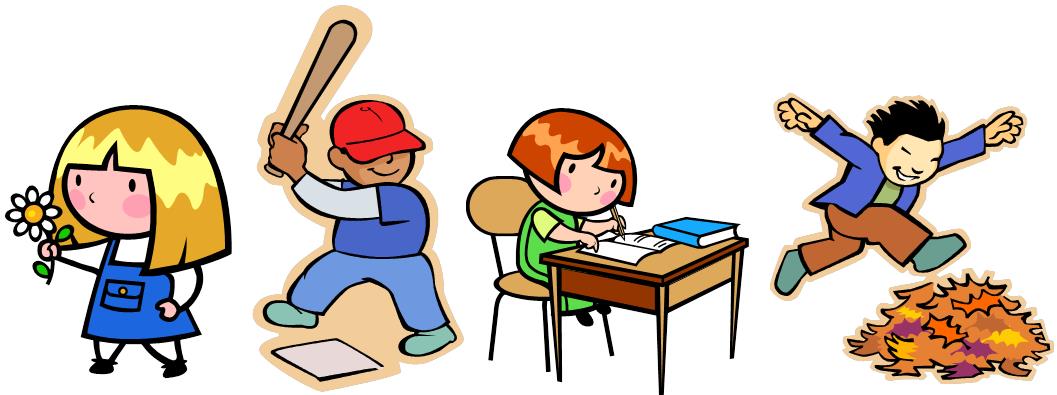
Stages of Play

Children’s play evolves as they get older. Mildred Parten developed a theory in the 1930’s that is still used today, although some of the details and timing have been re-interpreted over the years.

  1. Unoccupied Play—birth and up. Babies gaze at the world and absorb information, but don’t seem to be doing anything.
  2. Solitary Play—3 months and up. Babies or toddlers explore toys and their environment. They don’t really notice other children.
  3. Onlooker Play—9 months and up. They watch other children play but don’t join in.
  4. Parallel Play—18 months—3 years. Children play side by side. They often look like they aren’t paying attention to each other, but one will mimic what the other one is doing.
  5. Associative Play—3 years and up. Playing separately but on the same project (building a block city  together). Talking together, problem-solving together.
  6. Cooperative Play— 4 years and up. Playing WITH a friend. Some examples:
  • Dramatic / Fantasy play: Dress-up, school, etc. Pretending to be characters in the same scenario.
  • Competitive play: Sports, board games, tag, hide and seek.
  • Constructive play: Building with blocks, making a fort, sculpting a sand castle.

Note: Ages given are for kids playing together with peers. If they are playing with someone of a higher developmental level, they can achieve more. (e.g. a one year old can parallel play with an adult, a 2 year old may be able to do cooperative play with an older sibling.)

When watching children play on the playground, or in the classroom, can you identify each of these types of play?