Category Archives: Parenting

The Super Picky Eater

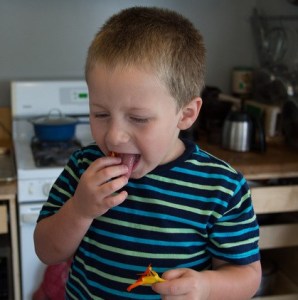
photo of a child disgusted with food

If you have a “typical” kid, just check out my basic overview of toddler nutrition. If you’re one of the 30 – 50% of parents of toddlers/preschoolers who would describe your child as a “picky eater” then check out and try my tips for picky eaters. But, if your kid is a whole other level of picky eater – where you’ve tried all those tips, and your kid still eats a very limited set of foods, then this post is for you.

And I’m here in solidarity with you! I could easily make a list for you of all the foods my 8 year old is willing to eat. And they’re specific – I can’t say he eats yogurt. I can say he eats yoplait brand only and only these flavors: strawberry, strawberry-banana, and blueberry. When I say he eats chicken mcnuggets, I don’t mean any kind of breaded chicken product, I mean ONLY the ones from McDonald’s (or Wendy’s in a pinch).

And if you’re judging me for feeding my kid McNuggets, then here’s the thing – it’s the only meat he has ever put in his mouth in pretty much his entire life. And if you’re judging me for that, well, then you’ve never lived with a super picky eater, and this is not the post for you.

Why are some kids super picky?

There can be a wide variety of reasons. A child with an extremely strong sense of smell may be overloaded while eating – a child with a very limited sense of smell may not enjoy food. A child who had a traumatic experience with choking may be very hesitant to eat after that. Children who have food sensitivities may not be able to articulate them or understand them – they just know that sometimes they feel icky after they eat so they just eat less.

Many extreme picky eaters are either autistic, or have anxiety, or have sensory issues. Or like my son, they may have all three of these challenges.

This blog post, written by an autistic nine year old has given me the best insight into “The Reasons [They] Don’t Like to Eat.

“Sometimes I eat something and it tastes nice; it is the right color and it feels nice and soft in my mouth. But then some days I eat what you tell me is the same and it isn’t the same… I get upset. You ruined it. … You damage it if it has sauce or potatoes on it. Then it is not nugget skins, but some weird thing my brain does not know. So, all nuggets are dangerous. And I get scared again.”

I totally see this with my son. He will love blueberries for a long time – but then he gets one bad blueberry – an under-ripe overly tart one, or an over-ripe squishy icky one. Then for weeks he has a hard time trusting blueberries again. He prefers processed packaged food to real whole foods, because Cheez-Its taste the exact same and have the exact same texture every time. He can trust them. Bananas are a risky proposition.

If you’re having a hard time understanding this, just think about one of your preferences. Maybe you like Coke but Pepsi is really not the same and you’re disappointed if you have to drink it. Or you really like your coffee with half-and-half and Splenda. And if you’re on a trip and they only have skim milk and sugar, it’s just not the same, and it throws your morning off a little. Now, put yourself in the shoes of an anxious child, who doesn’t have the perspective and flexibility you’ve gained from experience, and perhaps you can understand the upset?

If your child is old enough (maybe 5 or older?) try asking them open-ended questions to learn about what they like, what they don’t like, and what worries them about food. Understanding this can guide you in the next steps to take.

Can you force them to try foods?

I have to be honest that I have never tried to force my child to eat. With my older kids, I could do a little wheedling and nagging, and they’d give it a try. With my youngest, the nagging doesn’t work, and I’ve always had the sense that if I tried to force it, it would be bad.

There are plenty of examples of super picky eaters who will gag or vomit if you try to force them to eat something. Then later on, they’ll gag or vomit if that food is even in the same room with them, even if they’re not being pushed to eat it. And their food repertoire becomes even more restricted.

I don’t know if that would be the case with my son. I do think he would have big meltdowns, and I do think it would damage the trust he has in me, and I think it might make eating new foods even more stressful for him.

Encouraging Them to Try to Broaden their Eating

Be sure to check out the tips in my picky eaters post, plus:

Steps to Eating

When introducing a new food, tips will often say “offer just a few bites… expect your child to have to try something 7 or more times before they accept it.” For a super picky eater, we need to take even smaller baby steps. This Steps to Eating chart is helpful in describing those steps… can the child tolerate being in the same room as the food? Can that food be at the same table? On their plate, but not touching any of their other food? Are they willing to try smelling the food? Touching it with one finger? Licking it? Each step closer to eating it is progress!

Food Chaining

Another helpful tool is food chaining. Think of a food your child likes. Level 1 is to give them very similar foods – same taste and texture – for example, with my son, we’ve introduced Tyson chicken nuggets (yes, not the most healthy option, but very similar to McNuggets, but something we can have in the freezer at home). Level 2 is to vary the taste, but keep the texture – maybe dip the nugget in sauce? Level 3 is to maintain the taste but change the texture – so chicken strips made with whole chicken breast rather than the ground / reconstituted chicken in a nugget. Level 4 is to vary the taste and texture – breaded fish patty?

Slow and Steady Changes – Texture and Color

Some young children are very picky about texture. At some food clinics, they will puree all the child’s food, and they gradually move toward chunky purees, then eventually solid foods. Some kids will eat only crunchy foods – so parents try lots of the veggie chips, kale chips and so on. Eventually hopefully moving to carrots and apples for crunch.

Some children are picky about color. If a child preferred white food, they could start with 90% mashed potatoes and 10% sweet potatoes, and gradually increase the orange.

Many picky eaters like very bland foods (white noodles, white bread). But a few are sensory seekers and want very intense flavors – you may need to spice everything up.

Record Progress

Take notes on what they tried, and whether they liked it, and how much they tried. Comment on how much you appreciate their flexibility and willingness to try.

Have them rank things on a scale from 1 to 10. If it’s 5 or higher, encourage them to try it again a few times in the next week. If it’s lower than 5, don’t offer it again for quite a while till you’ve had successes with other foods. A reward system might increase their motivation.

Limit Sensory Input at Mealtimes

If a child is easily over-stimulated, eating is a LOT of sensory input. Try eating in a quiet, calm place without a lot of other stimuli. Don’t talk too much about the food – just put it there and allow them to explore it.

Familiar Food in Unfamiliar Environments

I only ask my child to try new things when he’s having a good day – we’re relaxed, hanging out at home, all is going well. But when we’re in a challenging situation, I make food as easy as I can. To understand why, read this quote from the blog post cited above:

“Sometimes people even want me to change rooms to eat… School does that. You want me to move to some place, sit down, and eat what you have made… No one told me I would smell different things, hear different voices and touch different stuff, and now you even want me to taste things? It is too much, so I just freeze.”

When my son is having challenges at school, I want to make sure his lunchbox is filled with all of his familiar favorite comfort foods and that it always meets his expectations. There are always 5 items – there’s always a yogurt tube, always cheesy crackers, always two fruits and always either a peanut butter sandwich or apple slices with peanut butter. And if we’ve run out of any of those things, I tell him when I pack his lunch, and I explain the substitution I’ve made. I want to be sure that lunch at school is something that re-grounds him, not upsets him. We can try for more food variety in all the other meals in his week. And when we go on vacations or to family camp, we pack protein drinks, protein bars, and peanut butter crackers. I know we can always find fruits and grains he will eat, but these are the ways I ensure he gets protein.

When should you seek help?

If your child is a super picky eater, you should already be talking to their doctor about it for advice and to monitor their weight gain and development.

Also, watch for physical signs of food intolerances or allergies. Many “picky eaters” are later found to have food sensitivities. So, if you see rashes or eczema, or your child has frequent diarrhea or constipation, or frequently complains of a sore tummy, talk with your doctor to see whether any kind of allergy testing or food elimination would be warranted.

If a child often gags or chokes or has problems swallowing, they might benefit from a “swallow study” or work with an OT or speech-language pathologist to build their eating skills and muscle coordination.

But here are some red flags that they may need additional support:

  • It’s getting worse – their list of accepted foods is getting smaller and smaller. Maybe it used to be 20 foods, and now it’s 10.
  • You believe your child would starve or be hospitalized before they’d eat foods they don’t like.
  • They will only eat if someone else feeds them. (In a child who should be old enough to feed themselves)
  • If their pickiness is limiting their life – for example, they can’t go on play-dates or sleepovers or eat out at a restaurant due to food limitations.

If this is the case, talk to your child’s doctors about your next steps.

More ideas

Words Matter

We recently did an exercise in a parenting class that I teach, where I talked with parents about discipline and ways to speak with our kids to increase the chance that they will do what they are supposed to do. How you talk to your kids and what you say effect the chances that they’ll listen.

Here are some ineffective communications techniques and ways to turn them around to make them more effective:

Vague Commands

What you may be saying: Be good. Behave better. Be nice. You better behave well at the restaurant.

Why this may not be working for you: Saying “be good” implies they are bad. And, these vague commands require them to guess what it is that you want them to do. (What does “be good” look like?)

Alternative approaches that may be more effective: Set clear expectations in advance about what good behavior is in that context. “At lunch, you’ll need to sit in your chair or my lap and use a quiet voice.” If issues arise, give very clear, concrete instructions for what they should do. “Please sit on your chair now or you can sit in my lap.”

Try re-writing these sentences:  “Be good at the movie.” “Be nice to her.”

Broken Record

What you may be saying: We’re late, let’s go. Come on, we’re late. Can you just put your shoes on? We’re late, we need to go. Come on!

Why this may not be working for you: If you feel like you’re saying the same thing over and over, you should ask yourself: can they hear you? Do they understand what you want them to do? Do they have the skill to do that? What’s stopping them from doing it?

Alternative approaches that may be more effective: Connect to Correct. Make sure you have their attention first, then tell them what the behavior issue is. Go near them, get down to their level, establish eye contact, and use a calm voice. Once you have their attention, then offer clear guidance – say it once – loud and clear!

Try re-writing this sentence: “Stop jumping on the couch. Cut it out. No jumping. You know you’re not supposed to jump on the couch. Stop it.”

Only telling them what NOT to do

What you may be doing: Don’t throw that / spill that / hit the dog / slam the door

Why this may not be working: If you just say what not to do, they have to first stop their impulse, then figure out what they can do instead. Both are hard for young kids to do!

Alternative approaches: Tell them what to do: “Carefully hand that to me. Move your milk so it doesn’t spill. Pet the dog softly. Close the door gently.”

Try re-writing: “Don’t throw your Legos.”  “I hate it when you slam the door.”

Dismissing their Feelings

What you may be doing: I don’t care if you’re mad – we don’t break things…. You know we need to leave the park now – crying won’t change that… I know you’re excited, but you need to sit down.

Why this may not be working: Dismisses their feelings as unimportant. Until the emotion is acknowledged, it may be hard to move past it. Saying “I know you have this feeling, BUT…” doesn’t count as validating, because that “but” implies you don’t care about their feelings.

Alternative approaches: Validate emotions first, then address the behavior or re-state limits. “I know you’re mad. It’s not OK to break things.” “I can see that makes you sad. I get that – I’m sad too. And… it’s still time to leave the park.” “I know you’re excited and it’s hard to stay still. It’s important to sit down so other people can see.”

Try re-writing: “Don’t cry. You know I won’t give you more candy.” “I know you’re mad that he took your toy, but you can’t hit him.”

Over-using If / Then Threats

What you may be doing: If you don’t brush your teeth right now, then no bedtime story.

Why this may not be working: Could imply you expect they’ll do the bad thing. (Kids are good at living up to expectations!) Could imply you’re looking forward to punishing.

Alternative approaches: When / then – When you do [this good thing], then we get to do [something mutually enjoyable] together. “When you’re done brushing your teeth, we get to read a bedtime story. If you’re fast enough we get to read two!”

Try re-writing: “If you don’t help me clean, then you don’t get to go to the park.”

Note: there is a place for using if/then threats as consequences, but start with when/then.

Asking Questions when you mean to give Commands

What you may do: Would you please stop yelling? Are you ready to sit in your car seat?

Why this may not be working: If you ask it as a question, that implies they can say no, or opt out of what you’re asking them to do.

Alternative approaches: If you’re really offering a choice, make sure they know they can choose either option. If you don’t mean to offer a choice, then give a command not a question. “Use a quiet voice.” “You need to sit in your car seat now.”

Try re-writing: “Do you want to put on your boots now?”

Do Try This At Home

Sometime in the next week, test this out! When you find an opportunity to change your communication from your normal style to trying out a new communication strategy from above, then seize the moment and test this out.

Then reflect on these questions

  • What happened as a result of using this new communication strategy?
  • What did you notice about how it felt?
  • What happened with your child?
  • How might this support a relationship with your child?

Share your experience in the comments!

Here’s a free printable version of this exercise on Effective Communication Techniques to Improve Discipline.

Kids Do Well If They Can

To resolve problem behavior in children, first attempt to figure out why the behavior is happening. A key question to ask yourself is: are they capable of behaving better? Dr. Ross Greene argues that “if your child could do well, he would do well… If your child had the skills to exhibit adaptive behavior, he wouldn’t be exhibiting challenging behavior.”

Let’s contrast this “kids do well if they can” idea with another common philosophy, which Greene calls “kids do well if they wanna.”

Kids Do Well if They Wanna

If a child is not doing well, this model assumes that it’s because they don’t want to do well. So, that implies that the parent/teacher’s primary job is to make him want to do well. Typically that would lead to rewarding the behaviors you like, or punishing the behaviors you don’t like. If you’re right and he IS capable of doing it, then this may work. If he’s not capable of doing well, all the rewards and punishment won’t change that. The problem behavior might not improve or might even get worse.

Under this model, you first ramp up the punishment, and if it still doesn’t work, you may decide his behavior is fully intentional… maybe he’s trying to manipulate you or get attention or test limits or maybe he’s just lazy and unmotivated. If you start assuming this kid is a bad kid who intentionally misbehaves, his behavior will not improve.

Kids Do Well If They Can

What happens if we instead assume that kids want to do well, but sometimes they aren’t yet able to? Here, the parent/teacher’s primary job is to figure out what’s getting in his way and how to help him get past it.

Instead of jumping ahead to fix the behavior, first figure out what the core issue is. What’s hard for them? Think about the environments / situations where the challenging behavior appears. What are the stressors in that environment and how could you reduce them? What skills are they lacking that would help them to be successful there? How can you teach those crucial skills? What unmet needs in the child might be causing this behavior? Can you address those?

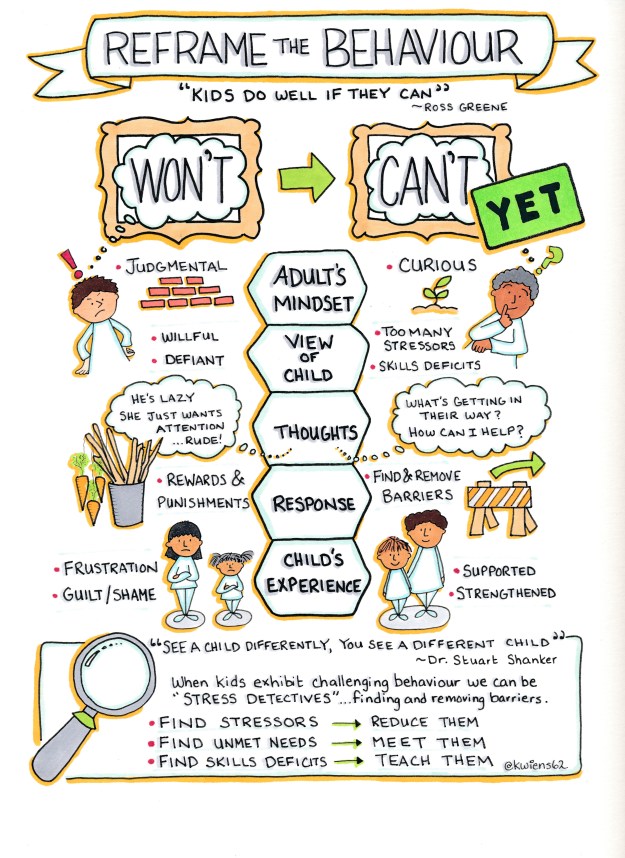
Here’s a nice infographic (source: https://self-reg.ca/infographics/ ) that summarizes these models.

reframe-behaviour-growth-mindset-edition

Learn a lot more about this idea, and about Greene’s model at https://www.livesinthebalance.org/walking-tour-parents which includes several helpful videos of Dr. Greene sharing his ideas.

47 Things You Should Never Say to Your Kids (or Their Heads Will Explode)


explode

There’s an article by Parents Magazine  that I often see shared on the internet. It’s titled “10 Things You Should Never Say to Your Kids.” But the article is not about obviously harmful phrases like “You’re worthless.” “I hate you.” “I wish you’d never been born.” Instead, they’re cautioning about saying “Great job.” “Practice makes perfect.” “Let me help.” “Be careful.” “You’re OK.”

Huh?? You may wonder what is so awful about these words.

When you read their article, it’s got lots of really good content, and is well worth a read. But a better title would be “Translating Common Parenting Sayings into More Positive Statements Which Will Help Your Kids Develop Into the Emotionally and Physically Healthy, Upstanding Citizens You Hope They Will Become.”

But, Parenting magazine knows the rules of modern media. When you want people to read a title on Facebook and click through to read the article, it helps to include a number in the title (“5 reasons chocolate is healthier than kale”) and it helps if they can convince readers that if they don’t read the article something terrible will happen to them or their children. (“Follow our screen time tips or your child will be brain damaged for life.”) And it’s not just Parenting magazine – many other media outlets have used this same headline with success. At the bottom of this post, I list just the first page of search results for “things never to say to your kids.”

But, when parents read these headlines, how does it make us feel? It raises anxiety. It creates stress around the sense of “I have to do everything right as a parent, or my child will end up screwed up.” It makes us feel guilty about all the times we’ve “done it wrong.”

So, let’s first reality check these articles:

  1. At some point, all parents say mean things to their kids. It’s not just you! Just yesterday I said some things I’m sure are on lists of “things never to say to your kids.” We all have bad days, and we get angry, because we’re human. (Check out my series on parental anger – how to manage it and how to heal from it.)
  2. Luckily, kids are remarkably resilient. (To learn more about resiliency and how to help your kids build it, read this article by Jan Faull on the PEPS website.) If you have a positive, loving relationship with your child overall, a few harmful words will not damage that permanently.
  3. Almost all the things on all these lists of “things never to say” aren’t really that dreadful. I promise you that if you say good job to your child, they won’t be permanently damaged!!  However, there are many more things you might say instead, or in addition to, good job. Having an awareness of alternatives just helps broaden your list of options for how to connect with and guide your child.

So, I read through all those articles on things never to say. And I’ve gathered all those phrases below. But I am NOT saying “Never say these things.” Frankly, for most of these phrases, it would be totally fine if you say them from time to time. But, they don’t want to be the only message your child hears from you. For each one, I’ll then share some of the negative or non-helpful ways the phrase could be heard by a child. Then I’ll offer other options for alternatives you can try out, and gives resources for where you can learn more.

Unadulterated praise: Great job / Good girl / That’s a beautiful picture. You did that just right. What a perfect building you built! You’re the best ____ in the whole world!

  • How your child might hear this: Could hear judgment – there’s only one right way to do things. Could feel like empty praise if you say it no matter what they do, even it it’s easy. Could imply they’ve reached their limit and you don’t think they can do any better. They may not trust you after they discover they’re not the best ____ in the whole world.
  • Alternatives:  Only praise things that took effort. Focus on the process and HOW they did it and what they learned rather than on the product. Give specific detailed feedback about what’s good, and what could be even better. Read about questions to ask to extend their learning. Read more about effective praise.

You make me feels…. I’m proud of you. I love it when you…. It would make me happy / mad if you… I’m ashamed when you…. I’ll never forgive you

  • How your child might hear this: Your love is conditional on their accomplishments. Also implies that your emotional well-being is dependent on their behavior.
  • Alternatives: Let your child know that you will always love them, no matter what. (This doesn’t mean that all behavior is always OK – it’s not and you do need to set limits. And it doesn’t mean that you don’t have high expectations for them. You do want them to work hard and be good people. But your happiness should not depend on that. 

Practice makes perfect. 

  • How your child might hear this: Anything less than perfect isn’t good enough.
  • Alternatives: “Practice and you will improve.” “Making mistakes helps us get better.” “If you aren’t making any mistakes, this is too easy for you and maybe you’re ready for more challenge.” Read more about Willingness to Fail is the Inventor’s Key to Success


Labeling:  You’re so [shy, smart, clumsy, pretty]. You’re the [strong, fast, silly, wild] one. You always… You’ll never… [lose, win, do anything wrong / right]. You’re worthless / a loser. Girls don’t do that / Boys don’t like..

  • Labeling your child limits them. If you label them based on a problem behavior, it becomes a self-fulfilling prophecy and they may continue to be that way. If you label them by a “talent” that they have, that creates a lot of pressure on them to retain that talent. They may worry about losing your love / their identity if they don’t succeed in that area.
  • Alternatives: You do want to understand your child’s temperament, gender influences, and learning style and help support them in using their strengths to build confidence and work around the things that come harder to them. But don’t “label” kids or think they’ll never change. Praise effort, not talent. Let them know that everyone can get better at anything if they work at it. Learn more about the growth-based mindset.

Shaming: “You’re just like [someone your child knows you don’t like]. Why can’t you be more like… Stop acting like a baby. You’re so [negative adjective]. Big boys don’t… Good girls don’t…

  • What they might hear: These statements are intended to shame a child. “A child’s self-identity is shaped around the things they hear about themselves.”
  • Alternatives: Let your child become the very best them they can become without worrying whether they are just like someone else. If you disapprove of a child’s behavior, tell them how to change the behavior. Try not to attack their identity or their sense of being worthy of your love.

What’s wrong with you?

  • Implies that the problem is with them, instead of with the situation.
  • Alternatives:  What’s wrong?” “What happened that upset you?”

Let me do it:  Let me help you. Just let me do it for you. You’re doing it wrong, let me do it. You’re too slow, I’ll do it.

  • What they might hear: Implies that they’re not competent. If you rescue your child from every challenge, how will they ever learn to do anything on their own?
  • Alternatives: Allow them to be frustrated. When we’re struggling with something, we’re on the verge of learning something new. (If they’re miserable, that’s a different story….) Ask guiding questions – “what happens if…” Make gentle suggestions “Try…” If you’re really in a hurry say “I need to help you so we can get to preschool on time. Tomorrow you can try again when we have more time.”

Don’t cry. You’re OK. What a dumb thing to get upset about. Don’t worry, it will be fine. There’s no reason to be scared, just do it.

  • What they might hear: Their feelings are not important to you. They shouldn’t trust their own feelings, they should let other people tell them how to feel. Tells them not to trust their intuition and do things even if they seem risky. (This could get them into all sorts of trouble as teens.)
  • Alternatives: Validate emotions and pain first, then reassure. Once you’ve said “I hear that you’re scared / hurt / worriedthen you can address logical reasons why you believe that it will be OK in the end. More on emotion coaching.

Don’t talk to strangers

  • What they might hear: This blanket message can make your child fearful of everyone and also limit their ability to learn the social skills they’ll need as adults who very frequently have to talk to strangers!
  • Alternatives: Model appropriate ways to interact with appropriate strangers. Talk to them about how to tell the difference. Read more about how to help your kid judge whether to talk to strangers  and talk about tricky people.”

Be careful. Watch out!

  • What they could hear: Of course we use it when needed! But if over-used, can create a fearful child who thinks the world is a dangerous place. Also: Teacher Tom says: “An adult who commands, “Don’t slide down that banister!” might be keeping a child safe in that moment, but is… robbing him of a chance to think for himself, which makes him that much less safe in the future when no one is there to tell him what to do.”
  • Alternatives:Demonstrate / model how to be safe. Encourage them to look before leaping. Encourage them to tune into how they feel about something – if they’re nervous, there may be a good reason. When the risk is just a mild bump or bruise, let them test things. If they get that bruise, they’ll learn something important. Read more about teaching safety skills.

Promises you can’t keep: I’ll never let anything bad happen to you. Don’t worry – you’ll always be safe. I promise – I’ll never die. I’ll always be here

  • What they might hear: Lies. And no tools for how to survive hardship.
  • Alternatives. “I’ll do my best to keep you safe. I’ll try to always be there for you, for as long as I live. Sometimes bad things will happen and I’ll try to help give you tools for coping with that.”

Please Go Aways: You’re in the way. I can’t get anything done with you around. Hurry up. You’re making us late. Shut up. I have better things to do than… Would you just leave me alone for 5 minutes?

  • What they might hear: So, I totally get that children are terribly inconvenient at times, and that they make everything harder, and that we all need breaks sometimes!! However, these sorts of statements create stress and anxiety and make the child wonder if he is loved.
  • Alternatives: Give positive, concrete suggestions for other positive, concrete things they could be doing in the moment. When you really need a break or need help, admit it and ask for it. That’s part of modelling self care. “Mama is really sick today. I need your help. Can you sit and play quietly for just a few minutes?”

If/Then: If …. then…..  If you do [this bad thing], then you’ll get [this punishment].

  • What they might hear: “I’m expecting bad behavior and am looking forward to punishing you.”
  • Alternative: When … then….  “When you do [good thing that I’m expecting you to do], then we’ll get to do [this fun thing] together.” Learn more about punishment and reward.

Wait till your father gets home.

  • What they might hear: you don’t have enough power to enforce consequences.
  • Alternatives: Consequences should be immediate, logical, and enforced by the parent who encountered the misbehavior.

I told you so: that’s what you get for not listening

  • What they might hear: Feels a little vindictive, like you were hoping something bad would happen to them.
  • Alternative: “Well, that’s not what you were hoping would happen is it? What could you do differently in the future so you don’t have this problem again?”

Because I said so

    • What they might hear: It’s authoritarian. Implies that whoever makes the rules can make arbitrary judgments on a whim, and they have no control over that.
    • Alternative: “I’m your parent, and it’s my job to keep you safe and help you grow up to be a good person and keep things running well around the house. Sometimes I have to enforce rules you don’t like. It feels unfair to you, but I will continue to do what I think is best.”

Telling them how to do things they know how to do: Hang your coat up. Wash your hands.

  • What they could hear: You think they’re now smart or competent. Also implies they only need to do those things when you tell them to.
  • Alternatives: Ask them that to do: “Where does your coat go? What do you do before we eat? I bet you know what you need to do next.”

Don’t ______. Don’t throw that / spill that / hit the dog / slam the door.

  • What they might hear: If you just tell them  NOT to do, they first have to stop their impulse to do it (which is hard for a young child) and then figure out something to do instead (which is even harder.) Also, if they already know not to do that thing, you don’t want to pay too much attention to it, as attention reinforces behavior.
  • Alternative: Tell them what TO DO. “Carefully set that down. Move your milk so it doesn’t spill. Pet the dog softly. Close the door gently.”

You did that wrong. Why do you mess things up?

  • What they could hear: Mistakes are bad. Don’t try anything you’re not sure you can do well.
  • Alternative: “Oops, that didn’t work. What could you do differently?” “Making mistakes helps us get better.”

Learn more:

Here are lots more articles on these ideas.

Printable handout:

Would you like to print out a handout of this info for yourself or to share with friends or students or clients? Click here for: Words Matter 2. Includes a worksheet where you can practice re-writing sentences to be more effective.

Talking with Children about Death

cemetery

Children are curious about all things in life, and that includes being curious about death. As adults, we may feel like it’s not a polite thing to talk about it, or that talking about death is morbid, but it’s a normal thing for kids to be interested in. And it’s helpful to talk openly about death long before a child experiences a loss of someone they care about. Here are tips on: finding teachable moments, big ideas to talk about, talking about the loss of loved ones, grief, and using media to open the discussion.

Teachable Moments

Parents in my classes ask: “when should I talk to my child about death?” I say: whenever a teachable moment presents itself. Because death is a part of life. There will be plenty of chances to talk about it.

Here are just some of the opportunities I’ve encountered with my youngest child in the past year or so that led into conversations about death:

  • Once, on the walk to my son’s kindergarten, we saw a dead squirrel. Another time, we found the leg of a bird, and then there was a lost cat sign up for months, which led to lots of discussions of what might have happened to the cat. On the way to first grade, we drive past a cemetery.
  • On Memorial Day, he asked whether we would have a party for this holiday, and I explained that we honor Memorial Day but don’t really “celebrate” it, which led to a whole discussion of death, war, what is a generation, and so on.
  • A member of our church, a teacher at school, and a student at school have died, and he heard people speaking about these deaths and being sad about them.
  • His older sister’s pet gecko died and we buried it together.
  • We heard on the news about many people being killed in a shooting. (I try not to listen to the news much around him… but this was a TV that was on in a public place.)
  • His pea plant died.
  • We see flowers on a sign post on the side of a highway where a fatal car accident occurred.
  • Somehow at school, a discussion came up of the danger of thunderstorms, and he worried for a few days about whether his dad would be struck by lightning and killed.
  • He was wondering about heaven.
  • He’s seen death occur in many books, movies, and TV shows.

Each time one of these ‘teachable moments’ came up, we talked openly about death, the dying process, and grief. None of these were long drawn-out, or stressful conversations. Most were brief (thirty second? one minute?) discussions, where I try to be as matter-of-fact about things like decomposition as I am about things like new buds coming out on a tree. I try to talk about grief as a natural emotion similarly to how I talk about other emotions. I talk about what I believe happens after death as I talk about other aspects of my spiritual beliefs. So, this had been a conversation we’d been having with my son on random occasions for years.

And… then his grandmother died. My mom had Alzheimer’s and had been fading for a few years. We had been open with my son about this and the fact that she was no longer able to do the things she had done before. Then, I had to travel to be with her for a few days as we moved her into hospice care, and then my husband and I traveled for her funeral. Around this time, we had lots of long conversations with my son about death.

I was so glad that we had a long history of open and honest conversations about this part of life. I can only imagine how hard it would be for a parent who had tried to avoid this subject for years to suddenly have to explain it for the first time when she is managing her own grief over the loss of a parent and the child’s loss of a grandparent.

Developmental Stages of Understanding

When talking with a child about anything, it always helps to have some knowledge of their developmental stage, and what they’re likely to be able to understand, versus what might simply be over their head at this age. Here is how children’s understanding of death evolves:

  • Preschool age (3 – 5). Even if you explain what death is (when something living stops functioning – stops breathing, growing, etc.), they may not be able to grasp what you mean. They may believe death is temporary and reversible. Although children see many deaths in movies and stories, they don’t really see a lot of what happens afterward when that character never returns. If someone you loved has died, expect that the child will ask from time to time when that person is coming back.
  • Early elementary age (5 – 9): Children come to understand that death is final. They aren’t clear on what causes death. They also learn that all living things will someday die, but tend not to yet grasp that they themselves will someday die. The child may ask a lot of questions about death – it’s not morbid, it’s just trying to understand a complex topic.
  • Tweens (age 9 – 12): They understand what death is – that organisms no longer function in the way they did when they were alive. They understand that death is final, and that they will die someday.
  • Teenagers: Begin to wonder about the meaning of life and form beliefs about what happens after death. Some begin taking risks, as if to test their own immortality.

Learn more about What to Expect at Different Ages and Developmental Understandings.

Big Ideas about Death

There are a few key ideas about death to convey at some point – not all at once, but in multiple minute-long conversations through their childhood:

  • Death is the cessation of life functions. Use simple terms and concrete examples from their life experience. “When an animal dies, it no longer breathes, or eats, or moves or feels hungry.” “Do you remember when your pea plant died, and it stopped growing?” “Their heart stopped, and their brain doesn’t work any more.”
  • Death is caused by physical reasons. Describe in a simple, non-graphic way what caused a death. Explain enough that they understand… for example, don’t just say “she died because she was sick”, because then the next time your child is sick with a cold, they might think they might die. Explaining something like “she’s really sick, with a disease called _____. It’s not something I would expect you or me to get…”
    • It’s not your fault.  Children are inherently self-centered – their world view rotates around themselves. This can often mean that if someone dies, they wonder if it was their fault. “I said ‘I hope you die’ and then they did!!!” This can lead to a lot of guilt and shame. Reassure them that the death is not their fault.
  • Death is permanent.
    • Don’t confuse them by saying the person “went to sleep” because then it can be scary to go to sleep, or saying the person “went away” because then they will worry when you “go away” to the grocery store that you may never come back. Using the word death is actually helpful to reduce these anxieties.
  • Everything that is alive will someday die.
    • You may also address that different things have different expected life spans. We might expect some pets to only live for a few years. We expect people to live for many decades. (Again, you may need to reassure them that you or other important adults expect to be around for a long while still.)
    • At some point, we’ll need to acknowledge that not only old people / animals die. It can happen to someone very young, it’s just less likely
  • Share your own beliefs. One of the reasons it’s important to talk to your children about hard things (read “Better You than YouTube”) is so  you can share your own values with them and talk about the beliefs that are important to your family.
    • You may worry that you don’t know what to say about things like what death feels like, or what happens after you die. It’s OK if you don’t have all the answers. You can say to your child “No one knows for sure. I believe ________.”
    • In some family’s beliefs, those who have passed away continue to be present in some way – you might say things like “grandma is watching over you” or “someday you’ll see him again in heaven”. This is fine, just be clear that we don’t expect to see that person in our world again, just so children don’t get confused about what to expect, or expect that person to be present in the same way they used to be.
    • Note: one thing that can confuse children is when parents say things like “he’s happy up in heaven now” but the parent is clearly grieving and sad. They may not understand why you’re sad about something that makes the departed one happy. You can explain that you are sad the person is no longer with you, and you can’t spend time with them any more.

Talking about the Possibility someone they love will die

Be thoughtful about whether you bring it up.

There’s typically no reason for you to push the topic or start the conversation, unless you believe a death will come soon to someone they care about. (Just as we’d talked to my son about his grandmother as she declined, when our 16 year old dog was ailing, we let my son know that Rufty might not be with us much longer.) This honesty about a coming loss allows them to build special memories, and say some goodbyes so there are fewer regrets later on about what was not done or said. (Note: I have a full post on how to talk about things if a child’s parent is facing a terminal diagnosis or in hospice care.)

If there’s not an impending death of a loved one, I wouldn’t really bring up the possibility. But… if they bring it up, don’t change the subject.

Let them know it’s OK to talk about it, and you’re glad they feel comfortable asking you.

If they’ve asked a question:

  • clarify exactly what they’re asking. Sometimes they want just a simple basic answer and we go into the Big Talk about everything they’ll ever need to know about death and totally overwhelm them.
  • Turn the question around, and ask them what they already know. This lets you set a baseline for what you need to talk about versus what they already understand. It also allows you to correct misconceptions. For example, if they ask when someone will come back to life, we may need to explain the permanency of death, and how it’s different than when kids just “pretend to be dead” while playing.
  • Address underlying concerns. Often when someone asks a question, there is an underlying concern behind the question. If your child seems worried when they ask you about something, think what fear might be behind the question. If a child asks you “can parents die?”, they may really be asking “will you die? Who will take care of me?” If you suspect this is the case, you can put it into words for them: “are you worried I won’t be here to take care of you?”
  • Reassure. First, unless you have reason to suspect otherwise, say “I don’t expect [that person] to die any time soon. I know that idea feels scary to you, but I expect [they] will live for a long time yet.” (Note, you didn’t promise anything, because we can’t ever really promise that.) Then reassure that even if that were to happen, they would be OK: “But if I did die, here’s who would take care of you.”

Talking about Grief

Don’t be shy about talking about grief. It is one of many emotions that we humans experience. (Emotional literacy is a key life skill we want our children to gain.) Sadness about someone’s loss is a reflection of the fact that they mattered to us. Share what your feelings have been about various losses in your life.

But also talk about the wide range of reactions that people may have. Some may be sad. Some may be angry. Some may not seem to react at all. Sometimes there is a feeling of relief. Sometimes all these moods come and go unpredictably. And some may react on a different schedule. It’s all OK.

Know when to move on.

Sometimes your child may ask more questions in the moment. Sometimes not. Your child may have initiated a discussion about death, then they seem ready to move on before you think “we’re done talking about this.” Follow the child’s lead and move on. Prolonging the conversation will only cause discomfort.

Children learn through repetition, so expect that they make ask some questions again and again.

When a child is grieving

Sometimes there losses that we would consider big in a child’s life where they don’t seem to react. Give them time and space for their own reaction. And other times, there are things we think of as small sadnesses – seeing a dead bunny by the road, or a death in a storybook, where our child may suffer deep grief. Don’t dismiss these feelings or tell them “don’t feel bad.” Honor their right to their feelings, whatever the cause.

Don’t avoid talking about the person who has died. Even though they’re no longer here, you can still remember them. Your child may want to do a ceremony, or create a shrine to help them remember. You could establish new traditions of continuing to do a favorite thing they did with the person who has passed away.

Your child may need help remembering that the person won’t come back. They may ask again and again when they will return. They are not doing this to upset anyone. They’re just wrapping their minds around the permanency of death.

Your child may “play” death. They are just trying to understand. It’s fine to use puppets or stuffed animals to tell the story or play things out. It may also help your child to draw their feelings and memories.

Many children will regress or have behavioral challenges after a death of a loved one. Be patient and understanding with them, but don’t overly coddle them. Normal family rules should still apply. The sooner you get back to normal routines, the better. This helps you all move forward to the “new normal” of what your life will look like in the future.

Here are two helpful resources:  Supporting Preschoolers Who Are Grieving and When Families Grieve from Sesame Street.

Funerals

If a loved one has died, you may decide not to have the child participate in the funeral. If they will attend the service, be sure to prepare them – telling them who they will sit with, how they should behave, and what will happen. For example,

 “Lots of people who loved Grandma will be there. We will sing, pray, and talk about Grandma’s life. People might cry and hug. People will say things like, ‘I’m sorry for your loss,’ or, ‘My condolences.’ Those are polite and kind things to say to the family at a funeral. We can say, ‘Thank you,’ or, ‘Thanks for coming.’ You can stay near me and hold my hand if you want.”  (source)

If the person’s body will be at the service, talk to your child about that. (Note: although people worry that seeing a body would be upsetting to children, they typically take it in stride). Explain burial if they will go to the cemetery. Explain if there will be a wake or reception of some sort – explain that people will talk and share happy memories of the one who has passed.

If you expect to experience a lot of strong emotions at the funeral, you may want to either not bring the child or ask another adult to help care for the child and sit with the child during the service. Remind your child that it is not their fault you are sad.

More info about children and funerals.

Using Media to Start the Conversation

There are several excellent books and some shows that are explicitly designed to help children understand death and manage grief. There are also many excellent books and movies that include a death that you can use to help you start a conversation.

Here are recommended books: https://imaginationsoup.net/childrens-picture-books-grief-death/https://www.familyeducation.com/videos/12-childrens-books-help-explain-tragedies-deathhttps://pjlibrary.org/blog/january-2017/childrens-books-about-death.

Find  movies and shows listed here www.ranker.com/list/kids-entertainment-dealing-with-death/matt-manser, and here https://whatsyourgrief.com/death-in-disney-movies/ and here: www.commonsensemedia.org/lists/movies-to-help-kids-deal-with-grief 

Resources

Here’s a free printable handout of this blog post on Talking with your child about Death that you can share with others.

To learn how (and why) to talk about other difficult topics with your child (including sexuality, “tricky people”, scary topics, and more: read Better You Than YouTube.