 Our kids are always learning from us. They learn by observing as we role model a variety of skills, they learn by interacting with us as we play, and they learn when we actively “teach” them. There are many things we teach casually, and aren’t too worried about the exact timeline when our child picks up the idea. Things like covering your mouth when you sneeze, saying please, or putting their dish in the sink. There are other things though that we may have a sense are REALLY IMPORTANT, or that we believe MUST BE DONE BY A CERTAIN AGE and those are the things we tend to stress about our child learning. Potty training and reading both fit in this category for many parents. What happens when there is something we really want our kids to learn?
The first thing I’d ask you to consider: Is this skill developmentally appropriate? Can we typically expect a child of this age to learn this thing? Once you’ve learned it is appropriate, then you can consider teaching it.
Motivation
There will be many times in your child’s life where you want them to do something they don’t want to do, or there’s a skill you want them to learn because it will be valuable in the long run, but they aren’t particularly interested in learning at this moment in time. How can you help them find their own internal motivation? Potty training is one of our first chances to explore this challenge, so we’ll use it as our example.
First, consider your motivations. Why do you want your child to learn this new skill? Here are some common reasons and some examples from the potty training process.
- Outside demands: Is it pressure from a pre-school or daycare that requires it by a certain age?
- Peer pressure: Is it because other families are doing it, and you’re feeling peer pressure to keep up? The media and social media can also create this pressure of what our child “should” do.
- What you do or don’t want to do yourself: Are you just tired of changing diapers? Or tired of paying for diapers? Or washing them?
- What you want for your child: You want to encourage your child toward independence in all areas?
The clearer your motivation, and the stronger your motivation, the more time and energy you’re likely to be willing to commit to the process. Some parents actually find that they’re not actually motivated to teach a skill. For example, the diaper routine might be working for their family’s schedule and commitments. This is fine for a while, but at some point (maybe three years old for potty training?) it’s time to help your child move forward.
Then ask yourself: What are your child’s motivations? Try to view things from your child’s perspective and understand why they might not be as interested in learning a new skill as you are in teaching it.
In our potty training example: Why might a child prefer to continue to use diapers? Some ideas: they’re used to eliminating in their diaper – it’s comfortable and familiar. They may be in a state of regressing a bit, and not feeling bold enough to be ‘a big kid’. They may not like interrupting play time with trips to the potty. They might be frightened of the potty. They might be rebellious toddlers, defying their parents ‘just because.’ They might have a desire to be completely in control of their bodies. They might also have been constipated at one point, and found that it hurt to have a bowel movement, and be afraid of repeating that experience.
Then ask: What might motivate your child to use the potty? Some options are punishment or rewards…
Punishment?
It’s best not to use punishment. Punishment can definitely work in the short term, in that a child who is punished for doing something (e.g. eliminating in a diaper) may well try hard to avoid that punishment in the future (e.g. by using the potty). But it could also shame them and damage their self-esteem. And it also means that they’re doing something only to avoid punishment – not for any positive reason.
On the other hand, logical consequences are appropriate, as long as they are done without shaming. For example, having them help with clean-up after an potty-training accident allows them to see the consequences. Or taking back the big kid underwear, saying ‘it looks like you’re not ready for this yet… let’s go back to diapers for a while’, helps them to see what the goal is and what the reward is of accomplishing it.
Rewards
Many people use a sticker chart, or other reward system when they want to shape behavior. The general idea is: talk with your child about what you want them to do, tell them that when they do it they’ll get a reward. Then involve them in setting up the system: pick out the reward, or make the chart, etc. For rewards, it’s best to choose something cheap and easy to obtain, like a sticker. (Not candy.) For a toddler, the reward needs to be immediate for them to understand “when I do this action, I get this reward.” Older kids can work toward a bigger reward over time – “if I do all my chores this week, we’ll watch a movie together on Friday night.”
Make sure they are clear about what the behavior is you are working on, and be consistent about the response. For example: “if you sit on the potty, you get a sticker whether or not you pee there” may be a good first level. Later on, when they’ve mastered that step, you ask more of them: they need to actually pee or poop to get the sticker. You may choose to also have a cumulative goal to work toward, like “once you’ve pooped in the potty 10 times, you will have filled the chart, then you get a new toy.” It’s important to think of these rewards as short-term reinforcement, not an on-going system! Over time you will phase out stickers completely. Rewards can be a very effective tool for toddlers. However, you don’t want to over-use rewards! And you want to make sure the focus is on accomplishing the goal for its own sake, not on just doing something so they get a reward.
Expectations
If you regularly say “If you do this [bad thing], then I will punish you by [negative consequence]”, your child might come to feel that you expect him to do bad things and you look forward to punishing him. Instead, try “When you do this good thing then you get this [positive consequence].” Make sure your tone of voice implies that you have confidence that they will do the good thing because that’s what you expect of them.
Praise
When your child accomplishes something for the first time, definitely praise them. If it’s a HUGE accomplishment, make the praise really big. But honestly, if it’s small accomplishment, the praise can be just a quiet observation that they accomplished it. As they start repeating a skill again and again, on the way to mastery, we can fade out our praise. It feels silly and a little embarrassing to get praised for something you’ve mastered (as you know if your child has told you something like “You peed in the potty! Good job mama!”) Praise them for what they have done, and the work it took to do it.
Read more about praise here.
The Downsides to Rewards & Praise
Critics of rewards say they are a short-term solution to gain compliance with parental requests, not a long-term path to instilling the behaviors, qualities, and values you want your child to attain. And, research has found that kids who are raised on a series of rewards can become more self-centered, materialistic, reward junkies looking for their next fix from parents who can become exhausted by coming up with new rewards.
Research has also shown praise can backfire. If we continually praise our child for being “smart”, “beautiful” or “strong”, then they may be afraid to take risks – not wanting to do anything that they might not succeed at… fearing that then we will realize they’re not so smart or strong or beautiful after all – and thus not lovable. Also, when a child is vigorously praised for every little thing she does, she may not know whether praise is genuine.
Experts recommend that when you want your child to learn a new skill, think about what it is you are really trying to teach and stay focused on that. Work with your child to find their motivation for learning this new skill. As they make attempts along the way, give specific praise for their efforts and their commitment, and specific recommendations for how they might improve. The emphasis is more on the process than the product, more on the work they do than on the “talent” they have. When they accomplish a goal that they set, then it is totally appropriate to celebrate that with something (Stickers? M&M’s? A special toy?) as long as the emphasis is on the value of the accomplishment itself, not on having done whatever they needed to do just to earn the reward.
Sources on Internal Motivation, Rewards and Praise
photo credit: Pewari via photopin cc
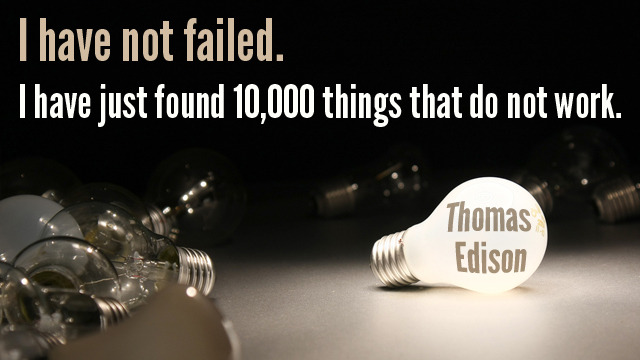 The successful inventors, designers, engineers, artists, chefs, and entrepreneurs of the world know that the keys to success are hard work, sensible risk-taking, taking on challenges, failing, and trying again till you succeed.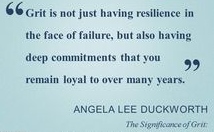



 More Good Days with Kids