Category Archives: Parenting

Car Seats – ready for the next level?

Motor vehicle accidents are a major cause of child injury, and the second leading cause of child death in the U.S. Proper use of the proper car seat can hugely reduce the risks for your child. There are four stages of car safety restraints. To choose the right level for your child, it is more important to consider their height and weight than their age. To maximize safety, keep your child in each level of seat as long as possible, until they reach the maximum height and weight for that seat. Each stage provides less protection. Don’t move your child to the next stage until you have to.

Rear-Facing. (Birth to age 2 or beyond) Infant Seat: Weight up to 22 – 35 pounds and height up to 29 – 32 inches, depending on the seat. Convertible Seat: Weight up to 45 pounds, maximum height 40 inches for rear-facing or larger in some select seats. American Academy of Pediatrics says children should ride rear-facing until they are at least 2 years of age, and then until they reach the highest weight or height allowed by the manufacturer of their seat. Riding rear-facing reduces the risk of severe injury by 75%.

Forward-Facing Car Seat with a 5-point Harness. (Age 2 – 7 or beyond). Maximum weight 40 – 90 pounds. Maximum height up to 50 inches. When you install a seat forward facing, be sure to use the tether strap to secure the top as well as buckling in the base.

Booster Seat. (Age 4 – 10) Up to 100 – 120 pounds. From 34 – 63”. Children should be mature enough to sit properly in a booster and not play with the seat belt. Washington State requires kids to use a child safety seat until they are at least 8 years old or taller than 4’9”, whichever comes first.

Seat Belt. (Age 8 – 12) If your child is 8 – 12 years old and at least 4 feet 9 inches tall, AND you can answer yes to these questions, then they’re ready to move out of a booster seat.

  • When child is sitting back in seat, do his knees bend comfortably at the edge of vehicle seat?
  • Does the lap belt stay on the top of the child’s thighs, not up on their belly?
  • Is the shoulder belt center on the child’s chest and shoulder?
  • Can the child stay seated this way for the whole trip? (e.g they won’t put the shoulder part of their seat belt under their arm or behind their back?)

Front Seat. By Washington law, all children should ride in the back seat of the car until age 13. (Exceptions for: pickup trucks or sports cars with no back seat)

More info: www.800bucklup.org; www.safercar.gov/parentshttps://www.healthychildren.org/English/safety-prevention/on-the-go/Pages/Car-Safety-Seats-Information-for-Families.aspx

Educator Resource: I have two handouts on this topic – a 1 page summary (the info on this page, plus illustrations) and a 2 page version with more details.

Boys in Dance Class

billyellrevI am working on a post about “how to make sure your classes are gender inclusive.” But first, I thought I’d share my story of why this topic is on my mind right now…

My 4-year-old son has recently started taking a ballet and tap dance class. Note: this is not advertised in any way as a girls’ dance class… in theory, it is open to all. Realistically, I knew Ben was likely to be the only boy. But even knowing that, it’s surprising to me just how girl-centric the class is.

On the first day, the teacher said “we have 10 girls enrolled in this class, so if you would like to move your daughter to a smaller class, you could do the 5:00 class”. Really, the class has 9 girls and one boy. The name Ben on the roster should have been a clue. And referring to our “daughters” when my son was sitting on my lap seemed odd.

Then she said “OK girls, come on over to dance.” And out run the girls in pink leotards and tiaras, and Ben in his blue shorts and Lego Star Wars t-shirt. (The class does not require any particular clothing. The other parents all chose leotards. I chose his favorite regular clothes.)

The teacher put on princess music (it’s all princess music… Little Mermaid, Frozen, etc.) and handed them all pink scarves, and they began to dance around the room. The walls  of the room are decorated with paintings and photos of girls in tutus. Not a single male dancer in sight.

And it’s not just this dance class. My older children took dance for years, and I know it’s pretty systemic. I’ve seen lots of pink leotards and paintings of ballerinas over the year. You can’t even buy boy’s dance shoes in my son’s size – manufacturers don’t make them – so he’s wearing pink ballet shoes and the least girly tap shoes I could order. In all the dance classes my daughters ever took, there was never more than one boy in their class. In recitals, boys are rare, and you can tell the instructor struggled to figure out what a boy costume should look like.

boyAnd it’s not just dance. With my older kids, it was rare to see boys in any of their  gymnastics classes. I’m told it’s the same in the equestrian world. And in all the theater activities my kids have done, the ratio is usually, at best, one-third boys and two-thirds girls. In pretty much any audition they’ve attended, my girls knew that every boy who auditioned would get a part. Some girls would get a girl part, some girls would get a boy part, and some girls would not get cast.

And, if boys do stick with dance as they get older, or do gymnastics or theater, what does our culture assume about their “manliness”, gender identity, and/or sexual orientation? If they’re straight, cisgender boys, then people talk about how “lovely” it is that they’ve stuck with their interest despite stereotypes. But all these attitudes show: They’re not generally viewed as “regular boys.”

The gender divide goes the other way in other extra-curricular activities. The STEM themed preschool-age class I teach tends to be two-thirds boys and one-third girls. I know from experience that the wilderness survival courses, aikido classes, computer programming classes, video gaming sessions and role-playing games (Dungeons & Dragons) that my daughters participated in had way more boys than girls.

And those girls are labeled tomboys, or, as they get older, butch. Or “a girl who excels in science.” The adults around them may be proud of how they are overcoming gender stereotypes. But again, they’re not viewed as “regular girls.”

Why is the gender divide still so clear in what activities are considered “boy things” and what are considered “girl things”?

I think if you asked most of the parents I encounter at these classes about their views on gender issues, they would talk a lot about the importance of equal access to all activities for all genders. I think they would all vehemently defend a boy’s right to take dance classes or a girl’s right to program computers. Many would share dismay over the fact that toy stores and clothing stores are so gendered.

Yet, when these same parents choose classes and camps to enroll their kids into, they perpetuate the gender roles.

Now, I know that the average boy may have different skills and interests than the average girl. The research shows it, as does anecdotal evidence. However, the researcthh shows that those differences are small, and that there is just as much difference between individual boys (the athlete, the brain, the criminal) as there is between an individual boy and an individual girl (the athlete and the princess).

Yes, boys are statistically more likely to like toy trains and cars than girls are. But that doesn’t mean there aren’t plenty of girls who would like trains, and plenty of boys who don’t really care. In choosing toys, I like to offer a variety of options without assuming what the child will like based on their gender. And when choosing activities for young children, I try a wide variety of activities, regardless of whether they are viewed as “boy things” or “girl things.” As  kids get older, they partially follow their inherent interests, but they will also be more likely to pursue activities where they feel like they “belong” and they “fit in.” Those male gymnasts, male ballet dancers, female programmers, and female wilderness guides all deserve some kudos for sticking with a passion even when the culture didn’t welcome them.

We can make it easier on the next generation. Parents can do their part by encouraging their children to try a wide variety of activities, and by not expressing surprise when a child of the “unexpected” gender is enrolled in those activities. Teachers and program administrators can also do a lot to make their classes gender inclusive.

We should all also remain aware that gender is not as clear-cut and binary as we were raised to believe. Any child in a class may not identify as the gender they were assigned at birth. Some transgender people don’t recognize this until adulthood. But some very young children have already figured out that they don’t fit the typical definition of “boy” or “girl.” It’s even harder for them to go into environments where assumptions are made about who belongs there, and who can participate based on gender labels. By making our cultural assumptions about gender more fluid, we make it easier for these children to find their place in the world. (More on gender identity: https://gooddayswithkids.com/2018/05/02/gender-identity/)

Just for the fun of it, I’ll conclude this post with a pointer to a playlist I’ve made on YouTube called Boys Can Dance, which features dances from Billy Elliot, West Side Story, Singing in the Rain, and lots more. https://www.youtube.com/watch?v=iOuZuAGvMRg&list=PLsMLXfBPSxoEF6nPQj13QjvAX-I53Ob2R  Or, if you’d like a little more modern / urban / less Broadway, check out the League of Extraordinary Dancers: https://www.youtube.com/watch?v=qVZyfsaKPS4&list=PLTXGCzZ9AAzPhEM_y-vudz1GbwsMhVL_0

Car Seats – Don’t Hurry to the Next Stage

Motor vehicle accidents are the second leading cause of child death in the United States. Proper use of the proper car seat can hugely reduce the risks. There are four stages of car safety restraints. To maximize safety, keep your child in each level of seat as long as possible, until they reach the maximum height and weight for that seat. Each stage provides less protection. Don’t move your child to the next stage until you have to. This is NOT one of the places where we want to rush our kids along to the next developmental milestone!

Note: To choose the right level seat for your child, it is more important to consider their height and weight than their age. (So, if your child is small for their age, they may be in a seat longer than age recommendations say.)

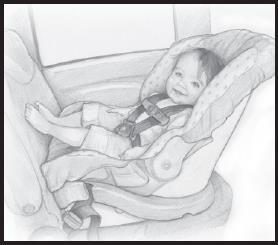
Rear-Facing. (Birth to age 2 or beyond)rear-facing car seat
Infant Seat. Weight from 4 pounds to 22 – 35 pounds and height up to 29 – 32 inches, depending on the seat. Convertible Seat. Weight from 5 or 20 pounds minimum to 45 pounds maximum rear-facing, maximum height 40 inches.

The American Academy of Pediatrics says “All infants and toddlers should ride in a rear-facing car safety seat (CSS) until they are 2 years of age or until they reach the highest weight or height allowed by the manufacturer of their CSS.” Riding rear-facing helps to protect a child’s fragile neck and spinal cord, and reduces the risk of severe injury by 75%.

Many parents notice that as their toddler grows, there is less room for their legs, and they have to bend their legs or sit cross-legged in order to fit. They wonder if they should turn the child forward. As a car seat technician told me: “yes, there’s a minor risk of broken legs in an accident. But, broken legs are much easier to heal from then a broken neck, which is more likely if they’re forward facing.”

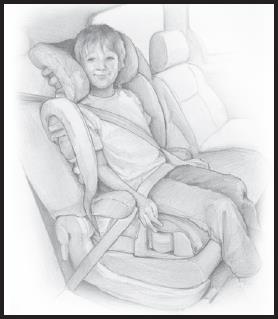
forward-facing car seatForward-Facing Car Seat with a 5-point Harness. (Age 2 to 7)
Should never be used for a child less than 20 pounds or less than one year old.
Maximum weight 35 – 70 pounds. Max height up to 50 inches.

These seats are equipped with a 5 point harness. In a crash, that harness keeps the child in the seat and helps distribute the force of the crash to the strongest parts of the child’s body. Use for as long as possible, as they provide more support and protection than a booster seat. Your child is ready for a booster when he reaches the top weight and height allowed for his car seat (shoulders are above the top harness slots and his ears have reached the top of the seat.)

You may find as your child gets older that they are riding in other people’s cars more often (for field trips, playdates, and so on). Make sure the person who is transporting your child knows how to install the seat or booster properly.  Some parents choose to use an easy-to-install booster for these occasional trips once their child hits the minimum size, while continuing to use a forward-facing car seat with a 5-point harness in their own car for the majority of car rides.
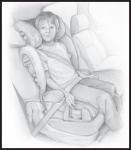
boostBooster Seat. (Age 4 – 8 or beyond)
Up to 100 – 120 pounds. Maximum heights from 34 – 63”.

Washington requires that children use a safety seat until they’re at least 8 years old or taller than 4’9” (57”) whichever comes first. (Note: Less than 5% of kids are taller than 4’9” at 8 years old. 25% don’t reach 4’9” until they are almost 12 years old.)

Boosters properly position the adult lap and shoulder belt for a child, so it provides proper restraint in case of an accident.

Your car must have a lap and shoulder belt to use a booster. If your car only has lap belts, you can use a forward-facing car seat with a harness or see if shoulder belts can be installed in your car. There are backless booster seats, which are generally less expensive and easier to carry. There are high-back boosters, which should be used in cars without head rests or with low seat backs.

Seat Belt. (Age 8 or older)
If your child is 8 – 12 years old or at least 4 feet 9 inches tall, AND you can answer yes to these questions, then they’re ready to move out of a booster seat.

  • When the child is sitting all the way back against the vehicle seat, do the child’s knees Seat beltbend comfortably at the edge of the vehicle seat?
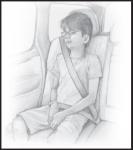
  • Does the lap belt stay on the top of the child’s thighs, not on their belly?
  • Is the shoulder belt centered on the child’s chest and shoulder (and not on the neck or throat)?

Can the child stay seated this way for the whole trip? Without putting the shoulder part of their seat belt under their arm or behind their back?

Front Seat. By Washington law, all children should ride in the back seat until age 13.
(Exceptions for: pickup trucks or sports cars with no back seat, or if the back seat is filled with younger children)

Air bags are very dangerous to children riding in rear-facing car seats. If your vehicle has a front passenger air bag, infants in rear-facing seats must ride in the back. If a young child must ride in the front seat of the car, check your vehicle owner’s manual to learn how to turn off the air bag.

Choosing a Car Seat: Choose a car seat that is easy for you to use, so that you will use it right every time. NHTSA offers ease of use ratings for all the car seats on the market: http://www.nhtsa.gov/nhtsa_eou/

If your child is likely to be tall or heavy for their age, choose a seat with higher maximum weight and height to allow your child to use that car seat as long as possible.

Install the Car Seat Properly. For a car seat to work correctly, it must be installed correctly. Check the web resources below for information on car seat installation, and read your car seat manual and your vehicle manual for tips. Once you’ve installed a seat, you can have it checked for free. See www.800bucklup.org/carseat/inspections.asp for a list of inspectors.

Clothing. If a child is dressed in bulky clothing, the car seat may not properly restrain them in case of a crash. In the winter time, buckle your child into the seat without a coat on, and then place the coat or a blanket over the harness for warmth.

Other Objects. In case of an accident, loose objects in the car can fly around and strike passengers, and if your child is holding a hard object, it could hit them, causing injury. Keep this in mind as you do your best to keep your car tidy and consider what your child has access to in the car.

Be a Good Role Model. Always buckle up yourself. Always encourage all the other adults in the car to buckle up. Practice safe driving practices with minimal distractions. Your children will be driving themselves in just a few years, and they will have learned a lot about driving by watching you from the back seat. Make sure you are showing the behavior you want them to learn.

I think of motor vehicle safety as what I call a “red light” issue. When I teach safety skills to children, or talk to parents about safety skills, I think about “green light” situations with no risk of harm, “yellow lights” where we just let them know to be careful, “orange lights” where we only allow them to do something with very close adult supervision, and “red lights” which are absolute rules, set by the parents, and followed all the time in order to keep the child safe. Riding in the proper seat, properly buckled is mandatory. (To learn more about my thoughts on teaching safety skills, click here. And to learn about letting a child take reasonable risks as a learning experience, click here.)

More info: www.800bucklup.org; www.safercar.gov/parents; www.healthychildren.org

In this post, I reference Washington State laws. To learn the laws in your state, visit: http://www.ghsa.org/html/stateinfo/laws/childsafety_laws.html

For a printable handout of this information, click here.

Illustrations from healthychildren.org

Recommended Parenting Books

This list includes 20 great books on parenting kids age birth to five. They are some of my personal favorites, and also include books frequently recommended by my colleagues in the Bellevue College Parent Education program. I have included affiliate links to the Amazon description so you can learn more. If you live on Seattle’s eastside, check out the spreadsheet at the bottom of this post to see what you can check out from the library for free.

Pregnancy and Birth

Pregnancy, Childbirth and the Newborn:The Complete Guide. Simkin et al, 2016. (Fair disclosure: I’m a co-author on this book.)

Breastfeeding and Nutrition for Toddlers and Preschoolers

Breastfeeding Made Simple: Seven Natural Laws for Breastfeeding Mothers by Mohrbacher and Kendall-Tackett. 2010

Child of Mine: Feeding with Love and Good Sense by Satter. 2000

Parenting a Newborn or Toddler

Elevating Child Care: A guide to respectful parenting by Lansbury. 2014

The Baby Book: Everything you need to know about baby from birth to age 2. Sears. 2013

Our Babies, Ourselves: How Biology and Culture shape the way we parent by Small. 2011

Parenting, general

Becoming the Parent You Want to Be: A Sourcebook of Strategies for the First Five Years by Davis and Keyser.

Heart Tending: Creating Rituals that nurture you and those you love by Watson. 2014

It’s OK not to share and other renegade rules for raising competent and compassionate kids by Shumaker. 2012

No-Drama Discipline: The Whole Brain Way to calm the chaos and nurture your child’s developing brain by Siegel. 2014

Parenting without Borders: Surprising lessons parents around the world can teach us by Gross-Loh. 2013

Raising an Emotionally Intelligent Child by Gottman and Goleman. 2011

Simplicity Parenting: Using the extraordinary power of less to raise calmer, happier, and more secure kids by Payne. 2009

Child development / Activities that nurture child development and brain growth

Brain Rules for Baby: How to Raise a Smart and Happy Child from zero to five by Medina. 2014

Last Child in the Woods: Saving our children from Nature Deficit Disorder by Louv. 2008

Mind in the Making: Seven Essential Life Skills Every child needs by Galinski. 2010

Nurture Shock: New Thinking about Children by Bronson and Merryman. 2009

Tinkerlab: A Hands-On guide for Little Inventors by Doorley. 2014

Relationships (and the impact of children on a relationship)

And Baby Makes Three: the 6 step plan for preserving marital intimacy and re-kindling romance after baby arrives by Gottman. 2007

Sleep

The No-Cry Sleep Solution (or the No-Cry Nap Solution) by Pantley. 2013

Learn more

Here’s an Excel spreadsheet with another 30 great books to consider… Recommended Parenting Books from the Bellevue College Parent Education instructors.

If you find books to be an overwhelming time commitment when caring for little ones, and are looking for short, sweet, little 1 – 4 page summaries of key topics, you can check out my collection of handouts at https://gooddayswithkids.com/for-educators/

Question:

What are your favorite parenting books and why?

Potty Training Overview

teddy bear sitting on potty

I have a fully detailed post on the potty training process, but if you prefer the short 1-page summary, which includes the chart below, then view/print the Potty Training Overview.

Read the columns titled: Stage and “Your child is at this stage…”   Find the stage for which your child can consistently do all the things described in that second column. That tells you what your child’s developmental stage is. Then look at the third column for what you can do to help them progress to the next stage.

I hesitated to give any ages for any stage, because the age at which children reach each stage can range a great deal. It depends on gender, the child’s temperament, parent’s temperament, cultural expectations, and other external influences. Focus more on the signs that they are ready, and less on age!

More info from the American Academy of Family Physicians; American Academy of Pediatrics and the University of Michigan.

photo credit: thejbird via photopin cc