Category Archives: Fun Activities

Easy Play Anywhere Games

It’s super helpful to have ideas for simple games that can be played anytime / anywhere, so when you’re stuck in a line or a waiting room, you’ve got a way to entertain kids.

Most of these work best for children age 5 and up. A few, like I Spy and Scavenger Hunt, are good for younger kids – I’ve marked those with an asterisk.

Talking / Listening Games

These games can be played anywhere, with no materials. (They even work great over the phone or on Zoom.) They can work with two people or with a group. No need to move around to play, so they’re good for restaurants, car trips, etc.

Progressive Stories. One person starts a story: “Once upon a time, a polka-dotted elephant…” then the next person continues “… boarded a spaceship headed for… “

Packing the Suitcase. One person starts with something like “My aunt was going on a trip to Japan and she packed her toothbrush…” and the second person says “My aunt… packed her toothbrush and a four leaf clover.” The third person repeats what has come before and adds a new item. Keep going till someone makes a mistake.

Two Truths and a Lie – Each person tells two true things about themselves and one lie. Others have to guess the lie.

Would you Rather? Ask any question using the format “would you rather ______ or _______” and the other(s) choose their preference, and why.

Fortunately / Unfortunately. One person starts a story with something as simple as “One day I decided to go for a picnic in the park.” Then the next person says “Fortunately [fill in the blank]” then someone else jumps in with “Unfortunately [fill in the blank]” and keep on going… on and on…

Never Have I Ever: One person says “never have I ever _______” and describes something. If you’ve never done it either, you leave your fingers down. If you HAVE done it, raise a finger and keep holding it up. The next person says “never have I ever”. At the end of the game who ever has the most fingers up “wins.”

Play 20 questions. “Is it an animal, vegetable, or mineral?” (Learn more.)

Geography. Someone names a place (city, country, whatever category you decide on). The next person needs to name another place that STARTS with the letter that one ENDED with. So, for example, CaliforniA, ArkansaS, South CarolinA. Can also do animals or other categories following the same rules.

*I’m thinking of an animal that starts with the letter A. You say that… someone guesses it, then it’s their turn to say “I’m thinking of an animal that starts with the letter R, or whatever. Instead of animals, you could do Star Wars characters, Pokemon, or whatever. [For younger children, simplify this by describing things: “I’m thinking of an animal that’s small and brown… we’ve seen one in our backyard… it has long ears…”]

Categories. On NPR’s Sunday puzzle, he sometimes has a puzzle like “If I give you the 5 letter word Piano, can you give me five women’s names that start with the letters in PIANO?” (e.g. Paula, Inez, Amy, Nadia, Olivia). We pick any five letter word, and do categories like “Cities in Washington” or “Models of Car” or “Animals” or whatever.

And if all that was too cerebral, try: Rock Paper Scissors and Thumb Wrestling.

*I Spy. One person finds something they can see around them, says “I spy with my little eye….” The other person searches for it. When they find it, it’s their turn. For toddlers, this is simple “I spy something red” or “I spy a dog.” For older kids, it’s more sophisticated “I spy something starting with the letter L” or “I spy something that was made before 1980.”

Paper and Pencil Games

These just require something to write on. Paper, white board, the Zoom white board, etc.

Tic-Tac-Toe. Draw out a grid – you and opponent take turns drawing in X and O.

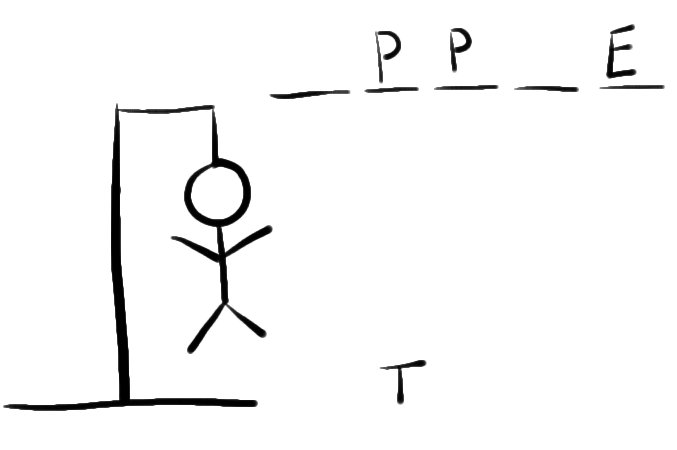
Hang Man. You come up with a word, draw out the hangman. Participants guess letters.

*Doodle Game. One person makes a random scribble, then the other person needs to use that scribble as the foundation for a drawing – creating some artwork that somehow includes that scribble. For young children, they always do the scribble, the grown-up always completes the drawing.

Dots and Squares. Draw several columns of dots. Person 1 draws a line between two dots, then person 2, then person 1 again… whenever they complete all four sides of a box, they write their initial in the box.

Draw on Your Head. The child places the paper on top of their head. Then you give a clue, like flower, bird, house, etc. They draw a picture on top of their head without looking, and then share it.

Find details on these and more pen and paper games here: https://www.thelondonmother.net/easy-pen-and-paper-games/

Moving Around Games

*Play Simon Says. Or Red Light, Green Light. Or any of the MANY variations on Tag.

*Scavenger Hunt Fetch. Ask child(ren) to find certain objects – they run and find it and bring it back.

*Charades. Give a clue to one person – they act it out – others guess. For younger children, you act things out, they guess.

On the Move Games

These are for when you’re walking or moving in a car or on a bus or train…

License Plate Game. How many states or provinces can you spot license plates from over the course of a trip. If you print a map of the states, your child can color each in as they find the license plate, which will reinforce geography knowledge for them.

Find the Alphabet on Signs. Find a sign with the letter A on it. Then another sign with the letter B. And so on. (Or do the same with numbers.)

*Find Colors. Spot something red, then orange, yellow, green, blue, purple…

*Scavenger Hunt. Prepare (or find online) a list of items to try to spot as you travel. Or you can create Bingo boards. For younger children, just tell them one idea at a time to search for – can you find an animal?

Punch Buggy. If you see a Volkswagen Beetle and call Punch Buggy, you get to punch someone. P’diddle, P’daddle. After dark, if you see a car with one missing headlight, you say p-diddle, and if you see a car with no headlights, you say p-daddle. You get to kiss someone.

Encore. Name a word – other people try to sing songs including that word.

While You Were Sleeping. When someone wakes up from a nap, make up a crazy story of “what they missed”.

There are more fun ideas for road trip games here: https://www.erieinsurance.com/blog/road-trip-games-to-play

Connecting to Nature from Home

TL; DR: There are so many physical and mental health benefits of spending time outdoors and connecting with nature. But parents may face barriers to getting outside. Perceived barriers could be: the parents’ lack of knowledge / experience with nature, minimal access to wild lands, and health/disability issues which limit ability to explore outdoors. This post will highlight super simple ways to connect more to nature by just looking out your window more, by bringing a little of nature into your home, by spending time in your own yard or in any outdoor space, or by using webcams and educational videos to learn more about nature.

Looking out the window:

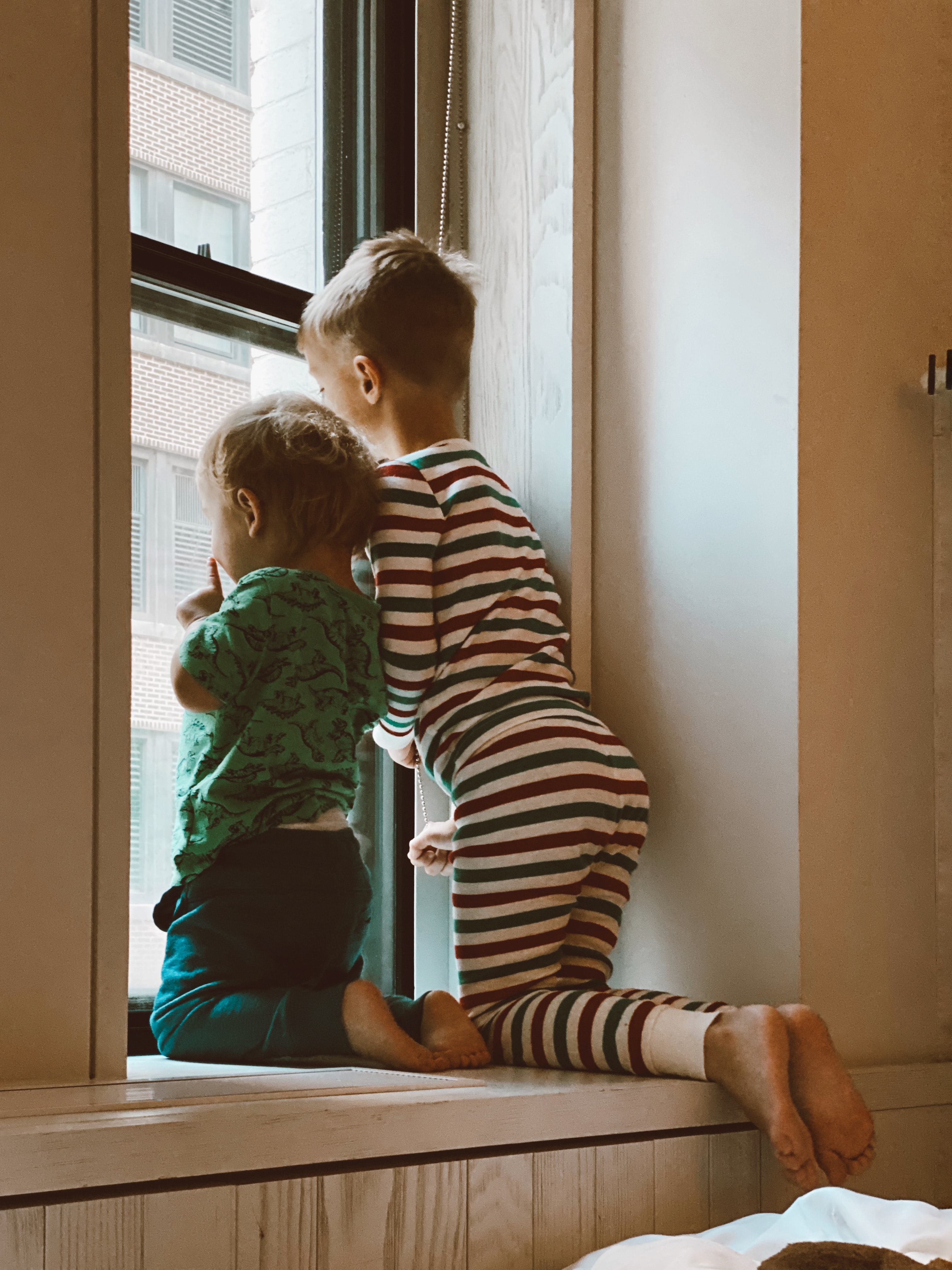
Studies of hospital patients have shown decreased need for pain medications and shorter post-operative stays for those who can see nature outside the hospital window. Here are some things you can do without even going out:

  • Weather Checks: Notice what the weather is, even if you’re not going out. Teach about weather. In my lesson plan about Weather Science, you’ll find ideas about teaching weather vocabulary, drawing the weather, creating weather charts, observing and identifying clouds.
  • Notice seasonal changes: The view outside your window is always changing. Maybe the flowers are blooming, or the leaves are changing colors. With your child, take a picture from the same view once every week, and then compare them side by side to notice what has changed.
  • Gaze at clouds – what shapes do you see?
  • Keep a tally: Decide what you’ll count: birds? people passing by? dogs? cars? Whatever it is, looking outdoors and counting means lots of time looking outdoors!
  • Tell stories: when a car passes by, imagine who is in it, and what they might be doing.

Bringing Nature In

Try any of these easy activities:

  • Dissect vegetables and fruits. When you’re prepping food, try “dissecting” it with your child – carefully cutting it apart and examining the parts. You can use books or the internet to learn more about plant parts. Save your seeds – apple seeds, cherry pits, or whatever.
  • Sprout seeds Use seeds you saved, or dry beans. Fold a paper towel, wet it, put it in a ziplock baggie. Add a seed. Seal the baggie and tape it to a window with the seed facing in where you can see it. Wait a few days.
  • Once you’ve sprouted your seeds, if you have access to dirt or potting soil, you can plant them. You can use any container you have.  For example, if you have a margarine or yogurt tub, poke a couple holes in the bottom for drainage, set it on its lid before putting it in the window. Or you could make a terrarium from a 2 liter bottle.
  • Propagate a succulent plant. If you have a succulent, you can gently twist off a leaf or two, let it dry for a day or two, set the leaf on top of some soil. Every day or two, spritz some water on the soil to keep it moist. After a few weeks (this is a slow process!) they will have roots. Then plant those roots in the soil. Water these new plants once a week, and they will grow. It can take months for that leaf to become a little plant – this is a slow process, but I love my little baby succulents!
  • Plant potatoes in a container. (Just do a search for that, and you’ll find all the details!) Grow sweet potato vines.  Grow celery from the base of a bunch of celery, or lettuce from the core.
  • If you have celery, cabbage, or white flowers, you can teach about the science of wicking by putting them in colored water, and over 24 hours or so, they’ll pull the color up into them.
  • Vegetable prints. You can cut the base off a stalk of celery, or the base off of a bell pepper, or slice mushrooms in half, then use those to print paint in fun designs. Lots of plastic water bottles and plastic soda bottles have a sort of flower shape on the bottom that if you dip it in paint you can print flower gardens. (see pictures)
  • Consider a pet. But please don’t buy any pet without serious research… I firmly believe that if I bring an animal into my home, I’m making a commitment to caring for that pet for its natural lifetime. A manageable starting place for a family with young children is a betta fish, perhaps with a nerite snail to manage the algae.

Your Backyard / Sidewalk

Getting outside helps connect you to nature, but it can also let your kid MOVE more and get out some energy. It’s also a great opportunity to let them use their “outside voice”! Don’t let the weather stop you from going out. Being outside in the rain or cold won’t make kids sick! Just have them put on appropriate clothes for the weather.

  • Work on a garden together. Or even on an outdoor project like building raised beds, building a brick retaining wall or a cobblestone path. “Heavy work” is great for children, and helps them burn up a lot of energy as well as gain pride from building something real.
  • Make a bird feeder, hang it up, and then keep a record of what kinds of birds you see. Learn about those birds online. Here is a guide to bird calls for birds commonly found in the Pacific NW.
  • Go on a bug hunt.
  • Nature crafts: gather grass, flowers and more to spell out your name, or to make bookmarks (take a piece of contact paper or clear packing tape, lay your flowers on it, then put another piece of packing tape on top to seal it. Trim the edges to a nice shape). Make a wind chime, from old keys or a plastic cup and beads.
  • Don’t feel like you have to entertain them or educate them continuously outside. It’s also fine to let them discover ways to self entertain. Put out toys or equipment that are fine for outdoors: jumpropes, balls, toy shovels if there’s somewhere they can dig, a container of water and scoops and funnels, sidewalk chalk, etc.

Walking in your Neighborhood

While I love going on long hikes and discovering new wilderness areas, there are also a lot of health benefits to walking anywhere – including just walking around your neighborhood every day. If you’re walking the same loop every day, it might start to feel repetitive… here’s some ways you can keep it interesting:

  • Notice nature’s changes: Nature provides an always-changing experience…. and we have time to stop and observe, ask questions, and learn. Have new trees blossomed? Have trees dropped leaves or seeds? Are there birds? squirrels? bugs? What did yesterday’s wind blow around?
  • Practice traffic rules: practice at looking both ways before you cross the street – and talk about what you’re looking for and making judgments about whether it’s safe to cross. Teach about turn signals, stop signs, watching for driveways and more.
  • Learn navigation: teach addresses and street names. Bring a paper map and teach how to use it. Use a mapping app on your phone and teach how to use it. For little ones, practice turning left and right on command. Draw a map of the neighborhood.
  • Play red light, green light.
  • Try “nature shopping“, where the child gathers a collection of natural items, like rocks or pinecones or leaves.
  • Collecting photos: on every walk, you can take photos of things you want to remember and make a little photo album of your favorite finds.
  • Scavenger Hunts: prepare a list of things you would expect to be able to see or hear or do on your outing. Bring stickers along and as you’re out on an adventure, any time you find one of the items on the list, your child can put a sticker on it. Then when the scavenger hunt is complete, you can have a snack when you get home as a reward. Ideas for scavenger hunts:
    • Things to listen for: crows, bird calls, running water, wind in the leaves, people’s voices in the distance, dogs barking
    • Things to look for: pinecones, mushrooms, ferns, moss, spider web, bugs
    • Things to do: go up or down stairs, cross a crosswalk, wait for a light… if you know your neighborhood, it will be easy for you to make a list they can successfully complete
    • Go on a bug scavenger hunt
    • Go on a numbers scavenger hunt – how long does it take you to find all the numbers 1 – 10?
    • Go on a letters scavenger hunt: can you find all the letters A – Z on your walk? Check street signs, license plates, etc.
    • For more ideas, just search “backyard scavenger hunt.”
    • For older kids: try Pokemon Go,  geocaching or letterboxing.

Resources for Hands-On Activities

The Wild Network is dedicated to easy ideas for getting kids outdoors and connected to nature. They have lots of wild time ideas at https://thewildnetwork.com/wild-time-ideas/ and more inspiration – https://thewildnetwork.com/inspiration/

The National Wildlife Federation encourages parents to ensure that children get one “green hour” outside every day. They have lots of activity ideas at: https://www.thegreenhour.org/.

Nature Mentoring has 22 ideas for Sharing Nature with Beginners: https://nature-mentor.com/nature-connection-activities/

Virtual Nature

Lots of zoos have webcams that let you observe animals in action. Check out: https://zoocamerasaroundtheworld.com/. You’ll find the Panda Cam from Atlanta, the penguins from Woodland Park in Seattle, otters from Chattanooga, and many more. The San Diego zoo has many live cams, plus lots of videos. The National Zoo has four. The trick with live webcams is that sometimes you see nothing… At the exact moment I type this, if I try to look at the naked mole rats in DC, all I see is an enclosure with a spinach leaf and a piece of corn on the cob. So, plan on flipping between several webcams till you find one with some good action going on. Here’s a  Virtual Field Trip Lesson Plan you could use to enhance your viewing.

There are also aquariums with webcams: Monterey Bay Aquarium, Georgia Aquarium, and the Seattle Aquarium has a virtual field trip.

There are also lots of great nature videos on National Geographic Kids, Ranger Rick from the National Wildlife Federation, and National Geographic on Disney+.

Fun with Toddlers – Animal Theme

Crafts to Do

Make a clothespin creature: With clothespins, pipe cleaners, cardstock, googly eyes, pompoms and more, there are so many creatures you can create! (You can find sources for all these ideas on my Pinterest page at www.pinterest.com/bcparented/clothespin-creatures/)

Do animal facepaint and/or make animal costumes. Read the book Fraidyzoo by Heder. (It’s available at the King County library) It’s all about making crazy animal costumes out of materials you have around the house or can find in your recycling bin. See what animal costumes you can create!

Invitations to Play

Put out a collection of toy animals, and materials to build a habitat with or build a zoo or farm. This could be a playdough activity, or you could put items in a sensory bin with beans or rice, or could be nature play with sticks and rocks, or combined with building toys such as Duplos.

Learning Activities

  • Sorting. There are so many sorting activities you can do with toy animals. Put them in a pile, and ask your child to sort: farm animals from zoo animals, or mammals from non-mammals, or things that climb trees from things that swim, or sort by color or size.
  • Animal Sounds. Show your child pictures of animals, and teach your child animal sounds. Then ask your child “what noise does a cow make?” Praise them when they say moo. And so on. Children can often make recognizable animal sounds before they have much language, so it’s a fun way to see how much your child really understands. If you want your child to speak multiple languages, ask the question in other languages (like “Que dice la vaca?”). They will learn the answer is also moo. This helps them start making connections between meaning in the different languages.

Songs to Sing

  • To the tune of Wheels on the Bus: “The lions at the zoo say roar roar roar, roar roar roar, roar roar roar. The lions at the zoo say roar roar roar all day long.” Repeat with any animal sound you want.
  • Old McDonald. Old McDonald had a farm. E I E I O // And on that farm there was a cow. E I E I O // With a moo moo here and a moo moo there. // Here a moo, there a moo, everywhere a moo moo. // Old McDonald had a farm. E I E I O
  • Three little monkeys. Three little monkeys jumping on the bed. One fell off and bumped his head. Mama called the doctor and the doctor said: “No more monkeys jumping on the bed”.

Books to Read

  • Dear Zoo by Campbell. Fabulous lift the flap. “I wrote to the zoo to send me a pet…” See what they send!
  • Good Night, Gorilla by Rathmann. A charming (mostly) wordless book about a gorilla escaping its cage.
  • Brown Bear, Brown Bear, What Do You See? or Polar Bear, Polar Bear What Do You Hear? by Carle. Great repeating rhyme and rhythm. Children love to predict what will be on the next page.
  • Poke a Dot: Old MacDonald’s Farm. This is a counting book. Each page has plastic dots you can “pop”. I’m normally not a fan of “gimmicky” books, but I think this one is great for learning one-to-one correspondence, an essential math skill.
  • Who’s Like Me? This is a lift the flap (uncover and discover) book, where one animal says something like “I’m a bunny. I am furry and breathe air. Who’s like me?”

More Animal Themed Activities

Check out my Fun with Toddlers posts on Zoo Theme and Farm Theme. Or check out my preschool STEM posts about Animal Classification, Adaptations, Habitats and more.

When Should You Introduce Your Child To [your favorite media]?

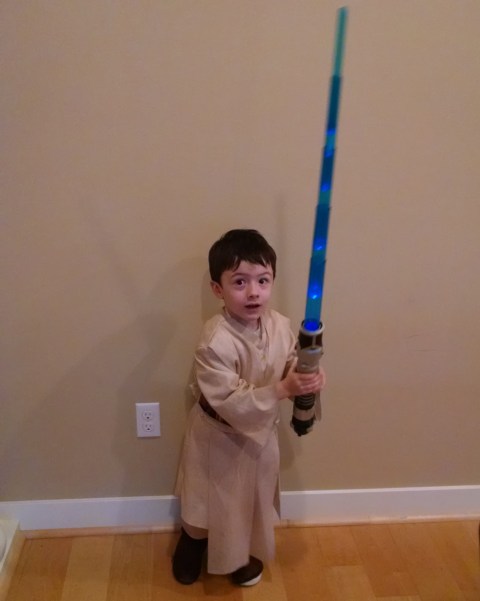
small child with light saber and Ben Kenobi costume

The TL;DR summary:

Don’t rush to introduce your child to your favorite book or movie. Why?

  • There may be mature content the child is not ready for that might frighten or concern them.
  • You’ll all enjoy something more if you wait till they’re old enough to actually get it and enjoy it!
  • There’s plenty of fabulous media aimed at young kids. It’s OK to stay in the kiddie pool for a while… I promise, there will be time later on to introduce all the great stories!

My Rationale for Waiting:

As a parent, I’ve had lots of time to reflect on this. As a parent educator, my students ask me about these topics from time to time, but I’d never taken the opportunity to write up my thoughts till now…

Recently, a friend on Facebook asked for recommendations on which novels to read next to her 5 and 6 year old. Some folks recommended Narnia, A Wrinkle in Time, the Percy Jackson books.

And I said no! Wait! Not yet!

Today, on the /Filmcast, a host (Jeff) was talking about when he would first show Star Wars to his kids, saying “I’ve got years before I can show it to them and really have it land… and be meaningful”. He said “even three is probably way too young… 4 or 5 is probably the right age?”

And I thought: No! Wait! 4 or 5 is way too young!

Whatever your favorite movie / book / play / music is, you may be anxiously awaiting the day you can introduce your child to it. But if you really want to “have it land” and be meaningful for your child, it is better to wait till they’re really ready. It’s hard to be patient, but I think it’s more rewarding in the long run. Here’s why:

Mature Themes

An obvious challenge of introducing too early is mature themes. Sometimes there are scenes that might frighten them (For example, although many first graders are plenty literate to read Harry Potter, I think it’s too scary for a 7 year old.) There’s also language, substances, “bad attitudes” and so on. Some of your favorite media may have more of this mature content than your child is ready for… and you may not remember till it’s too late. (I’ve made this mistake plenty of times. For example, watching Footloose with my tweens… I’d remembered all the dancing… I’d forgotten about the underage drinking… and the playing chicken with tractors… and the boyfriend hitting the girlfriend… the dad hitting the daughter… We pressed pause several times during that movie! This ended up being a good opportunity to start some challenging conversations. But it would have been better if I’d done it with a clearer plan!) I have now learned to refresh my memory first by reading the reviews on Common Sense Media, which does a nice job of clearly detailing all the potential issues so you can decide which feel OK to you and which feel problematic. For example, I’m not really troubled by bad language, or by fantasy combat, but I am really uncomfortable with realistic gun violence. Your concerns may be different.

I’m not saying that you should never take in media with your child that tackles challenging issues. I actually recommend that parents read books or watch movies where characters face a variety of challenges, make difficult decisions, and cope with grief (read my posts on how to talk to your child about death, scary topics, sexuality, and more). Reading sad books or watching sad movies with your child and then discussing them helps to build emotional literacy and build decision-making and problem-solving skills (as they watch characters manage situations that they have not yet had to face.) But, do this intentionally, not by accident. And do it with media that is developmentally appropriate for your child.

Will It Land?

My reason to wait isn’t just about avoiding mature themes. It’s also waiting till they’re ready to grok the material. Really ready to engage, enjoy, and get meaning out of it.

When I was a kid, I hung out in the public library and the church library by myself a lot. (Mom must have been in the building somewhere? I don’t really remember… I remember having full access to any book I wanted to read.) I read the Hobbit and LotR, the Chronicles of Narnia, and Wrinkle in Time all around the same time. Probably 8 or 9? Now, my reading skills were totally up to deciphering all the words (and to looking up tesseract in the dictionary).  I probably understood all of the Hobbit, and much of Narnia. But there was so much I missed. (Yeah, like that Narnia had any relation to Christianity.) And the thing was, once I’d read them, I didn’t want to go back and re-visit them when I was a little older, because I’d been-there-done-that. I didn’t go back to them till my own kids read them. So, my experience was fine, but it could have been better.

With my kids, we’ve mostly waited… With my youngest, we waited till he was 8 to show him Star Wars. Before that time, he’d read Star Wars themed beginning readers, he’d played Lego Star Wars video games with his dad, and he’d dressed up as Obi Wan. He’d even watched parts of the movies at family parties at his uncle’s house. But when we finally sat down to watch the original trilogy, he was ready to follow it, enjoy it, and understand it much better than he would have been at a younger age.

Spoilers

Spoilers float around in popular culture and discussions, so some parents worry that their child will be spoiled about key plot twists. And they will be. My kid knew who Luke’s father was long before he watched Star Wars! So, no, I didn’t have the opportunity to film his reaction to that revelation. (Yeah, that’s its own genre of YouTube videos.) But instead, I got to see his glee at finally learning the whole story related to that fact, and understanding why it is such a famous plot twist.

Although I had seen all the MCU movies, my son had not. I saw Avengers Endgame on opening night. Then I went on a binge of watching every YouTube video and listening to every podcast about the movie and all the Easter eggs. And my son rides in the car with me, and hangs out in the room while I do my morning workout. So, guess what – he knows ALL the spoilers even though he hasn’t see the movie. Over the past month, we’ve started to introduce him to all the movies (starting with Spider Man Homecoming and Ant Man movies, because those felt like the most kid-appealing choices). At 8.5, he’s actually in a really good sweet spot for these movies. Well… for watching them at home! Where we can talk during the movie when needed to explain something to him, we can answer his questions, and we can pause for a break to process if needed. We’re not going to take him to an MCU movie in a theatre this year or maybe next. Being in a dark room with the sound all the way up and having to be quiet and not able to pause can make a movie feel way more intense to young kids. (And if he asks questions he would disturb others.) We’ve also started pulling old Marvel comics out of the stash in the garage to entertain him till then.

We as adults may dislike spoilers, and like the moments of surprise. I find that children often go the other way. They like knowing information ahead of time because it makes them feel smart and powerful, and they may actually get more excited by the story that leads them to a known destination than they do by watching something when they have no idea where it’s going.

Stay in the World of Children for a little while

Another reason to wait on more “grown up” stories is that if we rush to that, we could miss out on the pure and sweet delight of children’s media.

When my oldest was in kindergarten, he came home from a playdate at a friend’s house singing ‘Hit Me Baby One More Time’ by Britney Spears. And telling me about all the music videos he’d watched. Some people might have been offended by the child’s mother letting the kids watch mature content… I didn’t really care about that. But I was sad at all the things that child might have been missing out on.

At that time, my son was listening to kids’ music – and there is SO MUCH great kids’ music out there! His favorite singers at that point were: Tom Chapin, Tom Paxton, Priscilla Herdman, and Anna Moo. So many delightful songs to sing! We decided ‘Oops I did it again’ could wait.

If I’m showing Star Wars to my four or five year old, we’re not making time for Kipper, Toy Story, Lion King, Iron Giant, Ponyo, and Sid the Science Kid. In rushing toward Harry Potter, let’s not skip over Winnie the Pooh, Dr. Seuss, Henry & Mudge, Frog and Toad. Take the time to do kid stuff while they’re kids. You can always watch everything else later on, but it’s hard to talk your teenager into going back to all this great kid content.

Context Matters

As I’ve hinted above, there’s a difference between watching a loud movie in a dark theater full of strangers vs. at home. What your child might be up to in one context might be too much in another context. We love live theatre, but we start with kid focused shows where we practice our “theatre rules”, then we try outdoor theatre where if the kids move or make noise, it’s no more disruptive than the airplane flying overhead. Then we go to school or amateur productions indoors. We wait on those expensive tickets to the Nutcracker or to Lion King’s national tour till we know they’re ready to get the most out of it!

So, if you can’t wait to introduce a particular story, think about what context it is best to introduce it in. For example, if you’re worried about a movie being too scary, you can read the book together in advance (or tell them the story from a plot synopsis), and show them still pictures from the movie ahead of time so they know more about what to expect? (Yes, it’s spoilers, but remember that’s OK for kids.) Would it work better for you to “serialize” a movie and watch it in lots of short 20 minute segments with time to discuss along the way? Could you just skip scenes or fast forward through some for now? Do what you think is best.

For books, often once a child learns to read independently, the parent stops reading to the child as much, and eventually even bedtime stories fall by the wayside. There are all sorts of benefits to continuing to read to an older child (including building their skills at interpreting what they read, increased empathy, and an entryway into those challenging conversations.) When my older kids were tweens and teens, we would listen to audiobooks in the car and then have common ground for a discussion of something we were all engaged in. So, reading to your child or listening to audio books can be a great way to introduce some of your favorite tales.

It’s In the Water

Some things we don’t wait on. Some things are just part of the water that our families swim in. When I was growing up as the youngest of four kids with a dad who loved science fiction, Star Trek was on the screen in the living room every week when I was a toddler, and then reruns were watched for the rest of my childhood. So, the vision of a future of scientific exploration was just a part of my life. Seeing people of all ethnicities working together, seeing a black female officer – was all normal to me. Not the radical experience that Star Trek TOS may have been to some. And I absorbed lots of other science fiction and fantasy from the rest of the family – I think my sister told me shortened versions of some of her favorite fantasy tales. And I think all our kids absorbed the ethos of “with great power comes great responsibility” long before watching Spider Man. My older kids grew up hanging out in the room while I played roleplaying games with friends, and they joined in as they got old enough. My youngest is just starting to join my oldest and his friends in playing Magic the Gathering. So your favorite stories and characters can’t help but be an on-going part of your family’s life.

But, if you’re asking “When do I let my kid read…” or “When should I show my kid….”, or “is it to early to expose my child…” here are my completely personal biased recommendations for when the right time is for some properties (mostly from the geek universe cuz that’s the way I roll.)

Recommended Ages

(For more details on the kid appropriateness of ALL of these properties, use Common Sense Media to learn more.)

  • Chronicles of Narnia – Read to kids (or audiobook) at 8 – 10. Independent read at 10+. The 2005 movie of Lion, the Witch and the Wardrobe is mostly good for ages 6 and up, but there are some scenes that could be frightening for kids under age 10. The 1988 BBC Chronicles of Narnia may work for younger kids, but is very long, so break it up into pieces.
  • DC Movies: Shazam should have been a GREAT kids’ movie. And 90% of it is. But the beginning drags, is confusing and scary, and the intense scenes are really INTENSE. I’d say 12+. Wonder Woman is great for 12+ but I wouldn’t go younger – the World War 1 scenes are scenes of warfare. Aquaman is probably fine for 10 and up, though parts of it would hold no interest for them. (Note: I would not show Man of Steel or BvS to anyone under 15, and I opted out of Suicide Squad myself.)
  • Dungeons and Dragons (and other table-top roleplaying systems): My older kids could play as the kids in a group of patient supportive adults (with an adult DM) starting at about 9 or 10. I’m guessing groups of kids could play at around 12? We’re trying to start a group of 7 – 9 year olds on a simplified D&D now with an adult DM, and thought it was going well, until today’s character design led to a series of meltdowns – one child due to a lost character sheet, one because they were having a hard time understanding the spell options, and one because his character is not as strong as the others. (Being told that he was smarter and had higher dexterity than the others did not resolve the meltdown.)
  • Harry Potter. The series starts on the scary side, and gets much darker as you go along. And for most kids, the movies are scarier than the books.
    • My oldest read the first few books when he was 10, then read the last three as they came out, when he was 10, 12, and 14. He recommends this as the appropriate timing. He says movies starting at age 12 or so.
    • Another approach: Kids read the book when they’re the same age as Harry is in the book – so book 1 when the child is 11, book 2 when the child is 12… When it’s almost time to read book 2, you could watch movie 1 for a reminder of the general plot of book 1. (Tip: never read the book then IMMEDIATELY watch the movie… I did this for Goblet of Fire, and I was painfully aware of every minor variance from book to movie.)
    • Common Sense Media has a helpful Harry Potter Age-by-Age Guide which addresses which books to read and which movies to watch by age, and includes the new properties like the Fantastic Beasts movies.
    • In reality though, I know it might be hard to keep these books away from my youngest for that long, as he’s got lots of friends who have read them. He’s already played Lego Harry Potter and put together Harry Potter Legos, and seen the attractions at Universal Studios, so he is familiar with the characters and the broad story lines. I suspect we will start by listening together to all the books on audio – the audio versions are narrated by Jim Dale and are absolutely stellar! Then he can read the books if he wants, then we’ll watch the movies.
  • The Hobbit – read to a child at 7 – 9. Child reads independently at 9 or 10. But wait on the rest of the Lord of the Rings books till 12 or so. I’d watch the animated version of the Hobbit from 1977 with a 6 – 8 year old, but I’d wait on the Peter Jackson Hobbit movies till age 10 – 12, and wait on the Peter Jackson Lord of the Rings till 12 or higher. (Partially due to the violence but also I don’t think younger kids would follow the plot well.)
  • Magic the Gathering – My oldest is introducing a simplified version to the 8 year old now, and that’s going well.
  • Marvel Cinematic Universe. I’d say start at age 8 with careful forethought and the ability to pause and explain. Older for in-theater. And maybe 10 and up if the child is likely to imitate combat behavior. But also pick and choose – some are more appropriate than others for younger kids. (That’s why we started with Spider Man Homecoming and Ant Man / Ant Man and the Wasp, not Iron Man 1 which starts out with some real-world violence.) In other Marvel: X-men movies for tweens. Deadpool – yeah, it’s R rated for a reason – the violence was uncomfortable for me!
  • Percy Jackson. I’d say 10 and up for the books. The characters are teens, who tweens could identify with well. I saw the first movie, and I’d go 13 and up on that one – read why.
  • Princess Bride. The movie is actually less intense than the book – although the ROUS and the torture scene might be distressing to kids. I would generally say 8 and up, though we took our son to outdoor movies in the park when he was 6 and 7. Scary moments don’t feel too scary when you’re sprawled on a picnic blanket on the grass. The book is probably for 10 and up as independent readers, but the audio book would be great for a 9 – 13 year old on a road trip.
  • Star Trek – If you tell your 6 year old “I have a show you’re going to love!” and  you turn on Star Trek, they may not think it’s for them. But, if the adults are watching Star Trek and the kids are watching along, they’ll probably like (and role play) many aspects while missing other concepts. All the TV series are probably fine to have playing around younger kids, some of the recent movies might be better around older kids. Of the series, TOS and TNG are more accessible to younger audiences and better to start with. They also have a really nice culture of optimism about the future. DS9 and Enterprise skew older; Discovery has some interesting conundrums for teenagers about when do you obey authority and when do you question it.
  • Star Wars
    • For this post, 19 dads were asked when to introduce Star Wars. “Conclusion: Fathers answers ranged from “in the womb” to “never”, with an average suggested age of somewhere between 5 and 6. Fathers also cited innumerable variables to take into consideration which were not consistent from child to child, or from family to family. There was consensus among the sampled fathers that exposure should be determined on a child-by-child basis, taking into account that child’s emotional, intellectual and social development, and always under parental supervision.”
    • My husband and I lean toward waiting till 7 or 8 because we think they’ll appreciate it more then. (If you’re wondering what order to watch movies in, read Machete Order – Explained.)
    • Release dates of new movies may skew your decisions… Someone told me she would have waited till age 8 or 9 to start these movies, but her mom took her to the opening of New Hope when she was 4, and when it turned out Force Awakens was going to come out when her child was 4, she decided to take her. But, they sat in the back row and had a stuffed animal and the iPad so if the child wanted to “opt out” of watching the movie, she could.
  • Studio Ghibli Films – I agree with these recommendations: My Neighbor Totoro and Ponyo for age 5 – 7. Cat Returns and Kiki for age 8 – 10. Spirited Away and Howl’s Moving Castle for tweens. (More recommendations here and here.)
  • The Martian – for ages 11 – 15. I have a whole post on the Martian… which was also inspired by a Jeff Cannata comment on the /Filmcast…
  • Willie Wonka – read the book Charlie and the Chocolate Factory at 6+. Watch the 1971 movie at 7 or so. (There are a few frightening moments of “children in peril.”) I think you can skip the Johnny Depp version.
  • Wizard of Oz – read the book to ages 6 and up. Independent read a little older than that – some archaic words. When I was 4 – 6 and watched the movie, I was terrified of the witch and the flying monkeys and hid behind the couch. But my kids all watched around age 6 – 8 and handled it OK – I had prepped them for the fact that it might feel scary and warned them when those parts were coming up.
  • Wrinkle in Time – Yeah, I read it at 8 or 9. I’d recommended 10 – 12 to get more out of the book. (Although again, you could read it to them younger than that.) The 2018 movie is appropriate for 10+, but it’s not as good as I wanted it to be.

Note: if you have multiple children, this all gets more complicated. Our older two were 3.5 years apart, so if I say something is good for ten year olds, that probably means we ended up watching it when the older one was 12, and the younger one was not quite 9. It worked for us because the older one was OK with “kiddie things” for longer, and the younger one wanted to be as “mature” as possible and had more tolerance for scary content.

What if they hate it?

And what if you’ve waited and waited for something, and then you show it to them, and they hate it?? Or what if they say “meh – it’s OK but not really that great?” Well, it’s a good lesson that our children are different people than we are, and we can all have different opinions. And maybe someday they’ll like it more… and maybe not.

I LOVE the movie Creator, a truly obscure 1985 romantic comedy with Peter O’Toole. It just makes me happier than almost any other movie I’ve seen. I waited till my older kids were in their late teens… it’s an R rated movie with some shower almost-sex and similar mature content. And I showed it to them, and they said “meh… I mean, I’m sorry Mom, I don’t want to make you feel bad, but maybe it’s just not for me?” And you know what? It was disappointing, but it’s OK. I still love the movie.

I had a dad tell me recently that there’s so many GREAT books he wants to share with his 12 year old daughter, but she’s only interested in YA romances and isn’t interested in any of them. I suggested to him that they listen to audiobooks together and that they take turns. She picks out one of her favorites, and he listens and gives it a fair chance and asks her what it is she loves about it. He may well end up liking it and even if he doesn’t, he gains new insights into her. And if he gave her book a fair chance, then hopefully she’ll give his book a fair chance.

Stephen Thompson, of the Pop Culture Happy Hour podcast, has shared stories about how he’s been trying for years to sell his kids on all the things he thinks are great, and now as teenagers, his daughter is into horror movies, which have never been his thing, but she’s sold him on a few of her favorites, and his son has convinced him that some video games are actually enjoyable to play – even if he’s very bad at them. For both parties in these exchanges, it’s a chance to be exposed to new things, to learn to appreciate each other’s perspectives, and to connect over a shared experience. And that’s the real value in sharing our favorite stories.

Please add comments – agreeing or disagreeing with me… and what properties (books, movies, plays… ) have I forgotten that you have strong opinions on?
 

Gift Guide: Toys to Build Toddler Brains

photo showing toys like Duplo train, Quadro climber

Parents often ask me for recommendations for “the best toys for toddlers”. It’s a little tricky for me, given that I often advocate for owning fewer toys. But, if you’d like a few special items for a child to unwrap for their birthday, Christmas, or another holiday, here are some thoughts on how to choose the best toys. I’m going to sort them into categories based on ways to build a variety of skills and multiple intelligences. (I also recommend you check out my handout on activities and free items which also help to build their brains.)

Word Play (Linguistic / Verbal Intelligence)

We go to the library a lot! And when my son was a toddler, we went to story-time at the library every week. This means we get to “try out” hundreds of books a year for free! We only buy copies of the very best. Here are my favorites for books that toddlers love, preschool level books about inventors and makers, and books that sing. (For your adult reading enjoyment, here’s my recommendations for recommended parenting books and resources for teaching STEM to kids.)

It’s also helpful to play a lot with letters: I like magnetic letters for the refrigerator (which you can use all over the house) and duplo letters.

I also recommend a Kindle Fire tablet with Kindle FreeTime installed, which includes lots of ABC games and literacy building apps. (Here are thoughts on making screen time work for your family.)

Doing the Numbers (Logical – Mathematical Intelligence)

Everything you have more than one of is a math toy! You can count how many blocks you have, figure out whether you have more trains than balls, and so on. A few helpful specialty math tools are: a set of Duplo numbers, which you can use for counting, number recognition, while mixing them into your building tools, Unifix Cubes, and a great app called Bedtime Math. Every night at bedtime, we read a story problem and solve some math puzzles related to that story.

Putting the Pieces Together (Spatial Intelligence)

I like wooden puzzles for younger children and jigsaw puzzles for older kids. Melissa and Doug is generally a reliable brand. Babies 6 – 18 months like stacking toys and shape sorters. Toddlers love wooden train tracksto assemble and a big collection of wooden trains.

There’s tons of great building toys for older kids (I list many here in my STEM Gift Guide) but my all-time favorite is building toy to give is a basic Duplo set. For a 5 – 6 year old, choose basic Legos.

Moving & Grooving (Bodily – Kinesthetic Intelligence)

I would recommend several balls of varying sizes and textures, a Nerf style baseball bat, a Strider bike, and plenty of time to run and play indoors and out.

Rather than buying a pre-made climber that can never change configurations, I recommend a climber built of Quadro (Quadro is a fabulous combination of building toy and playground equipment! We’ve had ours for 20 years now, in near constant use.)

Playing Well With Others (Interpersonal Intelligence)

Imaginary play and telling stories with characters is one way to build interpersonal intelligence. Choose a few stuffed animals or puppets,  a collection of finger puppets to tell stories with, a toy picnic basket with fake food.

Learning about Myself and How I Feel (Intrapersonal Intelligence)

This category of intelligence isn’t about tangible stuff. It’s more about interaction and emotion coaching, and also making sure your child has time for quiet contemplation and down time.

Song and Dance Routines (Musical Intelligence)music

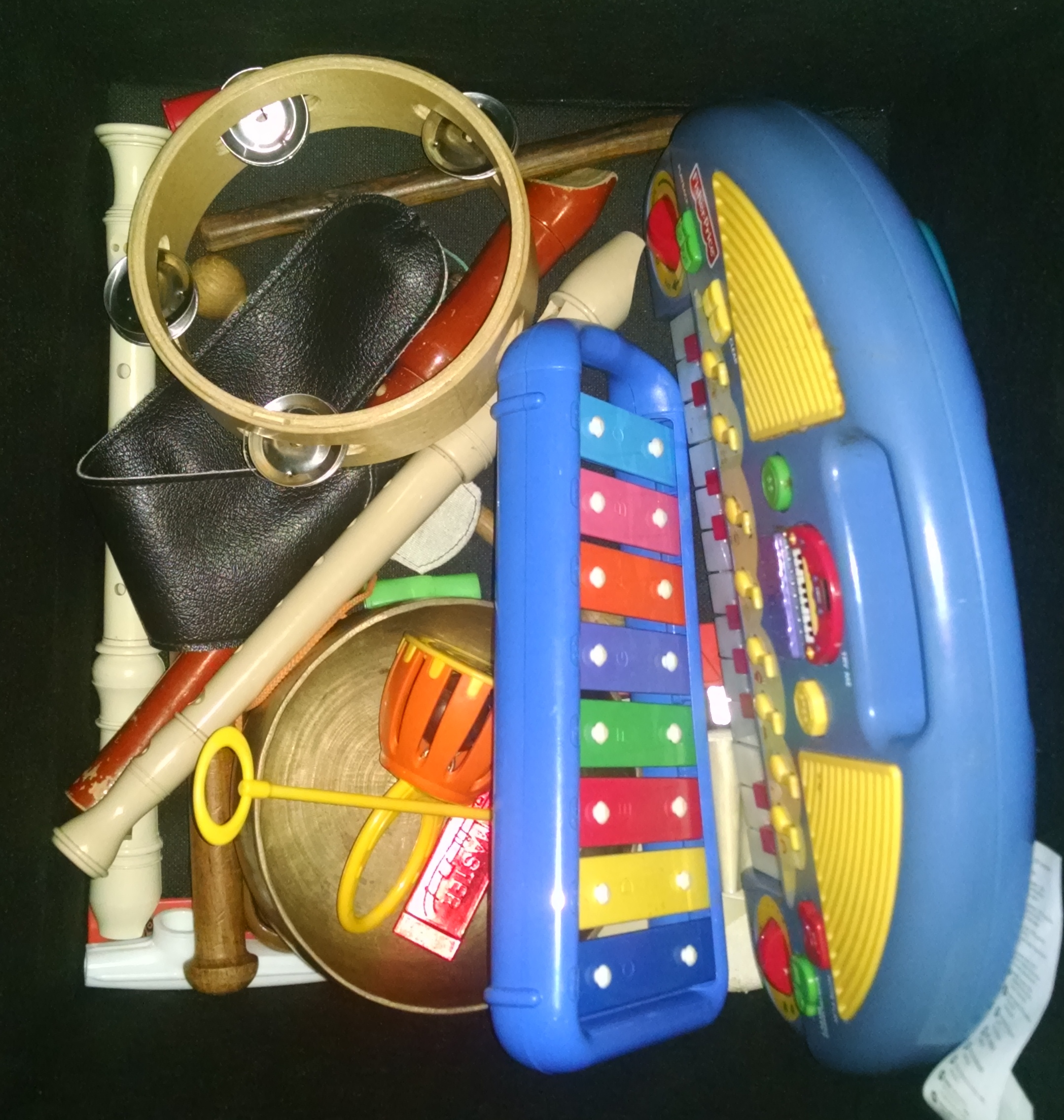
We have a box of miscellaneous musical instruments he can pull out anytime he wants. A few were purchased for him, but most are just items that have entered our lives over the years, like the plastic Yamaha recorder I had as a child, and the plastic Yamaha recorder I had to buy for my daughter’s class when I couldn’t find my old one… We also have a very old electric piano that’s in his room and he spends part of many “nap times” exploring the piano.

We listen to a lot of music together (one older sibling loves Broadway show tunes, one loves vintage jazz, Abuela loves classical and Spanish music) and sing songs A LOT, and enjoy circle-time songs at BC classes and library story times and hymns at church.

Fun with Flora and Fauna (Naturalistic Intelligence)

As you can guess if you’ve read other posts on my blog, we spend a lot of time outdoors. Camping, hikes, zoo trips, farmer’s markets, walks to the library and the pool. The only “tools” we use outdoors are a bucket and a shovel. (But, when we forget them, a stick and a rock can fill in as digging tools, and an empty Starbucks cup from the car makes a fine bucket.) Some day we’ll find our binoculars again, and pick up a new magnifying glass.

Expanding Horizons (Magic / Imagination / Religion / Cultures)

We have a big box of miscellaneous dress up – old Halloween costumes from his siblings, sunglasses, silly hats, etc. In all of our books and the videos we watch together, we aim for showing lots of diverse cultures and experiences, and we go to a church that talks a lot about diverse beliefs and appreciation of the sacred in all forms.

All the Pretty Colors (Artistic Skills and Appreciation)

This is the one area we have an abundance of STUFF.

One cabinet in the kitchen is over-flowing with art supplies: Model Magic clay, no-spill watercolors, pom poms, pipe cleaners, paint, paper, glitter glue, stickers, markers, crayons, beads, scissors, and so on. When he and I are in a relaxed, mellow mood, we pull these out and get to work.

I try not to do much art when I’m in a cranky mood, or when I won’t have time to deal with any mess that arises. I have to confess that I can have a hard time when he’s being really messy or “wasting” art supplies, or “messing up” art supplies – like when he dips the red-paint-covered paintbrush into the yellow paint. Because I know that about myself, I make sure that he has plenty of opportunity to do art in spaces that are designed for kids’ art and where it’s OK to make a mess. So, this year, he’s enrolled in Creative Development Lab, which is all about exploring and experimenting with art.

Child-Directed Play

In addition to buying stuff for your kid to play with, also make sure they have some time to play with you that is child-directed – where they get to decide what they want to play. Learn more about child-directed play.

If you have an older child, check out my Gift Guide to STEM Toys for Ages 3 – 6.

(Note: this post includes Amazon affiliate links. If you click through and purchase anything, I get a small referral fee. I spend any income from that on doing outreach to encourage more parents and educators to come check out what I offer here on this blog.)