Category Archives: Child Development

The Incredible Years program

My family is currently enrolled in a session of The Incredible Years, which is an evidence-based program for parents and for children, supported by over 30 years of research. The goal is to prevent and treat young children’s behavior problems and promote their social, emotional, and academic competence.

At the program we’re in, parents attend a 13 week session to learn skills to support their kids. Children attend 18 weeks of “Dinosaur School” which uses dinosaur-themed materials and puppets to engage children and strengthen social and emotional skills. Both programs are truly excellent!

I will be doing a series of blog posts here where I reflect on things we are learning in class and in the book. Writing about ideas gives me a much stronger grasp of them, and a deeper understanding of how they can apply to my parenting life and to the information I give students in my parent education classes.

Nothing I write here is meant to be a substitute for participating in these programs! The hands-on, in-person aspect is key to the learning. But hopefully you’ll find some interesting tidbits in these posts.

Posts in this series: The Attention PrincipleIgnoring Annoying BehaviorWhen/Then and If/ThenParenting PyramidConsequencesTime Out.

Wait for it…

img_20160922_162421614

As a parent educator, I often tell my students: we can’t make our children do something before they’re developmentally ready. We can encourage them, provide opportunities to try a new skill, model behavior, try praise and punishment to motivate them, and create an environment that encourages them to master that skill. But sometimes, we just have to wait for them to be ready.

Sometimes when it comes to raising my own kids, the advice I give to other parents just flies out of my head…

Just 4 weeks ago, I was despairing that my child would ever want to write or draw anything. He is five years old, and was about to start kindergarten. Yet, I could count on one hand the number of times he’d attempted to draw a picture. The only time he would write was if we made him do it to earn something. “Want a chocolate Kiss? OK, write the word kiss and you can have it.” His grandma started paying him a penny for every letter he writes for her, and despite that, he didn’t write much.

This is in stark contrast to my older kids, but especially to my daughter who started drawing and trying to write when she was less than 18 months! And in contrast to one of his buddies, Jelly Bean, who sent him a lovely card covered with flowers and butterflies she had drawn when she was 3 and he was 4 and didn’t want to draw a straight line.

Any time your child seems developmentally behind where you feel he should be, or behind other children, it’s always worth checking into. Look up developmental newsletters and checklists to check whether your expectations are reasonable. It could be you’re expecting too much, too early. If he’s not meeting the exact questions on a checklist, ask yourself whether he is doing other tasks which show that same developmental capability.

For example, with my son, he was generally right on track developmentally. When it came to writing, I knew that the issue wasn’t that he didn’t understand letters, or the power of the written word. He was an early reader – beginning to read words at age 3, and reading chapter books by age 5. The issue wasn’t small motor skills – he could easily manipulate small lego pieces and small pieces in “experiments” he was working on. He just truly had no internal motivation to draw or write or paint.

From time to time I’d suggest it. I would show him the fully stocked cabinet of art supplies, and he would walk away and do something else. He even took an arts enrichment class, called Creative Development Lab for a full year, and managed to never paint or draw a thing.

So, there we were, on the brink of starting kindergarten and wondering if he’d even be willing to write his name.

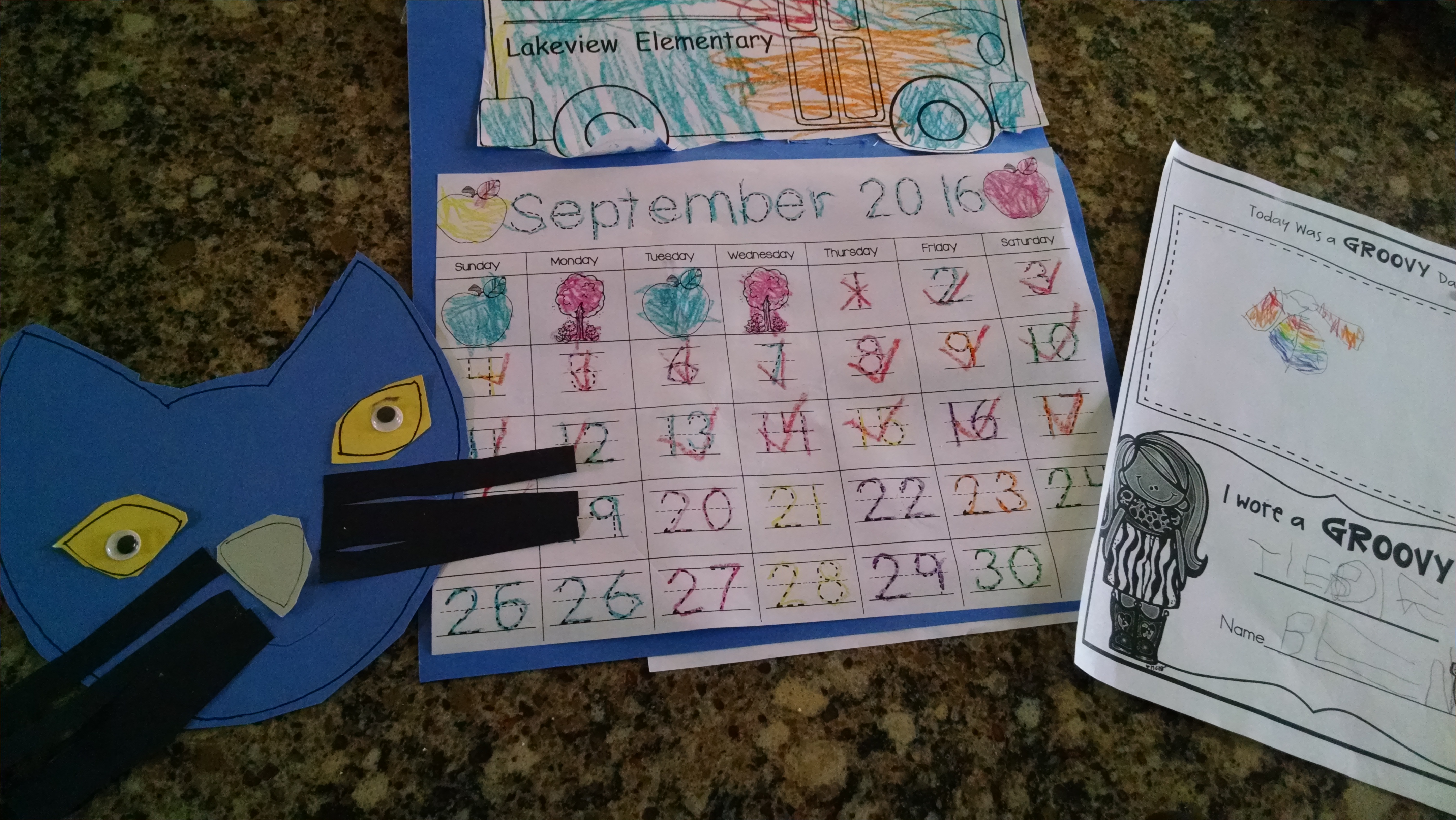
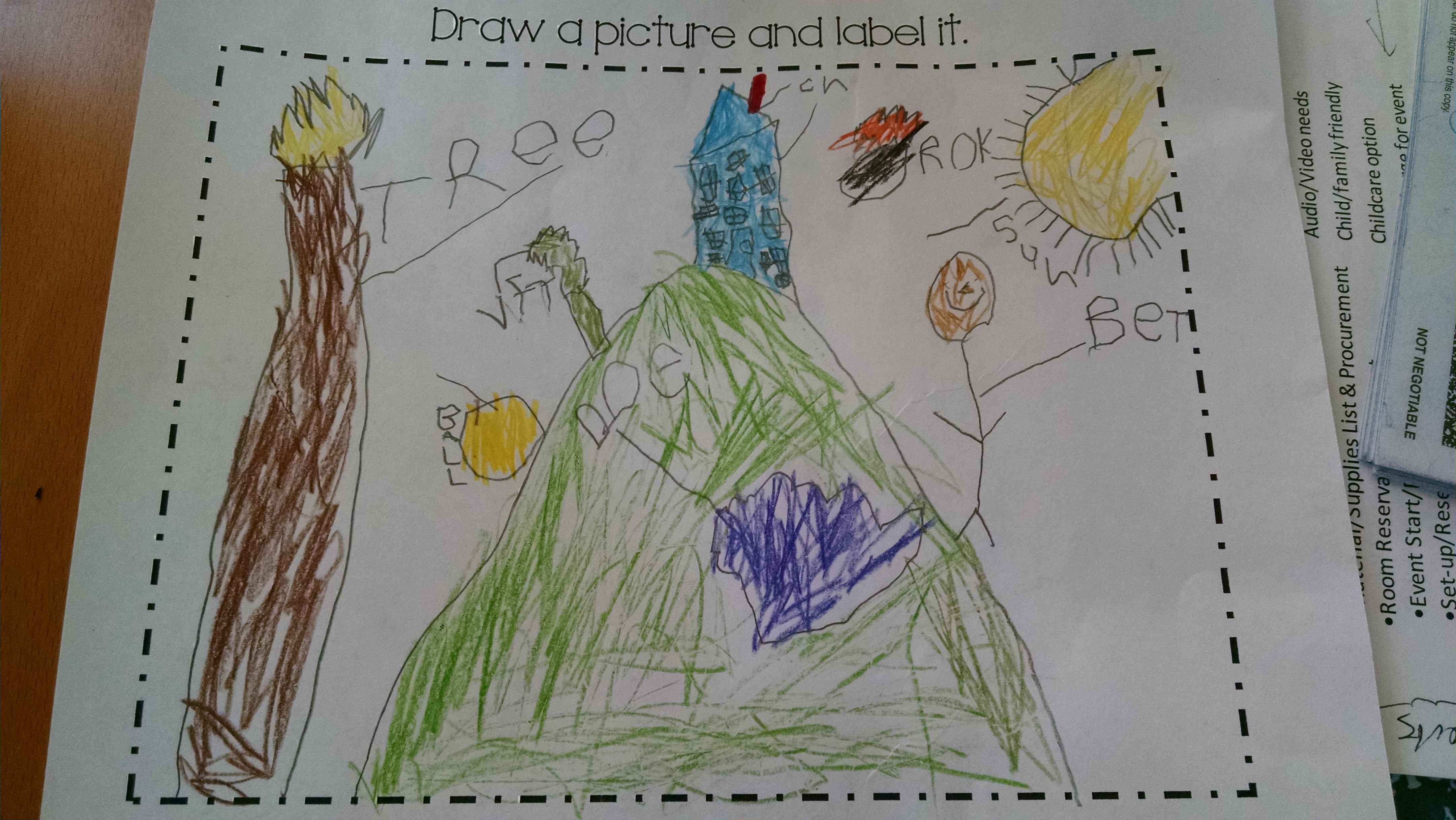
Then, overnight, for no external reason, he started drawing. And writing. A lot! And talking about how exciting it was that he had his own “art studio” (the art supply cabinet). And producing drawing after drawing. We went to the meet-the-teacher session at kindergarten and she asked him to draw a picture of himself. My husband and I looked at each other with doubt – what would he do? He happily sat down, drew a stick figure drawing (his first!) and wrote his full name next to it. Now, one week into kindergarten, every day he brings home pictures he’s drawn, coloring pages he’s completed (mostly coloring inside of the lines when he chooses to do so), worksheets where he’s traced every letter carefully and well, and craft projects where he’s easily mimicked the teacher’s sample project.

img_20160919_091843618

Over and over, we wondered whether he’d ever be willing to write or draw. But then, when he was ready, he leaped right into the deep end of non-stop creative work. It reminds me of the validity of the advice… sometimes you just have to wait for a child to be developmentally ready to make that leap in skills.

A Tale of Three Potty-Training Experiences

On every online parenting forum, you’ll see parents who post questions about potty-training, and other parents leap in to share their experiences. The wise ones say “here’s how it worked for me, but your experience may be different.” But that message can get drowned out in the over-achievers: “just do it MY way, and it will go great” and the exhausted: “nothing I’m trying is working.”

For a first-time inexperienced parent, it can feel overwhelming. It may feel like “I don’t know what the right answer is!!” And the answer is that there is no one right answer. Like all things with our children, what works depends on: their temperament, our temperament, their motivation to learn and our motivation to teach, plus circumstances in our environment. Disabilities and neurodiversity also play a role.

As a parent educator, I’ve read countless books and articles, and talked to countless parents about this process. I’ve summarized my best advice in this one-page summary. I also address the 20% of kids who refuse to poop in the potty.

In this post, I’ll share stories from my personal experiences of how this can play out. I have three different children, and three different potty-training journeys, so I’m definitely not telling you any “one right answer” here!

Child #1: At a fairly young age (probably around 2), she could keep her diaper dry for hours. She could pee in the potty when I put her there. She could poop in the potty. She had good body awareness, so knew when she was doing something. So, all the skills were in place. But… she lacked motivation. She was a child who was very engaged in her play – she had an incredibly long attention span where she would stay focused on one activity for a very long time. She didn’t like transitioning from her chosen activity to other activities. So, if she was in the middle of something and needed to poop, she’d just do it there in her diaper. She didn’t want to interrupt her play to go to the potty. To you as an adult, hat may seem like a strange choice to make, but remember that toddlers are used to using their diaper and don’t find it uncomfortable or weird.

Sometimes she needed to pee badly enough that she was rocking her bottom back and forth, but if we asked her if she needed to use the potty, she’d just say “I fine. I fine.” In other words “leave me alone – I have more important things to do than go to the potty.” I think we tried some motivational things along the way like stickers, but it wasn’t enough. So, when she was 3, I bought a cool dollhouse and some fabulous big girl underwear. I put them in the closet, showed them to her, and said “whenever you’re ready to start using the potty ALL the time, you can have these. But once you have these, we’re not going back, OK? It will be no more diapers from then on. So, you decide when you’re ready for that.” I closed the closet and walked away. She immediately went to use the potty, and was potty-trained from that moment forward. Now again, remember this was a child who already had all the skills in place to make this move! This was just the final motivation to commit to a new way of toileting, even if that meant interrupting her play.

Child #2: She pretty much trained herself. We were busy and didn’t have a lot of time to worry about it, or nag her about it, but it just happened. She’d follow us into the bathroom and follow her sister into the bathroom, so she knew how it all worked. As she got older, she’d pull down her own clothes and sit on the potty, and was soon peeing into it successfully. We talked about it, and praised her for it, but it wasn’t a big deal. We didn’t require that she use the potty, but she generally chose to do so, and I think she totally gave up diapers at around 2 years 9 months.

I think part of this was having a big sister to watch. But, a big part of it was her temperament. She was (and is) an independent child who likes to be seen as mature and competent and doesn’t like to burden others. She liked taking care of her own needs.

Child #3. When he was 2.5 years old, we thought we were on the verge of potty training. His bladder control was perfect. He could keep his diaper dry for hours until he got to a potty. He was dry overnight. He wasn’t pooping in the potty yet, but we figured that would come soon.

He finally pooped in the potty for the first time a year later at 3.5 years old!

He had one week of doing it consistently. Then he stopped.

The next time he pooped in the potty was a year after that. He was 4.5 years old!

In that full two year period, he had perfect bowel control and predictable bowel patterns. He would choose to poop in his diaper every afternoon, when he was alone for naptime. We enrolled him in a morning preschool that required potty training, and we explained our circumstances. We told them that they would never need to deal with it, and sure enough, he never peed or pooped in his diaper at preschool the whole year. He saved it till he was home for nap time.

Why wouldn’t he poop in the potty? I wish I knew! We tried to figure out if it was fear or aversion or if he’d had a painful poop that scared him or what. We never knew. We tried to motivate him in a lot of ways. We tried offering stickers and candy and so on. But, although he would sit on the potty for us, no poop ever came out. We gave him privacy, we tried to help him feel safe. We tried having him sit on the potty with his diaper on to see if he could poop if the diaper was on. Nothing worked. You just can’t get someone to poop on command. When he reached 4.5 we started having occasional success which we rewarded and praised. We went on a road trip, and were afraid we would lose progress when we were away from home, but instead, that was when he finally potty trained. We did give him rewards for each poop, but I don’t think that was the reason he did it. I think he was just finally ready to do it, and the rewards were a nice perk.

By a few weeks after that, he was pretty much independent. He knew when he needed to pee or poop. If we were out of the house, he’d ask to use the potty. At home, he’d just go use it on his own whenever he needed it. He didn’t wipe himself, so that was still a learning process to go through. But huge progress at the end of a long marathon.

By temperament, he is a child who thrives on routine, and likes to do things the same way every time. So, I think he had a routine for his bowel movements and it was working for him, and it was hard for him to change to a new way of doing things. (When he got older, he was diagnosed with autism. He’s a very bright kid with strong language skills and a fair grasp of social skills, so you might not peg him as autistic, but one of the ways it manifests is that he has a really hard time with change. Here’s some advice I found later on about potty training a child with autism.)

So, we’ve tried child-led potty training, we’ve tried sticker charts, we’ve done gradual, we’ve done “Big Day”, we’ve tried a wide variety of methods. But our success depended not so much on what we did as the parents, but on our individual children and what worked for them. The best recommendation I have for other parents is: collect advice. Try the things that feel like they match your preferences and your child’s personality. If they work, keep doing them. If they don’t work, take a break for a month or so. Try not to stress about it. Try again with a new approach when you feel like you can do it in a non-stressed and supportive manner. Try not to lose faith along the way. You’ll get there eventually!

For more info, read my one-page summary of potty training, or the long version all the options for potty training. Or read about kids who refuse to poop in the potty.

Questions to Extend Learning

When children are engaged in play-based learning, the teacher (or parent) plays a very different role than what we think of when we envision a teacher standing in the front of  a classroom conveying knowledge or the parent sitting next to the child teaching a skill. (That more formal instruction, called direct instruction, definitely is valuable, but for young children needs to be balanced with guided play and free play.)

One of the most important ways we facilitate learning in a guided play setting is to ask questions that extend the child’s learning and help them take their exploration to a new level.

When I say to ask questions, I don’t mean to quiz a child about basic facts. If a child is engaged in an exciting experiment with pouring and scooping in the sensory table, and you use it as an opportunity to test their knowledge of academic facts (“what color is that scoop” or “how many toys are there?”) then you’re interrupting their learning. If they know the answer to your question, they don’t learn anything by answering. If they don’t know it, they feel stupid. And it didn’t show that you cared about what they were experiencing.

Here are some general rules / suggestions about good questions:

  • Don’t ask any question you already know the answer to. That’s not interesting for eithr of you!
  • Don’t ask closed-ended questions, those with a single right or wrong answer. Instead of “what color is that scoop?” say “What can you tell me about the scoops?”
  • At the start of a project, if they’re trying to figure out the solution to a problem, ask: “What information do you already have?” “What do you need to learn next?” “What will be your first step?”
  • When they are working, instead of saying “what is it?” say “tell me about it.” “How did you do that?”
  • Ask them to observe: “What do you see here?” “What do you know about the things you see?” “Does this remind you of something you’ve seen before?”
  • Ask them to explain things: “What do you think? Why do you think that?” “Do you see any patterns forming?”
  • Ask them to make predictions: “What will happen next?” “What would happen if…”
  • If they’ve slowed down in their work, or are looking uncertain about what to do, you might offer “what supplies can I get for you?”
  • If they’re stuck and come to you for help, ask: “can you describe the problem?” “Can you tell me what you’ve tried so far?” “Let’s think of lots of things you might try next, then  you can decide which thing to try.” Then brainstorm with them, not giving “the right answer” but giving some helpful options and maybe some crazy not-helpful ideas.
  • When they’re done with something, ask: “What were you thinking about while you worked?” “What did you learn today?” “Is there something you would do differently next time?”

When you ask a question, wait for a response – sometimes it takes a young child several seconds to gather their thoughts, then a few more seconds to put their thoughts together into words. Listen patiently and attentively to their response.

Don’t overdo the questions. Would you enjoy working on a hobby if someone was peppering you with questions the whole time? Probably not. Much of the time, you can just sit nearby quietly observing, or play alongside your child, or get chores done while your child plays. It’s helpful for children to have some times when you aren’t closely supervising (beyond what’s needed for safety) so they aren’t feeling watched or judged and can follow their own whims in unguided play.

Resource for Educators:

I made up posters to hang in the classroom to give parents ideas for connecting with kids. You can get the questions to ask posters here.

More articles on asking questions: