Category Archives: Child Development

Link

Are you dealing with tantrums and out-of-control behavior? The Technical Assistance Center on Social Emotional Intervention for Young Children has a nice brochure on positive solutions. Some of their tips are:

  • Keep expectations realistic.
  • Plan ahead.
  • State your expectations in advance.
  • Offer reasonable, limited choices.

Read the full brochure.

How Many Toys is Enough?

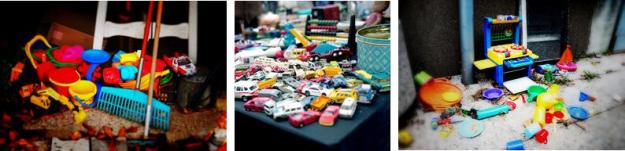
clutter

Parents often complain about the overwhelming clutter of toys in their home, and yet they have a hard time letting go of the toys they have and/or they keep acquiring more toys.

Let’s look at ways to think about the toys that we take into our homes, which we decide to keep, and how to decide when it’s time to let go.

Toys as a cure for boredom?

I often hear:

“My daughter gets bored of any toy after just a few minutes, so I need to keep getting new toys to keep her busy.”

Kids learn what they are taught. And the more we reinforce it, the more ingrained the learning. If every time your baby fusses, you give her a new toy to entertain her, you’ve trained her that the way to happiness is more new toys. And you’ve trained her that your job is to keep her entertained at all times.

On the other hand, if your child complains about being bored, and you don’t “rescue” her by offering new entertainment, she will learn that she can entertain herself. I know that many of my kids’ most creative moments followed after they said “I’m bored!” I didn’t fix it for them by handing them new toys. Instead I left them to their own devices to figure out a new game or project. Suddenly, the “same old toys” took on new life.

For young children, like toddlers and preschoolers, they may not be able to invent a new game on their own, but you can offer “invitations to play.” You can put out old toys in new combinations, or allow them to play with various household objects. For example, they may not have played with the blocks in the living room or the toy horses in their bedroom for a long time. But if you put those toys on the kitchen table, suddenly they’re building a stable, and when they want a ramp, they grab a wooden ruler from the desk.

Children throughout history and across cultures have had a fabulous time playing with whatever materials were available to them. And the fewer the materials, the more creative they have to be. What’s the best all-time toy? The stick. (Check it out – it’s in the Toy Hall of Fame and in this list of the 5 best toys of all time, and here’s a great blog post on all the things a stick can become.)

Could less be more?

I have worked with many parents who said things like:

“My child never focuses. He flits around the room, from one thing to another. I keep getting new toys, hoping to find one he likes enough to play with it for longer.”

I recommend that they instead put away half the toys in the room and see what happens. Almost always, they find that the child slows down, calms down, and focuses more.

Having lots of toys in their environment can be very over-stimulating for children. Feeling surrounded by choices can create an internal pressure to play with everything, and stress over choosing which thing to play with next.

If we add in auditory clutter (such as background TV) or visual clutter (whether it’s piles of unfolded laundry or carefully curated artwork and decorative displays), it’s even harder to focus. “Experiments show children who play in rooms where a TV is broadcasting… spend less time with individual toys and shift their attention more quickly from one activity to another…” (Source)  “…children in highly decorated classrooms were more distracted, spent more time off-task and demonstrated smaller learning gains than when the decorations were removed.” (Source)

Parents.com has a nice article on helping young children learn to focus. But an easy place to start can be having a calmer, more focused play space with a smaller number of quality toys, not a lot of décor, and some quiet time.

Can we learn to appreciate what we have?

“Their grandparents love to buy them things, and my sisters give me all their kids’ hand-me-downs, so there’s this never-ending flood of toys. I’m overwhelmed, but every time a relative comes over, my kids expect to get a toy.”


Another benefit of focusing less on acquiring more stuff can be more time to focus on  gratitude for what you do have, especially if we make gratitude a conscious focus of our family life.  (Find great tips for this on Hip Homeschool Moms and check out this post on Momastery titled “Give me gratitude or give me debt“, it’s about taking a moment to notice all the amazing things in our homes (running water!! a refrigerator with food in it!!) and worry less about all the things that magazines, catalogs, and advertisements tell us we need to be happy.

We’ve got a great little independent toy store in my home town. At least it looks great from the outside. But we’ve never been inside. My 3-year-old and I walk past it all the time on our way to the park, the farmer’s market, and the fountain that he likes to splash his hands in. I suspect that if we ever went in, then he would want all the toys in there, and would sob whenever we passed in the future. It’s easy to get captivated by consumer products – after all, that’s what makes our capitalist society run. But, he’s happy with the toys that we do have, and I’m grateful that we can walk to the park, the market, and the fountain – those are the memories of his childhood that I want.

If I decide we want new toys, then there’s always our Buy Nothing group to check with first. It’s a Facebook group where people freely give away anything they don’t need anymore. (Check their website to see if there’s one in your area!)

Some day, as your child gets older, they may notice that other kids have more toys than they do. This can result in some yelling and some tears and some “you’re so mean” moments. But, it also opens up an opportunity for discussions with your child about your family values, what you choose and why. It can also tie into financial literacy, and helping educate them about how to make consumer choices that work for them.

What about developmental stimulation?

“I worry that he’s not going to get all the stimulation he needs to reach his potential, so I buy all the stuff that’s supposed to help with brain development.”

One of the ways marketers convince us to buy their toys is by telling us a toy is “developmentally appropriate” or “stimulates language development” or “encourages creative thinking” or “will guarantee your kid will get into Harvard.”

I promise you… there does not exist “the one best toy that all kids need” in order to learn and grow. Our kids can, and do, learn from everything in their environment.

We do want to think about a diversity of experiences for our children. This is the best way to stimulate brain development.

As we choose toys and activities, it helps to think about choosing toys that help with all the areas of development. I also think about the theory of multiple intelligences to ensure my children and my students have opportunities to develop them all. Look at the toys you own: Does your child have toys that stimulate gross motor development? small motor development? Pretend play? Artistic expression? Musical appreciation?

Here is a handout on choosing toys to develop multiple intelligences. And here’s my post on how this theory plays out in real life – in other words, what toys does my three year old own for each category, and is that working for us?

Also, I don’t worry about having in my home everything my child needs to develop. Think about your community resources: the library (ours check out videos, CD’s, stuffed toys, and puzzles – not just books), indoor playgrounds (our local parks departments all host them in their gyms on winter weekday mornings – they set out lots of ride-upons, balls, and other great toys for big motor play), other parks programs, zoos and pet stores, and children’s museums. (Check out this great article on why we need children’s museums.)

Rotating Toys

“I spent all this money on special toys for Christmas, and she still hasn’t really played with any of them. But I’m going to hang on to them for a little while longer to see if they catch her interest. But we’ve just got too many toys now!”

A friend of mine is in the process of selling her house. So, she packed up most of her toddler’s toys to keep the clutter in the house at a minimum in case an agent wanted to show the house. She made 5 plastic tubs full of toys to store in the garage. She gets out one tub at a time, that has a small collection of toys in it. She says her toddler will happily play with that one small collection of toys for days on end without complaining or getting bored. And even better, she’s even started to put away all her own toys in the bin at the end of each play session. Every once in a while, they put those toys away and bring in a new bin. If there’s any one toy from bin #1 that’s really popular at the moment, then they keep it out, and swap one of the bin #2 toys into bin #1 to take its place.

My friend says that in the new house, she plans to continue this method, because it’s working so well for them.

More Resources

Also check out: Elizabeth Pantley’s advice on buying toys for babies and toddlers. These articles on Why Fewer Toys will Benefit Your Kids, and Seven Ways to Build Your Child’s Attention Span (which include minimal “entertainment” and more open-ended toys).  Dr. Toy is a helpful website that reviews toys.

photo credit: r0Kk via photopin cc, geirt.com via photopin
The Toddler’s Perspective – they see the world differently than we do!


I love this video of toddlers who are scared of (or combative with) their own shadows.
The parents try to explain rationally that “it’s just your shadow. It’s OK. There’s nothing to be scared of.” But the kids are still thinking “there’s this creepy black thing following me everywhere and I can’t get rid of it. It’s like it’s stuck to my feet! I’ve never had this experience before, so it’s freaking me out!”
But as funny as the video is, I think it also illustrates a point well.
Toddlers have limited experience of the world, and because of this, they simply see the world differently than we do. They have developed theories based on their life experience, and our “rational explanations” may not always jive with their theories.
I thought of this once when I was trying to get my 3 year old out the door for story time. I kept saying “We have to hurry. Story time is happening right now, and if we don’t go, we’ll miss it.” And he didn’t understand.
Then I thought about it from his perspective. As far as he can tell, it’s ALWAYS story time at the library!
EVERY TIME we’ve ever walked through those doors, we walk into the story time room, and then in the next minute or two, story time starts. It’s like they wait for him to get settled in, then they start. So, since he “knows” that story time will always be there for him, he doesn’t see a reason to give up the fun game he’s playing right now to go there.

My role as a parent is to explain things so that he develops his understanding of the world, and refines his theories of how things work. But, I also have to remember to be patient with him as he does so. When he’s not listening to my “rational explanations”, I try to stop and think about why they don’t make sense to him and then find a new way to explain.

Welcome to my blog!

Here are some of my most popular topics: click on any of these to learn more (or scroll down to see my most recent posts)

If you like what you see here, follow my blog (click on “follow” in the bottom right corner, or click on the middle circle on the top right – the cog – to follow by email) or like me on Facebook (click on the link to the right.)


Let your child play in the mud: Benefits of Outdoor Play

Not spending time outdoors – the modern epidemic of Nature Deficit Disorder – carries risks for our children. They include: vitamin D deficiency and nearsightedness. May include: obesity (and related diseases), asthma, allergies, ADHD, and depression.

There are so many benefits to spending outdoors in nature! Most parents have seen those benefits in action – times outdoors where their child seemed calmer, more settled, and happier than they usually seem indoors. There’s plenty of research to back up our observations.

Cognitive Benefits of Outdoor Play:

  • Exploring and Investigating: There are always new things to find outside (if you slow down and look closely.) This helps keep the spark of curiosity burning in a child, and creates a passion for learning more that can carry over into school work as well.
  • Creativity and Imagination: “Studies in several nations show children’s games are more creative in green places than in concrete playgrounds. Natural spaces encourage fantasy and role-play, reasoning and observation.” (Guardian)
  • Symbolic play: If you hand a child a manufactured toy (like the current top seller at Toys R Us for Pre-schoolers: the Peppa Pig Playhouse), it is usually obvious to the child at first glance what the object is supposed to be and how they are supposed to play with it. If you take that child outdoors, he may soon start looking for the perfect stick – then the stick becomes: a sword, or a magic wand, or a walking staff, or a fishing pole, or whatever he needs it to be in the moment. (The Stick made Wired magazine’s list of 5 best toys of all time, and sticks are in the Toy Hall of Fame.)
  • Building: Children love to build sand castles on the beach, build dams in a stream, build fairy houses in the woods, weave daisy chains, build houses of driftwood, dig holes and more. Manipulating these loose parts builds large and small motor skills, balancing all those uneven items teaches some of the basic laws of physics in a hands-on way. They also develop persistence, remaining dedicated to a task as they fail again and again, and then get it right, only to have the waves sweep away their hard work so they need to start again.
  • Self-direction: The outdoors don’t come with instructions. There’s not a right and wrong way to play outdoors, and parents tend not to have any agenda for what “must be done”, so children are free to create their own ways to play. They continue a game for as long as it pleases them, then evolve a new game when they’re ready.
  • Control and mastery: This ability to move independently, explore, and create gives kids a huge sense of empowerment and competence, which will serve them well in other challenges.

Mood and Concentration Benefits of Outdoor Time:

Most people find spending time outdoors relaxes and calms them. To understand these benefits, it helps to understand a little about how the nervous system works. The sympathetic nervous system is triggered in response to stressors and allows us to focus on what actions we need to take right now. (A full scale response would be if someone senses a predator, and they get the adrenaline rush which guides them to choose between fight and flight and freeze.) This targeted focus on tasks is very helpful in most jobs in the modern world, but always operating in this mode also is stressful in the long run. The parasympathetic nervous system is about conserving energy while the body is at rest, so the body (and mind?) can heal itself. Rather than “fight or flight”, this is called “rest and digest” or “feed and breed.”

Cities and built environments are full of intense stimuli that capture attention dramatically – honking horns, flashing lights, traffic to navigate. These trigger the sympathetic nervous system. Outdoor environments are filled with interesting stimuli – there’s plenty to look at and explore, but it’s much less dramatic – someone walking outside can relax and gaze around them without needing tight focus on anything. This triggers the parasympathetic system. One study showed that after spending 14 minutes seated in nature, and 16 minutes walking in nature, participants had lower cortisol levels, lower pulse rates, lower blood pressure, greater parasympathetic nerve activity, and lower sympathetic nerve activity than they did after spending 30 minutes in a city environment.

Spending time outside is restorative – studies show that being outdoors, exercising outdoors, and viewing nature all increase participant’s sense of vitality (physical and mental energy). And when people (adults or children) return indoors, they are better able to focus on tasks that require directed attention. Research shows:

  • Children’s classroom behavior is better if they have recess.
  • Children with ADHD concentrate better after spending just 20 minutes in nature.
  • Schools with environmental education programs score higher on standardized tests in math, reading, writing and listening.

Another benefit that parents often appreciate about outdoor time is that it allows kids to “burn off some energy.” When kids are indoors, we’re often saying “quiet voice” and “don’t make a mess” and “don’t throw that” and “would you just calm down a little!!” Outdoors they can be loud, they can be big, they have freedom, and can push boundaries and take risks. This helps them settle down, and regulate their mood and emotions better when they return inside.

Physical Benefits of Outdoor Play:

  • More ways of moving. In a dance class, gymnastics class, or soccer class, children are using specific muscle groups to accomplish specific tasks. There is certainly benefit to doing that. But there’s also benefit to moving freely during play in the outdoors and discovering all the ways their bodies can move, as they scramble under low branches, climb rocks, step carefully over brambles…
  • More ability to customize experience to ability  They can choose how high up the tree to climb, choose fatter or skinnier logs to balance on, choose the steeper or less steep parts of the hill.
  • More variability in surfaces requires kids to adapt their movement. In most playgrounds, the movements are standardized. For example, on a playground ladder, all the rungs are the same size and the same distance apart, but on a tree there’s a variety of sizes of branches and a range in the distance between them.
  • Challenges grow with a child: Modern playgrounds are much safer for younger children than older playgrounds, but modern playground design often means kids over age 8 find them limiting and boring. Nature always offers new challenges.

One occupational therapist argues that children would be better served by sessions in the woods than in O.T. clinics filled with specially designed tools. She describes the outdoors as the ultimate sensory experience. “In the clinic, we often have children go barefoot on plastic balance beams, which have been engineered to be “sensory” with little plastic bumps. If we take children outside, we could let them go barefoot on fallen trees… experiencing different textures… [and] sensations of moist versus dry, crunchy versus soft, noisy versus quiet, and changes in temperature”

Health Benefits of Outdoor Time:

  • More exercise: children who play outside are more physically active than those who play inside. Kids who make up their own play activities are more active than those who are told what to do by adults. (i.e. their free play may be better exercise than their sports classes)
  • Lower obesity rates
  • Better vision: For every hour per week a child spends outdoors while growing up, chance of myopia drops 2%
  • Even just seeing nature benefits our health: studies of hospital patients have shown decreased need for pain medications and shorter post-operative stays for those who can see nature.
  • Living near natural settings leads to: lower stress levels, lower rates of many diseases, less asthma, reduction in circulatory disease, and lower childhood obesity rates.
  • Playing in the sun provides essential Vitamin D, which protect children from future bone problems, heart disease, diabetes and other health issues

Social Benefits of Outdoor Time:

  • Social interaction: Parents tend to sit back and observe more outdoors rather than get as involved as they do in indoor settings. That allows children to explore social dynamics. Many parents observe that their children seem to make friendships quickly in outdoor settings.
  • Multi-age: Outdoor settings that encourage free play (like playgrounds) often attract a wide range of ages, unlike structured recreational activities that are usually limited to kids within a one-year age span. This encourages multi-age interaction.
  • Different basis for popularity: “The social standing of children [outdoors] depends less on physical dominance, more on inventiveness and language skills.” (Guardian)
  • Concern for the Environment: You can only care about what you know about. Kyle MacDonald of Bay Area Wilderness Training says “Connecting kids to the out of doors in a way that makes them realize, ‘this is fun, this is a place I want to be’ — that’s going to create a generation of environmental stewards.”
  • In coronavirus times, it’s easier to be socially distanced outdoors, and there’s much less risk of viral transmission than in an indoor setting, which may allow us to socialize more with others.

Given all these benefits, why do modern children spend so little time outside? Parents and kids describe all sorts of barriers to outside time. Here are tips for overcoming the barriers and getting outside to play.

If you’re in the Bellevue / Kirkland / Redmond area of Washington State, be sure to check out my post on lots of great lesser-known parks on the Eastside. If you’re in the Pacific Northwest, you might like my Guide to Northwest Native Plants.