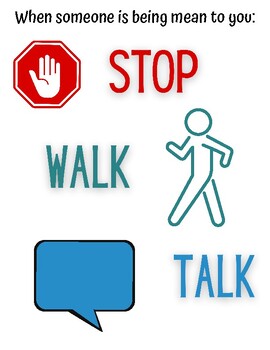
In a meeting yesterday, I learned something that was a new idea to me: teaching kids that when another child is doing something they don’t like, they should “Talk, Walk, Squawk.”
I have learned that it is a fairly common “bullying prevention strategy” taught to elementary school students. I think the method would also work well with preschoolers, but I would never present it as bully prevention at that age. When preschool age children push, or steal a toy, or say something that feels hurtful, it’s very rare that it’s an intentional “bullying.” They push because it’s hard to wait for your turn on the slide when your impulse control is still developing, they take a toy because they want to play with that toy and their empathy is still developing, they say whatever comes to mind without being aware how it could feel to someone else.
But I do like the basic idea at the preschool level, because it gives kids an easily understood collection of options for what to do when another child is doing something that bothers them. (Note: some examples describe this as “what to do when someone is being mean to you”, but that assumes ill intent from the other person.)
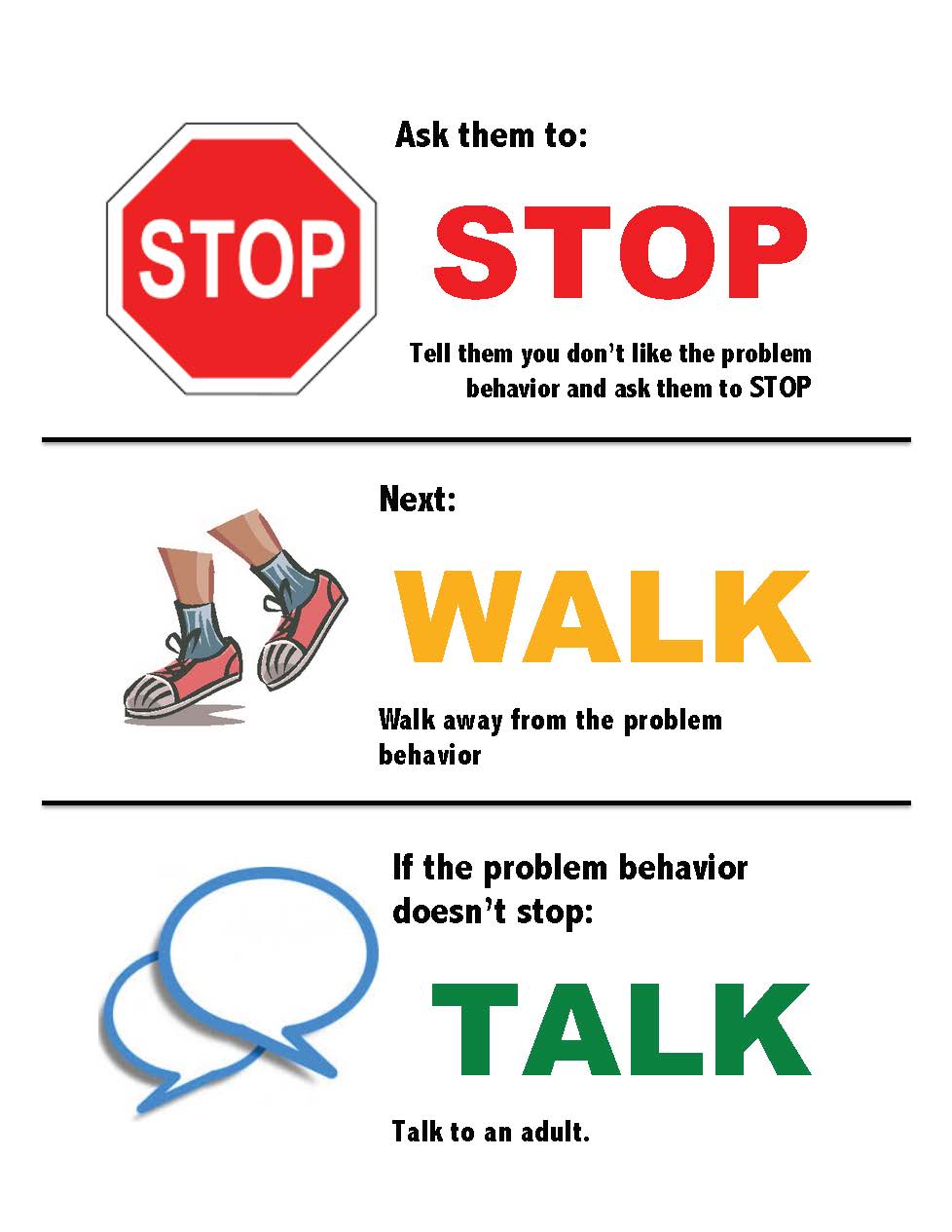
You could choose what order to teach them in: some start with a “walk away” plan – you can always choose to remove yourself from the situation; some start with “stop” – first you say “stop” to quickly let the other child know you don’t like what’s happening; some start with “talk” – explaining what you don’t like (although I’d recommend instead teaching to explain what you would like the other child to do instead – we know children are more likely to respond well if you tell them what TO DO, instead of what not to do).
It’s also important to teach “Squawk.” You could think of this as “tell a grown-up”, but I prefer “ask a grown-up to help you problem solve the situation.” The tell a grown up approach could fit into a more authoritarian model where the grown-up intervenes and punishes, the ask a grown up for help fits better in a model where you’re supporting the children in learning their own problem solving skills, and learning what it means to interact well with others.
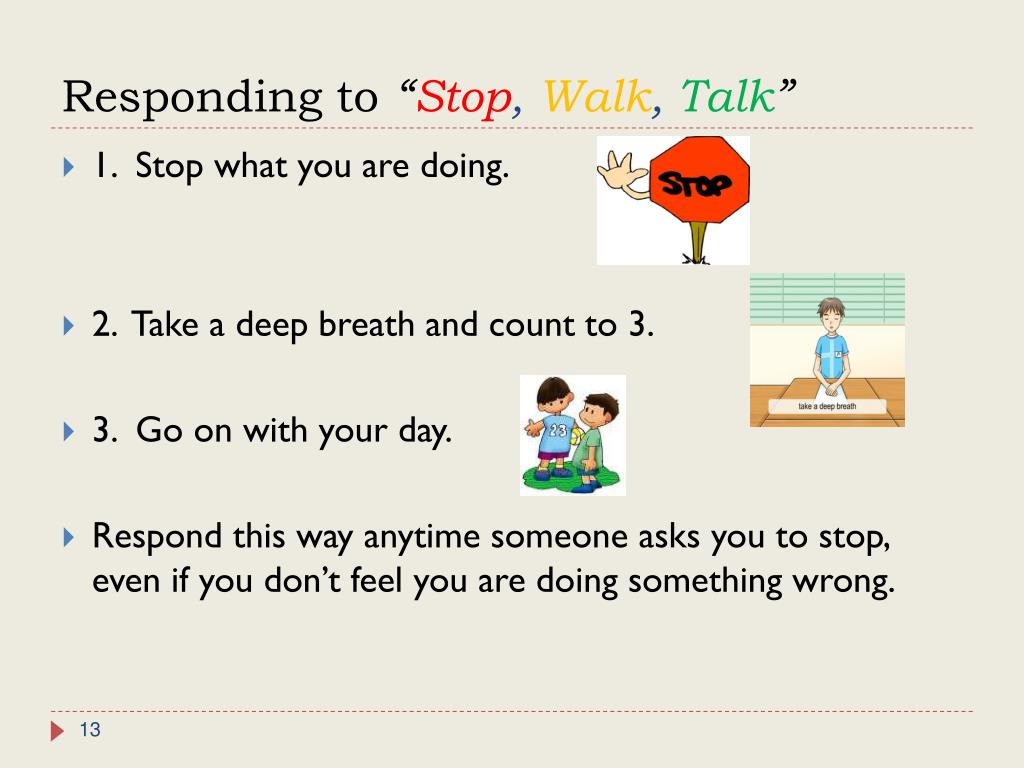
You can also teach children how to respond to being told to stop. Stop what you are doing, take a deep breath, try doing something different or asking a grown-up for help. They should know that if someone says stop, they should stop, even if they don’t think they’re doing anything wrong.
Today I was listening to a webinar with Ming Fung from Agents of Speech. The topic was “Decoding the Real Signs of Speech Delays” and he was primarily talking about parent coaching for language delays.
But one of his messages gave me one of those a-ha moments you get when someone says something that should be obvious, but says it more clearly than you’ve thought of it before.
When you’re trying to teach your child any new skill and it’s just not working, you should ask yourself “is it that it’s too hard? Or that they don’t want to do it?”
If it’s too hard, that may mean you’re trying to move too far too fast, and simplifying things into next achievable step might be more successful. It is better to have small successes than fail at a big reach. Ross Greene says that often when we’re thinking “they don’t wanna do it”, it’s really that “they can’t do it… yet.” And that they need more skills, new resources, or more structural supports to be successful.
If they don’t want to do it, he says “make sure they’re fairly compensated.” If it’s just slightly hard or slightly annoying or whatever, it may need just a little motivation. If it’s a big stretch, it may need a big motivation. If your child has special interests, you could find a way to teach that skill within that interest. (When my youngest child was resisting learning to write and draw, we would ask him to write requests for treats, like “kiss” for a Hershey’s kiss or “Cheez-Its”, and he would draw if we would draw Star Wars characters that he could copy.) Or, if they have a big passion, you can use that as a motivator. (My oldest was very slow to potty train, and saying “here’s the dollhouse you want – it’s a big kid toy. As long as you can keep your underwear dry, you can play with it, but if you need to go back to pull-ups, that’s OK – we’ll put the dollhouse away for a little while till you’re ready to be a big kid.”) Don’t force the learning, but show them there is a value in learning this new skill.
Now, you don’t want to overdo rewards. There are downsides to rewards. But sometimes it is a way to move your child forward toward something you want them to learn.
There are three areas for thinking about building independence: chances, chores, and choices. Give them as many chances as you can to try doing things for themselves. Think about chores they can do – taking on responsibilities builds their sense of being competent, capable and important contributors to the family. Then let’s practice independent decision making by allowing them to make more of their own choices.
Chances to “Do it Myself”
Increase Accessibility
To build independence, think about how to make tasks more accessible for them. If you want them to get themselves dressed, choose clothes and shoes that are easy to get on and off. If you want them to help with cleaning, keep some cleaning supplies in their reach and store toys in containers they can open and close. If you’re nursing a baby, have a water bottle and snacks where your older child can reach them so they can help themselves if needed.
Teach Skills
Take the time to intentionally teach and practice skills, like putting on a coat or gloves or opening a cheese stick. For the first ten times, it takes a long time and is frustrating, but then your child will know how to do it themselves. Think how much time you save in the long run! (For lots of these things, search online for “hacks” for how to teach.)
Create Systems
Create systems that they can understand. Like having one container for all the toy animals and one for all the toy cars, with picture labels on them to help them remember. Or having a library basket so if they find a library book anywhere else in the house, they always know where to return it to – and when they want a book, they always know where to find one! Or writing a visual schedule of the bedtime routine with four pictures showing the four steps.
Accept the Mess
When your children “help out,” it takes longer, and it’s messy and it’s inconvenient. It’s hard to be patient, and easier to do it yourself. But, if we want to raise independent children, we have to give them chances at independence, and accept the imperfections of the learning process.
Chores – Responsibility and Teamwork
If you have a very young child, you may have never even considered chores. You may not have viewed them as being capable of contributing. But even a one year old can help with household tasks: “can you put this sock in the laundry bin?”, “can you carry this for me?”, “put the toys in the basket.” Children love to help out – doing tasks helps them feel competent and important.
Search online for “age appropriate chores” and you’ll find several charts with suggestions. Or ask other parents for ideas of tasks that you could try having your child help out with. For example, a 2 year old could help wipe up messes, a 5 year old could match socks, and a 7 year old could water plants – though you’ll need to have a system to help them remember.
Your child will not be as good at doing things as you are…. If your three year old makes the bed, it’s not going to have perfect corners! If they feed the dog, they may spill kibbles on the floor. Your 5 year old won’t load the dishwasher perfectly – but they can at least put a cup and spoon in there that you can finesse later. Experiment with options, trying several out to see where they can be successful and which chores make sense to assign on a long term basis.
You can ask your child for input on what jobs they would LIKE to do or what would help motivate them. A kid who hates folding laundry might be more willing to do it if you watch movies together as you fold. A kid who likes feeling strong might like the heavy work – carrying baskets of laundry, putting out the trash, shoveling snow, bringing the groceries in from the car… Some teenagers might prefer doing the grocery shopping to cleaning the house.
Chores: The Teamwork Approach
Often chores are approached in an if/then punitive way where the parent is in control: “If you don’t put your laundry away then you can’t play your game.” This often leads to battles of wills.
The teamwork approach is: “What do WE need to do so that our home life functions well for all of us? Here are things I can help with – what can you help with?” And then on chore days you can use the when/then approach “we as a family all have chores today – but when we get all our work done, then we get to celebrate a job well done by having fun together!”
Choices
As they do more things independently, they’ll make more choices. If they’re getting themselves dressed, they choose their clothes. If they’re packing lunches, they choose what food to pack. If they’re responsible for homework, they decide whether to do math or English first.
It’s important to note that the parent still defines what are acceptable options to choose from! For example: you could tell a two year old: “it’s cold today, so you need to wear a warm shirt – do you want this blue one or the red one?” Or tell a three year old: “There are three things you need to do to get ready for preschool – which one do you want to do first?” A rule of thumb is for a two year old offer two options. A three year old gets three options. An eight year old has a lot of options, with clear criteria set by you. For example, an eight year old packing their lunch might be told they have to have at least one protein, at least one fruit, and one starch. (And you’ve taught them what this means and set up systems that make it easy for them to do this.)
We can also offer choices in other areas to practice decision making. For example, they can have some “free choice” time in their daily schedule where they get to decide what they do and you’ll play along. Older children can decide what extracurriculars or camps they do.
Some parents give a young child allowance that they can choose what to spend it on. As the child gets older, they get more allowance, but it’s split into three pools: spending, saving and sharing. They can use spending money on anything anytime. They have to declare in advance something that they are saving toward and can purchase it when they have enough. And sharing money can be for gifts or for charitable donations they choose.
Sometimes children will make poor choices. If they choose not to wear a coat on a cold/wet day, it’s a learning experience! (Now, I won’t do this on a day my child is going to preschool and the teachers would have to deal with the unhappy child that results… but I would do it on a day I was just taking my child for a short trip to the park.)
It’s important to let them do so and to experience the consequences in a low stakes environment so they can learn from their mistakes and make better choices in the future.
Part of supporting our child’s brain development is helping them experience the world with all their senses (all 8!). As they use their senses, talking about what they are experiencing helps to reinforce the learning. Here are ideas for strengthening each sense.
Vision
One of the best things you can do for your child’s vision is to take them outside. Inside, you may only look at things that are a few feet away. Outdoors, we can look close at an ant, then at a tree, a cloud, then back down to a flower. If you stand in front of a baby as you push them on a swing, they gaze at you as you get further away, then come closer and closer. These shifts in focus build their eye muscles and reduce the chance they’ll need glasses later in life. (Genetics also plays a part.) Different types of light – rosy skies at dawn, bright light of mid-day, twilight and looking at stars at night also help with eye and vision development.
Help your child learn to track motion. For a baby, hold a toy in front of them. As they look at the toy, move it to the left then the right, then up, then down so they follow it to the edge of their peripheral vision. For older children, rolling or throwing balls helps them track motion.
Hearing
Give them lots of different things to listen to. Take music classes or get musical instruments or discover instruments around you (drum on a pot with a spoon, tap on a glass with a fork, shake a box of mac and cheese.) Sing a lot! Read to them. When they notice any sounds in the environment, talk about them – “I heard that too. That was a firetruck.” (Responsive language – noticing what your child is paying attention to and talking about it – is the best way to build your child’s language skills.) Watch for background noise. If your TV is constantly on or there is always background music playing, it can be hard for a child to focus on and learn from any one sound.
Taste
Breastmilk (human milk) changes flavor based on what the lactating parent eats, so exposes even young babies to a variety of tastes. As food is introduced, expose your child to a wide variety of tastes. There are five flavors: sweet, salty, sour, bitter and umami, and there is the sensation of spicy hot. Children tend to greatly prefer sweet and usually aren’t fans of sour and bitter. But encourage them to sample a wide variety of flavors, and give them the words to describe those flavors and what they like about them and don’t like. (Learn about picky eaters.)
Smell
Let them experience a variety of smells. Go for walks in the woods, go to a flower garden or an herb garden. Have them in the kitchen as you cook (let them smell the spices and herbs when you open the containers) and when you gather to eat, talk about how the food smells. “When I peel the orange, you can smell it, can’t you?” Try scented playdough, scented markers and stickers. Add scents to the bath water. (More scent activities.)
Note: In our culture, we have lots of artificial scents –soaps, detergents, perfumes, air fresheners and more. Many people have chemical sensitivity and get head-achey or dizzy from all this. Consider unscented cleaning products, choose air fresheners that neutralize or eliminate odors – not just cover them up, use a Hepa filter, open windows for fresh air often.
Touch
Let them experience a wide range of sensations: playing in dirt, sand, grass, mud. Petting animals and touching different fabrics or sandpaper or bubble wrap. You can rub their back, hold their hand, give hugs, tickle, give high-fives. Let them experience being hot or being cold. Explore things hands on and talk about what they are feeling. When you get them dressed, talk about how their socks are tight and stretchy, their shirt is loose and soft. Make sensory bins for them to play in.
Some children are resistant to messy play or touching different textures. You can role model – show them how you touch those things. Give them tools to use with the item – a child who won’t just put their hands in the mud might use a shovel to scoop it or a stick to stir it and then if their hands happen to get muddy, they then play in it. Or show them how it’s OK to be messy when we’re doing messy play and we can always wash our hand when we’re done.
Vestibular system
This helps us to stay balanced, and tells us if we are moving slowly or quickly through space. This helps us stand, walk and sit up without falling over. Carry your baby in lots of positions. As they get older, encourage your child to crawl, walk, climb, run, ride, roll, jump and dance. Swing on a swing, spin on a merry-go-round. Put them on your lap and sing bounce songs. (More about the vestibular system.)
Proprioception
This is how we know where our body parts are located in space without having to look at them. Also helps us figure out how much force to use – whether picking up a fragile glass or banging on a drum. Play blindfolded games, or play games in the dark. Do lots of movement games where they stretch out, or clap, or shake their shaker soft or loud, or wrestle and rough house so they learn how much is fun and what could accidentally hurt someone. Let your child move heavy things, or carry heavy things, and handle soft or fragile things. (Learn more about proprioception and self regulation and more about proprioception – this article is specifically about supporting neurodivergent kids, but all kids benefit from proprioceptive learning.)
Interoception
Senses of our internal bodily systems –being hungry or full, itches, the need to urinate and “butterflies in our stomach” when we’re nervous are not explained by the five senses and instead indicate other ways in which we perceive information.
You can build your child’s interoceptive intelligence with these 5 steps: helping them notice, naming sensations, linking emotion to sensation, understand what happens when we ignore the sensation, and managing the situation. (“You’re wiggling your bottom. That tells me you need to pee. You’re also seeming really anxious – that happens to me when I need to pee. I’m worried that if you don’t go to the potty soon you could wet your pants. Why don’t you take a break and go to the bathroom?”)
Responding to your baby’s cues that they are full or hungry, helping them to burp when they are gassy, changing their diaper when it is wet or dirty, and noticing and talking about these sensations help them learn to listen to and respect their body’s cues. As your child gets older, we continue to talk about these things as this knowledge helps your child be more independent and helps them stay healthy. (Read my full article on interoception. Then learn more about interoception.)
Sensory Cup
Some children are sensory seeking and can take in all the sensory input they can get. Others are easily overwhelmed. Some children might love touch, vestibular and proprioception activities, but find different tastes or too much noise overwhelming. Be sensitive to your child’s needs. Watch for disengagement cues (glazed eyes, turning away, pushing things away, muscle tension) that tell you their sensory cup is overflowing and they need a break. If you ignore those cues and keep piling on stimulus, you may face a sensory meltdown. (A “tantrum” they can’t control.)
image credits: swing Photo by Avin CP on Unsplash; high chair Photo by Vanessa Loring; dog Photo by bin Ziegler
Today in a Facebook group, a parent of a 12 month old asked for the best playdough for a child who still puts everything in their mouth. Lots of parents and teachers in the group had great advice:
Note: just because they’re edible doesn’t mean you should let your child eat them! The point of using these, in my mind, is to help children learn NOT to eat their art supplies, but if they do mouth these, you don’t have to worry about it.
Many preschool teachers said to just use any good homemade playdough recipe with no toxic ingredients. (Here’s my favorite playdough recipes.) Some of these have A LOT of salt in them, so it wouldn’t be good for kids to eat much of them, but they won’t, because they taste nasty. A couple tastes and they’re done, no harm done.
But a few respondents to this Facebook post said things like “I wouldn’t recommend playdough till they are around 3 or 4 when they know not to eat anything you put in front of them.”
There are so many benefits for young children in playing with playdough. (Read about the benefits of playdough and more on the power of playdough.) I think it’s ridiculous to deprive them of years worth of that experience because of the worry that they’ll mouth or maybe swallow a few tablespoons of non-toxic ingredients.
And besides, learning not to eat non food items is a good thing to learn! And playing with non-toxic playdough is a great place to learn that.
Now, I wouldn’t introduce playdough for the first time by setting some on their high chair tray and walking away. Of course they would eat it! (Maybe especially if it’s made of marshmallows…) However, you can absolutely introduce playdough to a young toddler – one year old is perfectly appropriate. The first few times, you sit right there with them, showing them this exciting new thing and showing them how to interact with it. Role model – tell them what to do. (Don’t even say “don’t eat it” because they may not even think of putting it in their mouth till you say the word eat. Children are new to language, and may hear “eat” and not hear the “don’t” part of the sentence.) Play with it, explore it, then put it out of reach when you need to walk away. If they do begin to move it toward their mouth, that’s when you would say “oh, yuck, don’t eat that. It tastes icky.” And make your icky taste face. That usually does the trick. If they end up with it in their mouth, just say, “oh yuck – let’s spit that out.” And then gently say – “let’s put this away for now, we’ll try again another time.” (It’s a good time to put it out on a tray or plate the first time so if you need to remove it you can.) With clear guidance, toddlers can learn to use playdough appropriately, and then have access to all the great learning that can come from playdough activities.
This whole topic just brings me to a larger topic.
Building Fine Motor Skills
In order for children to learn skills, they have to be able to have hands-on experiences with things. Almost everything they interact with could potentially have some risk. But often the chances are small. And with supervision and playing alongside, we can reduce the risk of severe injury to extremely unlikely.
In order for children to learn fine motor skills, they have to be allowed to use them! That means they need to be allowed to explore small items that they have to use the pincer grasp to pick up. Some of that happens with eating finger foods – peas and cheerios and slippery diced peaches all provide lots of pincer grasp practice. But children also need to be able to practice things like threading beads onto a pipe cleaner and once they’ve mastered that, threading beads onto string. They can practice things like dropping pompoms into a water bottle or putting buttons into slots cut in a plastic lid.
I do developmental screenings with parents – the 9 month old questionnaire asks if the child can pick up a string, the 18 month old asks if they can draw a line with a crayon or pencil, and the 22 month old asks if they can string beads or pasta on a string. I can’t tell you how many times the child hasn’t met that milestone and parents have said they just have never done anything like that with their child where their child handles small objects. Often they have avoided this because of fear of choking.
What about choking?
Yes, it is well worth being aware of the risks of leaving your child unattended with small items that they could choke on. And, it’s absolutely a good idea for all parents and all caregivers to be familiar with choking rescue. (Here’s a video.) And it’s good to know infant and child CPR too, just in case. (Videos of infant CPR and child CPR.) But this doesn’t mean that you should never let your child touch anything smaller than their fist.
Introducing Fine Motor Activities
Toddlers can do all sorts of fine motor activities with small objects. Like with the playdough, do a really good and intentional job of introducing the item under close supervision. Use role modeling and demonstration to be sure they know what to do with the items, and if they start to do inappropriate things with the items (like put a bead in their nose or in their ear), then we correct that. (Note: I do sometimes count how many of an item I put out, so that when I clean up I make sure I can account for all of them – if not, I search the floor to see if one just rolled away.) After they’ve interacted with an item safely multiple times, you can let them play with it more independently. I also do this approach with food – I don’t slice up grapes for my child. Instead, the first time I introduce grapes, I sit down with them and show them a grape and show them how I take one little itty bite out of the grape and chew it up, then take another itty bitty bite… Once we’ve practiced this multiple times, they can eat grapes independently.
Why Fine Motor Skills Matter
If we don’t let our children have this fine motor practice, then they’re going to be missing important development. Children need fine motor skills and finger strength to be ready for kindergarten tasks like writing, using scissors and turning pages in a book. They need them for self-care tasks like: buttoning a shirt, tying shoes, eating with a spoon, and opening food packaging. They need them to play with toys at preschool and not be frustrated by their inability to do things other children can do.
Fine Motor Development
These sample activities offer ideas for what sorts of things your child should be capable of at each age;
3 to 6 month olds – give them small toys that they can practice passing from one hand to another or hold them and shake them. Hold your baby on your lap and place a toy on the table in front of you that they need to reach for.
6 to 9 months – show them how to clap their hands or give high fives, they start “raking” things toward them, so try something like ping pong or whiffle balls or baby toys or finger foods like cheerios, take toys out of a container
9 to 12 months – continue to offer finger foods, encourage them to try picking up a block and putting it into a cup, encourage them to try picking up a string or a noodle, show them how to bang two toys together, wave bye-bye
12 months – build simple towers by stacking two or three items, let them scribble, practice eating with a spoon, turning pages in a board book, take off socks and shoes
2 years – practice using a fork and drinking from a cup, put on lids and take them off, string beads on yarn, show them how to draw a line, build a tower 8 blocks tall
3 years – button and unbutton clothes, use scissors, draw shapes, make a cheerio necklace, place coins in a piggy bank
Fine Motor Activities for Toddlers to Preschoolers
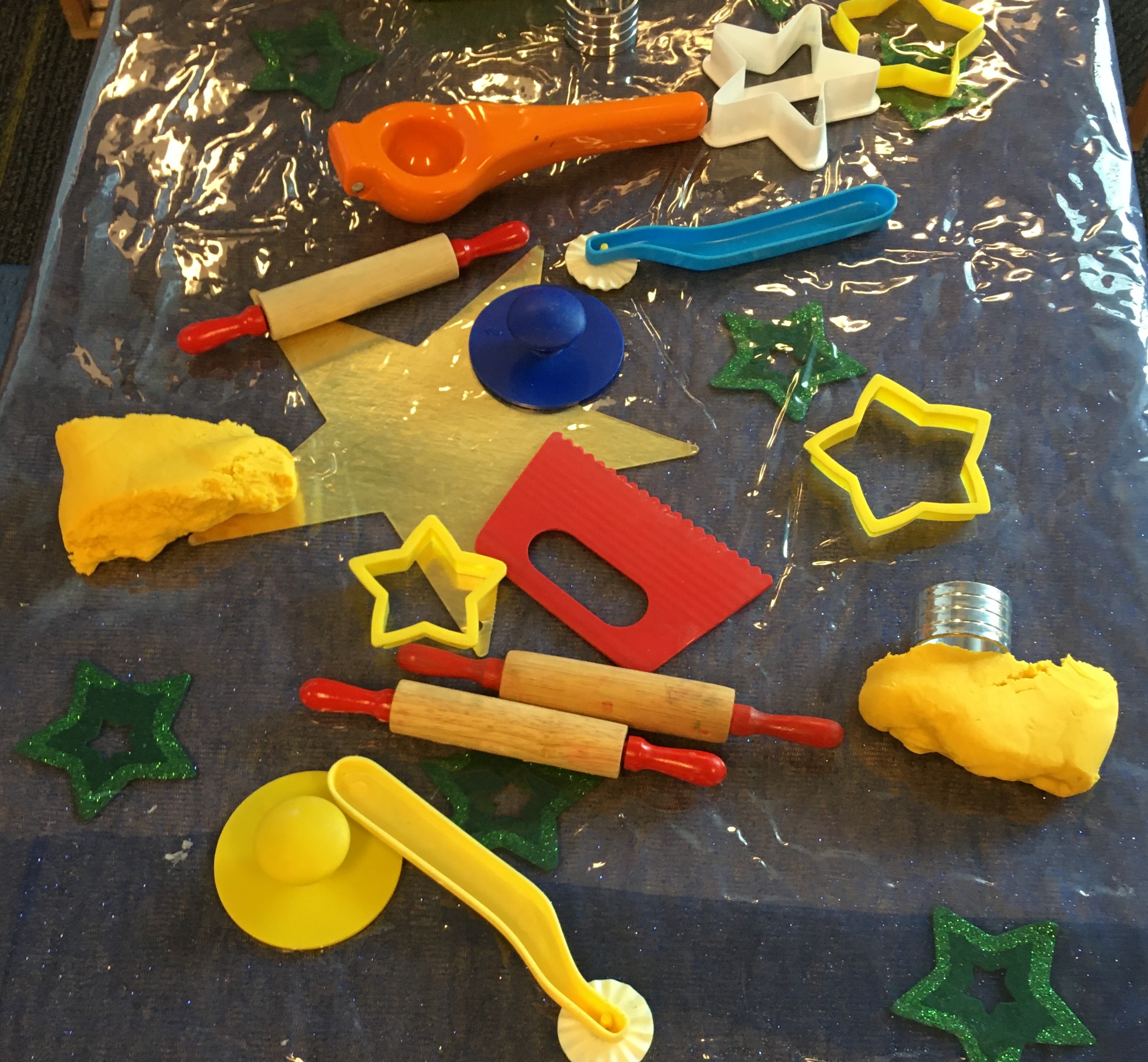
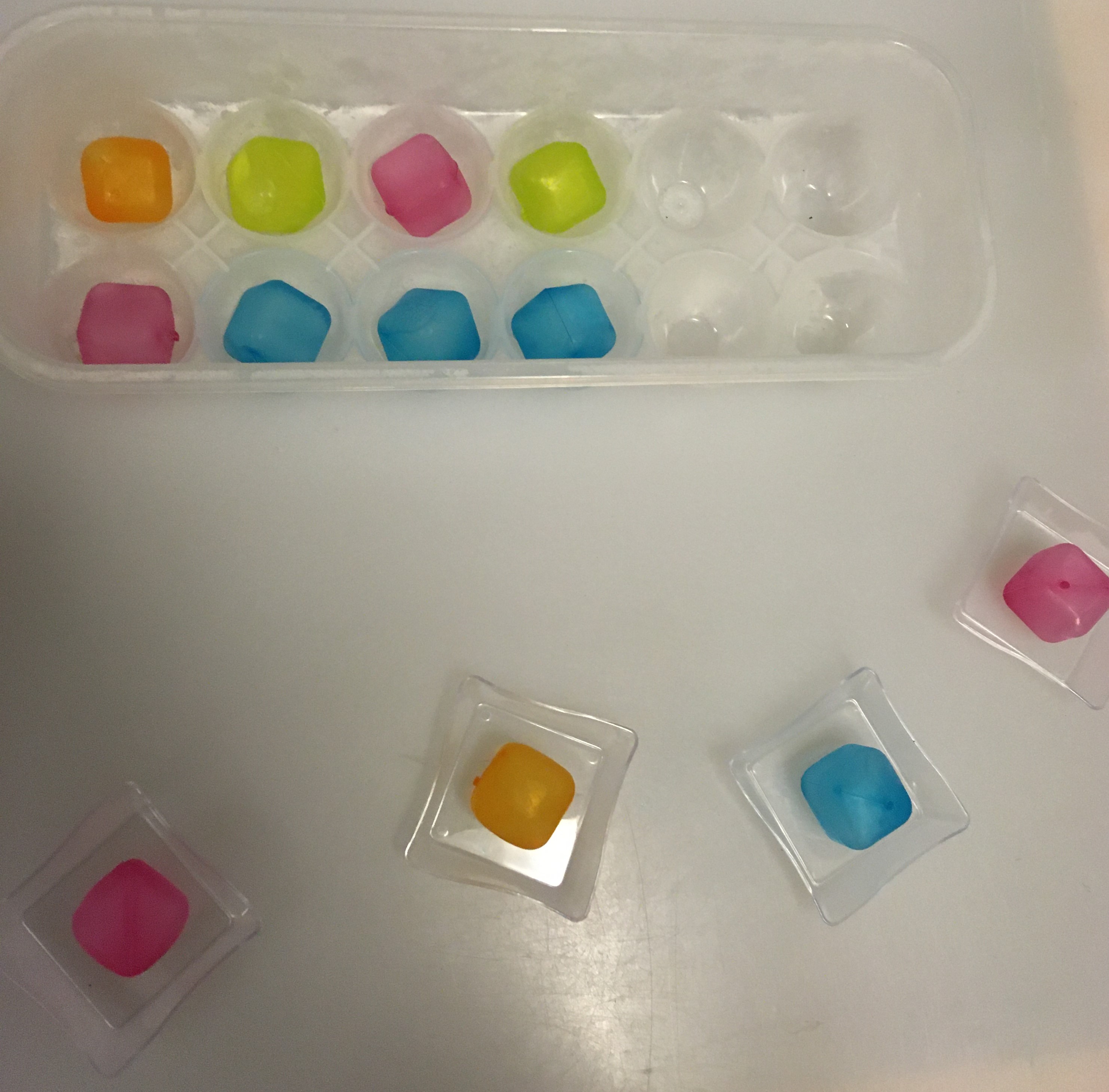
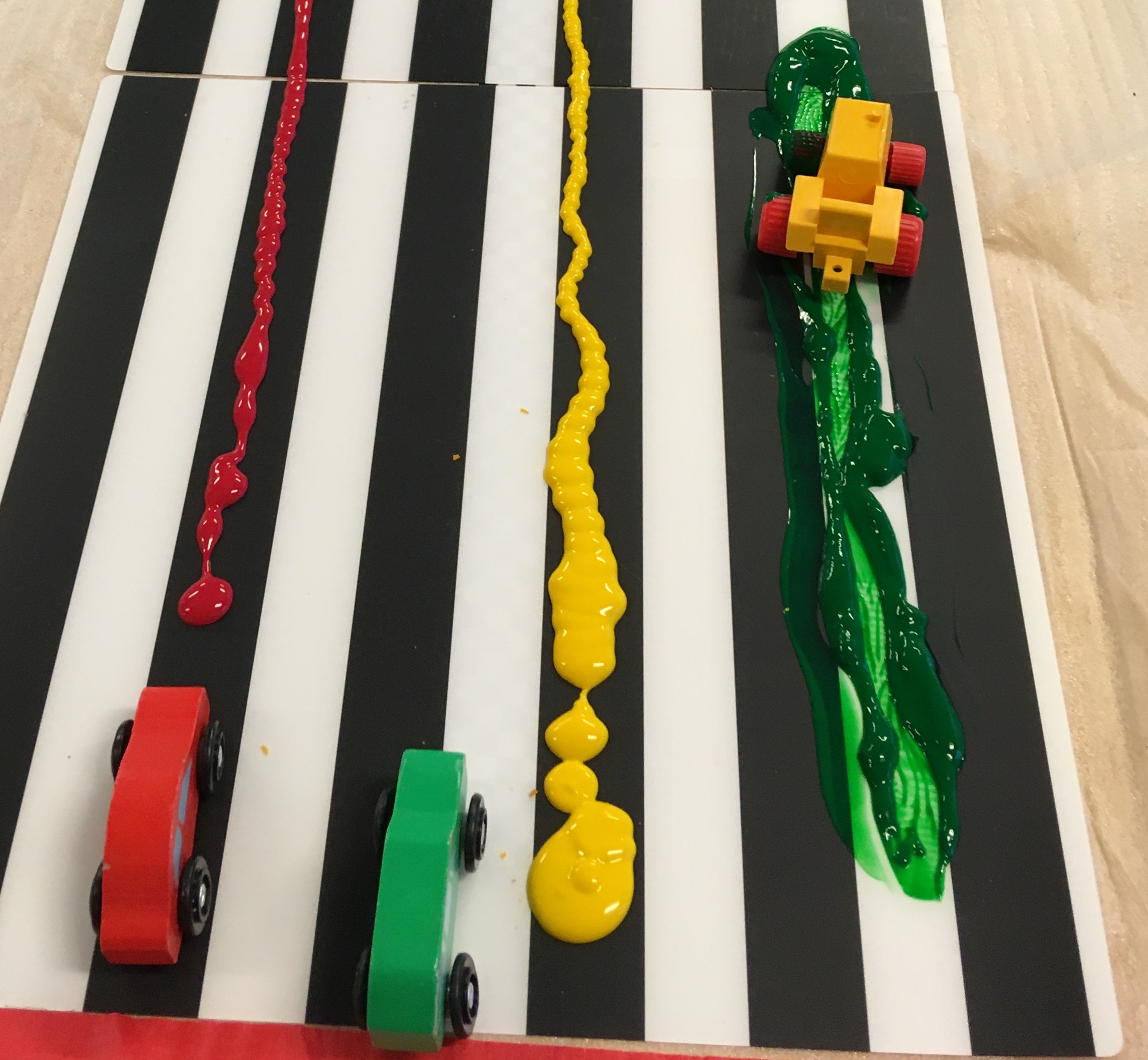
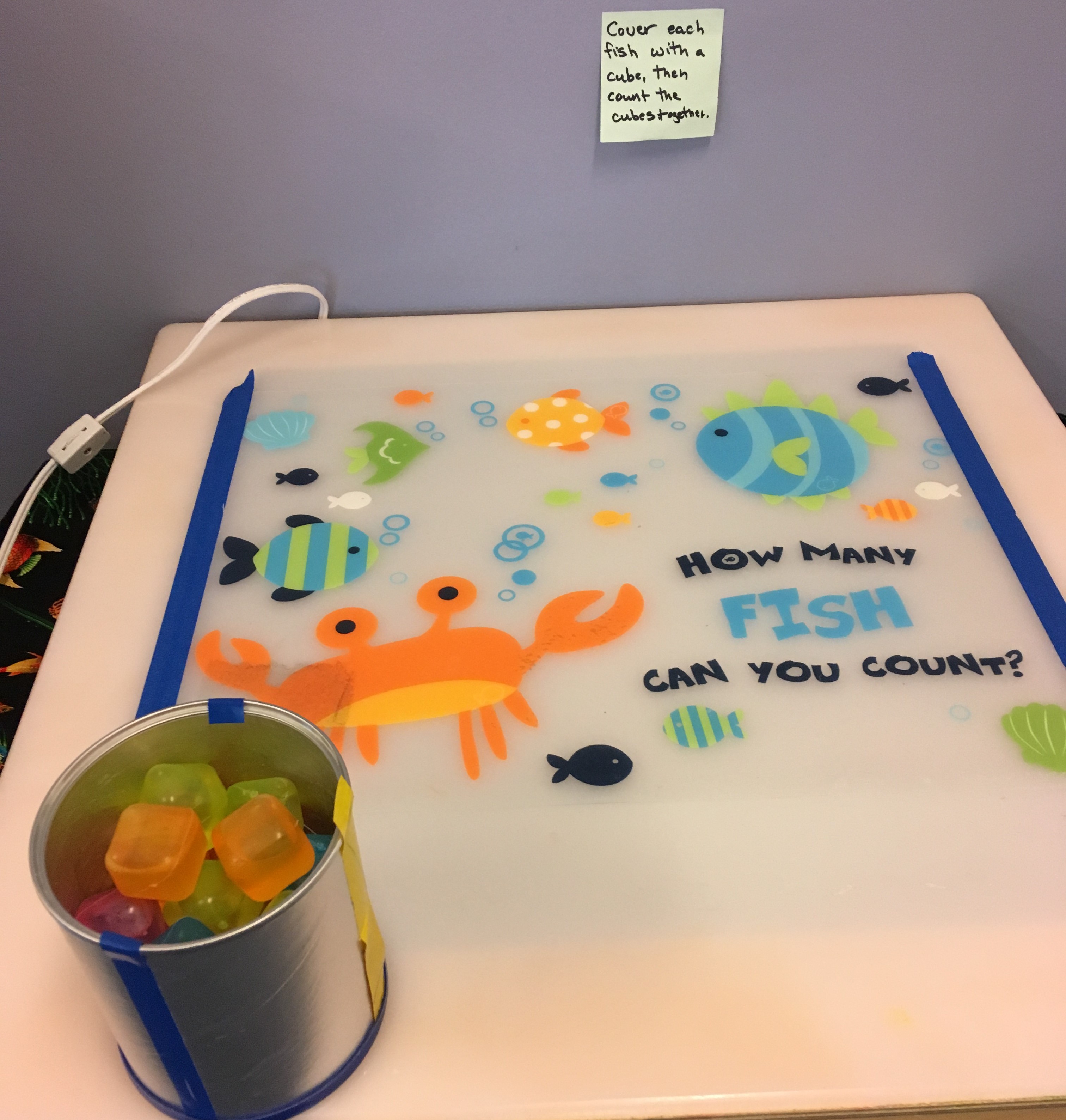
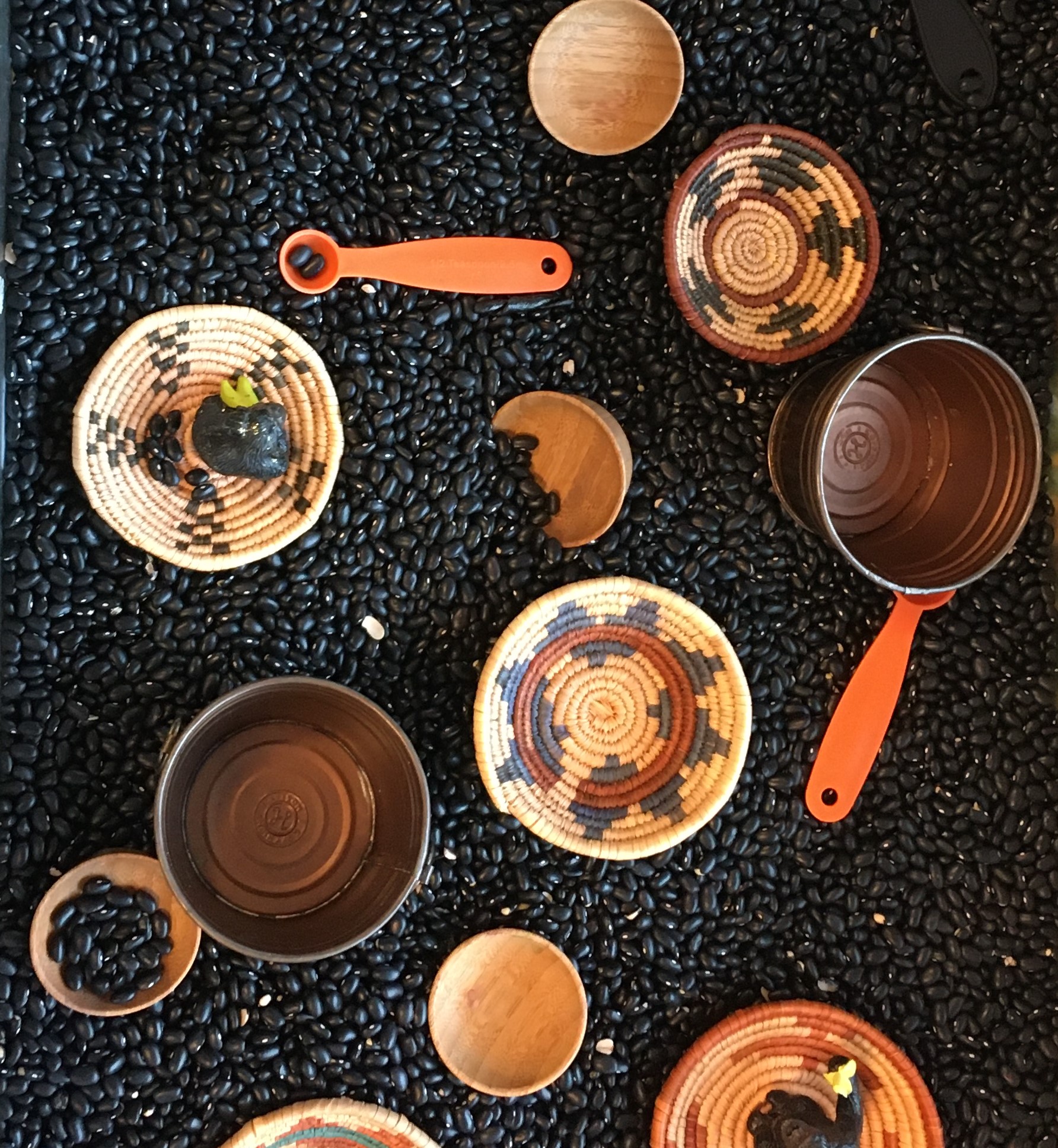
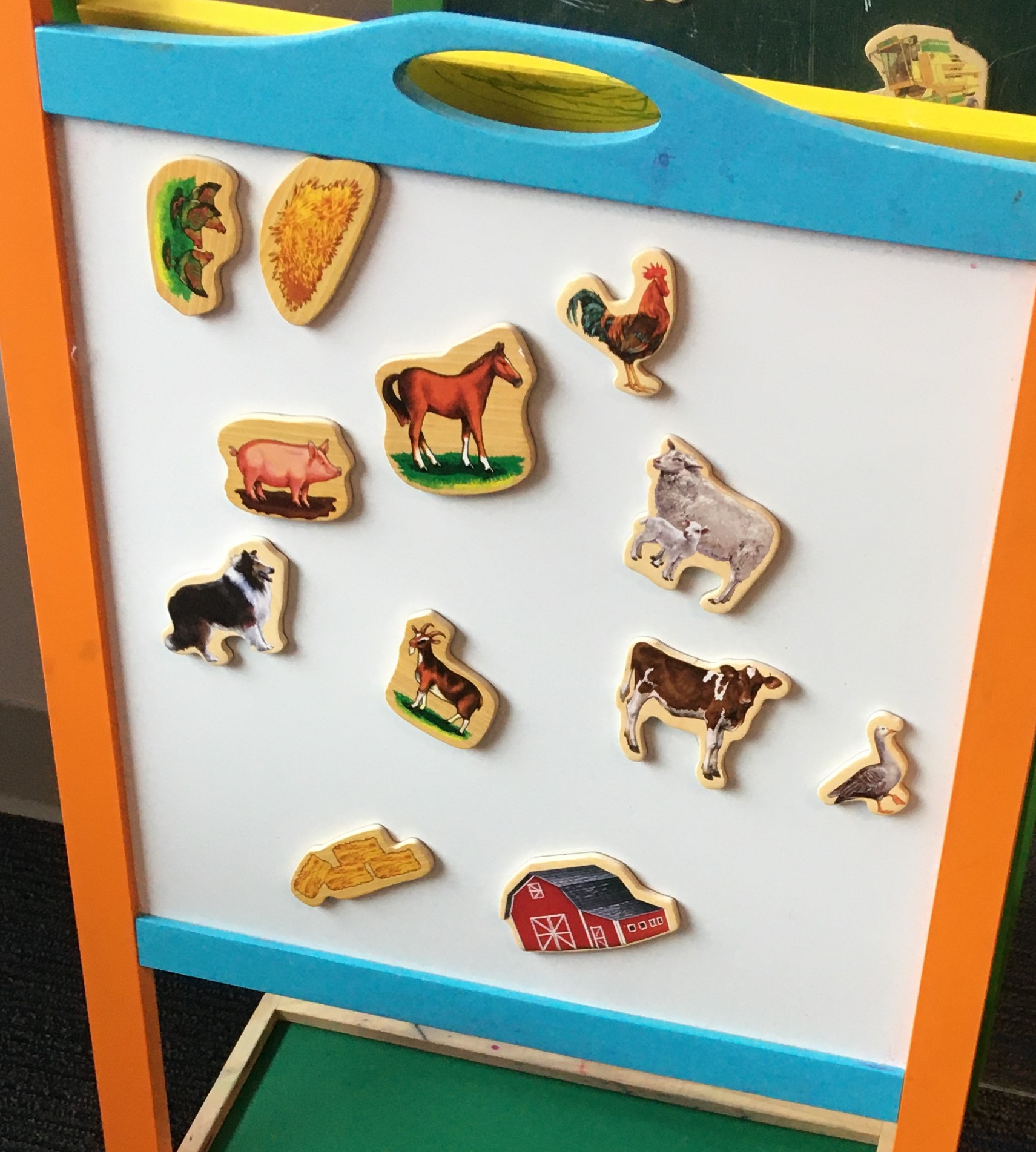
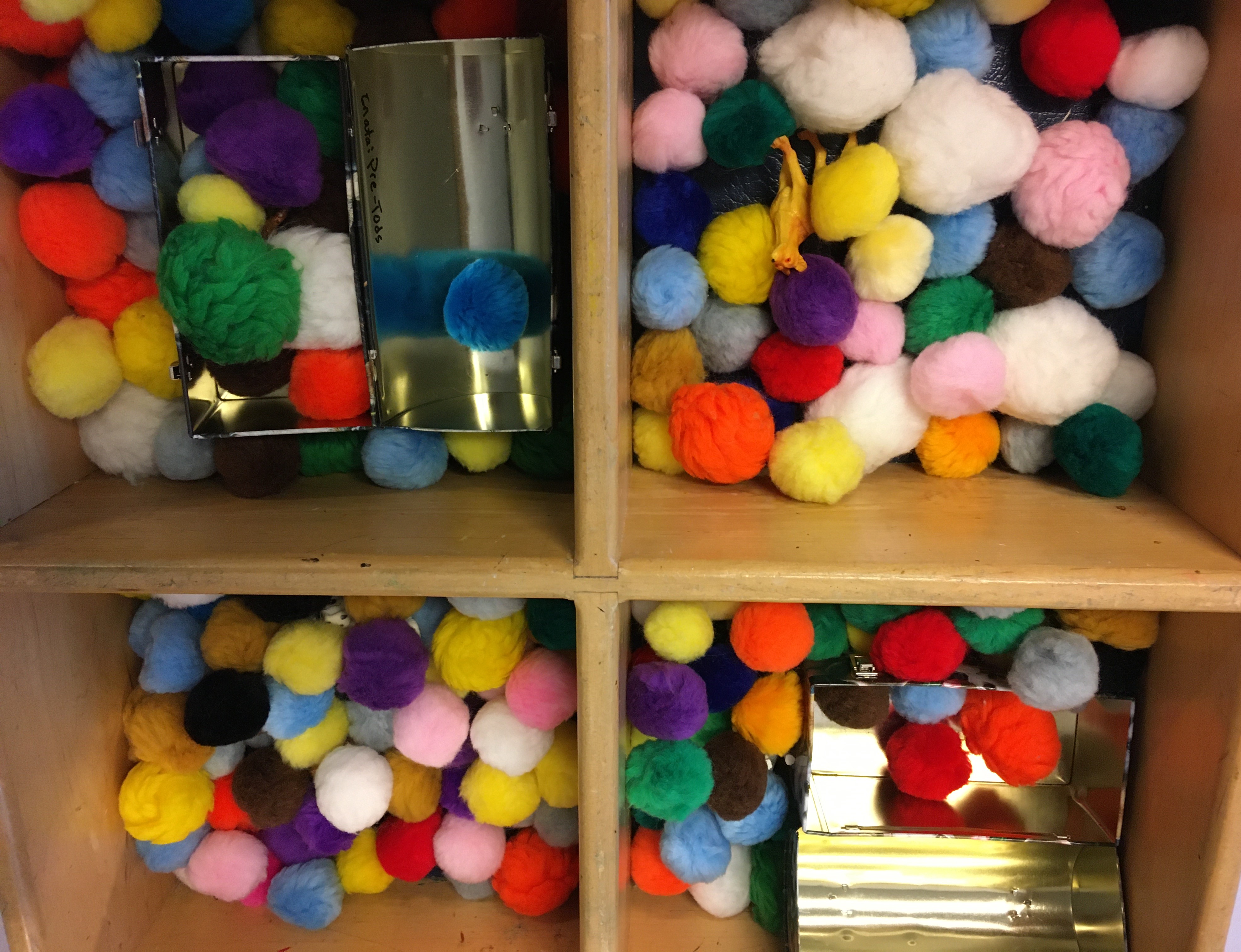
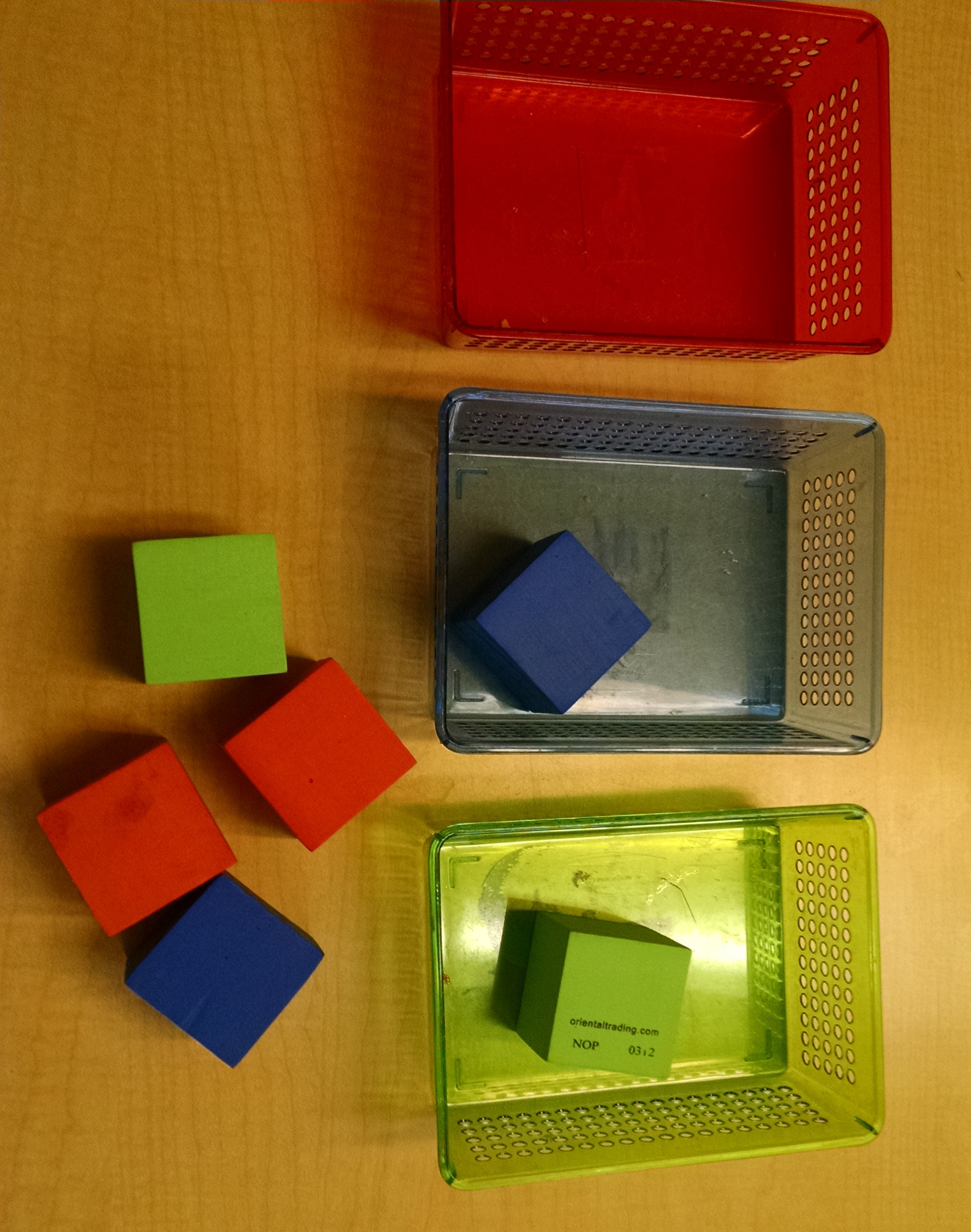
The pictures above are a random collection of activities we have done at our parent-toddler class for children ranging from 12 – 24 months old. Here are more ideas:
Play with playdough: for the youngest child, this is smushing it with their hand or poking it with a finger. Then pulling it apart into smaller pieces. Then you can introduce tools to squish it flat (rolling pin), or cut it (plastic knife, cookie cutters) and so on. Hide small toys inside the playdough that they have to unearth.
Shape sorters and puzzles: start with big and simple shapes, get more complex as they are ready for that.
Build with megablox, then Duplos, then Legos.
Twist pipe cleaners into shapes. Insert pipe cleaners into the holes on a colander.
Dress-up clothes: put on gloves, zip zippers, fasten snaps, button buttons
Stringing Beads (or pasta or cheerios): first, putting BIG beads on a stick or dowel, then medium beads on a pipe cleaner, then small beads on a string.
Drawing: first scribbles, dots, lines. Later: Draw pictures, trace letters, color inside the lines.
Collage: For a one year old, I use contact paper – take off the backing and leave the paper sticky side up – they can stick on pompoms, feathers, small pieces of paper… As the child gets older, have them practice putting glue on paper, then carefully sticking on small items like gems and googly eyes.
Painting – first, just glop paint (or shaving cream or an edible substance like pudding) onto paper or foil or a plate and let them smear it around with their whole hand. Later show them how to paint with one finger. Then with a brush with a large handle, then a small handle.
Filling containers: pick a small item (baby socks, pompoms, cotton balls, plastic lids, clothespins, dried beans, dowels, straws, q-tips, raw spaghetti, etc.) and a container to put it in (muffin tin, ice cube tray, jar with a big opening, water bottle with a small opening, boxes, a cardboard box with a small opening cut into it, a container with a plastic lid with a slot cut into it, a spice container or parmesan cheese container with small openings in the lid, a colander turned upside down). For one year olds, you’ll choose larger not-chokeable items that are easy to pick up and containers with large openings. For older children, smaller items and smaller openings. Once they’ve mastered putting items in with their fingers, let them use tongs or tweezers.
Pick berries. Pull weeds or pick carrots – you need to pull just hard enough but not too hard, so it’s good for practicing how much strength to use.
Just go to pinterest or Instagram or google and search for “fine motor activities for toddlers” and you will have thousands of ideas. Don’t be afraid to try them! With you alongside as they learn, your children can safely explore and discover all sorts of wonderful things.





 More Good Days with Kids