Author Archives: Janelle Durham

Unknown's avatar

About Janelle Durham

I am a parent educator and social worker, and teach music and science to children age 1 - 8.

Barriers to Outdoor Play

When parents and children are surveyed, they have a long list of all the reasons why kids don’t play outside anymore:

Safety issues: traffic, stranger danger, risk of injury in natural settings (parents often forbid outdoor play because of safety, plus some kids opt out of outdoor play because of these fears)

  • Safety could be increased if all parents were keeping an eye out for each other’s children (as they were more likely to do in the past), but on one survey, 44% of men and 28% of women would be wary to help a child in need of assistance, in case they were suspected of attempting to abduct the child
  • Although many people believe that the world is a “more dangerous place than it used to be”, statistics actually show that the rate of child abduction by strangers has stayed stable over the past 20+ years, and the rate of car-pedestrian accidents has gone down

They don’t have time

  • Homework stops kids from playing (34% of kids)
  • Kids are too busy with other recreational activities
  • Children’s time is very structured with after-school care
  • Parents report that work and other commitments limit the time they can spend outdoors with their kids

Outdoor play is inconvenient for parents

  • Clothes can get wet or dirty (not only is this inconvenient, but 2/3 of parents say they worry about being judged a bad parent if their kids’ clothes are dirty – Persil 2005)
  • Parents aren’t able to get their work / housework done while supervising outside play
  • In the past (e.g. 1950’s – 1970’s), parents often sent kids out in to play unsupervised in the neighborhood while they did their work. This rarely happens now. One survey showed 47% of adults think it is unsafe for kids to play out without supervision, 37% worry they will be judged by their neighbors if they let children out unsupervised

Kids aren’t interested in playing outside

  • It’s uncomfortable (too hot, too cold, too many bugs)
  • There is nowhere to play / nothing to do
  • There are lots of tempting reasons to stay inside (e.g. screen time)
  • Note: parents are more likely to report this as a concern than children are

Lack of access to nature

  • Outdoor recreation options are too expensive
  • Outdoor areas too far away, or they lack transportation to get there

There’s no one to play with / their friends don’t play outside

  • Parents of young children (toddlers and pre-schoolers) note that when other parents propose a playdate, they always seem to assume that the children will play indoors and rarely suggest meeting at a park or outdoor area

So, there’s lots of reasons NOT to go outside. Are there reasons to go out? Definitely! Stay tuned and soon I will post a list of risks of nature deficit disorder / benefits to outside time.

One quick benefit I’ll note is the quote “If your kids are bouncing off the walls, take away the walls!” Many parents discover that on the days when everyone is going crazy inside, just getting outside for a while can release lots of that energy and get everyone re-grounded. Watch the video linked at the top of this post for a look at this phenomenon.

Once you’ve decided that you want more outdoor time for your child, look here for tips on overcoming the barriers to outdoor play.

How much time are kids spending outside?

A better question to ask is “how little time are today’s kids spending outside?”

What is Nature Deficit Disorder?

It’s not an official medical diagnosis… it’s a term coined by Richard Louv, author of Last Child in the Woods, to describe the limited exposure to nature experienced by many children today. This is a sample of surveys from the U.S., U.K, Australia, Denmark and other countries:

How much (how little) time are kids spending outside?

  • 1 in 10 kids today play outside once a week or less.
  • Mothers of 1 – 12 year olds were asked what activities their children do outside of school and 72% say watch TV, 58% say play outdoors.
  • Amongst kids age 6 – 12, 78% participated in outdoor activities in 2006. By 2009, that dropped to 62%. For girls, outdoor time declines as they get older. 60% participate in outdoor recreation when they’re 6 – 12 years old, but by age 13 – 18, only 51% do.
  • 88% of youth (13 – 18) spend time online every day, 69% play video games or watch TV daily. 58% do homework daily. But fewer than 40% do these activities even weekly: visiting a natural area outdoors, visiting a park, creek or beach, going hiking, fishing or hunting.

Kids are spending much less time outside than their parents did.

Today’s adults say when they were kids… Today’s children
Play outside every day 71% 21%
Play outdoors more often than indoors 73% 13%
Climb trees 64% 20%
Had a patch of nature near house 75% 64%
Went to patch of nature 1-2 times a week 50% <25%
Visit natural setting every day in summer 59% of grandparents, 42% of parents 26%
Number of neighbor kids to play with Average: 14 Average: 6
Close enough to walk or bike to school 75% 37%
Favorite place to play was indoors 16% 41%

This is despite the fact that kids and parents think kids should be outside more.

  • 73% of grandparents and 54% of parents say children do not spend enough time in nature.
  • 73% of mothers said their children would rather play outside than inside. 47% are concerned their children don’t spend enough time playing outside.
  • 80% of children prefer playing outside to playing indoors. 86% prefer outdoor activities to playing computer games. 72% want to play outside more often.
  • Even though 29% of adults do not allow their kids to play unsupervised outdoors, 85% said they would like their kids to be able to. 81% of children want more freedom to play outside.

The reasons given by parent and kids? They’re too busy / too many scheduled activities. It’s not safe to go outside (traffic, stranger danger, etc.). It’s too expensive or too far to travel to outdoor recreation opportunities. When they do go play outside, there’s no other kids out there to play with…

So, does it matter? Is there any harm in this reduced connection to nature?

Over the next few days, I will be posting about

  • the risks of Nature Deficit Disorder the benefits of time outdoors, and
  • perceived barriers to outside time
  • ideas for overcoming those barriers

Stay tuned…

In the meantime, check out the video linked above for some reminders about why outside time is important to kids.

Sources:

www.playday.org.uk/playday-campaigns/2007-our-streets-too/playday-2007-research; TreeDay.PlanetArk.org/ClimbingTrees; www.naturalengland.org.uk/Images/Childhood%20and%20Nature%20Survey_tcm6-10515.pdf; Common Sense Media; www.outdoorfoundation.org/pdf/ResearchParticipation2013.pdf; www.nature.org/newsfeatures/kids-in-nature/youth-and-nature-poll-results.pdf; www.childrenandnature.org/downloads/CECCNNWorldwideResearch.pdf; www.playday.org.uk/playday-campaigns/2006-play-naturally.aspx

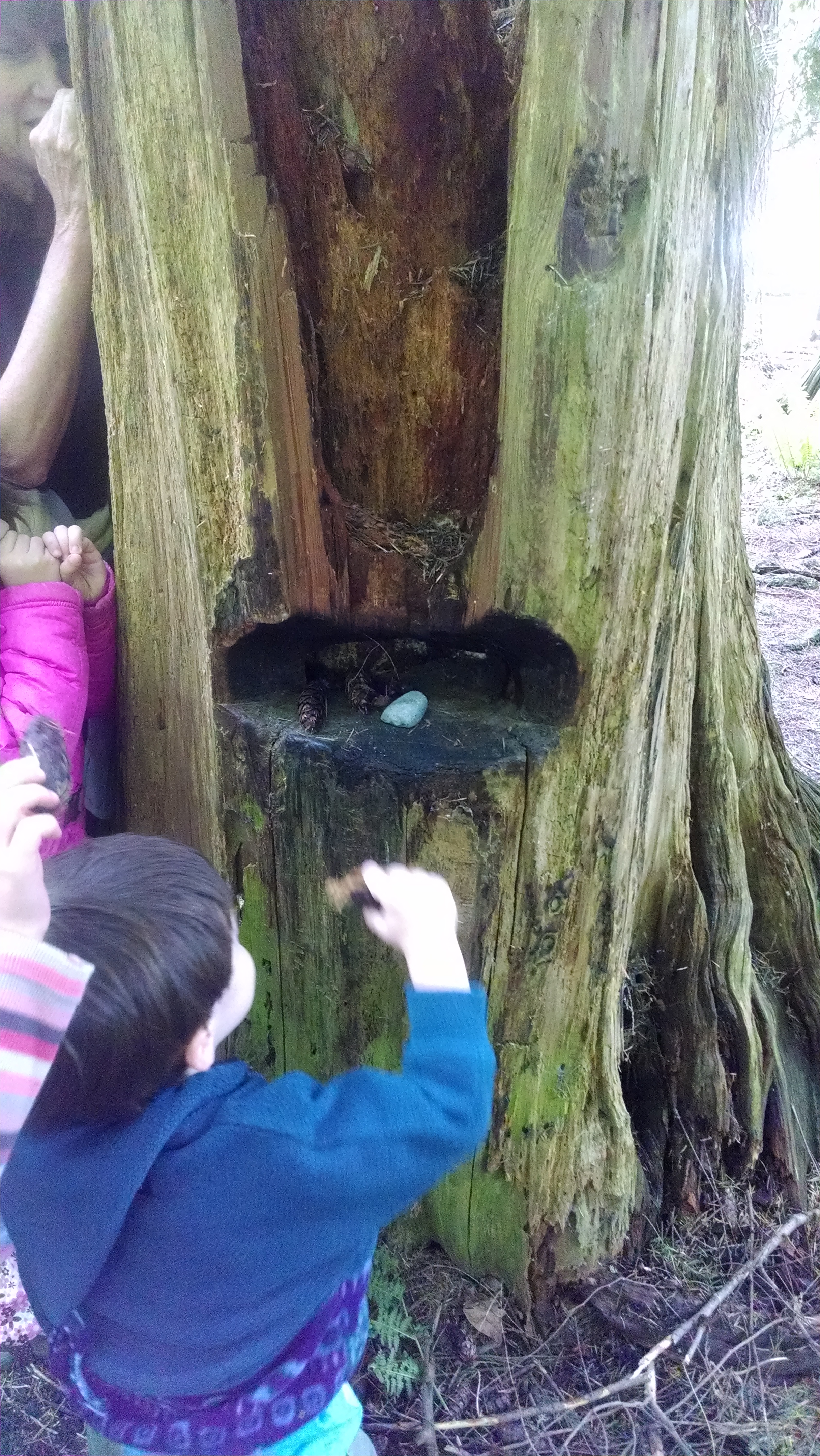
hungrytreeThis is a picture of the Hungry Tree. It’s a tree at Farrell-McWhirter park in Redmond. On pretty much every Friday morning from October through May, we visited the Hungry Tree and “fed” pine-cones to it. Teacher Ann from Tiny Treks provided the voice effects (“I’m the hungry tree. And boy am I hungry! I want some pine-cones! Oooh – thank you!”)

It’s really simple. And it makes all the kids really happy. Every week. Week after week. Especially my boy who loves repetition.

This week I’m reading a lot about Nature Deficit Disorder, and all the benefits for kids of spending time outside. One expert  said “It’s not about taking your kid to Yosemite once a year. It’s about taking them down to that little scrap of grass in the neighborhood every day. It’s about helping them develop a relationship with nature.” My boy has certainly developed a relationship with nature through this weekly ritual of visiting the Hungry Tree.

After we visit Hungry Tree, we balance on the logs, then go wade in the creek (thank goodness for good boots!), then hike through the woods, then return for a snack and story outside on the tarp. My son loves this routine. I love this routine!

But connecting to nature doesn’t need to mean a weekly 90 minute hike in the woods. You could have a “hungry tree” or similar nature buddy in your yard! My son has a “nature job” – every time we walk to the library or store, there’s an apartment garden we pass where the rocks are always getting kicked out of the garden bed onto the sidewalk. My son really likes rocks, and originally he wanted to take these rocks and carry them away. Instead, he now knows it’s his “job” to return any rock that he finds on the sidewalk back to the garden with its friends.

Does your child have a nature ritual?

Toddlers love repetition

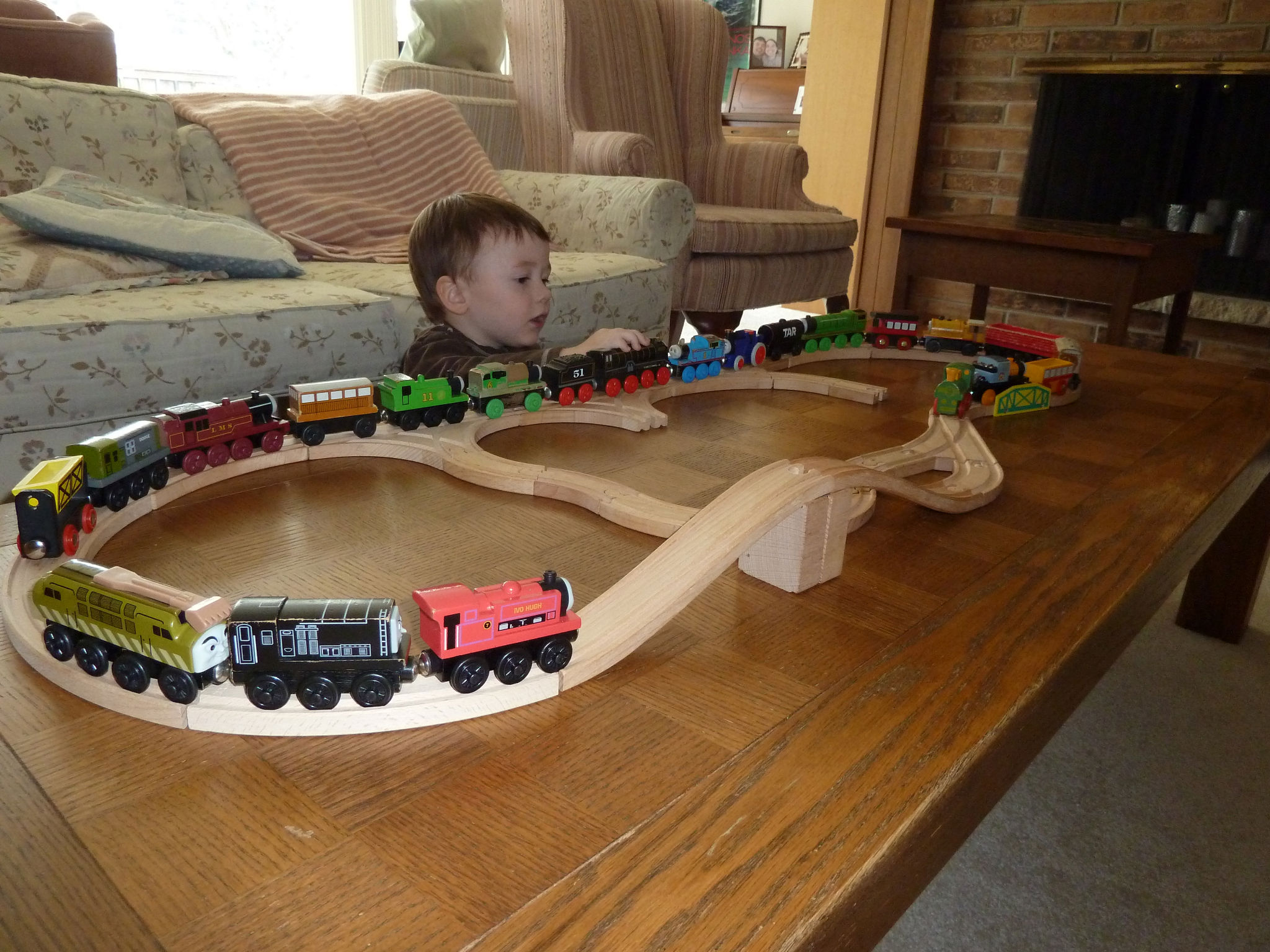
P1040090

All young children love repeating the same thing over and over. It gives them a great sense of mastery over their world when they know what to expect and they know what is expected of them. This is true of ALL children. But especially of my little boy.

With his big sisters, I was all about variety in their activities, and diverse experiences, and exposing them to as many things as possible. Sure, we had some books we read again and again, and some favorite places we visited often, but I definitely actively sought out new adventures for them, both for their sake, and – frankly – because I was young and impatient and easily bored of the ‘same old thing.’

But my boy demands routine. He insists on the familiar. He revels in repetition.

He dives deep into things with a devoted passion. When he had just turned two, he fell in love with Cat in the Hat, and we spent 3 months reading it over and over.We all had it memorized, and we were all grateful that there are so many of us in his daily life that can read to him. (Between me, my husband, the grandparents, and the sisters, he has 6 dedicated readers to go to. So each of us only had to read the book about 100 times, rather than the 600 repetitions I would have had to read without my village of support.)

After that, it was about 6 months of trains. The Thomas the Tank Engine videos, train books, toy trains and tracks, the trips on real steam engines, the sitting by tracks and watching trains pass by. Now, it’s not that trains were the ONLY thing we played with. On a regular basis, I “made him” do other things, and there were plenty of trips to the playground and the library and concerts and books about other topics… But definitely trains dominated. Again, it helped that his abuelo (grandpa) loves trains and was quite happy to play along.

Then it was 5 or so months of the alphabet. Listening to YouTube ABC songs in the car everywhere we drove, playing all the ABC apps that exist for the Kindle Fire, putting together letter puzzles, singing the ABCs, playing the “I’m thinking of an animal that starts with the letter R” game.

Now we’re five months into the planets. The books, the videos, the planetarium visits…  I’ve got the three year old who is sliding down the slide shouting “Mercury, Venus, Earth, Mars…” and telling the other kids “the sun is the center of our solar system. The planets orbit around it. It takes one year for the Earth to orbit the sun” and so on. And everywhere we go he finds sets of nine objects to line up to be the planets. Whether it’s balls, rocks, sea shells, sugar packets at a restaurant… the smallest items are Mercury and Pluto, the biggest is Jupiter, etc.

Sometimes this repetition / focus drives his sister crazy. She’s 17 and thinks the world is more interesting with variety.

It doesn’t really drive me crazy though.

Most of the time.

Partially because I’m older and more patient. Partially because of all the other adults (and adult-like older siblings) who help support his passions – if it was only me doing all this with him, I’d have worn out by now. Partially because I can see how much he learns by doing it. We know from neuroscience that children learn / build connections in their brain through repetition, especially in a setting where they feel happy and safe. My boy learned to read before he was 3. He can memorize books, songs, and videos… the other day he was quoting a Bill Nye the Science guy video word for word… He’s also on track for learning all the things he should be learning at 3 – how to hold a marker (and draw planets), how to sort things by categories (rocky planets, gas giants, dwarf planets), how to make things of clay (yep, planets), how to carry a tune (yes, singing songs about planets) – and lots more skills we expect at this age. We’ve also talked about things I didn’t expect to cover at this age – like states of matter.

And really, the biggest reason I’m willing to repeat things over and over is simply that it makes him happy. The joy and satisfaction he finds in a deep mastery of a topic is pretty hard to resist.

Letting Your Child Take Risks

merryOn the one hand, it’s a parent’s job to protect a child from harm. On the other hand, children need to independently explore their world in order to understand their world. If we over-protect, we limit their ability to learn, we may teach them to be timid and fearful, and we may actually put them at greater risk. “If we round every corner, and eliminate every pokey bit, then the first time that kids come in contact with anything not made of round plastic, they’ll hurt themselves.”(Ted Talk by Gever Tulley)

If we allow them to take small, manageable risks with us there to supervise and coach them through, they learn more about life, they tend to feel bold and empowered, and they’ll have an internal sense of when a situation carries a potential risk and will know they need to be more cautious to stay safe.

Differentiating level of risk

When deciding about safety issues, what needs to be child-proofed, and what boundaries to set, think about the level of possible risk involved.

If the situation could turn from safe to life-threatening in one unsupervised moment (what I call “red light” issues), then you need to either remove the hazards (e.g. don’t leave poisonous items or guns out), block them off (e.g. fences around swimming pools, window locks that prevent the second-story window from opening all the way) or closely supervise the child at all times (e.g. if your child is playing with a ball in a park near a busy road). Rules about these sorts of situations should be clearly explained, non-negotiable and followed every time.

If the situation could cause a significant injury, that’s what I call an orange light. When a child is around these situations (like a campfire or the sharp knives in the kitchen), you model safe behavior for the child, you talk to them about the need for caution, and when the time is right, you teach them how to interact with those things safely. You do not leave your child unsupervised.

If a situation has some risk, but really the worst that can happen is minor damage to person (bump or bruise) or property (mess that needs to be cleaned up or non-valuable item broken), then consider whether this situation needs to be child-proofed or left as a low-risk learning experience.

Darel Hammond, CEO of KaBOOM! says “There’s a difference between an accident and an injury. Accidents happen – kids fall and skin their knees… And as tragic as it is in that moment, it’s through that experience that they’re learning perseverance, they’re learning determination. They dust themselves off and go try something again and they can overcome it.”

Or, as Tom Mullarkey, Chief Executive, Royal Society for the Prevention of Accidents said “We must try to make life as safe as necessary. Not as safe as possible.”

Learn more about levels of safety / risk and how to teach safety skills to kids here.

Kid’s Favorite Risky Behaviors

No matter what we do to safety-proof, “Kids are always going to figure out how to do the most dangerous thing they can.” (Gever Tulley) Ellen Sandseter has developed these categories of risky play that seem to especially appeal to kids in play.

  • Great heights: Climbing trees, furniture, anything else to get that “king of the mountain” thrill.
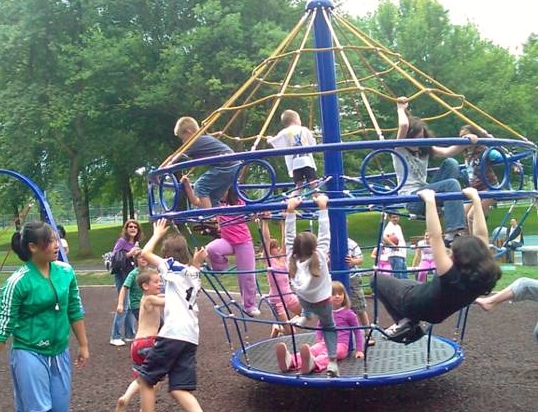
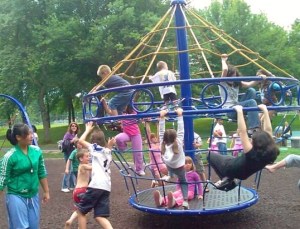
  • Rapid speeds: Swings, merry-go-rounds, slides, bikes, roller coasters. Anything fast.
  • Dangerous tools and dangerous elements: Fire, hammers, knives, guns, power tools, chemicals.
  • Rough and tumble: Wrestling, play-fighting, chasing, pushing, pinching.
  • Disappearing / getting lost: Games like peek-a-boo, then hide and seek fulfill some of this desire, but there’s also little ones trying to wander outside their boundaries, older kids staying out past curfew.

For each, the child has a sense of possible risk, and feeling just barely in control, but managing to stay in control through that challenge. This gives a thrill, and also a sense of power and competence.

Children with a more passive temperament want these risks, but if they don’t have them, they may give up. For example, if the “safe” playgrounds in the neighborhood no longer offer a thrill to an eight year old, she may just choose to stay inside and play video games for a vicarious thrill. (Some people have argued that part of the American obesity epidemic in kids is due to their parents keeping them inside where it’s safe, and them not being physically challenged when they do leave the house.)

But other kids can’t resist their inner thrill seeker. If they don’t have approved opportunities in their environment that “push these buttons” then they will find a way to make them happen. Some of their inventions may be much riskier than we would wish. (A friend told a story from his teens of how he and his friends had filled a trash bag with some flammable gas, then lit it on fire. His line was “The first time we did it, it blew all the windows out of the garage.” The women who heard this story all said incredulously “the first time?? That means you did it more than once??” The men in the group all said “Well, yeah – the windows were already gone – nothing left to damage by doing it again.”)  You may want to start thinking now about how to offer options for positive risk-taking for your child…

As a parent of a young one, think about each of these categories of risks that kids seek, and consider whether you are offering your child access to these thrills in a safe, controlled environment where you can coach them as needed to learn new skills for how to do it well. Have you let your child climb to a “great height” this week – the big slide at the playground? A good climbing tree? A steep hill on a trail? Have they experienced great speeds – riding in a bike trailer? Being pushed high on a swing? Spinning in an office chair? “Dangerous tools” at this age is about using tools they see mommy or daddy using – a metal fork instead of a soft plastic spoon? A table knife to cut a banana with? The TV remote? For rough-and-tumble, toddlers love wrestling, or holding hands between parents and being swung up high in the air, or chase games. For “getting lost”, nothing beats hide and seek. They may also like getting a long distance away from you – when you’re outdoors in a place where it’s safe to do so, give them some space.

Benefits of Risky Play

It’s easy to look at risky play and think of it as “stupid.” Why do children do risky things, even when they “know better”? (One of my favorite lines was from a group of middle school boys after an accident led to a broken arm for one: the principal asked them why they did something – “didn’t you realize someone could get hurt??” They shuffled their feet a little, looked at the wall, and eventually said “well, yeah, of course. We just didn’t think anyone would get hurt that badly.”)

There’s clearly an evolutionary benefit to play, since young animals of every species learn by playing, and often by playing in rough and tumble ways that can lead to injury. What are the benefits?

  • Learning skills they’ll need as an adult: At some point, kids need to learn to use dangerous tools.
  • Persistence / overcoming challenges: “Risk teaches children how to fail and try again, test their limits and boundaries, become resilient and acquire coping skills” (Hammond)
  • Responsibility: “Childhood is the time when children take more responsibility for themselves, for their safety and for their actions. We actually do children a dis-service by trying to eliminate risk from their lives as they grow up. It’s a good thing for children to be exposed to the possibility that things might go wrong because that’s how they learn to cope with challenges.” Tom Gill, author of No Fear.
  • Emotion regulation: It helps children “regulate fear and anger… youngsters dose themselves with manageable quantities of fear and practice keeping their head while experiencing fear. In rough and tumble play, they may experience anger, but to continue the fun, they must overcome it.” (Gray)

Questions to Ask Yourself

If you have young children at home, you are, of course, going to safety-proof all the potentially life-threatening risks. You will, or course, teach your child safety skills that help reduce injuries.

But can you also view risk as a learning opportunity? Can you sit back and let your child experience a few bumps and bruises as they explore their world? Can you tolerate some messiness in your life, and occasional damage to your possessions if it allows your child to discover new ideas and new skills?

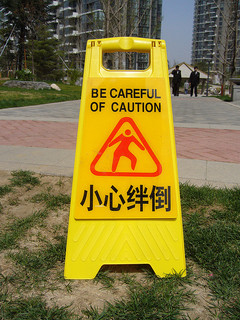
caution

photo credit: xiaming via photopin cc

Recommended for more info:

Read: Risky Play – Why Children Love It and Need It, Peter Gray in Psychology Today. www.psychologytoday.com/blog/freedom-learn/201404/risky-play-why-children-love-it-and-need-it

Read: The Overprotected Kid by Hanna Rosin. The Atlantic, March 2014.
www.theatlantic.com/features/archive/2014/03/hey-parents-leave-those-kids-alone/358631/
(It’s a long article. If you’d prefer to listen to an interview with the author that covers the same ground, go to www.pbs.org/newshour/bb/parents-let-kids-take-risks/)

Read: Can a Playground be too safe? By John Tierney. www.nytimes.com/2011/07/19/science/19tierney.html

Watch: The Benefits of Risk in Children’s Play www.youtube.com/watch?v=XRn1a82tdHM and
Ted Talk by Gever Tulley: 5 Dangerous Things You should Let Your Kids Do. www.youtube.com/watch?v=Pn_awAPYlGc

Listen to: The Land by Erin Davis: www.prx.org/pieces/100288-of-kith-and-kids#description

On Facebook, like: Play Free Movie – they post lots of great links on these topics!