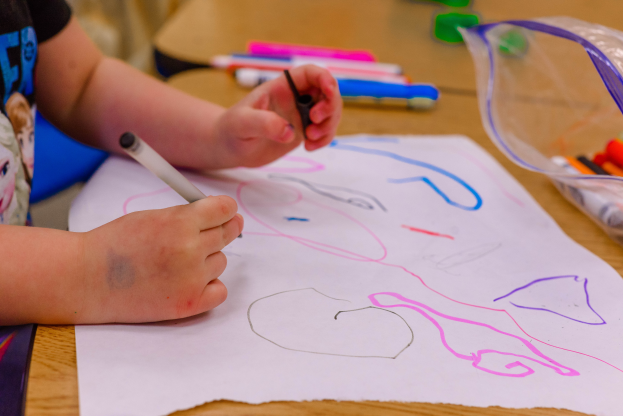
When children are about to start preschool, parents may worry about how their child will adapt. Here are steps you can take to ease the transition.
Prepare Yourself
If you are anxious, your child will pick up on that, and they’ll be anxious too. So, before you start talking to them about preschool, do whatever you need to do to build your own confidence about it. Get support from others if needed. If your child does notice your anxiety, calmly say “I’m feeling worried now just because this is something new – here’s what I’m doing to remind myself it will be OK.”
Planning for Success
If you’re still trying to choose a preschool, think about what kinds of settings and routines work best for your child, and if possible, choose a program that matches their needs and interests. For example, while some children are ready for full day preschool five days a week, that can be overwhelming for some children. If your child gets overstimulated quickly with social activities, consider starting small with a program that meets only a few hours a week, and gradually build up to more, or consider a cooperative preschool where they can stay with their child in the new setting to help make the transition easier.
Teach Skills
In the weeks or months before starting preschool, here are some skills to work on with your child:
- Teach self-help skills. It’s hard on a child if they have to wait for a teacher to help them put on their coat for outside time or wait for help getting their lunch containers open.
- Help them learn how to put on their shoes, put on and take off their coat and put things in a backpack.
- Help them learn how to open their string cheese or yogurt containers by themselves.
- Teach toileting, handwashing skills, and also practice how to use hand sanitizer.
- Make sure they know to cover their cough by coughing (or sneezing) into their elbow, and they know how to blow their nose and throw the tissue away.
- Teach social skills: how to make friends, how to invite someone to play with you, how to ask to play with a toy someone else is using, taking turns, and so on. Set up playdates to practice skills.
- Create routines. What routines can you establish at home to make it easier to get moving in the morning? If you’ll need to be up earlier than you’re used to, can you adjust bedtime? Learn about school routines and use similar practices at home. (e.g. wash hands before snack time.) If your child will use new tools – like a lunchbox or water bottle – get them early and practice.
Read Books / Watch Shows
One of the best ways to introduce the idea of preschool (before even talking to your child about the fact that they will be going to one) is to watch shows or read books about preschool and about starting school. (Here are my recommended picture books about preschool.) Choose ones with a positive approach. (If your child is NOT feeling anxious, don’t choose books that talk about how worried a child might be… that can actually introduce anxiety!)
Preparing them for Preschool
- Talk about what to expect at their school. Visit the school if possible. Or look at pictures or a video tour, visit the outside of the building and walk around. Show your child pictures of the teacher. Get some materials like they’ll have in the classroom and practice using them at home.
- Teach and practice how to interact with a teacher. Explain that the teacher is there to help them and take care of them. Explain that the teacher is in charge. Teach how to get a teacher’s attention (raise your hand, touch their arm) and how to ask for help. Teach that sometimes they have to wait for a grown-up to be available to help. Play listening games (Simon Says, Red Light Green Light, or Copy this Rhythm).
- Pretend play. Pretend to be going to school – who will play the parent? The child? The teacher? Play at things like: waiting in line (with stuffed animals), doing circle time, taking turns, raising hands, asking the teacher for help, saying goodbye at drop-off time.
- Set clear expectations about your role at preschool. If you will be dropping them off and leaving, talk about how the drop-off will go, what you will do while they’re at school, and when you will pick them up. Create rituals for drop-off and pick-up time. Reassure them that although this may be a new experience, and they may feel a little worried, you are confident that they will be OK.
When Classes Begin
- Don’t make too big a deal of the first day. That anticipation and excitement can turn into anxiety. (No big photo sessions!)
- Don’t introduce all new clothes and shoes and backpack on the first day. Let them wear familiar and comfortable items. Pack their favorite foods and pack the exact same lunch for the first several days so they know exactly what to expect. Ask your school’s policy about “transitional objects” – having a toy from home might help them adjust to all the new things around them.
- Allow extra time to get there – you want time to relax beforehand and remind your child what to expect. (Note: this is especially true if you have a child you think of as shy – I call them “slow to warm up.” These children do best when they can arrive a little early, before most of the other children, and settle in. They don’t do well running in frantic and late to a full and busy classroom.)
- Build a relationship with the teacher(s), other kids, and other parents. When your child sees that you feel comfortable interacting with them all, they will feel comfortable too.
- When it’s time to leave, keep your goodbyes brief and radiate confidence that they will be OK. DO say goodbye – don’t try to sneak out when they’re not looking. Tell them what they will be doing while you’re gone, and when you’ll return. (Be sure to honor that promise.)
- Make your goodbye ritual simple and sweet. Make sure your child is either settled into an activity or knows that to do next, or hand them off to an adult for care so that when you walk out the door, your child has something else they’re focused on other than the sight of you leaving them behind.
- Lots of children have moments of separation anxiety at first, and may be sad or crying when it’s time for you to go. Resist the rescue. Be caring and validate their feelings but stick to the plan and leave. Trust the teachers to be the professionals they are and manage common challenges of separation anxiety. Typically a child who cries at drop off will cry only briefly and soon calm down.
- After class, give your child a chance to debrief and talk about how the day went.
Handling the Challenges
Even if you “do everything right”, your child may have bad days, with separation anxiety, biting or hitting, not sitting still for story time or other challenging behaviors. That’s developmentally normal!
Some things that help: if your child is having big feelings, acknowledge them, don’t just try to distract them away. Regression is normal – for example, a child who was potty trained may have accidents. Don’t punish or shame, just acknowledge the issue and say “let’s try to do better tomorrow.” If your child is really clingy, maybe they just need more snuggling for a while – soothe and reassure them.
Children who know they are loved try hard to be good. If they’re misbehaving, ask yourself – is there a skill or support they’re lacking? If so, help them build it. Ask yourself: could they have an underlying need that is driving the misbehavior? If so, meeting that need may resolve the issue. Be patient and remember that any challenges are just a phase. Just keep doing your best every day and encourage them to do their best, and you’ll make your way through to the other side of this big life step.
Note: if you’re in the Seattle area and looking for a great part-time preschool option, check out the co-op preschools offered by our local colleges’ parent education programs. I teach at Eastgate Co-op in Bellevue.

 More Good Days with Kids