Tag Archives: preschool

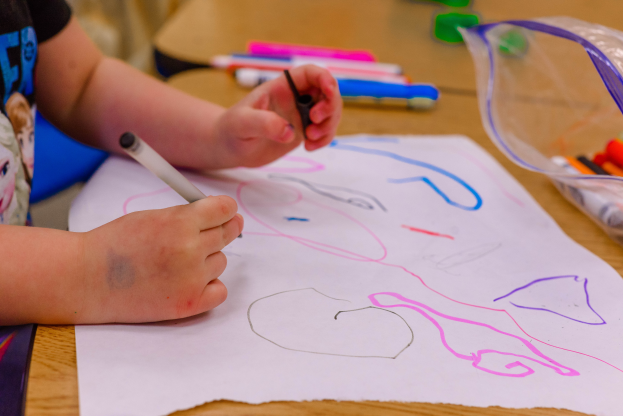
child drawing

Prepping for Preschool

child drawing
credit: photo by Erika Fletcher, Unsplash

When children are about to start preschool, parents may worry about how their child will adapt. Here are steps you can take to ease the transition.

Prepare Yourself

If you are anxious, your child will pick up on that, and they’ll be anxious too. So, before you start talking to them about preschool, do whatever you need to do to build your own confidence about it. Get support from others if needed. If your child does notice your anxiety, calmly say “I’m feeling worried now just because this is something new – here’s what I’m doing to remind myself it will be OK.”

Planning for Success

If you’re still trying to choose a preschool, think about what kinds of settings and routines work best for your child, and if possible, choose a program that matches their needs and interests. For example, while some children are ready for full day preschool five days a week, that can be overwhelming for some children. If your child gets overstimulated quickly with social activities, consider starting small with a program that meets only a few hours a week, and gradually build up to more, or consider a cooperative preschool where they can stay with their child in the new setting to help make the transition easier.

Teach Skills

In the weeks or months before starting preschool, here are some skills to work on with your child:

  • Teach self-help skills. It’s hard on a child if they have to wait for a teacher to help them put on their coat for outside time or wait for help getting their lunch containers open.
    • Help them learn how to put on their shoes, put on and take off their coat and put things in a backpack.
    • Help them learn how to open their string cheese or yogurt containers by themselves.
    • Teach toileting, handwashing skills, and also practice how to use hand sanitizer.
    • Make sure they know to cover their cough by coughing (or sneezing) into their elbow, and they know how to blow their nose and throw the tissue away.
  • Teach social skills: how to make friends, how to invite someone to play with you, how to ask to play with a toy someone else is using, taking turns, and so on. Set up playdates to practice skills.
  • Create routines. What routines can you establish at home to make it easier to get moving in the morning? If you’ll need to be up earlier than you’re used to, can you adjust bedtime? Learn about school routines and use similar practices at home. (e.g. wash hands before snack time.) If your child will use new tools – like a lunchbox or water bottle – get them early and practice.

Read Books / Watch Shows

One of the best ways to introduce the idea of preschool (before even talking to your child about the fact that they will be going to one) is to watch shows or read books about preschool and about starting school. (Here are my recommended picture books about preschool.) Choose ones with a positive approach. (If your child is NOT feeling anxious, don’t choose books that talk about how worried a child might be… that can actually introduce anxiety!)

Preparing them for Preschool

  • Talk about what to expect at their school. Visit the school if possible. Or look at pictures or a video tour, visit the outside of the building and walk around. Show your child pictures of the teacher. Get some materials like they’ll have in the classroom and practice using them at home.
  • Teach and practice how to interact with a teacher. Explain that the teacher is there to help them and take care of them. Explain that the teacher is in charge. Teach how to get a teacher’s attention (raise your hand, touch their arm) and how to ask for help. Teach that sometimes they have to wait for a grown-up to be available to help. Play listening games (Simon Says, Red Light Green Light, or Copy this Rhythm).
  • Pretend play. Pretend to be going to school – who will play the parent? The child? The teacher? Play at things like: waiting in line (with stuffed animals), doing circle time, taking turns, raising hands, asking the teacher for help, saying goodbye at drop-off time.
  • Set clear expectations about your role at preschool. If you will be dropping them off and leaving, talk about how the drop-off will go, what you will do while they’re at school, and when you will pick them up. Create rituals for drop-off and pick-up time. Reassure them that although this may be a new experience, and they may feel a little worried, you are confident that they will be OK.

When Classes Begin

  • Don’t make too big a deal of the first day. That anticipation and excitement can turn into anxiety. (No big photo sessions!)
  • Don’t introduce all new clothes and shoes and backpack on the first day. Let them wear familiar and comfortable items. Pack their favorite foods and pack the exact same lunch for the first several days so they know exactly what to expect. Ask your school’s policy about “transitional objects” – having a toy from home might help them adjust to all the new things around them.
  • Allow extra time to get there – you want time to relax beforehand and remind your child what to expect. (Note: this is especially true if you have a child you think of as shy – I call them “slow to warm up.” These children do best when they can arrive a little early, before most of the other children, and settle in. They don’t do well running in frantic and late to a full and busy classroom.)
  • Build a relationship with the teacher(s), other kids, and other parents. When your child sees that you feel comfortable interacting with them all, they will feel comfortable too.
  • When it’s time to leave, keep your goodbyes brief and radiate confidence that they will be OK. DO say goodbye – don’t try to sneak out when they’re not looking. Tell them what they will be doing while you’re gone, and when you’ll return. (Be sure to honor that promise.)
  • Make your goodbye ritual simple and sweet. Make sure your child is either settled into an activity or knows that to do next, or hand them off to an adult for care so that when you walk out the door, your child has something else they’re focused on other than the sight of you leaving them behind.
  • Lots of children have moments of separation anxiety at first, and may be sad or crying when it’s time for you to go. Resist the rescue. Be caring and validate their feelings but stick to the plan and leave. Trust the teachers to be the professionals they are and manage common challenges of separation anxiety. Typically a child who cries at drop off will cry only briefly and soon calm down.
  • After class, give your child a chance to debrief and talk about how the day went.

Handling the Challenges

Even if you “do everything right”, your child may have bad days, with separation anxiety, biting or hitting, not sitting still for story time or other challenging behaviors. That’s developmentally normal!

Some things that help: if your child is having big feelings, acknowledge them, don’t just try to distract them away. Regression is normal – for example, a child who was potty trained may have accidents. Don’t punish or shame, just acknowledge the issue and say “let’s try to do better tomorrow.” If your child is really clingy, maybe they just need more snuggling for a while – soothe and reassure them.

Children who know they are loved try hard to be good. If they’re misbehaving, ask yourself – is there a skill or support they’re lacking? If so, help them build it. Ask yourself: could they have an underlying need that is driving the misbehavior? If so, meeting that need may resolve the issue. Be patient and remember that any challenges are just a phase. Just keep doing your best every day and encourage them to do their best, and you’ll make your way through to the other side of this big life step.

Note: if you’re in the Seattle area and looking for a great part-time preschool option, check out the co-op preschools offered by our local colleges’ parent education programs. I teach at Eastgate Co-op in Bellevue.

Displaying and Storing Your Child’s Artwork

Doing art is so important for a child’s development – it builds fine motor skills, observation skills, decision making, and communication skills as well as supporting visual development and creativity. (Learn more about the importance of art for kids in The Art of Creating from Michigan State U, and Why Is Art Important at Preschool from Rasmussen U.)

The only problem with kids doing art is that you end up with a lot of art projects you have to figure out what to do with!

Hang it On the Fridge?

For the first few pieces your child does, you will be excited and proud and stick them to your refrigerator where you can see them every day! And then, a few months later, or a few kids later, you can’t see the front of your fridge any more, and you realize that you just can’t keep every piece of art your child does! You feel guilty just tossing it in the trash though. What are some solutions?

Easel Paintings

Some preschoolers bring home one or more easel paintings EVERY day.

With my older two kids, we had temporary displays for when a new artwork came home. For large two dimensional art (easel paintings) we had one spot in the kitchen where we could hang one piece of art per child. We would later save the very best (see below) and the others became gift wrap or went to the trash.

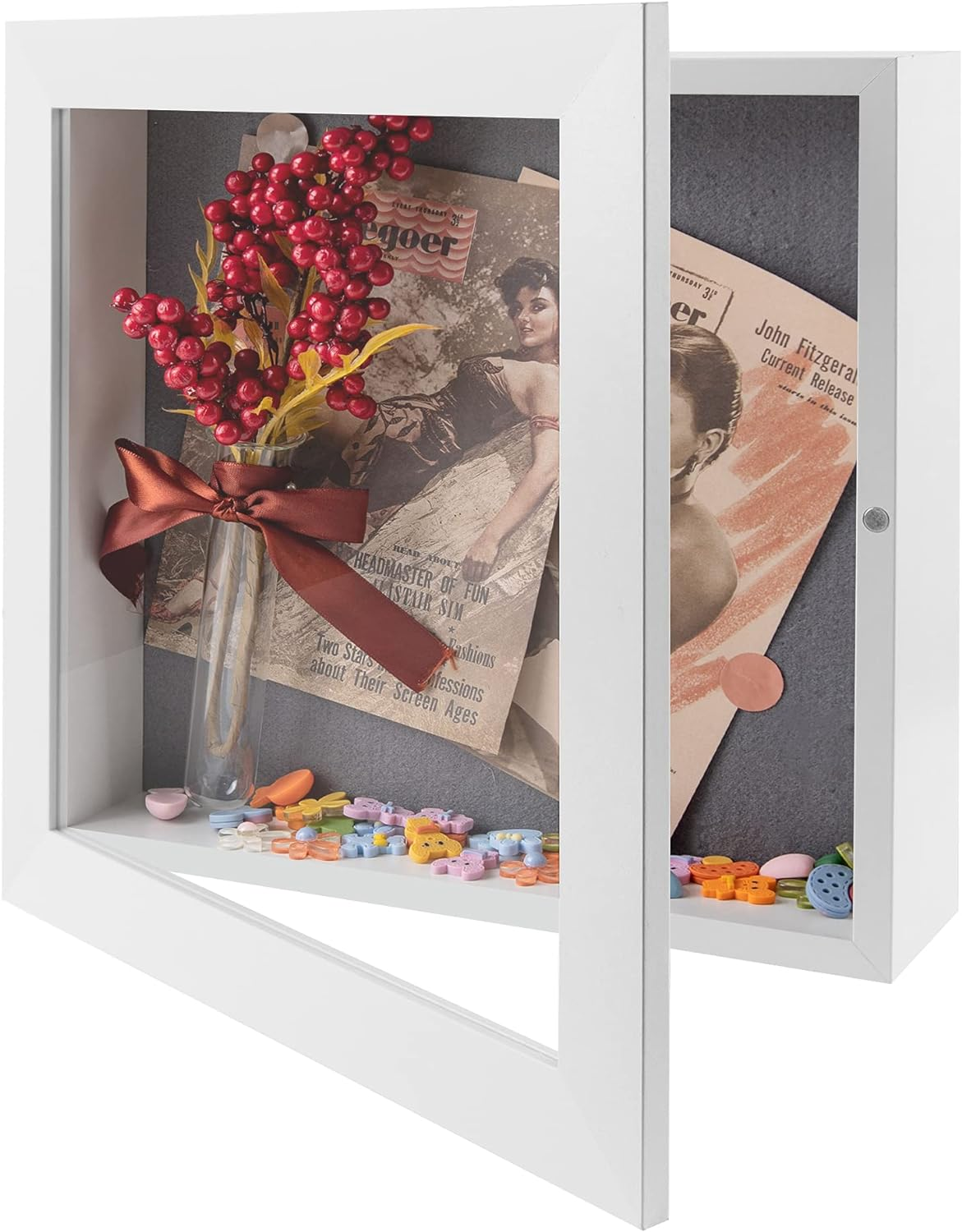
Display 3-D Art in Shadow Boxes

For smaller or three dimensional items, we had wood shadow box frames, which were 2 inches deep. We had four hung together on the wall (they were rectangular so we had two landscape orientation and two were portrait orientation.)

The kids got to decide what went in their shadow boxes. It could be artwork they had created, treasures they had found (dry leaves, sea glass, etc.) or gifts they had been given, or tickets to shows or memorabilia from trips, and they got to decide when to rotate things in and out.

Here are Amazon affiliate links to a couple of similar products: Frametory’s shadow box, or Golden State’s shadow box.

We did not tend to keep 3-D art, so when they decided they were done displaying it, we said goodbye and into the trash it went. See below for what we did for storage of 2D art.

Displaying 2-D Art Work in Storage Frames

I love these frames that didn’t exist when my older kids were little. They are a storage box and a display box. When your child creates a new piece, you tuck the old one in the back part of the box, and add the new one on top for display. The boxes may hold around ~30 pieces of art, so you still won’t be able to keep all your child’s art, but it could be a nice lifelong sampler of favorite pieces.

I have not purchased these but per reviews, the L’il DaVinci looks good for hanging on a wall, and this one from American Flat may be better for setting on a table.

For choosing what size to get: it’s worth remembering that construction paper is 9 x 12, so doesn’t fit in an 8.5 x 11 frame. Easel paper is 18 x 24.

Art Storage for Posterity

When my older kids were in preschool, the school had a fundraiser where they sold cardboard art portfolio boxes that were around 18×24. Over the years, I saved a representative sample of my favorite art that my kids did. Sometimes they’d get too full, and I’d have to sort through all the pictures again to decide on a smaller set of favorites, but it gave me a lovely chance to review the progress of their artwork from preschool to college.

The closest similar product on Amazon is these 18 x 24 boxes, but they come in packs of 50, so while they’d be great for a preschool fundraiser they wouldn’t work for just one person! You could also consider an artists’ portfolio, or this archival box.

Digital Archiving

With my youngest, he just wasn’t the prolific artist the other two were when he was in preschool and elementary, and now as a middle schooler, he primarily does digital art on his computer. While we have displayed his art on the fridge, mostly we take digital photos of it or scan it and then trash / recycle it.

I think I’ve saved a few of his pieces in the boxes with the older kids’ art. (Being the youngest kid is rough sometimes. 🙂 ) What I may do at some point is figure out a way to create an album where we print out images of some of his best art so we have a physical keepsake, because there is something satisfying about flipping through something physical to remind you of your child’s development rather than just looking at images on a screen.

If you have other ideas for art display and storage, please comment!

Note on affiliate links. The product links are Amazon affiliate links. If you click on one and then end up purchasing something on Amazon, I get a small referral bonus at no cost to you.

Stretchy Band Play

On a recent day at preschool, we weren’t able to go outside due to air quality issues from wildfire smoke, so I pulled an item out of our music/group time cabinet for some fun large motor music time. My co-teacher said she had no idea what the item was or what it was for, so I thought I’d write a quick post on it and how it works.

Ours is just a red elastic band loop – the elastic is maybe 1 – 1.5″ and about 12 feet in diameter. The products I see on Amazon are called stretchy bands, and look like they would work in a similar way. Or you can purchase from Bear Paw Creek. Or Elastablast from Let’s Play Together (they offer a booklet of ideas with a companion CD). On a 12 foot band, you could fit up to 8 adults or up to 16 children. On an 18 foot, you could fit up to 11 adults or up to 22 children. You can also find DIY instructions, including info on how to make one from pantyhose.

The basic idea is that children take hold of the band in a big circle, and then they move it up and down together or in and out together. It’s a little like how they use the parachute in parachute play but without all the extra fabric to get tangled up it can be easier for younger children (toddlers) to manage.

See a video of a stretchy band in action:

Or this stretchy band song shows how children can all work together as they raise it up and lower it, go side to side, and more. (I would do a simpler, shorter song for younger children!)

What makes this an interesting activity is that everyone works together. They are all encouraged to do the same thing at the same time, and they can tell if it’s working if they’re doing the same thing and the band is going the same way for them as it is for everyone else. Tuneful Teaching points out that this is helpful when you have a child who has a hard time keeping a beat – put them between two children who have mastered that skill, and the band moving in rhythm will give them the sensory experience of the beat.

There are lots of activities you can do with the band – many parachute play activities and rhythm activities can be adapted to work with it. But here are some specific suggestions:

Start when they’re sitting in a circle – tell them you’ll put something in front of them but don’t touch yet – and then lay out the band in a circle. Or lay it out in a circle BEFORE they come into the room. Then they sit around it and pick it up.

Have them raise it up, lower it down, go up, go down. Do that several times. Go in and out. Shake it fast and slow. You could do a wave where when you point at them, they raise the band – go around the circle where one raises, then the next, then the next. Play a game where if you play/sing a high note, they raise it high. If they hear a low note, they hold it down low.

From https://musictherapymoves.wordpress.com/2013/08/23/using-a-stretch-band-to-move/

Walk around the circle to Sousa march music or the Nutcracker March. Or to Mulberry Bush, where when you get to the “pop” part, everyone quickly lifts the band high and lowers it. Or to Ring Around the Rosey, where everyone falls down, still holding onto the band. Or I sing “Let’s go round and round the circle, go round and round the circle, go round and round the circle as we have done before. Go in and out the circle…”

Do a counting song – like 5 little monkeys if you have five children – at the beginning, all are standing and holding it and moving it up and down in rhythm to the music. When you say “one fell off”, you tell them which child should let go and sit down. They have a visceral sense then of how four is different than 5. And so on down. (Idea from Music and Movement Products.)

While sitting:

  • sing Sing Row Row Row Your Boat while making a rowing motion with the band. (Video)
  • Wheels on the Bus go round and round (rowing motion); wipers go swish (back and forth); driver says move on back (lean back), people on the bus go up and down. (Idea from Pre-K and K Sharing.)
  • Play a piece of classical music, and have them move the band to match it (might be slow and gentle waves, or fast and marching, depending on the music!)
  • Say “trot trot to Boston, trot trot to Dover, watch out baby or you might fall over” having children move hands up and down (trotting) and then fall / lean backward while holding onto the band.
http://strongstart.blogspot.com/2011/12/music-time.html

Keeping the beat. Count together as you move the band 1-2-3-4. Once they get the hang of the rhythm, go around the circle saying each child’s name on the first beat. Peter-2-3-4, Ben-2-3-4, Isabel-2-3-4. Or do animal names or colors or shapes or whatever.

If you have a multi-colored band, then you can do things like “everyone who is holding onto blue, lift it up. Everyone who is holding yellow lean back to stretch it out.”

Stretchy Band Train: make one person the engine, and one the caboose. They walk around with the band stretched between them to make a train car – other kids can board the train car and walk with them. Watch this video.

Use it as a resistance band to stretch out and away from each other – the children can face outward and put it around their bellies, or face inward with it around their backs as they back away. (See pictures on Music Therapy Moves.) Try this pattern: Holding the band from the outside of the circle: Take four steps out, take four steps in. Then get inside the circle, facing out and wrap the band around their bellies. Take four steps out to stretch the band. Take four steps in (going backwards).

Find more ideas:

Benefits of Multi-Age Programs

multi-ageL

In the U.S. most programs for children tend to be limited to children who are all close to the same age – for example, the children in a kindergarten class all turn five somewhere between Sept 1 of that year and August 31 of the next year. But some programs (like Montessori schools, Sunday school programs at churches, or scout troops) are multi-age, with a broader age range. (For example, I teach a multi-age STEM enrichment class for ages 3 – 7). Here’s why I love them:

Benefits of Multi-Age Programs

  • Knowledge and Skill Development: Younger children learn from older children. Older children reinforce and deepen their own understanding of a topic or skill by teaching it to the younger kids. This knowledge is passed on in a variety of ways:
    • Unintended modelling – when an older child is just doing something they want or need to do, (like using the potty or drawing a picture of a dog), they may not even be aware the younger child is observing and absorbing. But young children love to learn about what the big kids are doing.
    • Social play: The younger ones are exposed to things like better emotional regulation and more sophisticated problem-solving which helps them learn these skills earlier. The imaginary play is also richer as the older ones give ideas to the younger ones and have to figure out how to articulate those ideas so the younger one can play along.
    • Casual mentoring. When an older child is slowed down by the younger one’s lack of knowledge, sometimes they move in to help rather than waiting for an adult to help. (Like helping a child put on boots so they can go outside for recess.)
    • Support Desk: Younger children learn which classmates they can go to for help with various tasks, and may seek out their help before asking a teacher. (At one lunch, kids were given fortune cookies. All the non-readers went straight to the kids who could read to ask for a quick answer to ‘what does this say?’)
    • Intentional teaching. Sometimes teachers will ask a child who has mastered a skill to teach it to a child who hasn’t yet mastered it. The learner benefits by gaining information in a way that may be more fun and more confidence-building than learning from an adult. The child who is teaching has the chance to review their own knowledge from a new perspective.
  • Individualized curriculum, tailored to children’s unique skills, not just their age
    • Some kids are really advanced in some areas and a little behind in other areas. Being in a multi-age classroom makes it more likely that they’ll find peers to fit in with in both those areas.
    • There is a broader range of information being covered, so children are more able to learn at their own pace, making continuous progress rather than having to “wait till second grade, when we cover that.”
  • Children may stay with the same teacher for multiple years.
    • The teacher gets to know the child’s strengths and weaknesses, and is better able to tailor the lesson plan to meet that child’s unique needs.
    • There is a stronger parent-teacher relationship.
    • For the child, there’s the benefit of consistency, and a sense of safety and security in the classroom which enables better learning.
  • Less competition / labeling.
    • In a single age classroom, it’s easy to compare kids and say that some are gifted, some are delayed. In a mixed age classroom, it may be clearer that there’s a range of development: the one who does best in math class may have the hardest time in music class, regardless of age.
    • A child who struggles more with social skills might be ostracized by their age peers, but might find companionship in the younger kids in the classroom.
  • A more cooperative, caring learning environment.
    • Older kids learn to be patient, nurturing, responsible. (With guidance from adults!)
    • Role-modelling. The older children learn how to set a good example. If the teacher asks older kids who don’t always behave well themselves to remind the younger children what the rules are, the older ones behave better.
    • In group time, I find that the younger ones are better at sitting still and focusing because they see the older kids do so. The older kids like to show off their knowledge and can often answer the questions the younger ones ask – this builds confidence for the older ones and the younger ones are more excited to learn things from the big kids than they are to learn from a teacher!