Tag Archives: preschool

Fun with Toddlers: Stars and Moon Theme

holiday-kids-crafts.com

holiday-kids-crafts.com

December 21 is winter solstice. The longest night of the year. If the weather is clear, you’ll have plenty of opportunities to go out after dark but before bedtime to check out the night sky and winter constellations (look for Orion!). Here are some other fun moon and star activities.

Planetarium trip

Many planetariums offer shows especially for young children. At Pacific Science Center in Seattle, they have Preschool Trip to the Moon for kids under 4. At Bellevue College, they have shows for kids 6 and up.

Sensory Activities

Mirror Painting. Let your child finger-paint on a mirror. Use blue paint (or blue and black), silver glitter paint, or shake-on glitter. The swirls of color and sparkle look like a starry night. When the mirror is covered with paint, you can use a clean finger to “write” on it.

Star Play-Dough. Make dark blue & purple playdough with glitter and star confetti mixed in.

Songs to Sing / Rhymes to Say

At Night I see the Twinkling Stars – rhyme
(see gestures here)
At night I see the twinkling stars
And a great big yellow moon!
My Mommy tucks me in at night
And sings a good-night tune.
Good night!  ZZZZZZZ. . .
WAKE UP!

We’re Flying to the Moon – rhyme
We’re flying to the moon. We’re flying to the moon.
Oh, what an adventure! We’re flying to the moon.
10 – 9 – 8 – 7 – 6 – 5 – 4 – 3 – 2 – 1 – BLAST OFF!
(lift baby into the air)

Four Little Stars – rhyme
(Use your fingers to count down)
Four little stars winking at me,
One shot off, then there were three.
Three little stars with nothing to do,
One shot off and then there were two.
Two little stars afraid of the sun,
One shot off, then there was one.
One little star, alone is no fun.
It shot off, then there was none.

Twinkle, Twinkle, Little Star – song

Crafts to Do

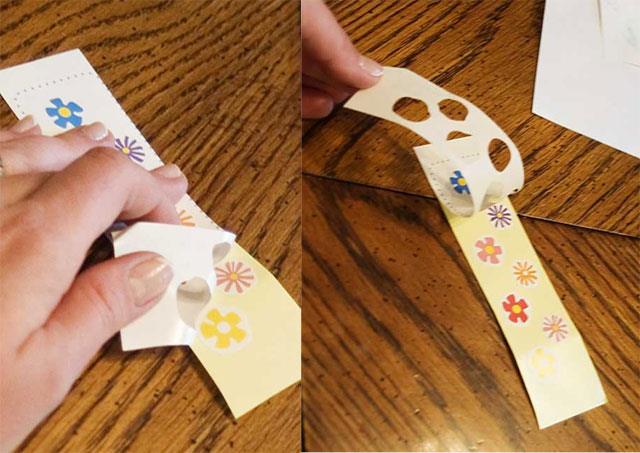
Star Stickers. At any office supply or drug store, get a pack of star stickers, like a teacher would put on homework. You can let your child stick them all over black paper to make a starry sky, or make a holiday card by drawing a Christmas tree, and encouraging them to decorate it with the stars.sticker

Tip: It’s often hard for little ones to pry up stickers. Make it easier by pulling all the background paper up from around the stickers, leaving just the stickers on the paper. (Click on that picture for a better look.)

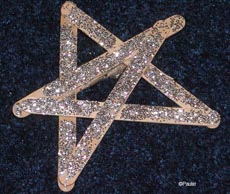
Popsicle Stick Stars. Give your child 5 popsicle sticks to decorate with glitter glue or paint or markers. Then assemble them into a star.

Books to Read

How to Catch a Star by Jeffers.

Goodnight Moon by Brown.

Twinkle books. There are LOTS of books with the words from Twinkle, Twinkle Little Star and variants on that theme. Check some out!

For my full collection of theme-based “Fun with Toddlers”, click on “Fun with Toddlers series” in the right hand side bar. Or if you would like them in printable handout form to share with students, click here.

If you have a child age 3 – 7, learn about lots of hands-on activities for teaching them about the science of stars and constellations at https://inventorsoftomorrow.com/2017/02/28/stars-2/

Connect your Child with their Cultural Identity

Identifying your culture and cultural values

If you do an internet search on connecting children to their cultural identity, you’ll mostly find articles for adoptive parents connecting their child to a culture of origin that is different from that of the parents. You’ll find a handful of articles for parents who are part of a religious or ethnic minority group. There is little about how people from any background might do it.

I think people who view themselves as part of “mainstream America” may often not think of themselves as having a cultural identity. I have heard people, when asked their  identity, respond “umm…. white?? American?? I don’t really have a cultural identity.”

But clearly, we are shaped by our background. I have a friend who is my age, Caucasian like me, and “American.” But I was raised in a church-going, military family of four in Wyoming. She was an only child raised by a liberal single mom in Berkeley in the early 70’s. So although that friend and I have a lot of common from our current perspectives, we’ve certainly run across times when we have very different assumptions about ‘how the world works’ and ‘how things are done.’

And that’s what defines cultural identity: what are those unconscious assumptions about big picture ideas like how the world works, what is our role in the community, and the significance of the family. It’s also the little things: when we get up in the morning, when we eat dinner, what we eat. Sometimes you don’t understand something is your culture until you encounter a different culture. Again, it’s sometimes in the little things: at my family’s holiday meals, the cook worked hard to get everything to the table hot and at the peak of perfection – to wait to eat it would have been horribly rude. In college, when I visited friends, I discovered (after some shocked looks sent my way) that in other families, it is horribly rude to start eating before everyone (including the cook) is seated.

Like a fish learning to describe water, the first step of connecting your child to a cultural identity may be for you to figure out what that identity is!

Here are topics you may want to think about:

  • What is your cultural background?
  • How might that be the same or different from other people in your child’s community?
  • What are some of cultural values that resonate with you? Are there values or attitudes you would like to leave behind?
  • What things in your life have helped you connect to your cultural identity?
  • What traditions or rituals do you want to continue to follow?

Sometimes talking with other people about their culture, or reading books from diverse cultures, can help you to understand your own better. I would recommend Parenting without Borders as a great introduction to other cultures’ approaches to parenting.

Beginning to talk about culture

We don’t have to wait till children are “old enough” to understand religion and culture to begin talking about it. Like everything else in their lives, from food to books to dressing themselves, we talk from the beginning about all the things they experience, and trust that their understanding of it will grow and deepen as they get older.

Young children are very concrete. They learn through hands-on experience, and through observing the important people in their lives. They don’t really learn through abstract conversations about abstract ideas. They also learn through repetition, so as you begin to think about what parts of your cultural identity and values you want to reinforce, keep that in mind.

Culture: Routines, Rituals, and Traditions

For a toddler, life often seems unpredictable and random. Routines create a reassuring sense of structure in a child’s life – the more they know what is coming next, the more manageable life seems for them. They appreciate the sense gained from daily routines that ‘this is how my family does things.’ Ritual and traditions take that to the next level: ‘this is how my people do things and how we have done things for a very long time’. For example, from annual holiday traditions, they gain a sense of how time passes, bringing with it lots of change, but also retaining some important cores.

Some places to consider adding rituals or traditions:

  • Daily: How do you begin your days together? What are mealtimes like? What is the typical rhythm of the day? What’s the bedtime routine?
  • Weekly: Could you do “family date nights”? Weekly dinners with extended family?
  • Holidays: Which do you celebrate? How do you celebrate? What are the special decorations? Foods? Gifts?
  • Special occasions: Does the tooth fairy come to your house? What do you do for birthdays? Weddings?
  • Other family traditions: Do you have nicknames or family in-jokes or songs? Stories about the funny quirks of relatives?

Some ways to include cultural identity in your child’s life:

  • Tell stories. Talk about your childhood, how your family did things, about their grandparents’ childhoods, and so on.
  • Read books about your culture, listen to ethnic music or the music your parents played/sang when you were young, eat foods that were traditional where you were raised. (That’s Jello salad and snickerdoodle cookies for me!)
  • Learn the language of your culture. (Or share with your children the regional dialect of English that you were raised with.)
  • Go to religious services or cultural festivals.
  • Make scrapbooks with information about your family’s history: a family tree, photographs, documents of your family’s journey

Learn more: www.growparenting.com/pages/blog_files/Building-Cultural-Identity.php

Extended Family

At this time of year, many families are traveling to visit other family members, or longing to spend time with faraway family, or overloading on time with local family. Check out last year’s posts on Building Relationships with Family Near and Far; Staying Connected with Family Long-Distance, and Resolving Differences with Extended Family.

How do you get your kid into college?

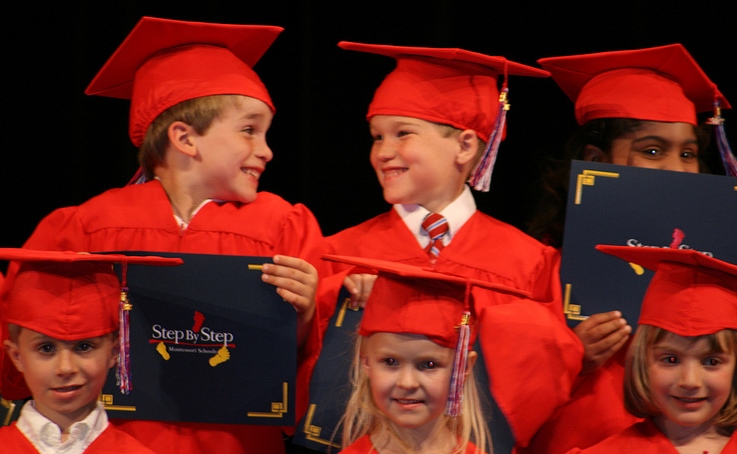
gradsParents often ask one key questions of experts in child development: “How do I get my kid into Harvard?”

Now, I’m not talking parents of high school juniors or seniors who want the nitty gritty of college admissions (although I could write plenty about that, having gone through the process with my oldest three years ago, and with my middle child working on applications this month!) I’m talking about parents of toddlers or preschoolers who want to know they’re starting their journey on the right path. Who want to know:  what is the most essential thing a parent needs to do to guarantee their child’s success in academics and hopefully in life.

All the child development experts have answers to the question, and some are based on good science. Richard Louv, author of Last Child in the Woods, says “tell them to go play outside.” Erika Christakis, a preschool director, and her husband Nicholas, professor at Harvard, say to choose a play-based preschool, not academics-based. The president of Harvard said “Make your children interesting!” He  recommended encouraging children to follow their passions as a way to develop an interesting personality. (There’s a nice article in this month’s Parent Map about helping kids find their passion.) John Medina, author of Brain Rules for Baby, has said to audience members: “You want to get your kid into Harvard? You really want to know what the data say? Go home and love your wife.”

These all seem like valid advice to me.

But what’s my best advice for academic success, in whatever form that takes?

Nurture a love for learning, and the belief that school is a great environment in which to feed that passion.

If you observe any baby or toddler, you see that they are driven by curiosity, and a desperate desire to learn more about their world, and master the skills they need to accomplish the tasks that are important to them. Some lucky adults still have that love for learning, intact from childhood.

Unfortunately, many children have that love for learning stomped on at some point in their life. Often in the school setting. Some examples:

  • A child who learns best by moving is placed in a school that has limited physical education and recess in order to focus on academic work at desks. That child comes to view school as a cage that they can’t wait to escape.
  • A child with a passion for some topic may be told “that’s not what we’re talking about now. You need to stop thinking about that and focus on this other topic that I think is more important.” That child suffers through school hours till she can get home and do the things that she cares about.
  • A child who learns best by interacting with others who is given worksheets and flash cards and drilled over and over in rote learning will believe that school is boring, then extend that to believing that learning is boring.
  • A child with learning disabilities is made to feel stupid and incompetent and has a hard time ever again believing otherwise.

I feel pretty blessed that our children have had access to schools* that fostered their love of learning.

When I first looked at kindergartens for my oldest child, we looked at the one within walking distance of our house. It was called Montessori, which I had the vague impression was a good brand name for a school. But when we looked at it, I saw a room of 5 and 6 year old kids sitting at desks filling out worksheets. Sure, a few of them were working with Montessori style manipulables to help them… but the main goal was completing the worksheet. When I asked about their day, it sounded like the way they did individualized education was that each child could work at their own pace through the same workbooks. They had only 10 minutes of recess in the morning and 10 in the afternoon – which might have worked for my daughter, who was just as happy to sit and read as to run around, but I couldn’t imagine it for a more active child. In their library, they had only non-fiction books. When I asked about fiction, they basically sniffed and said kids could waste their time on story books at home. That’s when I knew this was NOT the school for us. (My daughter’s deepest passion from about age 1 to 21 (so far) is stories. And I believe fiction is a great tool for teaching academic literacy, cultural literacy, imagination, empathy, and more. This school would have stomped on her passion for learning through story.)

We kept looking for the right school. The one we found had an emergent curriculum – an example of emergent learning is: if you have a first grader, you want them to learn to read. But it really doesn’t matter what they read. So, instead of making all the kids read the same books, you let the dinosaur boys read about dinosaurs, and the girls who love puppies read about dogs. If a kid asks a question about the classroom pet, you show him how to look up the answer in a book, and he learns that books are the way to learn the new things he cares about learning. Again, nurture a love for learning, and the belief that school is a great place to feed that passion.

Our girls went on to have a great educational experience that kept that love for learning alive. Another key aspect of a good school is one that understands the difference between building a fixed mindset vs. a growth mindset, which “thrives on challenge and sees failure not as evidence of unintelligence but as a heartening springboard for growth and for stretching our existing abilities.” (Read more.)

My middle child is in her senior year of high school, and totally jazzed about her comparative government class – she can’t stop talking about economics, human rights, and governmental policies! When she had the opportunity to visit some college classes last week, she was looking through the list, and gushing with enthusiasm “oh wow, political sociology! Theory of cognitive linguistics! Biochemistry! How do I choose??” When she had a college admissions interview, she gushed at the interviewer about how much she loves her post-modern literature class. She takes free online college classes about nutrition and food science in her free time.

I love seeing in her what I hope to see in all kids. She TRULY loves to learn. She is really excited about new ideas. She sees school as a great venue for feeding that.

Now, my kid is an academic. Your child might not be an academic in quite the same way. College in general is not right for all kids, and getting into Harvard specifically is certainly not possible for many, and not the right match for some kids for whom it is possible.

But… whatever your child’s talents, whatever his or her passions, I have faith that the best way to help them reach their potential is to keep that toddler’s love for learning alive. Model for them your own excitement over learning new things. Support their passion for discovery. Seek out schools that support it. That’s how to get your kid into college…
photo credit: pcutler via photopin

Talking to Toddlers and Preschoolers about Race

As parents, part of our role is to teach children about the world. One of the things that we can do to support our child’s learning is to play sorting games with our kids: the ability to sort things is essential to lots of future learning, so we are justifiably proud when our young child can sort all the red toys into one pile and all the blues into another pile, or when they can find all the cows in a group of barn toys, or put a group of objects in order from largest to smallest. We are excited that they have learned to distinguish similarities and differences between things.

And yet, there’s a whole category of similarities and differences we’re kind of hoping they won’t notice. Most of us have a story of walking through the mall and hearing a child loudly blurt out “that man is really fat” or “hey, that lady only has one leg” or “look how dark that guy’s skin is.” And then the parent desperately shushes the child, hoping that no one has heard. They just drag them quickly down the hallway and into a store to distract them from the subject… and never come back to it.

Or, the more enlightened parents may try to speak to the child about it, but do it in an odd “code” which tries to validate the personhood of the person they’re talking about (which is good) but without really acknowledging the difference that the child noticed (which is confusing for the child). As Bronson and Merryman say in Nurture Shock, “every parent [in a study] was a welcoming multi-culturalist, embracing diversity. But… hardly any of these white parents had ever talked to their children directly about race. They might have asserted vague principles in the home – like “everybody’s equal” or “God made all of us”… but they had almost never called attention to racial differences. They wanted their children to grow up color-blind.”

But our children are not color blind! Research tells us that, and so does our experience. I clearly remember a moment with my oldest when she was less than six months old… maybe even as young as 3 months. She was fussing in an Indian restaurant, and the owner picked her up to dance her around the room a little and show her the artworks on the wall. She never looked at the artwork. She gazed at his face. We are a very pale skinned family. He was very dark-skinned and the contrast between his skin and his white teeth and eyes fascinated her and all she did was stare at her face, obviously creating in her brain a whole new category of what people can look like.

Our kids notice differences. They ask ’embarrassing’ questions. They point to people on the bus. They blurt out their observations in malls. (They learn to stop doing that by age 5 or so.)  And the parents shush them. The parents’ shushing sends the message of “Don’t talk about that! That’s a bad thing!” A young child is not sophisticated enough to get the message that the parents intend – something about not hurting the feelings of the person called out. When they do this, the message the child gets is that the difference they noticed (whether obesity, handicap, race, or whatever) is bad and shameful and not to be mentioned in polite company.

When parents don’t talk about race and other differences openly, our children are left to draw their own conclusions. So, amongst the parents who never talked about race, what impressions were their kids left with? “14% said outright, ‘no, my parents don’t like black people’ and 38% … answered ‘I don’t know [how my parents feel about black people.]'”

Bronson and Merryman tell the story of one of their own children. He was raised in a diverse neighborhood and school with parents who tried hard never to highlight the differences between people because they wanted a non-racist “color-blind” child. At almost five years old, he never mentioned skin color. They thought things were going perfectly.

“Then came Martin Luther King Jr. day at school… that weekend, [the son] started pointing at everyone, proudly announcing ‘That guy comes from Africa. And she comes from Africa too!’ Clearly he’d been taught to categorize skin color and he was enchanted with his skill at doing so. ‘People with brown skin are from Africa’, he’d repeat. He had not been taught the names for races – he had not heard the term ‘black’ and he called us ‘people with pinkish-whitish skin.’ … we started to overhear one of his white friends talking about the color of their skin. They still didn’t know what to call their skin, so they used the phrase ‘skin like ours.’ And this notion of ours versus theirs started to take on a meaning of its own.” Soon, children make broad sweeping generalizations about what ‘people like me’ do, and about what ‘people like them’ do.

This view of “us” vs. “them” increases. Amongst teenagers, the more diverse the school, the more likely that all their friends are the same race as they are. “The odds of a white high-schooler in America having a best friend of another race is only 8%…. 85% of black kids’ best friends are also black.” (Bronson and Merryman)

Families of color are more likely to talk to their kids about race than white parents. They tend to do it in two very different contexts: one is ethnic pride, the other is preparing the child for future discrimination. In the case of preparation-for-bias, it appears that a little education helps the kids be resilient when they are faced with discrimination. However if the parents over-focused on discrimination, then the child was likely to blame his/her failures on other people – who they saw as biased against them. Ethnic pride coaching helps the child’s self-confidence and helps them be more engaged in school.

Although white kids are not usually coached in ethnic pride, Bronson and Merryman say “white children naturally decipher that they belong to the race that has more power, wealth and control in society.”

So, how do we talk with young children about race?

Think about the way we talk about gender as a model. We have no concerns at all with calling some kids boys and some girls, or asking how many girls were in their class, or telling them to hand something to ‘that man.’ It’s OK to also use language to label the racial differences that children notice and give them the vocabulary to talk about that. We tell kids ‘women can be doctors and men can be doctors.’ We can say just as nonchalantly ‘your doctor is Asian-American and your dentist is Black.’

We can choose to live in places or go to school in places with ethnically diverse populations, and encourage our children to make a variety of friends. We want to help our children see all that they have in common with diverse friends: “all three of you love dinosaurs” or “you both really like to play in the playground.” But we can also acknowledge and talk about the differences: “you live just with me, your friend lives with her parents and her grandparents from India” or “you have dark curly hair and you’ve noticed your friend’s hair is blond and soft” or “that woman wears a head scarf because that is what women of her religion wear.” We don’t want to say “all people are the same under the skin”, because that misses the beauty of our society’s diversity and also does not help your child understand their world.

We can read books, and watch movies, and look at artwork that represent a global array of people. When reading, watching movies, or people watching, talk about differences easily and openly. Note different skin colors, ages, gender expressions, weight, ability, clothing / hairstyles, and family compositions. Use descriptive words / labels they can use, like Asian, gay, deaf. We will, of course, help them understand as they grow older that no one can be defined by any one label. But, as they start to sort things out, talking about differences builds vocabulary and context for understanding the broader world.

As children get older, our discussions get more nuanced. With a toddler, we just teach vocabulary and we celebrate that everyone is different and we all have things in common too.

With our preschoolers: It’s not ideal to say “we’re all equal”, because sadly that’s not true in our society. We can say “we all have equal rights” and “we all deserve to be treated equally regardless of our race and religion.” We can teach our young children about respect for others and about justice and equality.

When these children reach elementary school, they will begin to notice inequities. They may talk about how someone has a bigger house with more toys, or they may notice that children eat subsidized breakfast at school, or they may notice that children get picked on for the color of their skin. Then we can begin discussions about racism and inequality. We’ve already given them the vocabulary to describe difference. We’ve given them the value of equal rights. Now, and as they get older, we can talk about our roles in moving our society toward that ideal of equal rights for all.

Resources to Learn More

You might also like my post on Children’s Books as Mirrors and Windows, which includes links to LOTS of great children’s books you can use to lead into conversations about diversity, race, culture, gender, family compositions, disability, and more.