Tag Archives: preschool

Preschool Choice Time

choice

For parents of two-and-a-half year olds, ’tis the season to think about preschool. (I know, preschool won’t start till September, and it’s CRAZY that you have to research and make decisions on preschools  when you can’t begin to imagine how different your child will be 8 months from now…)

January and February are the season for preschool fairs, preschool open houses and tours. Many schools have application deadlines coming up soon and will encourage you to apply as soon as possible to ensure that there’s space for your child. It’s easy for parents to feel a lot of anxiety and pressure in this environment. It is true that the sooner you decide, the more options you’ll have. And it is true that SOME schools will fill up soon, and if you don’t apply now, you’ll miss your chance. But the honest truth is that there are a ton of great preschools that not only won’t fill up in February, they’ll still have some space available when September rolls around! So, don’t panic about making the choice now if you’re not ready.

One great way to find out about your options is to go to a preschool fair. They’re free, open to the public, and offer parents the chance to walk around, pick up flyers, read posters, and talk to representatives of many different preschools. If you’re on the Eastside of Seattle, we have two big fairs:

– The parent education department at  Lake Washington Institute of Technology offers a fair in January. Details about the 2016 event are here: http://www.woodinvilletoddlergroup.com/preschool-night-2016/

– Parent Map holds a series of preschool previews in January each year. The info about 2016 events is here: https://www.parentmap.com/article/preschool-previews

When parents ask me “what’s the best preschool?” I emphasize that there is no one right answer to that question. A preschool program can range anywhere between 2 hours a day for two days a week to 8 hours a day for five days a week. The cost can range hugely. The way students spend their time, how skills are taught, and facilities range widely. Here are the steps I recommend to help you figure out what’s the best preschool for you.

First decide: Is preschool necessary? Is it something you want for your child?

If you decide you’re looking, the first thing to think about is your concrete needs and goals for preschool.  This includes both logistics (location, schedule, cost) and also thinking about what you hope your child will learn at preschool that they can’t learn from you at home or from the other activities they do.

Then, research your options. Go to preschool fairs, do web searches, but also talk to friends, co-workers, and other parents on the playground. You’ll often learn about fabulous low-cost options by asking around.

Then visit, or attend an open house, and ask these questions to learn more.

Then make the decision that feels right for you! Don’t base it on other people’s opinions but go with your own best judgment.

Here are a few related articles and resources that might interest you:

  • Coop preschools can be the best option for parents who are looking for a few hours a week of preschool (they won’t work for any family that needs full time daycare). They offer a developmentally-appropriate, play-based experience that’s a great learning opportunity for your child and for you, at a low cost
  • Outdoor preschools are a play-based, nature focused option
  • Academic preschools – why they may not be developmentally appropriate or necessary for long-term academic success
  • Benefits of multi-age classrooms
  • Essential skills – these are skills all children need to learn by age 5, whether they learn them at preschool or at home
  • PEPS is hosting a presentation on Choosing the Right Preschool on January 21 in Bellevue and January 28 in Seattle. Learn more: http://www.peps.org/ParentResources/lectures/choosing-preschool

Note on ages: preschool is generally for children age 3 – 5. (So, for fall 2016, that means kids born between September 1, 2011 and August 31, 2013.) There are programs for two year olds called “preschool” because many parents will pay more for something if it’s called preschool than if it’s called playgroup or day care… but really kids under 3 are operating at a different developmental level than a truly preschool age child, and would be better served by an age appropriate, play-based program.

47 Things You Should Never Say to Your Kids (or Their Heads Will Explode)


explode

There’s an article by Parents Magazine  that I often see shared on the internet. It’s titled “10 Things You Should Never Say to Your Kids.” When I see that headline, I think of things like “You’re worthless.” “I hate you.” “I wish you’d never been born.” Those probably should fall in the category of things never to say to your kids. Or to anyone else’s kids, for that matter.

But what are the horrible, soul-wounding phrases that Parents magazine cautions against? “Great job.” “Practice makes perfect.” “Let me help.” “Be careful.” “You’re OK.”

Huh??

Now, when you read their article, it’s actually got lots of good content, with some helpful tips. It’s well worth a read. I agree with them all and I’m not concerned about the topic so much as the tone that is presented by the headline.

A better title would be “Translating Common Parenting Sayings into More Positive Statements Which Will Help Them Develop Into the Emotionally and Physically Healthy, Upstanding Citizens You Hope They Will Become.”

But, Parenting magazine knows the rules of modern media. When you want people to read a title on Facebook and click through to read the article, it helps to include a number in the title (“5 reasons chocolate is healthier than kale”) and it helps if they can convince readers that if they don’t read the article something terrible will happen to them or their children. (“Follow our screen time tips or your child will be brain damaged for life.”) Companies who advertise on a magazine’s website appreciate those “clickable” titles, because it means more people look at the article, and thus at their ads.

And it’s not just Parenting magazine – many other media outlets have used this same headline with success. Here’s just the first page of search results for “things never to say to your kids”

But, when parents read these headlines, how does it make us feel? It raises anxiety. It creates stress around the sense of “I have to do everything right as a parent, or my child will end up screwed up.” It makes us feel guilty about all the times we’ve “done it wrong.”

For example, check out this anxiety and guilt  inducing intro from Parent Society:

If you’re a halfway decent parent, you do your best to not swear at your children or call them names. But other phrases that roll off the tongue can be every bit as dangerous — especially since you might not even realize you’re saying them. Take a look at six phrases you need to cut out of your conversations…

Then to read through  those six dangerous phrases, you have to click through seven pages that are so loaded with ads, it’s hard to actually find the content…

So, let’s first reality check these messages:

  1. It’s pretty guaranteed… At some point, all parents say mean things to their kids. We do. I do – just yesterday I said some things I’m sure are on lists of “things never to say to your kids.” We have bad days, and we get angry, because we’re human. (Check out my series on parental anger – how to manage it and how to heal from it.)
  2. Luckily, kids are remarkably resilient. (To learn more about resiliency and how to help your kids build it, read this article by Jan Faull on the PEPS website.) If you have a positive, loving relationship with your child overall, a few harmful words will not damage that permanently.
  3. Almost all the things on all these lists of “things never to say” aren’t really that dreadful. I promise you that if you say good job to your child, they won’t be permanently damaged!!  However, there are many more things you might say instead, or in addition to, good job. Having an awareness of alternatives just helps broaden your list of options for how to connect with and guide your child.

So, I read through all those articles on things never to say. And I’ve gathered them all [well, almost all] into the left hand column of this table. But I am NOT saying “Never say these things.” Frankly, for most of these phrases, it would be totally fine if you say them from time to time. But, they don’t want to be the only message your child hears from you.

The middle column is just to help raise awareness of how these phrases could have a negative impact if over-used over time. The right hand column suggests other options you can try out, and gives resources for where you can learn more.

Phrase that “parenting experts” caution parents against using Negative / non-helpful ways the phrase could be heard by a child if this is all you ever said to them Alternative things to say or do (on good days when you have the time and energy) that may be more helpful
Good Job / Great Job / Good girl


That’s a beautiful picture
You did that just right
What a perfect building you built!


You’re the best _____ in the whole wide world

Empty praise – if it was something that was really easy for them to do, it’s weird to say good job.

Judgement – implies that there’s one right way to do things.

They’re reached their limit – you don’t think they can do any better.


They’ll someday realize you’re lying or exaggerating and lose faith in your judgment. Or they’ll feel pressure to really become the best.

Only praise things that took effort.


Focus on the process and HOW they did it and what they learned rather than on the product.
Give specific detailed feedback about what’s good, and what could be even better.
Read about questions to ask to extend their learning.

Read more about effective praise.

I’m proud of you

I love it when you….

It would make me happy / mad if you…

I’m ashamed when you….

I’ll never forgive you

Conditional love. Also implies that your emotional well-being as an adult is dependent on your child’s behavior of the moment. Let your children know that you will always love them, no matter what. (This doesn’t mean that their behavior is always OK – it’s not, and you do need to set limits. And it doesn’t mean you don’t have high expectations for them – you do want them to work hard and be good people. But your happiness is not dependent on that.)
Practice makes perfect Well, practice makes much better. But, it doesn’t make perfect because nothing is perfect. And aiming for perfect implies that mistakes are evil. “Practice and you will improve.”
“Making mistakes helps us get better.”
“If you aren’t making any mistakes, this is too easy for you and maybe you’re ready for more challenge.”
Read more about “Willingness to Fail is the Inventor’s Key to Success.”
You’re so [shy, smart, clumsy, pretty]

You’re the [strong, fast, silly, wild] one

You always…

You’ll never… [lose, win, do anything wrong / right]

You’re worthless / a loser

Girls don’t do that / Boys don’t like..

This is all labelling. Labelling your child limits them.

If you label them based on a problem behavior, It becomes a self-fulfilling prophecy and they continue to be that way.

If you label them by a “talent” they have, then that creates a lot of pressure on them to retain that talent. They worry about losing your love / their identity if they don’t succeed in that area.

You do want to understand your child’s temperament, gender influences, and learning style and help support them in using their strengths to build confidence and work around the things that come harder to them. But don’t “label” kids or think they’ll never change.

Praise effort, not talent. Let them know that everyone can get better at anything if they work at it. Learn more about the growth-based mindset.

You’re just like [someone I don’t like]
Why can’t you be more like….Stop acting like a baby.
You’re so [bad adjective]
Big boys don’t…
Good girls don’t….
The first labels them (see above). The second means they’re always being held to someone else’s standard.
These statements are intended to shame a child. “A child’s self-identity is shaped around the things they hear about themselves.”
Let your child become the very best them they can become without worrying whether they are just like someone else.

If you disapprove of a child’s behavior, tell them how to change the behavior. Try not to attack their identity or their sense of being worthy of your love.

What’s wrong with you? Implies that the problem is with them, instead of with the situation. “What’s wrong?”
“What happened that upset you?”
Let me help you

Just let me do it for you

You’re doing it wrong, let me do it

You’re too slow, I’ll do it

Implies that they’re not competent.

If you rescue your child from every challenge, how will they ever learn to do anything on their own?

Allow them to be frustrated. When we’re struggling with something, we’re on the verge of learning something new. (If they’re miserable, that’s a different story….)
Ask guiding questions – “what happens if…”
Make gentle suggestions “Try…”
If you’re really in a hurry say “I need to help you so we can get to preschool on time. Tomorrow you can try again when we have more time.”
You’re OK (after child is hurt and is crying)

Don’t cry

What a dumb thing to get upset about

Don’t worry, it will be fine

There’s no reason to be scared, just do it

Dismisses their feelings as unimportant.


Tells them not to trust their intuition and just do things even if they seem risky. (This could get them into all sorts of trouble as teenagers.)

Validate emotions and pain first, then reassure. Once you’ve said “I hear that you’re scared / hurt / worried” then you can address logical reasons why you believe that it will be OK in the end. More on emotion coaching.
Don’t talk to strangers. This blanket message can make your child fearful of everyone and also limit their ability to learn the social skills they’ll need as adults who very frequently have to talk to strangers! Model appropriate ways to interact with appropriate strangers.
Talk to them about how to tell the difference.
Read more about how to help your kid judge whether to talk to strangers.
Be careful. If over-used, can create a fearful child who thinks the world is a dangerous place. Also: Teacher Tom says: “An adult who commands, “Don’t slide down that banister!” might be keeping a child safe in that moment, but is… robbing him of a chance to think for himself, which makes him that much less safe in the future when no one is there to tell him what to do.” Demonstrate / model how to be safe.
Encourage them to look before leaping.
Encourage them to tune into how they feel about something – if they’re nervous, there may be a good reason.
When the risk is just a mild bump or bruise, let them test things. Someday they’ll get that bruise, and they’ll learn something important.
Read more about teaching safety skills.
I’ll never let anything bad happen to you

Don’t worry – you’ll always be safe

I promise – I’ll never die. I’ll always be here

Don’t make promises that you can’t keep. You can tell that you’ll try to do all these things. “I’ll do my best to keep you safe. I’ll try to always be there for you, for as long as I live. Sometimes bad things will happen and I’ll try to help give you tools for coping with that.”
You’re in the way.

I can’t get anything done with you around.

Hurry up. You’re making us late.

Shut up.

I have better things to do than…

Would you just leave me alone for 5 minutes?

We all know that children are terribly inconvenient room-mates who just make everything harder. But, we don’t need to tell them that every day!

These sorts of statements create stress and anxiety and make the child wonder if he is loved.

Give positive, concrete suggestions for other positive, concrete things they could be doing in the moment.

When you really need a break or need help, admit it and ask for it. That’s part of modelling self care. “Mama is really sick today. I need your help. Can you sit and play quietly for just a few minutes?”

If …. then…..  If you don’t do [this bad thing], then you’ll get [this punishment]. “I’m expecting bad behavior and am looking forward to punishing you.” When … then….  “When you do [good thing that I’m expecting you to do], then we’ll get to do [this fun thing] together.” Learn more about punishment and reward.
Wait till your father gets home… Makes someone else into a bad guy.

Implies that you don’t have enough power to enforce consequences.

Consequences should be immediate, logical, and enforced by the parent who encountered the misbehavior.
I told you so

That’s what you get for not listening

Yes, you probably told them not to do something, and yes, it’s frustrating when they do it anyway. But rubbing it in serves no purpose. “Well, that’s not what you were hoping would happen is it? What could you do differently in the future so you don’t have this problem again?”
Because I said so Implies that you make arbitrary judgments on a whim and they have no control over that. “I’m your parent, and it’s my job to keep you safe and help you grow up to be a good person and keep things running well around the house. Sometimes I have to enforce rules you don’t like. It feels unfair to you, but I will continue to do what I think is best.”

Here is a PDF of this table on Words Matter.

Discipline Tools Posters

When discussing Discipline, I use a tool I developed called the Discipline Flow Chart. It covers 6 steps:

  1. Prevent Behavior Problems
  2. When a problem begins, decide whether intervention is needed. (Pick your battles.)
  3. Instead of telling your child “Don’t Do X” or “Stop Y”, tell them what TO DO. A young child is often not able to think of alternatives, so tell them a positive action to take, and that’s often all you need do.
  4. If the problem is escalating, or is already at the point where more direct intervention is needed, let your child know a) what the problem is, and b) what the consequences will be if the problem continues.
  5. If the problem is at the point where immediate intervention is needed (especially if there’s imminent risk of harm to someone or something), then immediately enforce consequences: either remove the child from the situation, or remove the problematic item from the child.
  6. Move on. Let your child know that you still love them, but that their behavior was not OK, and you won’t let them do it now or in the future. Give a hug, and let it go.

Students asked for a poster to summarize this, so here’s the Discipline Flow Chart Mini Poster. I also have posters I hang in class, and students asked for a mini version of the discipline tools posters

Catapults

Catapults are a huge hit with kids… being able to launch things into the air and across the room is always exciting!

There are LOTS of ideas online for how to build catapults. I want to present a simple series of catapults that show the evolution of an idea.

Supplies needed: pencil, popsicle / craft sticks, rubber bands, a plastic spoon, an object to launch (e.g. pompom or mini marshmallow or coins)

Stage 1

First, take a popsicle stick (the bar of your lever), balance it over a pencil (your fulcrum). Put an object (your load) onto the end that’s laying on the table. Hit the high end of the stick, the object launches. This is an easy depiction of the simple machine concept of levers (learn more about Levers here.)

IMG_20151003_094219761

You can also play with this idea – use a bigger fulcrum – use a longer lever. Like try a large spoon balanced over a rolling pin, or a ruler balanced over a marker.

Kids will have plenty of fun with this. Launching things is fun. But, they’ll soon discover that this is a weak catapult – we can get a lot better launch by evolving it.

Stage 2

Now, take two popsicle sticks: Use a rubber band to fasten them together at one end. Then slide a pencil (or three craft sticks bundled together) between the sticks until it pushes up against the rubber band. Set it down. Put your pompon (or coin) on the raised end, then use your finger to press down and release. The pom pom will fly much higher!

IMG_20151010_231735673

If the coin / pompom keeps sliding off the end of the bar, you can glue a lid to the end of the bar so you have a “bucket” to put your coin / pompom into.

Stage 3

After they’ve had a good time with this one, you can take this simple design to the next level by creating a spoon catapult. You’ve already got your two popsicle sticks banded together. Use a rubber band to attach a plastic spoon on one. (Here’s a picture from www.devincollier.com/how-to-build-a-simple-small-marshmallow-catapult/. to show you where to fasten it.)

Slide your pencil in between the sticks, as before (or use two or three popsicle sticks rubber-banded together). Now launch items from the spoon – your launch arm is longer, and you added the springiness of the spoon – does this increase the strength of the launch (i.e. does your object travel farther?)

catapultM

Stage 4

Now bundle together 5 craft sticks to use as your fulcrum – this is what is shown in the picture above, and you can also find directions at http://cosmos.bgsu.edu/STEMinPark/takeHomeActivites/2012/MarshmallowCatapult.pdf

Is the catapult stronger with a taller fulcrum and more pressure on the rubber bands that bind the launch sticks together? What if you use 8 sticks in your bundled fulcrum?

Stage 5

Use longer bars to build the catapult than popsicle sticks. Maybe rulers? Rubber band them together at one end, and keep using your bundle of craft sticks as a fulcrum.

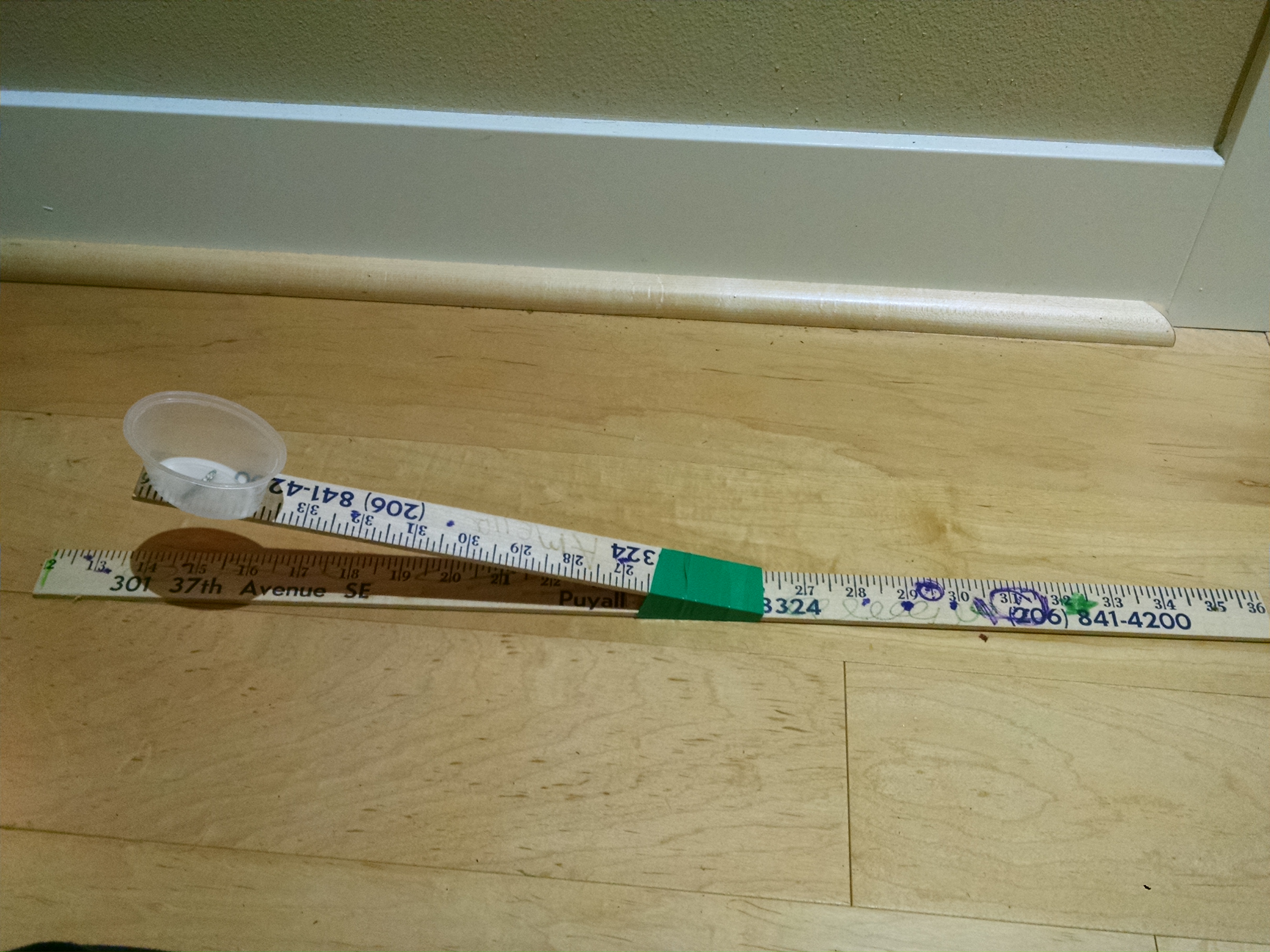
Continue to experiment… Here’s a very similar catapult built from a couple of wooden yardsticks, a piece of cork (used as fulcrum to separate the two sticks – you could use your stack of popsicle sticks) and some tape (could use rubber bands).

IMG_20151005_135555240

Testing and Tweaking

As you build a variety of catapults, test them. You can compare on two criteria: which designs launch the object the farthest and which launch it the most accurately (i.e. can you hit a target with it.)

For more STEM related activities, click on the word STEM in the right sidebar…

Inspiring children who are resistant to writing or drawing

yodaSome children LOVE to write and draw. And some don’t. My middle child was passionate about it, and was competent with pencil, marker and crayon by about 18 months. (Part of that interest was probably due to having a sibling who was 3.5 years older, and was working a lot on writing and drawing skills.)

Our youngest shows no desire at all to write or to draw, which is not uncommon amongst boys. (And honestly part of this may be due to environment. He virtually never sees the people around him write anything. We type on our laptops and phones and mobile devices, but rarely put pen to paper.)

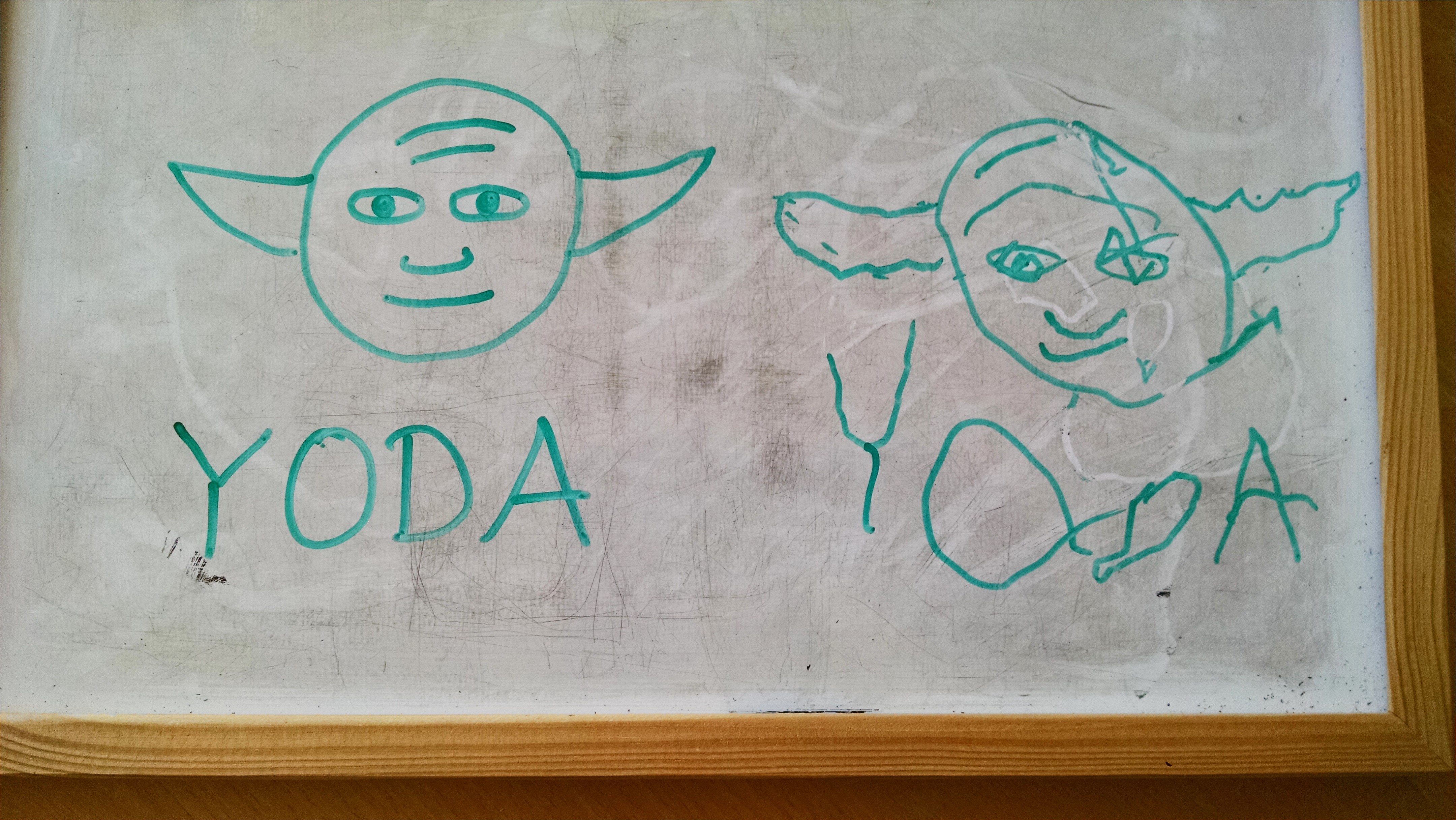
We’ve found three ways to motivate him. First, follow his interests. Since he’s wild about Star Wars, it’s easy to engage him with things like “Hey, you want to learn how to draw Yoda?” (See above.)

Second, make writing a powerful tool for getting what you want. If he wants something that I don’t care whether he has or not, I make him do a written request. The first one was “Kiss” when he wanted a Hershey’s kiss. Later on, he was begging for white cheddar cheez-its. We found him a picture of the box online, and he had to copy all the words down before we gave him any crackers. We’ve made writing worth while.

[Note: I work with parents of toddlers. Sometimes a parent will voice concern to me that their child is slow to learn to speak. The same principles apply: follow their interest – talk about what they are looking at or doing, not about what YOU are interested in at the moment. Make language powerful. If they point at juice, don’t give it to them. Say “Do you want milk or juice?” You’ve just given them the words they need, but they need to SAY juice to get juice.]

Third, offer interesting media / sensory experiences. You can pour flour or salt into a dark-colored dish, and let them write and scribble in there. You can give them a stick and encourage them to draw in sand or dirt. Offer bath tub crayons at bath time. Or finger paint anytime. Or a paint brush and water to write on the sidewalk on a hot day. If your child likes to use apps on your mobile device, most allow them to use their finger to draw with – but you can also purchase a stylus for them to use to practice holding a pen.

IMG_20150825_091738839