Tag Archives: play

Reducing Sensory Bin Mess

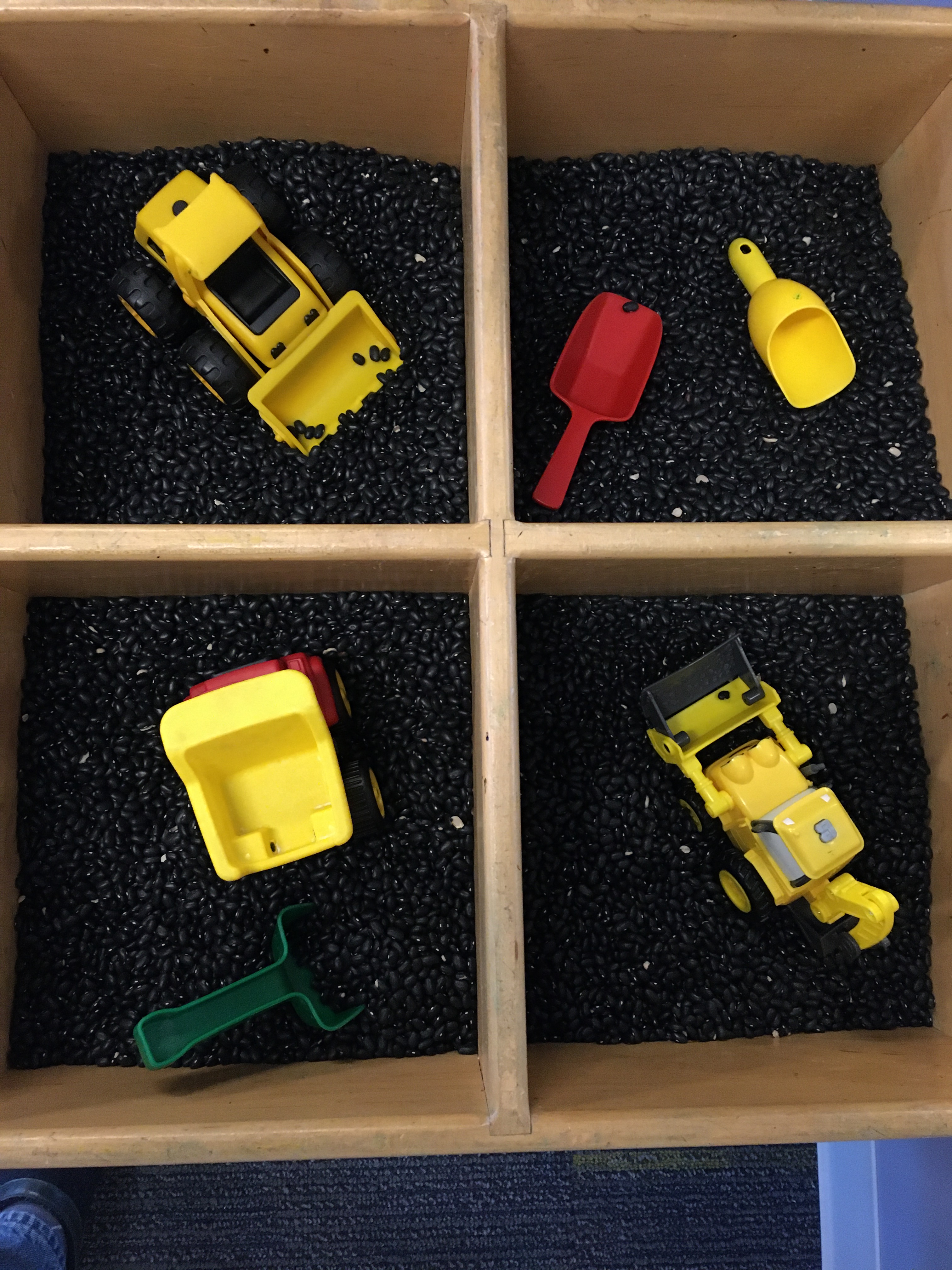
When parents or teachers first introduce a child to sensory bin play, they usually make a big mess!
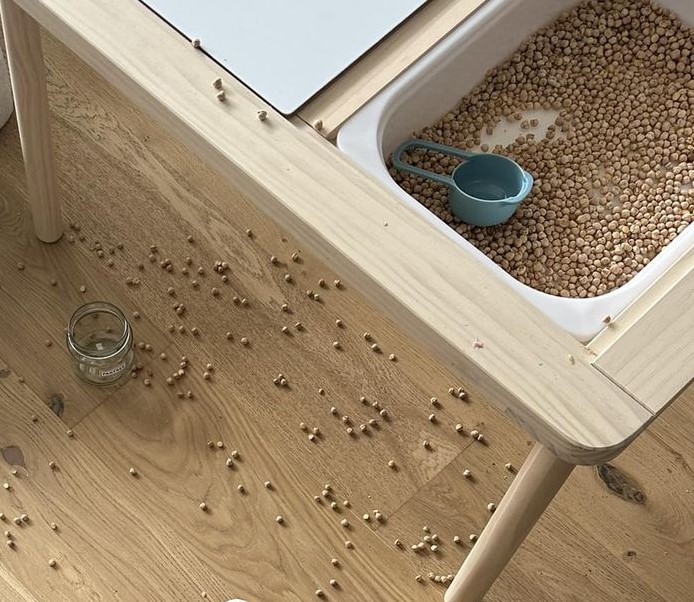
While some mess is inevitable, here are tips for reducing it.

Teach Them How Sensory Play Works

One of my core beliefs is that children want to do well. If they’re not behaving well, it’s usually because they don’t yet have the knowledge or skills they need. So, let’s teach them!

Play alongside

Over time, sensory play becomes a great independent play activity for children, where they can play with little supervision or intervention from adults for quite a while. However, first you have to teach them how to do it, and then gradually fade out your support. So, expect to be right next to them the first several sessions.

Role Model

I mostly just start playing appropriately next to them, and they quickly follow along! I narrate my play, and also narrate theirs. “Look, I’m scooping the beans – oh, you picked up the scoop – see how I use it? I can pour the beans in the bucket. Can you?”

Re-Direct

If they are doing something “wrong”, tell them the right thing to do. “Let’s keep the rice in the bin.” If they’re pouring on the floor, substitute a new target – “can you pour into this bucket?” Try to avoid saying “don’t _____”. If you say “don’t splash”, all they can think about is splashing. If you say “oh, look, when I move my hand slowly, see the ripples in the water?” they will often stop splashing.

Set Limits

Once they’ve learned how to do well in general, they may still have days when they’re having a hard time not making a mess. It’s OK to sometimes say “it looks like now is not the right time for this – let’s put it away / close it up for now, and we’ll try again tomorrow.” To be as fair as possible, I try this method: first when-then: “when you show me you can play well with this, then we can have it out more often.” Then if-then warning – “if you keep dumping things on the floor, then I’ll close the bin.” Then follow through on that consequence if needed.

Setting Up for Success

Fillers

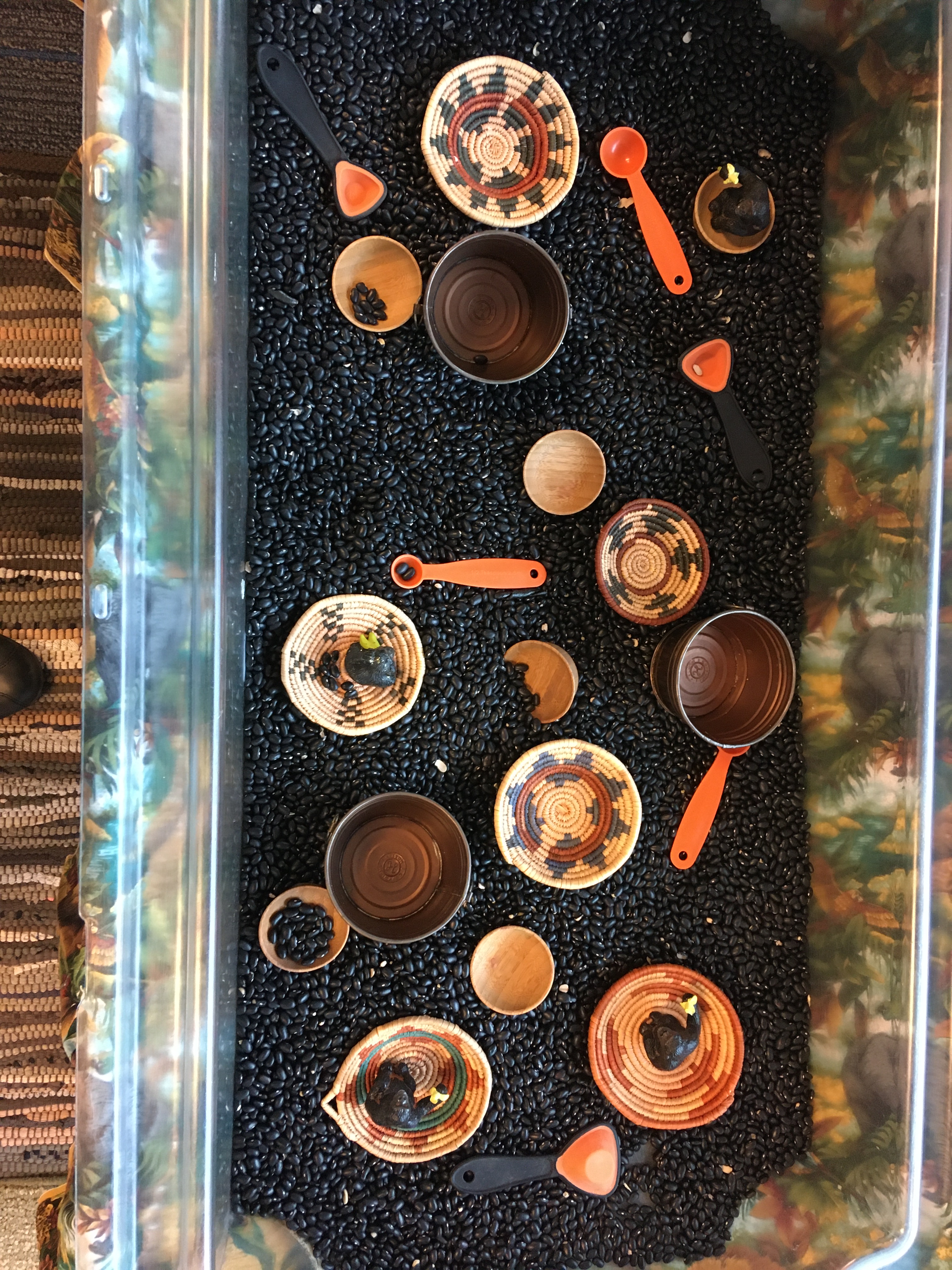
Start with fillers that are easy to clean up. I use pompoms as the first material for my toddler class. Or paper crumpled into balls. Later, I might use pinto beans – they’re easy to sweep up. Other things are harder to clean up. For example, kinetic sand needs to be vacuumed up and can get ground into carpet, so it’s not the thing to start with.

When you start, put a small amount of sensory items in a small bin inside the large bin. If they spill outside the small bin, the large bin catches it!

Don’t use too much filler at first. Don’t feel like you have to have a 3 inch thick layer of sensory material. Start with a thin layer – they can always pile it all up in one corner if they want a deeper pile.

Remember that they will mix together any item that’s within easy reach of the bin. So, if there’s something you don’t want to be mixed in, move it elsewhere. (For example, we don’t recommend putting a bin of rice right next to the playdough table or water table.)

What Surface to Put the Table On

If possible, put sensory tables on linoleum or hardwood floors – it’s way easier to clean up than carpet!

Many parents and teachers do sensory tables outdoors where they are less concerned about mess.

Many people recommend putting a mat under the table – like this mat where the edges can fold up to make a wall, or things like playpens and crafty pods and pop-up ball pits that help to contain the mess in one area where it doesn’t get tracked around. Some use fitted sheets – like in the image below (source) or shown here. Wrap the corners of the fitted sheet around some objects to create a little nest. Or use a table cloth or shower curtain liner. Sometimes you can salvage sensory material from any of these surfaces by lifting them up so the filler all slides to one corner and then scooping it from there.
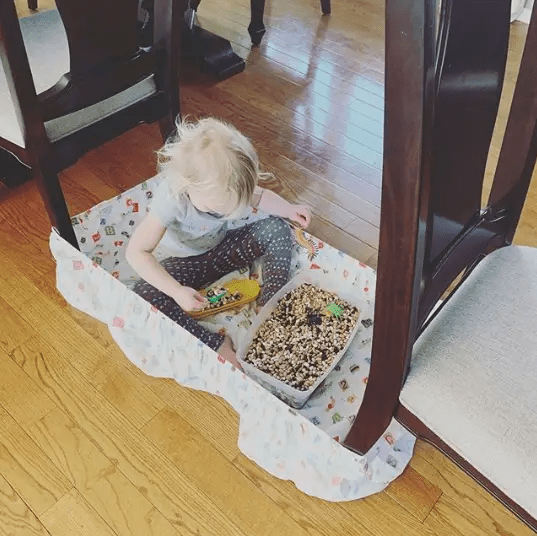
One site recommended a “builders’ tray” that looks amazing, but the link is broken and I can’t find it anywhere… Amazon has a 20×20 play tray, or you could use an oil drip pan, maybe.

Allowing for Transport

Kids LOVE to transport things. So, they often want to carry things from one place to another. Sometimes just having containers inside the bin, like having two buckets in the bin where they can move things from the bin to one bucket to the next is enough. Or setting up a cardboard box apparatus where there’s a higher spot in the sensory bin and a ramp for pouring things so they slide to the lower level, like these examples from Frugal Fun:
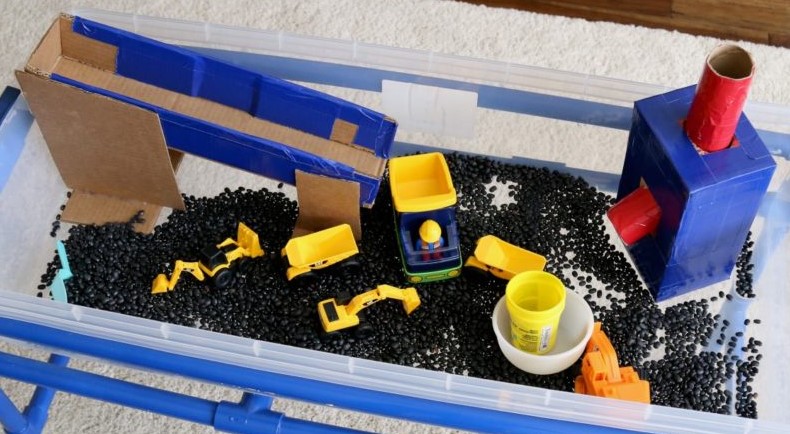
Or having a table right next to the sensory bin with containers on it they can move things into can work. But some kids like to have a separate bucket somewhere else they can carry things to – you can decide if that’s viable for you.

If they like the sound the beans make when they hit the floor, try putting a metal pie tin or hard plastic container upside down inside the sensory bin that they can pour onto to get the sound.

Helping with Clean Up

Ask your child to help with clean-up. You may choose to get them a mini broom and dustpan or a dust buster vacuum. (For some kids having to do clean-up is a disincentive – they don’t want to make a mess they’ll have to clean up later. Some kids like cleaning up the mess so much that they’ll make more of a mess!)

Remember, sensory play is a learning process, so they will accidentally (or intentionally) spill from time to time and there will be messes. Try to take a deep breath when it happens. If you’re having a day where you feel like the mess would be too stressful, it’s fine to close the sensory bin for the day and offer other activities.

Learn more

Check out my Ultimate Guide to Sensory Tables and my Ultimate Guide to Water Tables. You might also enjoy this post on Building a Child’s 8 Senses.

Benefits of Multi-Age Programs

multi-ageL
In the U.S. most programs for children tend to be limited to children who are all close to the same age – for example, the children in a kindergarten class all turn five somewhere between Sept 1 of that year and August 31 of the next year. But some programs (like Montessori schools, Sunday school programs at churches, or scout troops) are multi-age, with a broader age range. (For example, I teach a multi-age STEM enrichment class for ages 3 – 7). Here’s why I love them:

Benefits of Multi-Age Programs

  • Knowledge and Skill Development: Younger children learn from older children. Older children reinforce and deepen their own understanding of a topic or skill by teaching it to the younger kids. This knowledge is passed on in a variety of ways:
    • Unintended modelling – when an older child is just doing something they want or need to do, (like using the potty or drawing a picture of a dog), they may not even be aware the younger child is observing and absorbing. But young children love to learn about what the big kids are doing.
    • Social play: The younger ones are exposed to things like better emotional regulation and more sophisticated problem-solving which helps them learn these skills earlier. The imaginary play is also richer as the older ones give ideas to the younger ones and have to figure out how to articulate those ideas so the younger one can play along.
    • Casual mentoring. When an older child is slowed down by the younger one’s lack of knowledge, sometimes they move in to help rather than waiting for an adult to help. (Like helping a child put on boots so they can go outside for recess.)
    • Support Desk: Younger children learn which classmates they can go to for help with various tasks, and may seek out their help before asking a teacher. (At one lunch, kids were given fortune cookies. All the non-readers went straight to the kids who could read to ask for a quick answer to ‘what does this say?’)
    • Intentional teaching. Sometimes teachers will ask a child who has mastered a skill to teach it to a child who hasn’t yet mastered it. The learner benefits by gaining information in a way that may be more fun and more confidence-building than learning from an adult. The child who is teaching has the chance to review their own knowledge from a new perspective.
  • Individualized curriculum, tailored to children’s unique skills, not just their age
    • Some kids are really advanced in some areas and a little behind in other areas. Being in a multi-age classroom makes it more likely that they’ll find peers to fit in with in both those areas.
    • There is a broader range of information being covered, so children are more able to learn at their own pace, making continuous progress rather than having to “wait till second grade, when we cover that.”
  • Children may stay with the same teacher for multiple years.
    • The teacher gets to know the child’s strengths and weaknesses, and is better able to tailor the lesson plan to meet that child’s unique needs.
    • There is a stronger parent-teacher relationship.
    • For the child, there’s the benefit of consistency, and a sense of safety and security in the classroom which enables better learning.
  • Less competition / labeling.
    • In a single age classroom, it’s easy to compare kids and say that some are gifted, some are delayed. In a mixed age classroom, it may be clearer that there’s a range of development: the one who does best in math class may have the hardest time in music class, regardless of age.
    • A child who struggles more with social skills might be ostracized by their age peers, but might find companionship in the younger kids in the classroom.
  • A more cooperative, caring learning environment.
    • Older kids learn to be patient, nurturing, responsible. (With guidance from adults!)
    • Role-modelling. The older children learn how to set a good example. If the teacher asks older kids who don’t always behave well themselves to remind the younger children what the rules are, the older ones behave better.
    • In group time, I find that the younger ones are better at sitting still and focusing because they see the older kids do so. The older kids like to show off their knowledge and can often answer the questions the younger ones ask – this builds confidence for the older ones and the younger ones are more excited to learn things from the big kids than they are to learn from a teacher!

Stations at a Play-Based Preschool

I wrote a full post about play-based preschool that provides an overview of how it works, and what the benefits are. This post gives specific examples of the types of activities you might find at a play-based preschool and has concrete examples what children learn from each.

Blocks / Building Materials

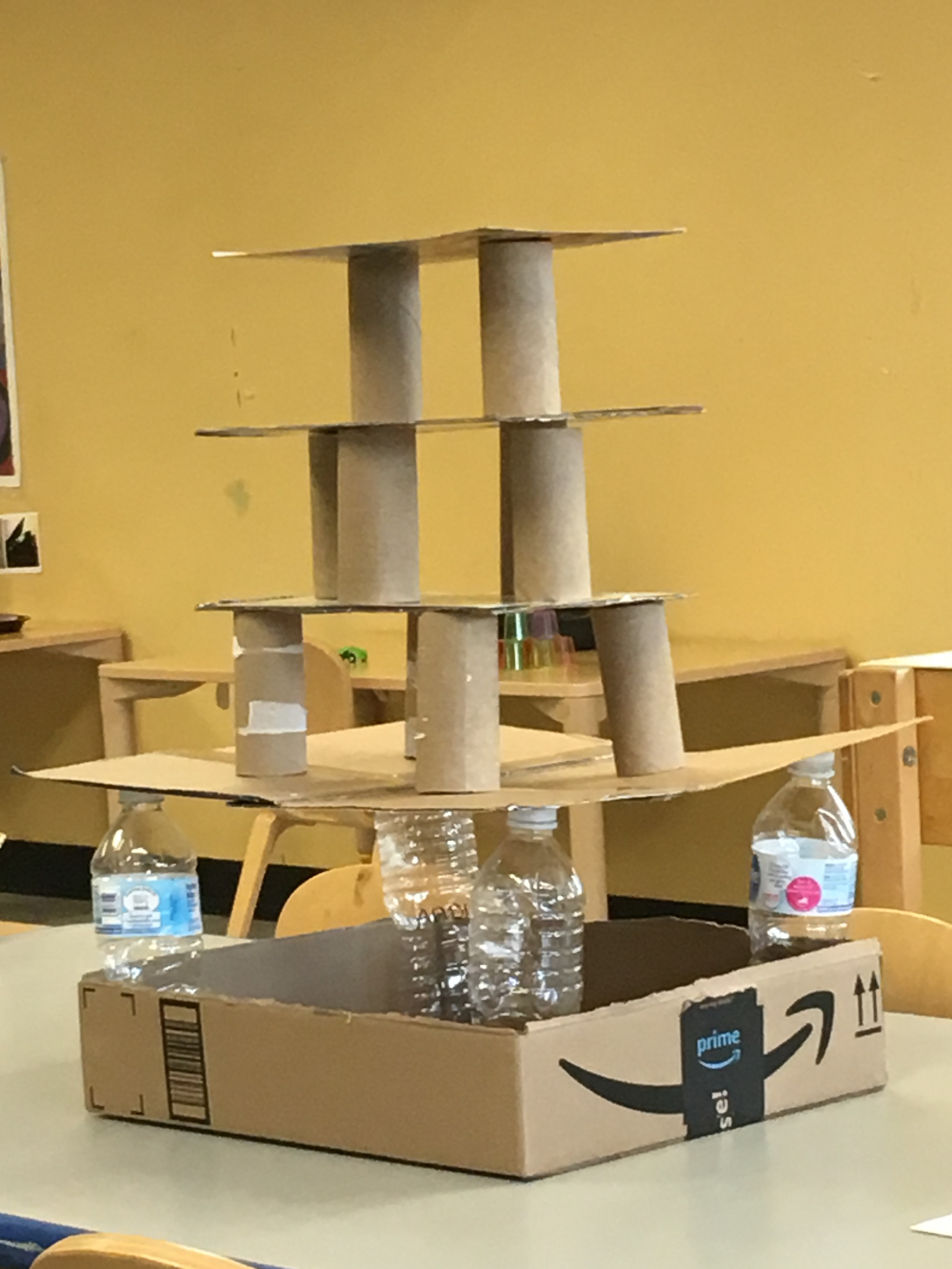
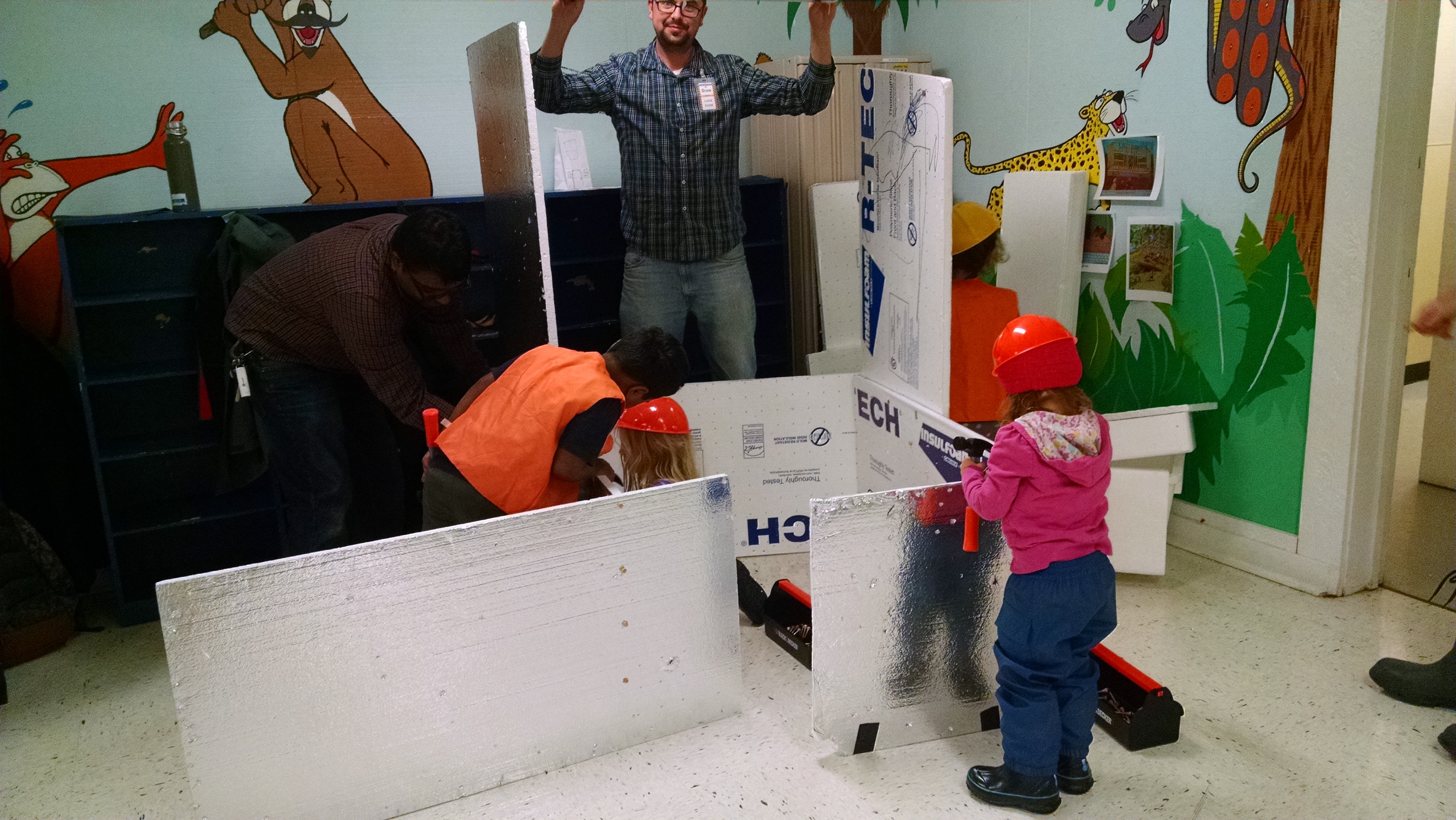
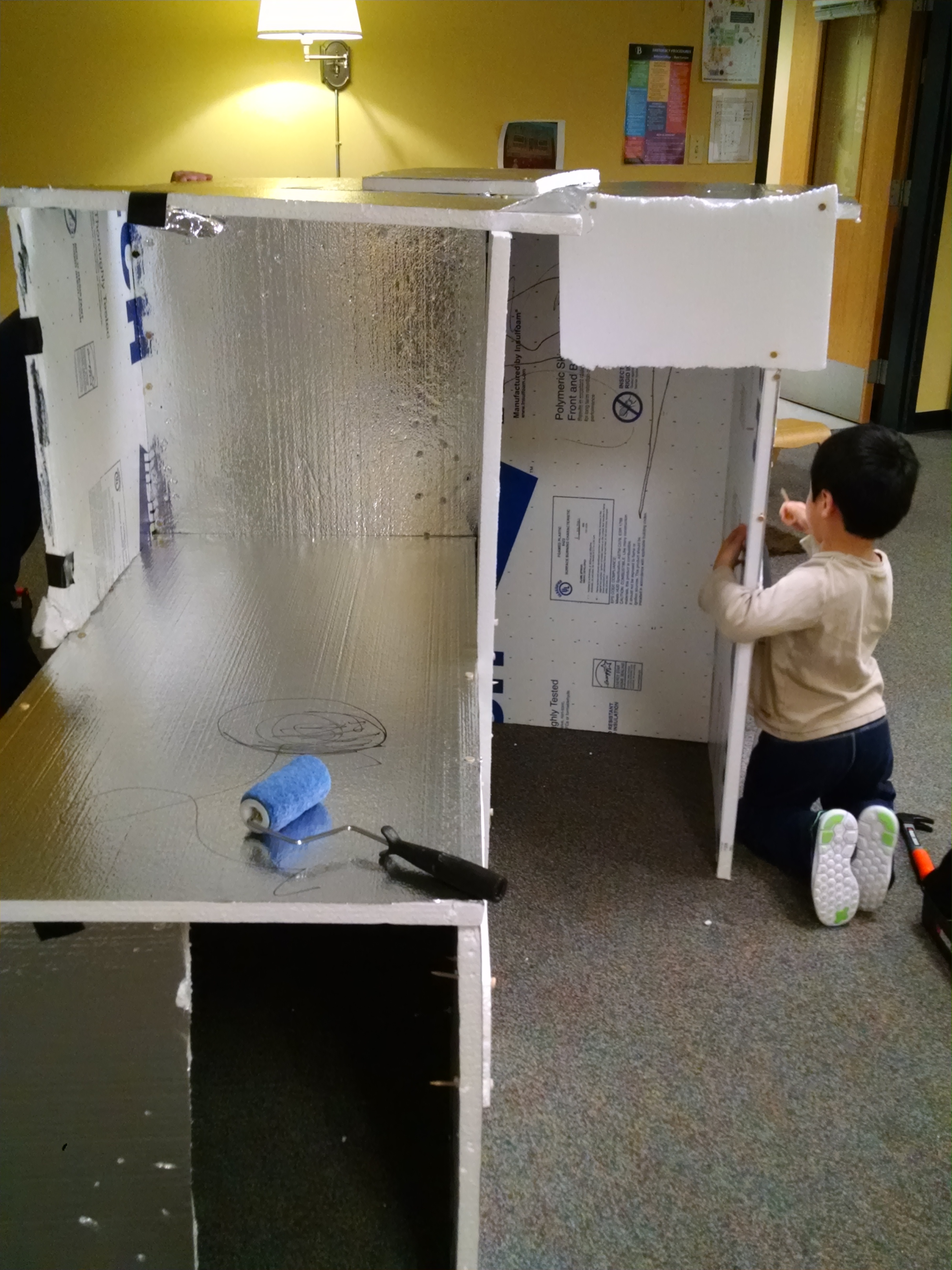
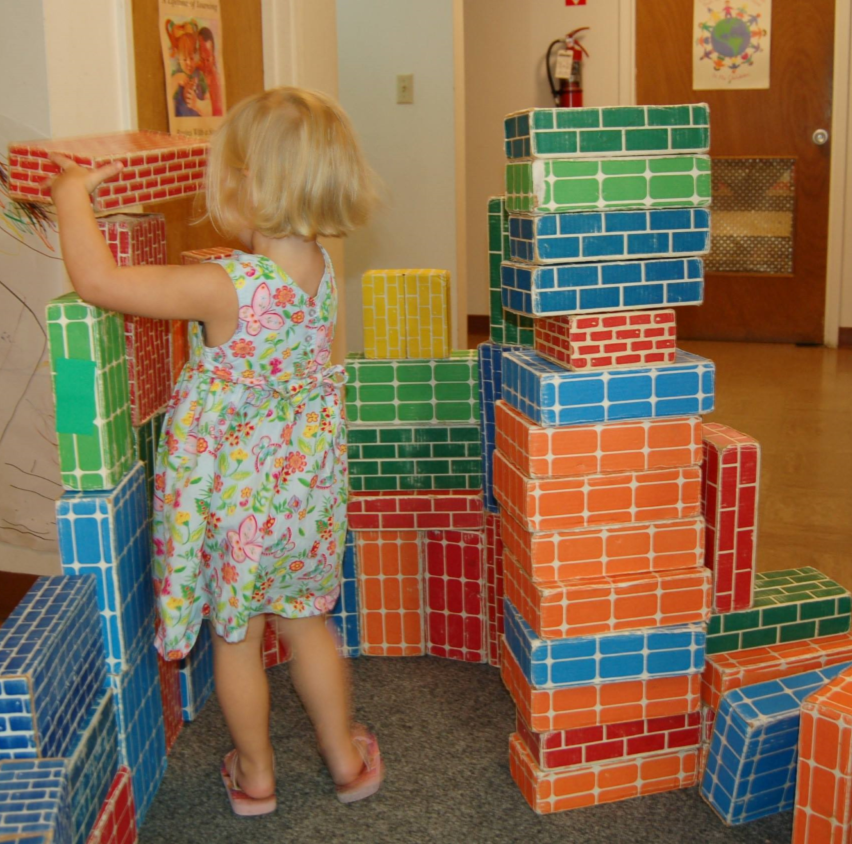
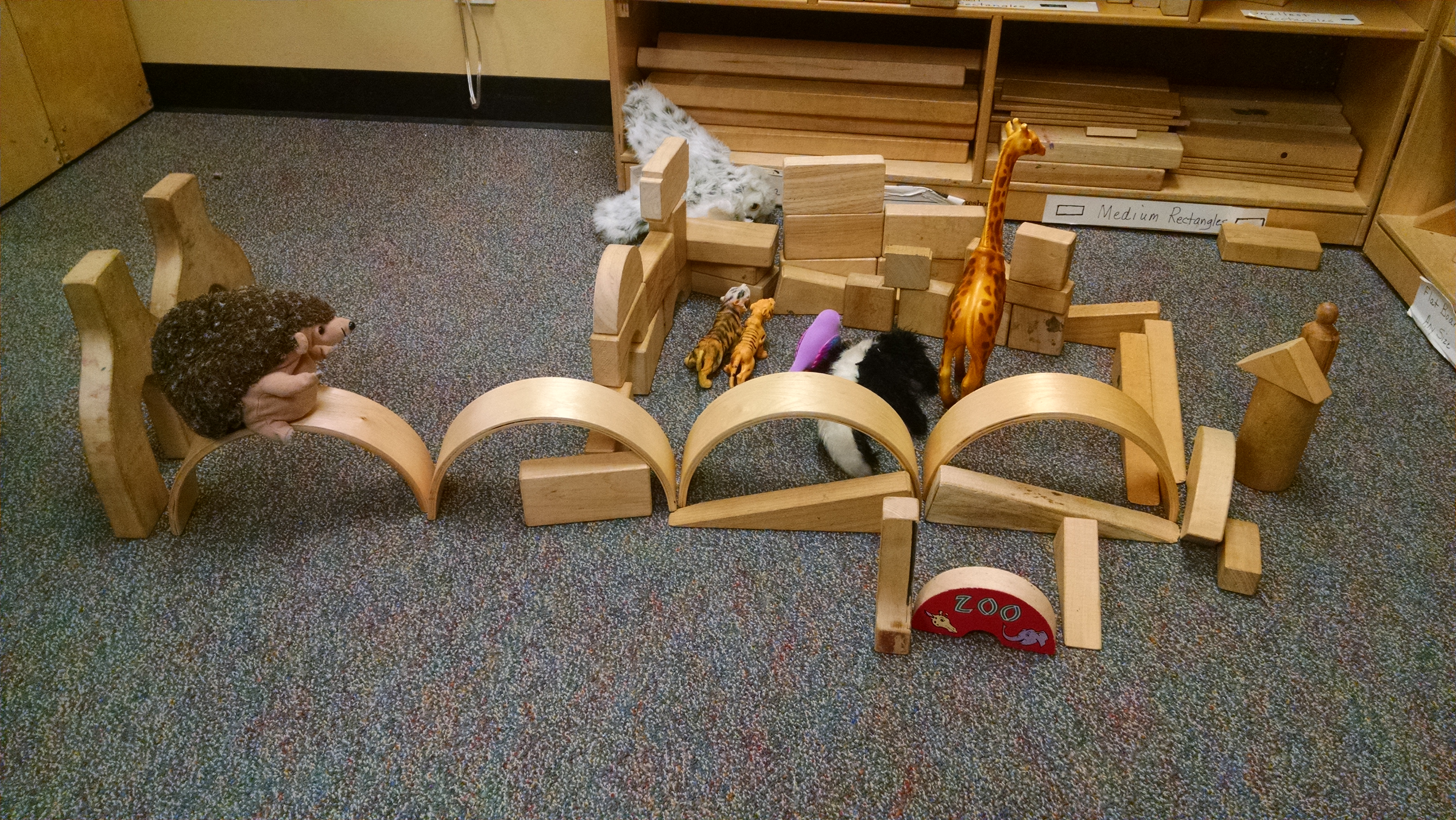
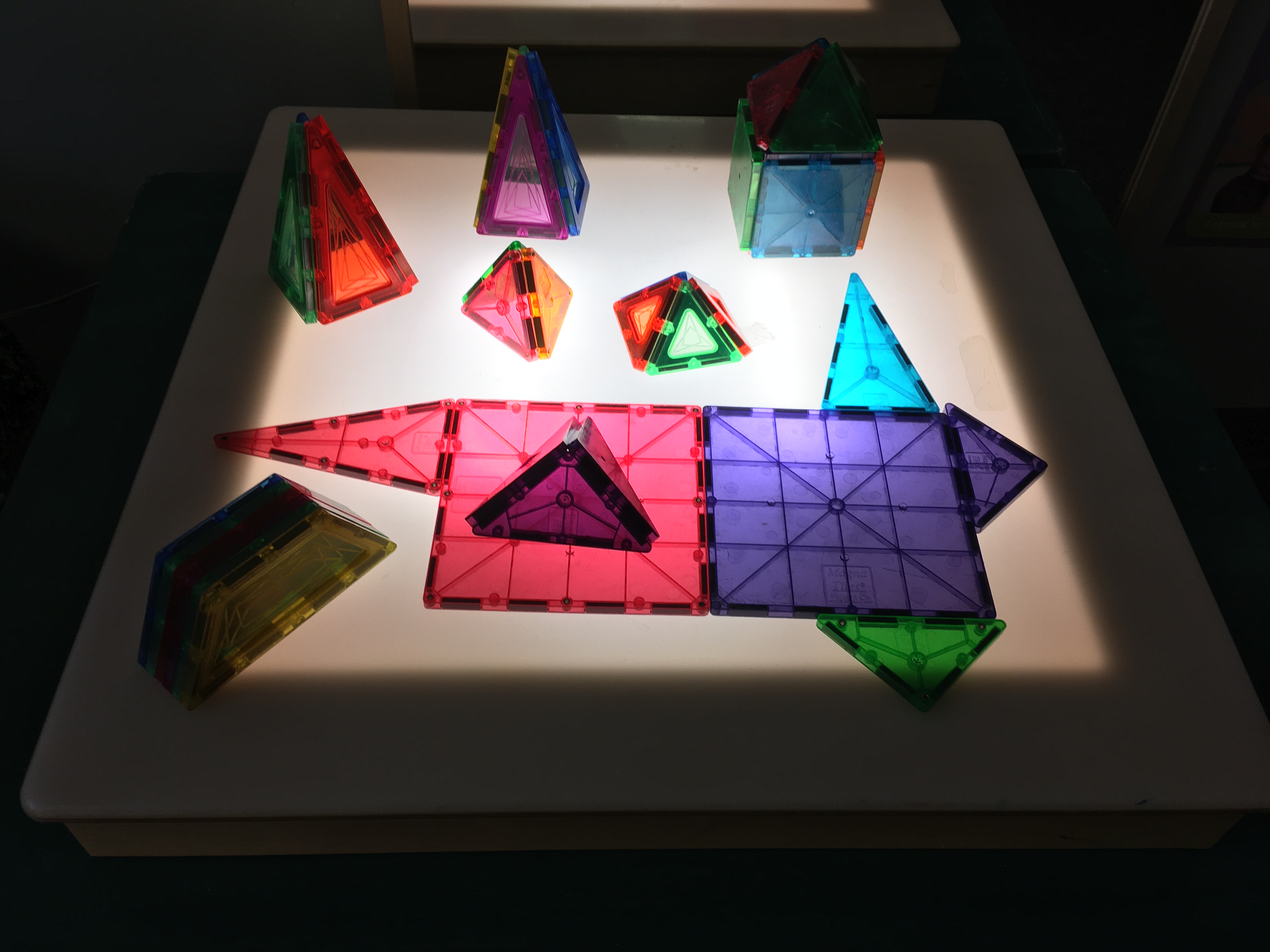
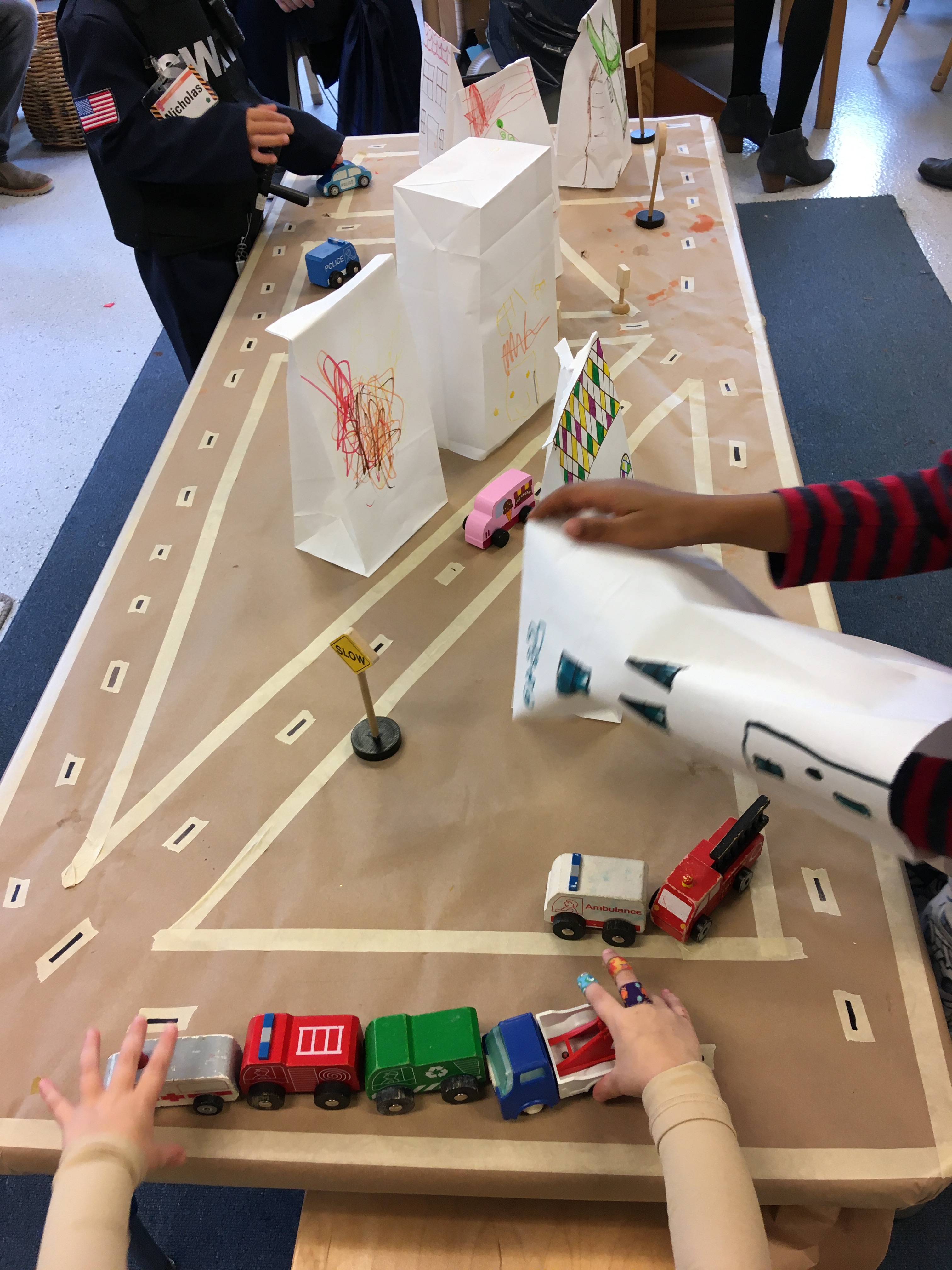
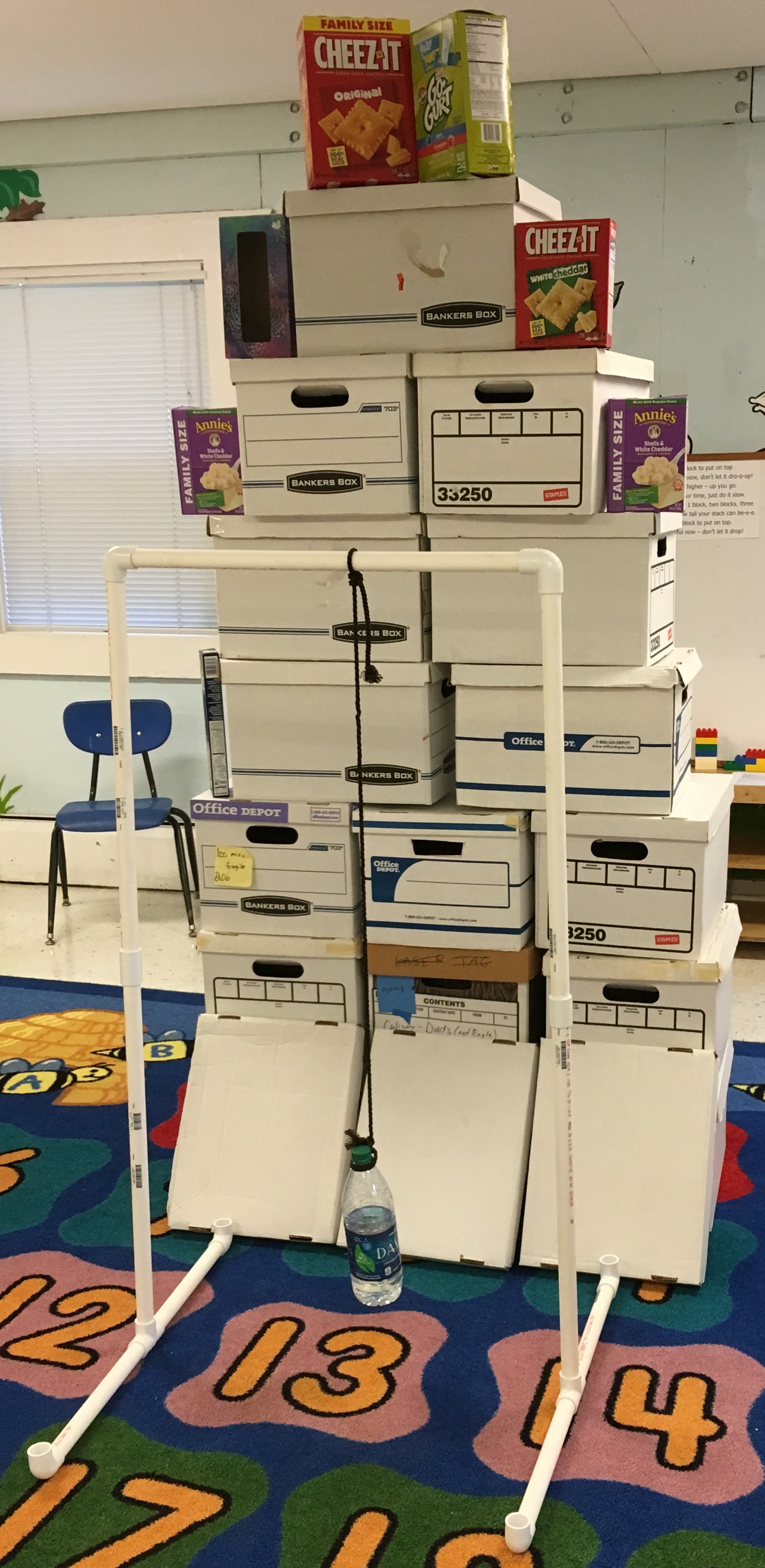
The Invitation to Play: the teachers may offer construction toys (like Legos, blocks, Magnatiles) or other creative building supplies (TP tubes, toothpicks and gum drops). Children are encouraged to use them to build any structure they choose. Teachers often mix in other supplies for inspiration: for example, add a toy giraffe and an elephant and children may build a zoo. Add cars and they’ll build roads and cities. Add pictures of famous buildings and they’ll build their representation of the Eiffel Tower. If one child wants to build a stable for her toy horses, and the other wants to make a spaceship, they have to negotiate how to share the blocks fairly.

When children build, they learn the basics of physics, spatial awareness, an understanding of what makes something stable. They learn about sizes and shapes and patterns – essential math skills. They problem solve and experience logical consequences that guide them in how to try again and build it better. They view themselves as competent creators.

Puzzles, shape sorters, manipulables

When a child puts a puzzle together or works with specially designed early learning materials, they learn important ideas about shapes, sizes, patterns, the relationship of the part to the whole, eye-hand coordination, small motor skills, and problem solving. However, many parents don’t buy many puzzles or pattern blocks, because they may be something a child just does a few times and masters. But at a preschool, they may have a whole cabinet full of spatial challenges for your child to explore.

Sensory Play and Play Dough

Sensory Play was once a staple of most preschools and many kindergartens. As public schools have shifted toward teaching academic skills that can be evaluated in standardized tests, sensory play is often phased out.

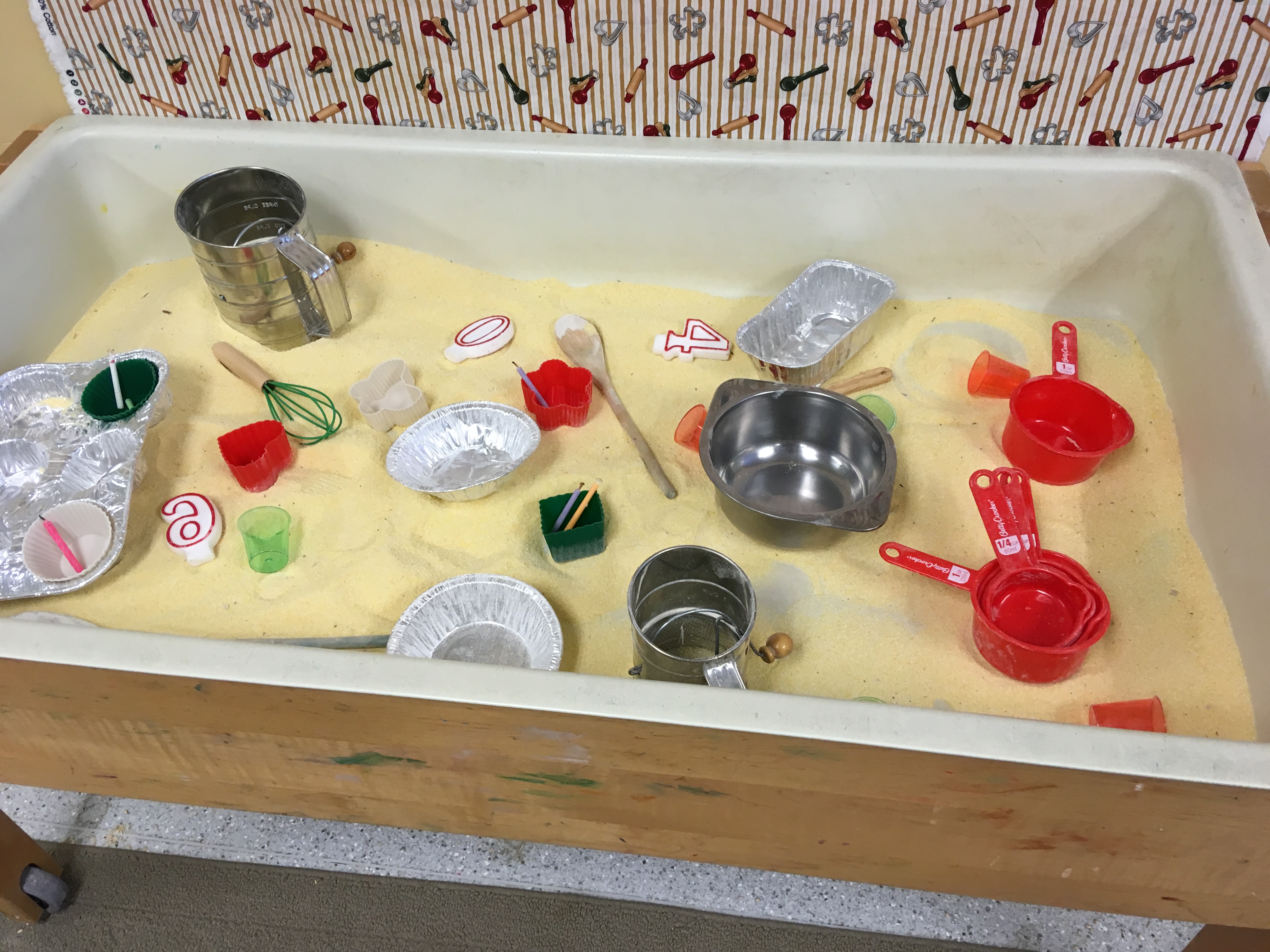
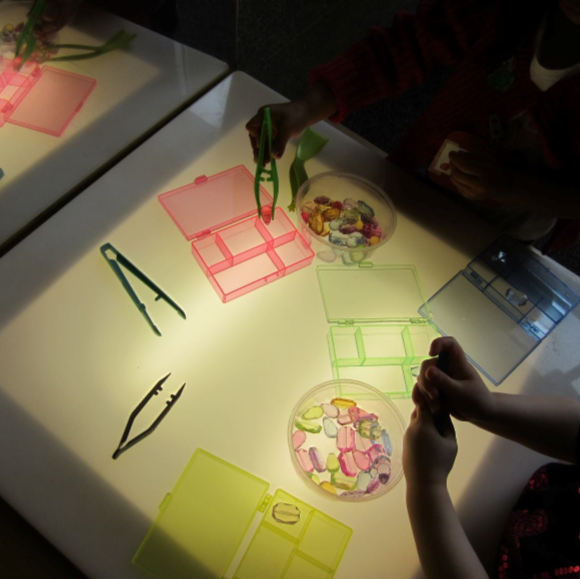
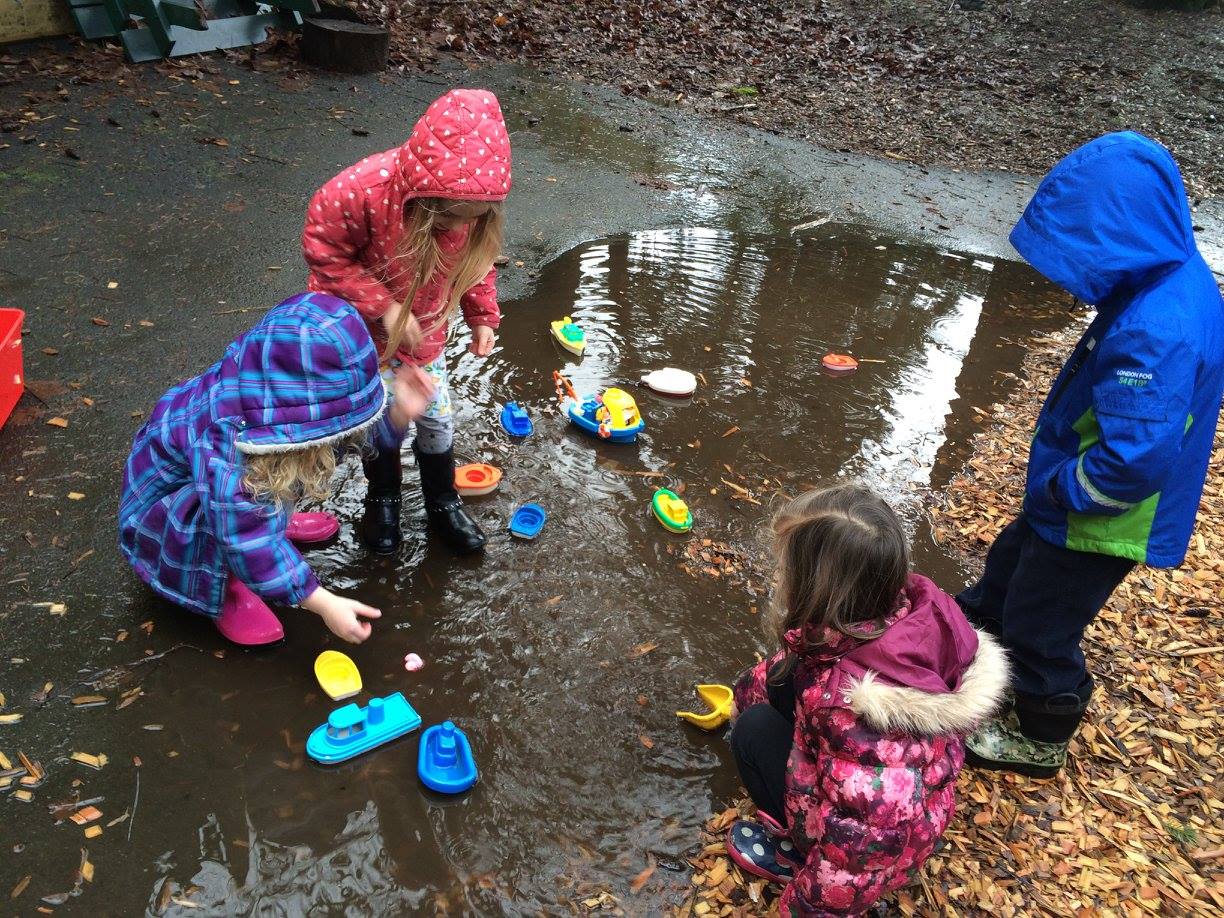
But when children play in a sandbox, or in a sensory bin full of rice or pompoms, or a water table, or on a light table, this multi-sensory experience can teach so many things. They build eye-hand coordination as they pour and scoop; learn concepts of empty and full, volume and weight – relevant to math; properties of solids and liquid in motion, that the amount of a substance remains the same even when the shape changes, and that some things sink and some things float (science!) They get comfortable with their hands being messy. (This is an important life skill – sometimes we all have to do messy things!)

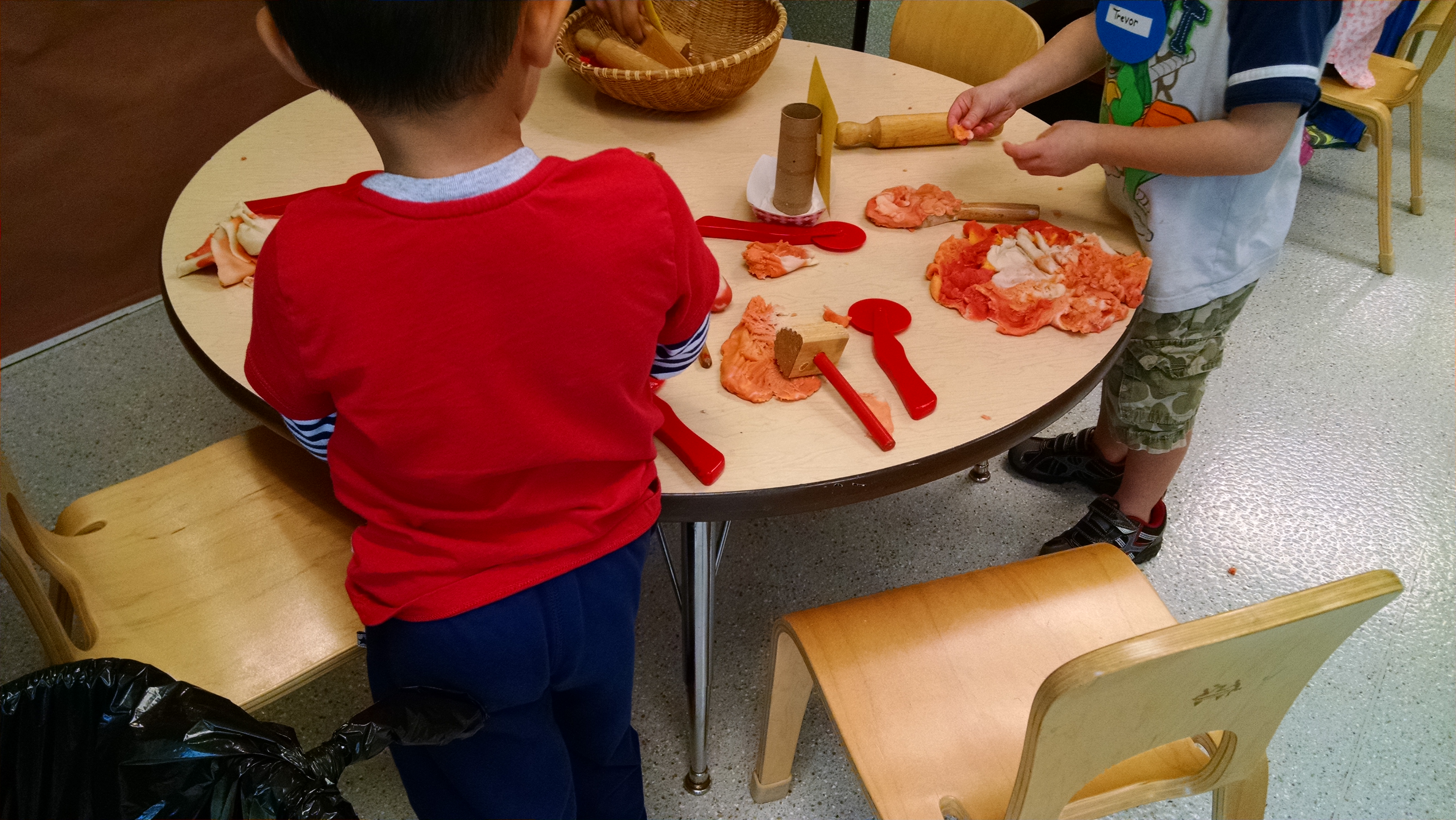
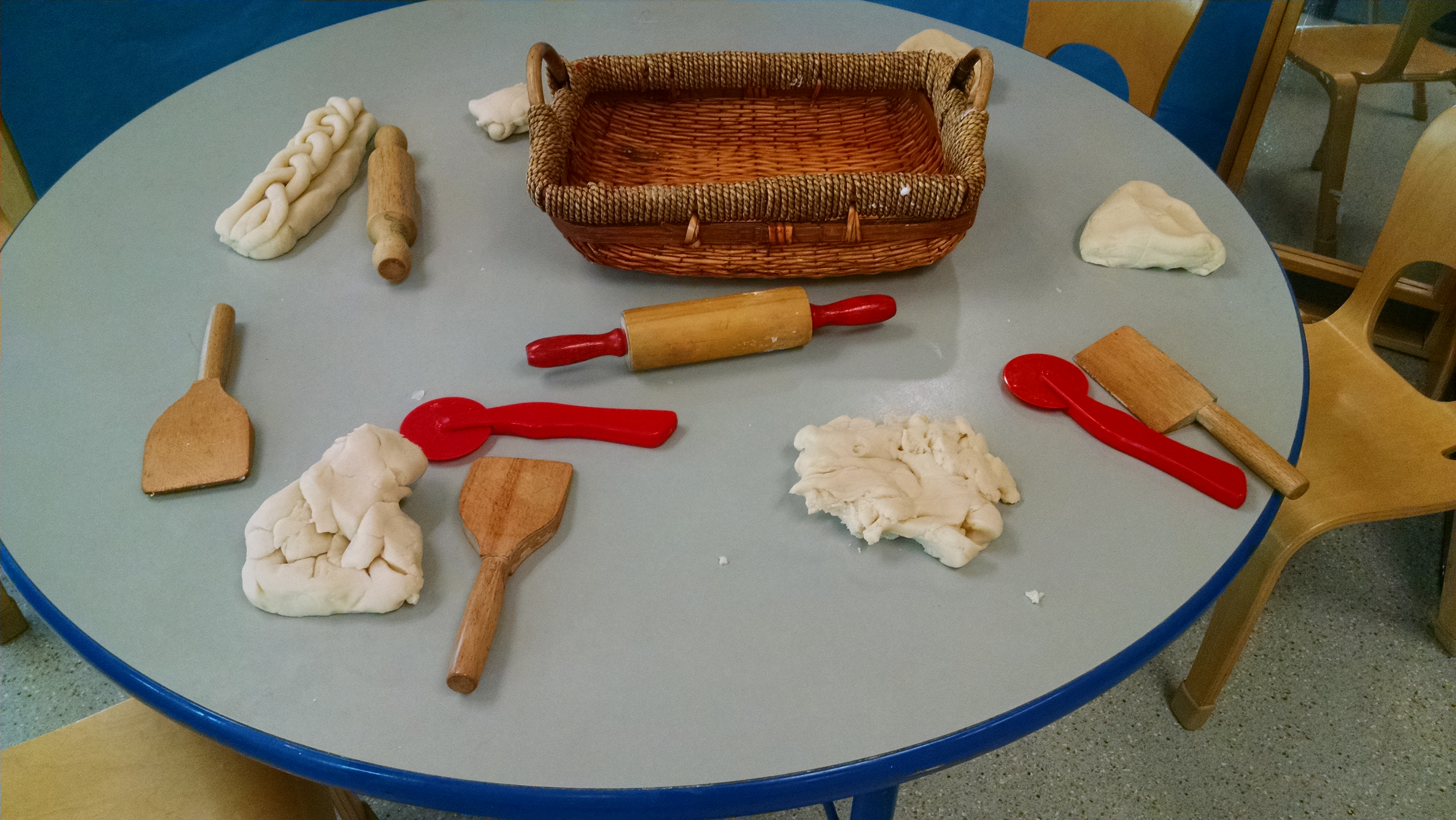
In the sensory tables, and with play-dough, they can explore how to use so many tools: tweezers, tongs, spoons, scoops, shovels, funnels, rolling pins, cookie cutters, egg beaters and whisks, pipettes and eye droppers, scales, measuring cups and spoons, potato mashers, pizza cutters…

Playdough also gives children the opportunity to

  • express feelings, squeezing and pounding
  • learn about negative and positive space when they cut out shapes with a cookie cutter (this helps with reading)
  • build finger muscles

Art Process / Writing Practice

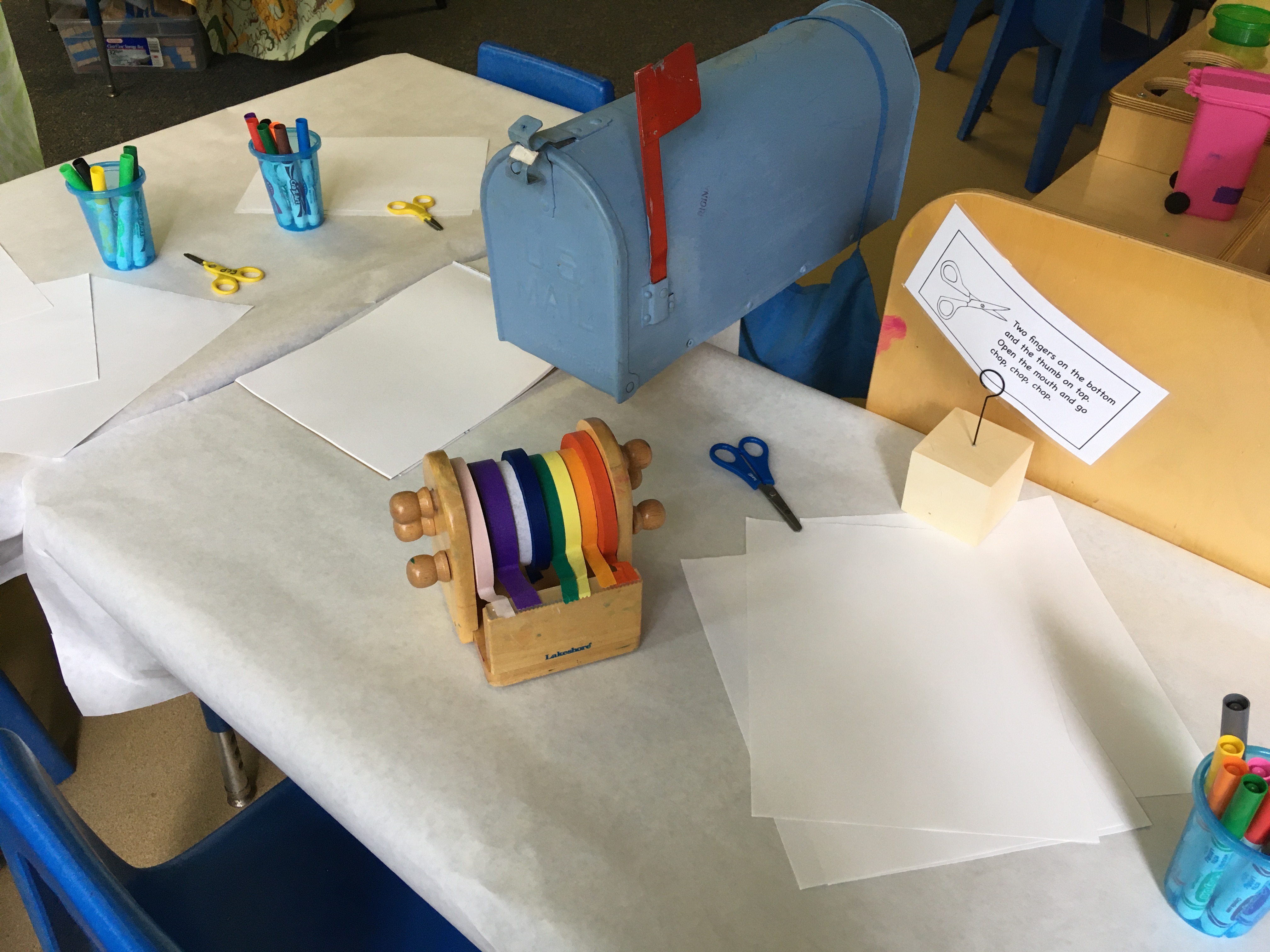
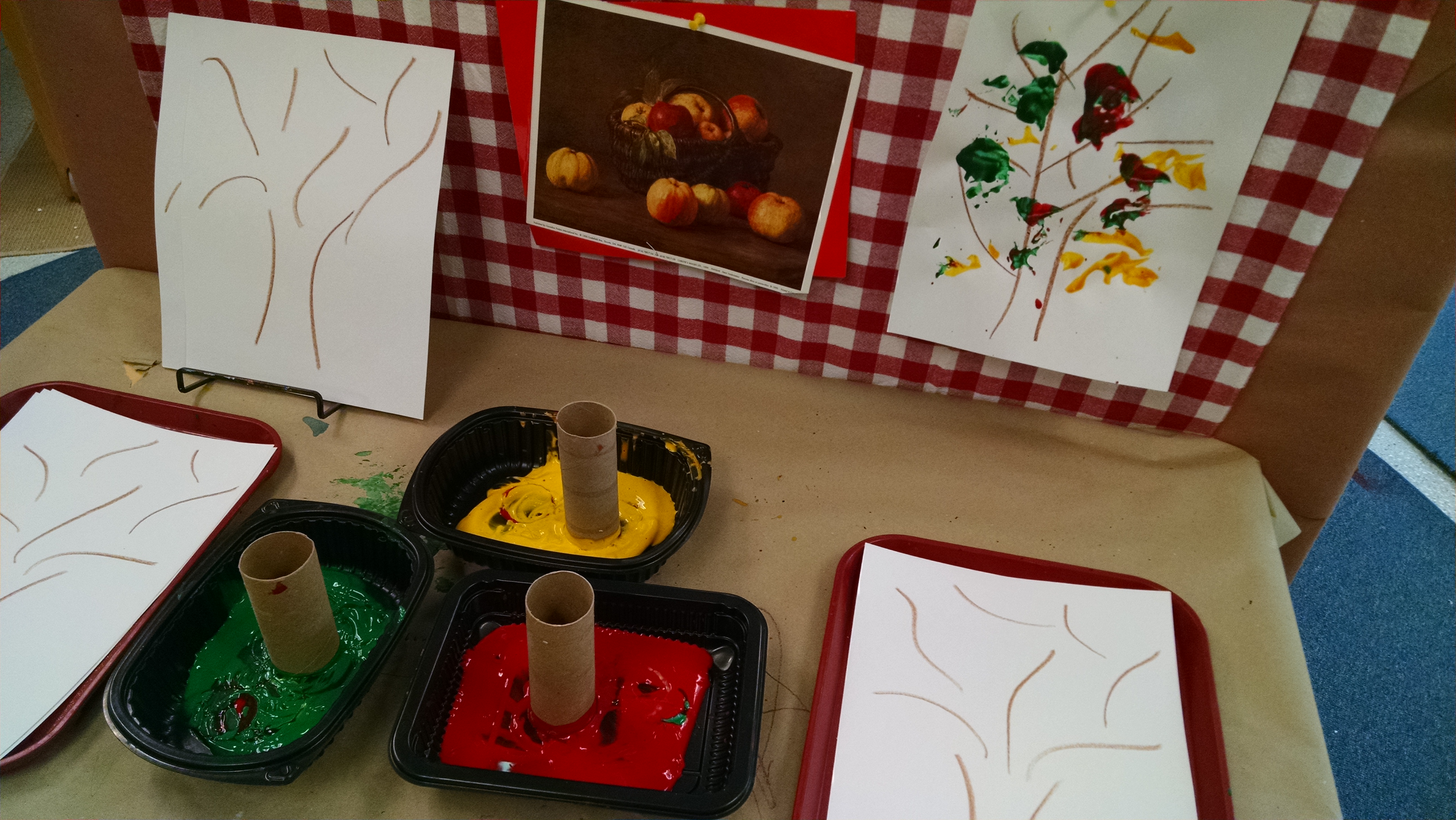
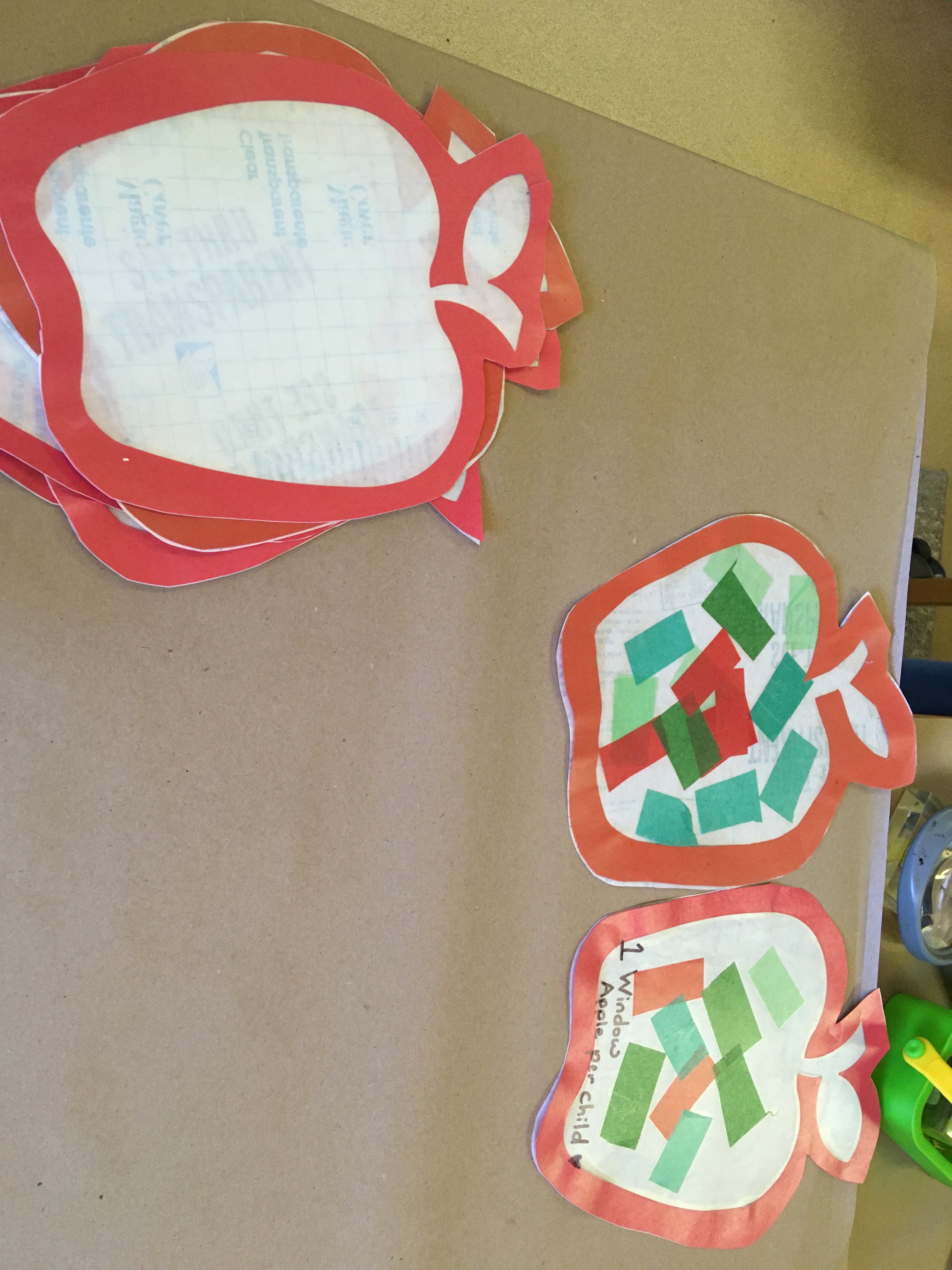
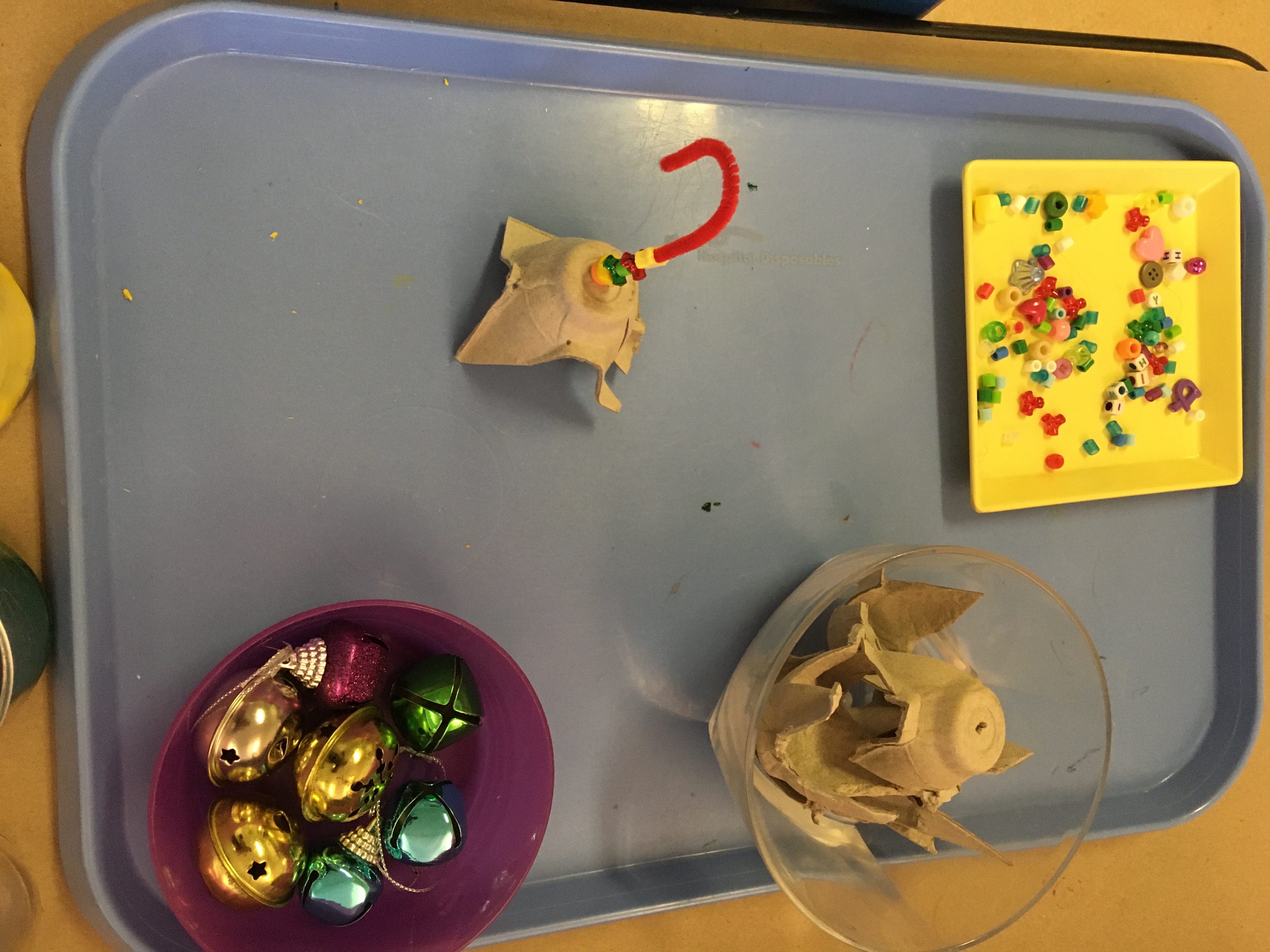
Preschools often have an easel set up every day, with various kinds of paints and various kinds of painting tools – brushes, rollers, sprayers, or sponges. Children are free to paint anything that they choose to. Many preschools have a “creation station” for collage, offering cardboard and paper for bases, glue and tape, and miscellaneous things to glue on: pompoms, googly eyes, plastic lids, tissue paper scraps, styrofoam popcorn, pretend jewels… almost anything! Many preschools have a writing station with office supplies – paper, markers, pencils, pencil sharpeners, staplers, hole punches, scissors, stickers, rubber stamps, envelopes and so on. Children can make cards for their parents, signs to support their pretend play, booklets, anything they choose. We also do wacky things like salad spinner painting or painting with cars or putting a paper plate on a record player and drawing as it goes round and round.

These are all process-based art activities. No one is dictating what they must create there or what the final product needs to be. It’s completely up to the child to envision something and to make it real.

The children learn how to use all the tools and all the media, they build their finger muscles and their pencil holds, they learn names of colors and how to mix new colors, they learn to recognize shapes and to create shapes, they learn about symmetry, balance, and design. The art is a creative outlet for expressing their feelings and learning that their ideas have value.

Art Projects and Crafts

In addition to art process, we also have projects. These are activities where the teacher creates a sample and puts out all the materials for kids to make a project similar to the sample. It’s up to the child whether they want to use the materials in that way or do something else with them. But we do encourage them to try re-creating some projects, because it gives them practice with following multi-step directions. It lets them practice close observation skills and learn how to imitate or re-create what they see. We can build new skills into these projects they can then apply elsewhere, such as a project where they practice cutting curvy or zigzag lines.

Cars and Trains / Doll Houses / Play Farms

We have toy trains, toy cars, bulldozers and more. Children learn how wheeled vehicles move through the world and what happens when they crash. They learn how things need to be pushed up hills, but going downhill, they go fast on their own (physics!). And, because these toys tend to be very popular with our active, high energy kids, they also often provide opportunities to practice sharing and conflict resolution!

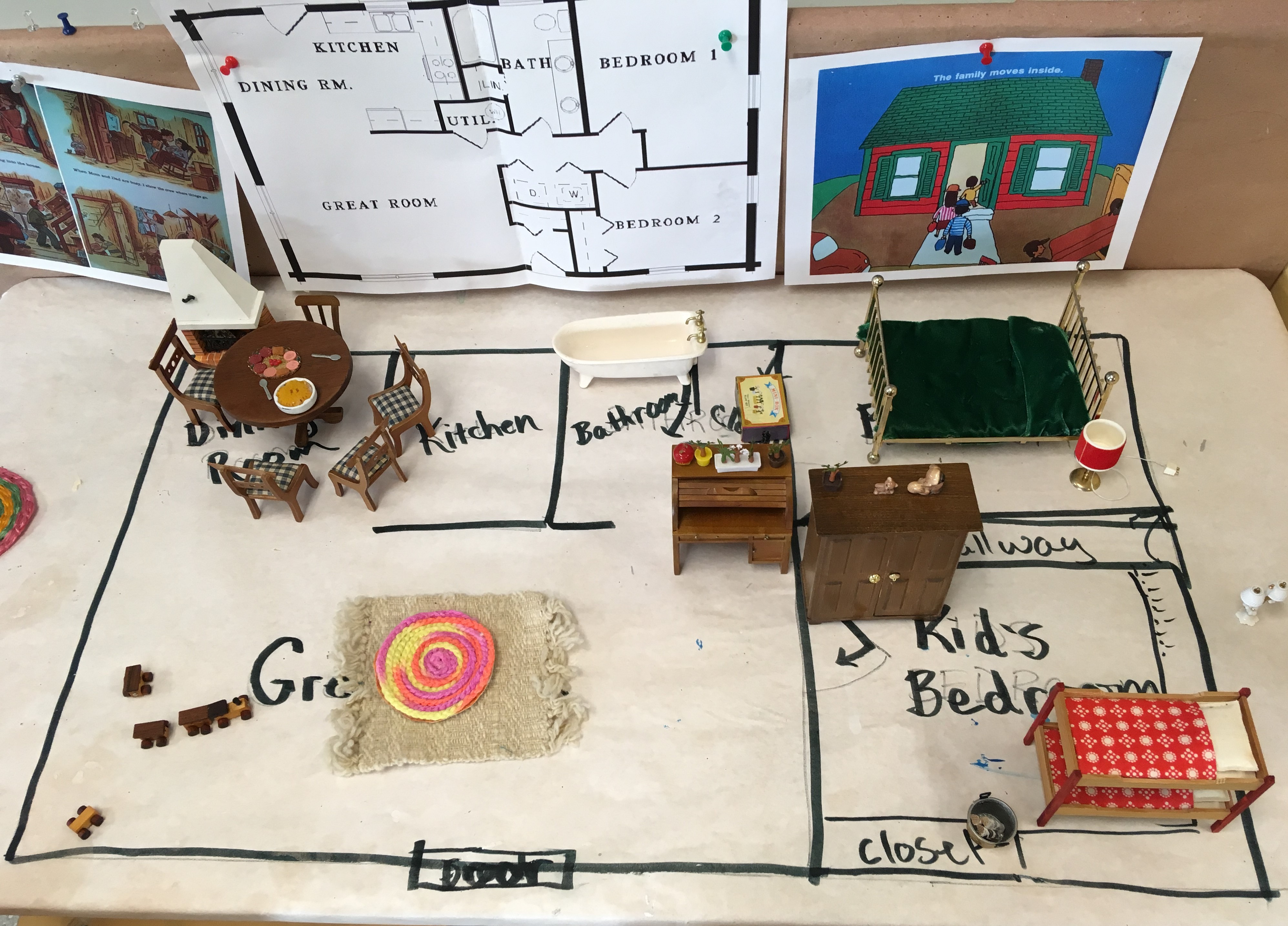
We have small dolls and doll house furniture. We have small plastic farm animals and farm equipment, woodland animals, and zoo animals. Kids may play with these and the cars on their own or they may be combined with the blocks, sensory bins, art supplies, pretend houses we made, and more. When children play with these small worlds, they do a lot of sorting (“I’ll put all the cows in this stall and all the horses in this stall”), counting (“I have 7 racecars that are ready for the race to begin”), and story-telling (“the lions were all roaring at the elephants”). They also co-create with other children – playing side by side sometimes, but then having their horse talk to the other horse, or their doll call the other’s doll to the table for food.

Dramatic Play

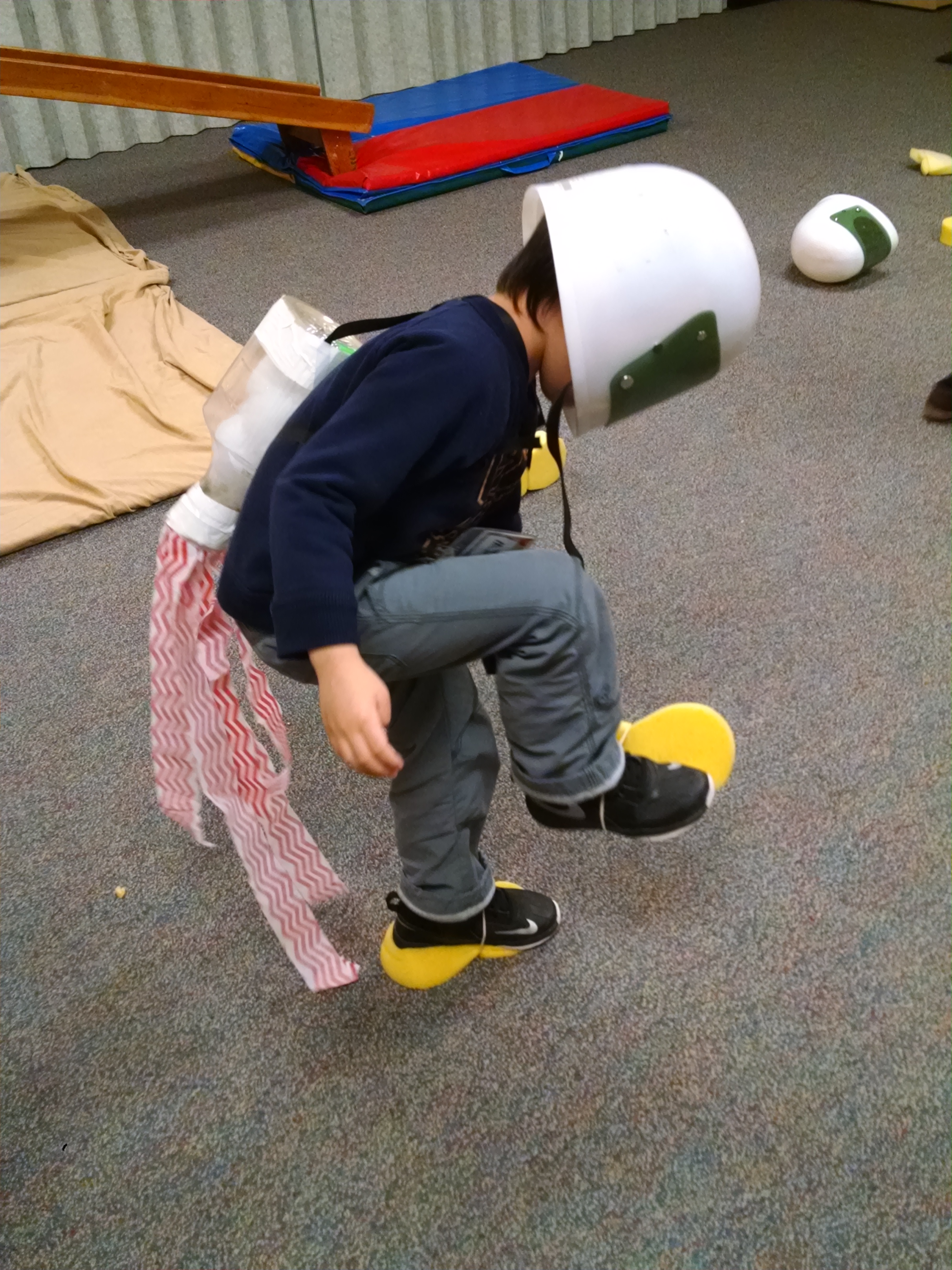
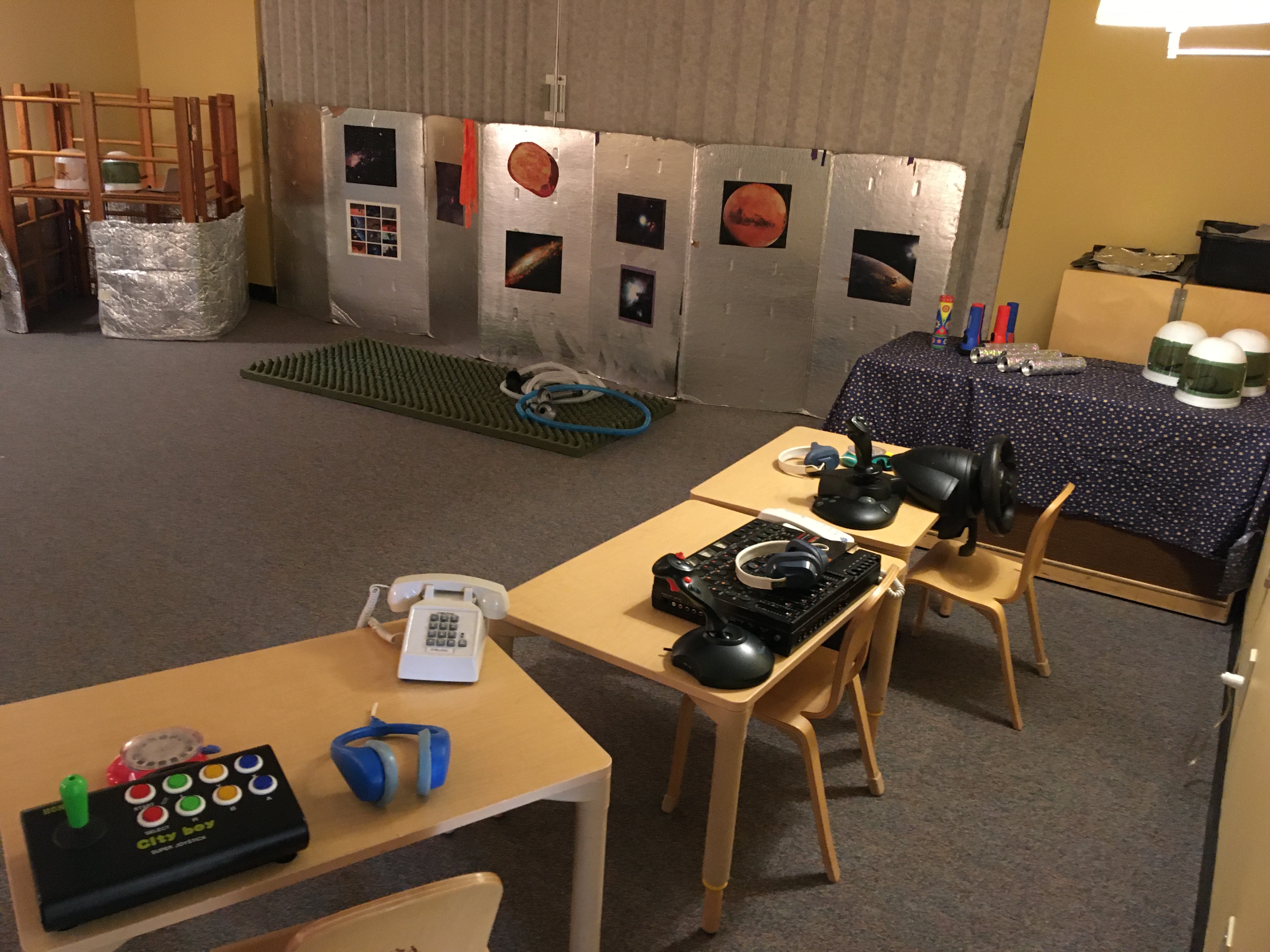
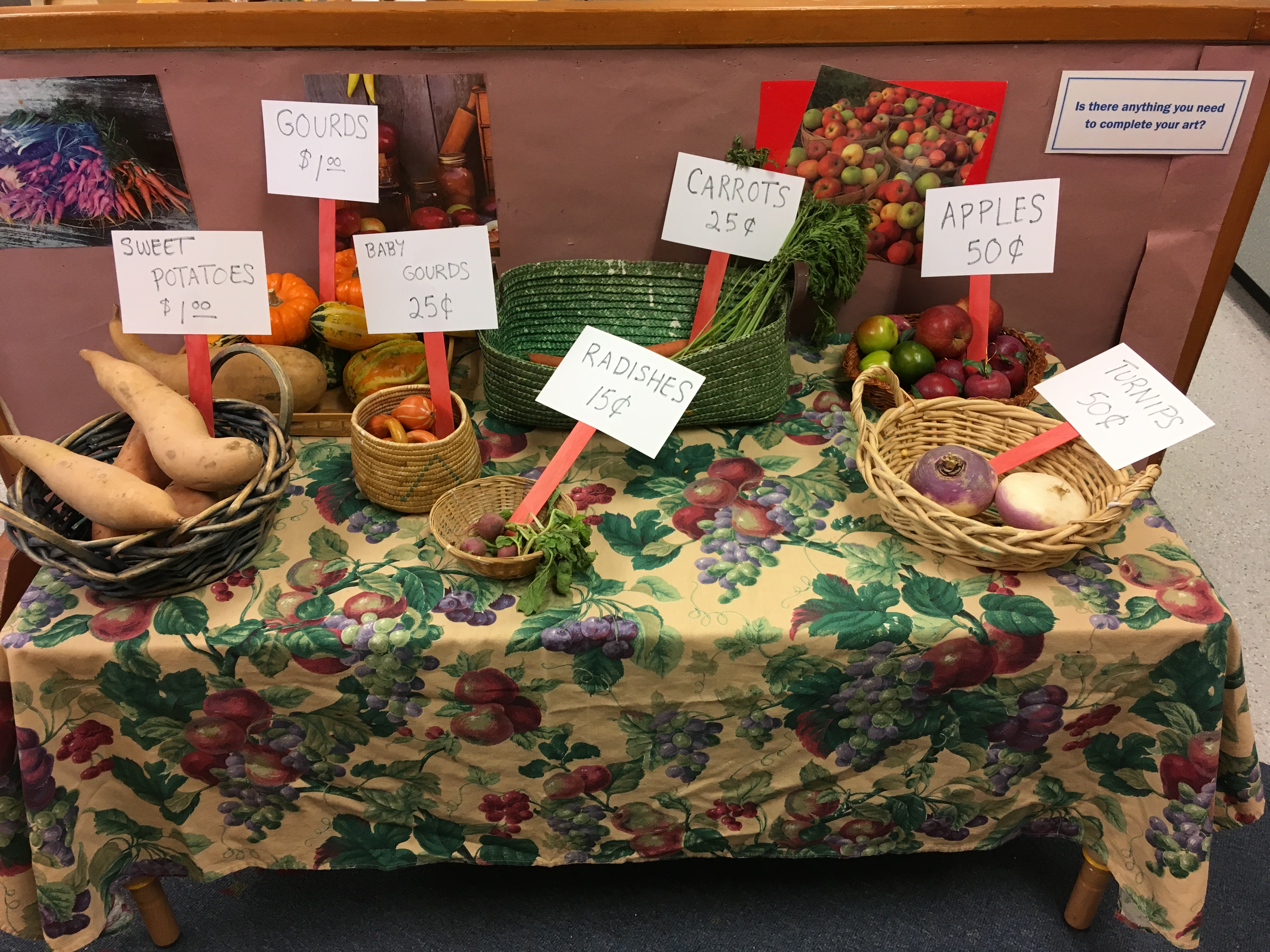
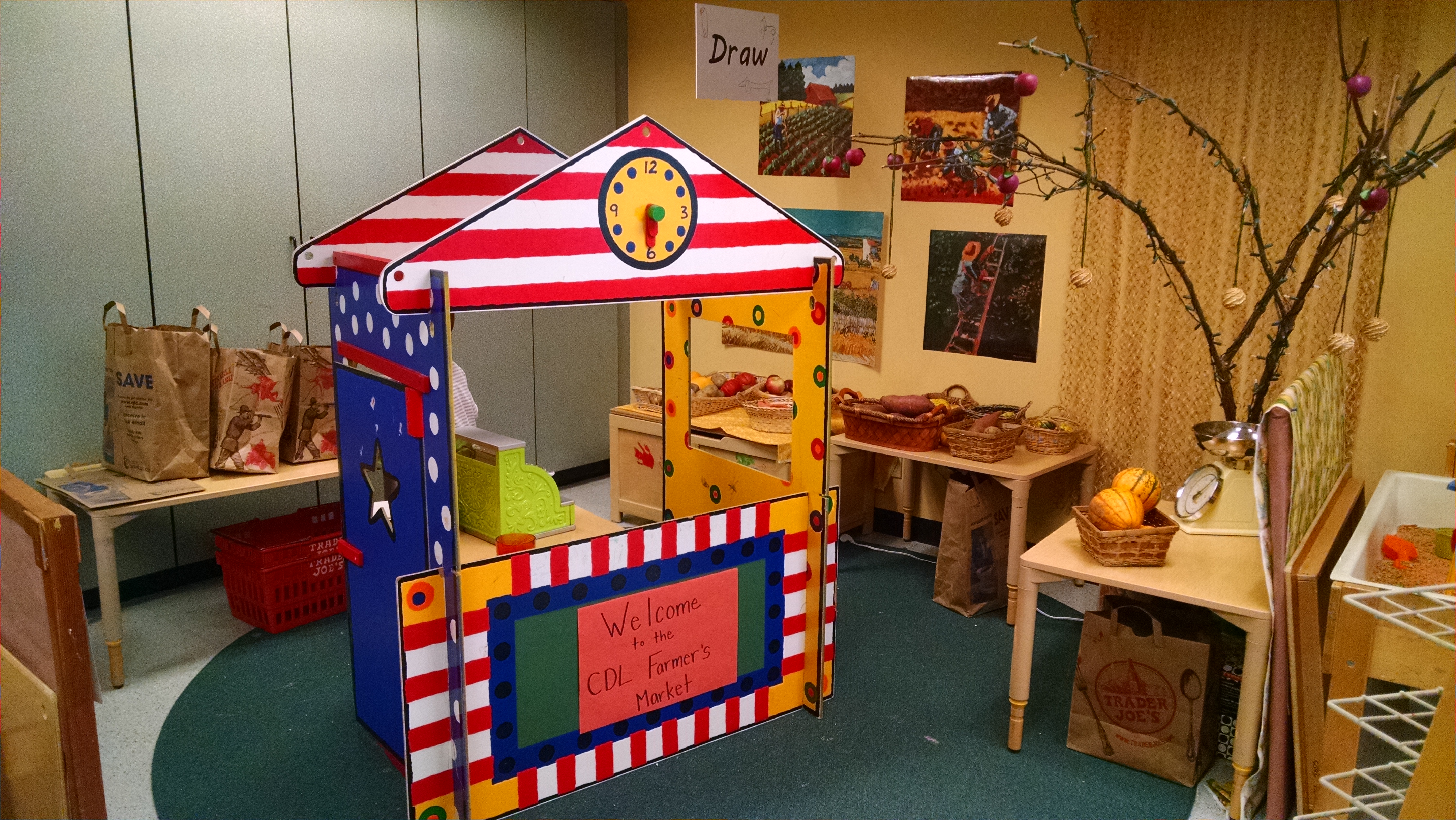
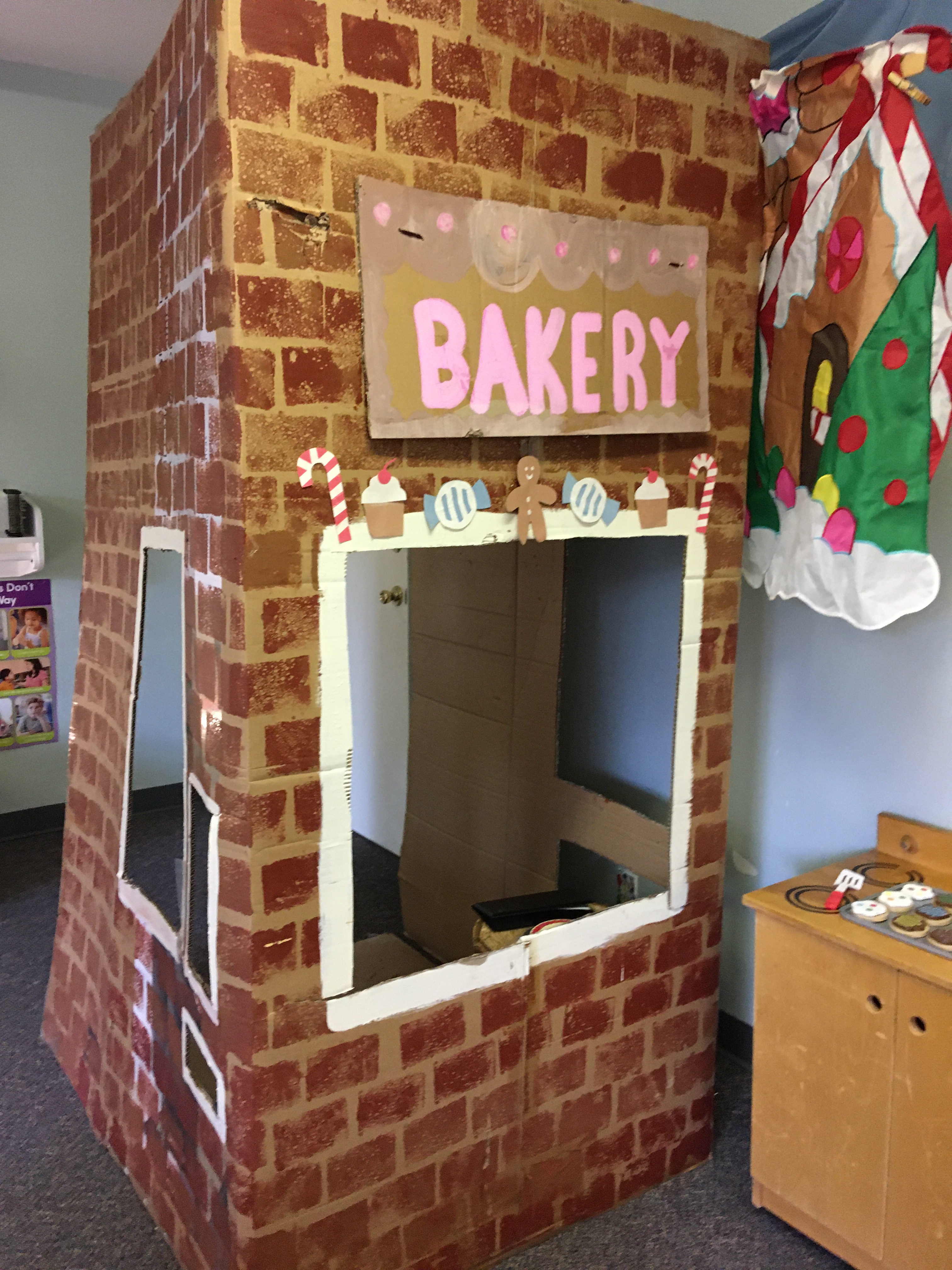
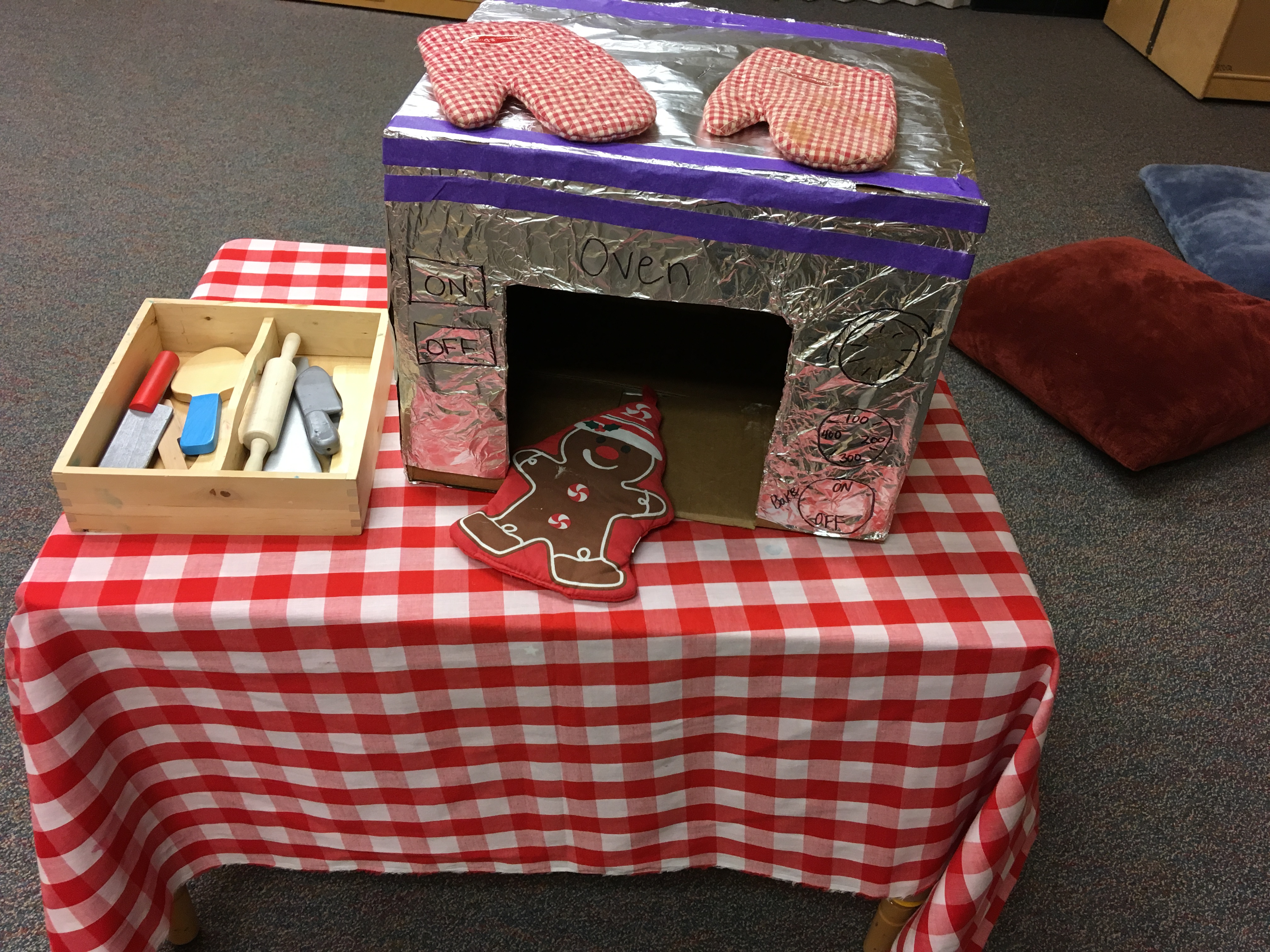
Most preschools have a play kitchen full of pretend food, dress-up clothes that allow children to play out many roles, plus baby dolls and stuffed animals to practice nurturing skills with. Many of those materials may be available every class during the year so children have lots of chances to explore them and use them in many ways. Teachers may also have special themes for dramatic play: maybe a farmer’s market in the fall, a gingerbread bakery in December, a valentine post office in February, or a spaceship and mission control.

With dramatic play, children learn to use their imagination, try on different roles, explore other cultures, imitate parenting behaviors they see in their lives, role play a variety of careers, and explore gender roles. Lots of complex language practice happens during pretend play. This area also builds social skills as they have to negotiate about which roles each child will play and what the story line will be.

Board Games and Active Games

Whether it’s Candyland, Bingo, Hide and Seek or Tag, all games offer practice at understanding and following rules, learning how we all get along better when we can agree to and follow the same rules, and learn how to be a good sport – winning with grace, and recovering from the disappointment of losing.

Books and Literacy

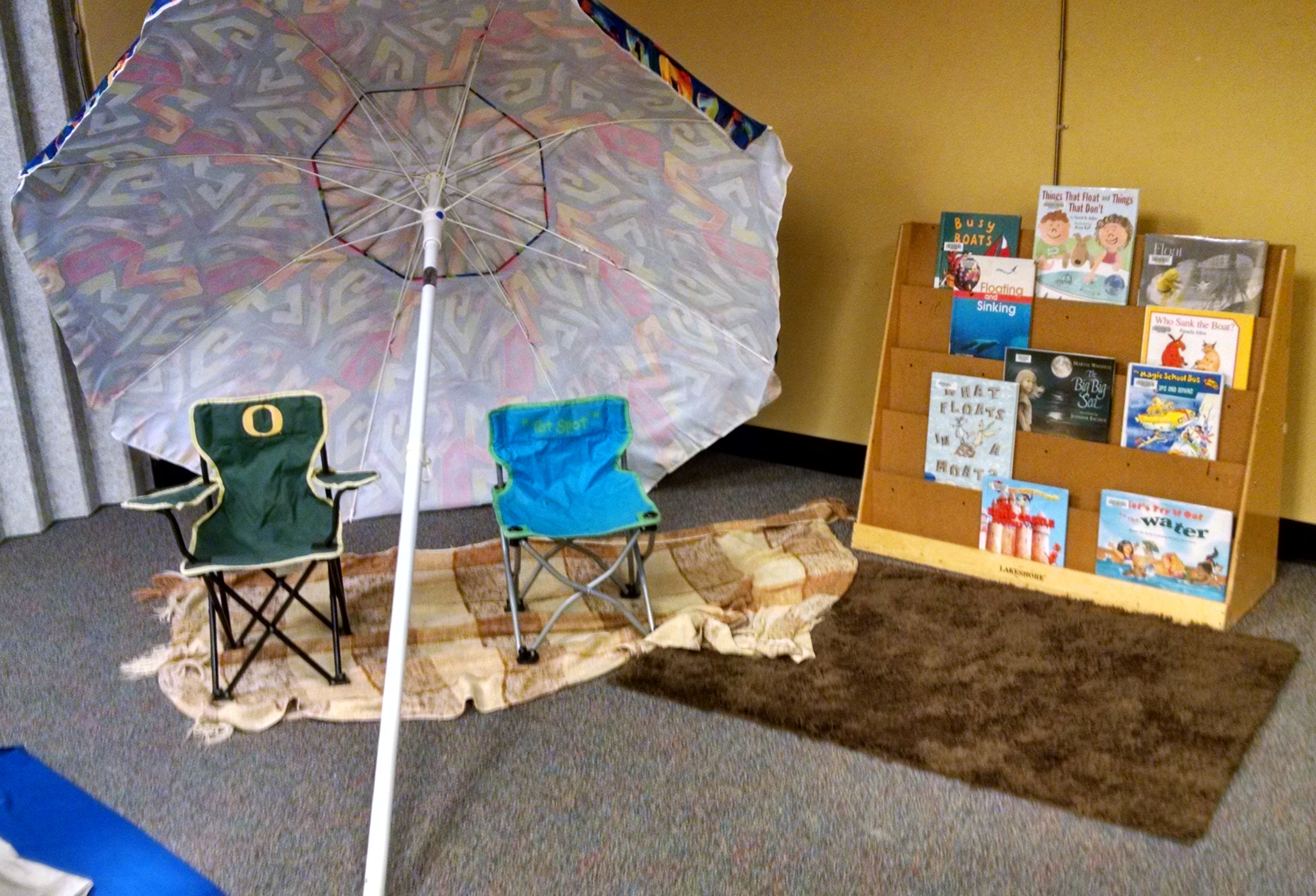
Stories are always available in a preschool classroom. Some schools (like Waldorf) use only oral storytelling, but in most, there are books available. They may be used during group time, but also available for independent exploration. Literacy practice may also be incorporated elsewhere: signs or menus in the pretend play area, books on CD to listen to, board games, and in art projects.

Children learn that letters on a page represent words – language written down, then learn to interpret pictures and to follow the development of ideas in the plot of a story. Most important, they see that learning to read is important and enjoyable.

Large Motor Activities / Outdoor Play

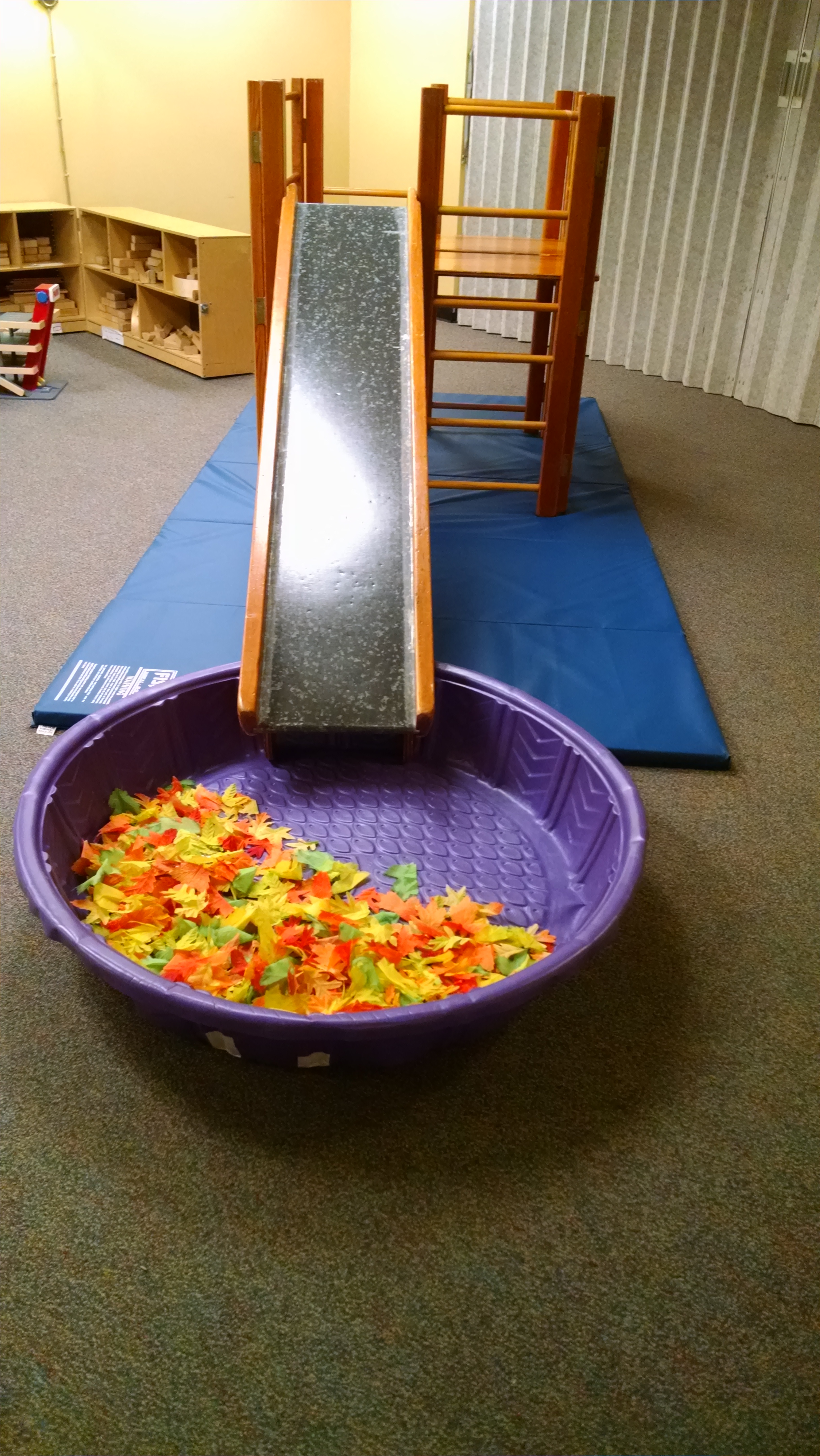
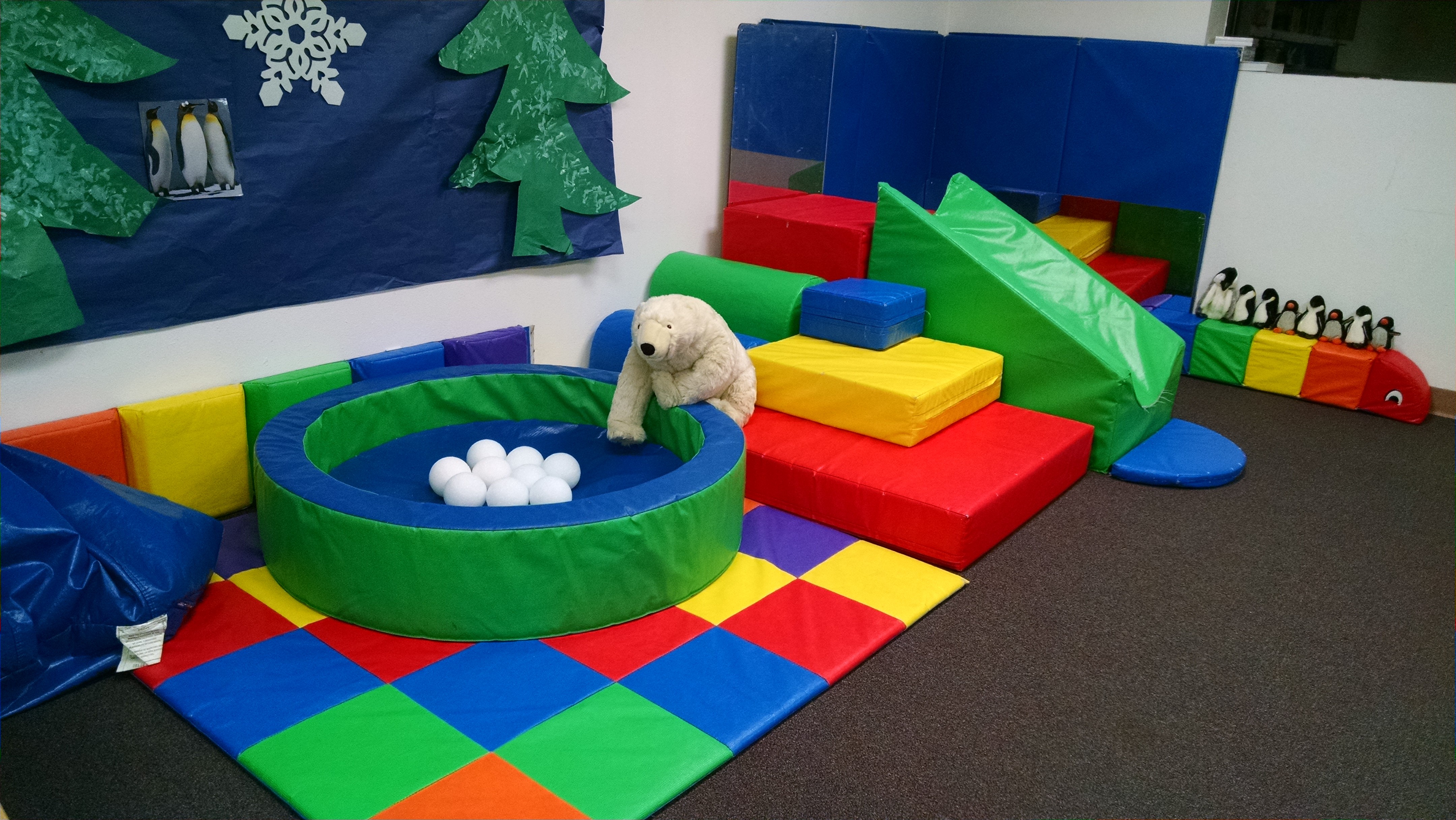
So much brain development happens in these early years, and children form the foundation of all the skills they need for a lifetime. This is especially true of motor skills. In addition to all the fine motor practice of puzzles, writing and playdough, preschools also offer lots of opportunity for large motor practice indoors and outdoors. Playing in the playground or on tumbling equipment indoors, throwing balls or throwing paper “snowballs”, digging in the sandbox or running on an ever-evolving obstacle course.

They are building physical strength, coordination and balance as they build all the key physical skills of running, jumping, climbing, and rolling. They learn to take some risks and be bold, while also learning when they need to be cautious, and learning to emotionally regulate through it all. There’s also important skills in taking turns on the slide, watching out for other people before moving, and moving around others carefully. As our kids ride trikes madly around the playground they’re learning skills they’ll need in driver’s ed someday!

Snack and Clean-Up Time

Snack time can always include practice at choosing and trying new foods, practice using silverware and table manners, learning to sit with others while eating, and practicing social conversation. Many preschools also involve the children in making their own simple snacks, which can include practice with cutting with a knife, stirring, spreading, sprinkling, measuring, and so on. Learning these life skills at an early age builds confidence and competence.

Children also learn confidence and competence as they help out with clean-up time. They may help put all the toys away, wipe tables, sweep the floor, put lids back on markers, and fold up the tumbling mats. This teaches life skills, teaches them that they can make meaningful contributions to a community, and motivates them not to make too much of a mess in the first place! But also, putting away toys is a great exercise in sorting things into categories (a key science skill) which requires noticing details, observing similarities and differences in object, concepts of color, size, and shape.

Check out the overview of play-based preschools.