Tag Archives: Parenting

What do we know about spanking?

We know it can work to increase compliance in the moment.

Parents who use physical punishment often experience that result. Their child misbehaves, then they spank, then the child stops misbehaving. It’s very effective in the short term, so the parents continue to use it. And some parents discover that a tiny swat on the butt is not always effective, but hitting hard enough to inflict pain is really good at eradicating behavior over the long run.

But, physical discipline can have other unintended effects in the long-run.

Of course many individuals who were spanked as children turn out just fine. However, research shows that on average, people who were spanked are more likely to be aggressive, less verbal, more likely to abuse substances, more likely to experience anxiety, depression, and other mental illnesses, more likely to be obese and have cardiovascular disease, and more likely to abuse their spouse and children (they’ve learned big people can hurt smaller people). They have less gray matter development in their brains.

Read this excellent infographic / article on the Psychology of Spanking to learn more.

spank

Spanking and Brain Science

From studying brain development, we know: When children are happy and feel safe, they learn, grow, explore and their brains develop. When they are stressed or frightened, their brain goes into survival mode. They can definitely earn what not to do.  (i.e. when I do this behavior, my parent hurts me, so I shouldn’t do that behavior again.) But they’re not learning much else. Like what TO DO. (Or how to read, how to throw a ball, how to eat neatly… whatever it is the parent hopes they will learn soon. The survival mode brain doesn’t care about any of those things) Daniel Siegel has written about this neurological effect in The Whole Brain Child and No-Drama Discipline. Watch a video about it here.

Alternatives to Physical Punishment

85% of parents say they would rather not spank if they had a discipline alternative they believe would work. You can read my take on positive discipline here, or advice from the CDC here, or follow the recommendations in the Psychology of Spanking article [excerpts below…]

1) Develop a positive, supportive, loving relationship between parent and child:

  • Maintain a positive emotional tone in the home.
  • Pay attention to the child to increase positive behavior…
  • Be consistent in daily activities to reduce resistance and make negative experiences less stressful…
  • Be flexible by listening, negotiation, and involving the child in decision-making. This has been associated with long- term enhancement in moral judgment.

2) Use positive reinforcement strategies to increase desired behaviors…

  • Listen carefully and help them learn to use words to express their feelings.
  • Provide children with opportunities to make choices and to understand the consequences of their choice.
  • Reinforce desirable behaviors with frequent praise and ignore trivial misdeeds…

3) Remove reinforcements or apply punishment to reduce or eliminate undesired behaviors.

  • Be consistent with… removal of privileges (increases compliance from 25% to 80%)
  • Be clear about what the bad behavior is and what the consequences will be.
  • Deliver instruction and correction calmly and with empathy.
  • Provide a strong and immediate consequence when the bad behavior first occurs…
  • Give a reason for the consequence. This helps children learn appropriate behavior

Learn lots more options for discipline tools that help you to teach your child how to be a good person – which should be the final goal of disciplining a child – in the Discipline Toolbox.
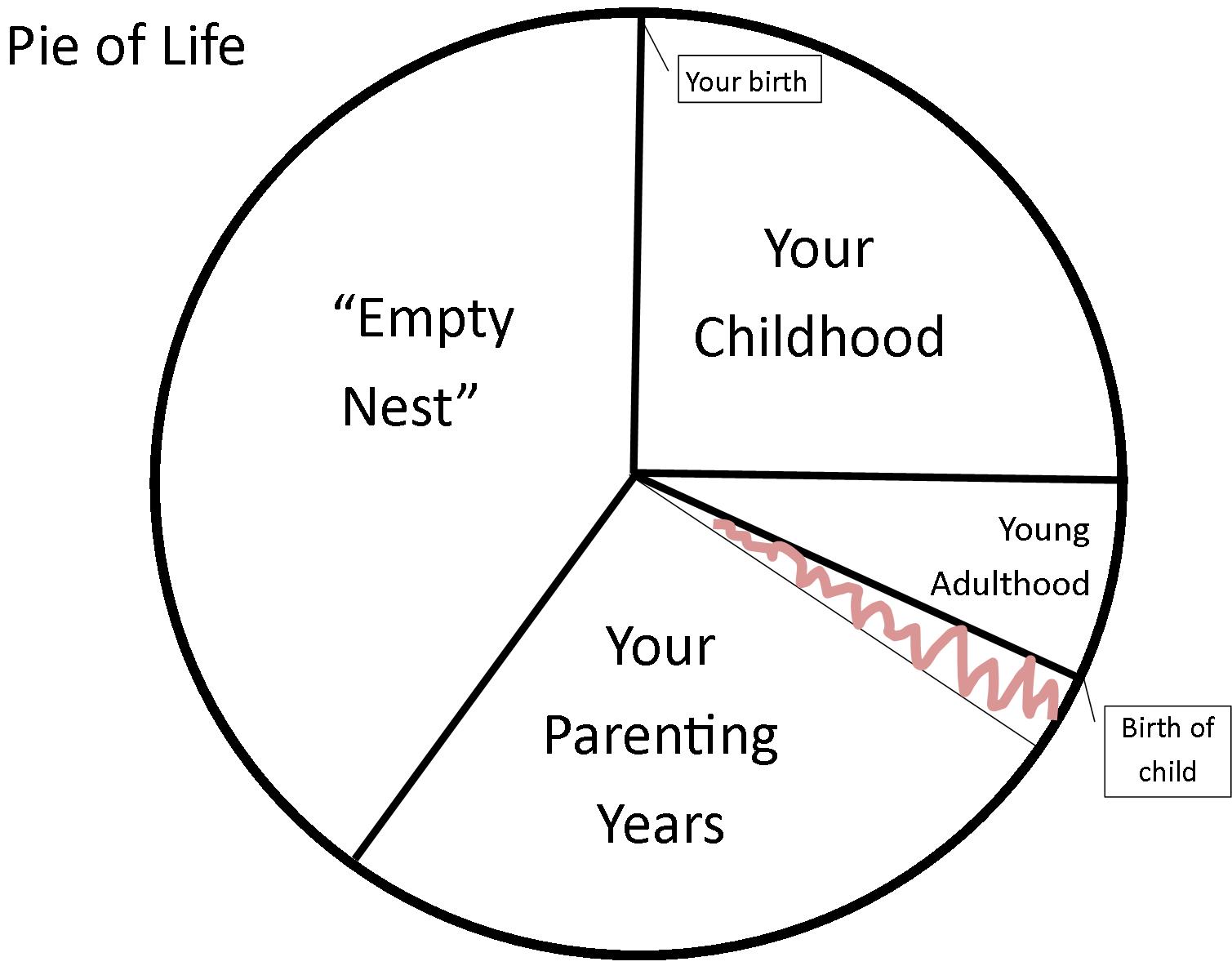
Pie of Life: Is your life in balance?

pieThis week’s theme at my class has been Work-Life balance and Self Care. As parents of young children, we juggle a lot of responsibilities: caring for children, keeping up on housework, finances, relationship with our partner, and so on.

If you’re a stay-at-home parent, it’s also easy to feel overwhelmed by the never-ending drudgery of child care tasks (time to change another diaper… wash another bottle…), to long for adult conversation, to feel like your brain is turning to mush, and to feel like your personal identity is getting lost in your role of mom.

If you work outside the home, you’re also juggling all your work commitments and responsibilities to your co-workers. It’s easy to feel like you’re not managing it all – you may feel like you’re doing a crappy job at work or at home as a parent or both.

Is balance possible for parents of young children?

Some would say yes. I do know plenty of parents who are feeling pretty balanced. Actually, I’m feeling pretty balanced most of the time.

But many parents find it impossible to feel like they’re meeting all their responsibilities and getting what they want. Some of those parents feel like maybe that’s OK. That this is a short period in their life, and it’s hard, but in the long run of their life, it will all balance out. At the top of this post is a picture of the “Pie of Life.” This is taken from an idea by Ann Keppler, one of my co-authors on Pregnancy, Childbirth, and the Newborn. Imagine this pie represents your life – 80 or so years of life. It’s divided into your childhood, your time before children, your time with children in the home, and your empty nest years. See the little tiny slice that’s shaded pink? That’s your child’s life birth to age 3.

This time of life that seems all-consuming and overwhelming is just so short in the big picture of life. I’m not going to be Pollyanna on you and say “Savor these years – they’re so short, and before you know it you’ll miss them…” That’s probably true. But I also know that sometimes in the moment, it’s just HARD to parent a little one. I totally get that. But maybe it still helps to get this perspective sometimes, or to remember phrases like “This too shall pass.”

But in the moment, how do you make it feel better and more manageable now?

How do we start to find more balance?

First, get a good sense of what your life is really like now. I recommend this pie exercise where you examine where you currently spend your time and energy, and where you would ideally spend your time and energy. Divide up the two pies into all the things you need to do for yourself and others, and all the things you want to do for yourself and others. Compare them. If your current pie is pretty close to your ideal pie, you’re in good shape! If they’re very different, then you can think about what you want to do to bring them more into alignment.

If you’re noticing that you don’t make any time at all to tend to your own needs, read about Making Time for Self-Care. If you have a hard time giving yourself “permission” for self-care, check out this article on living a balanced life. If you’re feeling guilty about work taking you away from parenting, check out this article and this one.

If there are pieces in your “ideal” pie that either don’t exist on your current pie, or are smaller than they need to be, think about how you’ll make the time and space for more of that in your life. Sometimes it’s a matter of deciding it’s important to you, committing to it, and putting it on the calendar. Schedule time to relax! If there are chores that nag at you that you never quite get done, schedule them. One of the joys of scheduling chores is that instead of fretting all week about the fact that X needs to get done, you say on all the other days “I don’t need to worry about X today, because I know it will get taken care of on Tuesday.”

Prioritizing what most nurtures you

If we have limited time for self-care, we want to spend it on the things that will help the most. It’s worth taking a few minutes to figure out what those things are!

I want you to think of the things that nourish you and make you feel that you have some control over your life, and the freedom to do things you enjoy. It may be helpful to think about it this way: are there things you miss from your life before children – things you wish you could still do, but can’t figure out how to do while caring for your child’s needs? (These might be big things, or might be little things that wouldn’t seem important to others, like “I wish I could read a Sunday paper without interruption.”)

  • Make a list of four or more things they want to do (e.g. “I want to start exercising daily, I want to go on a date, I want to get 8 hours of sleep, I want to get together with my girlfriends. I want to read for 15 minutes a day.”)
  • Now compare them to each other – if you had to choose between exercise and a date, which would you choose? Whichever one you rated higher, then compare it to the next thing on the list: if you had to choose between a date and 8 hours of sleep, which would you choose? And so on, down your list, always comparing your current top choice to the next thing on the list. When you’re done, you’ll know which thing you most want to do.

Now you just need to commit to making it happen. And, if needed, committing to asking for help to make it happen.


Your Unique Child

Each September, as I begin a new parent-toddler class, one of our first parent education discussions is: “Your Unique Child: the Influence of Temperament, Gender, and Learning Styles on How you Parent Each Child.”

I start there, because I know that the parents in the class are looking around the room and comparing their child to the other children, and often wondering/worrying about whether their child is “behind” or if they are doing a good job as a parent.

I want them to realize that every child is a unique individual, parented by unique individuals, in unique settings. Although we should be aware of developmental milestones – the age at which the average child gains a skill, the reality is that there is huge variation in individuals.

Here are just some ideas to help you understand, and support, your unique child.

  • Children are born with distinct personalities. It is absolutely worth consdering ideas like Temperament, Learning Style / Multiple Intelligences and Gender and Introvert / Extrovert to help us better understand them.
  • However, we don’t want to “label” our children (as “the shy one” or “the wild one” or “the musician”) because that can them limit our expectations for them, which limits their ability to grow and develop into all that they are.
  • There are not good or bad temperaments. But, there are goodness of fit, and badness of fit. A high activity child has “goodness of fit” on the playground, but not in the library. A very regular, routine-oriented child might “fit” well with a similar parent, but not so well with the free-spirited parent.
  • It’s good to know your children’s strengths, so you can give them plenty of experiences that let them use those strengths to build their confidence.
  • It’s also good to know what your child struggles with. On a good day, we may gently push their comfort zones to encourage growth in those areas. But, on a day when we’re tired and they’re tired, or we’re away from home, it may be easiest to adapt to their temperament accommodating how we need to in order to make it through the day. (So, our sensitive child may need a quiet day at home. Our active child may need a day running at the park. Our routines kid needs to bring routines from home wherever he goes.)

Lots more resources on temperament listed here.

Why “More Good Days”

Why More Good Days? Because it’s a theme that weaves throughout my teaching in various ways:

  • When working with pregnant people and discussing nutrition, exercise, and so on, I say “I’m going to tell you all the ideas I know of for increasing your chances of a healthy pregnancy and birth, but I’m not telling you that you have to do every one of these things every day! I’m giving ideas, and you’ll do as many of them as you can make work in your life. And some days you’ll eat perfectly, and other days you’ll grab beef jerky and raisins at the convenience store because that’s the only way you can get “lunch” that day. It’s OK. Babies are resilient – they won’t suffer for a few bad days here and there. We just shoot for more good days than bad… the more healthy choices the better.”
  • When teaching breastfeeding, if people raise concerns about not “succeeding” at breastfeeding, I say “I’m going to give you all the ideas I can to help increase your chance of reaching your goals, and I’m going to give you lots of resources for where you can go for help, and you’re going to do the best you can. Hopefully you reach or exceed your goals for how long you nurse baby. But sometimes life happens, and breastfeeding doesn’t turn out as someone had hoped. I want you to remember that even a few days of breastmilk has health benefits for baby, and the more days of breastfeeding they get, the better for them and for you. So focus on those good days and how much good you did for baby on those days.”
  • When teaching parents caring for children of any age, I say “You’re not going to be a perfect parents. None of us are. There will be days (or at least moments each day) when you feel like a fabulous parent – like you’re really succeeding at this whole parenting gig! And there will be days when you’re a crappy parent. Days when you find yourself saying or doing something that you never thought you’d say or do. Days when you just really feel like you screwed up. When you have those days – or those moments each and every day – keep moving on. Seek out advice and new ideas on how to do better, seek out support for yourself on this path, and learn about what resources there are for you and your child. You’ll continue trying to do the best you can every day, and you hope that in the long run, when you look back, you’ll say that there have been more good days than bad.”
  • When working with parents of teenagers who have been battling their kids, I say “how do you hold limits firmly yet compassionately? Yesterday, you tell me you were yelling at your kid… can you go back to them and say “I’m sorry I yelled – that was not appropriate. However, your behavior was a problem and you do need to do better. How can we work together to improve things?”

So, really “more good days” is about finding a balance. Doing the best you can. Finding more information, support and resources to help you do better. And forgiving yourself for the bad days.

I also think that part of what determines whether something is a ‘good day’ or a ‘bad day’ is our attitude. Some days feel like there’s problem after problem, and every little thing pushes us closer to the edge, and we find ourselves saying “what a crappy day! Why does this keep happening? I hate my life!!” Other days, everything feels easy and fine, and all those little annoyances slide right off.

Here is a blog entry from the day in 2013 when I named this blog:

Yesterday morning with my three year old, I was relaxed and mellow and all was fine with the world, and then… he pooped in the bathtub. But, it was OK. I cleaned him up, I cleaned up the bathtub, and then he pooped in the potty, which is always worthy of celebration. It was all fine – it was a good day.
But then yesterday afternoon, it was so hot in the house that he couldn’t go down for his nap in his room upstairs. So, he’s “napping” on the couch. But he’s not. And I’m trying to work. But I’m not. And he’s making a mess with all his toys, and I’m asking him to clean it up. And he’s not. And I should be calm and reasonable in asking him to clean it up and go back to his couch. But I’m not. And now, it is a terrible, horrible, no-good, very bad day.
And really, the difference between morning and afternoon was all about my attitude. But even knowing that, it’s hard to shift out of it in the moment.
But, we did shift out of it – we had a fabulous evening in the splash park and watching outdoor Shakespeare with the whole family.
And it was so joyful for me to watch my three year old in the water, trying out all his new skills from swimming class and laughing and playing with all the other toddlers. And it was so joyful for me to watch my 20 year old – my theater major son – enjoying the show – laughing at some beautiful moments of physical comedy.
In the end, it was a very good day.

Every day, parents have experiences like these. The good moments, the bad moments. Parenting can definitely be “all joy, and no fun.” In the hard moments, we wonder why we put ourselves through it. And then in the joyful moments, we realize that there’s really nothing better than watching a child learn and grow.
And every day, I work to find the same balance I encourage in my students. Doing the best I can. Finding more information, support and resources to help me do better. Forgiving myself for the bad days. And hoping that in the long run, there are more good days than bad.

Raising Bilingual Children

bilingualHow do you do it?

One Person, One Language: each parent or caregiver consistently speaks only one language to the child. For example, mother speaks only Mandarin to the child, father speaks only English. Or Grandma speaks only Russian while other family members use English with the child.

Family Language at Home (also called minority language at home): family members all speak their family language. The child will learn the community language later, as she goes out into the community, attending preschool, kindergarten and onward.

Foreign Language Child-Care: some families hire an au pair or nanny who speaks a different language from the family, others place the child in a child care setting where another language is spoken.

Exposure to Other Languages: some families dabble in languages, perhaps teaching the child how to count or name animals in another language. They may read books, watch videos, or sing songs in the other language, or use it in occasional conversation. They may seek out language based playgroups.

Does it work?

The key components that affect whether a child learns a language are exposure and need. Are they exposed to the language in multiple ways by multiple speakers? The greater the exposure to a language, the greater their chance of learning it. Do they need to use the language to interact with people they care about and to get what they want? This will increase the chance they will learn it

So, if you’re just offering occasional exposure to other languages, where they don’t need to use the language in return (for example, reading books or watching videos) they will likely have only a basic familiarity with the sounds of the language and the ability to say a few words.

If a child is exposed to several hours of engaged interaction each week, where they are motivated to communicate with the speaker, like at child care or via one-on-one care by a nanny or an extended family member, they may learn to carry on basic conversations.

If a child is immersed in a language for more than 30% of his waking hours, he is likely to become completely fluent in that language. Interacting with more than one person in that language will build his skills, so many parents seek out language-based playgroups, story times, and other activities so the child can interact with other adults and with other children in that language.

Some children observe closely to figure out what’s the “important language” and focus on that. For example, if they notice that Grandma speaks Spanish to them most of the time, but speaks to other people in English, they realize they can speak English with her and get the interaction they want, so there’s not a lot of need for them to learn to speak Spanish (though they may understand it well.)

Is it a good idea to start a second language early, or is it better to delay?

Parents worry that learning two languages at once (simultaneous bilingualism) will be confusing. They wonder if it’s better to wait till a child knows one language well before starting the next (sequential). Most experts say it’s fine to start from birth – it is as if the child has two “native languages.”

Babies are born with billions of neurons (brain cells). They spend the first few years of life building trillions of synapses (connections) between those cells. For language especially, these first few years are the most “sensitive period” in their lives when they are primed to learn language. At 6 months, human babies are able to differentiate between any sounds that human beings make.

But as children age, they begin to “prune” some of the synapses they’ve built. Connections that are important get reinforced, but things which they aren’t using in everyday life may get cut. So, by 11 months, a mono-lingual baby no longer hears differences that aren’t important in his family’s language. For example, a Japanese child can no longer hear the difference between ra and la, because it’s irrelevant in the Japanese language.

If a child is raised bilingual, it extends the learning and pruning period: at 11 months they can still distinguish between all sounds. By 14 months, they recognize all the sounds that are important to both their languages, but don’t distinguish other sounds.

Are there disadvantages to learning two languages early on?

If only the family language is spoken at home, and the child has minimal exposure to the community language before starting preschool or school, it’s not unusual for her to struggle a little in the first few months of school, but usually within 6 – 9 months or so, she catches up to the native speakers.

If the family speaks multiple languages, the child will of course sometimes make mistakes, like asking “Where you are?” instead of “where are you?” or calling something by the wrong name. This is not much different than the mistakes a mono-lingual child makes, like calling a cow a sheep, or saying “I have one books.” Children outgrow this. Bilingual children may also mix multiple languages into one sentence, especially when they know that the person they’re speaking to knows both languages. When they’re speaking to a mono-lingual person, they’re more likely to stay in one language.

Bilingual children may seem to know fewer words, and be slower in language development (perhaps 3 – 6 months behind peers in either language). However, if you add together the words they know in both languages, the total is almost always higher than it is for those who speak one language.

If you’re worried, here are a few red flags to watch out for: less than one new word per week (in either language) for 9 – 15 month old children; less than 20 words (in two languages combined) by 20 months; no word combinations (like ‘red ball’ or ‘give cookie’ or ‘see doggie’) by age 2 – 3 years.

Are there benefits to learning two languages early on?

Early childhood is the easiest time to learn multiple languages. Speaking the language of his heritage can help connect him to that history, and to his extended family. Knowing multiple languages can help your child in school and in her future career in our increasingly global society.

Multilingual children have been shown to be better at problem-solving – they are more flexible thinkers. They are also better at filtering out distractions and concentrating on the task at hand. Knowing multiple languages may help them feel at ease in different environments. Being aware of the need to adjust their language depending on whom they’re speaking to may increase empathy overall.

Want to learn more about language development and how to encourage it? Look here.

Resources:

A Guide to Raising Bilingual Children.www.cnn.com/2012/11/28/living/parenting-bilingual-children/index.html

Raising Bilingual Children. www.linguisticsociety.org/files/Bilingual_Child.pdf

Multi-Lingual Children’s Association, a comprehensive site with lots of resources: www.multilingualchildren.org/index.html

Video: interview about raising bilingual children:

photo credit: woodleywonderworks via photopin cc