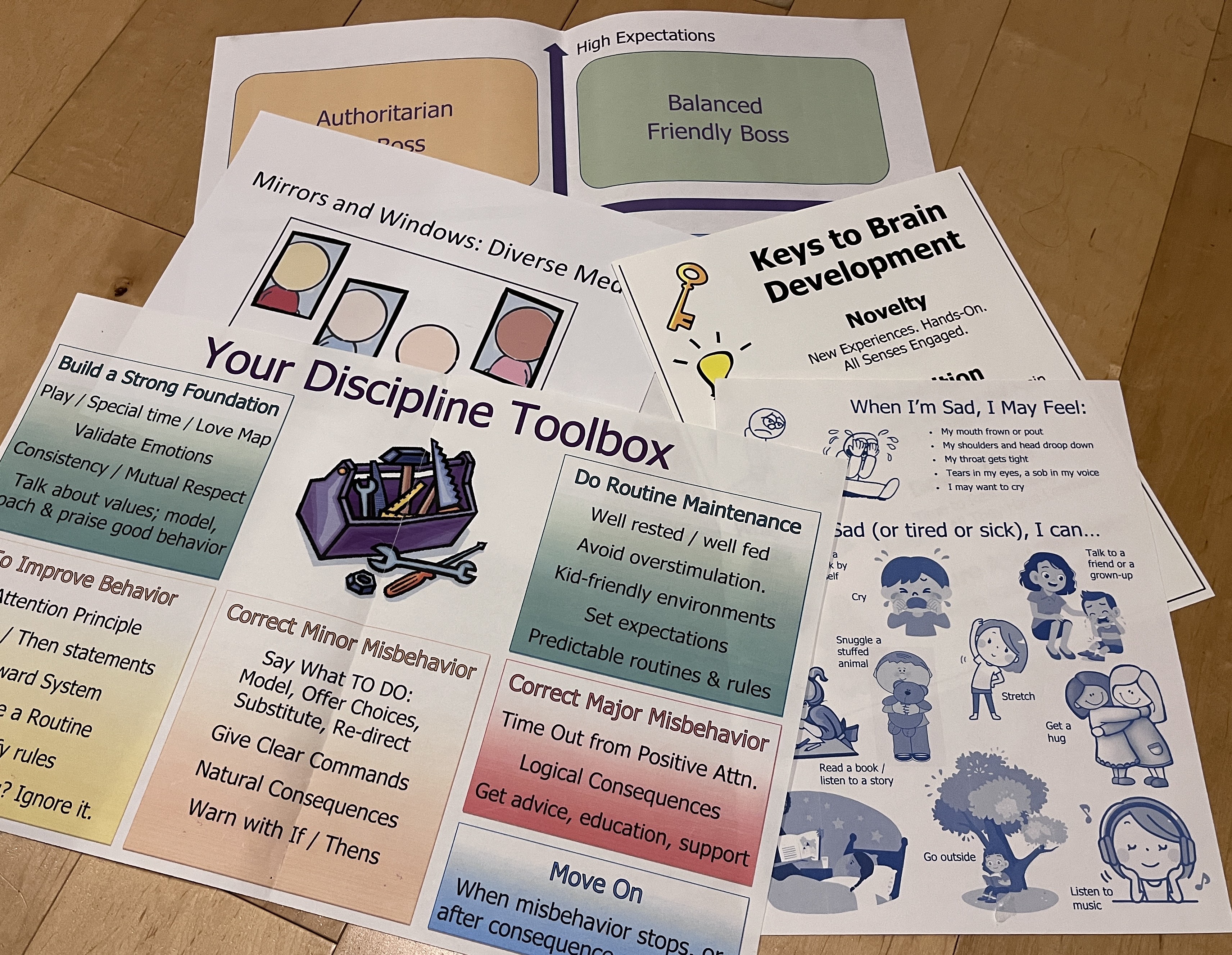
Tag Archives: Parenting

Choosing Child Care

When you’re looking for child care, the choices can feel overwhelming. Here’s a five step process to help guide you through narrowing down your options.

  1. Learn the Basics
  2. Figure out exactly what you need
  3. Gather your options
  4. Research your top choices
  5. Make the decision

Then, once you’ve found a provider, there’s an on-going step… continuing to evaluate whether it’s still meeting your needs, and making changes as needed.

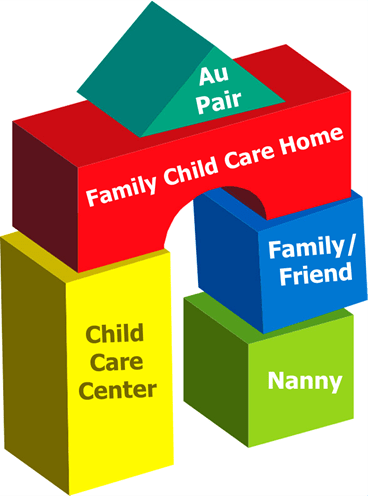
blocks showing child care options

Step 1 – Learn the Basics

For an infant or young toddler, you may be considering options including: family or friend care, a nanny or au pair, a family child care in a home, or a child care center.

If you’re new to thinking about child care choices, start with my post on Child Care Basics which is an  introduction to how each of these options works, just so you have a sense of what is possible. I talk about all of these options, and the advantages and disadvantages of each. Once you’ve got the basics, return to this article.

Step 2 – What do you need?

Before you start looking at specific options, think about your concrete needs / basic logistics. Think about your “can do” and “really can’t do” list. Start with these, because otherwise you might fall in love with a program and then discover that you can’t make the logistics work. (I know many people who have talked themselves into something, saying “it’ll be OK, I’m sure we can make it work” and then had to give up when it proved unsustainable and start all over with their search.)

Location

How far are you willing to drive? How far is your child willing to be driven (some children do fine in the car, others are miserable)? Does it make sense to choose a caregiver who can come to your home? A location near your home or one near your work? Is the location convenient for other family members or friends if you need them to pick up?

Schedule

How many days a week? Do you have specific days of the week you can or can’t do? What time do you need care to start and end? Do you need flexibility on the end time if you sometimes run late leaving work, or if you’re caught in traffic? Can your schedule change from week to week or is it pretty predictable?

Cost

What’s manageable? Cost ranges hugely, so think through carefully what is manageable for you, and don’t spend time looking at options that are outside your price point.

It’s important to know that lower cost doesn’t have to mean lower quality of care. There are some amazing childcare providers who provide lower cost care. Their buildings may not be as beautiful, their equipment might not all be shiny and new, but it’s all clean and well cared for. The key factor in excellent child care is the people who provide the care. 

Some child cares offer a sliding scale based on parent income. Some states, municipalities, and tribes have child care subsidies available. Learn more at: https://www.childcareaware.org/families/cost-child-care/help-paying-child-care-federal-and-state-child-care-programs/ 

Step 3 – Gather Your Options

It’s worth looking at ads in parenting magazines and online but it’s also worth knowing that you’ll mostly see ads for large chains and expensive daycares, because they have money for ad budgets. To find the local, smaller, low cost options you don’t look at paid ads. You ask around – ask friends, family, co-workers, people in birth classes or parents at the park. If they say they LOVE a program, ask why! It could be that you’d love it for the same reason, or it could turn out that something they love would totally turn you off. 

You can do web searches – some small day care providers can have a good web presence, but many don’t.

If you have local child care referral services run by non-profits or governmental agencies, use them! If the referral service is something that providers have to pay to be a part of, then it’s just another form of advertising, really, and again, you’ll get the larger chains and more expensive providers. But non-profits and governmental agencies may offer referrals to a much wider array of small providers.

Step 4 – Research your top choices

Once you’ve got a list of four or five possibilities, do more research. Read the program’s websites in detail, if they have one. Call to ask specific questions. Go to open houses or tours or ask to observe, if possible. Here are questions to consider:

Are there openings? What is the enrollment process?

What is the cost? When are payments due?

What is the schedule?

  • What time could your child start? What time could you pick up?
  • For infants: Are infants fed on demand? If your child is breastfeeding, how do they support that? Where do babies sleep? Are baby’s cries responded to promptly?
  • For toddlers: How is time divided between activities? Play time? Quiet time? Outdoors? Snack? What activities are available? What do caregivers do to support the child’s learning? If meals will be provided to your child, when, where, and what will be included? Is there nap time – when? where?
  • Are there days / times of year when care is not available? (holidays, caregiver vacations, etc.) What happens if a caregiver is sick?

Who are the childcare providers?

  • Training: What is their training? Have they done safety training? Have they done additional training in supporting the child’s learning and development? Do they have and AA or BA in early childhood?
  • What experience do they have?
  • Do they participate in continuing education or other opportunities to improve their skills and the care they provide?
  • Longevity / turnover. As a general rule, the longer the teachers have been there the better. (Unless you get the sense that they’re burned out and only there due to inertia….)
  • Do they enjoy kids? Do they sit on the floor with the kids, smile, and engage with them? Or are they standing on the edges talking to other adults, occasionally calling out instructions to a child?
  • For toddlers and older: How do they handle discipline? What are their rules and how do they reinforce them?
  • For some families, it is important that caregivers share their cultural background or faith beliefs. Some families seek out diversity, such as a caregiver who speaks a different language than they speak at home. Meeting the caregivers may give you a sense of whether your goals will be met.

Who are the children?

  • How many children? How many teachers? (In Washington state child care centers, the maximums for babies under one year old is four babies per adult, with a maximum group size of 8 babies and two adults. For 12-29 month old children, it’s 7 children per adult, max of 14 children in a group. But those are the maximums. Your child would get more individualized attention if there are fewer children for each adult to tend to.)
  • What is the age range of the class? Some parents prefer that all the kids be as close as possible in age, but many programs point out the benefits of multi-age classrooms
  • What are the cut-off dates for age? Your child may do best if you choose a program where they are right in the middle of the age range rather than youngest or oldest. Many parents push their child ahead to the next program the second they reach the minimum age… but I don’t recommend this – if your child is always the youngest one in the room, they may often also feel like the slowest, least coordinated one in the room.
  • In a child care center, how is the transition from one age group to the next managed?

What is the environment like?

  • Is it clean? Safe? What are their policies for illness and cleaning? Where are diapers changed? For infants, are safer sleep practices followed?
  • Is there a wide range of materials and supplies that are appropriate to your child’s age and abilities? Are materials in good condition?
  • Are there areas for quiet play / resting and areas for active play?
  • Is there an opportunity for time outdoors? What is that space like?

Parent Partnership

  • Are parents welcome to visit any time?
  • Can parents be involved in the program? 
  • Do caregivers share and talk to parents about their child’s daily activities, either at drop-off or pick-up?
  • If parents or caregivers have particular questions or concerns, can they schedule a time to speak in depth (this may need to be at a time when the caregiver does not have children to care for)?
  • How do providers work with parents to incorporate the family’s culture and values into the classroom?
  • Can parents be involved in a child’s birthday celebration? special events? field trips?

Note: some facilities have cameras where parents can watch the child at any time. These are not essential – if you trust your caregivers and can visit at any time, these “nanny cams” shouldn’t be a big part of your decision making. Some facilities provide lots of written reports to parents, and while those can be nice, remember that time spent filling out reports may be time that could be spent interacting with your child. Having a quick moment to chat with the caregiver each day can be just as informative.

Licensing?

Licensing requirements vary by state and by type of child care provider. But, if they are licensed, you may be able to view their licensing records to see if there have been any complaints. (In Washington, use https://www.findchildcarewa.org/.)

Step 5: Making the Choice

After you’ve done your research on your options, if possible, don’t narrow it down to a single choice. If you fall in love with one and rule out all others, and then it turns out that one doesn’t have availability, that can be really stressful. Instead, make a list with multiple options, ranked from your favorite on down, and then contact your top choice. A lot of this process is intellectual and practical, comparing things like price and location. But in the end, sometimes it comes down to trusting your gut.

Vibe The most important thing you’re “looking” for is something you can’t see. How does it feel? Is it warm, nurturing, full of exciting learning experiences, and full of happy children and teachers? Or is it cold, disconnected, uninvolved? We know from the science of brain development that children learn best when they feel safe and are happy, so look for a place where they will be happy and engaged. You should also look for a place where you would feel great every time you drop them off to spend time there. That’s the one to choose.

On-Going

Even once you’ve found an option, the evaluation goes on… does it still seem like a good fit? If you have concerns, you can approach the caregiver to try to work them out. Sometimes things work out perfectly, and sometimes they don’t and you have to start the process again, so be sure to hold on to your notes, in case there’s a next time to search.

Resources for Families in Washington State

Financial Support: Options for paying for child care: https://childcare.org/family-services/pay-for-care.aspx and https://childcareawarewa.org/families/. Low income families (income less than $42K per year) can qualify for child care subsidies, including helping to pay a family caregiver. Learn more: https://www.dcyf.wa.gov/services/earlylearning-childcare/getting-help/wccc

Child Care Centers and Family Day Cares

Nannies and Au Pairs
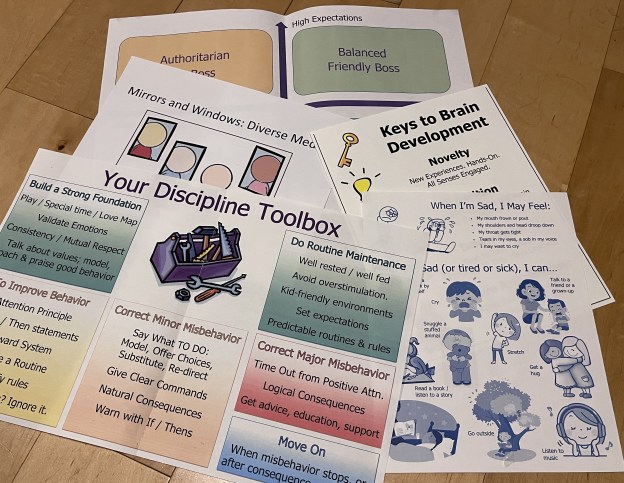
Child Care Basics

For an infant or young toddler, your options for child care providers include family or friendsnanniesau pairsfamily child cares, and child care centers. Let’s look at each:

Family, Friend or Neighbor Care

Many children are cared for by grandparents, aunts/uncles, or family friends – this is actually the most common form of child care. This care might be provided in the child’s home or the home of the caregiver.

The advantages are that the caregiver is someone that the parents have a long history with who will also likely continue to be a part of the child’s life for many years. So it can be part of a loving, connected relationship built on trust. There may be shared language, culture, and traditions. This type of care tends to be the most flexible schedule option so can work especially well for people with non-traditional work schedules or on-call responsibilities. Plus, family care is often offered free of charge or in exchange for room and board or other arrangements.

Some disadvantages are that the caregiver can sometimes feel unappreciated or feel like they’re being taken advantage of, and the parents and caregivers may have more conflict over the “right way” to care for the child. These can be navigated but it’s important to be sensitive to the need for open, honest dialogue. Also, while some family members provide excellent, stimulating learning environments for the children, that is not always the case, since family members are less likely to have training in child development and child safety. (Note: Zero to Three has great child development resources to share with family caregivers, and here’s a list of child safety topics that all caregivers should be aware of.)

Tips for choosing this type of care: https://www.childcareaware.org/families/types-child-care/ and making it work for your family: https://www.childcareaware.org/wp-content/uploads/2020/02/All_in_the_Family.pdf

Nanny

A nanny is a professional child care provider, who comes to the child’s home to provide care (some nannies are live-in care providers). The parents are the employer and they set the terms of a contract: what the schedule will be, what services will be provided (e.g. will the nanny provide any housekeeping or meal prep in addition to child care) and hire a nanny that agrees to that contract. The advantages are that you can customize the agreement to your own needs, a nanny is someone who has chosen child care as their profession and typically has a passion for caring for children, and the same nanny may remain with your family for years, providing continuity of care. The disadvantage is that the hiring process can be quite lengthy (and you have to understand taxes and insurance – though working with a nanny agency can ease some of the burden). And if the nanny is sick or quits suddenly, you may have to scramble for a new plan.

Some families nanny share – this plays out a lot of different ways, for example, the nanny is with family A on Monday, Tuesday, Wednesday and with family B on Thursday and Friday – this is good for families with part-time work. Or the nanny watches both children every day in family A’s home – this is good for parents who want a playmate for their child.

Learn more about how to hire a nanny. And questions to ask a nanny in an interview. Or check out How to Choose the Best Nanny.

Au Pair

Au pair refers to someone from a foreign country, typically between the ages of 18 and 26. Like an exchange student, they live in a host family’s home and attend school part-time (6 credits) while also providing child care as “part of the family.” They will stay with a family for 12 months. The family provides room, board, and a small salary. (Maybe $450 a week vs. $900 a week for a nanny in the same market.) The schedule can be more flexible, working around the parent’s work schedule and the au pair’s classes, but with a maximum of 45 hours of child care provided each week. Advantages: low cost, exposing your family to a foreign culture and possibly another language. Disadvantages: the au pair may or may not be that interested in child care – for some, this is just a way to visit a new country. One year commitment.

Au pairs are more for older children than for babies. They can not be placed with a family whose baby is less than three months old, and can only be placed with an under 2 year old if they’ve had a special 200 hours of training.

Learn more about nannies and au pairs: www.care.com/c/live-in-nanny-vs-au-pair-whats-the-difference.

Family Child Care

Providers care for children in a home / residential setting. Typically there are one or two caregivers and a small number of children, with a range of ages. Some are licensed and follow safety and health requirements, some are not.

Advantages: many families like the home-like environment, in a smaller setting your child receives more individualized care. If you have two children of different ages, they can be together at child care rather than separated into age groups as they would be in a larger child care setting. Fewer people in the child care setting means less potential for exposure to illnesses. There’s typically a consistent caregiver, with less turnover. Often lower cost than nannies or child care centers.

Disadvantages – if you’re reliant upon one person for child care, then if they get sick or go on vacation, you may not have child care – be sure you know what their plans are for these contingencies. Because there’s only one (or two) caregivers, if they aren’t good, it’s not a good situation. (For example, I once toured an in-home day care where the provider said they rarely watched TV, but I got the sense from the placement of the TV that it was used frequently to keep the kids’ attention occupied. This was not in alignment with my goals for my child’s care.) It’s especially important that the parent and caregiver have a respectful relationship and feel they can trust each other.

Some family child cares have very flexible schedules, some have inflexible schedules. It depends upon the caregiver.

Child Care Aware has an excellent, comprehensive Family Child Care Checklist to help you evaluate a provider.

Child Care Centers

Child care centers are larger facilities, typically with a director and many care providers. Children are typically divided by age group – for example, the infants room, the toddler room, the preschool age, etc. Some centers are non-profits run by churches, schools, or non-profit agencies. Others are for profit and may be owned by an individual or a chain.

Advantages: If a caregiver is ill or has a vacation, typically their absence can be easily covered by someone else, so your child care needs are consistently met. Some parents prefer the single-age groupings where all the toys and activities are specialized to that age group. Some (more expensive) centers may offer lots of activities such as gymnastics classes or music classes. They have to follow the most safety regulations and have more regular inspections.

Disadvantages: There may be a higher level of turnover of staff members and less chance for your child to develop a relationship with a consistent caregiver. Less individualized care. More exposure to illness may mean your child is sick more in their early years (but may be sick less as they get older, since their immune system has had lots of training.)

Check out Child Care Aware’s Child Care Center Checklist for questions to help you evaluate the quality of a center.

For Washington State Families, Child Care Aware offers a very helpful brochure on Choosing a Child Care on Child Care Centers and Family Child Care. It includes info on steps to finding quality child care, staff to child ratios and group size (in WA, for babies under one year, there’s a maximum of four babies per adult caregiver and a maximum group size of 8 children), and financial options.

Learn more

Child Care Aware also offers a helpful overview of types of child care that’s worth checking out.

Key Principles for Supporting Learning

This post is the text of a handout I created for orientation at my co-operative preschool (I’ve added links for learning more), so it talks about how we do things in our classroom, but all of these 12 principles apply to parents and teachers in all settings.

Respect! Let’s commit to a fundamental belief that everyone here (kids and parents) is doing the best they can given their developmental level, skills and knowledge, and challenges in their past and current environment. And… we all have bad days. When you have a bad moment, call yourself on it, apologize as needed, forgive yourself and commit to doing better. When someone else is having a bad moment, don’t judge.

Kids do well if they can. If someone (kid or adult) is “mis-behaving”, ask yourself: What skills do they lack? What support do they need? What stressors are making it hard to do well right now? When those things are noticed and addressed, behavior improves.

Everyone does better when they know what to expect and what’s expected of them. Consistent routines, clearly explained expectations (not “unwritten rules” they need to guess), well thought-out limits and follow-through on promises (both promised rewards and promised consequences) create an environment where a child can do well.

All feelings are OK. (Not all behaviors are.) We all have lots of big feelings. We’re all learning how to manage them appropriately. When a child is calm, we can teach appropriate ways to express feelings. When someone has big feelings, it helps to validate that. If their feelings led to bad behavior, also address that: “Wow, you were mad she took your toy. I understand. But you hit her, and that was not OK.”

When someone flips their lid, co-regulate before anything else. When we are calm and feel safe, we have access to our whole fully developed brain. So a young child can speak in sentences, follow the rules, make fairly good choices. But, when we are really scared, or sad, or mad, or just overwhelmed by too much stimulus or too many demands, we “flip our lids.” We can’t speak, we can’t be reasoned with… If you have a child who is in full meltdown, it’s not the time to teach or to explain or to ask them to make better choices. Instead, co-regulate. Get yourself calm, get down to their level, speak in a quiet voice. Set clear limits and tell them what needs to happen next.

Every kid is unique and has different needs and capabilities. We are a multi-age class, so our kids are at different developmental stages. Development is asynchronous, so you might have a child with high skills in one area and low in another. Also, we all have different interests, different temperaments, different sensory and support needs, different degrees of flexibility before we hit a breaking point. If you find yourself worrying that your child is “behind” other children, or find yourself judging other children for areas they’re struggling in, remember this range. Judge each child’s progress based solely on – is this child progressing well from where they used to be?

These kids are little. They’re still learning. These kids are practicing everything. Practicing kindness, practicing sitting still and listening, practicing good choices, how to do things without making a mess. They’re going to make a lot of mistakes along the way or have days they’re not doing well. We’ll just keep working on it. Instead of telling them “don’t do that”, tell them what TO DO. Instead of assuming they know how to behave well, tell them what would be a positive action to do in that moment.

Growth Mindset / Power of Yet. “You can’t do it yet, but you’ll get there.” At times, a child can almost do something – they’re working on a puzzle, and they know how it’s supposed to work, but just can’t do it. That is super frustrating!! Don’t feel like you have to rescue them – sit by their side for support and encourage them to keep trying – suggest things to try but don’t jump in and solve it. When they make mistakes, say “hmm, we learned something that doesn’t work. What else could we try.” But… also notice when something is just too hard (or at least too hard in this moment). Teach that it’s OK to say “I can’t do this yet. I can set it aside and try again some other time.”

Process over Product. With crafts, we might have a sample of what a final product could look like. But the process is always more important. We honor a child’s right to make their own choices about what to do. (As long as they’re following the “make don’t break” rule.) What they learn in the process of doing something is more important than the product. So, while you are welcome to help them to do it themselves, please don’t just jump in and do it for them so it will “turn out nicer.” That’s not the point!

We are child-led, play-based. We set up a variety of great learning opportunities, but it’s up to the child to decide what they want to try, and how long to do it. If they start a project and don’t want to finish, that’s OK. If they only try two activities in a day, they didn’t “miss out” on everything else. They focused on what mattered to them.

Freedom Within Limits. Everyone Gets to Feel Safe. Everyone Gets to Play. We try to give children lots of choices. They’ll make some good choices and some bad. We want to let that happen so they learn from their mistakes. But, for the sake of safety (physical and emotional) and fairness, parents and teachers must set appropriate limits. We decide what options are on the table, and they decide from amongst those good options. If they do something unsafe or unfair, we set limits. For example, rough and tumble play is tons of fun, but only if everyone has consented and everyone stays safe.

Four Keys to Brain Development: Novelty, Repetition, Downtime, and Safety. Every time we experience something for the first time, we make new connections in our brain. Novelty is so exciting! Every time we see something familiar or repeat something we’re good at, we build competence and confidence. Repetition and routine is soothing! None of us can be learning and doing all the time. We all need breaks to rest and integrate new learning. Finding a balance of novelty, repetition and downtime and ensuring a child always feels safe and loved is the best way to support learning.

Handout

Here’s the handout version of this post – feel free to share anywhere.

How Parenting Changes as Kids Get Older

I often have the honor of working with parents for many years, from birth through age 9. The topics we focus on change as the children get older.

Stages of Parenting

Researcher Ellen Galinsky interviewed 228 parents (of 396 children) with diverse parenting experiences. She found common threads showing six distinct stages of parenting.

Stage One: Image-Making

Before the first baby is born, parents begin to create pictures in their minds of what parenting will be like and what kind of parent they hope to be. They began to adapt their home and their lifestyle to accommodate the child. They observe other parents and reflect on how they were parented to help create their self-image as a parent.

Stage Two: Nurturing

From birth through the first two years. Focused on physical care, soothing, snuggling, and playing. The main goal is to develop a relationship with their child. As the attachmentgrows, parents evaluate their priorities for how much time to spend with the baby versus other aspects of life, including other relationships, and how much of their identity is being a parent.

Stage Three: Authority

From about age 2 to age 5. Parents are more certain of their own identity as parents and of their relationship to their child. They begin to define the family’s rules, decide how strictly to enforce rules and what to do when rules are broken. The main task is deciding how much authority to exert over the child’s behavior versus how much freedom to allow.

Stage Four: Interpretive

The elementary school years. Parents evaluate their own strengths and challenges, and also evaluate their child in comparison to others and to their expectations. The main task is interpreting the child’s experiences as they are increasingly exposed to a world outside their family. Parents answer questions, and determine what behaviors and values to teach. They decide how and where the child spends time and with whom. They decide how involved to be, and when to make the decisions versus when to let a child make choices independently.

Stage Five: Interdependent

In the adolescent years, parents redefine their authority and renegotiate the relationship with their child, who is increasingly making decisions independently, out of the parent’s view. Parents need to trust that they have instilled good values in the child. They don’t allow their adolescent to have complete autonomy, but do allow for more discussion about rules.

Stage Six: Departure

As the child reaches adulthood, parents prepare for the departure, re-evaluate their parenting accomplishments and failures, and re-define their parenting identity and relationships. Parenting becomes less central to their identity and their daily lives.

Parenting in the Interpretive Stage

School and peer relationships assume the central role in the child’s life, and start pulling attention and energy away from the family unit. Parents have much less time with their children than before so need to be more focused on their goals for that time.

Here are decisions parents are making during their child’s elementary school years, as they realize the increasing separation between their identity and the child’s identity.

  • What kind of life do I want to provide? (And what can I afford to provide?) What do I say yes to in terms of new clothes or toys, and activities to do. What do I say no to? How do I manage the inevitable times when my child says “that’s not fair! All the other parents let their kids _____.”
  • How should I interpret the world for my child? For example, if they ask questions about race, death, sex, religion, and so on. How do I share my beliefs and values with them to give them an internal compass? (There are resources on how to talk about difficult topics at https://gooddayswithkids.com/better-you-than-youtube/)
  • How do I want my child to behave? (And have good behavior internalized as self discipline?)
  • What do I want them to be capable of and responsible for? (e.g. chores, practicing and playing an instrument or a sport) What new privileges / responsibilities will I introduce (for example: allowance, a phone, going places independently.)
  • How involved do I want to be involved in their life, at home and away from home?
  • When should I step in to help, and when should I back off and let them make decisions and try things independently?
  • How do I support homework?
  • How do I ensure they have the skills and knowledge to self-manage healthy habits like good nutrition, personal hygiene, and good sleep?
  • How involved do I want to be with the other significant people in their lives. (Friends, parents of friends, teachers, counselors, sports coaches…)
  • How do I support them when they’re navigating the emotional ups and downs of peer relationships? How do you monitor friendships while not overly interfering?
  • How do I hope to define our changing relationship? For example: how much do we hug, hold and cuddle as they get older? How involved are we in bedtime and morning routines? What do we do together for fun and connection?
  • When they are adults, how do I want them to look back on this time? How am I hoping they’ll remember what kind of parent I was?

A helpful resource for child development milestones for these years, and how to support your child’s growth and learning is: https://childdevelopmentinfo.com/ages-stages/school-age-children-development-parenting-tips/