Category Archives: Relationships

Relationship Skills Round-Up, part 4: Make Couple Time a Priority

couple

After you have children, it becomes much more challenging to find couple time, but having that one-on-one connection time is so essential to keeping the love alive in a relationship. Without it, you may find that you and your partner end up in a place where you’re great housemates, co-parents, business partners, and so on, but no longer lovers. (In the physical way or the emotional way.)

Ideally, you will find a way to have a regular date night with your partner. It doesn’t have to be anything fancy. Just a chance to be together, really listen to each other, really see the other person, and remember why you chose to spend your lives together. Celebrate being a couple!  (Here are more thoughts for why that’s important: www.families.com/blog/making-time-for-your-marriage-couple-time)

But beyond date night, think about ways that even a few minutes a day can make a big difference. In an article by Carolyn Pirak (www.parentmap.com/article/make-time-for-your-partner) she recommends making a commitment to 40 minutes a day to improve your relationship: When you separate each morning, spend at least two minutes saying goodbye. When you reunite, spend 20 minutes talking about your days. Take five minutes a day to express appreciation to each other. Devote at least 8 minutes a day to showing affection. Give at least five minutes a day to sharing dreams and planning ahead.

Make a plan for special time together this week. And each day, grab some sweet little moments together.

Here’s some solutions to some couple time challenges:

No time? Here’s some “8 minute date ideas”: https://gooddayswithkids.com/wp-content/uploads/2013/12/timetogether.pdf

Can’t find a babysitter? Tips for a date night at home: www.romantic-tips.com/datenight.shtml  and http://familymatters.net/blog/2011/04/04/date-night-for-parents-kids/

Can’t afford a babysitter and an expensive date? Cheap date ideas: http://workingmoms.about.com/od/parenting/a/Cheapdate.htm and http://parentingfamilymoney.com/393/inexpensive-cheap-date-night-ideas-for-parents/

Please share comments on how  you make date nights work as a parent!

To see all my posts on relationship skills, click here.

photo credit: Rinoninha via photopin cc


Relationship Skills Round-Up, part 3: Love Languages

languages

In Chapman’s Five Love Languages, he describes how different individuals have different “languages” they use to express love, and that we “hear” love best when it’s spoken in our language. Which one of these sounds most like how your partner hears love from you?

  • Physical Touch: Feels most loved when you touch him/her: stroke her hair, hold hands, massage, rub her feet, hugging, kissing, sex. Feels most rejected when touch is missing (or if touch is used in anger).
  • Words of Affirmation: Encouragement and praise are vital. Being acknowledged for work, appreciated for who s/he is, validated for concerns, cheered on for efforts. May be very sensitive to criticism.
  • Acts of Service: Wants active support with household tasks, like laundry, washing dishes, running errands, making a to-do list together and taking on jobs. Feels unsupported when you don’t pitch in.
  • Gifts: Loves any special little thing done just for him/her. Little notes left around the house, something special from the grocery store, pictures of the baby texted during the day. Will be especially upset if you forget a birthday, anniversary or other gift-giving occasion.
  • Quality Time: Wants your Presence: time together, spent talking and connecting, doing activities together. Feels unsupported if you’re off buying gifts or doing tasks instead of spending time with him/her.

Discuss this with your partner. Are you right about what his/her language is? What does s/he think is your language? Sometimes couples discover that if one is feeling unloved, it’s not that their partner wasn’t trying to communicate love, it’s just that s/he was shouting a lot in the wrong language.

(Note: I also wrote a 5 question love languages quiz you can take. Or you can take Chapman’s 30 question quiz here)

Read what other bloggers say about Love Languages:

One person’s experience with how the love languages work in reality on INFP blog

Applying love languages to relationship with your child on GoodTherapy.org

To see all my posts on relationship skills, click here.

Photo Credits:


.

Relationship Skills Round-Up, part 2: Appreciation

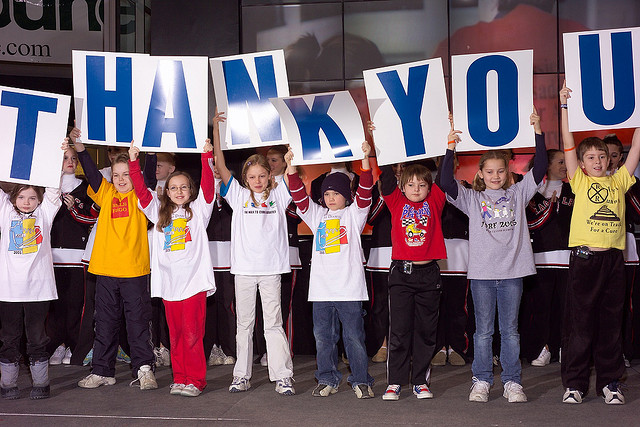
thanks

Life (especially life as a parent) can often leave us feeling undervalued or unappreciated. And when we’re feeling worn out, it may be hard for us to remember what we’re grateful for – what we appreciate about our life and the people we share it with.This drains our energy.  One of the best ways to re-fill our tanks is by creating a “culture of appreciation”.

  • Always thank your partner for the things s/he has done. Even if they’re part of his/her “job.” It’s still nice to know that they are noticed and appreciated.
  • When asking your partner to do something, make it a real question (i.e. something they could say no to), not an order disguised as a question. (And say please!) Then thank them if they say yes.
  • Five minute writing. Each of you takes a piece of paper and a pen. Spend five full minutes listing everything you love about your partner. Pour out all the appreciation you haven’t had time to share. Give your list to your partner to have and to hold.
  • Exchanging appreciations: Sit facing each other. One person begins with “Something I appreciate about you is…” The other partner listens to that, lets it sink in, says thank you, and then shares something that they appreciate about the other.
  • Post-its: leave notes around the house, listing what you love about each other or life in general.
  • Write a thank you note, letting him/her know why you’re glad s/he is a part of your life.

Some ideas inspired by Hendricks’ Conscious Loving and Louden’s Couples’ Comfort Book)

Get more appreciation ideas from my handout on appreciation here

To see all my posts on relationship skills, click here.

———————:

Read more about appreciation on other blogs:

The Effects of Gratitude in Relationships on Mindfulness Muse: “Begin to actively pay attention to and notice the positive things that your partner does.  Many of us have a natural tendency to only [notice] signs that our partners have done something wrong.  It is much more beneficial… to “catch your partner doing something positive.””

Creating a Culture of Appreciation on the Gottman Institute’s blog: “Building a culture of appreciation, fondness, and admiration involves using the things you know about your partner to show that you care and want them to be happy. Positive thoughts invoke positive feelings, and the goal is to turn both into positive actions that help to heal and bring companionship back in your relationship.”

The power of appreciation on Psychology Today: “My friend told me that she and her spouse were doing wonderfully. She attributed [this] to the consistent appreciation that she and her partner express to one another. She told me that they often say “thank you” to each other for daily tasks—laughing while revealing that her husband had recently thanked her for putting a frozen pizza in the oven.”

photo credit: Ilya Eric Lee via photopin cc

Relationship Skills Round-Up, part 1: Turn toward your partner

Over the next week, I’ll be sharing a collection of my favorite tools for strengthening a relationship – whether that relationship is with our partner, friends, co-workers, or kids.

Turning Toward bids for connection (based on John Gottman’s work)

When someone wants to make a connection, they make “bids for affection.” These can be questions, invitations, non-verbal gestures, glances, or touch – anything that asks you to connect. When someone bids for your attention, there are three main  ways that you might respond.

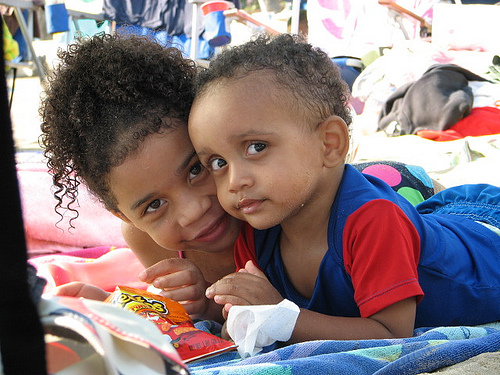
By Michelle Spaulding (Flickr: Gratuitous Cuddle Shot) [CC-BY-2.0 (http://creativecommons.org/licenses/by/2.0)], via Wikimedia Commons

By Michelle Spaulding (Flickr: Gratuitous Cuddle Shot) [CC-BY-2.0 (http://creativecommons.org/licenses/by/2.0)%5D, via Wikimedia Commons

Turn Toward: Act in a responsive, interested, positive, and loving way. Reach out, touch them, look at them, smile. Say “I hear you”, “I want to connect with you,” “I’m interested in you.” Ask a question.

????????????

Turn Away: Act in a way that ignores them, or dismisses their bid. Look away, wander away. Don’t respond verbally, or respond in a way that has nothing to do with what they said.

Turn Against: Act in an angry way that rejects them and their bid. Walk away, glare at them, make threatening movements. Use sarcasm or put-downs. Do the opposite of what they have asked you to do.

Examples:

A friend might bid “Want to go out to that new French restaurant Friday night?” You might ‘turn against’ by saying “A formal restaurant?? With a toddler?? In the evening?? Are you crazy?” Or you might ‘turn away’ by calling out to your child to be careful or asking if he wants a snack, then turning back to your friend and saying “I’m sorry, what were we talking about?” Or, you could ‘turn toward’ by saying “I would LOVE to go out with you. I’ve really missed all the long talks we used to have over meals. But what would work better for me is brunch before nap time… or a kid-friendly restaurant… or just meeting at my house.’

Your partner might bid “After we put her to bed, do you want to snuggle up on the couch and talk for a while?” You might ‘turn away’ by saying “The couch is covered in laundry I meant to put away during nap time. Oh, that reminds me, I’ve been meaning to…” You might ‘turn against’ by saying “I am so exhausted. I just want to go to bed. If you’ve got time to kill, could you just fold the laundry for a change?” Or you could turn toward by saying “Yes, that would be great. I’ll warn you that I’m exhausted, and I may just fall asleep.. but I’d love to have a little time with you.” Or “I’d love to snuggle. I’m stressed out by the laundry though… could you help me put it away real quick and then I can focus on snuggle time with you?”

What leads to a successful relationship?

In successful relationships, partners have a 20:1 ratio. They have 20 positive bids and/or turning toward incidents for every one negative bid or incident of turning against or away. Learn more.

Young children are very clear and obvious in their bids for connection: they chatter non-stop, they cry, they hang on your legs, they climb on your lap when you’re trying to work. Most parents do a good job of ‘turning toward’ most of a child’s bids: we look at them, we smile, we echo their words back to them. Even if we say no, we often say it in a connecting way “oh, honey, I’d LOVE to read that book to you, but right now I need to finish washing the dishes.”

Unfortunately, we aren’t always this responsive to our partners! At the end of a long and tiring day of parenting and work, and feeling under-appreciated, we may feel like we only have a tiny bit of energy left to give in our day, and we save that up for our little ones, assuming our partners will “understand.” And they do. Generally. But eventually, all their bids are ignored (turn away) or rejected (turn against) that can really damage a relationship.

What can you do today to “bid” for affection – let your partner know you want to connect?

What can you do today to tune in to bids from your partner, and try to turn toward?

————————————–

Look here for Gottman’s suggestions on ways to connect, such as “Your partner sends you a text message about something, anything. Send them one back that lets them know how irresistible they are to you.

Or look here for Gottman’s suggestions for how to apply this idea in the work setting to build better relationships with co-workers, such as: “Turn away from your work and look at the person who’s talking to you.

Look here to see simple examples of the mundane ways this idea plays out in a relationship and learn why those little things matter: http://alwayspsyched.blogspot.com/2011/05/for-love-of-gottman-make-your.html: “Comical as it may sound, romance actually grows when a couple are in the supermarket and the wife says, “Are we out of bleach?” and the husband says, “I don’t know. Let me go get some just in case,” instead of shrugging apathetically.”.

.

Sibling Relationships

siblngsBenefits of siblings

When you search for the word sibling, the most common topics that come up are all about the sibling rivalry. But let’s start by looking at the benefits of siblings:

Siblings have lifelong companions. As children, there’s a built-in playmate in the house, a travel companion, co-conspirator and someone to bond with over how “unfair” their parents are to them. Throughout life, a sibling can be the longest relationship they experience – parents will likely die long before the children, but the sibling will still be there. Not all siblings are friends, and not all siblings love each other – that’s not guaranteed. But they do have a history together that no one can match.

When children go away to daycare or school or summer camp together, they may adapt better. Having the sibling along helps them separate from the parents more easily.

Living in close quarters with each other can help siblings to learn cooperation, conflict resolution, empathy, forgiveness, and understanding for another person’s point of view. This doesn’t happen automatically, but does happen with your support.

For the older child: having a younger sibling is a chance to be a mentor and role model, and a chance to practice responsibility. (But DON’T over-burden him or make feel TOO responsible. He should always know that you as the parent are responsible for the children.)

For younger siblings: Younger siblings get dragged along to lots of activities, but that can mean they learn things earlier: soccer, dance, etc. They can read and write and handle other academics younger because they have the older child as a role model. They have an opportunity to learn from older siblings mistakes (e.g. start planning for college sooner.)

Why siblings fight

  • Having to share their space and possessions all the time, every day.
  • Feeling they are getting unequal amounts of your love, or unfair treatment.
  • To get your attention.
  • Trying to define who they are as an individual, separate from their sibling.
  • Sometimes kids have put on their nice social graces for everyone else all day, and need a chance to vent steam with someone they know “has to” still love them later.
  • Because they’re there – conflict gets the adrenaline pumping, which can be fun!

Setting the stage for positive interaction

[If you’re adding a new baby sibling to the house, check here for tips.]

Personal space and possessions:

  • Teach your children that most toys are communal and must be shared nicely. However, each child has the right to set aside a special place and some special possessions that are theirs alone.
  • If the sibling wants to play with the special toys they have to ask, and it’s OK to say no.
  • For the communal possessions and activities, try to have toys and games that work at different levels that they can play with together – open-ended toys like blocks and play-dough are great.

Be fair and equitable. (Note: This doesn’t mean treating your kids exactly the same at all times.)

  • Make sure each child gets one-on-one attention from you at times – maybe a weekly “date” that’s all about connecting as individuals.
  • There are times only one child can do something both want to do (e.g. press the elevator button, choose where the family will have lunch). Have a way to track whose turn it is.
  • Make sure the kids have equitable, developmentally appropriate privileges and responsibilities. Don’t be overly harsh on your older child and don’t baby your younger child.
  • Apply the same rules to both kids at the same age. (So, if your older child had a 9:00 pm bedtime when he was 12 years old, your younger one should also have a 9:00 pm when she is 12 years old. Even if her big brother is now allowed to stay up later.)
  • If you change any of the rules over time because it’s the right thing to do (yes, we parents sometimes realize we were unreasonably harsh in the past) have a discussion with the older child apologizing that you made them live by a rule that you’re not asking of their younger sibling.

Catch them being good. Kids crave attention from you, and if they don’t get it for positive behavior, they’ll act up to get attention for negative behavior. Especially reward good sibling interactions.

  • Encourage them to work together – when we can all have a good day, we all get the reward.

Help each child have their own identity:

  • Your children don’t have to do all the same types of things. If your older child plays the violin, it doesn’t mean the second one has to play the cello. She could play soccer instead. Plan their activities separately so each can follow their own passions.
  • Don’t label your children. It’s tempting to say “he is our artist and she’s the math whiz.” But those labels limit them and block you from encouraging their development in all areas.
  • Don’t compare children to each other. (“Your brother always…”)

Help your kids find ways to release the day’s tensions by sharing them with you or each other rather than by taking them out on each other.

Accept that some conflict will happen, and let it happen. Don’t worry that “they’ll never get along.”

Managing conflict

When children fight, it gives us a chance to teach skills like self-calming, being assertive, expressing concerns with words, problem-solving, negotiating, taking turns, and so on.

When a battle begins, try not to jump in to solve everything immediately – see if they can figure it out. But do step in when things become hurtful. Set absolute limits that it’s never OK to hit, bite, kick, or be emotionally cruel.

Before disciplining either child, make sure you have the whole story. It’s easy to assume that the older one is at fault, or that the last one holding the stick is at fault. Stop and ask each child to share their perception of the situation. Often it’s appropriate to punish both kids. If only one is punished for something, ensure that the innocent party doesn’t gloat about it!

If there’s an object they’re consistently fighting over, you may find it’s easiest to just take it away from both of them for a toy timeout.

If the younger sibling ruins something the older one worked hard on, first offer sympathy: “It’s so hard when she wrecks your stuff!” Encourage him to share his anger with you. Then explain that the little one just doesn’t get it yet, and think about how to protect the next special creation from them.

If your child needs to vent about their sibling, let them. They can draw pictures, write, yell, whatever. They may say “I hate my brother.” Instead of scolding them, say “I know right now you’re hating your brother for what he did. I don’t think you hate him as a person, and I think soon you’ll have fun together again. But I get that you’re really mad right now.” Siblings don’t always have to like each other.

A final note about siblings

You may have one child that’s easier for you to like than the other– you have similar temperaments, similar interests – you just understand them better. Gender may also affect this. On good days, we just try to be fair and equitable. If you’re really struggling with a child at some point, enlisting another friend or family member who “gets” that child better may help you figure out some new approaches.

Parent educators: Here is a free printable handout about Sibling Relationships.

Recommended Source: Sibling Rivalry: http://www.med.umich.edu/yourchild/topics/sibriv.htm

photo credit: Ian D. Keating via photopin cc