Category Archives: Your Family

How Much is Enough? How Much is Too Much?

Although there are plenty of families in America who struggle with the basic necessities of life like putting food on the table, many other parents have access to a huge array of options. Toys to buy, media to watch, vacations to go on, and activities to enroll in. The job of marketers is to convince us these things are ‘necessities’ and things “you can’t afford to pass up”. Sometimes they play to our fears of the future: “Playing with this toy will help your child get into college.” Sometimes they play on parental guilt: “Help your kid have a great Christmas – show them that they’re loved.” Sometimes they sell joy: “You work so hard – you deserve to have FUN!”

And here’s the thing. Lots of those toys and media are fun! Lots of fun! And going on vacations as a family can lead to fabulous connecting moments and can be part of a child’s memories of belonging in a loving, happy family. And lots of those classes and activities really will help build your child’s knowledge and skills, and help them reach their potential.

So how do we decide which options to take? What is enough? What is too much? Every family has to make their own decisions, based on their child’s needs and their own goals and values.

What do kids need, in order to learn?

Often parents choose toys and classes as enrichment tools to help their child learn and grow. When we go back to the basics of brain development, we know that children learn through: novelty and repetition, guided play and free play, and down time to process it all.

New toys and media offer novelty – lots of interesting stimuli to take in. But if kids are continually bombarded with new things, and not given the chance to play with the same thing over and over, they don’t gain the benefit of repetition, which is mastery. If a child only has access to a few toys, he may complain of boredom, but he gets really creative with those toys!

Classes, camps, activities, and sports teams are all guided play and guided learning. They help your child gain new knowledge and learn new skills. But kids also benefit from free play – just having free time with friends or siblings to goof off and play any game they can think up. And they need rest and quiet solitude to absorb everything and make their own connections.

Kim John Payne, author of Simplicity Parenting, talks about 4 keys to raising “happier, calmer, more secure kids”: the environment, rhythm and schedule, and unplugging. Let’s look at each.

Environment: De-cluttering to make space for creativity.

If there are too many toys, a child doesn’t focus on any of them. They flit from one to the next, never really settling down to play. Their little brains are overstimulated by all the choices. If you keep giving them more toys to “get them engaged” they will get even more distracted.

It is better to focus on having a small number of really excellent toys. Here are some things to think about and look for when choosing what toys to have in your home.

  • Think about toys that build diverse skills: if I had only a few toys, I’d want one in each of these areas: big motor skills (balls, bikes, tumbling mats), small motor skills (puzzles, shape sorters, craft supplies), imaginary play (dress-up clothes, toy kitchen), music toys, art supplies, a set of magnetic letters, some dice for math skills, something to nurture (doll, stuffed animal), and toys for playing outdoors (bucket and shovel).
  • Choose open-ended toys that can be played with in lots of ways and passive toys where the child has to be creative to use them. Things such as blocks, cardboard boxes and tape, puppets, measuring cups and containers. Minimize toys that can only be played with in one way, and active toys where you press the button and it does all the work.
  • Elizabeth Pantley recommends these criteria for choosing toys: long-term play value, durable, washable, solid simplicity, challenge (will teach but won’t frustrate), appropriate for your child’s current developmental abilities, stimulates creativity, engaging, versatile, fits your family values, novelty (different than what you already have), and fun.
  • Spend less time in stores, less time looking at catalogs and shopping online. When you shop, it’s easy to fall in love with toys and end up bringing more home than you need.
  • Try setting up a “toy rotation” system. Make bins of toys, where each bin has about ten toys in it. Keep one bin out to play with and store all the others in the garage or a closet. Whenever the whim strikes (once a week?), swap out the old bin for a new bin.
  • Let your child get bored of their toys…

Think of boredom as a ‘gift.’ Boredom is often the precursor to creativity. Think of a bridge between ‘doing nothing’ and deep creative play. The bridge is almost always paved with (the frustration of) boredom. “I’m bored!” Now *that* is when something interesting usually happens.  – Kim John Payne

Rhythm: Increase predictability by introducing rhythmic moments for connection and calm.

Read my handout on rituals and my post on daily routines. And here are some thoughts on making birthday parties more manageable.

Scheduling: Give kids the gift of unstructured time

You might have the option to enroll your child in anything from art classes to aikido, from piano lessons to pottery, ballet to baseball, soccer to Spanish, gymnastics to geo-caching, wilderness survival to web design. There are so many cool and exciting things to learn! (And, you can’t help but think… it’ll help someday when they fill out college applications…)

Plus there’s the things you have to do – doctor’s appointments, picking up the siblings from their activities, grocery shopping. And more things you want to do – movies, playdates, dinner out, outings to the playground, sporting events, farmer’s markets, hikes in the woods, vacations to the beach…

All of these are cool. And all of them are learning experiences. Just choose your activities wisely. And make sure you remember to make space in the schedule for down-time, and quiet contemplation, and spontaneous, creative play. And for self-care for them and for you: sleep, calm meals around a table, snuggling up with a book.

Unstructured time gives children the opportunity to explore their inner and outer worlds…  they learn to engage with themselves and the world, to imagine and invent and create.  Unstructured time also challenges children to explore their own passions. If we keep them busy with lessons and structured activity, or they “fill” their time with screen entertainment, they never learn to respond to the stirrings of their own hearts, which might lead them to study the bugs on the sidewalk, build a fort in the back yard, make a monster from clay, write a short story or song, or organize the neighborhood kids into making a movie.  These calls from our heart are what lead us to the passions that make life meaningful, and they are available to us… when we are given free rein to explore and pursue where our interests lead us.” (Dr. Laura Markham)

Unplugging: Reduce the influence of adult concerns, media and consumerism on children to increase resilience, social and emotional intelligence.

When allowing your child to use screens (TV, computers, smartphones, tablets, etc.) make conscious choices about the content and about how much, when, and where to use them.

Spend more time outdoors, relaxing, playing, and discovering together.

Allow for quality family time:

Families can benefit by doing things whose only purpose is the joy of spending time together, like playing Monopoly, shooting hoops (with no coaching), drawing pictures, or taking a walk. Being unproductive together tells the child that the parent likes the kid, as he or she is.  (Source)

Learn more:

Growth Based Mindset

Carol Dweck, a psychologist at Stanford University, has spent decades studying achievement and success. She has developed the concept of a growth-based mindset, summarized here:

Fixed Mindset Growth-Based Mindset
Belief Intelligence and talent are static. They’re something you’re born with: you have it or you don’t. Intelligence develops with effort. The brain is like a muscle that can be trained.
Goals To look smart in every situation.
To never fail.
To push myself and try new things.
To take on new challenges.
Success Proving I’m smart or talented. Stretching to learn something new.
Evaluation of a new situation Will I succeed at it or will I fail?
Will it make me look good or bad?
Will it allow me to grow?
Attitude to challenges I avoid challenges.
I stick to what I do well.
I embrace challenges.
I persist when things get tough.
Response to setback I’m a failure. (identity)
I give up.
I failed. (action)   I’ll learn from it and move on. I’ll try harder next time
Effort Why bother? It’s pointless. Effort is the key to mastery.
Criticism Ignore criticism or deflect: “It’s not my fault.” Learn from criticism: how can I improve?
Success of others I feel threatened by it.
If they succeed, I fail.
I find lessons and inspiration in other people’s successes.
I feel good When it’s perfect. When I win. When I try hard. When I figure something out.
Results They plateau early. Never reach full potential. They achieve ever-higher levels of success.

Mindsets in the classroom:

Students were given a test. Then some of the children were praised for their intelligence: “that’s a good score. You must be smart.” Some were praised for the process: “that’s a good score. You must have worked hard.” The kids were then asked what they wanted to do next, and they were given the option of something easy where they wouldn’t make mistakes or something challenging where they might make mistakes but would learn something important. Those who were praised for intelligence chose the easy task. Those who were praised for effort chose the hard task they could learn from. Later, they gave everyone a very hard test – the kids praised for intelligence lost confidence and lost their enjoyment of the task and later lied about their scores. The kids who were praised for the effort and the process stayed confident, worked hard at the problems and remained engaged and didn’t lie about their results, because they felt they had done as well as they could on a hard test.

In other research, by Dweck and Blackwell, a group of low achieving students attended a class that taught that intelligence, like a muscle, grows stronger with exercise. As they learned to believe that intelligence was something they could learn, rather than something they could never achieve if they weren’t “born with it”, their motivation increased. They worked harder. When they had difficulty, instead of saying “I’m just not smart enough”, they would say that they needed to work harder or smarter. Their math scores improved, and continued to improve in the following year.

Another example of where these mindsets play out is in the math classroom. 3 out of 10 American describe themselves as “bad at math.” This leads to the belief that “I will never be good at math, so there’s no point in even trying.” Parents and teachers often reinforce this perception. Research shows that while genetics and inherent intelligence can help children initially score well, over time the kids that do best in math are the ones who work hard, have good study habits, and enjoy doing math.

To help your child develop a growth based mindset:

  • think about how you praise them: praise effort, not talent. Praise process not product.
  • pay attention to how you talk about your own abilities… do you say “I’m just no good at…” or do you say “this is hard for me right now, but if I keep trying I think I’ll do it”
  • think about how you respond to their failures and frustrations. Do you let them give up, or encourage them to keep trying? Do you say things like “I know it seems hard now, but I also know that the more you practice, the better you’ll get.”
  • encourage them to tinker: play around at something – try and try again until you get the result you were hoping for

Learn more about growth mindsets at http://www.whatkidscando.org/resources/spec_growthmindset.html and Mind-sets and Equitable Education: http://www.principals.org/Content.aspx?topic=61219

Read more on math at “The Myth of ‘I’m bad at math’” at www.theatlantic.com/education/archive/2013/10/the-myth-of-im-bad-at-math/280914/ and “’I’m not a math person’ is no longer a valid excuse” at www.businessinsider.com/being-good-at-math-is-not-about-natural-ability-2013-11

If you’re in the Seattle area, you can attend a lecture on the Growth Mindset by Tracy Kutchlow on Wednesday, April 29. Learn more here.

Connect your Child with their Cultural Identity

Identifying your culture and cultural values

If you do an internet search on connecting children to their cultural identity, you’ll mostly find articles for adoptive parents connecting their child to a culture of origin that is different from that of the parents. You’ll find a handful of articles for parents who are part of a religious or ethnic minority group. There is little about how people from any background might do it.

I think people who view themselves as part of “mainstream America” may often not think of themselves as having a cultural identity. I have heard people, when asked their  identity, respond “umm…. white?? American?? I don’t really have a cultural identity.”

But clearly, we are shaped by our background. I have a friend who is my age, Caucasian like me, and “American.” But I was raised in a church-going, military family of four in Wyoming. She was an only child raised by a liberal single mom in Berkeley in the early 70’s. So although that friend and I have a lot of common from our current perspectives, we’ve certainly run across times when we have very different assumptions about ‘how the world works’ and ‘how things are done.’

And that’s what defines cultural identity: what are those unconscious assumptions about big picture ideas like how the world works, what is our role in the community, and the significance of the family. It’s also the little things: when we get up in the morning, when we eat dinner, what we eat. Sometimes you don’t understand something is your culture until you encounter a different culture. Again, it’s sometimes in the little things: at my family’s holiday meals, the cook worked hard to get everything to the table hot and at the peak of perfection – to wait to eat it would have been horribly rude. In college, when I visited friends, I discovered (after some shocked looks sent my way) that in other families, it is horribly rude to start eating before everyone (including the cook) is seated.

Like a fish learning to describe water, the first step of connecting your child to a cultural identity may be for you to figure out what that identity is!

Here are topics you may want to think about:

  • What is your cultural background?
  • How might that be the same or different from other people in your child’s community?
  • What are some of cultural values that resonate with you? Are there values or attitudes you would like to leave behind?
  • What things in your life have helped you connect to your cultural identity?
  • What traditions or rituals do you want to continue to follow?

Sometimes talking with other people about their culture, or reading books from diverse cultures, can help you to understand your own better. I would recommend Parenting without Borders as a great introduction to other cultures’ approaches to parenting.

Beginning to talk about culture

We don’t have to wait till children are “old enough” to understand religion and culture to begin talking about it. Like everything else in their lives, from food to books to dressing themselves, we talk from the beginning about all the things they experience, and trust that their understanding of it will grow and deepen as they get older.

Young children are very concrete. They learn through hands-on experience, and through observing the important people in their lives. They don’t really learn through abstract conversations about abstract ideas. They also learn through repetition, so as you begin to think about what parts of your cultural identity and values you want to reinforce, keep that in mind.

Culture: Routines, Rituals, and Traditions

For a toddler, life often seems unpredictable and random. Routines create a reassuring sense of structure in a child’s life – the more they know what is coming next, the more manageable life seems for them. They appreciate the sense gained from daily routines that ‘this is how my family does things.’ Ritual and traditions take that to the next level: ‘this is how my people do things and how we have done things for a very long time’. For example, from annual holiday traditions, they gain a sense of how time passes, bringing with it lots of change, but also retaining some important cores.

Some places to consider adding rituals or traditions:

  • Daily: How do you begin your days together? What are mealtimes like? What is the typical rhythm of the day? What’s the bedtime routine?
  • Weekly: Could you do “family date nights”? Weekly dinners with extended family?
  • Holidays: Which do you celebrate? How do you celebrate? What are the special decorations? Foods? Gifts?
  • Special occasions: Does the tooth fairy come to your house? What do you do for birthdays? Weddings?
  • Other family traditions: Do you have nicknames or family in-jokes or songs? Stories about the funny quirks of relatives?

Some ways to include cultural identity in your child’s life:

  • Tell stories. Talk about your childhood, how your family did things, about their grandparents’ childhoods, and so on.
  • Read books about your culture, listen to ethnic music or the music your parents played/sang when you were young, eat foods that were traditional where you were raised. (That’s Jello salad and snickerdoodle cookies for me!)
  • Learn the language of your culture. (Or share with your children the regional dialect of English that you were raised with.)
  • Go to religious services or cultural festivals.
  • Make scrapbooks with information about your family’s history: a family tree, photographs, documents of your family’s journey

Learn more: www.growparenting.com/pages/blog_files/Building-Cultural-Identity.php

Extended Family

At this time of year, many families are traveling to visit other family members, or longing to spend time with faraway family, or overloading on time with local family. Check out last year’s posts on Building Relationships with Family Near and Far; Staying Connected with Family Long-Distance, and Resolving Differences with Extended Family.

How do you get your kid into college?

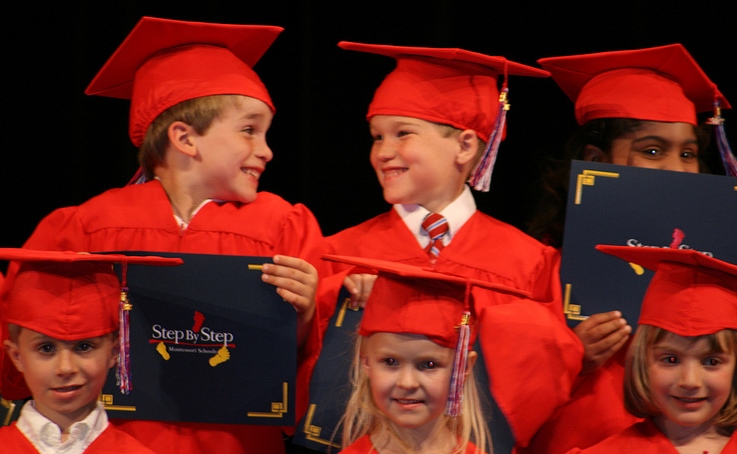
gradsParents often ask one key questions of experts in child development: “How do I get my kid into Harvard?”

Now, I’m not talking parents of high school juniors or seniors who want the nitty gritty of college admissions (although I could write plenty about that, having gone through the process with my oldest three years ago, and with my middle child working on applications this month!) I’m talking about parents of toddlers or preschoolers who want to know they’re starting their journey on the right path. Who want to know:  what is the most essential thing a parent needs to do to guarantee their child’s success in academics and hopefully in life.

All the child development experts have answers to the question, and some are based on good science. Richard Louv, author of Last Child in the Woods, says “tell them to go play outside.” Erika Christakis, a preschool director, and her husband Nicholas, professor at Harvard, say to choose a play-based preschool, not academics-based. The president of Harvard said “Make your children interesting!” He  recommended encouraging children to follow their passions as a way to develop an interesting personality. (There’s a nice article in this month’s Parent Map about helping kids find their passion.) John Medina, author of Brain Rules for Baby, has said to audience members: “You want to get your kid into Harvard? You really want to know what the data say? Go home and love your wife.”

These all seem like valid advice to me.

But what’s my best advice for academic success, in whatever form that takes?

Nurture a love for learning, and the belief that school is a great environment in which to feed that passion.

If you observe any baby or toddler, you see that they are driven by curiosity, and a desperate desire to learn more about their world, and master the skills they need to accomplish the tasks that are important to them. Some lucky adults still have that love for learning, intact from childhood.

Unfortunately, many children have that love for learning stomped on at some point in their life. Often in the school setting. Some examples:

  • A child who learns best by moving is placed in a school that has limited physical education and recess in order to focus on academic work at desks. That child comes to view school as a cage that they can’t wait to escape.
  • A child with a passion for some topic may be told “that’s not what we’re talking about now. You need to stop thinking about that and focus on this other topic that I think is more important.” That child suffers through school hours till she can get home and do the things that she cares about.
  • A child who learns best by interacting with others who is given worksheets and flash cards and drilled over and over in rote learning will believe that school is boring, then extend that to believing that learning is boring.
  • A child with learning disabilities is made to feel stupid and incompetent and has a hard time ever again believing otherwise.

I feel pretty blessed that our children have had access to schools* that fostered their love of learning.

When I first looked at kindergartens for my oldest child, we looked at the one within walking distance of our house. It was called Montessori, which I had the vague impression was a good brand name for a school. But when we looked at it, I saw a room of 5 and 6 year old kids sitting at desks filling out worksheets. Sure, a few of them were working with Montessori style manipulables to help them… but the main goal was completing the worksheet. When I asked about their day, it sounded like the way they did individualized education was that each child could work at their own pace through the same workbooks. They had only 10 minutes of recess in the morning and 10 in the afternoon – which might have worked for my daughter, who was just as happy to sit and read as to run around, but I couldn’t imagine it for a more active child. In their library, they had only non-fiction books. When I asked about fiction, they basically sniffed and said kids could waste their time on story books at home. That’s when I knew this was NOT the school for us. (My daughter’s deepest passion from about age 1 to 21 (so far) is stories. And I believe fiction is a great tool for teaching academic literacy, cultural literacy, imagination, empathy, and more. This school would have stomped on her passion for learning through story.)

We kept looking for the right school. The one we found had an emergent curriculum – an example of emergent learning is: if you have a first grader, you want them to learn to read. But it really doesn’t matter what they read. So, instead of making all the kids read the same books, you let the dinosaur boys read about dinosaurs, and the girls who love puppies read about dogs. If a kid asks a question about the classroom pet, you show him how to look up the answer in a book, and he learns that books are the way to learn the new things he cares about learning. Again, nurture a love for learning, and the belief that school is a great place to feed that passion.

Our girls went on to have a great educational experience that kept that love for learning alive. Another key aspect of a good school is one that understands the difference between building a fixed mindset vs. a growth mindset, which “thrives on challenge and sees failure not as evidence of unintelligence but as a heartening springboard for growth and for stretching our existing abilities.” (Read more.)

My middle child is in her senior year of high school, and totally jazzed about her comparative government class – she can’t stop talking about economics, human rights, and governmental policies! When she had the opportunity to visit some college classes last week, she was looking through the list, and gushing with enthusiasm “oh wow, political sociology! Theory of cognitive linguistics! Biochemistry! How do I choose??” When she had a college admissions interview, she gushed at the interviewer about how much she loves her post-modern literature class. She takes free online college classes about nutrition and food science in her free time.

I love seeing in her what I hope to see in all kids. She TRULY loves to learn. She is really excited about new ideas. She sees school as a great venue for feeding that.

Now, my kid is an academic. Your child might not be an academic in quite the same way. College in general is not right for all kids, and getting into Harvard specifically is certainly not possible for many, and not the right match for some kids for whom it is possible.

But… whatever your child’s talents, whatever his or her passions, I have faith that the best way to help them reach their potential is to keep that toddler’s love for learning alive. Model for them your own excitement over learning new things. Support their passion for discovery. Seek out schools that support it. That’s how to get your kid into college…
photo credit: pcutler via photopin