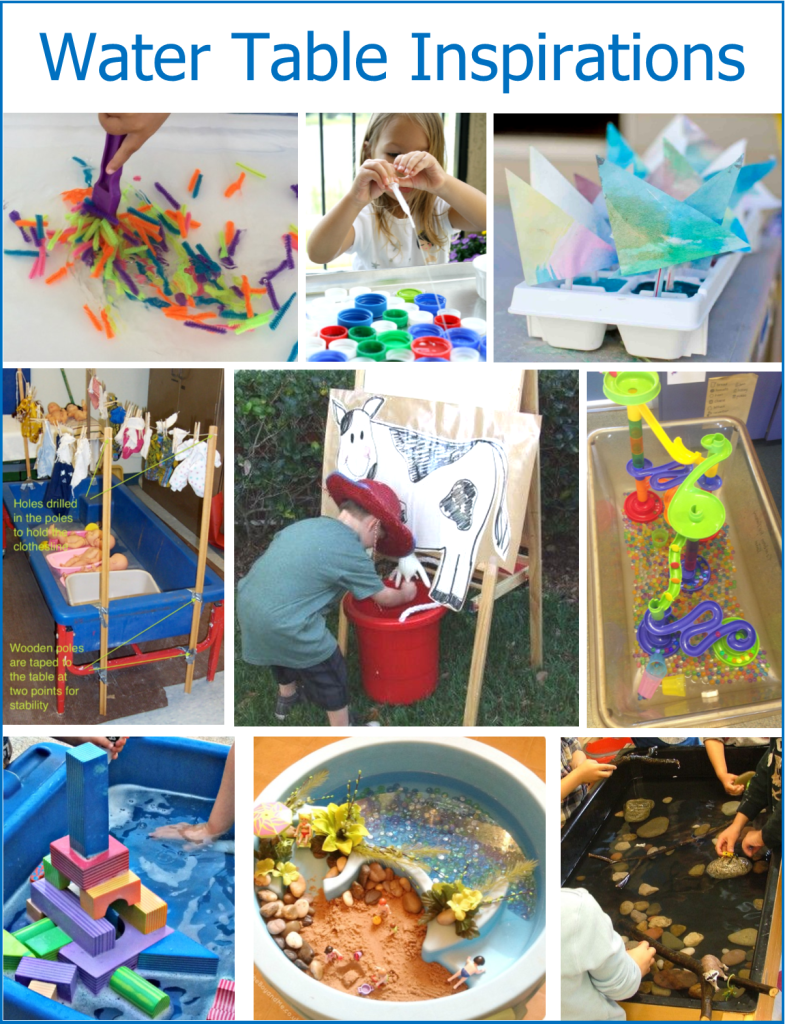
On my other blog, Inventors of Tomorrow, I focus on STEM activities for age 3 to 6. One resource there is my Ultimate Guide to Water Tables. You’ll find there a huge collection of ideas there for toddler classes, preschools, or even just for your one child at home.
On a recent day at preschool, we weren’t able to go outside due to air quality issues from wildfire smoke, so I pulled an item out of our music/group time cabinet for some fun large motor music time. My co-teacher said she had no idea what the item was or what it was for, so I thought I’d write a quick post on it and how it works.
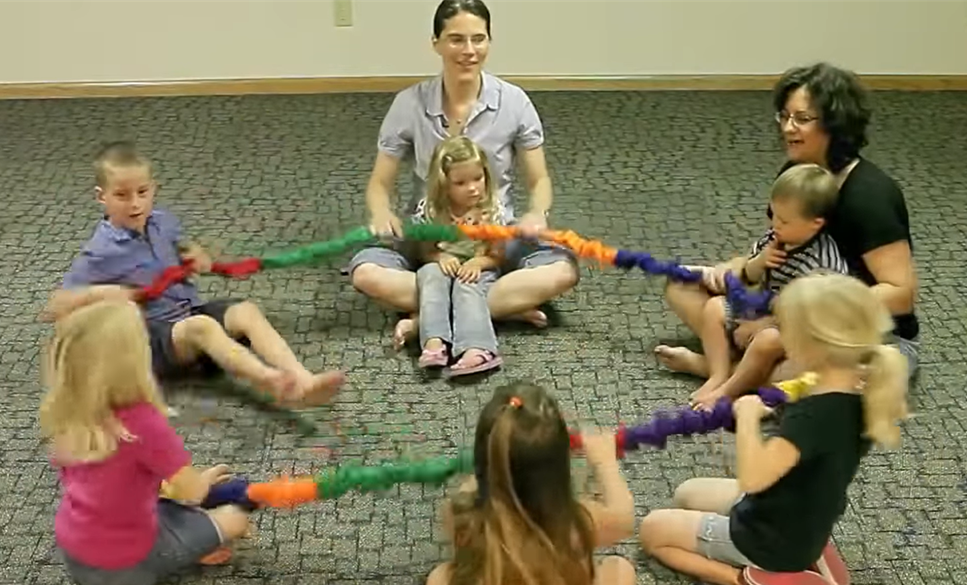
Ours is just a red elastic band loop – the elastic is maybe 1 – 1.5″ and about 12 feet in diameter. The products I see on Amazon are called stretchy bands, and look like they would work in a similar way. Or you can purchase from Bear Paw Creek. Or Elastablast from Let’s Play Together (they offer a booklet of ideas with a companion CD). On a 12 foot band, you could fit up to 8 adults or up to 16 children. On an 18 foot, you could fit up to 11 adults or up to 22 children. You can also find DIY instructions, including info on how to make one from pantyhose.
The basic idea is that children take hold of the band in a big circle, and then they move it up and down together or in and out together. It’s a little like how they use the parachute in parachute play but without all the extra fabric to get tangled up it can be easier for younger children (toddlers) to manage.
See a video of a stretchy band in action:
Or this stretchy band song shows how children can all work together as they raise it up and lower it, go side to side, and more. (I would do a simpler, shorter song for younger children!)
What makes this an interesting activity is that everyone works together. They are all encouraged to do the same thing at the same time, and they can tell if it’s working if they’re doing the same thing and the band is going the same way for them as it is for everyone else. Tuneful Teaching points out that this is helpful when you have a child who has a hard time keeping a beat – put them between two children who have mastered that skill, and the band moving in rhythm will give them the sensory experience of the beat.
There are lots of activities you can do with the band – many parachute play activities and rhythm activities can be adapted to work with it. But here are some specific suggestions:
Start when they’re sitting in a circle – tell them you’ll put something in front of them but don’t touch yet – and then lay out the band in a circle. Or lay it out in a circle BEFORE they come into the room. Then they sit around it and pick it up.
Have them raise it up, lower it down, go up, go down. Do that several times. Go in and out. Shake it fast and slow. You could do a wave where when you point at them, they raise the band – go around the circle where one raises, then the next, then the next. Play a game where if you play/sing a high note, they raise it high. If they hear a low note, they hold it down low.
Walk around the circle to Sousa march music or the Nutcracker March. Or to Mulberry Bush, where when you get to the “pop” part, everyone quickly lifts the band high and lowers it. Or to Ring Around the Rosey, where everyone falls down, still holding onto the band. Or I sing “Let’s go round and round the circle, go round and round the circle, go round and round the circle as we have done before. Go in and out the circle…”
Do a counting song – like 5 little monkeys if you have five children – at the beginning, all are standing and holding it and moving it up and down in rhythm to the music. When you say “one fell off”, you tell them which child should let go and sit down. They have a visceral sense then of how four is different than 5. And so on down. (Idea from Music and Movement Products.)
While sitting:
sing Sing Row Row Row Your Boat while making a rowing motion with the band. (Video)
Wheels on the Bus go round and round (rowing motion); wipers go swish (back and forth); driver says move on back (lean back), people on the bus go up and down. (Idea from Pre-K and K Sharing.)
Play a piece of classical music, and have them move the band to match it (might be slow and gentle waves, or fast and marching, depending on the music!)
Say “trot trot to Boston, trot trot to Dover, watch out baby or you might fall over” having children move hands up and down (trotting) and then fall / lean backward while holding onto the band.
Keeping the beat. Count together as you move the band 1-2-3-4. Once they get the hang of the rhythm, go around the circle saying each child’s name on the first beat. Peter-2-3-4, Ben-2-3-4, Isabel-2-3-4. Or do animal names or colors or shapes or whatever.
If you have a multi-colored band, then you can do things like “everyone who is holding onto blue, lift it up. Everyone who is holding yellow lean back to stretch it out.”
Stretchy Band Train: make one person the engine, and one the caboose. They walk around with the band stretched between them to make a train car – other kids can board the train car and walk with them. Watch this video.
Use it as a resistance band to stretch out and away from each other – the children can face outward and put it around their bellies, or face inward with it around their backs as they back away. (See pictures on Music Therapy Moves.) Try this pattern: Holding the band from the outside of the circle: Take four steps out, take four steps in. Then get inside the circle, facing out and wrap the band around their bellies. Take four steps out to stretch the band. Take four steps in (going backwards).
Improvising with a Stretchy Band to folk dance music – this video shows adults experimenting – going round the circle, up and down, etc. https://www.youtube.com/watch?v=qx67rTsH0FQ
As adults responsible for children’s safety, parents and teachers of preschool age children need to know and to practice what we would do in case of an emergency. Fire drills, earthquake drills, tornado drills and, sadly, lockdown drills are an essential part of planning how to keep children safe.
But… how do we talk to children age 3 – 5 about what we’re doing and why?
teach children what they themselves can do to make it better and
explain what the adults will do to make it better.
I use this approach when doing fire drills and earthquake drills. (Read this post for all the details on how I talk with children about earthquakes.) A key point is that when you talk about the possible dangers of these emergencies, keep it gentle. The goal is to Prepare Not Scare. For example, I want them prepared by knowing that in an earthquake they need to drop down to their hands and knees because otherwise they might get knocked over and I want them to know to cover their heads / necks in case things are falling. That is information that will help to keep them safe. I do not tell them that buildings can fall down and people can die. That’s really scary and doesn’t build their ability to take safe actions.
So, that’s information I share if I know the drill is coming. However, at some facilities, they do drills without warning the staff. (The idea is that the drill is more realistic if we’re not all prepped and ready for a drill.) If I’m lucky, I have already done a pre-planned drill with this group of children so we have had a chance to talk about this before. But once, I got surprised by an unexpected drill with a group of children on their second day of class when they were still getting to know the classroom and the teachers.
In that case, we just execute all the steps of our drill, and then move on. In a class with three and four year olds, I would typically just resume the day’s activities. If they seemed unfazed by it, I wouldn’t talk it through with the whole class, but if individual kids had questions, I would answer them. With older children, I might sit them down and explain more in the moment. If you are a parent who knows that your child did a drill that day, just be aware of it. Some children will never go back and ask “why did we do that thing?” If they don’t ask, and don’t seem to have any concerns about it, I don’t worry about it. If they ask questions, or seem worried about something, then talk it through.
If they have questions or concerns about the possible emergency, such as about a fire, then I explain more details, in a realistic but non-scary way. If they have questions or concerns about why we do drills, I explain that grown-ups are responsible for keeping kids safe if an emergency happens. And the whole trick with an emergency is that we don’t know when it will happen, and we don’t know exactly what will happen.
I explain that we have to have some plans we’ve practiced in advance, just in case. Our fire drills help us practice – what if we all needed to get out of the building quickly. Our earthquake drills help us practice – what if we all need to stop moving and stay where we are. Lockdown drills help us practice – what if something dangerous was happening outside, and we all needed to gather together inside where we could all keep an eye on each other. Drills are all about practicing – listening to the grown-ups and doing what they ask you to do quickly. And we’ll probably never need to use those emergency skills, but if we do, we have all practiced them and will know how they work.
My approach to lockdown drills is a little different than natural disaster situations. I do NOT explain why we would do a lockdown. I just say “if it seems like something dangerous may be happening outside the classroom, sometimes it is safest to stay in the classroom.” I don’t talk about bad guys and guns and bullets and so on. I do not want the children in my care to be fearful that people are dangerous and that a shooting is imminent or inevitable. I want them to feel safe in their world.
[I do acknowledge that I have some privilege here – I teach in a quiet suburb of a liberal city in a state with tighter gun control laws than many other states. Your environment and needs may differ.]
Now, I might not have talked about bad guys and guns, but sometimes one of the children will! Then I can address that yes, sometimes people do bad things that harm others, including using guns. But I can go back to my message of: how likely is it to happen here – not likely. What do we do to protect ourselves? Exactly what we’re doing.
How to Talk to YOURSELF about lockdown drills…
I totally understand that you, as a parent or teacher, may have a lot of anxiety of your own about school shootings, and a lot of fear where you’ve played through in your head – “what if it happened at my child’s school.” Running a lockdown drill as a teacher, or knowing as a parent that your child participated in a lockdown drill may bring that all up for you.
I would encourage you to do some processing of your own concerns, reaching out to other parents, teachers, or therapists for support as needed so that you can get to a place where you can be calm when talking to your child about these things (or at least put on a good act of being calm). During our unexpected lockdown drill, I was grateful that I am able to remain calm in these sorts of situations and focus on getting through the mechanics of a drill without going down my personal rabbit hole of “what ifs.”
If you want more ideas for how to have these conversations, I find this article Talking to Kids about School Lockdown Drills has some really helpful modeling of what to say. For example: “Even though we might hear about it when something like this happens in a school, there are thousands and thousand and thousands of schools where it never happens and it’s never going to happen. So nothing bad is likely to happen at our school. The school is all set up to keep you safe and the principal and the teachers… have all kinds of ideas and plans to protect your school and keep anyone bad away. … You’re practicing to be safe. That’s really important. … When you practice something enough, then you don’t even have to think about it. We practice [safety] all the time, like stopping at a corner and looking both ways before we step into the street.”
That article also has this really helpful description of understanding and calming anxiety: “Let me tell you why you feel so weird when you’re scared. There are two parts to your brain. One feels your feelings… The other part thinks. …When you get scared, you sometimes forget to take good breaths. And … your brain, which is hungry for the good oxygen… gets worried, too. … It thinks it’s supposed to panic and get you ready to run away! … Your heart is probably feeling like it’s racing as it sends out energy and blood to your arms and legs so you can run. But you’re not going to run, so there you are, just wondering why you feel like this, why your muscles feel tight. Your body takes energy away from your belly … so you feel those butterflies there…. you might feel dizzy. … But you can tell that part of your brain, the part that does the thinking, that you’re safe and okay. … By taking some good, oxygen-filled breaths, so nice and big that you fill your belly… Imagine that you’re blowing out candles on your birthday cake. You could even put up one finger and pretend it’s a candle you’re blowing out. And then when you’re good and empty of air, your body and brain want to fill up again with oxygen, so you’ll take a lovely breath in. And your brain starts to feel calm again. And when the brain is calm, your body can calm down, too. Like magic. Do it with me.”
I wrote a full post about play-based preschool that provides an overview of how it works, and what the benefits are. This post gives specific examples of the types of activities you might find at a play-based preschool and has concrete examples what children learn from each.
Blocks / Building Materials
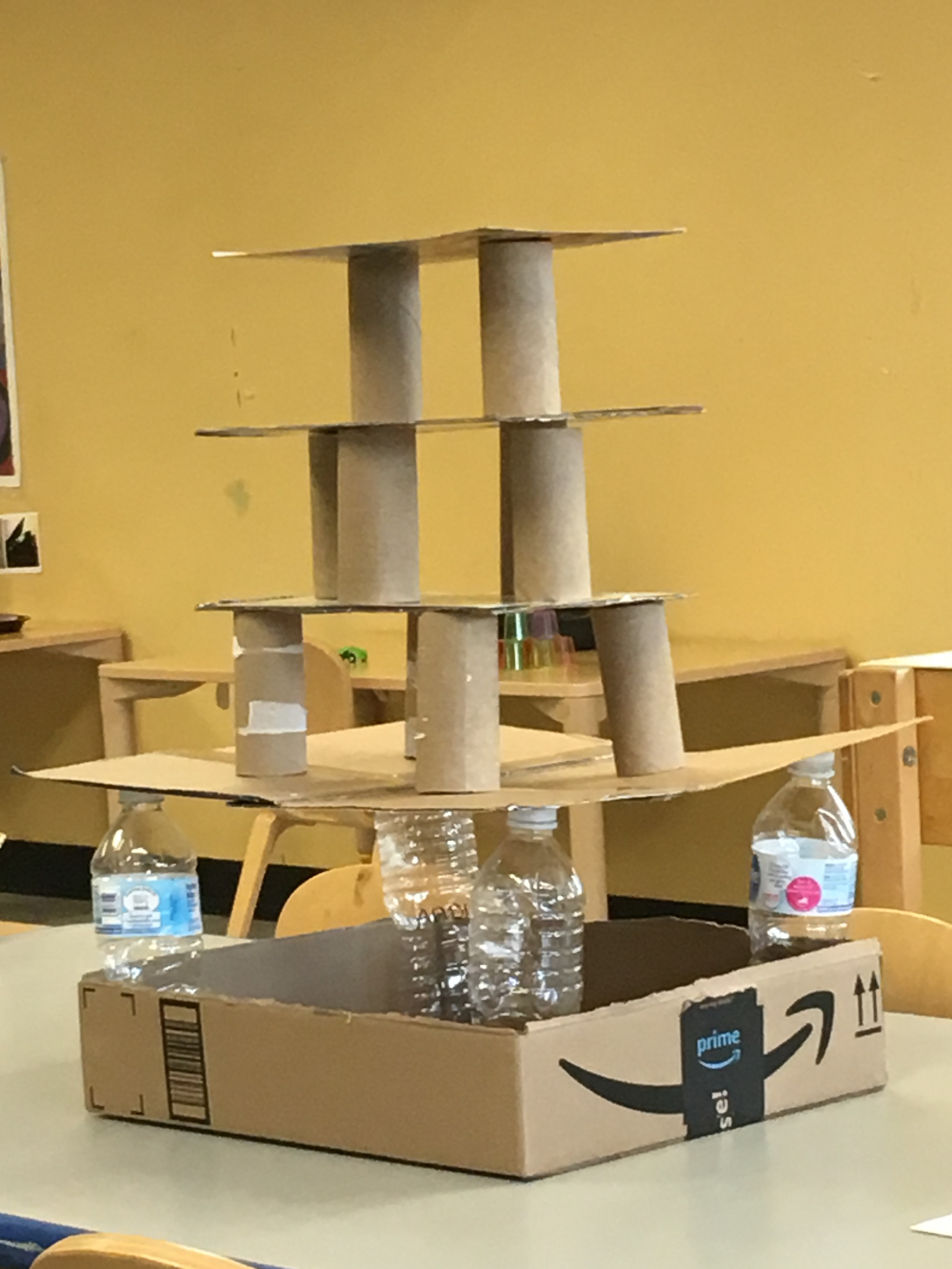
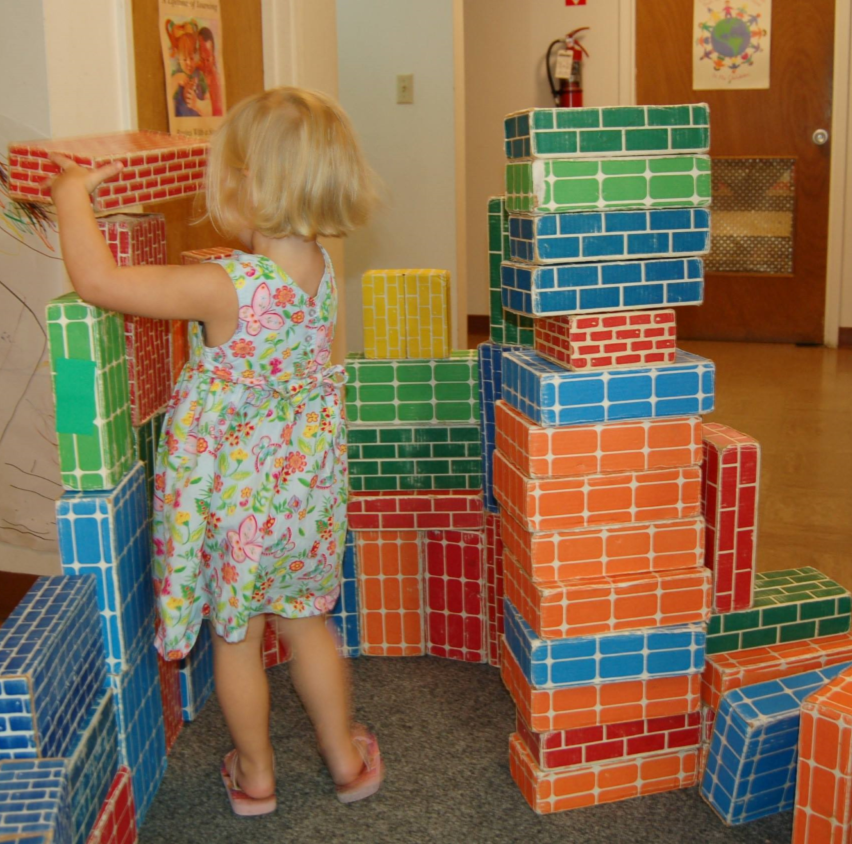
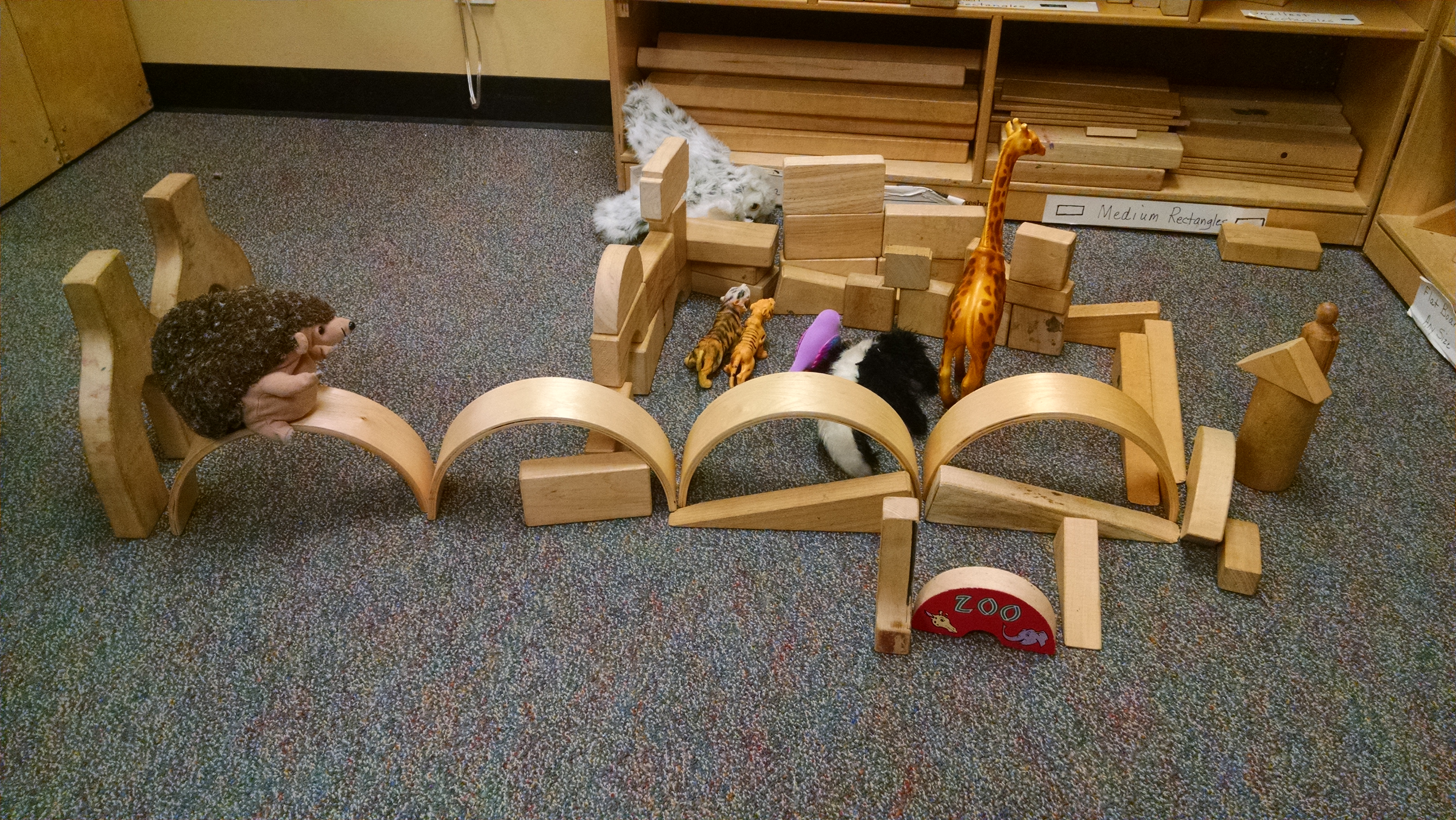
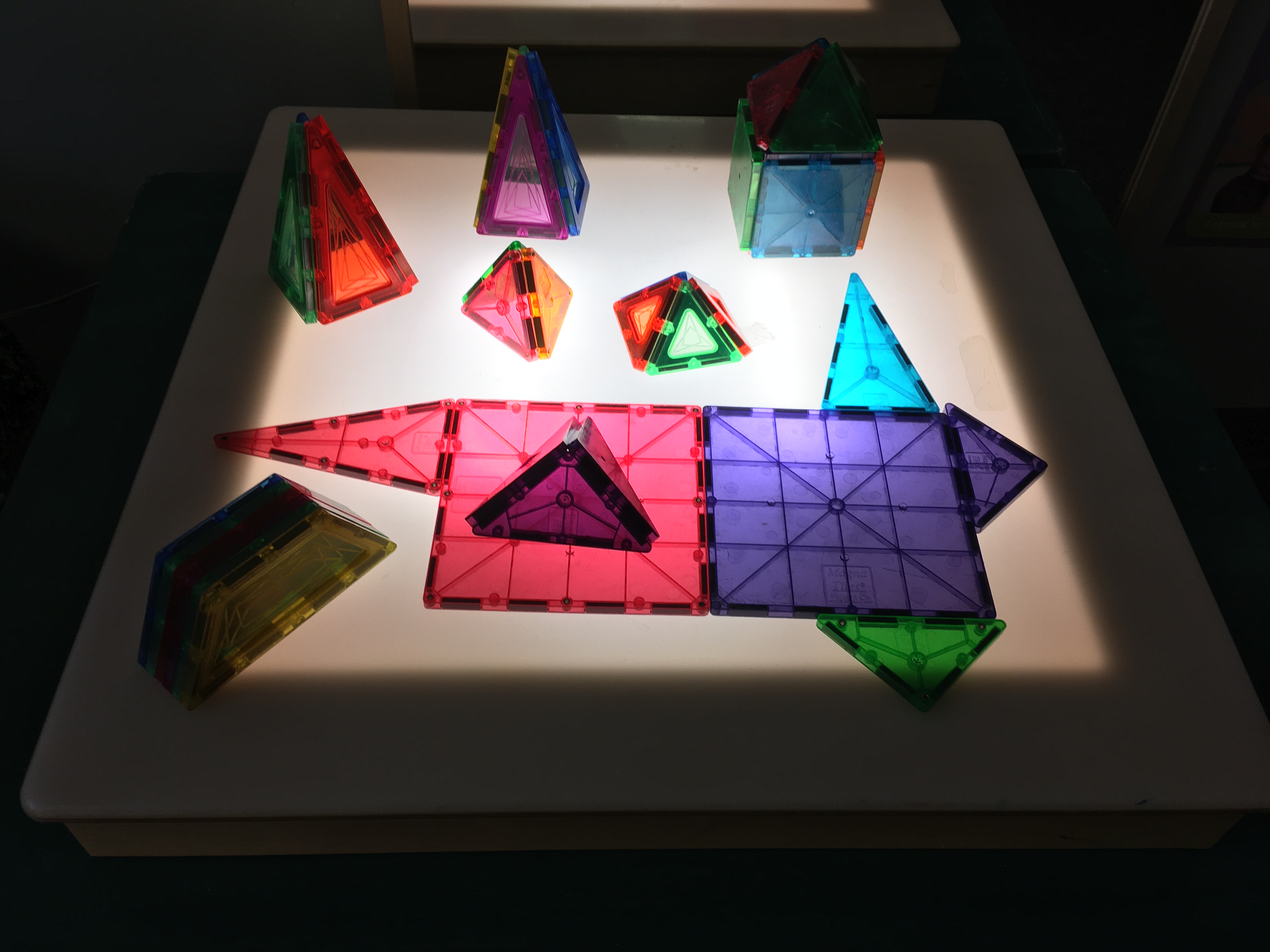
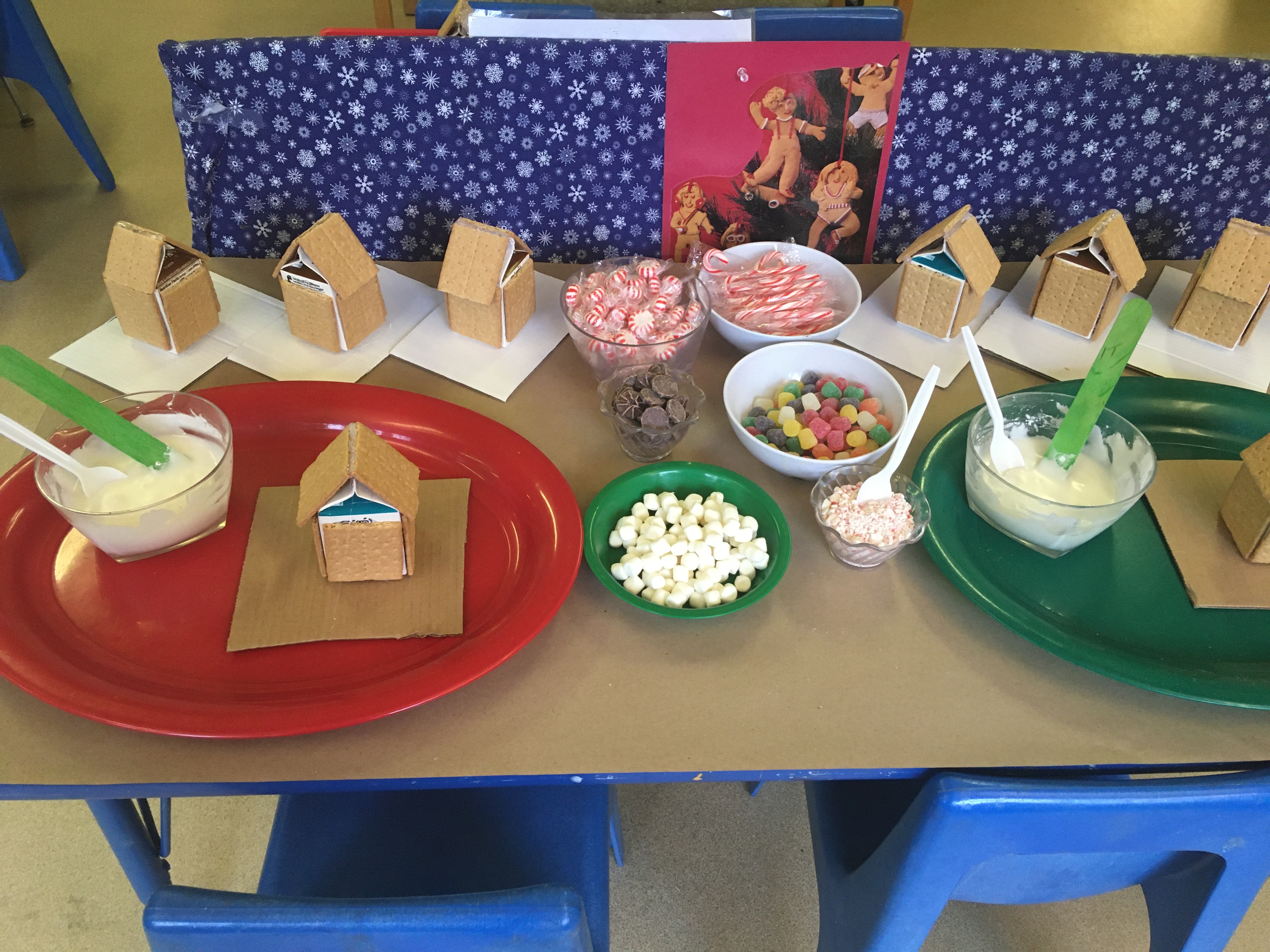
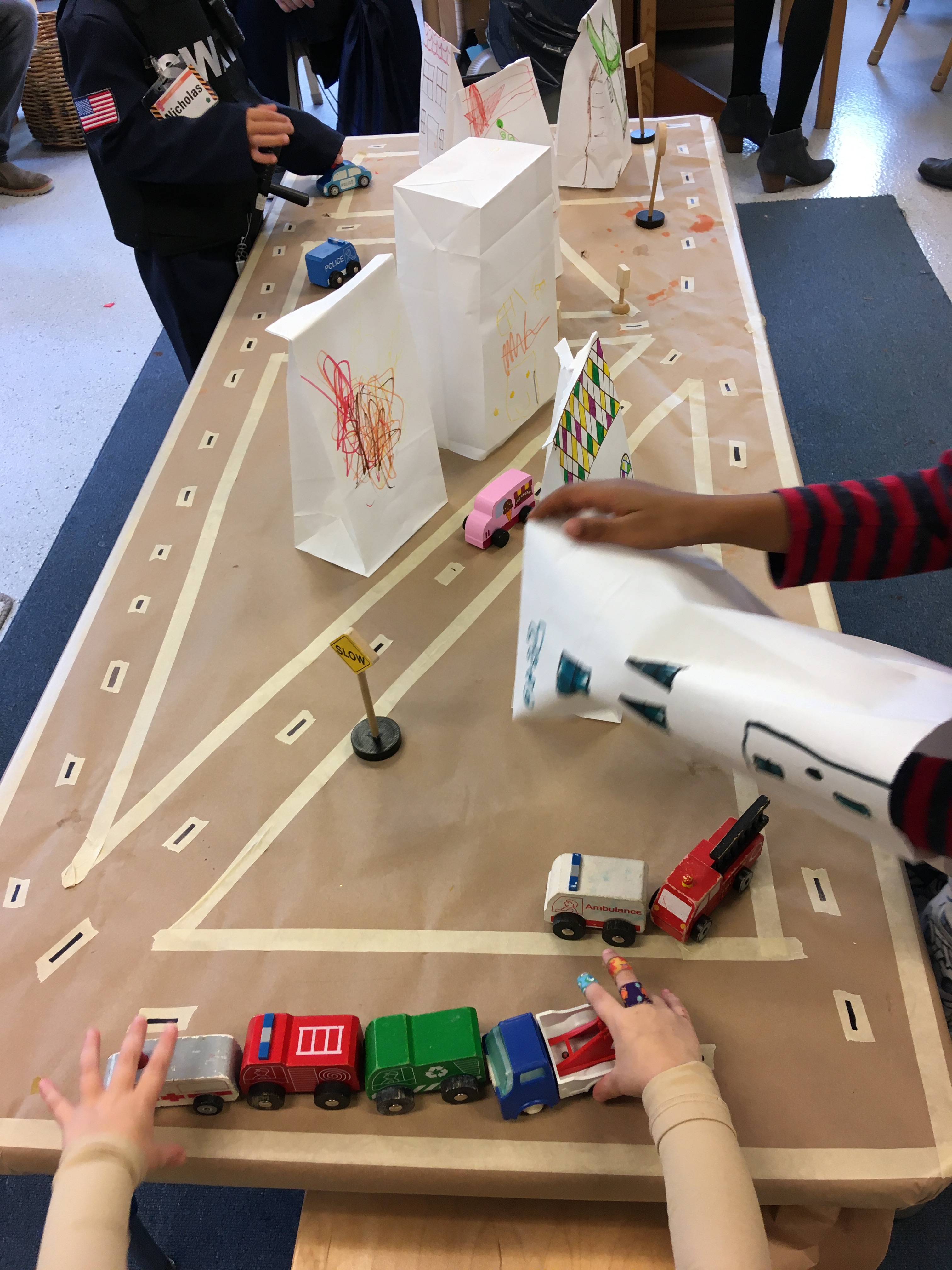
The Invitation to Play: the teachers may offer construction toys (like Legos, blocks, Magnatiles) or other creative building supplies (TP tubes, toothpicks and gum drops). Children are encouraged to use them to build any structure they choose. Teachers often mix in other supplies for inspiration: for example, add a toy giraffe and an elephant and children may build a zoo. Add cars and they’ll build roads and cities. Add pictures of famous buildings and they’ll build their representation of the Eiffel Tower. If one child wants to build a stable for her toy horses, and the other wants to make a spaceship, they have to negotiate how to share the blocks fairly.
When children build, they learn the basics of physics, spatial awareness, an understanding of what makes something stable. They learn about sizes and shapes and patterns – essential math skills. They problem solve and experience logical consequences that guide them in how to try again and build it better. They view themselves as competent creators.
Puzzles, shape sorters, manipulables
When a child puts a puzzle together or works with specially designed early learning materials, they learn important ideas about shapes, sizes, patterns, the relationship of the part to the whole, eye-hand coordination, small motor skills, and problem solving. However, many parents don’t buy many puzzles or pattern blocks, because they may be something a child just does a few times and masters. But at a preschool, they may have a whole cabinet full of spatial challenges for your child to explore.
Sensory Play and Play Dough
Sensory Play was once a staple of most preschools and many kindergartens. As public schools have shifted toward teaching academic skills that can be evaluated in standardized tests, sensory play is often phased out.
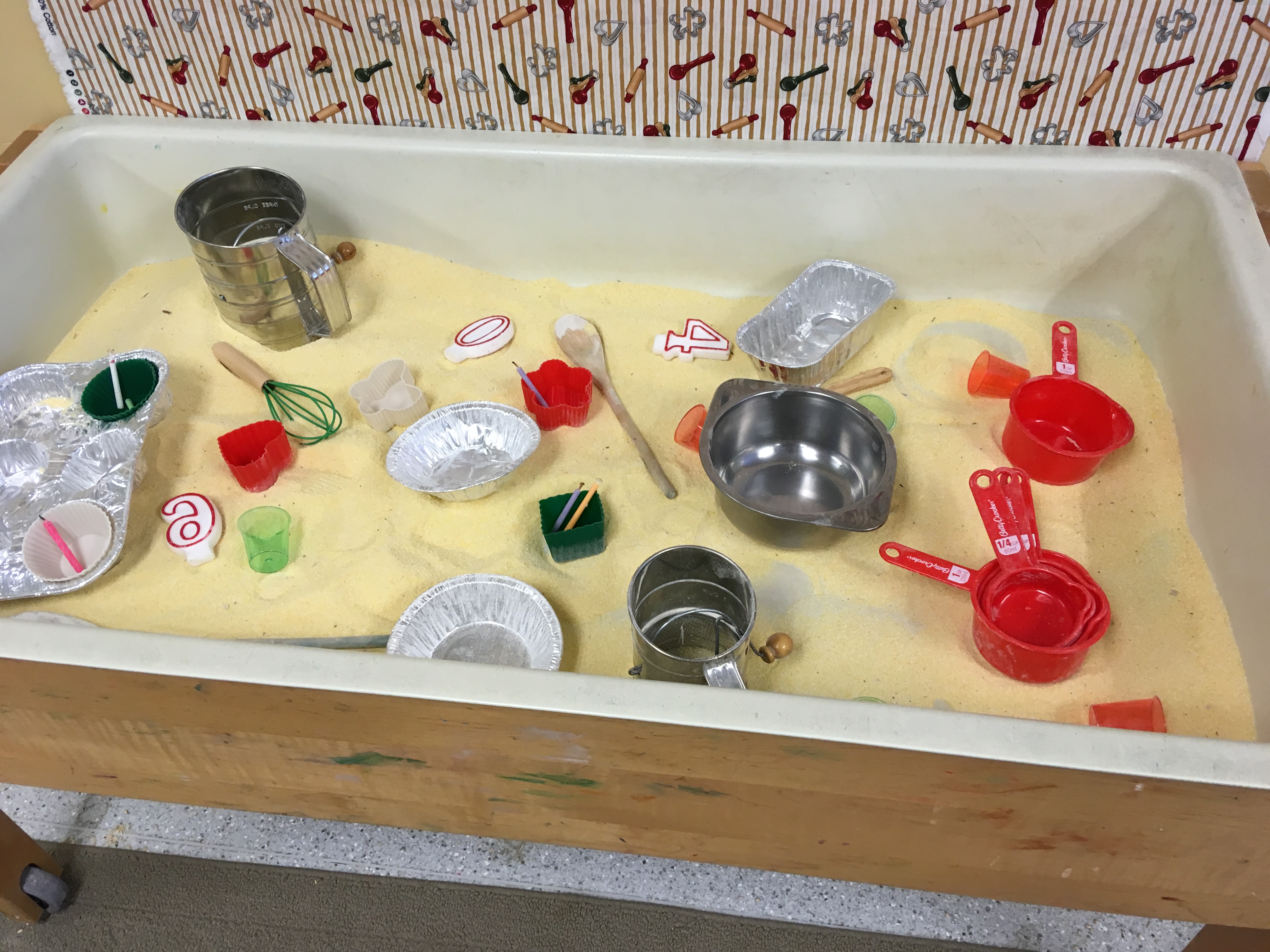
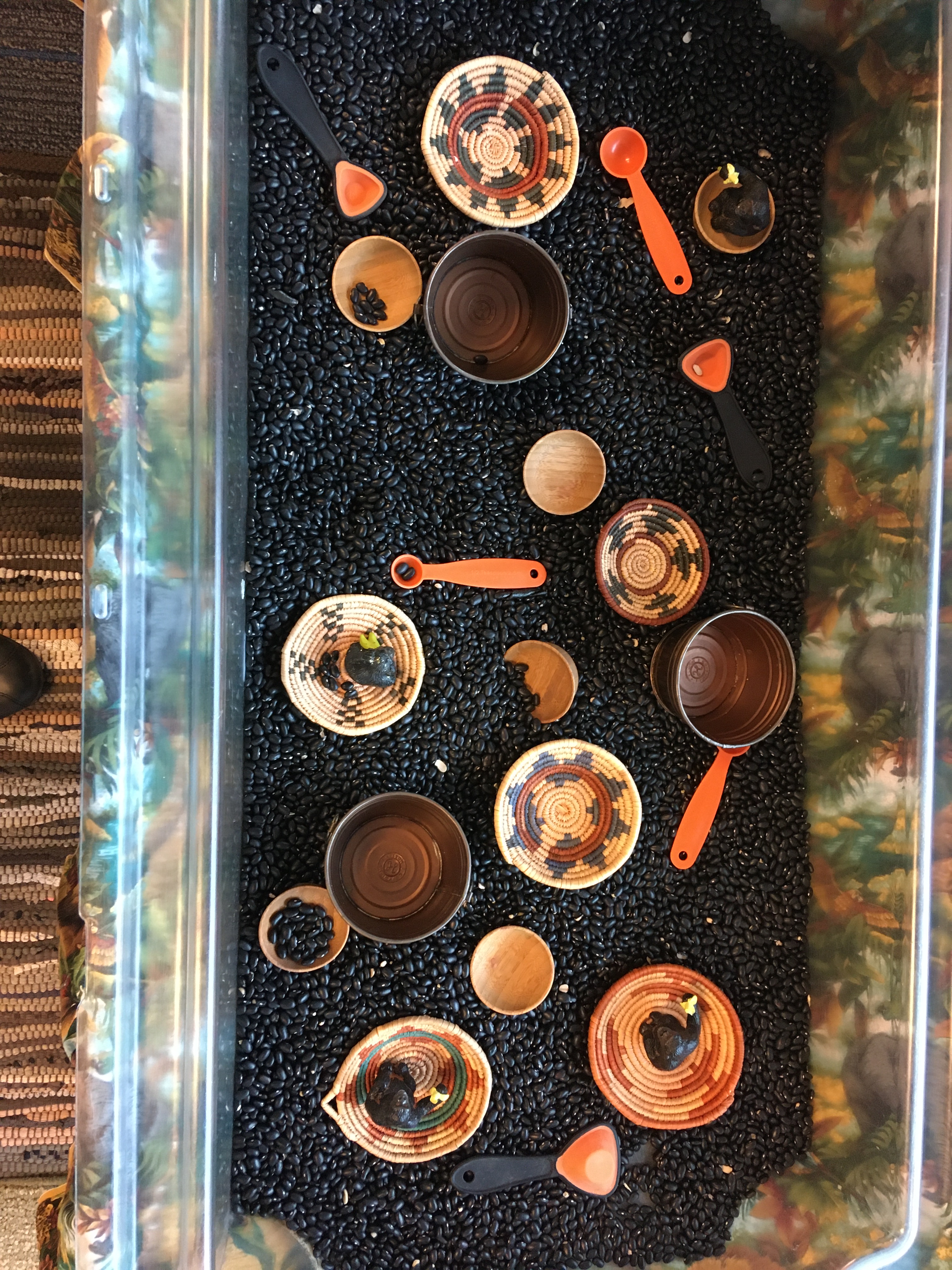
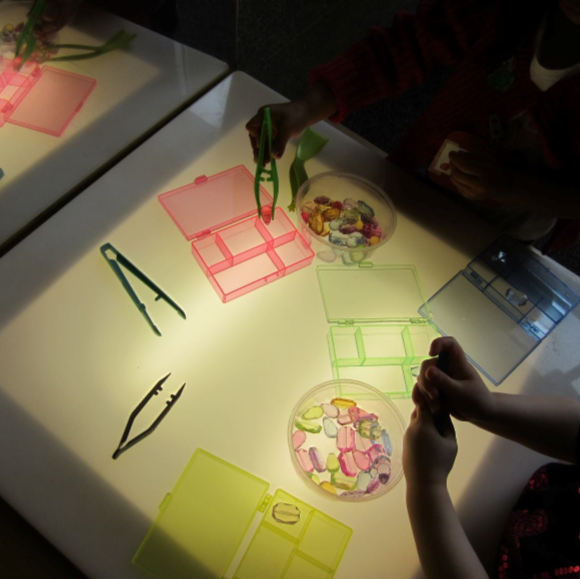
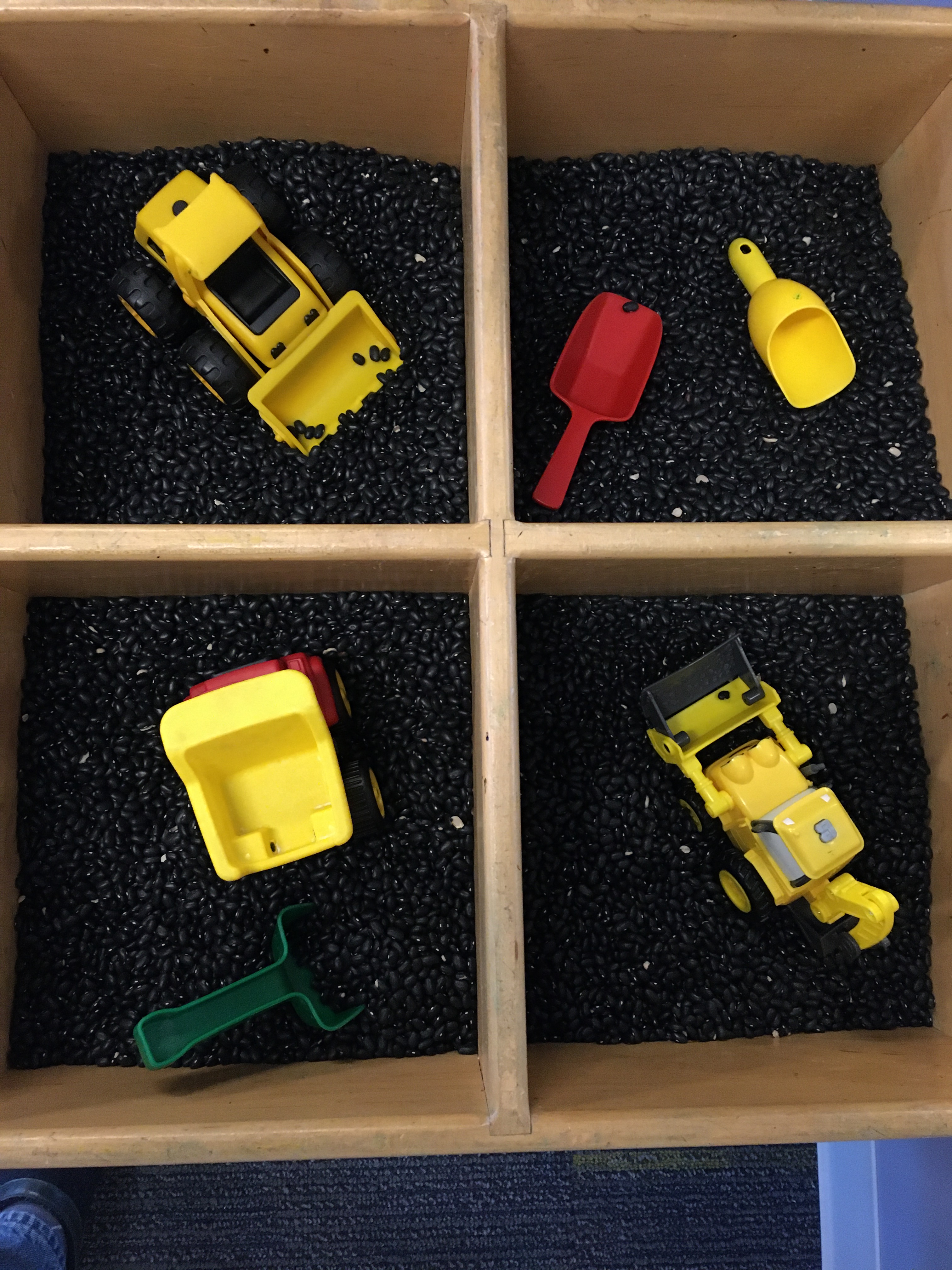
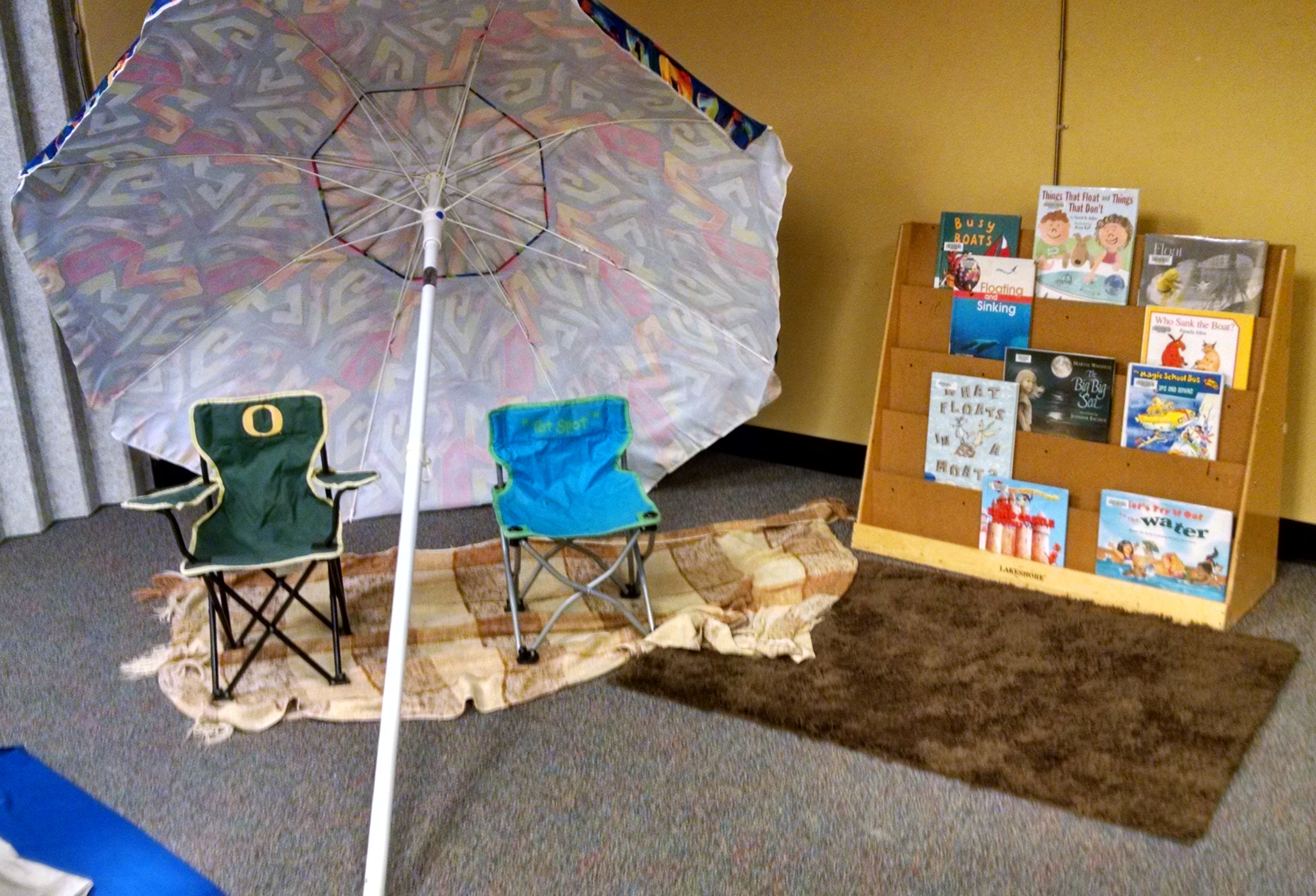
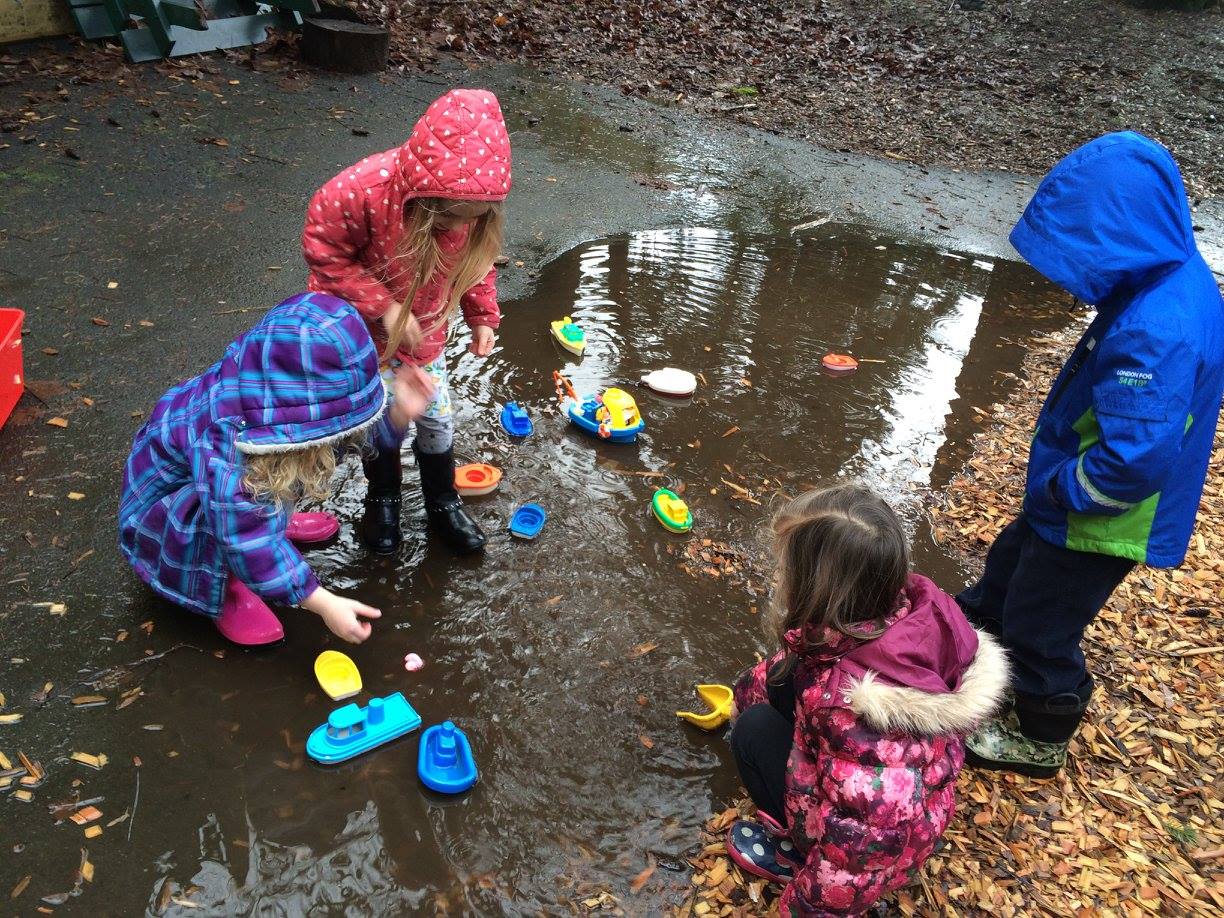
But when children play in a sandbox, or in a sensory bin full of rice or pompoms, or a water table, or on a light table, this multi-sensory experience can teach so many things. They build eye-hand coordination as they pour and scoop; learn concepts of empty and full, volume and weight – relevant to math; properties of solids and liquid in motion, that the amount of a substance remains the same even when the shape changes, and that some things sink and some things float (science!) They get comfortable with their hands being messy. (This is an important life skill – sometimes we all have to do messy things!)
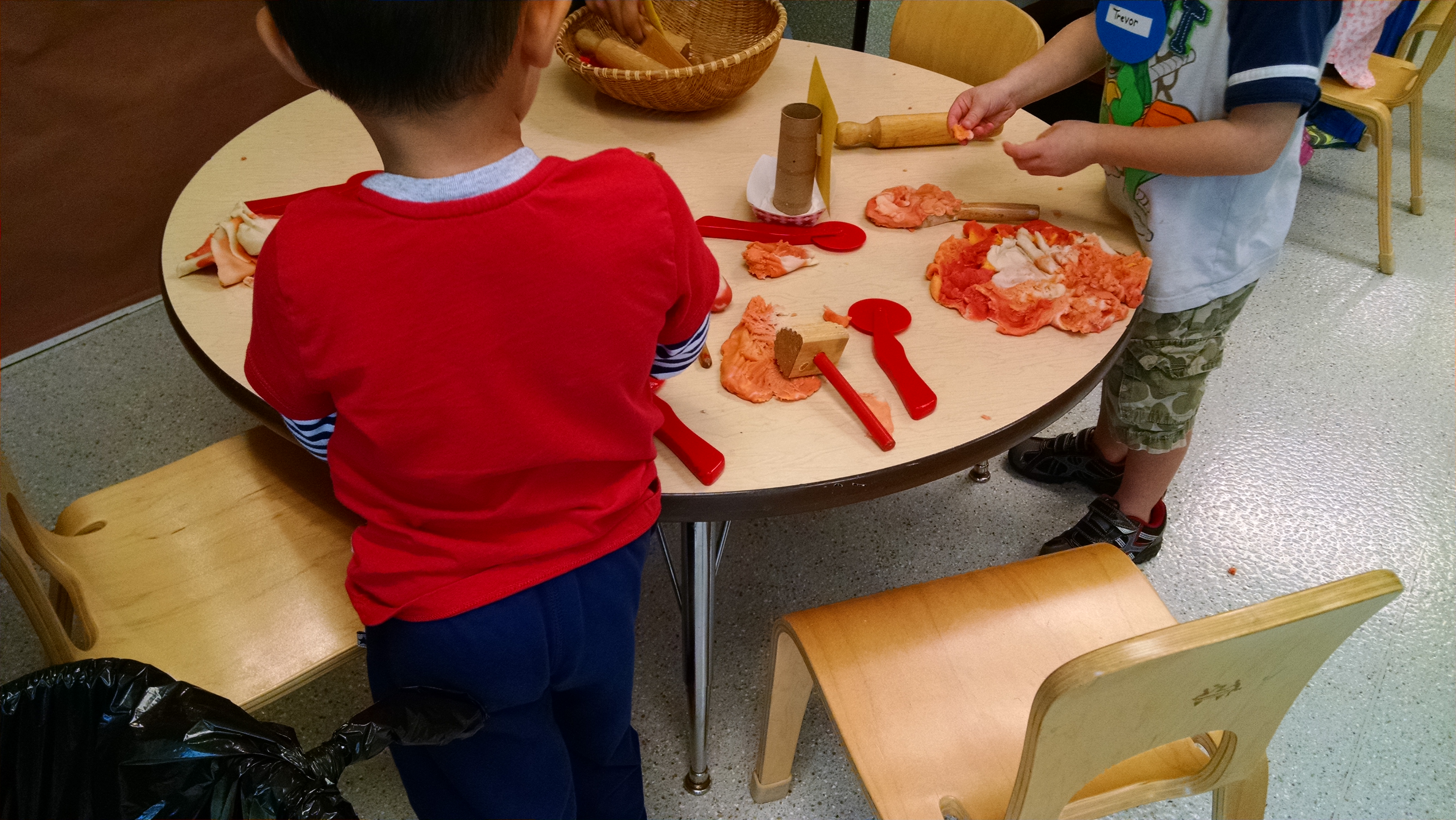
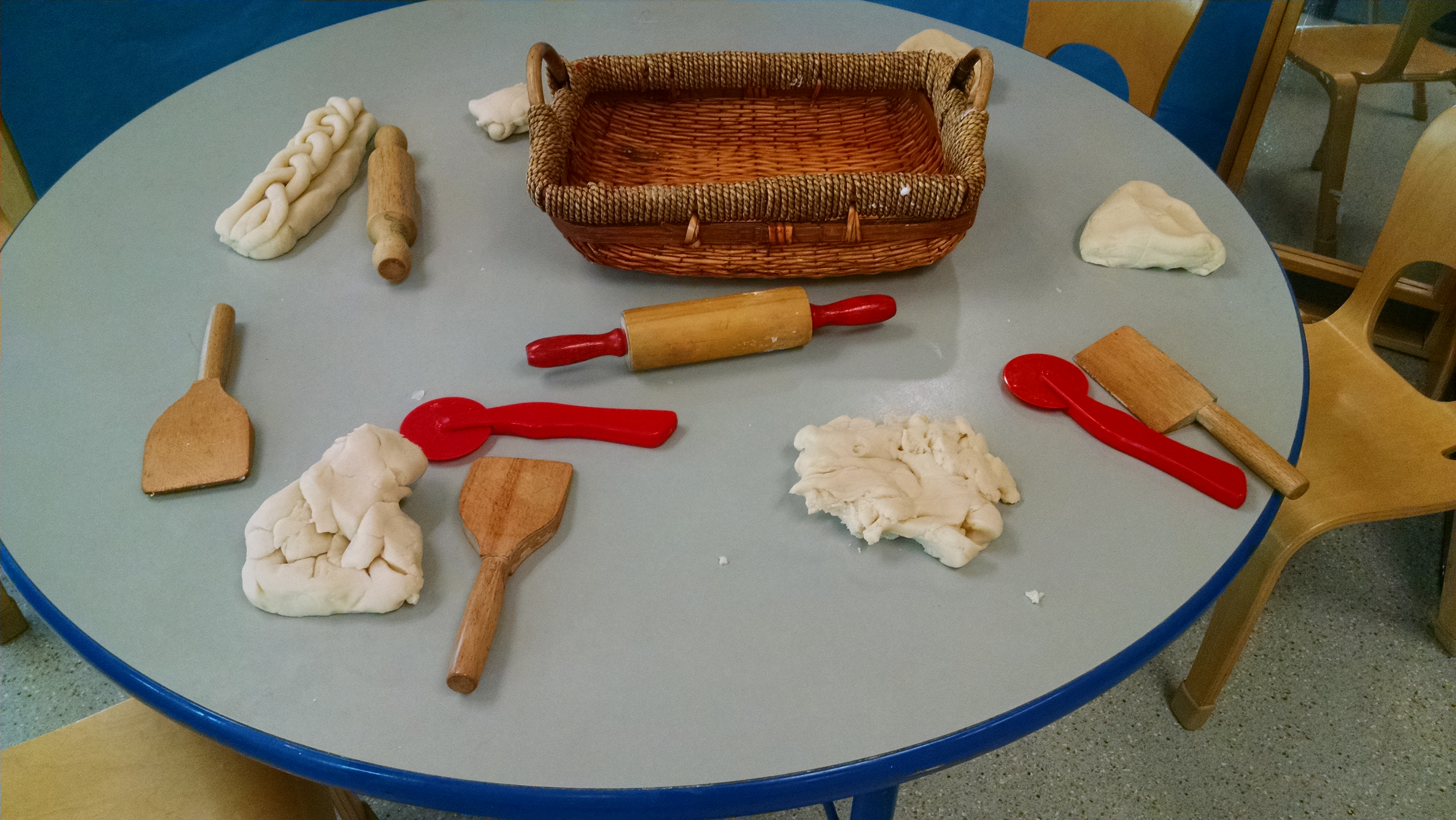
In the sensory tables, and with play-dough, they can explore how to use so many tools: tweezers, tongs, spoons, scoops, shovels, funnels, rolling pins, cookie cutters, egg beaters and whisks, pipettes and eye droppers, scales, measuring cups and spoons, potato mashers, pizza cutters…
Playdough also gives children the opportunity to
express feelings, squeezing and pounding
learn about negative and positive space when they cut out shapes with a cookie cutter (this helps with reading)
build finger muscles
Art Process / Writing Practice
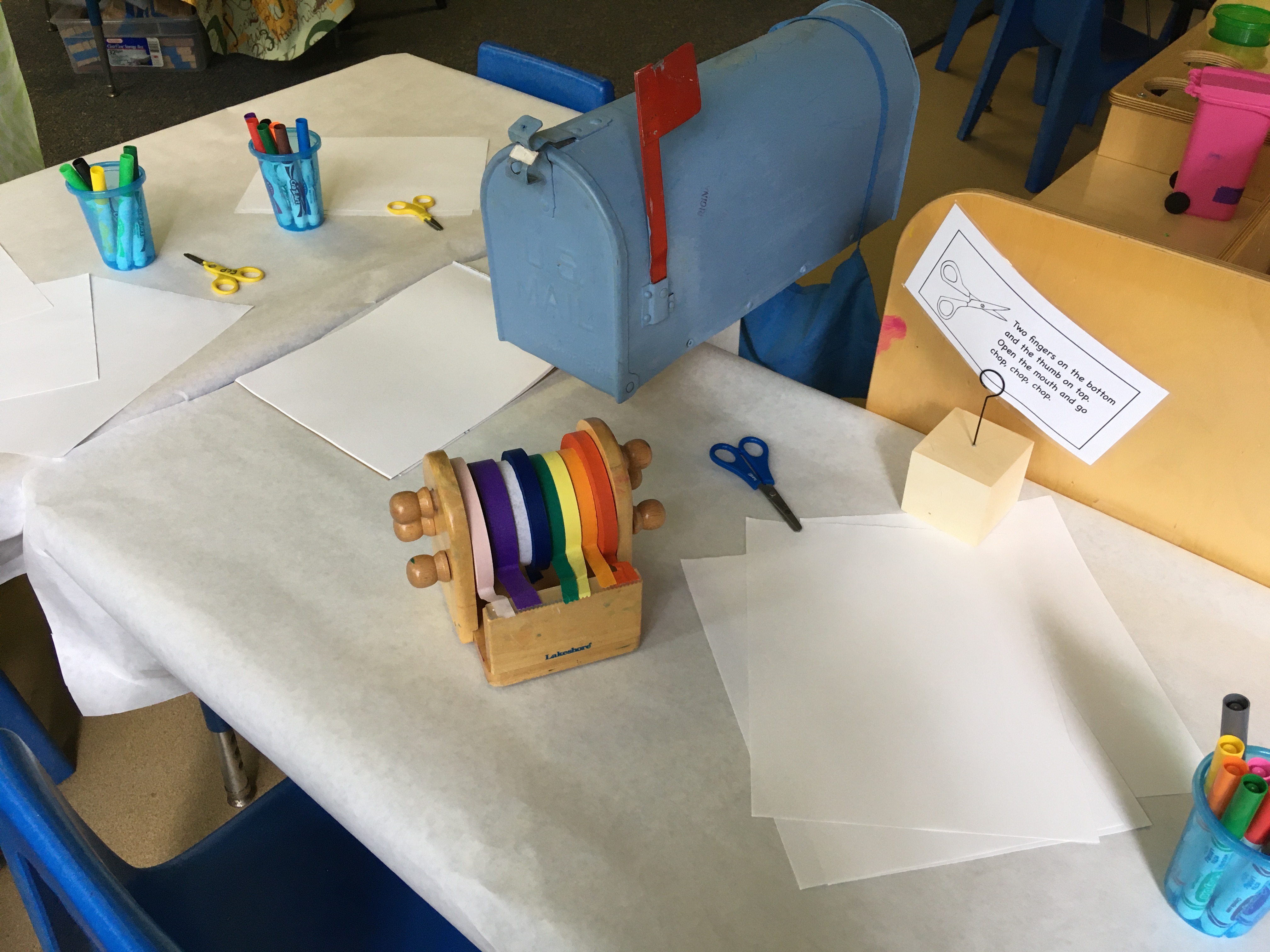
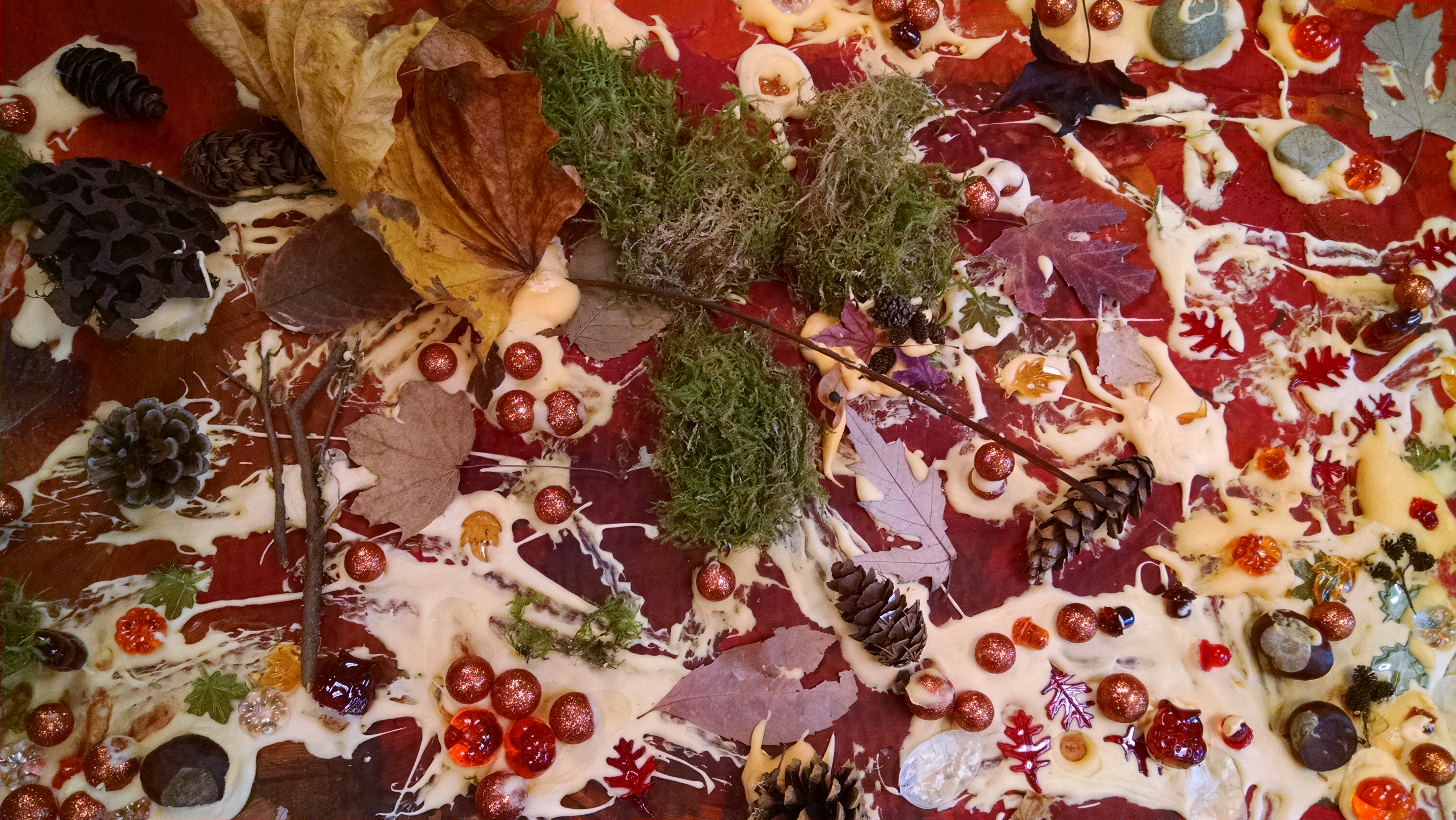
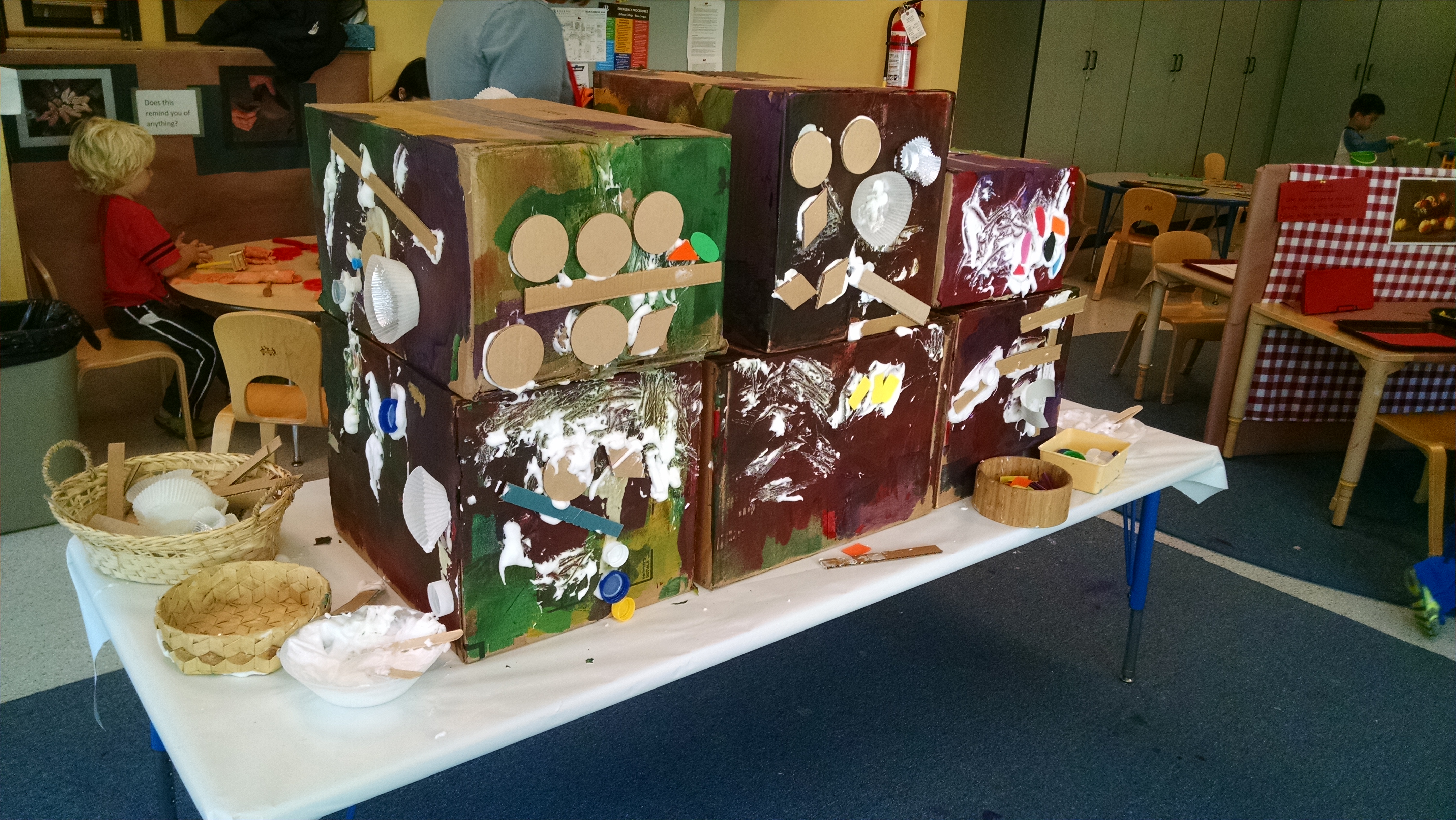
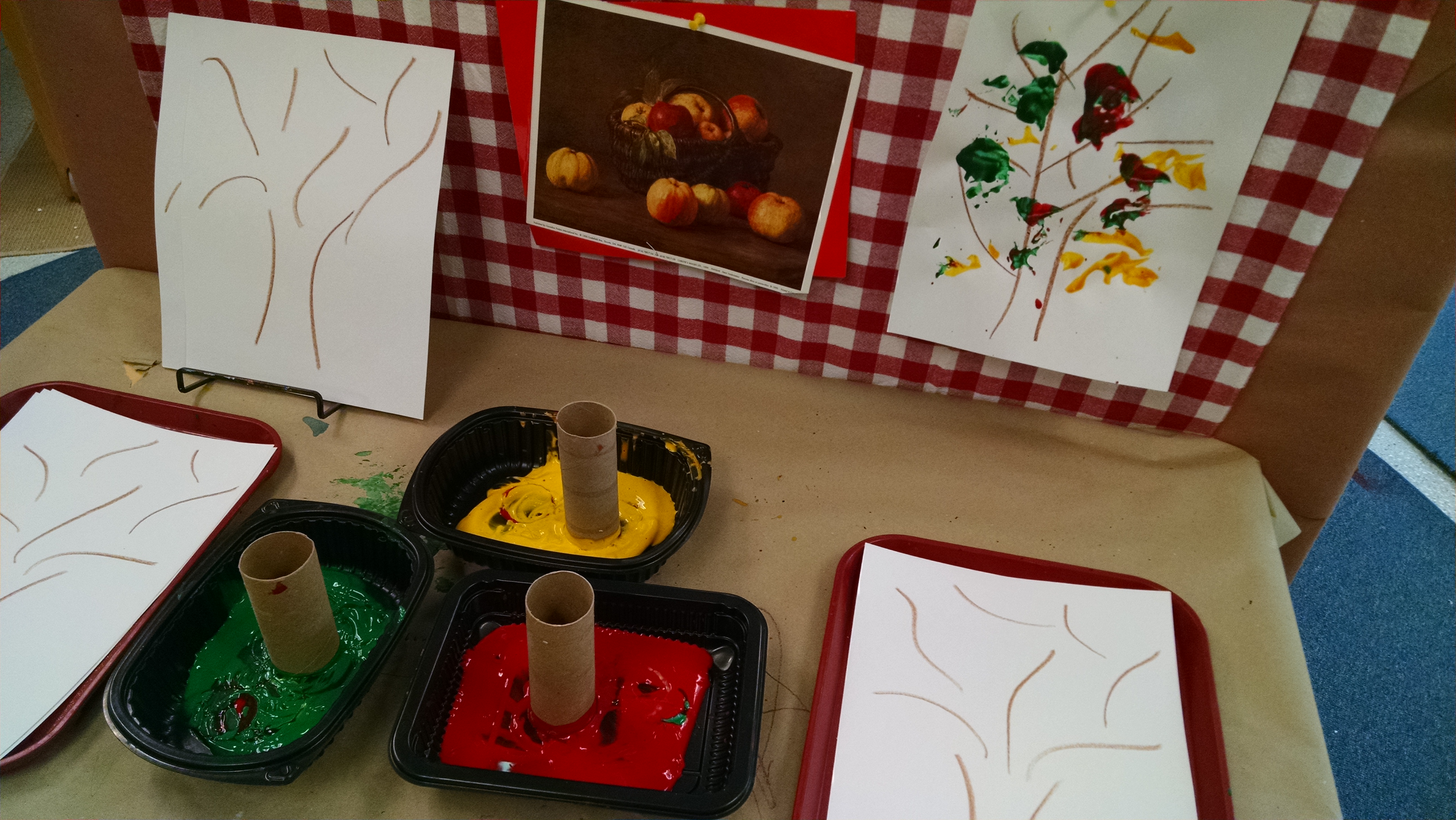
Preschools often have an easel set up every day, with various kinds of paints and various kinds of painting tools – brushes, rollers, sprayers, or sponges. Children are free to paint anything that they choose to. Many preschools have a “creation station” for collage, offering cardboard and paper for bases, glue and tape, and miscellaneous things to glue on: pompoms, googly eyes, plastic lids, tissue paper scraps, styrofoam popcorn, pretend jewels… almost anything! Many preschools have a writing station with office supplies – paper, markers, pencils, pencil sharpeners, staplers, hole punches, scissors, stickers, rubber stamps, envelopes and so on. Children can make cards for their parents, signs to support their pretend play, booklets, anything they choose. We also do wacky things like salad spinner painting or painting with cars or putting a paper plate on a record player and drawing as it goes round and round.
These are all process-based art activities. No one is dictating what they must create there or what the final product needs to be. It’s completely up to the child to envision something and to make it real.
The children learn how to use all the tools and all the media, they build their finger muscles and their pencil holds, they learn names of colors and how to mix new colors, they learn to recognize shapes and to create shapes, they learn about symmetry, balance, and design. The art is a creative outlet for expressing their feelings and learning that their ideas have value.
Art Projects and Crafts
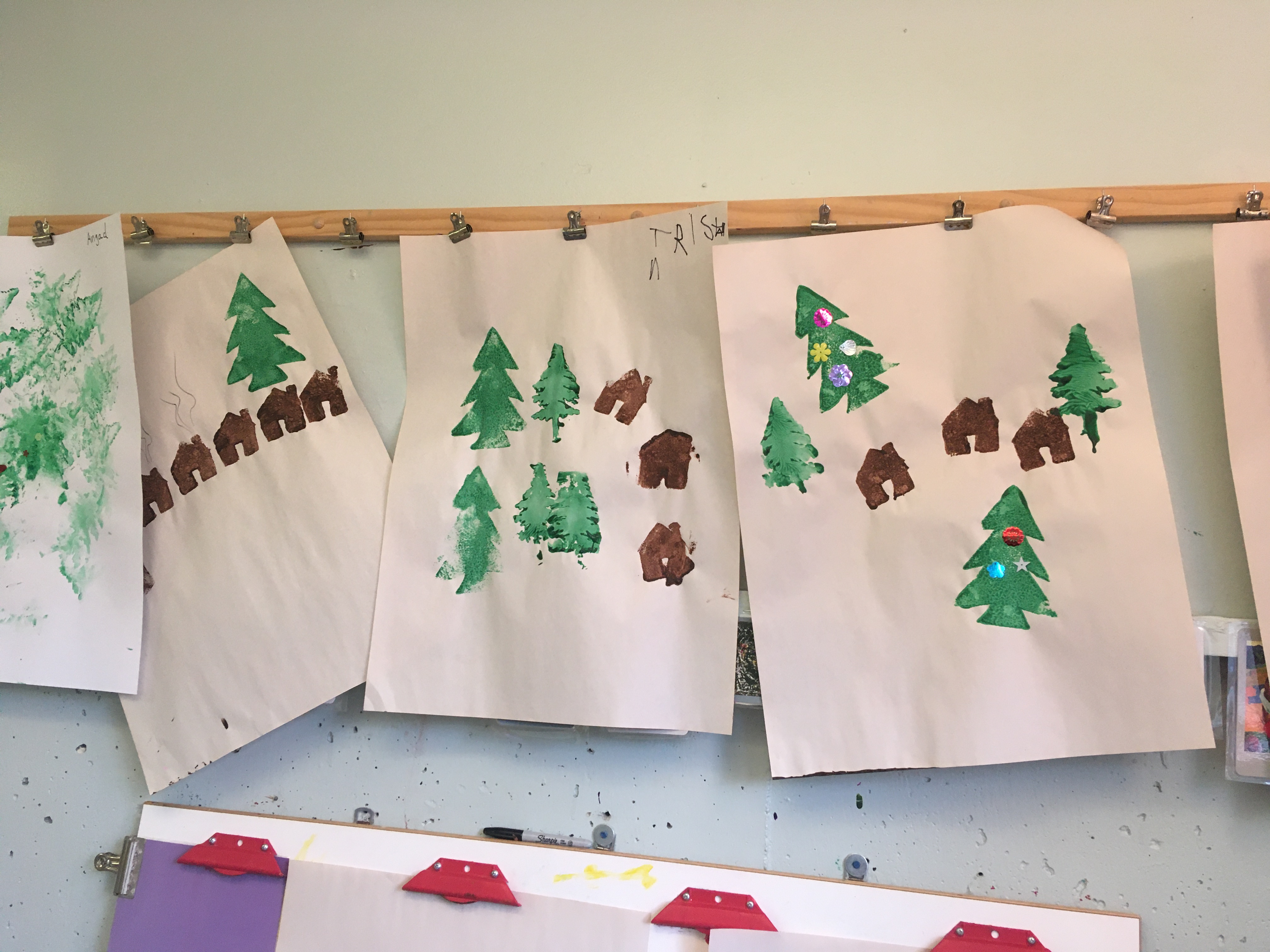
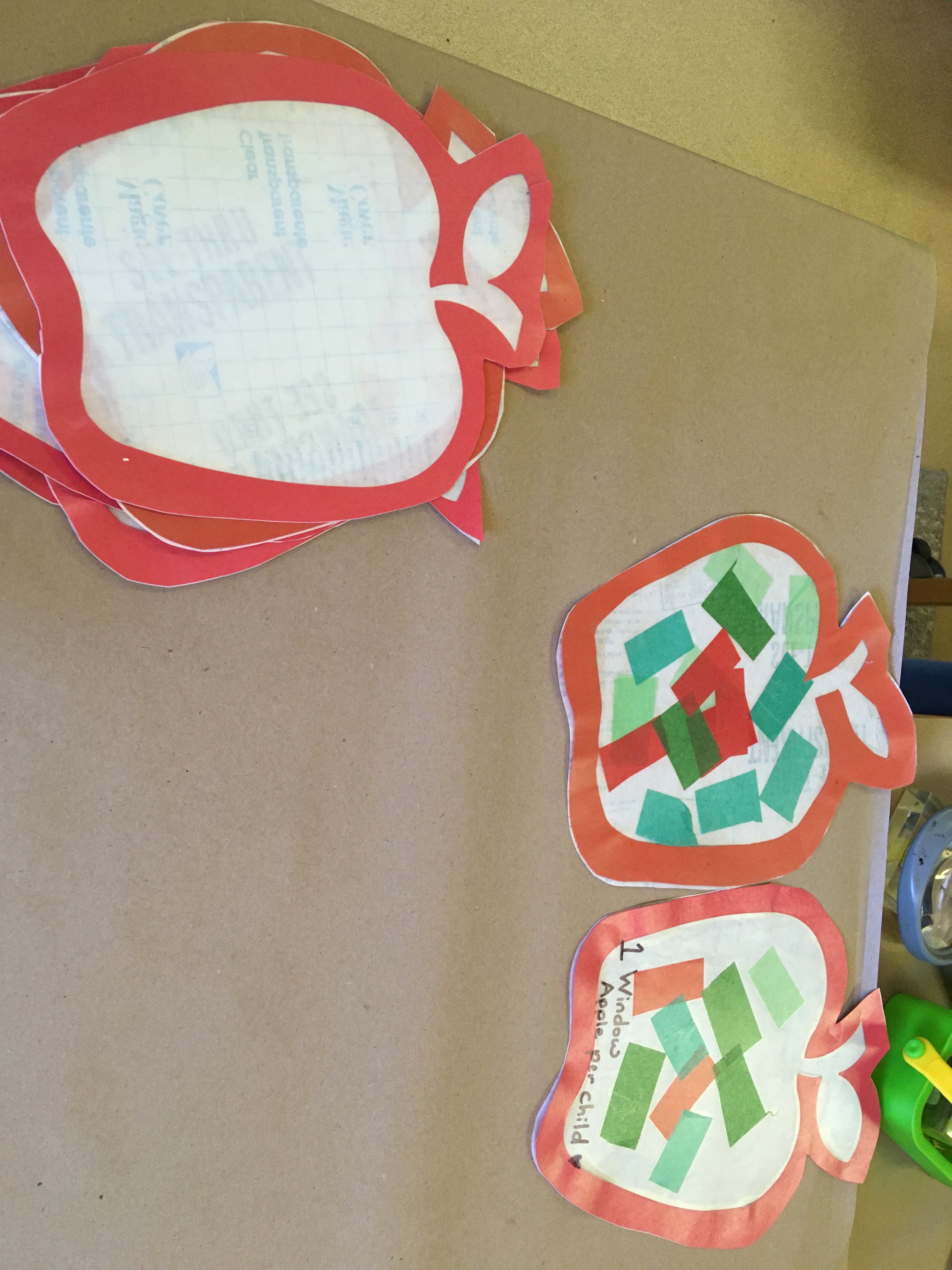
In addition to art process, we also have projects. These are activities where the teacher creates a sample and puts out all the materials for kids to make a project similar to the sample. It’s up to the child whether they want to use the materials in that way or do something else with them. But we do encourage them to try re-creating some projects, because it gives them practice with following multi-step directions. It lets them practice close observation skills and learn how to imitate or re-create what they see. We can build new skills into these projects they can then apply elsewhere, such as a project where they practice cutting curvy or zigzag lines.
Cars and Trains / Doll Houses / Play Farms
We have toy trains, toy cars, bulldozers and more. Children learn how wheeled vehicles move through the world and what happens when they crash. They learn how things need to be pushed up hills, but going downhill, they go fast on their own (physics!). And, because these toys tend to be very popular with our active, high energy kids, they also often provide opportunities to practice sharing and conflict resolution!
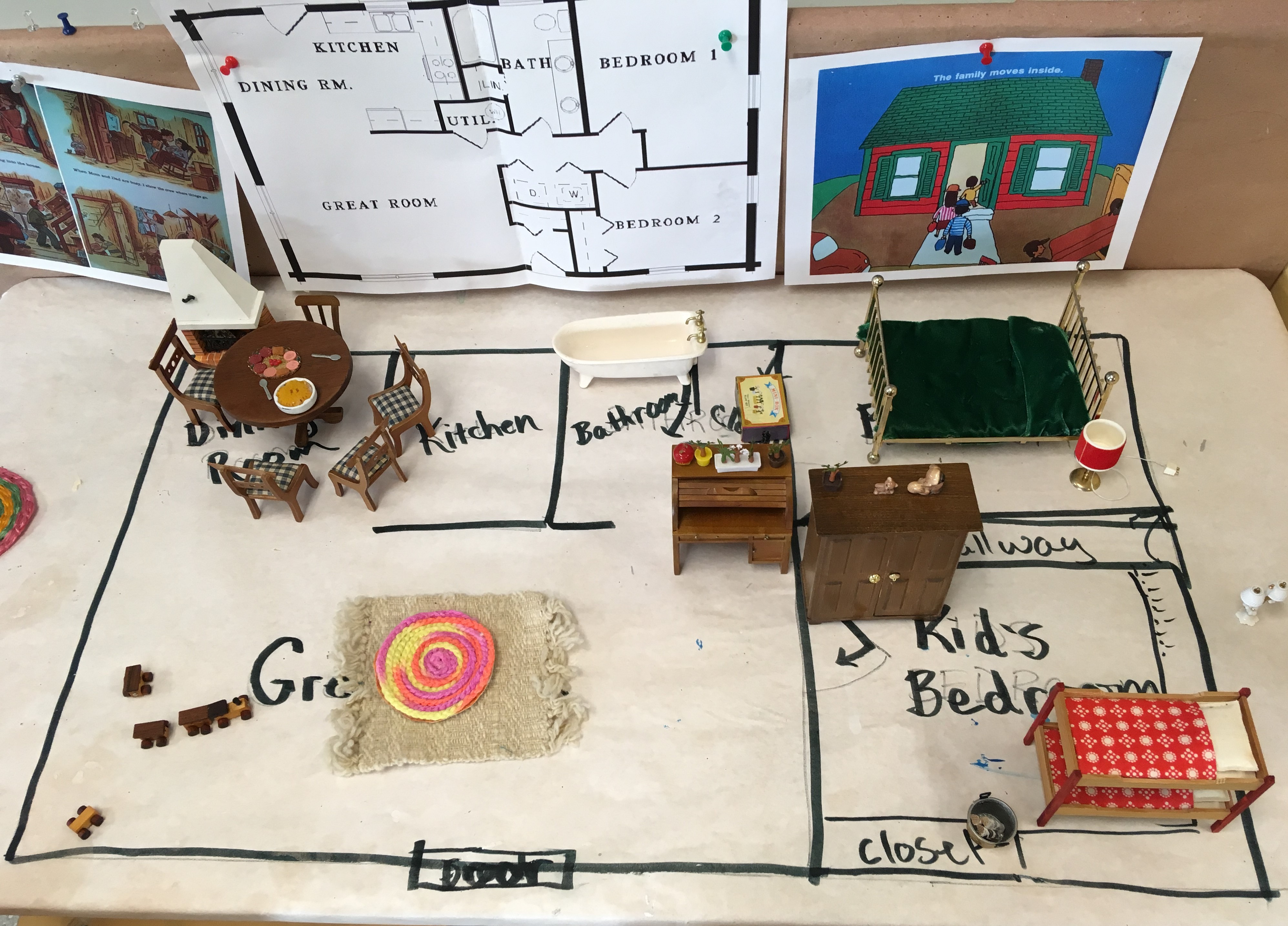
We have small dolls and doll house furniture. We have small plastic farm animals and farm equipment, woodland animals, and zoo animals. Kids may play with these and the cars on their own or they may be combined with the blocks, sensory bins, art supplies, pretend houses we made, and more. When children play with these small worlds, they do a lot of sorting (“I’ll put all the cows in this stall and all the horses in this stall”), counting (“I have 7 racecars that are ready for the race to begin”), and story-telling (“the lions were all roaring at the elephants”). They also co-create with other children – playing side by side sometimes, but then having their horse talk to the other horse, or their doll call the other’s doll to the table for food.
Dramatic Play
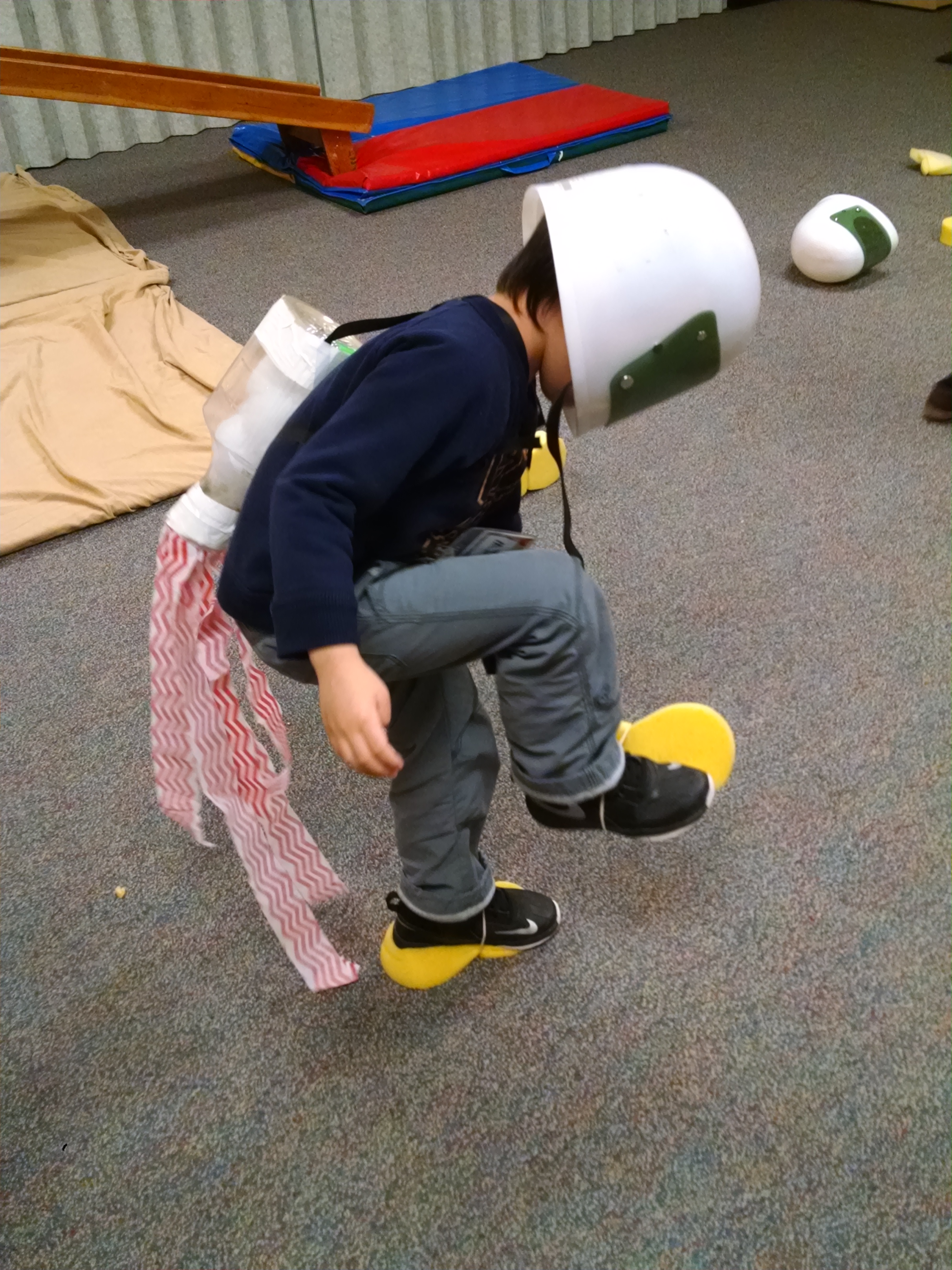
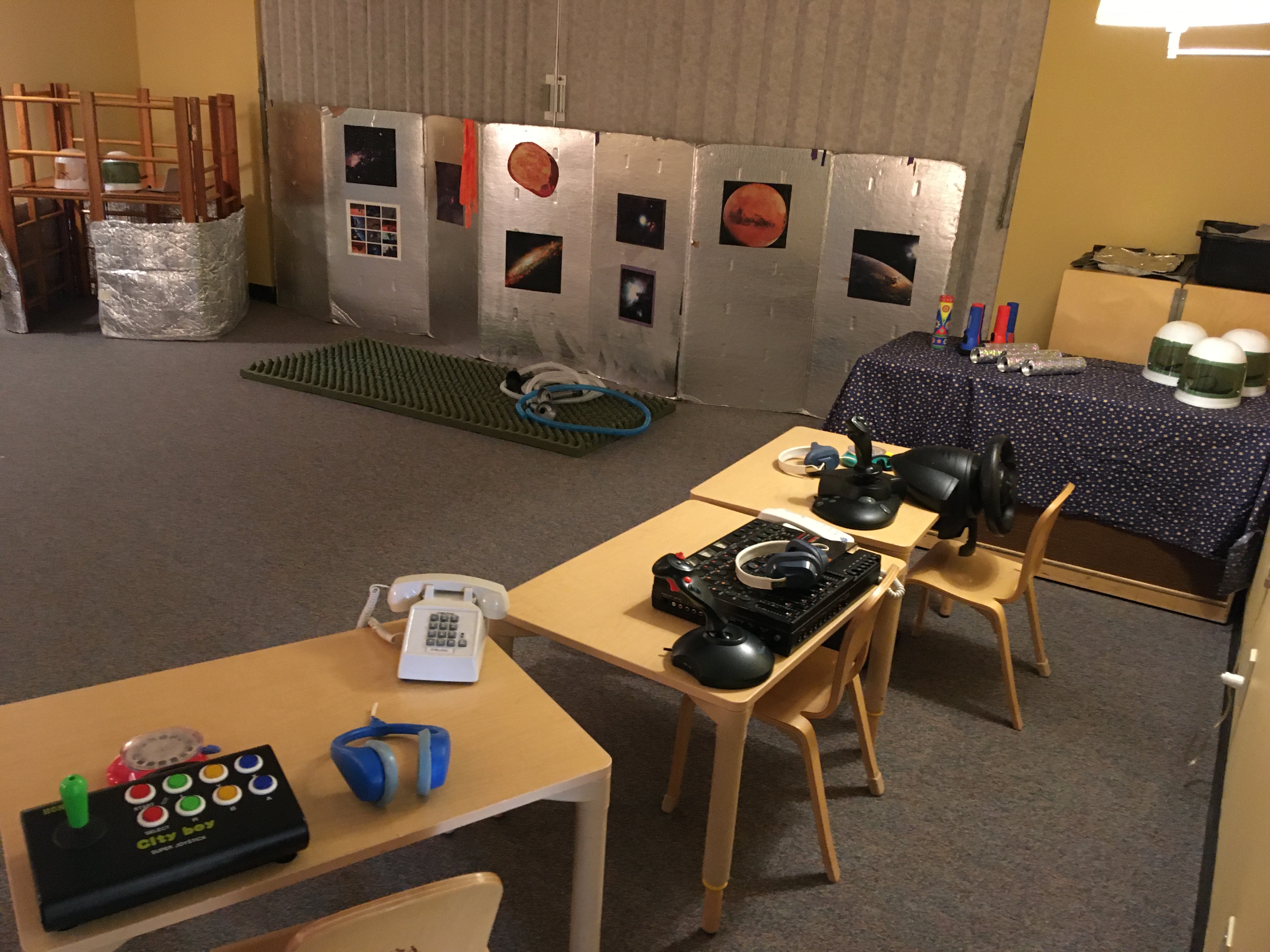
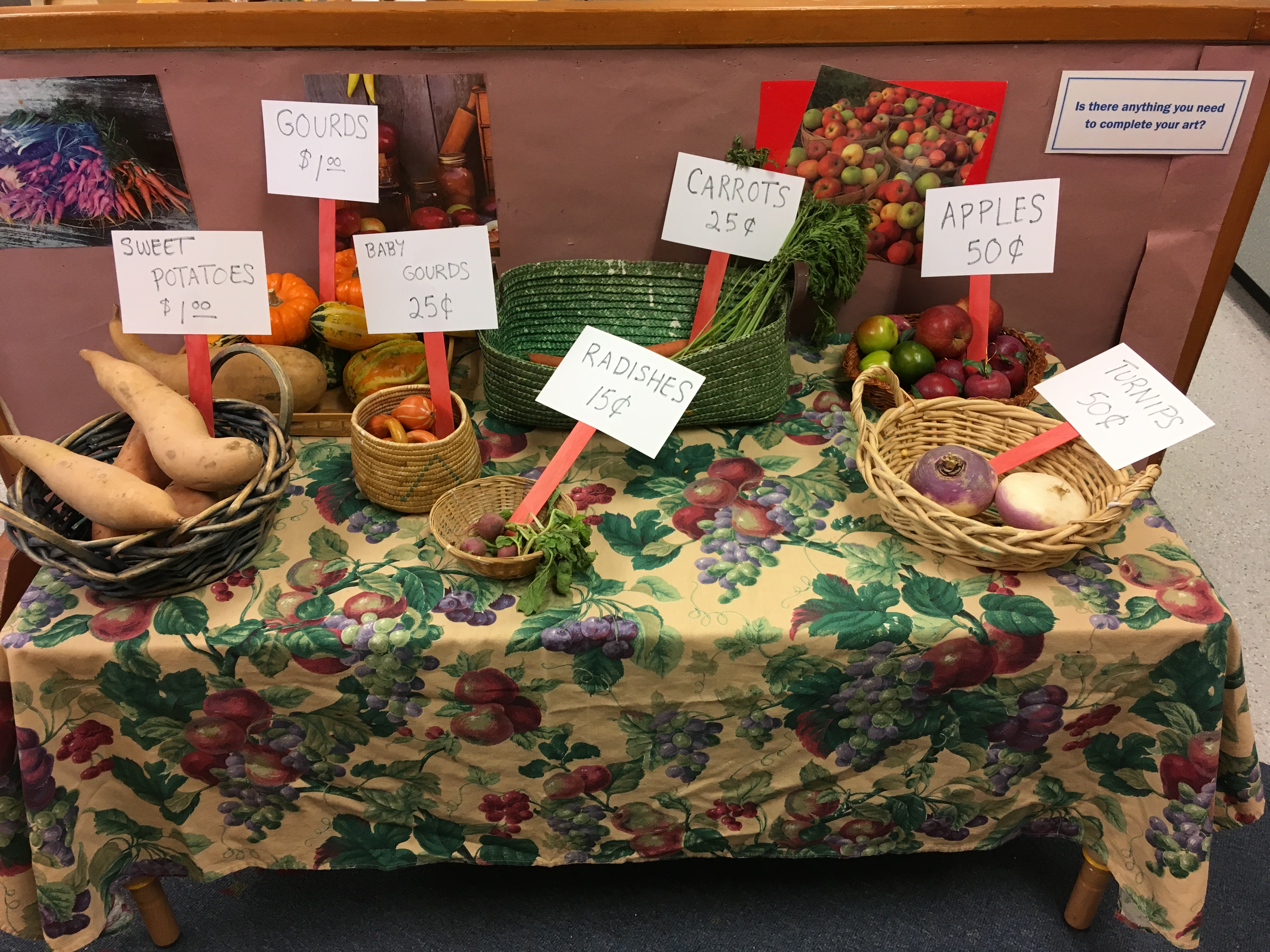
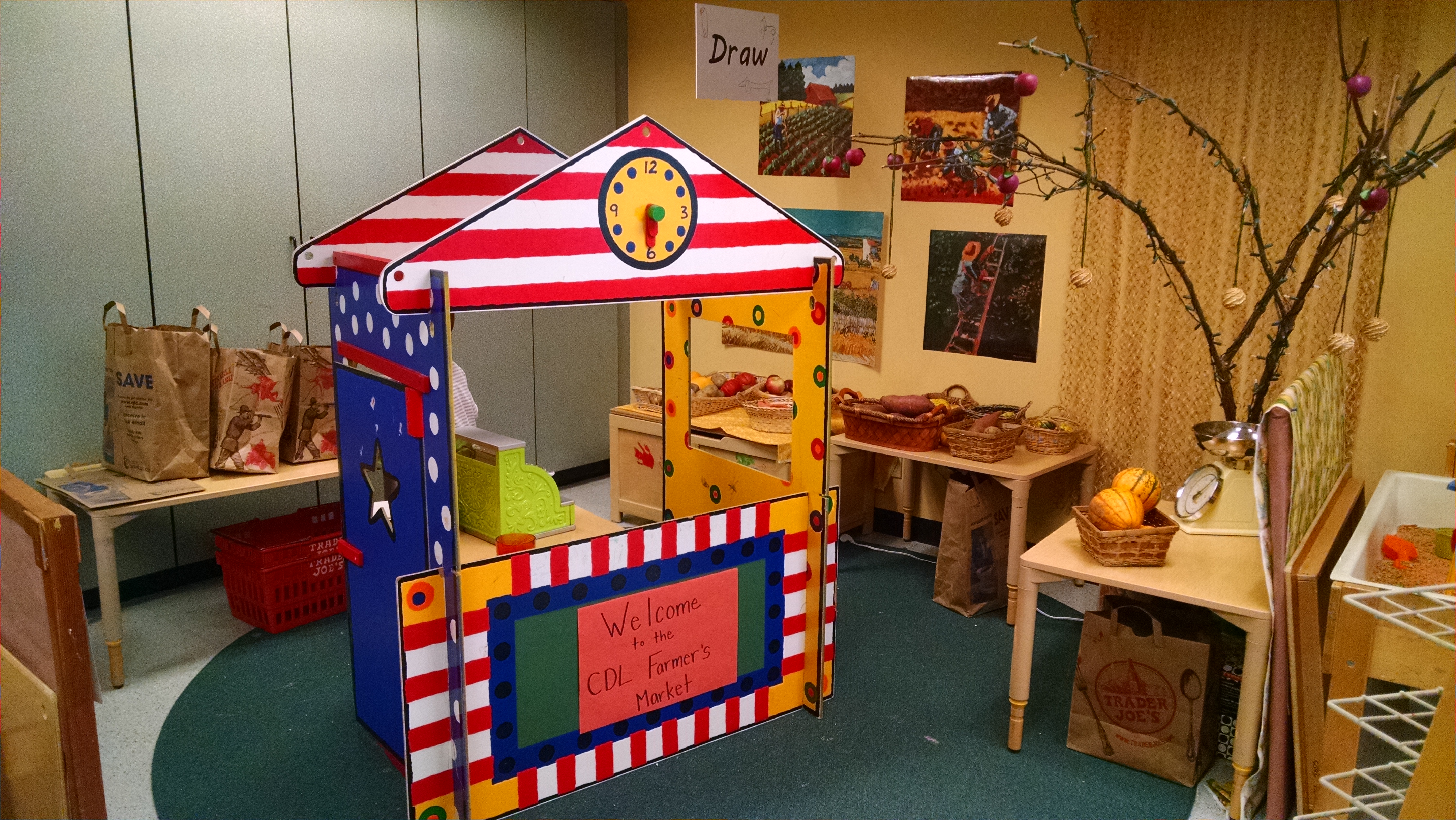
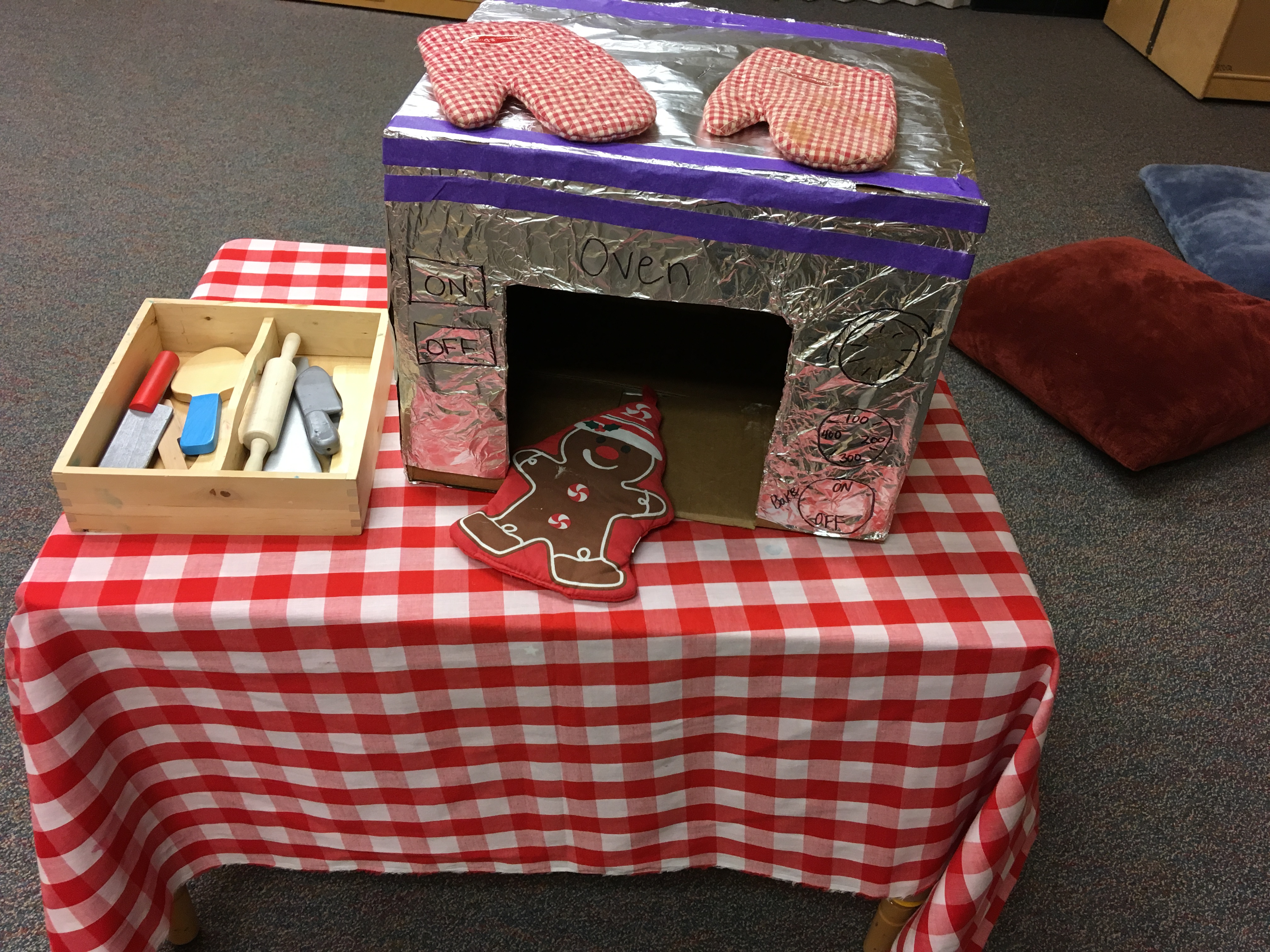
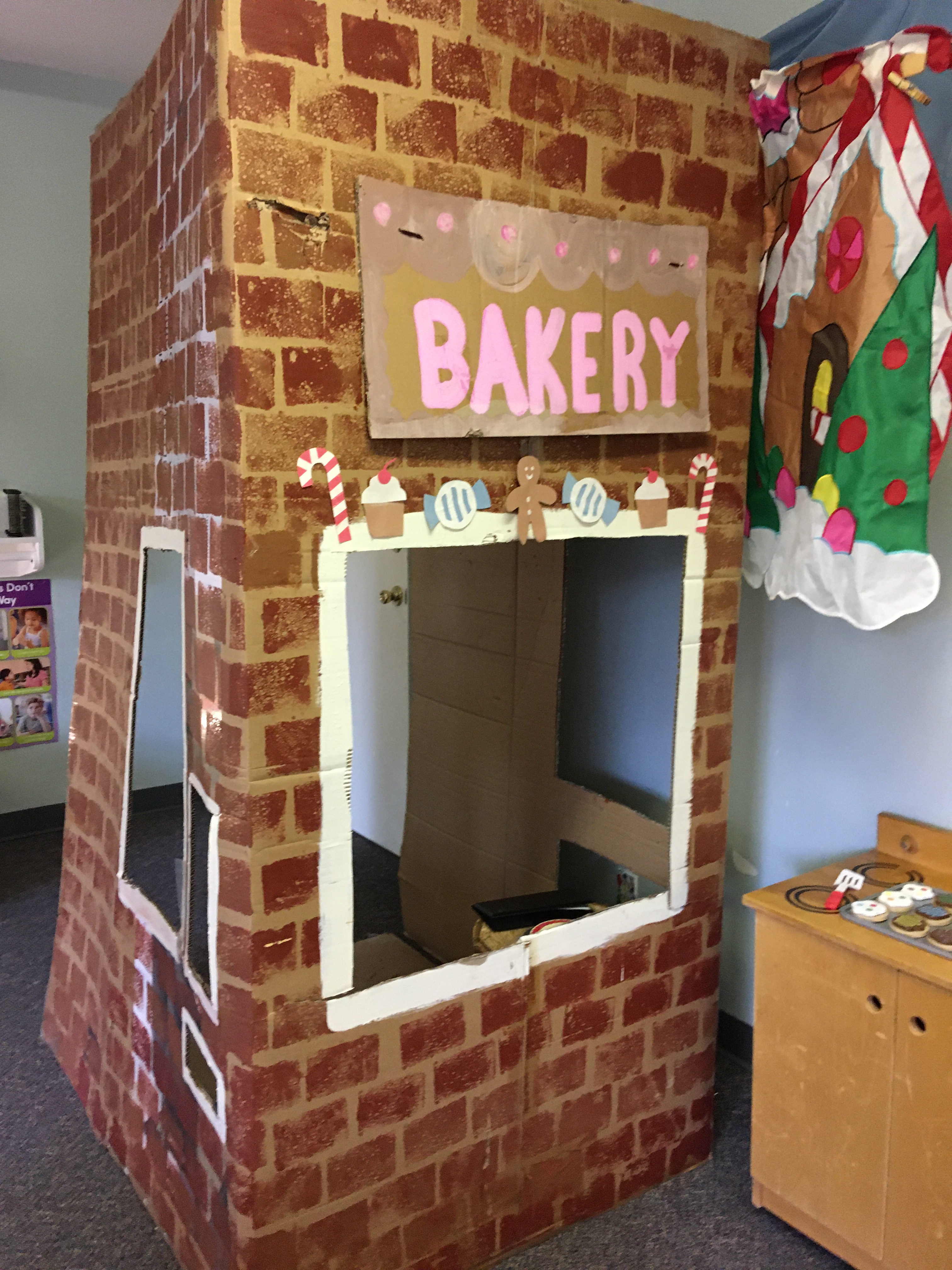
Most preschools have a play kitchen full of pretend food, dress-up clothes that allow children to play out many roles, plus baby dolls and stuffed animals to practice nurturing skills with. Many of those materials may be available every class during the year so children have lots of chances to explore them and use them in many ways. Teachers may also have special themes for dramatic play: maybe a farmer’s market in the fall, a gingerbread bakery in December, a valentine post office in February, or a spaceship and mission control.
With dramatic play, children learn to use their imagination, try on different roles, explore other cultures, imitate parenting behaviors they see in their lives, role play a variety of careers, and explore gender roles. Lots of complex language practice happens during pretend play. This area also builds social skills as they have to negotiate about which roles each child will play and what the story line will be.
Board Games and Active Games
Whether it’s Candyland, Bingo, Hide and Seek or Tag, all games offer practice at understanding and following rules, learning how we all get along better when we can agree to and follow the same rules, and learn how to be a good sport – winning with grace, and recovering from the disappointment of losing.
Books and Literacy
Stories are always available in a preschool classroom. Some schools (like Waldorf) use only oral storytelling, but in most, there are books available. They may be used during group time, but also available for independent exploration. Literacy practice may also be incorporated elsewhere: signs or menus in the pretend play area, books on CD to listen to, board games, and in art projects.
Children learn that letters on a page represent words – language written down, then learn to interpret pictures and to follow the development of ideas in the plot of a story. Most important, they see that learning to read is important and enjoyable.
Large Motor Activities / Outdoor Play
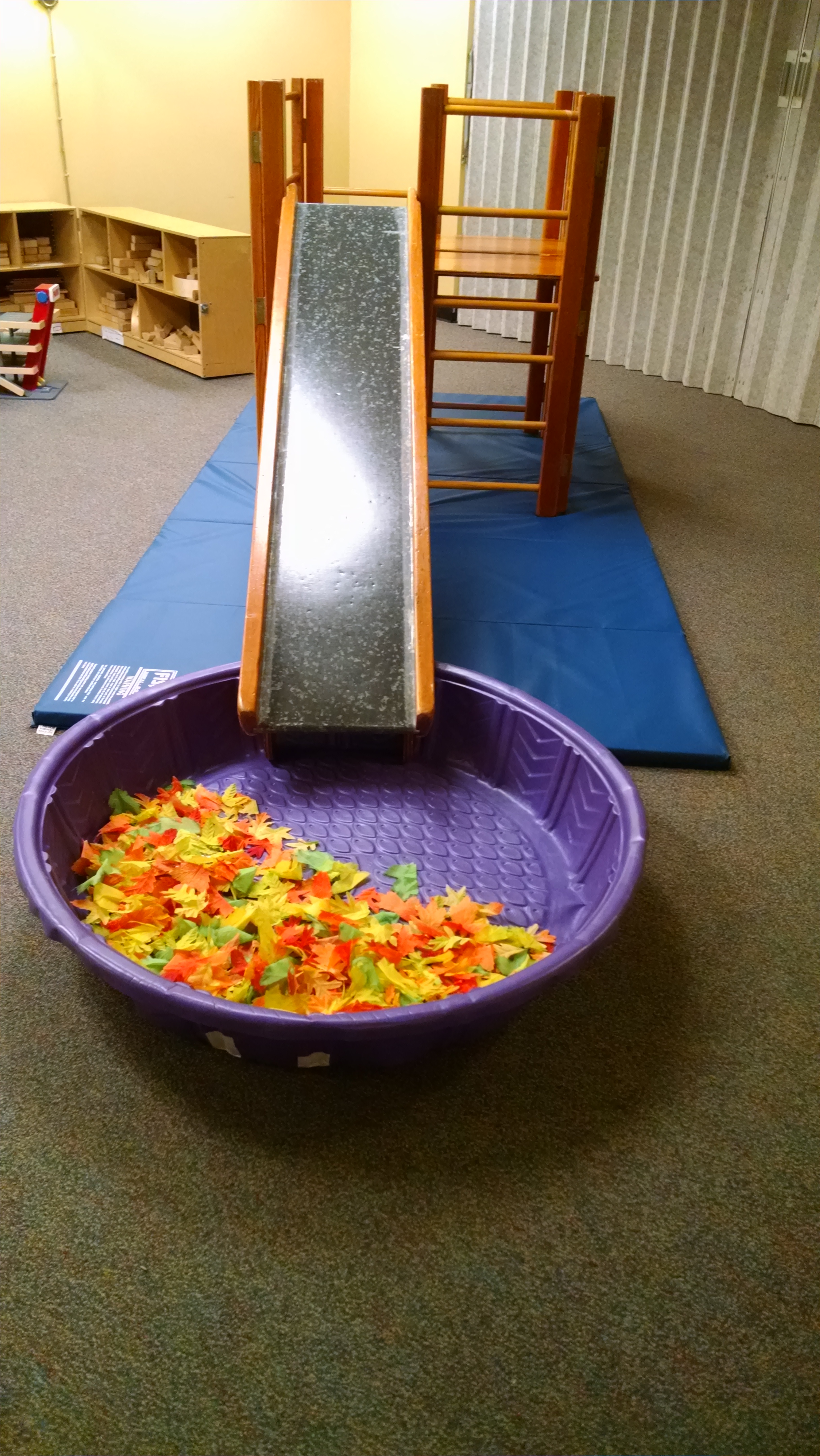
So much brain development happens in these early years, and children form the foundation of all the skills they need for a lifetime. This is especially true of motor skills. In addition to all the fine motor practice of puzzles, writing and playdough, preschools also offer lots of opportunity for large motor practice indoors and outdoors. Playing in the playground or on tumbling equipment indoors, throwing balls or throwing paper “snowballs”, digging in the sandbox or running on an ever-evolving obstacle course.
They are building physical strength, coordination and balance as they build all the key physical skills of running, jumping, climbing, and rolling. They learn to take some risks and be bold, while also learning when they need to be cautious, and learning to emotionally regulate through it all. There’s also important skills in taking turns on the slide, watching out for other people before moving, and moving around others carefully. As our kids ride trikes madly around the playground they’re learning skills they’ll need in driver’s ed someday!
Snack and Clean-Up Time
Snack time can always include practice at choosing and trying new foods, practice using silverware and table manners, learning to sit with others while eating, and practicing social conversation. Many preschools also involve the children in making their own simple snacks, which can include practice with cutting with a knife, stirring, spreading, sprinkling, measuring, and so on. Learning these life skills at an early age builds confidence and competence.
Children also learn confidence and competence as they help out with clean-up time. They may help put all the toys away, wipe tables, sweep the floor, put lids back on markers, and fold up the tumbling mats. This teaches life skills, teaches them that they can make meaningful contributions to a community, and motivates them not to make too much of a mess in the first place! But also, putting away toys is a great exercise in sorting things into categories (a key science skill) which requires noticing details, observing similarities and differences in object, concepts of color, size, and shape.
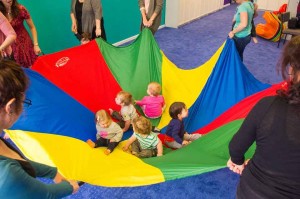
Parachutes can be a fun accessory for indoor story-times or outdoor play, for groups of children from birth to adolescence.
Benefits of parachute play:
Collaborative and non-competitive – children work together, need to spread out around the chute and all participate for it to work
Helps to develop rhythm
Builds shoulder, arm and hand muscle strength
Good for practicing listening to instructions – if they didn’t understand it when you say to lift it up, but then their hand is lifted up into the air along with the parachute, that helps them learn the meaning of the instruction
It’s a great way to gain children’s attention when it’s wandering, or to settle down chaotic energy in a group time
It’s fun!
Choosing Equipment
If you don’t already own one, buy a parachute. (That’s an Amazon affiliate link to a product that looks good quality and comes in a variety of sizes.) Parachutes are fairly inexpensive, and fold up pretty small so they don’t require a lot of storage space.
The size you need depends on two things – how big is your room and how many people will participate?
Parachutes are described in diameter – so 12′ means 12′ from one side to the other. You need space all around it for the people to move, so it’s best to have a 20×20 space at least for that 12′ parachute.
Parachutes typically have one handle per foot of diameter. So, a 12′ parachute could work for 6 people if they all held onto two handles, or for 12 people if each holds one handle – you can squeeze in more than that, but it gets tight.
A parachute alternative – in some of our classrooms, we have a red elastic band that is probably about 12′ in diameter. Many things you can do with a parachute you can do with this elastic band, and in some ways it is easier to start with because they practice all holding something in a circle without having all that fabric to get tangled up in. I have not found one of these for purchase, but it seems similar to this stretchy band. Learn about stretchy band play.
In my activity descriptions below, I’ll code what age groups they work best for:
B = Babies. The parents hold the parachute and do the actions while the babies observe
P/C = Parent/Child. For toddlers and preschool age. Parents all hold the parachute and do the actions. The children may hold on, they may go under the parachute, they may wander off…
P = Preschool. A group of 3 – 5 year old children and 1 or 2 adults can do this without needing more adults to help.
O = Older Kids. Kids 5 and up can do this.
All = OK for any of these contexts
Up and Down
You can simply stand in a circle, say “up” and everyone lifts the parachute up high and “down” while everyone lowers it. Kids can be holding on the edge raising and lowering, or they can be standing under it or lying down under it. So easy, and it manages to feel intriguing yet soothing at the same time. ALL
You can also put on calming music and raise and lower in rhythm with the music for a calming moment in the midst of a story time. B, P/C
Sing this song to the tune If You’re Happy and You Know It. “When the parachute goes up (raising it up), shout hurray. Hurray! (as you lower it down). When the parachute goes up, shout hurray. When the parachute is high and floats up in the sky. When the parachute goes up, shout hurray.” Repeat with “dance a dance” or “stomp your feet” and so on. P/C, P
Toast in the Toaster– chant – shake side to side, then “pop” it up at the end I’m toast in the toaster / I’m getting very hot / Tick tock, Tick tock / Up I pop!
You can also do lap songs with up/down motions like “Grand Old Duke of York” or “Let’s Go Riding in an Elevator” except instead of lifting a child up in your lap, you’re raising the parachute.
Side to Side
You can stand in place and swish the parachute from side to side. Here’s a chant to go with that motion: “I am a washing machine. Washing clothes till they are clean. I am a washing machine. Swish swish swish swish swish.” P
Making Waves / Shaking
You can shake a parachute slow and gentle, or fast and rough.
With slow waves, sing “My Bonnie Lies Over the Ocean.” B, P/C, P
With shakes, you can use some songs you use with shakers: “Oh you shake and you shake and you shake and you stop… (3x) Shake it up high, shake it down low, shake it on your tummy, and way down to your toes.” P/C, P
Merry Go Round. The children hold onto the parachute with one hand and walk around the circle clockwise. Play any music – as long as music is playing, they walk, If the music stops, they stop. Turn to face the other direction (e.g. counterclockwise) and wait for the music to begin, then walk more. P
Ring around the Rosie. P/C, P Walk around as you sing: Ring around the rosie, pocket full of posy, ashes, ashes Kneel Down: All fall down! Shake gently, close to the ground: cows are in the meadow, eating buttercups. Then shaking fast: Thunder, Lightning, stand We all Stand Up!
Roly Poly (a chant) P/C, P Roly Poly, Roly Poly, Up, Up, Up lift the parachute up Roly Poly, Roly Poly, Down, Down, Down parachute down Roly Poly, Roly Poly, In, In, In, walk toward the center of the circle Roly Poly, Roly Poly, out, out, out …. fast… slow… shake it
Zoom. (tune) P/C, P Zoom Zoom Zoom. We’re going to the moon. walking around Zoom Zoom Zoom. We’re going to the moon. stop walking at the end of this line In 5…. 4…. 3… 2… 1 lower the parachute gradually to the ground Blast off!!! quickly raise your arms and let go to launch the chute up in the air
Pop Goes the Weasel P/C, P All around the cobblers bench (walk around a circle), the monkey chased the weasel (rattle parachute). The monkey thought it was all in fun (lower the parachute to the ground). Pop goes the weasel (pop it up)
Wheels on the bus.Go round and round… wipers go swish… babies go up and down…
Children on Top of the Parachute B, P/C, O
For 3 – 6 month old babies, you can lay the babies on the parachute, and the adults hold on to the parachute and walk in circles, and give the babies a ride. You have to be slow and gentle so they don’t roll on top of each other!
For older toddlers, who are able to sit well and stay where you tell them to stay, you can have them sit up on the parachute and take them for a ride.
This activity does NOT work well with the “wobblers” in between those ages – the children who can sit but not very well and would tip over, or the children who will try to crawl away, and knock over the other children.
Many of the songs above and below here combine well with taking the children for a ride, as does “Here we go round the mulberry bush” or “we’re going to the zoo”.
Children Under the Parachute B, P/C
Babies can lay on the ground as the parents hold the parachute above them. Toddlers or preschoolers can sit or walk under the parachute as the parents hold it.
Colors Over You. (tune) Red and Yellow, Green and Blue, these are the colors over you. Red like the apple, green like the tree, yellow like the sun and blue like the sea. Red and yellow, green and blue, these are the colors over you.
Peekaboo. hold the parachute low, just above the children Someone is hiding, hiding, hiding, someone is hiding, Who could it be? lift it up high Peekaboo!
Come Under My Umbrella (tune of The More We Get Together) Come under my umbrella, umbrella, umbrella. lift it up high so it “balloons” up a bit Come under my umbrella, it’s starting to storm. again There’s thunder and lightning and wind and rain. shake it hard and fast Come under my umbrella it’s starting to storm. lift it high
Sitting Down with the Parachute P
The children sit on the floor in a circle, holding on to the parachute.
10 Little Bubbles (tune: 10 little indians) shake the chute as you do the counting part – pat the parachute with your hands for the “pop the bubble’ part 1 little, 2 little, 3 little bubbles. 4 little, 5 little, 6 little bubbles. 7 little, 8 little, 9 little bubbles. 10 little bubbles go pop, pop, pop! Pop pop pop pop those bubbles. (x3) Popping all the day.
Row Your Boat – divide the children in half – those on the left half and those on the right half. (It helps if there’s a teacher on each side! They “row” the parachute – holding on and leaning back, then forward. So, as left leans back, right leans forward, and so on. Sing row your boat.
Props on Top – P/C, P, O
For parent/child classes, it’s easier for toddlers to see what’s on top of the parachute if the parents are sitting down and the parachute is down low. Preschoolers or older children could do it sitting or standing.
Popcorn – put several balls on the parachute and do this chant: Popcorn, popcorn in a pan (hands go gently side to side), shake it up, shake it up, (shake it fast side to side) bam bam bam! (three quick “pops” of the chute – will send balls flying off the chute.)
Autumn Leaves. Put lots of silk leaves on the parachute. Sing this song to the tune of London Bridge is Falling Down Autumn Leaves are Falling Down, Falling Down, Falling Down… All Around the Town. up and down gently, so the leaves lift off the chute just a little The wind will blow them round and round… swish the chute Then you shout “oh no, it’s a storm” and you all shake like crazy till all the leaves fly off. Now it’s time to pick them up…. gather up the leaves
Five Little Monkeys Jumping on a Bed. (use monkey puppets)
Games – O. (maybe P)
Ball through the Hole: Only works for parachutes with a hole in the center! Place a ball on the parachute. Try NOT to let it fall through the hole in the center! For children 4+, divide the kids into teams (e.g. everyone who is holding onto a blue or green section of the parachute is one team and the other team is everyone holding onto red or yellow). Put two balls on the parachute – team 1 is trying to get their ball in the hole before team 2 can get their ball in.
Knock the Ball Off: If your parachute has a mesh circle in the center instead of an opening, you can adapt this game and have them try to keep their ball on the parachute while they knock off their opponents ball.
Swap Places. Everyone is raising and lowering the parachute. Then you say “stop” and everyone freezes with the parachute held way up high. You announce who needs to trade places. They swap quickly, then you continue going up and down. “Up and down, up and down. Up and stop! Bobby and Sally swap!”
Parachute Cave – lift up on 1, 2, 3 – when you get to 3, everyone (still holding on!) steps 3 steps forward under the parachute, then sits down with the parachute under their bottoms. You’re all in a parachute cave together!
Pass the ball – put a beach ball on the chute. Person A lowers the parachute till the ball comes to them – they raise one hand to roll the ball to the person next to them. That person then raises the chute to pass the ball to the next person. Keep going, trying to make it all the way around the circle.
Cat and Mouse – Children sit on the floor holding the parachute. One child is the cat – they sit on top of the chute and close their eyes while everyone counts to 10. The “mouse” child crawls under the parachute. Then the kids all shake the parachute to hide the mouse. The cat opens his eyes and crawls around trying to find the mouse.
















 More Good Days with Kids