Category Archives: Early Learning

Child Development and Early Literacy

[This is my second post on early literacy. Look here for tips on how to get your child excited about reading, and here for how to read to your child, and here for other games and activities that build literacy skills]

Developmental Stages of Literacy

12 – 18 months: can hold or carry books, look at board books independently, points to pictures in the book, may gaze at one book for a long time, or may switch between books quickly

18 – 24 months: may carry a favorite book around; will hold books and pretend to read; may want you to read the same book over and over. When you read favorite books, your child may say some of the words and phrases with you

2 – 3 years: can learn to turn pages in a regular book, names objects in pictures, may recite parts of books from memory, starts to relate what they’re reading about in books to their life experiences

3 – 4 years: understand that words on a page have meaning, begin to recognize letters, might recognize some words, enjoy longer stories, can guess what might happen next, like to discuss stories, can easily turn pages

What kind of books do kids love?

Young Toddlers (12 – 24 months): choose sturdy board books with only a few words on each page. Look for simple rhymes and predictable text (e.g. a repeating phrase that appears throughout). Look for simple pictures that match the text. They like books about things they see and do in their day-to-day lives, like eating lunch or going to the park, more than fantasy or books about exotic experiences.

Toddlers (2 – 3 years): Choose books that tell simple stories. Pay attention to what your child is passionate about – animals, trains, dinosaurs – they’ll love books about that. Look for non-fiction on topics like shapes, numbers, letters. Choose books with rhythm, rhyme, and repetition. Lift the flaps. (These are my favorite books for toddlers.)

Preschoolers (3 – 5 years): Children are able to enjoy longer stories, and stories about things outside their daily experience. You can choose non-fiction books about simple ideas like telling time, counting, opposites, and also about anything they’re excited about – planets, sports, kittens…

Aim for a mix of familiar books and fresh ones – kids love to hear the same book over and over – the familiar is comforting and repetition helps them learn. New books introduce new ideas and new things to fall in love with. At any reading session, offer multiple books and let them choose.

Source for developmentally specific recommendations:

Getting Ready to Read is a short booklet on helping your child become a confident reader. (It also includes lots of great tips for language development and development in general.) www.zerotothree.org/child-development/early-language-literacy/cradlingliteracy_ready2read_8-14-09.pdf

These Pathways for Literacy gives very specific guidelines for each developmental stage.

Sources for book recommendations for each age group:

Lists of recommended books are available on websites for many library systems or in person at the library. Check out some here: www.kcls.org/kids/whattoread/booklists/ and here www.bklynpubliclibrary.org/first-5-years/read/toddlers/books

I often look at these lists for ideas, then go to Amazon to read reviews of the book to learn more. (Then back to my library website to put the book on hold. We read 15 new books a week – we couldn’t afford this habit if we bought all those books!)

Another great collection of resources and recommendations is: http://www.readingrockets.org/audience/parents

Here is a printable handout on Literacy for age 2 – 6  and one on Pre-literacy for toddlers. Find more handouts on my Resources for Parent Educators page.
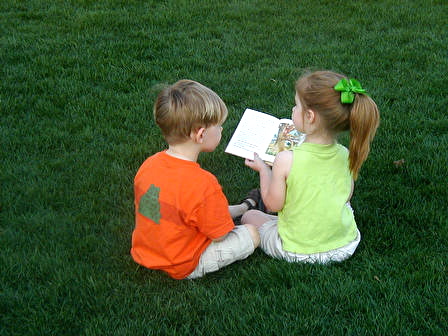
Getting Your Toddler or Preschooler Excited about Reading

This week’s theme is Early Literacy – what we can do with our babies, toddlers, and preschoolers to lay the foundation for learning about reading and writing. [Check out these posts for developmental stages of literacy, how to read to a child, and games and activities that build literacy skills.]

Building early literacy skills does not mean teaching your toddler to read a book. Formal instruction at this age is not developmentally appropriate*, and may be counter-productive, if your child comes to think of reading as a difficult and burdensome task.

Early literacy should instead be focused on creating an environment where books are so cool and the ability to read is so amazing that your child just can’t wait to learn how. Librarians call this “print motivation.” Here are some things we can do to foster this enthusiasm:

  • Model how powerful reading is. Point out to your child how helpful it is that you can read the instructions on how to cook food or assemble toys, how much you enjoy reading friends’ news on Facebook, and how whenever you want to do something new, you can learn how by reading. Point out the words that are all around us – signs, menus, etc.
  • Model reading as something you do for pleasure. Whether you read books, magazines, newspapers, or blogs on your tablet, let your child know how much you enjoy it.
  • When you read to your child, make it fun! Choose books you will enjoy reading.Choose books that are about the things your child loves – whether they’re passionate about chickens, trucks, gardening, building or splashing in puddles, there are books about it, and reading about things they are excited about will help them be excited about reading.
  • Literacy is a social process, which happens in relationships with family, caretakers and teachers. There’s a wonderful connection that happens you snuggle up with a book, give your child your full attention, and you enjoy sharing an experience together. (When your kids are too old for snuggled up story time, you can still enjoy books together. Try listening to audio books in the car on the way to school, and talking about them over dinner.) This together time can be a big motivator for spending time with books.

When and where to read

Don’t just save books for in the bedroom at bedtime. Have them scattered around the house, in the car, the diaper bag and so on. Share books every day – at breakfast, naptime, the grocery store, the doctor’s office, when you arrive at a class or meeting early… show that we can always enjoy a book, anytime, anywhere!

It’s OK to read for just a few minutes at a time – don’t worry if they don’t want to finish a story. They may flip through several books quickly or glance at one, then want to run off to play. On the other hand, if they want to read a book slowly, lingering over one page, going back to it over and over again, don’t feel like you need to rush them.

Resources for books and songs to get excited about:

King County library has a collection of lyrics to songs and rhymes AND videos of librarians singing them (so you can learn the tunes): http://wiki.kcls.org/index.php/Main_Page

Brooklyn Public Library’s site includes great literacy tips, book recommendations, and lyrics for lots of children’s songs: http://www.bklynpubliclibrary.org/first-5-years


* Note: I’m saying that formally teaching reading by using textbooks or formal lessons or flash cards is not necessary. Expecting your child to read at a young age might end up being frustrating for them and disappointing for you.

However, some kids naturally learn to read at a very young age. For example, with my son, we just used the tips I’m sharing this week for creating an environment with lots of great books and fun reading times. We didn’t “teach” him to read, and didn’t expect him to read. But, he learned anyway! He could read basic words before he turned three, and now at three and a half, can easily read books that are written at a kindergarten to first grade level.

Language development in Toddlers

Developmental Milestones

Individual children vary, based on gender, temperament, and caregivers’ language use, but here are some typical average milestones for language development:

  • At one year old, your child might understand 50 words and say a few.
  • Around 20 – 24 months, he may understand 150 – 200 words, and speak 50 – 150. Somewhere in the period, he’ll have a huge growth spurt in language knowledge, called ‘fast mapping’ where he may learn up to 8 words a day!
  • By 24 months, she speaks 250 words. She can answer some questions, ask questions, name many familiar objects in the house, and can ask for what she wants.
  • By 30 months, he understands 500 words. Speaks 250-500, saying them more clearly so others can understand. Uses 2 word sentences. Can begin to talk about how he feels.
  • By 3 years, she speaks in full sentences. Begins to figure out grammatical rules.
  • By kindergarten, children may know 10,000 words.

Help them learn

How to talk: When speaking directly to a baby or very young toddler we use “parentese”, also known as “baby talk”. We establish eye contact, slow our speech down, simplify language, and vary our tone a lot, in a bright, happy, sing-songy voice. This makes language very interesting to the child, engaging, and emotionally satisfying.

As the child gets older, we still use aspects of this, but we shift gradually over time to a more mature way of speaking, with full sentences and more complex vocabulary.

What to talk about:

  • Describe events and actions – what the child is doing and how they are doing it. This teaches verbs and adverbs: “you are running fast”, “you’re touching that kitty very gently.”
  • Describe objects in the room and things they’re interacting with. This teaches nouns and adjectives: “that’s a big ball”, “that’s a red car”. Ask “can you point to the picture of a goat?”
  • Use lots of details, but keep sentences short and simple. Repetition reinforces new words.
  • Ask questions, then pause and wait for child to respond verbally or non-verbally. “Do you want more peas?” Repeat (or verbalize) their response: “Yes, I see you reaching for more peas.”

Research has shown that children learn language best when the parents tune into what the child is interested in the moment and talk about that. Or as Bronson and Merryman say “the central role of the parent is not to push massive amounts of language into the child’s ears. Rather, the central role of the parent is to notice what’s coming from the child and respond accordingly.”

Some parents just throw language at kids: “Look, over there is a window. Outside, I see blue sky, and trees, and birds. Next to the window, there’s a bookshelf. There are red books and green books…” The more effective parent notices that their child is reaching for a crumb on the floor and talks about that. When a dog barks and the child looks up, the parent says “Did you hear the dog bark? I did too.” Timing is essential – make sure you’re talking about the thing they are currently focusing on, not on what held their attention 30 seconds ago.

Listening and responding

As our children begin to communicate, they need us to show that we are listening and responding.

  • Let your child tell you stories, and respond as they do
  • Pay attention as your child speaks
  • Repeat your child’s words. Add to what she has said. If she says “doll”, you say “you have a doll.” If she points and says “horse”, you say “horse, yes, that’s a white horse.”
  • DON’T correct your child. This can cause the child to feel self-conscious and worried about using language. Instead, use repetition of their words, where you use the correct form of the word… If your child says “we runned to the playground” you can say “Yes, we ran very fast.” Or if she says “I love p’sketti”, you say “I love spaghetti too!”

Who talks to your child?

Research has shown that if only one person says a new word to a child, even if they say it many times, the child might not learn the word. If multiple people say the new word to the child, even just once each, the child learns the new word. So, try to expose your child to multiple speakers.

Vary your words, but not too much

When you say “You have a toy. Can you give me the toy? Thank you for giving it to me.” you have just illustrated verbs (have, give, and giving), pronouns (you and me) and that you can use the indefinite article “it” to refer to a toy. That’s a lot of language learning, but it works because it’s a natural, easy follow-able flow of thoughts. Variety in speech is great, but be careful not to go too far.

If you say “Are you thirsty? Does Bobby want milk? Or can I get my little guy a glass of water?” those sentences may have nothing in common with each other from a toddler’s perspective. Try “Do you want a drink? I can get you a drink of milk or water. Milk? OK, here is your milk to drink.”

Games and activities to build language skills

  • Say nursery rhymes together, make up new verses. As your child gets old enough, have him make up rhymes of his own.
  • Sing songs. This is a great way to build vocabulary through repetition.
  • Play games with physical responses: “Can you touch your elbow?” “Put your hand on your tummy.” “The easter egg is hiding under the table – can you find it?”
  • Ask questions that have “right answers” they can memorize and repeat for a sense of mastery. The classic game is “What does a dog say? What does a cat say?”
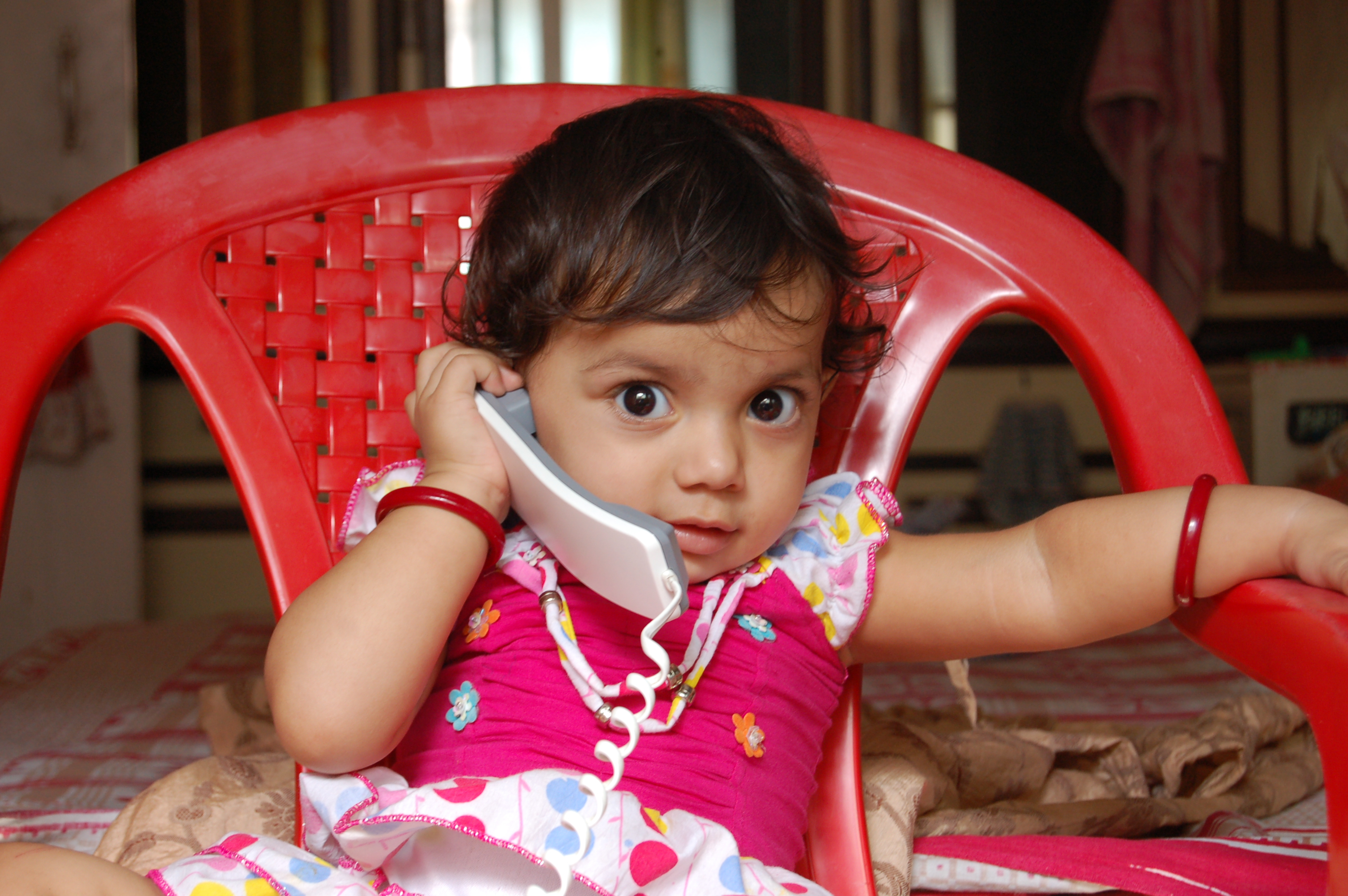
  • Play telephone – pretend to talk to each other on the phone, taking turns in conversation.
  • Pretend that a toy or stuffed animal is talking to your child. Encourage him to respond.
  • Ask your child to tell you stories about her day, or re-tell the storyline of her favorite book.
  • Emotion coaching includes labeling emotions. As a child gains words to describe his feelings, the feelings can seem more manageable.

Curious about raising bilingual children? Check out yesterday’s post.

Resources:

Read about Responsive Language with your child to boost their language learning.

Language for Learning: a video for child care providers, showing how simple it is to encourage language learning www.youtube.com/watch?v=7DPhIQh91Mw&list=WLsMLXfBPSxoG3J_FkZGqnxVV2P34cr_S_

Talking Toddlers: 7 tips to help develop language skills (or read Nurture Shock by the same authors, Bronson and Merryman) http://abcnews.go.com/GMA/Parenting/tips-toddlers-develop-language-skills/

Getting Ready to Read is a short booklet that says about helping your child become a confident reader, but it’s really bigger than that – full of ideas to support language development from birth to 5. www.zerotothree.org/child-development/early-language-literacy/cradlingliteracy_ready2read_8-14-09.pdf

Raising Bilingual Children

bilingualHow do you do it?

One Person, One Language: each parent or caregiver consistently speaks only one language to the child. For example, mother speaks only Mandarin to the child, father speaks only English. Or Grandma speaks only Russian while other family members use English with the child.

Family Language at Home (also called minority language at home): family members all speak their family language. The child will learn the community language later, as she goes out into the community, attending preschool, kindergarten and onward.

Foreign Language Child-Care: some families hire an au pair or nanny who speaks a different language from the family, others place the child in a child care setting where another language is spoken.

Exposure to Other Languages: some families dabble in languages, perhaps teaching the child how to count or name animals in another language. They may read books, watch videos, or sing songs in the other language, or use it in occasional conversation. They may seek out language based playgroups.

Does it work?

The key components that affect whether a child learns a language are exposure and need. Are they exposed to the language in multiple ways by multiple speakers? The greater the exposure to a language, the greater their chance of learning it. Do they need to use the language to interact with people they care about and to get what they want? This will increase the chance they will learn it

So, if you’re just offering occasional exposure to other languages, where they don’t need to use the language in return (for example, reading books or watching videos) they will likely have only a basic familiarity with the sounds of the language and the ability to say a few words.

If a child is exposed to several hours of engaged interaction each week, where they are motivated to communicate with the speaker, like at child care or via one-on-one care by a nanny or an extended family member, they may learn to carry on basic conversations.

If a child is immersed in a language for more than 30% of his waking hours, he is likely to become completely fluent in that language. Interacting with more than one person in that language will build his skills, so many parents seek out language-based playgroups, story times, and other activities so the child can interact with other adults and with other children in that language.

Some children observe closely to figure out what’s the “important language” and focus on that. For example, if they notice that Grandma speaks Spanish to them most of the time, but speaks to other people in English, they realize they can speak English with her and get the interaction they want, so there’s not a lot of need for them to learn to speak Spanish (though they may understand it well.)

Is it a good idea to start a second language early, or is it better to delay?

Parents worry that learning two languages at once (simultaneous bilingualism) will be confusing. They wonder if it’s better to wait till a child knows one language well before starting the next (sequential). Most experts say it’s fine to start from birth – it is as if the child has two “native languages.”

Babies are born with billions of neurons (brain cells). They spend the first few years of life building trillions of synapses (connections) between those cells. For language especially, these first few years are the most “sensitive period” in their lives when they are primed to learn language. At 6 months, human babies are able to differentiate between any sounds that human beings make.

But as children age, they begin to “prune” some of the synapses they’ve built. Connections that are important get reinforced, but things which they aren’t using in everyday life may get cut. So, by 11 months, a mono-lingual baby no longer hears differences that aren’t important in his family’s language. For example, a Japanese child can no longer hear the difference between ra and la, because it’s irrelevant in the Japanese language.

If a child is raised bilingual, it extends the learning and pruning period: at 11 months they can still distinguish between all sounds. By 14 months, they recognize all the sounds that are important to both their languages, but don’t distinguish other sounds.

Are there disadvantages to learning two languages early on?

If only the family language is spoken at home, and the child has minimal exposure to the community language before starting preschool or school, it’s not unusual for her to struggle a little in the first few months of school, but usually within 6 – 9 months or so, she catches up to the native speakers.

If the family speaks multiple languages, the child will of course sometimes make mistakes, like asking “Where you are?” instead of “where are you?” or calling something by the wrong name. This is not much different than the mistakes a mono-lingual child makes, like calling a cow a sheep, or saying “I have one books.” Children outgrow this. Bilingual children may also mix multiple languages into one sentence, especially when they know that the person they’re speaking to knows both languages. When they’re speaking to a mono-lingual person, they’re more likely to stay in one language.

Bilingual children may seem to know fewer words, and be slower in language development (perhaps 3 – 6 months behind peers in either language). However, if you add together the words they know in both languages, the total is almost always higher than it is for those who speak one language.

If you’re worried, here are a few red flags to watch out for: less than one new word per week (in either language) for 9 – 15 month old children; less than 20 words (in two languages combined) by 20 months; no word combinations (like ‘red ball’ or ‘give cookie’ or ‘see doggie’) by age 2 – 3 years.

Are there benefits to learning two languages early on?

Early childhood is the easiest time to learn multiple languages. Speaking the language of his heritage can help connect him to that history, and to his extended family. Knowing multiple languages can help your child in school and in her future career in our increasingly global society.

Multilingual children have been shown to be better at problem-solving – they are more flexible thinkers. They are also better at filtering out distractions and concentrating on the task at hand. Knowing multiple languages may help them feel at ease in different environments. Being aware of the need to adjust their language depending on whom they’re speaking to may increase empathy overall.

Want to learn more about language development and how to encourage it? Look here.

Resources:

A Guide to Raising Bilingual Children.www.cnn.com/2012/11/28/living/parenting-bilingual-children/index.html

Raising Bilingual Children. www.linguisticsociety.org/files/Bilingual_Child.pdf

Multi-Lingual Children’s Association, a comprehensive site with lots of resources: www.multilingualchildren.org/index.html

Video: interview about raising bilingual children:

photo credit: woodleywonderworks via photopin cc

Choosing a Preschool – Questions to Ask

After you’ve thought about your goals for a preschool and made a list of local options, you can learn more about those options by looking at their websites, going to open houses and visiting. Here are some things you’ll want to think about as you do that:

What do they teach?

  • They should work on all the “essential skills” areas listed here. If they don’t, you may need to think about how you’ll work on that skill at home or elsewhere.
  • You should see materials and planned activities that help children build: large motor skills (playground, balls, dance), small motor skills (puzzles, craft supplies), critical thinking skills (sorting games, pattern making), life skills (putting on their shoes, hanging a coat in a cubby), social skills (unstructured playtime with others), music, art, literacy (books, story time), math skills, and pretend play (dress-up corner, dolls, kitchen). This reveals a well-rounded attention to the development of the whole child.
  • Some schools also have a specialty focus: nature-based, language immersion, arts, academic, religion. These can be excellent, but may not cover all the essential skill areas. Again, you might think about how to supplement them. For example, if your child attended a very structured academic program each morning, you’d plan time for unstructured self-guided play, and free play with other kids in the afternoon. You might also choose two preschools… my oldest child went to a theatre preschool two days a week which was very focused on storytelling, acting, and singing, and was structured so that they could produce a mini-play at the end of each month. Another two days of the week, he went to a broadly-focused play based cooperative preschool.
  • What is the daily schedule – how is time divided between the subjects taught? Play time? Quiet time? Outdoors? Snack? Children this age have short attention spans for structured activity, so it’s best in short doses, and they need plenty of unstructured time in between to explore and discover. (Note: If children are at a preschool/child care all day, they should have a naptime/quiet time on the schedule. Quiet time for rest helps us to absorb what we learned during class time.)

How do they teach it?

When you start looking at preschools, you discover a whole world of jargon you never knew: play-based, emergent, teacher led, benchmarks, co-op, Waldorf, Reggio Emilia, and so on. It can be overwhelming.

Let’s look at two opposite ends of the spectrum of preschools:

  • Structured / Teacher Led: A teacher-led curriculum (may also be called didactic or standards-based) means the teacher prepares the lessons in advance (it might be their own creation or they may use a curriculum written by someone else) and sticks to it. Children are expected to all be doing the same activity at the same time.
  • A play-based / child-led preschool (may also be called emergent or constructivist) follows the children’s interests. They typically have multiple stations set up and allows children to move between things when they choose, spending as long as they want at an activity. The teacher moves around the room, making suggestions and observations to further the learning. Learn more about play-based preschool and activity stations at a play-based preschool.

Most preschools fall somewhere in the middle. You can get a sense of it by looking at their schedules. If you see lots of transitions, and a schedule that says something like “Morning meeting 9 – 9:20, math 9:20 – 9:40, blocks 9:40 – 10, music 10 – 10:20… “, that’s a very teacher-led plan. If the schedule says “Morning gathering 9 – 9:10, free choice time 9:10 – 10:30…”, that’s a play-based format. You can also get a sense of it by looking at classroom materials – If there is a shelf of matching workbooks, that’s a more standardized curriculum. If there are 10 different books about dinosaurs and trains and kittens, that’s a child-led school. Or you can look at artwork that’s displayed: if you see 18 different pictures of a snowman made of three circles, a top hat, button eyes and a carrot nose, that’s a teacher led project. If you see a crayon drawing of a rainbow next to paper covered with star stickers next to a collage with sequins, tissue paper and pompoms, that’s a play based art process display.

If you want more information on types of preschools like: Montessori, Waldorf, Reggio, forest kindergarten, and more, check out my post on Types of Preschools.

When considering which method you prefer, it’s worth keeping in mind what we know about brain development (see this post): Children learn best through hands-on experiences with tangible materials, through interaction with engaged human beings, and in environments where they feel safe and happy.

Who are the students?

  • How many students are in the class? The number of kids per group matters as much as the student to teacher ratio does. For example, a 12 student school with 2 teachers (6:1 ratio) will feel very different from a 24 student school with 4 teachers (6:1).
  • What is the age range of the class? Some parents prefer that all the kids be as close as possible in age to each other, but many schools tout the benefits of multi-age classrooms. The oldest kids have a change to lead and mentor and may build empathy for the younger ones, and the younger ones benefit by the presence of an older role model.
  • What are the cut-off dates for age? It’s usually August 31 or September 1. If you have a child born in August, they might be the very youngest child in a program for 4 year olds. A September baby would be the very oldest. But if you’re able to find a program for 3.5 – 5 year olds, that would put them more in the middle…
  • Diversity? Are all the kids like your kid? Are all the families like your family? Or different? Which do you prefer?
  • Neighborhood: Do the kids in the program live near you? (This allows for easy play-dates outside of class, and maybe carpooling options. If you commute to a school, it can be harder to arrange play-dates.)
  • Families: If you’re doing drop-off, it may not matter as much to you because you may not interact much with them (except maybe at birthday parties), but if you’re looking at a coop you may ask more and observe more about what kinds of parents participate to see if they feel like a good match for you.

Who are the teachers?

  • Student/teacher ratio. For three year olds, NAEYC recommends a maximum group size of 18, with a student/teacher ratio between 6:1 and 9:1. In general, the smaller the better for individual attention.
  • Training. Do the teachers have degrees in early childhood education? Do they attend continuing education opportunities? Do they read books about child development in their off hours?
  • Teachers should have CPR and first aid training. There should be emergency plans for the facility.
  • Longevity / turnover. Learn how long the teachers have been there. If there are lots of new teachers in and out all the time, not only does that mean your child won’t gain the benefit of experience or consistent caregivers, it also may mean that the teachers don’t enjoy their work there! Generally, the longer the better. (Although on rare occasions, longevity can mean burned out teachers and uninvolved supervisors… That’s why we also watch the teachers to see if they enjoy their work!)
  • Do they enjoy kids? Do they sit on the floor with the kids, smile, and engage with them? Or are they standing on the edges talking to other adults, occasionally calling instructions to a child?

How do they handle discipline? What are their rules and how do they reinforce them? How do they deal with inevitable conflict between kids? How do they respond to hitting and biting? Is their discipline style similar to yours? It’s best if children have consistent experiences between home and school.

What is the learning environment like?

There are many things you can learn about a preschool on the web and over the phone and by asking friends, but really the in-person visit is the best opportunity to really learn what the school feels like.

  • Clean and Safe: Is the environment clean? Safe? Well-lit and ventilated? Are there procedures for cleaning? Policies for sick children? Fire extinguishers? First aid kits? Appropriate child proofing?
  • Materials: Is there a wide range of toys and supplies? Look for things which build large motor skills, small motor skills, imagination, literacy, number skills, social play. It’s OK if everything isn’t shiny and new. But, you do want to see materials in good condition. You want to see “enough” toys, but not so many that it’s cluttered and chaotic.
  • Outdoors space: Do they have a place to play outdoors? How often do they use it? Do they go out when it’s raining? If not, do they have some place for kids to run and move?
  • Look at the art on the walls: If it’s all the same, that tells you a teacher is focused on product more than process and very actively guides the process. If there’s a wide range of art, it shows kids are given creative range. Probably for a three year old class you want more free choice exploration, for a four year old class, you might look for more signs of structured learning.
  • Look at the ratio of desk space to open space. If the room is filled with desks, it’s clear that’s where children are expected to spend their time. If there are areas for children to move around, explore, learn socially and learn independently that shows the school values a wider range of learning experiences.
  • Look for worksheets. I once visited a school that talked a lot about how all children proceeded at their own pace, but then I saw a stack of workbooks and skimmed through. Every child was on the same page.
  • Look at the books on the shelves: non-fiction? Fiction? Personally, I want to see a mixture. Children benefit from learning factual information from non-fiction books, but their imagination and creativity benefit from good story-telling.
  • Vibe:  The most important thing you’re “looking” for is something you can’t see. How does it feel? Is it warm, nurturing, full of exciting learning experiences, and full of happy children and teachers? Or is it cold, institutional, uninvolved? We know from the science of brain development that children learn best when they are happy, so look for a place where they will be happy and engaged.

Making the Choice

After you visit a school, give yourself some time to reflect on what you’ve seen. Sometimes what feels like love at first sight sours on further reflection. And sometimes a school that didn’t seem right at first glance may grow on you. Don’t let yourself be pressured by schools that attempt to create a sense of urgency by using words like “waitlist” and “we can’t promise there will still be space” and “only one space left.” Yes, there’s a chance that a preschool will totally fill up while you’re deciding, but if it does, there are plenty of other good options out there. Assuming you live in an area with multiple good preschools (like Seattle’s Eastside!), you can trust that you’ll find something that works for you.

Often the right answer for your child may be a combination of options. Maybe you choose a two-day-a-week academic preschool and a two-day-a-week play-based. Or maybe you choose a structured five-morning program for your child, but ensure that your afternoons include quiet time at home and unstructured play with friends. Or maybe you “homeschool” on the academic skills, and seek out one-day-a-week dance classes, language classes, and so on. Choose the routine that works for you and the experience you want your child to have. Children benefit emotionally from a predictable routine. And their brains benefit from a wide array of experiences. You’ll have to work to find the balance that is right for your family, and right for your child’s temperament.