Author Archives: Janelle Durham

Unknown's avatar

About Janelle Durham

I am a parent educator and social worker, and teach music and science to children age 1 - 8.

Catapults

Catapults are a huge hit with kids… being able to launch things into the air and across the room is always exciting!

There are LOTS of ideas online for how to build catapults. I want to present a simple series of catapults that show the evolution of an idea.

Supplies needed: pencil, popsicle / craft sticks, rubber bands, a plastic spoon, an object to launch (e.g. pompom or mini marshmallow or coins)

Stage 1

First, take a popsicle stick (the bar of your lever), balance it over a pencil (your fulcrum). Put an object (your load) onto the end that’s laying on the table. Hit the high end of the stick, the object launches. This is an easy depiction of the simple machine concept of levers (learn more about Levers here.)

IMG_20151003_094219761

You can also play with this idea – use a bigger fulcrum – use a longer lever. Like try a large spoon balanced over a rolling pin, or a ruler balanced over a marker.

Kids will have plenty of fun with this. Launching things is fun. But, they’ll soon discover that this is a weak catapult – we can get a lot better launch by evolving it.

Stage 2

Now, take two popsicle sticks: Use a rubber band to fasten them together at one end. Then slide a pencil (or three craft sticks bundled together) between the sticks until it pushes up against the rubber band. Set it down. Put your pompon (or coin) on the raised end, then use your finger to press down and release. The pom pom will fly much higher!

IMG_20151010_231735673

If the coin / pompom keeps sliding off the end of the bar, you can glue a lid to the end of the bar so you have a “bucket” to put your coin / pompom into.

Stage 3

After they’ve had a good time with this one, you can take this simple design to the next level by creating a spoon catapult. You’ve already got your two popsicle sticks banded together. Use a rubber band to attach a plastic spoon on one. (Here’s a picture from www.devincollier.com/how-to-build-a-simple-small-marshmallow-catapult/. to show you where to fasten it.)

Slide your pencil in between the sticks, as before (or use two or three popsicle sticks rubber-banded together). Now launch items from the spoon – your launch arm is longer, and you added the springiness of the spoon – does this increase the strength of the launch (i.e. does your object travel farther?)

catapultM

Stage 4

Now bundle together 5 craft sticks to use as your fulcrum – this is what is shown in the picture above, and you can also find directions at http://cosmos.bgsu.edu/STEMinPark/takeHomeActivites/2012/MarshmallowCatapult.pdf

Is the catapult stronger with a taller fulcrum and more pressure on the rubber bands that bind the launch sticks together? What if you use 8 sticks in your bundled fulcrum?

Stage 5

Use longer bars to build the catapult than popsicle sticks. Maybe rulers? Rubber band them together at one end, and keep using your bundle of craft sticks as a fulcrum.

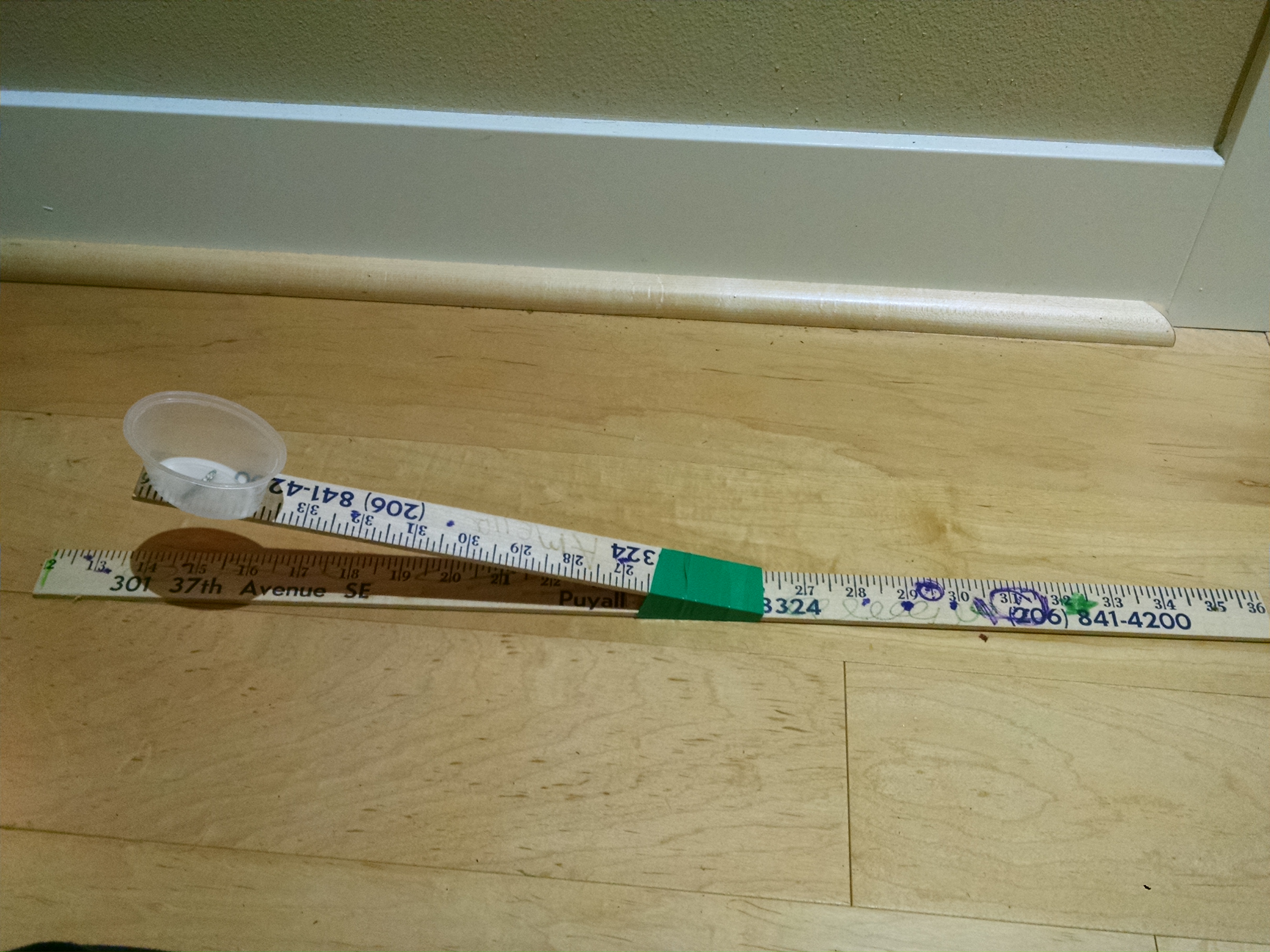
Continue to experiment… Here’s a very similar catapult built from a couple of wooden yardsticks, a piece of cork (used as fulcrum to separate the two sticks – you could use your stack of popsicle sticks) and some tape (could use rubber bands).
IMG_20151005_135555240

Testing and Tweaking

As you build a variety of catapults, test them. You can compare on two criteria: which designs launch the object the farthest and which launch it the most accurately (i.e. can you hit a target with it.)

For more STEM related activities, click on the word STEM in the right sidebar…

The Martian – A Study in Character

martian

Since Andy Weir’s book, The Martian, came out, I’ve had many friends recommend it to me. And not just the science fiction fans. All sorts of friends raved about this book! I hadn’t read it yet, but I saw the movie last week, and am now a third of the way through the book. I love the movie and book for a wide variety of reasons… but what I want to focus on here is Character. The protagonist, Mark Watney, is in many ways, the kind of person I want my kids to be, and who I hope to inspire kids in our Inventors class to be. I don’t mean that I want them to be astronauts, or even necessarily scientists. I’m not talking about their academic field or career choice… I’m talking about their character traits.
For those who aren’t familiar with the story: Mark is a botanist and mechanical engineer who is one of six crew members on a mission to Mars. He is believed to be killed, and thus left behind during an emergency evacuation of the planet, and needs to figure out how to survive on his own for years until he can be rescued.

I really liked the movie… but I hadn’t realized how much I liked it until I was listening to the /Filmcast, and Jeff Cannata said (around 46:30) “The hero of this movie is smarts, intelligence, can-do attitude. How not giving up, thinking your way through things, being well-educated… is to be lauded, to be celebrated.” And I thought, YES!

Here are some of the laudable qualities I see demonstrated by the character Mark Watney:

  • Curiosity and desire to learn: All scientists are driven by curiosity, but especially a botanist who has chosen to give years of his life to training and travelling to Mars so he can explore the idea of growing plants on other planets. We learn very little of Mark’s back story, but clearly his career is defined by a desire to learn more.
  • Can-do attitude and willingness to work hard. When he is faced with inconceivable challenges, he doesn’t let them overwhelm him. He just starts working. In the book, there are frequent instances where he says “OK, to accomplish this thing, I need to solve these five problems. That’s’ too much to think about right now. I’m just going to think about one of those problems. After I’ve solved that one, I’ll move on to problem number 2.”
  • Problem-solving: In the book and movie, there’s no “bad guy”. Just a hostile environment, and an unending series of problems to solve. In the book, especially, the focus of much of the action is on the details of how he solves those problems. You wouldn’t think the discussion of how to collect CO2 in a high pressure vessel and how to liberate hydrogen from hydrazine would be interesting to a non-scientist like me, but it was. Not because I care about that specific challenge, but because I am fascinated by how people think and how they problem-solve and Weir does a fabulous job of walking you through Mark’s thoughts.
  • Flexible thinking: Mark is continuously forced to use materials in ways they weren’t designed to be used. This requires looking past the surface of an object. It requires thinking first about the goals you hope to accomplish, then what criteria you need your materials to meet, then searching for the material that meets that criteria. It’s about looking for underlying qualities, and defining for yourself whether they meet your needs. (This is what open-ended materials do for a kid in a tinkering oriented classroom!)
  • Positive attitude: He does, of course, have moments of anger and railing at the unfairness of the situation, and moments of self-pity. But overall, he remains positive and optimistic throughout, with a self-deprecating sense of humor.
  • Forgiving: He understands that his crew did not leave him behind on purpose. He doesn’t waste energy being angry at them, and wants to be sure they are told it was not their fault.

And it’s not just the main character who displays these traits. It’s virtually every character in the movie / book. Another thing that makes this story special is the way it portrays collaboration amongst scientists and engineers, as they work together to solve a problem. We see lots of long hours and hard work and dedication amongst people who have studied long and worked hard to become experts in their field. And we see their excitement when they come up with new possible solutions, their frustration when it fails, their stick-to-it-iveness to keep trying after failure, and sheer giddiness they feel when their idea succeeds.

So, if I’ve decided these are character qualities I want to inspire in the children in my life, how do I teach them?

NPR had a great article this spring about non-academic skills: what to call them and some educational theories on how to teach them. Experts in education agree that there is more to success in life and in career than academics. (Academic skills are of course very important too.) They talk about things like critical thinking, character skills such as gratitude, self-controlgrit, growth-based mindset,  willingness to fail and to try again, social skills and emotional literacy, and love of learning.

How do I teach these things? I’ve written about several of them (see all those links at the end of that last paragraph? Just click on any of them to see my post on that topic.) Other things I think about are: encouraging children to tinker, focusing more on the process than on the product, and focusing on internal motivation more than on punishment and reward.

Someone asked me if they should take their child to this movie. First, this is not a little kids movie. Way over their heads. But…. if I had an 11 – 15 year old child who was at all interested in seeing a movie about space, would I have them watch it? You bet. Watching a movie about how science rocks, scientists are cool, and modelling positive character traits is absolutely a good use of a couple hours. There are some tense situations, a gory wound, some swear words, and some rear nudity. So, if those things concern you, read reviews on Common Sense Media or Parent Previews, or learn exactly what things your child would see and hear on Kids in Mind. I personally find that the overall positive messages of the film outweigh those details.

And if you have a child who’s under age 8, but is wild about space… well, this isn’t a movie I would show them. But I do have tons of suggestions for hands-on activities for learning about space, plus recommended books, apps, songs, and videos, all on my Inventors of Tomorrow blog. And I have a review of some really fabulously cool Mars Rovers toys from Hot Wheels too.

Questions Posters

I created a new set of posters for the classroom on “Questions to Ask to Extend Learning.”

Educators frequently encourage parents and teachers to ask “open ended questions” as part of a facilitated learning process. But it may be hard for parents and teachers to think of good questions as they’re playing with a child in a classroom or at home.

Often, they end up asking yes / no questions, or quizzing kids for “the right answer.”

On Teacher Tom’s blog, he writes: “They say there’s no such thing as a stupid question, but I beg to differ. We hear stupid questions almost every time adults and young children are together. Here’s [an] example: a child is playing with marbles, exploring gravity, motion and momentum. An adult picks up a handful of marbles and asks, “How many marbles do I have?” The adult already knows the answer. The child probably does as well… [These] questions take a child who is engaged in testing her world, which is her proper role, and turns her into a test taker, forced to answer other people’s questions rather than pursue the answers to her own.”

So, I designed these posters to hang around the classroom to inspire parents with some good open-ended questions. They offer ideas of what to ask that will take the child’s learning to a new level. Click here for a PDF file and you can print your own.

Sources for these ideas:


Inspiring children who are resistant to writing or drawing

yodaSome children LOVE to write and draw. And some don’t. My middle child was passionate about it, and was competent with pencil, marker and crayon by about 18 months. (Part of that interest was probably due to having a sibling who was 3.5 years older, and was working a lot on writing and drawing skills.)

Our youngest shows no desire at all to write or to draw, which is not uncommon amongst boys. (And honestly part of this may be due to environment. He virtually never sees the people around him write anything. We type on our laptops and phones and mobile devices, but rarely put pen to paper.)

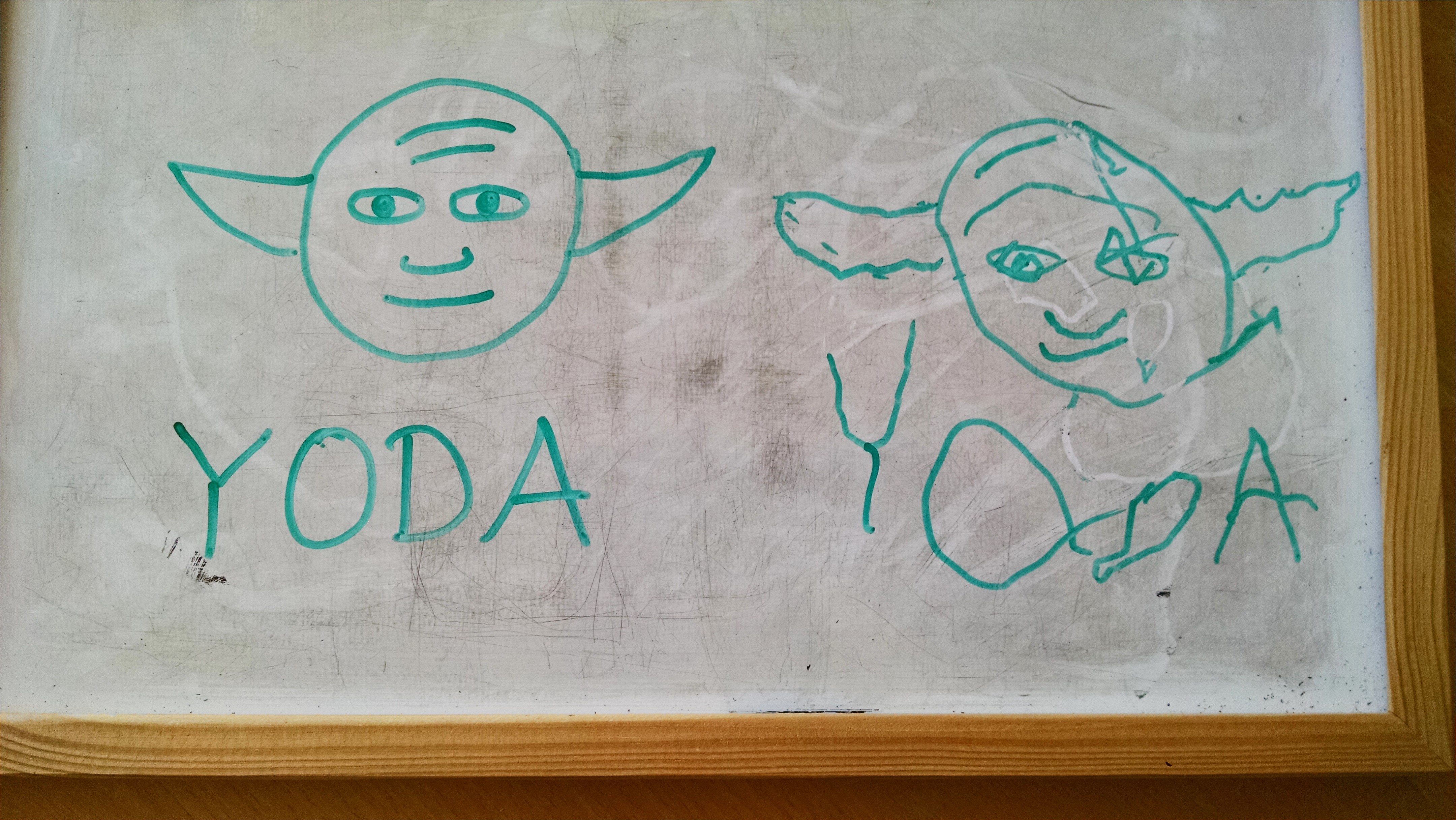
We’ve found three ways to motivate him. First, follow his interests. Since he’s wild about Star Wars, it’s easy to engage him with things like “Hey, you want to learn how to draw Yoda?” (See above.)

Second, make writing a powerful tool for getting what you want. If he wants something that I don’t care whether he has or not, I make him do a written request. The first one was “Kiss” when he wanted a Hershey’s kiss. Later on, he was begging for white cheddar cheez-its. We found him a picture of the box online, and he had to copy all the words down before we gave him any crackers. We’ve made writing worth while.

[Note: I work with parents of toddlers. Sometimes a parent will voice concern to me that their child is slow to learn to speak. The same principles apply: follow their interest – talk about what they are looking at or doing, not about what YOU are interested in at the moment. Make language powerful. If they point at juice, don’t give it to them. Say “Do you want milk or juice?” You’ve just given them the words they need, but they need to SAY juice to get juice.]

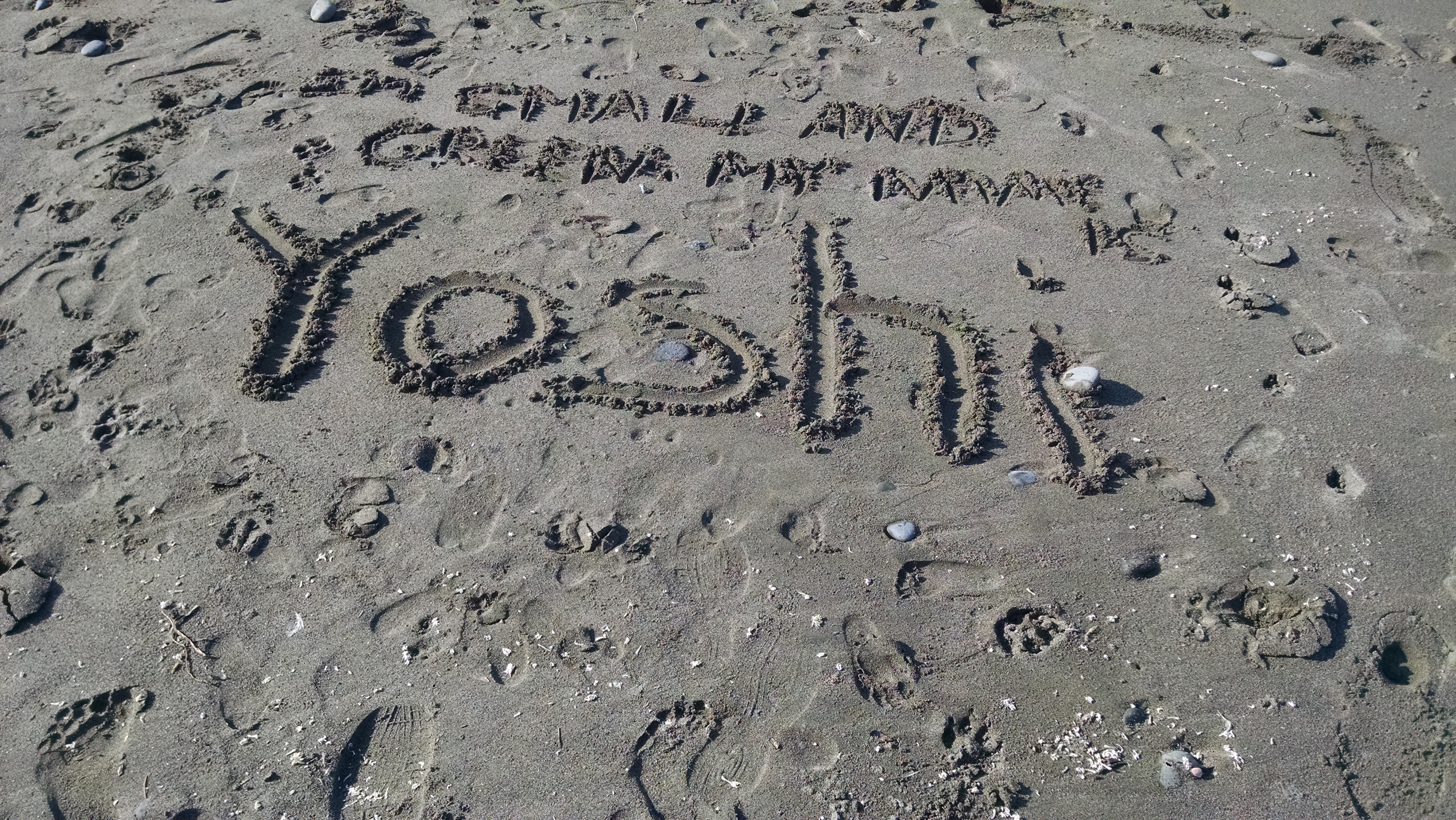
Third, offer interesting media / sensory experiences. You can pour flour or salt into a dark-colored dish, and let them write and scribble in there. You can give them a stick and encourage them to draw in sand or dirt. Offer bath tub crayons at bath time. Or finger paint anytime. Or a paint brush and water to write on the sidewalk on a hot day. If your child likes to use apps on your mobile device, most allow them to use their finger to draw with – but you can also purchase a stylus for them to use to practice holding a pen.

IMG_20150825_091738839

Twenty Recommended Parenting Books

Today, I put together a handout on 20 Recommended Parenting Books. Click above for a printable handout, or check out the list below.

Title Author topic
And Baby Makes Three Gottman relationship skills
The Baby Book Sears overview of infant care
Becoming the Parent You Want to Be Davis parenting style
Brain Rules for Baby Medina brain development
Breastfeeding Made Simple Mohrbacher nutrition
Child of Mine Satter nutrition
Elevating Child Care: A Guide to Respectful Parenting Lansbury parenting (infant/toddler)
Heart Tending: Creating rituals that nurture you and those you love Watson daily routines and rituals
It’s OK Not to Share and Other Renegade Rules… Shumaker discipline
Last Child in the Woods Louv activities: nature
Mind in the Making Galinski development
The No-Cry Sleep Solution Pantley sleep
No-Drama Discipline Siegel discipline
NurtureShock Bronson & Merryman development
Our Babies, Ourselves Small culture of parenting
Parenting Without Borders Gross-Loh culture of parenting
Pregnancy, Childbirth, and the Newborn Simkin, et al pregnancy & birth
Raising An Emotionally Intelligent Child Gottman emotional devel
Simplicity Parenting Payne parenting style
Tinkerlab: A Hands-On Guide for Little Inventors Doorley activities: STEM