Author Archives: Janelle Durham

Unknown's avatar

About Janelle Durham

I am a parent educator and social worker, and teach music and science to children age 1 - 8.

Great Classes for Kids AND Parents: Parent Education & Coop Preschools

Classrooms in the Bellevue College Program

Classrooms in the Bellevue College Program – click for larger view

Are you a parent of a baby, toddler, or preschool age child? Are you looking for:

  • A place where your child can explore toys, do art, hear stories, sing songs, and make friends? (And use up some energy on a cold winter day?)
  • A fun activity to do with your child where s/he learns new skills and you get new ideas?
  • Opportunities to meet other families and build community?
  • Expert advice and research-based information about parenting and child development?
  • Support from professionals and other parents for the challenges of life with a little one?

You can find all these great opportunities in one place!

In the Seattle area, our community colleges sponsor parent education programs, including parent-child programs and cooperative preschools, which are a fabulous resource for families. For children, classes offer hands-on learning, discovery and play. For adults, they offer on-going education on all topics related to parenting, plus connections to other parents.

What is the children’s experience like?

The programs are play-based, because research shows children learn best through hands-on exploration in places where they feel safe and free to explore. Each classroom has several stations around the room, with developmentally appropriate activities to help kids build the skills they need. Children are encouraged to move around and explore at their own pace. In parent-child programs (aka “mommy and me classes”) for babies and toddlers, parents play along with their children. In coop preschools, working parents are assigned to a station. Activities vary by age, but might include:

  • Art activities: play-dough to roll, easels to paint at, markers for learning to write
  • Sensory activities: tubs of water or rice or beans to scoop, pour, stir, and run fingers through
  • Large motor: mats for tumbling, tunnels to crawl through, climbers and slides, balls to throw, dancing and movement games
  • Small motor: blocks to stack, puzzles to assemble, shape sorters to solve, beads to thread, and building toys for construction
  • Imaginary play: dress up zone for trying on new roles, dolls to care for, kitchen for “cooking”
  • Science and nature experiences: seeds to plant, tadpoles to watch, items from nature to explore
  • Snack time: a place to practice social skills and table manners and to discover new foods
stations

click for larger view

Classes also include “circle time” or “music class” where the teacher leads the class in singing songs, dancing, playing musical instruments, and reading stories. This is a chance for children to practice sitting still, listening to a teacher, and participating in a group activity, all essential skills for kindergarten readiness. Academic skill-building (reading, writing, pre-math skills) is integrated into all types of activities.

What makes these children’s programs different from other programs?

Diverse Experiences in One Familiar Setting: Most children’s programs focus on one domain of learning: dance class, art class, story time, music class, or tumbling. These programs do it all. And they do it in a known space where the child feels safe and comfortable. Some of the same toys activities reappear from week to week to provide reassurance and routine, and some new toys and activities rotate in to encourage children to explore and try new things.

Long-Term Relationships: Lots of programs run in short sessions of 4 – 6 classes. Parent ed programs run for the full school year. Seeing the same children week after week allows kids to build friendships.

Close parental involvement: Parents are always welcome in the classroom.

What are they like from the parent perspective: how do they work?

Each program works a bit differently, so check to be sure of the details, but here is the general idea:

Parent-infant Classes and Parent-Toddler Classes: Meet weekly for two hours. Every other week, the parents attend a one hour parent education session. In infant classes (for babies birth to one year old), the baby remains with the parent for parent ed. In toddler classes (for one-year-old and two-year-old toddlers), children are encouraged to play in one room with the children’s teachers and other parents while their parent attends parent ed.

Staffing and Parents’ Role: Each class is staffed by a parent educator and one or two children’s teachers. Parents provide snacks for the class on a rotating basis. Each family may bring snacks 1 – 3 times a year. Parents may also be asked to help tidy up the toys at the end of the class.

Cooperative Preschools:Three-year-olds may attend 2 or 3 days a week, four-year-olds attend 3 or 4 days a week. Typically, the parent stays with the child and works in the classroom one day per week, and the other days are “drop-off” preschool for that family. Classes may be 2 – 3 hours long.

Staffing: There is a preschool teacher, trained in early childhood education, who is responsible for planning and coordinating the children’s activities, and leading group times. A parent educator observes / consults during some class sessions, and offers a monthly parent education session plus one-on-one expert parenting advice.

Parents contribute by working in the classroom once a week. They also help with the running of the school by: providing snacks, fundraising support, helping with end-of-year cleanings, serving on the board (chair, treasurer, secretary, etc.), or as class photographer, play-dough maker, etc.

Length of program: Most classes (parent-child and coops) meet for the full school year – September through May. [Note: you may be able to enroll mid-year, if there are spaces available. Check with the programs to find out.] Some have summer programs.

What do Programs Cost?

For some programs, you pay by the month, some by the quarter, some by the year. If you look at the cost for a quarter (11 weeks) or year (33 weeks), it may look like a lot compared to other children’s activities in the community. So, to compare apples to apples, it’s best to look at it as cost-per-hour. Infant and toddler groups at our local community colleges range from $7.50 – 11.50 per hour. For comparison’s sake, here’s what a sample of other programs cost on an hourly basis:

  • Big motor activities: Gymboree $30, Gymnastics East $20, Northwest Aerials $13
  • Parent education and support: Mommy Matters $22 plus child care costs. Baby Peppers $10.
  • Art programs: Kidsquest $17 per hour. Kirkland Parks $13. Kirkland Arts Center $10.
  • Music programs: Kindermusik $22, Kirkland Parks $11. Bellevue Parks $21.

Cooperative preschools in these programs range from $7.50 – 10.00 an hour. For comparison sake:

  • Bellevue public schools, $10 per hour. Bellevue Boys & Girls Club $10. Bellevue Christian School $11. Bellevue Montessori $18. Jewish Day School $19. Villa Academy $18. Seattle Waldorf $22. Cedar Crest $24.
  • Note: most preschools have an adult/child ratio ranging from 1:6 – 1:9. At a coop, the ratio may be 1:3 or 1:4.

All the parent education programs and cooperative preschools offer scholarships to lower income families which can further reduce the cost.

What makes these programs different from other programs?

College credit and student privileges: Parent education programs are college classes, and parents receive college credit for attending. They can also receive student ID cards, which depending on the school may give access to services such as fitness center or gym access. They may also allow you to get student discounts at a wide variety of local and online businesses.

Parent Education: Experienced professional educators offer information that is current and research-based but also relevant to the day-to-day reality of parenting little ones. Topics are tailored to the age and needs of the families, but may include: daily routines, discipline, child development, early learning, nutrition, potty training, emotional intelligence, kindergarten readiness, and self-care for parents.

Individualized Advice: Parent educators and children’s teachers have the opportunity to get to know each child as an individual, and also get to know parents well. This allows them to answer questions in a highly personalized way. They can also refer on for additional services when needed.

Parent Involvement: Participating in your child’s classroom from day one encourages you to think of yourself as an active participant in your child’s learning and an advocate for them in future classrooms. You’ll know the other children and can help your child learn about them. You’ll know what happened in class, so you can later reinforce the learning. Seeing classroom activities may give you new ideas for what you can do at home to enhance your child’s development. Having the opportunity to observe other children each week helps give you a deeper understanding of child development, and seeing parents respond to their children shows you options for parenting style.

Peer Support and Long-Term Relationships: Parents meet with other parents over the course of many months, which allows for long-term connections. Working together on projects strengthens those bonds, as does the peer support gained when parents discuss and share the joys and challenges of caring for kids.

Programs offer classes for families with children from birth through age 5, so instead of having to search for new classes every month or every year, you always know where you can find a fun and educational class for you and your child.

Learn More about Programs Near You and Register Now!

All the most current contact information for these programs can be found at the bottom of this page: https://gooddayswithkids.com/parent-ed-at-colleges/
My duplicate did it!

calvin-and-hobbes-duplicator

Last week, my five year old was playing with friends on the playground. One of the children stomped past me, saying “He’s being mean to me.”

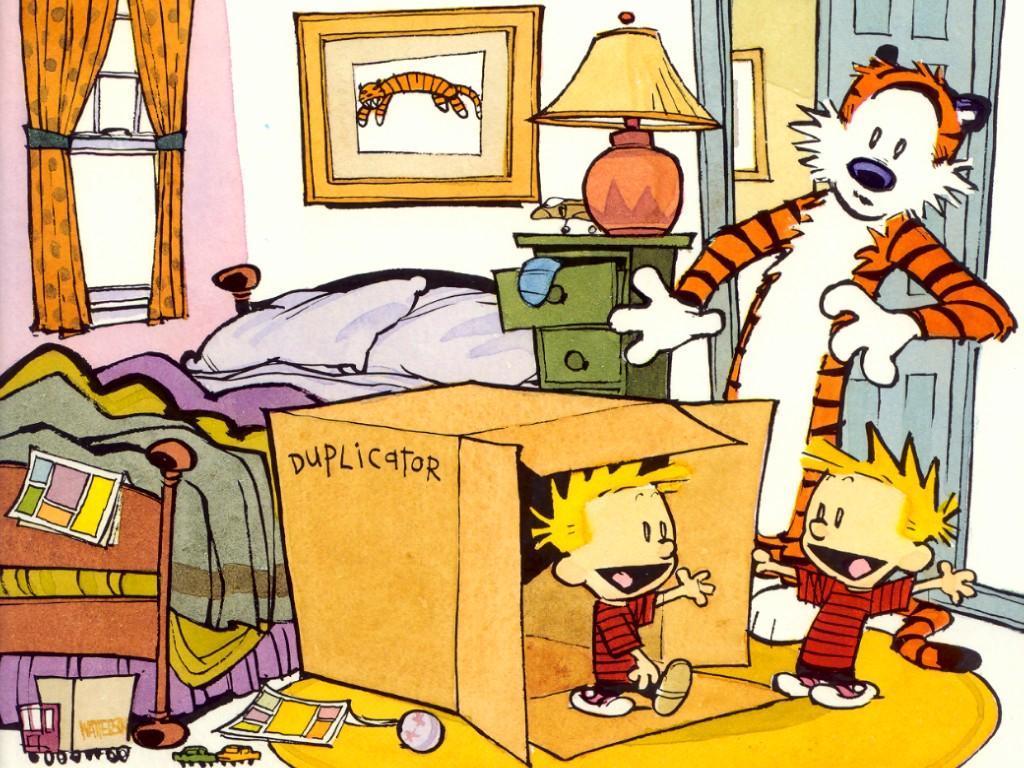
I went to my child and said “X says you’re being mean to him.” My child said “I wasn’t mean. It wasn’t me. It was my duplicate #6.” (He’s been reading Calvin and Hobbes, and loves the part where Calvin build a duplicator and makes duplicates of himself.)

So, was he lying? Should he be punished for lying?

When talking about discipline, it’s essential to understand child development. A five year old is in the midst of the magical thinking stage. If you teach them one day about planting pea seeds and growing peas, then the next day, you may find them hovering over the garden plot, waving a stick ‘magic wand’ over the seeds to make them grow now. Or, you may find them planting their favorite toy in hopes that many more will grow.

Sometimes their magical thinking is terribly cute. A friend of mine was making a toy jet pack for a 4 year old, from recycled 2 liter bottles. As they worked, my friend talked about how cool jet packs are and how fun it would be to fly around the neighborhood. When she finished the jet pack and put it on, the 4 year old stood there with her eyes clenched tight in excitement, saying “I’m ready! How do I make it go?” She truly believed that her jet pack would help her lift off and fly.

Sometimes magical thinking is very frustrating. Your child believes that if they do the special magical thing, then they have the power to shape their reality. Sometimes they believe they have the power to change the rules. My middle child knew that our rule is a maximum of “two sweet credits a day” (a sweet credit is a candy or a cookie or a soda, or whatever.) But she kept coming up with one reason after another why that rule shouldn’t apply to her today. It wasn’t that she was trying to talk me into changing my rule (she knew that wouldn’t happen), it was more that she was saying things like “when it’s a sunny day in February, all mamas give their kids four sweet credits” or “Remember, we read that book where she ate lots and lots of cake at a summer picnic and never got sick. So it’s OK to eat lots of cake in the summer.” In other words, the whim of the weather has declared that today is different from a regular day, so what can you do but adapt your routine?

Just as children use magical thinking for things they wish would happen, they also use it for things they wish wouldn’t happen, or didn’t happen.

When my son told me that duplicate #6 was the one who’d been mean, you might jump to the conclusion that he was lying to avoid punishment. But it’s more complex than that. He was actually feeling bad about being mean to his friend. He was sad that his friend had walked away and didn’t want to play with him any more. My son (like all of us) wants to think of himself as a good person, not someone who does mean things. So, he used his magical thinking to say that someone other than him was really the mean one. He was a nice kid who wanted to play with his friend still.

So, I get from a developmental perspective why he’s doing this. But how do I respond? Honor his thinking, but also reinforce that taking responsibility for your actions is important.

“You and duplicate 6 both want to be good people, don’t you? But for both you and duplicate 6, sometimes you forget and you act mean, is that right? Being mean is not OK for either of you.” I pause to be sure he’s heard the message, then say “I see your friend is feeling very sad right now. Can you go over and apologize for being mean, and see if he wants to play again?”

He did go and apologize and they went back to playing happily.

If he’d come back to me with “I don’t need to apologize because I didn’t do anything. Duplicate #6 did”, then I would have said “Duplicate #6 is still figuring out how to be nice. I know you know how to be nice. Can you show #6 how by showing him how you do a really nice apology to your friend?”

This was a one time incident. I might respond differently if I felt like this was a chronic problem that he was frequently behaving badly and blaming it on his duplicate. If that was the case, I would be stricter about calling him on his lie, while still acknowledging the reason for the magical thinking: “You’re not telling the truth. I know you wish that it was duplicate #6 that did it, or you wish it was anyone other than you who did it. But that isn’t true, is it? You did it and you need to apologize for it.”

Carillon Woods Park – Kirkland

IMG_20160628_111202529

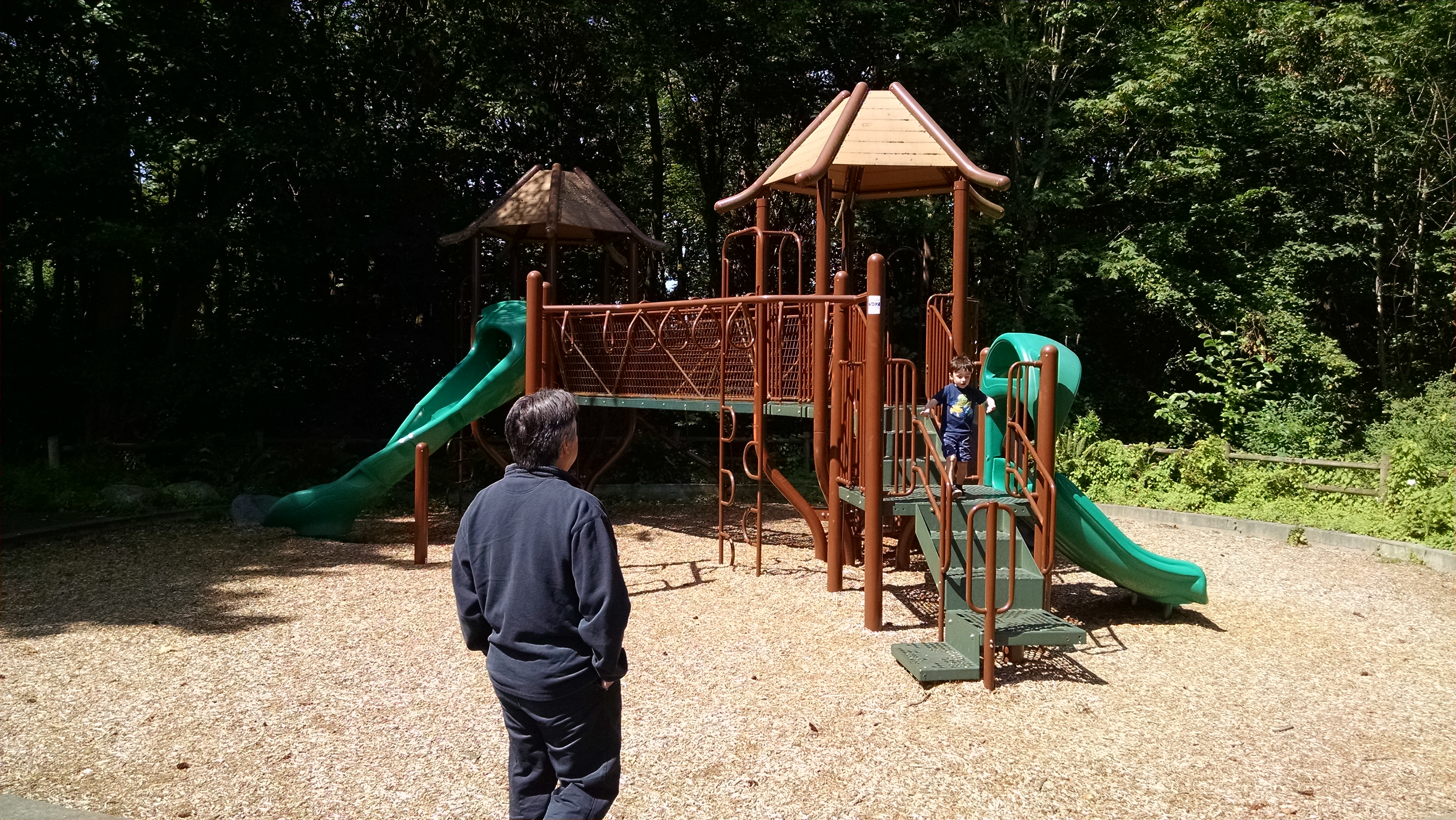
Carillon Woods, at 5429 106th Ave NE is a lovely wooded park with nice play equipment and plenty of trails through the woods. It’s tucked away in a neighborhood about a quarter mile east of Carillon Point, and just west of Northwest College.

The sign shown above is in the midst of the butterfly garden which had lots of bees gathering pollen and some butterflies on the day we were there. It also has an interpretive sign about the butterfly life cycle.

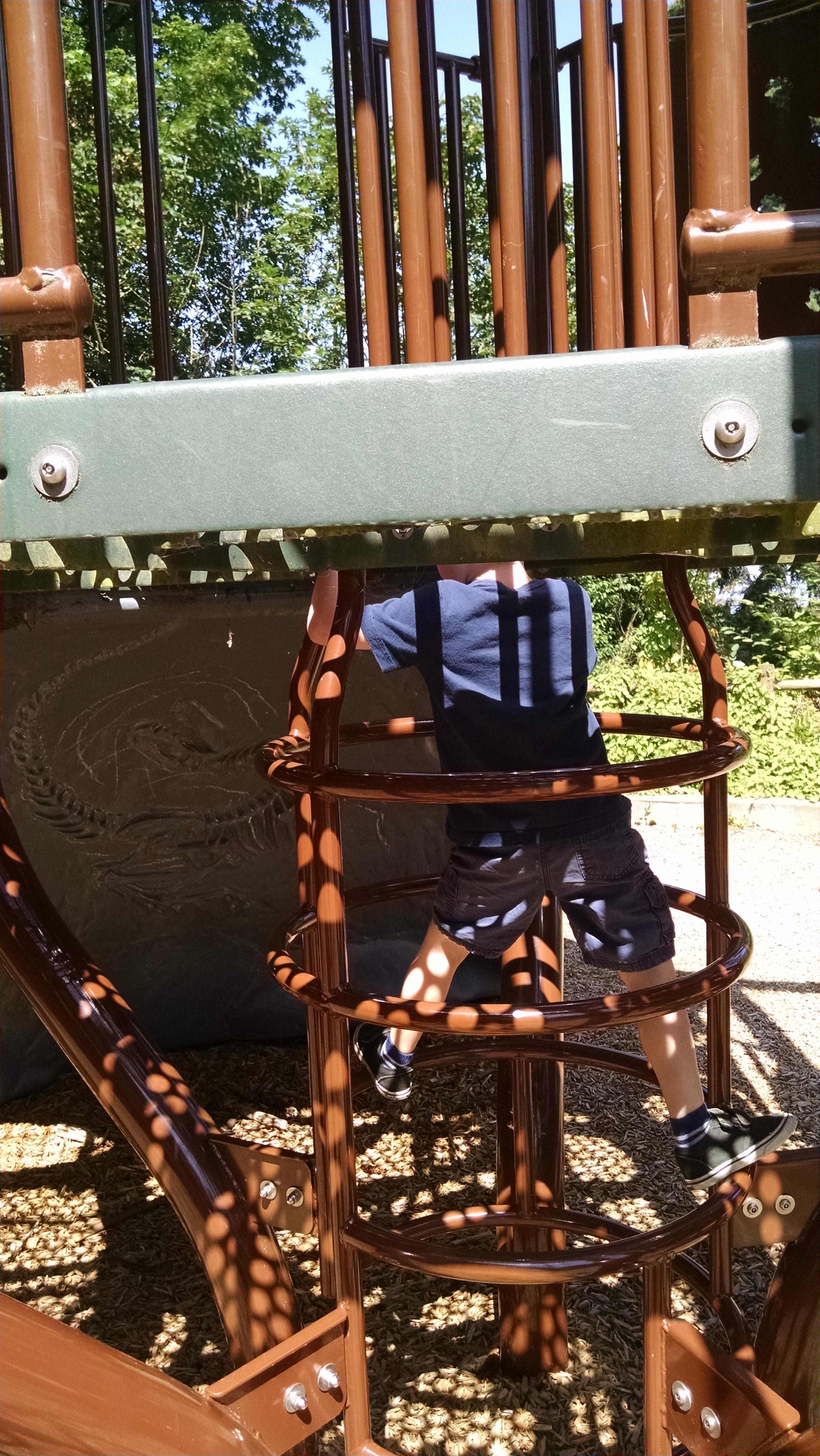
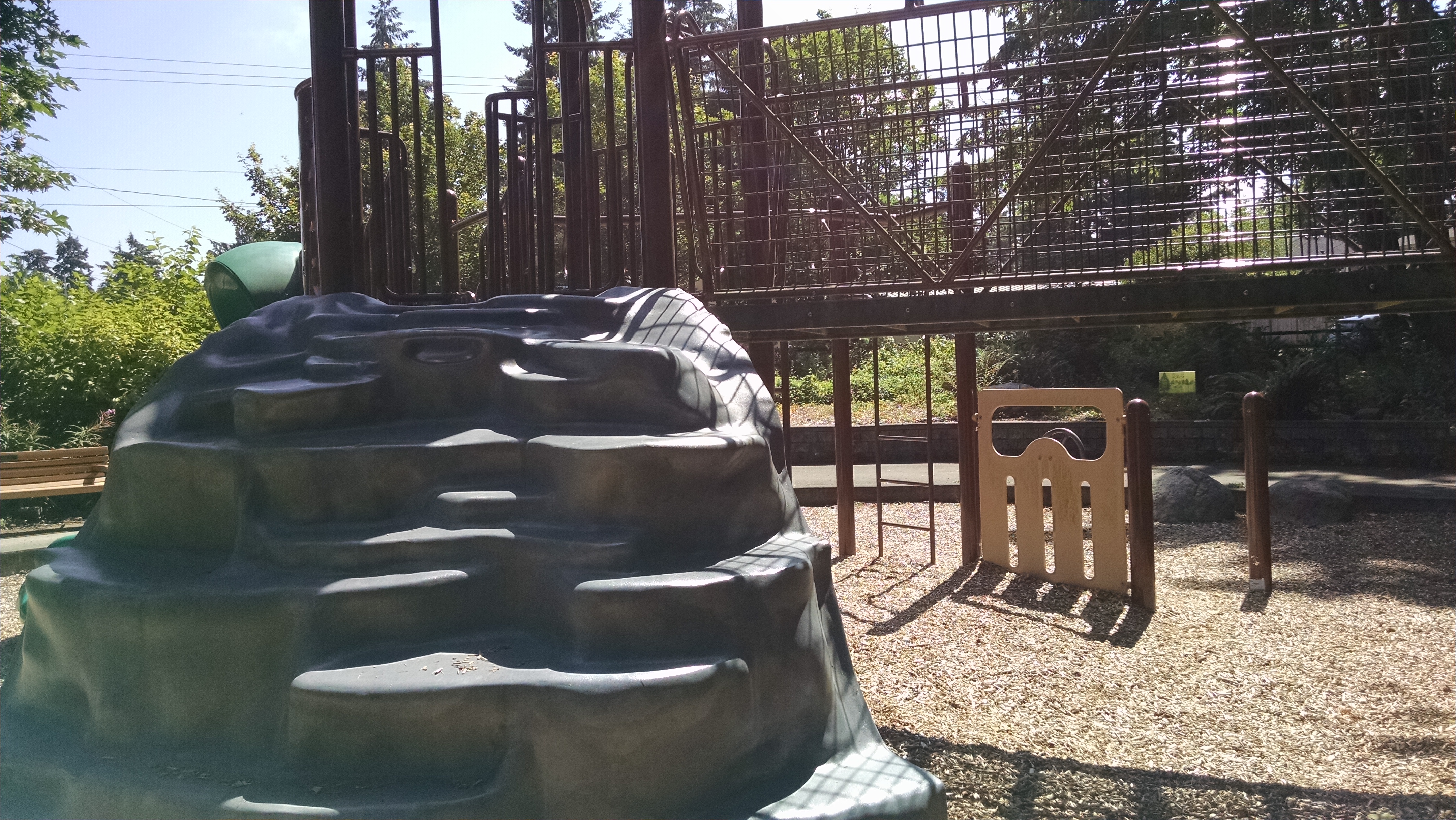
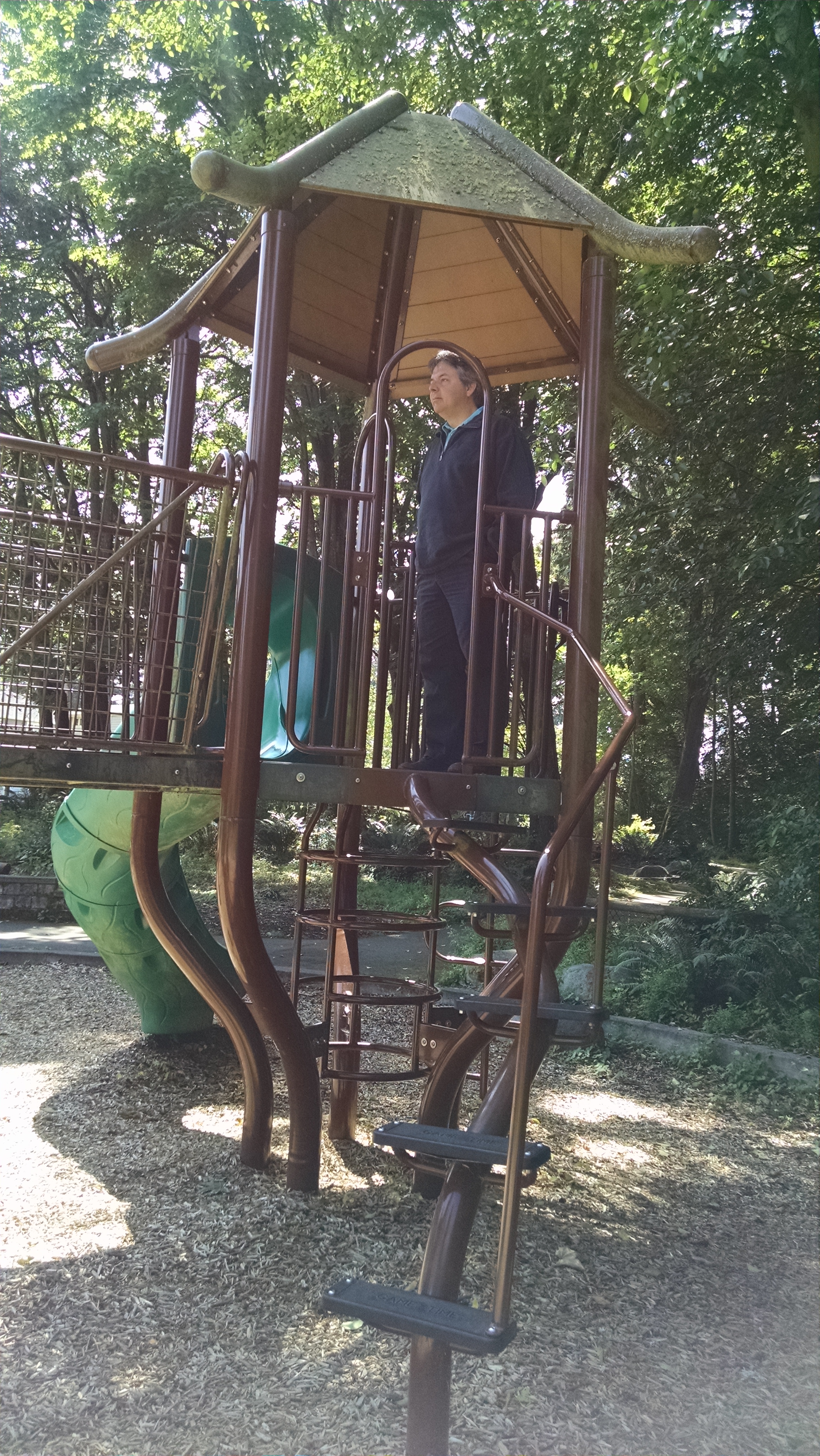
The play structure is a nice one for ages 3 – 9. It’s got lots of ways to climb up: regular stairs, two ladders up the centers of each tower, a climbing rock, tricky stairs (the fourth picture below), and loop ladders up the sides. For ways down, it has a pair of toddler size slides, and a mid-size slide. There’s a long “bridge” connecting the two towers.

IMG_20160628_111243431

IMG_20160628_111313924  IMG_20160628_111331693 IMG_20160628_111341377

The playground was partially in the sun partially in the shade at 11 am. It was a fairly hot day, but all the dense greenery of the park helped the shady areas feel quite cool.

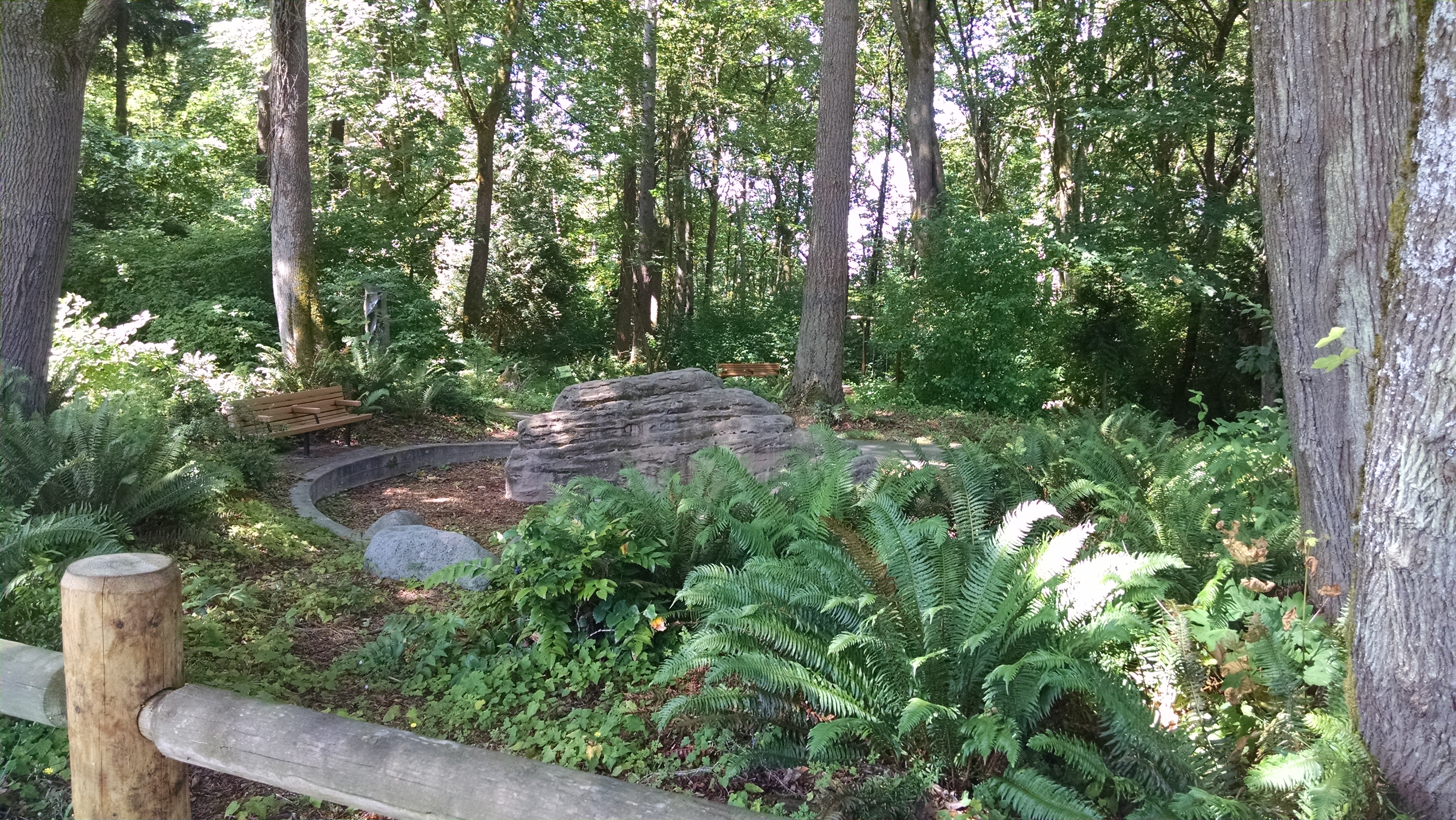
Around the corner, you’ll find a nice climbing rock with some comfy benches to sit on and watch your child climb. It’s an artificial rock, and you can definitely tell by the hollow sounds it makes when you climb on it, but with several years of moss and dirt on it, it looks surprisingly realistic. The wood chips around it are deep and soft – as my husband walked on it, you could see the chips sink down an inch or so, and slowly raise back up as he moved on.

IMG_20160628_112805730

Around the corner from there are swings. They’re both kid style swings – no toddler bucket. The climbing rock and swings are very shady, so good for a hot day.

IMG_20160628_114316391

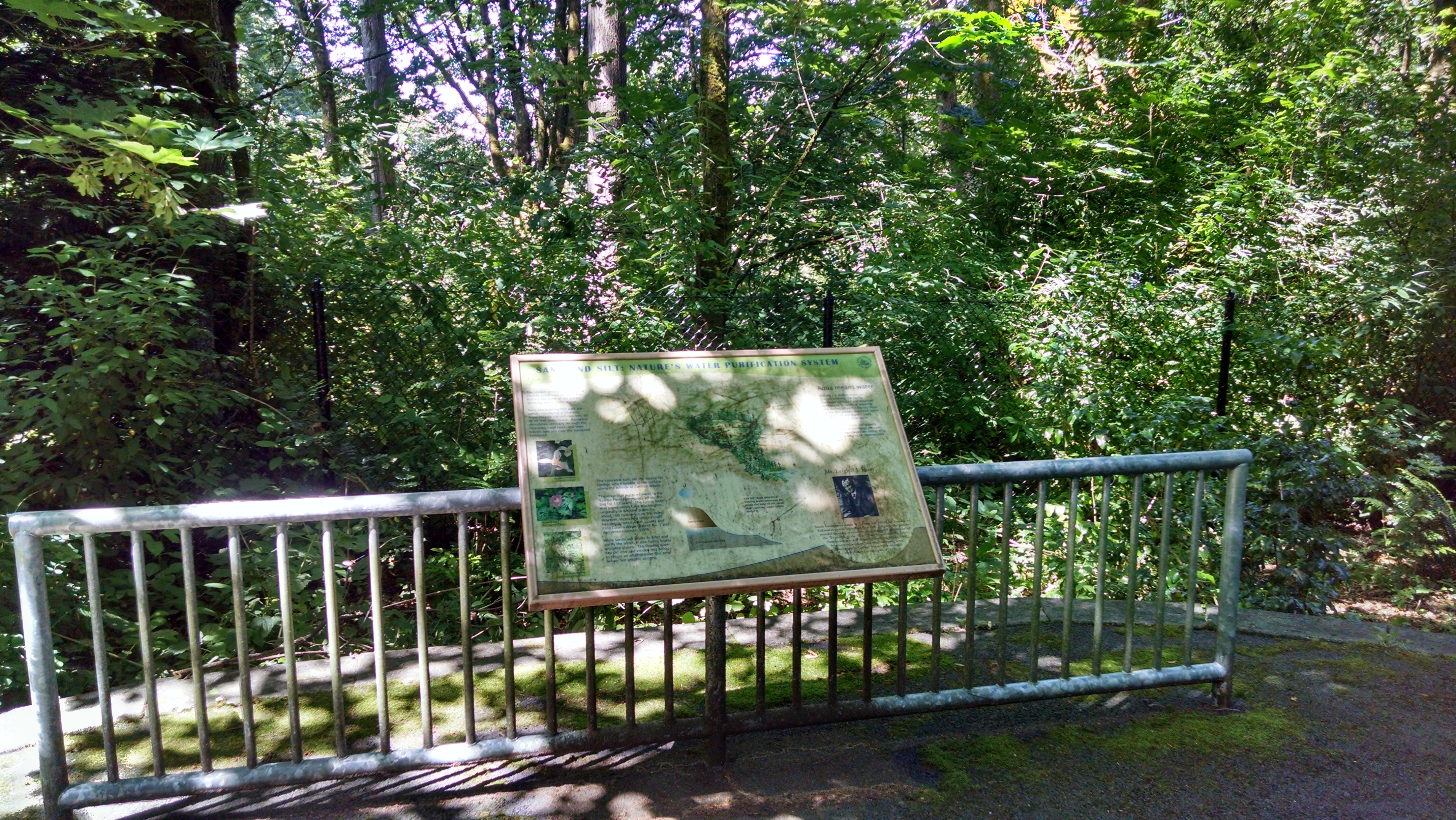
Then there are the trails – there’s a short paved loop (plenty long enough for a tricycle outing) that takes you around the play equipment and back to this interpretive sign about water, and a bench.

IMG_20160628_114126484_HDR

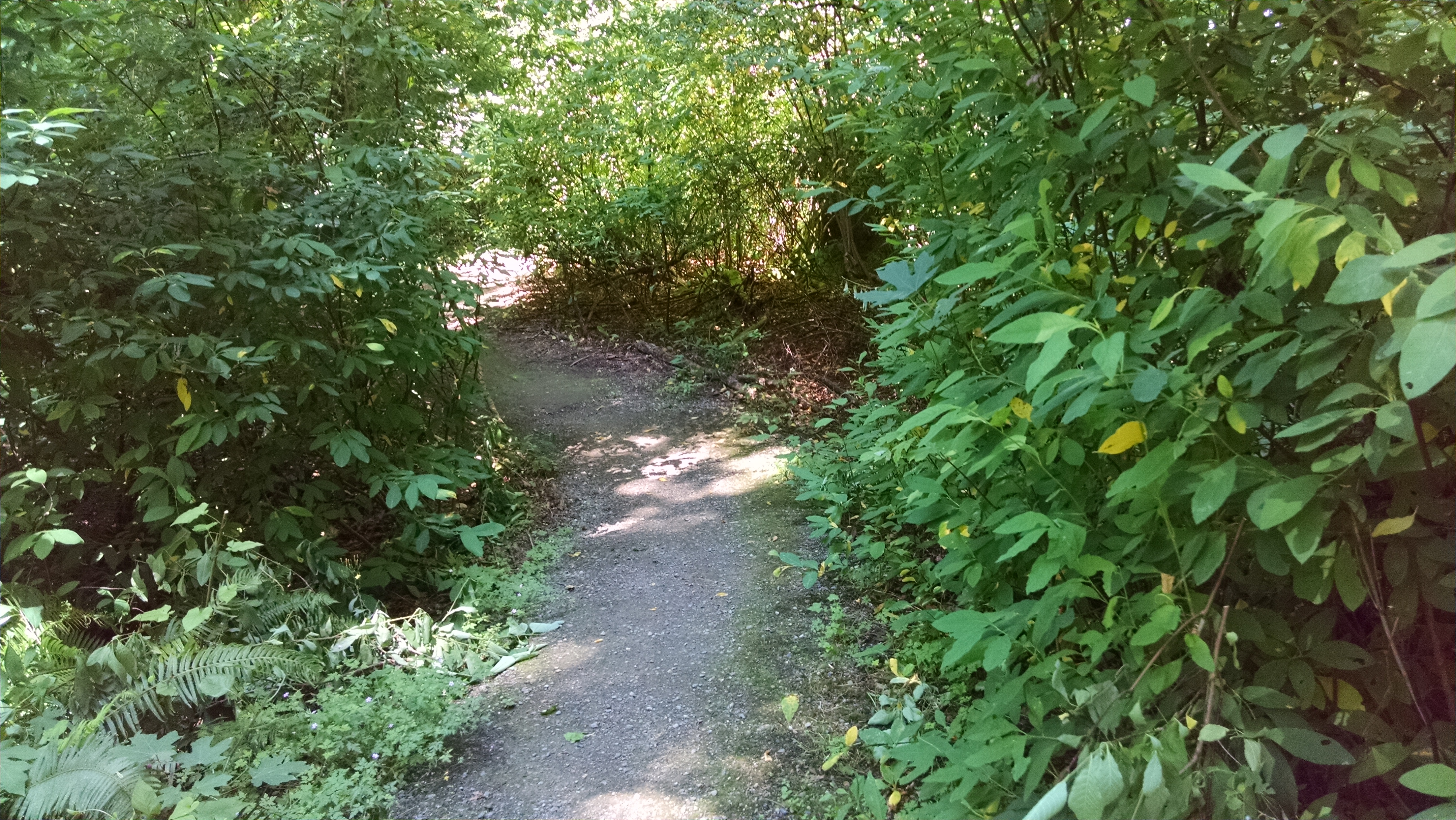
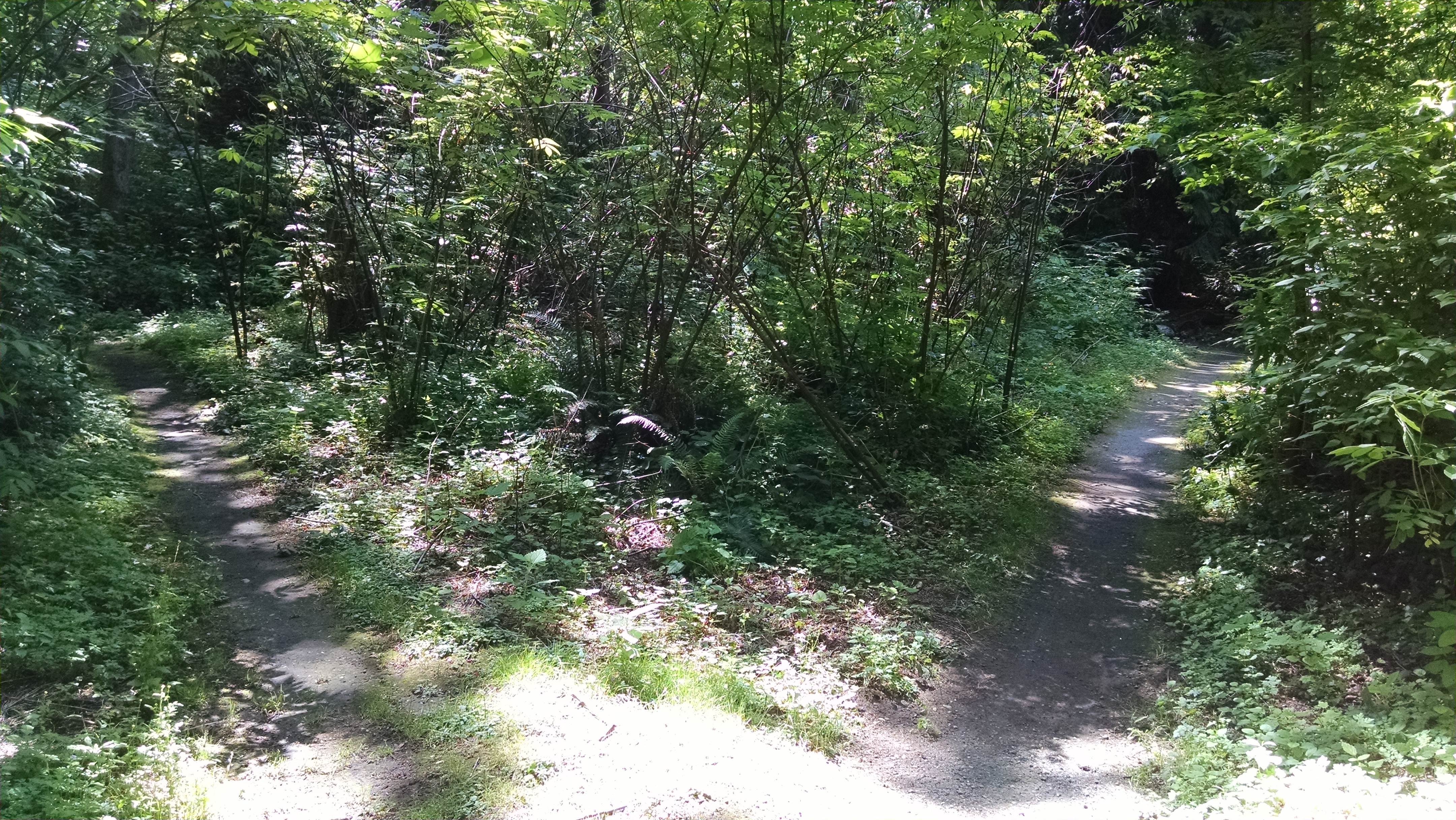
Then there’s lots of other trails through the woods. We wandered along some of them, but didn’t fully investigate. The park is almost 9 acres, and the developed area with the play equipment is maybe an acre of that, so there’s lots more to explore. (2 acres is off limits to the public as it’s an unstable slope, and contains a pump house and active wells.)

IMG_20160628_114305163 IMG_20160628_114151699 IMG_20160628_114118117

There are no bathrooms at the park.

We were there from about 10:30 – 12:30 on a sunny Tuesday, and saw one man walking his dogs, one grandma with a toddler, and one other family arrived just as we were leaving. I don’t know if that’s typical usage or not. If you’re looking for a busy park packed with kids, this may not be it.

But, if you’re looking for a quiet and really lovely park, where you’re surrounded by lush green foliage, this is a great park for you!

IMG_20160628_111058954

Note: this park is not as well maintained as we’re used to in Kirkland. The playground could really use a pressure washing (especially where the moss is growing on the roof) and there’s lots of weeding to be done. But there’s no trash or anything – so the users keep it tidy.

More info at: Kirkland Views (a great write-up), Active Rain, and My Parks

Look Mom! That lady only has one leg!

1 leg

I’m an amputee. I had cancer over 40 years ago when I was a teenager, and my right leg was amputated. I use crutches to move through the world. Being an amputee is not a subtle handicap – it’s one you can see easily from 100 feet away. So every place I go where there are children, a child will point and exclaim. “Look, that lady only has one leg!!”

It is fine with me!! Really. This is nothing new to me – it’s just the way my body is. (Plus I am a kids’ science teacher – I thinks it’s great when children notice interesting things about their world!)

I overhear parents respond to their children. Helpful and positive responses include: “Yes, you’re right, she has one leg.” “Yes, you’ve noticed that she’s different from other people you know. But she’s hiking on the trail just like we are.” “What are those sticks? They’re crutches, they help her walk.” “Yes, she has one leg and uses crutches to walk. You and I have two legs that we walk on.” “Yes, there’s all kinds of people in the world, including some with one leg.” “That’s interesting, isn’t it. Let’s talk about it later.” “I don’t know why she only has one leg. It may have been an accident or she may have been born that way.”

On the other hand, I overhear other parents respond in ways that are not as helpful. It makes me sad when I hear things like “Shh… don’t say anything.” “That’s not nice.” Or “hush – let’s cross the street.”

When you respond this way, you are inadvertently teaching your child is that being handicapped is a bad thing. A shameful thing which we don’t talk about in public. You have implied that disability is something we should all feel bad about and that it’s better not to think about it.

And you’ve also discouraged your child from being curious and making observations about the world around them.

Children notice differences. It’s part of what they need to do to learn about their world: Identify similarities and differences in the things they see around them. They are constantly constructing their own definitions of things, including all the ways in which people’s appearance can vary. Whatever the “difference” is that your child is noticing, whether commenting on someone’s physical disability, skin color, tattoos, clothing, weight, hair, developmental disability, or whatever, think about how to respond.

I try to respond in a way that 1) honors the personhood of whoever we are talking about; 2) acknowledges the difference the child noticed, 3) gives them appropriate language for describing it, and 4) finds some commonality between my child and the other person.

Once, on our way into the library, my then 5 year old son said very loudly – “that man is really fat!” I quietly said to him “Yes, people come in all shapes and sizes.” Then I observed: “He’s on his way into the library just like we are. Looks like you both love to read.” Later on, I had a conversation with my son about it. I explained that although we as a family do not believe that it is bad if someone is heavy, other people in our society do. So, saying loudly that someone is fat might feel like an insult to them, and might hurt their feelings. I encouraged him in the future to make observations like that more quietly, or save them to ask me later.

What if your child asks them a question?

Sometimes your child just walks right up to someone and blurts out a question about the difference they have noticed. I never mind that. But some people are very uncomfortable being asked questions about differences, and some people are just exhausted by being asked the same question over and over and always having to step up and answer it. (There’s a great children’s book on this called What Happened to You by James Catchpole where a child with one leg gets tired of being asked about it when he’d rather just play on the playground.)

If your child has already asked the question, you just have to do your best in the moment. If they asked me, you would notice that I might smile at your child and look open and approachable, so you could step back and let me answer the question. If the person looks uncomfortable, you could briefly apologize to that person, and then say to your child as you walk away something like “when you have questions about things, you can always ask me – you noticed something about that person that was different than what you’re familiar with. I can explain it to you.”

Read more about how to talk to young children about differences.

Reservoir Park – Kirkland

IMG_20160608_142856233

In the Norkirk neighborhood, around the corner from Van Aalst Park, you’ll find Reservoir Park at 1501 3rd St. It’s a small neighborhood park with a fun playground.

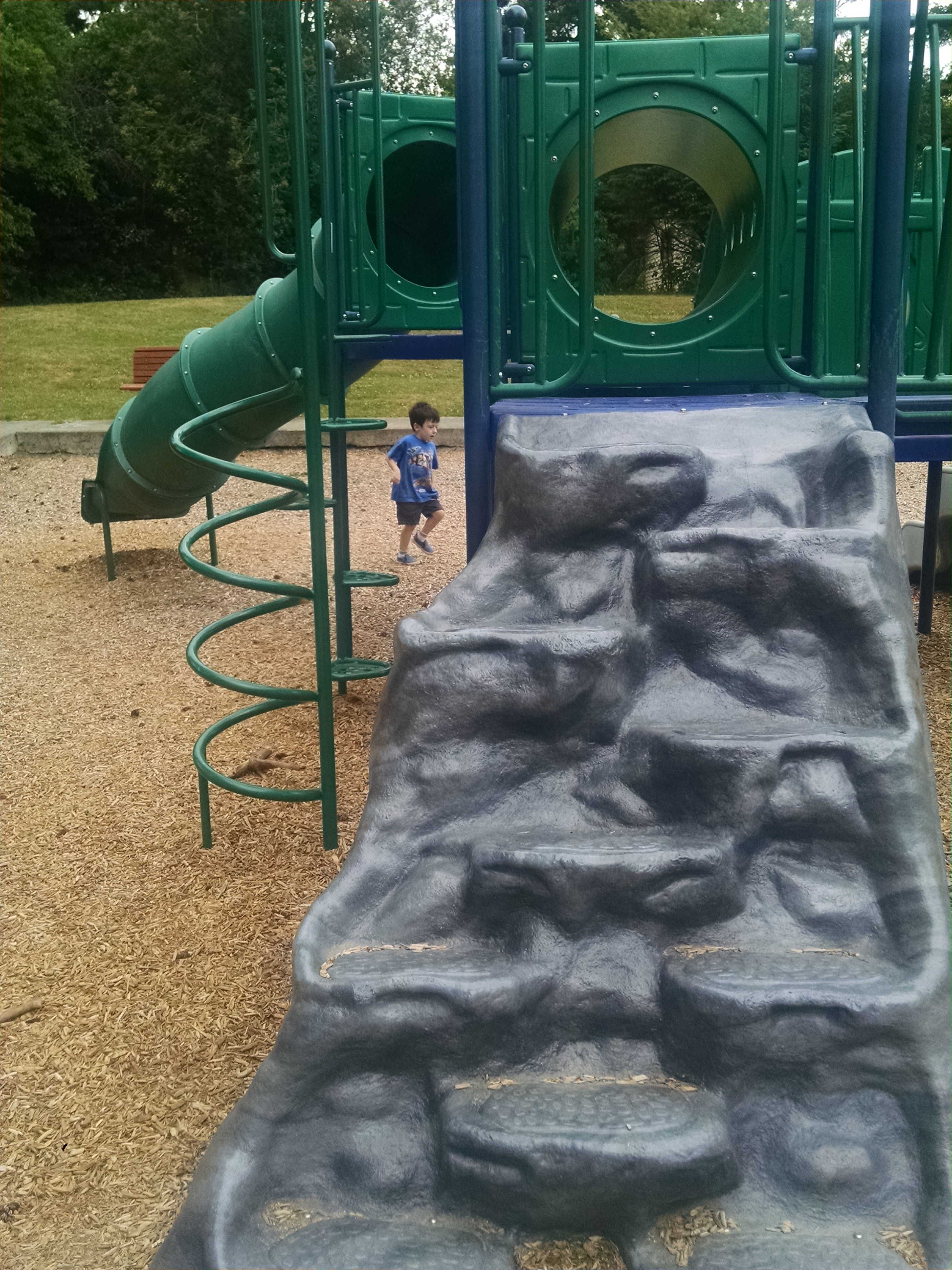
It’s got a good-sized climbing structure, best for ages 4 – 8. It includes a tall tube slide, two mid-size flat slides, and a short wobbly slide, plus a climbing “rock” zone and some low-ish platforms to peer out from.

IMG_20160608_143209159

IMG_20160608_143057429 IMG_20160608_142954888

It has one of those sit and spin / stand and spins.

IMG_20160608_143134402

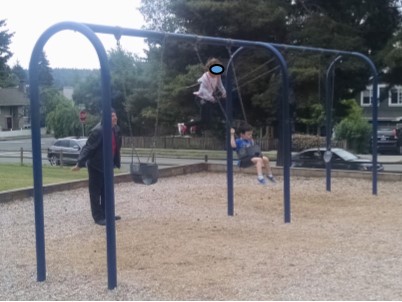
And swings. (2 kid, 2 toddler buckets)

reservoir

No bathrooms. Partially shady.

Just one other family came by on the warm Wednesday afternoon when we were there. Not sure if that’s typical usage.

More details and pictures at: Active Rain and My Parks.

Learn more about other parks in Kirkland / Juanita: Tot Lot, Finn Hill, OO Denny, St. Edwards, and Van Aalst Park