For the 100 days challenge, I created a collection of fun songs for singalongs with video tutorials. Start reading here to learn about the challenge and learn more about Rise Up Singing, or skip straight to the song list.
Introduction
Cynthia Lin organizes a “100 days of ukulele” challenge, starting each year in March. Participants are encouraged to record a video every day of themselves playing ukulele and post it for the community to see. (Find it on Facebook, or her Patreon or on Instagram or YouTube using #100DaysUke2025.) The goal is to commit to a practice, and daily work on your skills. This year, I gave myself the challenge of playing lots of new songs, using each to practice and strengthen my: chord changes, choosing the best strum pattern and/or building my skills at finger picking. I figured I might as well record these as tutorials that I can share with others.
I chose to work with songs from the group singing book Rise Up Singing (Amazon affiliate link, or buy directly from the publisher). There are 1200 songs in the book! So, I am choosing some of my favorites / things I think may be commonly sung. Many of them also appear in the Daily Ukulele Songbook. (Amazon, publisher). Or they appear in the songbooks for the Eastside Ukulele Players group I play with.
Most of my videos will include chord diagrams. They contain at least some of the lyrics, and some contain info on how the chords align with the lyrics. If I don’t have all the lyrics and chords in the video, I will try to link to where you can find them. I do strongly encourage you to support the authors/publishers of Rise Up Singing and Daily Ukulele and honor their copyright by purchasing your own copy of each book. If you do singalongs in a group, purchase enough copies of the book for everyone in the group.
Rise Up Singing
Rise Up is a folk music singalong book, first published in 1988. It contains 1200 songs, sorted into 35 categories, well indexed by title, artist, and subject. For sheer number of songs, it’s incredible! In order to fit that many songs into a compact, affordable book, this is not full sheet music and comprehensive lyrics for all know verses. It just includes the lyrics and chords, not the melodies, so you either need to know the song, or look for a recording online to learn it. I love this book!
And… as a beginning musician, it was really hard for me to use it, even for songs that I knew.
Here’s a sample song. So the “C – F G /” means that for the first line of lyrics, you’ll play C, continue playing C, then F, then G. You have to figure out for yourself when to switch from one to the other. The second and third lines of lyrics are similar, then you’ll see for the fourth line, it just says 2nd. That means you play the second pattern. There’s a lot of thinking involved as you play, which was hard for me when I started.
The Rise Up Singing versions aren’t the fanciest arrangements – they lean toward using simpler chords and not a lot of chord changes, so in some videos, I include more interesting variations on the song. Also, I find the key doesn’t always feel right to me. An Amazon reviewer says “The keys chosen work well on guitar (tuned to key of E so lots of Es and Ebs and whatnot), not always so easy for uke players. I do find myself transposing on the fly.” I agree, so in some videos I offer a second version of the song, played in a different key than shown in Rise Up.
Song List
Here’s a list of all the recordings I did, in alphabetical order. Some are full tutorials, some are playthoughs of the full song, some just snippets… just what I was able to complete on that particular day of the challenge, depending on my other commitments. I starred the easier songs for beginners.
In 2025, there were 2267 cases of measles in the United States, and 70% of those were in children. 11% were hospitalized. There were 3 deaths from measles. These are the first measles-related deaths in the United States in a decade. 2026 is trending to be worse, with 588 cases by the end of January. (In 2024, there were only 285 cases in the entire year.)
So it’s time for an update on measles: what is it, how contagious is it, and how to prevent the spread (hint: the measles vaccine substantially reduces your risk.)
What is Measles?
Measles symptoms appear 7 to 14 days after contact with the virus. Measles typically begins with: High fever (may spike to more than 104°), cough, runny nose, red, watery eyes.
2 – 3 days after symptoms begin, white spots in the mouth may develop.
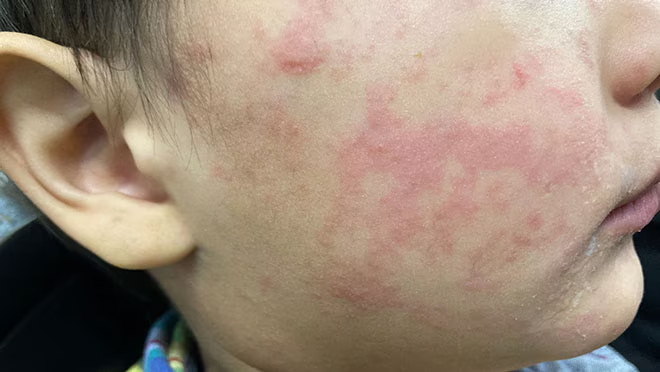
3 – 5 days after symptoms begin, the measles rash appears: beginning as flat red spots that appear on the face at the hairline, then spread downward to the neck, trunk, arms, legs and feet. Small raised bumps may appear on top of the flat red spots. The spots may join together as they spread. The fever may spike to more than 104.
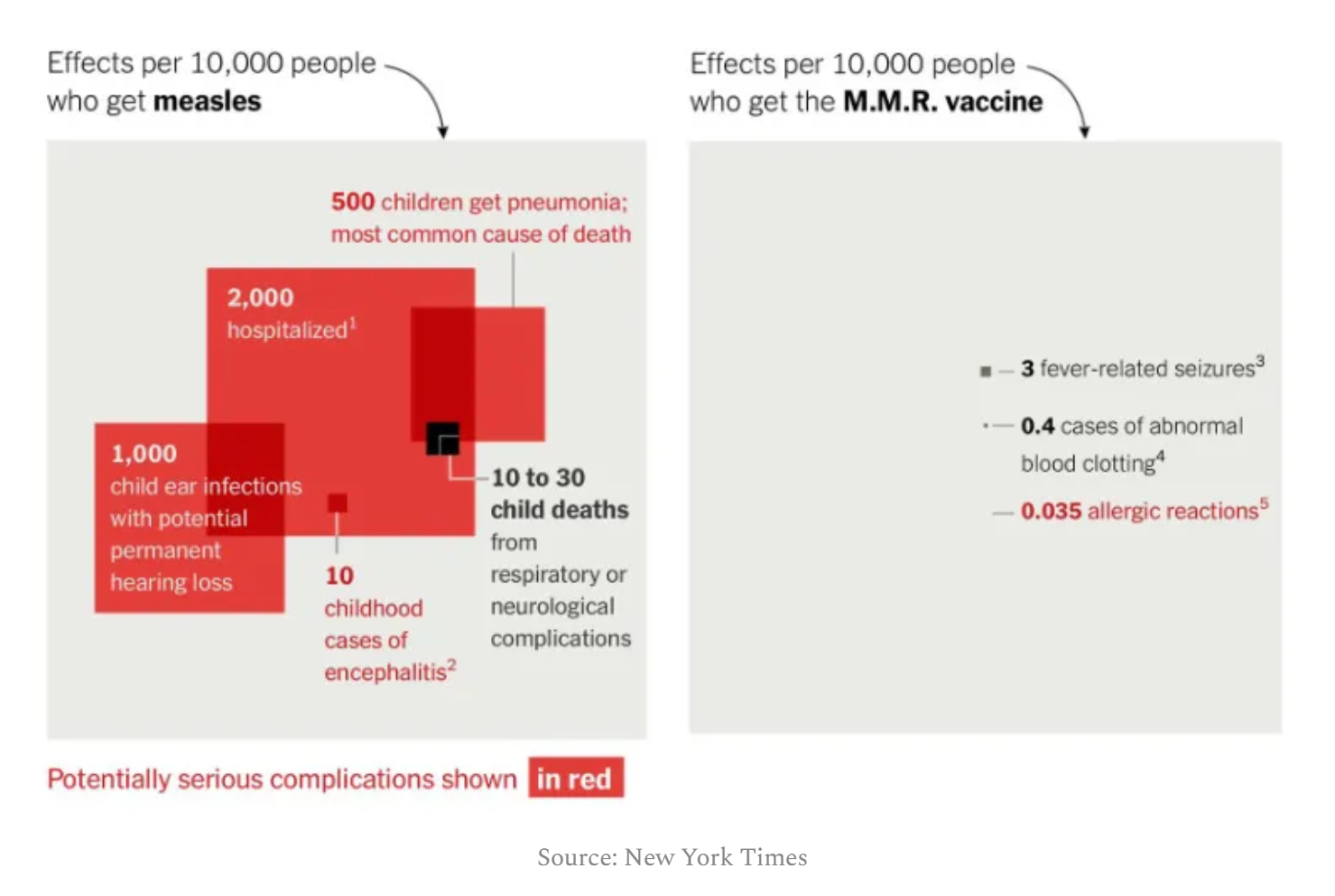
Measles can cause serious problems, including ear infections (1 in 10 people with measles), pneumonia (1 in 20), and encephalitis (1 in 1000) which can cause permanent brain damage. About 1 in 10 people who get measles in the U.S. will be hospitalized. (For kids under 5, there’s a 1 in 5 chance of hospitalization.) Even after recovery, it has a long-term effect on your immune system, making you more vulnerable to other diseases.
You may hear some people say “measles can be treated with vitamin A” as if to imply that it is a minor and easily treatable illness where you pop a few vitamins and it’s resolved. Although vitamin A does have benefits in reducing mortality in children who already have measles (especially in countries with high levels of vitamin A deficiency), preventing a child from getting measles in the first place is a far better way to reduce measles mortality. Vitamin A does not protect someone from infection with measles (it’s not preventative), and if a child does have measles, parents should not self-treat with vitamin A without consulting a physician.
Is measles deadly?
No, not for most people. (For example, I learned today from looking at my health records that I had measles as a baby, in 1967.) However, for every 10,000 people who get measles, 10 to 30 children will die.
You may hear some people say things like “a lot more people die of flu each year than measles”, with the implication that measles is not that risky. No. The reason is that since measles vaccines became available, measles had become a fairly rare disease. In 2023, there were 59 cases of measles in the US and 40 million flu-related illnesses, so of course there were more flu deaths.
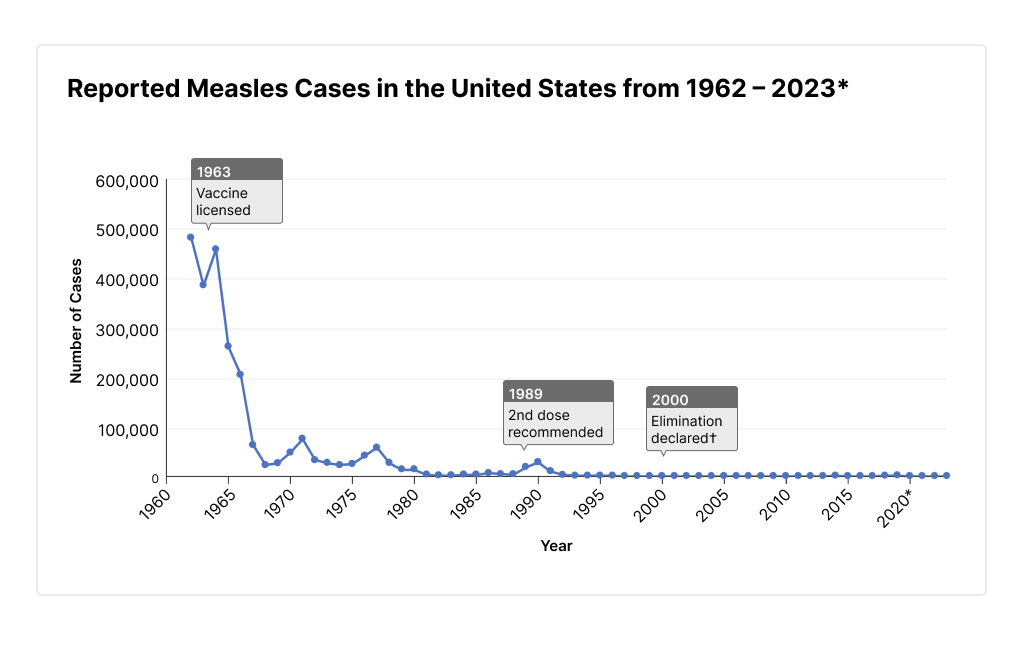
Before the measles vaccine existed, there were 3 to 4 million cases per year in the US and 400-500 people died. After the vaccine became available, rates plummeted. Many pediatricians across the US have never actually seen a case of measles. The fact that the rates of infection, and thus deaths, had dropped so far should be seen as a huge success for modern medicine.
Unfortunately, due to widespread misinformation about MMR vaccines, and the fact that parents who have never seen measles mistakenly believe it to be mostly harmless, vaccination rates are dropping, and we will start seeing more measles cases each year.
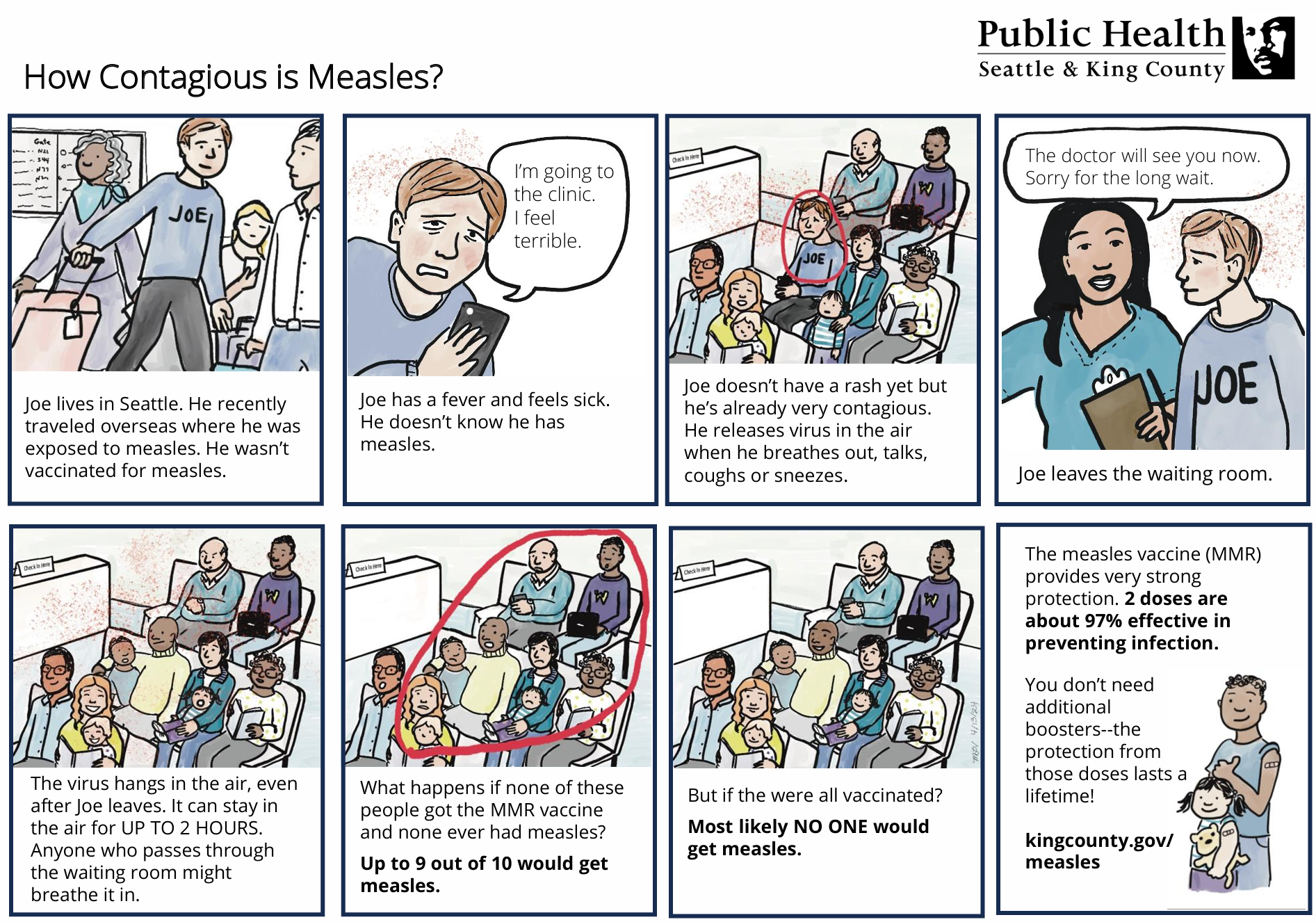
When someone has the measles, they may develop fever and other symptoms before the characteristic rash appears. (They may be infectious for 4 days before the rash appears.) So they may not realize they have measles, and may be out in public – in school, restaurants, shops, buses or medical clinics. If they cough or sneeze, they produce infected droplets, that can remain active in the air or on surfaces for up to two hours. If people who are not vaccinated / immune are exposed to the contaminated air / surfaces, the chance they will develop measles is 9 out of 10.
On average, every person with measles will spread it to 12 – 18 unvaccinated people.
If you or your child has been exposed to measles, contact your doctor.
Protecting against Measles
For those who are fully vaccinated, their chance of getting infected after an exposure is about 2 in 100 (vs. 90 out of 100 for those who aren’t vaccinated.) And, even if a vaccinated person does get an infection, it will be much milder, with many fewer complications and they will be less infectious than in someone who is not vaccinated.
The more people in a community who are vaccinated, the lower the risk of an outbreak. If at least 95% are vaccinated, that’s considered herd immunity or community immunity and that reduces the risk of the spread in that community.
In King County, Washington, 97% of our 6th/7th graders are vaccinated against measles, but only 92% of kindergarteners are, and only 87% of 2 year olds. (And, 0% of babies under 6 months old since they are not yet old enough for the vaccine, so are at the highest risk of infection.)
It is recommended that children receive a dose of the MMR vaccine (which includes measles) at 12 to 15 months. [If your community is having an outbreak (3 or more related cases) or you are traveling internationally, they can receive that dose as early as 6 months. Learn more about protecting infants.] That provides 93% protection against infection. They should have the second dose at 4 – 6 years, which brings them up to the 97% protection. If your child is not vaccinated, you can get them vaccinated at any time. Learn more. You can also get vaccinated yourself if you are not – check for contraindications (e.g. you can’t get the MMR vaccine while pregnant.)
If you have already been exposed to the measles virus, getting a vaccine shot within 72 hours of exposure (or an immunoglobulin medicine within 6 days of exposure) will help reduce the chance of infection / the severity of the illness.
Vaccination is the single best way to reduce risk of infection. You can also reduce risk with all the usual things: handwashing, hand sanitizer, and limit exposure to people who show signs of illness.
Am I Immune?
You are presumed to be immune (and thus don’t need a vaccine) if you have:
written documentation of your past vaccines (children age 1 – 3 should have one dose, age 4 – 18 two doses, for most adults one dose is enough but healthcare providers and international travelers should have two)
a lab test that shows immunity
laboratory confirmation of disease
were born before 1957 (it’s assumed that most people born before 1957 had the illness at some point)
If you received a LIVE measles vaccine in the 1960’s you do not need to be revaccinated. But, if you received an inactivated measles vaccine between 1963 and 1967, it was not effective and you should be revaccinated. If you’re unsure: You can ask your doctor for a blood test to check for immunity, or just get the vaccine. The MMR vaccine is safe. There’s no harm in getting another dose.
Is the vaccine safe? What are the side effects?
Common side effects are: Soreness, redness, or swelling where the vaccine was given, fever, mild rash, and temporary pain and stiffness in the joints. More serious side effects, such as a high fever or a febrile seizure are rare.
If you have worked your way through my full series on Learning to Play Ukulele, and are ready to play around some, here’s a fun approach.
Lots of pop songs are written around a standard chord progression. They’ll describe it as I V VI IV. (Within a key, these are the first, fifth, sixth and fourth chords in the scale.)
So, in the key of C, you’d play a chord progression of C G Am F. In G, it’s G, D, Em and C. In the key of D, it’s D, A, Bm, and G.
So, try just playing the chord progression: for example, strum C twice, then G, then Am, then F. Does that remind you of any song you’ve heard?
It might remind you of Don’t Stop Believing by Journey? Or I’m Yours by Jason Mraz? Or Let it Be from the Beatles? Yep, it’s in all those.
In the video below, they play snippets of all these songs that use this four chord progression. Journey — “Don’t Stop Believing” James Blunt — “You’re Beautiful” Black Eyed Peas — “Where Is the Love” Alphaville — “Forever Young” Jason Mraz — “I’m Yours” Train — “Hey Soul Sister” The Calling — “Wherever You Will Go” Elton John — “Can You Feel The Love Tonight” (from The Lion King) Akon — “Don’t Matter” John Denver — “Take Me Home, Country Roads” Lady Gaga — “Paparazzi” U2 — “With Or Without You” The Last Goodnight — “Pictures of You” Maroon Five — “She Will Be Loved” The Beatles — “Let It Be” Bob Marley — “No Woman No Cry” Marcy Playground — “Sex and Candy” Men At Work — “Land Down Under” Theme from America’s Funniest Home Videos Jack Johnson — “Taylor” Spice Girls — “Two Become One” A Ha — “Take On Me” Green Day — “When I Come Around” Eagle Eye Cherry — “Save Tonight” Toto — “Africa” Beyonce — “If I Were A Boy” Kelly Clarkson — “Behind These Hazel Eyes” Jason DeRulo — “In My Head” The Smashing Pumpkins — “Bullet With Butterfly Wings” Joan Osborne — “One Of Us” Avril Lavigne — “Complicated” The Offspring — “Self Esteem” The Offspring — “You’re Gonna Go Far Kid” Akon — “Beautiful” Timberland featuring OneRepublic — “Apologize” Eminem featuring Rihanna — “Love the Way You Lie” Bon Jovi — “It’s My Life” Lady Gaga — “Pokerface” Aqua — “Barbie Girl” Red Hot Chili Peppers — “Otherside” The Gregory Brothers — “Double Rainbow” MGMT — “Kids” Andrea Bocelli — “Time To Say Goodbye” Robert Burns — “Auld Lang Syne” Five for fighting — “Superman” The Axis of Awesome — “Birdplane” Missy Higgins — “Scar”. In the video , they are in the key of D, using D, A, Bm, and G.
So, you could choose any of the songs off that list, do a google search or YouTube search for “[song title] ukulele” and find a chord chart and a video and start learning that song, playing with that four chord progression.
Another common progression, called the 50’s progression or the doo-wop progression, in Nashville numbering is I VI IV V (the same chords as I V VI IV described above, just in a different order). In the C major scale, that’s C–Am–F–G
Just a few of the songs that use it are: All I have to Do Is Dream, Beyond the Sea, Blue Moon, Breaking Up is Hard to Do, Chain Gang, Crocodile Rock… find more here.
Note: I have a more general post on talking to children about the concept of death that I would recommend for most readers. This particular post is much more specific than that – it is focused on how to talk to a very young child (age 2 to 5) about the impending / expected death of a parent (or a grandparent.other adult who is very involved in the child’s day to day life.) It may be relevant as someone is nearing end of life or has been placed in hospice care.
First, I want to acknowledge that this is a very heartbreaking thing to have to talk about. For you, as the adult who is in the midst of this difficult situation and will have these sad conversations with the child – this is hard emotional work, and I encourage you to seek out support for yourself as well and to do the self-care that nourishes you through these hard times.
But, although it is challenging, I think it is important to have these conversations. To be honest with children about the realities of the upcoming loss. Trying to shield the child from anticipatory grief will only make it harder for them when the loss happens and the full grief becomes a part of their life. Talking about it now allows them to begin to process it, and allows you to create meaningful and loving moments with them as you begin with saying goodbyes.
Let’s look at what a child this age is capable of understanding, and some key ideas to talk with them about.
Explaining Death to a Young Child
Before talking about the upcoming loss of a child’s loved one, it’s best to start by making sure they have an understanding of what death is.
Explain what death is in very concrete ways – this is not the time for flowery metaphors like “go to a better place.” Instead, share these ideas:
Death is the cessation of life functions. Use simple terms and examples from their life experience. “Do you remember when your pea plant died, and it stopped growing and started to shrivel up?” “Do you remember when we saw that dead squirrel in the park? They looked like they were sleeping, but their heart had stopped, and their brain didn’t work anymore.”
Death is permanent. Once something has died, it will not come back to life. If someone we love dies, we won’t see them again.
Everything that is alive will someday die. Some things / beings live a very long time, and others live for a short time. Sometimes death happens suddenly, sometimes someone is sick for a long time before dying.
Death is caused by physical reasons. Describe in a simple, non-graphic way what can cause a death.
Even though someone may not be alive any more, we can always hold them in our memories.
For a preschooler, age 2.5 – 5: Even if you clearly explain what death is, they may not be able to grasp what you mean. Permanence is hard to understand. They may believe death is temporary and reversible, and may ask things like “but when will they come back?”
Teachable Moments
I often recommend that parents wait for teachable moments to talk about death. For example, if a child sees a dead bug on the window sill, or an animal that was hit by a car, or they hear that a friend’s pet died. Those are times a parent can introduce the topic. Or any time a child asks about death, calm, matter-of-fact answers are helpful. You can take advantage of these same moments. But, if you, or a close family member, is facing the end of life soon, you may feel the matter is too urgent to wait for teachable moments to appear, and may intentionally bring it up through conversations, or pretend play / storytelling, or through media.
There are many shows and movies where a character dies that you could use to introduce the subject. Two that I know of that are focused on helping a child understand death are the Mr. Roger’s goldfish episode and the Daniel Tiger episode.
If you have some time (days or weeks) to prepare, you could gradually sneak little conversations about death in and around all the normal toddler and preschool daily activities – don’t force it and don’t talk about only this… trust that you can gradually bring these conversations in.
If we use vague euphemisms, it’s confusing. Saying “mommy is sick” or “grandma went to sleep” or “daddy is going to go away soon” can cause a child to worry that the next time anyone gets sick in any way, or goes to sleep, they too will die, or any time any one leaves the room or the house, they might not come back. (This video talks more about how it’s helpful to use the word death instead of euphemisms.)
So, be clear about what disease is happening (e.g. cancer), what you might guess the timeline will be and what to expect. (As much as you can guess.) You don’t want to overwhelm them with details, but do give an honest overview.
An extremely important thing to address is who will care for them. Reassure them that they will be OK, and all their needs will still be tended to.
Having this conversation will be hard for you. You may cry. It’s OK. You can be honest with your child about how you are feeling. (Do be sure to get lots of support elsewhere so your child does not feel like they have to help you feel better.) But it’s OK for them to see your feelings.
How They May React
When you tell them, they might be very upset. Or they may have very little reaction. It may just be too hard for them to really grasp the meaning of the situation.
Even if your child won’t talk about it, they may play this out – you might see pretend play scenarios involving hospitalization, death, and dinosaur attacks and more. This is a normal part of them making sense of it all.
They may have times they worry a lot about it, there will be many more times where they seem to have no awareness of it and are just focused on being happy toddlers / preschoolers. This video is very helpful for understanding how this is developmentally normal.
Even if they aren’t voicing any concerns related to the illness, they may show some of these behaviors: regression (e.g. needing diapers again after having been potty trained, or thumb sucking after they had stopped), clinging, sleep disturbances, separation anxiety, or fear of the dark. You might see anger and temper tantrums. It is fine to give them extra support and be a little more relaxed about “the rules” but don’t go too far into total permissiveness. Having the old familiar routines and rules is actually reassuring to children and helps give them security that although there will be some huge changes, other things will stay the same.
There are a lot of things in any child’s life that are out of their control, and especially for your child in this moment. Giving them choices anywhere you can (like what clothes to wear or what to eat for breakfast) can help them to feel more powerful.
It might also be helpful to give them “jobs” they can do to help out, even if it’s as simple as bringing a cup of water or snack to the ill person, or helping to fluff their pillow. Feeling like they can make a difference for the person they love is empowering to a small child.
When to Have the Conversation
With an older child, like an elementary age or middle school child, a parent would be able to plan this out – plan a quiet time for a long uninterrupted conversation in a private place for a single focused conversation. The reality of small children and attention spans and how much they can take in at a time means that you just have to be on the lookout for an opening… when you have a moment where things are quiet and neither they or you are tired, stressed or hungry, there may be a chance to start the conversation. While you have their interest and engagement, keep going. But watch their cues. When they wander away, or disengage, or start pushing the conversation away, let it go. You can talk some more some other day.
Don’t put off the conversation waiting for the perfect moment to get it right. There is no perfect moment. The important part is to start the conversation, don’t avoid it.
And know that this is not a one and done conversation. Your child may continue to bring it up off and on, and ask questions, and ask to be told again something you think you’ve told them several times. This is part of the process of them taking in and understanding the information.
Answering their Questions / Concerns
Some common questions come up for kids. Listen for them, or even if they don’t voice these questions, you may want to talk about these issues proactively.
“Is it my fault?” Kids are naturally very self-centered. They may wonder/worry that they caused the illness because they were mad, or bad, or whatever. They need to be reassured that it’s not their fault.
“Are you leaving because you don’t love me?” Reassure them this is not the case!
“Will _____ die too?” If one loved one is dying, they might worry that others will too. I don’t ever promise that won’t happen, because none of us can promise that. But I do tell them I think it is HIGHLY unlikely.
“Will I die too?” I think it’s only fair to say “yes, you will die someday but I think it won’t be for a very long time.” If they ask “Can I die too to be with you?” let them know that as much as you love them, you want them to live a long and beautiful life.
“What happens after you die?” You can share your beliefs with them about this. Other important people in their lives might share different beliefs. That’s OK. I say it as “No one knows for sure, but here is what I believe.” Whatever you share, it is helpful to be clear that a dead person’s body will not come back to life and someone who has passed will not be visible / tangible to them in the same way as before death.
“Will it hurt?” Be honest about whether the dying process may or may not hurt and how health care will support that. But say that death itself does not hurt, and after death, there is no pain.
“Can we fix it?” Tell them that you really wish you could, but some things can’t be fixed. Reassure them that you are doing all you can to help these be as easy as it can be on everyone, and that even though it is still very hard, in the long run, you know they will have a happy life.
Books to Read
These are some books that could be effective for the person whose passing is nearing to read to the child. (You could even make a video of them with the child in their lap reading it aloud to them.)
With each, I include a link to the book description* and also a link to a video of a read aloud so you can see if the book feels like the right fit for your situation.
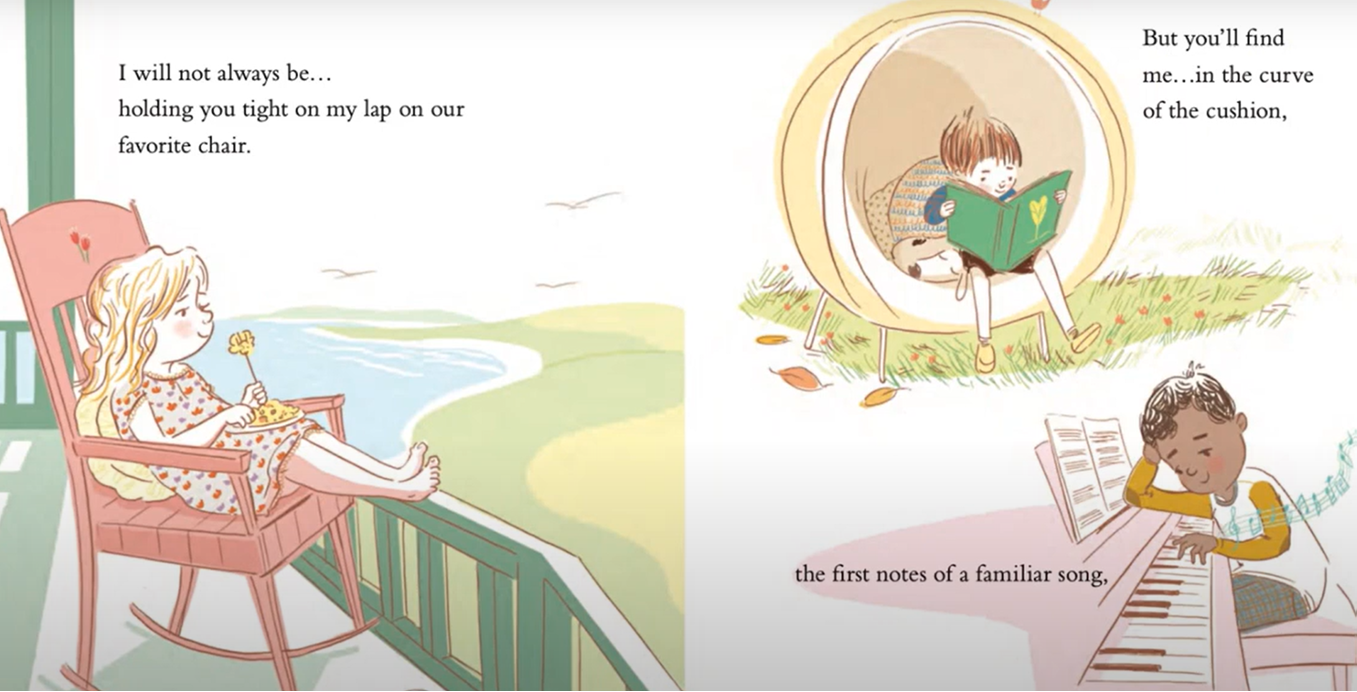
You’ll Find Me by Amanda Rawson Hill. (Video) This is beautiful. “I will not always be greeting the morning with you, but you’ll find me… in the way the sun spills through your window whispering wake up sleepyhead… I will not always be holding you tight in my lap, but you’ll find me… in the first notes of a familiar song…” The image at the top of this post is from this book.
You’ll Always Have My Love by Jennifer Chobar. (Video) Although I don’t think the rhymes are the best children’s writing, I do think there are beautiful messages in this book! I think it would be a very sweet thing for the person at life’s end to read to the child, if their belief system includes the idea that they’ll be watching over the child after they die.
When Mama Goes to Heaven by Jayna Russell. (Video) Talks about how the person they have lost can still be “found” in all the beauties of the world.
The Goodbye Book by Todd Parr. (Video) Could be read after someone’s passing, but I also think it could be read beforehand, as a chance to preview what the feelings might be like and how to hold them gently.
Creating Memories
By being honest with a child about what’s coming, you create the opportunity to create special rituals and preserve memories. Make lots of videos, take lots of pictures, write letters to be given to them on each birthday, plan a memorial service together, whatever feels meaningful to you.
You can also do more things with all the other adults who will help to support the child after the death, strengthening all those relationships, and showing them that those adults have your trust.
Still Living Your Life
Sometimes when death is coming, families let that overwhelm everything. Every day becomes about that.
It’s OK to still do all the “normal” things that “normal” families do with small kids. And let your kid be a kid! Go to the playground, watch Bluey together, dance together, see friends for playdates, go to preschool or story time, and so on. And it’s OK to have bad days when you’re cranky at your kid, like all parents have days they’re cranky at their kids!
Nearing the end
As the health situation worsens, and the end comes closer, be honest with the child about what is happening and what to expect. Keep reminding the child that they are loved and that they will be well cared for, and although many things will change, that will remain the same.
It might be tempting to keep the child away from a loved one who is becoming quite sick and frail. But it is hard for the child if someone “disappears” from their life before they are truly gone, so follow the child’s lead. If they want to be with the person, let them be! If they are ready for a break, give them a break. Allowing them to have choices in the moment is helpful. There’s no easy path, but again, letting them have some choice and control can help.
Books that can be read to the child after the loss: Missing Mummy by Rebecca Cobb. (Video), Lost in the Clouds by Tom Timm Disbury. (Video), The Memory Box by Joanna Rowland (Video). Something Very Sad Happened by Zucker (Video.) The first two are about the loss of a mother. The third isn’t specific. The last is about the loss of a grandmother. But I believe the reader could adapt these to the child’s situation.
One important thing is that people continue to talk about the person who has died. Sometimes they avoid this because they fear it will make the child sad. It actually tends to be healing and calming to children to continue to hear about this person who was so important to them.
Note about links for book titles: these are Amazon affiliate links, so I would get a small referral fee if you clicked through and then purchased, but I also encourage you to get the book from your favorite independent bookseller.
More Resources:
There are lots more helpful resources on these sites:
Note: my other more general post on Talking to Children about Death covers some of this same info, but also has other tips and resources you may find helpful.
Today I was listening to a webinar with Ming Fung from Agents of Speech. The topic was “Decoding the Real Signs of Speech Delays” and he was primarily talking about parent coaching for language delays.
But one of his messages gave me one of those a-ha moments you get when someone says something that should be obvious, but says it more clearly than you’ve thought of it before.
When you’re trying to teach your child any new skill and it’s just not working, you should ask yourself “is it that it’s too hard? Or that they don’t want to do it?”
If it’s too hard, that may mean you’re trying to move too far too fast, and simplifying things into next achievable step might be more successful. It is better to have small successes than fail at a big reach. Ross Greene says that often when we’re thinking “they don’t wanna do it”, it’s really that “they can’t do it… yet.” And that they need more skills, new resources, or more structural supports to be successful.
If they don’t want to do it, he says “make sure they’re fairly compensated.” If it’s just slightly hard or slightly annoying or whatever, it may need just a little motivation. If it’s a big stretch, it may need a big motivation. If your child has special interests, you could find a way to teach that skill within that interest. (When my youngest child was resisting learning to write and draw, we would ask him to write requests for treats, like “kiss” for a Hershey’s kiss or “Cheez-Its”, and he would draw if we would draw Star Wars characters that he could copy.) Or, if they have a big passion, you can use that as a motivator. (My oldest was very slow to potty train, and saying “here’s the dollhouse you want – it’s a big kid toy. As long as you can keep your underwear dry, you can play with it, but if you need to go back to pull-ups, that’s OK – we’ll put the dollhouse away for a little while till you’re ready to be a big kid.”) Don’t force the learning, but show them there is a value in learning this new skill.
Now, you don’t want to overdo rewards. There are downsides to rewards. But sometimes it is a way to move your child forward toward something you want them to learn.





 More Good Days with Kids