Tag Archives: toddler

Stress and Parenting

Stress in America

On a scale of 1 to 10, where 10 is “a great deal of stress”: Americans, on average, believe 3.6 would be a healthy level of stress. However, Americans rate themselves as 5.2 on average. 72% say their stress level has increased or stayed the same over the past 5 years. 70% have symptoms related to stress, such as irritability, fatigue, feeling overwhelmed, changes in sleeping habits, or unhealthy eating habits.

Parents of toddlers certainly feel stress such as recent changes in financial status and relationships, disrupted sleep schedules, and the challenges of constantly supervising energetic, emotionally volatile children.

Types of stress

  • Positive stress comes from short-term challenges, such as getting a shot, having a toy taken away, falling and hurting themselves. If children are given support in managing and overcoming the challenge, these offer good learning experiences, and teach skills for managing future stressors.
  • Tolerable stress is from adverse experiences that are intense but fairly short-lived, like the death of a loved one, moving to a new home, a frightening accident. With support, these can also be managed.
  • Toxic stress results from intense adverse experiences over a long period of time – weeks to years. Our stress response system was designed for short-term threats, like running away from a saber-tooth tiger. If we are in stress response for a long time, the cortisol can damage the brain. The more out of control someone feels about a situation, the more likely they are to experience harm from the stress.

How stress affects children

Research and experience have shown that

  • In the short-term, stress may lead a parent to be less patient, and to get more annoyed more quickly, thus leading to sometimes over-reacting to small things. (For example, a parent who is over-burdened with tasks may get very upset at the everyday messes that a toddler creates.)
  • Children of stressed parents may have more headaches, insomnia, irritability, and behavior issues.
  • Long-term chronic stress can affect brain development and disrupt functioning of the immune system. On-going stress in childhood can increase the risk of obesity, mental health issues, learning disabilities, heart disease, and allergies.
  • If the parent models unhealthy coping mechanisms, it can also increase the risk of the child experiencing substance abuse, eating disorders, and self-harming behaviors.

HOWEVER…. If parents work to reduce stress, model healthy coping behaviors, seek support when needed, and offer their children support with coping, the chance of their children suffering these ill effects decreases.

Reducing stress and managing stress

Reducing your stress level

Make a list of the things that stress you out. Then put a check by the ones you feel out of control of. Those are the ones that create the most toxic stress. Can you eliminate them? Reduce them? What do you need to do to manage them? Can you ask someone for help?

Handling a bad day

We’re all going to have “bad days” now and then, where we’re sad all day, or cranky all day, sometimes for no reason at all, sometimes for many very good reasons. What we can do:

  • Talk to our kids about how we’re feeling and why (even if the why is “I don’t know why I feel like this”). Even young children can see our anger or sadness, and if we don’t explain, they assume it’s their fault.
  • Ask your child for ideas for what helps them when they’re feeling grumpy or sad. This helps reinforce for them that we all need to develop coping skills, and when we’re not coping, we can all ask for help.
  • If you are doing an activity to reduce your stress, like deep breathing, exercise, or dancing to music, ask your child to join you. That will help them release the stress they’ve absorbed from you.
  • Don’t be afraid to admit when you did something wrong. Apologize to them if you yelled or hurt them.

Model healthy coping behaviors

Children learn a lot from what we say to them when we are meaning to “teach” them. They learn even more from observing us as we go through our days. Sometimes they learn positive things – like when we model healthy coping strategies and self-care. Sometimes they see the less positive ways we respond to stressful situations. John Medina, in Brain Rules, recommends this exercise.

  1. Make a list of all the behaviors you usually demonstrate to the world: do you laugh a lot? Swear a lot? Express joy? Express frustration? Eat healthy? Spend a lot of time looking at screens?
  2. Circle the ones you are most proud of, and/or the ones you want your child to copy. If there are things you’re not proud of, and you would be ashamed to see your child doing them, cross those out.
  3. Commit to doing something about it. Do more of the good, and less of the bad.

Stress reducers to try

  • Take a few deep breaths. Imagine breathing in calm, and releasing tension with the exhale.
  • Visualization. Imagine yourself in a calm, safe environment. Visualize what you would see, smell, hear, feel, and taste there. The more vivid the image, the more it will calm you.
  • Muscle relaxation. When you catch yourself worrying, instead, focus on this exercise. Notice where you are tense, take a deep breath, and let that muscle relax and soften.
  • Social support. Reach out to a friend. Ideally, you talk about what’s stressing you and get support with that. But sometimes even a chat about the weather can reduce your stress level.
  • Re-define success. If you think you must be a perfect parent every day, you’re going to fail at that. But, if you think: I hope to have more good-parent days than crappy-parent days, your stress level will drop.
  • Eat well: Eat whole, non-processed foods, especially those high in potassium, magnesium, calcium, and omega-3s. Caffeine in moderation.
  • Be physically active. Exercise is one of the best stress relievers. This doesn’t mean you should get stressed out that you failed to go to the gym! Just be active in whatever way works for you.
  • Relax with music. Listen to music, dance, or make music.
  • If you’re angry at someone (like the person who just cut  you off in traffic), try thinking positive thoughts about that person, and empathize with why they might be having a bad day too.
  • Make more space in your life for self-care: doing the little things that make you happy, whether that’s reading, playing piano, visiting friends, or whatever! You deserve some special time!

Sources

When Mama has a Bad Day: http://coreparentingpdx.com/2012/when-mama-has-a-bad-day/#sthash.rpefX6YN.dpuf
How parental stress can affect your children: http://ezinearticles.com/?How-Parental-Stress-Can-Affect-Your-Children&id=6598316
Early Childhood Adversity, Toxic Stress, and the Role of the Pediatrician http://pediatrics.aappublications.org/content/129/1/e224.long
The Effects of Childhood Stress on Health Across the Lifespan. CDC. http://www.cdc.gov/ncipc/pub-res/pdf/Childhood_Stress.pdf
Stress-Busting Secrets http://www.spu.edu/depts/uc/response/summer2k9/features/stress-busting.asp
Healthy Ways to Cope with Stress: http://www.spu.edu/depts/uc/response/summer2k9/features/cope-with-stress.asp
The biological threat of stress. http://brainrules.blogspot.com/search?q=stress
Impact of stress. APA. http://www.apa.org/news/press/releases/stress/2012/impact.aspx#
www.aboutourkids.org/articles/parenting_hardest_job_in_world_coping_strategies_parents_when_going_gets_rough
www.webmd.com/parenting/baby/crying-colic-9/stress-and-your-baby
Self Care for Parents

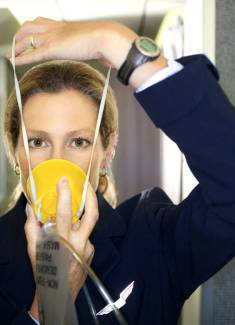
Any time you travel on an airplane, the flight attendants announce that if the oxygen masks drop down, you should first put on your own mask, and ‘then assist small children.’ This is good advice for parenting in general. Yes, our children have many needs that have to be met, and many more desires they would like fulfilled. But in order to have the energy to care for them, you need to make sure that you’re also taking care of yourself! Take a few whiffs of parenting “oxygen” now and then to rejuvenate yourself.

Here are some tips for what to do when you’re running on empty.

Ideas for meeting your physical needs:

  • Exercise, on your own and as a family
  • Sleep (as much as  you can), and nap when your child naps
  • Eat right: food affects mood, so try to cut down on sugars and processed foods
  • Get or give a massage. Cuddle, kiss, or make love with your partner
  • Take a hot shower, or a long bath (add a little lavender oil to increase relaxation)
  • Have a cup of chamomile tea or warm milk (or hot chocolate with marshmallows!)
  • Go for a long walk outdoors – on your own, or with your child

Ideas for meeting your emotional and social needs:

  • Spend time with friends each week. Spend time alone each day
  • Prioritize the activities that make you happy
  • Be creative / flexible about social activities you can work around your child’s needs
  • Schedule time each day to talk to another adult
  • Allow yourself to cry. Find things that make you laugh
  • Find a way to have a weekly date with your partner
  • Say no to extra responsibilities

Ideas for meeting intellectual needs:

  • Take your child to the library, but pick up a book or video for yourself while  you’re there
  • Listen to radio shows, audio books, or podcasts while you drive or work around the house
  • If your child is doing an art project, sit down and create your own art!
  • Write – stories, a blog, a journal – get your thoughts out on paper or screen
  • Watch documentaries on TV, or on DVD from the library or Netflix
  • Return to old hobbies you may not have pursued since your child’s birth

Ideas for meeting spiritual needs:

  • Go to religious services (or listen / view online)
  • Meditate or pray each morning, or each evening
  • Do volunteer work or help out others spontaneously
  • Contribute to causes you believe in
  • Spend time outdoors
  • Write in a journal – reflect on your new life
  • Be open to inspiration and awe

Every morning when your alarm goes off, or shortly after your child wakes you, spend one minute in bed deciding what you are going to do for yourself that day. Start small – promise yourself just 15 minutes a day. You’ll soon see the rewards (for yourself, and your family) of a little bit of “me time.”

Fun and Learning with Pipe Cleaners

For under $1, you can buy 25 pipe cleaners, which offer lots of opportunities for fun and learning. All these activities build fine motor skills (learn why that’s important.) Some also have additional cognitive benefits.

The activity ideas at the top of the list are where to start with a younger toddler. As they master those skills, you can move on to the more complex tasks near the end of the list. (Please click on the links below for LOTS more ideas for great activities to do with toddlers and preschoolers!)

Find a block of Styrofoam, or floral foam (the soft green foam in floral arrangements) or play-dough. Show your child how to stick pipe cleaners into it. They will soon learn that it works better when they hold the pipe cleaner near the end. This will help them later learn that they have better control over a pencil when they hold it closer to the tip. (you can also add straws, as shown in this “first sculpture” from http://craftulate.com/2013/03/first-sculpture/)

sculpture

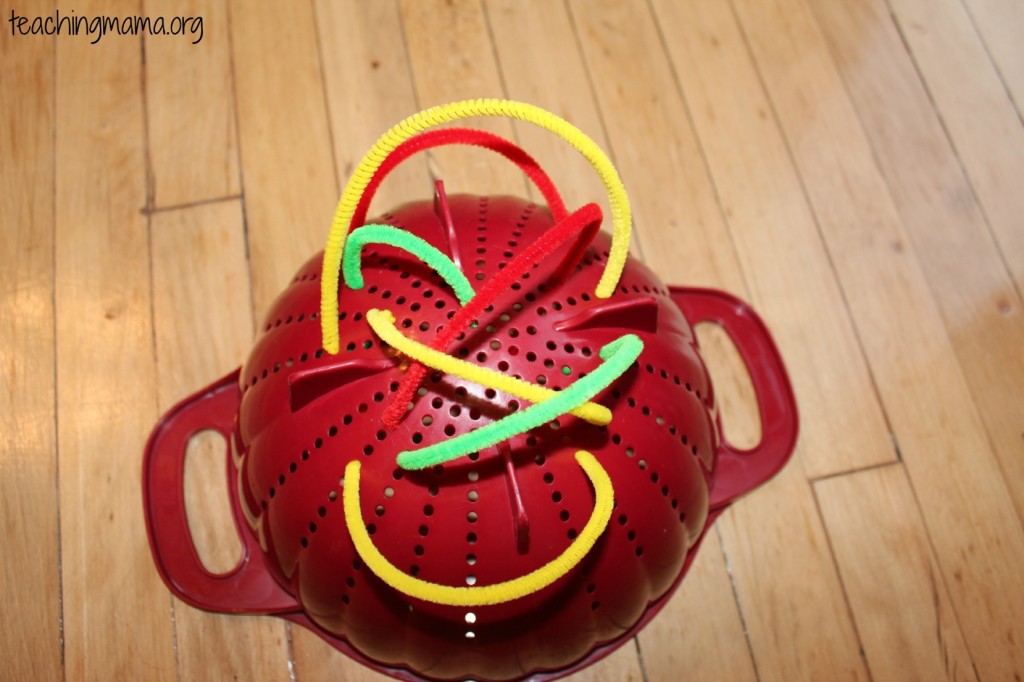
Take out the colander: show your child how to thread a pipe cleaner through the holes. (http://teachingmama.org/20-ways-to-keep-toddlers-busy/) You could also use an empty spice jar if the shaker lid has big enough holes. (http://ayearwithmomanddad.com/2012/04/tot-explorations-easy-motor-skill-activity/) This takes concentration and builds hand-eye coordination.

colander  spice jar

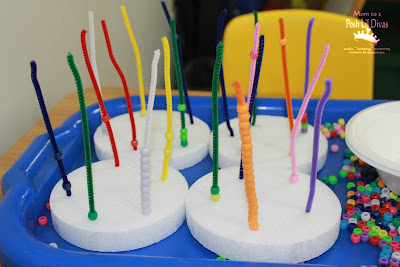
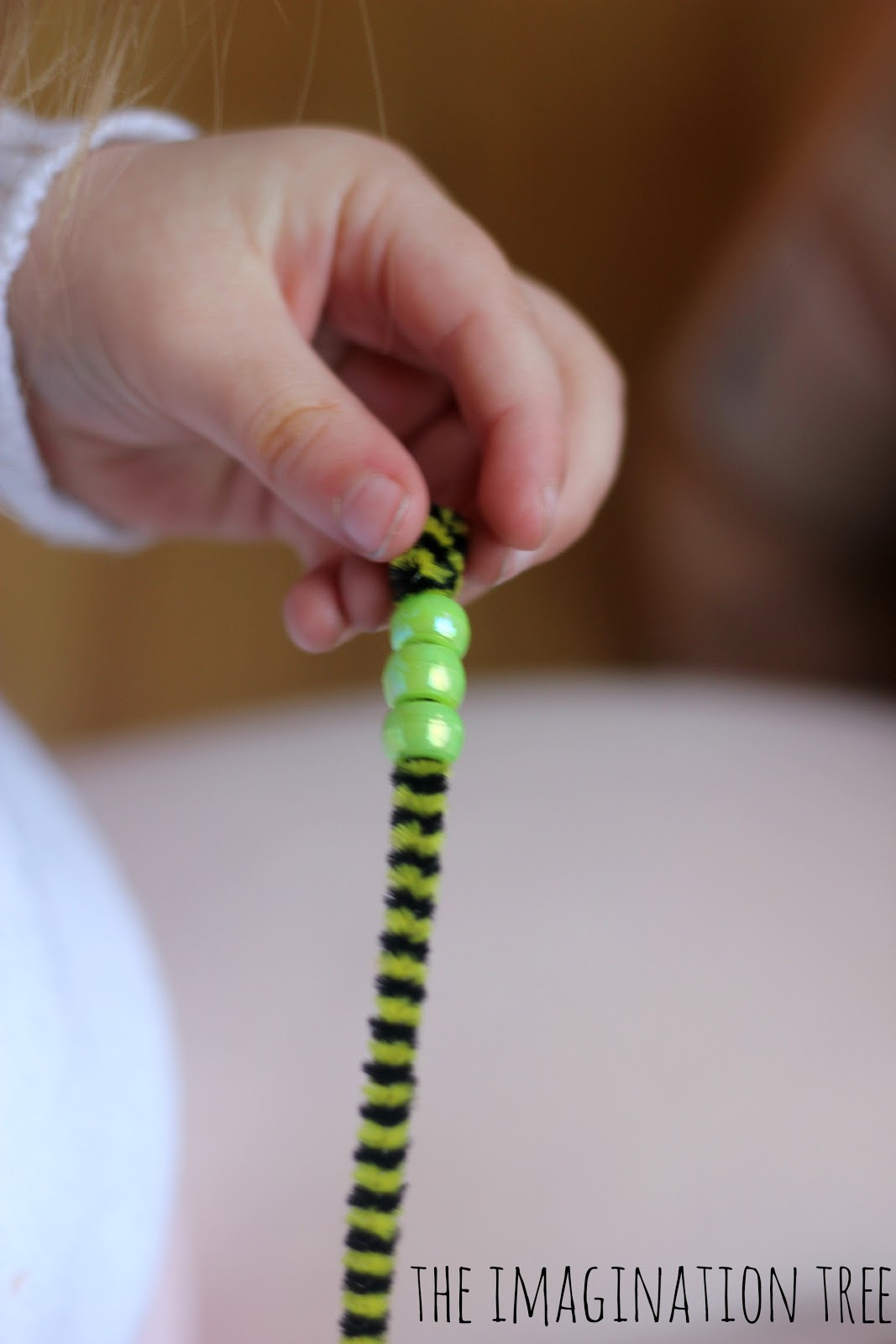
Buy plastic beads (or use cheerios, penne pasta, or cut-up straws). Show your child how to thread them onto pipe cleaners. This is MUCH easier than stringing beads onto a floppy cord. Here’s three stages you can try: first, cut pipe cleaners into shorter pieces and plant one end into some play-dough or foam so your child only has to hold the bead. http://www.momto2poshlildivas.com/2012/09/i-can-week-in-preschool-fine-motor.html  Once they’ve mastered that, show them how to hold the short pipe cleaner and thread beads on. http://theimaginationtree.com/2013/03/threading-with-pipe-cleaners-and-beads.html Once they’ve got that, give them a full length pipe cleaner. They’ll have to figure out how to work with it when it bends.

stringbase  string

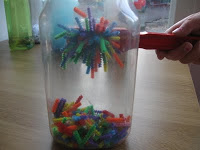
Cut pipe cleaners into small pieces, and put them in a plastic bottle. Show your child how to use a magnet to pull the pieces around the container – good for teaching the basics of magnets.
http://pre-schoolplay.blogspot.co.uk/2011/09/discovery-bottles.html

magnet

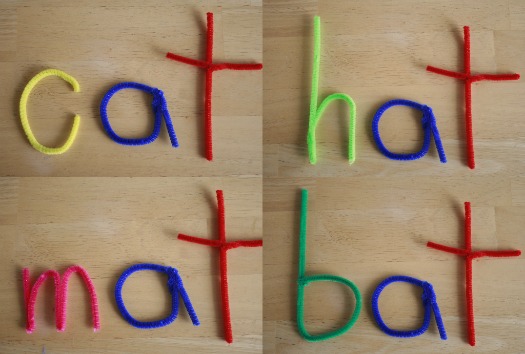
Bend pipe cleaners into letters, numbers, and shapes. Seeing and playing with physical representations of these academic concepts helps reinforce children’s learning.  http://www.makeandtakes.com/learning-letters-with-pipe-cleaners

letters

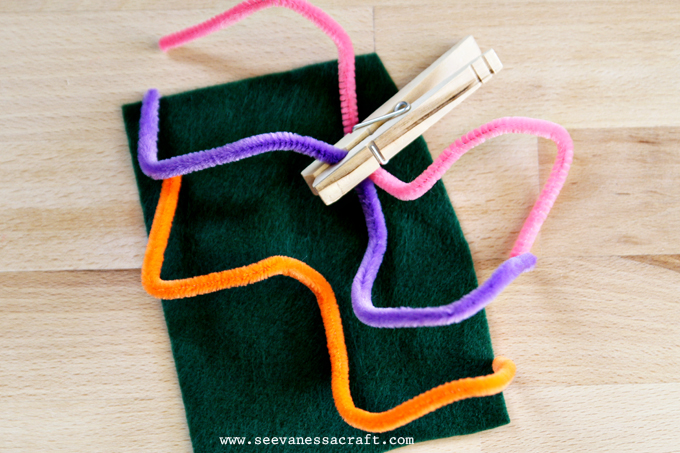
Make wiggly “worms” with the pipe cleaners, and have your child “catch” them with a clothespin. Great for fine motor control. You can also add in imagination skills by talking about the clothes pin as a bird catching the worm.  http://seevanessacraft.com/2012/12/30-busy-bag-swap-ideas-part-1/

worms

Put out three colors of pipe cleaners and three colors of beads. Encourage your child to string the beads on the matching pipe cleaner. This teaches colors and sorting skills, which are vital to lots of academic learning. Once they can do three colors, move to four, then five. http://skellyskindergarten.blogspot.com/2011/08/back-to-school-my-pinterest-inspiration.html

You can also teach patterns with beads and pipe cleaners. http://mattbgomez.com/patterns-with-perler-beads-and-pipe-cleaners/ Start with simple patterns – blue, yellow, blue, yellow. Then get more complex: blue blue yellow, or blue yellow white… Pattern recognition is an essential skill that allows us to recognize and solve problems of all sorts much more quickly.

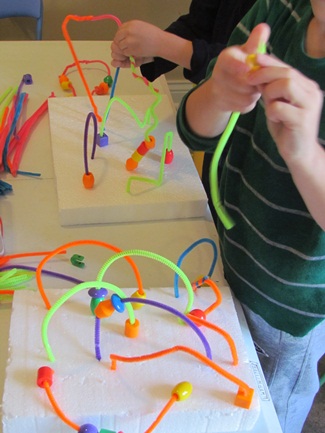
Get the Styrofoam back out and try building bead mazes.www.teachpreschool.org/2012/04/colorful-pipe-cleaner-bead-mazes/

beadmaze

Have your child shape the pipe cleaners into letters and numbers themselves. They learn more by doing than by watching. You can start by writing the letters on paper and having them “trace” it with a pipe cleaner (http://seevanessacraft.com/2012/12/30-busy-bag-swap-ideas-part-1/), then build up to them creating the letter from memory.

trace

Get alphabet beads, and build words on the pipe cleaners! Stringing them together helps reinforce the order of the letters.

Safety note: Pipe cleaners are wires, and the tips can poke. If you’re worried about this, some people recommend folding over the end (If you happen to own needle-nosed pliers, you can make a nice tight loop. Or you can just use your fingers and fold over a little more.) Some people tape the ends. I personally don’t worry about it… kids can get a small poke with a pipe cleaner, but it’s unlikely to injure… I have found that after my kids poke themselves a few things, they learn a good lesson about handling things carefully.

Safety Note #2: When using beads, or other small materials, do supervise your child closely so they don’t swallow beads, or put them in their noses, or in their ears. If they swallow a plastic bead, it’s likely to pass through in a few days. If they put a bead in their ear, that can be there a very long time without anyone noticing. (Please don’t check my family’s medical records to see why I know that. 🙂 )

Here’s lots more ideas for older kids: http://spoonful.com/crafts/25-easy-diy-pipe-cleaner-activities-kids#carousel-id=photo-carousel&carousel-item=16

Cheap Dates for Toddlers: Indoor Playgrounds

wp_001088

[This series features “toddler date” ideas for something fun and simple to do with your toddler. My general rules are: The big picture ideas apply to any locale, but the specific examples will be for the Eastside of Seattle. Hopefully these programs exist in  your area!]

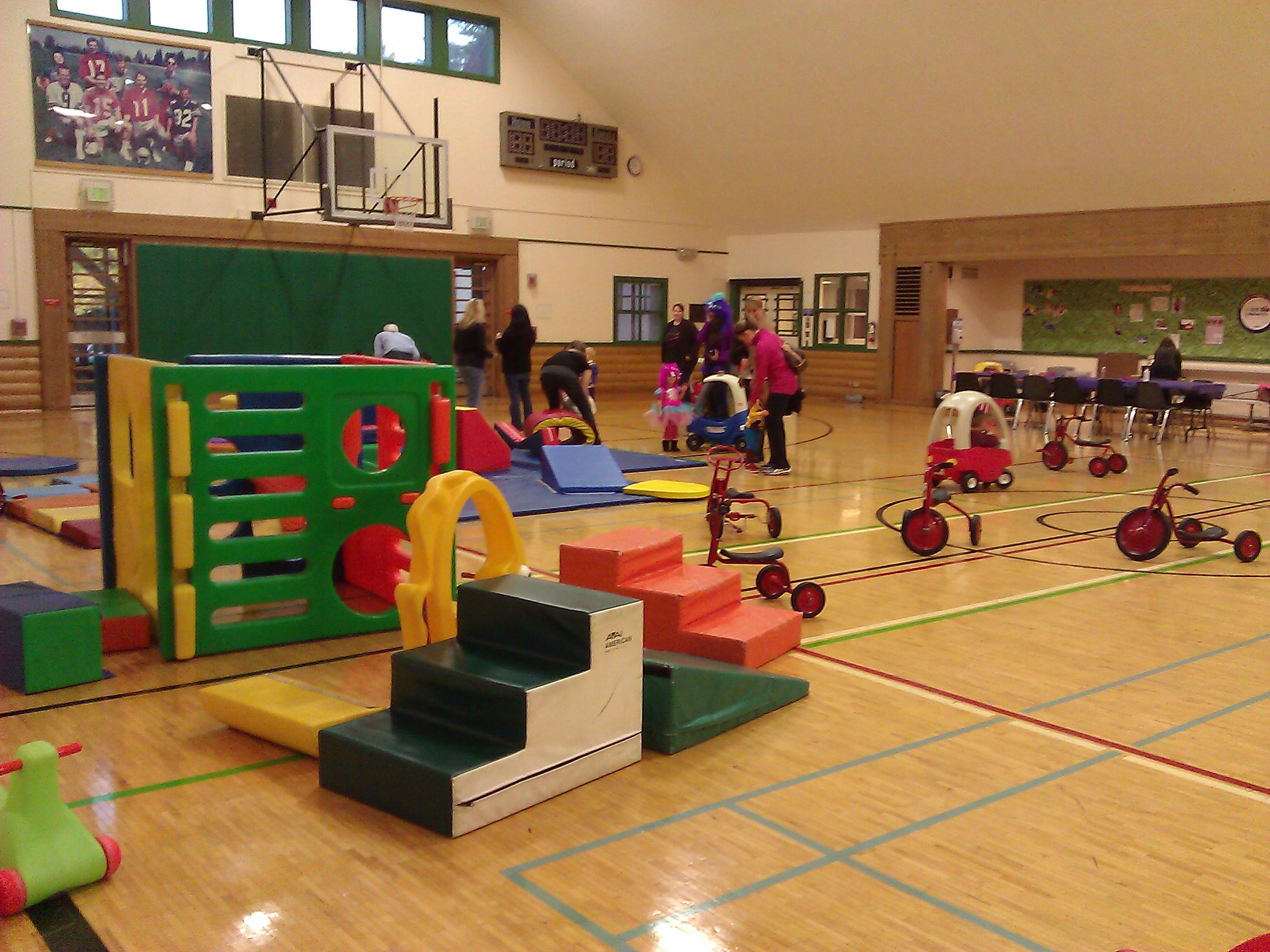
Indoor playgrounds (also called Open Gym, or Toddler Play Time, or… ) are held at almost all community centers, from September through May. They are open play sessions, where you can drop in anytime during the session, and you can leave whenever your child is tired. They’re a great opportunity for rambunctious, loud, energy-burning large-motor play on cold, wet days.

The community center staff sets out: balls, hula hoops, toy cars and other ride-upons, slides, and more big motor play options in the gym. The equipment ranges a little from site to site, as does the typical number of attendees, and the typical noise level. Our favorite site is Issaquah Community Center because they’re open Wednesdays and Fridays 7 – 11:30 am and I like having somewhere to go early in the day. But, on Jazzercise days, it gets really loud, as the Jazzercise class happens in another part of the gym right next to indoor play.

Attendance varies by site, but also varies a lot day by day, since these are all drop-in groups. I would say typical attendance on the Eastside is 5 – 10 families. Some weeks you’ll find yourself at a very busy playtime with 15 to twenty families running around, I’ve been to one that had only one other family, and one where my son and I were the only ones in attendance, but we had a fabulous time with the basketball, and he ran off lots of energy before we headed off to library story time.

Indoor playgrounds typically cost $2 – 4. If you’re there at the end of the session, the staff generally asks parents to help with clean up.(And sometimes the staff hasn’t set up at the beginning, and they just encourage you to pull out any toys your child wants to play with.)

For more info: