Tag Archives: toddler

Child Development and Early Literacy

[This is my second post on early literacy. Look here for tips on how to get your child excited about reading, and here for how to read to your child, and here for other games and activities that build literacy skills]

Developmental Stages of Literacy

12 – 18 months: can hold or carry books, look at board books independently, points to pictures in the book, may gaze at one book for a long time, or may switch between books quickly

18 – 24 months: may carry a favorite book around; will hold books and pretend to read; may want you to read the same book over and over. When you read favorite books, your child may say some of the words and phrases with you

2 – 3 years: can learn to turn pages in a regular book, names objects in pictures, may recite parts of books from memory, starts to relate what they’re reading about in books to their life experiences

3 – 4 years: understand that words on a page have meaning, begin to recognize letters, might recognize some words, enjoy longer stories, can guess what might happen next, like to discuss stories, can easily turn pages

What kind of books do kids love?

Young Toddlers (12 – 24 months): choose sturdy board books with only a few words on each page. Look for simple rhymes and predictable text (e.g. a repeating phrase that appears throughout). Look for simple pictures that match the text. They like books about things they see and do in their day-to-day lives, like eating lunch or going to the park, more than fantasy or books about exotic experiences.

Toddlers (2 – 3 years): Choose books that tell simple stories. Pay attention to what your child is passionate about – animals, trains, dinosaurs – they’ll love books about that. Look for non-fiction on topics like shapes, numbers, letters. Choose books with rhythm, rhyme, and repetition. Lift the flaps. (These are my favorite books for toddlers.)

Preschoolers (3 – 5 years): Children are able to enjoy longer stories, and stories about things outside their daily experience. You can choose non-fiction books about simple ideas like telling time, counting, opposites, and also about anything they’re excited about – planets, sports, kittens…

Aim for a mix of familiar books and fresh ones – kids love to hear the same book over and over – the familiar is comforting and repetition helps them learn. New books introduce new ideas and new things to fall in love with. At any reading session, offer multiple books and let them choose.

Source for developmentally specific recommendations:

Getting Ready to Read is a short booklet on helping your child become a confident reader. (It also includes lots of great tips for language development and development in general.) www.zerotothree.org/child-development/early-language-literacy/cradlingliteracy_ready2read_8-14-09.pdf

These Pathways for Literacy gives very specific guidelines for each developmental stage.

Sources for book recommendations for each age group:

Lists of recommended books are available on websites for many library systems or in person at the library. Check out some here: www.kcls.org/kids/whattoread/booklists/ and here www.bklynpubliclibrary.org/first-5-years/read/toddlers/books

I often look at these lists for ideas, then go to Amazon to read reviews of the book to learn more. (Then back to my library website to put the book on hold. We read 15 new books a week – we couldn’t afford this habit if we bought all those books!)

Another great collection of resources and recommendations is: http://www.readingrockets.org/audience/parents

Here is a printable handout on Literacy for age 2 – 6  and one on Pre-literacy for toddlers. Find more handouts on my Resources for Parent Educators page.
Getting Your Toddler or Preschooler Excited about Reading

This week’s theme is Early Literacy – what we can do with our babies, toddlers, and preschoolers to lay the foundation for learning about reading and writing. [Check out these posts for developmental stages of literacy, how to read to a child, and games and activities that build literacy skills.]

Building early literacy skills does not mean teaching your toddler to read a book. Formal instruction at this age is not developmentally appropriate*, and may be counter-productive, if your child comes to think of reading as a difficult and burdensome task.

Early literacy should instead be focused on creating an environment where books are so cool and the ability to read is so amazing that your child just can’t wait to learn how. Librarians call this “print motivation.” Here are some things we can do to foster this enthusiasm:

  • Model how powerful reading is. Point out to your child how helpful it is that you can read the instructions on how to cook food or assemble toys, how much you enjoy reading friends’ news on Facebook, and how whenever you want to do something new, you can learn how by reading. Point out the words that are all around us – signs, menus, etc.
  • Model reading as something you do for pleasure. Whether you read books, magazines, newspapers, or blogs on your tablet, let your child know how much you enjoy it.
  • When you read to your child, make it fun! Choose books you will enjoy reading.Choose books that are about the things your child loves – whether they’re passionate about chickens, trucks, gardening, building or splashing in puddles, there are books about it, and reading about things they are excited about will help them be excited about reading.
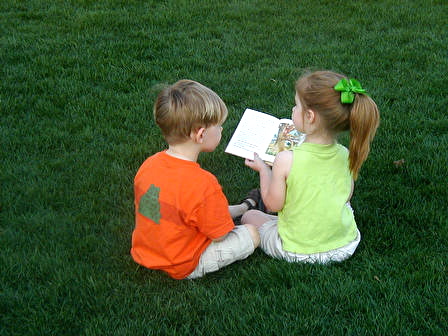
  • Literacy is a social process, which happens in relationships with family, caretakers and teachers. There’s a wonderful connection that happens you snuggle up with a book, give your child your full attention, and you enjoy sharing an experience together. (When your kids are too old for snuggled up story time, you can still enjoy books together. Try listening to audio books in the car on the way to school, and talking about them over dinner.) This together time can be a big motivator for spending time with books.

When and where to read

Don’t just save books for in the bedroom at bedtime. Have them scattered around the house, in the car, the diaper bag and so on. Share books every day – at breakfast, naptime, the grocery store, the doctor’s office, when you arrive at a class or meeting early… show that we can always enjoy a book, anytime, anywhere!

It’s OK to read for just a few minutes at a time – don’t worry if they don’t want to finish a story. They may flip through several books quickly or glance at one, then want to run off to play. On the other hand, if they want to read a book slowly, lingering over one page, going back to it over and over again, don’t feel like you need to rush them.

Resources for books and songs to get excited about:

King County library has a collection of lyrics to songs and rhymes AND videos of librarians singing them (so you can learn the tunes): http://wiki.kcls.org/index.php/Main_Page

Brooklyn Public Library’s site includes great literacy tips, book recommendations, and lyrics for lots of children’s songs: http://www.bklynpubliclibrary.org/first-5-years


* Note: I’m saying that formally teaching reading by using textbooks or formal lessons or flash cards is not necessary. Expecting your child to read at a young age might end up being frustrating for them and disappointing for you.

However, some kids naturally learn to read at a very young age. For example, with my son, we just used the tips I’m sharing this week for creating an environment with lots of great books and fun reading times. We didn’t “teach” him to read, and didn’t expect him to read. But, he learned anyway! He could read basic words before he turned three, and now at three and a half, can easily read books that are written at a kindergarten to first grade level.

Three States of Matter

My son is continuing to explore the ideas of solids, liquids, and gases. (See previous post.)

Some of the lessons from our impromptu experiment have sunk in, and he’s also learning new stuff. When I pour his milk, he says “look, it’s a liquid.” When we were steaming veggies, he pointed at the steam, and said “look it’s a gas.” He wanted to set up 3 categories, so we gave him a bowl of ice for solids, a water bottle for liquids, and bubble wrap for gas. We explained there was gas trapped inside the plastic bubbles, and we had a lot of fun popping the bubbles and listening to the gas escape.

Later we came back and he was upset that his solid water was gone and there was liquid water in the bowl instead. We talked about how it was the same water, it had just changed from solid to liquid as it got warm.

I never imagined I’d be covering these topics with my three year old. How did we get here? By following his interest.

When he was two, he wanted to play trains and talk trains all day. So, we learned the names of all the types of train cars, and we learned the names of all of Thomas’ friends. Now, he’s into the planets and science, and I can tell you more facts about the solar system than I’ve ever known before.

With my oldest daughter, we followed her down the path of stories – books, plays, movies, writing – I’ve always loved musical theater, but after 20 years of engaging with her about theater, I know much more about it, and that’s only deepened my appreciation. My middle child has loved wilderness survival, soccer, theater, art, fashion design, hair color, and now vinyl LP’s from the 50s. I’ve followed her down all these paths, learning about each of these things. I love the joy of connecting over something they’re passionate, and love the opportunity to learn alongside them, and appreciate things I may or may not have ever explored on my own. (Yeah, types of train cars…. I never would have learned that on my own!)

A side benefit: I know kids learn more when they’re happy, and learn basic skills (like language) more quickly when we use that basic skill to explore something that’s important to them.

You can lead a child to an idea, but you can’t make him drink it in…

My 3 year old is crazy about planets. He talks about the solar system continuously. We read lots of books about planets, and watch videos of science shows. In doing this, he gets exposed to lots of other assorted science concepts.

Yesterday he was talking about solids, liquids, and gas. Today, as I was unloading the dishwasher, he was stacking plastic cups, saying “this one’s solid, this is a liquid, this is a gas.” I tried to tell him they were all solids.

Then, I had a sudden flare of inspiration. I grabbed a pot, and told his I was going to put some solid water in the pot. I asked him what solid water was, and he knew that was ice and that we kept that in the freezer.

So, I scooped up a bunch of ice, dumped it in the pot, and asked if we should turn the solid water into liquid water. He liked that idea, so I put it on the stove and sat him next to it (with safety warnings, of course!). We watched the ice melt, and talked about how solid water was changing to liquid water. Then it boiled and we talked about liquid water changing to gas water and spreading out through the room (yes, the new word I used with my three year old today was ‘dissipate.’)

We threw in more ice so we had solid, liquid, and gas all in the pot at the same time. .

We repeated this several times, having a great time together. We talked about it, I was sure he understood it. I was feeling like Genius Mama!

After our experiment, he went right back to playing with his plastic cups, saying “this one’s solid, this is a liquid, this is a gas.”

With my first child, I would have been so discouraged. I would have gone from feeling like Genius Mama to feeling like Foolish Mama. I would have thought that because he went back to the same game that he had learned nothing from our little experiment.

But now, with child # 3, and many years of learning about parenting, and learning about how children learn as their brains develop, I’m still feeling good about our experiment.

Did I manage to completely teach my child all there is to know about states of matter in one ten minute game so that he’ll understand and apply it for the rest of his life? Nope.

But, did we have fun? Yep. Did he see that we can explore ideas together that he has heard about in books? Yep. Did he see, and understand in the moment, that ice turns to water and then to steam when you heat it? Yep. Did he learn, at least in the moment, that you can call ice solid water, what we normally just call water is liquid water, and steam is water as a gas? Yep. With the plastic cups, did he show that he understands things can be sorted into three categories of matter? Yep. Some day he’ll get that plastic cups are solids. He’s got plenty more years to figure that out.

The best part? We had some fun, engaged quality time together. And there was no mess to clean up when we were done!

Language development in Toddlers

Developmental Milestones

Individual children vary, based on gender, temperament, and caregivers’ language use, but here are some typical average milestones for language development:

  • At one year old, your child might understand 50 words and say a few.
  • Around 20 – 24 months, he may understand 150 – 200 words, and speak 50 – 150. Somewhere in the period, he’ll have a huge growth spurt in language knowledge, called ‘fast mapping’ where he may learn up to 8 words a day!
  • By 24 months, she speaks 250 words. She can answer some questions, ask questions, name many familiar objects in the house, and can ask for what she wants.
  • By 30 months, he understands 500 words. Speaks 250-500, saying them more clearly so others can understand. Uses 2 word sentences. Can begin to talk about how he feels.
  • By 3 years, she speaks in full sentences. Begins to figure out grammatical rules.
  • By kindergarten, children may know 10,000 words.

Help them learn

How to talk: When speaking directly to a baby or very young toddler we use “parentese”, also known as “baby talk”. We establish eye contact, slow our speech down, simplify language, and vary our tone a lot, in a bright, happy, sing-songy voice. This makes language very interesting to the child, engaging, and emotionally satisfying.

As the child gets older, we still use aspects of this, but we shift gradually over time to a more mature way of speaking, with full sentences and more complex vocabulary.

What to talk about:

  • Describe events and actions – what the child is doing and how they are doing it. This teaches verbs and adverbs: “you are running fast”, “you’re touching that kitty very gently.”
  • Describe objects in the room and things they’re interacting with. This teaches nouns and adjectives: “that’s a big ball”, “that’s a red car”. Ask “can you point to the picture of a goat?”
  • Use lots of details, but keep sentences short and simple. Repetition reinforces new words.
  • Ask questions, then pause and wait for child to respond verbally or non-verbally. “Do you want more peas?” Repeat (or verbalize) their response: “Yes, I see you reaching for more peas.”

Research has shown that children learn language best when the parents tune into what the child is interested in the moment and talk about that. Or as Bronson and Merryman say “the central role of the parent is not to push massive amounts of language into the child’s ears. Rather, the central role of the parent is to notice what’s coming from the child and respond accordingly.”

Some parents just throw language at kids: “Look, over there is a window. Outside, I see blue sky, and trees, and birds. Next to the window, there’s a bookshelf. There are red books and green books…” The more effective parent notices that their child is reaching for a crumb on the floor and talks about that. When a dog barks and the child looks up, the parent says “Did you hear the dog bark? I did too.” Timing is essential – make sure you’re talking about the thing they are currently focusing on, not on what held their attention 30 seconds ago.

Listening and responding

As our children begin to communicate, they need us to show that we are listening and responding.

  • Let your child tell you stories, and respond as they do
  • Pay attention as your child speaks
  • Repeat your child’s words. Add to what she has said. If she says “doll”, you say “you have a doll.” If she points and says “horse”, you say “horse, yes, that’s a white horse.”
  • DON’T correct your child. This can cause the child to feel self-conscious and worried about using language. Instead, use repetition of their words, where you use the correct form of the word… If your child says “we runned to the playground” you can say “Yes, we ran very fast.” Or if she says “I love p’sketti”, you say “I love spaghetti too!”

Who talks to your child?

Research has shown that if only one person says a new word to a child, even if they say it many times, the child might not learn the word. If multiple people say the new word to the child, even just once each, the child learns the new word. So, try to expose your child to multiple speakers.

Vary your words, but not too much

When you say “You have a toy. Can you give me the toy? Thank you for giving it to me.” you have just illustrated verbs (have, give, and giving), pronouns (you and me) and that you can use the indefinite article “it” to refer to a toy. That’s a lot of language learning, but it works because it’s a natural, easy follow-able flow of thoughts. Variety in speech is great, but be careful not to go too far.

If you say “Are you thirsty? Does Bobby want milk? Or can I get my little guy a glass of water?” those sentences may have nothing in common with each other from a toddler’s perspective. Try “Do you want a drink? I can get you a drink of milk or water. Milk? OK, here is your milk to drink.”

Games and activities to build language skills

  • Say nursery rhymes together, make up new verses. As your child gets old enough, have him make up rhymes of his own.
  • Sing songs. This is a great way to build vocabulary through repetition.
  • Play games with physical responses: “Can you touch your elbow?” “Put your hand on your tummy.” “The easter egg is hiding under the table – can you find it?”
  • Ask questions that have “right answers” they can memorize and repeat for a sense of mastery. The classic game is “What does a dog say? What does a cat say?”
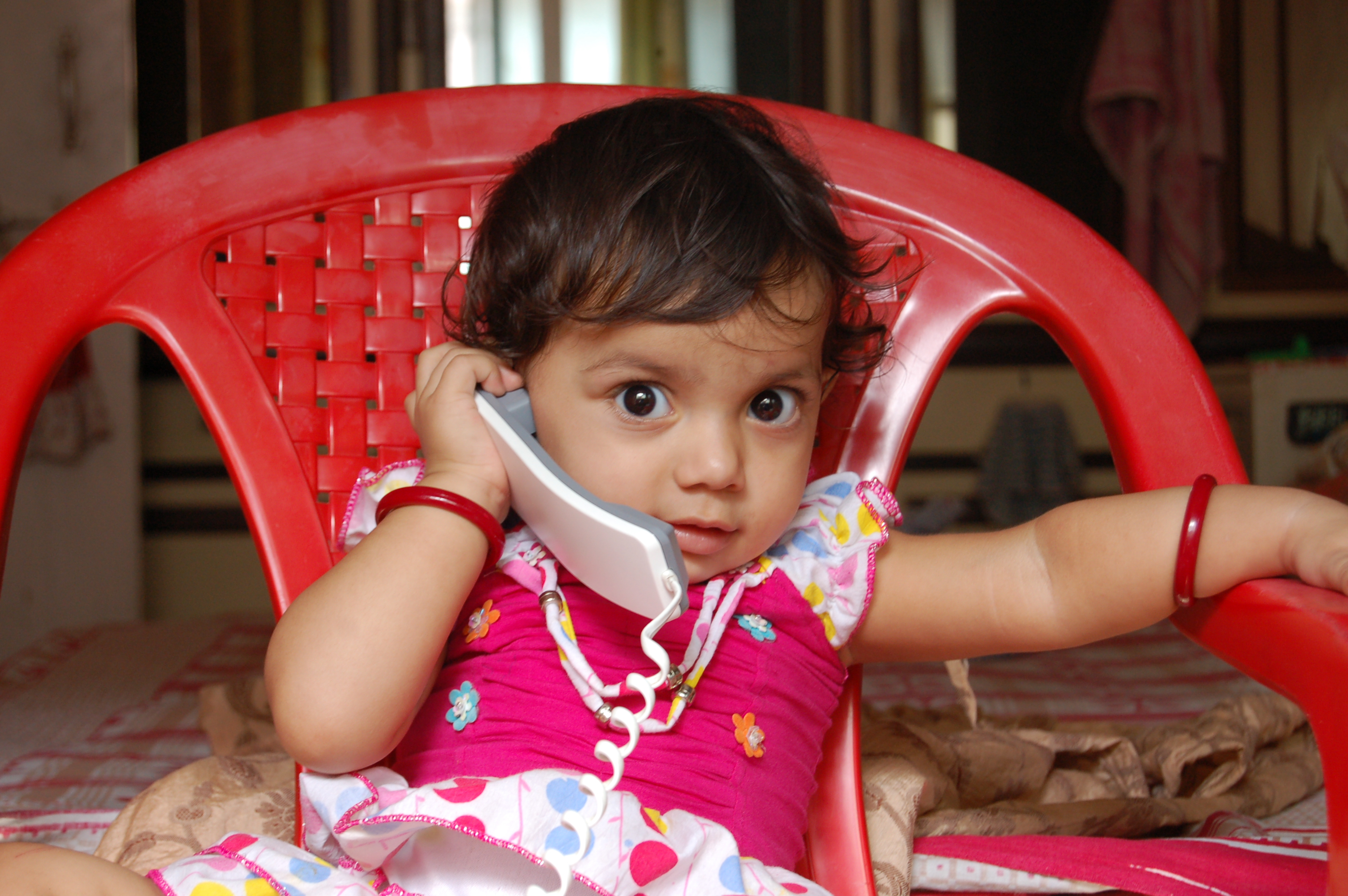
  • Play telephone – pretend to talk to each other on the phone, taking turns in conversation.
  • Pretend that a toy or stuffed animal is talking to your child. Encourage him to respond.
  • Ask your child to tell you stories about her day, or re-tell the storyline of her favorite book.
  • Emotion coaching includes labeling emotions. As a child gains words to describe his feelings, the feelings can seem more manageable.

Curious about raising bilingual children? Check out yesterday’s post.

Resources:

Read about Responsive Language with your child to boost their language learning.

Language for Learning: a video for child care providers, showing how simple it is to encourage language learning www.youtube.com/watch?v=7DPhIQh91Mw&list=WLsMLXfBPSxoG3J_FkZGqnxVV2P34cr_S_

Talking Toddlers: 7 tips to help develop language skills (or read Nurture Shock by the same authors, Bronson and Merryman) http://abcnews.go.com/GMA/Parenting/tips-toddlers-develop-language-skills/

Getting Ready to Read is a short booklet that says about helping your child become a confident reader, but it’s really bigger than that – full of ideas to support language development from birth to 5. www.zerotothree.org/child-development/early-language-literacy/cradlingliteracy_ready2read_8-14-09.pdf