Today, I listened to a webinar called Power, Proprioception & Play presentation by Kelsie “Mick” Olds (the Occuplaytional Therapist).
They talked about proprioception and its role in emotional regulation. A key idea was that there are three different types of proprioceptive input, and knowing which one is your child’s/student’s go-to helps give important clues about what they might need to avoid and manage dysregulation. The three types are:
Exertion – using their muscles
Impact – bumping part of their body up against something
Pressure – pushing part of their body against something
For each category below, I’ll list “Problem behaviors” they might demonstrate when “throwing a tantrum” or melting down, then list positive behaviors that meet this need. The positive things are activities you could use proactively to make sure their sensory needs are met (and meltdowns are less likely) or you could use to help a dysregulated child calm down.
Impact
“Problem behaviors”: hitting, kicking, breaking things, bouncing off the walls
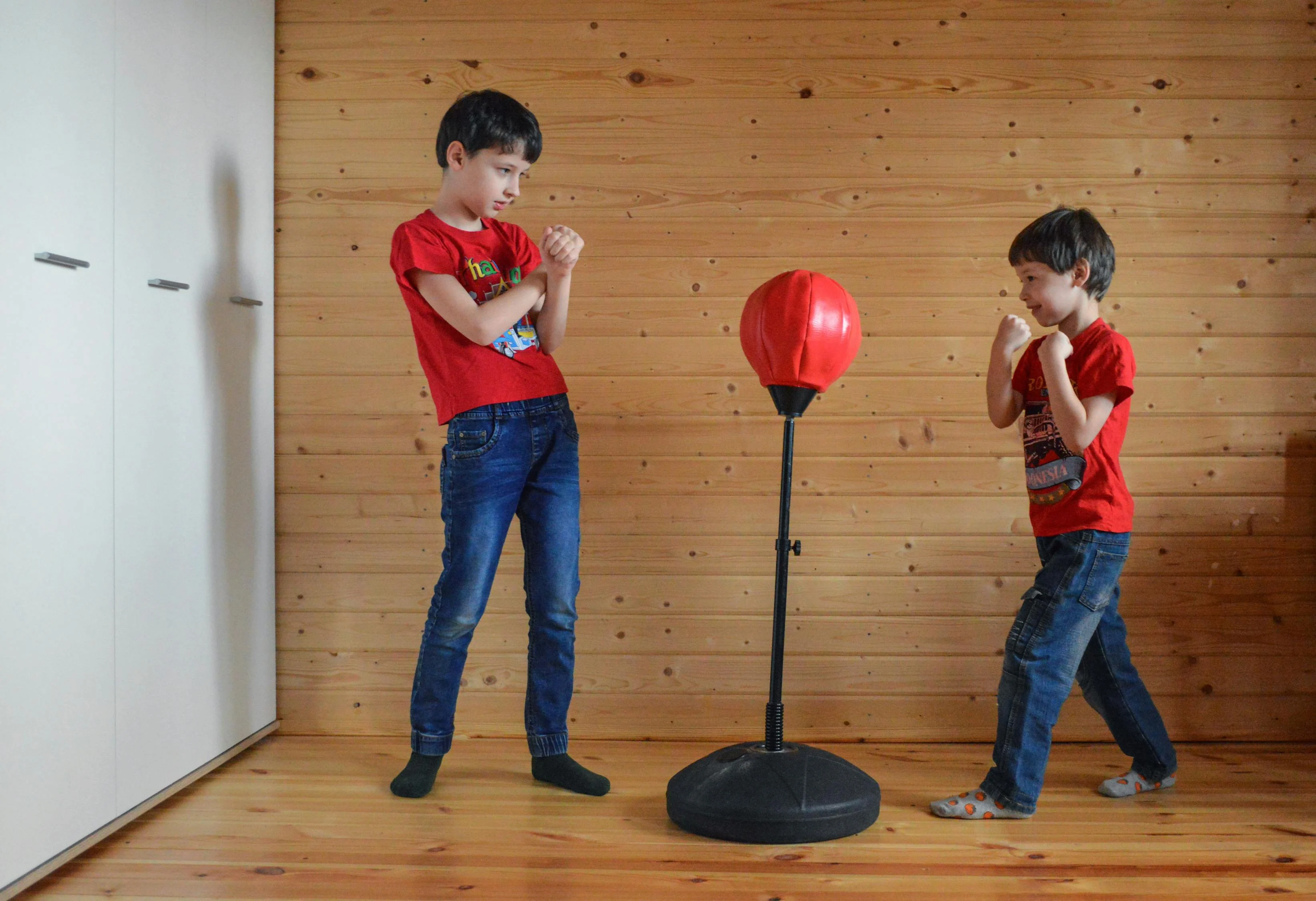
Positive actions: jumping, stomping, clapping, playing catch or tennis, tetherball, dribbling, drumming, trampoline, punching bag
Positive actions: running, dancing, pushing, lifting, “heavy work”, taking a deep breath, rolling out playdough, tearing paper, singing loudly, whisper scream
Pressure
“Problem behaviors”: clinging, climbing on other people, pushing up against others
Positive actions: hugs, leaning against someone or something, massage, weighted blankets and vests, compression clothing
For example, if whenever a child gets dysregulated, they hit or kick, that’s impact that they’re instinctively seeking. Asking them to take a deep breath (exertion) or giving them a hug (pressure) is less likely to be effective than an impact based tool like stomping their feet or banging on a drum. To avoid meltdowns, it might help if they get plenty of opportunity to bounce on a trampoline or playing catch to get the impact input that they need.
Emotional literacy skills – the ability to “read” (recognize) feelings in other people, the ability to read your own feelings (notice your internal cues), and to express your feelings appropriately are all incredibly important to your child’s long-term success.
How you can help:
Teach vocabulary: start with the basic emotions of glad, mad, sad, and scared. As their grasp of those basics deepens, add in more nuanced terms:
Label emotions in the moment. When your child is experiencing an emotion is the best time to label it, or when they see you or a child at the park experiencing an emotion. Just like with all language development, it’s easiest to learn a word when they’re having a concrete experience of it. (For example, If you want to teach the word banana, show your child a banana, peel it, eat it. If you want to teach the word sad, use it when they’re sad. We won’t talk in great detail about it at that moment, but we do want to give them the label so they know “this is what sad feels like.”)
Talk about emotions when you see them in books and videos, when the child is not experiencing those emotions. Once they’ve grasped what the word “sad” is, it may be easier to talk about things like “what makes people sad”, “how can you tell when someone is sad”, and “what makes someone feel better when they’re sad” when your child is not feeling sad.
Talk about positive feelings more than about negative feelings. (Following the attention principle… Your child will most often repeat behaviors that get the most attention from you. Praising behaviors like calm, sweet, gentle, happy and so on lets your child know that these are behaviors that you like to see. Talking all the time about their angry outbursts may only perpetuate a self image of themselves as “a kid who is angry all the time.”)
Also share your own positive feelings with them: “I am so proud of you” and “I was delighted to see how well you two played together today.”
When you comment on an uncomfortable emotion, add a coping strategy: “I see that you’re frustrated, maybe you can take a quick break then try again.” “That noise scared you, do you want to ask me about it?” “That made you really sad, so you came over for a hug.”
Also comment on your own coping skills. “I am really frustrated, so I’m taking a few deep breaths to calm down.” “I was worried about that, so I talked to Dad to get some ideas about what to do.” “I’m feeling sad today, so I’m going to take a little break now.”
Praise children when they manage difficult feelings: “I know you were angry. You did a good job of keeping your fists down.” “You were really frustrated by that puzzle, but you stuck to it and tried, and you did it!”
Understanding the Stages of Emotion
I’ve written before about the Anatomy of a Tantrum. and how to time your intervention. In The Incredible Years, Webster-Stratton talks about stages in the build-up of tension: first the child is grouchy or sulking, then becomes more tense and moody. That can escalate to an explosive outburst, followed by the depression / “leave me alone” stage, then your child may resume normal activities as if nothing had happened.
If we can recognize the beginning stages – when they’re starting to become angry or frustrated – we may be able to intervene with suggestions like talking about their feelings, taking a few deep breaths or trying other solutions. However, during a full blown tantrum or during the sulk that follows, they are too dis-regulated to respond to our suggestions and problem-solving. Intervention may only make the tantrum worse, or provide attention that reinforces the tantrum. Webster-Stratton says “it is best for the parent to ignore while monitoring to make sure that the child is safe.”
Ideally, we want our children to notice their own cues that their emotions are starting to escalate. We want them to be able to catch themselves in that first stage, and talk themselves down. That won’t happen when they’re two or three years old. But if we talk to them about self-soothing, and model emotional regulation, they’ll get there sooner than if we don’t talk about it!
Teaching your Child to Recognize Cues
Be concrete when talking about what cues tell us we’re feeling an emotion or what cues tell us how others are feeling.
When you’re feeling emotional, describe your internal feelings.
When your child is showing a mild emotion (their brow is getting furrowed, their face is drooping in sadness, or they’re starting to make fists) make observations about these cues, and ask them how they’re feeling. (Note: don’t do this when they’re in a full meltdown – having a meltdown narrated will likely only make it worse.)
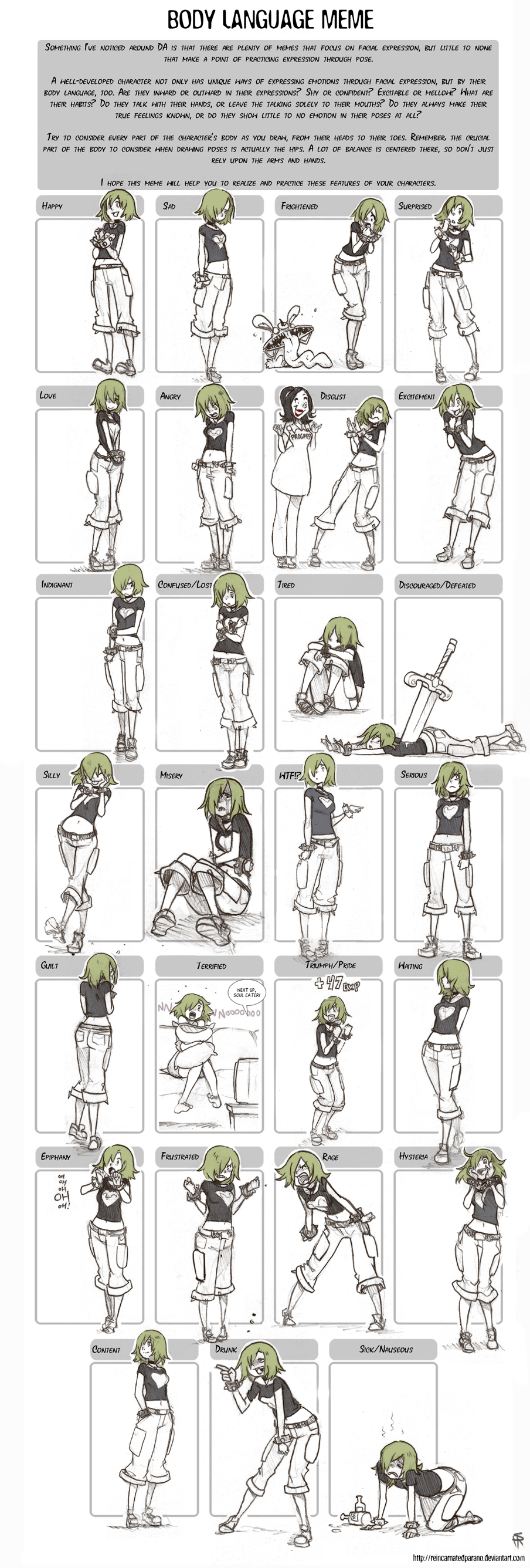
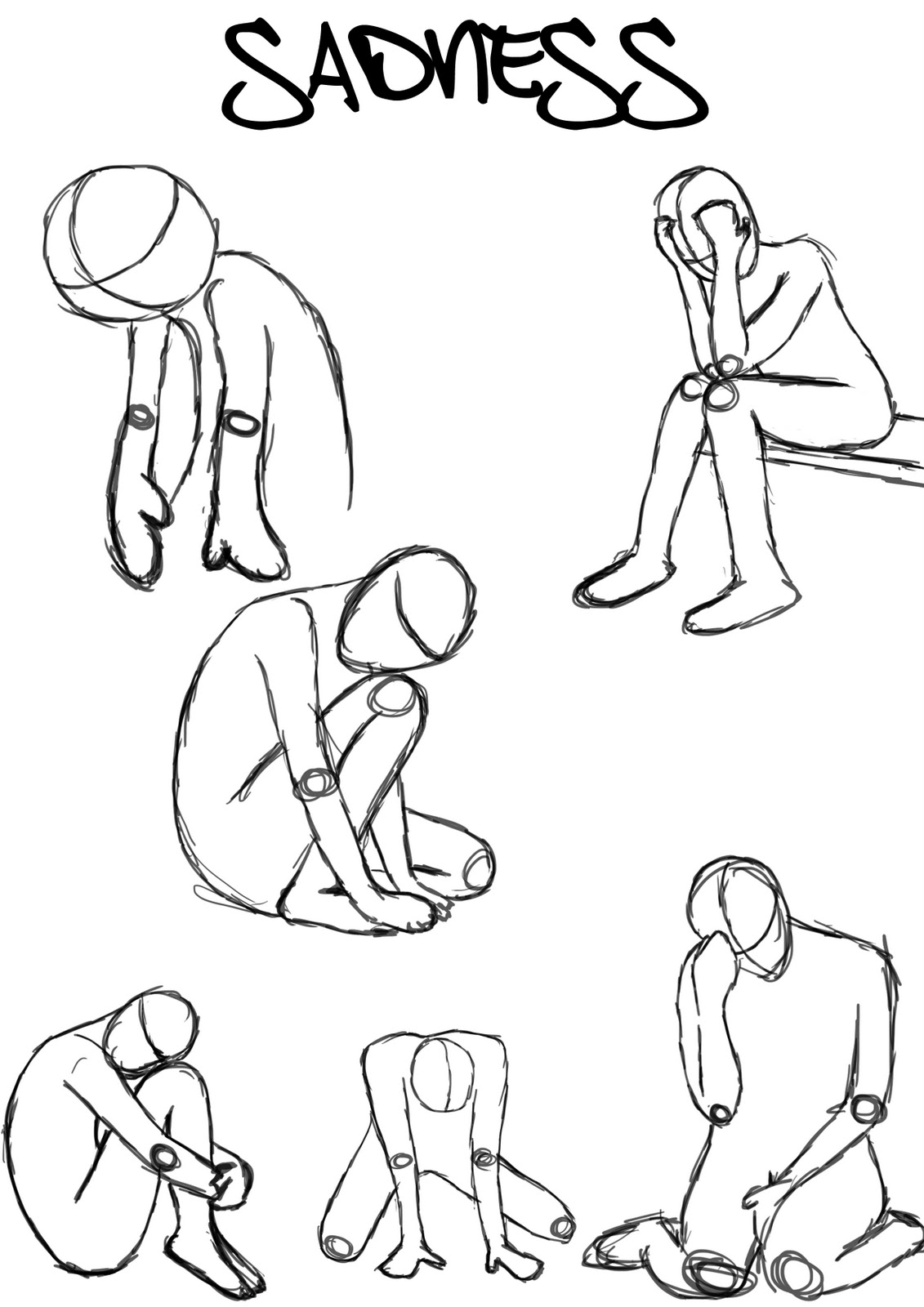
Talk about body language and what it conveys about how someone is feeling. There are some useful examples here and here.
When reading books or watching videos, point out cues: “I can tell she’s sad, because…”
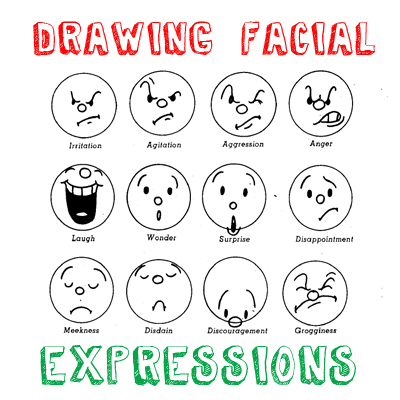
Online, you can find lots of teaching tools about emotional cues that show a wide variety of facial expressions (like the picture at the top of this post) or others about “how to draw facial expressions. Print one out to discuss with your child. (Or parents have made stick puppets showing ranges of emotion.)
In your pretend play, or in puppet shows, model a range of emotional expressions and coping strategies.
The Feelings Thermometer
A helpful tool can be to create an emotional thermometer for your child. (If you search for “emotions thermometer for kids” you’ll find multiple examples.) On the “cold” end, it has sad. Then in the area where you would find moderate temperatures, it has calm, then happy, and so on. Then in the high temperature range you have different levels of anger. Once you’ve explained it to your child, they can use it to show you how they’re feeling today, and what they could do to “cool down” or “warm up.” You may recommend that if they reach a certain high temperature, they should remove themselves from the situation for a time out to cool down.
A thermometer may work best for kids who are 5 or older, or 4 year olds who have a grasp of numbers and measurement. For 2 and 3 year olds, it may be better to use your hands to show how big a feeling is. Hold your thumb and finger close together to show an “itty bitty” emotion or hold your hands far apart to show a great big feeling.
Life with a toddler can be filled with giggles & glee in one moment and tantrums & tears in the next. Let’s look at the difference between tantrums and meltdowns, talk about why toddlers behave this way, and how you can manage these moments.
What’s the difference between a tantrum and a meltdown?
Tantrums and meltdowns may look and sound the same, but there are different motivations / reasons behind them, and understanding that can help you respond.
A tantrum is when a child needs or wants something they’re not getting. They throw a tantrum, yelling or hitting. They may partially lose control, but you may also see them pause a moment to see if they’re getting a reaction from you and then continue. They will stop tantrum-ing when they get what they want, or they realize that the tantrum isn’t working to get them what they want. (Note: Children younger than 18 months are not likely to be socially savvy enough to throw this manipulation style tantrum, so for them this behavior would almost always be a meltdown not a tantrum.)
A meltdown happens when a child is overloaded – there’s too much stimulation or they have too many big feelings, and they get overwhelmed so badly that they lose control and scream and cry. A meltdown won’t stop because you gave them what they wanted. It stops when the child is too worn out to continue, or they find a quieter place with less stimulation and can calm themselves down, or a grown-up helps them to calm down.
Siegel and Bryson talk about the upstairs brain and the downstairs brain. Bryson says “The upstairs brain… is the more evolved, rational, problem solving brain; whereas, the downstairs brain is more primitive and animal like. When our child is having an upstairs tantrum… they are being intentionally manipulative. They are in control and still make choices. If you give them what they want, they will be plenty happy and go on their way… The best response … is to not give in. … [In] A downstairs tantrum… they are flooded with emotion … like they are losing their mind … they really are not in control. They can’t make a choice anymore, even if you give them what they want, they will continue to lose it. In these moments, what they need most from us is comfort. Now, of course, we are not going to let them knock things off shelves or hurt other people. We may have to hold them and say, “You are not in control right now and I need to help you until you have more control.” In these moments, they need us to calm them down by giving lots of comfort.” (Source)
All children (and adults) can have meltdowns, but they’re especially common with neurodiverse folks, including autistic kids and people with anxiety or sensory processing issues. They’re extremely common for toddlers who just haven’t learned emotional regulation yet.
Triggers: Why do toddlers have tantrums and meltdowns?
Life can be hard for a toddler. They want lots of things they can’t have. And sometimes things happen that make them so sad, or so mad, or so scared that they are completely overwhelmed. Here are some of the reasons toddlers explode:
1. Rules: They want to do something that’s not allowed, and are angry that you’re blocking them. You might think your rule is reasonable, but here’s what they’re thinking: “I really want to hold those scissors! You were just using them. Why can’t I??”
2. Impossibilities: They want something that’s not possible, and can’t understand when you explain. From their perspective: “Last time I asked for crackers you gave me some. Now, you say you don’t have any crackers??”
3. Lack of control, lack of choices about where they go and what they do. “I was having a great time playing, and you suddenly carry me out the door??”
4. Frustration: They want to be able to do something, but they’re not yet capable of it. “YOU can put the puzzle together. But I try and I try, and it doesn’t work!!”
5. Can’t communicate: They want something but don’t have the words to tell you what it is. “When my big sister asks for something she gets it. When I ‘ask’, I don’t!!”
6. Separation and/or unfamiliar situations: Being away from familiar supports is hard. “I count on you for everything, and you’re not here!!”
7. Fears: The world can be a scary place when you’re small and don’t understand much! “That vacuum cleaner is really really loud. I’m afraid it will hurt me!!”
On a good day, when your child is rested and you’re calm, they may be able to handle any of these things. But when they’re tired, hungry, sick, cold, hot, or overstimulated, even little upsets become overwhelming. Or if you’re tired, hungry, or stressed, you may not notice their early cues and they may end up in a meltdown.
Preventing Meltdowns
Even if you were the perfect parent, and did absolutely everything right, there would still be times when your child would melt down!! But there are some ways that we can reduce the number of tantrums and meltdowns:
Meet physical needs: Your child is less likely to melt down if he is rested, fed, and comfortable.
Be aware of your child’s capacity for stimulation: Children all have a different threshold where they overload. Some children are particularly sensitive to noise, others to bright lights, others to crowds. When planning your child’s activities, think about how much they can manage at a time.
Be aware of triggers: Minimize things you know upset your child. (I am not suggesting you walk on eggshells, trying desperately to never upset your child! But, pick your battles. If something is important to your family or important for their development, then it’s necessary for them to adapt to it. So you do it and you coach them through. But, if it’s not necessary, maybe skip it.)
Set expectations: Tell them ahead of time what to expect, what behavior you’re expecting of them, and what the consequences will be if they can’t behave that way.
Give choices where you can. (But don’t offer choices in the middle of their screaming… if it’s a tantrum, giving choices will make them feel like they won; if it’s a meltdown, being asked to make choices is overwhelming!)
Set limits and follow them consistently: We don’t always give children what they want, and we don’t want them to think they’re the boss of the family. When you set limits, you will face the occasional tantrum, but over time – with consistent enforcement, the child learns and respects the family limits, and will have fewer tantrums than the child who never knows if or when a rule will be enforced.
Watch for early cues of an impending meltdown: Notice when your child is reaching the end of her rope. Let her know that you’ve noticed – that helps her learn to recognize it for herself. Try distraction or a change of scenery.
Talk about meltdowns when they’re NOT having one. Ask your child to let you know when they have one coming on. (Note: it will be a while before they’re capable of that!) Praise your child when they’ve done a good job of calming themselves down – we want to reinforce their efforts at self-regulation.
Talk about and model, positive ways to ask for what they want and to manage feelings. Use Emotion Coaching to build emotional IQ.
Anatomy of a Tantrum – What Research Shows
Researchers developed a “onesie” that parents in the study put on a toddler that would record for several hours, and possibly catch a meltdown. Then they analyzed the pattern of the tantrums. Sad sounds – whimpering and crying – are heard throughout the tantrum; and mixed in were peaks of yelling and screaming – angry sounds. Children tend to build up to a peak of anger quite quickly, then do something physical (throw things, throw themselves on the floor, hit), and then they collapse into sadness.
If parents asked a lot of questions, or tried to verbally reason with the child, it would prolong the tantrum. When a toddler is very angry, he can’t process language, and asking questions just pushes him into overload.
Researchers felt the research-based trick to end a tantrum is to get past the anger. If you think it’s a tantrum, ignore the child or respond with as few words as possible. If you think it’s a meltdown, stay nearby but don’t talk or touch a lot. When the child has released anger, what’s left is sadness, and they will seek comfort.
Don’t “over-respond”. Keep your response calm and low key. You don’t want to pay too much attention to the tantrum as you don’t want to reward the behavior.
Stay calm. A child in meltdown is overwhelmed by the strength of his own emotions, and needs you to model emotional stability to help re-ground him. Stay close by.
Don’t ask questions or try to talk the child down with a lot of words. If you need to talk to change your child’s behavior, or move her to a safer / more appropriate place, give very simple commands. If it’s a tantrum, calmly but clearly re-state the rules.
Don’t let your child hurt herself, or anyone else. Keep her from damaging possessions. At times, you may need to physically restrain her to keep things safe – it’s OK to firmly hold an upset child in a gentle and supportive way. Sometimes she will resist the hold for a bit, then shift from anger to sadness in your arms.
Once the meltdown blows over, calm and comfort. Name and validate the emotions they were feeling. Let them know that all feelings are OK. (But not all behavior is!)
Sometimes your child will calm down, but you will still be full of tension and stress from the experience! Think about self-care methods that help you release that tension and move on – a few deep breaths, a drink of water, taking a short break… Get support from other parents.
For older children (3 – 5 years), talk about the situation later that day when everyone is calm. Validate the emotions they were feeling at the time, but also discuss other ways they could have managed those emotions. Develop plans for how to handle similar situations in the future.
Here’s a handout that summarizes the information in this post: Taming Tantrums
If you found this article helpful, click on the links on the right to “follow this blog” and you’ll get email updates when I post new articles, or “like me on Facebook” to stay up-to-date on posts. If you want to learn more parenting skills, and get expert advice customized to your family and the needs of your child, look for parent education classes in your community! I teach for Bellevue College – we have classes on the Eastside of Seattle: learn more here. (To find classes in other Puget Sound cities, look here.)


 Online, you can find lots of

 More Good Days with Kids