Tag Archives: preschool

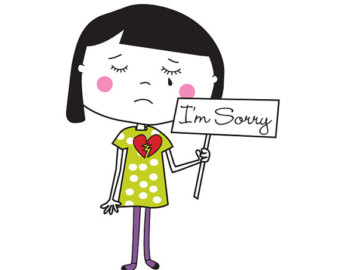
Should we teach toddlers to say “I’m sorry”

gestapo-clipart-il_340x270.639022374_p0k7

My short answer:

  • Yes, teach the behavior of saying sorry – teach when it is appropriate to apologize. Also teach that they can take actions that help to right their wrong.
  • However, you can’t expect a young child to really feel sorry. As they get older, they will develop this empathy and learn to take responsibility for their actions.
  • Don’t force a child to apologize. This is perceived by the child as punishment and shaming, and does nothing to teach them empathy or repair.

The long answer…

Should you force a child to apologize?

We’ve all seen times where a parent marches their child over to someone, then stands over the child saying “You need to apologize. You have to say you’re sorry, right now.”

Some will figure they should just get it over as quickly as possible, and mumble out the word “sorry” without looking at the person, and then try to escape the situation as quickly as possible. Some children feel embarrassed or awkward, stare at the ground and shuffle their feet, and get more and more anxious until forced to blurt out the word. Others get into a power struggle with their parent, inflating a small transgression into a big battle, where the parent adds additional punishments – “no dessert till you say you’re sorry” – until the child says a sarcastic ‘sorry’ through clenched teeth.

When apologies are used in this way, the child views apologies as a punishment for bad behavior.

Got that? In their view, the apology is something you’re making them do because they were bad. They’re not learning “you shouldn’t hit your friend because it hurts him and makes him sad.” They’re learning “you shouldn’t hit your friend because if your parent / teacher sees you hit them, you’ll get this punishment.”

For older kids who do understand what sorry means, forcing them to say it when they don’t mean it is also teaching them to lie.

A forced apology is unpleasant and uncomfortable for everyone involved, and this awkwardness distances the apologizer from the person they are making the apology to. It does not encourage empathy toward that person’s experience, and instead can promote resentment toward them. The person being apologized to often feels awkward as well, and moves away from the apologizer as quickly as they can.

The forced sorry can also feel like it “fixed” the situation. We hurt someone, but we said sorry so it’s resolved now, right? It implies that there’s no need to check in to see if it’s resolved, or to take any further actions to right our wrong.

Should we teach a child to apologize? What does it mean to apologize?

Of course we should teach apologies! We absolutely want to take steps in the toddler years and preschool years to teach empathy, to teach taking responsibility for our actions, and to teach the social skills that will aid them in later life. A true apology is an essential aspect of this.

A true apology is not just saying the standard words. It’s not just accepting blame for something. It’s taking responsibility for your actions, working to make amends and feeling empathy for the person you have wronged.

Here’s the thing – we can’t expect children to fully understand this when they’re toddlers or preschoolers! They are not yet capable of true empathy. We can role model empathy and working to right wrongs – the understanding will eventually follow.

Role model and teach empathy

If you want your child to learn empathy, respect and responsibility, the best way to teach that is to be a good role model of all these things in all your interactions, but especially in interactions with your child. (Note: being empathetic does NOT mean I say yes to everything to avoid making them sad, and being respectful does NOT mean I don’t set reasonable and healthy limits. We can say no with empathy and with respect.)

Development of empathy

As young as six months to one year, a child may occasionally notice distress in others and try to soothe them. But often, they are oblivious to the emotions of others.

Around 18 – 24 months, a child starts to really understand that they are a separate individual from other people and that other people can have different thoughts and feelings than they do. But being able to put themselves in someone’s shoes and see how their actions made that person feel is just more than they can understand.

At 2 – 3 years, they begin to understand simple emotions in others, such as glad, mad, sad, and scared. Around 4 or 5, they start understanding complex emotions in others. After age 6, they begin to understand what other people are thinking. (See resources below on empathy.)

So, we know it’s a while before they get the feeling side of an apology. But, we can teach the behavior long before that.

Teach the behavior at teachable moments

Starting around 1 year old, you can teach your child basic behaviors. Your child will sometimes accidentally hurt you or someone else – moments like when they bump their head into your chin when you’re bending over them. This gives you the chance to teach them. It’s easy to teach even a young toddler that “When you bump me, and I say ‘Ow’, you need to say ‘I’m sorry – are you OK?'” If they carelessly bump someone else, like moving past someone to get to the slide, say “I notice you just bumped them. Can you go back, say you’re sorry and ask if they’re OK?” If they take a toy away from someone without thinking, say “I think X was playing with that toy. Say ‘I’m sorry I took your toy. Can I play with it when you’re done?”

Note, these are all low stress moments. Your child has unintentionally (or slightly intentionally) harmed someone, and we’re asking them to notice this, and make amends. This teaches more awareness of others, which leads toward empathy.

Some preschool teachers choose to skip the ‘I’m sorry’, and go straight to the “Are you OK?” or “What can I do to help?” because those focus on empathy for the other person and moving toward a solution together.

Teaching the behavior after stressful moments

Other times, your child does intentional harm. We need to set limits on this and there need to be consequences. But the consequences for your child are about the behavior itself, and the apology is about caring for the other person. The consequences need to be separate from the apology.

I recommend: disciplining your child as appropriate to the moment, and working on the apology later. The misbehaving toddler needs immediate consequences for bad behavior. The wronged toddler needs immediate reassurance. Apologies come later.

For example, if you see A bite B:

  • Get down to their level and put yourself between them to prevent further harm.
  • Say to A “You just bit her. That was not OK. Biting is never OK.” [Setting limits.]
  • Turn to B, establish eye contact. Say “I’m sorry he bit you. Are you OK?” [Providing reassurance, and role modeling an apology.] Once you’ve verified she’s OK,
  • Turn back to A: “You and I need to take a break from playing for a few minutes till you’ve calmed down.” [Consequences.]
  • Help A to calm down. Don’t talk too much here! (When a child is upset enough to bite, they are too upset to listen to you, and too upset to learn anything, especially something as sophisticated as empathy for the person they’ve just harmed.)
  • Once A is calmed down, then talk to him about biting [reminder of limits] and let him know that his actions hurt the other child [focusing the attention on making amends rather than on his wrong-doing].
  • I will say “Let’s go check on her together and see how she’s doing.” I get down on the same level as both kids, and I encourage him “ask her if she’s OK.” After they’ve connected, then I say “you hurt her earlier. Can you please say you’re sorry?”
  • Then I help them begin to play together again before moving away. [healing the relationship]

In this scenario, the biting toddler received the immediate limit setting and consequence they needed. The child who was bit received prompt attention and reassurance. Later on, we handled the apology and moving on.

How do you resolve the situation with the other parent

Let’s be honest. Sometimes we force our child to apologize because we, as the parents, are embarrassed about our child’s behavior, and we don’t want the other family to think that we’re bad parents. How do we handle that?

In the moment after the incident, we work with the children. They need immediate responses to understand.

If we handle it well, the other parent (who has a longer attention span and memory than the children) sees that we did address the situation in a way that was supportive to everyone, set limits, and taught empathy skills. Later on, we can also talk it over with the parent, and apologize, and talk together about how we’re all just doing our best to help our kids learn.

Are reparations needed?

Sometimes an empathetic sorry is all that’s needed. But sometimes we need to take actions to make things right. (Like re-building a tower, fixing a broken toy, cleaning up a mess.) Help your child figure out what to do in these circumstances.

The power of real apologies to heal relationships

In a study, 6 and 7 year olds were paired with a researcher and asked to build towers of plastic cups. Then the adult would “accidentally” knock over the child’s tower. The adult would either apologize OR say nothing, and then leave the room. Right after the incident, the children felt bad whether or not they received an apology. Later on, though, when children were asked to give stickers to their adult partner, the ones who had received apologies were more generous – presumably indicating they had forgiven their partner.

However, if the adult apologized AND helped re-build the tower, the children felt better right after the incident and gave more stickers later. According to the researcher “actively trying to put things right can help the victim to feel better in a couple of ways. The first is the effect of undoing some of the harm by putting things right. The second effect is by showing the victim that the person who hurt them is sincere and genuinely wants to make things better between them.”  (Source)

My experience

When my older kids were little (back in the 90’s!), I did not teach them to say “sorry” until they were four or five years old. I’d seen too many forced apologies, and too many times where the kid saying the word sorry was clearly not feeling the emotion of sorry. They were just doing what they had to do to complete their punishment.

When my older kids were little, if they did wrong to someone, I apologized for them, and I worked with them to correct their behavior. I only started teaching sorry when they demonstrated enough empathy that I thought they were old enough to understand it. (Probably around 4 years old.)

With child #3, when he was just learning to talk, I started teaching the behavior of “If you do something to someone and they say ‘Ow’, you need to say ‘I’m sorry. Are you OK?'” And every single time an opportunity came up, I reminded him of this behavior. He didn’t yet understand that he was responsible for hurting someone and he didn’t yet have empathy for the fact that they were in pain, because he just wasn’t old enough for his brain to be able to understand it. But, he could, and did, learn the behavior.

Over time, I saw him start to get it. He would say sorry out of habit, and then when he asked “are you OK?” he would notice that they weren’t OK, and feel empathy for them. He started to understand that their sadness was due to what he had done and he started to take responsibility for it. I feel like he ended up understanding the meaning of sorry (both taking responsibility and feeling empathy for the other) much younger than my other kids, because the behavior caused him to pay attention to those situations.

He’s now five, and often offers spontaneous apologies for any minor wrong he does to people. Sometimes when he’s really angry, the apology doesn’t come right away. That’s when I have to return to the method I describe above of: setting limits on him, reassuring the other child, and then when he’s calmed down helping him understand what he has done and working with him to make the apology. He’s still learning, because he is only 5 years old. Some days it comes easier than others, but I feel like we’re on the right path.

Read more about apologies

Learn more about empathy – how children develop it and how you can help

Learn more about emotional development

Simple Pleasures

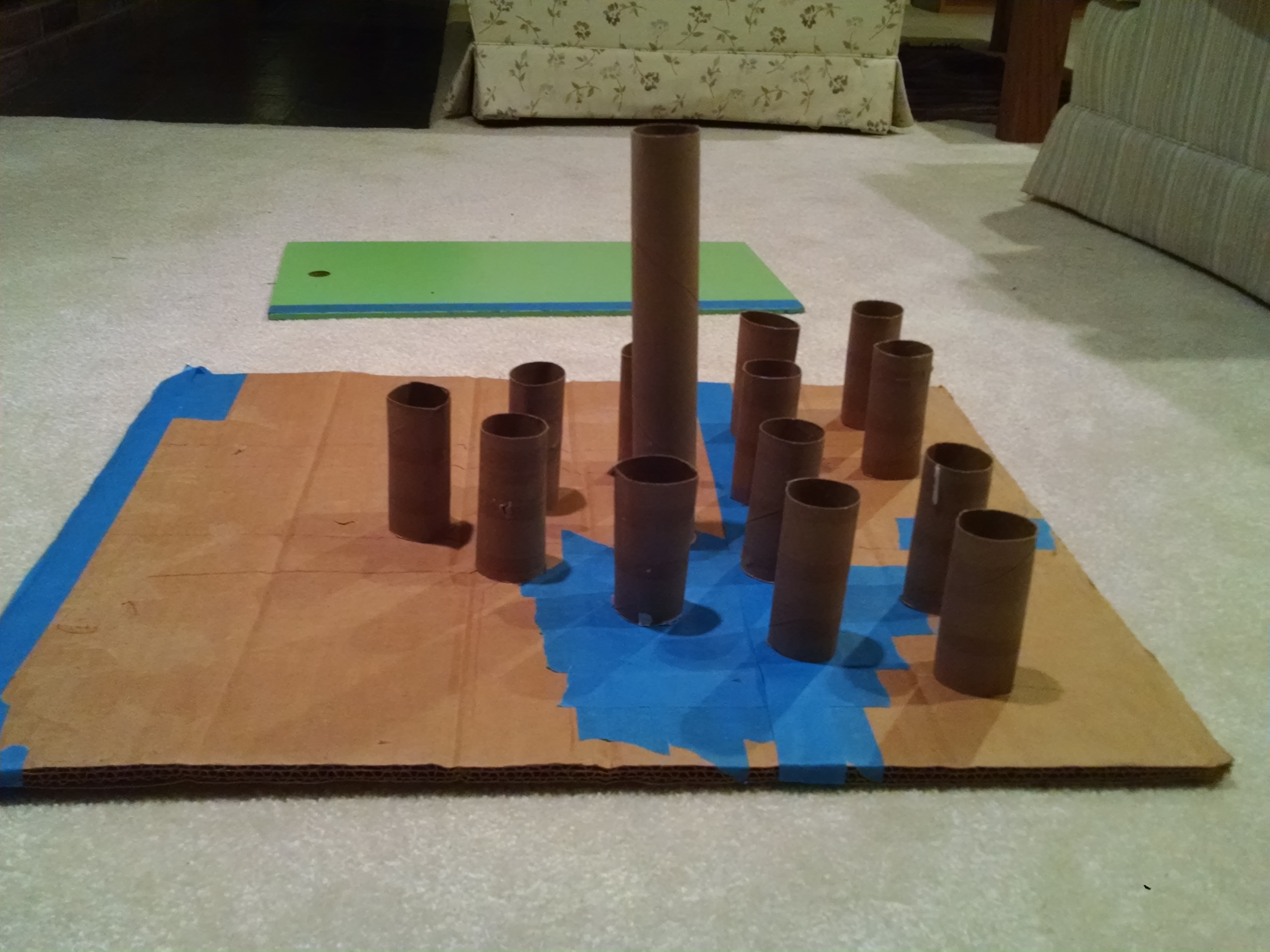
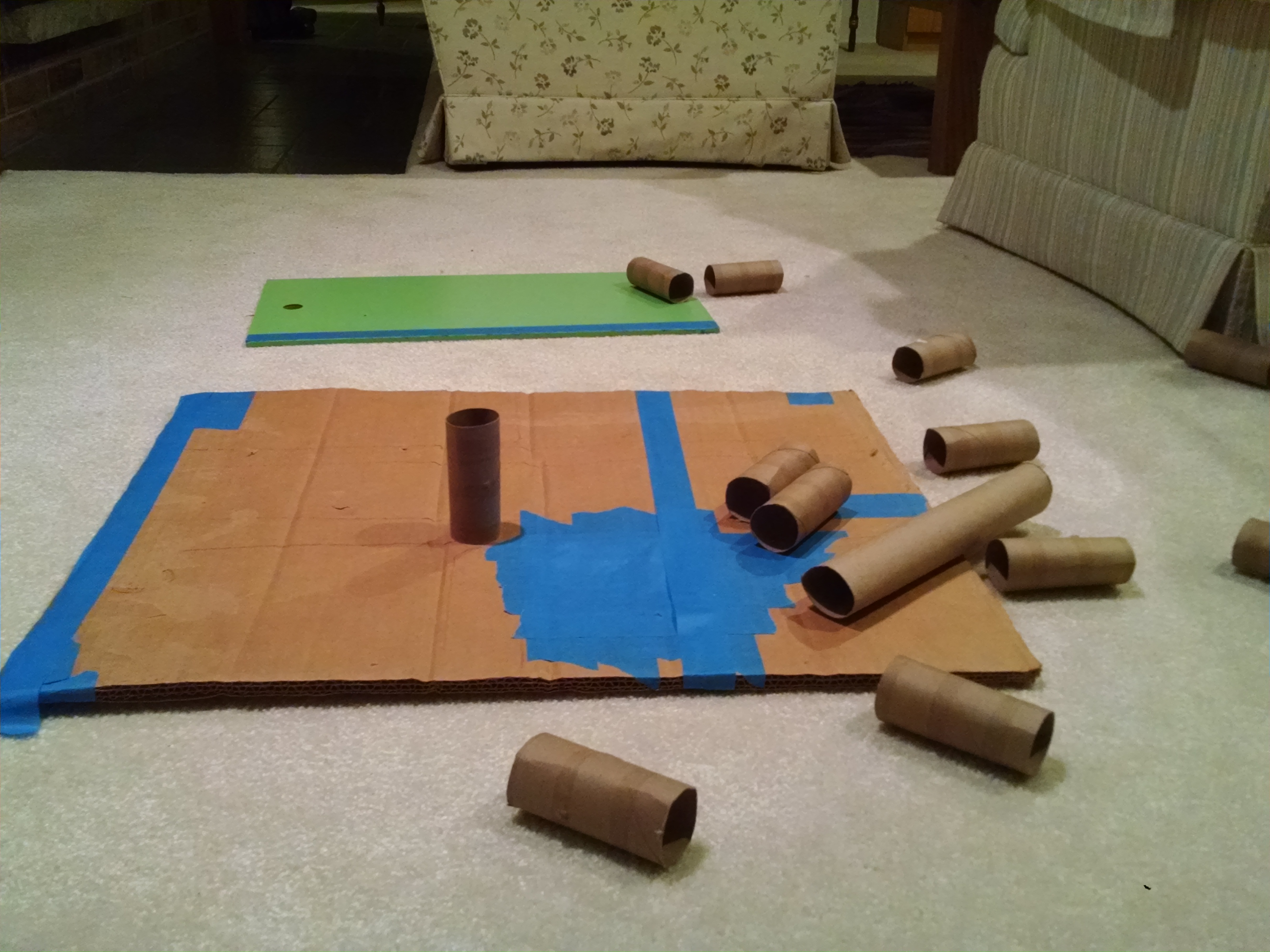
IMG_20160131_193313206   IMG_20160131_193106064

It’s easy to get caught up in commercialism and all the manufactured toys that promise “hours of fun” and “educational benefits” for our kids. But there’s plenty of fun and education to be had in simple home-made activities. My mother-in-law grew up in Argentina in the 30’s and 40’s, and they didn’t have any manufactured toys (she remembers owning one toy in her whole childhood – a doll given to her by a neighbor), so she’s a pro at this!

Last night’s invention was T.P. Roll Bowling. With a piece of cardboard, 13 toilet paper rolls, one paper towel roll, and a little ball, we had a game that engaged the whole family for the evening. It’s great large motor practice in learning to aim and throw the ball at the last remaining pins. It was also great math practice in keeping track of the score. The paper towel roll was worth five points, and that meant scoring the pins knocked over required some basic addition skills, not just counting pins.

Next time you’re tempted to spend time shopping for the “perfect toy”, try creating something yourself!

Read more about:

Specialty Preschools

Some preschools have a special focus, such as: religion, language learning, sports, arts, or science. Sometimes this is a special focus that is very important to the family, and they’re willing to drive long distances to get their child exposure to this special focus. But they also want to be sure that their child isn’t missing out on anything while getting this focus.

Sometimes parents choose a preschool due to its proximity to their home or work, and that preschool happens to have a specialty focus… For example, And I know a family who sends their child to a German immersion preschool – they don’t speak German themselves, but it’s a great preschool that’s a very short walk from their house and they’re happy to have their child exposed to another language. It’s a good match for them… But, I also know other families who say “There’s this preschool across the street from my house, but they’re Christian, and we’re not really religious – will it be a good match?”

The questions to ask are:

  • How much of the day is spent on that special focus?
  • Does that schedule also allow for all the other activities we typically expect in a preschool – do they have art time, circle time, outdoor play, and so on? (In a language immersion school, they get all this just as they would elsewhere, because the language learning is just woven into it all.)
  • If there is a limited set of activities offered at the preschool, how do you make sure your child gets a well-rounded set of the essential skills of the preschool years? (We can often “supplement” a limited preschool experience with other classes, or with the things that we do with our child at home, in non-school hours.
  • Who are the other children your child will meet there? Will there be good options for playmates? (For example, if you don’t speak the language taught, but most of the parents do, will you feel comfortable spending time with these families at birthday parties and playdates. Or, if you’re driving a long ways for class, other parents may be too, so you might not be meeting any “neighbor kids.”)
  • What are your goals for having your child experience that special focus? And will the way that preschool teaches that topic meet your goals?

For more information, see:

My experience with specialty preschool:

I offer my experience here not as “here’s how YOU should do things” advice, but more to illustrate one parent’s decision-making process for one particular family.

My oldest child attended coop preschool two days a week. She was up to having lots more structured learning in her week’s schedule, and I also wanted some hours where I could just focus on my second child. So, we were open to finding a drop-off preschool option for a couple days a week. Then we discovered there was a theatre preschool! This was the perfect match for this child, who LOVED stories, and loved watching plays and movies, and loved pretend play. (Note: the preschool was run by Studio East in Kirkland – they are not currently offering a preschool option, but they do offer fabulous weekly enrichment classes for ages 4 – 6.)

In this preschool, they managed to roll in most of they typical preschool activities under the theatre theme. For example, when they were talking about Midsummer Night’s Dream, the art projects were making donkey ears and fairy wings. They had pre-academic practice with reading words written on the board with names of characters. They had big motor play of learning different walks, learning prat-falls, learning some basics of stage combat. They had small motor practice with puzzles and such. Plus, they also had the additional challenges of learning a story, memorizing lines, practicing entrances and exits, and learning a whole lot of impulse control in having to wait to enter, wait to deliver their lines, and so on. I thought it was a fabulous program.

They did not have outside time, so I made sure my child got outside time before or after class. They didn’t have a lot of free play and exploration time, but my child got plenty of that in non-class hours and at her coop preschool, so I really felt like all of her preschool learning needs were met through this combination of coop and specialty school.

Outdoor Preschools

outdoors

Outdoor preschools are rapidly gaining in popularity. In the Seattle area, just a few years ago, there were only a handful. This Parent Map article now lists over 25 in the Puget Sound region.  They are typically a play-based preschool, where students spend 50 – 100% of the class day outside, year round, regardless of weather. Many are based on the forest kindergarten model, developed  in Sweden, Finland, and Germany.

Some key characteristics of an outdoor preschool:

…takes place in the same setting on a regular basis over an extended period of time.

…while there are some structured elements, [it’s]largely emergent, child-directed, and play-based… young people have freedom to explore, play, build, create, imagine, and use their senses to experience the outdoor environment and engage with one another.

… strong emphasis on educators observing, learning with, and teaching students in the context of the environment… allows children the space and opportunity to delve into various activities and experiences guided by their imagination, rather than explicit, external direction… educators’ primary role is to ask a multitude of questions based on what is emerging from a student’s questions, experiences, and imagination. The guiding principle at Forest School is that children are competent and engaged learners, and with guidance and support, are able to lead their own learning process in directions far beyond what an educator can initiate on their own. Source

What happens at an outdoor preschool?

While some outdoor preschools are just a traditional teacher-led program that happens to be held outdoors, most outdoor preschools (especially those that follow the forest kindergarten model) focus on child-led learning, which may also be called emergent learning or inquiry-based learning.

“Inquiry-based Learning is a dynamic and emergent process that builds on students’ natural curiosity about the world in which they live… Inquiry places students’ questions and ideas, rather than solely those of the teacher, at the centre of the learning experience. Students’ questions drive the learning process forward. Teachers using an inquiry-based approach encourage students to ask and genuinely investigate their own questions about the world. Teachers further facilitate students’ learning by providing a variety of tools, resources, and experiences that enable learners to investigate, reflect, and rigorously discuss potential solutions to their own questions about a topic the class is studying. Source

Instead of having a completely pre-planned curriculum, they are more likely to follow the children’s lead and respond in the moment. The teachers may have a goal for what they want to teach that day, but exactly how that plays out can be spontaneous. For example, the teaching concept of the day might be comparative words or adjectives. The activity might be a hike in the woods. While hiking, the teacher could ask: which is the tallest tree? where’s the biggest rock? which are there more of – sword ferns or skunk cabbages? Can you find a dark green leaf and a light green leaf? Or if the concept was the five senses, they would practice listening for birds, smelling cedar bark, tasting huckleberries or salmonberries, touching lichen, and looking for spider webs.

Nature provides a huge array of learning opportunities. Here are some components of a “typical preschool” and what that looks like in an outdoor preschool setting:

  • themes: almost every preschool has a series of “themes” during the year. In the fall, it might be pumpkins, fall leaves, or spiders. Then comes winter, ice, polar bears and penguins. Then springtime, flowers, ducks and so on. The teachers spend lots of time cutting out pictures and decorating bulletin boards. At an outdoor preschool, nature provides an ever-changing seasonal view.
  • block play: there’s plenty of building happening, but instead of using Duplos or Lincoln logs, the kids may be stacking rocks, building a lean-to with branches, or constructing fairy houses with moss and bark
  • imaginary play: there’s not a toy kitchen with plastic food, but there is an endless supply of bark, rocks and mud which easily fill in for mud pies, pretend cookies, ice cream cones and more. There’s not a treasure box full of dress-up clothes, but there are sticks, which become magic wands, swords, light sabers, hobby horses, and more. Instead of playsets and puppet theatres, a favorite climbing tree may be a spaceship one week and a train the next.
  • arts & crafts and writing: mud fills in for play-dough, sticks and sand provide a surface for practicing writing, kids paint on a tree with squashed berries, kids use sticks to form the letters of the alphabet
  • math manipulables: there’s an endless supply of things to count and add and subtract: rocks, berries, bugs…
  • sensory table and water table: instead of filling tubs with rice or beans or other sensory materials, the teachers just let the children explore pebbles on the path, moss on the log, slimy slugs, puddles, rough bark on a Douglas fir and smooth bark on a birch tree, glossy salal and sharp pointy holly leaves
  • playground time: time playing on standardized equipment is replaced with balancing on logs, climbing trees, wading across creeks, and building a seesaw with a downed branch balanced over a log fulcrum
  • fine motor practice – there may not be puzzles and shape sorters, but there are plenty of possible challenges, picking delicate blackberries while avoiding prickly thorns, weaving daisy chains, and handling insects
  • snack time: might be picking fresh veggies in the garden or it could involve building a fire, cooking a snack over the coals, and eating it as they gather around the open fire
  • music: kids may sing call and response songs while hiking through the woods, learn to whistle or hum, and drum with sticks on stones
  • circle time: it’s easy to do songs, stories, group games, and concept activities in the outdoors under the trees
  • science: there’s a never-ending opportunity to teach about science!

Outdoor teachers need to be flexible thinkers, since nature can be unpredictable. A teacher might have planned to talk about mud in April, because generally mud is guaranteed to be available in Seattle in April. But two years ago, we had a very dry spring, and there was no mud to be found! New “teachable moments” also appear outdoors – a dead bird or a hornets’ nest or bear scat may liven up a planned walk. This leads into discussions of a wide range of topics never found in a traditional preschool. (Learn more here about the role of the educator at an outdoor preschool.)

What are the benefits of outdoor preschool?

Children get the benefits of a play-based preschool, including: increased skill at self-direction and problem-solving, lots of practice with social skills and conflict resolution, a sense that learning is meaningful, and reduced stress (which leads to increased learning – we know from the science of brain development that children learn best when they feel happy and safe.) Learn more about play-based learning here.

Children also get the benefits of time spent outdoors in nature, including: better eyesight, stronger large motor skills and coordination, lower rates of asthma, allergies, and obesity, lower stress, and better concentration / attention when they return indoors. Outdoor play also encourages safe risk-taking and plenty of problem-solving. [Learn more by clicking here on Benefits of Outdoor Play or click on “nature activities” on the right sidebar (on desktops) or the bottom of the screen (mobile devices) to see all my posts on nature.] As an added bonus – anecdotally, kids who go to outdoor preschool seem to pick up a lot fewer colds and other illnesses from their classmates.

The outdoor environment also offers unique learning opportunities. Here’s just one example related to language arts: Language is not just about reading. It’s also about listening and communicating. When children and teachers go for a hike in the woods, they talk to each other as they walk, about almost anything that comes to mind. In this context an adult tends to use much more diverse and sophisticated vocabulary than they would have used in a pre-scripted classroom teaching moment. For example, if a teacher wanted to teach about colors in a classroom, they might use a book that showed 12 colors with labels. When walking through the woods, the same teacher could point out lavender vinca, fuschia rhododendrons, rusty red rotting wood, dark purplish-black berries on an Oregon grape, and discover how many shades of green there are in their woods.

“hands-on experiential learning is the best educational approach for children. Being outdoors provides them with not only fresh air, it encourages imaginative play, creativity, hand-eye coordination, balance, physical strength and mental clarity. When children’s natural curiosity is encouraged, learning flows organically from stimuli encountered in the outdoors.” Source

What are the downsides to outdoor preschool?

It’s dirty. Your kids may come home muddy. Really muddy.

The weather. Can be too cold, too hot, too wet… Most of this can be managed with the right clothing. Expect to spend a fair amount of money buying the appropriate clothes for your child. You may be able to find them at thrift stores or consignment stores if you’re lucky, but good clothes and good boots are essential!

Here’s how I manage: at home, I dress my child in regular clothes (pants and a t-shirt, plus good Smartwool socks. We keep the outer layers in the car and add them when we get to preschool. (It’s not safe to buckle a kid into a car seat with all those layers on.) If it’s a dry day in the fall or spring, we just add a fleece top for warmth. If it’s a wet day, it’s waterproof pants and rain jacket from Oakiwear. If it’s really cold, then we add long underwear and a squall parka from Lands End, plus hat and gloves. And always… every day… good boots. Bogs boots are great, but Oakiwear boots are also great and much cheaper than Bogs. They’re pricier than rain boots from Target, but warmer, sturdier, and fit better (so fewer falls caused by loose boots.) When we get back to the car, I just strip off all the muddy outer layers and leave them in the back of the car for the next preschool day. (If we’re going somewhere other than home after class, I bring along regular shoes and an everyday jacket.)

Not an emphasis on academics: Some outdoor preschools do almost no academics. Some incorporate story-time and crafts to teach some basic pre-academic skills. Some have a fair amount of group time where they learn standard pre-school topics like: days of the week, colors, alphabet and counting. But, none are focused on teaching academic skills like reading and math. I believe this to be developmentally appropriate – read why at my post on academic preschools – that post also incudes tips on how some parents have worked academic preparation into their home-life when their children attend non-academic preschools.

Learning about your options

If you’re lucky enough to live in an area where you have multiple outdoor preschools to choose from, here are key questions to ask to allow you to compare them:

  • What is a typical day’s schedule?
    • A completely child-led school, like Cedarsong, may answer this just by saying: ““There’s no structure or schedule. We ask, ‘What do you kids feel like doing today?’ We follow them… At the end of each month, we write a newsletter from these notes, so the children write the curriculum.” Source
    • A hybrid model that combines teacher-led and child-led activities, like Polliwog, might say “9-9:15 Transition: Free play; 9:15-9:30 Morning Circle: Introduce the day’s theme, weather, calendar, sharing time; 9:30-11: Outdoor exploration, themed activities and nature study, then a snack; 11-11:45: Indoor extension activities: sensory, art, math and literacy stations. 11:45 – noon. Closing Circle: Reflections, songs, stories
    • There’s not a “right” schedule – just look for the schedule that suits your child and your goals for enrolling them in the preschool.
  • How much time do kids spend outside on a nice day? How much time do they spend outside when the weather is bad? (One “natural preschool” that I looked at spend at most 1/3 of their time outdoors and the rest in a traditional teacher-led classroom when the weather was nice out. There was even less time outdoors if the weather was bad. I do not consider them a true outdoor preschool, just a traditional preschool with a larger outdoor / nature component than most.)
  • What is the teacher to child ratio? For safety reasons, you may need more adults in a spread out, outdoor location than in an enclosed classroom. Also, in an inquiry-based classroom, it helps to have extra adults to answer all the questions children can come up with during a walk in the woods.
  • What indoor facilities do they have, and how do they use them? One preschool in the area has only some port-a-potties, but says children can also opt to pee in the woods instead of using the port-a-potty. Other schools have a full inside classroom with all the typical facilities.
  • For more questions to ask at any preschool, look here: Questions to Ask

My experience

I offer my experience here not as “here’s how YOU should do things” advice, but more to illustrate one parent’s decision-making process for one particular child.

With my older children, we did coop preschool, which I think is one of the best possible options for parents who are looking for a part-time enrichment preschool. My oldest child also did a theater-based preschool two days a week, because she had a passion for theatre, stories, and dramatic play. With our third child, coop was not a good match due to my work commitments.

When we started to look at other options, I started by thinking about my goals and needs and what would be the best match for his temperament. He had learned how to read very young, before starting preschool, so we weren’t worried about him learning that or other pre-academics at preschool. When I look at the list of essential skills for preschoolers to learn, I knew that he needed to work on impulse control, waiting for his turn to talk, and social skills, especially conflict resolution. I know these are best learned in free play with other children (with an adult nearby to mediate when needed.) They are not skills that are learned sitting in a desk. He is very high energy – if I need him to concentrate on something, I first need to give him an outlet for that energy – when he was two, we went to library story-time every week and he loved it and learned a lot. But BEFORE story-time, we went to the playground and he ran for an hour – letting out that energy first allowed him to concentrate later. (FYI, there’s plenty of good research showing that active play, especially active play outdoors, helps kids to concentrate better when they come back indoors. Check out this article on one school district’s experience with adding recess back into the day’s schedule.)

We considered a neighborhood preschool that’s a very short walk from our house – lots of our neighbors have used it and had only good things to say about it. We looked and it was a great traditional preschool, with lots of play time and plenty of activity. There was nothing wrong with it and a lot of good stuff. But, it didn’t feel like the best fit.

Like many preschools, it had lots going on visually – alphabet posters on the wall, calendars and weather charts. There were lots of brightly colored toys on every shelf. It’s what preschools are “supposed” to look like but it was also a little too much for me. (Read here about why kids actually may learn more in environments that have LESS “educational material” decorating the walls.) It was also a “loud” room acoustically – even with just the adults in it for an open house, it was a little loud for me. My son tends to get over-stimulated in busy, indoor environments and can get a little wild and hard to manage. I could see this room setting him off.

I thought more about that, and realized that he almost never gets over-stimulated outside. Outdoors, the noise and stimulation just comes at you differently. There’s plenty to observe, but not as much that demands your attention.

So, we realized we were looking for an outdoors, active, play-based preschool with plenty of opportunity for social-emotional development.

When he was three, we chose Tiny Treks preschool at Keep It Simple farm. It’s an all outdoor preschool – they have a non-insulated greenhouse for doing crafts in – since Seattle rain makes it challenging to use most art supplies outdoors. It is VERY play-based and child-led, with some structured teaching in circle time and a lot of free exploration. Here’s how they describe a typical day:

“We will spend the days outside in the forest, trails and garden.  Our day consists of a nature theme, craft and play.  Circle time with songs and finger plays, puppets and some light yoga stretches.  Then we might go to visit the baby chicks, count the chicken eggs and look for the bunnies.  There is a fire pit to roast marshmallows by, hammocks to swing in and the forest to play hide and seek in.”

It was a fabulous experience in every way. He loved it. We loved it. And at the end of the year, he had come a long way in his self-control, ability to listen to a teacher, and ability to manage frustration, all of which were skills we knew he needed to gain from preschool.

When he was four, we chose Polliwog Preschool, run by Pacific Science Center at Bellevue’s Mercer Slough. They have an indoor classroom, which has all the things you would expect to find in an indoor classroom. They also do many typical preschool activities, like story-time, job charts, and weather charts. They spend about 50% of their time outdoors in the child-led / emergent learning mode. It is a nice hybrid of forest kindergarten and a traditional preschool experience, and we felt it would make the perfect bridge between Tiny Treks and a kindergarten classroom.

Here’s how they describe their activities.

Polliwog Preschool is play-based and student-driven… Activities are designed to [encourage] curiosity, fostering love of the natural world, and developing the whole child. Polliwog Preschool uses nature as the guiding theme to frame our core curriculum areas of science, art, music, math, language and literacy. For example, when studying insects, children act out the life cycle of a dragonfly and fly through the forest for creative movement. Investigative, quantitative and analytical skills are developed as we compare, count and study terrestrial and aquatic insects. … back in the classroom, we extend our learning and creativity in various ways, such as painting an insect at the art station or creating an insect story as a language art activity.

This has also been a fabulous experience for him and for us. He has come a long ways in kindergarten readiness. The change in him from this summer till now has been huge in terms of his ability to engage in group activities, take turns, and follow instruction. And although his preschools have been “play-based” not “academic” he is making plenty of progress on the academic skills and will be well-prepared for kindergarten next fall.

Resources to Learn More

Best summaries

More resources:

photo credit: Friends Forever. via photopin (license)

Academic Preschools

academic

What does your child need to learn during his preschool years? What is the best way to teach her what she needs to know? Would attending an academic preschool have a huge impact on his future education? What do you need to know to make the right choice?

What your child needs to learn

During the “preschool years”, between age 3 and 5, there are some essential skills you want your child to master. And yes, they will absolutely have an impact on your child’s future success. But most of them have nothing to do with academics: they include independence in self-care, emotional regulation and impulse control, how to make friends, how to take turns, share, and resolve conflicts, how to sit still and listen to a teacher, how to follow rules, and how to join in group activities. (Learn more about essential skills here.) Yes, children do need some basic academic foundations – ideally a beginning kindergartener can do at least the following: recognize the letters of the alphabet, count to 20, draw a picture, know basic facts like colors and shapes, and work with basic school supplies (like scissors and tape.)

But, a child does not need to be a skilled reader, or know addition and subtraction, before kindergarten begins. Some children absolutely can, and do, learn to read at 3 or 4 years old. And if they do that easily, that’s great! But, if your child isn’t reading at age 5, it’s fine. Research shows that if you compare early readers and late readers at age 5, you’ll see a big difference. But, if you compare them again at age 7 or 8, the late readers typically have caught up with their peers. ((Look here for a full article on when children should learn to read and how to help them. And here’s a video which summarizes the research.)

The downsides to pushing academics too early:

With the nationwide focus on core curricula and standardized testing, the academics that used to be taught in first and second grade are now being pushed down into kindergarten to children who may not be developmentally ready for them. In the past, kindergarten was a gentle transition from home to school, where children learned how to follow rules, pay attention, and find their cubbies. By contrast, here’s one parent’s story of her child’s experience of modern kindergarten:

My daughter’s first day of kindergarten consisted almost entirely of assessment. She was due at school at 9:30, and I picked her up at 11:45. In between, she was assessed by five different teachers, each a stranger, asking her to perform some task. By the time I picked her up, she did not want to talk about what she had done in school, but she did say that she did not want to go back. She did not know the teachers’ names. She did not make any friends. Later that afternoon, as she played with her animals in her room, I overheard her drilling them on their numbers and letters. Source

She is not alone in this – in a nationwide 2010 study, 73% of kindergarteners took a standardized test (one third took tests at least once a month). In 1998, no one asked kindergarten teachers about testing, but the first grade teachers of 1998 gave fewer tests than kindergarten teachers of 2010. In 1998, 31% of teachers thought children should be reading by the end of kindergarten. In 2010, 80% believed that. Source

Parents, and teachers, respond to this pressure by moving the pre-academic skills children used to work on in kindergarten down into pre-school.

If we push children to succeed at academics early, we run a few risks: first, that they will be stressed and pressured about academics. They may come to view reading as the “unpleasant stressful work I had to do” and resent “having” to read in the future.

For long-term academic success, one of the most important things we can teach our child is that reading is fun and learning is fun. Sometimes early academic pressure can teach children the opposite lesson…

A major evaluation of Tennessee’s publicly funded preschool system, found that although children who had attended preschool initially exhibited more “school readiness” skills when they entered kindergarten than did their non-preschool-attending peers, by the time they were in first grade their attitudes toward school were deteriorating. And by second grade they performed worse on tests measuring literacy, language, and math skills. The researchers told New York magazine that overreliance on direct instruction and repetitive, poorly structured pedagogy were likely culprits; children who’d been subjected to the same insipid tasks year after year after year were understandably losing their enthusiasm for learning. Source.

The second risk is that academics will displace many other subjects that children benefit from. Kindergarten teachers report that in the pressure to excel in reading or math, programs are cutting time spent on art, music, and science. Source.

The third risk is that if we spend all our time working on academic skills, we may be depriving our children of the time they need to spend to learn all the other essential skills (self care, impulse control, conflict resolution, etc.) that are better learned through social play. These skills are much harder to learn later in life.

Preschool years are not only optimal for children to learn through play, but also a critical developmental period. If children are not given enough natural movement and play experiences, they start their academic careers with a disadvantage. They are more likely to be clumsy, have difficulty paying attention, trouble controlling their emotions, utilize poor problem-solving methods, and demonstrate difficulties with social interactions. We are consistently seeing sensory, motor, and cognitive issues pop up more and more  in later childhood, partly because of inadequate opportunities to move and play at an early age.  Source.

What’s a better alternative to an academic preschool?

Preschool age children do best in a play-based environment, with more emphasis on Process than Product. An experienced, knowledgeable teacher has set out thoughtful invitations to play, and materials to encourage learning (such as Montessori materials). Then the children are allowed to move around the room, engaging in both independent exploration and social play, spending as much time on each activity as they desire. The teacher moves around, making observations and asking questions to extend learning. When children have questions that they need answers to in order to move their play along, the teacher shows them the power of reading, math, and other academic tools to find those answers. This excites them about learning those academic skills.

The class also includes some formal group time so children can practice sitting still, paying attention, and following rules. Music, art, and lots of physically active, outdoor play are important.

How do you make sure your child learns academic skills?

I could say “trust the process.” A good play-based preschool will help your child gain all the “essential preschool age skills” that I referenced above, including academic foundations. In general, if they’re in a good preschool, you don’t need to worry.

But, I know parents do worry – here’s how some parents handle that anxiety…

I attended an open house at a progressive elementary school. When one prospective parent said, anxiously, “But if you don’t test the kids, and you don’t do standardized textbooks, how do you know that they’re learning what they need to learn??” The teachers at the school had lots of good answers for that. But I like this pragmatic answer from a parent of two alumni: “When my kids were here, I sometimes got worried. When I did, I’d go to Lakeshore Learning or Barnes and Noble, and pick up some workbooks – the same workbooks that many “academic” schools are using. When I had down time with the kids – waiting for food in a restaurant, waiting for soccer practice to start, or whenever they were bored, we’d work through the workbook. And it always turned out that they were right on track – at grade level or above across the board. They were in fact learning all the academic stuff they were supposed to learn, plus a whole lot more in terms of social skills, creativity, and the other things that play-based schools foster in kids.”

I know another parent who uses mobile apps and online teaching tools with their kids at home. They say “the games make learning fun for the kids. So, they drill their alphabet or phonics, or basic addition over and over, but they’re having so much fun that the learning comes naturally.” Then they take their kids to a play-based outdoor preschool for large motor play, time in nature, and lots of free play time with other kids.

Another parent takes her child to library story time at least once a week, and they get plenty of books to take home and read. Her child views library time and reading as one of the most exciting “treats” of the week. They also practice math at home and do science activities. She says “I’m not a mathematician or a scientist, but you don’t really have to be to teach a preschooler!” They attend a coop preschool together for all the “things we can’t do at home on our own, especially art and music.”

Learn more:

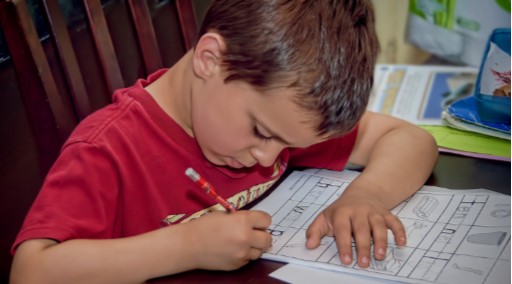
photo credit: Homework via photopin (license)