Tag Archives: early childhood education

Music and the Growth Based Mindset

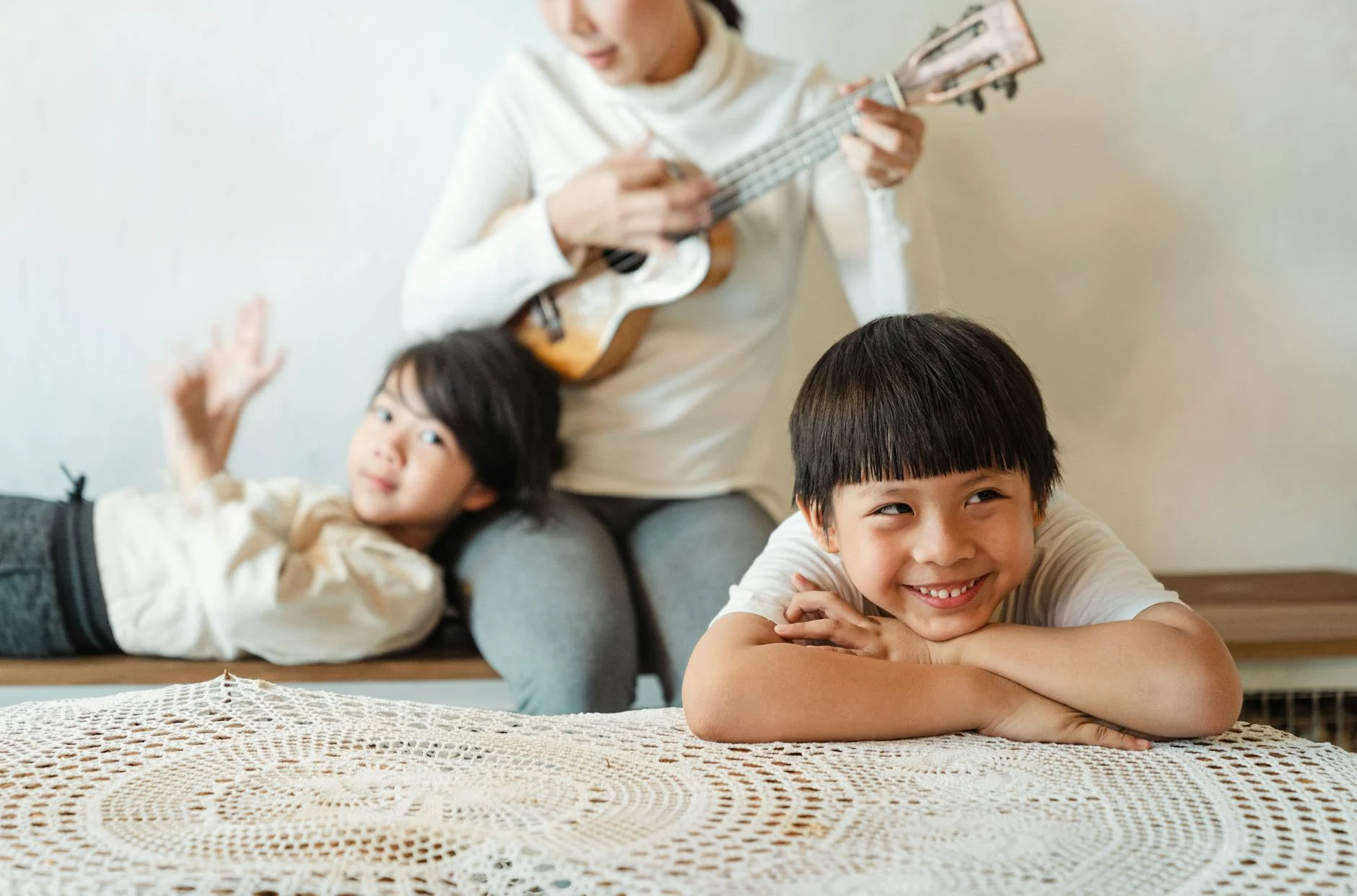
I’m creating a series for people who teach babies, toddlers and preschoolers and for children’s librarians about learning how to play ukulele to supplement their storytimes and group times with live music.

But I know that many of those professionals might think “but I’m not a musician! I can’t do that. I just don’t have that talent.” Sounds like fixed mindset, eh?

Let me tell you my story of how I got past that block, in hopes of inspiring you to do the same.

When I was young, I thought I was a bad singer. Because way back in fourth grade, my teacher told me I didn’t sing well enough to do a solo. So I spent years not singing solo in public (though I would join in to camp songs or hymns at church as long as plenty of other people were singing.) But, when I started teaching parent-child programs 30 years ago, I truly believed that babies benefit when parents sing to them, so I confronted the fact that part of my job was to teach the parents to sing to their babies. I had to get past my anxiety about my voice and sing out boldly – and I did it… for the sake of the babies!

But, despite that accomplishment, I still believed that I would never play an instrument well.

Because way back when I tried to learn an instrument (piano at age 5, recorder at 10, guitar at 13), I wasn’t good at it yet. I was used to getting good at things quickly, and playing an instrument just didn’t work that way. And I just didn’t have the patience or attention span to follow the recommended method of playing the same song again and again and again till I got good. In eighth grade, my teacher told me that I was incompetent at tuning a guitar. I let those judgments settle me into a fixed mindset that “some people have the talent to be a musician, and some don’t. I don’t have the talent.”

But, a couple years ago, I gave myself the ukulele challenge – I decided to apply the growth based mindset to learning an instrument. Anyone can get good at anything – they just have to work hard at it, and persist through challenges, and focus more on process and progress than on product.

It turns out that learning an instrument as an adult is much easier! I’m better at learning now than I was then, and better at motivating myself. And while as a 13 year old, I didn’t want to “play baby songs” as I learned, when I learned as an adult, who happens to teach preschool, it turns out that playing baby songs was exactly my goal! And I still don’t like practicing the same song again and again, but as a grown-up, I decided I don’t have to follow rules about how you should learn. I skip from song to song to song whenever I want to, and my skills just build across the board over time.

I started by learning just a few chords, and then finding children’s songs I could play using those chords. Once I felt confident enough to try it, I would play one song on my ukulele at each week’s class. Over time, I added in a few more here and there.

Now, I have a large collection of songs I can play. I haven’t tried to memorize them all – I have always had notes in front of me anyways when I teach circle time to help keep me focused, so it was easy to just incorporate the chords into my notes and play along. Live music is now a part of every group time I lead.

And ukulele has become so much more for me than something I do for work. Each morning after I put my son on the bus to school, I spend 30 minutes playing ukulele – building my skills, expanding my repertoire. Rather than feeling like a chore, it feels like self care – “me time.” Most Sundays, I go to a ukulele group that meets in the park where a group of about 20 of us find joy in playing songs together for a few hours. I have led camp singalongs, and led services at my church.

Rather than having a view of a specific “product”, I have approached this whole thing as a process, and focused on progress. It’s so exciting when I reach new levels: each time I master a new chord, when I learned what it meant to play in the key of C versus the key of G, when I learned about the circle of 5ths and how to transpose, when I learned different strums, and then finger picking, when I learned to play by ear. It is so exciting to me, and amazing to me that I have reached the point where I can pick up any chord chart and play the song; I can look at melody lines on sheet music or at ukulele tabalatures, and quickly pick out any simple melody. It’s just something I could not have imagined a couple of years ago. But I got there!

Just a little step at a time.

Will you join me on the journey?

Check out: Getting Started on the Ukulele
Adding an Instrument to Your Teaching

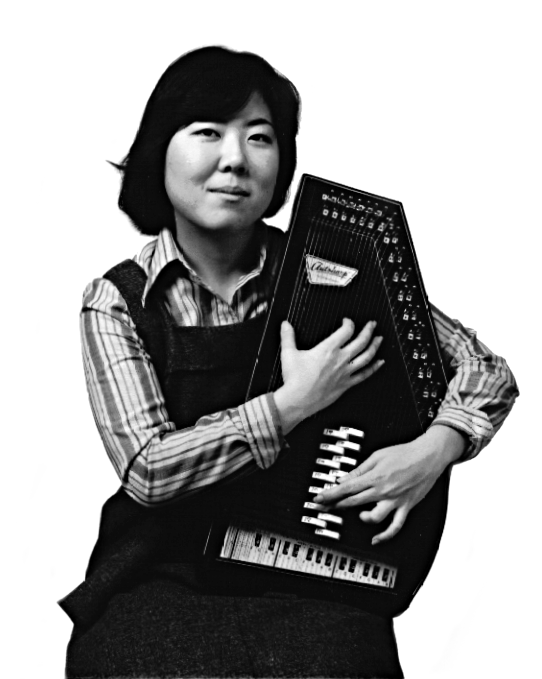
Once upon a time, many preschool teachers played the autoharp when leading group time, strumming along as they sang Twinkle Twinkle or Ring Around the Rosie.

Or many played piano or guitar. Playing the music as you sing, rather than just singing a capella, helps to deepen the learning for the children and increase their musical knowledge.

Some teachers used records (or cassettes or CD’s) to provide the music for circle time. Many recordings were designed just for this purpose, and worked well – they were a good tempo, just enough repeats of the song to be fun but not drag on and on.

These days, when we all carry in our pocket a phone with instant connection to the Internet, it’s tempting to just always pull up a YouTube video for music.

But YouTube videos are generally not made for this use, they are so often over-produced, overly energetic, over-enthusiastic or cloyingly sweet. Many of them have long musical interludes when no one is singing. Or ads or “like and subscribe” announcements. They can’t adapt to the mood of the moment, or respond to what’s happening in the room that day. And playing pre-recorded music doesn’t show children how music is made, or instill in them the idea that someday they could make music too.

Bringing live music into the classroom is so much more engaging.

And I know some of you may be thinking – “but I’m not a musician! I can’t do that.” I used to think that too. Make sure to check out my next post on Music and the Growth Based Mindset.

Did you know that if you have a ukulele (or a guitar), you can learn how to play a C chord and an F chord in just a few minutes of watching YouTube videos?

And did you know that if you can just play a C chord and an F chord, that means that you can play Wheels on the Bus – and at least 4 other songs set to that same tune! (In my handout below, just for C and F, I have chords for Kookaburra, 2 songs set to Itsy Bitsy, 4 to Oh My Darling Clementine, 5 for Mary Had a Little Lamb, and 10 songs set to the Farmer in the Dell tune!)

I will be writing a series of posts on how quickly and easily you can go from knowing nothing about how to play an instrument to playing ukulele confidently.

If you already know how to play an instrument – like guitar or piano – or if you have an old autoharp sitting in the closet at your classroom, and just need the chords to be ready to play, check out this handout.

You can also check out Storytime Ukulele, where they list chords for lots of standard kids’ songs.

If you don’t yet know how to play an instrument, check out the rest of my ukulele series:

Reducing Sensory Bin Mess

When parents or teachers first introduce a child to sensory bin play, they usually make a big mess!

While some mess is inevitable, here are tips for reducing it.

Teach Them How Sensory Play Works

One of my core beliefs is that children want to do well. If they’re not behaving well, it’s usually because they don’t yet have the knowledge or skills they need. So, let’s teach them!

Play alongside

Over time, sensory play becomes a great independent play activity for children, where they can play with little supervision or intervention from adults for quite a while. However, first you have to teach them how to do it, and then gradually fade out your support. So, expect to be right next to them the first several sessions.

Role Model

I mostly just start playing appropriately next to them, and they quickly follow along! I narrate my play, and also narrate theirs. “Look, I’m scooping the beans – oh, you picked up the scoop – see how I use it? I can pour the beans in the bucket. Can you?”

Re-Direct

If they are doing something “wrong”, tell them the right thing to do. “Let’s keep the rice in the bin.” If they’re pouring on the floor, substitute a new target – “can you pour into this bucket?” Try to avoid saying “don’t _____”. If you say “don’t splash”, all they can think about is splashing. If you say “oh, look, when I move my hand slowly, see the ripples in the water?” they will often stop splashing.

Set Limits

Once they’ve learned how to do well in general, they may still have days when they’re having a hard time not making a mess. It’s OK to sometimes say “it looks like now is not the right time for this – let’s put it away / close it up for now, and we’ll try again tomorrow.” To be as fair as possible, I try this method: first when-then: “when you show me you can play well with this, then we can have it out more often.” Then if-then warning – “if you keep dumping things on the floor, then I’ll close the bin.” Then follow through on that consequence if needed.

Setting Up for Success

Fillers

Start with fillers that are easy to clean up. I use pompoms as the first material for my toddler class. Or paper crumpled into balls. Later, I might use pinto beans – they’re easy to sweep up. Other things are harder to clean up. For example, kinetic sand needs to be vacuumed up and can get ground into carpet, so it’s not the thing to start with.

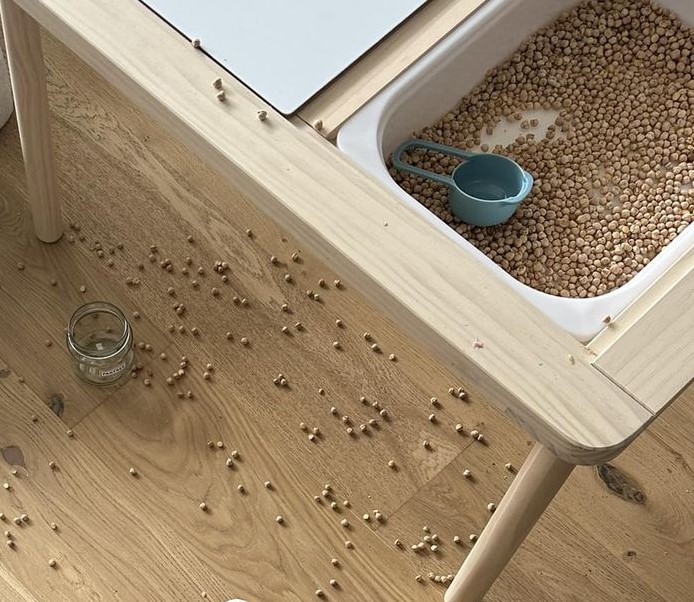
When you start, put a small amount of sensory items in a small bin inside the large bin. If they spill outside the small bin, the large bin catches it!

Don’t use too much filler at first. Don’t feel like you have to have a 3 inch thick layer of sensory material. Start with a thin layer – they can always pile it all up in one corner if they want a deeper pile.

Remember that they will mix together any item that’s within easy reach of the bin. So, if there’s something you don’t want to be mixed in, move it elsewhere. (For example, we don’t recommend putting a bin of rice right next to the playdough table or water table.)

What Surface to Put the Table On

If possible, put sensory tables on linoleum or hardwood floors – it’s way easier to clean up than carpet!

Many parents and teachers do sensory tables outdoors where they are less concerned about mess.

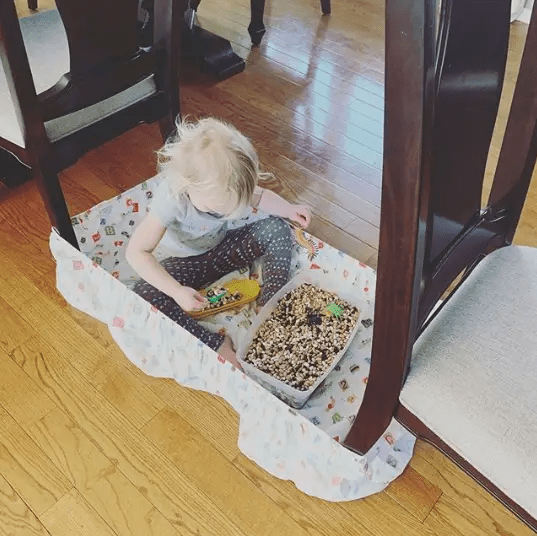
Many people recommend putting a mat under the table – like this mat where the edges can fold up to make a wall, or things like playpens and crafty pods and pop-up ball pits that help to contain the mess in one area where it doesn’t get tracked around. Some use fitted sheets – like in the image below (source) or shown here. Wrap the corners of the fitted sheet around some objects to create a little nest. Or use a table cloth or shower curtain liner. Sometimes you can salvage sensory material from any of these surfaces by lifting them up so the filler all slides to one corner and then scooping it from there.

One site recommended a “builders’ tray” that looks amazing, but the link is broken and I can’t find it anywhere… Amazon has a 20×20 play tray, or you could use an oil drip pan, maybe.

Allowing for Transport

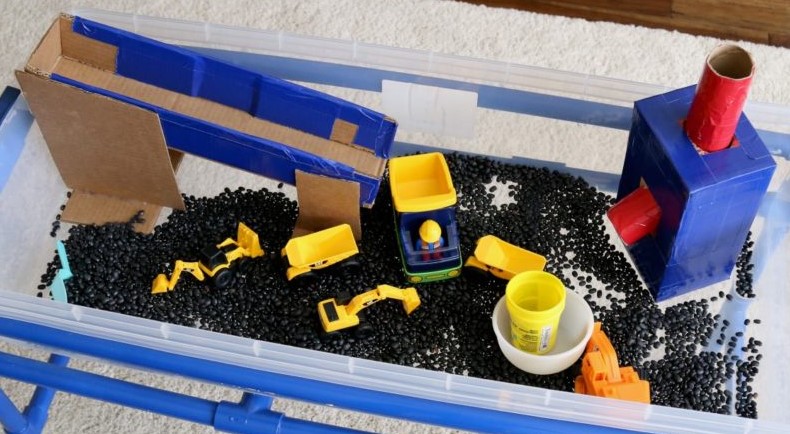
Kids LOVE to transport things. So, they often want to carry things from one place to another. Sometimes just having containers inside the bin, like having two buckets in the bin where they can move things from the bin to one bucket to the next is enough. Or setting up a cardboard box apparatus where there’s a higher spot in the sensory bin and a ramp for pouring things so they slide to the lower level, like these examples from Frugal Fun:

Or having a table right next to the sensory bin with containers on it they can move things into can work. But some kids like to have a separate bucket somewhere else they can carry things to – you can decide if that’s viable for you.

If they like the sound the beans make when they hit the floor, try putting a metal pie tin or hard plastic container upside down inside the sensory bin that they can pour onto to get the sound.

Helping with Clean Up

Ask your child to help with clean-up. You may choose to get them a mini broom and dustpan or a dust buster vacuum. (For some kids having to do clean-up is a disincentive – they don’t want to make a mess they’ll have to clean up later. Some kids like cleaning up the mess so much that they’ll make more of a mess!)

Remember, sensory play is a learning process, so they will accidentally (or intentionally) spill from time to time and there will be messes. Try to take a deep breath when it happens. If you’re having a day where you feel like the mess would be too stressful, it’s fine to close the sensory bin for the day and offer other activities.

Learn more

Check out my Ultimate Guide to Sensory Tables and my Ultimate Guide to Water Tables. You might also enjoy this post on Building a Child’s 8 Senses.

Can We Do Sensory Bins In Class During COVID?

I’m about to return to in-person teaching of toddlers and preschoolers for the first time in 18 months. I have many questions about sensory bins, shared toys, and craft supplies. I don’t have a lot of answers, but here’s what I’ve found.

Official Recommendations for Child Care Settings

Safest Options: Here are some recommended Sensory Ideas from King County public health. These are from May 2020, when worries about surface transmission were high, so the fact that these were considered safe then means they would definitely fit under current recommendations.

  • Individual sensory items in containers. To clean, just wipe down the outside.
    • Double-bagged ziplocks, sealed with tape. Fill with slime, gak, water beads, hair gel, etc. Kids hold and squish around.
    • Fill rubber gloves with sand, lentils, etc. Tie off.
    • Water bottles filled with colored water, oil, sequins, shells, etc. Tape or glue lids.
  • Individual sensory bins in plastic tubs. Each child has their own bin they use each week, filled with rice, beans or other material. Swap tools each week: cups, scoops, toys that can be cleaned.
  • Play-dough in individual containers for each child. For play, put them on a tray, or tape off part of a table. Give the child tools to play with – like cookie cutters. When done, put child’s playdough back in their bag, and clean tools before another child uses them.
  • Give child their own containers of finger paint. Use plastic handled paintbrushes, and clean before another child uses them.

Guidelines specific to sensory bins and shared items in childcare settings

The current recommendations from the Washington DOH (they’re supposedly releasing new recommendations soon) and the CDC, were originally developed when there was high concern about surface transmission.

DOH says (https://www.doh.wa.gov/Portals/1/Documents/1600/coronavirus/DOH-OSPI-DYCF-SchoolsChildCareGuidance.pdf)

  • “Children should have their own set of items to limit the sharing of supplies or equipment.
  • Some items cannot be cleaned and sanitized. This includes things like playdough and some items in sensory bins or tables, stuffed animals, and dress up clothes. Remove these items from the program unless they are individually assigned and labeled.
  • If using sensory materials, use items that can be disinfected or discarded and replaced between sessions…. All sensory table activities should be supervised for toddlers and preschool children. Hands should be washed before and after sensory table use.
  • Books and other paper-based materials are not high risk for spreading the virus and do not need to be cleaned more than normal.”

CDC adds “Machine washable cloth toys should be used by one person at a time or should not be used at all. These toys should be laundered before being used by another child.” https://www.cdc.gov/coronavirus/2019-ncov/community/schools-childcare/guidance-for-childcare.html

What is known, but not yet reflected in the guidelines

Does the type of surface matter?

Viruses live a different amount of time on different surfaces. There were studies in the NEJM that looked at half-life – how long till it’s reduced in half and Lancet that looked at how long it took before the virus was undetectable. Department of Homeland Security has a page that addresses estimated surface decay. (Here’s a plain language summary of the research.)

When first “deposited” – like if an infected person without a mask just sneezed droplets on a surface – there’s more virus there. As time passes, the amount of virus drops, till there’s no longer any detectable. (Imagine a puddle on a sidewalk – at first it might be two feet across, then it gets smaller, and then the pavement is just damp, and eventually the pavement is pretty much dry… the water is undetectable.)

When the virus was intentionally deposited on surfaces, it’s virtually gone from paper in a few hours, from cardboard in 24 hours, wood and cloth in 2 days, glass in 4 days, and steel and plastic in 3 – 7 days.

So, that’s how long some small amount of virus might be capable of living (if not cleaned with soap and water, or sanitized with bleach, or disinfected.)

So… if we had someone in class with active coronavirus, and virus was deposited on a surface and we didn’t clean it, there is some small amount of virus on that surface the next day. The question is – how likely is it that someone who is masked and washing hands frequently would catch COVID from that?

What do we now know about surface transmission?

  • In April 2021, the CDC released a brief (https://www.cdc.gov/coronavirus/2019-ncov/more/science-and-research/surface-transmission.html) which stated: “… surface transmission is not the main route by which SARS-CoV-2 spreads, and the risk is considered to be low. The principal mode by which people are infected with SARS-CoV-2 is through exposure to respiratory droplets carrying infectious virus. The risk of fomite transmission can be reduced by wearing masks consistently and correctly, practicing hand hygiene, cleaning, and taking other measures to maintain healthy facilities.” “… the risk of SARS-CoV-2 infection via the fomite transmission route is low, and generally less than 1 in 10,000….” “Routine cleaning … with soap or detergent, at least once per day, can substantially reduce virus levels on surfaces. When focused on high-touch surfaces, cleaning with soap or detergent should be enough to further reduce the relatively low transmission risk from fomites in situations when there has not been a suspected or confirmed case of COVID-19 indoors.” “Disinfection is recommended in indoor community settings where there has been a suspected or confirmed case of COVID-19 within the last 24 hours.”

How much does cleaning reduce risk?

“From studies of cleaning focused on other microbes, a 90–99.9% reduction of microbe levels could be possible depending on the cleaning method and the surface being cleaned.”

So, if a different group of people is entering the classroom within 24 hours, then cleaning does get you a substantial reduction in risk.

The Context of Our Classrooms

Child care can look like lots of things – there are some 24 hour child cares that are back-up emergency care for essential workers – those might be more likely to have a higher load of any virus, and may be harder to clean between children. A full-time child care with unvaccinated workers might be more likely to have virus, and harder to clean between children.

In the context of my classes, things might look very different and might lead to different decision making. Here are the layers of protection we have in place to reduce the possible viral loads in our classrooms:

  • We require all adults to be vaccinated. (Also, on the Eastside, over 90% of adults have received at least one dose of the vaccine.) We will ask them to do temperature checks, and symptom and exposure checks before coming. This reduces the risk that families will bring the virus to class.
  • We will require adults to wear masks and recommend that children do so. We will also increase ventilation. These practices reduce droplets and the risk of airborne transmission.
  • We will practice frequent hand-washing and hand sanitizing which reduces the risks of fomites being transferred to surfaces.
  • We have much higher adult to child ratios than a typical child care (between 1:1 and 1:5) and can provide closer supervision.
  • Some of our classrooms are only used once a week by one group of families.

Questions there aren’t official answers for

  • If an item is used by one child for a brief period of time, then put away for a week before being used again (like maracas or jingle bells at group time), does it need special cleaning?
  • Given frequent hand cleaning protocols, would it be reasonable to share materials like scissors and markers between children, or is it essential to have a system like a bin of clean markers, and then a bin for dirty markers where any marker that has been used by a child is placed?
  • If children hand sanitize before and after, is a shared sensory bin reasonable? Should it be filled only with materials that can be cleaned with soap and water and sanitized with bleach solution? Could some items (like rice and lentils) maybe be disinfected after class by stirring in alcohol? If health guidelines for child cares allow for sandbox play outdoors (they do) – what about sand in an indoor sensory bin?

These are the things I’m thinking about. If you have additional insight into this, let me know in the comments!