Tag Archives: autism

Stimming: Self-Soothing Behaviors

What is Stimming?

Have you seen a child flapping their hands? Elbows bent, hands up by their face, hands flapping like bird wings?

Some children may do it when they’re worried or anxious. Other children may show this behavior when they’re excited or happy, as in this video.

(You can see other examples of excited hand flapping / stimming at https://www.youtube.com/watch?v=QD9OPDUVejo and https://www.youtube.com/watch?v=R_gZqQy_Ae4.)

Hand-flapping is an example of a self-soothing behavior. There are several other self-soothing behaviors children use, like rocking, thumb sucking, jumping, spinning, humming, hair twirling, or lining objects up in a row. These repetitive behaviors might be called “stimming” for self-stimulating, or stereotypy.

This is common in toddlers, then tends to become less common as they get older – fading in the preschool years. But some children continue to do it. Parents of older children who still do this often view it as a problem that needs to be solved, and may say things like “how do I stop my child from flapping their hands?”

Let’s first figure out why children stim, and then think about how to respond to it.

Why do people stim?

When you’re nervous, do you ever bounce your knee? Or bite your lip? Or wring your hands? When you’re impatient, do you tap your foot or drum your fingernails? Have you ever been so excited that you want to bounce up and down? Or clap your hands and squeal? Or throw your hands up in a victory celebration? When there is a sudden loud noise, do you cover your ears? When you’re waiting on hold on the phone, do you click your pen up and down, pace, or rock your chair? Do you mumble to yourself or swear repeatedly to communicate your frustrations? These are things we all do. These things could be called “stimming” because our brains/bodies are seeking to regulate stimulation, whether that’s to distract us when we’re bored or soothe us when we’re anxious or release tension or express big emotions. Having stimulation that we chose can help us to regulate our brains/senses.

Neurotypical folks can typically stop themselves from doing these behaviors if they feel like it’s not appropriate where they are, or if they’re disturbing someone or if they don’t want other people to notice them.

Some people have a hard time stopping themselves from stimming or are very uncomfortable if forced to stop. This can be a sign of autism, though not everyone who stims is autistic. (If your child is over 3 years old, and frequently flaps their hands or uses other stims and also shows other possible signs of autism, it’s a good idea to learn more about autism, learn more about deciding whether to have your child assessed for autism, and how to access developmental testing.)

If you want to better understand why someone is flapping or stimming, here are ideas to explore:

  • Determine what triggers the behavior. Is it too much stimulation? stress? excitement overload? Or boredom? (too little stimulation)
  • If you change the environment (for example, making it quieter and more peaceful), does that change the frequency of the stimming?
  • If you give them an acceptable alternative for boring circumstances where they have to sit still (like having a fidget spinner in class or a coloring book at church), does that reduce the stimming?
  • Does it help if you “notice” and validate the underlying feelings: “It looks like you’re really excited about this.” Or if you notice what’s triggering their behavior: “it is really loud here – that’s bothering you isn’t it?”
  • If it only happens in certain situations or certain moods, it can be easier to understand and to influence. If they do it all the time in all circumstances, it may have become a habit, and making changes to the environment or activities may not change it.
  • Are they seeking attention? An autistic child who is stimming typically does not care whether others notice. Some neurotypical children may do behaviors like stimming because they notice that they get a lot of attention when they do. If you have realized they only do these things when they have an audience, stop paying attention to the performance and see if the behavior fades.
  • Can you re-direct their attention to some other activity? If so, then do. Or is it really hard for them to stop? This perseveration may be more common for autistic children.

Do we need to stop a child from stimming?

Before deciding that stimming needs to be “fixed”, it’s important to ask autistic people about autistic experiences to get their perspective. In her post “the Obsessive Joy of Autism“, Julia Bascom, current Executive Director of the Autistic Self Advocacy Network (ASAN) says

“One of the things about autism is that a lot of things… are harder. But some things? Some things are so much easier. Sometimes being autistic means that you get to be incredibly happy. And then you get to flap… I  flap a lot when I think about Glee or when I finish a sudoku puzzle… I spin. I rock. I laugh. I am happy. Being autistic, to me, means a lot of different things, but one of the best things is that I can be so happyso enraptured about things no one else understands and so wrapped up in my own joy that, not only does it not matter that no one else shares it, but it can become contagious.”

Julia Bascom

And another perspective from an individual with an autism spectrum disorder:

No one should try to stop hand flapping because it is part of who we are. Would you like it if everyone were trying to make you stop smiling? … Or putting your sunglasses on top of your head? Or crossing your legs when you sat? That is what people are doing to us when they try to make us stop flapping our hands: they are trying to force us to stop moving in ways that are natural, healthy, and comfortable to us.

Good Autism School

I know many autistic adults who may “mask” at work and in public – acting in ways that are considered neurotypical. This helps them to fit in better but can be exhausting. When they are amongst friends and family, they may stim when it soothes them or gives them joy.

My son is 11 – his current stims are making random sudden noises, and the need to say the same thing multiple times in a row. (Typically either something he’s really excited about or something he’s saying to talk himself out of being worried about something.) Our family knows that saying things multiple times is soothing to him, so we roll with it at home. But we do let him know that it can annoy other people or lead peers to shun him, and we asked him if he wanted our help figuring out other ways to manage this – like writing things down on post-its he brings home from school. Random noises are OK at home, but we asked him if he wanted ideas for alternate things he can do elsewhere when he has that energy that won’t disturb others, like blowing out a puff of air instead of making a noise, or flicking his fingers.

If the stimming isn’t causing problems for the child, you don’t need to “fix” it.

When is stimming a problem to work on?

  • When it interrupts other activities (e.g. their hands are so busy flapping, they can’t use them to do other things),
  • When it is blocking learning (e.g. they are frequently being asked to leave the classroom because they’re overly disruptive),
  • When it affects your child’s ability to make friends,
  • If your child is accidentally harming themselves or others, or
  • If the child themself wants to reduce the behavior or wants to learn to mask when they choose to

What are ways we might reduce stimming?

First, never punish stimming. This would be like punishing a child for crying. Or for laughing. Don’t criticize or shame a child for stimming.

Here are some supportive methods to try that might reduce stimming if it has become a problem:

  • Increase physical activity: If the child gets more exercise (especially heavy work) or spends more time outside, does that reduce stimming behavior?
  • Change environments: Can you spend more time in environments that the child finds calming and less time in places / circumstances that overload them?
  • Place and Time: Can you set times and places where stimming is welcomed? That might help reduce their need to do it in situations where it is more problematic.
  • Replacement behaviors: Are there other things they can do with their body that meet the same needs? Maybe hand clapping, hand pressing (like in a prayer position), playing with play-dough, or using a fidget toy. If they are stimming, instead of saying “don’t flap”, re-direct them to the replacement behavior: “get your calming bottle.” When you see them proactively choosing a replacement behavior instead of stimming, praise that.
  • Overcorrection: Sometimes flapping hands really hard and fast for a just a short while, or jumping hard and fast for a little while, will help get it out of their system quicker.
  • Release Tension: One of the reasons for stimming is to release tension – are there other effective releases – laughter, crying over sad movies, journaling or drawing?
  • Build emotional literacy: Teach and practice emotional regulation skills (Check out the Zones of Regulation tools.)
  • Raise awareness and make plans: When the child is stimming, you could briefly comment on it to help them be aware. If you notice common triggers, you may help your child notice those. Then you can work together on an action plan. For example, if noise and crowds overwhelm them, you might plan a trip to the zoo for a Tuesday afternoon rather than Saturday morning. Prepare and inform: when you’re approaching an event that might cause your child stress, let them know and talk about ways they might manage that.
  • Professional support: A therapist to address anxiety can help. An occupational therapist trained in sensory integration can help with regulation. (You may also see information about ABA therapy. That can help, but be very cautious about this option, as much of ABA therapy is framed around the idea of “fixing” autism by training children to behave “normally” and withholding rewards when they show autistic behaviors. I recommend you not choose places that define stimming as a problem, instead choose one that offers alternatives to stimming that a child could choose to use instead.)
  • Parent support: Talking to other parents of kids with challenging behaviors can be a huge help, as you learn you’re not alone in your worries. It can also help parents to talk with a parent educator, parent coach, or therapist to discuss their own concerns.

Learn more:

Accessing Developmental Testing

child working with blocks

Note: This post is tailored to families in Washington State, but the general process is similar elsewhere.

Monitoring

I encourage all parents and teachers to do developmental monitoring: from time to time check out a developmental checklist to be sure your child is on track. And read developmental newsletters for ideas on how to support well-rounded development. Or, you can check out the Washington Early Learning and Development Guidelines which are an amazing resource for children birth through grade 3, where each developmental level includes ways to support your child’s development, differences in development and guidelines for when/how to seek intervention services.

Screening

About 1 in 6 children has a developmental or behavioral issue, such as autism, ADHD, dyslexia, and developmental delays. Only 30% of those concerns would be detected just through the monitoring process. Early intervention from birth to age 3 can help children learn important skills, and getting support and services for children age 3 and up can have a huge benefit for their schooling.

If you are wondering if your child might have autism or ADHD or developmental delays, start with a screening tool. The results might help to reassure you that your child is actually developing normally or they could validate that seeking further assessment and testing would be beneficial. The ASQ – Ages and Stages questionnaire is one of the best available tools for overall development, and you can complete it yourself in about 15 minutes. The ASQ-SE screens for social-emotional development, and can help to identify possible autism signs. (Learn more about using the ASQ and ASQ-SE and understanding your child’s ASQ results.)

For Washington state residents: you can complete the ASQ and ASQ-SE online and a child development specialist from Within Reach will contact you with the results within a week and discuss those results with you. Oregon offers an online ASQ and ASQ-SE here that appear to be open to anyone – you will see the results when you complete the screening.

Talk with a Professional

A helpful second step is to talk to your child’s doctor or their teacher or childcare provider about your concerns, and share the results of the screening. Here is a tip sheet for talking with a doctor about your concerns.

Your child’s doctor may offer a referral to a specialist, such as a child neurologist or a child psychologist. You could also ask for a written referral for testing, using this form.

You can also directly contact your state’s early childhood system to request a free Child Find Evaluation to find out if your child qualifies for intervention services. You do not need a doctor’s referral to make this call.

Evaluation – for Children under 3

The Individuals with Disabilities Education Act, or IDEA (specifically in Part C) guarantees your child a right to a free developmental evaluation. Some people call it “birth to three services,” “early intervention,” or “Part C services”. If your child qualifies for intervention, services can be billed to insurance, or offered on a sliding scale. You will not be denied services if you can’t pay for them.

In Washington, evaluations are provided through ESIT – Early Support for Infants and Toddlers. (Info for Outside Washington.) Each county has a lead agency that processes referrals and schedules evaluations. All the agencies are listed here. To learn which agency serves your location, you can call the Help Me Grow Washington Hotline at 1-800-322-2588.This statewide, toll-free number offers help in English, Spanish and other languages.

The evaluation process uses standardized tools and observations to evaluate a child’s development in 5 areas: physical, cognitive, social-emotional, communication, adaptive / self-care, and sensory processing skills. The evaluator uses natural situations to look at these skills as a child plays, stacks blocks, draws, etc.

If the evaluation shows your child is eligible for services (eligibility criteria here), they may develop an IFSP – Individualized Family Service Plan – and you will be referred for early intervention services, such as physical therapy, occupational therapy, speech therapy, hearing or vision services. In most cases, services are provided in the home or in a child-care setting.

Learn more about IFSP and Early Intervention, and even more about IFSP.

Evaluations for Children age 3 – 5

In Washington, “Child Find” evaluations are offered through your school district. They are free but you must request them.

You can call your school district coordinator* and say: “I have concerns about my child’s development and I would like to have my child evaluated through the school system for preschool special education services. Can you help me or let me speak with someone who can?” Write down who you speak to, the date, and what was said; you might need this information later.

At some point, you will need to submit a written request for evaluation. Some parents start with that. A sample letter to request evaluation is available on PAVE’s website, or the state offers a referral form. (Learn more about how to make the request for an evaluation.)

From the time of request the school has 25 school days to decide whether to evaluate, then 35 school days to complete the evaluation. Make sure you keep a record of when you started the process. (Learn more about the referral and evaluation process.)

The evaluation might look like academic tests, questionnaires, informal observations of the child and parent interviews. They may measure: communication skills, hearing and vision, motor skills, social skills, academic skills, thinking and reasoning. (Learn more about evaluation.)

IDEA describes 14 disability categories. If your child meets the criteria under one of those categories, they are eligible for an Individualized Education Program (IEP). Learn more about developing an initial IEP. (Tips for preparing for your IEP meeting.)

If they don’t meet IDEA eligibility, but they have a disability that impacts a “major life activity” they can have a section 504 plan for accommodations which enable equitable access. (If they are found not eligible, learn what to do.)

Children with identified disabilities can receive free special education and related services at preschools run by the local public-school district or through Head Start or ECEAP. (Learn more about preschool placement.) Related services might include speech therapy, occupational therapy, mental health counseling or special transportation, etc.

If your child is older than 5:

Contact the public school that your child attends or that they would assigned to (if they are homeschooled or attending private school). From there, the process is much as described above.

Most specialized education is provided by special educators who “push in” with support in the general education classroom. (The IDEA requires education in the Least Restrictive Environment (LRE) to the greatest extent possible with typically developing peers.) Some children do not thrive in typical classrooms, and may receive “pull out” instruction in a specialized setting.

Families that homeschool or attend private school, have the option to receive some services from the public school system, even if they are not attending full-time. Learn more about private school Equitable Services plan.

Private Evaluations

In order to access publicly funded early intervention services and special education, you will only need to complete the free evaluations described above.

It is also possible to have a formal evaluation by a child psychologist or psychiatrist, a occupational therapist or speech/language pathologist, clinic specializing in autism, ADHD, etc. This may lead to a more detailed report about your child’s diagnosis and how you can support them, or it may make you eligible for additional services that could be covered by insurance, or may make your child eligible for medications. These diagnostic evaluations may be covered by your insurance or might require paying out of pocket, and can be expensive, so be sure you check about costs and coverage.

If you’re looking for a provider for a diagnosis, seek recommendations of knowledgeable professionals in your area from:

  • Support groups (for example, Autism Speaks has a national directory of providers;
  • People who have children or other family members with the condition
  • Governmental resources (for example, the Autism Guidebook for WA)
  • Your primary care provider or other health care professionals
  • Early intervention or special education providers

More Resources

*How to Contact Your School District

For children age 3 to 5, you’ll reach out to the special ed team in your child’s school district. Here’s info for all the districts in the state. k12.wa.us/sites/default/files/public/specialed/resourcelibrary/SpEdDirectory.pdf

Here are contacts for district’s on Seattle’s Eastside. (I teach for the Bellevue College Parent Education Program so these are the resources I refer to.) If their websites said what agency provides evaluations for ages birth to 3, I list that after the website URL. (If the Early Intervention provider is not listed, call Help Me Grow Washington Hotline at 1-800-322-2588.)

To refer your child for Kindering services, call (425) 653-4300 or submit an online referral form here.  Kindering provides helpful information about their telehealth evaluations.

Autism 101

For parents who are wondering why their child interacts with the world differently than some other children do, and are wondering whether it might be autism, it can be hard to understand all the different ways that autism might present. This post is intended as an overview of: the clinical definition of autism, understanding what “the spectrum” means, some of the signs and symptoms of how autism might present, information about screening and diagnosis, and resources to support parents of neurodiverse kids.

The Diagnostic Definition

When I was a kid, we tended to think of autistic people only as the people who showed significant impairment in multiple domains: non-verbal, developmentally delayed, frequently stimming (e.g. rocking, flapping their hands).

Then there were a bunch of other kids who were skilled in many areas, but had some unusual behaviors. We called them “quirky” or “odd ducks” or said they “march to the beat of their own drummer.”

Then the term Asperger’s syndrome appeared, and was often applied to kids who were gifted and “quirky.” And we would ask questions about people like “where are they on the spectrum” or “are they low functioning or high functioning?”

Now, Asperger’s is no longer a distinct diagnosis. It’s been pulled back under the umbrella of Autism Spectrum Disorder (ASD). And we’ve acknowledged that often people are “high functioning” in some areas while having a lot of challenges in other areas.

Here are the criteria for an ASD diagnosis in the DSM-V, which require showing symptoms in both of these categories:
A) Persistent deficits in social communication and social interaction (deficits in social-emotional reciprocity, in nonverbal communicative behaviors used for social interaction and in developing, maintaining, and understand relationships) and
B) Restricted, repetitive patterns of behavior, interests, or activities (as manifested by at least two of: S
tereotyped or repetitive motor movements, use of objects, or speech; Insistence on sameness, inflexible adherence to routines, or ritualized patterns of behavior; Highly restricted, fixated interests that are abnormal in intensity or focus; Hyper- or hypo-reactivity to sensory input.)

That is very deficit-based language. Here is another way to describe the criteria: A) may have challenges interpreting and following the same social rules and communication styles as their neurotypical peers or expressing / responding to emotions in the same ways that neurotypical people might and B) use repetitive movements, have strong preferences for predictable routines, and intense special interests. Reactions to sensory input and external demands may be more intense than typical.

I really like these images from @neurodivergent_lou that translate the diagnostic criteria which view autism from the outside into strength-based, empathy building views of what autism feels like from the inside perspective of an autistic person.
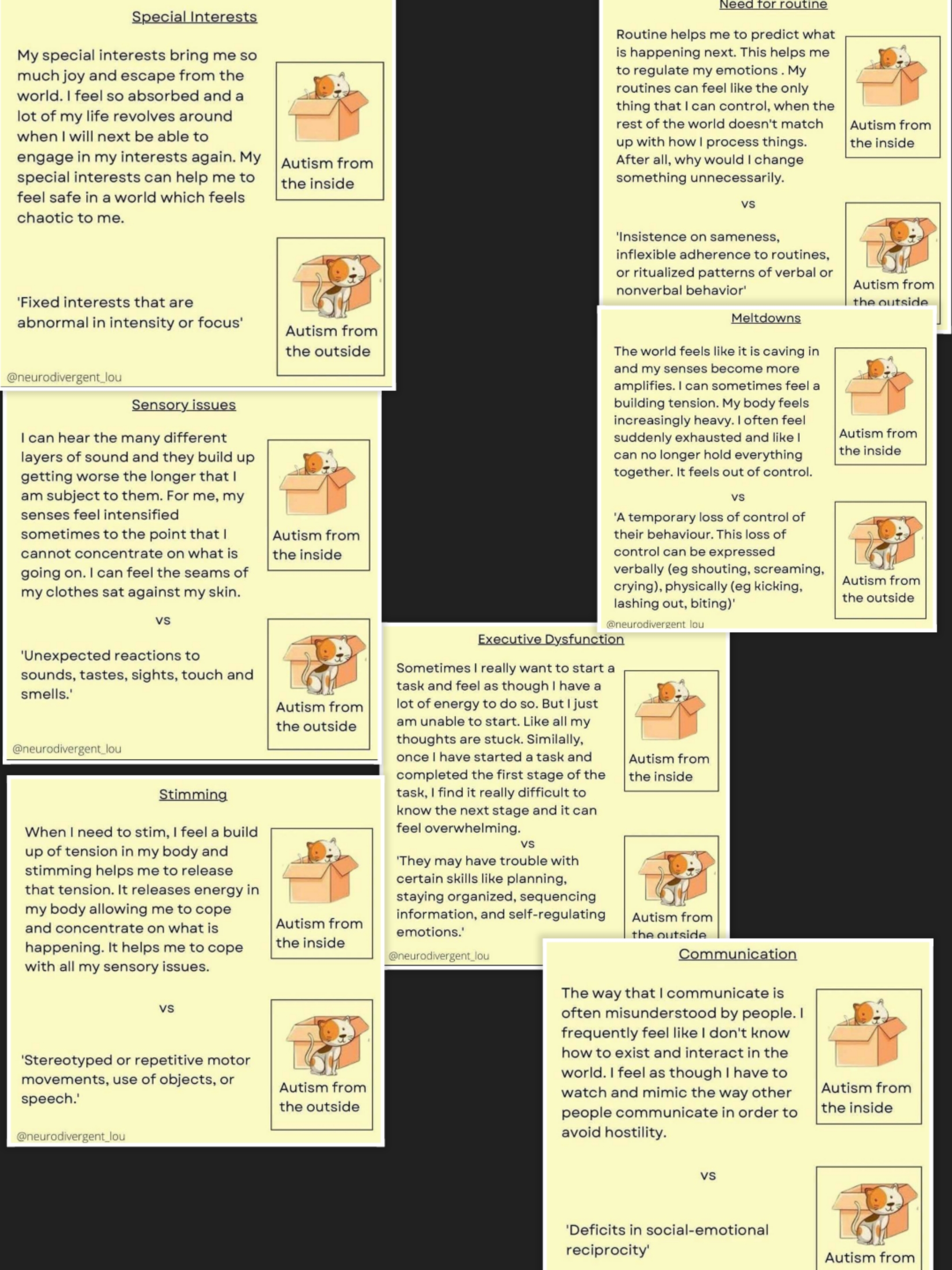
photocollage_2022102204220351

How Common is an Autism Diagnosis?

About 1 in 36 children is diagnosed with autism. (1 in 44 adults.) Within the diagnostic criteria, there’s a range of behaviors from subtle to extreme, and the impact on school and home ranges from minimal accommodations to major impacts.

What is a spectrum disorder?

When autism is described as a spectrum, it doesn’t mean this. (source)

continuum labeled not autistic at one end, and very autistic at the other end

Or this (source)

continuum, labelled "a little quirky" on the left, "definitely autistic" in the middle, and "tragic" on the right

Autism is a complex way of interacting with the world that can’t be described on a simple numeric scale, and can’t be simplified to either “not a problem” or “tragic”.

I’ll share a few different ways that it has been illustrated, so you can find the one the best resonates with your experience.

The autism spectrum can look something more like this:
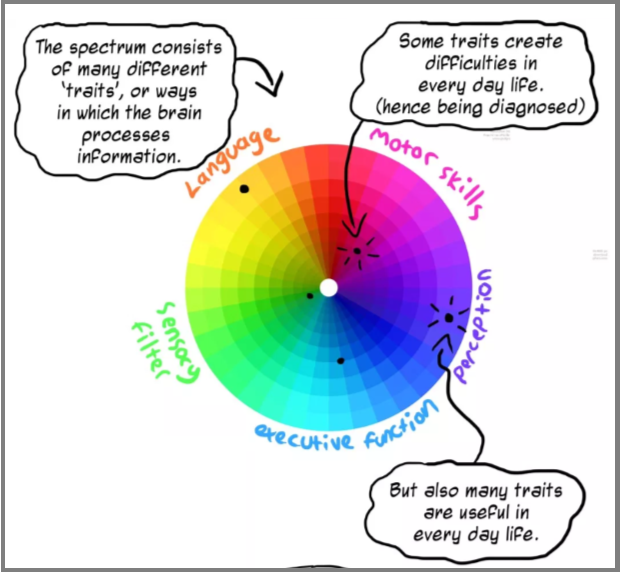
An illustration of a circle where the "pie pieces" are labeled language, executive function, etc. and dots indicate where the person might have more strengths vs. more difficulties

(That image comes from this great comic on “Understanding the Spectrum” by Rebecca Burgess – I highly recommend reading it.)

This graphic (source) breaks the spectrum into five categories, similar to Burgess, though the colors and the way they break things out are a little different:
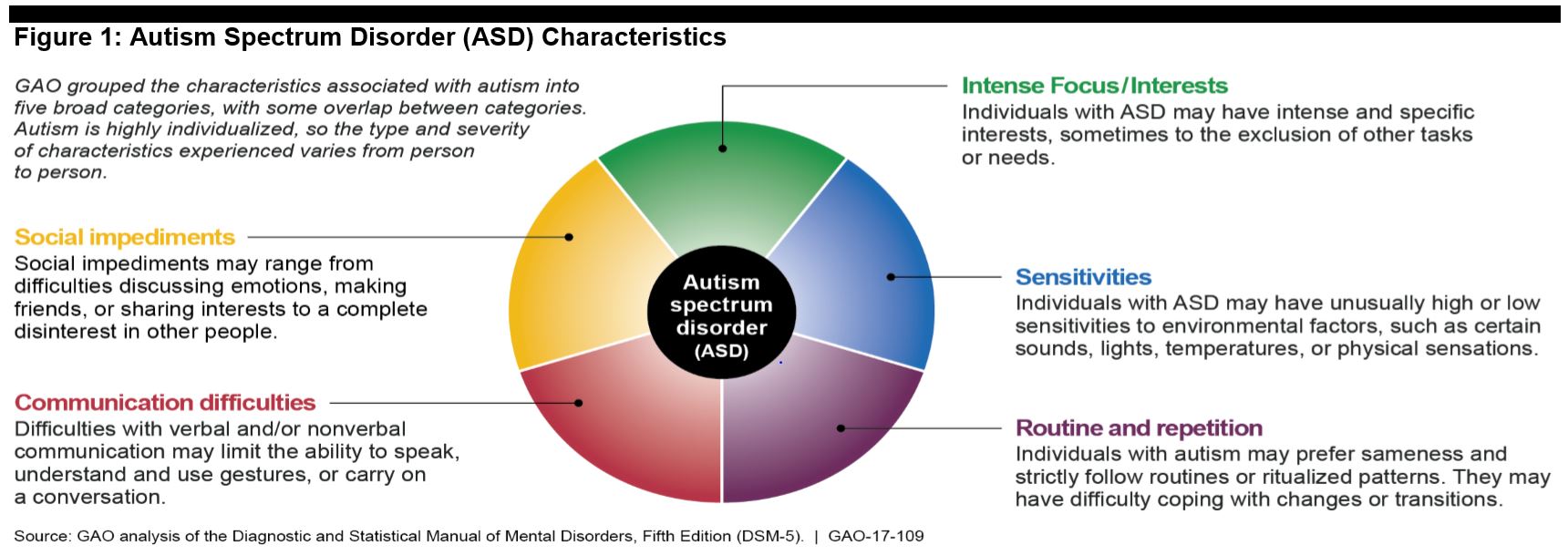
GAO

And they explain that “the type and severity of characteristics varies from person to person” as seen in this diagram of three individuals’ ‘spectrums.’
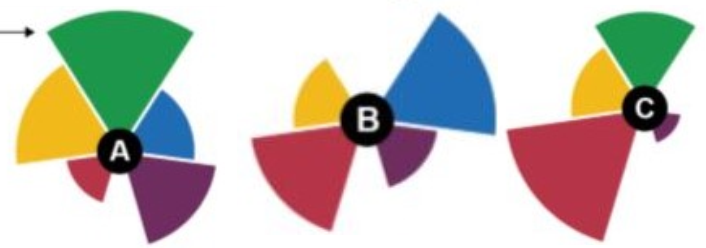
Picture1

C.L. Lynch on theaspergian.com uses this illustration
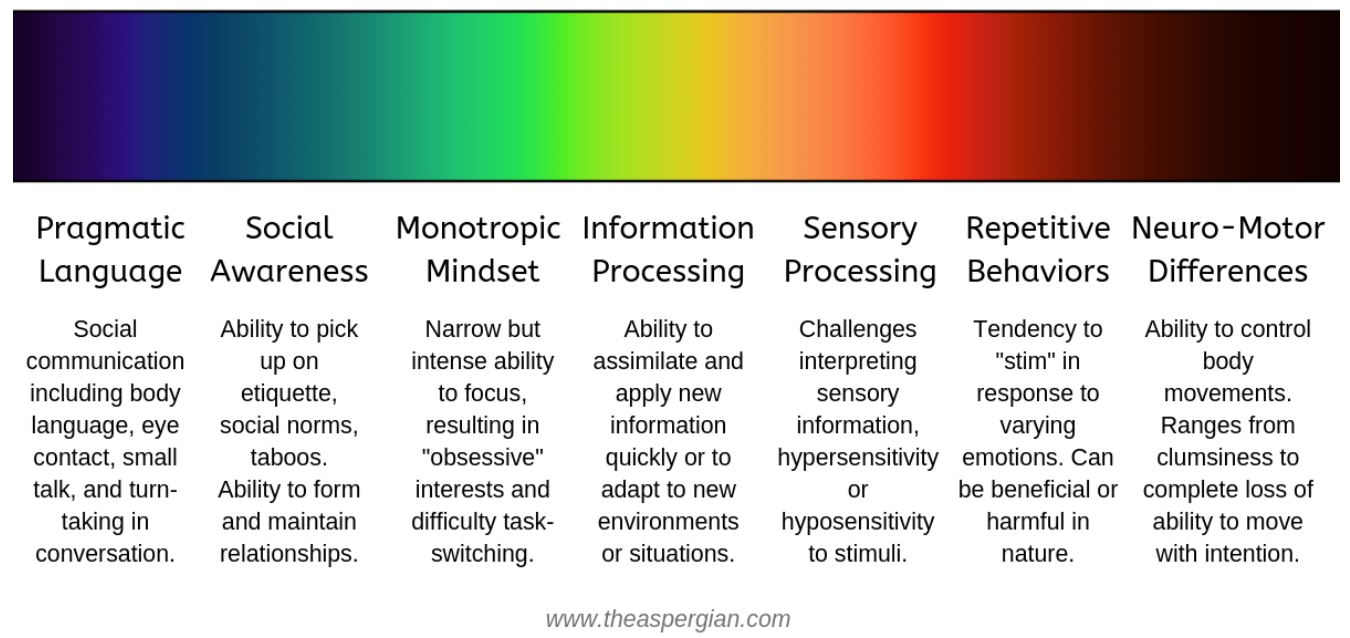
spectrum

Then gives a few examples of how this would apply for an individual person.

spectrum 2

I don’t know which one of these graphics might be helpful for you, but I find it very helpful to think of these more nuanced descriptions rather than a single axis of “a little quirky” to “tragic.”

I know that if someone asks me if my youngest is “high functioning” or “low” or asks “how autistic is he”, I would find it difficult to answer those questions. It’s much easier to tell you – “here are the things he’s good at, here are some behaviors he does that might seem odd to you but don’t harm anyone or anything, and here are some challenges he has and some accommodations you could make that might help him to manage them.”

More Zones to Consider

The DSM-V criteria are two-fold: a) social-emotional differences, and b) restricted, repetitive patterns.

You’ll notice in the illustrations above that they each split the signs of autism a little differently, but here are some of the typical patterns that some autistic people might display. [Note that all autistic people are individuals, so any individual may have some of these signs and not others. As a parent, I found that if I went down any checklist of signs, I had many that I said “nope, that doesn’t describe my kid” and others where I went “ooh boy – that is exactly what I see!”]

  • Social-emotional: may have challenges reading social cues, inferring what behavior is expected in a social situation, expressing their emotions in the same way a neurotypical person might expect them to or understanding / responding to other people’s emotions. Some may avoid eye contact. May be content playing / working by themselves and not appear to need the same social connections that others might. (Or might long for social connections and be very sensitive to rejection.)
    • The Floor Time approach to child-directed play can help an autistic child connect with others in play.
  • Sensory Processing: some autistic people may be hypo-sensitive to stimuli; many may be hyper-sensitive.
    • Tactile stimulation (like tags on clothing or seams on socks or being touched) may distract and distress them. Or, they may seek tactile input, banging their heads on the wall, pressing up against others, wanting lots of hugs and loving weighted vests and blankets.
    • Some may have lots of oral sensory issues. They may be super picky eaters or may gag easily. Others seek sensation, sucking and chewing on a variety of items.
    • Many autistic people can get overwhelmed by sounds – they may be less able to filter out all the noise that neurotypical people ignore (traffic on the road, the hum of the refrigerator…) and may be happiest with wearing noise cancelling headphones in loud situations.
  • Emotional regulation challenges: may have bigger reactions to a situation than typical. This could mean being so excited they bounce up and down, gallop around or flap their hands because the joy is too great to contain. It can mean meltdowns where too much stimuli, too many demands, or big disappointments overwhelm them and they react by screaming, hitting, or other behaviors for a prolonged period of time. (Note: the Zones of Regulation tools can be very helpful for autistic kids to work on emotional regulation skills.)
  • Preference for routine / difficulty adjusting to changes and transitions. Many thrive in an environment with lots of structure, and very predictable routines. When a transition between activities is coming, they need a little more warning that it’s coming and help letting go of one thing and moving on to something new. Sometimes even with all the help you can give, an unexpected change or hard transition from a beloved activity to anything else can cause big meltdowns.
  • Specialized Interests: A common characteristic is long-lasting, all-consuming  interest in specific topics, whether that’s dinosaurs, astronomy, flags, Rubik’s cubes, or collecting memorabilia. When they start to talk about that topic to someone, it may become a prolonged monologue where they may not recognize when the other person has lost interest and is ready to move on, because they cannot imagine ever losing interest in that topic. They may also love repetition and repetitive movements.
  • Impulse control and executive function may be harder for some autistic people. Discipline techniques that work with neurotypical kids may not be as effective with autistic children. (I find the Incredible Years and Ross Greene have the most helpful approaches.)
  • Language / communication: some autistic people are less verbal or non-verbal.
  • Motor skills: some autistic people may have motor challenges, ranging from “clumsy” to limited ability to control their movements,

Not everyone who shows a few of these behaviors is autistic. And not everyone who is autistic will have all these characteristics. And any one of these characteristics can manifest in subtle, barely noticeable ways or can be blatantly obvious to the casual observer. Again, autism is a spectrum disorder that can be a bit hard to pin down.

It’s also worth noting autism can present differently in girls and be more difficult to diagnose especially for gifted girls (my daughter who is gifted didn’t get diagnosed with autism till she was 20, because she was able to figure out how to “mask“).

Awareness vs. Acceptance

In much of our culture, autism is viewed in a very negative light. You’ll hear people talking about it as a tragic diagnosis, and people seeking a “cure” for their child’s autism, and using deficit based language. Even a supposed “advocate” may do so during events like Autism Awareness Month.

The Autism Self-Advocacy Network recognizes Autism Acceptance Month, which “promotes acceptance and celebration of autistic people… making valuable contributions to our world. Autism is a natural variation of the human experience, and we can all create a world which values, includes, and celebrates all kinds of minds.”

Autistic people have unique strengths. For example, many have intense attention to detail, a high degree of persistence, and ability to analyze data. Their “obsessive” interests can lead to stunning expertise in their chosen career fields. And “Sometimes being autistic means that you get to be incredibly happy. And then you get to flap. You get to perseverate. You get to have just about the coolest obsessions.” (Source)

A Note on Co-Morbidity and Social Issues

Autism also has several co-morbidities: conditions that often occur with autism. Many of the challenges we think of as being due to autism actually come from these co-morbidities. We should think of them as separate issues and handle them separately. “Over half of autistic youth [also had] attention deficit disorder (53 percent) or anxiety (51 percent), nearly one quarter had depression, and 60 percent had at least two comorbid conditions. Other common comorbid conditions include sleep disorders, intellectual disability, seizure disorders, and gastrointestinal ailments.” (Source)

And many of the “challenges” of autism actually come from societal attitudes toward autism and demands on children to “learn how to act normal”. For example, if a child jumps up and down with excitement, is that really a problem behavior that needs to be corrected? If a teenager gets overwhelmed by noises, so chooses to wear noise-canceling headphones in many situations, is there a reason anyone else should care about this? If someone can’t stand it when the different foods on their plates touch each other, isn’t it easy to use just a little extra care when dishing them up instead of using a lot of energy telling them that “you just have to learn to cope with that”? If the neurotypical community understood more about neurodiverse people, and made simple adjustments, it would greatly reduce the “challenges of autism.”

Screening and Diagnostic Testing

If you’re wondering about your child, or a child you know, start with this list of symptoms, or red flags to watch for. https://www.cdc.gov/ncbddd/autism/signs.html

If you’re still concerned about possible signs of autism, use a screening tool:

If you’re still concerned, talk to your child’s health care provider, and/or contact your state’s public early childhood system to request a free evaluation to find out if your child qualifies for intervention services. This is sometimes called a Child Find evaluation. If your child is under three years old, look at the ECTA website. If your child is 3 years old or older, contact your local public school system. Look here for all the details about how to access testing.

In King County, Washington, where I live and teach, some resources for diagnostic testing include: Kindering (especially for kids under age 3), UW Autism Center (this is where my daughter was tested at age 20), and Seattle Children’s Autism Center. Some private practice psychologists also offer testing. For example, our son was tested by Heather Davis at Brook Powers Group, who had worked with him in their Incredible Years program.

Here is a podcast with tips for what to do when you’re waiting for an autism diagnosis or a PDF on the same topic.

Are you debating about testing?

Some parents debate about whether or not to test. Or they test and end up with a diagnosis of “we can’t say it’s autism but we can’t rule it out.” They wonder about whether to seek out special education services. For more on those topics and on what to do while waiting for a diagnosis, check out my post on “Autism? ADHD? Delayed? Or just quirky?

What was the Cause? Is there a Cure?

It can be tempting to ask “what causes autism” and for many parents, that’s a quest to understand whether they “did something wrong” that led their child to be autistic. There’s no one cause for autism. There may be genetic factors, or environmental factors, or a combination of environmental factors with genetic susceptibility. Personally, I have not found it helpful to look backwards and wonder about the cause – it’s better to focus on what we need to do to move forward into the future.

I also do not seek a “cure” for autism. (Because that implies it is a problem that needs to be fixed rather than just a different way of being in the world which benefits from accommodations.) Some parents spend a great deal of time and energy seeking a way to fix their child. There are some effective treatments which can help make things more manageable for the family, but there are also some “treatments” you’ll find on YouTube videos or random people’s blogs that can either cause harm, or simply just take more time, energy and money than they are worth.

For example, many parents have reported significant improvements in behavior problems with dietary changes. If you find diet changes that are generally considered nutritionally sound and they prove helpful for you, then hurray! But if a special diet is prohibitively expensive, or if it deviates from mainstream nutritional advice and might cause nutritional deficits, or if your kid is just a super picky eater and it’s a huge battle, it’s worth knowing that there’s not a lot of research that proves dietary changes are essential.

Resources on Autism

General Resource Guides

There are lots of resource guides from various organizations. Try these from the Seattle Children’s Autism Center, Autism Parenting Magazine, and the AAP. Plus these communication resources. Note: I have not vetted all these resources. If you discover any materials that approach autism as a terrible disease to be cured, or focus on ways to “fix” autistic kids, set those aside. I personally choose materials that talk about autism as a neurological difference that shapes who they are and how they interact with the world, and talks about ways we can increase accessibility for them. 

Autism Navigator has a free online class (approx 3 hours) on Autism in Toddlers. They have handouts you can print on everyday learning activities, how parents can support language and emotional skills, and Q&A for parents.

Discipline and Behavior Challenges

  • This article is short and helpful: 15 Behavior Strategies to Help Children with Autism.
  • There are tons of helpful resources at challengingbehavior.org: visual schedules, tip sheets on making daily routines easier, handouts on teaching emotional IQ, addressing behavior like hitting or biting.
  • If it’s available in your area, I highly recommend the Incredible Years program. (We worked with Shanna Alvarez in Seattle, who was fabulous.) While the parents meet, the kids attend “Dinosaur School” which teaches social and emotional skills. Note: my Discipline Toolbox is highly influenced by what we learned at Incredible Years.
  • Ross Greene has some really helpful tools, summarized as “Kids Want to Do Well – If they’re not doing well, ask yourself what skill or resources they are lacking.”
  • If emotional regulation is a challenge for your child, check out my post on Big Feelings and the Zones of Regulation approach.

Building Connections with Your Child

Floor Time, or Child Directed Play, is a powerful way to connect with any child, but especially children who have challenges with social-emotional connections. Click here to learn about Floor Time: child-directed play. On Autism Navigator, learn how to support social communication development, and transactional supports to promote learning.

More resources

There are helpful resources at https://brightandquirky.com which has webinars with leading experts on how to support kids who are gifted AND autistic (or have other behavioral issues).

And for your child, here’s my list of Children’s Picture Books about Autism and other “quirky kids” stories. Seeing themselves reflected in a book might be helpful for them.

If you’ve got one of those kids whose brain and body are always moving super fast, leaping from one thing to the next, make sure to check out my post on “the race car brain.” If you’ve got a shy child who observes more than they engage, check out my post on the slow to warm up child.
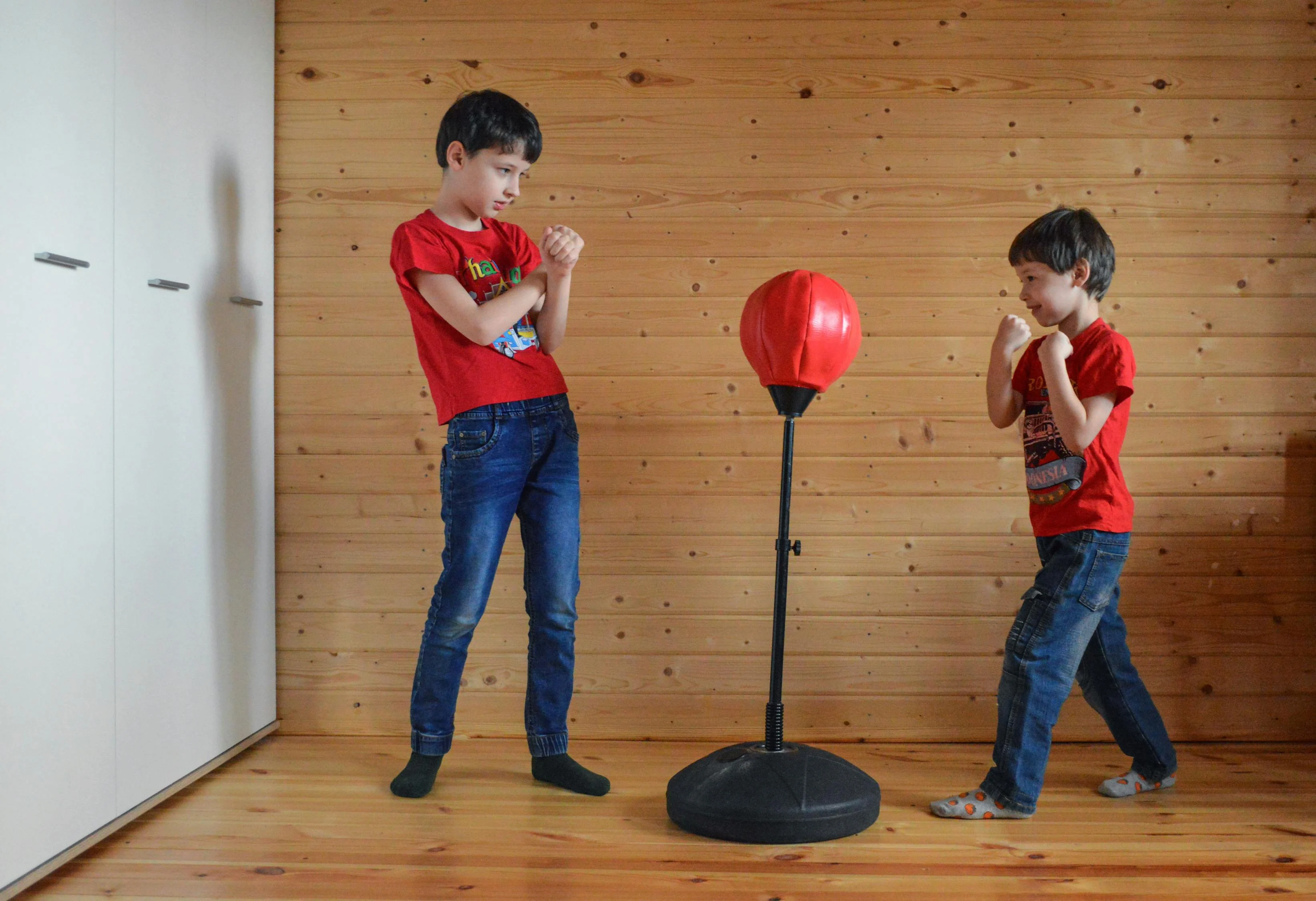
Parenting Advice is not one-size-fits-all

Created with GIMP

I remember very early in my parenting career (in the mid-90’s) looking at a parenting book and feeling uncomfortable about the advice I found there – perhaps it was advocating for cry it out as a response to sleep problems or perhaps it was saying to not immediately respond to your child’s cries because it might spoil them. Those types of advice did not feel right to me as a parent at a gut level. Then I found other books that did feel right – (the Baby Book, Becoming the Parent You Want to Be, and Our Babies, Ourselves) and I found parent education classes as well. Those resources offered me the opportunity to learn that there are lots of different ways to parent children and no one-right-way-that-fits-all.

All parenting book authors are sharing ideas that worked for them as parents, and worked for their children or maybe that worked for their clients. If their methods work for you and your child, that’s great. But if not, that doesn’t mean you’re a bad parent or you have bad kids, it just means you need to find different advice. And you especially need to find advice and support that is strengths-based and responsive – instead of things that say / imply “if you do it this way it will always work, and if it doesn’t work then you’re a failure”, seek out things that say “here are some ideas that work well for many families. If they don’t work for you, here are other resources you could try.”

After 27 years of parenting and 23 years as a parent educator, I believe that even more strongly. And, as the parent of children who are “thrice exceptional” – gifted and autistic and ADD/ ADHD, I especially know it’s true. Different children need different parenting styles, and neurodiverse children may need different parenting approaches than neurotypical children.

For example, let’s talk about “picky eaters.” First, I’m going to say that 30 – 50% of parents say their preschool-aged children are picky eaters! So, if you’re in the 50% that doesn’t have this experience, count yourself lucky! (And don’t pat yourself on the back too much… it might be more about the kids’ temperament than about what you did as a parent.) I work with parents to re-frame some of their assumptions about picky eaters, and see things from their child’s perspective, and I give them lots of great tips I’ve gleaned over years in this work. But then someone says “but my kid is really picky – I’ve tried all those tips, and they still won’t eat!” And I say “I know… I’m right there with you.” Because my first child was a flexible, easy kid with food. My second was picky – turns out she has lots of allergies and intolerances and she knew that some foods made her feel sick or in pain – she couldn’t articulate that as a young child – she just was “picky.” And my third child is a whole other realm of picky eater – he has a VERY limited set of food he’ll eat. He is autistic with sensory issues, and has a hard time trusting food – if he has one bad blueberry, then it takes weeks or months to coax him back into trying blueberries again. So, I have another collection of tips for those super picky eaters, and I have a lot of empathy (and no judgment!) for the parents who are managing that.

And toilet learning… well, based both on all the reading I’ve done and classes I’ve taken, plus my own experiences with my 3 kids, I’ve got one set of standard issue recommendations on potty training, and then advanced tips for children who resist toileting. 20% of children go through a phase of refusing to poop in the potty. And 10% of children (usually boys) will have challenges with bed wetting up to age 8. For the parents who are already struggling with challenges, getting well-meaning advice from others who say “it’s easy – just do this and it will work” just makes them feel worse about themselves as parents. It is so much more helpful when someone says “wow, I’m sure you’ve already tried all the usual fixes – I’m sorry they haven’t worked for you. Can I help you find other resources or do you just need someone to tell you – ‘it’s OK, you’re doing your best’?”

Sometimes these challenges and delays will work themselves out if we just wait for it. Sometimes it may be helpful to seek professional support or testing to figure out if our child has particular challenges that need extra intervention. And as you’re working on challenges, it helps to find books, websites, educators, and/or other parents who offer advice that is helpful and relevant to you and to your unique child.

Today, I was reading advice on a parenting site, and I found something that troubled me. (I am not going to share the source, because otherwise the advice on the site was excellent, and I do not wish to criticize their whole approach – only this particular content which I will be contacting them about.) Here’s what it says:

These signs – things they say show you it’s time to set a limit – almost perfectly duplicate any list you can find of common symptoms of autism.

This troubled me, so I wanted to double-check myself on this. I showed this to my 23 year old, who is autistic, and just said “I was reading this blog post on parenting advice, and wanted to know what you think of it.” She immediately said “These aren’t signs that you need to set limits… it’s like they cut and pasted in the wrong list… these are all things that are normal for an autistic kid. They aren’t signs that ‘truly difficult behavior’ is coming… unless you try to force this kid to act neurotypical, and then yeah, you’re going to see some misbehavior!”

I told her that was exactly my impression. And I worry about parents of neurodiverse kids who would see this site and think… “oh, every day my kid shows all these signs! Either I’m a bad parent who is failing to connect with them, or they’re a bad kid with too many behavior problems.”

I do agree with the overall message of the parenting site that image is taken from – the idea that connection is important for discipline. When our children feel connected to us and valued by us, they want to behave well, and are responsive to our guidance.

I think it’s so important for parents and teachers to understand that connection and disconnection can look different for different kids. For example, for some children, it is absolutely true that eye contact shows they’re feeling connected and avoiding eye contact says they know they’re in trouble. However, many (not all) autistic people are uncomfortable with eye contact, and in many cultures, direct eye contact is a sign of disrespect. Demanding eye contact could set off behavioral problems rather than serving as a path to resolve them. For some children, placing your hand on theirs and having a conversation about what is happening will calm them and resolve problems. For other children, when they’re already on the verge of a meltdown, uninvited touch might set them off, or being asked to talk it through may overwhelm them.

If you do have a neurodiverse child (autism, ADHD, ODD, etc.) or if you have any child that seems particularly challenging to manage following typical advice, you may find that some resources are much more helpful to you than others, because they are either specialized for the neurodiverse population or are at least sensitive to it. Things I find particularly helpful are the Incredible Years program and challengingbehavior.org, the work of Ross Greene (“kids do well if they can“), the Zones of Regulation, and webinars from Bright and Quirky. Also read my post on “the race car brain“.

Another issue with parenting advice is that the vast majority of it is written by white, middle class folks, raised in the United States. (And yes, that description includes me, and I know it creates unintentional biases in my work, so feel free to call me on them!) And the research it is based on was primarily done with white, middle class folks in the United States. (Read this article on why that matters – as they say “the research, and the parenting advice based on it, might not apply to everyone who receives it.”) Thus, advice might be unintentionally racist, or classist, or may simply not be relevant to your life circumstances.

Based on their cultural backgrounds, parents may have different goals for their children, in areas such as independence, individualism vs. collectivism, self-esteem, and behavior, and thus may have different approaches to achieving those goals, such as differences in warmth / affection, responsiveness, and discipline. For example, physical punishment may be more common in some cultures than others, but to understand its function in a family, it helps to understand it in a broader cultural context. While co-sleeping with an infant may be viewed as unusual to some, bed-sharing is common in many cultures around the world, and education related to safer sleep practices should inform parents of how to minimize the risks, rather than condemning the practice. The best advice is responsive to cultural and socioeconomic differences, and acknowledges challenges, and build on strengths. If you feel like what you’re hearing and reading doesn’t suit your cultural values, seek out materials from those who share your cultural background. It is easier to find diverse view in the days of the internet than it was when all publishing was managed by white, middle class folks.

When you seek out parenting advice, I do encourage parents to check out a wide variety of sources to stimulate your thinking – I get really good ideas even from reading things I fundamentally disagree with. They broaden my perspective and cause me to further examine my own parenting choices to be sure they reflect my values and goals, and are helping my child reach their potential. They help me to notice differences between my parenting style and those of others in my community which helps me better explain and interpret what my child and I might see in their classmates’ experiences. And they help me double-check myself to be sure I’m not making any big mistakes. So, do read things outside your comfort zone for the sake of mind expansion.

But, when you’re struggling with a parenting challenge, and feeling discouraged about your parenting skills or your worthiness as a parent, or when you’re feeling really frustrated at your child, seek out the parenting advice that speaks to your soul. Advice that includes methods you can see yourself doing and doing consistently. Advice that seems like it could work for your unique child with their unique personality, strengths and challenges. And seek out the people whose advice acknowledges your strengths at the same time it supports you as you work to overcome your challenges.