Category Archives: Parenting

Talking with Children about Gender Identity

Gender is a complicated mix of our biological sex, how we like to dress and wear our hair, our interests, our identities, and what other people expect us to do based on their perception of our gender. In this post, I’ll address:

When do we talk to children about gender identity?

You already have been! We probably started moments after their birth, with the first announcement of “it’s a boy” or “It’s a girl.” By 2 to 3 years, children begin to label themselves as male or female. By 3 – 4 years, they start categorizing things as “boy things” or “girl things”, and by 4, they may say “only boys can do that” or “girls never do that.”

So, young children are very aware of gender. Even if we avoided talking about it, they would absorb lots of messages from their environment. If we talk to them about it, we have the chance to share our own values with them, and to help to shape their understanding.

What is gender?

Let’s start with a few definitions.

Biological Sex: A person’s body parts / hormones. Can be categorized: male, female, intersex.

Gender Identity: A person’s own internal sense of who they are. (No one else gets to define this for them.)

Gender Expression: How a person chooses to dress, wear their hair, and behave.

Gender Roles: How other people expect someone to act, or what they expect them to be interested in, based on their perceptions of that person’s gender.

Those are all separate from sexual orientation. Gender is about who you are. Sexual orientation is about who you are attracted to.

Sometimes all these pieces line up just like cultural and generational stereotypes would predict, but sometimes they don’t. Many people are cisgender – their identity aligns with their biological sex. Some people are transgender – their internal sense of who they are (identity) does not line up with the sex assigned to them at birth. Others may identify as gender non-conforming, non-binary, genderqueer, or other variations. It is estimated that between 1 in 100 and 1 in 400 people are transgender. One way to think about it is that transgender folks may be about as common as redheads.

There are also many people who are cisgender, but don’t fit a stereotypical understanding of gender. In terms of gender expression, some women prefer to wear ‘men’s clothes” and some men like to wear dresses or makeup. In terms of gender roles, we all acknowledge that boys may like dolls and dresses, and girls might like trucks and baseball. We say women can be doctors, and men can be dancers. Yet, there is still surprise in our society when people run across a male preschool teacher or a female heavy equipment operator.

Defining Your Family Values about Gender

Parents are their children’s most important teachers. The way you talk about gender, and your unconscious actions, will shape your child’s early perceptions about gender. So, spend some time reflecting, and talking with the other significant adults in your child’s life (friends, family, faith leaders), to figure out what your family values are about gender identity, expression or roles. Then, pay attention to how you’re manifesting these values. Some things to consider:

  • When buying clothes or toys for your child, or choosing activities to sign them up for, ask yourself: does my kid like things like this, or am I picking it because of gender? Does this choice expand or limit their choices and expectations about gender?
  • If you hear your child (or other people in your child’s presence) make observations like “only girls wear pink” or “boys can’t do that”, ask them questions about why they think that, and talk about stereotypes and alternative views.

For more on gender, see: https://gooddayswithkids.com/wp-content/uploads/2013/12/gender.pdf

What if your child is exploring gender roles or expression?

During preschool and early elementary years, many children explore what it means to be a boy or girl, and they may try out different roles. Especially in pretend play, girls may try out being a dad, boys may try on “girly” clothes. This is a normal part of children’s play, and part of how they learn about their world and their culture. There is no need to discourage this.

Nor do you need to overly encourage it. Just because a boy tried on the fairy wings at school doesn’t mean you need to immediately purchase full princess wardrobes for home. (If, over time, he tells you he really really wants a princess wardrobe, that’s fine… but don’t feel like you need to jump in with both feet immediately. It may have been just a short term exploration.)

Don’t make assumptions about your child’s long-term gender identity or sexual orientation based on short-term interests or activities. Some children outgrow this and move on to gender expressions and roles that line up with their biological sex. Some continue to explore gender expression and gender roles, such as the “tomboy” who dresses and acts (expresses themselves) like a boy but still clearly identifies as a girl, or the teenager who may wear eyeliner and nail polish but identifies as male. Some people who blur these lines call themselves gender expansive or gender creative. However your child wants to express themselves, you can help them to feel safe and loved.

If children want to make non-stereotypical choices, some parents choose to inform them about what reactions they might encounter: “it’s fine to have a sparkly pink backpack, but some kids think that only girls like sparkly pink, so they might tease you.” Then if the child still chooses that, at least they had the information to prepare themselves for the response.

What if your child tells you they are transgender?

Gender identity tends to be firmly established by age 4. If a child occasionally swaps gender roles in pretend play, or tells you “I really like playing with girls’ toys” or tells you once or twice, “I wish I was a boy, so I could do that”, those are likely just short-term explorations.

There’s a big difference between that and a child repeatedly telling you that their biological sex does not match their internal identity. Transgender and gender non-conforming kids are: consistent, insistent, and persistent. They consistently identify as one gender, they don’t waffle back and forth. They are insistent about that identity and get upset when mis-identified. They persist – they identify this way over a long period of time. (Source)

If you are cisgender, you may find it challenging to really understand a transgender person. For me, as a cisgender woman, I have truly never questioned my identity – I’ve always known I was female, always been comfortable with other people treating me as female, and offended if someone mistakenly thought I was a boy. But imagine what it would be like if I felt that way as strongly as I do but I happened to have been born into a body with a penis. Imagine the challenges of that experience!

Transgender people often experience gender dysphoria, a distressing disconnect between the sex assigned them at birth, and their internal identity. Every time they look at their body, it feels wrong to them. Every time someone refers to them by the wrong pronoun, they may squirm inside. For some transgender people, this sensation is mild and manageable, but for many it is not. Transgender girls may talk about a desire to cut their penises off. Transgender boys may begin self-harming as their breasts begin to grow. Many transgender people (41%) attempt suicide, often to escape the pain of dysphoria.

If a child says they are transgender, we don’t need to know whether they will always identify that way. But, in that moment, we can listen to our children tell us about who they are, so we can provide the best possible support. Trying to change a child’s identity, by denial or punishment or whatever, doesn’t work, and can do long-term harm.

Amongst transgender people, rejection by their families can lead to depression and other mental health problems, homelessness, behaviors that put their health at risk, and suicide.

Family acceptance promotes higher self esteem, more social support, improved health, improved mental health, with reduced anxiety and depression, and a huge reduction in suicide attempts.


How you can show your support (for your child or others that you know):

  • Assure your child that they have your unconditional love and support
  • Use the name and pronouns that the child asks that you use (note: I don’t say their “preferred pronouns”. Their pronouns are their pronouns, that’s not like a preference for vanilla ice cream.)
  • Ask that others respect the child’s identity
  • If they ask to transition to a gender expression in line with their identity (e.g. clothes and hairstyle), many parents have followed the path of first trying it out at home, then trying it out on a vacation – what is it like to be out in public with that identity, then transitioning in their home community.
  • If children ask for a medical transition, there are options: adolescents can take hormone blockers to delay puberty – these put on a “pause” button while they make long-term decisions. Taking gender hormones (e.g. testosterone and estrogen) can help to move biological characteristics to line up more with their identity, and most of the effects are reversible if the hormones are stopped. There are gender-affirming surgeries as well. These are not common for youth, but can reduce suicide risk for children experiencing severe dysphoria.

You can find many more resources at: https://www.hrc.org/search?query=transgender+children+and+youth

What if your child asks about someone else’s gender?

Young children are trying to make sense of their world, and one way they do that is by categorizing the people they see. If they think they’ve worked out an understanding of gender, but then see a person who doesn’t fit that understanding, they may ask questions – quietly, or at the top of their lungs. Remember that if your child asks a question about something, they are trying to understand it, and they may also be asking you if you think that it’s OK.  (check out Jacob Tobia’s post on this)

So, your child might say “that boy is wearing makeup!” or “Why is that woman dressed like a man?” If you shush them, or avoid the topic, you imply to your child that what they have seen is bad or is a taboo subject. Try answering the question: “Yes, sometimes boys do wear makeup, and that’s OK.” Or “Yes, some women prefer to dress in men’s clothes. Or, that might be someone who identifies as a man, even though their body might look more like a woman.”

You can find some simple, matter-of-fact things you might say to a child about gender identity at http://muthamagazine.com/2014/01/mama-ella-has-a-penis-marlo-mack-on-how-to-talk-to-your-children-about-gender-identity/; and www.huffingtonpost.com/entry/its-not-that-hard-talking-to-children-about-gender_us_5899f3b0e4b0985224db5a3f

Interacting with a transgender person

Some other things you can do (and model for your child) about how to interact with someone who is (or may be) transgender:

  • Use the language a transgender person uses for themselves. (He, she, they, or whatever.) Sometimes you may just wait till it comes up in conversation with those who know them. Or, if you don’t know what pronouns to use, you can ask – or even better, share your own pronouns. “Hi, my name is Janelle, and I use she/her as my pronouns.” If you make a mistake on pronouns, apologize briefly and move on.
  • Some transgender people choose to medically transition, or change their names, or change their appearance, but some don’t. You (or your child) may be curious. Before asking questions, ask yourself “do I need to know this information to treat them respectfully?” and “Would I be comfortable if they asked me this question, or would I ask that question of any other person?” (So yes, it would help to know their name and pronouns, but there’s no need to know about the status of their private parts.) Some specific questions you would generally avoid: Asking their birth name, or asking to see photos of them from before they transitioned, asking what hormones / surgeries they’ve had, or asking about their sexual relationships.
  • Someone’s transgender identity is their private information. It is not yours to share.
  • Remember that you don’t have to understand their identity to respect it.
  • You can’t necessarily tell if someone is transgender by looking at them. So, many people are working to be gender inclusive at all times. You can encourage this process by sharing observations. For example, if forms you’re filling out have two checkboxes for male and female, encourage the provider to instead ask for gender, and leave a blank space for people to fill in. If there are single stall restrooms at a facility, encourage that facility to replace the Men and Women signs with “Restroom” signs. If you notice a teacher frequently divides a group into “boys” and “girls”, encourage them to consider other options: “everyone wearing jeans”, or “everyone whose birthday is in January – June” or “everyone who likes cats.”

Learn more about how to be a trans ally: https://bolt.straightforequality.org/files/
Straight%20for%20Equality%20Publications/2.guide-to-being-a-trans-ally.pdf  and https://transequality.org/issues/resources/supporting-the-transgender-people-in-your-life-a-guide-to-being-a-good-ally 

Handouts

If you’re an educator who would like information to share with parents, I have created two handouts. Both address the concept of gender identity, defining your own values about gender, kids who explore alternate gender roles and transgender children. Choose between Gender as a Spectrum and Talking with Children about Gender Identity which adds info on how to talk with a child about gender non-conforming people you may encounter, and how to be supportive of transgender people.

Resources for More Information

Overview: www.genderspectrum.org/quick-links/understanding-gender/ 

https://www.healthychildren.org/English/ages-stages/gradeschool/Pages/Gender-Identity-and-Gender-Confusion-In-Children.aspx?_cldee=_Z5zMWUoBxxYF0vKsycYUoE239WE0Wp-snKt7bcHfyAHW-Xtv2akQpq2dAPWO19h&recipientid=contact-7c596d7bef94e51180e63863bb3c5778-6073238fc5ba483dae0346766d86436b&esid=3e8e5381-2f03-ee11-8f6e-6045bd0296a5

How to Talk to Kids:

Transgender Children:

Big list of resources:  www.genderspectrum.org/resources/parenting-and-family-2/  

Recommended Children’s Books about Gender

Note: some of these books are about gender expression, some about gender identity, and some about gender roles. For example, Sparkle Boy and Jacob’s New Dress are both about boys who like to wear dresses (expression) but both still identify as boys. 10,000 Dresses is about Bailey, who wants to wear dresses and identifies as a girl, although others label Bailey as a boy. Made by Raffi is about a boy who likes to knit even though others say that’s a girl activity (role). Decide what topic(s) you’re interested in exploring, and be sure the book lines up with that goal.

Also, lots of books on these feature non-human characters (like Introducing Teddy) and lots of them are metaphorical – they can be read as being about gender identity, but your child may not make the cognitive leap to understand that metaphor. For example, in Red: A Crayon’s Story, a blue crayon mistakenly labeled as “red” suffers an identity crisis and in Bunnybear, Bunnybear identifies as a bunny, and Grizzlybun identifies as a bear. If you’re just looking for books to encourage a general sense of acceptance of diversity and self-identification in your child, these are a great match. But if you want to specifically address gender identity, you will need to help your child see that message: “Remember that book we read, Neither? It was about a creature that was both a bunny and a chick, but not quite a bunny or a chick? That’s sort of like our friend Rex, who told us they are both a boy and a girl, and not quite a boy or a girl? They said that’s called non-binary. And remember how Neither felt sad when nobody accepted them, but felt happy in the Land of All where they were accepted? Can we be a Land of All for our friend Rex?”

If I had to choose just one, I’d choose Who Are You? The Kid’s Guide to Gender Identity by Pessin-Whedbee. Age 4 – 8.

Here are recommendations for more options:

Talking with Children about Sexuality

talk children

A lot of important topics fall under the umbrella of sexuality: anatomy, self care, body image, social norms, bodily autonomy, abuse prevention, consent, gender identity, sexual orientation, relationships and reproduction. These are not topics we save up for “the Talk” – one big conversation when our kid hits puberty! Instead, they are topics we can talk about a little at a time, in age appropriate ways, from when our children are very young. These open, matter of fact conversations not only give our children the information they need to stay safe and healthy, they also give us opportunities to share our family values, and to let our kids know that we are available as a resource to them. People who got accurate information from their parents, and know their parents are approachable for advice, are less likely to engage in risky sexual behavior, and less likely to have a teen pregnancy or sexually transmitted infection.  (Source, Source)

Here are common suggestions for topics to address and messages to share with your child. All families have their own set of values on these topics, and you know your own child best, so adapt these to fit your needs and what feels right to you.

  • Understanding Their Own Body, How It Works, and How to Keep It Healthy
    • Potty training (age 2 – 4) is a perfect time for teaching your child the names for their own body parts and products (penis, vulva, vagina, urethra, urine, bowel movement…) Teach the correct anatomical terms – this enables them to communicate with doctors in the future. (And can also help a child to clearly report sexual abuse.) Teach them how to care for their own bodies – how to wipe after using the toilet, and how to wash their own private parts.
    • When they become curious about other people’s bodies that are different from theirs (often age 4 – 6), answer their questions.
    • By age 8 or 9 – before they and their friends experience them, they need to know the basics of puberty, the menstrual cycle, and/or wet dreams / nocturnal emissions.
    • By age 10 – before they and their friends are likely to be sexually active, talk about sexual health, contraception, and prevention of sexually transmitted infections (STI). Also talk about the importance of delaying sexual activity till they are older.
  • How They Feel About Their Bodies – Body Image. Throughout your child’s life, be conscious of how you talk about your own body image in front of them, be aware of the impact of media messages and peer pressure, and reinforce healthy, realistic attitudes.
  • Understanding Social Norms about Nudity and Public vs. Private Behavior
    • Children under age 4 may naturally have ‘no shame’ about their bodies – they may show body parts to others, look at and touch other people’s bodies un-self-consciously. We want to teach them the idea of ‘private parts’ – the parts of the body that a swimsuit covers – and your family / cultural norms about where and in what contexts it’s appropriate to show them or touch them and where it is not appropriate. For example, some families say about masturbation: “It may feel good to touch your private parts, and it is OK to touch your own private parts, but only when you’re alone, and only in the bathroom or your bedroom.”
    • At age 4 – 6, children usually understand this, but they may occasionally try to sneak a peek at others, or touch others, or play “you show me yours, I’ll show you mine.” Playing doctor is normal behavior at this age (as long as: it’s between children the same age, it’s consensual for both, it’s motivated by curiosity and only happens rarely). However, you should set limits and calmly explain why this behavior is not allowed in your family. (Learn more about sexual development and behavior in children.)
    • This is also the time frame for potty humor, and then testing out swear words. Set limits for what is appropriate and in what contexts.
    • At age 7 – 12: Kids may play truth or dare style kissing games, look up words in the dictionary, or seek out pictures of nudity online. You can set parental controls and monitor media usage, but you should also talk to children about pornography and how it is designed for adults – tell them that if they encounter it on the internet, they should click away from it. (You might also talk about how pornography is often misogynistic and/or exploitative, and also that pornography sex is different than real world sex.)
    • It’s important for you to teach your child your family values and standards. For children ages 5 and up, explain that different people may have different standards.
  • Bodily Autonomy – Teach your children that their body belongs to them and ensure that they feel empowered to set limits on how others may touch them.
    • This can begin very young – when you are changing your child’s diaper or bathing them, you can talk with them about what you’re doing. Now, this doesn’t mean we ask permission every time we change a diaper. A lot of toddlers would say “no!” to that. But, we can still be respectful and explain to them what we are doing.
    • Don’t require that your child give hugs or kisses to anyone if they don’t want to.
    • Before tickling or rough-housing, ask them if they want that. Let them know that any time they want you to stop, all they have to do is say stop and you will. Also stop every once in a while and ask “are you having fun? Do you want to keep playing?”
    • For a child 3 or older, let them know it’s not OK for others to touch their private parts without permission. Even parents and doctors should ask if it’s OK, and explain why they need to touch them.
    • Talk about healthy touch – touch that is comforting, welcome, and pleasant – versus unhealthy – intrusive, unwelcome, uncomfortable. Tell them what to do, and who they can talk to, if someone touches them in a way that makes them uncomfortable.
    • Due to fears of abduction and abuse, we used to teach stranger danger. However, most crimes against children are done by people the child and the parents know. We need to instead teach about “tricky people.” Tricky people might try to arrange alone time with the child, ask the child to do something which breaks family rules, or doesn’t feel right, or ask the child to keep a secret. Learn how to teach about “tricky people” here: https://gooddayswithkids.com/2017/02/13/tricky-people/
  • Learning to Ask for Consent Before Touching Others
    • Around preschool, start encouraging your child to ask before giving hugs and kisses or climbing in someone’s lap. They should also not assume just because someone has welcomed their touch in the past means they want it right now. You might say: “I love having you in my lap, so usually I say yes, but ask first to be sure.”
    • You can apply consent in situations where your child has been physical with another child: “Did you ask him if it was OK to hit him? If you had asked, what would he have said? Yeah, then it’s not OK to hit him.”
    • Read: “How Sex Educators Talk to their Sons About Consent
  • Gender Identity and Gender Roles
    • By 2 – 3 years, children begin to label themselves and others as male or female, By 3 – 4 years, they categorize thing as boy things or girl things, by 4 – 6, they say “only boys can do this” or ”girls never do that.” By 6 – 7 years children understand that boys grow up to be men, and that women aren’t “daddies.”
    • As they get older, their perception of gender roles will be highly influenced by peers, by the broader culture and by media. But the early years are an opportunity for you to share your family values and beliefs about gender roles and gender expression. Think about what you say and what you do, and how this shapes their views.
    • There are different components of gender: a person’s biological sex (their body parts), gender identity (do they view themselves as male or female), expression (how they dress, wear their hair, and move), and gender roles (what others expect them to be interested in or to do based on their perception of their gender).
    • Most of us were raised with a binary concept of gender – you are either male or female. There has been a significant cultural shift where the current generation of youth may have a view of gender more as a spectrum, which includes transgender, gender fluid, and gender non-conforming. To learn more, see my post on Talking to Children about Gender Identity, or see   plannedparenthood.org/learn/parents/
      preschool/how-do-i-talk-with-my-preschooler-about-identity
  • Sexual Orientation and Attraction
    • Kindergarten age children often explore the idea of couple relationships – “I’m going to marry her.” They may imitate relationship behaviors such as holding and kissing. 7 to 9 year olds may explore relationships “that’s my boyfriend” and may start to wonder about sex. They may be working to figure out the difference between liking a friend, loving a family member, being attracted to someone and being in love. Children 10 and up may develop a more physical attraction to one or all genders.
    • By age 4 or 5, most children have noticed in the families around them and in media messages that it is more common for men to marry women, and for boys to be in relationships with girls. Think about your family values about sexual orientation and same gender relationships and share those with your children with your words and actions. As your children get older, talk about how others may have different values.
  • Babies and Sex
    • Preschoolers will notice pregnant bellies and may tell you that babies come from mommies. And they may want to know how the baby will get out. By age 5, children may get curious about how the baby got in there.
    • For a preschooler, we might tell them that a man’s sperm and a woman’s egg make a baby, and the mother carries the baby in her uterus. For a 5 – 6 year old, many parents talk about how a man and woman lay together in a special way to make a baby. For older elementary students you may talk in more detail about sex, and also address the fact that sex can make a baby, but more often adults engage in sex because it feels good to adults.
  • Healthy Relationships with Others
    • Throughout your child’s early years, your words and actions, and those of other people in their lives model for them what to expect from relationships. Try to model healthy relationships. If there are unhealthy relationships in your environment, try to insulate young children from them, and talk to older children about them.
    • In general, a healthy relationship is one where you feel good about yourself, you feel supported and valued by the other person, and you feel safe with them.

When and How to Have the Conversation

Answer questions as they come up. (If the child is old enough to ask, they’re old enough to hear the answer.) But, be sure you know what question they’re asking, so you don’t either just tell them what they already know or give them way more than they’re asking for. Start with a brief answer, then ask “Does that answer your question?” or “Is there more you want to know?”

Look for teachable moments: When you happen to see something in a book, a movie, or while people watching that could lead into a conversation, just drop in a few little tidbits of information. Make these topics that are normal and comfortable to talk about. Watch their non-verbal cues for when it’s time to move on to another topic.

If there’s something you want to talk to them about, first ask them what they already know about that topic – that helps you set your conversation at the appropriate level of sophistication and also lets you catch and clear up any misconceptions they have.

Buy a book or two on the topics to keep on the shelf at home. For younger children, you may read them together. For older children, we often just have them available for them to use as a resource whenever they want to. They might not ever admit to you that they read the book, but you might notice some pages getting a little tattered over time as they seek out the information they want when they’re ready for it.

Recommended books for kids about sexuality:

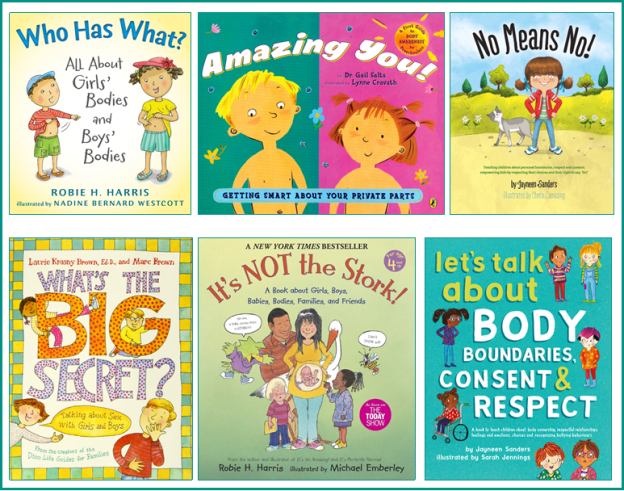
For preschool ageAmazing You: Getting Smart About Your Private Parts, by Saltz.

For early elementaryWhat’s the Big Secret? by Brown.

For upper elementaryIt’s So Amazing: A Book about Eggs, Sperm, Birth, Babies, and Families by Harris. Age 7 – 10.

For additional book recommendations, and details on available books, check out my post on Books for Children about Sexuality.

Online Resources:

Sexual Development and Behavior in Children: www.nctsn.org/sites/default/files
/resources/sexual_development_and_behavior_in_children.pdf

Talking to Your Preschool Children about Sexuality: www.frfp.ca/parents-resources/parent-education/sexuality/talking-to-preschoolers-about-sexuality.pdf

Talking to Your Young Child About Sex: https://healthychildren.org/English/ages-stages/preschool/Pages/Talking-to-Your-Young-Child-About-Sex.aspx

Under Your Wing: Our Whole Lives Sexuality Education Video Series: https://www.ucc.org/what-we-do/justice-local-church-ministries/justice/health-and-wholeness-advocacy-ministries/under-your-wing-our-whole-lives-sexuality-education-video-series/

Sex Talk Podcast from Just Say This podcast: Sex Talk Tips. Or video: Birds and Bees, the Basics, both by Amy Lange.

Classes

Classes for parents:  Birds + Bees + Kids – Seattle area

Classes for parents and pre-teens – Great Conversations – Washington, Oregon, and California, and Online.

Classes for kids: Unitarian Universalist churches and the United Church of Christ sponsor classes using a curriculum titled Our Whole Lives. They have programs for k-1, for 4th – 6th graders, for 7th – 9th grade, and for high school, and often welcome non church members to participate.

A Handout

If you’re a parent educator, and you’d like a handout on this topic to share, just click here: Talk about Sexuality With Kids. I also have free printable handouts on LOTS of other topics on my Materials for Parent Educators page.

Other Topics:

Are you wondering how to talk to your child about other challenging topics (like death, war, drugs and alcohol, and more? Check out Better You Than YouTube.)

Better You Than YouTube – Having the Hard Conversations with Your Kids

Every parent probably has one (or more) topics that they dread having to talk to their kids about. Are you wondering how (or if) to begin talking to your child about any of these topics:

  • Sex?
  • Sexual Abuse?
  • Drugs?
  • Alcohol?
  • Terrorism?
  • War?
  • Death?
  • Racism?
  • Differences and Discrimination?
  • When Bad Things Happen to Good People?

You may feel like your child is too young, or it’s too early to have those conversations. But, it’s easy to put them off till it’s too late.

Your child will be exposed to all these things, and more. Whether that exposure comes from things happening on their own lives (like the death of a pet), or in the lives of their friends and classmates (a divorce), or in their community (a fire), or from over-hearing the news or peering over your shoulder as you read Facebook, or from stumbling upon really startling videos on the internet. They will learn about them all, often younger than you might think.

And, with their limited life experience, when they do run across challenging concepts, they can be overwhelmed, or frightened, or confused. They can also get information that is incorrect, counter to your values, or potentially harmful.

It is far better for you to talk to your kids about these things in advance, in developmentally appropriate ways, a little bit at a time.

Why You?

You are your child’s first, and most important, teacher.
You are in a unique position for teaching them, because:

You have opportunities: You are the most likely to be with them in those early “teachable” moments when questions and issues present themselves. By timing it right, you can make sure the information is received. This is better than hoping that on the one day they talk about the topic at school your kid is open to hearing about it, and not distracted by other things.

You know your child: their learning style and their current knowledge. This allows you to perfectly tailor the information you give them, so it makes sense in the current context of their lives, and is tied to their life experiences.

You shape their values: As you teach information about these topics, your words and your actions also communicate your family’s values. You might explain that other people might think differently, but this is what your family values and why.

You can be a lifelong resource: If they know you’re open to talking about difficult topics, they also know you’re available to help them any time they’re facing challenges related to them.

What You Might Worry About

  • Not knowing the right words, getting embarrassed, stumbling along awkwardly.
    • What you can do: Do the best you can. Acknowledge that it’s awkward and you’re trying to get it right because this is an important topic. (It can also help to rehearse in advance. Can you get to a point where you are as comfortable saying vagina as you are saying shoulder? Could you be as comfortable talking about “when grandma died” as you are talking about “when you were born”?)
  • Not knowing the right answers.
    • Answer the best you can, tell them you’ll learn more, and follow up on that promise.
  • Giving too much or too little information.
    • Start by asking your child what they already know. Use their answers to help you set the right level. Listen to their questions or watch non-verbal cues to signal you when they’ve had enough. When they’re ready to move on to another topic, let them. You’ll have plenty of other times in their life you can come back to this.
  • Talking about hard topics might make your child sad or scared.
    • Yes, it might. But talking openly and honestly about sad and scary things in advance can help your child work through some of those feelings and build some skills in advance. For example, the death of a  pet or loved one will make a child sad… having talked before that time about death, and having talked about grief in advance may make it seem more manageable.
    • It’s actually more scary if we refuse to talk about it. The child thinks “if this is too scary for Mom or Dad, then it must be really awful!”
    • (Now… we will talk about these topics gently – don’t talk about them in ways that exacerbate their sadness or build their fears.)
  • They’ll “do it” because we talked about it.
    • Research actually shows that children are less likely to engage in risky behaviors if they are able to talk to a trusted adult. And if they do engage in behaviors, such as sex or underage drinking, they’re more likely to know about, and use, skills to keep them as safe as possible in that context, such as birth control and STI prevention and knowing who to call so they don’t ride in a car with a friend who’s been drinking.

When to Talk About Things

Don’t try to do any of these topics all in one big conversation… don’t feel like you need to have “The Talk.” Look for all the little opportunities in everyday life.

For preschool to early elementary children, these are itty-bitty bite-sized conversations. Often just a sentence or two. Here are a few examples:

You talk to your child about making healthy decisions when telling them they need to choose healthy foods or brush their teeth. That could be an entry point for talking about how some people make decisions that are bad for their body (e.g. smoking).

When giving medications for an illness, you have an easy opportunity to talk about only using medications that are prescribed for you, and never taking anything you find or another kid gives to you.

When you want to order a glass of wine at dinner, and you ask your partner if they can be responsible for driving home, you’re modeling responsible alcohol use. You also talk to your child about how alcohol is something that only grown-ups can drink.

When getting changed in the locker room after swimming, you can discuss private parts and how we generally keep them covered and other people shouldn’t touch them or take pictures of them.

When you remind your child to tuck the tablet in a bag rather than leaving it out on the car seat where anyone can see it, it’s a place to gently introduce crime and steps we take toward prevention.

When you ask if it’s OK to hug them, or teach them to ask their friends if it’s OK to give them a hug, you’re modeling consent and respect for boundaries.

Nature presents us with all sorts of opportunities. Once on the walk to kindergarten, my son and I saw a dead squirrel. It didn’t appear injured, so it wasn’t gory… it just looked asleep. This led to discussions about death versus sleep versus life and all sorts of thoughts related to that.

When your child overhears news about gun violence, or a hurricane or an earthquake, talk about it. (When talking about scary things, I don’t talk a lot about the really scary parts. I instead focus on “how likely is it that this scary thing would happen to you? What can we do to prevent it? If it happened, what would we do? Who will help to protect you?” You want to help them not feel totally powerless.)

When you’re reading a book to your child, or watching a movie with them, and difficult issues come up, take time to talk it over and debrief what you saw: what happened? How did the character feel? What did they do? What could you do in that situation? (I also discuss this where I address Emotional Literacy.)

When your child shouts out something like “Look, that lady only has one leg“, talk about differences. Jacob Tobia notes “Beneath every observation of difference is an implied question about whether or not that difference is acceptable…. Try answering the question they’re really asking… you could say ‘Yes, Johnny, sometimes boys do wear lipstick and that’s perfectly okay.'”

When your child says “one of the kids at school says…..”, that’s a great time to address it. If their peers are talking about it, you should be too! Be sure to correct any misconceptions they might have picked up.

When your child tells you about something problematic that they have done, try to listen to the whole story before you freak out. You want your child to feel safe talking to you about problems. (Now, I’m not saying you wouldn’t impose consequences for bad behavior, but try to first calmly listen to them and also to talk out the reasons for your response.)

Respond to Questions

Often, your child creates a teaching opportunity by asking you a question. It’s important to figure out why they’re asking: Do they want information? Are they asking your permission to do something? Are they testing you to see if you’re approachable and trustworthy? Are they asking for help? Are they anxious about something?

I really appreciate this checklist from Advocates for Youth about responding to a child’s questions:

  1. “Remember that if someone is old enough to ask, she/he is old enough to hear the correct answer and to learn the correct word(s).
  2. Be sure you understand what a young child is asking. Check back. For example, you might say, ‘I’m not certain that I understand exactly what you are asking. Are you asking if it’s okay to do this or why people do this?’ What you don’t want is to launch into a long explanation that doesn’t answer the child’s question.
  3. Answer the question when it is asked. It is usually better to risk embarrassing a few adults (at the supermarket, for example) than to embarrass your child or to waste a teachable moment. Besides, your child would usually prefer it if you answer right then and softly. If you cannot answer at the time, assure the child that you are glad he/she asked and set a time when you will answer fully. ‘I’m glad you asked that. Let’s talk about it on the way home.’
  4. Answer slightly above the level you think your child will understand, both because you may be underestimating him/her and because it will create an opening for future questions. But, don’t forget that you are talking with a young child. …
  5. Remember that, even with young children, you must set limits. You can refuse to answer personal questions. …Also, make sure your child understands the difference between values and standards relating to his/her question. For example, if a child asks whether it is bad to masturbate, you could say, ‘Masturbation is not bad; however, we never masturbate in public. It is a private behavior.’ [values versus standards] You should also warn your child that other adults may have different values about this subject…”

Being an Askable Parent

Within sexuality education, there’s the concept of being “an askable parent” and I think these ideas apply to all the difficult topics. It’s all about creating an environment where your child knows that they can come to you with questions, rather than turning to their peers or the internet.

Here are the qualities of an askable parent:

  • Shows respect for the child
  • Approachable. Listens to the child.
  • Provides factual information, and is willing to look for information if they don’t already know it.
  • Doesn’t laugh at the child, even if questions seem cute or seem stupid.
  • Doesn’t need to be perfect – can admit to their own past mistakes when they didn’t know better.
  • Can be embarrassed or awkward about questions the child has asked – acknowledges their discomfort, then does the best they can to answer the question
  • Respects confidentiality. Does not broadcast child’s questions on social media.
  • Having a sense of humor helps.

(Additional Sources: I Wanna Know, Options for Sexual Health, Family Resources)

Launching

During their life, your child will be making many difficult decisions. You want to have armed them with information and taught them decision making skills, but you also want them to know that you’re available as a resource to them! One message you may wish to give: Whatever decisions they make, or whatever mistakes they make, you will always love them. (Being a “high expectations / highly responsive” mom in my parenting style, I have told my children that “I might be disappointed in some choices you might make if I think you could have done better, but I will still love you.”)

The ultimate goal is for your child to respond to life challenges using the values that you have instilled in them to come to healthy and responsible decisions, even if you’re not by their side to guide them.

Resources

Here are several resources, some of which I wrote, and some that I found online, to help get you started with each of these difficult topics.

Note: The resources I have written, or chosen, reflect my personal values. If you find that they don’t align with your values, please don’t choose just not to talk to your child about that topic. Instead, seek out other resources. You might ask your family, friends, child’s teachers, or church leaders to help point you to other options.

The resources I have written, or chosen, also reflect my life experience, and the community in which I live with my children and my students. I live in a privileged situation as a white, educated, straight parent in a low crime, high income, politically liberal community. Although I try to remain aware of other circumstances, I know that my perceptions of what is reasonable and appropriate to do is influenced by that situation. You may find that what you need to do with your child is very different than what I recommend. You are always the best judge of what is appropriate for your child.

Weapon Play

IMG_20151003_110119681

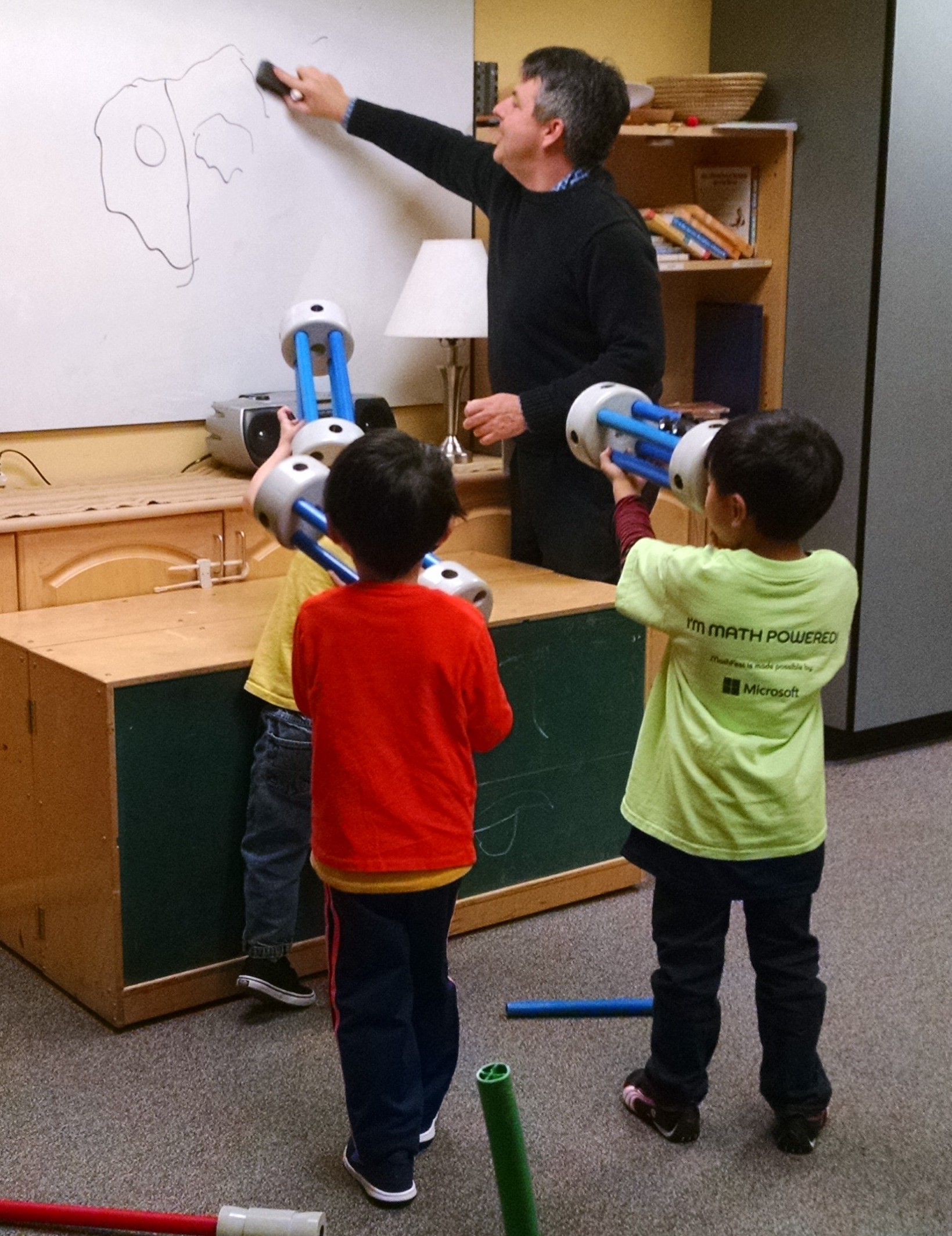
In our Family Inventors class one week, we had giant tinker toys for the kids to play with. A group of boys designed and built three identical “blasters”. From a tinkering / creativity perspective, I was impressed at how they had worked together to create and replicate something cool.

But once a kid builds a gun, what usually comes next? Gun play.

They were pretending to shoot them at each other, and some kids were having fun, but one child was upset about being shot at. Since weapon play only comes up about once a year in my class, I had to decide in that moment how to respond. We have two simple rules in class:

1. “Be creative, not destructive” or in simpler terms, “Make, don’t break.”

2. “It’s never OK to hurt anyone.”

They had made something creative, but they were using it in a way that was hurting someone. Rather than asking them to take apart their new inventions, I decided to

  1. Set limits – “Our friend is not having fun. It’s not OK to pretend to shoot at him if it makes him sad.”
  2. Re-direct.  I suggested target shooting. I went to draw a target on the white board, but my husband had the even better idea of drawing asteroids on the white board that the kids would “blast apart” before they could crash into the earth. He would draw, erase, re-draw and so on as they blasted asteroids to save our planet.

It was a very fun game. And it re-framed their blasters. Instead of being weapons to (pretend to) hurt other people with, they were tools used to (pretend to) destroy dangerous objects in the distance before those objects could hurt people.

I also:

3. Followed up with the parents in the class to encourage them to think about how they wanted to speak to their kids about guns and weapon play at home.

This situation encouraged me to do some more thinking and more research into the topic. Although with all research, you can find studies to support either side of a topic, it was interesting to see what had been written.

Does aggressive play and weapon play increase actual aggression?

Parents worry that if young children play aggressively or pretend to use weapons, that they will become violent adults. The research shows that just the opposite may be true.

Researchers Hart and Tannock say “If playful aggression is supported, it is highly beneficial to child development. The act of pretending to be aggressive is not equivalent to being aggressive. Role reversal, cooperation, voluntary engagement, chasing and fleeing, restrained physical contact, smiling and laughing are common characteristics of playful aggression.” (Young Children’s Play Fighting and Use of War Toys.)

In one study, researchers found that children who displayed a lot of aggressive behavior in their pretend play were less aggressive in the classroom. The pretend play allowed them to work through some ideas so they did not have to bring them in to their real interactions. Other researchers argue that: “omission of aggressive play in early childhood programmes fosters the underdevelopment of social, emotional, physical, cognitive and communicative abilities in young children.” An example of this is when kids are engaged in rough and tumble play – say wrestling. If they accidentally hurt a friend while playing, they realize the impact of their actions, and we work them through the empathy and apology, and work on healing the relationship – it gives an opportunity we might not have had if wrestling was banned.

Several researchers and authors, including Stuart Brown, Frost and Jacobs, Peter Gray, and Charlie Hoehn have noted that many violent criminals have a history of being deprived of free-play opportunities as kids. Brown’s studies of homicidal males found that being deprived of play as children was strongly associated with violent criminal activity.  (Source)

So, we know that kids need to have lots of opportunities for free play to learn a wide variety of social and emotional skills. Kids, in my experience, naturally explore weapon play and aggressive scenarios in pretend play, but it appears that doing so may reduce the likelihood they’ll be violent and aggressive for real. So, given that, how do we, as parents or teachers (who are justifiably distressed by the idea of real gun violence in our country) find an approach to weapon play that feels right to us?

Sometimes we start by understanding the kids’ perspective.

What makes gun play so fascinating? Why are kids so interested in it?

  • Guns and other weapons are perceived as powerful. Kids often feel powerless, so the idea of power is intoxicating.
  • One way that children learn about and make sense of adult experiences is to play at them. So, if they watched a cooking show, they might play at cooking. If they watch a show with guns in it, they’ll want to play with guns.
  • Guns are a way to vanquish bad guys, or monsters. (Note: some children may use magic wands or pixie dust to accomplish the same goal. In both cases, it’s about vanquishing a foe.)

Given all these motivations toward weapon play, it can be hard to successfully ban it. Often attempts to ban it make it even more appealing as the “forbidden fruit.” So, how do we work with it?

Ways to Manage Gun Play:

Ban It: This is a choice many make. I don’t ban it, but if I sense play is moving in that direction, I often provide a distraction to move play in a different direction.

Re-Direct: You can try white board target shooting like we did, or if children are shooting  actual missiles (like Nerf guns) you can set up empty cans or some other object for them to try to hit and knock over. Or think about what type of energy the guns might shoot out – Teacher Tom tells a story of children firing “love shooters” at each other.

Some parents make the rule that you can’t shoot your gun at people, only at imaginary bad guys. (I’m not a fan of this one, because I don’t like the us/them mentality that can be common in many political circles, where people who are different are assumed to be “bad guys.” But, that’s a whole other discussion….)

Talk about the power of other options Talk to children about other ways to defeat (or reform or escape) from “bad guys” or other creatures that frighten them. Absolutely at other times in my class, I talk about all sorts of other options. I just find children are much more open to hear that in other contexts than when they are hearing it as the-words-the-teacher-says-when-she-stops-us-from-playing-what-we-wanted-to-play.

Set Limits: It’s fine to limit the times and places where weapon play is allowed. Maybe it’s an outdoor only thing, or only with one particular set of friends, not at school.

If the play is making you feel uncomfortable, you can say that. “I know you guys are playing, but it made me feel sad when you said you wanted to hurt your brother. So, I want you to move to a different game.”

Ask the kids to help make the rules: In a neighborhood squirt gun battle, not everyone wanted to play. I called the kids over and asked them what they thought fair rules were. One said “Only shoot at people who are playing.” I said “How do you know if they’re playing?” “If they have a squirt gun, you can shoot them.” We all agreed that seemed fair. One child had a smart phone in his hand, and said “don’t shoot people with phones!” I had my laptop and agreed “no shooting anyone who is working with electronics, because the water would ruin them.”

That was all the rules we needed for a while, till one child blasted another in the face with a super soaker. The soaked child was upset. New rule: no shooting in the face. Then a car pulled up and kids asked if they could shoot it, and we asked the driver, who agreed. We talked about how we know cars get wet all the time and it doesn’t hurt them, so generalized our rules to say that it was fine to squirt water at any car, but FIRST they needed to make sure all the windows were rolled up so no water could get inside.

Pay attention to other’s feelings: It’s also important to teach kids to notice the impact of their play on others. How do they know if someone else wants to play the shooting game or would rather not participate? (Encourage them to use words to ask, listen to words, notice body language, etc.)

Check In: When kids are engaged in weapon play, occasionally check in and ask: “Are you all having fun? Is anyone feeling worried or scared?” If anyone feels unsafe, the game needs to change. Encourage them to self-initiate occasional check-ins with friends to be sure everyone is having fun.

Think about the toys you buy. Try  to find open ended toys that can be played with in a wide variety of ways. They will, of course, sometimes use open-ended toys to create weapons (like tinker toy blasters, or sticks as swords), but at least they are open to other types of play.

If you do buy toy weapons, you may consider choosing ones that look nothing like a real weapon. Also, do safety checks: make sure toy weapons can’t cause real harm.

Consider choosing toys that are “powerful” but don’t tie into violence: If you choose action figures of a superhero or soldier or someone who always does battle, your child is likely to play at battles with it. Think instead about how a child plays with the action figures from “Paw Patrol” who have adventures as they rescue people. Or Spider-Man who swoops in to save people by carrying them away, and webs the bad guy to the wall for the police to pick up later.

Reduce exposure to media violence. And talk about media violence with your child in ways that reinforce your family’s values. (Common Sense Media is a great resource.)

Play Fighting vs. Intent to Harm

It is important to differentiate between play fighting and serious fighting. Play fighting has no intent to harm and is enjoyed by all participants. Even when kids are truly play fighting, it’s a good idea to closely monitor it, as sometimes a child will accidentally hurt another and the harmed child may strike out in real physical anger as a response.

Serious fighting is motivated by anger and a desire to harm, and must be handled with appropriate discipline tools.

Note: If a child has a pattern of purposely hurting other children, and either seems to enjoy that, or shows no empathy or remorse, that is concerning. and you may want to consult with a professional about the situation.

Teaching Empathy and Emotional Literacy

What I have described here on how I handle weapon play is a small portion of all the things I work to teach my children and my students. This conversation takes place in a much broader context, where we work a lot on kindness, empathy, and mutual respect, and where we actively teach emotional literacy skills. These are all essential to raising children to be good, caring adults.

Talk to your children about real guns

Children do need to know about real guns. We need to talk about them. This article in Slate does a fabulous job of addressing this topic.

We also have to understand that research shows that no matter how many times we tell a child not to touch a real gun, if they see one they are likely to touch it. So, we also need to talk with other adults about how to keep real guns away from our kids. Also, check out advice from Seattle Children’s Hospital about gun safety: http://www.seattlechildrens.org/Kids-Health/Parents/First-Aid-and-Safety/Home-Sweet-Home/Gun-Safety/.

Your mileage may vary

What I have written here comes from my own experience, and I need to address the privilege of my experience. As a white parent / teacher in an upper middle class, suburban, politically liberal city, real gun violence is not present in the day to day lives of my children or my students. What I feel is appropriate to my setting may or may not be appropriate to yours.

What I write here is about play and young children. As children get older, we will talk more to them about the real harms of real weapons, and more about the impacts of their actions on others. There is much more to consider on this topic as they age.

In my own experience. I grew up in Wyoming in the 60’s and 70’s. We played with cap guns, BB guns, squirt guns, toy bow and arrows, toy swords. I loved shooting all these things at siblings and friends! Yet, as an adult, I am an extreme pacifist. I have never touched an actual gun, by conscious choice, and I advocate for strict gun control laws. My siblings and childhood friends who were raised in the same environment vary in their choices: some keep guns in the home for self-defense, some own rifles for hunting, or enjoy target shooting. Others, like me, avoid guns. But none of my family or friends are aggressors – there are no cases of gun violence or gun accidents among us.

But what’s true for my family and friends was not universally true. When I was in junior high and high school, I lost 3 or 4 classmates to guns (suicides or accidental shootings), and had a classmate at my high school who had shot and killed his abusive father.

Two of my children are now adults. When they were young, I followed the guidelines I share here about weapon play. As they got older, we talked about guns and violence. I found that having had a well-thought out, open discussion about weapon play was a first step to meaningful conversations as they got older. For me, as a parent and teacher, this works better than trying to avoid the topic by banning weapon play.

Read more on this topic:

Time Out

Time Out is an important tool in the discipline toolbox, but it’s an easy one to mis-use or over-use, and it doesn’t work for all families, but let’s examine the best practices for time out.

(* Age note: For a two year old, we don’t really do a prolonged Time Out with this full method. We would instead: remove the child from the situation, hold them calmly for a minute or so, or sit with them till they’re calm, then let them return to play. )

What is Time Out?

First, let’s understand what it is: It’s Time Out from Positive Attention. Children like attention, so will act in the ways that get the most notice from their parents – whether it’s negative or positive attention. So, for mild misbehavior that’s just annoying, we use the “Ignoring” tool. For bigger issues, we use Time Out, which is spending time in a boring place, for a prescribed time, getting no attention. Time Out is a chance for your child to calm down (and for you to calm down), then return to better behavior. Time Out is not jail… it’s not intended to make your child suffer for their crimes.

Time Out will only be effective within the context of a supportive, loving relationship. If your child normally gets lots of positive attention from you, then Time Out is a big change from that. If your child is often ignored, Time Out isn’t much different, or the process of misbehaving and being sent to Time Out may be the way the child actually gets themselves some attention from the parent.

Developing Your Time Out Plan

Make your plan in advance for how you’ll use time out. (Springing the idea on an unsuspecting child in the middle of a meltdown is not going to work!)

Explain your plan to your child in advance, when everyone is calm. Practice it a few times at a family meeting so everyone knows exactly how it will work, and what the goals are of using it. Make sure your child clearly knows what behavior will lead to a time out.

When: What Behaviors Lead to Time Out

Time Out is best when used sparingly, for aggression – situations when your child is hurting someone or something, or for non-compliance – times when you have tried other discipline tools and your child continues to disobey. (Note: all young children ignore or disobey about 1 out of 3 commands. If a simple reminder gets them to comply, you won’t need Time Out – it is for more intentional or chronic non-compliance.)

Sometimes, you may want to send your child to a Time Out because you need a break. That’s not a fair use of Time Out. If you need a break, be honest about that, and take one. Do this before you explode

Where:

Select a place for Time Out. It should be:

  • Boring: Somewhere with no toys, books or screens to provide pleasant experiences.
  • Out of the way of the flow of traffic, so you don’t have to move past the child, and not in a place that tends to draw the attention of other children. (For example, the back of the classroom is better than the front, or just around the corner from the dining table where you can keep an eye on them but your other children can’t see them, is better than somewhere that will draw the attention of other kids (who then may try to provoke the child who is in Time Out.)
  • Safe: Bathrooms or kitchens can be dangerous places for kids to be without close supervision.
  • Some parents avoid the child’s bedroom as they don’t want the child to think of their room as a punitive place. Other parents, who focus more on the calm-down aspect of Time Out than the punitive aspect, may find that the bedroom works well.
  • You might choose to include a few calm down tools in this place, such as a Calm Down Bottle, a favorite stuffed animal, a stress ball, a weighted vest or blanket, or bubbles to blow.

Call this the Time Out Place or the Calming Place. It’s not “the naughty chair.”

If your child misbehaves in public, consider using another discipline tool. If Time Out makes the most sense, you can go to your car, or to a quiet corner with them while they take a Time Out from your attention.

How Long

For a three year old*, we set a baseline of three minutes, for a four year old four minutes. For older children, we start at 5 but increase up to 9 if needed. (See below.) Longer Time Outs are not effective and may just make the child resentful and resistant to future Time Outs.

When they’ve reached the minimum time requirement and they’ve had a calm voice and body for a couple minutes, then you can declare that Time Out is over. (They don’t decide… you do.)

Note: the first couple times you use Time Out, it may take them longer to calm down. (Even as long as 20 minutes.) In the long term, we want Time Out to be as brief as possible for them to calm down and return. We want to help them realize that if they can calm down right away, then they’ll get out of Time Out as soon as the time requirement is met.

What and How

  1. Describe the problem behavior clearly. State what behavior you would like to see.
  2. Warn that if the problem behavior continues, there will be a time out. (If you’re not willing to do a Time Out right now, then don’t threaten to do one… Empty threats make it less likely the tool will work in the future.)
  3. Give a clear command, including the reason. Keep it short and simple. “You did ___. Go to Time Out now.”
  4. What they should do in Time Out: The goal is that they learn to calm themselves down. They won’t initially know how to do that! Self-calming skills are something we need to be teaching at other times when they’re calm so they may be able to use them in Time Out eventually. At first, expect that they will stomp, kick, yell and whine a lot in Time Out. Over time, they will learn that this behavior doesn’t gain them anything, and they’ll give up on it.
  5. What you do when they’re in Time Out: Give them as little attention as possible. Try to move on with your day, not nagging them, responding to their pleas, and so on. If they yell, don’t yell back. If they ask “how many more minutes” you don’t have to respond. (You could choose to announce when a minute has passed.) You might need to use your own self-calming skills and positive self-talk at this time to stay calm.
  6. If there are other children with you, encourage them to “use their Ignoring Muscles” and tune out the person who is in Time Out. You can continue to play nicely with the other child(ren), giving positive attention to their positive behavior.
  7. Once the time requirement has been met, if the child has been calm for two minutes, release them. If not, simply use a When/Then statement. “Please work on calming yourself down. When you have been calm for two minutes, then you can come out of Time Out.”
  8. When time out is done, re-engage with your child, and praise their first positive behavior.

What if they resist?

  1. What if they resist going to Time Out? If they are 3 – 6 years old, you say “You can go to Time Out on your own or I can take you there.” If they don’t go, calmly take them there.  For a 6 – 10 year old, you say “I’m going to add an extra minute in Time Out. That’s 6 minutes.” Wait ten seconds. If they still don’t go, add another minute, up to 9. After that, add a consequence: “That’s 10 minutes now, and if you don’t go to Time Out right now, you will lose screen time privileges for tonight.” If they go to Time Out, after 10 minutes they’re done. If they won’t go to Time Out, we drop the power struggle over Time Out and they receive the consequence instead.
  2. What if they try to escape Time Out? You re-set the Time Out clock, and you say “If you come out again, then you will have this consequence.”

Using Time Out

It is best to develop a specific routine for Time Out, so you can do it the same way every time. Here are two sample scripts, based on the Incredible Years program:

Time Out for Aggression

“You hit. You need to go to Time Out.” Child goes to Time Out. Once time is up, and they have been calm for two minutes: “Your Time Out is Finished. You can play now.” As soon as you see any positive behavior, praise it – you’re returning positive attention to them.

Time Out for Non Compliance

This would be used for an on-going behavior challenge – such as when they’ve been resisting bedtime or doing chores or turning off the screen.

First, give a transition statement that tells them when you’ll be asking for a behavior and what you’ll ask for. “In five minutes, [your screen time will be over and you will need to calmly hand me the tablet].” Then, when the time comes, state a brief command. “Your time is up. Hand me the tablet now.” Wait 5 – 10 seconds for them to process the command. If they comply, praise and move on. If not, give an if/then warning about Time Out: “If you do not hand it to me now, then I’ll take it and you’ll have a time out.” Wait 5 – 10 seconds… if they don’t comply: “You didn’t give it to me. I am taking it. Go to Time Out.” If they refuse to go, or won’t stay in Time Out, warn of a consequence: “If you don’t go/stay in Time Out, then you will lose half your screen time for tomorrow.” After the Time Out is over and/or the consequence is imposed, then, if needed, return to the original command. (If this all started when you asked them to clean up and they refused to clean up, you can’t let that go… they still need to clean up. Otherwise, many kids would choose the 5 minute Time Out to avoid cleaning up!

Initial Resistance

Expect that the first few times you use Time Out there will be a lot of drama – they may resist, they may cry, they may throw things. After things are calm again, have another family meeting talking about what Time Out is, why you’re using it, and how it can be an easy solution if done well. Let them know that you will continue using it, and they can decide whether to make it a miserable experience for themselves, or whether to use it as a brief 5 minute calm down interlude that you can all move on quickly from.

Moving On From Time Out

Once time out is over, move on, don’t rehash. We all make mistakes, and need to come back in and try again. Don’t nag at them, let this be a clean slate moment. Give them positive attention and praise any positive behavior you see.

Important note: If they were using Time Out to get away from doing a chore, make sure they complete that chore after Time Out. Be matter of fact about this, giving positive feedback as they return to the work.

What Else Can You Do?

If you find yourself using Time Out every day, consider using other discipline methods for some of these situations. Choose a very limited set of behaviors that you will use Time Out for.

If you have been using Time Out for the same behavior repeatedly for multiple weeks, you need to form another strategy since it is not effectively changing behavior. (One thing to consider is whether or not your rules and expectation are developmentally appropriate for the child. Are you asking more of them than they’re capable of?) Seek help from a parent educator, teacher, or counselor if you need outside perspective to come up with new ideas.

Continue to teach other skills

Time Out does not teach your child what to do better. It can’t be used as your only discipline tool. Be sure to also be using positive attention, praise, guidance in what TO DO, teaching ways to understand and manage their big emotions, role modeling, and more to help your child learn how to behave better. When they’re mis-behaving, ask yourself whether consequences might be a better response than Time Out. Your long-term goal is self-discipline – raising a child who knows what it means to be a good person and behaves that way most of the time. Using a wide variety of these tools will help to teach them how to do this.

Learn More about Time Out

For lots more information and tips for effective time outs, check out the CDC’s guide to Using Timeout, read The Incredible Years or participate in an Incredible Years program. And if you like to know the research behind recommendations, check out: Weighing in on the Time Out Controversy and “The Role of Time-Out in a Comprehensive Approach for Addressing Challenging Behaviors of Preschool Children” (here or here)