Category Archives: Parenting

Screen Time: Making it Work for your Family

medium_4488299882

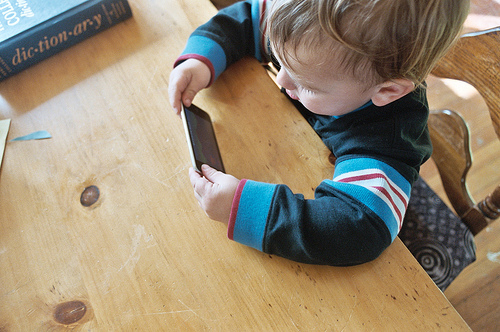
Screen time no longer means just TV in the living room. We now have DVD players, computers and video games at home, and tablets and smart phones we carry all day everywhere we go. And kids get lots of screen time.

Most parents have heard expert advice that warns of risks of screen use. But we also find there are benefits to using them, so we use them – maybe with a twinge of guilt each time…

So, rather than taking a “just say no” approach, many parents are trying to find a way to make screen time work well for their family. Here’s a wide variety of suggestions from parents and experts:

  • Plan what your child views; preview what they use: Choose developmentally appropriate programs and tools that teach skills you want your child to learn and demonstrate values that align with your family’s values.
    • For babies and toddlers especially, choose slow-paced shows and games, with calm backgrounds and without loud, jarring sounds and actions. Choose shows where the characters do everyday things that children do, like go to the park, take a bath, or spend time with friends at preschool. These shows may seem boring or goofy to you, but they engage young children without overwhelming them.
      • Shows that focus on fantasy / unrealistic experiences (a trip to the moon or a superhero battle) do not engage the brain as well as those that involve everyday experiences familiar to your child.
      • Fast-paced TV grabs the attention of the sensory / motor parts of the brain, but doesn’t engage the pre-frontal lobes which relate to attention, and decision-making. In an experiment, children were assigned to a 9 minute activity: drawing, watching a slow-paced educational TV show, or watching a fast-paced entertainment show. Afterwards, children were given four tests that looked at executive function. Kids who had been drawing performed the best on these tasks, those who watched educational TV performed less well; those who watched fast-paced TV performed poorly on all four tasks. (Source: The Immediate Impact of Different Types of Television on Young Children’s Executive Function – Lillard and Peterson – http://pediatrics.aappublications.org/content/early/2011/09/08/peds.2010-1919.full.pdf.)
      • Children this age also respond well to shows where the television characters occasionally speak directly to the child, or ask the child to participate in some way – “can you help me find Blue’s paw print?”
    • Pay attention to the way social / emotional issues are presented in the stories. Research found that some shows that aim to teach good behavior instead model negative interaction. They may spend the first 20 minutes setting up the conflict by showing kids behaving badly, then resolve it in the last ten minutes by kids behaving well (apologizing, confessing to a lie, etc.) Young children remember the emotionally-charged content at the beginning of the show more than they remember the pleasant resolution at the end. They may then practice bad behavior for the next few days…
    • Pay attention to what academic skills and life skills are being taught and whether they are taught effectively.  “Educational programming” ranges a great deal in how educational it really is. Use independent reviews and ratings such as Common Sense media to learn more before letting your child use a product.
    • Choose the right tools: infants may respond best to touchscreen devices that let them learn hands-on. School age children may learn hand-eye coordination and decision making through video games, and can learn important school/work skills by using a computer. Tweens can practice communication skills with a cell phone. Facebook and other social networking are appropriate for teens, with guidance.
    • It’s important to know what sites our children are using online, and what they’re doing there. Limit access to the Internet, use systems to block inappropriate content, know how to check the browser history (but don’t tell your child how to clear it!). Consider limiting internet use to public spaces of house, where parents can see / listen in.
      • You may need to learn new tech skills to keep up with your child’s abilities.
    • Use technology to your benefit: use DVR, on-demand or streaming TV to choose the best programming (rather than just watching what’s on at the moment), to skip over commercials, mute parts you don’t want your child to hear, or pause things to discuss.
      • Watch out for apps with in-game purchasing! Some devices have systems which can block your child from spending money at least. But these games tend to cause addictive behavior and can lead to children who are very upset when you won’t let them purchase the next level.
  • Watch/ Play with your child and Discuss
    • Although 40% of parents say they always watch TV with their child, many others report that they do not, because the whole reason they’re letting their child use media is so they can get other things done while the child watches! (AAP) But, when possible, watch with your child, play games with your child, or watch while they use an app.
    • Co-watching enables us to maximize the educational benefit of the media. Examples:
      • Point out and name things they see on the screen
      • Answer questions as they come up – children often don’t understand everything they see on the screen
      • Quiz them about what they saw: “What’s the closest planet to the sun?”
      • Practice skills they used with the media – if they were practicing tracing letters on a touchscreen, give them fingerpaints or a pencil and let them practice more
      • Act out a show together, or use puppets to re-tell the story you just viewed, or make up new stories with the same characters
      • Talk about real-life tie-ins to media: “in the show, they went to the grocery store and bought apples – would you like to go to the store with me now?”
    • Co-watching give you opportunities to share your values with them.
      • Talk about programs. Ask them what it was about, what characters they liked or disliked, how it made them feel, what choices the characters made, what they would have done in the same situation.
    • Co-watching or playing games together helps us to connect with our kids. It’s another way to have fun playing together with something that captures their interest.
  • Don’t feel like media is an essential tool in the education of your child.
    • The best preparation for school and life involves you spending time with them, reading, talking, exploring things hands-on, and exposing them to diverse experiences.
    • Children who live in households with heavy media use are read to less, and read less. Make a conscious commitment to read to your children more often. Even after they can read themselves, you can continue to read to them – choosing books that are a little above their reading level – or you can read a book together.
    • When you are using media, tie it into real life. For example, if they see a TV show about an animal, go to the zoo to see that animal in person, paint a mask of the animal at home, go on the internet to learn more, and then pretend to be that animal.
  • Eliminate background TV – or be conscious about your use. In addition to the times that children are actively using media (cited above), they are also exposed to background television – when the TV is on but no one is really watching it, or when a parent is watching TV while the child is theoretically engaged in other activities. Children between 8 months and 8 years are exposed to an average of 232 minutes a day of background TV. (http://pediatrics.aappublications.org/content/130/5/839.full) This media distracts the parent’s attention and significantly reduces how much time the parent spends talking to the child (and since a child’s vocabulary growth depends on interaction, this can cause language delays). It also distracts the child: 1 – 3 year old children have shorter attention spans when the TV is on, moving from one task to another quickly.
  • Avoid couch potato behavior:
    • Don’t eat in front of the TV. This unconscious eating may well lead to obesity increases seen in those with heavy media use.
    • Do activities that you see on the screen: dance to the music, jump on the floor like the monkeys jumping on the bed, and so on.
    • Do other physical activities while watching TV. Exercise? Stretch? Fold laundry?
  • Keep screens out of the bedroom.
    • Internet access in the bedroom increases the chances of children accessing inappropriate content of all sorts.
    • The presence of a TV in a child’s bedroom has been linked to obesity, poor performance in school, difficulty with sleep, and substance use.
    • 30% of parents report using TV to help their child fall asleep, but TV actually increases resistance to bedtime, causes anxiety, delays sleep, and shortens sleep duration. (AAP)
  • Set limits: Some experts recommend against having an outright ban on screen use – saying it can become the forbidden fruit your child craves – but it is fair to set limits. Some examples:
    • Establish routines – when in the day are screens an option and when are they not? If your child knows they can never use a screen in the morning before school, then they know not to bother asking in the morning. But, if one day you change that rule…
    • Teach that some times and places are OK for mobile device use, and others are not.
      • Note: your children pay very close attention to what you do! If you tell them that they’re not allowed to use screens during dinner, but then you check your email or take a phone call during a meal, they won’t take your limit seriously.
    • Teach your children to ask you whether it’s OK to turn on media.
    • Privilege? Some parents find it works well to have media be a privilege that a child has to earn. For example, if they read for 30 minutes, they earn 10 minutes of screen time. Other parents are against this, fearing that then we’re setting up a value judgment that says reading is the boring thing you have to do so you can do the fun thing.
    • Place limits on screen time. AAP recommends <1 – 2 hours daily for kids 2 – 8, less than that for kids under 2
      • Count total screen time: TV + DVD + video games + computer time + mobile device. Make sure that tablet time is replacing TV or other screen time, not displacing physical play, reading or other essential activities.
      • Consider a screen curfew for the whole family – a time at night when the screens go off. We know that screen use (especially blue light from screens) too close to bedtime can disrupt sleep (see above).
  • Encourage balanced activities
    • Environment: Set up you house so that the screens are off in a corner, or in rarely used rooms, versus lots of other options in plain view, easily accessible and ready to use. Have available: board games, art supplies, books, sports equipment, etc. Spend time outdoors with no screens in sight!
    • Activities: Build into your routine plenty of other activities: sports and exercise, creative projects, household chores, social time with friends, and so on. Spend more time in unstructured play, which helps children learn to problem-solve and think creatively.
    • Model good behavior. Turn off your screens or set them aside for a portion of each day. Model a balanced life of social time, physical activity, time outdoors, reading, etc.
    • Ask yourself: “if I didn’t have my [device] with me right now, how would my behavior be different?” If your answer is that you’d be talking to your child, or singing to avoid boredom, or coming up with other ways to distract them in a meeting (like say, reading to them) then you may want to consider setting aside the device for now…
    • Have unplugged time. One author advocates setting aside “one hour per day, one day per week, and one week per year” when the whole family sets aside their screens.

Reviews of kid’s media and other tips at: www.commonsensemedia.org

Design Tips: If you (or someone you know) designs apps for kids, check out Sesame Street’s great tips on how to build the best kids apps possible.

photo credit: cafemama via photopin cc

Benefits and Risks of Screen Time for kids and parents

Benefits of Screen Time for Kids

We often hear about the downsides of TV watching for kids – aggressive behavior after watching superhero shows, short attention spans after watching fast-paced action shows, etc. Are there any benefits of screen time – time spent watching TV, playing video games, or using mobile devices?

For young children (8 and under), the majority of the time they are spending with screens is spent with “educational content.” Ever since the early days of Sesame Street in the late 60’s, there has been a huge growth in educational media: television, computer games, and now apps. High quality educational media can have benefits for children age 2 to 8:

  • High quality TV can lead to improved social skills, language skills, and school readiness. (AAP)
  • Educational media can expose children to the broader world far beyond their community: they can learn about exotic animals, historical events, a wide range of musical and artistic styles, diverse cultures and lifestyles, and scientific concepts like interplanetary space.
  • Story-telling, whether in books or video, allows children to experience social interaction and emotional challenges vicariously. Watching characters interact positively can teach manners and social graces. Watching a character deal with grief can help a child learn to manage it.
  • Media can teach concrete skills, if the skill is demonstrated slowly and repeatedly. In one research study, children were shown a 20 second long video of an adult playing with a toy by taking it apart. 90% of 24 month olds, and 65% of 14 month olds were able to copy those actions. www.parentingcounts.org/information/documents/copycats-100-710-200907.pdf
  • Media can also teach basic academic skills like ABC’s and counting, and help children memorize basic facts, like the order of the planets or the order of the colors in the rainbow. The kinds of skills that can be learned by drilling with flash cards can typically be learned in a more engaging way with media.

It’s important to note that these benefits are from high quality, developmentally appropriate programming. Not all media is created equal! Don’t choose games, videos or apps based on the company’s marketing. Instead look for independent reviews and ratings of a product’s learning value. One good source is Common Sense Media (see resource list.)

Also, the majority of the research has been done on children age 2 to 8, focusing on television viewing. There is very little research showing benefits of media for children under age 2.

There is also very little research on the modern experience of highly interactive touch-screen apps, though some theorize that these will be more effective “educators” than a passive screen experience.

It’s also important to note that there is very little information that children can only learn from the screen. Parents who believe that educational media is very important for healthy development are likely to use media twice as much as other parents. But the AAP reminds us that “Unstructured playtime is more valuable for the developing brain than any electronic media exposure. If a parent is not able to actively play with a child, that child should have solo playtime with an adult nearby… solo play allows a child to think creatively, problem-solve, and accomplish tasks.”

Benefits of Screen Time for Parents

Experts frown upon parents using media as “a babysitter”, but we need to be honest that media is very good at this job! Parents often need a way to keep kids busy and out of trouble while they make dinner, take a shower, do household chores, or work from home. Screens are one of the quickest ways to distract a kid. (Single parent families report more media use in their households, probably because they don’t have a second parent available to entertain the kids while they get jobs done.)

(FYI, you can learn more here about how much screen time kids are getting.)

Parents also use screen time as “company” for themselves. Spending all day at home with a small child can be very isolating, and having the TV on in the background or checking Facebook can reduce the parent’s loneliness. Listening to a podcast or reading an e-book can provide some much needed mental stimulation in the midst of a day filled with finger painting and Dr. Seuss.

Mobile devices have added a new benefit. Parents have learned that they are remarkably effective at keeping a child quiet in environments such as doctor’s offices, restaurants, and churches. (Of course, parents have also learned that trying to take away a mobile device in one of those areas, or having the battery die on a mobile device, can lead to a huge eruption of noise and disruption!)

Problems with Screen Time

Again, the majority of the research is on kids 2 to 8 years old, and on television viewing, but much of it may also apply to younger children and/or other media.

Television has been linked to obesity, sleep issues, aggressive behaviors, and ADHD. Early TV viewing is correlated with (i.e. doesn’t necessarily cause, but is related to) deficits in executive functioning – attention, memory, problem solving, impulse control, self-regulation and delayed gratification. Children younger than 2 who watch more television show delays in learning language.

Research may not show this specifically, but anecdotally, teachers report that children who use media often become passive, lose creativity, and forget how to entertain themselves without a screen.

Amongst 8 to 18 year olds surveyed, heavy users of media and moderate users when compared to light users (less than 3 hours a day) were: less likely to get good grades, more likely to say they have a lot of friends, less likely to get along well with parents, less likely to be happy at school, are more often bored, more often sad or unhappy, and report that they get into trouble a lot.

Media can be addictive. The more toddlers watch, the more they want to watch, and the more upset they are when it is taken away. Many parents report that it is much more challenging to transition a child from a media device to another activity than it is to move from one unplugged activity to another. Parents can also be addicted: one survey showed 53% of adults feel upset when denied internet access, 40% feel lonely when unable to go online (www.dailymail.co.uk/sciencetech/article-2017543/Britons-deprived-internet-feel-upset-lonely.html#ixzz1T7IEFW00 )

It may not be that media itself is harmful – some of the issues may be what kids miss out on when they spend time on screens. One study showed that for young kids, every hour of TV time meant 50 minutes less per day of interaction with parents and siblings and ten minutes less of play. (cited in AAP report) We know hands-on play, human connection, eye contact, and interactive conversation are essential for learning many skills. When children are on screens, they simply get less of that.

When parents are also engaged in their own screen use, this further limits interaction. There are plenty of articles and opinion pieces bemoaning the sight of parents looking away from their child’s eyes and into their IPads. There are also plenty of blog posts from parents defending their right to take a sanity break now and then, and defending their need to distract their child while they tend to the business of the day. Both sides have good points – and both sides may be more strident than they need be. As with many things in the life of a parent, we need to find our own way, thinking intentionally about our priorities, and striking a balance that works for our family. See here for tips from parents and experts.

Family Meal Time – making it pleasant for everyone

family eating a meal

Meal time is about more than putting food into our bodies. The family meal also offers:

  • Together Time: a chance to talk and connect as a family
  • Social Skills Practice: a place to learn polite manners and the art of conversation
  • Routine and Rituals: grounding in a reassuringly predictable experience
  • Healthy Habits: modelling, practicing and discussing healthy eating

Unfortunately, children don’t come into the world prepared to be pleasant dinner companions. Proper mealtime behavior is a learned skill. There are many steps you can take to start the path to making meals enjoyable and pleasant for everyone. I offer some tips here which most experts recommend, but there is no one right way to parent, so you should do things that work best for your family.

Whose Job Is It?

I find this message from Ellyn Satter about the division of responsibilities is simple but really powerful:

You are responsible for what, when, and where. Your child is responsible for how much and whether.

Your role is to offer healthy food and be a good role model for healthy eating. But, your child will choose whether to eat something and how much to eat. Don’t turn meals into a power struggle. Help them to be a joyful time.

What to Eat

Put out a variety of healthy foods. Let your child serve himself, choosing how much to put on his plate (encourage him to start with small servings – reassuring him he can always have more). Be a good role model in your own food choices and portion sizes.

Involve your child in choosing and preparing the food. They are often more willing to eat a variety of foods if they were involved in making it.

Help your child recognize when she is full – this will decrease the chance of later obesity. Don’t praise children for a clean plate. Reward them with attention, kind words and fun activities, not food.

Don’t restrict certain foods – they may become the “forbidden fruit” and children will overeat them when they can. Offer small amounts of dessert items with the rest of the food – don’t set it aside as the “special” part of the meal.

When to Eat

Newborns have tiny tummies and digest breastmilk or formula quickly so need to be fed often. So parents get used to lots and lots of “meals” every day. As children get older, they no longer have that need, but I feel like many parents continue to use snacking as an anytime activity / distraction for their toddlers and preschoolers. It is better for older children to have a routine such as three meals a day with an afternoon snack and a bedtime snack, and avoid continuous grazing.

Allow plenty of time at the table. At least 20 minutes for a meal. When your child is full, he can leave the table, but let him know that when he leaves the table that means he’s done for that meal – he can’t come and grab bites then run off to play.

Where to Eat

Eat at the dining table or in the kitchen. Not in the play room, or in front of the TV, or in a bedroom. This helps keep the rest of the house cleaner, but also helps us remember to be conscious of what we’re eating and not just eat because we’re bored. (Most experts would say don’t eat in the car, but I have to confess that as a parent, I’m often running late to things so we eat in the car on the way there… I won’t say it’s perfect, but it’s apparently part of our reality.)

More Tips

Ask your child to help prepare for the meal, perhaps by carrying things to the table, setting the table, turning off the TV, or calling other family members in. Clean up together. Involve them in clearing the table, and wiping the table. Don’t present these things as chores that they get punished if they don’t do (if you don’t ____, then ____). Instead present them as just part of the work of the family and let them know that when we get our family work done, we get to have fun together. (“When we’ve cleaned up dinner, then we get to play.”)

A two year old can learn to use a spoon and a fork, drink from a regular cup, and feed herself a wide variety of finger foods. Allow for some mess – children are learning how to eat neatly. Help her use a napkin to wipe her face if needed, but don’t feel like you have to hover over her and clean up after bite. You may need to set limits on mess-making. If she starts throwing food or intentionally dropping it, end the meal. Take her away from the table and clean up the food. (Don’t worry if she didn’t eat “enough”. She won’t starve between now and the next meal, and we want her to get the message not to make a mess.)

During the meal, engage in conversation. Many families have a ritual question, such as “highs and lows” or “what is one thing you learned today” or “what is one thing you were grateful for today.”

Family meals matter: research shows kids who regularly eat with their families do better in school, have better self esteem, make healthier food choices, and are less likely to abuse drugs and alcohol.

More on manners: www.parenting.com/article/ask-dr-sears-table-manners-for-toddlers; https://www.babycenter.com/toddler/development/teaching-table-manners-to-your-toddler_1429019 

Learn more about nutrition recommendations for toddlers. This post from Mott’s Childrens’ Hospital is on picky eaters, but offers lots of great all-purpose mealtime tips, and here’s my post on picky eaters. Also, check out Ellyn Satter’s website.

Nutrition for Toddlers and Preschoolers

photo of child eating wheat bread

When it comes to nutrition and toddlers, the most important thing to remember is: Your job is to decide what food to offer, when to offer, and where the child may eat. Your child’s job is to decide what to eat and how much.

What to Offer

Offer a variety of healthy choices – 2 to 3 items at each meal. Children often prefer foods they can feed to themselves. Many children prefer food as separate items – if the family is eating spaghetti, your child may want plain noodles, sauce on the side, and a meatball on the side. Offer food in unbreakable dishes with utensils the child can hold. Give milk or juice with meals, and offer water between meals.

To encourage your child to try new foods:

Offer a new food with familiar, well-loved foods. Try the food yourself, describing its texture, taste, and smell. Give a small portion to begin with (3 peas, 2 beans) so there’s less waste. Children may need to be offered a new food 10 – 15 times before they’ll try it, and the first few “tries” may be a lick, or a small taste, or holding it in their mouth then spitting it out. Over time, they will eat more of it. Involving your child in choosing and preparing a new food may get them more excited about eating it.

Be a good role model: eat healthy, try a variety of foods yourself, talk about healthy eating. Exercise, and have fun being active together.

When to Offer Food

Most young children eat three meals a day, plus two or three snacks. This helps them keep a stable blood sugar level (and thus a stable mood and energy level) throughout the day. Try not to let your child graze all day long. It is better to eat full meals and let the body rest/digest between meals. If your child whines about this, remind yourself that they won’t starve if they have to wait!

Also, don’t use food as a distraction every time you’re in the car, at the library, and so on. Try to develop other ideas for keeping them busy.

Where Your Child May Eat

Most experts recommend feeding your child only at the dining table or in the kitchen, rather than eating all around the house. They also recommend sitting and talking with your child, both for safety’s sake and as a great opportunity for building communication skills, and strengthening your relationship. Turn off TV’s and other screens and focus on time together.

What Your Child Chooses To Eat

Your child may be eating less than she did just a few months ago. It is normal for a toddler’s appetite to decrease, as their rate of growth slows after age one. You will notice that some days your child barely touches his food, and other days he seems to eat non-stop. This is fine. Look at how much food and how much variety they take in over the course of a week, not just one day.

Don’t force your child to eat. Toddlers are trying to assert their independence, and it is easy for food to become a power struggle.

Supplements: consult with your child’s doctor. If a child has a well-rounded diet, none may be needed. In Seattle’s non-sunny climate, a common recommendation is 400 IU / day of vitamin D. Omega 3 fatty acids are recommended by many naturopaths. If your family is vegetarian, or vegan, pay special attention to vitamins B12, D, riboflavin, calcium, and protein.

Reducing Risk of Choking:

Children should always sit when eating. There should be an adult nearby. Avoid foods that are hard to chew (steak, jerky, stringy celery), small and round (hard candy, popcorn; grapes – cut these in half; carrot slices, hot dogs, chunks of cheese– cut these into thin sticks); spoonfuls of peanut butter (OK to spread thin on things). All parents and child care providers should learn choking rescue, just in case: www.youtube.com/watch?v=kOWwyJEFiPo

How Much Should a Toddler Eat

Here’s a chart that lists recommended daily servings for toddlers of each food group (with definitions of appropriate serving size), total calories needed, and other key info about healthy eating.

Infant and Toddler Forum has a really helpful site showing what a toddler size portion of food looks like, whether that’s 4 French fries, or one-quarter of an apple, or 4 ounces of yogurt.

The Hass Avocado board has a number of helpful tips on teaching nutrition to kids, and hands-on activities to reinforce healthy habits.

Read more about making mealtimes pleasant.

Read about tips for picky eaters and for super picky eaters.

Discipline

DisciplineFlowLooking for tips on discipline? Read on to learn about: having developmentally appropriate expectations, helping kids understand what is expected of them, modelling and rewarding desired behaviors, setting limits, and enforcing consequences.

What is discipline?

Discipline does not mean punishment after misbehavior has happened.

Discipline means guidance. It means setting clear expectations for how we would like our children to behave, not assuming they know how. It means modeling for our children the kinds of behavior we would like them to display. It means setting clear limits about things they cannot do. And, it means that when they misbehave, we let them know that the behavior was not OK, but we do still love them, and we tell them how to be better in the future. This style of discipline not only guides behavior, it also builds trust and respect between parent and child.

The first step in discipline is to consider how old your child is…

Make sure your expectations are developmentally appropriate

From birth to three, your child is going through massive developmental changes, with more brain growth than ever again. They learn through hands-on exploration of the world, which means they get into everything, and have no sense yet of what is safe and what’s not. Your role is to protect them as needed, but also allow them to explore and learn within limits. They learn through repetition, which means they need to do something over and over to learn it, and that includes misbehaving over and over and experiencing consequences over and over before they really remember the rule. Your role is respond consistently each and every time to misbehavior to help reinforce their learning.

Discipline will be more effective (and you’ll be less frustrated) if you keep your child’s developmental capabilities in mind at all times. Do encourage them to stretch themselves and work on impulse control, but don’t expect more than they are capable of. Learn about developmental capabilities by reading books, looking online, taking classes, and by watching other kids. (Though it’s also important to remember that individual temperaments have a big effect on what kids are capable of, no matter their age.) For example, typically toddlers are not yet capable of sharing, have a hard time waiting and controlling their impulses, will bite and hit at times, and can’t always “use their words.” We ask them to do better, but we shouldn’t be surprised when that’s too much for them.

Learn more: www.askdrsears.com/topics/parenting/discipline-behavior/9-development-reasons-why-toddlers-can-be-difficult-discipline and Discipline that works: Ages & Stages Approach: http://umaine.edu/publications/4140e/

Explain what to expect, and what is expected of them

Remember how little your children know about the world. They don’t know that you’re supposed to be quiet in some places and that it’s OK to be loud in other places until you teach them that. They don’t know that they need to stay at the table at the restaurant until you teach them that (and remind them again and again). The more you can tell them ahead of time what to expect and what is expected, the better. When they are young, keep it very simple: “this is a quiet place”, “you need to sit with me here”. As they get older, you can have codes. Like in our family “theater rules” means a place where you sit in a seat, and are quiet, unless everyone else is clapping or singing.

To learn more about ways to guide your child in what TO DO, rather than focusing on what NOT to do, see my post on “Saying Yes.”

Model desired behavior and praise them when they manage it

Act the way you would like your child to act. Also, point our other kids who are behaving well. Children are great at copying what they see.When you make mistakes, say so, and apologize for it. “I tell you not to use bad words, and I just used a bad word. I need to work harder on using nice words.”

“Catch” them being good – praise them for the positive behavior they demonstrate. Some people recommend you shoot for a ratio of 4 – 5 times where you tell them they’re doing something right for every 1 time you tell them they’re doing something wrong.

Setting Limits and Consequences

When misbehavior begins, let them know that what they’re doing is not OK. (They might not know. Or they might, and are testing to be sure they understand.) Use a firm voice and a serious expression to convey this. It is confusing to toddlers if we use our regular sweet smile and playful voice when we’re telling them what not to do. Also, the louder your child gets, the calmer you need to be.

Remind them what the expectations are and encourage them to behave better. If they don’t, let them know what the consequences will be if misbehavior continues. Try for logical consequences, where the ‘punishment fits the crime.’ For example: “when you throw your Duplos, I need to put them away” or “when you don’t stop when I say red light, I need to carry you to keep you safe” or “I need you to help put away toys. If I put them away all by myself, I will put them up high on a shelf out of reach” or “when you dump your food on the floor, it tells me you’re done, and I’ll put it away.”

Consistently Follow through on Consequences

If the misbehavior continues, you must impose the consequence.  Although it’s hard to “punish” a child, it actually builds more trust if you do what you said you would do than if you “let it slide.”

Punish the behavior, not the child. Let them know you still love them, but the behavior was not OK. Use a calm and firm voice and expression, not an angry tone.

No need to discuss this or re-hash it or re-negotiate it. Just be clear and move on.

Handling Quickly Escalating Situations (including hitting and biting)

When anyone (or anything) is in imminent danger of harm, we need to act more quickly. There may not be time to suggest better behavior nor time to tell them what the consequences will be. You may just need to act quickly and explain later.

Also, if your child is in a full meltdown tantrum or very wild and out of control, you won’t be able to reason with them. They’re not understanding language at that point. You may just need to remove them from the situation, go somewhere quiet till they calm down, and then explain things.

How does your child respond to your no’s? How do you respond to that?

When you set a limit, does your child beg, whine, and plead? Or throw loud dramatic tantrums? Or try to make you feel like a bad parent, shouting “you don’t love me!”? If so, do you give in? If you do, you teach your child that whining, tantrums, and guilt trips are effective tools and they will use them again. And the toddler tantrums that seemed overwhelming at the time won’t compare to the battle your teenager will be able to put on after years of learning how effective tantrums are against you.

Try to stick to your no, no matter what. If you change your mind for some reason, be very clear about why “I’m not saying yes to this because you begged for it. I’m saying yes because I talked it over with your dad, and now that we’ve had more time to think about it, it seems fair to do. In return, here’s what we expect from you….”

Remember that giving in can make things easier in the moment, but it doesn’t accomplish your long-term goals, and can reinforce behaviors you dislike. Sticking to your consequences can be really hard sometimes. One year we had to bar our daughter from participating in a school play – something the whole family was looking forward to – due to one really bad week of homework issues. My husband and I were a strong united front in her presence, and did our own grieving behind the scenes.

Discipline Tactics that are Less Effective

Avoid empty threats: Saying “I’ll just leave you here in the store” or “I’ll throw away all your toys” can be very frightening to a child and scare them out of proportion with the offense. Then someday they figure out you don’t mean it, and then it’s pointless. Either way, it’s not effective at helping the child behave well.

What about spanking? It works in the short term to discourage a particular misbehavior. But it’s not beneficial in the long-term. Murray Straus, after 4 decades of research, says “Research shows spanking corrects misbehavior. But … spanking does not work better than other modes of correction… Moreover… the gains from spanking come at a big cost. These include weakening the tie between children and parents and increasing the probability that the child will hit other children and their parents, and as adults, hit a… partner. Spanking also…lowers the probability of a child doing well in school.”  www.sciencedaily.com/releases/2013/12/131211103958.htm
It also harms brain development: www.cnn.com/2014/07/23/health/effects-spanking-brain

What about time-outs?

  • Time outs work very well for some families. It depends on the temperament of the child and of the parent. Successful time-outs are not a punishment. They are a chance for a child to go somewhere quiet and calm down. They come back out when they’re ready to get along again. A typical rule of thumb is for a maximum time-out of one minute per year old. So a 5 year old would have at most 5 minutes.
  • If your child views a time out as a rejection, it might make her very sad. That child might need a “time-in” where the two of you sit quietly together until she calms down.
  • Some children view timeouts as a call to battle, and they only escalate the situation.
  • Some parents take time-outs themselves, saying “I need to go to my room for just a minute to calm down, then I’ll come back and we’ll talk about this.”

Think before reacting – Pick your Battles

As much as possible, think ahead of time about what the limits are. But sometimes you find yourself in a situation where you need to set a limit in the moment… take a little while to think it through before acting. For example, my first daughter wanted to wear her dress-up clothes to the grocery store. I said no, which turned into a battle of wills. Halfway through, I realized I really didn’t care. But at that point, I couldn’t just back down – I had to stick to the rule I had set. So, what I should have done is when she asked for something I didn’t expect, I should have said “Hmm… I need to think about that for a minute and decide if that seems OK with me.”

Some parents have tried a system where they have in their minds three categories of behavior. Green light options: things that are always OK, that they can always say yes to. Red light options are never OK, and they can never say yes to them, no matter how much the child asks or how embarrassing the public tantrum may be. (Safety issues are a good example.) And there’s a whole lot of yellow lights: things that are sometimes OK, and sometimes not. Then when their child asks them “Can I wear my swimsuit today” they might say “hmm… that’s a yellow light thing. Let’s think it through: if it’s warm out and we’re playing outside, that’s OK. But it’s not OK if it’s cold out or we’re going somewhere like church. So, today, since it’s so cold out, I have to say no.”

Think before reacting – See things from your child’s perspective

Children love to explore but sometimes that means they make a big mess. Before getting upset, try to see things from your child’s perspective to see the joy they may have found in making that mess. And try to see that they might not have realized that the mess would be a problem. Say “It looks like you had a lot of fun playing and exploring here! But, next time you want to play with that, we need to figure out how to do it without making a big mess. Can you help me clean up now?”

Steps in the Discipline Process

Check out this flowchart for steps which help your child to behave well.

Helpful resources

Webinar on Discipline: www.youtube.com/watch?v=sX0MQ5ZXVio&list=WLsMLXfBPSxoG3J_FkZGqnxVV2P34cr_S_

Overview Handout: www.parentingcounts.org/professionals/parenting-handouts/information-for-parents-discipline.pdf

8 tools for babies/toddlers. www.askdrsears.com/topics/parenting/discipline-behavior/8-tools-toddler-discipline

Tantrums: https://bellevuetoddlers.wordpress.com/2013/11/14/toddler-tantrums-and-emotional-meltdowns/

If you have a hard time saying no, check out:
www.empoweringparents.com/saying-no-to-your-child-how-to-be-a-more-assertive-parent.php?&key=Effective-Parenting
www.empoweringparents.com/No-Means-No-How-to-Teach-Your-Child-that-You-Mean-Business.php#ixzz2rlUqTBC9