Category Archives: Music

Adding an Instrument to Your Teaching

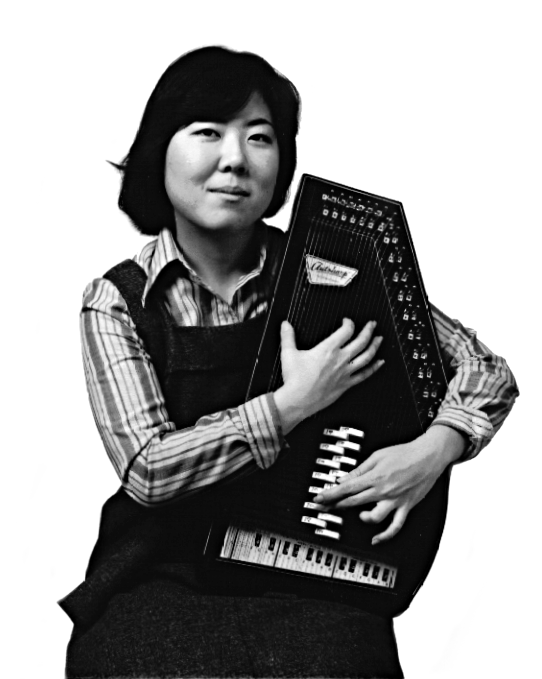
Once upon a time, many preschool teachers played the autoharp when leading group time, strumming along as they sang Twinkle Twinkle or Ring Around the Rosie.

Or many played piano or guitar. Playing the music as you sing, rather than just singing a capella, helps to deepen the learning for the children and increase their musical knowledge.

Some teachers used records (or cassettes or CD’s) to provide the music for circle time. Many recordings were designed just for this purpose, and worked well – they were a good tempo, just enough repeats of the song to be fun but not drag on and on.

These days, when we all carry in our pocket a phone with instant connection to the Internet, it’s tempting to just always pull up a YouTube video for music.

But YouTube videos are generally not made for this use, they are so often over-produced, overly energetic, over-enthusiastic or cloyingly sweet. Many of them have long musical interludes when no one is singing. Or ads or “like and subscribe” announcements. They can’t adapt to the mood of the moment, or respond to what’s happening in the room that day. And playing pre-recorded music doesn’t show children how music is made, or instill in them the idea that someday they could make music too.

Bringing live music into the classroom is so much more engaging.

And I know some of you may be thinking – “but I’m not a musician! I can’t do that.” I used to think that too. Make sure to check out my next post on Music and the Growth Based Mindset.

Did you know that if you have a ukulele (or a guitar), you can learn how to play a C chord and an F chord in just a few minutes of watching YouTube videos?

And did you know that if you can just play a C chord and an F chord, that means that you can play Wheels on the Bus – and at least 4 other songs set to that same tune! (In my handout below, just for C and F, I have chords for Kookaburra, 2 songs set to Itsy Bitsy, 4 to Oh My Darling Clementine, 5 for Mary Had a Little Lamb, and 10 songs set to the Farmer in the Dell tune!)

I will be writing a series of posts on how quickly and easily you can go from knowing nothing about how to play an instrument to playing ukulele confidently.

If you already know how to play an instrument – like guitar or piano – or if you have an old autoharp sitting in the closet at your classroom, and just need the chords to be ready to play, check out this handout.

You can also check out Storytime Ukulele, where they list chords for lots of standard kids’ songs.

If you don’t yet know how to play an instrument, check out the rest of my ukulele series:

A Pacific NW Nature Song

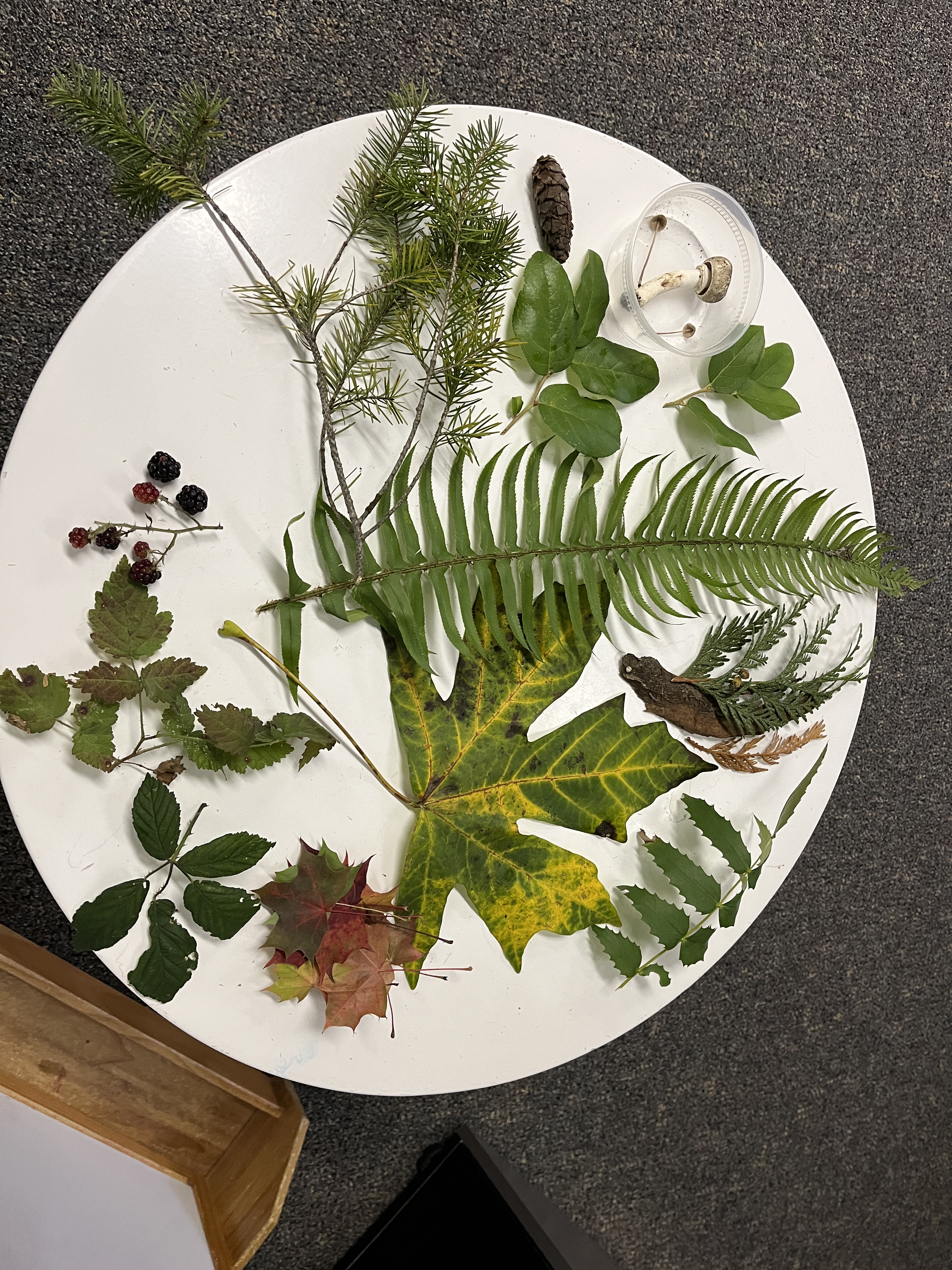
This movement song is set to the tune of Aram Sam Sam*. It’s a great way to remember some of the most common plants that we see on our preschool nature hikes in the Pacific Northwest.

Lyrics

A Douglas Fir, A Douglas Fir.
A tiny little mushroom and a Douglas Fir.

Salal, and Sword Ferns.
A tiny little mushroom and a Douglas Fir.

A Red Cedar, A Red Cedar.
Some Oregon Grape and a Red Cedar.

Big Leaf Maple. Blackberries.
Some Oregon Grape and a Red Cedar

Movements

  • For Douglas Fir, raise your hands high above you to help children remember that Dougs have very tall trunks and branches up high.
  • For “a tiny little mushroom” – if they’re standing up, they can squat down and cover their head with their hands. If they’re sitting, they use two fingers to show something that’s really tiny
  • Salal – touch your thumbs together and touch your index fingers together to make a salal leaf shape.
  • Sword Fern – pretend to wield a sword
  • For Red Cedar, spread your arms out to your sides, with the palms down low to show the low branches of a red cedar.
  • For Oregon grape, use your fingers to draw a serrated leaf shape.
  • Big Leaf Maple, hold one hand up with the fingers spread to indicate the 5 points on a maple leaf.
  • Blackberries – pretend to eat berries!

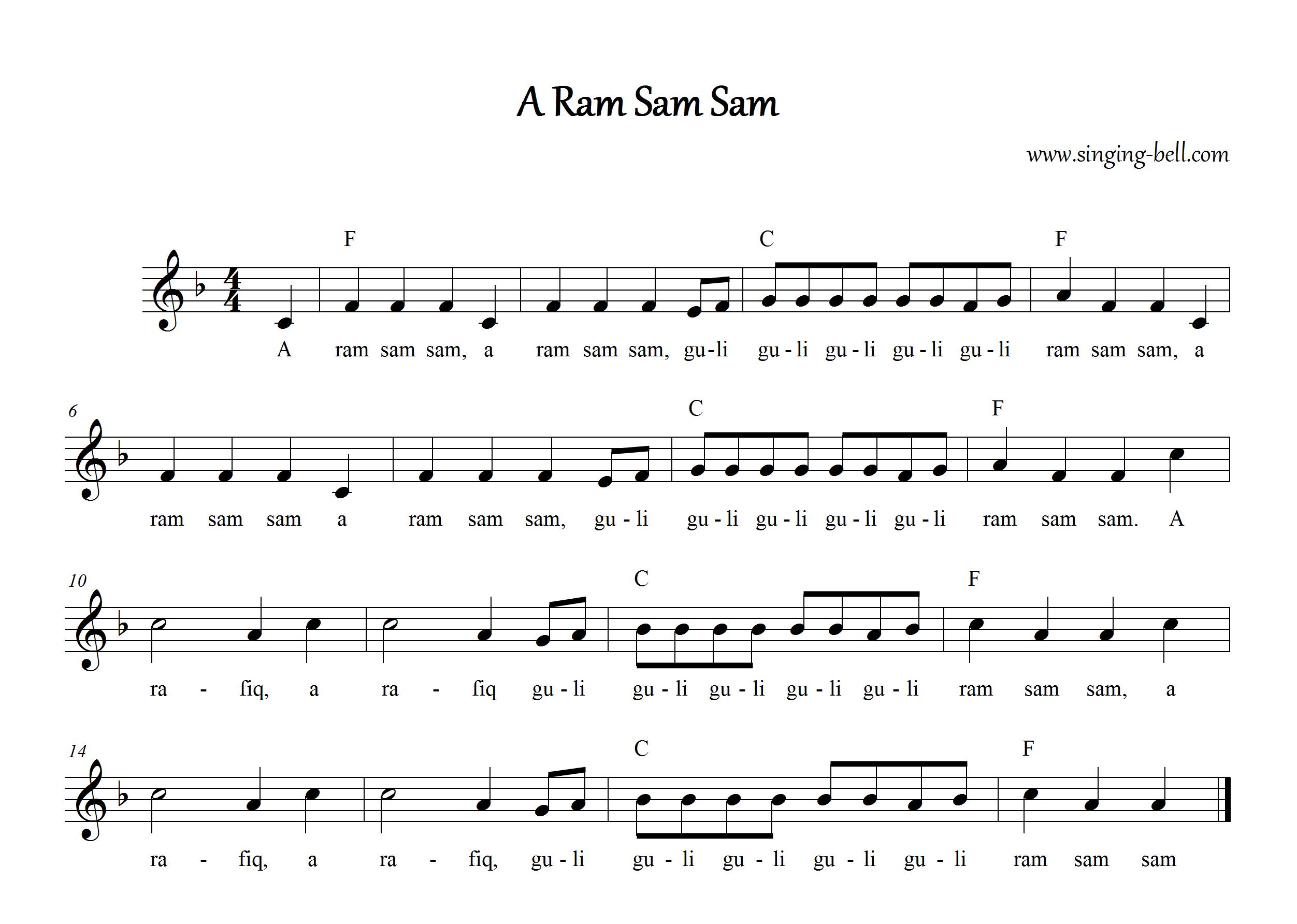
Here’s sheet music for A-Ram-Sam-Sam which includes chords F and C (for guitar or uke); or here’s music in the key of G.

Visual Aids

I made a set of 8 picture sheets to go with teaching the song, to show them what each plant looks like and how to recognize it.

A Picture Book

I made a free printable book you could read about these plants.

I also brought samples of each plant into the classroom for children to get familiar with before we go on a class hike.

If you want to learn more about plants that are native to the Pac NW, here’s a plant guide. Learn more about how to teach kids about nature in general and native plants particularly. And learn more about the benefits of nature for kids.

Source

The furthest I can trace this idea back is that my local library, KCLS, published a video in 2015 that credits “Story Time Idea Machine blog (2010) by Cherie Rainwater.” I found it on Jbrary. I added salal to the song, and added the full second verse.

Alternate Verses

Verses for a visit to a tidepool:

A hermit crab, A hermit crab, [scuttle hands]
a tiny little barnacle [stick hand to shoulder], anemone [wiggle fingers].
Some starfish [spread hands to make stars] and jellyfish. [pulse arms like swimming tentacles]
A tiny little barnacle, anemone.

A geoduck, a geoduck, [one arm makes shell, the other makes the “foot”]
some slimy green kelp [wipe kelp off arms] and a sea urchin. [spiky fingers]
A moon snail [draw spiral], a happy clam. [make clam shell with hands]
Some slimy green kelp and a sea urchin.

More ocean verses

An orca whale (move one arm in a leaping motion) An orca whale (other arm)
Little sea scallops (both hand open and shut like shells)
And an orca whale (leaping motion)
Sea otter (sung while pounding fists on chest) Sea otter,
little sea scallops, and an orca whale. [Jbrary credits to Anna Swanson]

Birds of the Northwest – rough draft

A bald eagle, a bald eagle. a tiny hummingbird and a bald eagle.
Barn swallows, a stellar jay. A robin and a crow and a gull in the bay.

A barn swallow, a barn swallow, a great blue heron and a barn swallow.
A mallard duck, a chickadee. A dark eyed junco is what I see.

Tune

* Aram Sam Sam is commonly sung in preschools and storytimes. It is said to be originally a song in Arabic from Morocco. What does it mean? Aram sam sam is just nonsense sounds. A rafiq is a friend or companion, and gulli gulli means tell me tell me.

Toddler Songs

Here are some of our favorite songs. Each has a link to an audio or video so you can hear it.

Transition Songs

Clean Up Song. (from Barney) Video: www.youtube.com/watch?v=mc6Wkab3lYM
Clean up, clean up; Everybody everywhere; Clean up, clean up; Everybody do your share

Group Time: It’s Time to Come to Group Time, It’s Time to Come to Group Time, It’s Time to Come to Group Time, Tra La, Tra La, Tra Lee (tune)

Roll the Ball: I roll the ball to _. S/he rolls it back to me! (tune)

Lap Bounces

Pony Ride Rhyme
Riding on a pony downtown, (bounce child up and down your legs)
Better watch out or you might fall DOWN! (child falls between your legs)

Elevator (tune)
Let’s go riding on an elevator, Let’s go riding on an elevator,
1st floor, 2nd floor, 3rd floor, 4th floor, 5th floor, (raise legs a little bit each time)
Down, down, down, down, down! (Child slides down legs)

Popcorn. Popcorn, popcorn in a pan, Shake it up, shake it up, Bam, bam, bam (video)

Finger Plays

Rain/Thunder. (Rhyme)
Rain. (run your fingers down your child’s back, like raindrops)
Thunder. (gently “pound” on your child’s back)
Lighting. (use your finger tip to trace a lightning bolt on the child’s back)
Chills. (tickle your child’s neck)

Where is Thumbkin?
(Tune of Frere Jacques. The fingers on your hands “talk” to each other, one at a time. On “run and hide” put hands behind your back. Here’s a video.)
Where is Thumbkin, where is Thumbkin? Here I am! Here I am!
How are you today, sir? Very well I thank you.
Run away. Run away.
(Where is pointer? Where is tall man? Where is ring man? Where is pinky?)

Round and Round the Garden (rhyme) words and motions – we use variation 3
Round and Round the Garden, Goes the Teddy Bear, with a One Step, Two Step, Tickle You Under There.

Someone is Hiding – Peekaboo (tune)
Someone is hiding, hiding, hiding, someone is hiding, Who could it be? Peekaboo!

Someone is Hiding 2. (Tune of Frere Jacques)
Someone is hiding. Someone is Hiding. Who could if be? Who could it be? Now it’s time to come out, now it’s time to come out, peekaboo! peekaboo!

Mystery Bag (or Box)

Either the teacher has a mystery bag or box with a special surprise or two in it. Or, pass out mystery bags to every child with a small item in it – like a seashell, or a magnetic letter, or a felt item for a felt board or any little toy. (Tune: Mulberry Bush)

What’s in the Mystery Bag, the Mystery Bag,
the Mystery Bag? What’s in the Mystery Bag?
I don’t know. Let’s find out.

Shaker Songs

Shake and Stop. (Tune)
Oh you shake and you shake and you shake and you stop. (repeat 3x) Shake them up high, shake them down low,
shake them on your tummy, and way down on your toes.

Shake your shaker (tune: London Bridge)
Shake your shaker near and far, near and far, near and far
Shake your shaker near and far, shake your shaker.
(Shake your shaker high and low… fast and slow)

Movement Songs

Ring Around the Rosielyrics and motions (kids over 2 or 3 can make one big circle. For younger toddlers, have them circle with just their parent, not the whole group)

Walk Bear: Take a little walk bear, walk bear, walk bear, take a little walk bear, walk bear walk. Take a little run bear…. Take a little wiggle…. Have a little hug … (Tune)

Wave Your Hands. (tune)
Wave your hands, way up high, wave them wave them to the sky. Bend down low, touch your toes. Clap your hands 1 – 2 – 3. Turn around, just like me!|
Can you dance to the rhythm? Dance to the Beat. Clap your hands and stomp your feet.

Goodbye Songs

Preschool is Over. (tune)
Preschool is over, it’s time to say goodbye. You take your little hand, and you wave bye-bye. [then say: “bye bye preschool!”] Can also say “group time is over” or whatever.

Teddy Bear Teddy Bearlyrics and motions (note: there are variations on these lyrics) Teddy Bear, Teddy Bear turn around, Teddy Bear, Teddy Bear touch the ground,
Teddy Bear, Teddy Bear reach up high. Teddy Bear, Teddy Bear wave bye-bye.

More Resources

This post includes lots of links to where to find more great songs for toddlers. Also check out my posts on parachute play and stretchy band play and my lesson plans for a year’s worth of toddler story times.

Read more about why singing songs is great for kids’ brain development.

Making Music: How it Benefits Early Learning

When parents attend our parent-child classes with their children, they may think of the songs we sing at circle time as one of the fun and enjoyable parts of class, but they may not realize just how much important learning is going on. When children actively participate in making music (whether that’s a baby bouncing to rhythm, a toddler shaking their bells, a preschooler singing along, or an elementary age child playing an instrument), here’s how they benefit:

Music Skills: Of course, they begin learning musical skills, such as rhythm, varying tempo and pitch, and how to echo back what they hear. They learn to use their singing voice and play instruments.

Auditory Processing: They learn how to listen. Children who have music lessons respond to sounds more quickly, distinguish between sounds, and pay attention to sounds, all of which aids in learning.

Language: When listening to and singing songs, there’s lots of language learning. They learn to hear the rhythm of language, the break between syllables and words, hear and predict rhymes, work on pronunciation, and get exposed to a wide ranging vocabulary – from the water spout the spider climbs up to the pockets full of posey and the fleece on Mary’s lamb. Singing the alphabet song and singing about 5 little ducks who went out one day teach letter and number sequences.

Vestibular Development: With babies and toddlers, when we hold them in our arms while we dance, or hold them in our laps for lap songs, like the Grand Old Duke of York, all that bouncing up and down, swaying side to side, and even flipping upside down helps to develop their vestibular system – the system that helps them to balance and know their position.

Large Motor: When kids dance, clap, swing their arms, roll arms to Wheels on the Bus, shake the shaker or bang the drum, they’re learning large motor movements – new ways of using their bodies.

Small motor: As children learn to use more sophisticated instruments, starting with triangles and rhythm sticks, moving up to keyboards, and then stringed instruments or wind instruments, they develop precise fine motor skills. They can then apply these in lots of other areas of life.

Steady Beat: By the age of 3 or 4, children should know how to keep a beat, but most do not. Steady beat helps with a huge array of physical tasks which are easier and/or more effective with rhythm: walking, dancing, dribbling a ball, rowing a boat, typing on a keyboard, cutting vegetables, jumping rope, cutting with scissors and much more. Also, research shows kids with the ability to keep a steady beat pay attention for longer periods and do better in school.

Keeping Time / Math: Music enhances brain development in areas tied to counting, organization, time, and division of larger notes into smaller notes (i.e. fractions).

Impulse Control: When we take our shakers and we “shake and we shake and we shake and we stop”, kids are learning impulse control and following directions. How do we stop doing something when told to stop, and how do we wait till we’re told it’s time to start again? These are key skills for success at school and life.

Predicting what comes next / pattern recognition: When you sing the same song to your child over and over, they learn to expect what is coming next… “After mom says ‘with a one step, and a two step’ she’s gong to tickle me!” This helps them learn to understand cause / effect, and routines.

Emotional Intelligence: In Brain Rules for Babies, John Medina describes how when a child learns to recognize different musical tones, they also learn to recognize different emotional tones, and can tell more about how others feel. Young babies who were exposed to music classes had improved communication: more likely to point to objects, wave goodbye, smile, and show less distress.

Attachment: Music can foster emotional attachment. Even when babies are still in the womb, music can be a way to make a connection – they will respond to your voice. After birth, your family’s songs start becoming familiar and recognizable, and a part of their safe and secure environment.

Tradition: Music is a unique and powerful way for children to connect to their roots. An African-American spiritual, a Yiddish or Irish lullaby, a Mexican folk song… all introduce a child to the family’s heritage in a way that goes beyond words or pictures.

Routines / Transitions: Familiar songs create a sense of comfort for a child. No matter where you are, you always have access to this same familiar tune. Many parents and teachers learn the value of songs for reinforcing routines (“this is the song we always sing at bedtime”) and signaling that it’s time to transition from one activity to the next (the cleanup song!).

Memory: Research has shown that children who’ve taken music lessons have a better ability to repeat back and to remember what they hear or read. Teaching information in a song form also makes it easier for kids to remember – make up a little song to help them memorize your phone number!

Practice group skills: Sitting at circle time, listening to the teacher, participating when asked, figuring out when they’re supposed to just sit quietly (and learning how to just sit quietly!), starting an activity when all the other children do and stopping when they do are all important steps in school readiness.

IQ and academic success: Research has shown that children who participate in music lessons have higher IQ’s, do better in school, and score better on standardized tests. The more years of music lessons they take, the better they do.

Fun: One of the biggest reasons we have music in our classes is because it is fun! Making music with others gives us all joy. The smiles and giggles in music time delight parents, children, and teachers.

Resources I’ve compiled

Other Resources

  • King County library – videos of librarians singing 100’s of classic children’s rhymes. http://kcls.org/content
  • Jbrary – a YouTube channel featuring children’s librarians singing songs, lap songs, and finger rhymes from library story times: www.youtube.com/user/Jbrary/videos.
  • Nancy Stewart – lyrics and .mp3 audio recordings of lots of traditional songs, including “songs every child should know” http://singwithourkids.com/song-library.htm. Recommended books which include songs, or have rhythmic text that can be sung, to reinforce early literacy skills: http://singwithourkids.com/bookshelf.htm.
  • Let’s Play Music – Over 150 songs, each with lyrics, sheet music, a video of the tune played on a xylophone and motions to go along with the song. www.letsplaykidsmusic.com
  • YouTube has a huge collection of animated videos featuring traditional and new children’s songs, in a wide range of languages. Quality ranges tremendously, and many are inappropriate for children; however, there are some great ones if you search and preview and make your own playlists.

If you would like a printable version of this information to hand out, here’s the Music Benefits PDF.
Great Collection of Kids’ Songs

One of my favorite resources for toddler-friendly and preschool level singalongs is the Jbrary channel on YouTube: www.youtube.com/user/Jbrary/videos

Two children’s librarians from British Columbia sing songs (and show actions for songs) from story time such as Let’s Go Riding in an Elevator, Zoom Zoom Zoom (We’re going to the moon), Skinnamarink, There are Bubbles in the Air, the ABC’s to 5 different tunes, Where oh Where are Baby’s Fingers, and LOTS more!!

Other great resources: https://gooddayswithkids.com/2014/07/23/song-resources/ and some of my favorite songs are listed here, with links to lyric and videos: https://gooddayswithkids.com/songs-and-activities/favorite-songs/