Category Archives: Play-Based Learning

Stations at a Play-Based Preschool

I wrote a full post about play-based preschool that provides an overview of how it works, and what the benefits are. This post gives specific examples of the types of activities you might find at a play-based preschool and has concrete examples what children learn from each.

Blocks / Building Materials

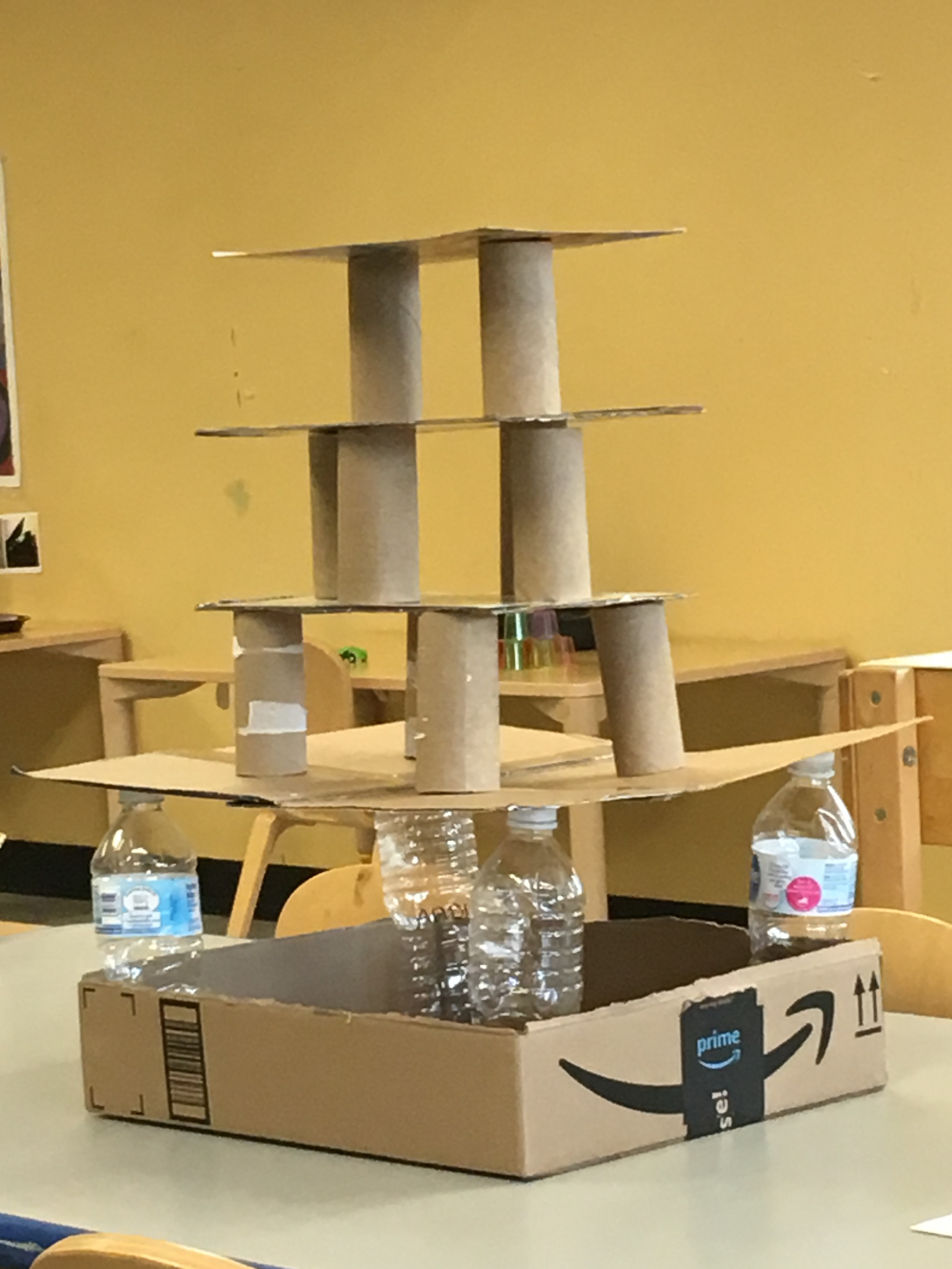
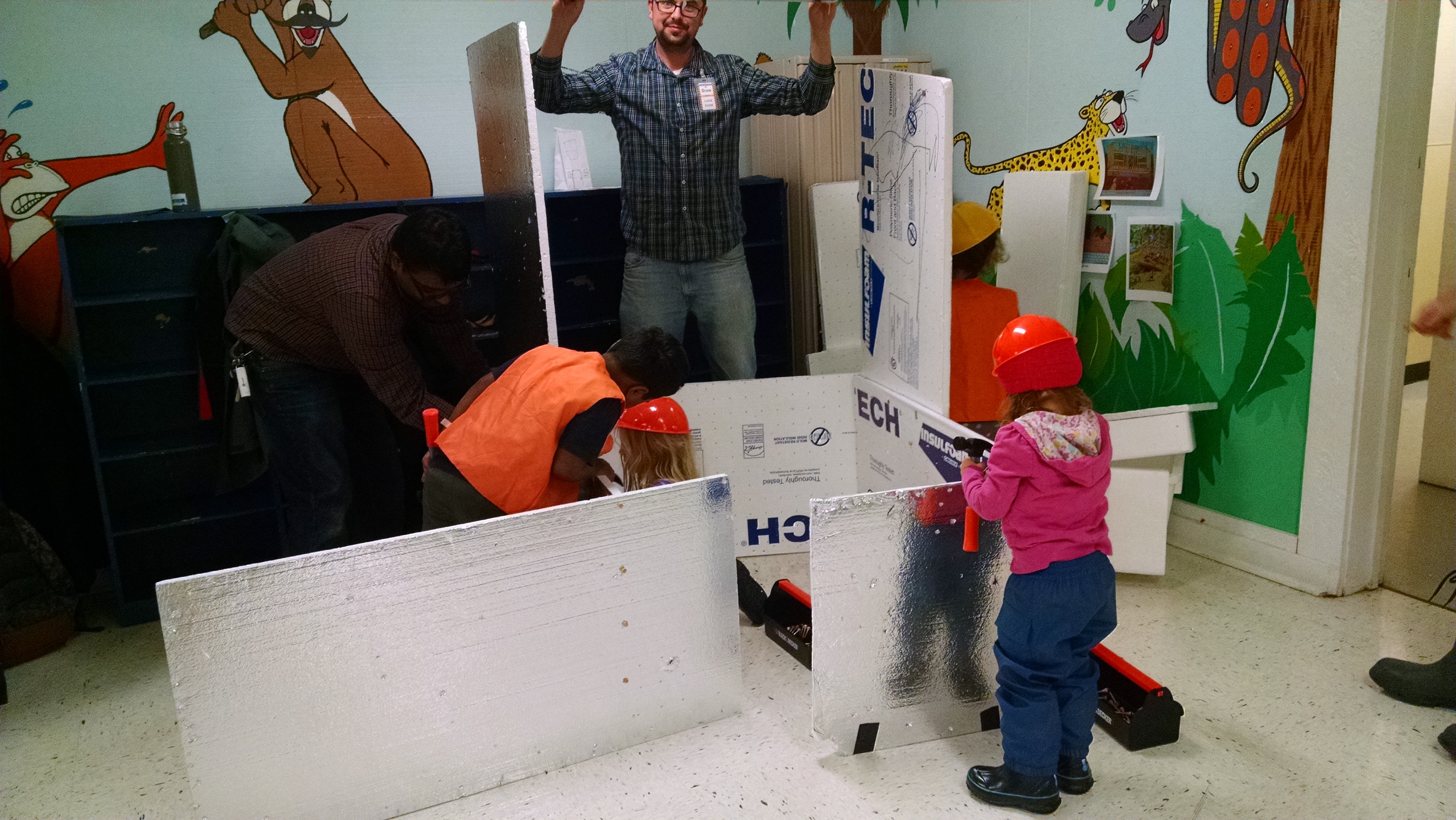
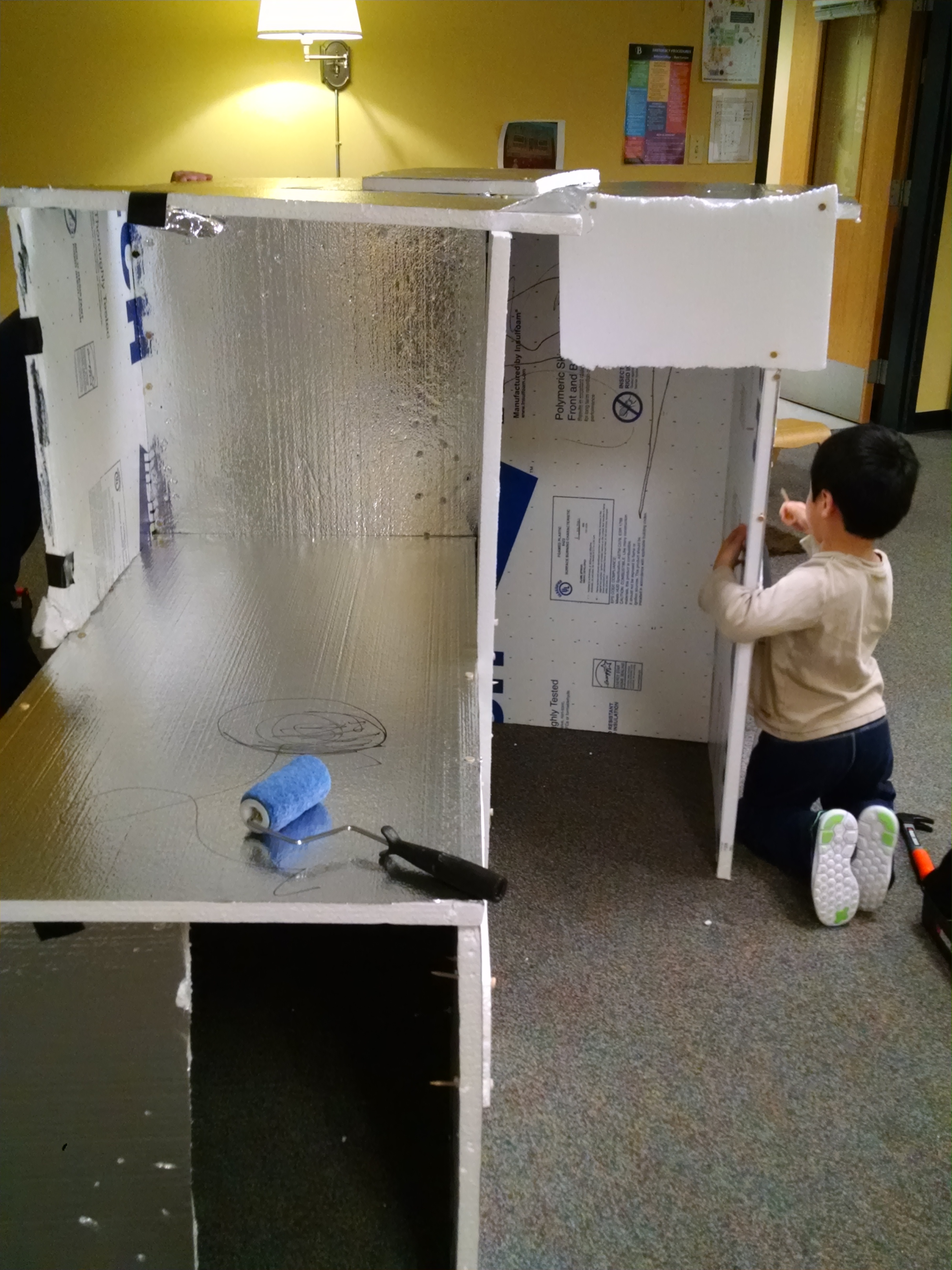
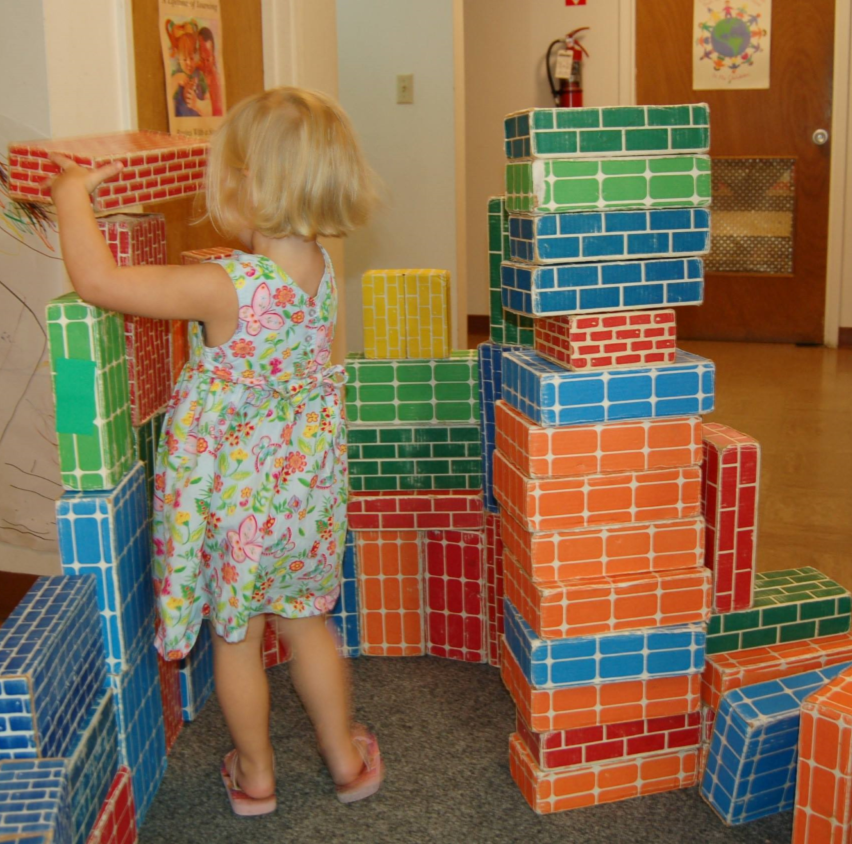
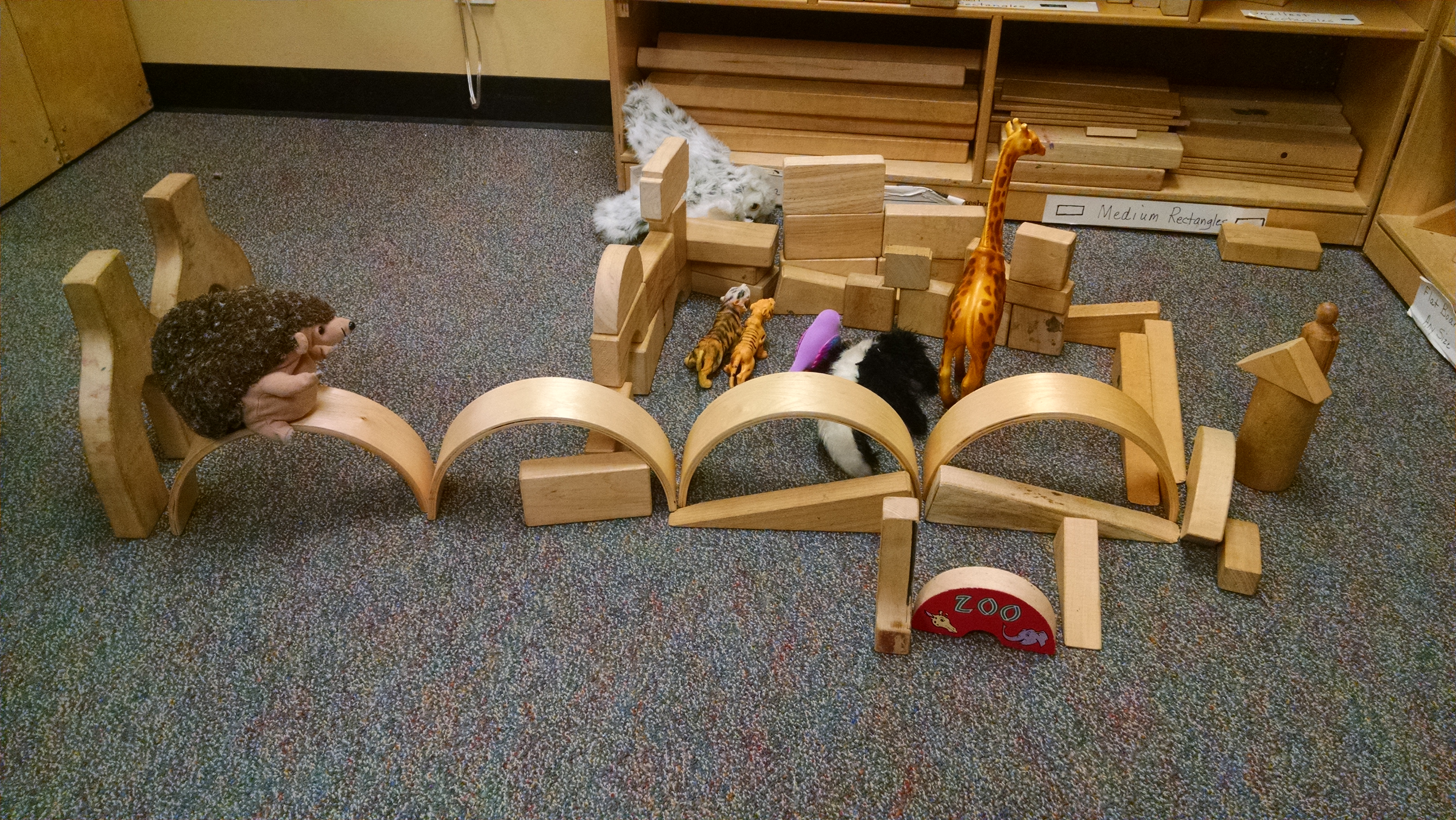
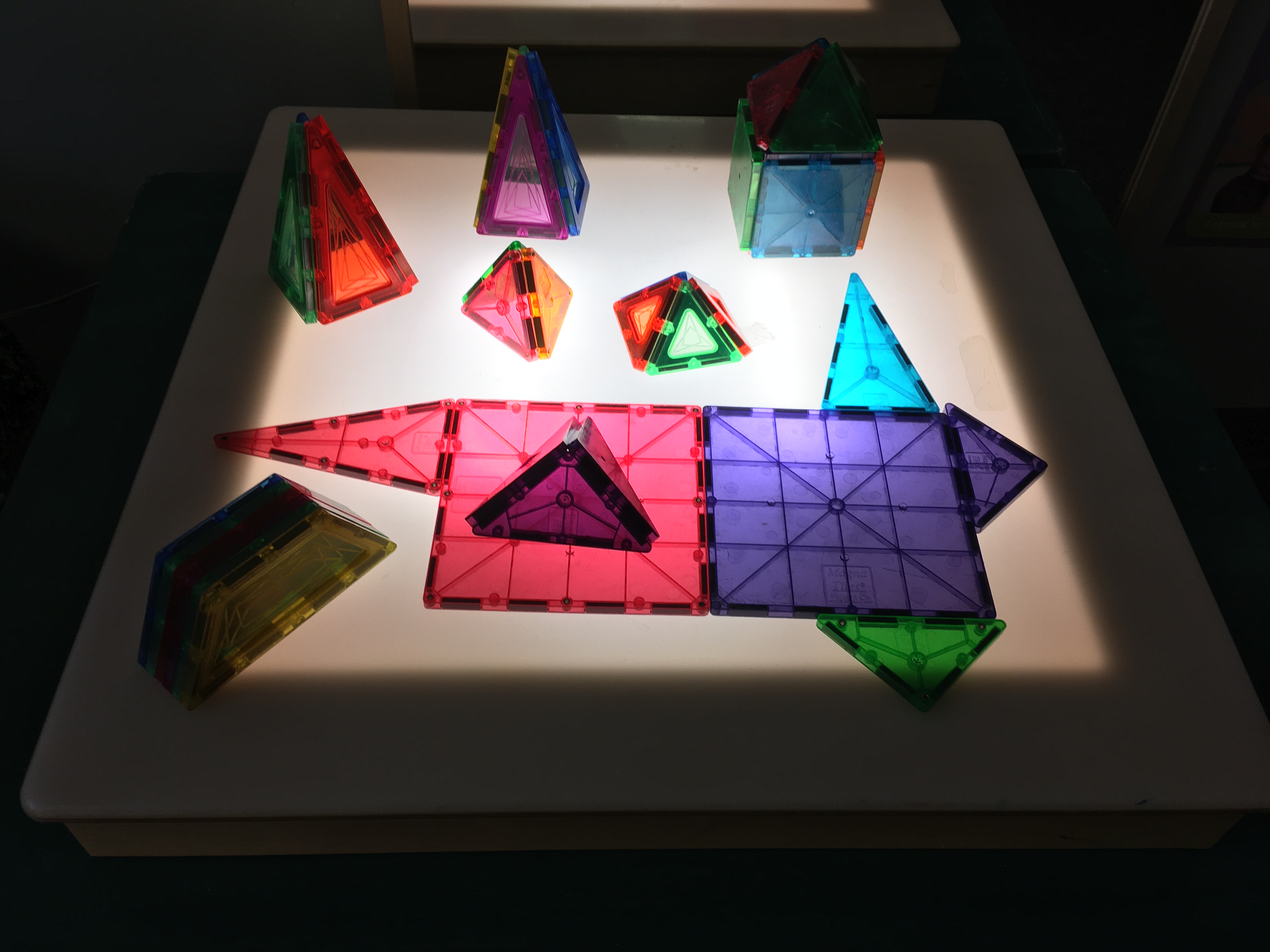
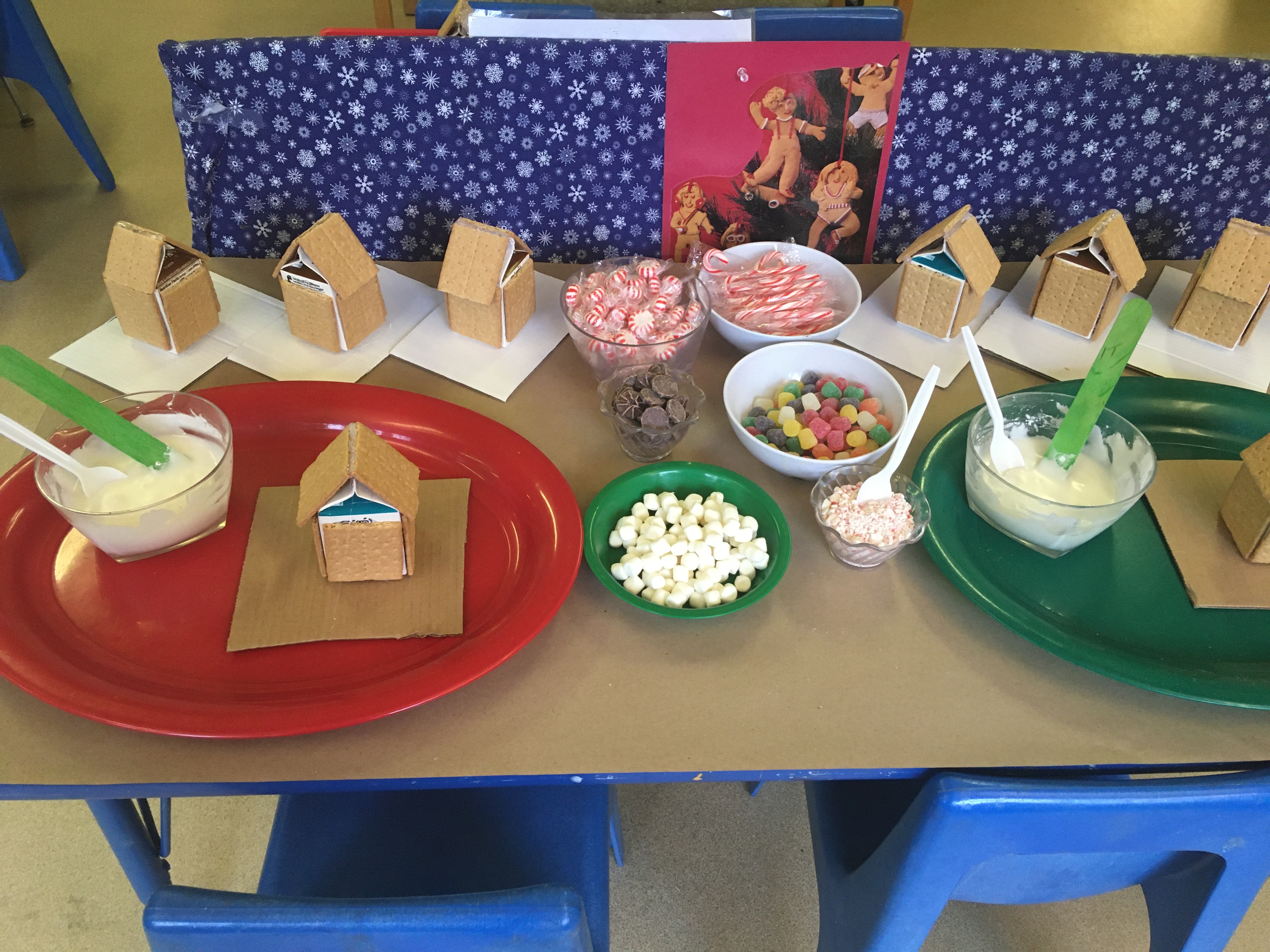
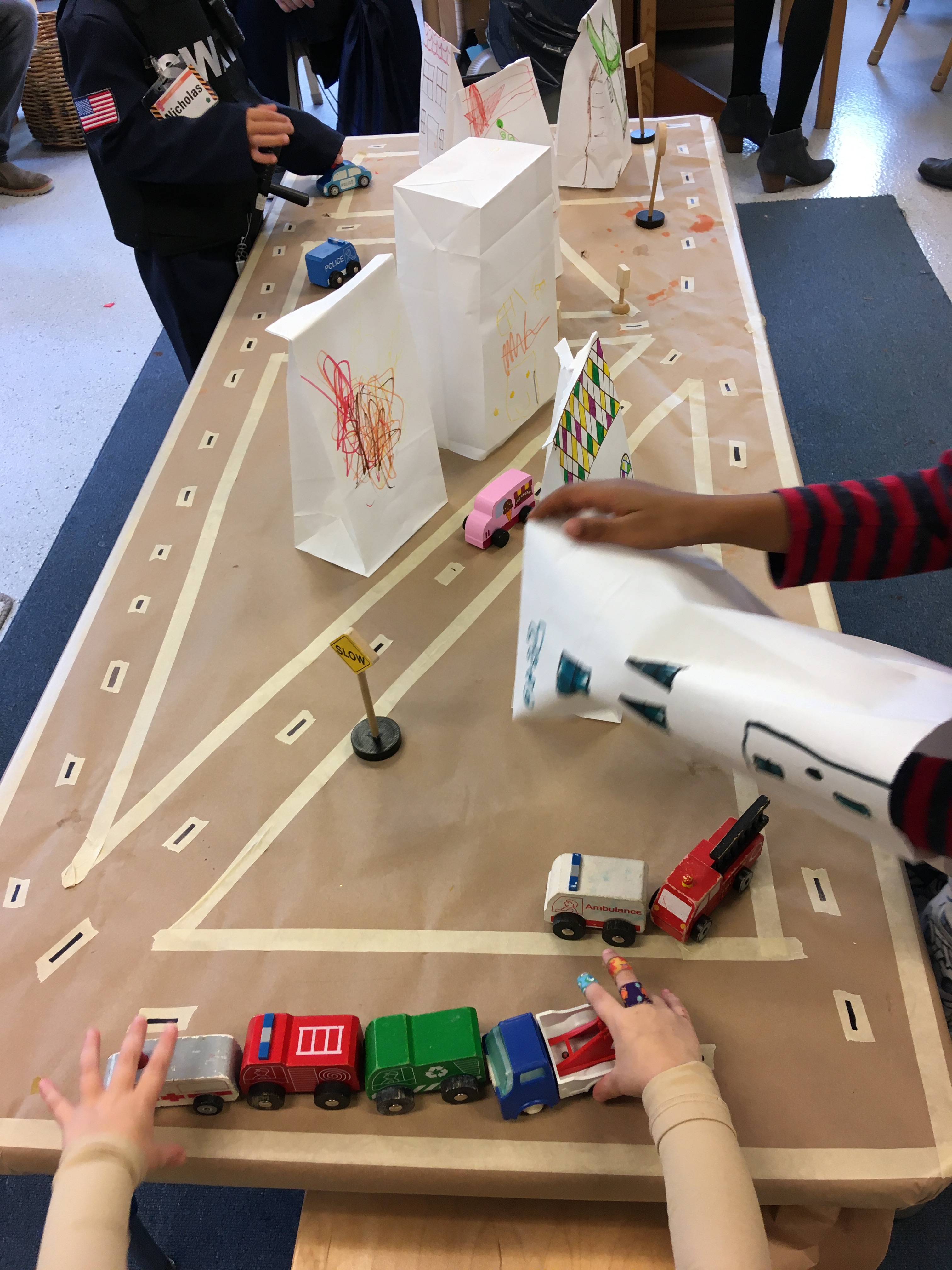
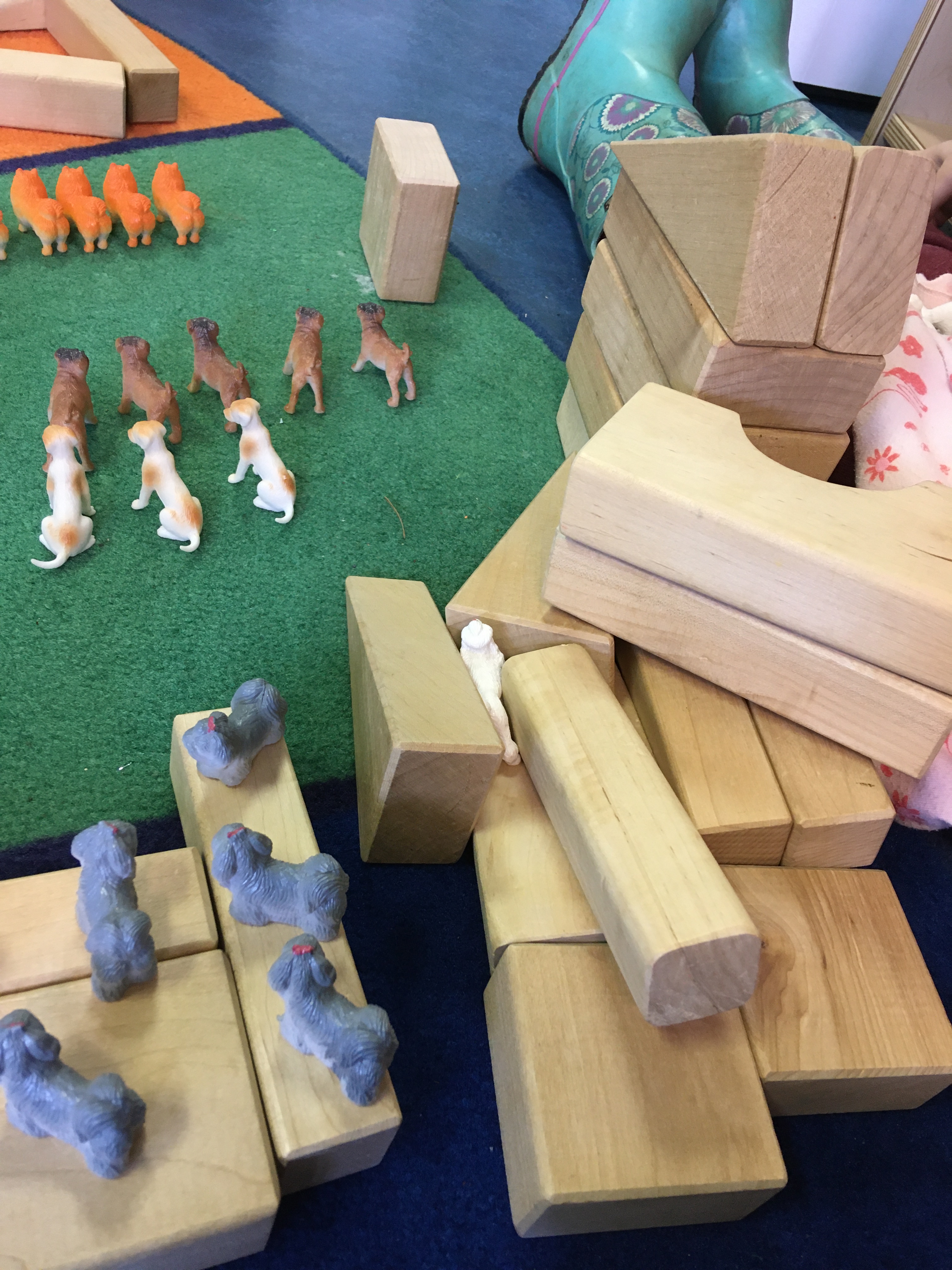
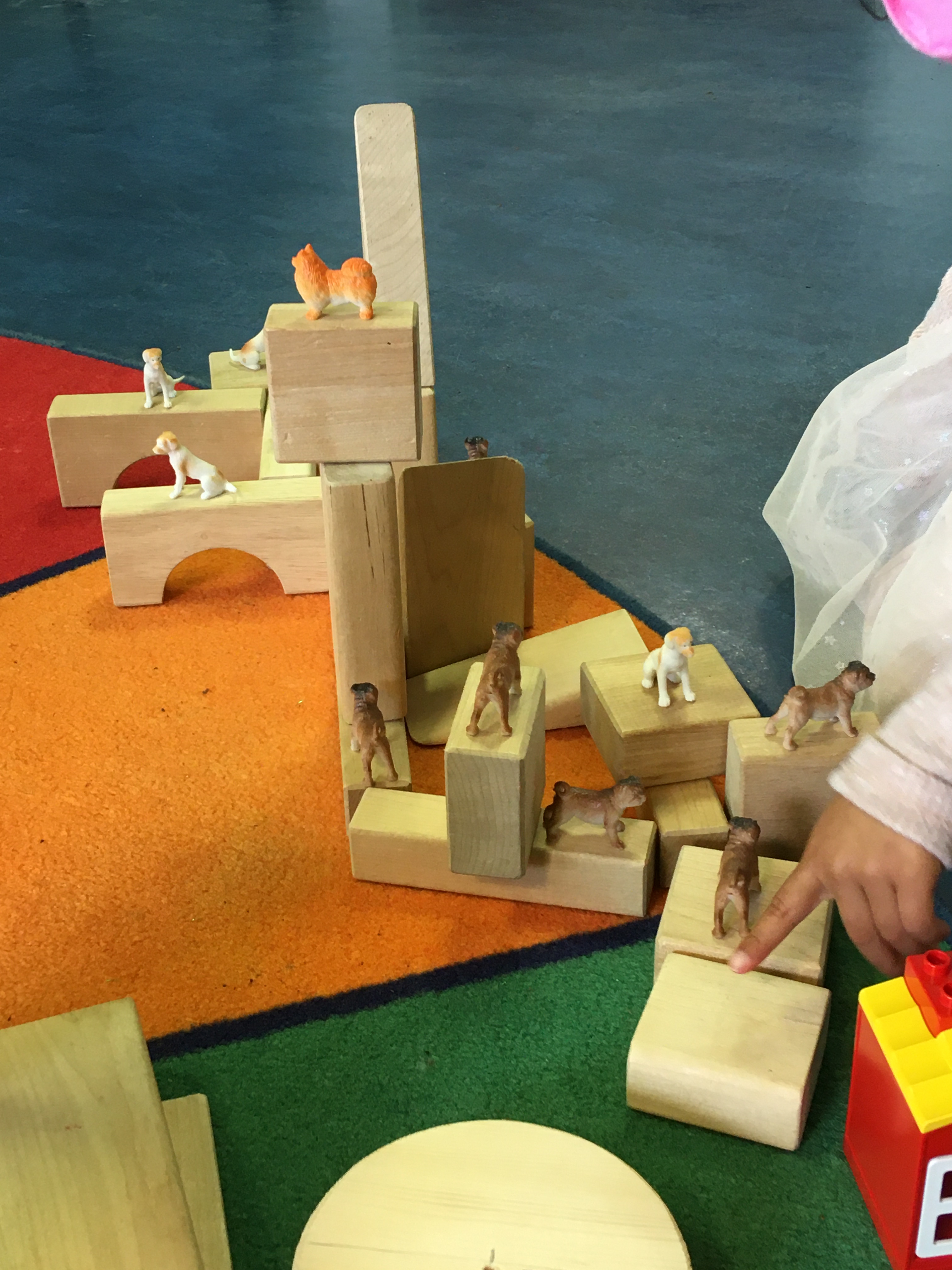
The Invitation to Play: the teachers may offer construction toys (like Legos, blocks, Magnatiles) or other creative building supplies (TP tubes, toothpicks and gum drops). Children are encouraged to use them to build any structure they choose. Teachers often mix in other supplies for inspiration: for example, add a toy giraffe and an elephant and children may build a zoo. Add cars and they’ll build roads and cities. Add pictures of famous buildings and they’ll build their representation of the Eiffel Tower. If one child wants to build a stable for her toy horses, and the other wants to make a spaceship, they have to negotiate how to share the blocks fairly.

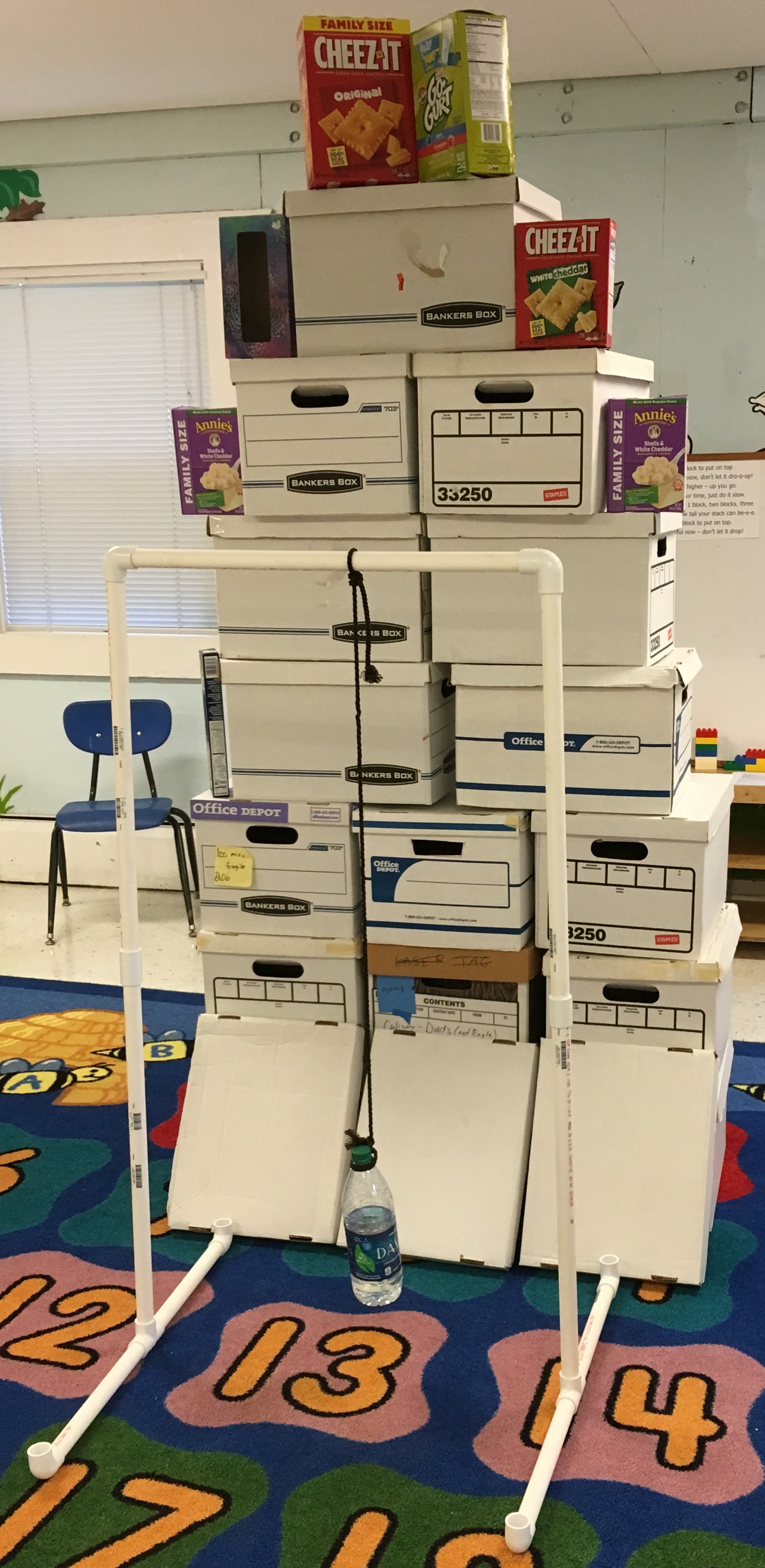
When children build, they learn the basics of physics, spatial awareness, an understanding of what makes something stable. They learn about sizes and shapes and patterns – essential math skills. They problem solve and experience logical consequences that guide them in how to try again and build it better. They view themselves as competent creators.

Puzzles, shape sorters, manipulables

When a child puts a puzzle together or works with specially designed early learning materials, they learn important ideas about shapes, sizes, patterns, the relationship of the part to the whole, eye-hand coordination, small motor skills, and problem solving. However, many parents don’t buy many puzzles or pattern blocks, because they may be something a child just does a few times and masters. But at a preschool, they may have a whole cabinet full of spatial challenges for your child to explore.

Sensory Play and Play Dough
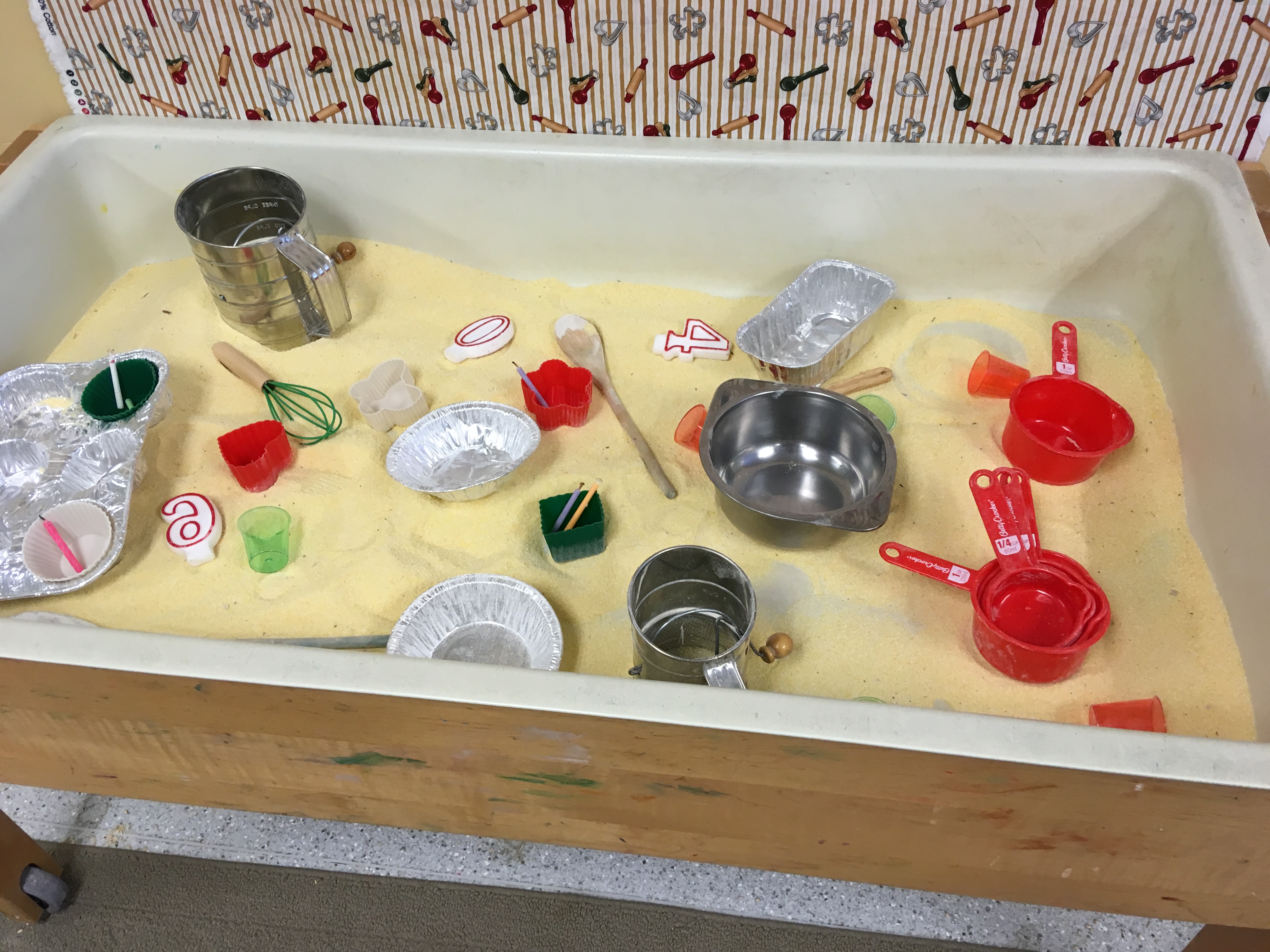
Sensory Play was once a staple of most preschools and many kindergartens. As public schools have shifted toward teaching academic skills that can be evaluated in standardized tests, sensory play is often phased out.

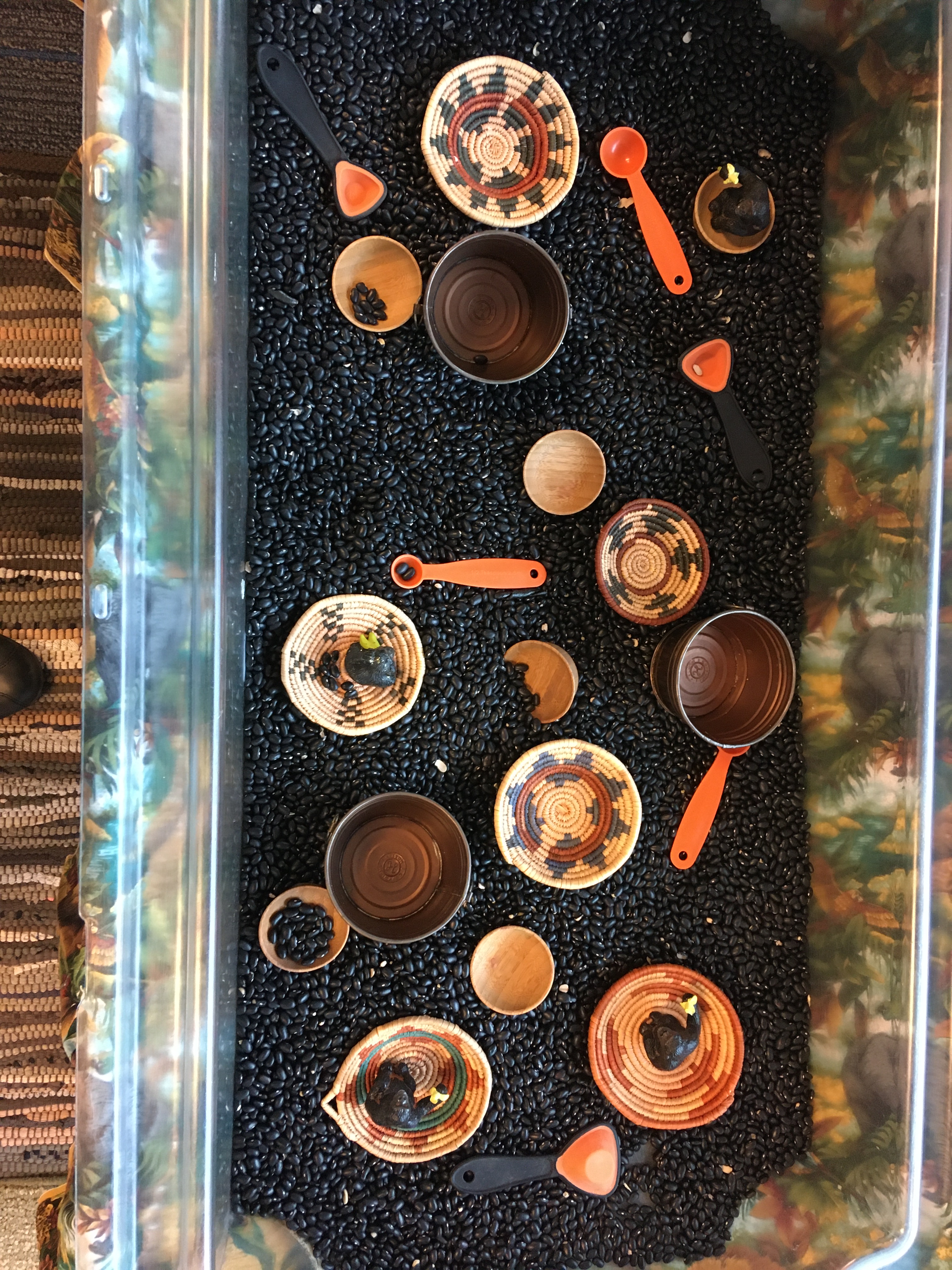
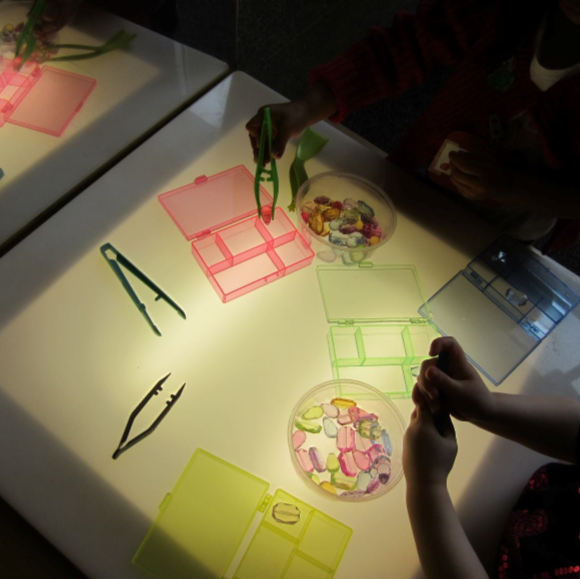
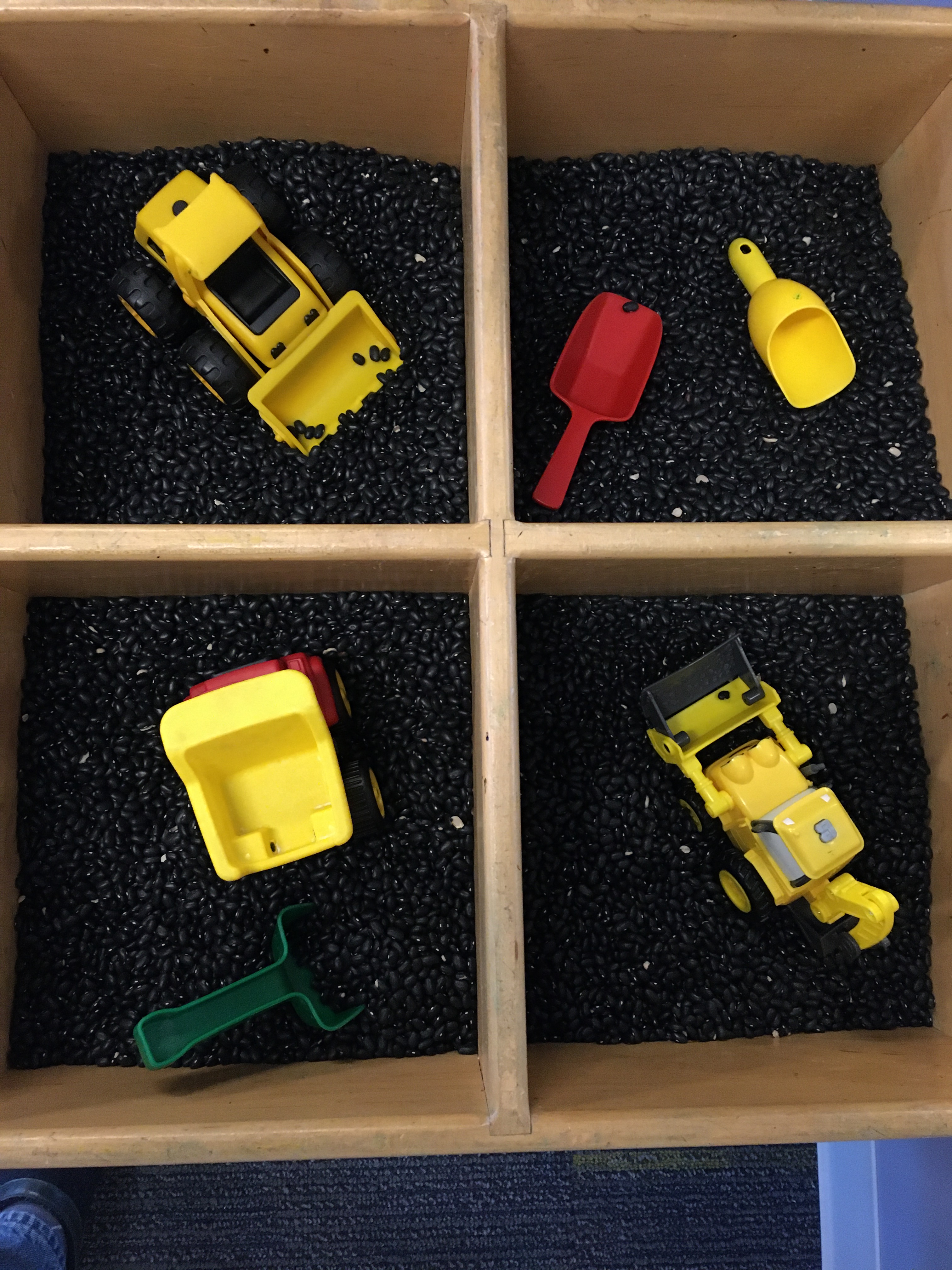
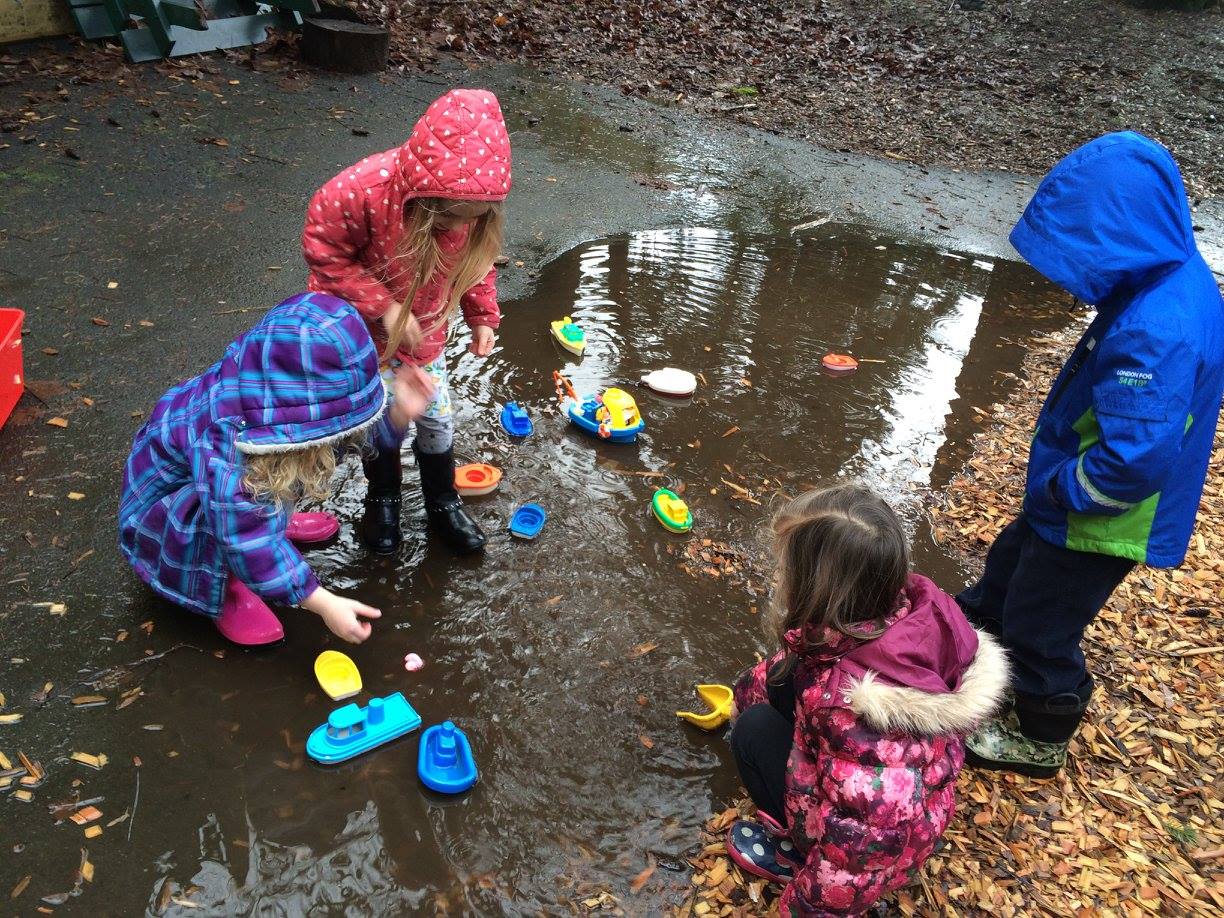
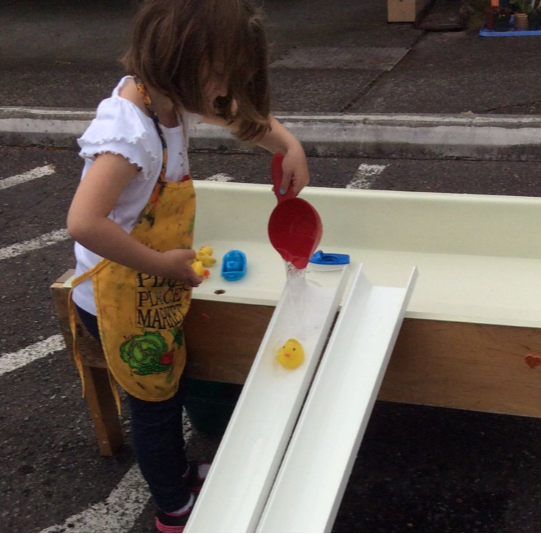
But when children play in a sandbox, or in a sensory bin full of rice or pompoms, or a water table, or on a light table, this multi-sensory experience can teach so many things. They build eye-hand coordination as they pour and scoop; learn concepts of empty and full, volume and weight – relevant to math; properties of solids and liquid in motion, that the amount of a substance remains the same even when the shape changes, and that some things sink and some things float (science!) They get comfortable with their hands being messy. (This is an important life skill – sometimes we all have to do messy things!)

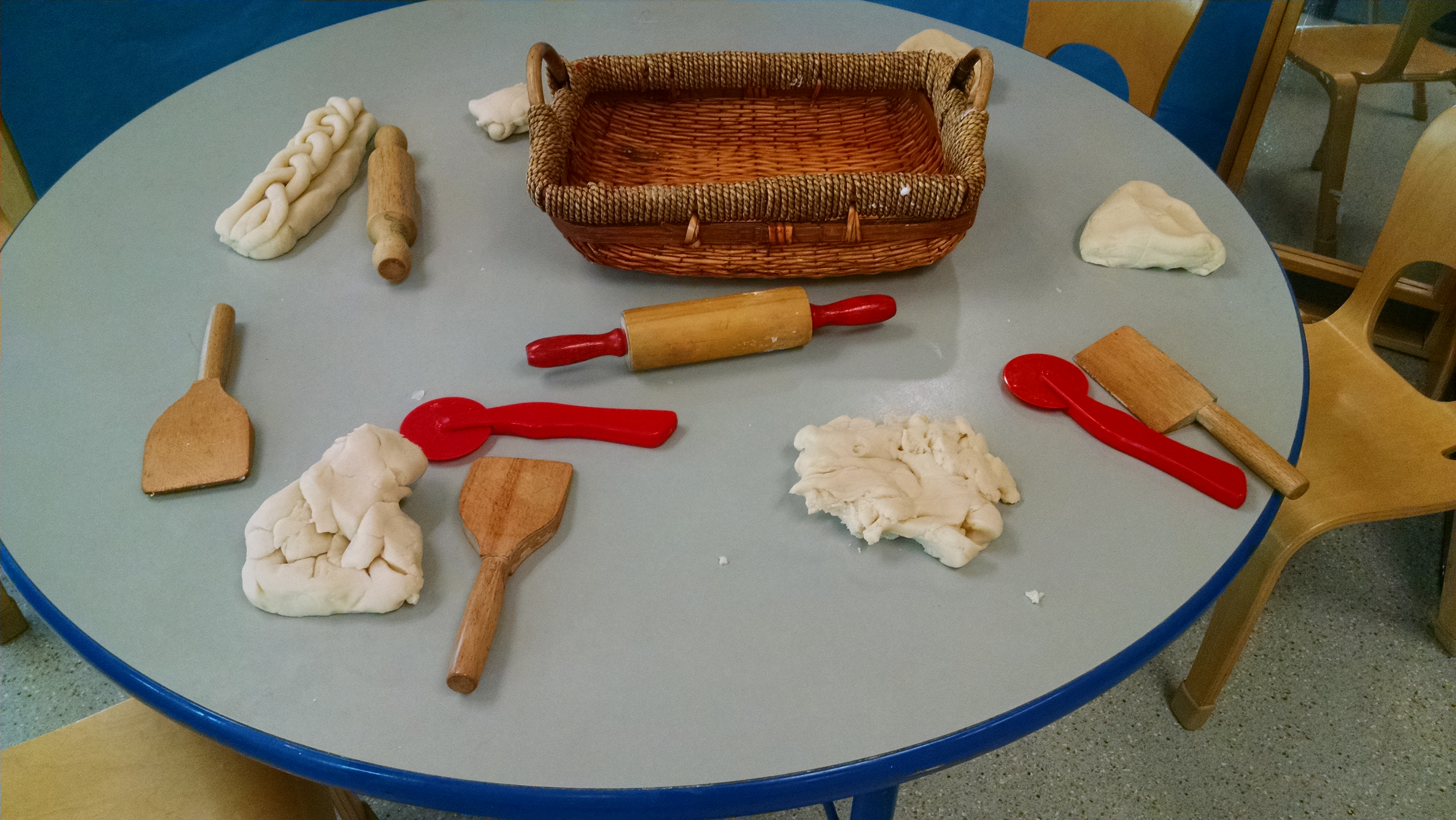
In the sensory tables, and with play-dough, they can explore how to use so many tools: tweezers, tongs, spoons, scoops, shovels, funnels, rolling pins, cookie cutters, egg beaters and whisks, pipettes and eye droppers, scales, measuring cups and spoons, potato mashers, pizza cutters…
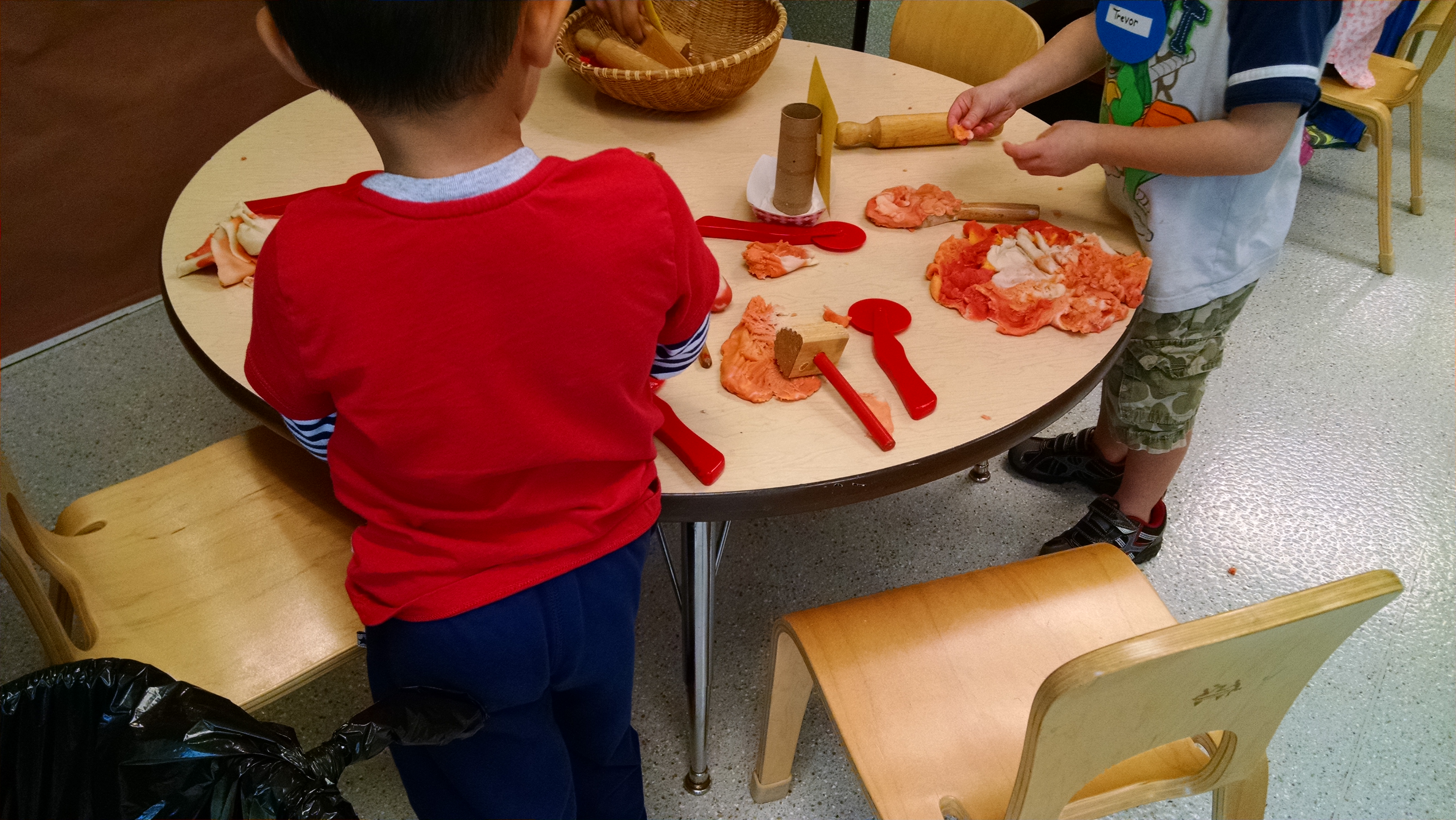
Playdough also gives children the opportunity to

  • express feelings, squeezing and pounding
  • learn about negative and positive space when they cut out shapes with a cookie cutter (this helps with reading)
  • build finger muscles

Art Process / Writing Practice
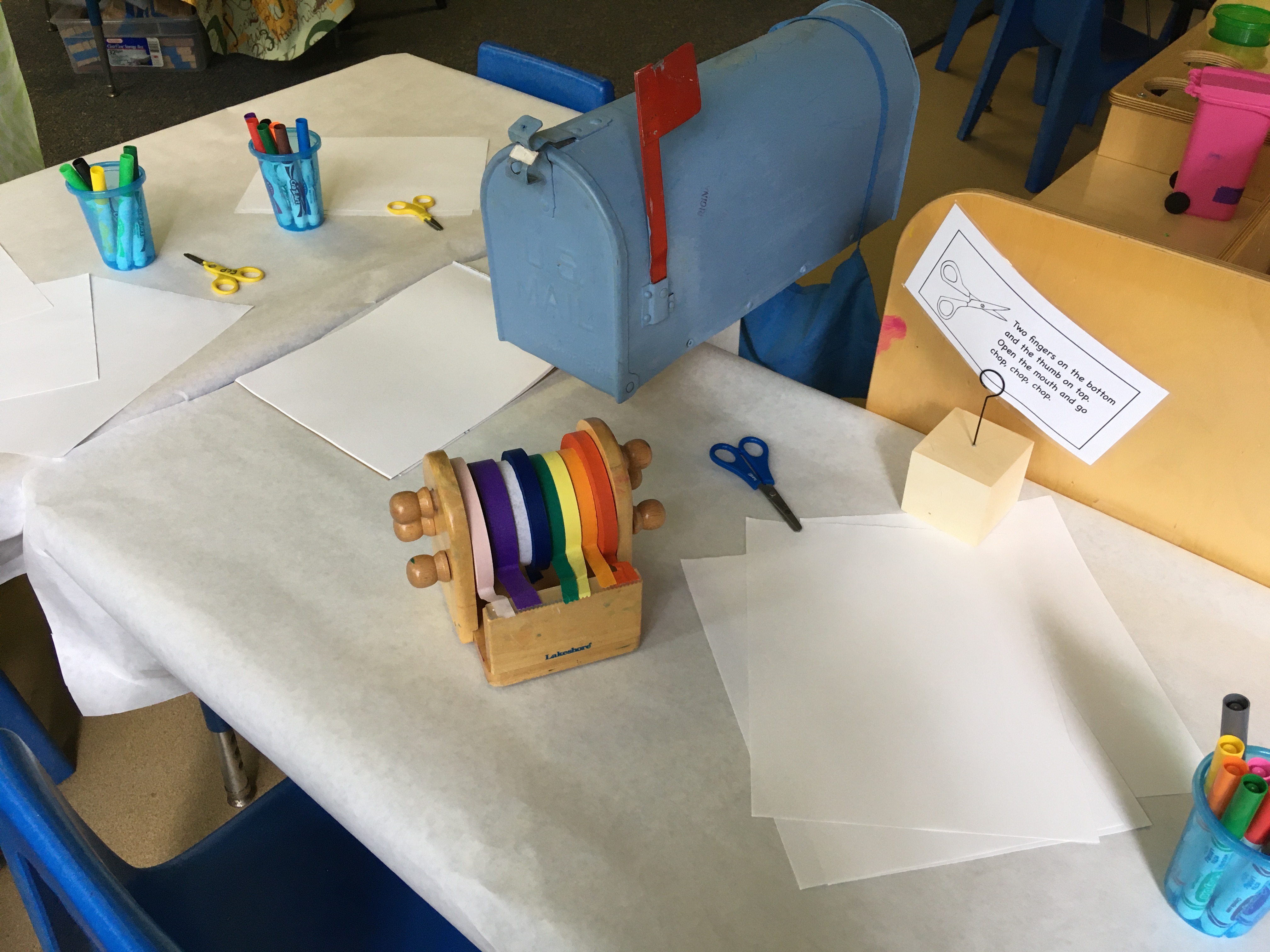
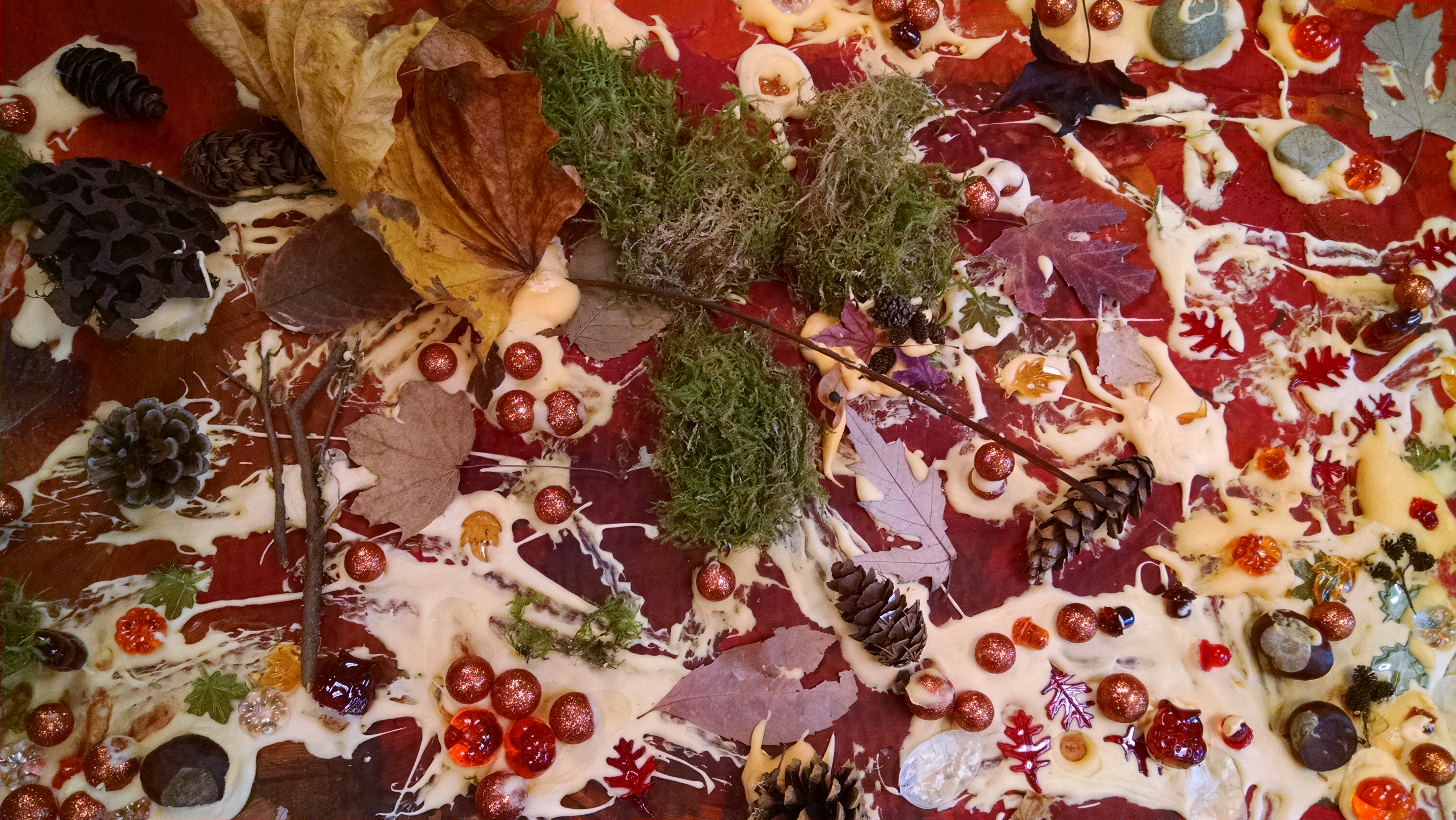
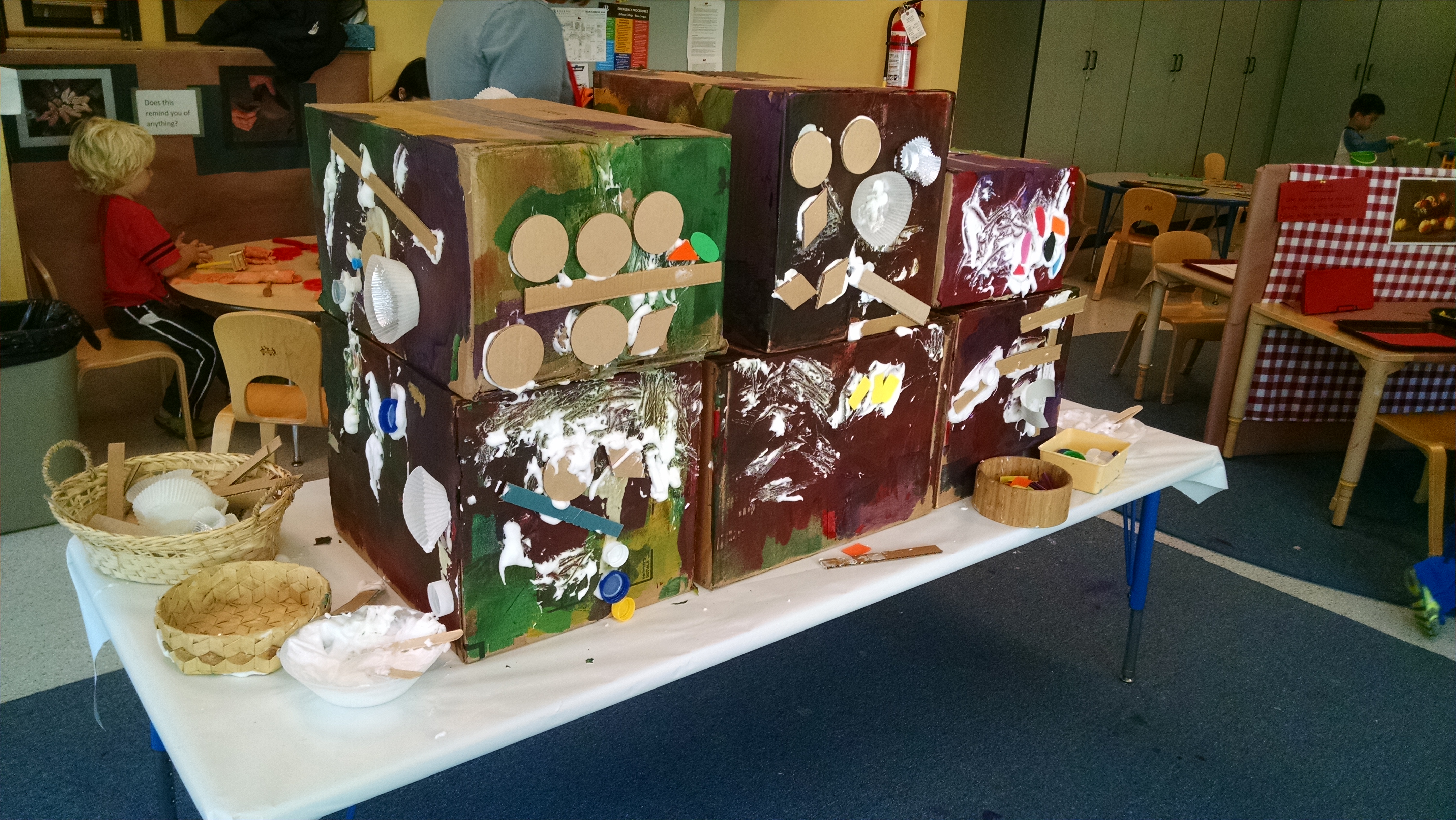
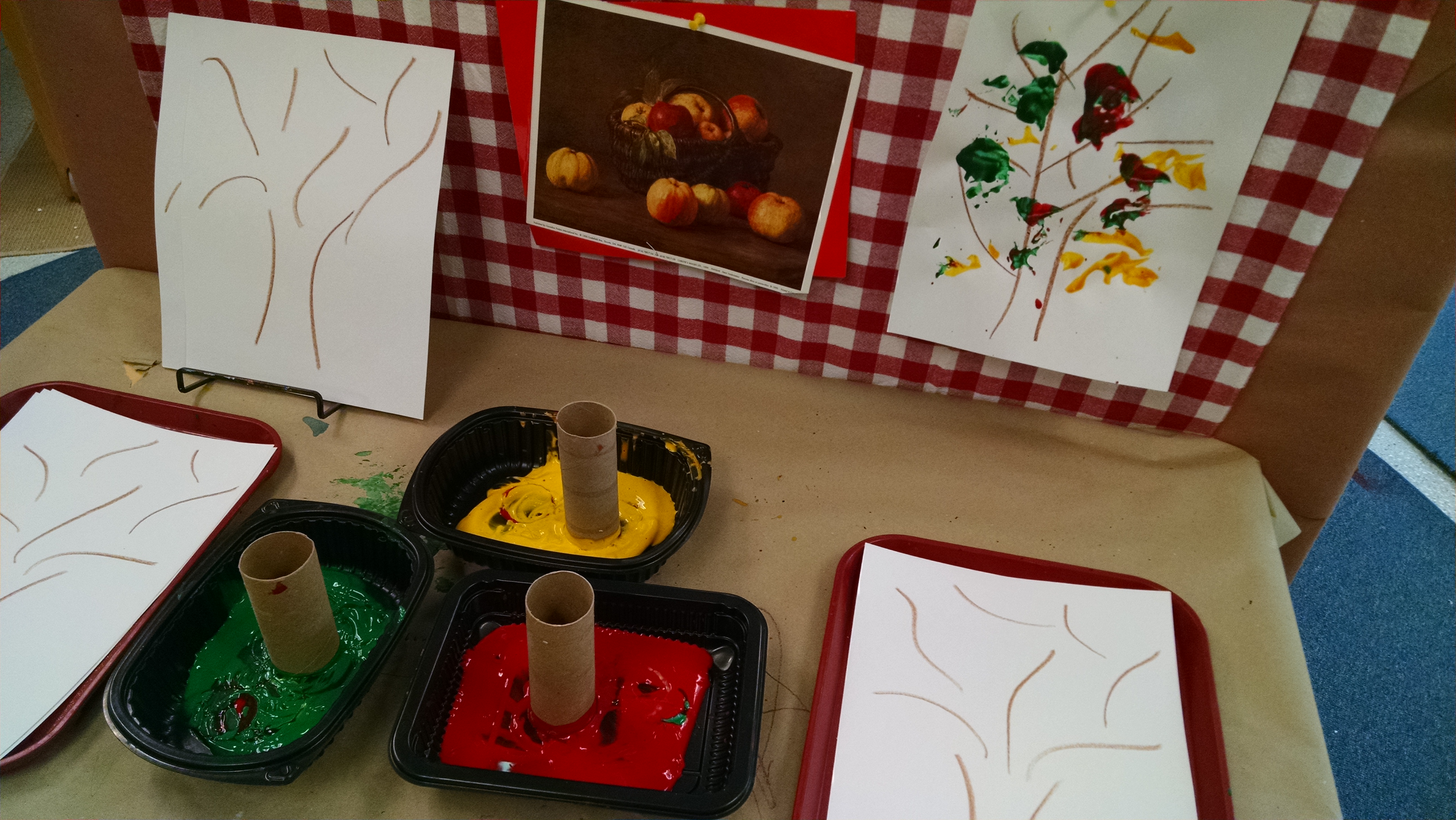
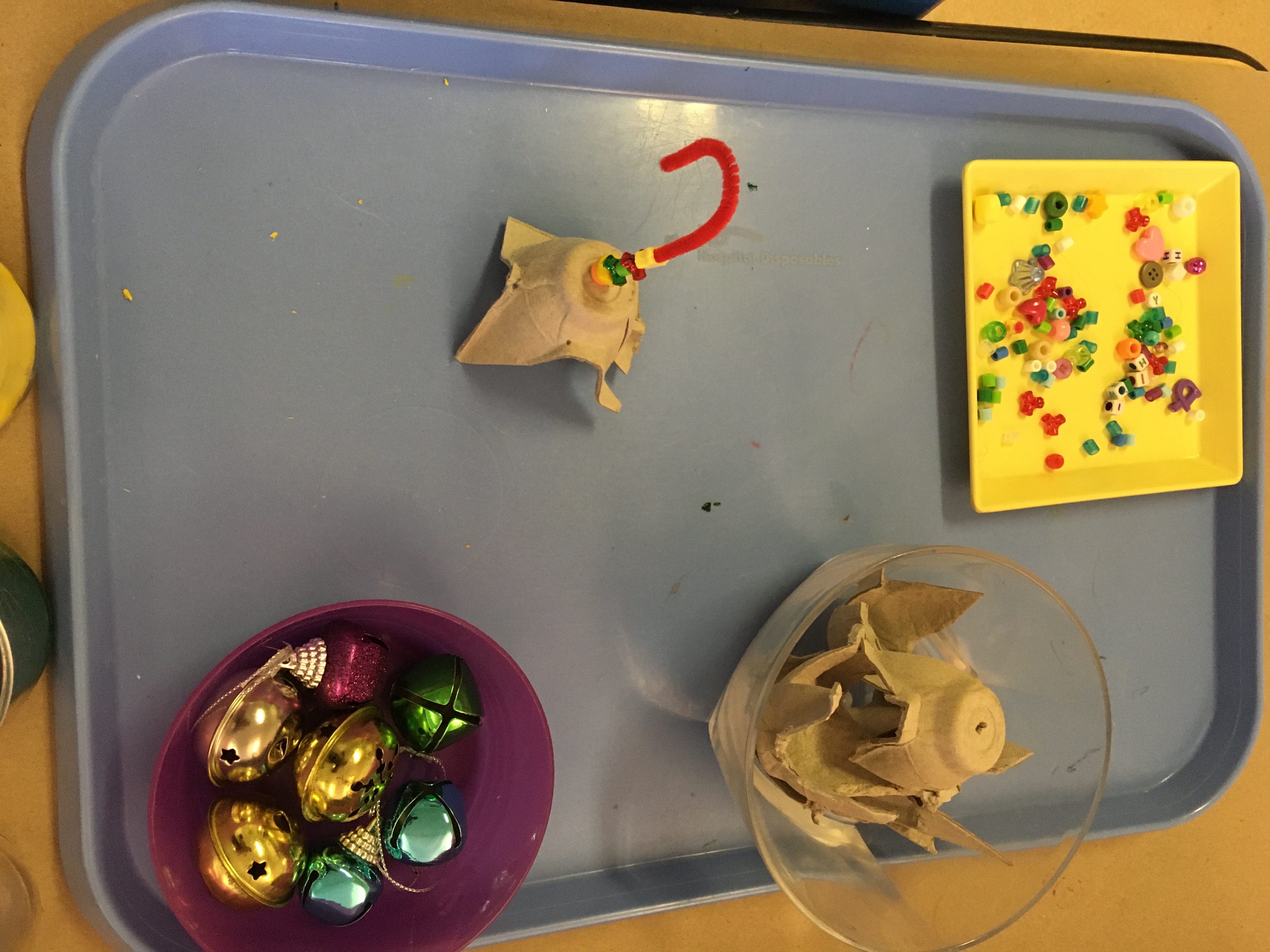
Preschools often have an easel set up every day, with various kinds of paints and various kinds of painting tools – brushes, rollers, sprayers, or sponges. Children are free to paint anything that they choose to. Many preschools have a “creation station” for collage, offering cardboard and paper for bases, glue and tape, and miscellaneous things to glue on: pompoms, googly eyes, plastic lids, tissue paper scraps, styrofoam popcorn, pretend jewels… almost anything! Many preschools have a writing station with office supplies – paper, markers, pencils, pencil sharpeners, staplers, hole punches, scissors, stickers, rubber stamps, envelopes and so on. Children can make cards for their parents, signs to support their pretend play, booklets, anything they choose. We also do wacky things like salad spinner painting or painting with cars or putting a paper plate on a record player and drawing as it goes round and round.

These are all process-based art activities. No one is dictating what they must create there or what the final product needs to be. It’s completely up to the child to envision something and to make it real.

The children learn how to use all the tools and all the media, they build their finger muscles and their pencil holds, they learn names of colors and how to mix new colors, they learn to recognize shapes and to create shapes, they learn about symmetry, balance, and design. The art is a creative outlet for expressing their feelings and learning that their ideas have value.

Art Projects and Crafts

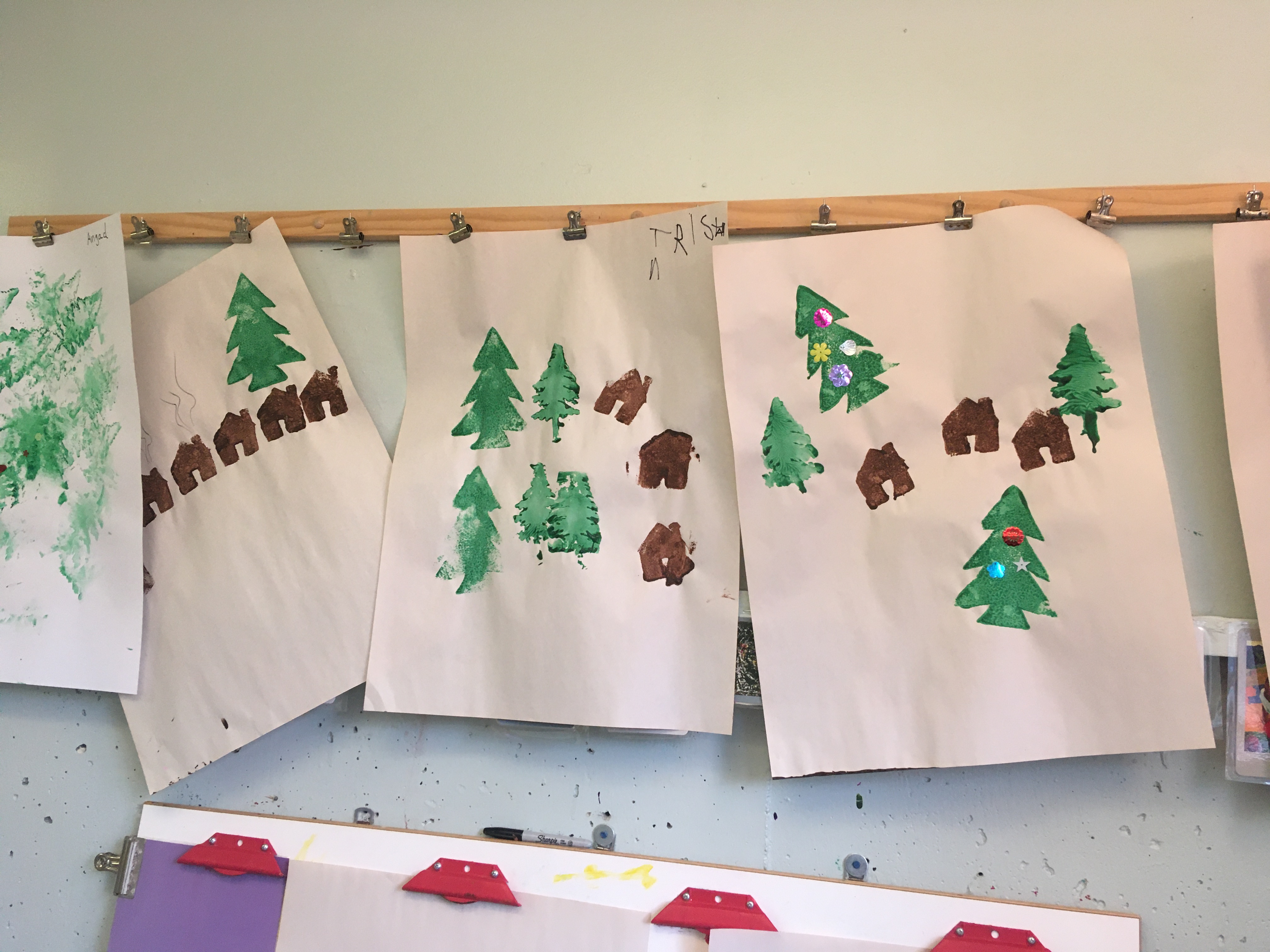
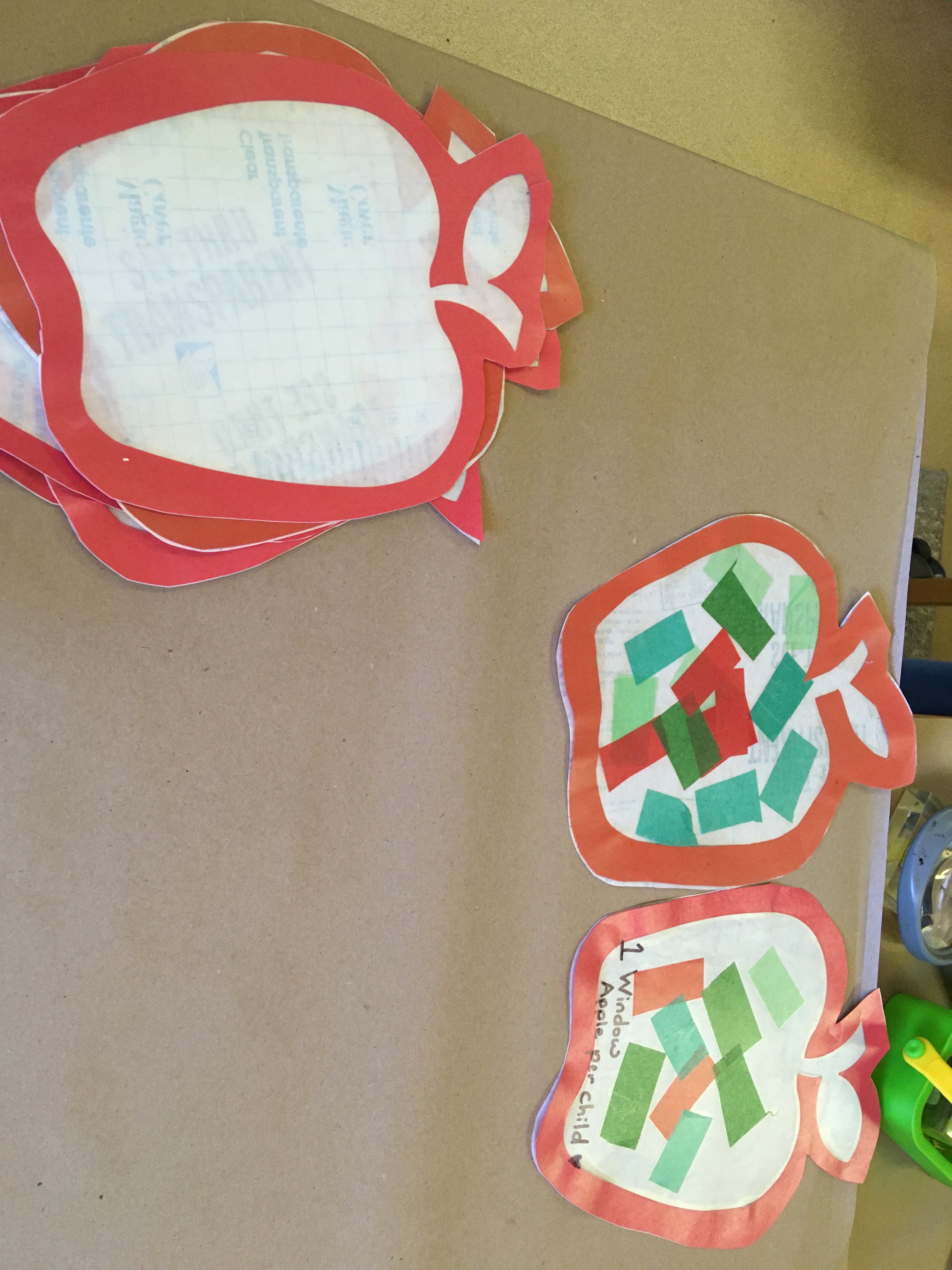
In addition to art process, we also have projects. These are activities where the teacher creates a sample and puts out all the materials for kids to make a project similar to the sample. It’s up to the child whether they want to use the materials in that way or do something else with them. But we do encourage them to try re-creating some projects, because it gives them practice with following multi-step directions. It lets them practice close observation skills and learn how to imitate or re-create what they see. We can build new skills into these projects they can then apply elsewhere, such as a project where they practice cutting curvy or zigzag lines.

Cars and Trains / Doll Houses / Play Farms

We have toy trains, toy cars, bulldozers and more. Children learn how wheeled vehicles move through the world and what happens when they crash. They learn how things need to be pushed up hills, but going downhill, they go fast on their own (physics!). And, because these toys tend to be very popular with our active, high energy kids, they also often provide opportunities to practice sharing and conflict resolution!

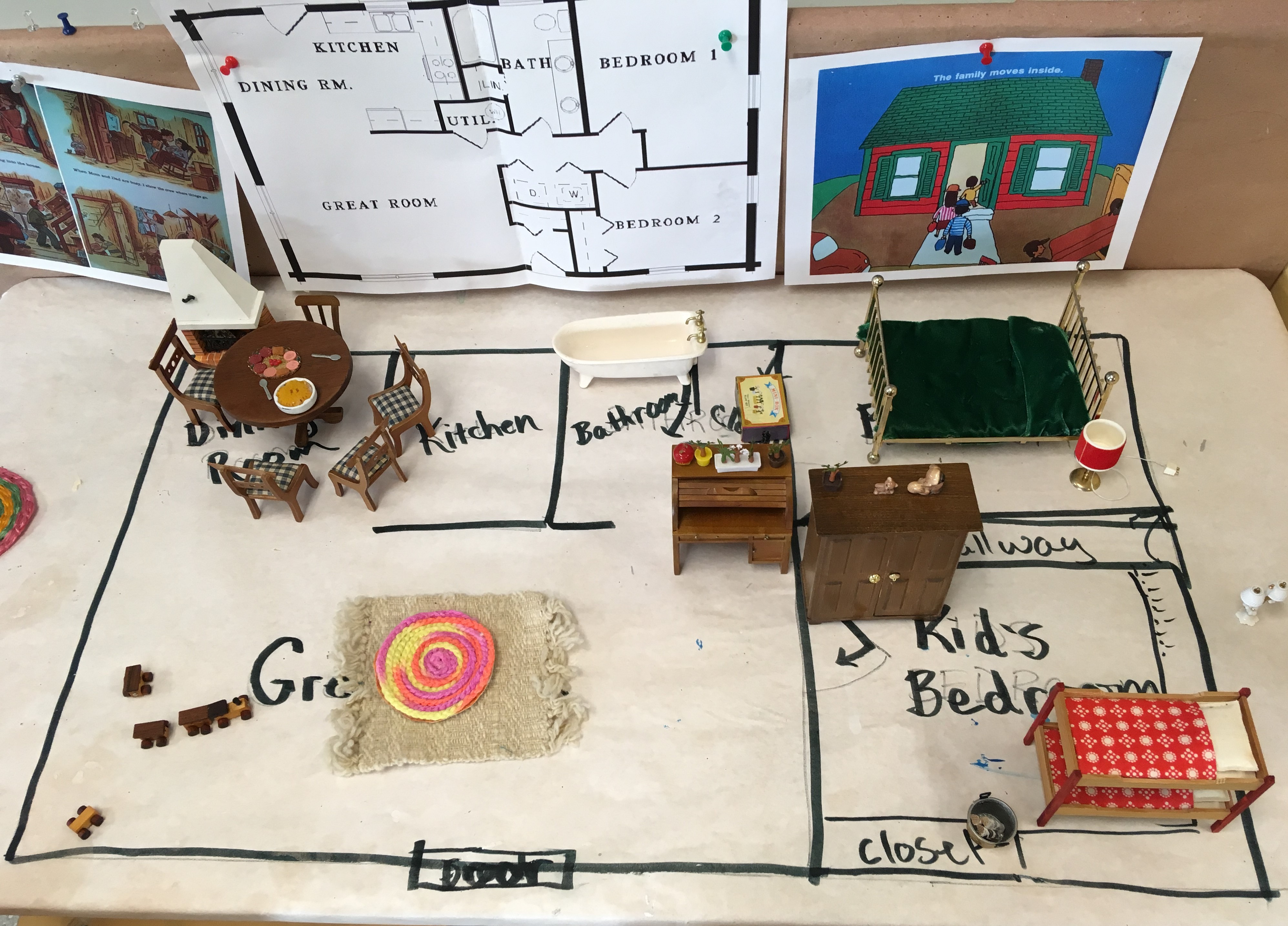
We have small dolls and doll house furniture. We have small plastic farm animals and farm equipment, woodland animals, and zoo animals. Kids may play with these and the cars on their own or they may be combined with the blocks, sensory bins, art supplies, pretend houses we made, and more. When children play with these small worlds, they do a lot of sorting (“I’ll put all the cows in this stall and all the horses in this stall”), counting (“I have 7 racecars that are ready for the race to begin”), and story-telling (“the lions were all roaring at the elephants”). They also co-create with other children – playing side by side sometimes, but then having their horse talk to the other horse, or their doll call the other’s doll to the table for food.

Dramatic Play
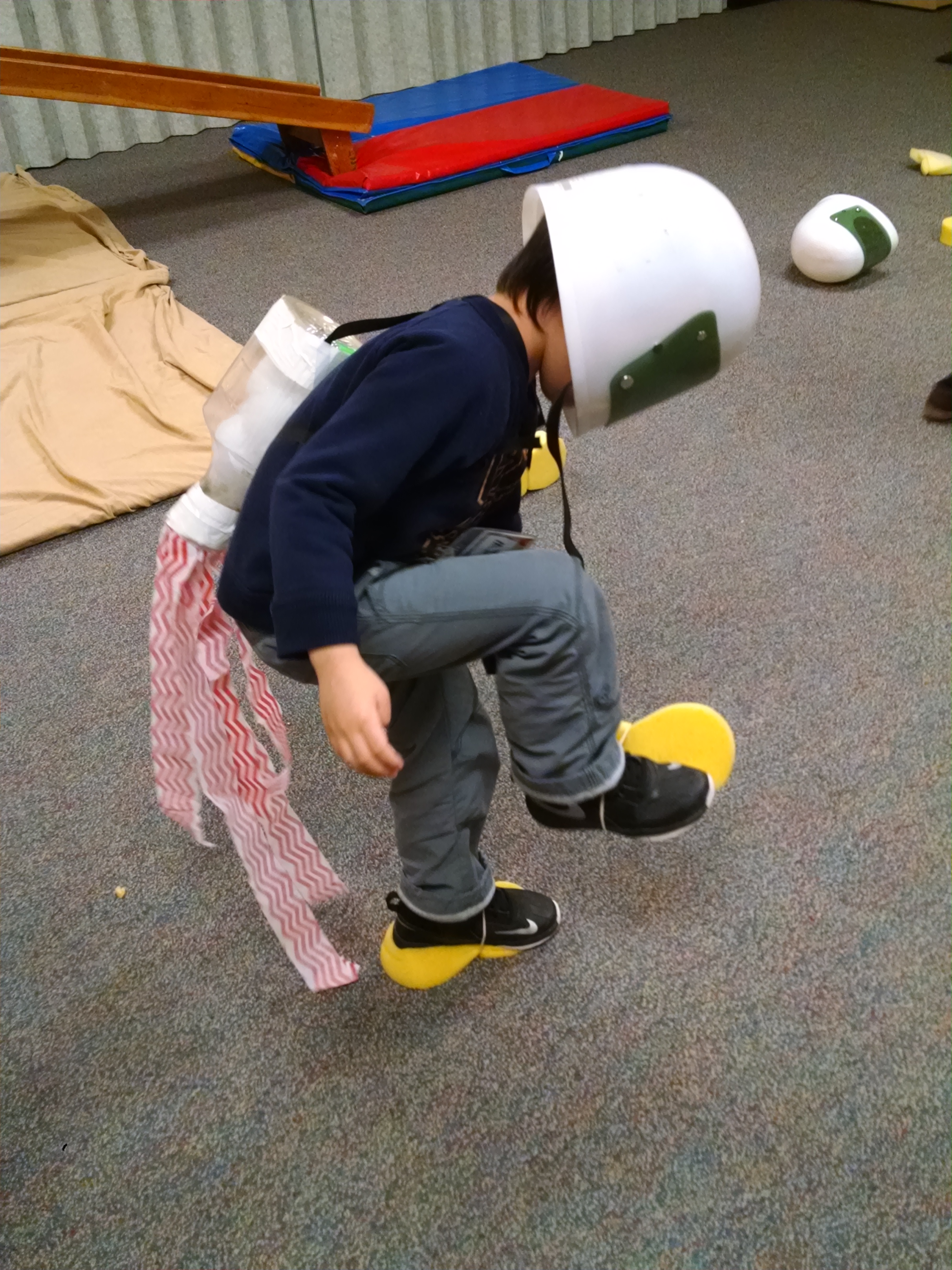
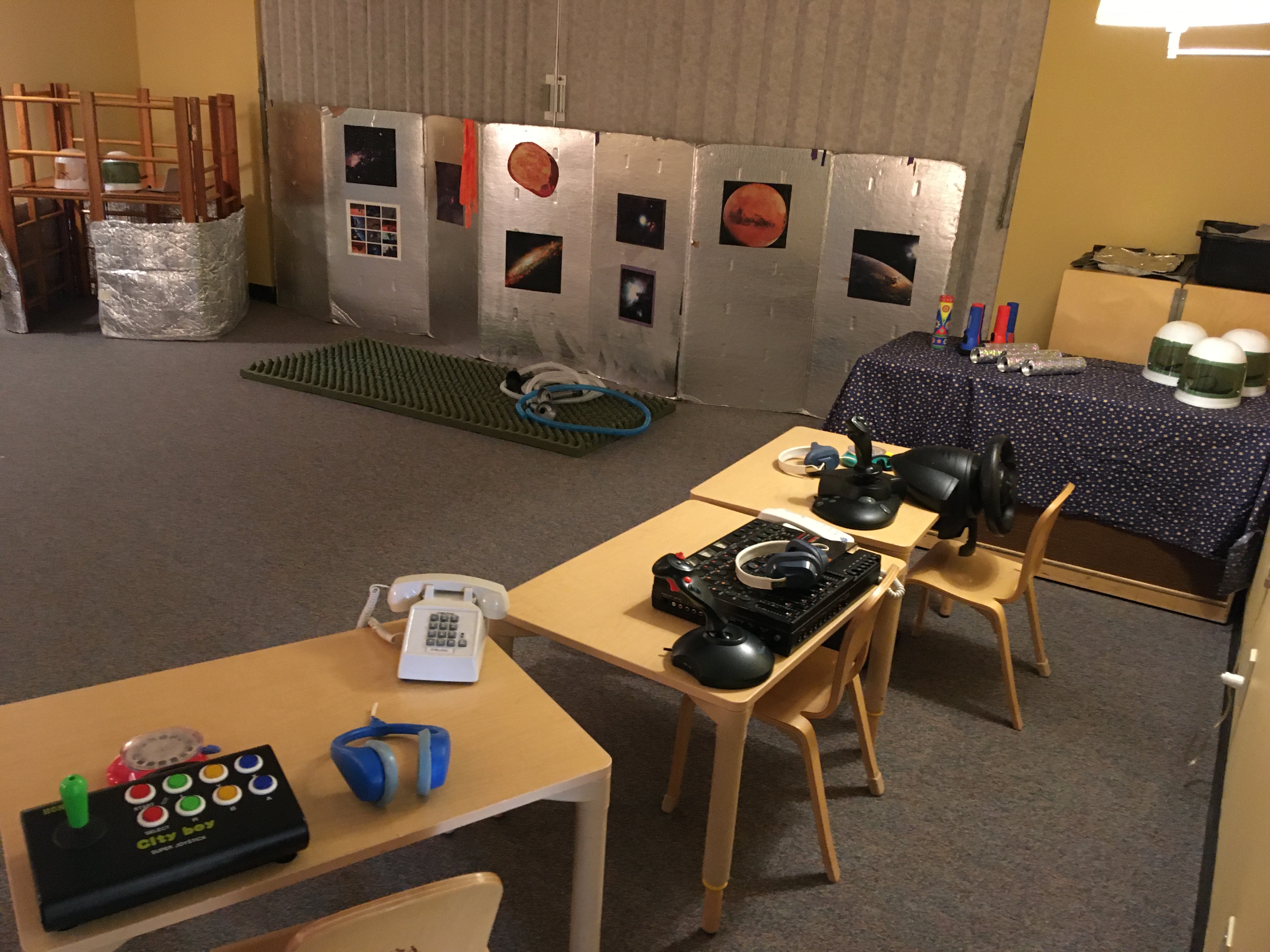
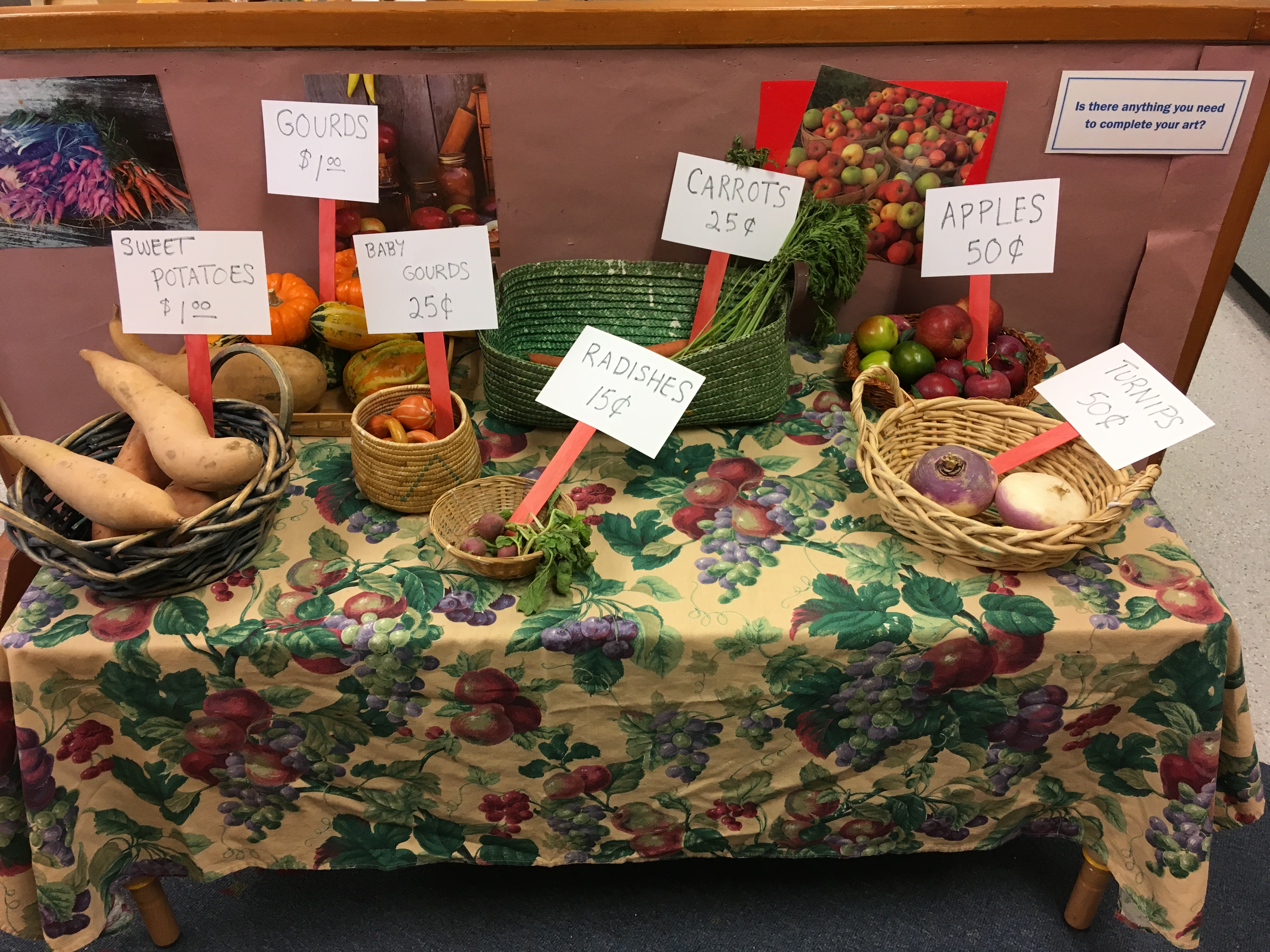
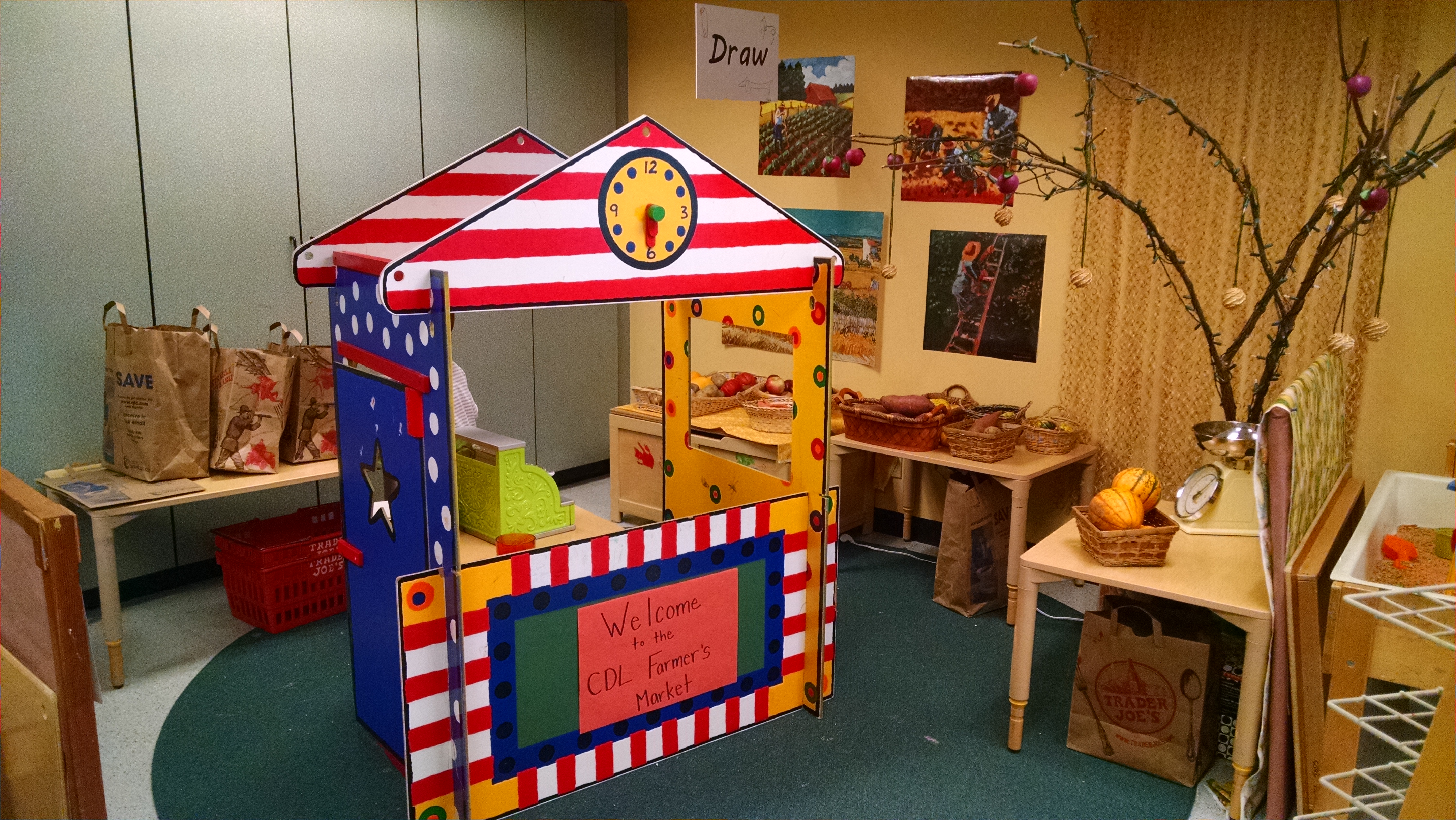
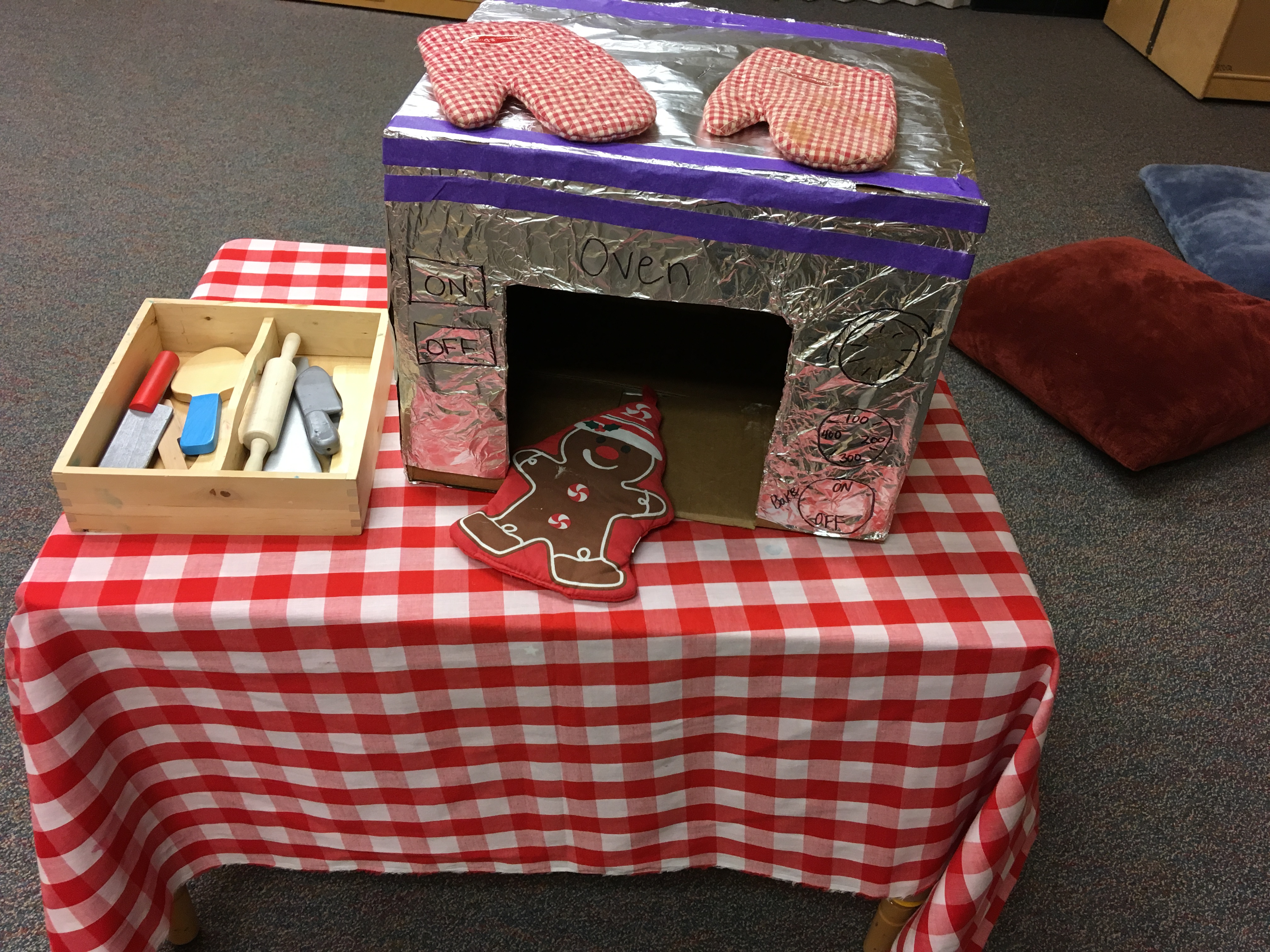
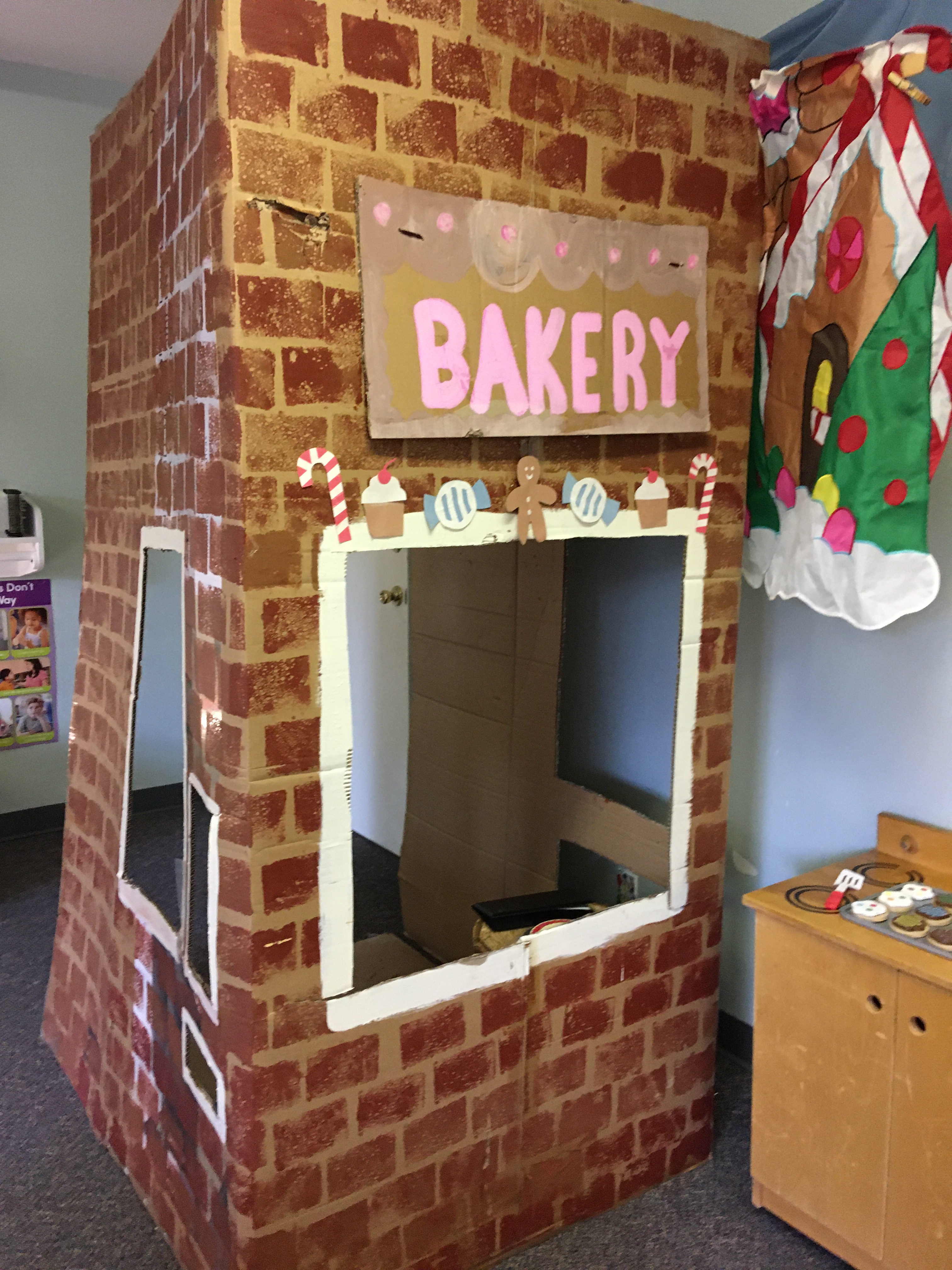
Most preschools have a play kitchen full of pretend food, dress-up clothes that allow children to play out many roles, plus baby dolls and stuffed animals to practice nurturing skills with. Many of those materials may be available every class during the year so children have lots of chances to explore them and use them in many ways. Teachers may also have special themes for dramatic play: maybe a farmer’s market in the fall, a gingerbread bakery in December, a valentine post office in February, or a spaceship and mission control.

With dramatic play, children learn to use their imagination, try on different roles, explore other cultures, imitate parenting behaviors they see in their lives, role play a variety of careers, and explore gender roles. Lots of complex language practice happens during pretend play. This area also builds social skills as they have to negotiate about which roles each child will play and what the story line will be.

Board Games and Active Games

Whether it’s Candyland, Bingo, Hide and Seek or Tag, all games offer practice at understanding and following rules, learning how we all get along better when we can agree to and follow the same rules, and learn how to be a good sport – winning with grace, and recovering from the disappointment of losing.

Books and Literacy
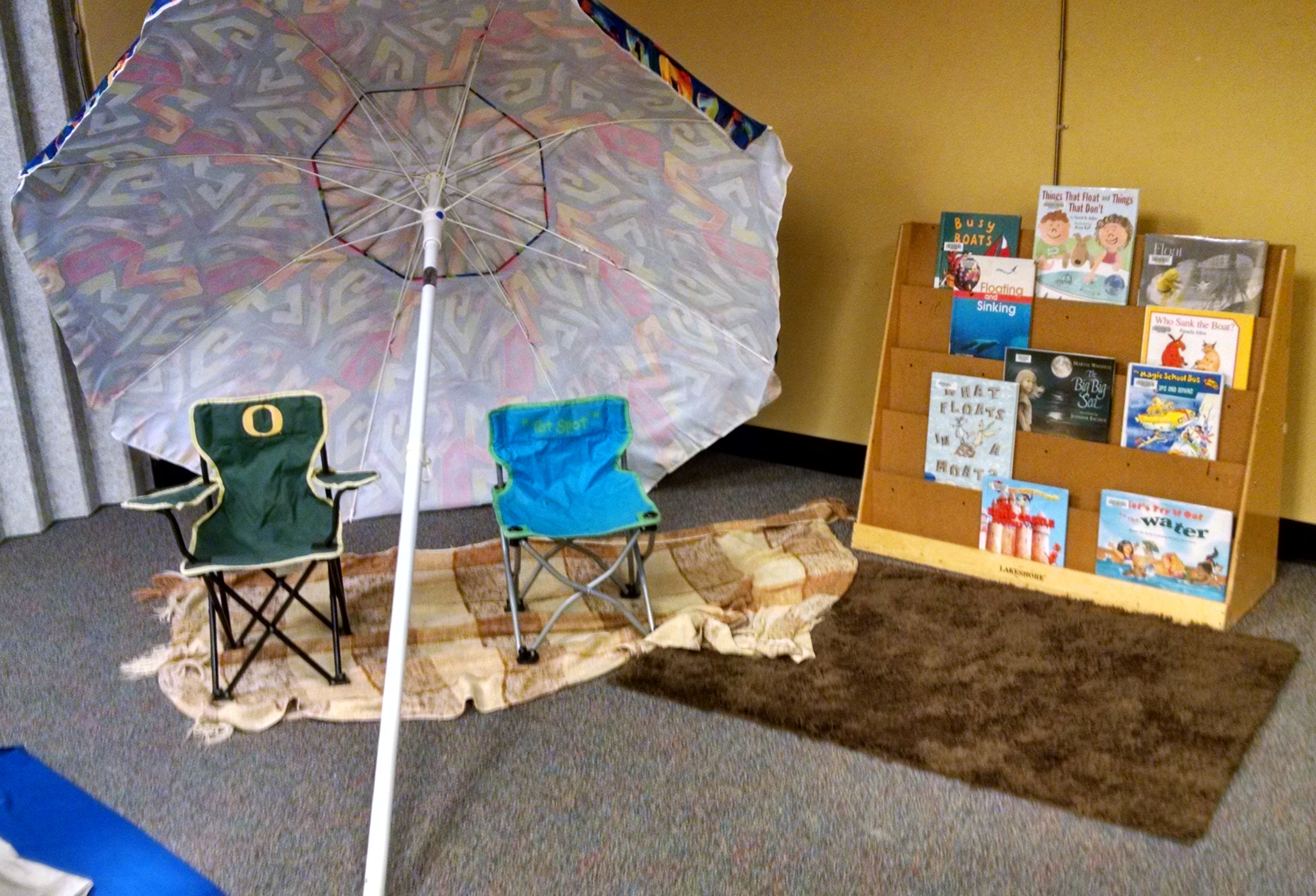
Stories are always available in a preschool classroom. Some schools (like Waldorf) use only oral storytelling, but in most, there are books available. They may be used during group time, but also available for independent exploration. Literacy practice may also be incorporated elsewhere: signs or menus in the pretend play area, books on CD to listen to, board games, and in art projects.

Children learn that letters on a page represent words – language written down, then learn to interpret pictures and to follow the development of ideas in the plot of a story. Most important, they see that learning to read is important and enjoyable.

Large Motor Activities / Outdoor Play
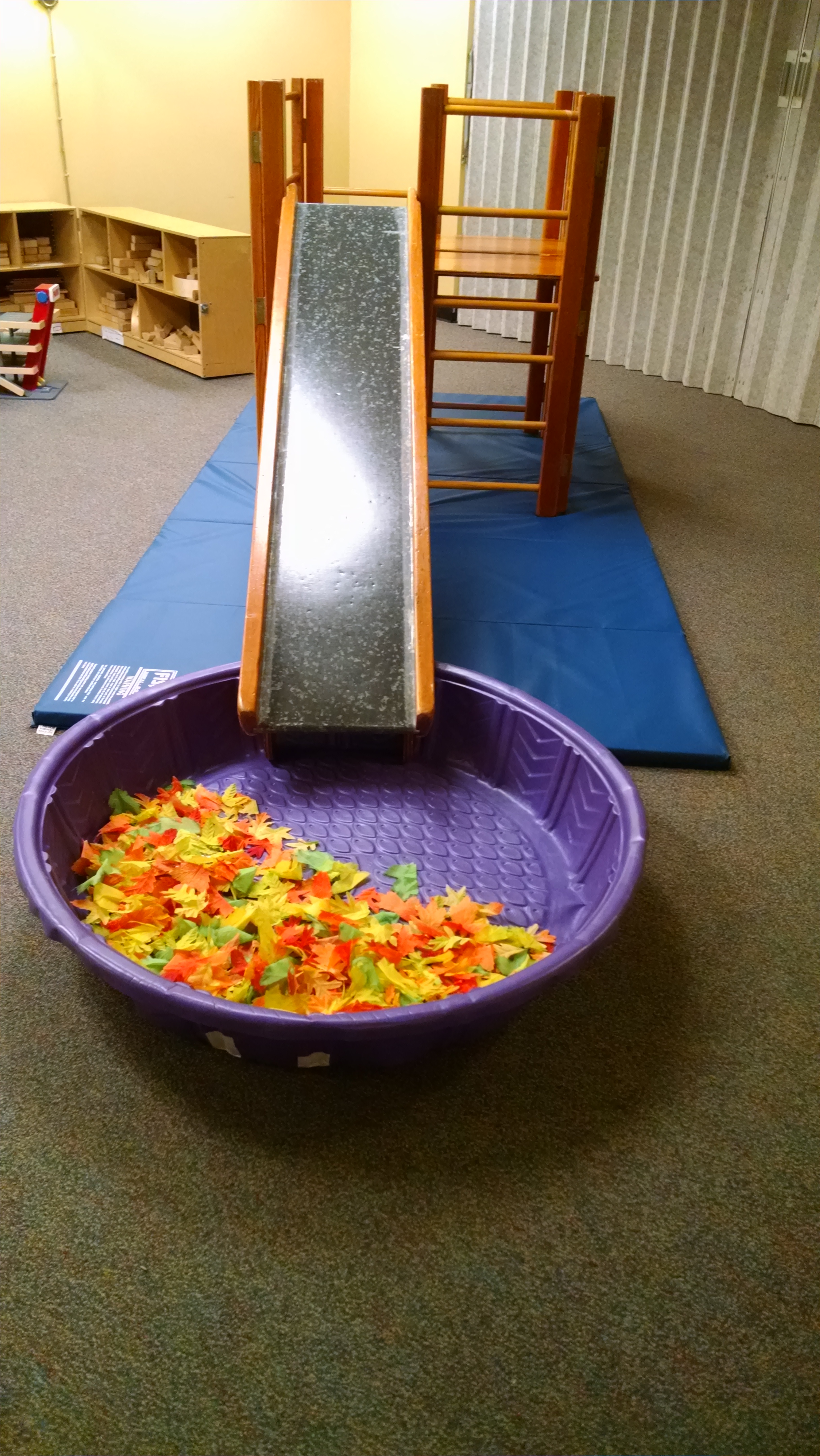
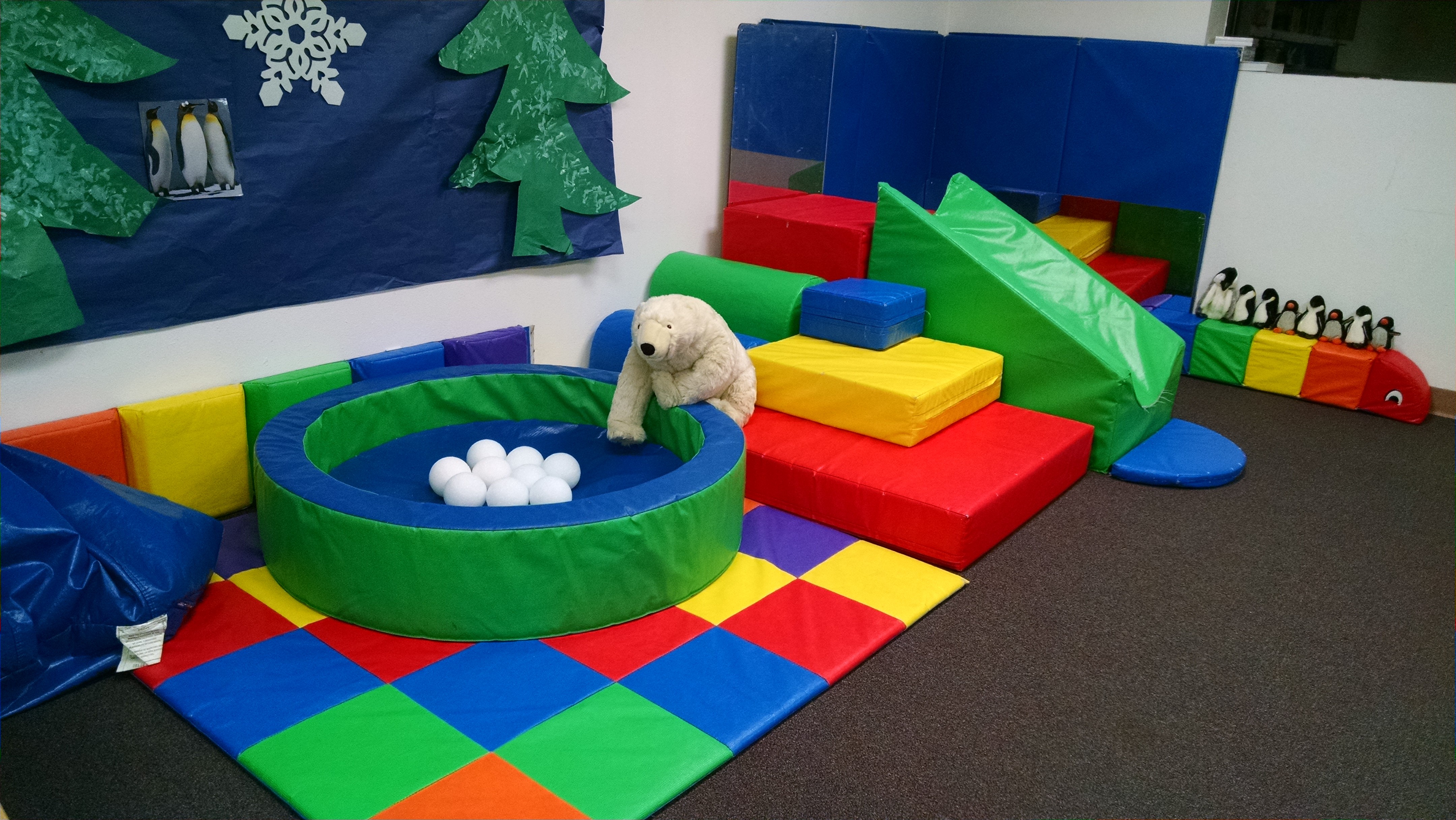
So much brain development happens in these early years, and children form the foundation of all the skills they need for a lifetime. This is especially true of motor skills. In addition to all the fine motor practice of puzzles, writing and playdough, preschools also offer lots of opportunity for large motor practice indoors and outdoors. Playing in the playground or on tumbling equipment indoors, throwing balls or throwing paper “snowballs”, digging in the sandbox or running on an ever-evolving obstacle course.

They are building physical strength, coordination and balance as they build all the key physical skills of running, jumping, climbing, and rolling. They learn to take some risks and be bold, while also learning when they need to be cautious, and learning to emotionally regulate through it all. There’s also important skills in taking turns on the slide, watching out for other people before moving, and moving around others carefully. As our kids ride trikes madly around the playground they’re learning skills they’ll need in driver’s ed someday!

Snack and Clean-Up Time

Snack time can always include practice at choosing and trying new foods, practice using silverware and table manners, learning to sit with others while eating, and practicing social conversation. Many preschools also involve the children in making their own simple snacks, which can include practice with cutting with a knife, stirring, spreading, sprinkling, measuring, and so on. Learning these life skills at an early age builds confidence and competence.

Children also learn confidence and competence as they help out with clean-up time. They may help put all the toys away, wipe tables, sweep the floor, put lids back on markers, and fold up the tumbling mats. This teaches life skills, teaches them that they can make meaningful contributions to a community, and motivates them not to make too much of a mess in the first place! But also, putting away toys is a great exercise in sorting things into categories (a key science skill) which requires noticing details, observing similarities and differences in object, concepts of color, size, and shape.

Check out the overview of play-based preschools.
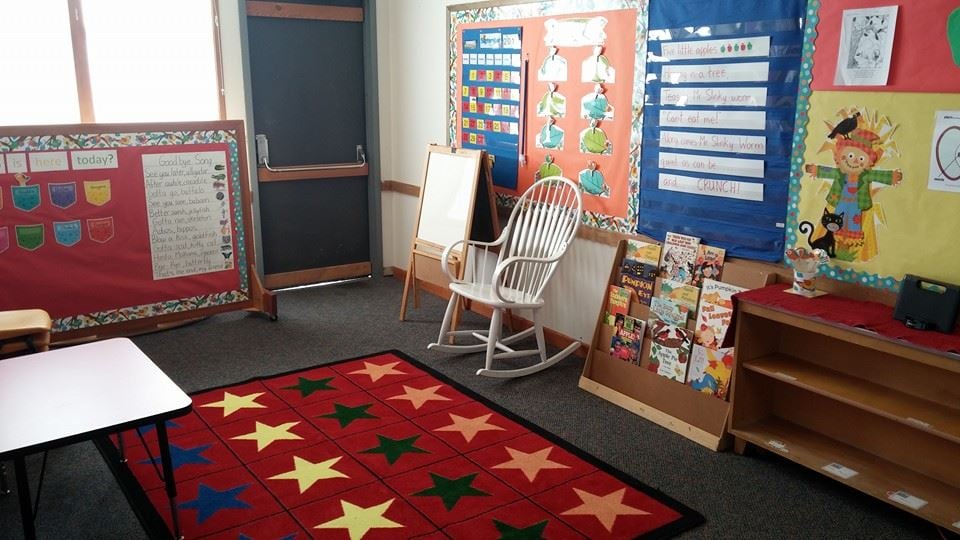
Play-Based Preschool

Those of us who teach preschool often use the term “play-based preschool” and often forget that may not mean anything to the average first-time parent looking for their first preschool! You may be wondering: what does play-based preschool look like? And what do kids actually learn if they’re just “playing”?

The Big Picture

In a play-based preschool: The teacher sets the stage with engaging materials and supplies for fun activities. Then the children explore through play: observing, experiencing, wondering and discovering. The teacher is nearby to observe, ask questions, make suggestions, or play along. But each child decides which activities to do, which toys to play with, what to do with them, and for how long. Play is spontaneous, fun and creative, and the focus in on process, not product. Play is done for its own sake, not to accomplish a task. It involves lots of exploring of possibilities, experiments, trial and error, and repetition which reinforces learning.

In some settings, such as outdoor preschools, the teacher may do little “set-up.” They may just wander and learn about whatever they discover as they go. However, the majority of play-based preschools have a center-based approach, also known as activity centers or stations. The teacher makes a very conscious set of choices about what activities to offer so there are options that help children grow in all areas of development and build all types of intelligence. There are fresh new activities each day, but there is also a lot of consistency where the same materials may be available for many weeks straight. This respects what we know about brain development – children need a combination of novelty and repetition to learn.

Stations and Classroom Set-Up

During free choice time, children are encouraged to move freely between stations. Some children will spend an entire class at one station if it’s really captured their attention. Some will flit between all the stations, trying everything out. A child might be playing alone for a long time, or they might be in the midst of group play. That freedom to move helps them self-regulate based on their mood and their energy level, lets them opt in or out of social play, lets them focus on what they most want/need to learn and allows for lots of practice with decision-making.

Typical activity centers include:

  • blocks and other building toys
  • sensory bins, water tables and light tables to explore with all of their senses
  • art process activities like play-dough and painting at the easel
  • craft projects where children practice following directions to create a specific product
  • book corner, writing center, puzzles, and board games to learn pre-academic skills
  • doll houses, dress-up clothes, and toy kitchens to tell stories and role play things they see in daily life and things they can only imagine
  • large motor activities like climbers, tumbling mats and riding trikes to build physical strength and skills
  • a snack station where they learn to prepare their own food and clean up after themselves
  • a nature and science station for learning about the world around them

[In a separate post, I cover these stations in more depth, with more pictures and concrete examples of what the children learn at each: https://gooddayswithkids.com/2022/02/13/stations-at-a-play-based-preschool/]

Some teachers refer to the classroom materials as “the third teacher.” (Parents and teacher are the first two.) Setting up materials in an intentional way helps to guide children’s learning. Teachers consider the skills they want the children to work on and find ways to set up an “invitation to play” that will inspire kids to engage. For example, if a teacher notices a child is resistant to holding a pencil and lacking the finger strength to write well, they might choose a variety of small motor muscle building activities for that child, like using tweezers to pull sunflower seeds off the sunflower, and working with Legos and play-dough, and popping packing bubbles or pulling velcro open to make that cool noise.

The Teacher’s Role

You might envision “teaching” as a teacher sitting at the front of a classroom, teaching one skill to everyone at once. There is absolutely a time and place for this sort of direct instruction – it’s the best way to teach some specific skills or facts. However, during this time, as the teacher is active, the children are often passive. Some may be very engaged in the learning, some may be distracted. Some may have already mastered the material that is being taught, and some may not yet be ready for it.

During free choice time in a play-based school, the teacher’s role is very different and much more individualized to the learner. As the children play, the teacher moves around the room, facilitating play and extending learning. There might be two children working on cutting paper for a craft – one has mastered scissors, the other has not, so the teacher offers guidance to the child who needs it. If a child is building with blocks, the teacher might ask open-ended questions to extend the child’s learning, or scaffold learning by making a few suggestions about how to build a stronger foundation for their block tower. If children are engaged in pretend play in the “kitchen”, the teacher might pretend to be a customer and place an order, and encourage the children to write it down and to count the pretend money. Sometimes the teacher just follows along with child-led play, which is a great way to practice communication skills. Sometimes the teacher will encourage the child to move on and try new activities if they feel like one has been mastered.

(More about the role of the teacher in a play-based class: http://teachertomsblog.blogspot.com/2012/04/teaching-play-based-curriculum.html)

There is a lot of intentional planning and support that goes into a good play-based preschool, but sometimes it’s hard for the parents to see exactly what is being learned, so let’s look at some example activities and how children benefit.

Group Time / Music

Most play-based preschools spend part of their day in group time. This might include: singing songs or playing instruments, story time, learning about the calendar, watching demos of activities they could choose to try during free choice time, learning about a key concept for the weekly or monthly time, celebrations like birthdays or VIP, and chances for children to show and tell.

Lots of school readiness practice is happening here: learning to sit still, listen to the teacher, wait while others are talking, take their turn when it’s time, take an instrument when offered and return it when asked. They are exposed to new ideas and new vocabulary during theme discussions, learn core music skills like rhythm and tone, and build their memory skills as they remember the words of songs and poems.

Don’t all preschools incorporate play?

Of course! (And if you find a preschool that doesn’t incorporate play, avoid it!) At almost all preschools and daycares you will find many of the elements described here. But some focus on this more than others.

You’ll get a sense of which schools truly embrace play-based learning by looking at their schedules and talking to their teachers.

For example, at one of the preschools I work with, they are very play-based – the schedule is a five minute group time for a good morning song and a little preview of the day, then 100 minutes of free choice time, clean-up, ten minutes for a story-time in a group, 20+ minutes of free play outdoors, then some music time outdoors to end the day. That adds up to less than a half hour of structured group learning, and over two hours free choice time indoors or outdoors, and the play-based learning has plenty of opportunity to unfold. They have several sessions on a theme, where the primary art project might change, but most of the other activities stay the same. The balance between novelty and repetition matches what we know best supports brain development. If you talk with the teacher, they will definitely share their view that free play in a rich environment is the best way for children to learn..

I lead a STEM enrichment class for 3-6 year olds that mixes direct instruction and play-based learning. We have 30 minutes of discovery time where the children explore the stations for the day, then a 30 minute group time where we use a non-fiction book, a song, and demos to teach the science concepts of the day, then 40 minutes of tinkering time where the children return to the stations to apply the concepts that they learned. After a quick snack break, we have 20 minutes of group time to wrap up the ideas for the day, read a fun book related to the topic and play a fun related game. So, that’s 50 minutes of structured direct instruction and 70 minutes of free choice play-based learning. And it’s a different theme every week, so there’s almost no repetition of activities. This is great for providing children with novelty – new experiences and new ideas – crystallized knowledge. But, it’s not as powerful as the preschool for providing the opportunity for children to stay with an activity for as long of periods of time over many class sessions – that repetition could build more mastery of the concepts and skills. So, my program is play-based… but not as pure about it as the preschool. (Note: the reason I feel OK with this is the class is a parent-child program where they participate together, and I encourage the parents to talk about the ideas outside of class, and watch optional videos to review or preview the ideas and repeat their favorite activities and games from class, so that parent involvement offers opportunities for reinforcement outside of the class.)

An example of play-based learning

Yesterday morning at the preschool, I had a spontaneous interaction that provides a good example. I didn’t have any particular plan in mind when this started. One girl had found our basket of plastic toy dogs and had picked out one dog. I said “you have one white poodle.” (number, color, and vocabulary learning) I asked: “are there any other white poodles in the basket?” She then looks through the basket until she finds all the white poodles and we count them together. (Practicing observation skills, sorting, and counting.) A couple other children have joined in. We decide which type of dogs each one will seek out, and we line them all up by category, counting how many we have of each type and comparing that. (Social negotiation, sorting, counting, organizing, and comparing quantities. I also taught the vocabulary of names of dog breeds and talked about their characteristics – color, size, fluffiness, etc.) We added up how many we had total. (56!)

At this point, we are probably 10 minutes into this spontaneous exploration and I’ve got four kids completely captivated in this process even while other children were doing many other activities around us, and another who is enjoying the joke of adding his duplo horse into the mix as we try to count and we laugh that it doesn’t fit! I was ready to extend the play, so I suggested maybe we could use the blocks to build a zoo for all the types of dogs. That stretched into a 15 or 20 minute block session where all these children stayed with it the full time and a few others wandered in and out. I was closest to the blocks, so they would ask me to pass them blocks. I asked them to tell me what shape and size they wanted, so we got all sorts of practice in quantity, comparing sizes, and learning names of shapes.

One child who rarely speaks aloud to anyone in the class was speaking to me easily and freely as it helped her get the materials she needed for our joint game. They practiced building skills, I suggested ways to make structures more stable, they negotiated for ways to share the materials when someone else had what they wanted. We managed the frustration of having someone accidentally knock over something you were working on. Other children brought over some dolls, and we added visitors to our zoo. They also brought signs so we practiced reading those and talked about which ones we could use. (Literacy practice.) The children were so relaxed and focused on play this whole time, even while they heard excited shrieking from the other room where there was a new piece of climbing equipment. I was ready to move on and check in with other children, but reminded them that we would all need to work together later on to put away the blocks, since we had used almost every block on the shelf in our big project. Later on they and the other children helped put back all those blocks – each type of block has a specific spot on the shelf, so they put all the squares in their zone, and all the arches here, and all the triangles there, and so on, and put all our dogs back in the basket. So much spontaneous learning, all starting with one question to one child.

But was this the only thing happening that day? Not at all! This was a co-op preschool with 20 kids, 3 staff, and 2 parent volunteers that morning. The kids who wanted to engage in what I was doing did so for as long as they wanted. But in the meantime, other children were in the “gym” climbing on the climber and rolling down the mats. Others were in the library looking at books and putting puzzles together. Others were stringing beads and putting heart stickers on valentines in the art area, and others were busy in the kitchen area making pretend soup. Each had the ability to choose whatever most inspired their curiosity and joy that day.

Where can I find a play-based preschool?

One great option is to see if you have co-op preschools in your community. They are almost always play-based. Forest kindergartens or outdoor preschools are play-based, with even less structure than the station based experience I describe here. You may also find some preschools that are what I call the “church basement” preschool – sometimes run by the church but sometimes rented out by a non-profit preschool that has been there for 40 years. Many public school districts offer a preschool but these tend NOT to be play-based as they are often taught and administered by people trained in k-5 education and standards-based curriculum and may not be as informed about the best learning methods for young children. For other preschools, you just have to check out their websites and brochures and see how they describe themselves and their schedules.

If you are in Washington state, check out the co-op preschools sponsored by parent education programs offered by our community colleges. (Full list of Washington programs: https://www.opepwa.org/contact.) Learn about these programs and find links to all the programs in King County here: https://gooddayswithkids.com/parent-ed-at-colleges/. I teach for Bellevue College Parent Education and the photos on this page are from our co-op preschools and our art and science enrichment classes.

Play-Based Learning

What is play-based learning?

The teacher or parent sets the stage with engaging and fun activities. Then the child explores through play: observing, experiencing, wondering, exploring, and discovering. The teacher or parent is nearby to observe, ask questions, make suggestions, or play along with the child. But the child decides which activities to do, which toys to play with, what to do with them, and for how long.

[The video linked above, by Jessica Lubina, is a nice quick overview of the concept.]

What is play?

Play can be defined as anything that has these characteristics:

  • Child-Led. Freely chosen. The child is in control. He makes the plan.
  • Process, Not Product. Play is done for its own sake, not to accomplish a task. It involves lots of exploring of possibilities, experiments, trial and error, and repetition.
  • Creative. The child can adapt items, create something new or experience things in a new way.
  • Spontaneous. It’s flexible and open-ended, and it changes and evolves as play time goes on.
  • Fun. The player looks happy and engaged.

Does a child really learn by “just playing”?

We know the brain builds connections when it is exposed to novel experiences, and then allowed to repeat them again and again till it achieves mastery. This process builds two 2 forms of intelligence: memory – crystallized intelligence – the database of information that we access, and improvisation – fluid intelligence – what allows us to adapt that information to new situations. (Medina)

Direct instruction from a parent or teacher can be a great way of adding information to the database of crystallized intelligence. But, the best possible way for children to build fluid intelligence is by hands-on, engaged, self-guided improvisation… in other words, by playing.

What play-based learning is not:

  • Specialized toys. Despite what marketers tell you, learning does not require scientifically designed educational toys and apps or flash cards. Simple, open-ended toys will do.
  • Uninvolved babysitters. Some schools have co-opted the phrase “play-based learning” as a justification for sitting back and letting kids do whatever they want to do with no forethought by the teachers, and no input along the way. We’re talking about a more engaged process.

Benefits – Kids who learn by playing gain:

  • Physical competence. Free play allows a child to practice emerging skills till they are mastered.
  • Self-direction. The child gets to make decisions, make plans, and see them through.
  • Creativity. Experiments show that children who are taught “the right way” to use a toy will use it in limited ways. Kids who are allowed to freely explore develop many more creative uses.
  • Problem-solving. When a child creates her own plan for play, she doesn’t foresee challenges that will come up that an adult might see. This offers lots of chances for problem-solving.
  • Language skills. Play requires asking and answering questions, giving commands and acting on them, and explaining your goals to the person you are playing with.
  • Conflict resolution skills. There’s lots of negotiation that goes on in cooperative play.
  • Emotional intelligence. Dramatic play helps children understand emotions, learn how to express emotions, and distinguish between real emotions and “pretend” emotions.
  • Symbolic play. If a child can use a stick to simulate an ice cream cone, it helps her later understand that numbers on a page represent how many objects they have, and that letters represent sounds, and musical notes on a page indicate where to place her fingers.
  • Better memory. Kids are motivated to remember things they need to know for a play scenario.
  • Reduced stress. Play is fun. Children play when they feel safe. We are all more capable of learning new things when we are having fun and feeling safe.

Teacher’s Role / Parent’s Role

The adult plans an environment and schedule which promotes learning. Children learn best when they feel safe, so familiar routines, consistent rules, and respectful caregivers are essential components. The adults offer meaningful experiences that are stimulating, invite exploration and engage kids. The teacher often has outcomes in mind: knowledge, skills, abilities and understandings children will acquire. But they have not determined an exact path the child must take to get that knowledge.

As Teacher Tom says: “One thing I don’t do is decide what the children will learn… That’s not the job of a teacher… that’s the job of the children. My job is to create an environment, then play with them in it, helping them, but only when they really need it.” Some roles an adult may play are:

  • Stage manager: Sets the stage. Creates an “invitation to play” that combines familiar objects and activities (for repetition/mastery) with novel objects to explore and discover.
  • Observer. Observe quietly. Be there so if they look up with an “a-ha” moment, or an “I did it”, you’re there to reflect that success back to them. A good rule of thumb is to observe for at least 3 minutes before talking. Then make suggestions or ask questions to extend their thinking, or encourage reflection. But don’t change their play, or tell them what their results need to be.
  • Recorder: Ask them to describe what they are doing. (Remember, ask about the process, not the product they’ll end up with.) Write it down to share with a parent or friend later.
  • Facilitator: Help get them the tools they need to accomplish their play plan. Help clear away the “clutter” that gets in the way of their play. Ask more, answer less.
  • Mediator: For children age 3 and up, it’s best to sit back and let kids work out their own conflicts and learn from doing so. But sometimes, especially with younger children, an adult helps resolved conflicts by offering new materials or suggesting alternatives, and modelling flexible thinking needed for peer interactions.
  • Interpreter: help children understand what is meant by another’s words and actions.
  • Participant in play: You follow their lead, respect their individual style of play. Don’t try to make the game your own. Simply be one of the kids who is playing! (As the “big kid” in the group, you can role model respect, creativity, flexibility.)
  • Tools of the Mind style. Kids develop a plan for their pretend play. Teacher offers instruction in pretend play – suggestions specific to the scenario. Kids play. When play comes to an end, the teacher discusses it with them and asks about what they did.
  • Reggio Emilia – inquiry-based or project-based learning style. When your child demonstrates interest in a topic, you collect resources related to it: books, videos, tools, resources for dramatic play related to it. The child chooses a project and must plan their actions, gather information, and develop new ideas. The teacher / parent observes, participates, guides the play when needed, asks questions, and encourages deeper thinking.

A key element of play-based learning is Scaffolding. Development advances and learning occurs when children are challenged to do something just one step beyond their current mastery, and then allowed to practice newly acquired skills. Adults and older children help them make the step by giving a hint, modelling the skill, or adapting materials or activities, and then allowing them to continue to play.

Resources

Read: Brain Rules for Babies, by John Medina.

Collections of resources on Play & Learning: www.naeyc.org/play and www.zerotothree.org/child-development/play/

Watch: The Power of Play documentary: https://vimeo.com/20964066

If you ever find yourself wondering about our class: “Why aren’t they teaching my child anything?? All they do is play!” watch this video to remember everything kids learn when they are playing: www.youtube.com/watch?v=GNlW7YIX7pk

Additional Sources Used:

The Playing Learning Child: Towards a pedagogy of early childhood. Samuelsson & Carlsson. 2008  Scandinavian Journal of Education.  http://www.tandfonline.com/doi/pdf/10.1080/00313830802497265

The Role of Play in Today’s Kindergarten, Lori Jamison. http://lorijamison.com/blog/wp-content/uploads/2011/06/The-Role-of-Play-in-Todays-Kindergarten.pdf

References to Play in NAEYC Position Statements: http://www.naeyc.org/files/naeyc/file/ecprofessional/Play%20references%20in%20NAEYC%20position%20statements_10%2009%20update.pdf

Play in the Preschool Classroom: Its Socio-emotional Significance and the Teacher’s Role in Play, Godwin S. Ashiabi1,2 Early Childhood Education Journal, Vol. 35, No. 2, October 2007. http://leadershiplinc.illinoisstate.edu/play-based-learning/documents/play_in_the_preschool_classroom.pdf

Go Play – Promoting Your Child’s Learning Through Play www.zerotothree.org

Teaching a Play-Based Curriculum by Teacher Tom. http://teachertomsblog.blogspot.com/2012/04/teaching-play-based-curriculum.html

What is child-led play? On nature-play.co.uk

An Invitation to Play

inviteChildren learn through:

  • being introduced to new ideas and activities (novelty)
  • having the chance to experiment, explore, test & re-test (repetition to achieve mastery)

In play-based learning, a parent or teacher’s role can be to set the stage with new materials, or with familiar materials combined in new ways. Then it’s the child’s role to play: experiment, explore, test and re-test.

“Invitations to play” is one way of approaching these tasks. Parents often say “my child has so many toys that they don’t even play with.” If all the toys are tidily put away in baskets, it’s hard for a child to decide what basket to pull off the shelf. If all the toys are randomly scattered about the floor, it’s hard to decide what to play with first.

We can better engage the child with a little intention. Like instead of just a box of magna-tiles sitting next to a box of toy cars on the shelf, I could set up a magna-tile garage on the table with supplies nearby to build more garages. Instead of just having a toy kitchen with all the things that are there every day, I could create new play ideas by scribbling out a menu for a cat cafe, and place a couple stuffed cats there. Even just setting a puzzle on the table with one piece sitting loose next to the puzzle is more engaging than seeing an assembled puzzle sitting there. When you look at the table, you know what to do!

Read more about invitations to play

Today, I set up an invitation to play for my 3 year old.(I knew I had a busy day with lots of work to do, so wanted something ready to go that would keep him busy for a while.)

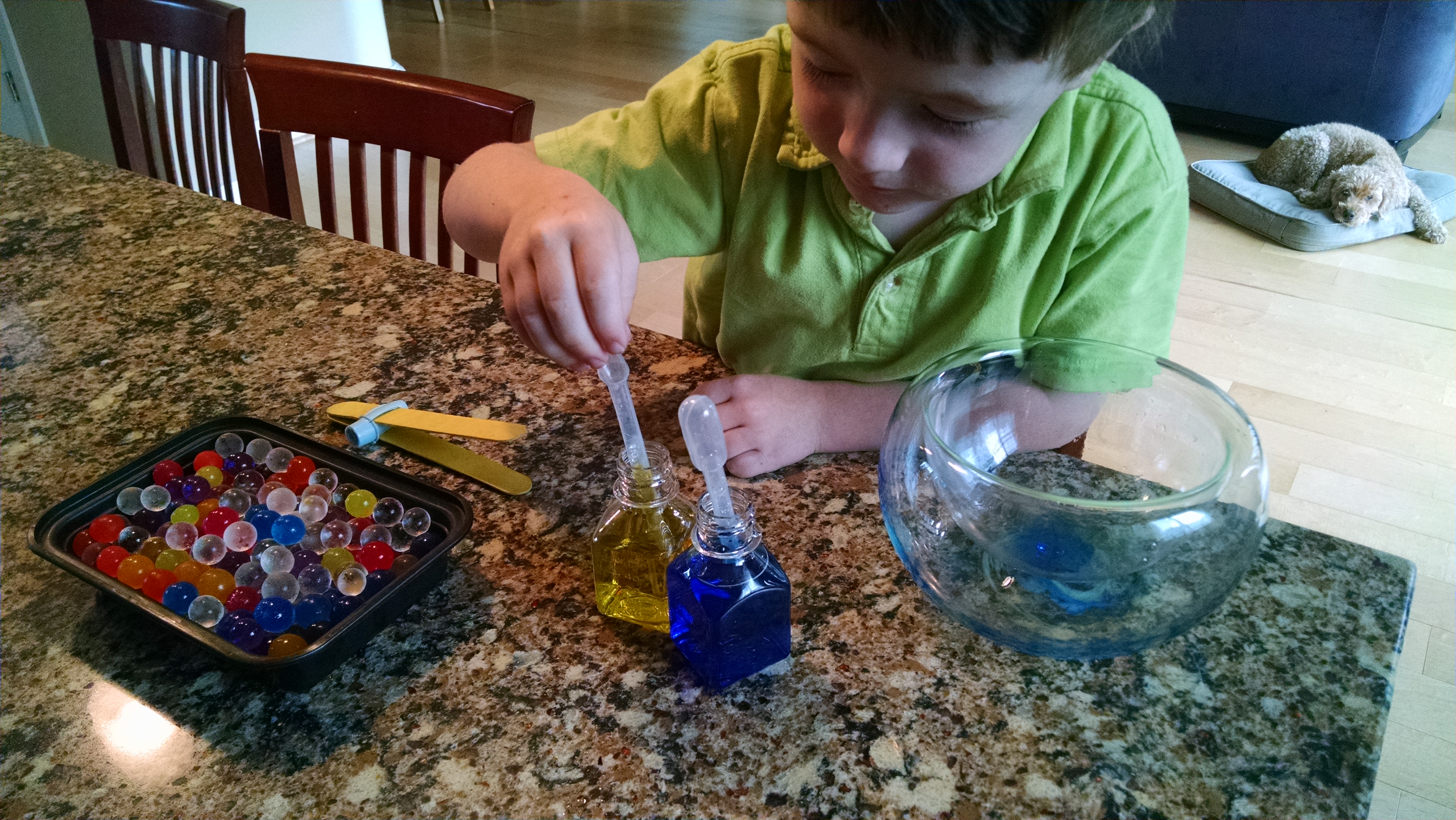
Yesterday, we did “science experiments” with a new set of tools: pipettes and water mixed with liquid watercolors. We would give him two containers of colored water, with pipettes, and a glass vase to mix the colors in.
,Today I set out two colors of water, pipettes, and a glass bowl to mix them in, instead of the vase. I had his container of water beads nearby. When he came into the room, he immediately settled into playing with the pipettes and water, which occupied him for quite a while. When his interest started to wane, I pulled over the water beads and tongs. I didn’t even need to say anything. He immediately started adding water beads. After he’d added them all and taken them all back out, he said “I’ll never do that again.” Apparently he prefers his water beads as a separate activity.

When he ran out of yellow water in his container, I said “Well, you put lots of yellow water in the bowl. Let’s just take some yellow back out of the bowl.” When the pipette pulled up green water from the bowl, I said “Hey! Where’s my yellow water!” That then led to a long play time of trying to pull up blue water or yellow water, and him learning that once things are mixed, they often can’t be unmixed.

This activity gave him chances to further explore materials he’s learned about recently, and combine them in new ways, thus deepening his knowledge of all the materials, and gaining a new insight about color mixing. And, it gave me a chance to get some work done…. Wins all around.

Mixed Age Play

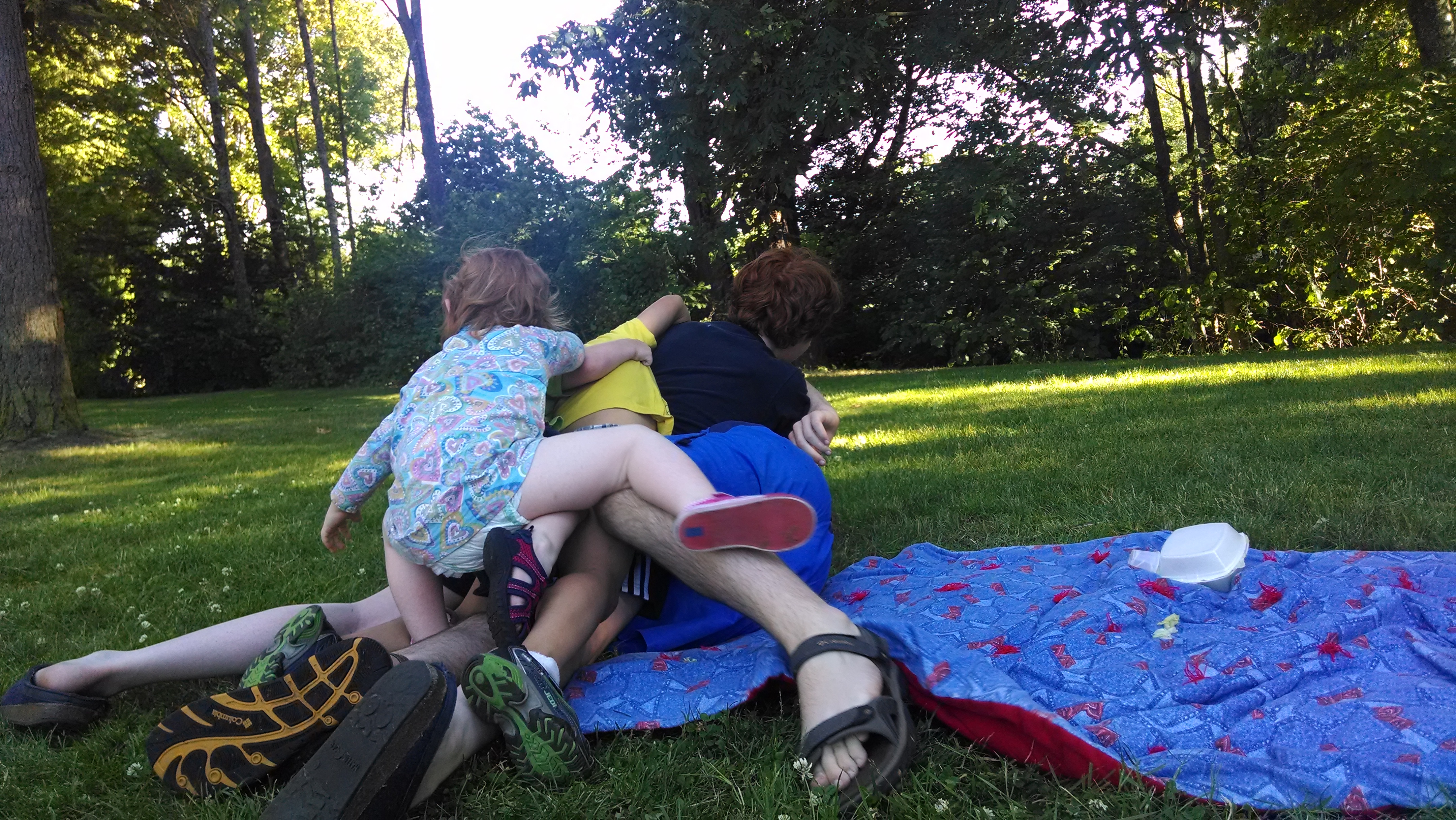
A 16 year old buried under a puppy pile of 7 year old, 3 year old, and 2 year old buddies...

A patient and tolerant 16 year old buried under a puppy pile of 12 year old, 7 year old, 3 year old, and 2 year old buddies…

I’m working now on a longer post about the benefits of multi-age classrooms. (To be posted September 2) but I wanted to share some observations from my recent personal experiences with multi-age play.

Modern American kids tend to spend much of their time in age segregated activities: schools, sports teams, and extra-curriculars where all the kids were born within a one year age span. During the school year, much of what my child does is with his own age cohort.

But this summer, my three-year-old has had lots of opportunities for mixed age play:

  • Lots of spontaneous play on public playgrounds with whatever strangers happen to be there… he tends to play most with kids age 2 – 6.
  • Monthly social for a club we’re involved in. We gather in a gym, and there tend to be about 5 kids…. last month they were 3, 5, 7, 9, and 12 years old. My son has played with each of them a few times before.
  • Play time on the playground at church. There’s usually about a dozen kids, ranging in age from 3 – 12. We’ve known them for six months.
  • “Dinner in the park with friends” – we gather with two other families once a week in the park. Our 7 kids are 20, 17, 16, 12, 7, 3, and 2 years old. And they’ve all known each other since birth.

As I watched him play in each of these settings, here’s what I observed (and also what is described by authors and researchers in this area.)

What do I love about mixed age play?

Benefits for younger kids:

  • They get exposed to new ways of thinking. My son doesn’t yet do a lot of imaginary play on his own, but when playing with older kids, suddenly, he’s talking about how they’re pirates on a pirate ship. Or he’s serving up “ice cream cones” made of bark.
  • They learn new ways of moving. My son has learned how to use all the playground equipment – even the challenging stuff – by watching the older kids do it. He learned how to do somersaults recently.
  • They learn new skills. My second child (like many younger siblings) learned to read, write, tie her shoes, dress herself, and more by watching her big sibling do it. I’ve heard countless stories of kids potty training after attending a camp or class where older kids routinely use the potty.

Benefits for older kids:

  • They learn to be flexible. At the social we attend, I watched the kids play an improvised ball game with invented rules. The older kids had teams, and were always trying to move the ball toward their team’s goal. But they understood that the younger ones couldn’t remember or follow the rules reliably. So, the littlest kids could kick the ball any direction they wanted to, and the older ones just worked with the chaos of that.
  • They learn to explain and enforce rules. But the older kids also did set limits sometimes on what was allowed and what wasn’t allowed. They had to figure out how to explain it so the little kids could understand.
  • They learn empathy, to be gentle and watch out for little ones. At church, I watched kids on the swings figure out that if big kids are walking near them, it’s OK because they know to be careful, but if little kids start to wander near, they call out a warning and they slow down their swings.

Benefits for parents:

  • Can give parents a break: If there are responsible (or semi-responsible) older kids around, the parents of the little ones may be able to sit back a little. For example, when we’re with our friends in the park, often the teens and tween supervise the 3 little ones while the parents relax and talk.

What can be challenging about mixed age play?

  • Kids get exposed to new ways of thinking: Sometimes things they might not have otherwise thought of…. In the movie Boyhood, there’s a scene where the 6-year-old and the older neighbor boy are flipping through a lingerie catalog ogling the models in their lacy bras. The 6-year-old probably would not have pursued “girly magazines” as young without that influence.
  • They learn new ways of moving: I still remember when my oldest was 6 or so, a girl who was probably 12 years old was shimmying up the pole of the swing-set till she was 15 feet in the air. My daughter watched her very intently, then pulled off her socks and shoes and scaled the pole. Something that would have never occurred to her to do on her own. And that was much higher in the air than I wanted her to be!
  • They learn new skills. I learned how to work pocket knives, matches, and other cool tools from my older brothers. Probably much younger than my parents might have wished I learned those skills.
  • Big kids aren’t always nice. We’ve had two incidents with my little guy this summer. One was at a playground where there was a group of 4 girls who were probably 9 or 10 years old. When we arrived, they played happily with my son and were having a great time. Then they decided they were bored of the “baby” and wanted him to go away. He had a hard time understanding what had changed. Another was at a different playground where there was a large group of older boys (age 7 or 8 maybe). My son was following them around, and laughing and engaged with them, but when we moved close we discovered that what was happening was they were asking him to say things like “I’m really stupid” and then laughing at him when he did. He didn’t get that it was mean – he thought it was a fun game. But clearly it was bullying and not appropriate behavior for those kids. (Their camp counselor was not providing sufficient supervision to even notice, much less intervene in the situation.)
  • Parents of older kids don’t always pay attention. When my child is the youngest one, he may be getting into situations that are more dangerous than he might typically be in (see above under “learn new ways of moving”). So, I have to supervise more closely than I normally would. But the parents of the older kids may be used to not having to do much supervision at all of their child, and may not realize that a) their child might need guidance on what is and is not appropriate play when younger kids are involved, and b) the parent who is supervising the youngest one then kind of gets stuck supervising all the kids by herself and managing all the needed interventions.
  • Unfair Expectations: In mixed age settings, it can be easy for adults to expect the younger children to have the same capabilities as the older children. When my younger daughter was 8, she was placed in a class where most of the kids were 10 years old. Academically, it was a good fit. She was one of the most advanced in the class. Socially, she did fine. She had a big sister, so she was used to playing with older kids. But emotionally it was hard. If something upset her, she had a hard time calming herself down. Parents who volunteered in the class sometimes had a hard time managing it, because they were used to their older children. Even the teacher failed to manage it well – reporting to us that our child was just much less emotionally mature than the other kids in the class. It was as if she’d forgotten that all those other kids had 25% more life experience than our daughter.

I think it’s important to be aware of these possible pitfalls, but don’t let it deter you from multi-age play.

I grew up as the youngest of four kids, with piles of kids of all ages in the neighborhood, at church, in 4-H, Girl Scouts, etc. I want my kids to have that experience of all the benefits  that mixed age play can give. And for that, I’m willing to take the challenges – think of them as learning experiences…