Category Archives: Early Learning

Choosing a Preschool: Step 2 is learning about your options

optionsOnce you’ve decided what your needs and goals are for preschool, you’re ready to make a list of local programs.

Get familiar with available options: look at parenting magazines or newspapers or the yellow pages. Do web searches. Find an accredited program: www.naeyc.org/academy/accreditation/search. Search for local child care and preschools, go to www.childcarenet.org/families. Go to preschool fairs.

Ask your friends, families, co-workers and other parents at the playground for recommendations. (As  your child gets older, one of the best sources for recommendations for the next level of schooling is to ask your child’s current teacher(s) or coach for recommendations.)If someone says they LOVE a particular preschool, ask why! It could be that something they love would totally turn you off. Or their family might have different needs or goals than yours. We all have different things we’re looking for.

Once you’ve got a list of interesting options, do more research. Read the school’s website in detail. Call to ask more specific questions. Go to open houses. Most open houses are in January and early February, so start looking early! (Note: if your child is a young toddler, and won’t be old enough for preschool for another year, you’re still welcome to check out open houses early. Sometimes it’s nice to begin checking things out early when there’s no pressure to make a decision.)

Once you’ve narrowed your list to three or four choices, absolutely go visit! They may have an open house (which may or may not allow you to bring your child along). They may have adult-only visits during the school week where you can go and observe part of the session. They might (if you’re lucky) have child visits, where you can bring your child along to spend some time participating in the activities. The in-person visit is the most important part of the process. Sometimes you have a school that sounded great on paper, but when you get there, it just doesn’t feel right…

Check out my next post for questions to ask at open houses and visits.

If you’re in the Seattle / Puget Sound region, we have fabulous cooperative preschools based at each of our local community colleges. Learn more here.

Choosing a Preschool: Step 1 is figuring out your needs and your goals

checkConsider your logistical needs for a preschool

Before you start looking at options, think about your “must haves” for preschool. It’s important to start here, because otherwise you might fall in love with a program and then discover that you can’t possibly make the logistics of it work for your family.

Things to consider:

  • Child care or enrichment:
    • Do you need your child to be cared for several hours a week while you work? If so, you may really be looking for child care. Some child cares offer a preschool component, but if your child is there for 6 hours a day, 5 days a week, you don’t want all structured time. Children this age need a mix of structure and free play and down time over the course of a long day.
    • If you are primarily a stay at home mom, you may only need a few hours of child-free time a week, and may just be looking for a very part-time preschool for enrichment. You may choose a few hours a day, few days a week program.
    • Note: sometimes names are misleading. Some things called “preschool” do not offer learning experiences. They may be a day care that knows parents pay more for the name preschool.
  • Schedule: What do you need/ want?
    • How many days a week? Number of hours per day? Extended care?
    • Drop off or stay? Do you want a drop-off so you have some child-free hours? Or would you like a co-op where some days you stay with your child? Or would you like to do all parent-child programs. (They’re not called preschool, but there’s certainly dance classes, gymnastics classes and so on that you can do together.)
    • Do you have specific days of the week you must do? Absolutely can’t do? Or are you flexible?
    • What time is the earliest you could be there? What time is the latest?
  • Location: How far are you willing to drive two to three days a week? How far is your child willing to be driven? (Some parents find the “perfect” preschool a long drive from home, and only later realize that it’s not so perfect if they have a child who hates to be in the car!) What will you be doing while your child is at preschool, and would it be convenient to get back and forth to there in the time your child is at class? Is the location convenient for other family members / friends who might occasionally do drop-off or pick-up duties?
  • Cost: What’s manageable for your family? (Note: if all you’re finding when you search for preschool is expensive options, think about where you’re looking. If you look for ads in slick expensive looking magazines, you’ll see ads for expensive preschools that can afford expensive ads. Try asking friends, family, neighbors and co-workers what options they know of. There are a lot of preschools hidden in church basements with no advertising budget but great programs!)
  • Potty training requirements: If you’re looking for a preschool that will start several months from now, it can be hard to predict what your child’s needs will be. As a general rule, the majority of 2.5 year olds are not potty trained, so if you want to start preschool young, you may choose a preschool that doesn’t require this. The majority of 3 year old girls are potty trained (though not all), so it might be a safer bet to choose one that requires it. With boys, it’s less likely, so again, you might err on the side of assuming your son won’t be.
  • Parent Involvement: Do you want to volunteer in the classroom? Would you want to visit your child during the school day? Do you want communication from the school about your child’s day? In what form?

What are your goals for enrolling your child in a preschool?

Before you start asking for recommendations or before you start looking at schools just because someone else said it was great, spend some time thinking about your goals. What do you hope your child will get out of preschool? Look at the list of essential skills: where do you think your child most needs to grow? What are the things you feel least confident providing at home? What do you think will engage your child the most?

At every step of my daughters’ schooling, one of my goals was to choose a school that would preserve their love of learning. All babies and toddlers LOVE to learn new things… but sometimes a bad school experience can lead a young child to decide “I hate to learn” or “I’m bad at learning things” and it’s hard to recover from that. Each time my girls moved up to a new school, I wanted (and was lucky enough to find) schools that honored their passion for learning. It was actually the final deciding factor for my oldest in choosing a college – she chose the place where everyone she met on campus was passionate about learning – there were hugely excited about ideas and geeked out about everything from Dr. Who to the physics of musical acoustics.

In evaluating your goals, don’t just think about what you want your child to get out of it. What do you want to get out of it? Do you want to meet other parents? Choose a co-op program. Want to learn more about parenting skills? Choose a program with a parent ed component. Want a few hours a week when you’re not responsible for your child just so you can relax? Choose a drop-off program that has activities you enjoy nearby. Want your child to be exposed to nature but you’re an indoor person? Choose a nature preschool.

Once you’ve done these steps, you’re ready to start researching your options… check out my next post

Note, if you’re having a hard time coming up with goals / reasons to send your child to preschool, you may want to check out this post on whether preschool is necessary for your child.

photo credit: Mufidah Kassalias via photopin cc

Is preschool necessary for all children?

muddyhandsI’ve written several articles about how to choose a preschool.

But I want to address a more fundamental question: do all children need preschool? If so, how much preschool do they need? I know that some parents can feel a lot of pressure when the other parents in their social group are all talking preschool all the time…

I recently spoke with a mom who wasn’t feeling ready to send her just-barely-three-year-old child to school yet, but felt like she needed to put him in preschool so that he could learn what he was “supposed to learn”. This mom didn’t feel like she had enough to offer her child, and feared she wouldn’t “do it right.” When she asked her friends for recommendations, all the programs they recommended were 5 days a week, full day. She couldn’t imagine her child doing well with that much time away from her. She was struggling to decide what to so.

It’s important to realize that the learning needs of a preschool age child are really pretty simple and manageable for most adults to meet. Preschools don’t offer some magic formula for future success that the average parent can’t duplicate at home.

Studies show that for children from impoverished backgrounds, whose family members have less than high school educations, there is a very clear benefit to attending preschool in terms of basic skill development. (Learn more: http://tinyurl.com/bez9qra or read any of the many articles that address the research-proven benefits of Early Head Start.)

However, middle class children of educated parents will typically receive in their home environment the stimulation and guidance they need in order to be ready for kindergarten when the time comes, making preschool more optional.

Parents can ensure school readiness by paying attention to the essential skills listed in my last post and helping their children build them. Thinking of everyday life as a learning opportunity helps you to keep an easy focus on skill-building.

Many of these skills can easily be learned from family members at home – set up a craft zone to practice with all the school supplies, read books together, practice independence in dressing, feeding, and so on.

Other skills can be built by family trips out in the community – there’s a lot of math to be learned by watching you cook, lots of science to learn in a trip to the pet store to pick up dog food, tons of vocabulary in every trip to any store, and lessons in patience and self-control at the sushi-go-round.

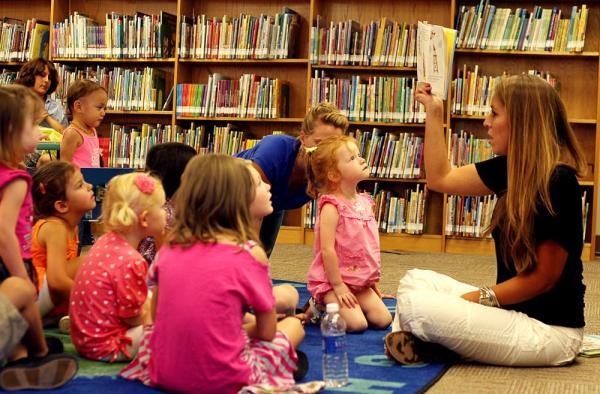
Social skills and conflict resolution get put into practice during a trip to the park or an indoor playground and sitting down in a group and paying attention to an adult is the heart and soul of library story time.

There are two elements that are easily found in preschool that parents who choose not to do preschool may need to seek out options for:

  1. Times when your child is cared for and must obey an adult other than a family member. This doesn’t have to be a preschool teacher. It could be a babysitter, or a Sunday school teacher, or gymnastics coach, or almost any other caring authority figure.
  2. A stable group of children to play with many times over a long period of time. Most drop-in community programs won’t have consistent kids each week. So you may want to seek out a more intentional community of playmates: maybe neighbor kids if you’re lucky, or cousins, or kids at church, or Daisy scouts, or…

So, if you think your child is ready for preschool and would enjoy it and benefit from it, great! If you’re ready to send your little one off to preschool, great! Here’s information about how to choose the preschool that is the best possible fit for you and your child.

And you could still do all the things I describe above to support your child’s learning and they’ll benefit from that as well.

But, if you’re not ready to send your child to preschool, or you feel your child is not ready, hopefully this post relieves a little of the pressure you might be feeling about “needing” to put your child in preschool. Having more time with you, as their own personal, loving, one-on-one coach in life skills could be exactly what you both need for now.

Here are a couple blog posts where moms share their thoughts about why they’re not choosing preschool: http://playborhood.com/2011/01/is_preschool_important_for_all_kids/ and Is Preschool Necessary
photo credit: bzo via photopin cc

Essential skills for the preschool years

drawThere are several important kindergarten-readiness skills for children to work on during the preschool years (age 3 and 4) which lay the foundation for success in the early years of school. If you are choosing a preschool for your child, you will want to ensure that they are working on all these areas. If you are choosing not to do formal preschool, keep these skills in mind as you plan your activities and move through your days with your child, so that they will accomplish them by age 5.

  • Independence: Children learn to toilet, dress themselves, feed themselves, and clean up their toys. It often feels easier and more efficient for parents (or preschool teachers) to do these things for a child, but children only learn by doing things for themselves. (With gentle correction of their mistakes when needed.)
  • Patience and Self-Regulation: Children learn to wait, take turns, share, stand in line, not interrupt, work to solve a problem on their own without always asking for help, and so on. Children in a group preschool setting simply have to do this. At home, parents may want to remind themselves to not always jump to meet a child’s needs immediately, but instead work on delayed gratification for the child. (Ask them to wait a few minutes for something. Require that they calm down and ask for something politely before giving it to them.
  • Emotional stability: Children learn to control their temper, calm themselves down when upset, and move forward when they’re sad.
  • Social Skills – Making Friends and Conflict Resolution: These are best practiced in unstructured playtime with other kids that’s not guided by adults, such as play-dates and playground time. Having consistent playmates over a long period of time helps to build these skills at a deeper level, so look for opportunities such as preschool, neighbor kids, church members, cousins, etc.
  • Group Participation: Children learn to sit quietly for 10 – 15 minutes at a time, learn to pay attention to someone else speaking or reading a story, and learn to join in group activities like songs. Most preschools offer one or two “circle” times per class to work on this; parents can also look for story times at their library.
  • Listens to and relates to non-family-member adult: To succeed in school, a child needs to be able to separate from his or her parent, to listen to and obey the instructions of another adult, and get support from another adult.
    • Can answer simple questions about events or his/her environment
    • Can follow 2 step directions. (Do this, then that.)
  • Academic Foundations. The following is a sample list of basic skills for children to gain, all of which can be taught gradually in a relaxed, playful manner.
    • Can say the letters of the alphabet, recognize them in writing, maybe write a few.
    • Can say numbers 1 – 20 in order, can recognize written numbers, count 10 objects.
    • Can draw a picture to express what he is thinking about / talking about.
    • Knows basic ideas like colors, shapes, days of the week, seasons, and opposites.
    • Can manage basic school supplies: crayons, pencil, scissors, glue, tape, blocks.
    • Has basic computer / technology skills: can use a mouse and a touchscreen.

Note: all those categories are equally important… in many ways patience and self-regulation is much more important than the academic skills… If a kindergarten child knows how to sit still and listen, learning the alphabet is easy. If they can’t sit still, then learning much else will be hard!

Should your preschooler learn to read?

Parents can offer an environment that encourages literacy and basic math knowledge by simple things like: reading lots of books together, counting stairs, pointing out words on signs, singing songs and keeping the beat. If your child is passionate about letters and numbers very early, it’s fine to encourage that through more reading, math play, interaction, etc. Some children naturally learn to read or do math quite young.

However, it’s not essential that they do so! Although it is possible to use flashcards, worksheets and apps to teach children to read and/or do math at a very young age, there’s no need to do so. Although those children would enter kindergarten ahead of the other kids, the benefits all even out by midway through elementary school. And studies have found that the kids who were drilled early tended to have more anxiety about academics later on than those who were gently encouraged. (Learn more: http://trevorcairney.blogspot.com/2009/02/your-baby-can-read-part-2.html and http://www.todaysparent.com/family/parenting/earlier-faster-better-precocious-kids/_

Local resource:

If you live in Bellevue, WA, the Bellevue School District has a really nice overview of kindergarten readiness, how to prepare your child for starting school and what to expect: https://bsd405.org/wp-content/pdf/kindergarten/welcome-to-kindergarten.pdf 

photo credit: clappstar via photopin cc

Cheap Dates with Toddlers: Library story times

library

[I have a large collection of “toddler date” ideas. The big picture ideas apply to any locale, but the specific examples are from the Eastside of Seattle.]

Story times are fabulous for so many reasons.

I like them so much, I wrote an article about them for a PEPS newsletter, which you can find here: https://www.peps.org/ParentResources/by-topic/early-learning/why-story-time-rocks

If your child has a hard time sitting still for library times, pick one that is at a time of day when they’re calm (i.e. it isn’t close to their naptime), take your child somewhere before story time where she can run off lots of physical energy (The park, an indoor playground, and swimming all work well for my son), and feed her a snack on the way there so she’s as settled as can be. You can also try different libraries. My son loves the Kirkland Wednesday story time, but the librarian there does expect kids to mostly sit and generally be quiet and pay attention, which another parent told me doesn’t work for her child. She said they love the Redmond story time for toddlers where her child can move around more – the one time I went there I found it crowded and too loud. So, shop around to find the right match for you.

For those in King County, learn more about all the great resources our library system offers, including links to the story-time calendar here: Using the King County Library.