Category Archives: Neurodiversity

Child-Directed Play: Floortime

floortime

Child-directed play is an intentional practice where you sit and play with a child, allowing them to guide the play, as  you follow along. The Greenspan Floortime approach describes this as:

  • Follow your child’s lead, i.e. enter the child’s world and join in their emotional flow;
  • Challenge her to be creative and spontaneous; and
  • Expand the action and interaction to include all or most of her senses and motor skills as well as different emotions

Floortime was created by Dr. Stanley Greenspan for children on the autism spectrum and those with developmental delays. It can also be used with typically developing children. It is helpful for any parent or caregiver who wants new ways to interact and have fun with a child, wants to feel more engaged with and connected to a child, and wants to know how best to interact with a child to foster communication skills, social-emotional development and cognitive learning.

How Floortime works:

Set the Stage

  • Find a time when you can focus on play, when you and your child are both well-rested and fed.
  • Be present – set aside your mobile devices and other distractions, relax, and stay focused on the interaction.
  • Gather items that interest your child and have them available, but not so many that it’s overwhelming.
  • Your position is important. Be in front of them – that’s better for connecting than it is to be side by side or for you to be behind them. Get down to their level – typically on the floor. Your physical nearness, affectionate touch, and eye contact help them to stay engaged.

Follow their Lead

  • Let them choose the activity. Offer toys that they love. It doesn’t matter what you play, it matters how you play.
  • Join in their play. Match their level of play – if they’re low key, you are too. If they’re very energetic, match that (without escalating up to wild.)
  • Don’t feel like you have to teach them. Just let them explore and discover. Copy the way that they play. If they signal that they want your help doing something, then help them, but don’t just jump in and do things they haven’t asked for.
  • Measuring intent. Watch their gaze, expressions and body language. Where is their attention? Let them know it’s OK to take initiative and start an activity.
  • If they are motivated, don’t change the activity. It’s OK to do the same thing over and over again.
  • Be playful! Find joy in your interaction. Their current interest may not be inherently interesting to you. But tune into how it gives them joy.
  • Look for the gleam in their eye. That’s a great sign that it’s working.

If it’s not working: Are you trying to control the play too much – do you need to step back? Are you being too passive and aimlessly following them around – how can you join them in interactive play? (Learn more about following their lead.)

Here is a video sample of child-directed play:

Narration

If you feel tempted to ask a lot of questions, or do a lot of teaching, or you’re just over-talking, try observing silently, or responding to their play with simple reactions “uh oh!”, “what’s that?”, “hurray”.

If you want to talk, try narrating what they are doing. “You’re putting the toys in the basket. You noticed there’s only one toy left on the floor. Whoa, you dumped all the toys back on the floor so you can do it again!”

This narration tells them that you’re paying attention and that what they’re doing is important to you. You’re also building their language skills by giving them words to describe the things they do.

Use Emotional Expression and Responses to Engage

  • Expression – Use your eyes, facial expression, tone of voice and body language to connect and communicate. Your emotions (especially anticipation, surprise, and delight) help to attract their attention and keep them engaged. When you pair your words with emotional expression, it gives your child a better understanding of both the words and the emotions.
  • Observation and Response – Can you read their emotional cues? Do your expressions engage them more? If so, keep it up. If they’re seeming overwhelmed by you, back down a little – you’re following their lead.

Circles of communication

When Floortime is working well, it’s like a game of volleyball or ping pong. You know your child’s interests, so you “serve” by offering a toy. They “bounce back” to you by taking the toy. You talk to them about the toy. This back and forth interaction is where all the magic learning takes place. A young toddler, or a child with autism or delays, may only be able to go back and forth a few times before disconnecting. The older they are and the more play experience they have, the better they’ll get at this. The goal of Floortime is to build persistence – more of these circles of connection.

Once it’s working well, you settle into a flow of play – Floortime calls this “getting it cooking.”

If it’s not working: Are you waiting long enough for them to respond? Are they overwhelmed – are you talking too much or moving too fast? Are you following their interests and joining them where they are? (Watch for any expression, sound, or gesture that might invite you into their play.)

Stretch the Play

Once you’re “cooking” – you’re connected and have a nice back-and-forth pattern established, then you can work to take their play up a level.

Expand the play by adding in some new toy or new aspect of play, or offering some choices. For example, if they’ve been using blocks to make a stable for their toy horses, you can put a “roof” on one of the “stalls.” If they’ve served you the toy pizza over and over, ask for a drink to go with it. If you were playing peek a boo, drop the scarf and pretend to have a hard time finding it.

Expand just enough, but not too much. Your goal is sustained engagement – we want to keep out back-and-forth exchange going as long as we can. So, if your new extension keeps them engaged, and you’ve got that gleam, keep it up. If you lose their attention, back up a little.

If it’s not working: Some parents try to intervene too much. Some are too passive and don’t help child stretch.  Try to find the balance between following their lead and challenging them to interact, communicate, and think.

Tailoring to the Individual Child

Some children have sensory preferences – they really respond to sounds or to touch or to movement. Some children are easily overwhelmed by certain kinds of stimulation – sound or touch or smell might be too intense for them. Children may also prefer different speed of interaction – some like things to move slowly, some like fast moving play. This worksheet may be helpful if you feel like there are sensory or timing issues involved.

Benefits of Floortime

Some parents wonder – if I’m just playing the same simple game over and over, is my child actually learning anything? According to Autism Speaks, the back and forth play of Floortime “builds the foundation for shared attention, engagement and problem solving. Parents and therapists help the child maintain focus to sharpen interactions and abstract, logical thinking.” They also note these key aims: self-regulation, engagement in relationships, communication skills, and emotional learning.

Learn more

Learn more about tips for Floortime sessions, and see videos of parents and caregivers demonstrating these skills:

The Incredible Years program

My family is currently enrolled in a session of The Incredible Years, which is an evidence-based program for parents and for children, supported by over 30 years of research. The goal is to prevent and treat young children’s behavior problems and promote their social, emotional, and academic competence.

At the program we’re in, parents attend a 13 week session to learn skills to support their kids. Children attend 18 weeks of “Dinosaur School” which uses dinosaur-themed materials and puppets to engage children and strengthen social and emotional skills. Both programs are truly excellent!

I will be doing a series of blog posts here where I reflect on things we are learning in class and in the book. Writing about ideas gives me a much stronger grasp of them, and a deeper understanding of how they can apply to my parenting life and to the information I give students in my parent education classes.

Nothing I write here is meant to be a substitute for participating in these programs! The hands-on, in-person aspect is key to the learning. But hopefully you’ll find some interesting tidbits in these posts.

Posts in this series: The Attention PrincipleIgnoring Annoying BehaviorWhen/Then and If/ThenParenting PyramidConsequencesTime Out.

Self Discipline and Impulse Control

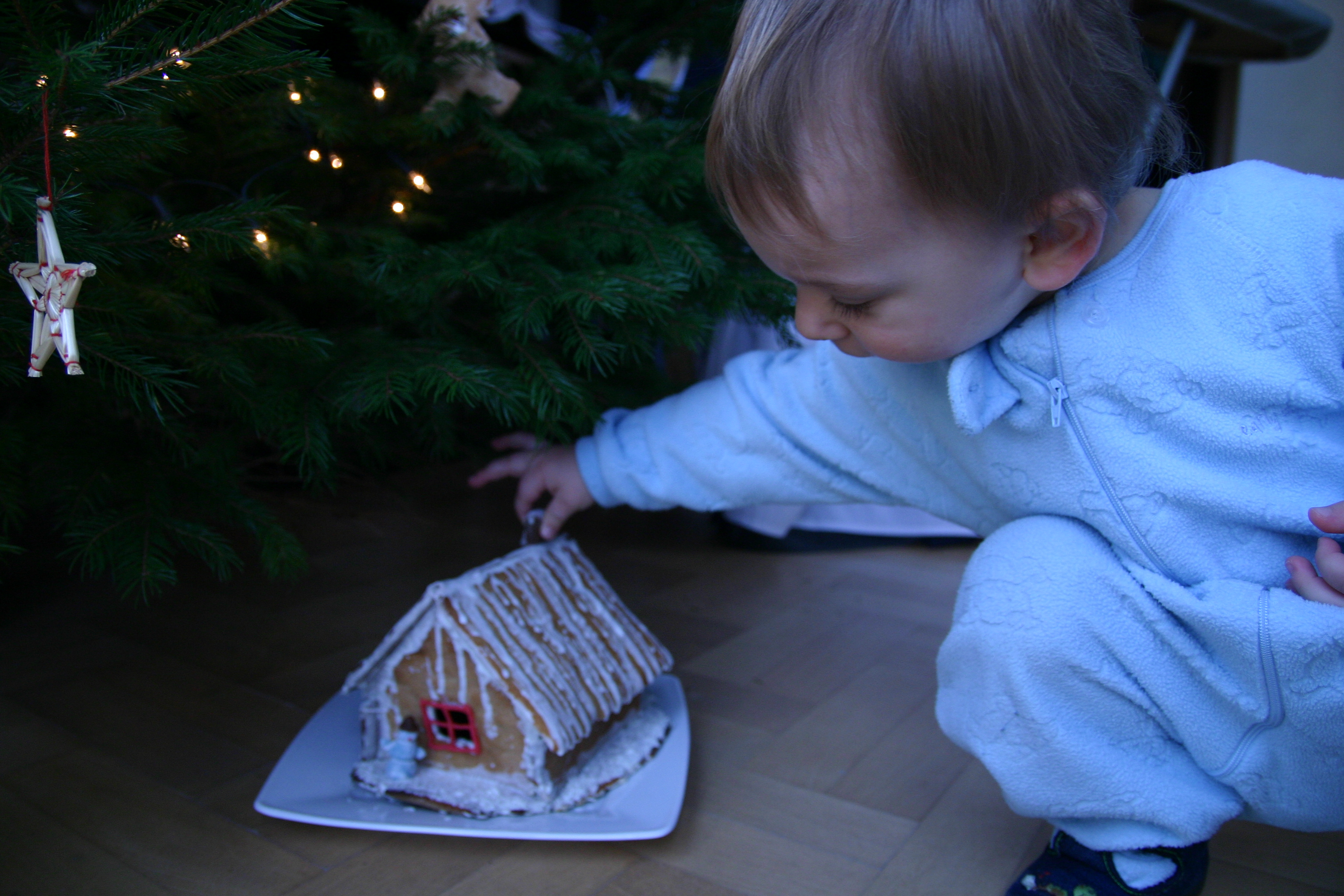
temptationOur goal for discipline, in the long-run, is to make ourselves obsolete. Our children need to learn to discipline themselves… We don’t want a child who only behaves well because we praise him for it. Or one who only avoids misbehavior if she thinks she might get caught and punished. Or one who has no real sense of what is good and what is bad unless we’re standing there interpreting the situation.

We want to raise adults who are capable of controlling their impulsive behavior, capable of working hard for a delayed reward (or even no reward other than their satisfaction with a job well done), and who have such a strong internal sense of right and wrong that it guides their every action, and who do what’s right simply because they can’t imagine behaving differently.

Impulse Control and Simple Ways to Teach It

To succeed in school and life, kids need to be capable of: sitting still when they want to move, being quiet when they feel like talking, not letting other kid’s misbehavior lead them astray, and so on.

Lots of childhood games and parenting methods are all about teaching this. Try these:

  • Sing the “Clean Up Song”. Stopping playing and cleaning up takes a lot of self-control.
  • Sing songs like “You shake and you shake and you stop.” Play stop-moving-while-playing games like “Red Light, Green Light” or “Musical Chairs” or “Freeze Tag”.
  • “Simon Says.” It’s hard to hold still when someone says “touch your nose” and touches theirs!
  • Play imagination games like “pretend you’re a castle guard – how long can you stand still?”
  • Use “Emotion Coaching” to help acknowledge that although it’s always OK to have feelings, it’s not always OK to act on them. Help them learn ways to manage their feelings.

Delayed Gratification and Simple Ways to Teach It

Some day your child will be an adult who needs to do her job every day, even when she doesn’t feel like it, so that at the end of the month she gets a paycheck and can pay her bills and then purchase some treat she wants. How will she do that well? If you start teaching delayed gratification now.

  • Make them wait. When they ask for something, don’t get it immediately. Acknowledge the request, and tell them when you will do it. “When I’m done washing this dish, I’ll get the toy.”
  • Encourage children to take turns, wait in line, and share. Toddlers struggle with these things, but we start laying the foundation early so they get it as they get older.
  • Let them get bored. Don’t feel like you have to entertain your child continuously. Sometimes their greatest learning happens when they have to get creative to ward off boredom.
  • Teaching manners also helps. When they drop something on the floor, and scream for it, say “Ask me nicely, and I will pick that up for you.” And then mosey your way over to do that.
  • Offer rewards they need to work for. “If you put away your toys, I’ll read 2 books at naptime.”
  • Be a consistent and reliable parent. If your child can trust that you fulfill your promises, they will be much more willing to wait. Check out this post on the “marshmallow experiment” to learn more.

Right vs. Wrong and How We Teach It

As our children go out in the world, they will continuously encounter new situations, with new ethical dilemmas. We won’t be there to interpret all of these situations for them, so we want them to have their own sense of right and wrong. How do we teach that?

  • We continuously model how we would like them to act. (When we do things we don’t want them to do – yell, swear, etc. – we may apologize for our bad behavior. Don’t just hope they don’t notice, because they do. I      won’t tell you what swear words my 3 year old knows!)
  • We talk about our values. When we read books, or watch TV, or see people out in public, we make observations about the behavior we like. (It’s tempting to criticize bad behavior, but it is more effective to tell      them what TO DO, rather than what not to do.)
  • We praise them when they “do the right thing”, especially in situations where that’s hard. (Like sharing a favorite toy, or apologizing for upsetting someone.)

To Get Involved or Not

One question parents often face is how much to intervene. If children are battling over toys, or pushing to see who gets the next turn on the slide, or threatening to hit, when do we step in? The answer varies a lot by culture. Christine Gross-Loh, in Parenting without Borders, tells about her experience watching kids on the playground in Japan. What she was used to, from American playgrounds, was that parents would quickly step in and referee conflicts between children. In Japan, parents did not intervene. They let the children work it out. They viewed playground battles, the crying that results, and making up as normal and natural ways for children to learn how to get along with others. What impact does that have as children get older? One researcher looked at Japanese and American 10 year olds. When asked why they should not hit others of be mean to them, American children said it was because you don’t want to get in trouble with a teacher or parent. Japanese children said you shouldn’t hurt others because it’s wrong and would hurt their feelings.

Wait for It – The Developmental Timeline of Self-Regulation

This self-discipline is a long time in coming. Our toddlers have a very hard time controlling their impulses, and rely on us almost completely for guidance. Pre-schoolers are better at self-control. And elementary aged kids are even better.

But, to be honest, we need to expect even our 17 and 18 year olds to still have regular lapses in judgment and moments of rash action. That’s because the part of their brain that is responsible for planning, impulse control, and making complex judgments (the prefrontal cortex) is still developing. They often make decisions in the moment based on their limbic system (the part of the brain which processes emotion). Anger, fear, excitement, peer pressure and sexual attraction can inspire adolescents (especially boys) to do things faster than the prefrontal cortex can slam on the brakes.

When they make their inevitable poor decisions, you’ll be glad you’ve got 17 or 18 years’ worth of practice at positive discipline and that you have already built a strong relationship based on trust and respect, but in which you’re still the “boss” of them.

Scaffolding

We can’t expect our toddlers to have self-discipline. We hope our teenagers will. How do they get there? Through “scaffolding” – a process where in their early years we intervene a lot and give lots of clear explicit guidance, but the older they get, the more we hang back, the more we wait for them to find their own solutions, the more we help them reflect on their responses and what they could have done differently. As we fade back, they take on more responsibility for their actions, and live more with the consequences that result.

Learn More:

Self-Regulation: www.parentingcounts.org/professionals/parenting-handouts/information-for-parents-self-regulation.pdf

Video that does a nice overview of benefits of self-control, and gives parents tips for how to help their child learn: www.king5.com/news/learning-for-life/Parent-to-Parent–196937571.html

Photo credit: http://www.freeimages.com/photo/734909


Here is a printable handout on Self discipline. Find more handouts on my Resources for Parent Educators page.