Author Archives: Janelle Durham

Unknown's avatar

About Janelle Durham

I am a parent educator and social worker, and teach music and science to children age 1 - 8.

Relationship Skill #2: Appreciation

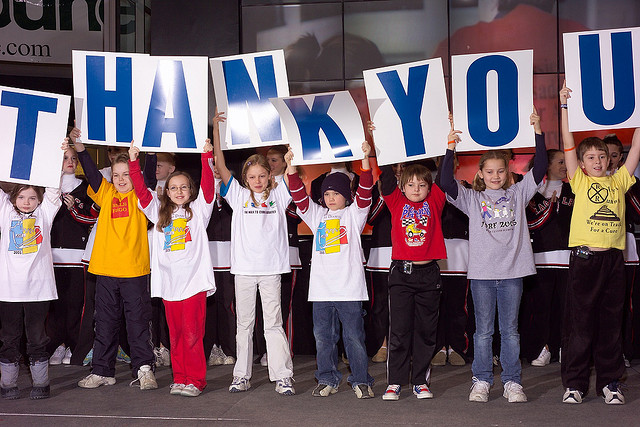
thanks

Life (especially life as a parent) can often leave us feeling undervalued or unappreciated. And when we’re feeling worn out, it may be hard for us to remember what we’re grateful for – what we appreciate about our life and the people we share it with.This drains our energy.  One of the best ways to re-fill our tanks is by creating a “culture of appreciation”.

  • Always thank your partner for the things s/he has done. Even if they’re part of his/her “job.” It’s still nice to know that they are noticed and appreciated.
  • When asking your partner to do something, make it a real question (i.e. something they could say no to), not an order disguised as a question. (And say please!) Then thank them if they say yes.
  • Five minute writing. Each of you takes a piece of paper and a pen. Spend five full minutes listing everything you love about your partner. Pour out all the appreciation you haven’t had time to share. Give your list to your partner to have and to hold.
  • Exchanging appreciations: Sit facing each other. One person begins with “Something I appreciate about you is…” The other partner listens to that, lets it sink in, says thank you, and then shares something that they appreciate about the other.
  • Post-its: leave notes around the house, listing what you love about each other or life in general.
  • Write a thank you note, letting him/her know why you’re glad s/he is a part of your life.

Some ideas inspired by Hendricks’ Conscious Loving and Louden’s Couples’ Comfort Book)

Get more appreciation ideas from my handout on appreciation here

To see all my posts on relationship skills, click here.

———————:

Read more about appreciation on other blogs:

The Effects of Gratitude in Relationships on Mindfulness Muse: “Begin to actively pay attention to and notice the positive things that your partner does.  Many of us have a natural tendency to only [notice] signs that our partners have done something wrong.  It is much more beneficial… to “catch your partner doing something positive.””

Creating a Culture of Appreciation on the Gottman Institute’s blog: “Building a culture of appreciation, fondness, and admiration involves using the things you know about your partner to show that you care and want them to be happy. Positive thoughts invoke positive feelings, and the goal is to turn both into positive actions that help to heal and bring companionship back in your relationship.”

The power of appreciation on Psychology Today: “My friend told me that she and her spouse were doing wonderfully. She attributed [this] to the consistent appreciation that she and her partner express to one another. She told me that they often say “thank you” to each other for daily tasks—laughing while revealing that her husband had recently thanked her for putting a frozen pizza in the oven.”

photo credit: Ilya Eric Lee via photopin cc
Relationship Skill #1: Turn toward your partner

Over the next week, I’ll be sharing a collection of my favorite tools for strengthening a relationship – whether that relationship is with our partner, friends, co-workers, or kids.

Turning Toward bids for connection (based on John Gottman’s work)

When someone wants to make a connection, they make “bids for affection.” These can be questions, invitations, non-verbal gestures, glances, or touch – anything that asks you to connect. When someone bids for your attention, there are three main  ways that you might respond.

By Michelle Spaulding (Flickr: Gratuitous Cuddle Shot) [CC-BY-2.0 (http://creativecommons.org/licenses/by/2.0)], via Wikimedia Commons

By Michelle Spaulding (Flickr: Gratuitous Cuddle Shot) [CC-BY-2.0 (http://creativecommons.org/licenses/by/2.0)%5D, via Wikimedia Commons

Turn Toward: Act in a responsive, interested, positive, and loving way. Reach out, touch them, look at them, smile. Say “I hear you”, “I want to connect with you,” “I’m interested in you.” Ask a question.

????????????

Turn Away: Act in a way that ignores them, or dismisses their bid. Look away, wander away. Don’t respond verbally, or respond in a way that has nothing to do with what they said.

Turn Against: Act in an angry way that rejects them and their bid. Walk away, glare at them, make threatening movements. Use sarcasm or put-downs. Do the opposite of what they have asked you to do.

Examples:

A friend might bid “Want to go out to that new French restaurant Friday night?” You might ‘turn against’ by saying “A formal restaurant?? With a toddler?? In the evening?? Are you crazy?” Or you might ‘turn away’ by calling out to your child to be careful or asking if he wants a snack, then turning back to your friend and saying “I’m sorry, what were we talking about?” Or, you could ‘turn toward’ by saying “I would LOVE to go out with you. I’ve really missed all the long talks we used to have over meals. But what would work better for me is brunch before nap time… or a kid-friendly restaurant… or just meeting at my house.’

Your partner might bid “After we put her to bed, do you want to snuggle up on the couch and talk for a while?” You might ‘turn away’ by saying “The couch is covered in laundry I meant to put away during nap time. Oh, that reminds me, I’ve been meaning to…” You might ‘turn against’ by saying “I am so exhausted. I just want to go to bed. If you’ve got time to kill, could you just fold the laundry for a change?” Or you could turn toward by saying “Yes, that would be great. I’ll warn you that I’m exhausted, and I may just fall asleep.. but I’d love to have a little time with you.” Or “I’d love to snuggle. I’m stressed out by the laundry though… could you help me put it away real quick and then I can focus on snuggle time with you?”

What leads to a successful relationship?

In successful relationships, partners have a 20:1 ratio. They have 20 positive bids and/or turning toward incidents for every one negative bid or incident of turning against or away. Learn more.

Young children are very clear and obvious in their bids for connection: they chatter non-stop, they cry, they hang on your legs, they climb on your lap when you’re trying to work. Most parents do a good job of ‘turning toward’ most of a child’s bids: we look at them, we smile, we echo their words back to them. Even if we say no, we often say it in a connecting way “oh, honey, I’d LOVE to read that book to you, but right now I need to finish washing the dishes.”

Unfortunately, we aren’t always this responsive to our partners! At the end of a long and tiring day of parenting and work, and feeling under-appreciated, we may feel like we only have a tiny bit of energy left to give in our day, and we save that up for our little ones, assuming our partners will “understand.” And they do. Generally. But eventually, all their bids are ignored (turn away) or rejected (turn against) that can really damage a relationship.

What can you do today to “bid” for affection – let your partner know you want to connect?

What can you do today to tune in to bids from your partner, and try to turn toward?

————————————–

Look here for Gottman’s suggestions on ways to connect, such as “Your partner sends you a text message about something, anything. Send them one back that lets them know how irresistible they are to you.

Or look here for Gottman’s suggestions for how to apply this idea in the work setting to build better relationships with co-workers, such as: “Turn away from your work and look at the person who’s talking to you.

Look here to see simple examples of the mundane ways this idea plays out in a relationship and learn why those little things matter: http://alwayspsyched.blogspot.com/2011/05/for-love-of-gottman-make-your.html: “Comical as it may sound, romance actually grows when a couple are in the supermarket and the wife says, “Are we out of bleach?” and the husband says, “I don’t know. Let me go get some just in case,” instead of shrugging apathetically.”.

.

Games and Activities that Build Literacy Skills

[This is my fourth post on early literacy. Check out my other posts on how to get your child excited about reading, and  info on developmental literacy and what types of books are best at each age, and how to read to a toddler.)

Reading books together, anytime and anywhere, is a powerful way to teach the joys to be found in books, and the power of literacy. There are also lots of other hands-on ways to build reading skills.

  • Make books together – make albums with family photos or pictures cut out of magazines. For older kids, they can dictate a story – they tell it, you write it out, then they illustrate the pages.
  • Look at family photo albums together and tell stories about the people and activities shown.
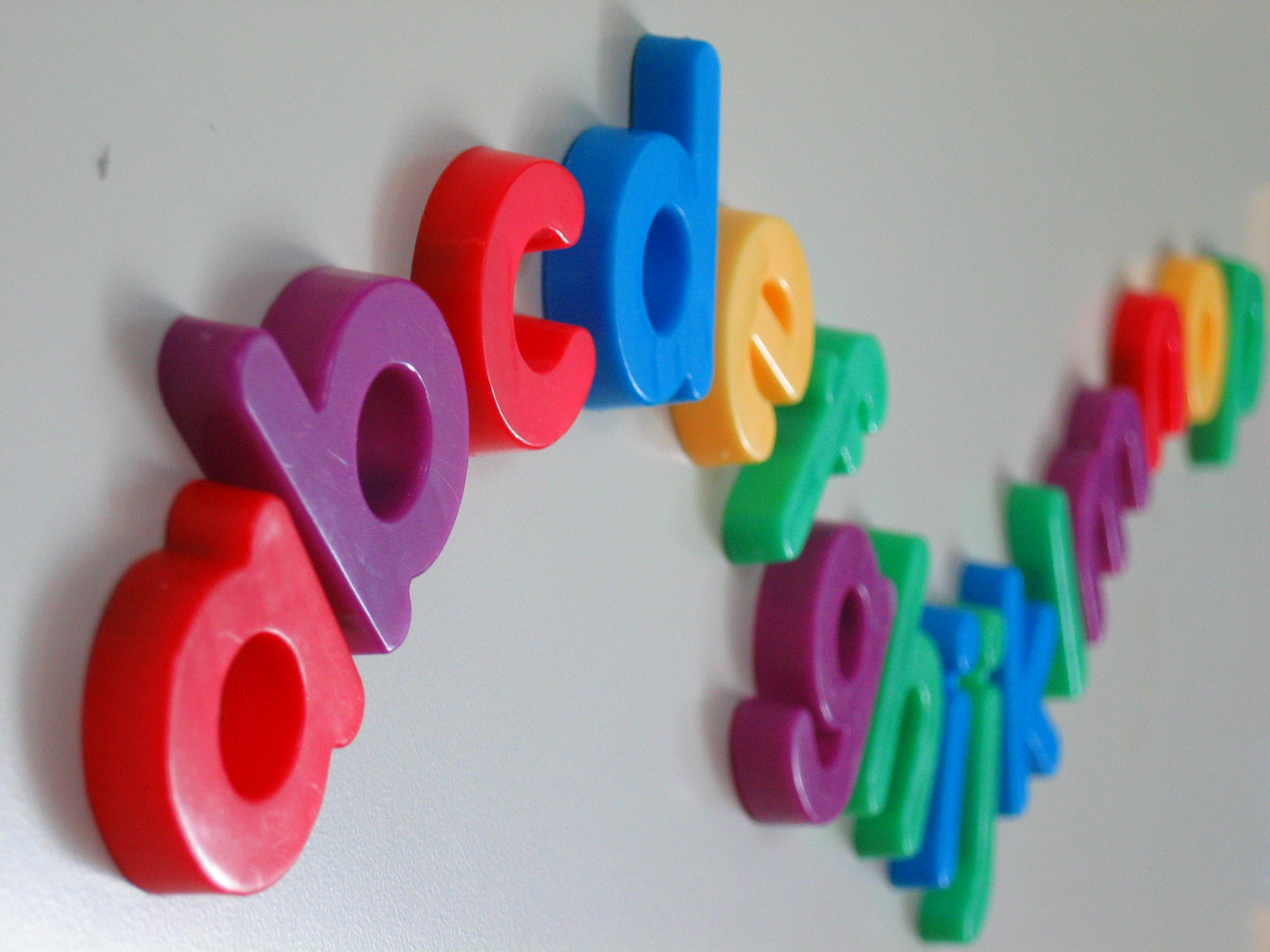
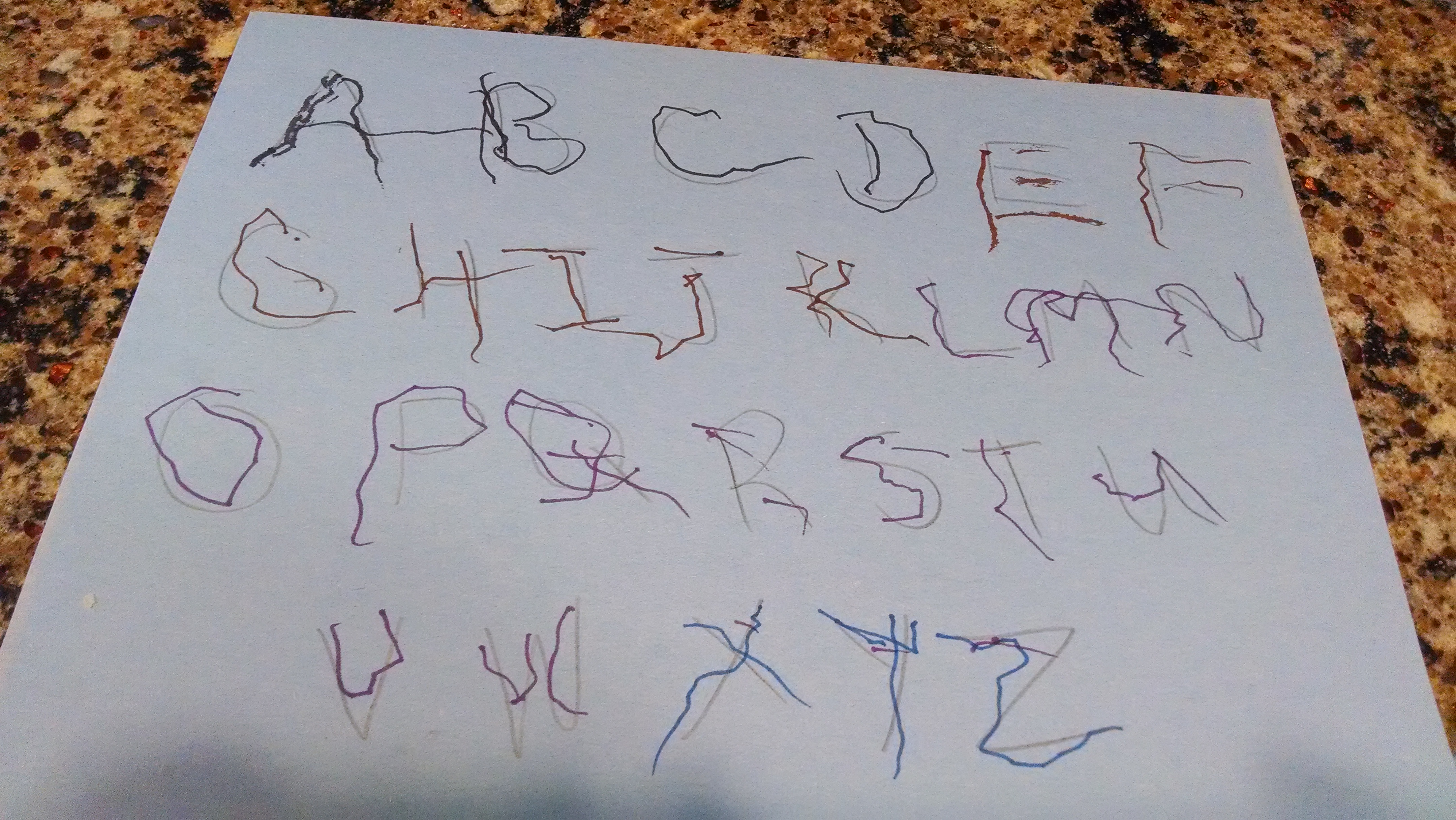
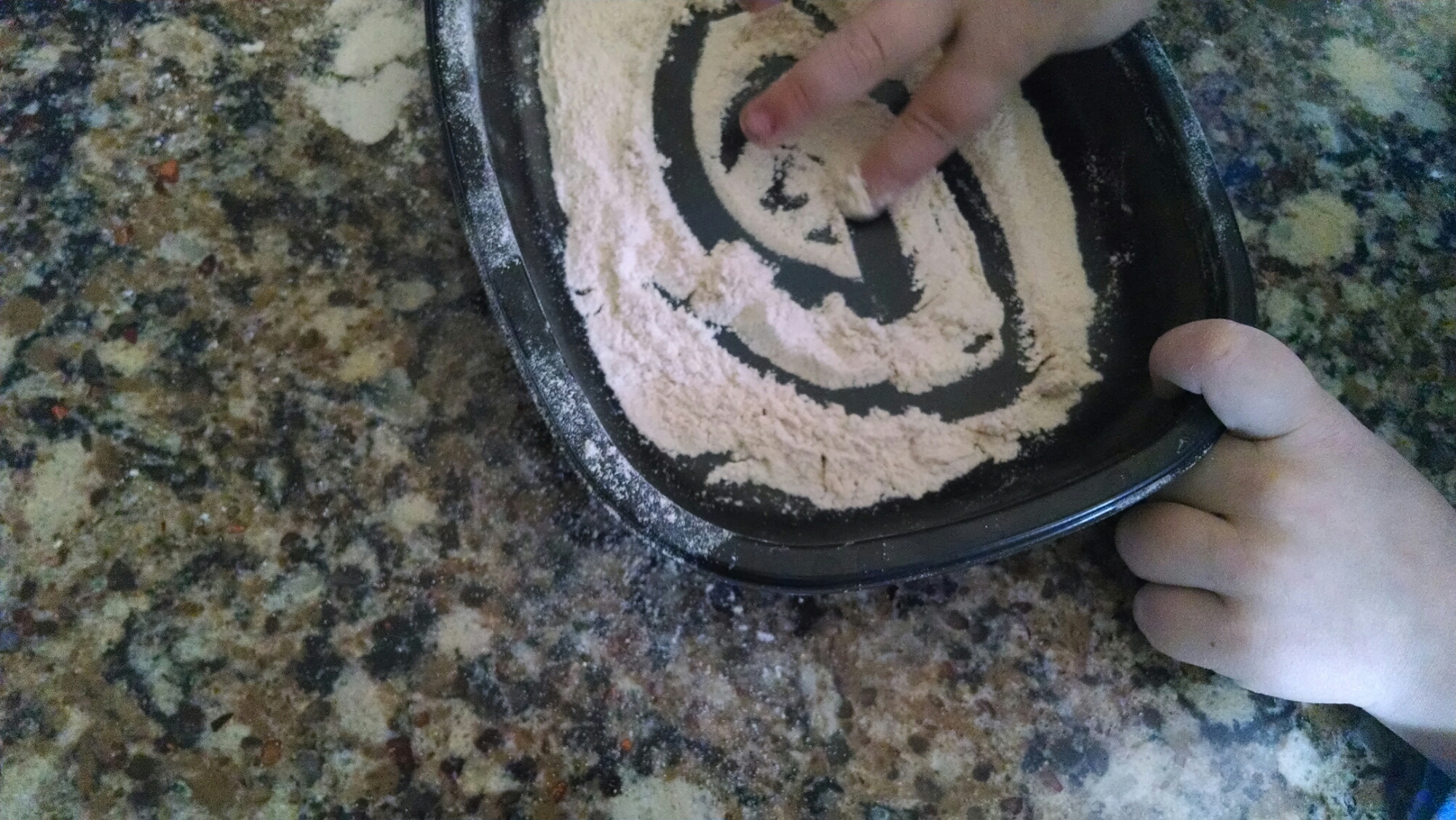
  • Explore letters: Practice drawing, painting, or writing with a stick in the sand or the mud. Make letters with play dough or pipe cleaners. Have them work with puzzles made of letter shapes. Play with alphabet refrigerator magnets. Look for apps for your touch screen device (tablet or phone) that let them practice tracing letters. Draw letters on paper and have your child trace them

trace

  • In addition to letters, talk about about symbols in general – you could make a calendar and come up with symbols to remind them of what happens each day. Or a weather chart. Or a chores chart.
  • Act out stories that you have read, or do puppet shows. Tell the story as written, or imagine what would come next, or what other adventure those characters could have.
  • Sing songs and play rhyming games – these slow language down so it’s easier to understand, and easier to memorize. Later, try memorizing a story and telling it over and over.
  • When they ask you a question, show how you would look up the answer.
  • Visit the library often. Make it a special time in your week’s schedule.
  • Take them to story time at the library or bookstores. It’s typically free, weekly or monthly, and lasts 30 – 45 minutes. Expect to sit on the floor with your child and help him stay focused on the stories. This is great for literacy and language development – seeing other kids and parents excited about books, listening to the librarian’s voice (kids learn language better when they hear a variety of people speak it), and singing songs together. It’s also great practice for school – having to sit still and pay attention to an adult other than your own parent is important. Before going, let your child know what to expect, and what behavior you expect of her (sitting down, being quiet) to increase your chances of a good experience. Learn more here: http://www.peps.org/ParentResources/by-topic/early-learning/why-story-time-rocks

Check out fun books about the Alphabet:

  • Chicka Chicka Boom Boom. YouTube. I love the rhythm of this book, and it’s a fun rollicking read-aloud that I never tire of. The letters are just characters in a story: “A told B and B told C, I’ll meet you at the top of the coconut tree.”
  • Kipper’s A to Z by Mick Inkpen. YouTube. Most ABC books just have different unrelated ideas on each page as they go through the alphabet. I like that this book has a storyline that runs throughout. They find an ant and put it in a box, then a caterpillar they put in the box, then the duck who is too big to fit…
  • Dr. Seuss’ ABC. YouTube. YouTube sung to Banana Boat song melody. Has the great read-aloud rhythm and fun pictures you’d expect in a Dr. Seuss book. I also like the fact that on several pages it goes back to remind you of all the letters in the alphabet that came before the one you’re on.
  • The Little Red Cat Who Ran Away and Learned His ABC’s. YouTube This is a wordless book, but you can engage kids in a story-telling exercise as you read it: “What animal did he see next? Will that animal chase after him too?”

Some alphabet books are really all about increasing your child’s vocabulary:

  • Eating the Alphabet by Ehlert has lots of different fruits and vegetables for every letter. YouTube
  • L M N O Peas, YouTube, uses words for lots of jobs and hobbies: dancers, drivers, eaters, electricians, explorers, farmers and friends.
  • A is for Angry. (YouTube)

Some books allow kids to have a tactile experience of the shape of the letters:

I like Alpha Block, YouTube, which has cut outs of the letters. Think Touch Learn ABC has raised letters the children can feel. If Rocks Could Sing, YouTube, shows rocks shaped like each of the letters. Somehow looking at pictures of rocks gives me a sense of what that rock would feel like in my hand. This book could also send you on a quest of finding rocks that look like shapes, objects, or letters.

Note: Many ABC books are too advanced to be understood by kids just learning the idea that an alphabet exists and that the different shapes of letters have meaning. For example, Take Away the A is a great book for kids who can already read – like first or second graders will get the jokes – like “without the N, the moon says Moo”. Z is for Moose is good for kids who already have a lot of familiarity with the conventions of alphabet books. A is for Salad would be fun and silly for kids who know how things are actually spelled, it would make no sense for kids who don’t – when it says B is for Viking, and you have to look to figure out what in the picture of a beaver in a Viking hat starts with B. On Creature ABC, you have to know some about reading to be able to guess the answers.

How to Read to a Child

[This is my third post on early literacy. Look here for how to get your child excited about reading, and here for info on developmental literacy and what types of books are best at each age, and here for other ways to build literacy skills.)

How to read to a toddler or preschooler

  • Turn off the TV or radio, and settle in to read.
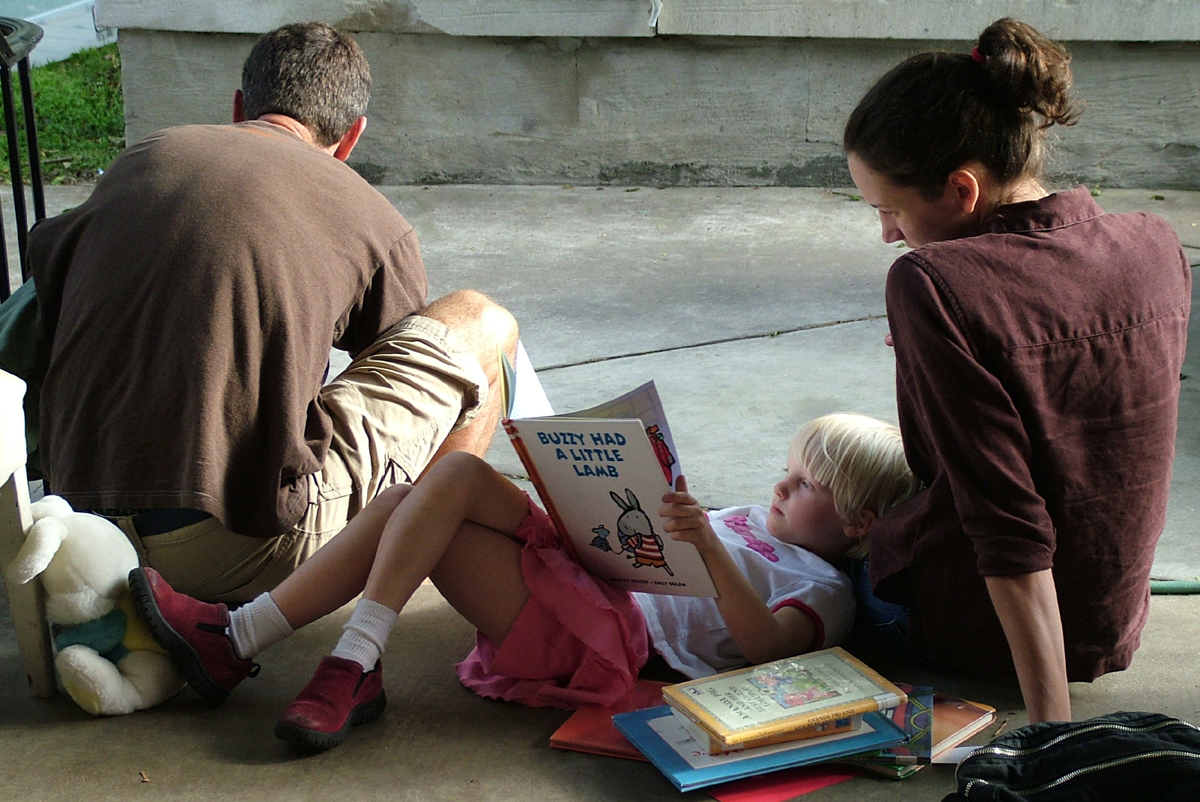
  • Often we snuggle next to our kids for reading. Make sure that sometimes you sit face-to-face. Your child can learn more from you and the book if he can see your expressions.
  • Show them the cover before reading – ask them to guess what the book will be about.
  • Let them turn the pages – don’t stress if they miss a page.(Note, younger toddlers do best with board books. By three years old, they should be able to manage turning pages in a regular book.)
  • Run your finger along the words as you read – that reinforces that print goes from left to right.Or point to the words that they might recognize as you read. If you’re reading a book that repeats some of the same words on every page (“but where’s the cat?”) point them out on each page as you go along.
  • Define new words and explain new ideas as you come to them.
  • If a book has no words, or you don’t like the words, make up your own! Tell a story based on the pictures, or point to pictures on a page and ask your child to tell you what’s happening.
  • Talk about the pictures. Label what’s in each picture (“there’s a pig and a cow in front of the barn”). Talk about what’s happening in the picture (“the duck is splashing in the puddle”). Point out familiar things (“he has a toy train just like you do” or “her bedroom has some of the same things your room has… see. there’s a bed, and a table, and a teddy bear.”)
  • Make it sound dynamic: Use different voices for different characters; read at different speeds (some stories are slow and gentle, others fast and rollicking); play up the emotional tone – are characters happy? Scared? Silly? Angry? Show it with your voice.
  • Try singing a book. Some books are perfectly designed for singing.
  • Ask questions about what’s happening in the story, ask how characters are feeling, ask them to guess what will happen on the next page. Later in the day, ask them about the book you read, and talk about experiences your family has had that are like what you see in books.
  • Think of a book as a conversation starter. Beyond what’s on the page, you can ask about other things in the book, or help your child connect what’s in the book to her everyday experiences.
  • It’s OK if toddlers wander around while you read – they can still listen while moving.
  • Enjoy reading – let your joy shine through!

Resources:

Collection of fabulous articles on building literacy skills at www.zerotothree.org/child-development/early-language-literacy/tips-tools-early-lit-and-lang.html