Author Archives: Janelle Durham

Unknown's avatar

About Janelle Durham

I am a parent educator and social worker, and teach music and science to children age 1 - 8.

4DX movies: The Little Mermaid

TL/DR summary: At some Regal cinemas, including the Meridian in Seattle, they have 4DX movies which include chairs that rock and shake, water and wind effects. Although it’s not an experience I would do many times, it was a lot of fun for the right movie, for adults and older kids.

Last week, I was listening to the Filmcast podcast, and they shared an email from a listener who had joined a friend at a movie, not knowing it was a 4DX screening, and how startled they were when the seats started shaking (“my friend’s mom screamed!”) and when they were sprayed with water, and the experience of “getting punched in the kidney” by the chair when a character on the screen was shot.

This entertaining anecdote raised my curiosity about 4DX movies, and I started thinking about what movie I’d want to see in 4D. I didn’t want to try it on a movie I was super invested in watching, because I was afraid it would distract me from the movie.

Then the next day, I was trying to talk my 12 year old boy into going to see the new Little Mermaid. And I realized this was the perfect opportunity! It was a “new” movie, but I knew the plot and many of the words. And, I have mixed feelings about these Disney remakes – my brain sees them as a cynical money-grab (and wow does Flounder look terrible in this movie!) but my heart sings along so happily with the familiar songs and the new twists that new actors bring to very specific line reads… Melissa McCarthy’s “Poor Unfortunate Souls” is pretty great.) So, the option to have a different kind of movie-going experience along with a movie retread made it more appealing to me. And, the promise of the 4DX experience intrigued my son who wasn’t that enthused about “a princess movie”.

Where is 4DX available?

In the Seattle area, there’s only one 4DX theater – the Meridian in downtown Seattle. The parent company CJ4DX says there are 788 theaters in 69 countries. Their locator tool is here – it’s buggy but it seems to work if you drag the map around, then click on the pins. Wikipedia says that as of 2020, there were 32 in the U.S. mostly at Regal theaters.

Here’s a trailer for the 4DX experience.

So, what is 4DX ?

We saw the movie in 3D, with good sound, plus these effects as listed on the CJ4DX site:

  • Motion chair: Roll, Pitch, Heave, Back Shaker, Bottom Shaker, Back Tickler, Bottom Tickler
  • Air: Face Air, Air Shots, Wind, Warm Air
  • Water: Rain, Rainstorm, Fog
  • Lightning, Flashing Lights
  • Scents, Snow and Bubbles

What was the experience like?

During the first few trailers, I had the “is my chair vibrating? Or is that just the vibration from the heavy bass in the sound?” I wasn’t sure what I was looking for.

And then they played a 4D Indiana Jones trailer. At the first jolt of the chairs, several people in the theater screamed. Then we all laughed together. Apparently this was a new experience for many of us, and we were ready for the ride. The seats started shaking and rolling, like you’d experience on a 4D motion simulator ride. (There were a few minor beverage spills amongst our neighbors during the movie.) When lights flashed on the screen, lights up near the ceiling flashed, like lightning bolts. When wind blew on screen, it blew on us. The remaining trailers were all 3D and 4DX, so we got a taste of what those movies would be like in this format.

By the end of the trailers, I was enjoying the experience, but I wondered if I would be tired of it by the end of a 2:15 movie. I was wishing that I’d grabbed a drink at the theater’s bar on the way in instead of a water bottle at concessions… as someone in my late 50’s, a muscle relaxant before being tossed around on amusement park rides isn’t a bad thing… In the end, though, I didn’t tire of the effects and I’m not stiff and sore the next day as I might be after a day on roller coasters. (FYI, here’s the health warnings for this experience – like amusement park rides, they make it sound worse than it is.)

Little Mermaid was a great movie to see in this format.

Visuals:

When the trailers for the movie came out, people complained they were dark and murky. And certainly there are several dark underwater scenes (director Rob Marshall explains the reason for this was to capture the sense that the deeper you go in the sea, the darker it is.) But in this format, the film looked great! (There were a few seconds in the Ursula scene where it was too dark but that was it.)

The underwater scenes were beautiful. It felt pretty magical to be “under the sea” in the movie. The gentle motion of the chairs as characters swam through the sea enhanced the effect. The colorful market scene was fabulous too.

Movement and Touch

In swimming scenes and one really great scene of Scuttle flying, the movement was soft and flowing. At one point when Ariel was swimming downward, the chairs just tilted gently forward. (If you’ve ridden the “Soaring over California” ride at Disney it’s a bit like that.) It was pleasant and engaging. Some reviewers have said that some of the longer scenes in this longer movie dragged, but I never felt that way with the more immersive experience – I would have been happy to “swim” and “fly” for longer.

At times, the chair shakes a bit to echo loud noises or sudden movements on the screen. If the mermaid on screen suddenly turns and swims away, you get a swoosh of movement to match that.

Other times, the movement was much more dramatic – the shark attack, the storm at sea, the time in the horse carriage that’s running away with them – the movement is much more dramatic – rolling and shaking. That’s the amusement park level movement. It was a bit much for me just a couple brief periods in the movie, but my son loved it.

In the Regal movie listings, they describe the seats as “butt kicker” seats, and there are times where you get thumped on the back – like when someone gets bumped on screen, or when the ship’s bowsprit stabs Ursula. It’s not the “getting punched in the kidney” feel like the person on the podcase described – more like having someone knock on your back like they’d knock on a door. Again, it was a fine part of the experience except one scene where I ended up leaning forward to avoid more thumps.

Air and Water Effects

I wondered how wet I would get… You do have the option to turn your water effects off, but I left mine on. It’s totally fine, even in Little Mermaid, which is obviously a water focused movie… we got misted a few times, and sometimes “rain” fell on us or water splashed while they were on a boat. It was enough to notice, but never enough that I felt like I had to wipe it off my face, and not enough that my clothes got anything other than a very light misting. So, it was just another fun level of immersion and engagement.

The wind included both little puffs at your shoulders and wind in the theater. The pro was that it was engaging and pulled you into in the movie experience. The con is that I was already cold with my sweater on and sweatshirt covering my lap, and the wind made me colder. (So, I advise bundling up, even if it’s warm outside.) There are apparently little puffs by your ankles too, but I put my foot up on the chair so I don’t notice. Those can be used for things like waves swirling around feet.

My son and husband did not notice any smell effects. There were definitely 6 or 7 times in the movie when I noticed them – often at the seashore / ocean parts, but once in the market. I think it was the same smell each time and I don’t know what it was supposed to smell like – it smelled kind of like burning incense maybe?? Nothing too clear. Artificial scents often give me headaches, but this one didn’t. Maybe it’s better in other movies?? Although apparently “snow” and “bubbles” are possible but we didn’t see any.

Is it Good for Kids? Elders?

I don’t think I’d take my 86 year old father-in-law – I think it would trouble him and be uncomfortable.

Most of the people in our theater on a Saturday night were adults, but there were some kids and they seemed to have a good time.

I think almost any kid age 7 and up would enjoy the effects. (Of course, if you have a kid with sensory issues who finds just a movie overwhelming, this would just be way too much…) Many 5 – 6 year olds who have done amusement park rides and enjoyed them would be fine. Little kids don’t have the option: Kids have to be at least 4 years old and at least 3 1/2 feet tall to attend.

I would also think a lot about the content… if the action scenes in the movie are mostly fun (racing around in a Mario Kart) then the immersion is fun. If they’re already going to be on the scary side for your kid, then having this higher level of immersion / engagement could make it even scarier for them. Like in Little Mermaid in Ursula’s cave there were “monsters / unfortunate souls” grabbing at Ariel, and your chair was rocking and hitting at you and I think that might be overwhelming for young kids.

What Movies are Available

Only some movies are available in this format (list here). The ones this summer include: Guardians of the Galaxy, Fast X, Indiana Jones, the Flash, Elementals, Transformers, and Spiderverse. If deciding which one to try, you could imagine what the different scenes might be and how they might use the available effects to amplify them.

Cost

It’s pricier for sure than a regular movie. At the theater we were at in downtown Seattle, on Saturday night, the 4DX price for adults is $28, 3D is $22.55, and 2D is $18.55. At a theater on the Eastside suburbs, I could see it for $16.05 in 2D. However, I think it’s enough different of an experience to be worth the cost difference.

What about D-Box?

There is also something called D-Box. I know it’s available in some seats at the Cinemark in Totem Lake in the Seattle area. We’ve not tried it. It has motion seats but none of the other effects. Another reviewer summarizes the experience as “I really wasn’t impressed with them, and even less so now, having experienced 4DX… they’re basically “rumble seats.” They have some movement, but I found them to be more of a distraction than a compliment to the film… their best feature was the ability to disable them.”

Would I do it again?

Yes. It was fun, and for just the right movies, I think it adds to the experience and makes it more of an event. And it’s very different from the experience you have at home on your couch so definitely a “magic of the theater” thing.

Would I do it often? No. I think mostly I’m happy watching movies in a comfy recliner at a typical showing. But, your mileage may vary.

Here are a few more reviews of the experience: Terminator Dark Fate in Orlando, Spiderman Far from Home in Seattle, Conjuring – the Devil Made Me Do It, and Venom.

About this blog: I cover topics related to parenting. I have several posts on activities to do in the Seattle area. You may be interested in my post on Summer Movies 2023 which lists summer movie clubs, outdoor cinema, and drive-in theatres in Seattle, King County, and Western Washington.
Displaying and Storing Your Child’s Artwork

Doing art is so important for a child’s development – it builds fine motor skills, observation skills, decision making, and communication skills as well as supporting visual development and creativity. (Learn more about the importance of art for kids in The Art of Creating from Michigan State U, and Why Is Art Important at Preschool from Rasmussen U.)

The only problem with kids doing art is that you end up with a lot of art projects you have to figure out what to do with!

Hang it On the Fridge?

For the first few pieces your child does, you will be excited and proud and stick them to your refrigerator where you can see them every day! And then, a few months later, or a few kids later, you can’t see the front of your fridge any more, and you realize that you just can’t keep every piece of art your child does! You feel guilty just tossing it in the trash though. What are some solutions?

Easel Paintings

Some preschoolers bring home one or more easel paintings EVERY day.

With my older two kids, we had temporary displays for when a new artwork came home. For large two dimensional art (easel paintings) we had one spot in the kitchen where we could hang one piece of art per child. We would later save the very best (see below) and the others became gift wrap or went to the trash.

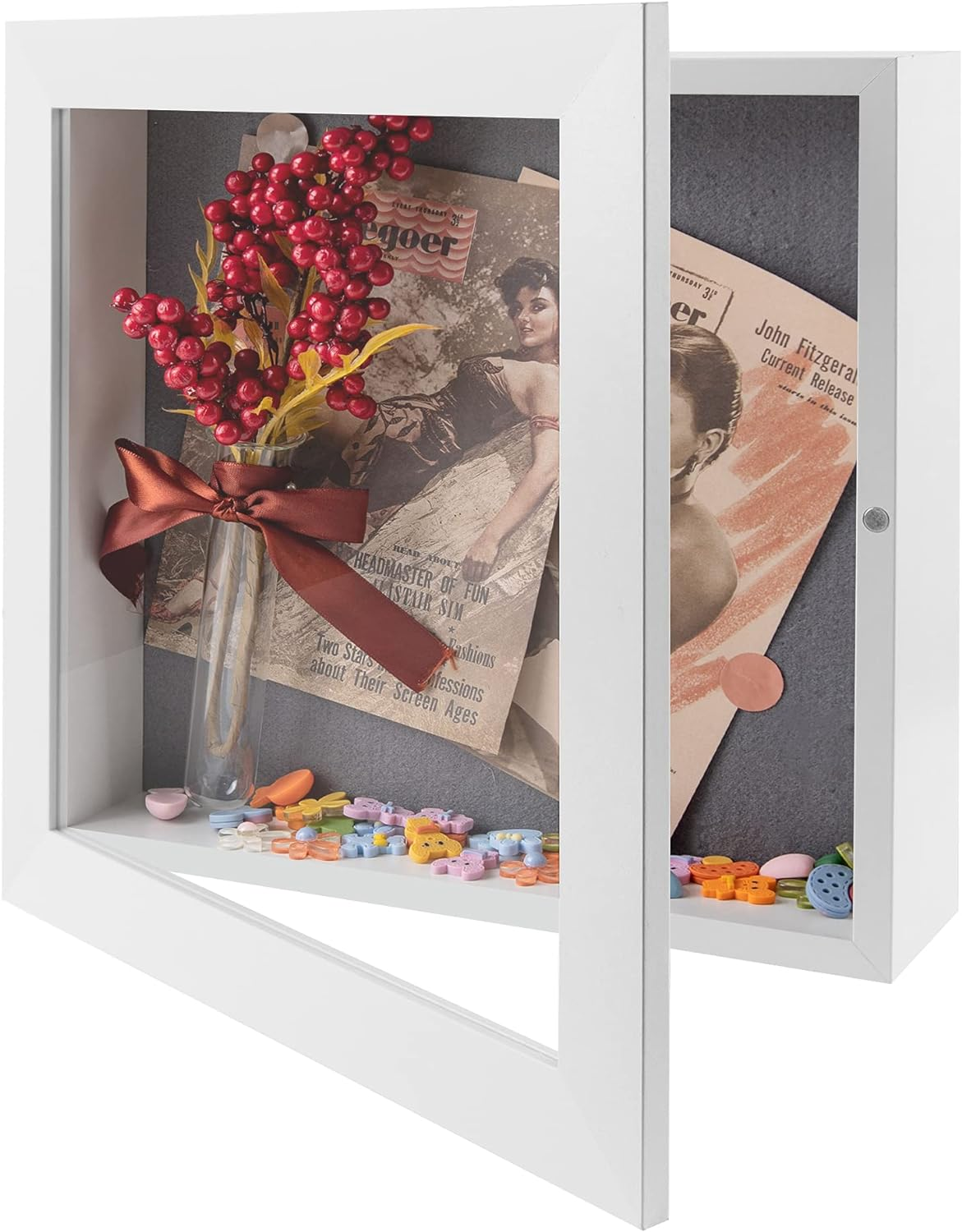
Display 3-D Art in Shadow Boxes

For smaller or three dimensional items, we had wood shadow box frames, which were 2 inches deep. We had four hung together on the wall (they were rectangular so we had two landscape orientation and two were portrait orientation.)

The kids got to decide what went in their shadow boxes. It could be artwork they had created, treasures they had found (dry leaves, sea glass, etc.) or gifts they had been given, or tickets to shows or memorabilia from trips, and they got to decide when to rotate things in and out.

Here are Amazon affiliate links to a couple of similar products: Frametory’s shadow box, or Golden State’s shadow box.

We did not tend to keep 3-D art, so when they decided they were done displaying it, we said goodbye and into the trash it went. See below for what we did for storage of 2D art.

Displaying 2-D Art Work in Storage Frames

I love these frames that didn’t exist when my older kids were little. They are a storage box and a display box. When your child creates a new piece, you tuck the old one in the back part of the box, and add the new one on top for display. The boxes may hold around ~30 pieces of art, so you still won’t be able to keep all your child’s art, but it could be a nice lifelong sampler of favorite pieces.

I have not purchased these but per reviews, the L’il DaVinci looks good for hanging on a wall, and this one from American Flat may be better for setting on a table.

For choosing what size to get: it’s worth remembering that construction paper is 9 x 12, so doesn’t fit in an 8.5 x 11 frame. Easel paper is 18 x 24.

Art Storage for Posterity

When my older kids were in preschool, the school had a fundraiser where they sold cardboard art portfolio boxes that were around 18×24. Over the years, I saved a representative sample of my favorite art that my kids did. Sometimes they’d get too full, and I’d have to sort through all the pictures again to decide on a smaller set of favorites, but it gave me a lovely chance to review the progress of their artwork from preschool to college.

The closest similar product on Amazon is these 18 x 24 boxes, but they come in packs of 50, so while they’d be great for a preschool fundraiser they wouldn’t work for just one person! You could also consider an artists’ portfolio, or this archival box.

Digital Archiving

With my youngest, he just wasn’t the prolific artist the other two were when he was in preschool and elementary, and now as a middle schooler, he primarily does digital art on his computer. While we have displayed his art on the fridge, mostly we take digital photos of it or scan it and then trash / recycle it.

I think I’ve saved a few of his pieces in the boxes with the older kids’ art. (Being the youngest kid is rough sometimes. 🙂 ) What I may do at some point is figure out a way to create an album where we print out images of some of his best art so we have a physical keepsake, because there is something satisfying about flipping through something physical to remind you of your child’s development rather than just looking at images on a screen.

If you have other ideas for art display and storage, please comment!

Note on affiliate links. The product links are Amazon affiliate links. If you click on one and then end up purchasing something on Amazon, I get a small referral bonus at no cost to you.

“No Thanks” is not a discipline tool

Sometimes I hear parents and teachers say “no thank you” to children to correct misbehavior – like when a child is shoving or making too much noise and the adult just says “no thank you” in the child’s general direction.

Not only do I find this odd (in my mind I would say “no thank you” to a child who offered me something I didn’t want, like a bite of their soggy cracker), it’s ineffective, because it does not explain to them what they should do instead. Children are left to deduce what might be wrong about what they’re doing and then make the jump to abstract thinking to figure out what else to do. That’s a big leap for three and four year olds!

It’s so much more effective to be explicit with your corrections. If a child is shoving into line, instead of no thank you, say “Jack, please go to the end of the line.” If they’re banging on the table, instead of no thank you, say “Kim, please stop banging, that hurts my ears.” It’s so much easier for a child to behave well when they’re told what that means. I really recommend this approach for adults.

Should kids use “no thank you” in this way?

I know a preschool teacher who taught her students to say “no thank you” when the other children did things they didn’t like. I think that could be appropriate for three year olds who do know when they don’t like something but may have a hard time articulating exactly what it is they don’t like or what they wish the other child would do instead. Saying no thank you is certainly better than shoving the other child. But by four years old, I like to work with kids on more clearly expressing themselves. I might say “Jeff, you look uncomfortable. Can you tell Kira ‘please don’t lean on me during group time – I like to have my own space.’” Or “Shri, you can say to Olga ‘please stop pushing me.’” It’s polite, assertive, and clearly expresses their preferences.

Learn more about how to tell children how to be good. https://gooddayswithkids.com/2014/01/29/telling-what-to-do/

Books that Sing – Examples

I learned the idea of “books that sing” from Nancy Stewart. These are books that can be sung instead of read. I built a year-long preschool music curriculum (download it from that link!) that included 4 of these books each month. And here is the list of books that I use. For each month’s theme, I include shaker songs, finger rhymes and songs, as well as the books.

Here is a detailed preview of the books we use in April.

I looked for books featuring a springtime theme. I considered Inch by Inch, the Garden Song, which is quite good. (I use it in my kids’ science class when we talk about plants.) I thought long and hard about Dancing Feet by Lindsey Craig and Mark Brown (video) which would be so easy to make up a jazzy tune to sing it to. Or, since we’re in Seattle, there’s Singing in the Rain, the lyrics from the movie with illustrations by Hopgood. (video) But, I’ve been trying to choose books where the children know the tune so they can sing or hum along.

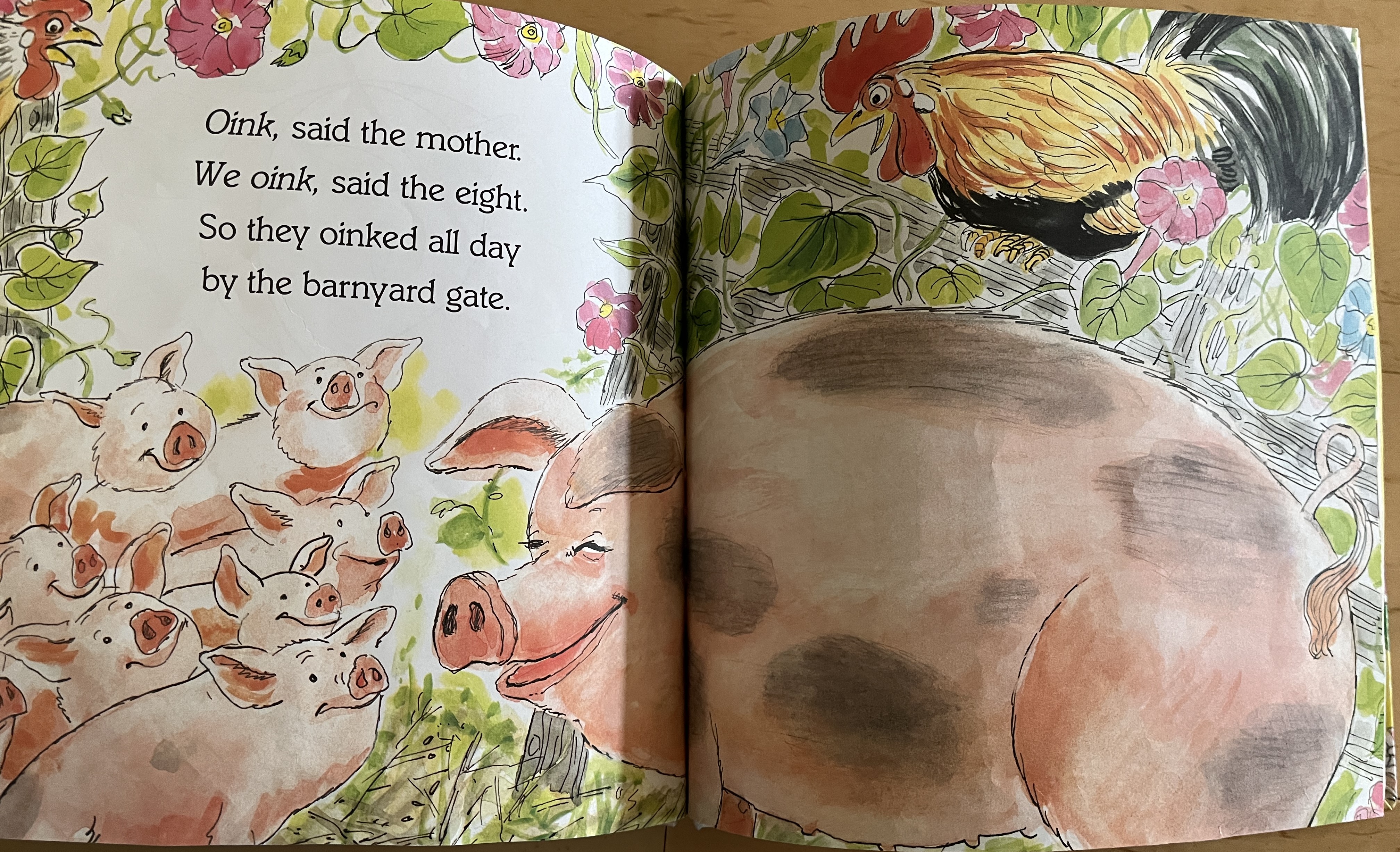
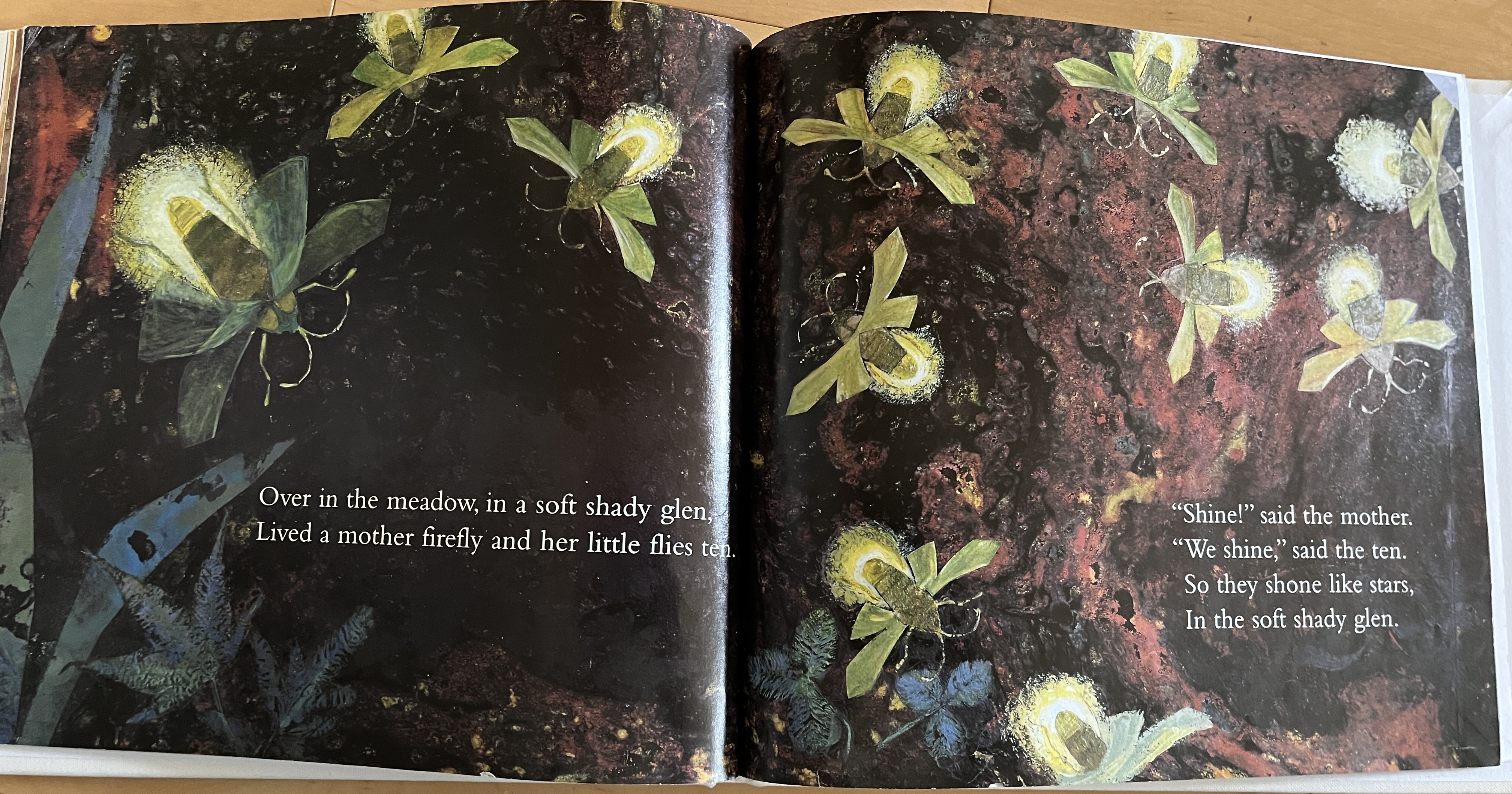
I decided to check for books of “Over in the Meadow” and “Five Little Ducks.” Turns out that there are at least five versions of each song! Let’s check them out:

Over in the Meadow

This is a classic counting song. If you’re not familiar with the tune, you can hear it in this video, which is from the Barefoot Books version of this book that sings. We didn’t have a copy of that one at my library but you can find it on Amazon*.

Over in the Meadow – Jane Cabrera. Each two-page spread has a verse and all the animals for that verse to count. In this book, at the end, it says “over in the meadow while the mothers are away, can you count the babies? they’ve all come to play.” You can then play an I-spy style to find and count all the animals in one scene. My library has the Wonderbook version where you can play the music to sing along to. But, the recording is a little bland and slow to my taste – I’d rather sing it myself.

Over in the Meadow illus by Rojankovsky. Copyright 1957, featuring lovely pastel sketches. At the end of the book, there is a nocturnal scene where many of the animals appear. It includes an owl chasing a frightened looking bunny which might trouble a few particularly sensitive children. Includes sheet music of the tune on the last page.

Over in the Meadow illustrated by Anna Vojtech. The illustrations are lovely. I like that in addition to the main illustration where you can count the animals “hiding” in the scene, and then below the verse, there’s a picture of just the baby animals. I’m dubious about verse 10 with the little beavers ten. “Beave said the mother, we beave said the ten…”

Over in the Meadow, illus by Paul Galdone. (c. 1986. not available on Amazon.) Although I don’t love the illustrations, an interesting aspect is that it has one page that shows the digit and the written out number, then a second page to finish the verse.

Over in the Meadow, illus by Ezra Jack Keats. Nice naturalistic illustrations. Only minor quibble is that sometimes it’s hard to tell the difference between the parent and the babies, which makes it harder for the kids to count the babies accurately.

Also check out Over in the Ocean by Berkes – I LOVE this book. (Here’s a video. Not to be confused with Jack Hartman’s Over in the Ocean.) Berkes also has Over in a River, in the Forest, in the Arctic, in the Grasslands, in the Jungle, in Australia and Going Around the Sun: Some Planetary Fun which are all to this same tune. You can also find Over in the Garden by Ward, Over in the Garden by Matthies, Over in the Clover by Ormerod, Over in the Mangroves (set in India/Bangladesh), and Over in the Woodland about mythical creatures.

Five Little Ducks

Another counting rhyme. This one counts down from five to zero. And then rather than leaving poor mama duck bereft, all five little ducks come back at the end. Here’s the tune. Or another version. There is also a Raffi recording of it.

Five Little Ducks illus by Penny Ives. Nice illustrations, cut outs in the pages that preview things on the next page.

Five Little Ducks, by Denise Fleming. In this version, instead of Mama Duck calling the babies back, Papa Duck does. It also adds in days of the week and instead of just going over the hills and far away, they go other places. Monday – through the woods, Wednesday past the paddock, Thursday – across the fields, Friday – down the road. Saturday they come back. Then, Mama Duck discourages them from leaving the nest, because on Sunday “we all rest.” At the end of the book, there’s a paragraph of information on each of the animal types depicted.

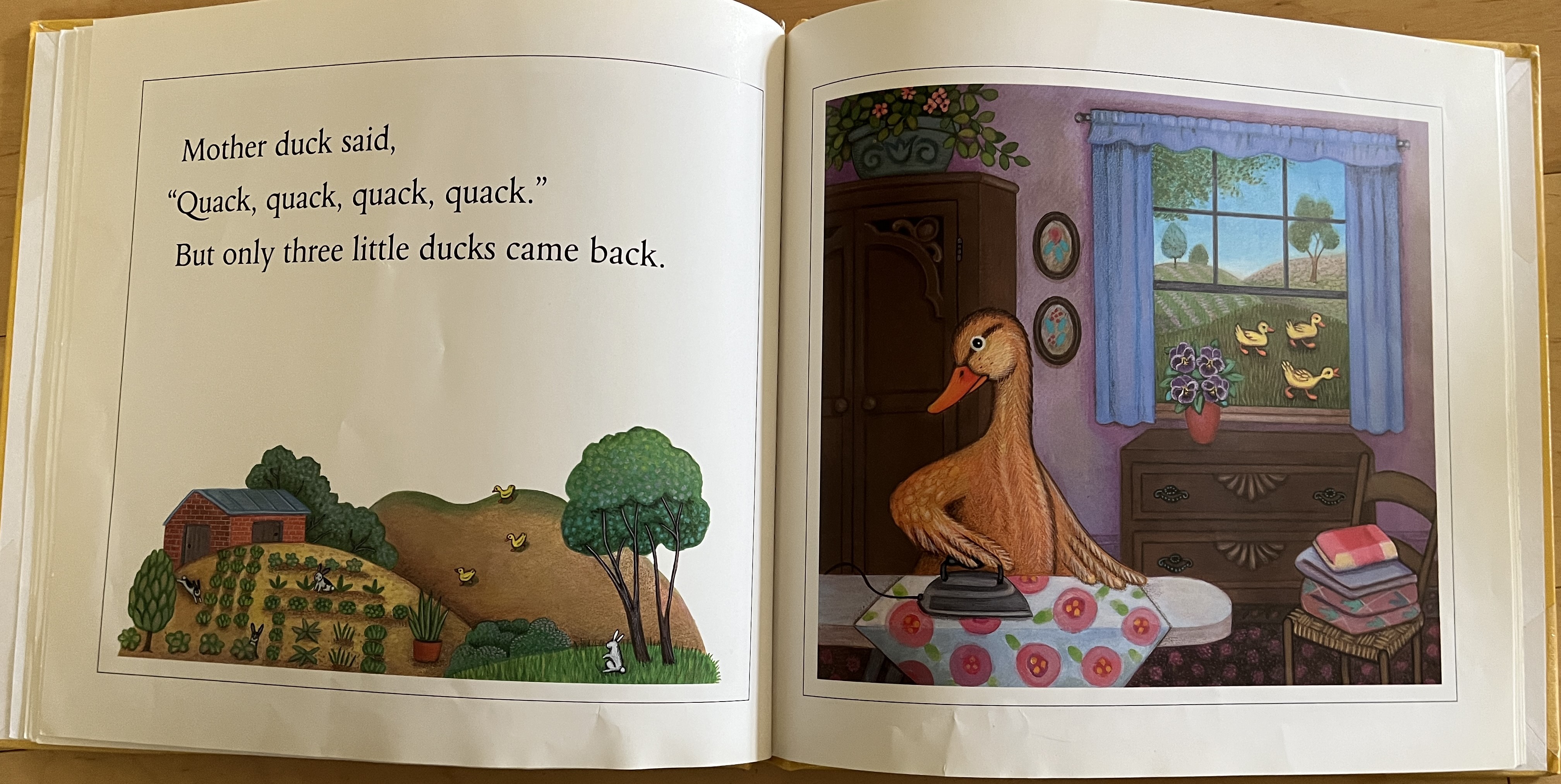
Five Little Ducks illus by Pamela Paparone. Shows Mother duck doing all sorts of work around the farm: gardening, hanging laundry, ironing, picking apples, but also painting a picture. A nice feature is the pages that show the correct number of little ducks either walking away up the hill or coming back down the hill, plus they’re seen in another scene, so there’s lots of opportunities to count the same number to get a good grasp that three is three, no matter how they’re arranged on the page.

Five Little Ducks illus by Aruego and Dewey. Part of the Raffi Songs to Read series. My least favorite illustrations. But the end is unique. After all the ducks are gone, and none of the little ducks come back, we see Mama in Autumn, Mama in winter, and going out in spring to find all five little ducks who have all had babies of their own! One has five babies, one has four, one has three, one has two, and one has just one baby. Also has the sheet music at the end.

Five Little Ducks illus by Ivan Bates. A pretty straightforward edition with nice drawings and the sheet music in the back.

And that’s not all! There are more versions available – see them on Amazon.

How I Use Books that Sing

Sometimes I introduce the song first, teaching it and helping the kids get the hang of it first before introducing the book. This is helpful if either I think the song is brand new to everyone OR if the words in the books have a lot of variations from the typical words. (For example, I would want them familiar with the Over in the Meadow tune before introducing Over in the Ocean. When I read Over in the Ocean, since the words are so different than they know, I would have them hum the tune along with me as I sing the words in the book. It turns out three year olds are great at humming tunes!)

With these books, since most of them align really closely with the traditional words and since I have SO MANY books to choose from this month, I’m just going to teach the songs by reading the books, saving the ones with the most word variations (like the Papa Duck version) for last.

*Note: I am an Amazon associate. If you click on any book name below, it will take you to Amazon where you can read a full description of the book. If you end up buying anything after clicking through, I get a small referral bonus at no cost to you.

Books about New Babies

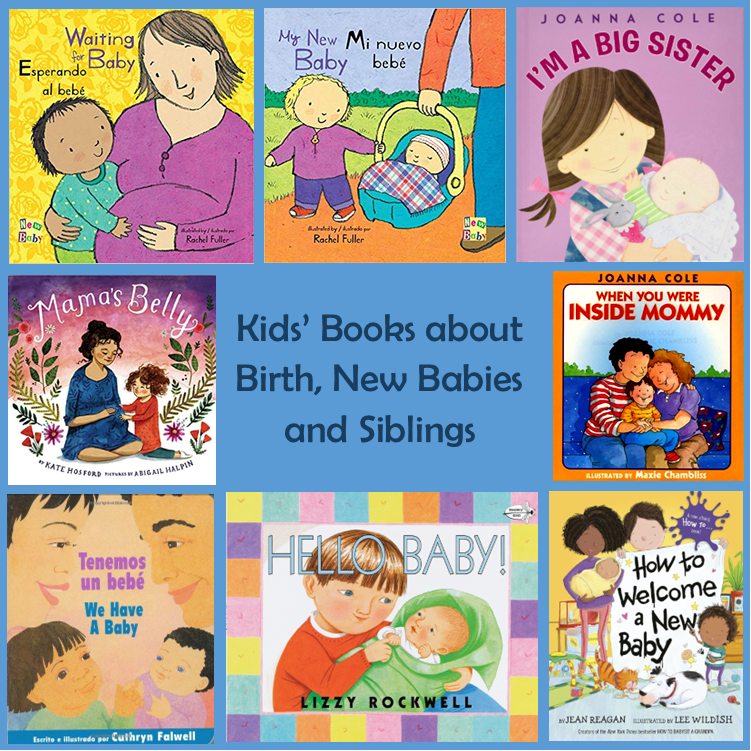
collage of images from the book covers of the books listed in this post

If your family will be adding a new baby, there are many ways to prepare your children for their sibling’s arrival. One effective way is through books about pregnancy, birth, and babies.

When to read

I like mixing these in with other books you’re reading to your child so they’re just part of the rotation. But don’t force them on your child. If there’s a day they only want to read the truck books or the butterfly books, that’s totally fine. We’ll have plenty of opportunities to chat about the baby without it being something that blocks your child from what they want to read about in any given moment.

What not to read

There are a lot of books about sibling rivalry and how awful it is to live with a new baby. I would not read those before the baby is born. We don’t want to set things up with the assumption that it will be bad! If it is hard for your child once the baby is there, then definitely check out those books with them, but let’s not start there.

While it can be helpful to read books that talk about some of the challenges of life with a baby, you don’t want that to be the full focus of what you read as you prepare.

What to read:

Books about Pregnancy and Birth

  • Waiting for Baby / Esperando Al Bebé by Rachel Fuller (2009). For ages 1 to 4. Tells of a sibling’s trip with mom to the doctor, helping prepare for the baby, and meeting the baby at the hospital.
  • Mama’s Belly by Kate Hosford (2018). For ages 3 to 5. A girl asks her mother questions about the pregnancy and what it will be like when baby arrives.
  • Hello Baby by Lizzy Rockwell (2000). For ages 4 to 7. Touches on all aspects of the baby-to-come, from prenatal development and doctor appointments to meeting baby at the hospital.
  • We’re Having a Homebirth!! by Kelly Mochel (2012). For ages 4 to 7. Simple illustrations and brief details about home birth.
  • When you were Inside Mommy by Joanna Cole (2001). For ages 5 – 8. Discusses fetal development, explaining the umbilical word, using the word uterus, etc.
  • Babies Don’t Eat Pizza by Danzig. Ages 5 -8. Covers prenatal development and how baby is born “through an opening between mom’s legs”. Compares what the baby can do to what they can do.

Books for Children about Babies and Siblings

My New Baby / Mi Nuevo Bebe by Rachel Fuller (2009) or My New Baby by Annie Kubler (2000). For ages 1 to 4. Tell the stories of new families. In each, the mother breastfeeds, and the father participates in all activities.

Tenemos un bebé / We Have a Baby by Cathryn Falwell (2008). For ages 2 to 4. A simple bilingual board book about loving a new baby. Multiracial family.

I’m a New Big Brother/Sister by Nora Gaydos (2010). For ages 3 to 4. A positive story about what it’s like to be a big brother or sister.

How to Welcome a New Baby by Jean Reagan (2022). For ages 3 to 6. How to prepare for and welcome a baby. Multiracial family.

I’m a Big Sister / Brother by Joanna Cole. Age 3 – 4. This story talks about what babies are capable of and what they need.

I Used to Be the Baby by Robin Ballard (2002). For ages 3 to 6. This book positively portrays sibling relationships and how a sibling can help the baby.

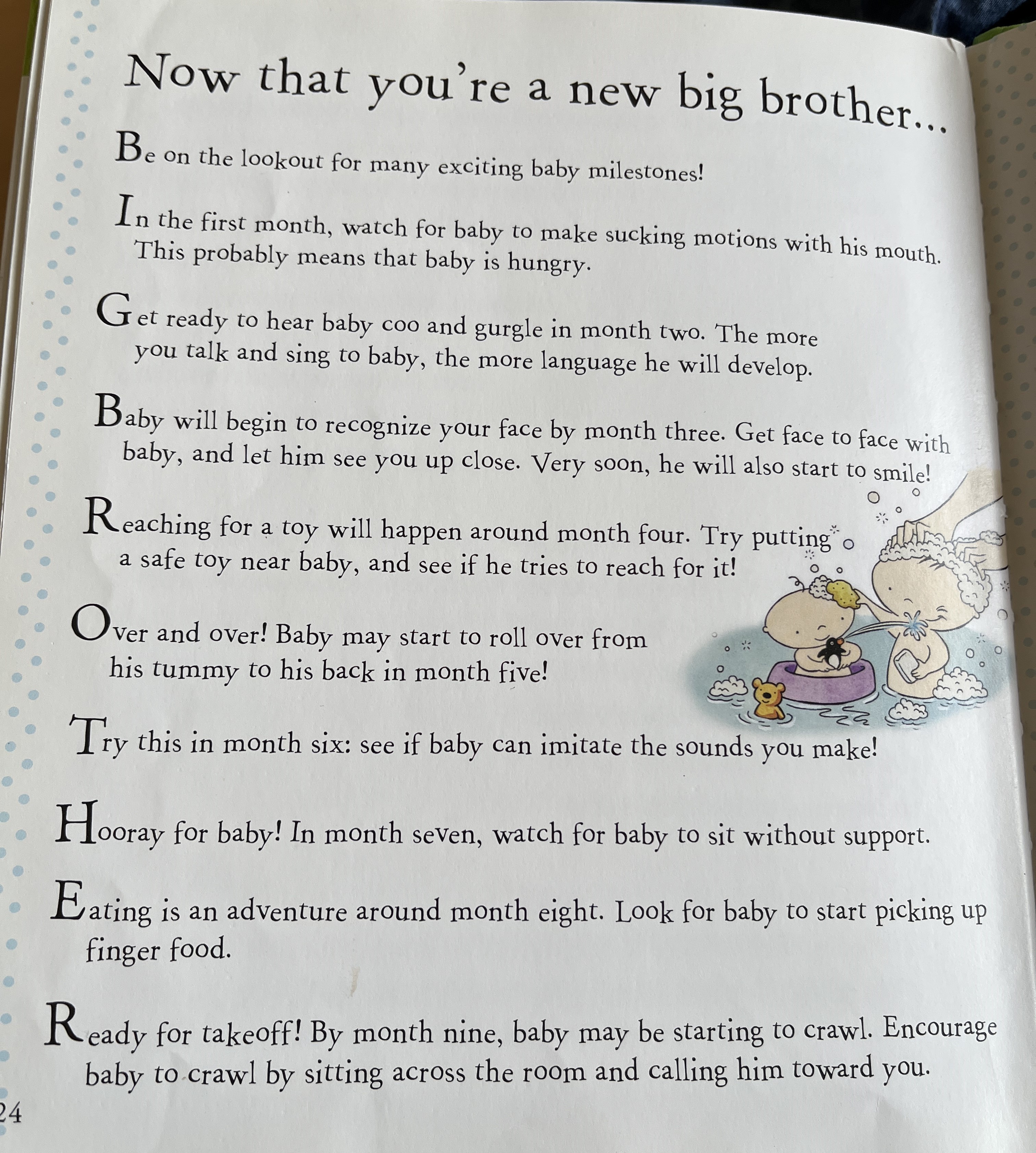
I like these month-by-month tips in the back of Gaydos’ books:

page from a book addressing developmental milestones that older siblings can look for

Film

There’s a Baby (DVD) by Penny Simkin (2013). For ages 3 to 8. A children’s film about a baby coming to Maia’s family. At https://pennysimkin.com.

Additional Resources

If you’re looking for more children’s books about sexuality, pregnancy, and how babies are made, check out Books for Children about Sexuality.

About the Links:

Each book includes an Amazon affiliate link to make it easy for you to learn more about each book. If you click through on this link and then purchase anything, I do receive a small referral bonus at no extra cost to you. These books may also be available at your local library. If you would like to preview the content try searching YouTube for “[title of book] read aloud” and there are videos of many of the books in this list. I do encourage you to then go on to purchase the book itself to support the books’ creators.

Note: a similar post also appears on PCNGuide, a blog about pregnancy, childbirth and the newborn written by Janelle Durham, author of this blog.