Yesterday, my whole day, I was in a mood. The “I don’t want to do that” mood. And in response to everything! Not just work and housework, but for everything I thought of doing, my response was the same. Play ukulele, which I always enjoy? I don’t wanna. Have dinner in the park with friends on a lovely day? I don’t wanna. Go to the family camp that I LOVE next week? I don’t wanna.
This is SO not my usual approach to life.
So, where was it coming from? I think it’s worth exploring, because it gives me insight into my own self care (and perhaps may contain ideas for other busy working parents) but also, because sometimes our kids have a case of the “I don’t wanna’s”, and it’s exhausting – not just trying to force them to get their chores done, but also trying to talk them into doing things we know that they enjoy and having them refuse.
So, what sank me into a “winter of discontent” on a beautiful sunny day?
Not enough sleep. Two nights before I’d had to stay up late to complete some work and get up early. That morning I’d awoken at 5:45 on a day I didn’t need to get up till 7, and no matter what I tried, I couldn’t get back to sleep. So I think part of it was just being tired.
Too many demands. I just have a lot going on this summer, and every time I finish one project instead of getting a break, I have to jump straight into the next one, and I know yet another project is waiting in the wings needing my urgent attention. I want to be clear that I like doing all these things… they’re all projects I would enjoy… it’s just the non-stop nature of them at the moment that is dragging me down.
Not enough down time. Our brains, our bodies, and our souls need a break from time to time. A time to putter around the house, or lay in the hammock, or walk to the park, and rest our thoughts. I think especially in the summer, as it feels like everyone else is taking time off, it’s even more of a drag to feel like you don’t get any breaks.
So, I need to: prioritize sleep till my body catches back up, take on fewer commitments or maybe find ways to “lower my standards” on the projects to get them to the “good enough” point instead of the perfect point, and give myself permission to take some down time when I can.
What does this tell us about when our child is having a case of the “I don’t wanna’s”? It’s likely a good time to reflect on:
Are there too many demands on them? When I say demands, you might just think of chores, or when you ask them to do things they don’t want to do. But honestly, even fun things can place demands on their energy… going to a movie or a restaurant they love requires them to be on their best behavior – controlling your impulses as a young child is hard work. (For kids who really struggle with impulse control, it’s especially challenging.) Playing with friends is fun, but it’s also demanding as you have to keep negotiating social rules, waiting for your turn, being patient and forgiving when other kids aren’t at their best. (For a more introverted child, the social time can especially take a lot of energy.)
Are they getting enough downtime when they’re just left to their own devices and allowed to just putter around and “waste time” doing whatever they want to do? Parents often feel pressured to enterain and educate their child at all times. That’s actually too much for your child’s brain to take! For brain development, we need three things: novelty (new ideas and experiences), repetition (the chance to do something again and again to deepen your understanding and mastery) and down time to process it all. So, when they’re “doing nothing”, what they’re really doing is growing their brain!
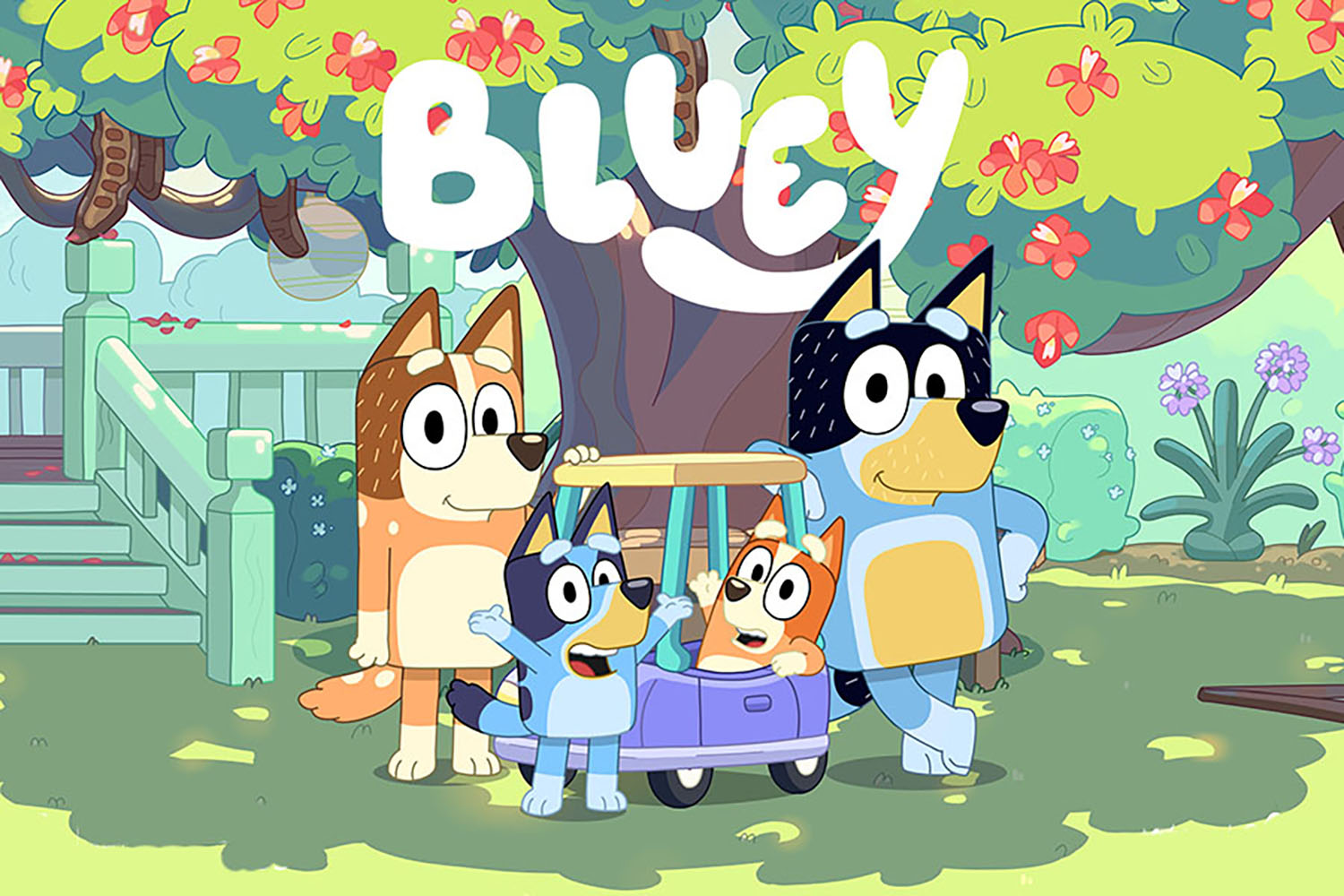
TL/DR: Season 3 of Bluey became available on Disney Plus on July 12. If you have young children, watch this show! Your kids will love it, and the characters are excellent role models of loving, positive parents.
Bluey is an Australian children’s show that airs on Disney Plus. It features Bluey (a dog – Australian Blue Heeler), her little sister Bingo, Dad and Mum (Bandit and Chili). The show is simple – just reflecting the everyday life of this little family, and the ways that the parents and children interact. It is aimed at preschool age children, and they love it. Surprisingly, so do adults!
I listen to a podcast called the Filmcast. Hosts Jeff Cannata and Devindra Hardawar often rave about Bluey. Jeff has said “watching this show has made me a better parent.” (Brian Walsh agrees.) Even after hearing these recommendations, I didn’t watch it, because my youngest child is 12 – outside the Bluey target audience.
Then I read something about an episode (“The Show”) that indicates that Chili had experienced a miscarriage before Bluey was born. (There are also hints in an episode called the Bedroom, and infertility is reflected in the episode Onesies.) Bingo and Bluey are doing a silly show, acting out how their parents met and fell in love, and Bingo has a balloon under her shirt to act out Chill’s pregnancy. The balloon pops. The camera goes to Bandit and Chili who grab for each others’ hands with pained expressions. That’s all there is… a scene that may go over children’s heads, but has connected with and been meaningful for parents who have experienced a loss to see their story reflected. Michael Vaughn, a father of a Bluey Fan, said on TikTok: “One area where Bluey excels is making parents feel seen when they’re struggling.”
So, my family gave the show a try. My 12 year old likes it, but has other higher priorities for his screen time. On the other hand, my husband loves it. Bluey’s 8-minute episodes have become his go-to for “I’ve had a long day, and just need to do a little something relaxing before bed.” He’s not the only adult who feels this way, according to this WaPo article.
Why Many Adults Love Bluey
Bluey has a huge adult fan base, and these fans on Reddit explain why. Here I’ll just share a few that are about parenting and learning how to interact with children, but there are MANY reasons to love the show:
“I had no idea how to interact with kids prior to watching this show. But after watching Bluey, I could easily play games with my nephew…. We played keepy uppy but we also invented new games… And I had fun doing it.”
“I want to watch Bingo and Bluey have a beautiful childhood with great memories of their parents. It’s a way of healing my inner child. … AND if it helps us parent better, we are healing generational trauma, too.”
“Bandit is dad goals”
“Because you as a parent can relate 100% to every episode.”
“I’ve always been afraid of not being a good parent… The show has made me reevaluate being childfree. I just never thought about gentle parenting and seeing other people’s experience with it makes me think I could do it some day!”
This thread covers some of the moments that parents found most relatable:
“When Bandit buggers up the cake and just flops down onto the floor. He’s torn between bursting into tears and an almighty swearing fit, but at the same time … needing to continue being a positive role model.” “I feel so seen in that moment.“
“Any time the kids go ‘Lets play______’ and Bandit says ‘oh no not ______'”
“when Bandit says he isn’t the best dad. I have those moments with my children … “
“Mum School! The end, when Bluey asks, ‘did I fail mum school?’ And Chili replies, ‘yeah. Ya did. That’s ok. We all fail mum school sometimes. We’ll just try again tomorrow.’ Never have I felt more validated as a mum. “
Parenting Lessons
Here are just some of the takeaways people have from watching Bluey. Clilck through to all the articles to read more.
Romper references specific episodes and what they learned:
Pool – always be prepared. (It takes effort to pack up all the stuff, but you’ll have more fun it you do.)
Bike – Let kids know it’s OK to fail.
Sticky Gecko – Kids move slowly – in their own time.
Copycat – We all grieve in our own way.
Baby Race – Don’t compare your child to other children or yourself to other parents. Just do the best you can do.
“Play is the powerhouse of child development… Bandit and Chilli are masters at maintaining connection with their daughters, squeezing precious moments of play between work and household tasks… playfulness is clearly beneficial for them as well.”
“Be the parent you want to be, even when you don’t feel like it… Bandit and Chilli frequently give a sigh and a skywards glance before playing yet another game… yet, being a fun and playful parent is clearly a core value for both of them. So they jump right in regardless.”
“Bandit and Chilli aren’t afraid to allow them experience the consequences of their own actions… so children are learning a genuine and useful life lesson.”
“I’m not alone. The creators of Bluey send subtle messages of understanding: messy cars, laundry on the floor, meal planning, convincing kids to eat. Bluey taught me that I am not alone in these little parenting struggles.”
“Bluey helps me talk to my kids about some hard and complex subjects. Bluey taught me to have some of these difficult conversations about feelings, loss, and even disappointment in words and scenarios that my children understand.”
“If you have ever watched Bluey, then you might have inwardly chastised yourself about not being quite as fun as Bandit, Bluey’s dad…. [But] Chili is the voice of reason in the father’s endless shenanigans. She regularly tells Bluey and Bingo to comply with certain rules…. Chili even lets the girls know that she can’t stay to play when she needs to go to work… Chili reminded me that it is ok to be a mom who is not always fun.” (see also: “Bluey’s Mom Gives Me Permission to be an Introverted Parent.”)
Challenge Community learned to: get back to the basics, be present, say yes, be an active part of your child’s imagination, and unstructured play is important.
Love to Know shares these lessons, again listing episodes that encapsulate the lesson:
Takeaway: Childhood only happens once – let kids be kids.
Sheepdog: sometimes parents needs 20 minutes to themselves.
Bin Night and Omelette: step back and let your child do things themselves.
Library, Perfect, and Mini Bingo – our words and actions shape how our children see themselves.
We can tell our kids parenting isn’t easy and parents are far from perfect. … Bluey’s parents are upfront about their mistakes and uncertainties.
What I like about Bluey: it feels very realistic in the way it represents life with two young children. Yes, the parents are great in many ways, but they’re not perfect. They love their children dearly, and their children exhaust them at times. I do think it models parenting skills really well, and I encourage parents to check it out.
And the thing Bluey is best at? Modeling how to play with your child.
When you just want to lie down: Hospital. You’re the patient – they examine, diagnose, and treat you. Or Pet Feet. While you lie in bed, they pretend your feet are pets and take care of them.
When you’ve got one balloon and need to keep kids busy for a while: Keepy Uppy. Don’t let the balloon hit the ground.
On a sunny day in the park: Shadowlands – you can only step where there is a shadow.
To teach musical notes: Magic Xylophone – when you play the right note, everyone freezes.
To motivate them to do work: The Claw. If they help with a task, they earn coins. You play a claw machine – sit with a collection of toys – they “insert” a coin, and use a joystick (any stick you hold in your hand) to direct the claw (your other hand) to pick up a toy.
To teach close observation skills. Fairies. They close their eyes, the “fairy” hides little objects around a room. They find them.
If you have an exercise ball: Raiders. Set up an obstacle course to get to a treasure, and then when they reach it, roll the ball at them.
When you want to talk to other grown-ups: Boomerang. You pretend to throw your child – they spin out and away, and eventually come back and you throw them again. You could also do ping-pong and bounce a child back and forth between you and another grown-up.
After Dark: Torch Mouse (aka Flashlight Mouse). They pretend to be a cat and try to catch the flashlight beam or laser pointer.
Fruitbat – pretend to fall asleep reading a bedtime story.
Favorite Thing: At the end of the day, each person takes turns sharing their favorite thing of the day.
Tip: the Bluey website has some fun crafts – some your kids can do and some for you (how to crochet a Grannies costume!)
More Resources:
If you want to learn more about parenting young kids, that’s what this site is all about! To get you started, here are a couple posts on topics mentioned above: Consequences, Play-Based Learning, It’s OK to make Mistakes, and Talking to Your Child about Hard Topics.
As a parent of a young child, you may be actively seeking parenting advice – looking at books and blogs, listening to podcasts or searching on YouTube at midnight or taking parenting classes. Or even if you didn’t seek out advice, it comes to you in the form of unsolicited comments from people at the grocery store, your friends, or your own parents.
It can be overwhelming, especially when the advice is conflicting. When one person say “you always have to do X” and someone else says “you should never do X because…”
I’ve always said that if you get ten pieces of parenting advice, you’ll eliminate one or two right off because you think “whoo, that sounds like a ton of work! I just don’t have the time / energy / money for that.” You might hear one that you think “oh, that just doesn’t seem smart / safe…” But that still leaves a bunch of ideas that seem do-able but you’re not sure which to try first.
Here are some questions to get you thinking critically about the advice you hear, and figuring out whether the advice is a good fit for your family at this time:
What is the source of the information:
What is their training? Professional experience?
Have they had their own children? Have they worked directly with lots of babies in day-to-day life (i.e. not just in a clinic setting)?
Is the advice based on research? (Do they cite their sources?) Or is it based on real-world experience? Or a combination of the two?
What is their motivation for sharing this advice – will they profit or benefit in some way if you take that advice? (For example, do they say the only way to solve a problem is to buy their product?)
Do they share some of your social identities (e.g. race, religion, sexuality, class) or are they speaking from a very different life history?
Is it relevant?
Does the advice apply to your child’s current age / developmental stage?
Does the information fit (or can it be adapted) to your lifestyle, economic means, work patterns and other practical considerations?
Does the advice align with your cultural values or religious practices?
How does the advice make you feel?
Is it it respectful – do you feel that the author / speaker respects that you have your own wisdom or do you feel that they’re talking down to / patronizing you?
Is it fear-based? Lots of people trying to sell parents something (whether that’s a product, a service, or just their ideas) use fear as the motivator – “if you don’t do X, then your child will never _____.” (FYI, children are remarkably resilient, and there are few things which are actually this critical.)
Or does it over promise? “If you do this, we guarantee your child will sleep through the night and will never throw a tantrum again.” (Nothing is that magical!)
Does it feel do-able – you can imagine actually doing it and being successful at it?
Is it flexible?
In my experience as a parent and as a parent educator, we are always needing to adapt and accommodate. We may be traveling or have visitors or our child might be in the middle of a growth spurt or we’ve got a stomach bug or what worked for our child last week doesn’t work this week or…
Any advice that is very rigid and implies that there is only one right way to do something and you can never vary it in any way just doesn’t seem realistic to me, and I never quite trust that the speaker has much experience with children if they don’t know everything has to be adapted to the unique needs of the moment.
Does it fit?
Really, the final question is: does the advice feel like a good fit for you? Does it seem like something you can imagine doing and doing consistently? If so, give the idea a try. If not, continue to seek ideas from other reputable sources till you find the answers that feel right for your family’s unique needs.
Unsolicited Advice
I just want to end with a comment on unsolicited advice. Someone told me that in their mind anytime someone gives them advice, it’s really meant as criticism that they’re not doing a good job. Someone else says that all unsolicited advice feels like “mansplaining” or like the speaker is condescending, assuming that they know everything and you know nothing.
I will grant that some people do these things.
However, I think that most people giving parenting advice mean well. In many cases, they have lived through their own parenting challenges, just like you – they often felt incompetent and overwhelmed, and then they found something that worked for them!! They were so excited and relieved by that experience that they now ‘spread the gospel’ about the idea to random parents they see on the street.
My approach is I listen to all advice I’m given and I evaluate it. Some is sheer nonsense that I shrug off. Some may not be useful to me at that time but I imagine someday it could be, so I store it away for future reference. And sometimes… that unsolicited advice is exactly what I need to solve a challenge I am currently facing, and I’m so glad the person decided to share it. It’s always worth having new ideas.
Often as parents we find ourselves making things up as we go along – we think about what we want our kids to do right now, then take actions that give us quick results in the moment. Those actions may or may not be in alignment with our long term goals or visions of yourself as a parent – I’m sure we’ve all had moments of thinking “I can’t believe I just said/did that!!”
One step you can take toward becoming the parent you want to be is to define – in writing – what that means. This can begin with a process of brainstorming your goals and values, maybe even writing a vision and a mission statement. Then as you find yourself muddling through your parenting days, you can occasionally take time to reflect – am I on course toward my goals? What could I do to course correct a bit? You don’t have to be perfect every day if you’re remembering to check in from time to time to make sure you’re still pointed in the right general direction.
Brainstorming the Basics
Here are some questions to ask yourself to discover what’s important to you.
What are your family’s strengths? What do you do best?
What are the most important values you want to pass on to your child?
What is the place of education in your family? What value do you place on work?
What are your family’s attitudes toward money?
How do you view religion/spirituality, and what part does that play in your daily life?
How important is it to you to help other people or participate in your community?
How would you like to relate to one another?
When do you feel most connected to one another?
What makes you happy?
What makes you fulfilled –brings you satisfaction, leaves you with a sense of completeness?
Answering those questions may be the insight you need to get started.
Figure out what the endpoint looks like
Another approach is “Begin at the end” – think ahead 15 years. What is your vision for:
What is your child like as a person?
What skills have you nurtured in them: Curiosity? Confidence? Compassion? Determination?
What are your child’s core values? (see above)
If your child is “successful”, what does that look like?
What are the relationships amongst members of your family like?
How would you like your child to describe what it was like to grow up with you as a parent?
Creating a Vision Statement
What is a vision statement?
It describes what your ideal family life would look like and what you want your family to be someday.
It provides inspiration for what you hope to achieve in five, ten, or more years;
It functions as the “north star” – helps you understand how your work every day ultimately contributes towards accomplishing over the long term; and,
An effective vision statement is inspiring, yet short and simple enough that you could repeat it out loud from memory
Some sample visions from organizations are: “To improve the health and well-being of each person we serve.” (a hospital) “To inspire students to create a better world.” (a school) “We believe that strong families begin at home and building strong families creates thriving, healthy communities.” (a family support organization) “To be a vibrant and welcoming community, feeding the human spirit, lighting a. beacon for love and justice.” (a church.)
Write your parenting vision statement. (Try several approaches until you find the one that sings to you.)
Creating a Mission Statement
A Mission statement focuses on a shorter time frame (1 – 3 years). There are lots of possible formats. One format answers three questions
WHAT you will do – what specific actions will you take?
HOW you will do it – what will be the quality of your actions (this is where you can articulate your values for how you want to interact with your family)
WHY – what results or benefits you will see when you look at your kids / your family in a few years?
Here are some sample missions, from the web… I don’t endorse any in particular, they’re just examples.
We are a family who believes that relationships matter most! We value spending time together. We hold each member of our family accountable for responsible behavior. We support each other in our individual pursuits of personal and professional interests. We cheer each other on. We laugh whenever possible. We hold our marital relationship as a top priority because this relationship serves as the foundation of our family.www.everythingmom.com/dynamics/the-family-vision-statement-a-solution-for-challenging-decisions.html
Our home will be a place where are family, friends, and guests find joy, comfort, peace and happiness. We will seek to create a clean and orderly environment that is livable and comfortable. We will exercise wisdom in what we choose to eat, read, see, and do at home. We want to teach our children to love learn, laugh, and to work and develop their unique talents. www.happyfamilyhappylife.com/examples-of-a-family-mission-statement/
Our family mission: To always be kind, respectful, and supportive of each other, To be honest and open with each other, To keep a spiritual feeling in the home, To love each other unconditionally, To be responsible to live a happy, healthy, and fulfilling life, To make this house a place we want to come home to. [also from happy family… cited above]
I choose to raise children who are respectful and believe they are worthy of respect. I choose to raise children who are confident and who know themselves enough to be true to the song in their hearts.I choose to raise children who are kind and caring and see kindness and caring in the world as well.I choose to raise children who are honest and value the power of truth. [in the post, the author gives concrete examples of how their parenting will reflect this mission http://lusaorganics.typepad.com/clean/2011/12/a-peaceful-parenting-mission-statement.html]
Implementing Your Vision & Mission
Write your Vision & Mission down, and post it where you can see it.
Review it on a regular basis and see how you’re doing.
Narrowing the Vision – Action Gap: when the theory of what kind of parent we wish we were meets the reality of how we respond to our child when we’re tired and they’re challenging, it can be easy to get discouraged. Be gentle with yourself – don’t beat yourself up for your mistakes, just use it to help you remember your goals. Ask yourself what you could do differently the next day to move in that direction.
Revise your mission as needed to in order to reflect new values, hopes, and dreams.
More Resources:
On this blog:
Here is a free printable worksheet for developing a mission/vision statement.
Read about Parenting Style: Authoritarian, Permissive, Balanced and Uninvolved are ways to describe the intersection between how high the demands are that you place on your child, and how responsive your rules are to their individual needs and goals. Are you your child’s Boss? their Friend? A Friendly Boss?
Think about what rituals you will incorporate – how will you celebrate holidays? What about the tooth fairy? Bedtime routines? It’s often the little things that define our families.
Before we have children of our own, we typically form a lot of expectations about what it will be like to have children, and expectations of what kind of parent we plan to be. When those expectations bump up against the reality, we may need to take time to re-evaluate and re-adjust our own definitions of what it means to be a successful parent.
What did you expect?
Our pre-parenthood expectations may have been unrealistically optimistic, filled with the sorts of happy, active families having lovely active outings that you see in all the commercials for medications and new cars. We may have imagined that we would always love spending time with our children, and that we’d teach them to love all the things we love, and that they would achieve things we had not achieved.
Even if we saw other people’s children being challenging or difficult, we may have reassured ourselves that our children would be better, because we would be better parents – we believed that if we just did things right, it would all work out.
Within a few days after a baby’s birth, we typically discover that the reality does not meet our expectations. Even if we “do everything right”, our babies still cry and they still spit up all over us. And often we don’t do things right. We make mistakes all the time as we try to manage this new full-time job we weren’t adequately prepared for. Parenting is hard work! And it’s made harder by the contrast between our expectations and our realities. (That contrast is a significant predictor of postpartum depression. Parents with very high, even unattainable, expectations are more likely to experience mental health challenges.)
For parents of infants and young children, it’s worth taking some time to reflect on what expectations you hold for yourself, and making conscious choices about adjusting those expectations to make them more realistic and compassionate.
What expectations did/do you have that don’t serve you?
Let’s examine some common types of thinking that parents may have which are not helpful.
To be a good parent, do you need to be happy all the time? Fully functional, with a clean house, healthy home-cooked meals, and festive decorations for holidays?
Should you always know exactly what your child needs? Should you always be able to meet all their needs? Always enjoy spending time with your child? Never speak harshly to them?
Is your self-worth tied to your achievements or your child’s achievements? Are you afraid that if anything goes wrong, you’ll be blamed? If you’re coming from a successful long-term career, do you expect to be just as successful at your brand new job of parenting?
What criteria do you judge yourself on? Should you never make mistakes? Should you do all the things that other parents show themselves doing on social media?
Are you putting any of these pressures on yourself with these sorts of messages?
How would you like to adjust those expectations?
If you find yourself often thinking you’re not a good enough parent, maybe it’s worth re-defining what it means to be good enough.
Can you assess your own personal values so you can prioritize putting energy into the things that matter most to you, and let go of the high demands in areas that aren’t that important?
Can you role model resiliency for your child? We can’t always control whether bad things happen to us, but we can control how we respond. We don’t always get everything we want, but we can find ways to be happy despite that.
What do you want you child to remember from this time? Do things have to be perfect to make good memories?
Can you embrace messy moments when things go badly as learning opportunities? Can you remind yourself often that not everything will go as planned, and it’s OK to make the next best choice?
Can you admit that sometimes you’re exhausted and overwhelmed and that it’s OK to ask for support? OK to take breaks? OK to prioritize self-care?
Can you let go of your not-enough story? Let go of doing things because you think you need to prove your worth, and start believing in your inherent worth.
Instead of setting vague goals – “to be a better parent” or unattainable goals – “to never yell at my kids again”, can you set up clear and achievable steps in the right direction?
Can you practice self-compassion? I often urge parents to remember the power of the word YET. Instead of thinking your child will never do something, just think “they can’t do it YET.” We can do the same thing for ourselves – we can hold ourselves to high standards AND forgive ourselves for the times we aren’t yet meeting those standards.
I created an exercise you can do to examine your expectations, and to re-frame them into more reasonable, achievable goals. You can do either art or some creative writing of a “job description” in this exercise.



 by Davis and Keyser. Simply the best book on this topic.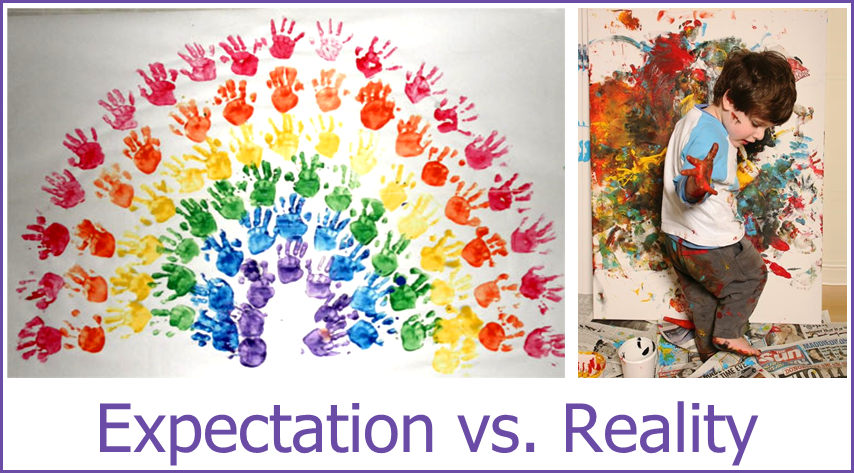
 More Good Days with Kids