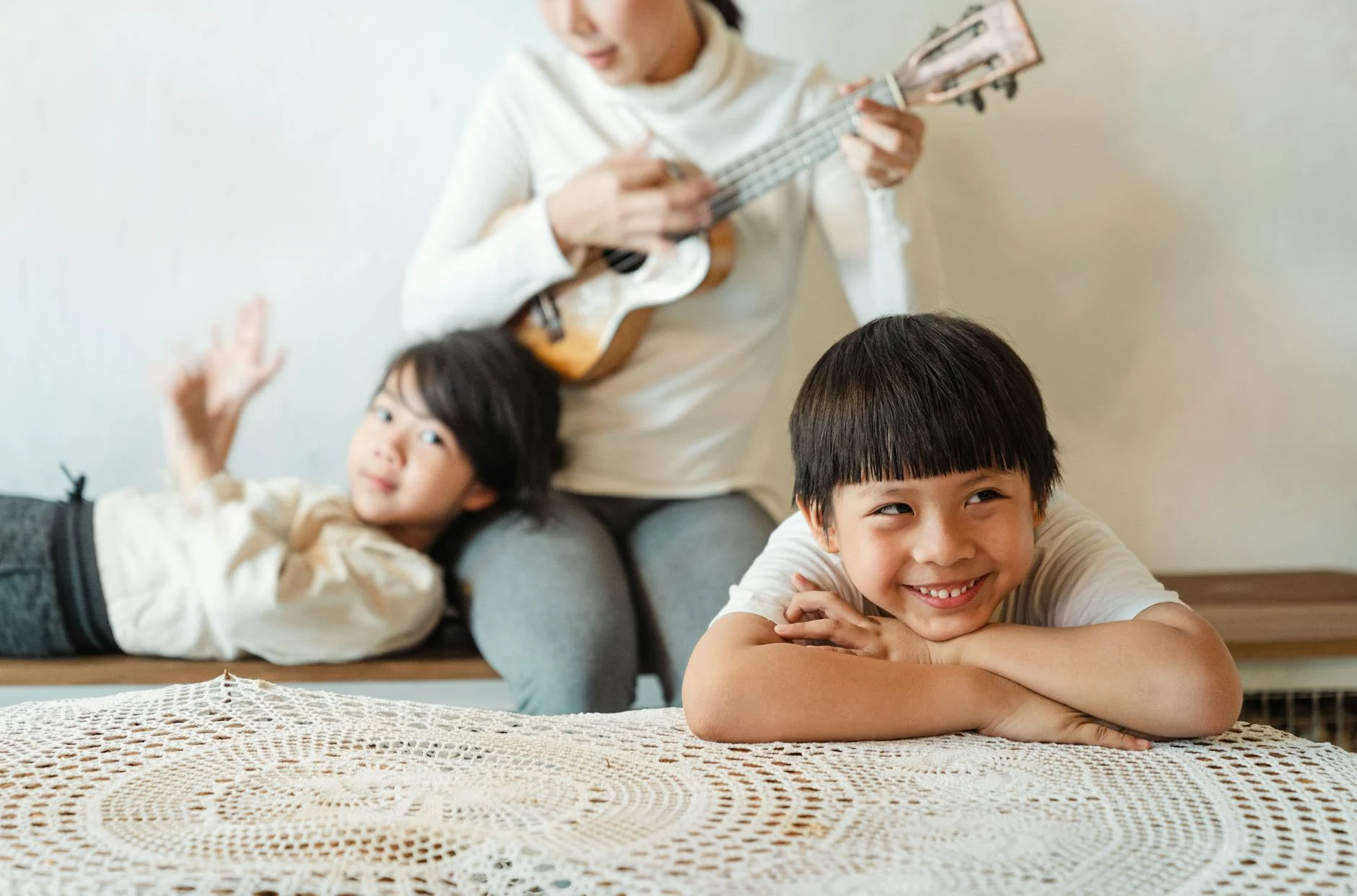
I’m creating a series for people who teach babies, toddlers and preschoolers and for children’s librarians about learning how to play ukulele to supplement their storytimes and group times with live music.
But I know that many of those professionals might think “but I’m not a musician! I can’t do that. I just don’t have that talent.” Sounds like fixed mindset, eh?
Let me tell you my story of how I got past that block, in hopes of inspiring you to do the same.
When I was young, I thought I was a bad singer. Because way back in fourth grade, my teacher told me I didn’t sing well enough to do a solo. So I spent years not singing solo in public (though I would join in to camp songs or hymns at church as long as plenty of other people were singing.) But, when I started teaching parent-child programs 30 years ago, I truly believed that babies benefit when parents sing to them, so I confronted the fact that part of my job was to teach the parents to sing to their babies. I had to get past my anxiety about my voice and sing out boldly – and I did it… for the sake of the babies!
But, despite that accomplishment, I still believed that I would never play an instrument well.
Because way back when I tried to learn an instrument (piano at age 5, recorder at 10, guitar at 13), I wasn’t good at it yet. I was used to getting good at things quickly, and playing an instrument just didn’t work that way. And I just didn’t have the patience or attention span to follow the recommended method of playing the same song again and again and again till I got good. In eighth grade, my teacher told me that I was incompetent at tuning a guitar. I let those judgments settle me into a fixed mindset that “some people have the talent to be a musician, and some don’t. I don’t have the talent.”
But, a couple years ago, I gave myself the ukulele challenge – I decided to apply the growth based mindset to learning an instrument. Anyone can get good at anything – they just have to work hard at it, and persist through challenges, and focus more on process and progress than on product.
It turns out that learning an instrument as an adult is much easier! I’m better at learning now than I was then, and better at motivating myself. And while as a 13 year old, I didn’t want to “play baby songs” as I learned, when I learned as an adult, who happens to teach preschool, it turns out that playing baby songs was exactly my goal! And I still don’t like practicing the same song again and again, but as a grown-up, I decided I don’t have to follow rules about how you should learn. I skip from song to song to song whenever I want to, and my skills just build across the board over time.
I started by learning just a few chords, and then finding children’s songs I could play using those chords. Once I felt confident enough to try it, I would play one song on my ukulele at each week’s class. Over time, I added in a few more here and there.
Now, I have a large collection of songs I can play. I haven’t tried to memorize them all – I have always had notes in front of me anyways when I teach circle time to help keep me focused, so it was easy to just incorporate the chords into my notes and play along. Live music is now a part of every group time I lead.
And ukulele has become so much more for me than something I do for work. Each morning after I put my son on the bus to school, I spend 30 minutes playing ukulele – building my skills, expanding my repertoire. Rather than feeling like a chore, it feels like self care – “me time.” Most Sundays, I go to a ukulele group that meets in the park where a group of about 20 of us find joy in playing songs together for a few hours. I have led camp singalongs, and led services at my church.
Rather than having a view of a specific “product”, I have approached this whole thing as a process, and focused on progress. It’s so exciting when I reach new levels: each time I master a new chord, when I learned what it meant to play in the key of C versus the key of G, when I learned about the circle of 5ths and how to transpose, when I learned different strums, and then finger picking, when I learned to play by ear. It is so exciting to me, and amazing to me that I have reached the point where I can pick up any chord chart and play the song; I can look at melody lines on sheet music or at ukulele tabalatures, and quickly pick out any simple melody. It’s just something I could not have imagined a couple of years ago. But I got there!
Just a little step at a time.
Will you join me on the journey?
Check out: Getting Started on the Ukulele
 More Good Days with Kids