Tag Archives: children

Election Stress and Parenting

This year has been an especially tense year related to politics in the United States. “Every year the American Psychological Association takes a look at the leading causes of stress in the U.S…. This year… all the usual suspects like money, health and family are still wearing people down, but one issue is dominating – politics… the future of the nation… 80% of Republicans rated it a top stressor, so did 79% of Democrats and 73% of Independents.” (NPR)

When parents are stressed, we tend to be less patient, get annoyed more quickly – sometimes over-reacting to small things. Our children feel that stress and may wonder if they are doing something wrong that is the reason their parents are unhappy, or may worry that bad things will happen to their family.

If you’re feeling stressed about the election, admit it to your child – let them know that they are right about what they are noticing about your feelings. But also reassure them that they have done nothing wrong and you are not upset at them. Also, reassure them that things will be OK in the end – I know that you yourself may not be feeling confident right now that things will be OK in the long run, but this is a time to dig down for whatever optimism you have, or faith or resilience, in order to reassure your child.

I have an approach for talking to kids about anything that scares them or scares you or raises your anxiety levels high – it’s especially relevant to things we may feel we have little control over (like national elections!).

  • Be thoughtful about how much exposure they have to the issue that is concerning
  • If they bring it up, or ask a question, don’t avoid it, just answer it briefly with a simple reassuring explanation.
  • Talk about how likely (or unlikely) the thing you’re worrying about is to happen.
  • Tell them what will be done to prevent bad outcomes as fall-out from that.
  • Reassure them that even if bad things happens, people are tough and resilient, and pull together and make it through.

So, to apply that approach to the election:

Be thoughtful about media exposure:

While you might be tempted to doom-scroll media and social media binge for all the most recent updates, try to save that for times your child is not observing you. If you are checking on things, just remind your child that their world is OK, you just have some worries about things in the outside world but that they are still safe and loved.

In 2016, when my child was almost 6, I did something that I wouldn’t recommend you repeat – I came home from work at 8:30 pm on election night and was upset and turned on the TV to watch – he heard it, got out of bed, and came to watch with me. We were all up VERY late that night, upset over election results. (And I imagine that other parents may have had a similar experience on election night 2020 for opposite political reasons.) A better choice would have been for me to turn it off, get him settled for bed, and then do what I needed to do to process the results. And I could have reassured him from a belief that I DO hold, even though it was hard to hold in that moment: as MLK said “Let us realize the arc of the moral universe is long, but it bends toward justice.”

Responding to their questions

Even young children will hear about the election – I remember when George W Bush was up for election (and with the whole Bush v. Gore hanging chads saga) my older kids who were early elementary at the time had lots of questions. Answer questions as simply as possible, then ask them if they have more questions before continuing to info dump your own anxiety on them.

For younger children, say under 8 years old, I would focus as much as I could on optimistic perspectives, reassuring them that they’ll be OK, and focusing on the things in our personal life that we do have control on and not as much about the broader world that we have less control over.

How Likely / Reducing Harm

RIght now, I have a 13 year old who follows me around asking me “the polls are so close, who’s going to win?” I tell him that millions of people around the world want to know that, and nobody has a good answer to that. Then he asks me again, “yeah, I know, but what do you think is going to happen?” I acknowledge that he’s feeling anxious and that it’s hard to sit in uncertainty.

He wants to know what will happen after the election – he has a lot of worries about what things will be like if one candidate wins.

Because my child is a teenager, I talk more openly about what challenges we would likely face over the next four years, and also talk about what people and organizations who are politically aligned with us will be doing to help mitigate the harms. And about the idea of checks and balances – while not perfect by any means, different governmental systems can reduce the most extreme policies.

Resilience

I also talk about how I’m coping with my own worries about that by thinking about all the positive reasons that I think that even if things are hard for a while (especially for certain marginalized groups), over the next many years things will get better. I talk about the ways that our society has progressed over my lifetime and his grandparents’ lifetime – progress is not fast or easy, but it does bend toward justice. We also talk about what we can do as individuals to help with that progress.

Self Care

If you need support processing your worries about this election, reach out to friends and family. Or, if there is political strife within your friends and family, search online for things like Facebook groups or Reddit forums where you can find people who share your views to help you not feel so alone. (Note: if a forum is soothing to you, stay in – if it just escalates your emotions even further, move on from it.) Do the usual self care things – sleep, get outdoors for a walk, eat well. We’ll get through this.

More resources: check out my posts on Reducing Parental meltdowns and handling your anger in the moment.

Teaching about Differences and Appreciation of Diversity

Children Notice Differences

Young children love to sort things by color, or by shape, or by type (e.g. car or train?). They make sense of their world by seeing how things fit into categories. And in most cases, we encourage them to think about classifications – especially when it helps them to remember to put the Legos in the Lego bin, the books on the bookshelf, and the dirty socks in the laundry basket!

But, when they try to sort out categories of people: race, gender, ability, age, and more, we tend to get all flustered. We worry about saying the wrong thing, causing offense, creating prejudice, etc.

For example, consider our approach to racial differences. Children are very aware of different skin tones, even as young as 6 months. But when kids ask about it, how do parents respond? Most non-white parents talk openly and frequently about race. But research finds that 75% of white parents almost never talk about race – they just change the subject. Or if well-meaning white parents do talk about race, they try the “color-blind” approach and say “we’re all the same.” This mystifies a young child who can clearly see we are NOT all the same, and can confuse an older child who has noticed that we are not all treated the same.

If parents avoid a subject, or become awkward around it, kids get the message that the topic is “taboo.”

How might our kids’ perception be changed if we instead acknowledge and celebrate differences?

Talk about Differences

When reading books, watching movies, or people watching, talk about differences easily and openly. Note different skin colors, ages, gender expressions, weight, ability, clothing / hairstyles, languages spoken, family compositions, and more. Teach descriptive words / labels they can use, like Asian, gay, disabled, multi-racial – you can say any of these things just as easily as you would say “look, there’s a girl and a boy in that picture” or “that child has red hair like you”.

As they get older, we’ll help them learn that no one can be defined by any one label. But, when they are just starting to sort things out, giving some labels as we talk about differences builds vocabulary and context for understanding the broader world.

Be careful not to add in biased judgments or stereotypes when talking about differences, such as: “She’s only got a mama, no daddy. That must be hard for her.” “He’s Asian, I bet he does well in school.” “She likes football? That’s a boy’s sport.”

Talk about Commonalities

You don’t want to talk only about commonalities – “they’re just like us!” But, once you’ve acknowledged a difference your child has noticed, then you can also talk about universal needs and common interests. “You’re right, her skin is a different color than yours. Her ancestors came from a different part of the world than ours did. I think you both love soccer.” “Yes, you have just me as your parent, and most of your classmates have two parents – sometimes a mom and a dad, sometimes two moms or two dads. But all of you get lots of love and snuggles, right?” “They wear those special clothes as part of their religion. We don’t wear special clothes, but we do celebrate special holidays because of our religious beliefs.”

Answer Questions about Differences

I have a visible handicap, and it’s pretty common for me to overhear a child saying “mama, how come that lady only has one leg?” Some parents ignore the question, change the subject, “shush” the child or drag the child away from me. These reactions tell the child that my being an amputee is something that is “not OK” to talk about. It implies that disability is something shameful or embarrassing.

Instead, when your child asks questions about differences, try these approaches:

  • Acknowledge the difference – “you’re right, and that’s different than what you’re used to, but it is pretty common.”
  • After acknowledging it, it’s better to address it right away, but you could say “we’ll talk about it later.” (If you say this, then be sure to talk about it later!)
  • Give a simple answer to the question, it you know it: “Those are called crutches. They help her to walk.” Or, if you don’t know, you might offer a general answer “I don’t know why she has one leg… some people are born without one and sometimes they lose a leg in an accident.”
  • Try to figure out how your child is feeling. If they’re simply curious and wanting to learn something, then just answer the question they asked. If you sense there’s any fear or discomfort for them, make some guesses about what their real underlying question is and address that.

Actively expose your child to other perspectives

Eat at ethnic restaurants, attend cultural festivals, visit museums which focus on other cultures, read books and see movies from many countries, learn bits of other languages. Seek out multi-generational communities – make friends with people of all ages. Connect with queer families. Attend public events hosted by faith communities. Choose to live in a diverse neighborhood and/or attend a diverse school.

Choose children’s books which teach about diversity. Here’s an article on how to evaluate books (and other media): http://www.teachingforchange.org/selecting-anti-bias-books and I have a long post about Children’s Books as Windows and Mirrors, which includes at the bottom links to lots of great books about a wide variety of differences.

Talking about Inequity

In the early years (around preschool), we just focus on building an awareness of, understanding of,  and appreciation for a wide variety of differences.

As they get older (around early elementary school), then we can add in that even though people may be different, we all have the same rights and deserve the same fair treatment.

As they get even older (by age 8 to 10), we can refine that into “we should all have the same rights and opportunities, but we don’t. What can we do together to help increase everyone’s access to the same opportunities?”

And with teens, we can add in discussion of systemic oppressions – classism, ableism, homophobia, and so on. Systemic oppression means that our society is set up in ways that benefit some classes of folks more than others, and thus inherently make it harder for them to succeed. If we benefit from these systems, then we should be working to ensure that everyone has the same benefit.

If you think you can skip these discussions, you likely are coming from a place of privilege. As a white parent, I can choose whether or not to talk about this. If my kids had brown skin, it wouldn’t be an option to not talk about it. Check out this article on how white parents talking about racism can help their kids support friends of color: www.scarymommy.com/black-child-friends/

In an increasingly diverse society, the more we try to pretend racism and sexism and such are things of the past, the more we allow them to persist. Having open and honest conversations about diversity will help us work together toward a more equitable society for all.

Learn more:

If you found this post helpful, you might like to check out my full series on Better You Than YouTube – Having the Hard Conversations with Your Kids which includes posts on how to talk about sex, gender, tricky people, death, natural disasters and other scary topics (for them or for  you.)

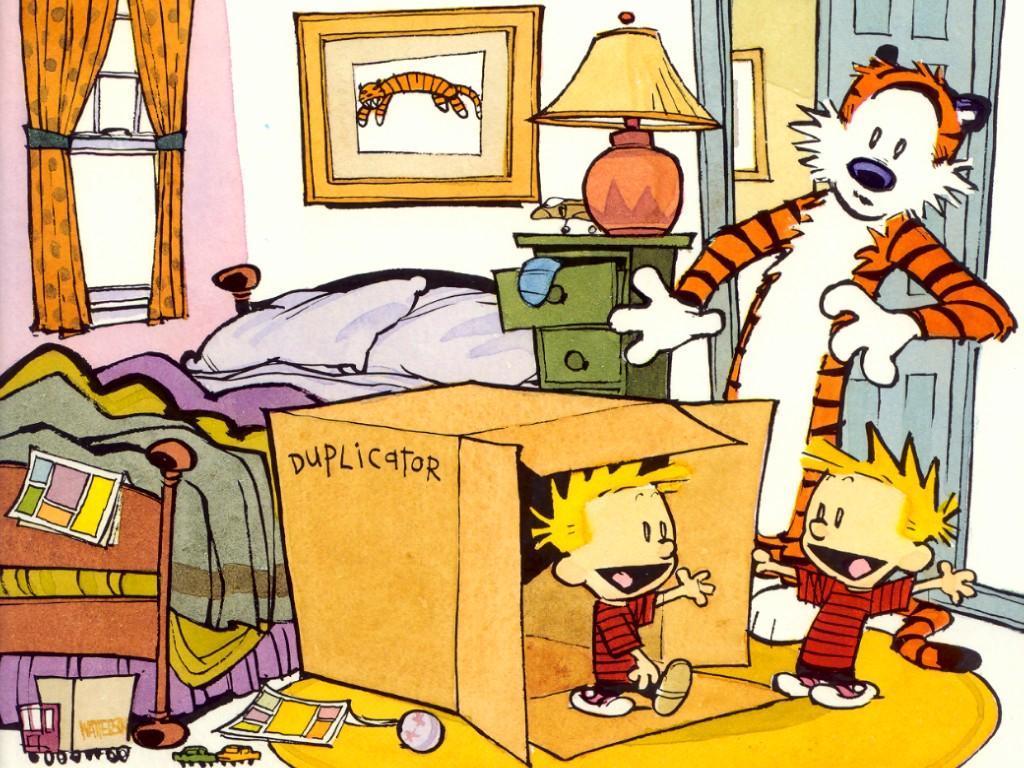
My duplicate did it!

calvin-and-hobbes-duplicator

Last week, my five year old was playing with friends on the playground. One of the children stomped past me, saying “He’s being mean to me.”

I went to my child and said “X says you’re being mean to him.” My child said “I wasn’t mean. It wasn’t me. It was my duplicate #6.” (He’s been reading Calvin and Hobbes, and loves the part where Calvin build a duplicator and makes duplicates of himself.)

So, was he lying? Should he be punished for lying?

When talking about discipline, it’s essential to understand child development. A five year old is in the midst of the magical thinking stage. If you teach them one day about planting pea seeds and growing peas, then the next day, you may find them hovering over the garden plot, waving a stick ‘magic wand’ over the seeds to make them grow now. Or, you may find them planting their favorite toy in hopes that many more will grow.

Sometimes their magical thinking is terribly cute. A friend of mine was making a toy jet pack for a 4 year old, from recycled 2 liter bottles. As they worked, my friend talked about how cool jet packs are and how fun it would be to fly around the neighborhood. When she finished the jet pack and put it on, the 4 year old stood there with her eyes clenched tight in excitement, saying “I’m ready! How do I make it go?” She truly believed that her jet pack would help her lift off and fly.

Sometimes magical thinking is very frustrating. Your child believes that if they do the special magical thing, then they have the power to shape their reality. Sometimes they believe they have the power to change the rules. My middle child knew that our rule is a maximum of “two sweet credits a day” (a sweet credit is a candy or a cookie or a soda, or whatever.) But she kept coming up with one reason after another why that rule shouldn’t apply to her today. It wasn’t that she was trying to talk me into changing my rule (she knew that wouldn’t happen), it was more that she was saying things like “when it’s a sunny day in February, all mamas give their kids four sweet credits” or “Remember, we read that book where she ate lots and lots of cake at a summer picnic and never got sick. So it’s OK to eat lots of cake in the summer.” In other words, the whim of the weather has declared that today is different from a regular day, so what can you do but adapt your routine?

Just as children use magical thinking for things they wish would happen, they also use it for things they wish wouldn’t happen, or didn’t happen.

When my son told me that duplicate #6 was the one who’d been mean, you might jump to the conclusion that he was lying to avoid punishment. But it’s more complex than that. He was actually feeling bad about being mean to his friend. He was sad that his friend had walked away and didn’t want to play with him any more. My son (like all of us) wants to think of himself as a good person, not someone who does mean things. So, he used his magical thinking to say that someone other than him was really the mean one. He was a nice kid who wanted to play with his friend still.

So, I get from a developmental perspective why he’s doing this. But how do I respond? Honor his thinking, but also reinforce that taking responsibility for your actions is important.

“You and duplicate 6 both want to be good people, don’t you? But for both you and duplicate 6, sometimes you forget and you act mean, is that right? Being mean is not OK for either of you.” I pause to be sure he’s heard the message, then say “I see your friend is feeling very sad right now. Can you go over and apologize for being mean, and see if he wants to play again?”

He did go and apologize and they went back to playing happily.

If he’d come back to me with “I don’t need to apologize because I didn’t do anything. Duplicate #6 did”, then I would have said “Duplicate #6 is still figuring out how to be nice. I know you know how to be nice. Can you show #6 how by showing him how you do a really nice apology to your friend?”

This was a one time incident. I might respond differently if I felt like this was a chronic problem that he was frequently behaving badly and blaming it on his duplicate. If that was the case, I would be stricter about calling him on his lie, while still acknowledging the reason for the magical thinking: “You’re not telling the truth. I know you wish that it was duplicate #6 that did it, or you wish it was anyone other than you who did it. But that isn’t true, is it? You did it and you need to apologize for it.”

How Much is Enough? How Much is Too Much?

Although there are plenty of families in America who struggle with the basic necessities of life like putting food on the table, many other parents have access to a huge array of options. Toys to buy, media to watch, vacations to go on, and activities to enroll in. The job of marketers is to convince us these things are ‘necessities’ and things “you can’t afford to pass up”. Sometimes they play to our fears of the future: “Playing with this toy will help your child get into college.” Sometimes they play on parental guilt: “Help your kid have a great Christmas – show them that they’re loved.” Sometimes they sell joy: “You work so hard – you deserve to have FUN!”

And here’s the thing. Lots of those toys and media are fun! Lots of fun! And going on vacations as a family can lead to fabulous connecting moments and can be part of a child’s memories of belonging in a loving, happy family. And lots of those classes and activities really will help build your child’s knowledge and skills, and help them reach their potential.

So how do we decide which options to take? What is enough? What is too much? Every family has to make their own decisions, based on their child’s needs and their own goals and values.

What do kids need, in order to learn?

Often parents choose toys and classes as enrichment tools to help their child learn and grow. When we go back to the basics of brain development, we know that children learn through: novelty and repetition, guided play and free play, and down time to process it all.

New toys and media offer novelty – lots of interesting stimuli to take in. But if kids are continually bombarded with new things, and not given the chance to play with the same thing over and over, they don’t gain the benefit of repetition, which is mastery. If a child only has access to a few toys, he may complain of boredom, but he gets really creative with those toys!

Classes, camps, activities, and sports teams are all guided play and guided learning. They help your child gain new knowledge and learn new skills. But kids also benefit from free play – just having free time with friends or siblings to goof off and play any game they can think up. And they need rest and quiet solitude to absorb everything and make their own connections.

Kim John Payne, author of Simplicity Parenting, talks about 4 keys to raising “happier, calmer, more secure kids”: the environment, rhythm and schedule, and unplugging. Let’s look at each.

Environment: De-cluttering to make space for creativity.

If there are too many toys, a child doesn’t focus on any of them. They flit from one to the next, never really settling down to play. Their little brains are overstimulated by all the choices. If you keep giving them more toys to “get them engaged” they will get even more distracted.

It is better to focus on having a small number of really excellent toys. Here are some things to think about and look for when choosing what toys to have in your home.

  • Think about toys that build diverse skills: if I had only a few toys, I’d want one in each of these areas: big motor skills (balls, bikes, tumbling mats), small motor skills (puzzles, shape sorters, craft supplies), imaginary play (dress-up clothes, toy kitchen), music toys, art supplies, a set of magnetic letters, some dice for math skills, something to nurture (doll, stuffed animal), and toys for playing outdoors (bucket and shovel).
  • Choose open-ended toys that can be played with in lots of ways and passive toys where the child has to be creative to use them. Things such as blocks, cardboard boxes and tape, puppets, measuring cups and containers. Minimize toys that can only be played with in one way, and active toys where you press the button and it does all the work.
  • Elizabeth Pantley recommends these criteria for choosing toys: long-term play value, durable, washable, solid simplicity, challenge (will teach but won’t frustrate), appropriate for your child’s current developmental abilities, stimulates creativity, engaging, versatile, fits your family values, novelty (different than what you already have), and fun.
  • Spend less time in stores, less time looking at catalogs and shopping online. When you shop, it’s easy to fall in love with toys and end up bringing more home than you need.
  • Try setting up a “toy rotation” system. Make bins of toys, where each bin has about ten toys in it. Keep one bin out to play with and store all the others in the garage or a closet. Whenever the whim strikes (once a week?), swap out the old bin for a new bin.
  • Let your child get bored of their toys…

Think of boredom as a ‘gift.’ Boredom is often the precursor to creativity. Think of a bridge between ‘doing nothing’ and deep creative play. The bridge is almost always paved with (the frustration of) boredom. “I’m bored!” Now *that* is when something interesting usually happens.  – Kim John Payne

Rhythm: Increase predictability by introducing rhythmic moments for connection and calm.

Read my handout on rituals and my post on daily routines. And here are some thoughts on making birthday parties more manageable.

Scheduling: Give kids the gift of unstructured time

You might have the option to enroll your child in anything from art classes to aikido, from piano lessons to pottery, ballet to baseball, soccer to Spanish, gymnastics to geo-caching, wilderness survival to web design. There are so many cool and exciting things to learn! (And, you can’t help but think… it’ll help someday when they fill out college applications…)

Plus there’s the things you have to do – doctor’s appointments, picking up the siblings from their activities, grocery shopping. And more things you want to do – movies, playdates, dinner out, outings to the playground, sporting events, farmer’s markets, hikes in the woods, vacations to the beach…

All of these are cool. And all of them are learning experiences. Just choose your activities wisely. And make sure you remember to make space in the schedule for down-time, and quiet contemplation, and spontaneous, creative play. And for self-care for them and for you: sleep, calm meals around a table, snuggling up with a book.

Unstructured time gives children the opportunity to explore their inner and outer worlds…  they learn to engage with themselves and the world, to imagine and invent and create.  Unstructured time also challenges children to explore their own passions. If we keep them busy with lessons and structured activity, or they “fill” their time with screen entertainment, they never learn to respond to the stirrings of their own hearts, which might lead them to study the bugs on the sidewalk, build a fort in the back yard, make a monster from clay, write a short story or song, or organize the neighborhood kids into making a movie.  These calls from our heart are what lead us to the passions that make life meaningful, and they are available to us… when we are given free rein to explore and pursue where our interests lead us.” (Dr. Laura Markham)

Unplugging: Reduce the influence of adult concerns, media and consumerism on children to increase resilience, social and emotional intelligence.

When allowing your child to use screens (TV, computers, smartphones, tablets, etc.) make conscious choices about the content and about how much, when, and where to use them.

Spend more time outdoors, relaxing, playing, and discovering together.

Allow for quality family time:

Families can benefit by doing things whose only purpose is the joy of spending time together, like playing Monopoly, shooting hoops (with no coaching), drawing pictures, or taking a walk. Being unproductive together tells the child that the parent likes the kid, as he or she is.  (Source)

Learn more:

20 Outdoor Games for Children

For my “Cheap Dates with Toddlers” series: I encourage you to head outdoors to the park of your choice, and try out any of these fabulous outdoor games!  [I don’t re-blog often, but this is a great post!]

Our Little House in the Country's avatarOur Little House in the Country

outdoor games

Hi there, today I am sharing our top 20 outdoor games.  Some of these games can be played indoors but most are more suitable for getting active outside in the fresh air now that Spring is here!  In case you need instructions on how to play these games I have linked them to other great sites and blogs about games for children. I’ve also included some photos of my children having fun outdoors!

Doodles and OOdles having fun with pretend cafe play outside Doodles and OOdles having fun with pretend cafe play outside

  1. Skipping games
  2. Treasure hunts
  3. Parachute games
  4. Duck duck goose
  5. Hopscotch
  6. Hide and seek
  7. Tag
  8. Clapping games
  9. Obstacle courses
  10. What time is it Mr Wolf
  11. Simon Says
  12. Stuck in the mud
  13. Musical Statues
  14. Red light, Green Light
  15. Horse/Donkey basketball
  16. Scavenger hunt (we use picture clues)
  17. Hot/Cold (searching for objects, the closer you get the hotter you are)

    Oodles and Doodles playing parachute games with daddy and a friend Oodles and Doodles playing parachute games with daddy and a friend

View original post 190 more words