Category Archives: Eastside Parks

132nd Square Park – Kirkland

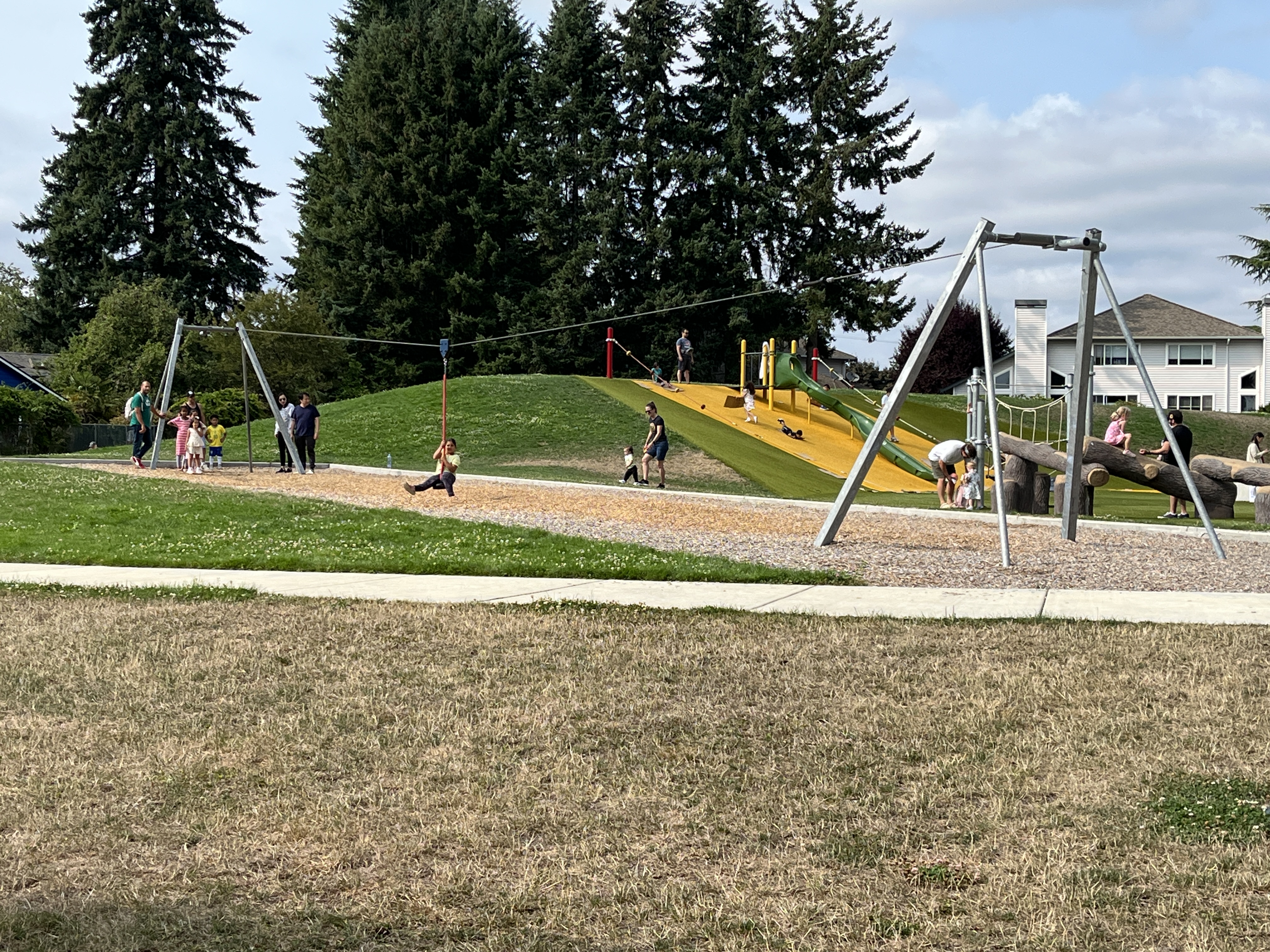
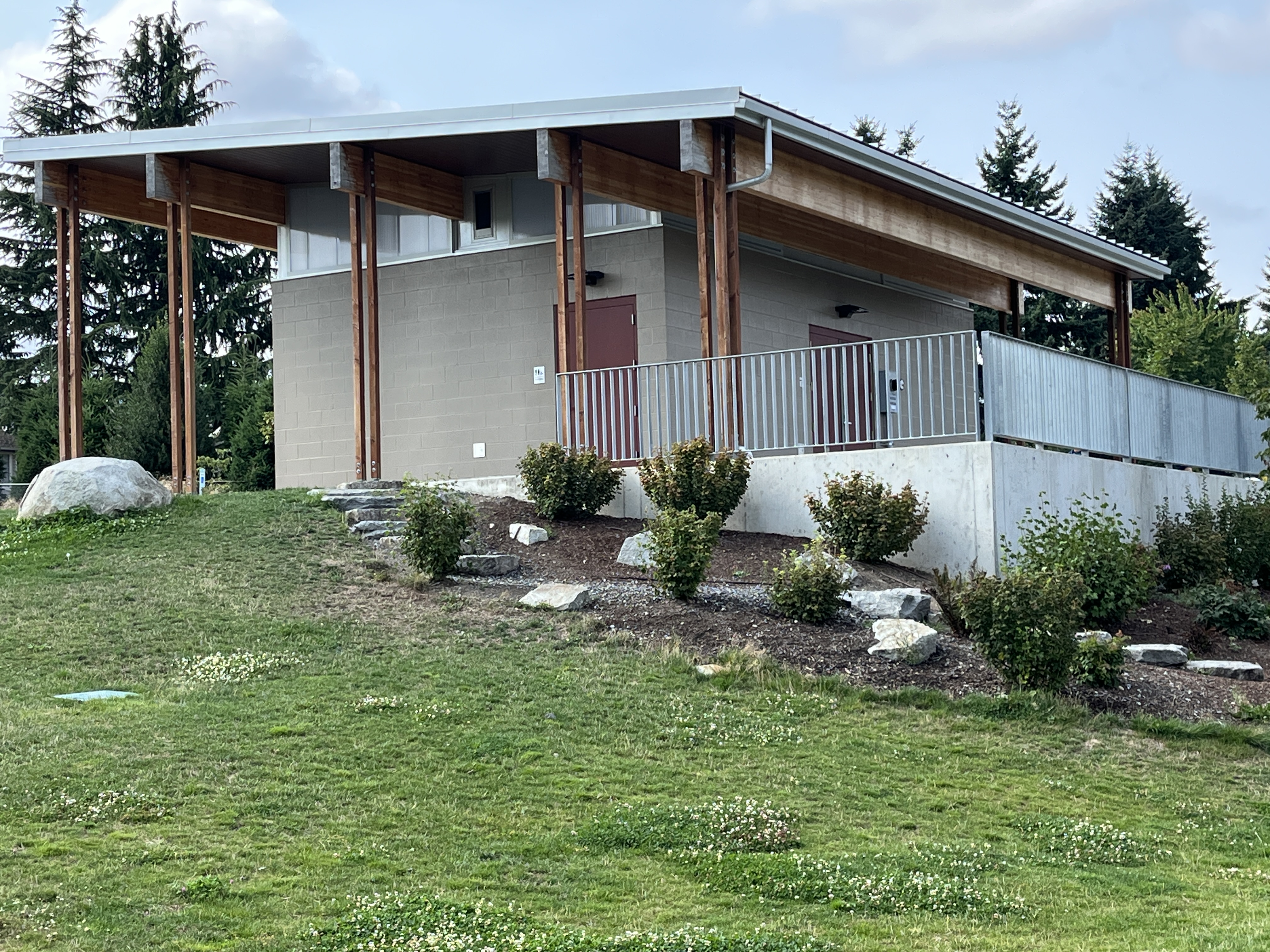
We tried out a new-to-us park recently – 132nd Square Park is located at NE 132nd St and 132nd Ave NE in Kirkland, about a mile east of Evergreen Hospital.

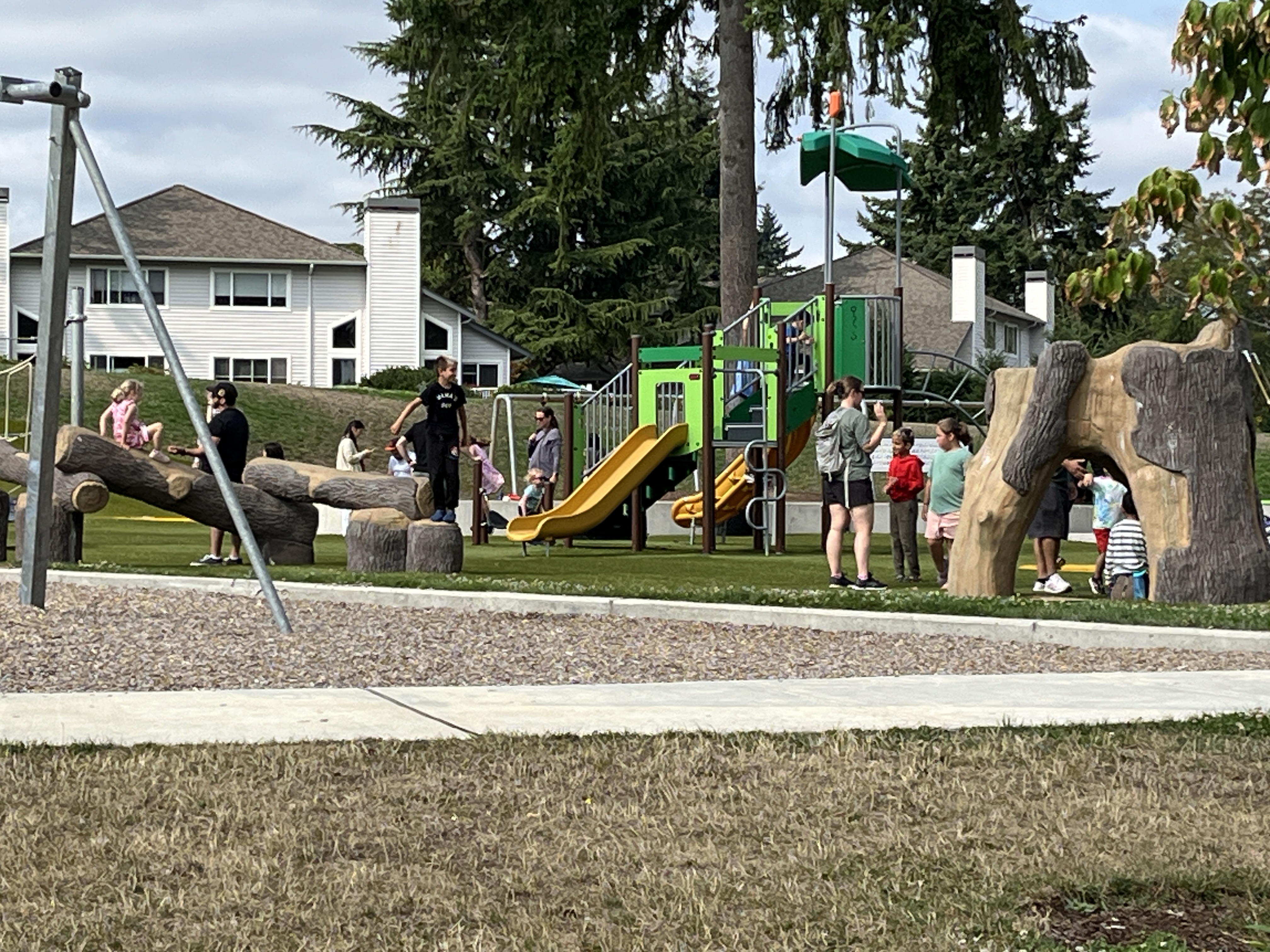
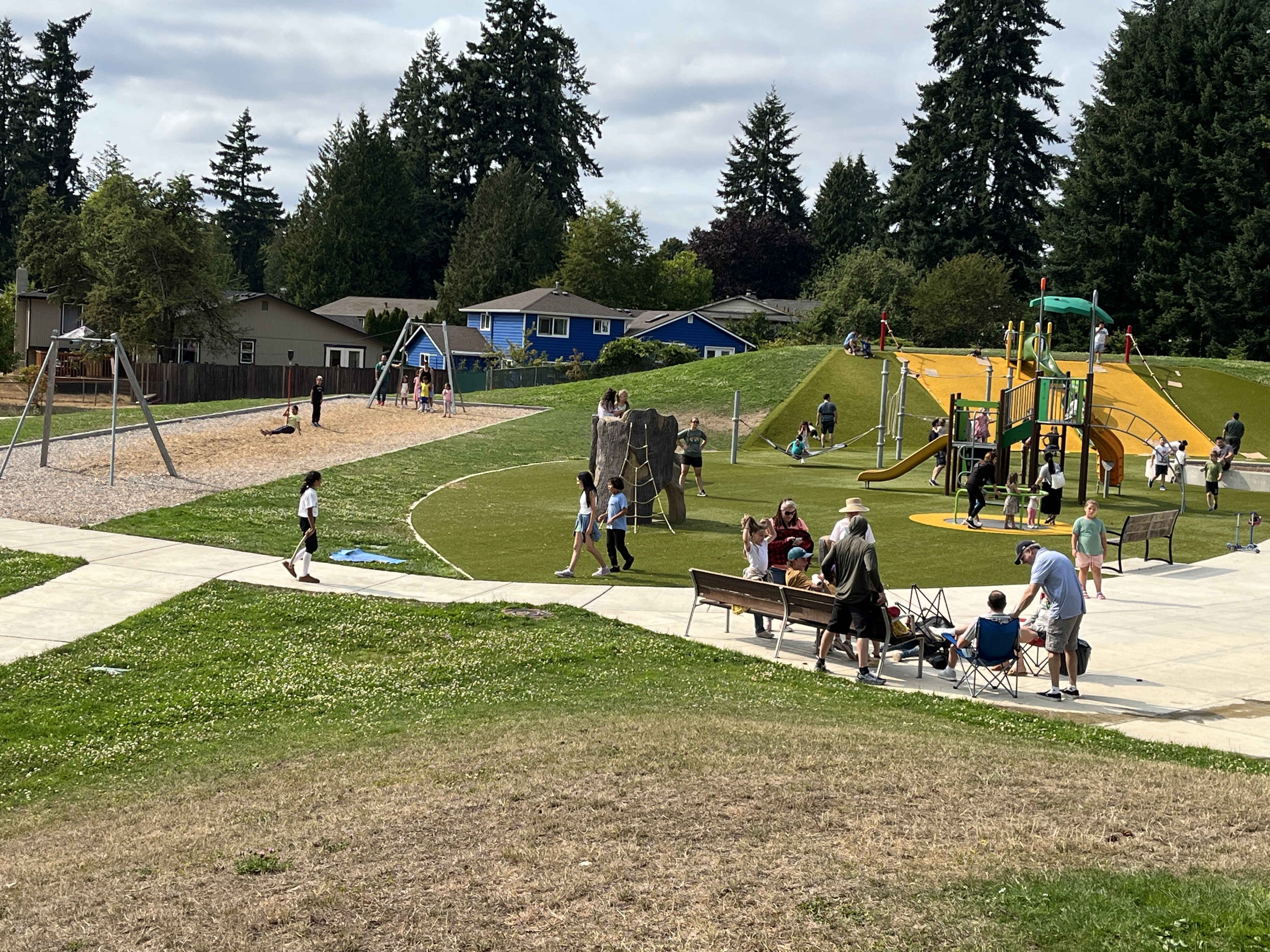
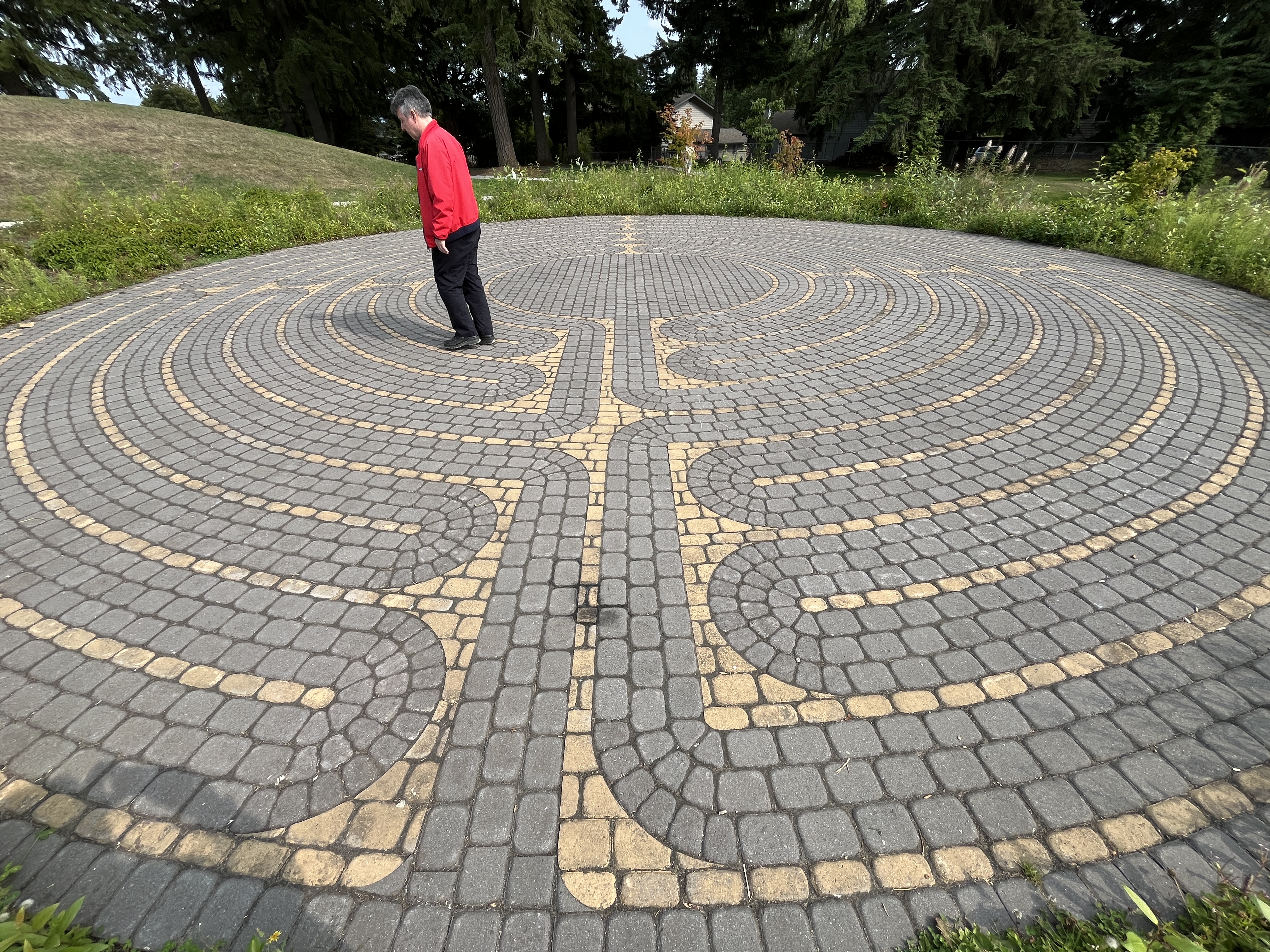
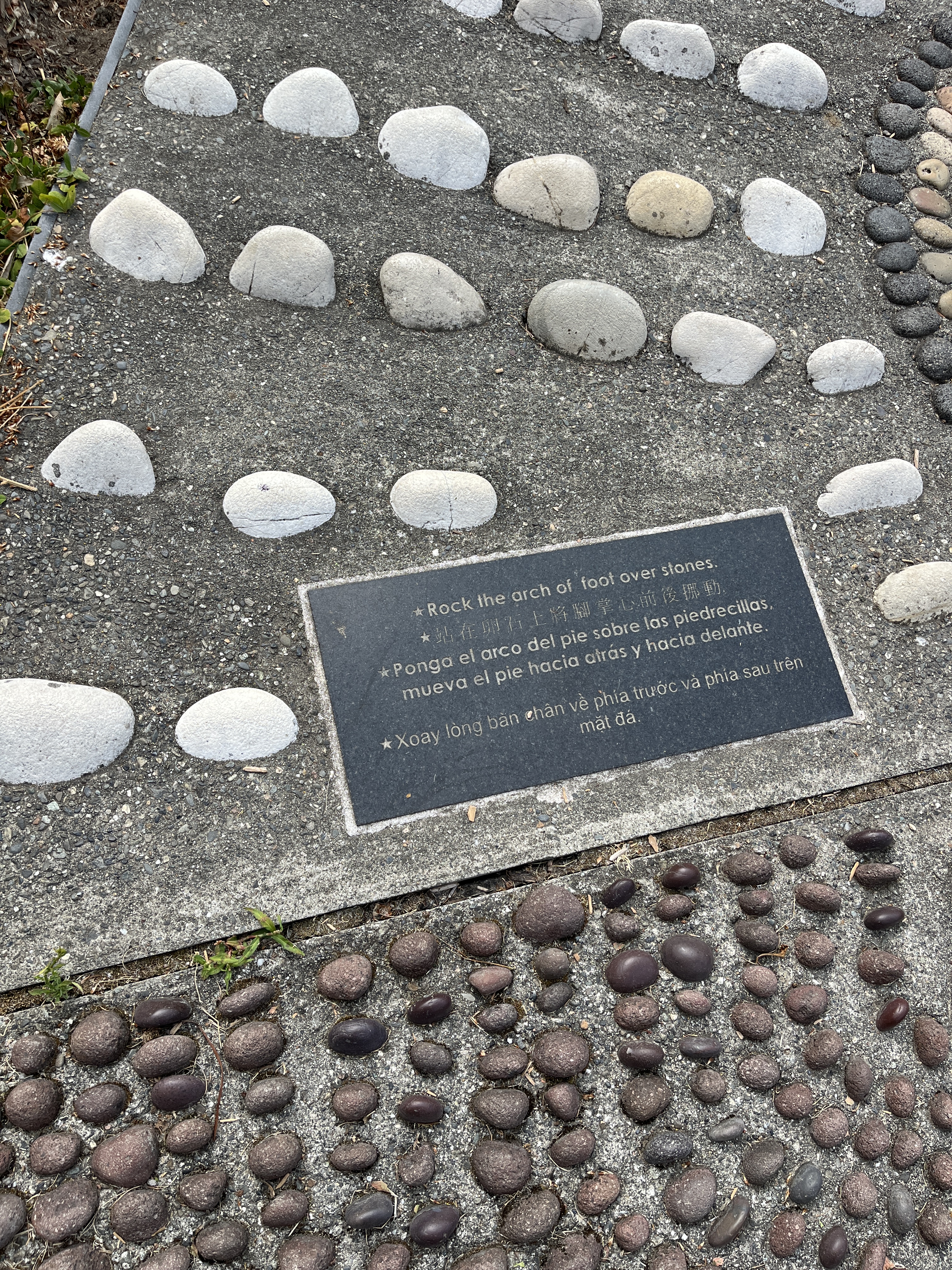
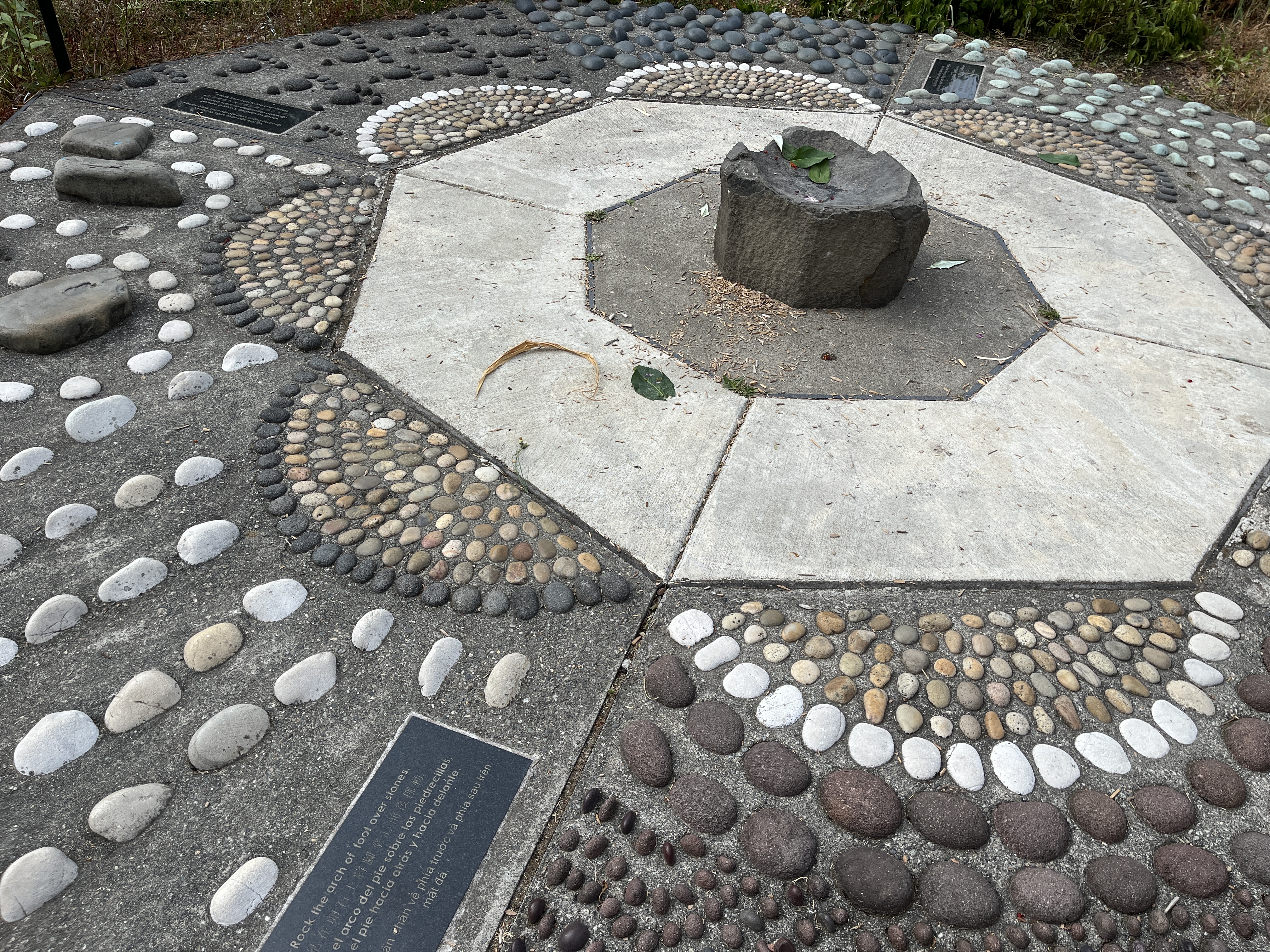
They have a multi-purpose synthetic turf playfield for soccer and more, a smaller grass field for softball or baseball, an all-abilities playground with zipline, year-round restrooms, and three picnic shelters. They also have a walking labyrinth and a reflexology path with raised stones to massage your feet while you do a walking meditation.

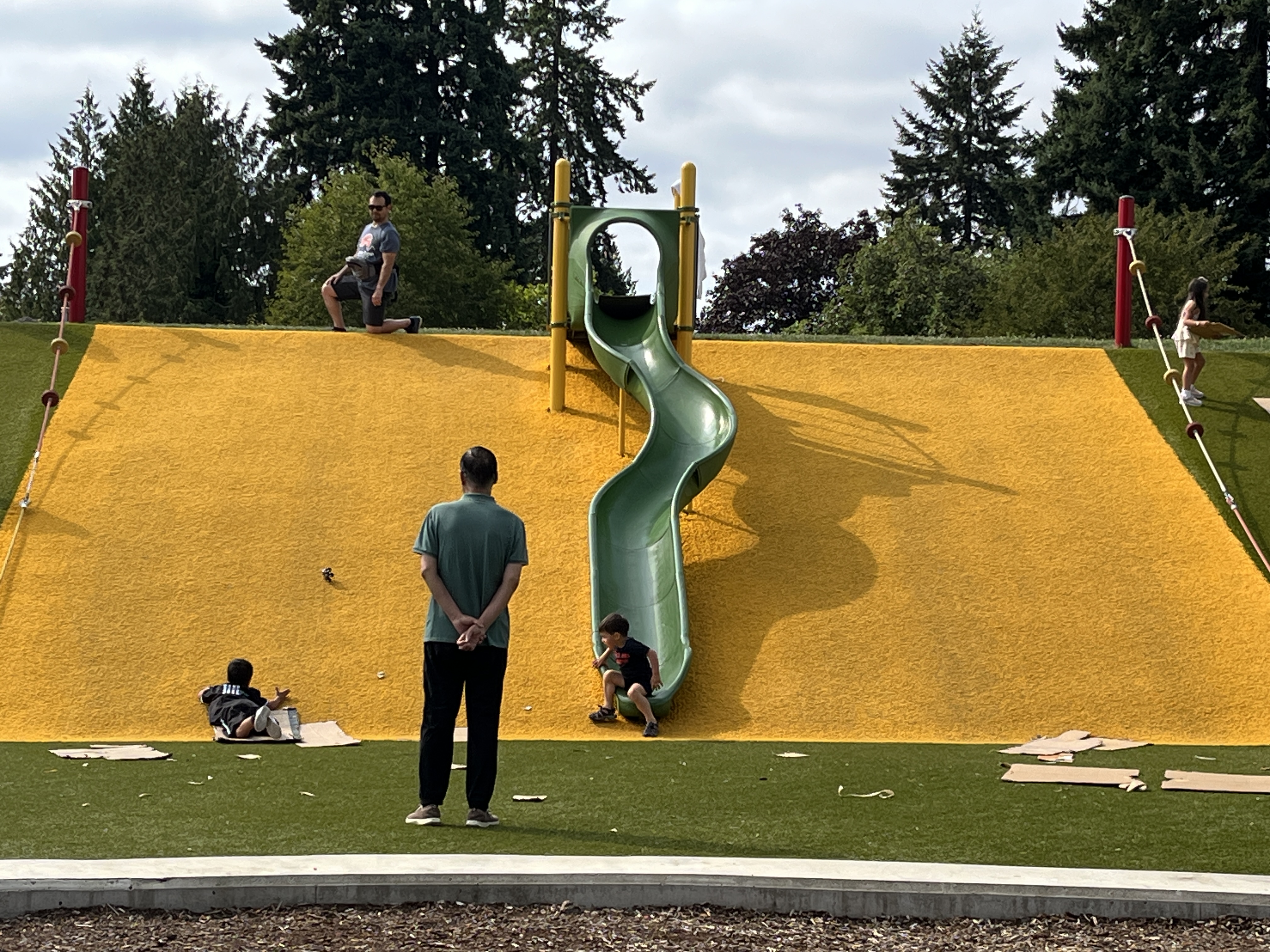
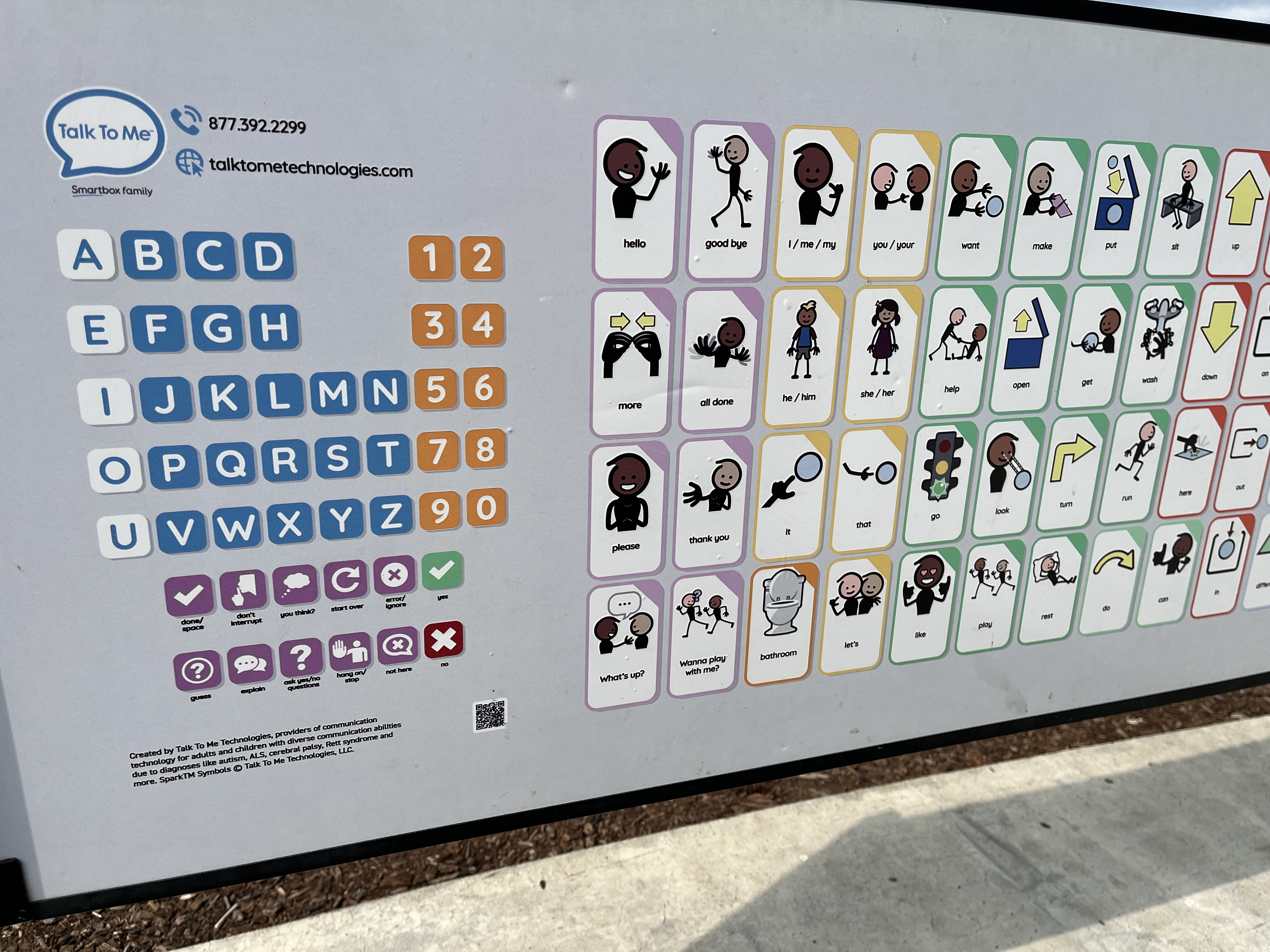
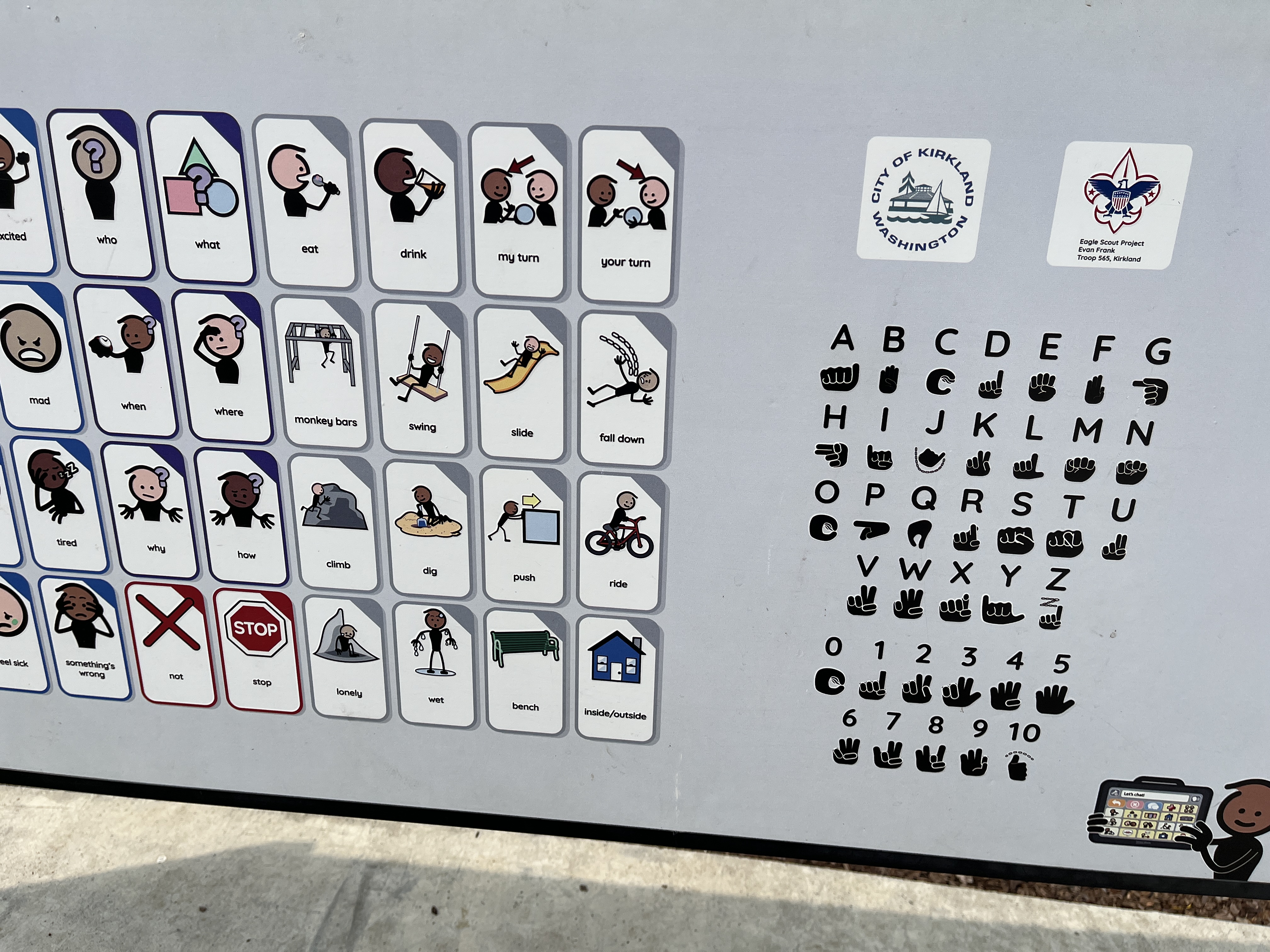
The big yellow hill is a fun and unique thing – bring a big flattened cardboard box to sit on and you can slide down that hill. On the playground there is also a communication board with symbols that a nonverbal person could use to communicate – it’s a nice opportunity to acquaint you and your child with this adaptive tool.

Find more local parks and other activities in the Seattle area. For non-locals, you may also appreciate these ideas for fun toddler activities you can find anywhere.

Less Crowded Hikes on the Eastside

IMG_20160628_114151699

Choosing a Less Traveled Path

When planning a walk or a hike, the first parks that come to mind are the most popular ones – Green Lake, Alki Beach, Marymoor, Rattlesnake Ridge. But these can get crowded, especially on summer weekends. But in King County, we are blessed with so many fabulous public spaces outdoors. Here are some less well known gems to consider for your walks. (Some of these are bike-friendly, some are not: check bike maps for bike trails.)

Bellevue

Bellevue Parks has over 2700 acres of parks and open space and over 90 miles of trails! There’s a map of Bellevue Parks here. Some options to try out:

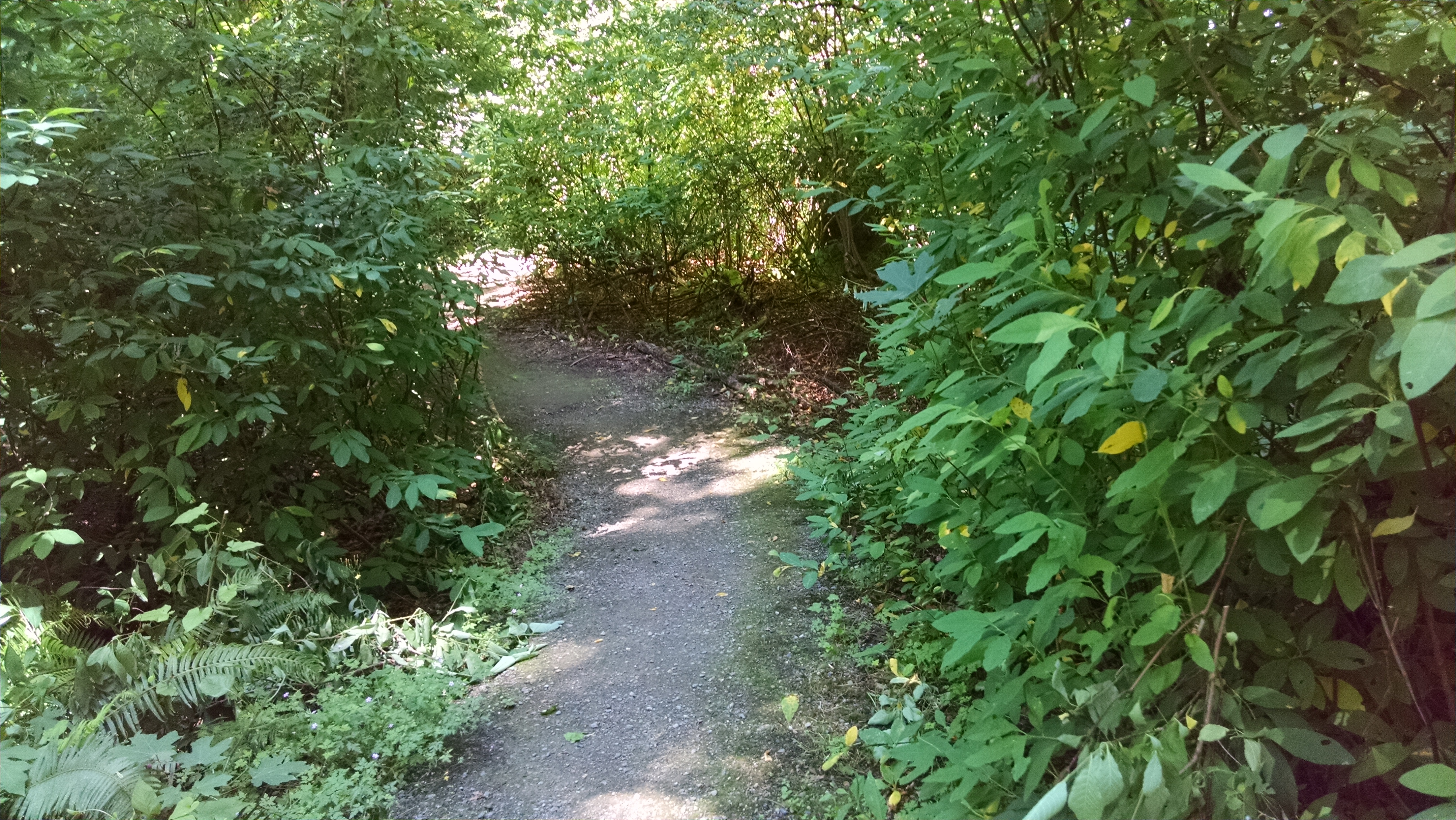
There are three parks I know of that you might never know had a mile or more of hiking hidden in them.  Robinswood Park – near Bellevue College. Here’s a trail map, with one of our favorite trails through the woods marked out on it. Ardmore Park – near Microsoft.  Zumdieck is just north of downtown, and has a nice little loop through the woods. These are all great hikes for young children – I’ve done them with many three year olds, also good for elders who aren’t looking for an endurance hike. All three have playgrounds.

If you want a more challenging, straight uphill in the woods hike, try the Weowna Park Trail up hill from Lake Sammamish. And Bridle Trails is lovely if you don’t mind encountering horses.

If you’re just looking for a place to have a picnic or sit and read or play, there’s also tons more parks, both big and small. Some have playgrounds, some don’t. There are also lots of “mini-parks” and “corner parks” that aren’t much more than some grass, some trees and a picnic table. Check on the Bellevue Parks website to learn more. And more Bellevue trails are listed here.

Great Parks that can get Crowded

Downtown Bellevue Park; Crossroads Park. The barn area at Kelsey Creek park may be more crowded, but there is a nice .9 mile walking trail there, which should be fine.

Kirkland

Here’s the Kirkland Parks map. Some parks to try:

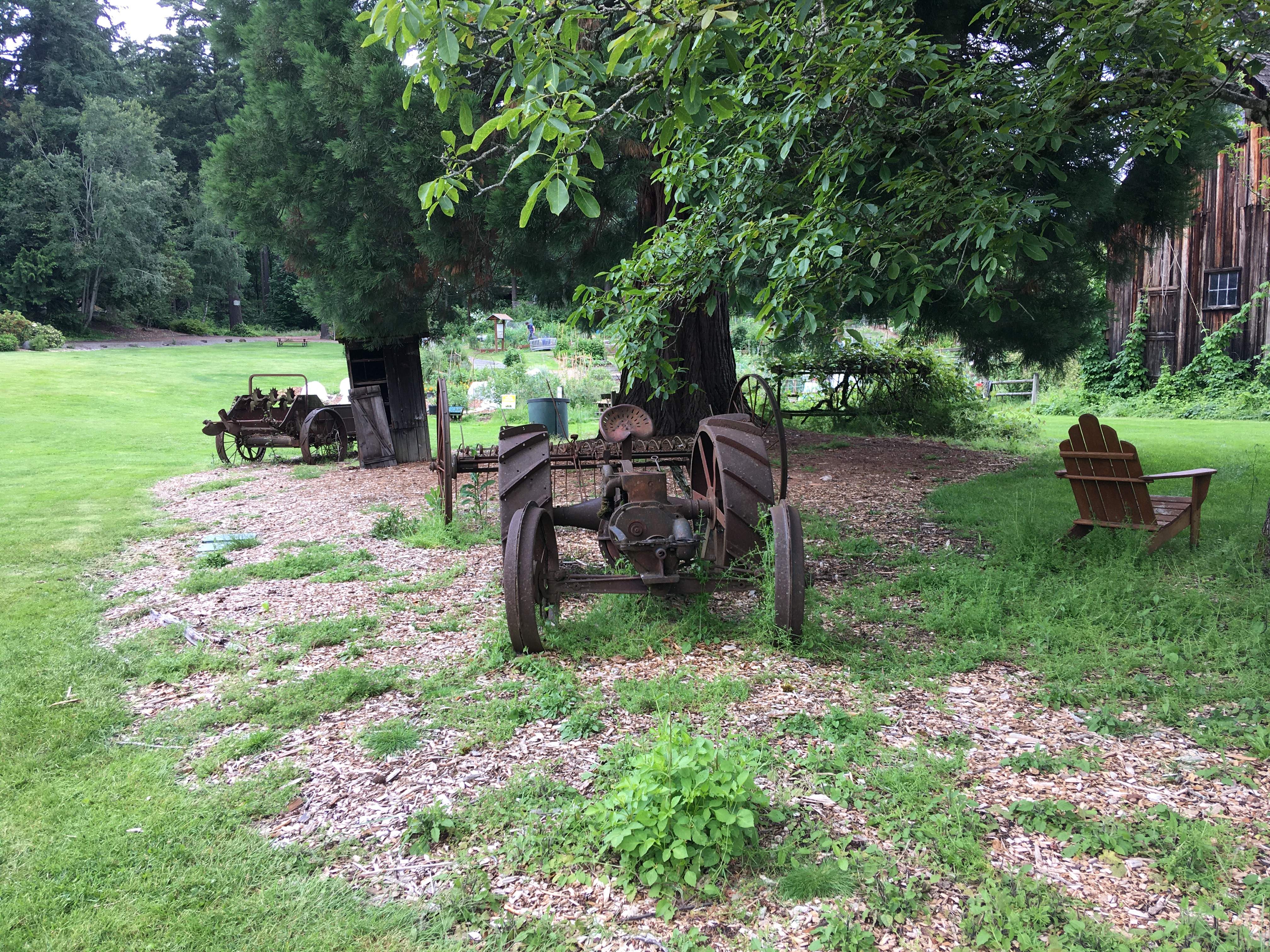
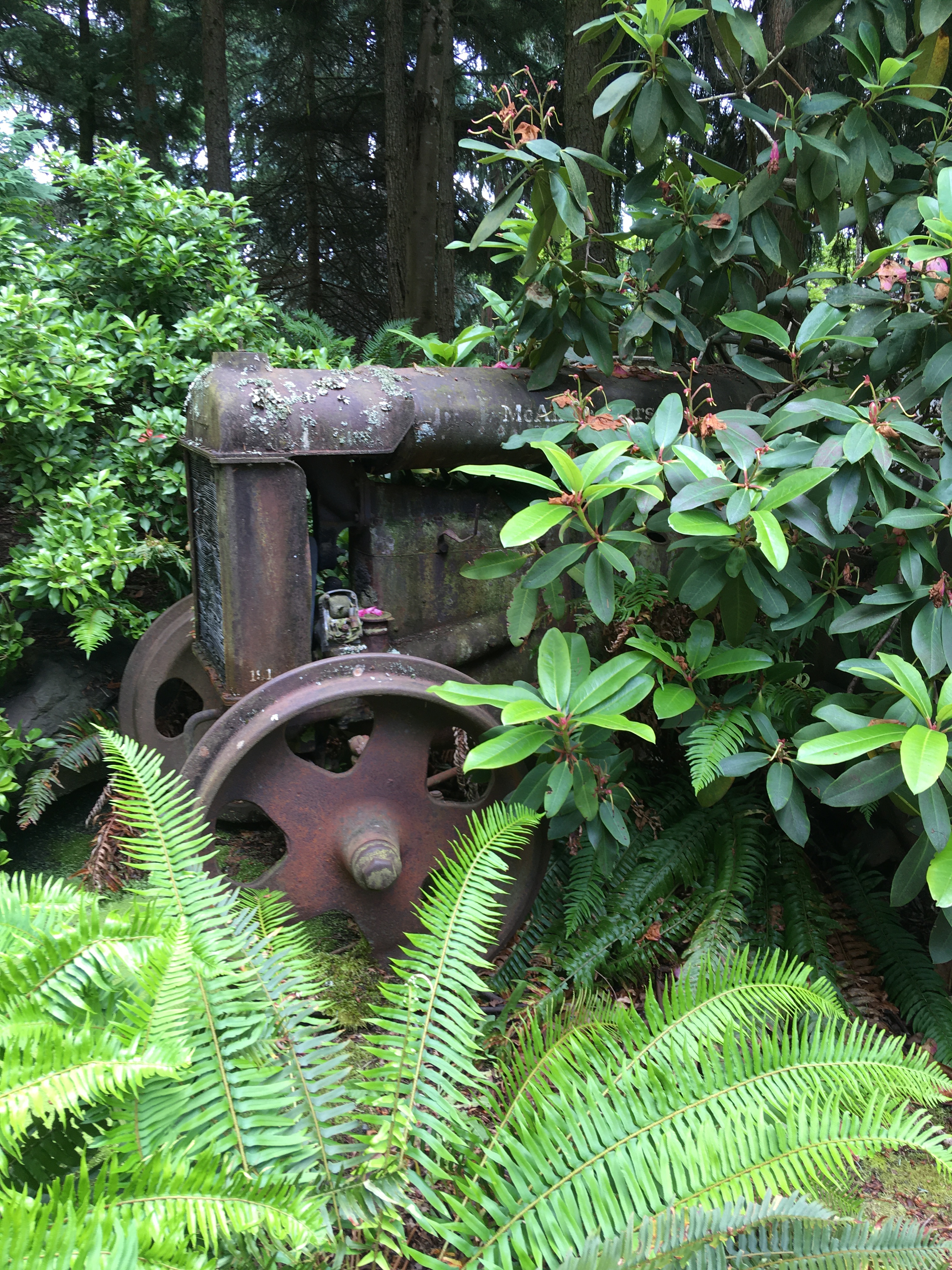
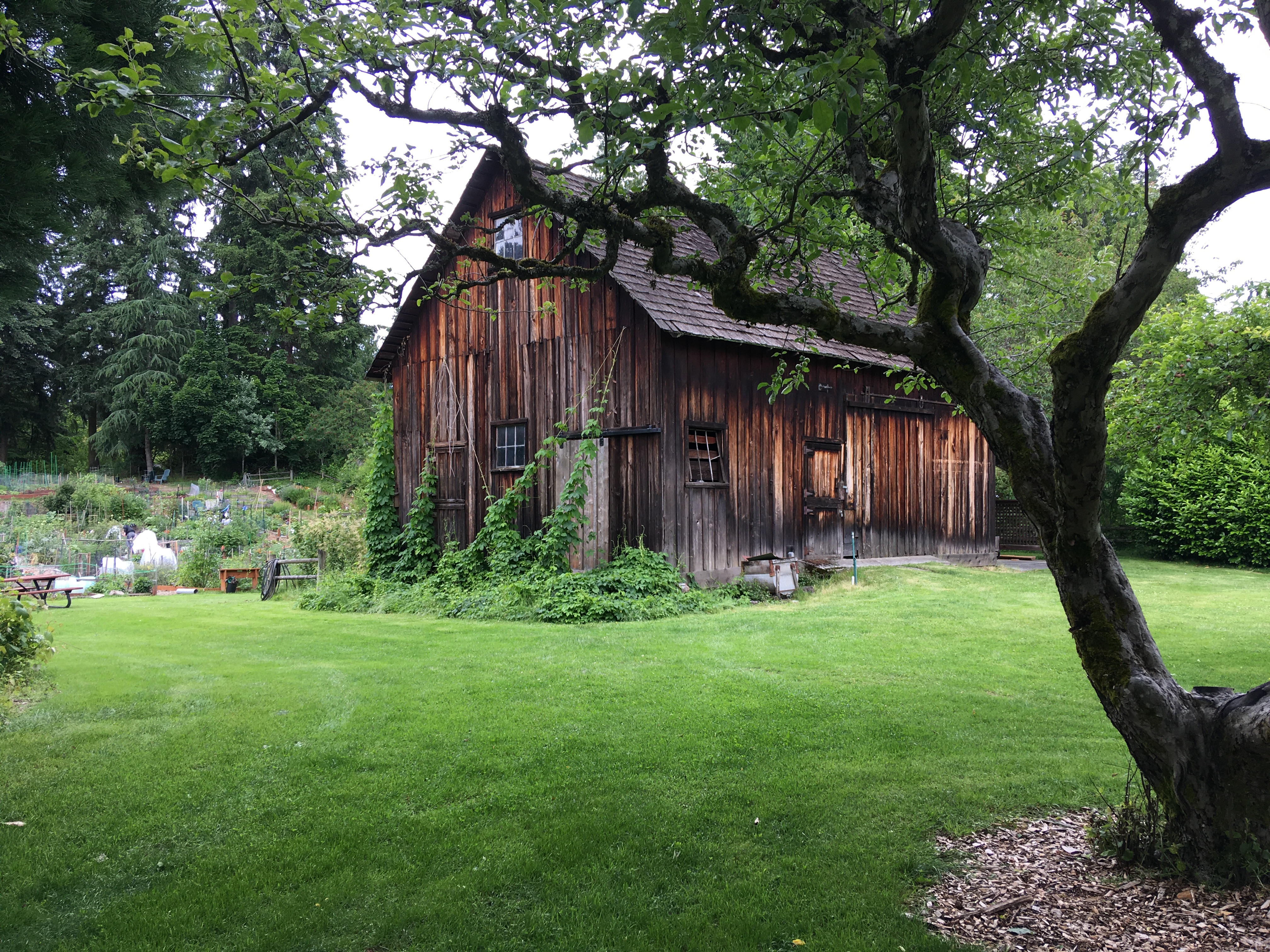
  • McAuliffe Park (between Totem Lake and Juanita Beach) is a big park with wide open grassy fields, shade trees, an ancient barn, vintage farm equipment and wind mills.
  • OO Denny – north of Juanita, near the Kenmore border. Nice beach area. (There’s a playground there.) What many people don’t notice is that on the other side of the road, up the hill, there’s a few miles of fabulous wooded trails (here’s a trail map with points of interest). It’s a pretty challenging steep climb, but beautiful. When we went on a beautiful day in late April, we hiked two hours, and passed maybe 20 people.
  • Big Finn Hill is also on the border of Kirkland and Kenmore. It’s got 9.5 miles of trails back behind the playground.
  • Carillon Woods – near Northwest College. Some trails into the woods, pretty hilly. I wrote a post about it, though it mostly covers the playgrounds.
  • Edith Moulton – between Totem Lake and Juanita. Here’s the schematic for when it was re-designed, which includes detailed maps. It’s got a nice easy walking loop.
  • Juanita Bay (around the corner from Juanita Beach) has a nice path to look over the lake. You may see turtles. The boardwalk there can get a little crowded when we’ve driven by near dinner times.
  • Juanita Heights, Kingsgate and Norway Hill also have trails. They’re maybe a mile or so, just wandering in the woods – not “special” but a nice opportunity to get outside and move. They are quite hilly, so not stroller parks.
  • Places to sit and read/work outside: Everest Park – I like parking at their north parking lot and sitting by the stream. Peter Kirk in downtown Kirkland (park at the library), Terrace Park in Houghton – both of those have playgrounds.
  • Best parks for toddlers: Tot Lot, Phyllis Needy are both fully fenced, so it’s easy for parents to relax.

Juanita Beach, Marina Park, and Houghton Beach can get really crowded on sunny days.

Kenmore

  • Rhododendron Park has a short trail – a nice amble for a young child or an elder.
  • Wallace Swamp Creek has trails, but I haven’t had the chance to check it out. (Note, this is NOT an off leash dog park, but some people are under the impression it is, so there may be loose dogs there.)
  • Burke-Gilman Trail. This is a 20 mile long trail, but portions of it go through Kenmore. It’s paved, so great for bikes, roller blades, strollers. It is quite busy on sunny weekends, but probably a decent option for a cloudy, gray weekday. We have found the Kenmore stretches to be less busy than the Seattle zones.
  • St. Edward’s State Park. Lots of great trails. Quite busy on a sunny weekend, but would be a good outing on a rainy weekday. Large playground – it’s possible to park a ways away and walk away from it, and they might not notice. It’s a state park, so you need a Discover Pass, or it’s $10 to park there.

Here are more Kenmore parks,

Redmond

There are 59 miles of public trails in the City of Redmond! The City of Redmond website doesn’t provide a lot of detailed information on the trails; however, you can find more info about them on the All Trails website or app, on the Washington Trails Association website or TrailLink.

Trail names to look up:

  • Watershed Preserve Trails, off of Novelty Hill Road. 800 acres, with multiple trail options from 0.6 short loops to 4.3 mile hikes. Beautiful walk through green – moss, ferns, trees, ponds…. beautiful. There’s a lot of tree cover, so it’s good for rainy day hikes.
  • Tolt Pipeline Trail – 11 miles, Duvall to Bothell. Bridle Crest Trail, 3.3 miles from Bridle Trails to just north of Microsoft – it runs where 60th St would be if 60th went through.
  • The Marymoor Connector Trail is a 1.6 mile trail through Marymoor Park. It’s an easy walk with a stroller or an easy bike ride. It connects the East Lake Sammamish Trail (11 miles, up the east side of the lake) and the Sammamish River Trail (10 miles, Redmond to Bothell)
  • Farrell-McWhirter off Novelty Hill Rd. near Avondale – this is a farm park but there’s also a 1.3 mile trail through the woods. There’s a self-guided orienteering course there.

Or, there’s the 1.5 mile Viewpoint trail in the Tam O’Shanter neighborhood on the border of Redmond and Bellevue.

Snoqualmie / North Bend

On weekends, their parks can be over-flowing with day hikers. If you really can’t resist the area, instead of going to Mount Si, check out this article on 7 Trails to Try

Other Areas

Check out this Parent Map article on State Parks near Seattle. It covers Dash Point in Federal Way, Flaming Geyser in Auburn, Bay View in Mt. Vernon, Camano Island, and Salt Water in Des Moines. And this article on Secret Urban Hikes in Seattle area.

Learn about Nature while you’re out

I’ve written a guide to learning about Northwest Native plants, which includes all the major plants you’ll find on a hike outdoors, and also has a couple of scavenger hunts – one for preschool age kids, one for older kids (or adults), and a dichotomous key. Here’s another great Native Plant Field Guide that was developed by someone as her senior year project.

The City of Bellevue has a scavenger hunt for Lewis Creek that could also be used elsewhere. I found that some of the things on it were harder for kids, so I made my own version of the nature scavenger hunt using theirs as a base.

Parks with Industrial Artifacts

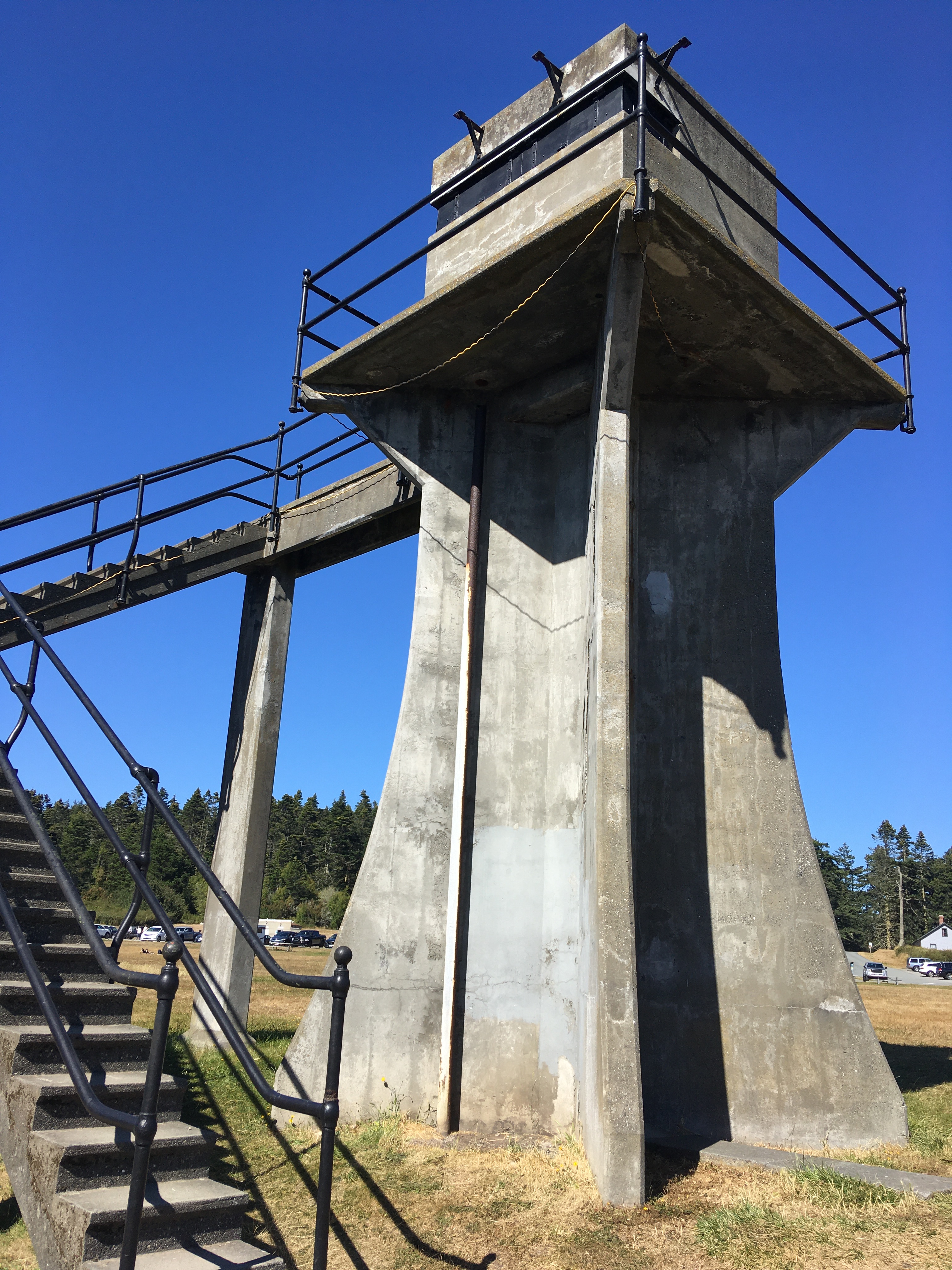
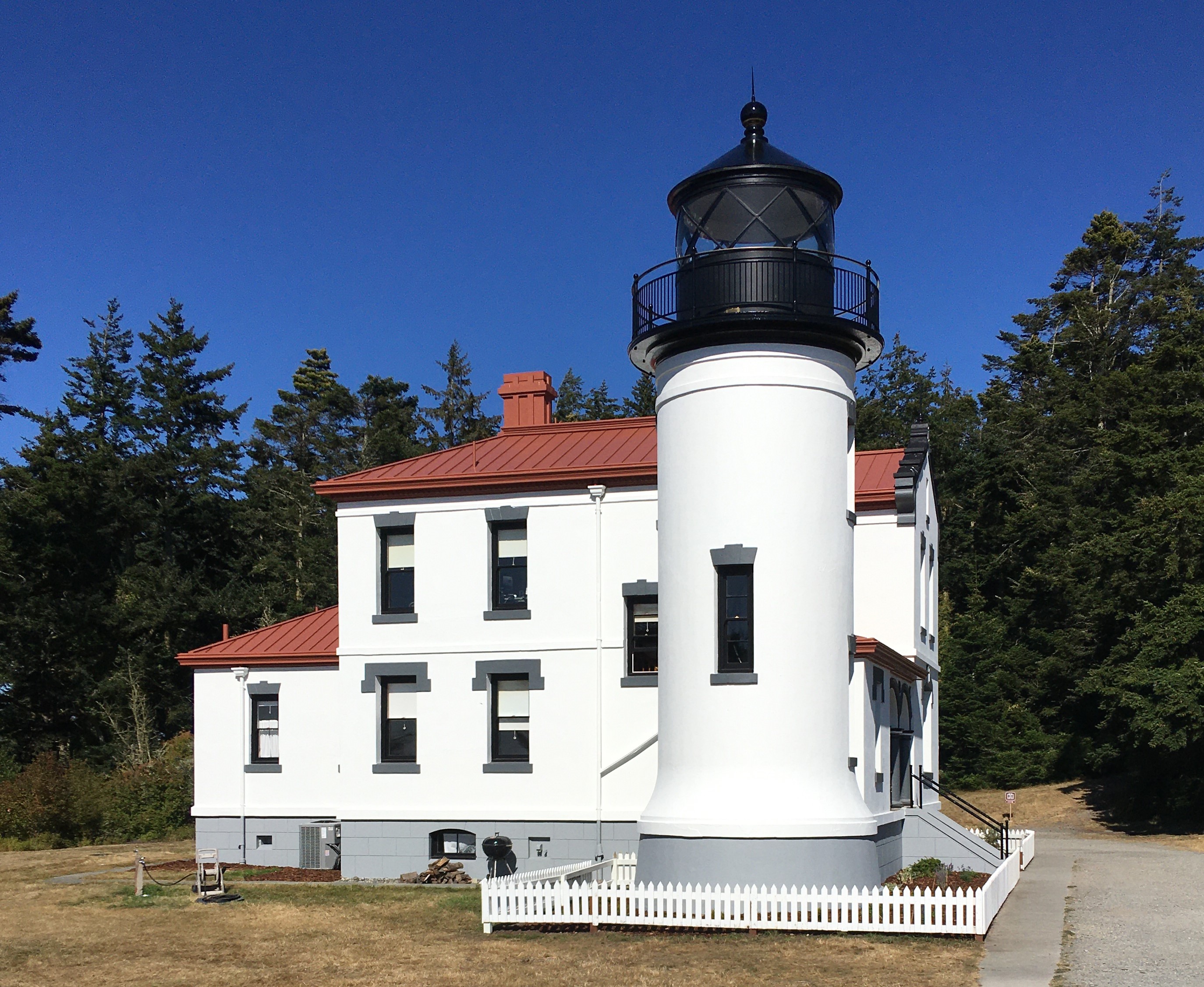
Some people love nature, and can look at mossy trees, birds, and spider webs all day long. Some people don’t connect to that at all and are far more interested in mechanical objects. And sometimes those two types of people are married to each other. Or sometimes there’s a parent in one camp who has a child in the other camp. One way to find common ground is to seek out signs of cool machines in natural settings. Here are some options with that appeal in western Washington: Gas Works Park in Seattle, coal mining remnants in Newcastle, Snoqualmie Falls, Fort Casey on Whidbey Island and the Ballard Locks.

Gas Works Park in Seattle

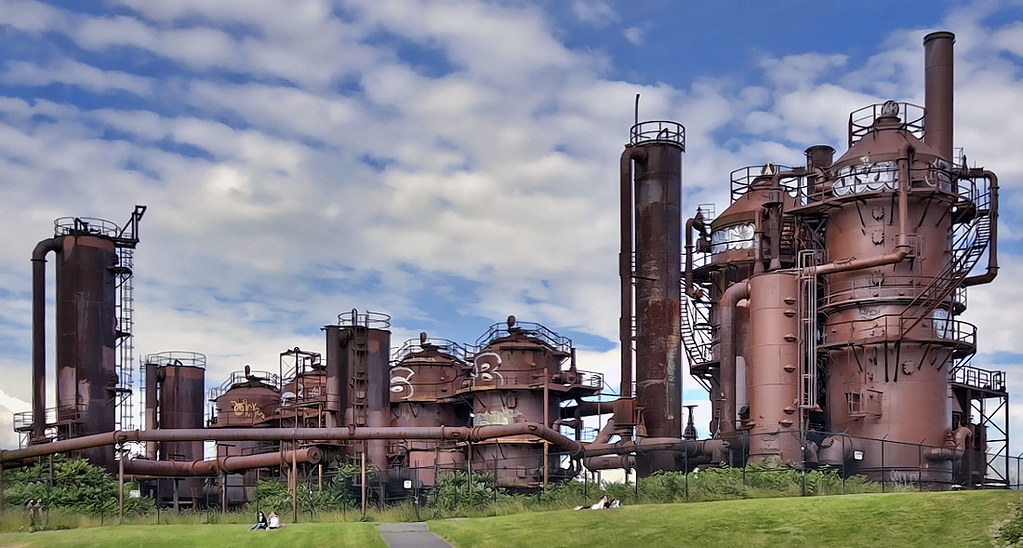
In the Wallingford neighborhood (2101 N Northlake Way, Seattle, WA 98103), Gas Works contains remnants of a coal gasification plant that operated from 1906 – 1956. (Learn more about Gas Work’s history and the park today.) In addition to viewing the gas works, there’s also a great hill for kite flying, a sundial, great views of the boats on Lake Union, and easy access to the Burke-Gilman trail.

Coal Mining Remnants in Newcastle

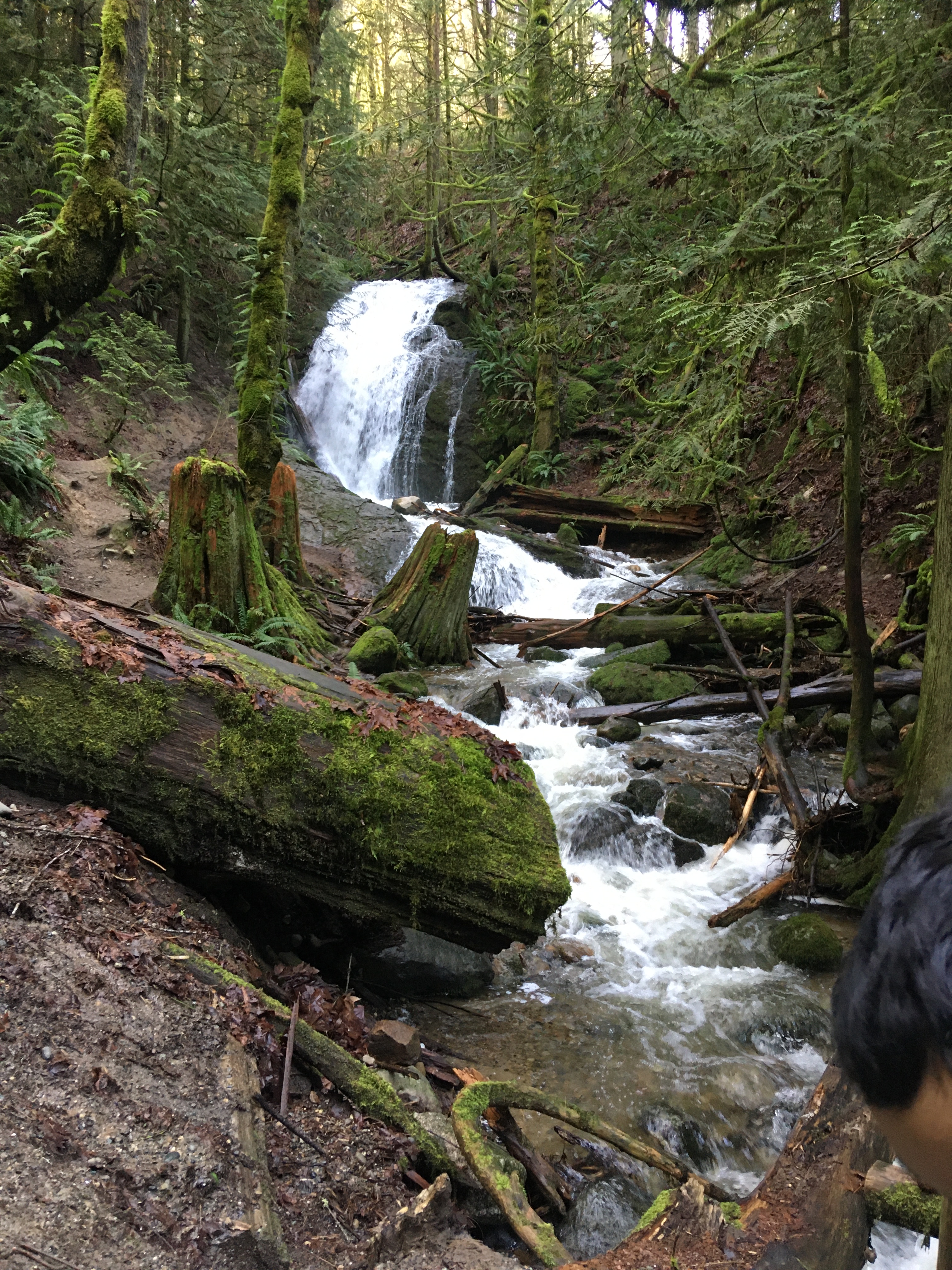
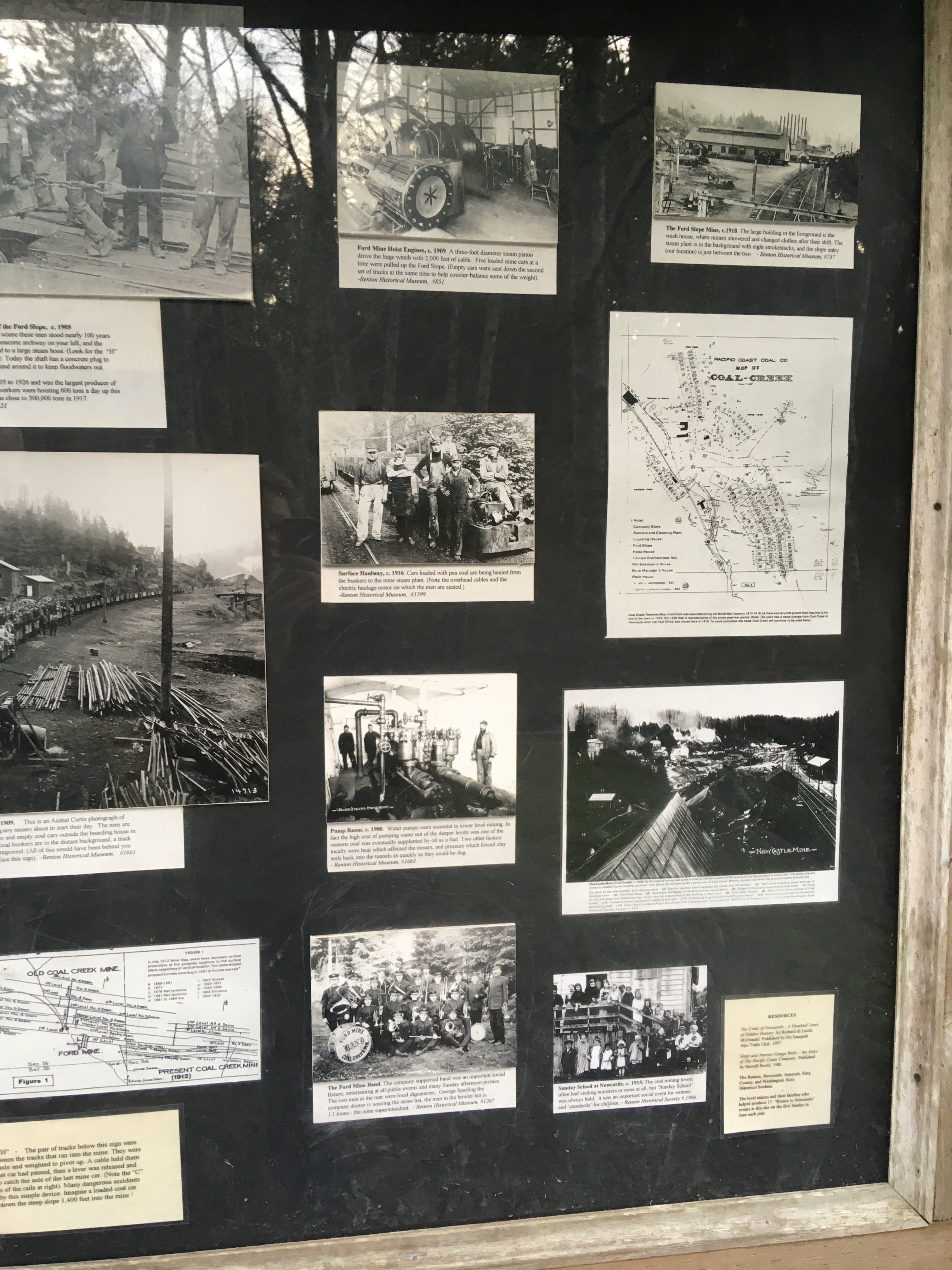
On the border between Bellevue, Issaquah, and Newcastle, you’ll find the Coal Creek Trails in Cougar Mountain Regional Park. It’s a beautiful nature hike with lots of native plants, and view of Coal Creek, with the added bonus of ruins from old coal mines, and interpretive signs about their history. There’s also an old Nike missile installation, but not a lot to see there. (Learn more here.) I wrote up a guide to the science of coal formation and the history of coal mining in the area when I took an elementary school age class on a field trip there. You can read it here.

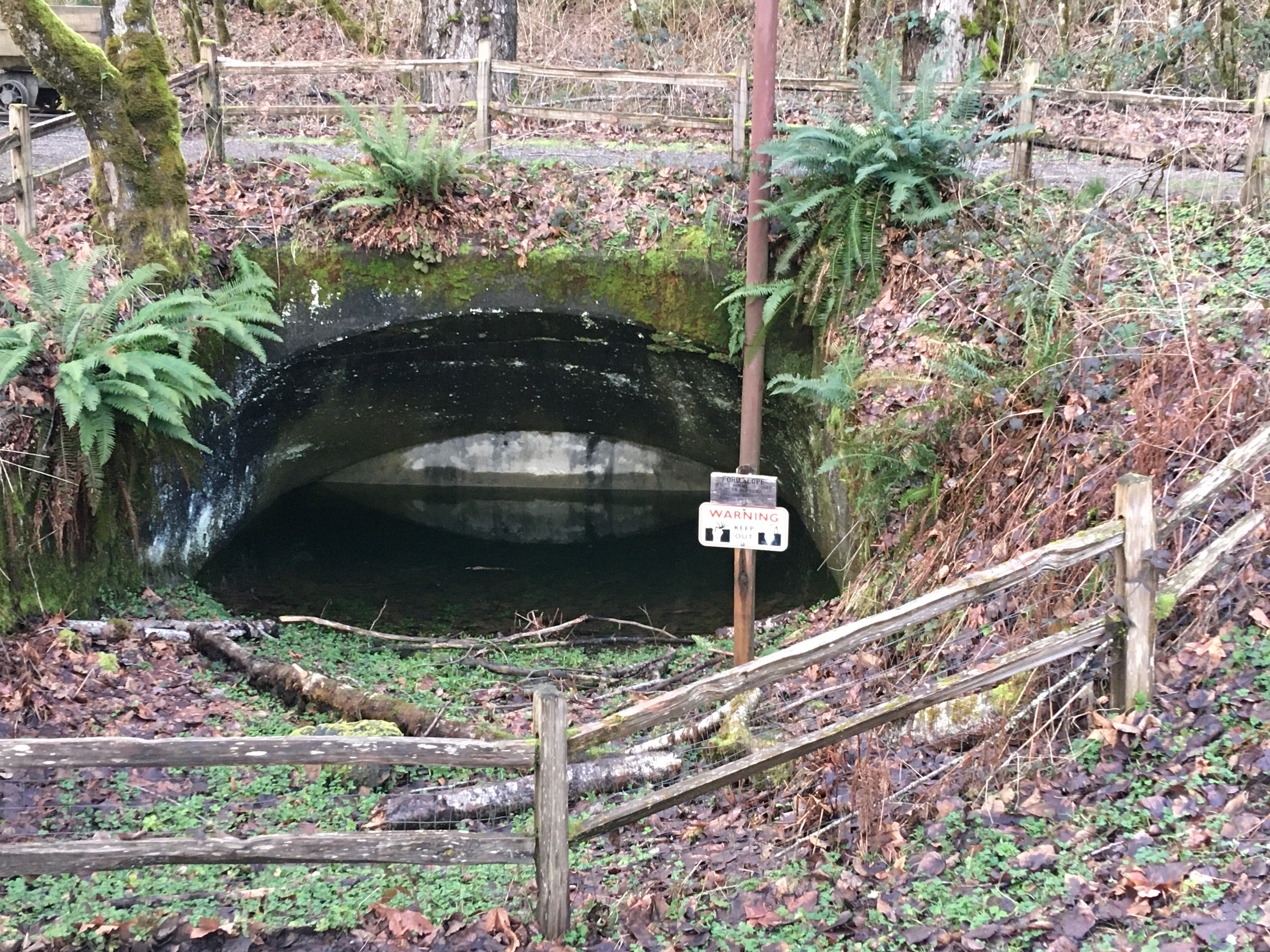
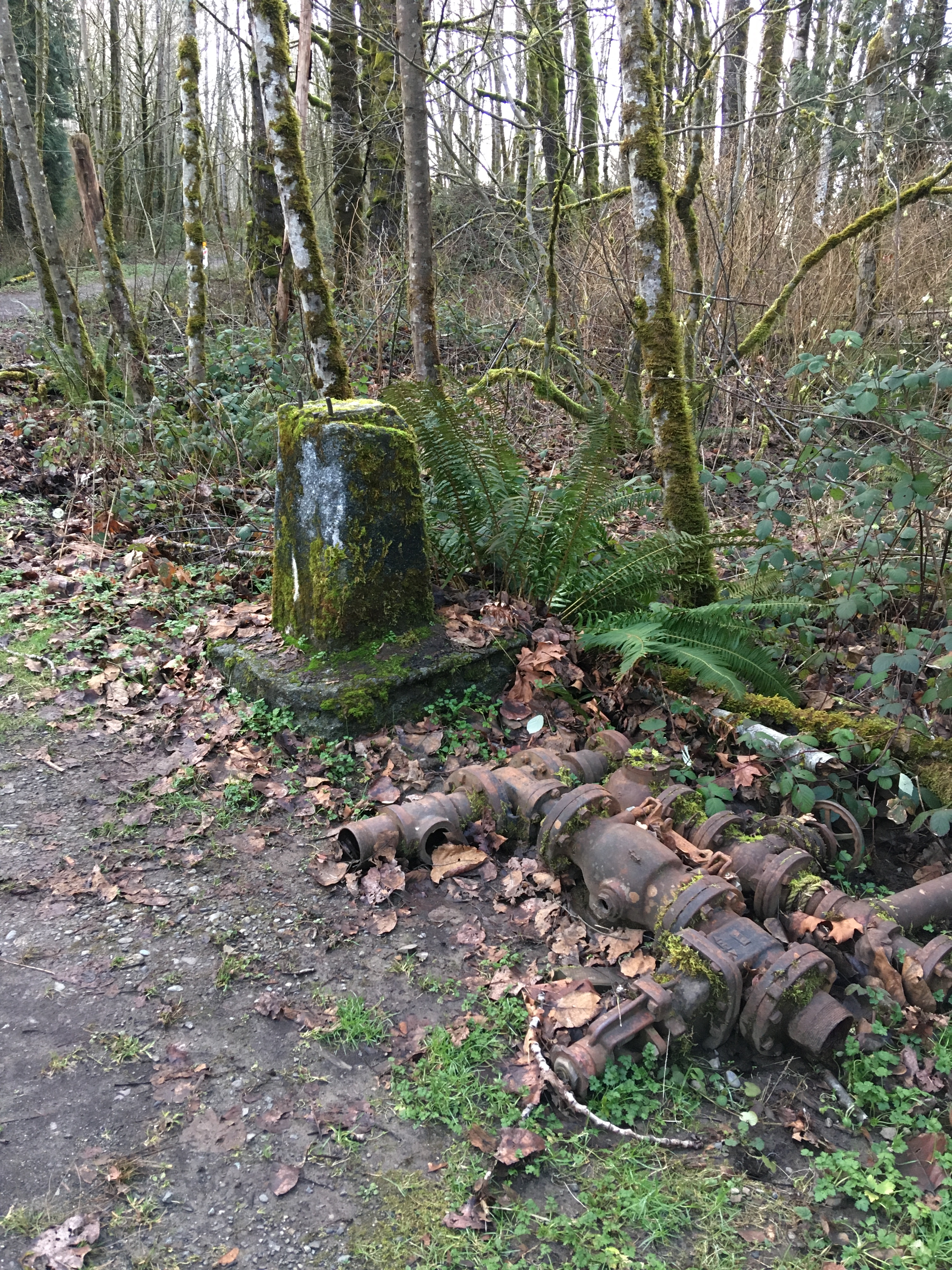
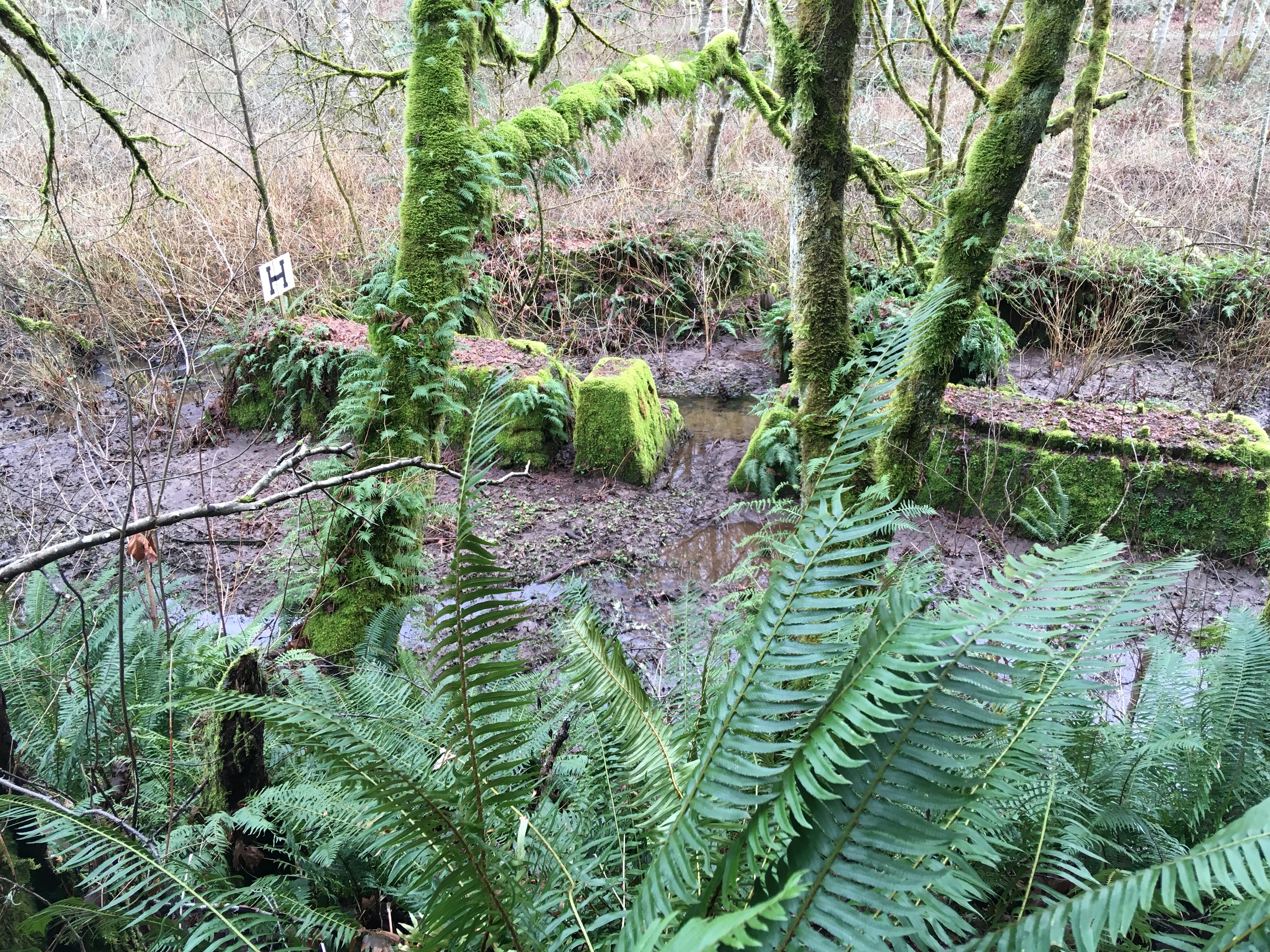
Here’s a trail map of the zone I’d recommend hiking. Walk Wildside trail to Steam Hoist trail to see the Steam Hoist. If the path isn’t flooded, go around the Steam Hoist trail loop to see the info about saw mills. Use Steam Hoist trail to get back to Ford. At Ford Slope, view a rail car (picture here), machinery, a closed mine shaft, swamp gas vents, and the 1920 (bridge??) just up the hill. If you still have lots of energy, hike up Rainbow Town (steep) to Red Town, then down Bradley Seam Trail back to Wildside to trailhead. If you have some energy, then you can duck back down Wildside just a bit, go UP Bradley Seam, and then walk down Red Town. On Bradley Seam, you’ll see an exposed coal seam and be able to pick up and examine lots of coal samples along the side of the path.

This is around a mile and a half hike without a a lot of elevation gain. Parts of the trail are wide gravel roads, some are more challenging terrain. I hiked it with 5 – 9 year old kids who did great. With younger kids, it would be trickier, and you’d need to make sure they were stating safe. (More about the hike.) The hike to Coal Creek Falls is beautiful, but it’s 3.5 miles with 350 feet of elevation gain and some tricky terrain, so not the best for a novice hiker. (Full Trail Map.)

Directions: Start at Red Town Trail Head parking lot, Cougar Mountain Regional Wildland Park. From I-90 take exit 13 and drive south on Lakemont Blvd SE for 3.1 miles. Parking lot is to left (east side) of Lakemont. (Watch for the park sign and a dirt parking lot). The trailhead parking does fill up from about 9 – 2 on sunny summer weekends.

Snoqualmie Falls

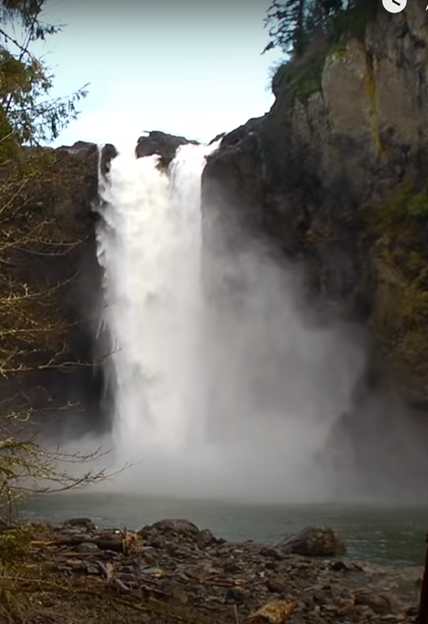
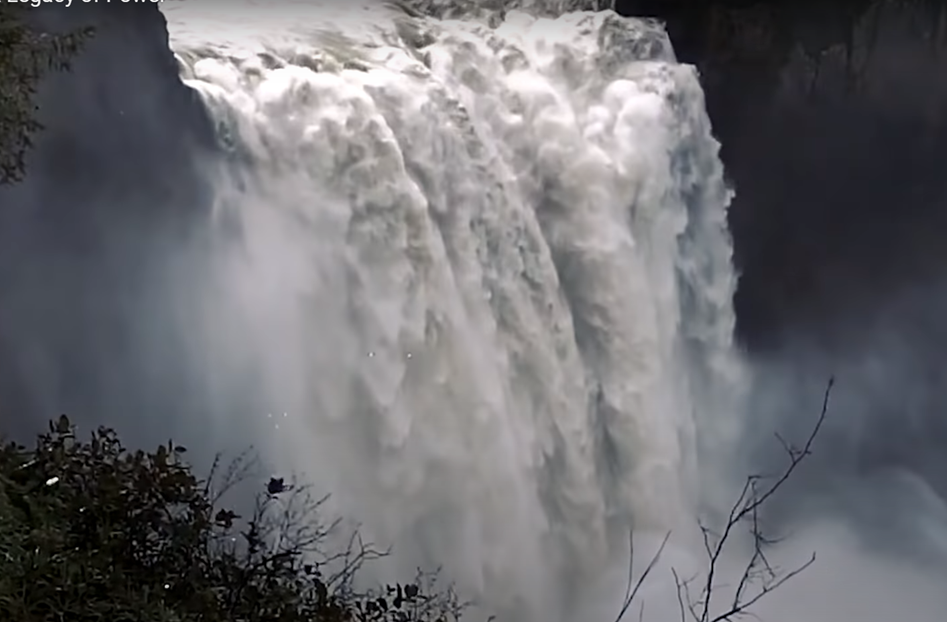
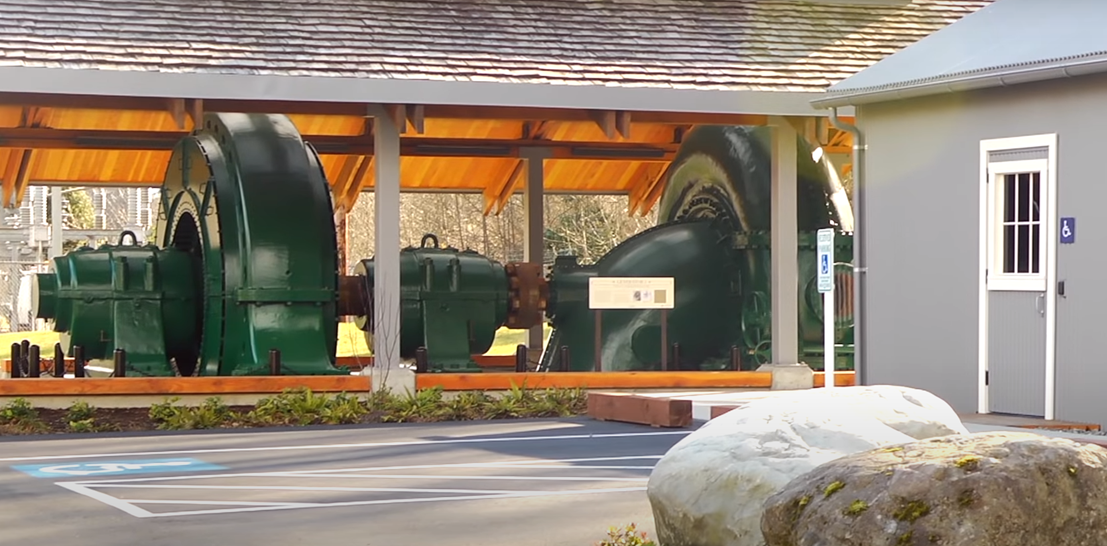
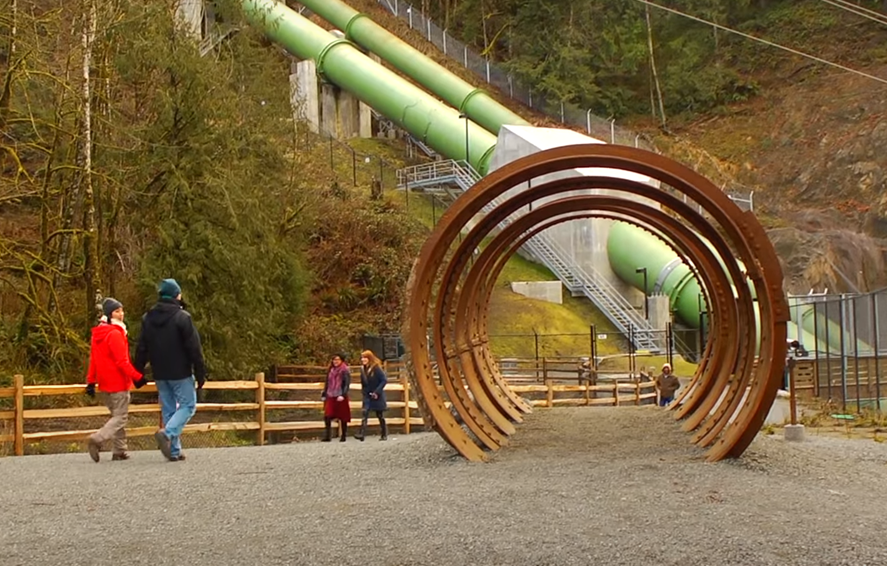
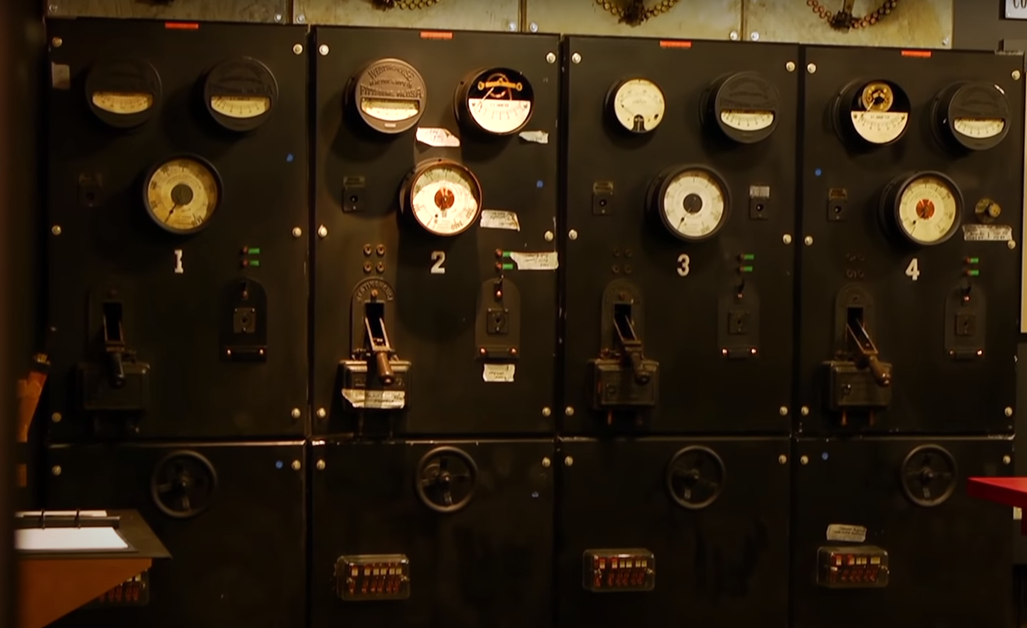
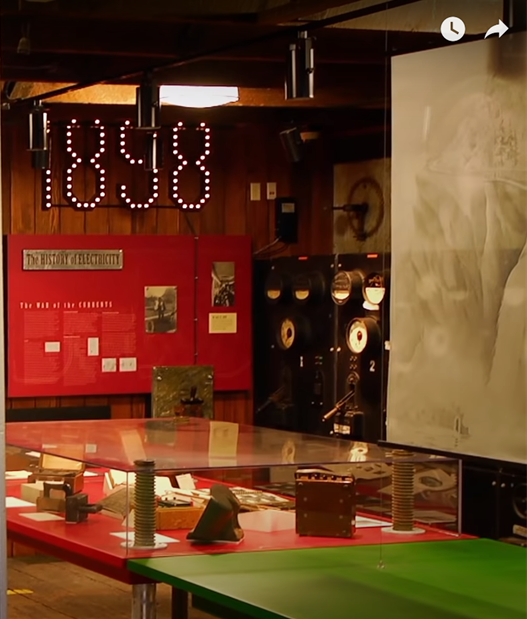
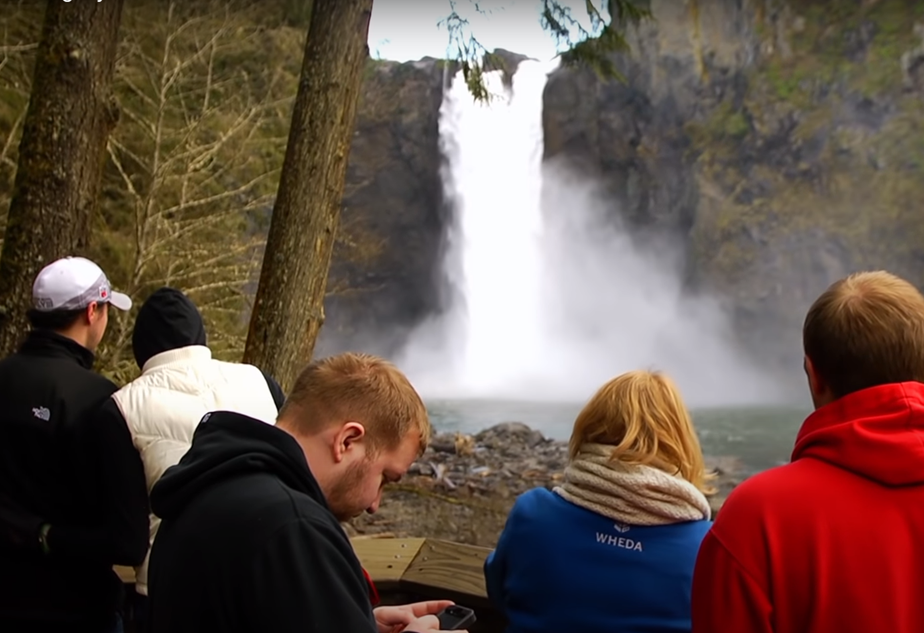
The falls are gorgeous –  268 feet high with the width ranging from 50 to 150 feet, depending on water levels. When the water level is high, they’re really LOUD and powerful feeling. This is also the site of Snoqualmie Falls Hydroelectric Project, built in the late 1890’s. It is one of the Pacific Northwest’s oldest hydropower facilities and the world’s first hydroelectric plant built completely underground. The museum (closed during pandemic) houses exhibits about hydroelectricity. Here’s a virtual tour video covering the history.

Near the top of the falls, next to the Salish Lodge, you’ll find two observations decks (aka “cliffside observation areas”) with great views of the falls, a gift shop and concessions. The observation deck is wheelchair accessible. There is a very steep trail down to the base of the falls. There is also a lower park area, with a hiking trail through forested wildlife habitat, a kayak and canoe launching area, historic interpretive displays and an observation platform for viewing the Falls.

Here is a map of the park and the parking areas. The parking lot by the gift shop is paid parking. The other 2 lots are free. The falls are lit up after dark.

Fort Casey on Whidbey Island

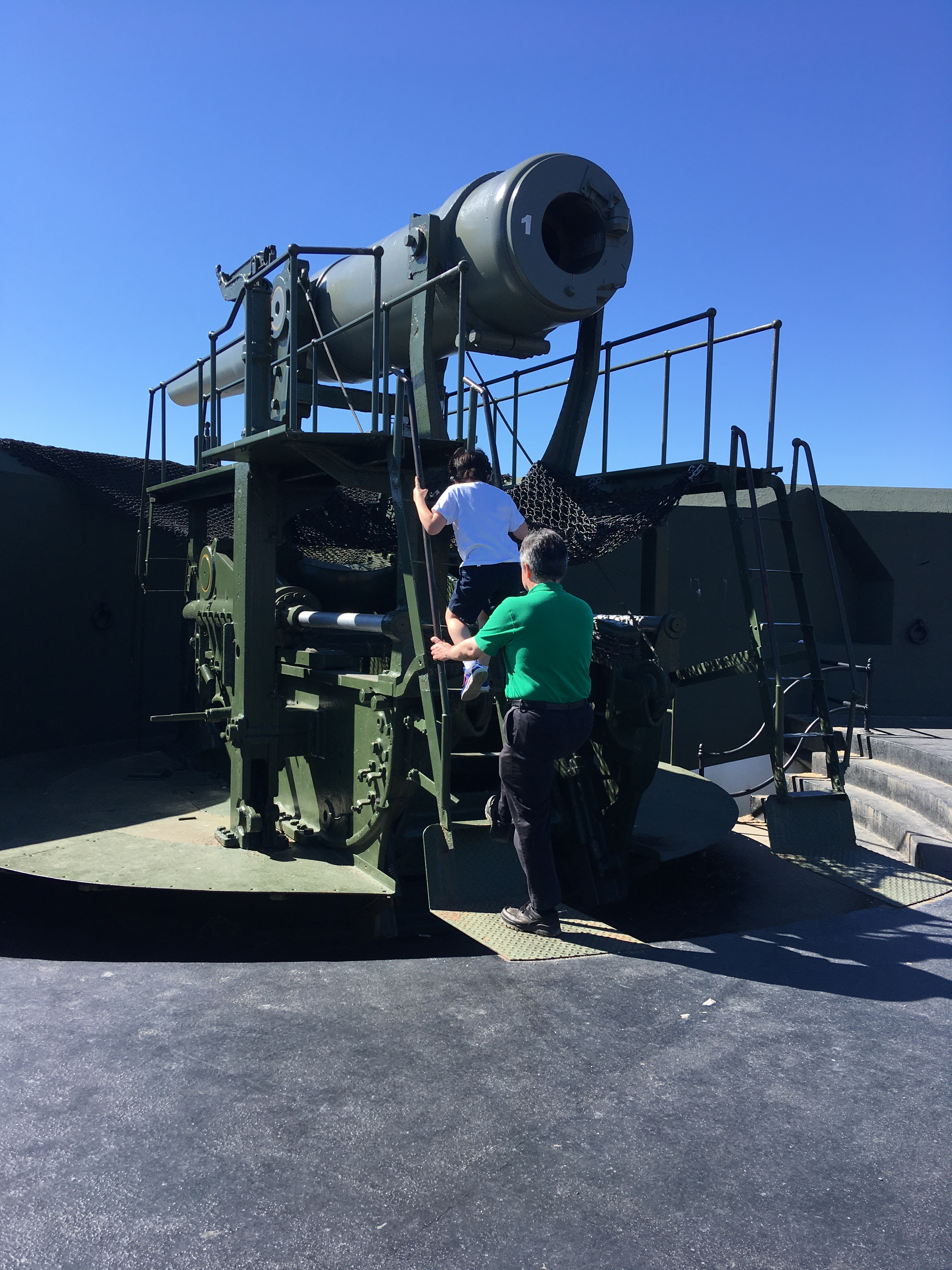
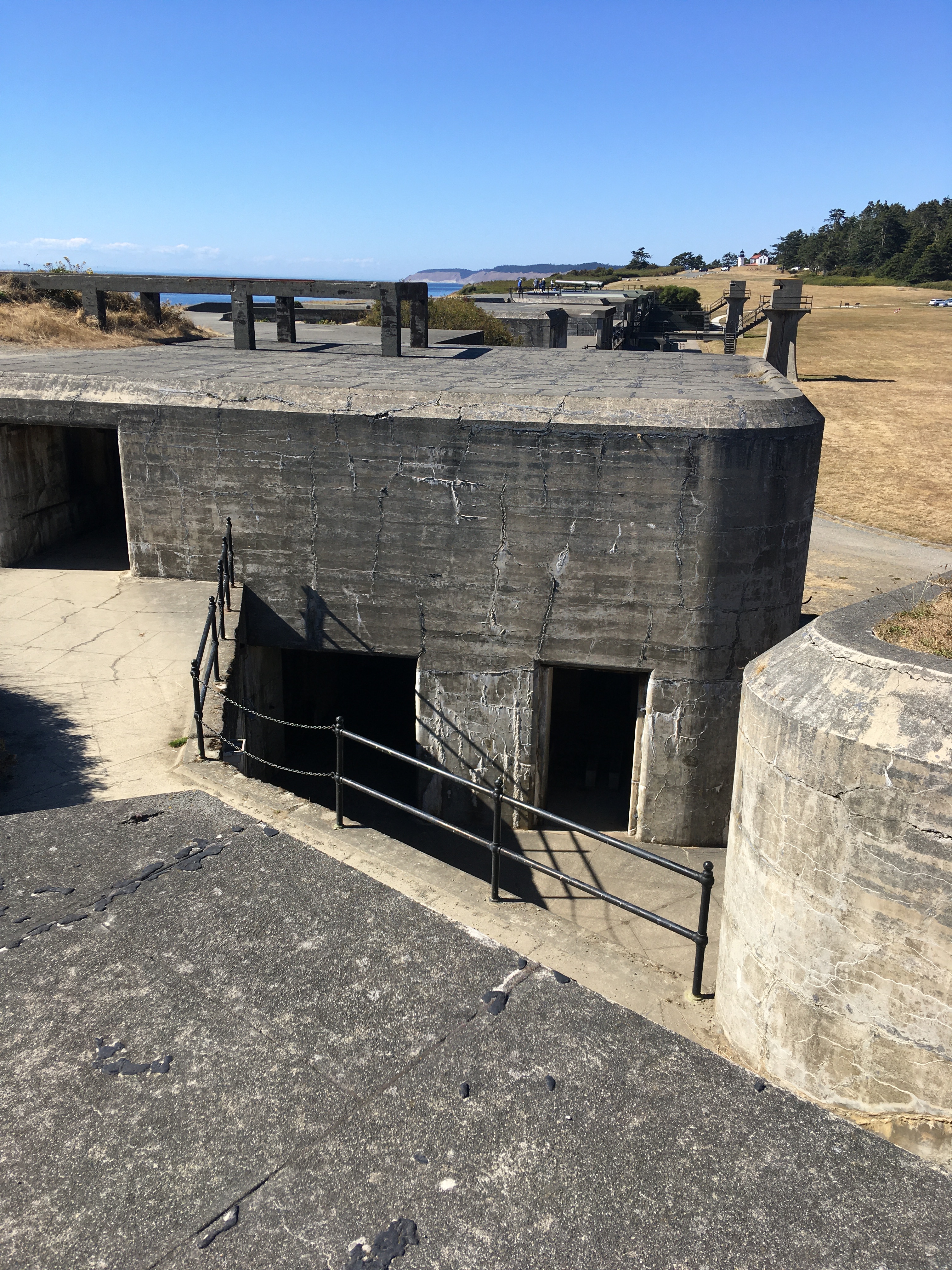
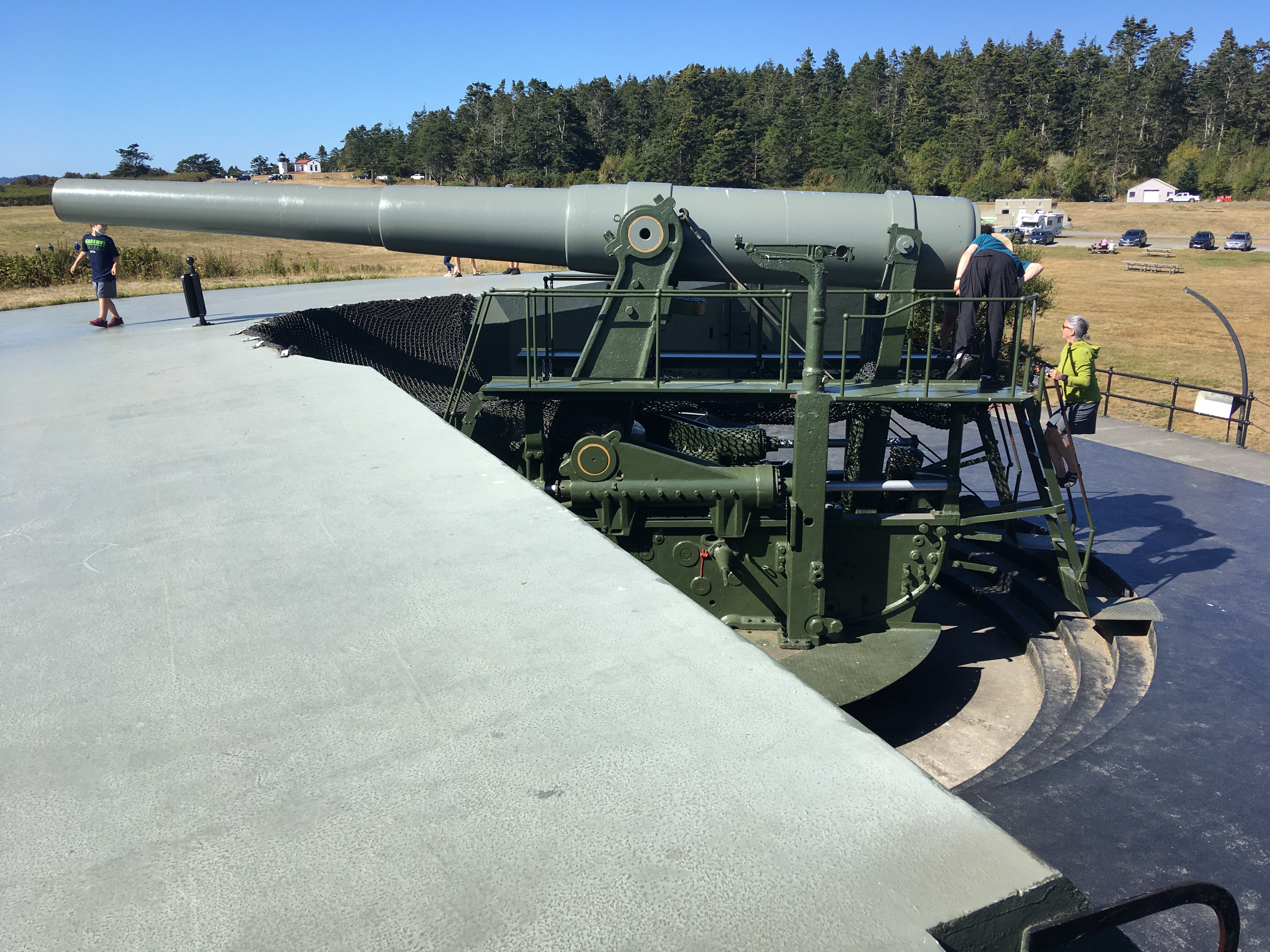
Fort Casey is a Washington state park. The fort was constructed in the late 1800s, equipped for seacoast fortification in the early 1900’s with large “disappearing guns.” Unfortunately the guns were quickly made obsolete with the advent of airplanes. The guns you see there now were transferred from the Philippines in the 1960’s. The Fort was used as a training facility up to the mid-1940s. (More history.)

You can climb the batteries, peer into catacomb like bunkers (bring a flashlight!) and climb up for a close look at the guns. You’re given pretty much free rein of the facility, without a lot of protective barriers. It was great for my 9 year old, but if you have little ones, they’ll need close supervision. (More on what it’s like to visit.)

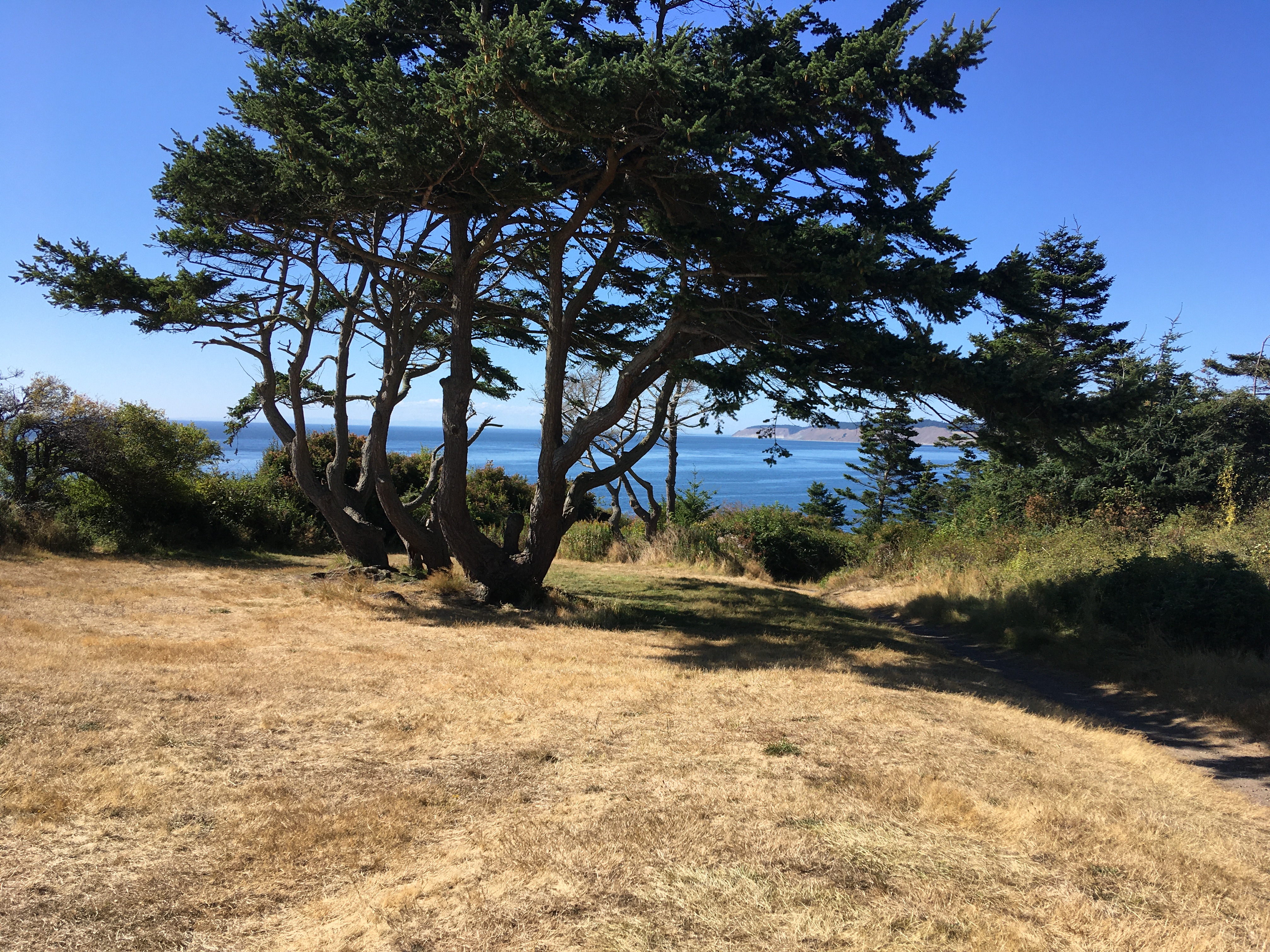
There’s 1.8 miles of hiking trails (part of the 1200 mile Pacific NW National Scenic Trail) and amazing views of Admiralty Inlet which connects the Strait of Juan de Fuca with Puget Sound (expect it to be windy!!). We went there in the summer of 2020, and after being isolated at home for a long time, it was lovely to be in a wide open space, where we could see families out enjoying the day from a very distanced social distance.

A bonus for the mechanically-inclined (a downside for those who like the quiet of nature) is that the U.S. Navy does flight training at the nearby Naval Air Station Whidbey, with 100,000 takeoffs and landings per year, day and night. With noise levels of 100 decibels, you won’t miss them!

You can camp at Fort Casey’s 100 acres, or you can stay in their historical buildings of the Fort Casey Inn. (Read about the experience.)

Ballard Locks

Find info about their visitor center and museum at: https://ballardlocks.org/

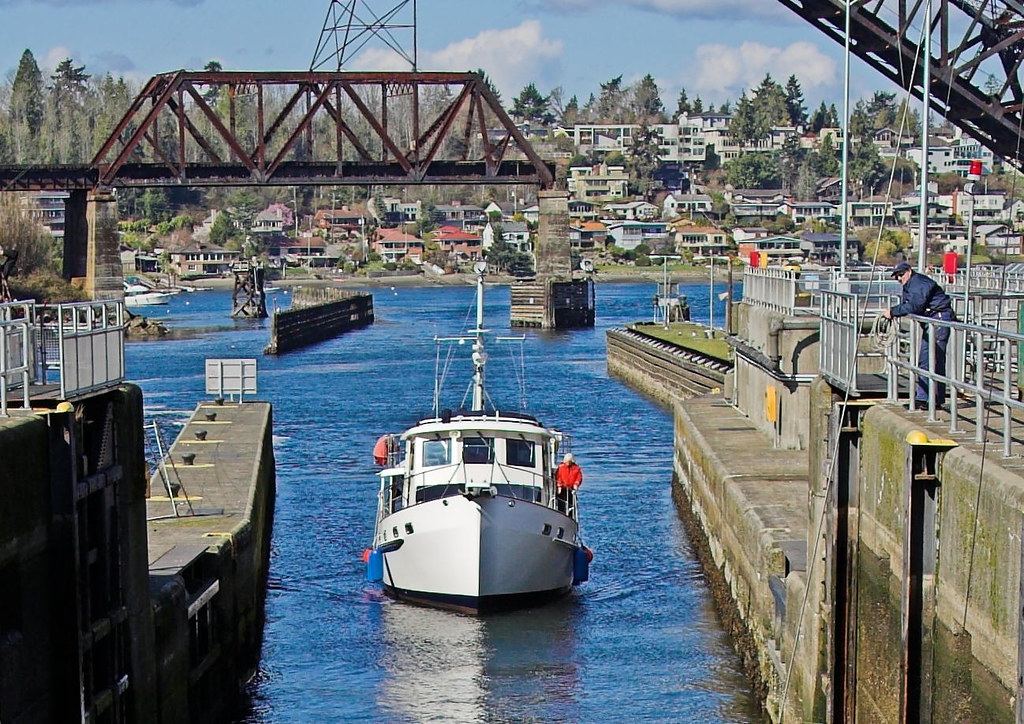
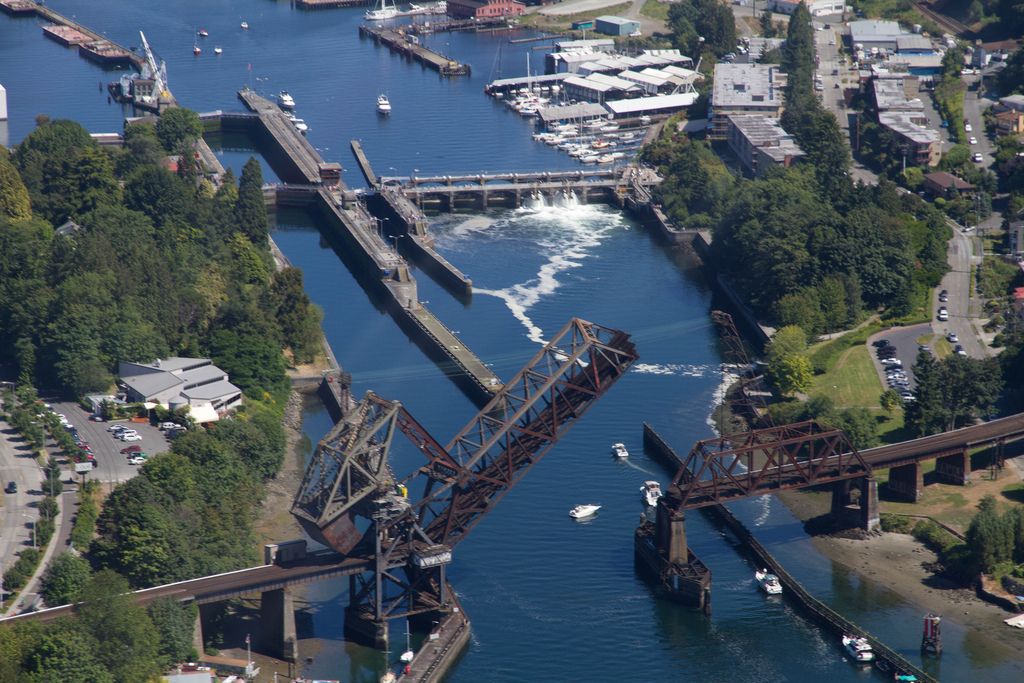
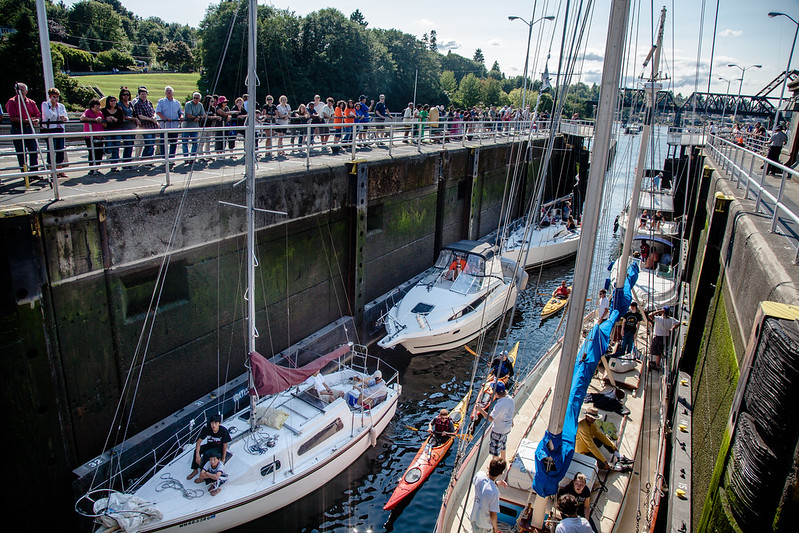
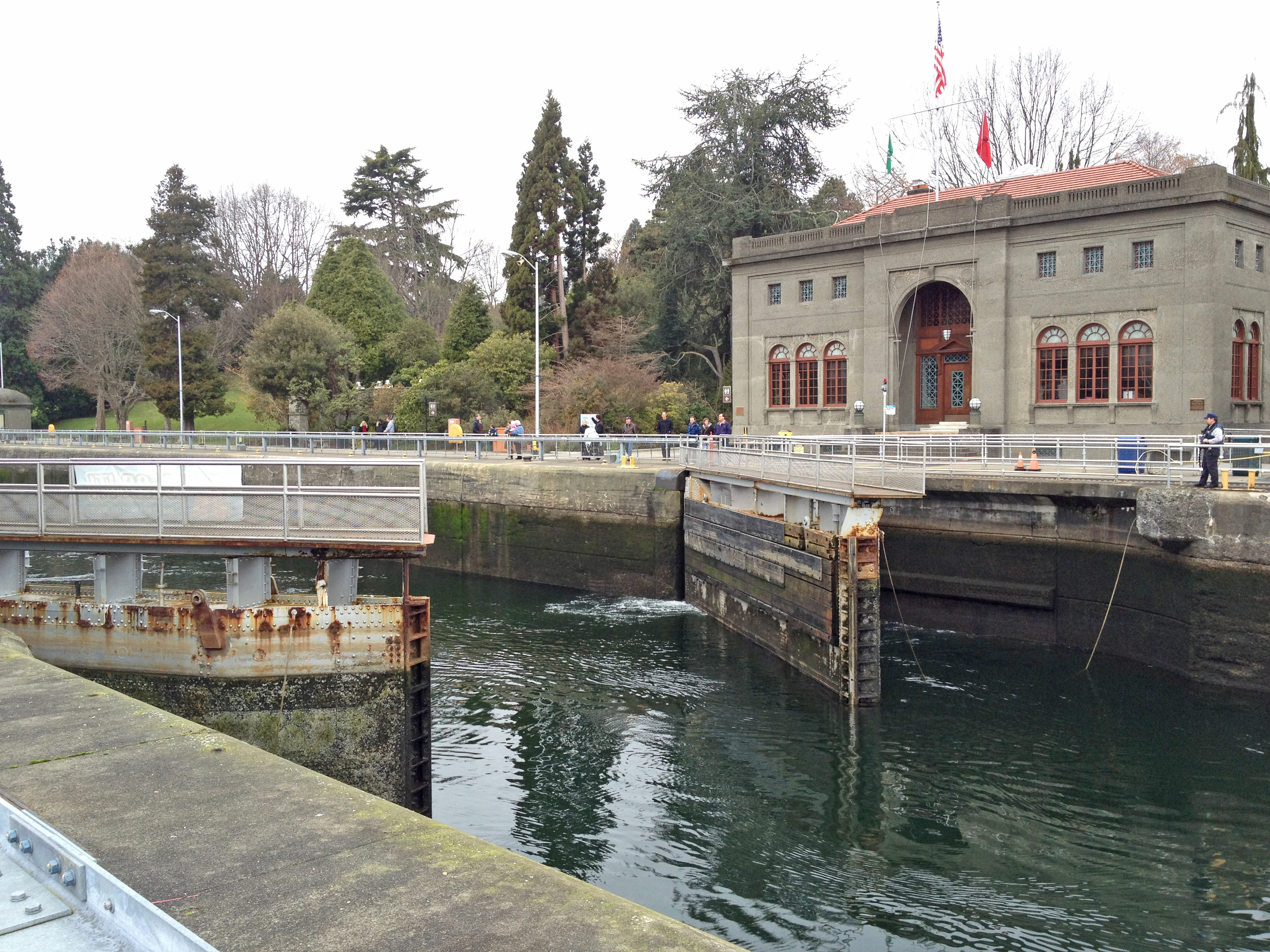
The Hiram M Chittenden Locks, completed in 1917, connect Lake Washington with Puget Sound. They carry more boat traffic than any other locks in the U.S. Boats ranging in size from one man kayaks to 760 foot boats can travel through there. When a boat enters the locks from the lake, the water level is lowered 20 – 22 feet before a boat makes its way into the Sound. You can find a lot more about how the locks work and about their history on the WIkipedia page.

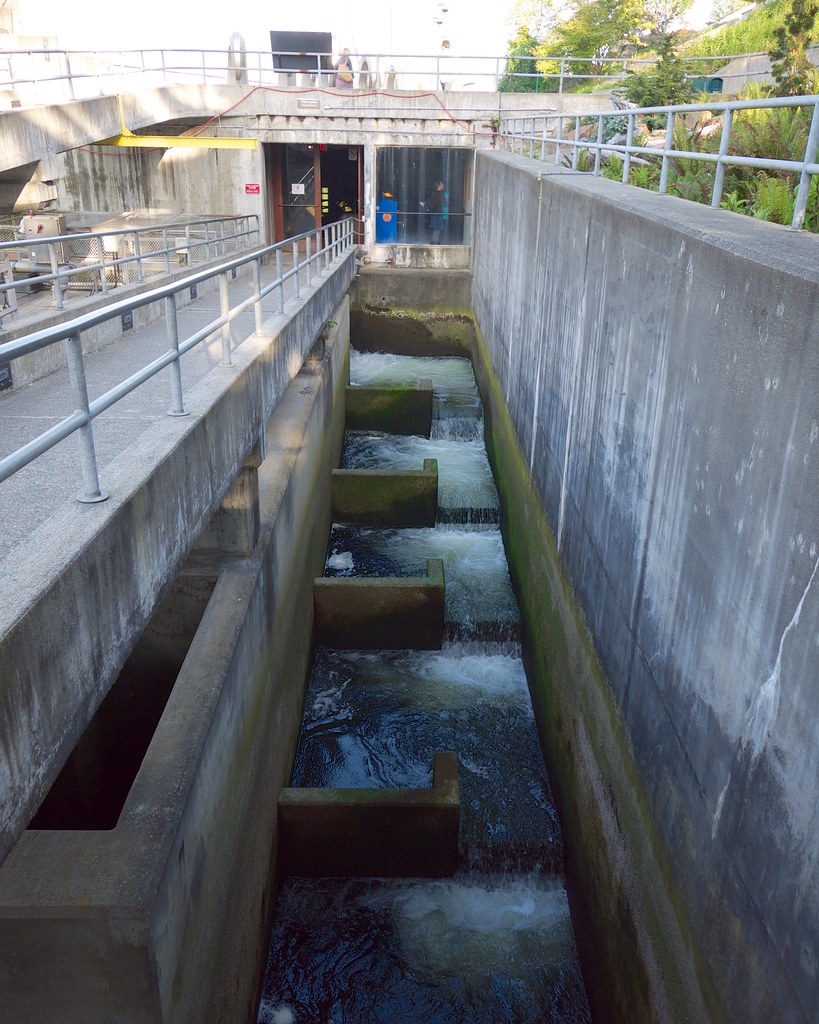
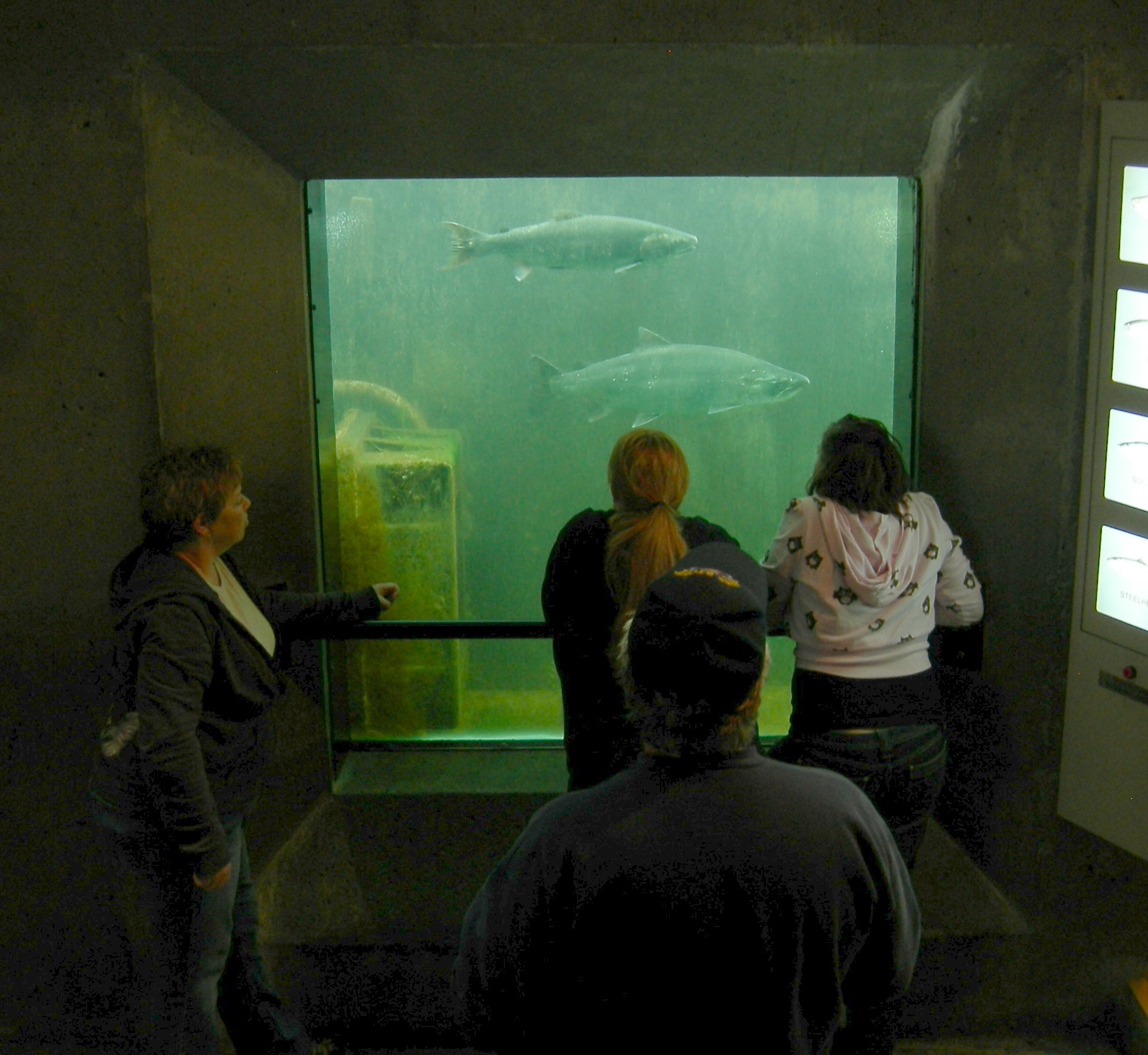
From June to September, you may be able to see salmon on the fish ladders. There is also the Carl S. English Jr. Botanical Garden, a beautiful nature oasis. Read visitor reviews. More photos.

McAuliffe Park in Kirkland

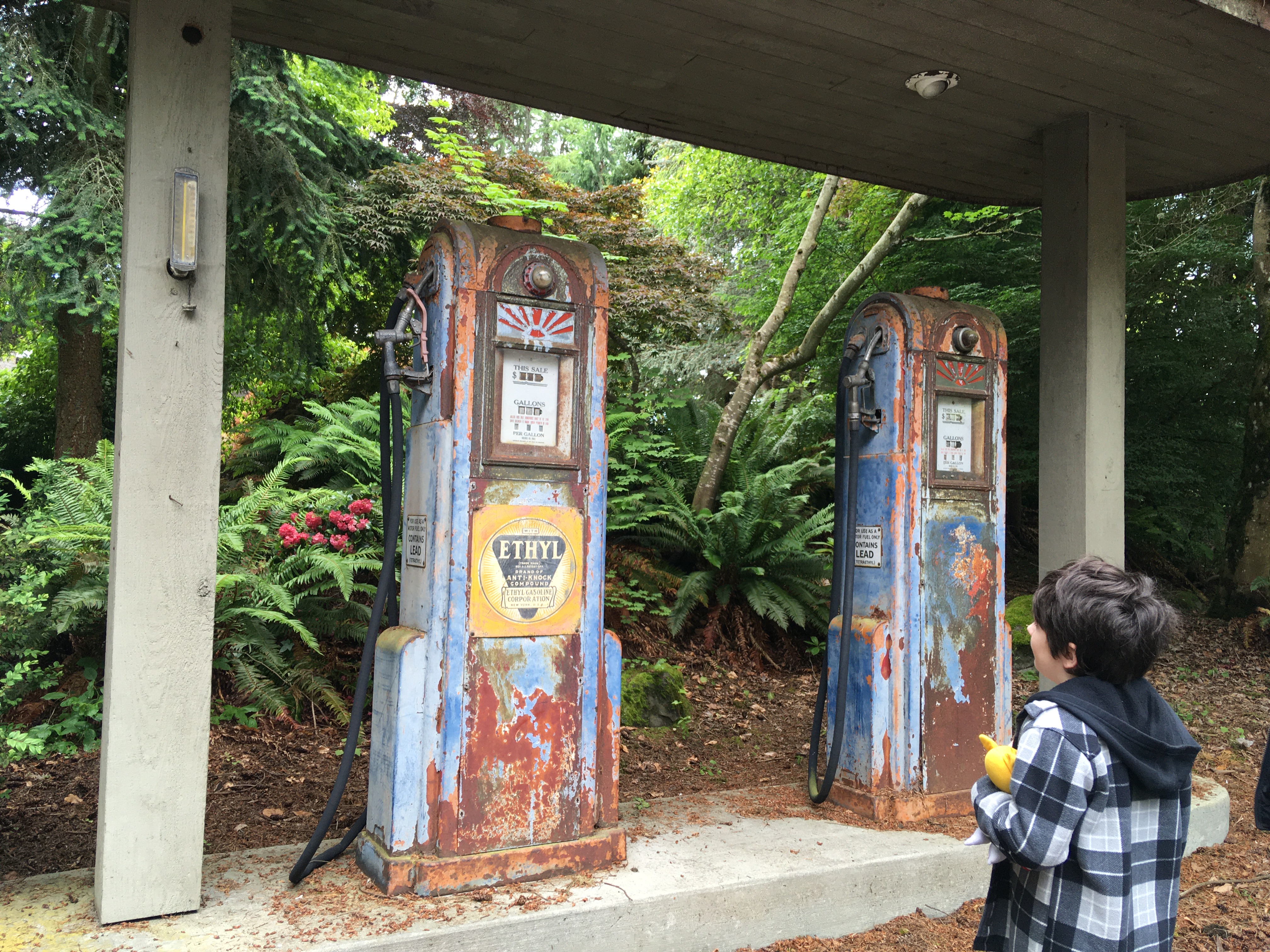
This old farm homestead has windmills, old gas pumps, old farm equipment and large pea patch of working gardens. Read my whole post on McAuliffe Park. Also, as you walk, keep your eye out for Kirkland Rocks.

Monte Cristo Trail

You may also be interested in the Monte Cristo hike in Snohomish County. “Remnants of an old railway turntable … a group of boys pushed one end of the rusty girder, swinging it in circular fashion.” “Rusted-out bed frames, mining tools and pieces of railroad track and railway cars, among other relics, are randomly strewn around, as if they’re props for a play. “

Related Ideas

All playgrounds are full of simple machines. You can point out to a child the inclined planes (slides, ramps), the screws (spiral staircases or ladders), the levers (swings, seesaws), and the wheels on axles (merry go rounds).

If you’re looking for an excuse to go on a quest around downtown Seattle, check out this guide to all the public clocks in Seattle.

This Seattle Times articles shares a few hikes with fun discoveries at the end.

If you know of other great opportunities in the Seattle area for combining some time in nature / the great outdoors with something mechanical or engineering related, please add a comment below!

More Local Parks

For the nature lovers, you may also want to check out these posts:

McAuliffe Park – Kirkland

20200614_221255502_iOS

After 30 years on the Eastside, and 6 in Kirkland, I had never been to McAuliffe park. I’d driven by on 116th countless times, but from the road, it didn’t look like much, so I never stopped in. But then on the Kirkland Rocks Facebook page, people would often post that they’d hidden beautiful painted rocks at McAuliffe for kids to find. So, finally we went. And this park is a unique gem!

It’s at 10824 NE 116th Street; halfway between Totem Lake and Juanita Village.

It’s 11.6 acres, with lots and lots of wide open lawn, shady orchard trees to throw out a picnic blanket below, a playground, picnic tables, nature trails, a community pea patch with 35 plots, an antique barn, 2 windmills, and lots of ancient rusted farm equipment and old gas station memorabilia to explore.

The community learning garden features permaculture principles, annual vegetables grown with organic practices, a new rain garden, and water and resource conservation. The Tilth Alliance offer classes at the park.

The property was homesteaded in 1877, and only two families owned it between that time and when the Kirkland Parks department acquired it in a series of purchases from the 1990’s through 2017. Read more (and see more pictures) on Active Rain, and in the Master Plan report. (Note: the master plan from 2005 had grand visions for the site, but it does not appear most of them were implemented.

We visited in the midst of coronavirus season, and there were maybe 30 people we saw there, spread out over 12 acres, so easy to socially distance! The playground was closed when we were there, due to quarantine, but people were hard at work in their plots in the community garden, and a few families were relaxing in the shade. It struck me as a great place to take 3 – 8 year old children where the parent(s) could sit and relax and the kids could run quite a ways, and play while still being safely in the parents’ sight. There’s even some nice low climbing trees.

It’s a park well worth visiting when you’re in the mood for a little wandering around and exploring or a little sitting under a tree reading a good book.


Adventure Playground on Mercer Island

[This is a post from 2017. Note for 2019 – the adventure playground will not be open this year, but they are offering an Adventure Playground Summer Camp!]
overview

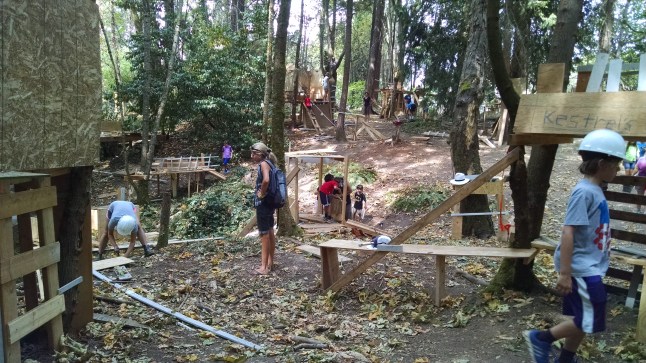
At Deane Children’s Park on Mercer Island (part of Island Crest Park – 5801 Island Crest Way) there’s an Adventure playground, where children are given hammers and nails, and encouraged to go build, play, explore, and discover. Here’s how Red Tricycle describes it:

an ever-changing carpentry wonderland that’s completely kid-built, poised to capture the imagination… What’s been created so far will surely inspire your lil’ builder to add her own touches or modify a current design. In fact, the organic, continually-evolving nature of this park is part of its cool-appeal. Each day the park is open, new structures pop up simply by adding, removing or connecting to the existing forts, bridges, ladders, ramps and swings.

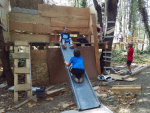
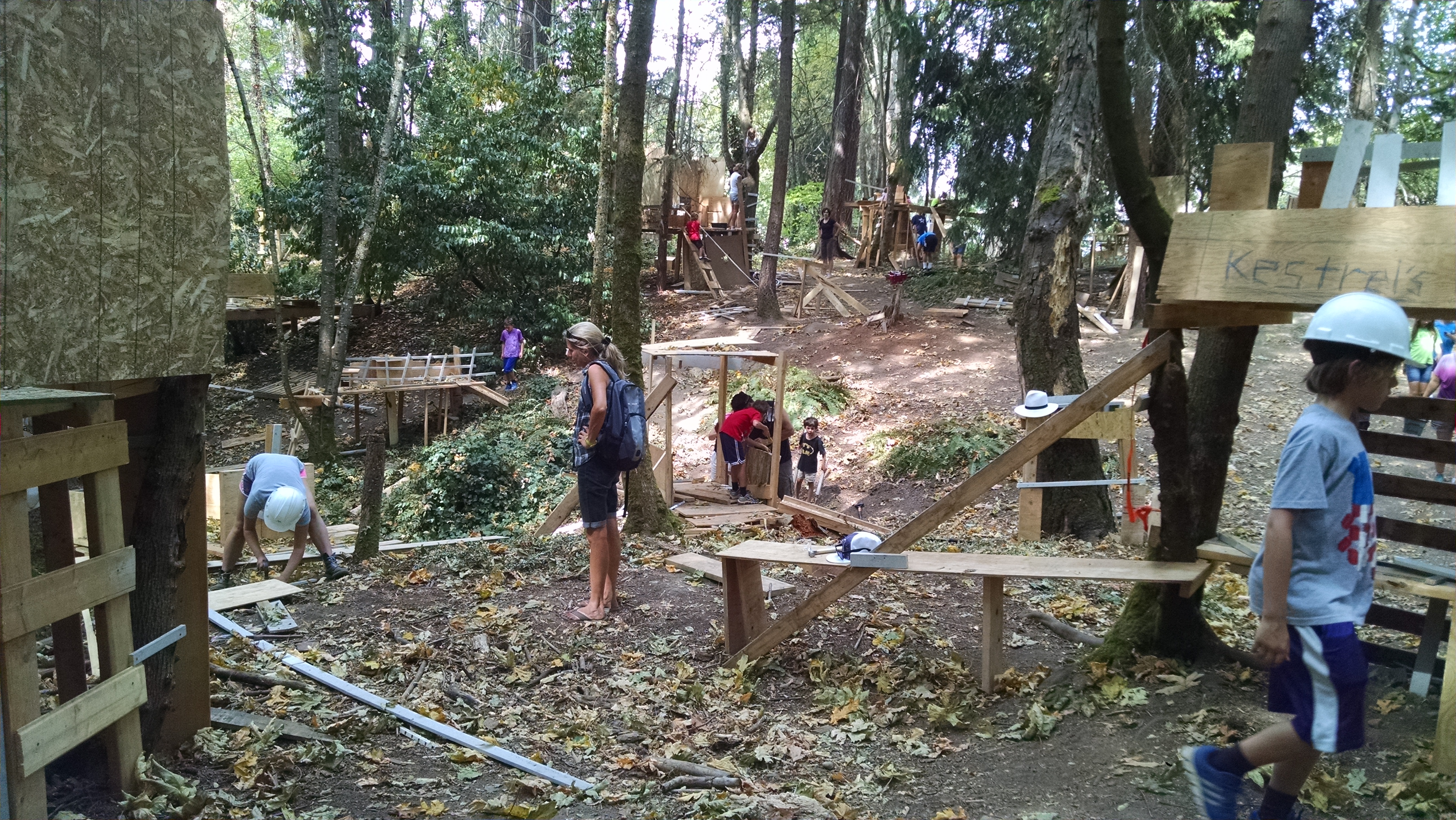
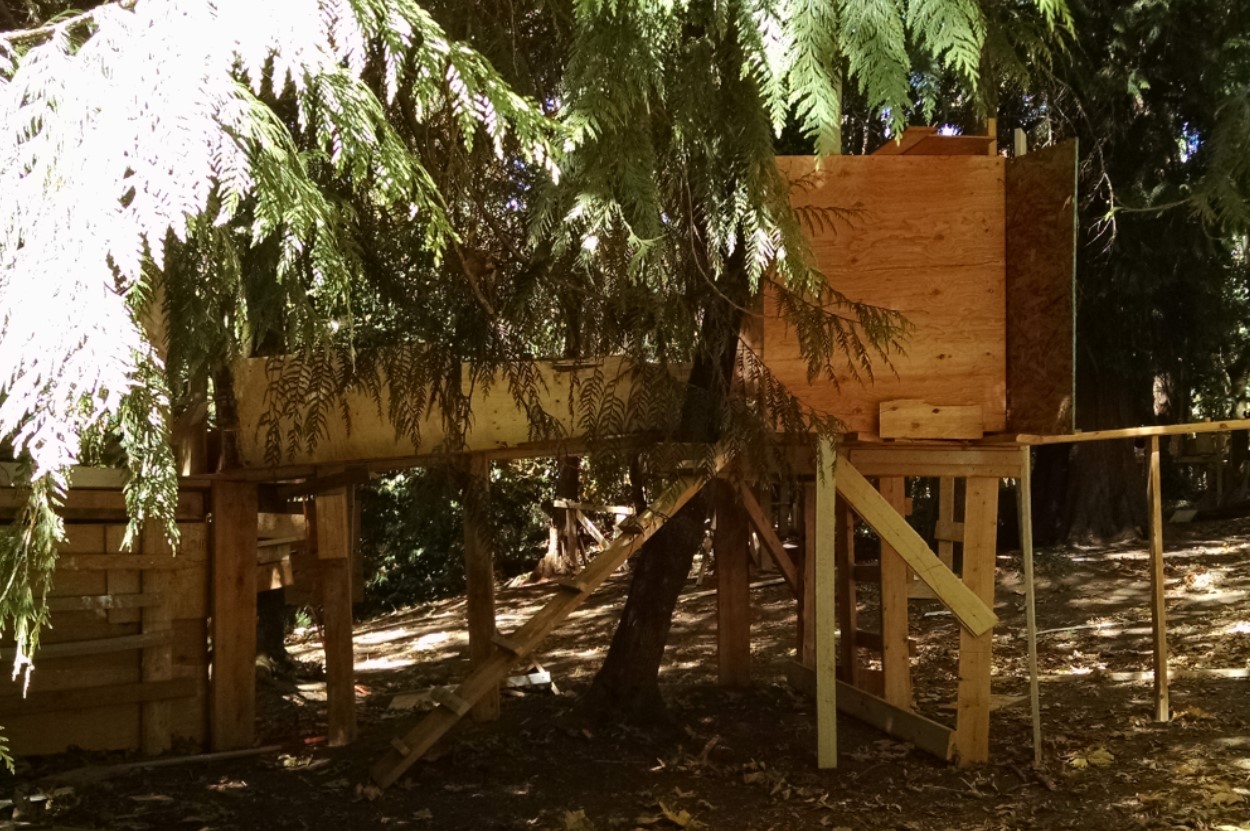
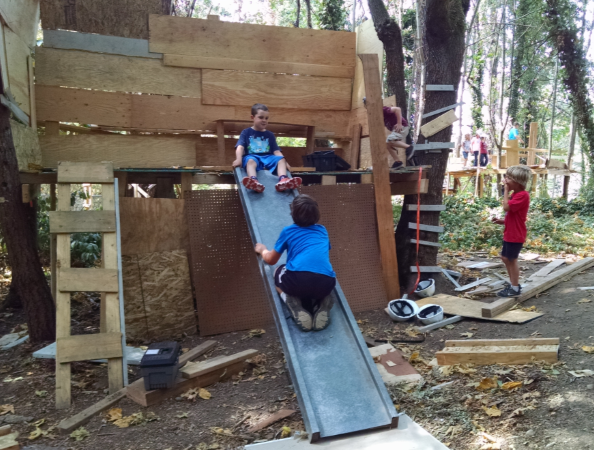
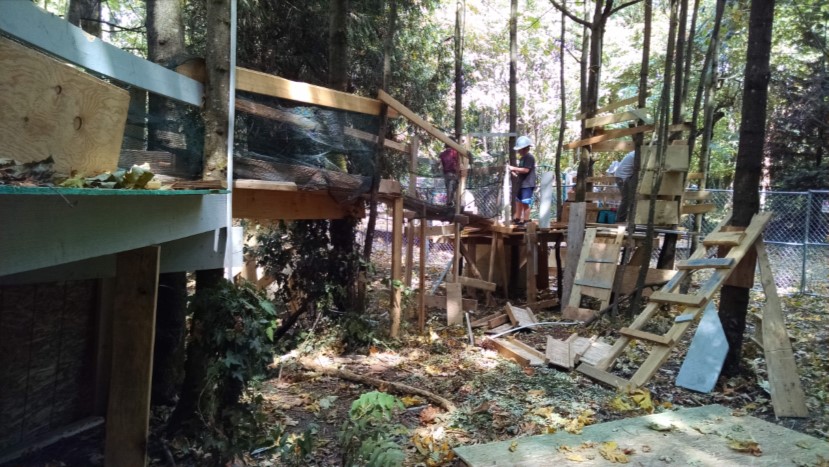
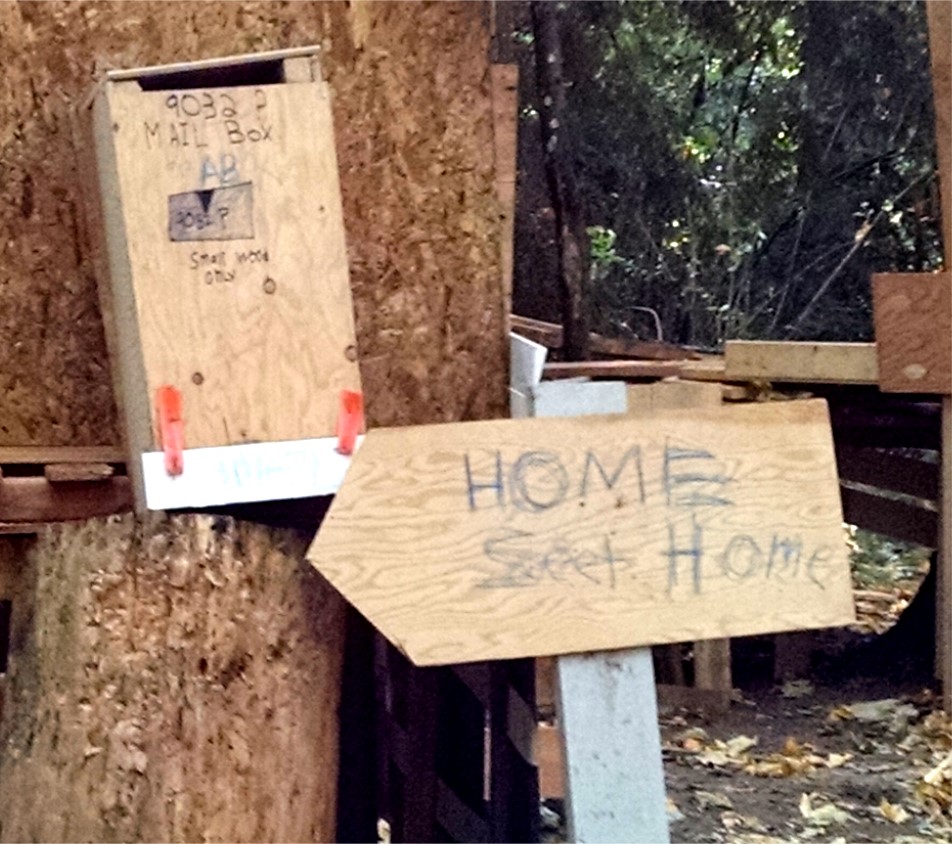
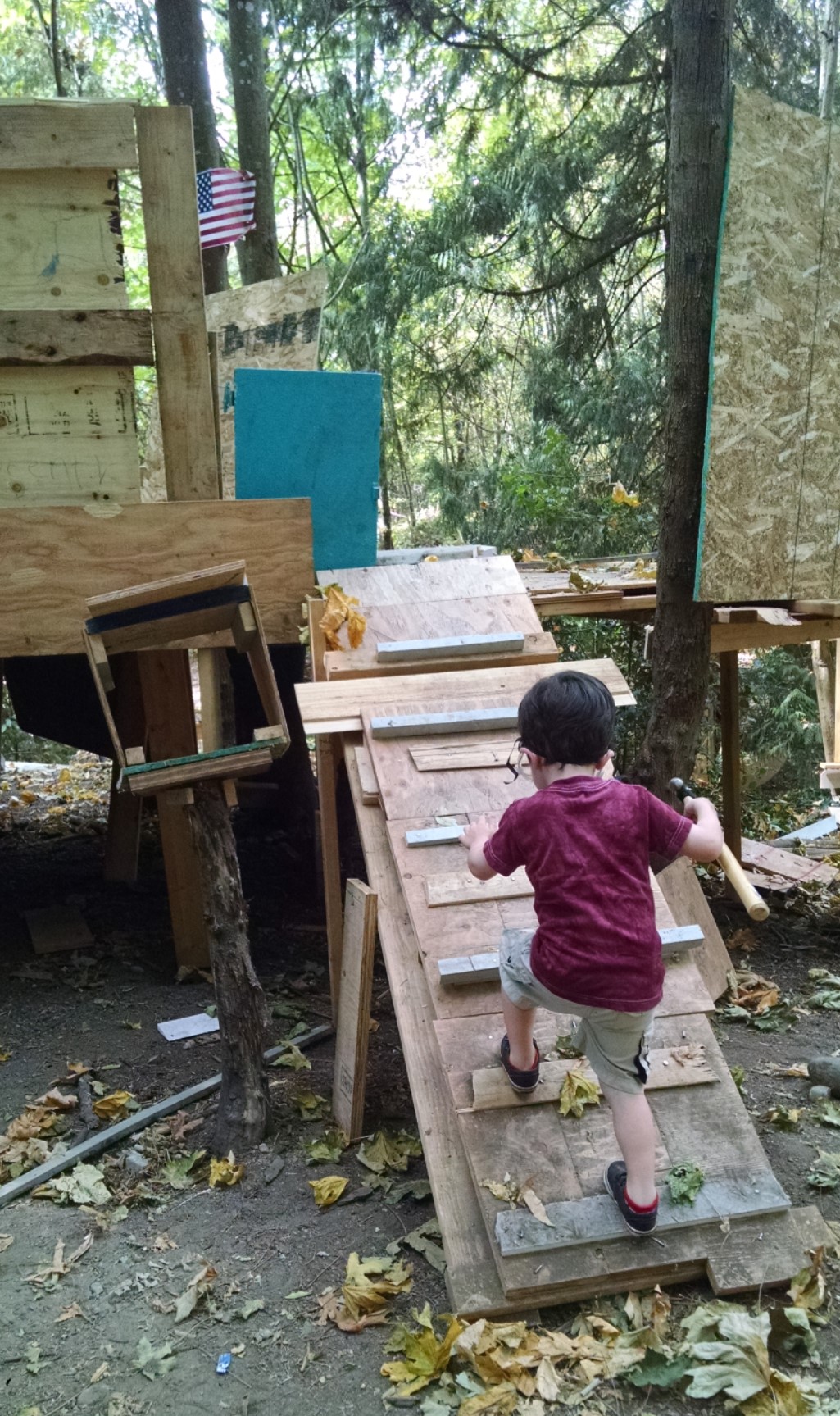
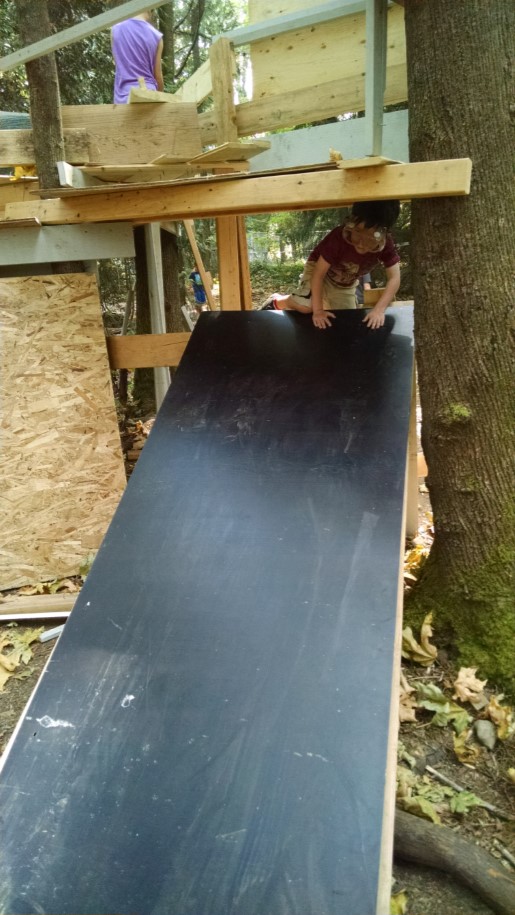
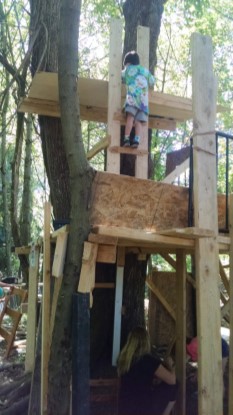
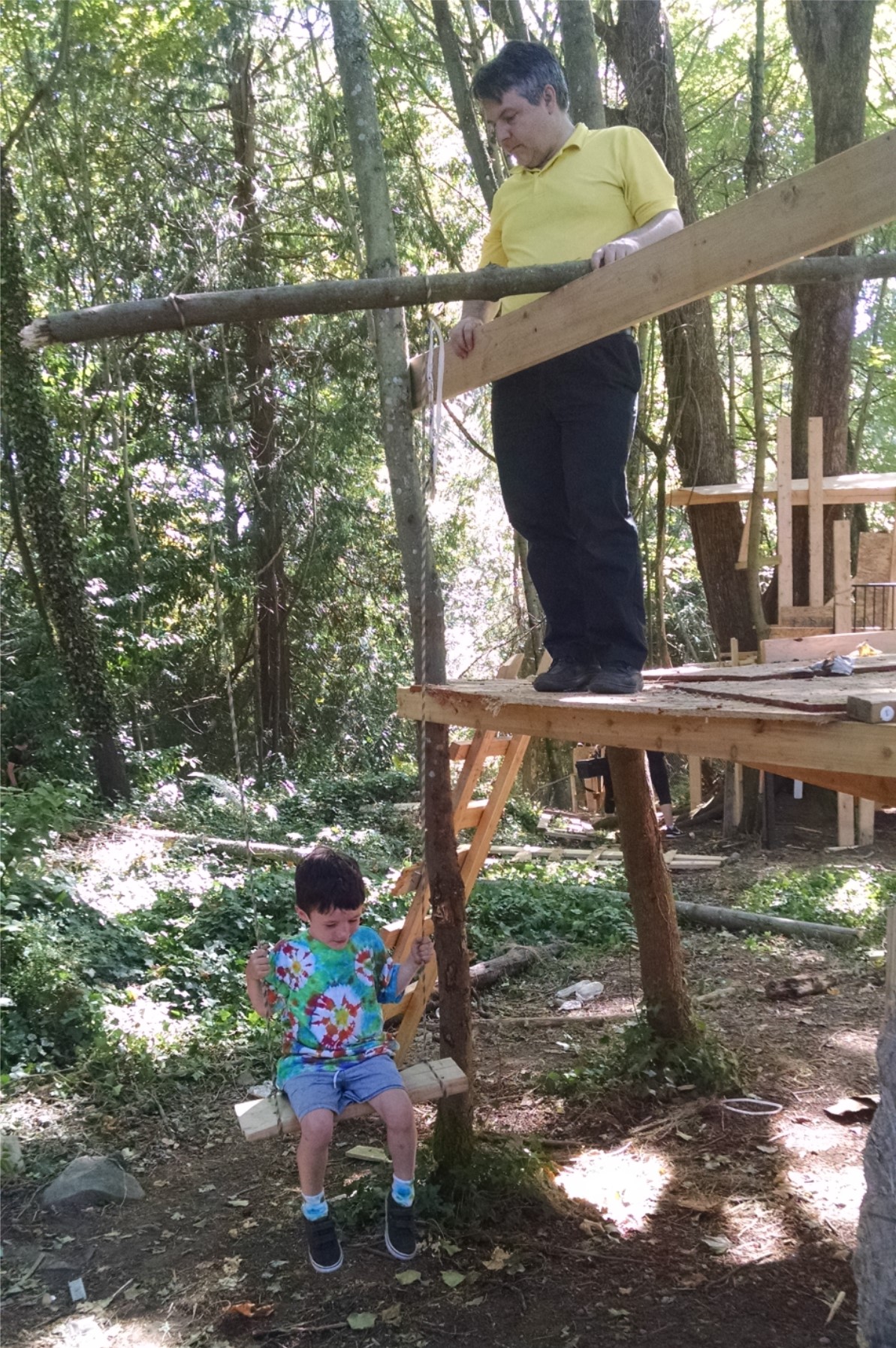
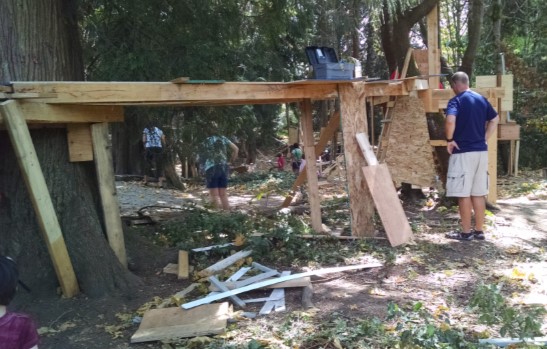
This is a land where children build their own playground! They build tree forts, add makeshift slides and swings, and add in fun imaginative details like mailboxes and chairs. When they tire of building, they explore other structures, climbing up high on rickety bridges, ducking low into hideouts, and clambering across the hillside. It’s very fun!!!

There are lots of things I LOVE about the Adventure Playground, which I’ll share below. But, there are some definite safety risks there, and it’s not for a parent who is faint of heart. And it’s NOT appropriate for kids under 4. Be sure to read the cautions below.

When to Go

This Tuesday and Wednesday (Aug 30 & 31), they’re open 1 – 4 pm. Then they’re open on Sundays 9/11, 9/18, and 9/25 from 1 – 4 pm. Admission is free, but please donate! (JayMarc Homes is sponsoring the playground this year, but support from participants is important to showing Mercer Island parks that we appreciate this opportunity!) It can be closed for inclement weather.

What to Expect

It’s ESSENTIAL to wear good, solid, closed toe shoes with sturdy soles!! There are nails and other hazards everywhere you step. It would be best to wear long pants, probably – we were there on a high 80’s day but it’s very wooded, so it doesn’t get very hot. Bringing a water bottle would also be a good idea and many parents bring snacks.

When you arrive, the parent must sign a waiver. You’re given a copy of the rules: basically keep track of your tools, respect others, do not take down existing structures, be safe, and report injuries or emergencies. Kids 12 and under must be accompanied by an adult.

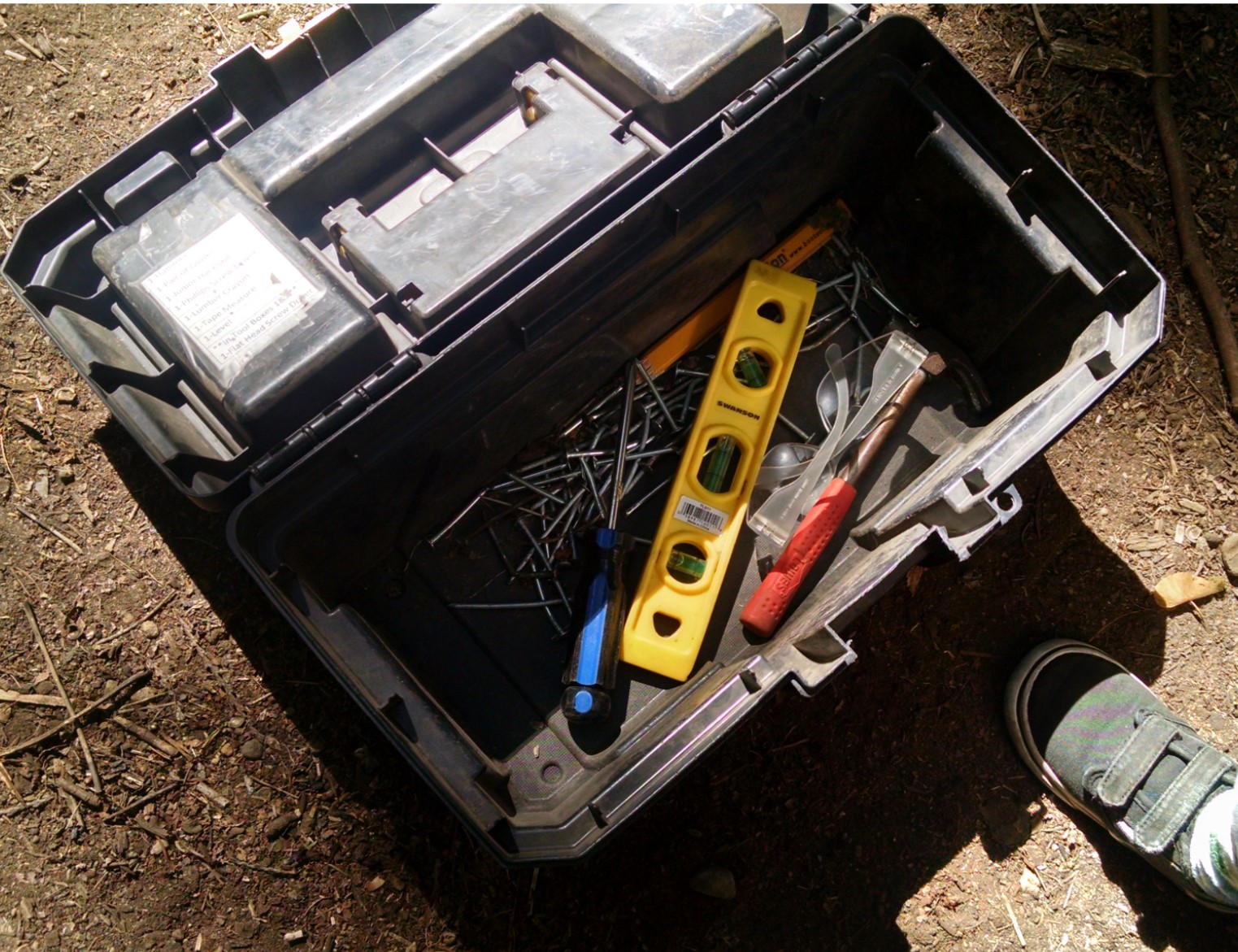
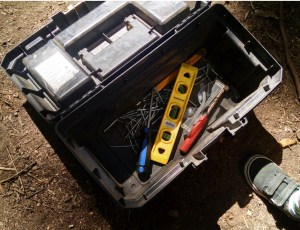
Then they check out a toolbox to your child. It contains items like a kid size hammer, a screwdriver, a level, safety glasses, nails, screws, a big pencil. and a measuring tape. Some might have a saw. You can also pick up a construction helmet. Wood scraps are scattered everywhere on the ground – you scavenge around for what you need. Occasionally there are specialty items: deck railings, bed frames, playground slides. When I went in 2015, I wished there were rope, because it really increases the building possibilities.  In 2016, we found some ropes we were able to use to make a swing.

In the future, I plan to bring an adult size hammer – sometimes we needed more leverage to pound or pull a nail than you can get with a kid size hammer. We could have also used a pocket knife to cut a rope with.
ToolBox

What you’ll Find

The playground opened July 5th, so at this point in the season, you’ll find lots of established structures that have been built by the kids who came before you. The photos below are from 2015 and 2016. Click on any photo for a larger view.

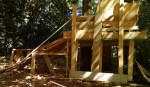
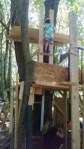
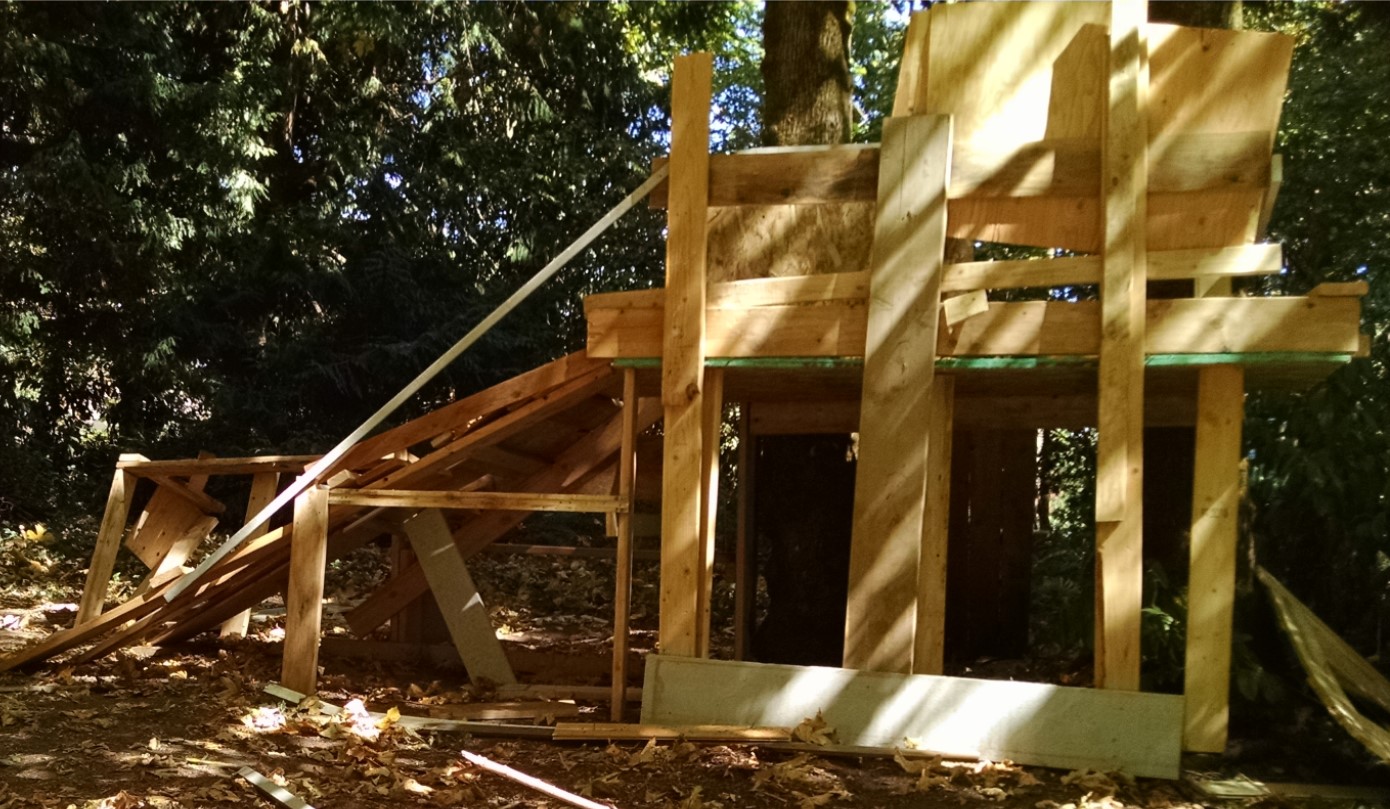
Some of the existing structures are quite impressive: solid, stable, serious pieces of construction:
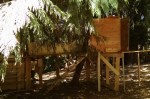
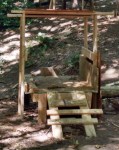
stable1 stable2 stable3

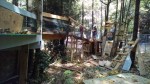
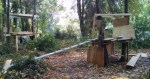
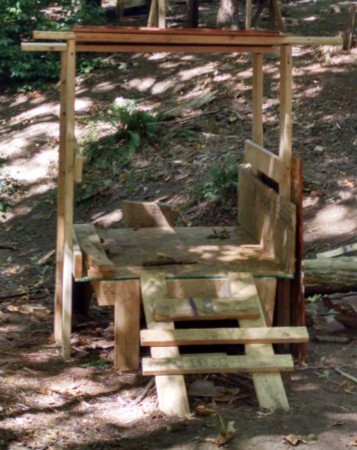
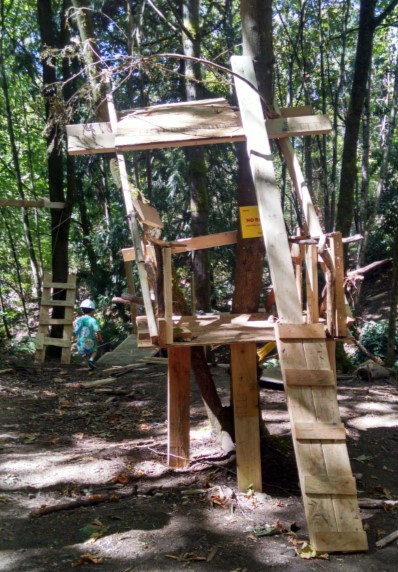
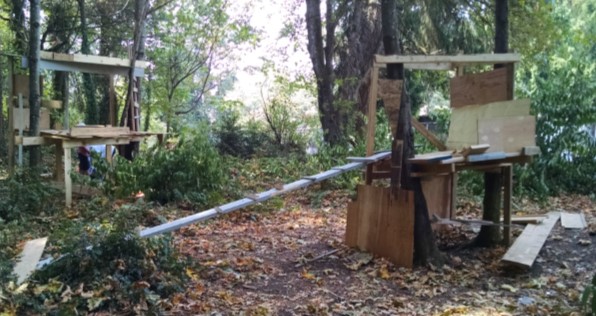
Some are a little more rickety and haphazard.
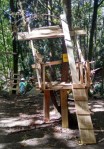
rickety4 rickety3 rickety2 rickety1

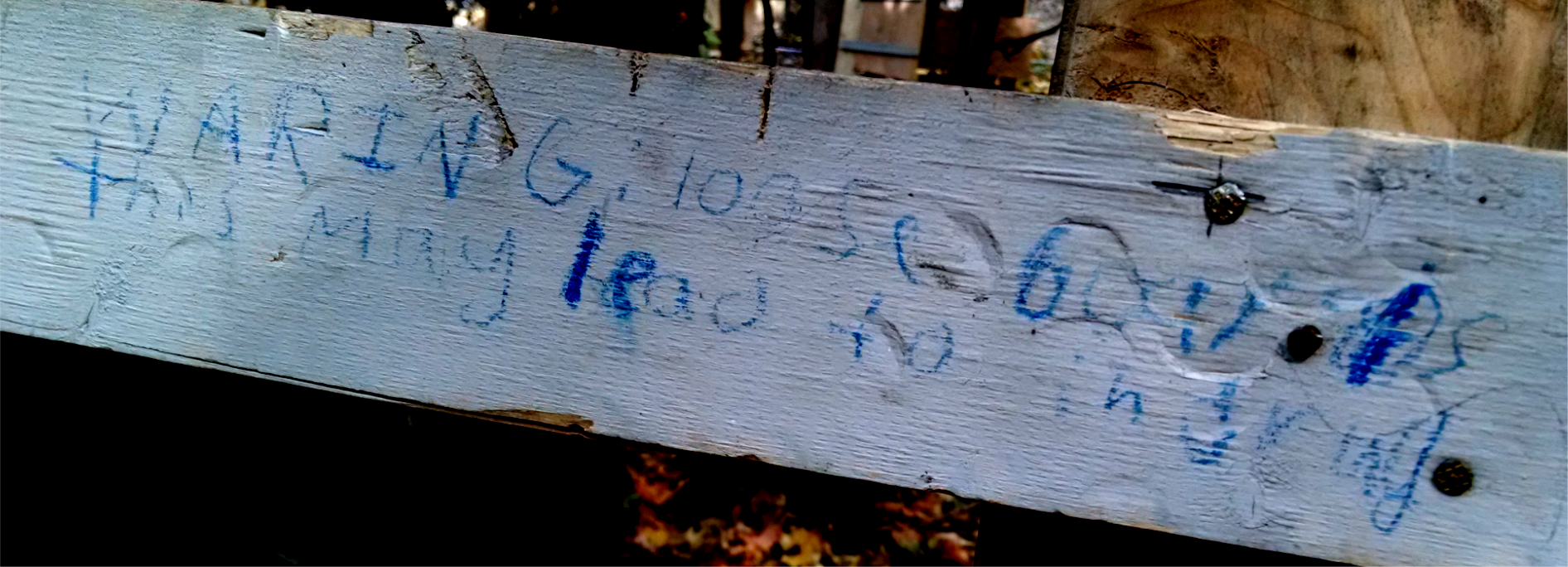
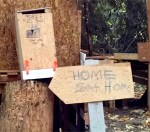
Some kids have added warning signs, some label their creations, and some create whimsical details:
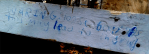
sign2 sign1

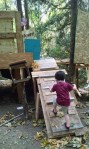
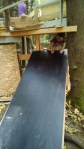
My son loves running around and exploring what’s there – just like any playground he goes to, the first things he wants to do are: climb ladders, run up ramps, slide down slides, get as high up as he can, and swing on the swing. He was having a fabulous time just playing and exploring till we got to the swing… The existing swing he found was really a disappointment – it didn’t hang straight, and didn’t swing well. So, it was time to start building! We worked together to build a swing. (See a video of the swing here.)
ramp slide high swing installation

The Inspiration

The playground is inspired by free play advocates, and advocates for the benefits of risk-taking for kids and the benefits of allowing kids to tinker and build real things with their hands and real tools. There are several adventure playgrounds in England and Europe and the trend is moving to America. Learn more about the movement here:

What Kids Learn

There is so much to be learned in this environment!!

  • Creativity. As a child plays and explores what is already there, they learn about the range of possibilities, and start creating their own vision of what they would like to see in this world, and then set about making that vision a reality.
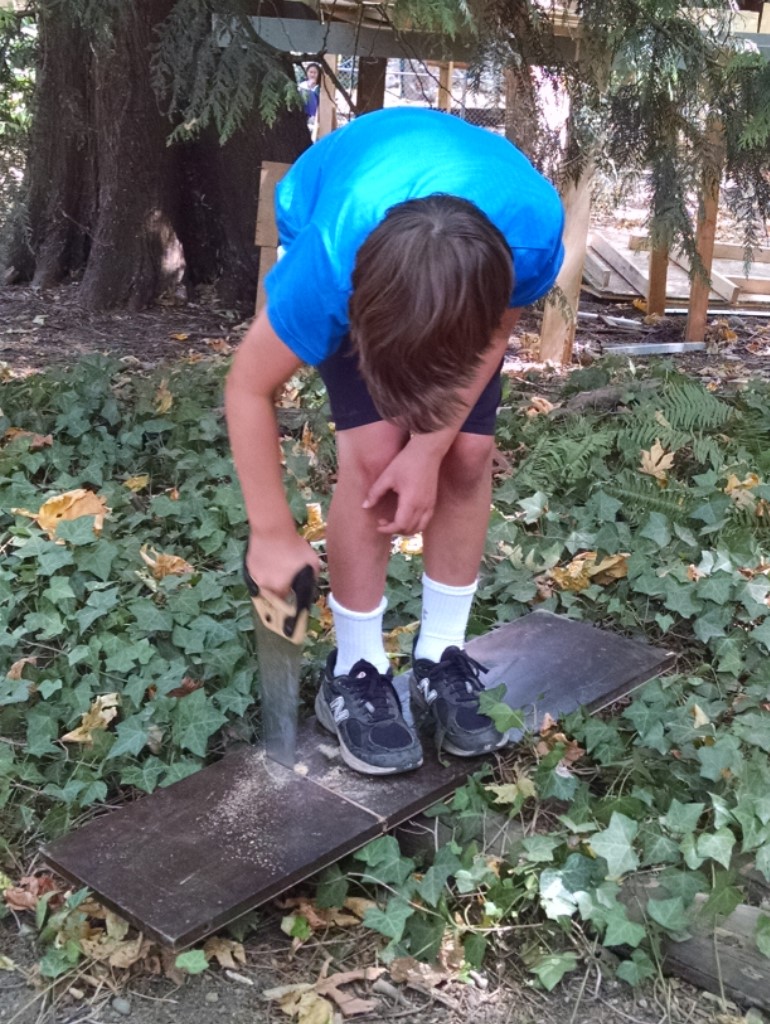
  • Construction skills. Kids learn about hammers, nails, saws. They learn about measuring, rope tying, adding in shims to stabilize something. So many skills that they discover the need for in the moment of building.
  • Safety assessment. They learn to test their work to see if it’s stable and safe, and re-build as needed.
  • Failure and trying again in a new way. Not everything they attempt works! I was watching a mom and daughter try to fit a bed railing in between two existing uprights. It kept tipping backwards, so they added support boards behind it. But then it was tipping forwards, so they added more boards, and it still tipped, so they had to figure out how to build a better stabilizer to hold it in place.
  • Teamwork. When installing an 8 foot long plank on a 4 foot tall platform, you need help. You can’t do it alone. So, you ask for help, you explain what you’re trying to do. You work together with someone. If they have different ideas, you might need to learn some conflict resolution skills.
  • Satisfaction in a job well done. The kids had just even more fun playing here than they would in any regular playground, but beyond that, they had a whole other layer of pride, sense of competence, and boosted confidence. They all left the playground bragging about what they had created together.

Read more about what kids learn here, where I share more photos, and stories from our trip.

Safety Issues

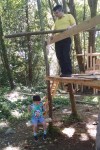
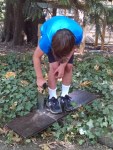
There are definite safety issues. Many of the ramps are shaky, there are lots of high platforms without rails, and narrow wobbly bridges several feet in the air. There’s lots of potential for falls. Also, the kids are working with hammers, nails, and saws. Some have clearly gotten safety coaching. Others have clearly not.
sawing

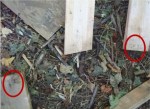
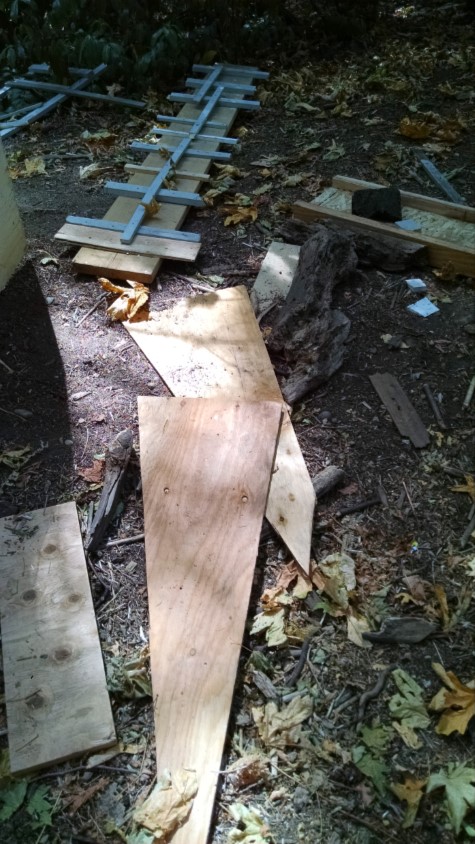
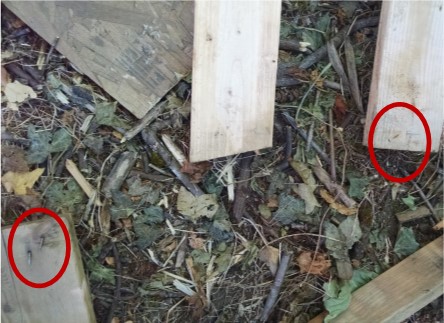
When I was there in 2015, if my memory is correct, most of the wood was stacked up in a wood pile near the front gate. This year, the wood was randomly scattered EVERYWHERE across the site. This made it much easier to build… when you had an inspiration, you just searched the ground nearby and you’d find a board you needed, or a branch or a rope. But this means you better pay close attention when you walk! And if you fell, you’d be as likely to land on a board as on the soft ground of the woods. And most boards on the ground have nails sticking up out of them. (Remember those sturdy shoes!)
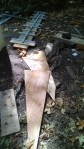
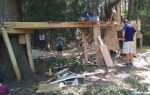
boards2 boards1 nails2

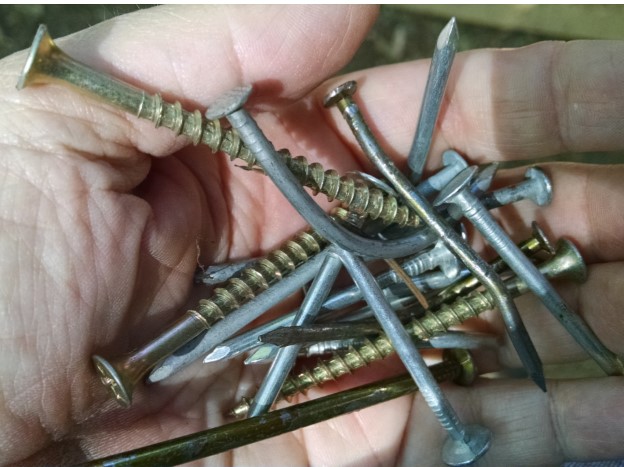
There were also LOTS of loose nails on the ground. This is what I picked up just from under the platform where we built our handrail and swing.
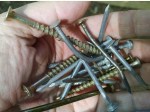
nails

Another issue is that there’s LOTS of places where kids pounded a 3 – 4 inch nail through a 1 – 2 inch thick board, and that means there’s a section of nail sticking out on the other side… so watch out for protruding nails on the backs of ladders and on the bottoms of platforms.
I believe kids can stay safe there, but only if you emphasize to your child the importance of caution. An article in Seattle’s Child says that there have been few injuries, and most of those have been adults, because the kids are being more cautious.

I certainly taught my child how to be careful there!  I let him explore, but I made sure he knew to watch the ground when he walked (no running), test to be sure something is stable before going on it, check to be sure there’s no nails poking out before you put your hand there, and so on.

I LOVE the free play aspect of this playground, but I also think that with great freedom should come great responsibility. I wish that all parents would give their kids some basic education on the way in, not just about how to move safely through the playground and how to use tools safely, but how to be responsible for keeping it safe for others. I wish they were taught to be sure their structures were as stable as possible before walking away and leaving them for other kids to play on. I wish kids were encouraged to stack all their scrap wood in tidy piles, near worksites, but not directly in the range or where someone could fall. I wish they were encouraged to pick up any nails they drop, and to also scan their worksite for any hazards before leaving for the day. I wish that when kids or parents noticed nails sticking out on the back of a handrail, they take out their hammer and quickly pound it down to keep others safe.

I’m definitely a product of a girl scout / boy scout childhood, and have firmly engrained the idea of “leave the site cleaner than you found it.” I feel the users of the playground could use that message, though maybe here it’s “leave the playground safer than you found it.”

Age Guidelines

I personally would not take any child under the age of four here. I think it would be hard to keep them safe. If you have a little one, it’s much better to stick to the traditional safety-tested playground and Deane park has four fabulous play areas not counting the adventure playground! (Read my full review here.)

I took my son last year when he was four. (And I should note, we spend LOTS of time at playgrounds and hiking outdoors and climbing rocks and climbing trees, so he has a lot of physical skills and learned caution from those environments.) I kept a very close eye on him the whole time as he played, and actively educated him about how to stay safe and we didn’t attempt to build anything because I didn’t want to get distracted. We did carry a hammer around with us, and did pound in some loose nails we found.

This year, he’s five, and my husband came too, so we had two sets of eyes to make sure he was safe. So, this year we were able to balance building and supervising him. But I didn’t really have any “sit down and relax” time.

We observed other parents and grandparents with a range of ages, and definitely the 6 – 9 year olds had an adult working closely with them. For the 10-12 year olds, a few parents would sit on a log and read while keeping a vague eye on the kids and calling out suggestions. There weren’t any kids there alone that I noticed, but 12 and ups are allowed to be there without an adult.

If you’d like a building adventure, check it out soon! They’ll dismantle this year’s constructions on September 25th.