Category Archives: Early Learning

Help Your Child Succeed in School

“According to research, the most accurate predictor of a student’s achievement in school is not income or social status, but the extent to which that student’s family is able to:

  1. create a home environment that encourages learning,
  2. communicate high, yet reasonable, expectations for their children’s achievement and future careers,
  3. become involved in their children’s education at school and in the community.” (source)

Create a Home Environment that Encourages Learning

Teach a love for reading. Reading is key to all academic learning. Read to your child often; choose fun books that give you joy when you read them. Take frequent trips to the library – make getting new books a special event in your week. Go to story times at the library or the bookstore. Read a lot yourself so your child sees the lifelong benefits. Tell them about your favorite stories. When they ask questions, don’t always just answer off the top of your head – be sure to sometimes model how to look it up!

Play games and do puzzles together. These things teach that challenging yourself to think hard is fun. Kids also learn strategy, how to follow rules, problem-solving, how to develop mnemonics to remember things, how to be a good winner and a good loser and many games teach math skills. Many logic games, word and math puzzles are also good preparation for future test-taking skills.

Make things together. Making things from kits or following recipes will teach your child how to follow directions precisely and the importance of doing things in the right order. But also have times for free play with legos and such, experimentation in the kitchen, and making “inventions” from cardboard, straw, and tape. This teaches flexible thinking and innovation. It also teaches that things may not go right the first time, and we have to start again, tweak, refine, and keep trying till it works right.

Discipline – teach rules & manners. To succeed in school, kids need to understand that there are rules, and that when they follow the rules, we get to enjoy being together, and when they break the rules, they get negative consequences. They need to know how to pay attention, how to listen, how to take turns. Give your child chores so they learn how to be responsible. Show them how to break a big job into manageable steps.

Manage screen time. Limit total screen time (videos + video games + apps). The AAP recommends limiting to 1 hour per day for age 2 – 5, and less than 2 hours for school age kids. Monitor what content they’re being exposed to. (Common Sense Media provides good guidance on appropriate content.) Make sure media use doesn’t block kids from getting physical exercise, interactive play time, and adequate sleep. Designate media free times for the whole family and media-free locations in the home.

Promote social-emotional skills. Getting along with peers and teachers helps the child feel a part of the school community, and thus more engaged. Thus, friendship skills are essential, as is emotional literacy. Kids need to be able to resolve conflicts, ignore disruptive behavior from classmates, handle their frustrations effectively and reach out for help when needed.

Create an organized family life. Following family routines at home – like hanging your coat up when   you get home, tidying up your toys, and taking your dishes to the kitchen – help a child learn and follow similar rules at school. If children get plenty of sleep, they will be alert and ready to learn all day. School age children generally need 10 – 11 hours at night. Healthy breakfast foods that are rich in whole grains, fiber and protein and low in sugar get the day off to a good start. Having all the school supplies (backpack, homework, lunchbox) gathered in the evening helps mornings go more smoothly.

Also, be sure your child has the self care skills to be independent at school. For example, a kindergartener should be able to put on their own boots and coat, zip their coat, toilet independently, keep their things organized in a cubby, and open their own food packages at lunch.

Create a space for homework. From toddlerhood onward, you can have a special place in the house where you do quiet work such as art. If your child views this as a happy place they can settle in and focus, that will easily transition to a homework space. When your child is doing homework, you can support them by helping them get organized, making sure they have the necessary materials, asking about daily assignments, helping interpret instructions, and praising your child’s efforts.

Communicate high, yet reasonable, expectations

Talk about the value of education. The more you value education and learning, the more they will. Talk about how your education has helped you succeed. If your lack of education has blocked you from your goals, share that, and tell them what you’re doing now to overcome that. Talk about the important work you see being done around you and about how good it is that people are educated to do that work.

Model a work ethic. If your child sees that you work hard, do your best, challenge yourself to continue to learn more and do better, and are responsible and reliable, it motivates them to be/do the same.

Take school attendance seriously. Making sure they get to school on time, and attend every day, shows them how important school is. If you take them out of school for vacations, that de-values education.

Challenge them, but don’t overwhelm them. Whether you’re choosing puzzles for them to try, or choosing board games, or books, or giving them extra academic challenges, be aware that there is a “sweet spot” for learning. You want things to be easy enough that they are capable of doing them with work, but not so easy that they don’t even have to think to complete them. They want to be challenging enough that your child has to stretch, but not so challenging that they always fail. You’re trying to teach the self-confidence that comes with knowing that if you work hard, you will be successful.

Praise and give constructive feedback. Don’t give a lot of empty praise for the stuff that’s easy for them to do, but DO give lots of praise for the places where they had to work hard. Praise that effort, don’t imply that it’s just god-given talent that helped them do well. The more specific your praise the better, and it’s fine to give suggestions for how to improve (without criticizing their current work). “You’ve been working really hard at coloring inside the lines and look how nicely you’ve done it here! I have a tip for a way to make it easier – would you like me to show you?”

Play games – don’t “let them win”. Many parents find that if they beat their child at a board game, their child has a meltdown. So, they either don’t play games, or they let their child win all the time. (Which may be fun for the child for a while, but teaches them nothing, and gets boring over time.) Instead, choose developmentally appropriate games where your child has a chance at beating you if they pay attention and think hard. They’ll still be disappointed when they lose, but triumphant when they win!

School/Family partnership

Research shows that when parents are involved, students have higher grades, higher test scores, better attendance, better homework completion, higher graduation rates, and fewer behavioral issues.

Meet the teacher and stay visible to them: Drop off or pick up your child at the classroom when you can, come to school events, respond to teacher emails when asked to. If you’re asked to send in something specific for a class project, be sure to do so. This lets the teacher know that you care.

Attend parent-teacher conferences / back to school nights: Come prepared with questions like: What are my child’s strengths? Where are they struggling and how can I help? Does my child have any special needs and what programs are available to support them? What can we do at home to support learning? Ask for additional meetings if needed, but don’t over-burden the busy teacher with too many requests.

Support the teacher and the school: If possible, there’s nothing more powerful than volunteering in your child’s classroom! It builds your connection with the teacher, their feeling supported by you makes them more supportive of your child, you get the chance to see your child’s classroom in action, which helps you better communicate to your child about school, and your child sees how much you value their school experience. If you can’t volunteer on a regular basis, at least try to get in there a few times during the year. Lots of parents will volunteer for the special events, like the Halloween and Valentines Day parties. Consider helping out with some of the less glamourous or more everyday tasks. If you can’t make it in on a schedule, but could so some things at home, then ask the teacher what tasks you can take off of their plate: could you make play-dough, prep materials for a special project, label books, re-do the bulletin boards, or other things to free her time up to focus on the kids and prepping for class?

You can also support the school through participating in the PTA, donating to special requests, being friendly to and supportive of all the staff members, helping out in the library, and so on.

Speak positively about the school: Don’t bad-mouth the teacher or criticize the school in front of your child. If you have concerns, do address them, but in the meantime, display a positive attitude to your child.

Attend school events: Going to concerts, school plays, science fairs and more reinforces the home to school connection.

Learn the names of your child’s classmates: Use class pictures, class lists, or take notes in the classroom to learn the names of all the kids – you can help your child learn the names (which helps them build friendships) and it also helps you communicate with your child about the social life of the school. Make connections to other parents, and set up playdates outside of school.

Know about your child’s day: If you have a sense of their schedule, the routines, who their friends are, favorite subjects and so on, it helps you ask them specific questions about their day. Instead of the generic “how was school”, if you say “you had a math test today, how did that go?” or “you have music tomorrow – I know you love that” helps show your child that they, and their life, are important to you.

Learn what they’re learning: Read the materials that the school sends home that talk about curriculum. Also review Common Core Learning Standards: www.k12.wa.us/resources/YourChildsProgress.aspx

Reviewing Report Cards: Read and reflect on the grades when your child is not there. Then show to your child, focus first on an area of strength: “You did great in ____! You must be proud of all your hard work.” Then talk about where a grade is lower: “tell me how things are going with _____.” Start a safe open dialog about what the challenges are and work together to develop a strategy for improvement. Last, let your child know that they’re special, and there’s more to who they are than just a report card.

Strike a Balance – Avoid All Work and No Play

Some parents are, perhaps, overly focused on school success. They fill their child’s outside-of-school time with more academics: tutoring, math club, and workbooks at home. Remember that childhood is about more than just learning academic skills: children are still learning big motor skills (how to run, jump, throw), and small motor skills (not just writing and drawing, but using tools and manipulating materials) and the social skills and emotional regulation that come from free, unstructured play with other kids. Make sure they don’t miss out on those!

We know from neuroscience that kids need down time to relax, process, and let their brain cement all the connections they’ve been developing. Another thing we know from brain science is that children learn best when they feel safe and happy. Reducing stress and increasing calm and confidence increases their neuroplasticity which allows their brain to absorb all this new information. So, give them time to relax, to play, and to enjoy childhood!

Learn more:

Click on any of the highlighted links above! Or check out:

I have two free printable handouts on this topic… for parents of children age 3 – 6, Help Your Child Succeed in School, and for parents of toddlers, Lay Foundations for Future School Success.

Making Music: How it Benefits Early Learning

When parents attend our parent-child classes with their children, they may think of the songs we sing at circle time as one of the fun and enjoyable parts of class, but they may not realize just how much important learning is going on. When children actively participate in making music (whether that’s a baby bouncing to rhythm, a toddler shaking their bells, a preschooler singing along, or an elementary age child playing an instrument), here’s how they benefit:

Music Skills: Of course, they begin learning musical skills, such as rhythm, varying tempo and pitch, and how to echo back what they hear. They learn to use their singing voice and play instruments.

Auditory Processing: They learn how to listen. Children who have music lessons respond to sounds more quickly, distinguish between sounds, and pay attention to sounds, all of which aids in learning.

Language: When listening to and singing songs, there’s lots of language learning. They learn to hear the rhythm of language, the break between syllables and words, hear and predict rhymes, work on pronunciation, and get exposed to a wide ranging vocabulary – from the water spout the spider climbs up to the pockets full of posey and the fleece on Mary’s lamb. Singing the alphabet song and singing about 5 little ducks who went out one day teach letter and number sequences.

Vestibular Development: With babies and toddlers, when we hold them in our arms while we dance, or hold them in our laps for lap songs, like the Grand Old Duke of York, all that bouncing up and down, swaying side to side, and even flipping upside down helps to develop their vestibular system – the system that helps them to balance and know their position.

Large Motor: When kids dance, clap, swing their arms, roll arms to Wheels on the Bus, shake the shaker or bang the drum, they’re learning large motor movements – new ways of using their bodies.

Small motor: As children learn to use more sophisticated instruments, starting with triangles and rhythm sticks, moving up to keyboards, and then stringed instruments or wind instruments, they develop precise fine motor skills. They can then apply these in lots of other areas of life.

Steady Beat: By the age of 3 or 4, children should know how to keep a beat, but most do not. Steady beat helps with a huge array of physical tasks which are easier and/or more effective with rhythm: walking, dancing, dribbling a ball, rowing a boat, typing on a keyboard, cutting vegetables, jumping rope, cutting with scissors and much more. Also, research shows kids with the ability to keep a steady beat pay attention for longer periods and do better in school.

Keeping Time / Math: Music enhances brain development in areas tied to counting, organization, time, and division of larger notes into smaller notes (i.e. fractions).

Impulse Control: When we take our shakers and we “shake and we shake and we shake and we stop”, kids are learning impulse control and following directions. How do we stop doing something when told to stop, and how do we wait till we’re told it’s time to start again? These are key skills for success at school and life.

Predicting what comes next / pattern recognition: When you sing the same song to your child over and over, they learn to expect what is coming next… “After mom says ‘with a one step, and a two step’ she’s gong to tickle me!” This helps them learn to understand cause / effect, and routines.

Emotional Intelligence: In Brain Rules for Babies, John Medina describes how when a child learns to recognize different musical tones, they also learn to recognize different emotional tones, and can tell more about how others feel. Young babies who were exposed to music classes had improved communication: more likely to point to objects, wave goodbye, smile, and show less distress.

Attachment: Music can foster emotional attachment. Even when babies are still in the womb, music can be a way to make a connection – they will respond to your voice. After birth, your family’s songs start becoming familiar and recognizable, and a part of their safe and secure environment.

Tradition: Music is a unique and powerful way for children to connect to their roots. An African-American spiritual, a Yiddish or Irish lullaby, a Mexican folk song… all introduce a child to the family’s heritage in a way that goes beyond words or pictures.

Routines / Transitions: Familiar songs create a sense of comfort for a child. No matter where you are, you always have access to this same familiar tune. Many parents and teachers learn the value of songs for reinforcing routines (“this is the song we always sing at bedtime”) and signaling that it’s time to transition from one activity to the next (the cleanup song!).

Memory: Research has shown that children who’ve taken music lessons have a better ability to repeat back and to remember what they hear or read. Teaching information in a song form also makes it easier for kids to remember – make up a little song to help them memorize your phone number!

Practice group skills: Sitting at circle time, listening to the teacher, participating when asked, figuring out when they’re supposed to just sit quietly (and learning how to just sit quietly!), starting an activity when all the other children do and stopping when they do are all important steps in school readiness.

IQ and academic success: Research has shown that children who participate in music lessons have higher IQ’s, do better in school, and score better on standardized tests. The more years of music lessons they take, the better they do.

Fun: One of the biggest reasons we have music in our classes is because it is fun! Making music with others gives us all joy. The smiles and giggles in music time delight parents, children, and teachers.

Resources I’ve compiled

Other Resources

  • King County library – videos of librarians singing 100’s of classic children’s rhymes. http://kcls.org/content
  • Jbrary – a YouTube channel featuring children’s librarians singing songs, lap songs, and finger rhymes from library story times: www.youtube.com/user/Jbrary/videos.
  • Nancy Stewart – lyrics and .mp3 audio recordings of lots of traditional songs, including “songs every child should know” http://singwithourkids.com/song-library.htm. Recommended books which include songs, or have rhythmic text that can be sung, to reinforce early literacy skills: http://singwithourkids.com/bookshelf.htm.
  • Let’s Play Music – Over 150 songs, each with lyrics, sheet music, a video of the tune played on a xylophone and motions to go along with the song. www.letsplaykidsmusic.com
  • YouTube has a huge collection of animated videos featuring traditional and new children’s songs, in a wide range of languages. Quality ranges tremendously, and many are inappropriate for children; however, there are some great ones if you search and preview and make your own playlists.

If you would like a printable version of this information to hand out, here’s the Music Benefits PDF.

Computer Skills and Kindergarten Readiness

img_20170103_095724633

There’s lots of information about the benefits and risks of screen time (TV, computers, video games, etc.), lots of opinions on whether young children should or should not be exposed, and advice on making screen time work for your family. Some parents might choose to avoid screen time through their child’s preschool years, and some may not have access to technology at home.*

But, I think it’s important for parents and early childhood educators to know that basic computer skills and tablet skills are becoming a part of kindergarten readiness.

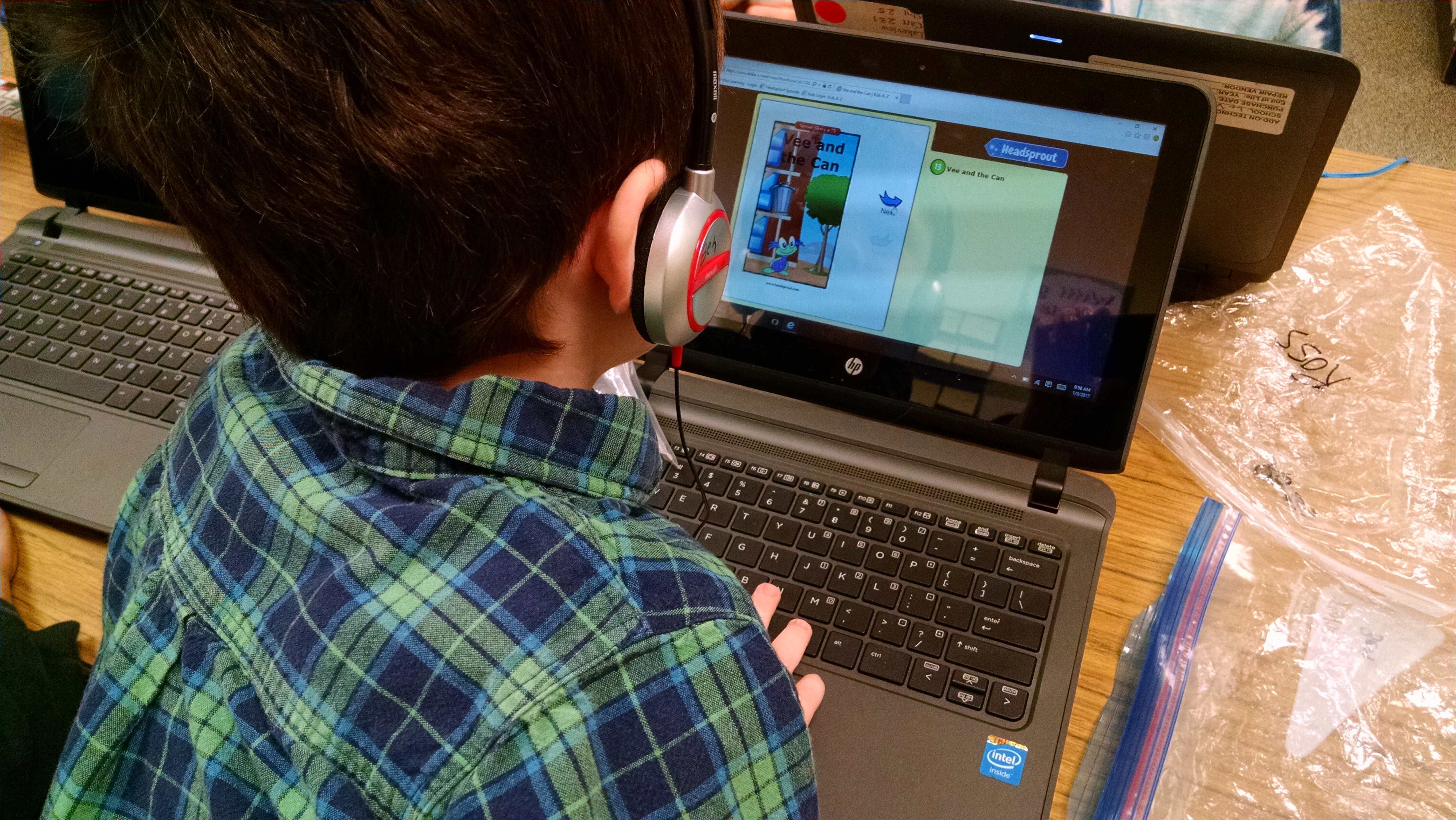
The picture above is from my son’s kindergarten classroom in the Lake Washington School District (eastside suburbs of Seattle). Every morning, during reading stations, one station is using computer-based reading programs, such as HeadSprout. They also use DreamBox for math skills. Computer-based programs are an engaging way to drill kids in some basic math and literacy skills. But only if the child knows how to use a computer.

Today I watched several kids using the software with no problem, easily navigating use of the touchpad mouse, and the touchscreen, and understanding concepts like minimizing and maximizing windows, using their fingers to magnify an image on the screen, and so on. And I watched one child who lacked any basic understanding of how any of that worked. He poked randomly at the screen, getting random results – sometimes it worked, sometimes it didn’t. No real learning was happening during the almost 20 minutes he spent trying to figure out how the computer works. The learning value lost in that 20 minutes only puts him farther behind his classmates.

So, I’m now adding to my list of skills for kindergarten readiness. I would recommend that all kids entering public kindergarten (at least in areas that have computers in the kindergarten classroom) have these basic skills:

  • know how to use both a mouse and a touchpad mouse – they know how to move the arrow around, understand the ideas of both clicking, and double-clicking
  • know how to use a touch screen – again, both how to move the arrow around and how to click; bonus points for understanding gestures like pinch to make an image smaller, swipe to advance to another screen, drag to move an item. (Look here and here for two guides to all the gestures that are typically used on touchscreens.)
  • have played with educational software / apps where they are given verbal instructions that they should follow

So, if you have access to this technology at home, consider adding in some computer skill learning for your child at least 3 – 6 months before they start kindergarten. If you want recommendations and reviews for kids’ games and apps, check out Common Sense Media.

If you don’t have access to this technology at home (In 2012, 72% had access to the internet at home. In 2016, 72% of Americans own a smartphone, which has likely increased the number of households with access to the internet), check whether it’s available at your local library or elsewhere in your community. Here in King County, all the libraries have public computers in their children’s areas that are loaded with lots of educational software, and will allow them to learn mouse skills and headphone use. (They do not have touch screens to my knowledge.)

I don’t think children need a lot of computer time – just enough to gain some basic skills and knowledge. The majority of a preschooler’s time should be spent engaged hands-on with their world, with time spent playing with open-ended toys, outdoor time, and free play time with peers.

Slowing Down to Toddler Speed

whiffle

Today at the end of year picnic for my toddler class, I had a chance to spend some lovely moments hanging out with some little ones (1.8 – 2.5 year olds) that I’ve known for five months now.

It’s such a delight to slow down to toddler speed and sit down and BE with children. I saw one crouched down on her knees and peering closely at something, so I sat next to her, and we watched one tiny little bug until it hopped away. Then we peered around till we found an itty bitty ant, and watched it, then another bug and another bug. We just watched. I talked a little, she didn’t talk at all, but we were clearly both engaged in the moment.

Another child had something clasped tightly in his hands. He’d occasionally open them a bit, peek in, and clasp them tight again. I asked him to show me what he had, and he let me take a quick peek at the pebbles he’d collected before holding them close again. But then he and I shared a secret, so from time to time, he’d bring them by to show to me, and he let me know when he’d decided to set them down.

Then I was at the sandbox. I found a star-shaped sand mold I started to fill with sand. Which of course caught one of the children’s attention, so he took the star out of my hand. There was no need to scold him for “taking something”. I just said “oh, that star is interesting. While you play with that, I’ll use this castle mold.” I packed it with sand. Then I caught his attention and flipped it upside down to make a sand castle. When I lifted off the mold, he was delighted by the sand castle. So delighted that he patted it gently till it was destroyed.  Then he wanted to make his own. But the part of my actions that had made an impression on him was not packing the castle mold with sand… he’d been ignoring that part. He remembered when the castle was already flipped onto the sand, and I was carefully lifting the mold up to revel the castle. So, he took the castle mold, set it on the sand, and lifted it up to reveal… nothing but the sand that was there before… and an outline of the castle mold. He tested it over and over again before giving it back to me to do the magic again. As I demonstrated it again, he still just didn’t get it… that will come in time. But in the moment, he just enjoyed the exploration.

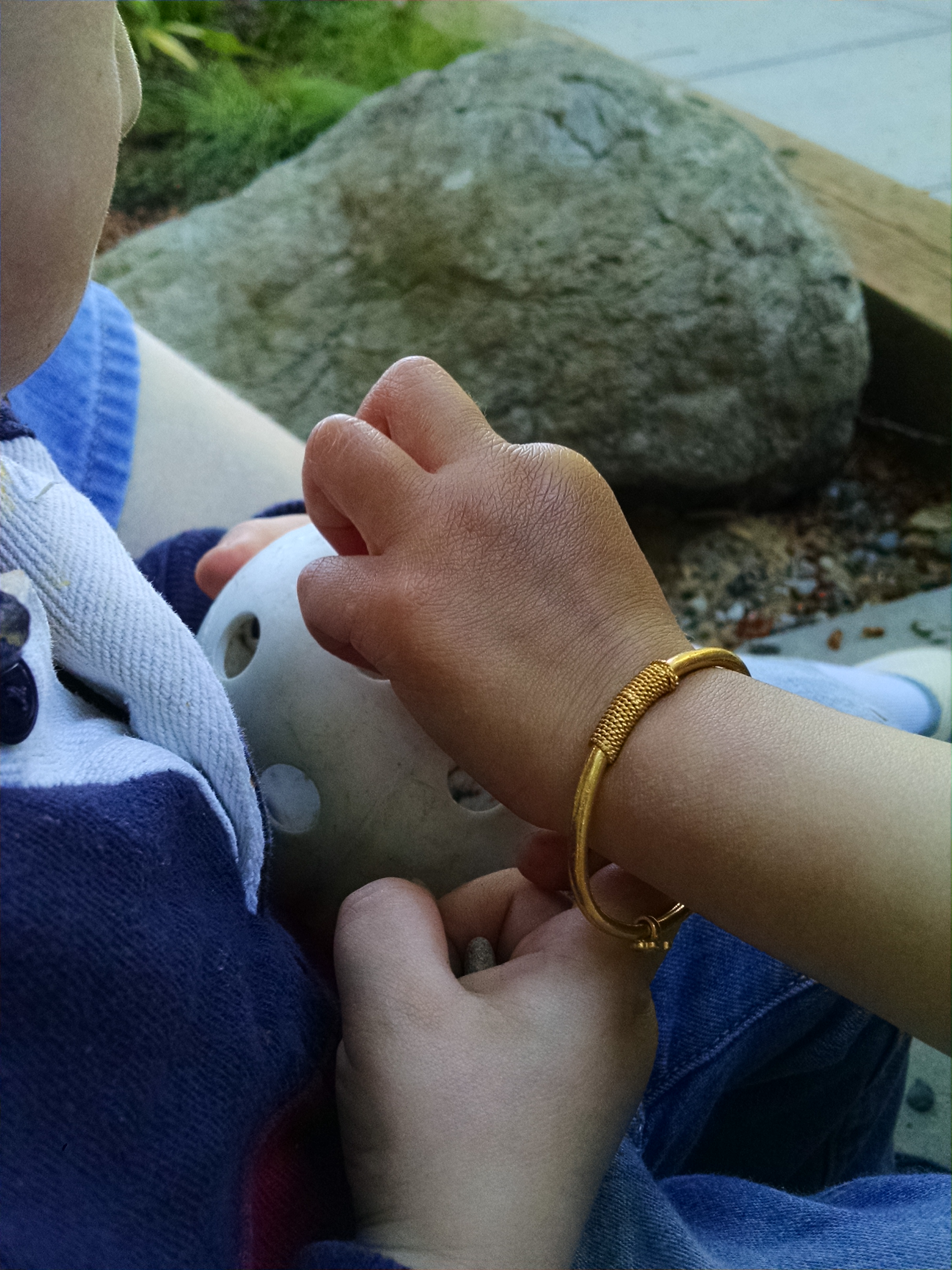
Then one child had a whiffle ball, and figured out he could put rocks in through the holes. A simple spontaneous shape sorter. Two other children started playing too, all working on putting rocks in through the holes. The inventor soon wandered away, but I sat with the other two for several minutes as we all put rocks in holes. Although 99% of the rocks around us were small enough to fit, one of the children had a magic talent for finding the rocks that were too big to fit. So I would offer smaller rocks in trade. Then we figured out that if you gently shook the ball, all the rocks would fall out. It was just a simple, quiet little game, as we all settled in and explored together. Simple but sweet.

Having all these quiet moments with children who used to be hesitant to interact with me and who have now welcomed me it was a lovely way to finish my year of teaching all these little people.

Specialty Preschools

Some preschools have a special focus, such as: religion, language learning, sports, arts, or science. Sometimes this is a special focus that is very important to the family, and they’re willing to drive long distances to get their child exposure to this special focus. But they also want to be sure that their child isn’t missing out on anything while getting this focus.

Sometimes parents choose a preschool due to its proximity to their home or work, and that preschool happens to have a specialty focus… For example, And I know a family who sends their child to a German immersion preschool – they don’t speak German themselves, but it’s a great preschool that’s a very short walk from their house and they’re happy to have their child exposed to another language. It’s a good match for them… But, I also know other families who say “There’s this preschool across the street from my house, but they’re Christian, and we’re not really religious – will it be a good match?”

The questions to ask are:

  • How much of the day is spent on that special focus?
  • Does that schedule also allow for all the other activities we typically expect in a preschool – do they have art time, circle time, outdoor play, and so on? (In a language immersion school, they get all this just as they would elsewhere, because the language learning is just woven into it all.)
  • If there is a limited set of activities offered at the preschool, how do you make sure your child gets a well-rounded set of the essential skills of the preschool years? (We can often “supplement” a limited preschool experience with other classes, or with the things that we do with our child at home, in non-school hours.
  • Who are the other children your child will meet there? Will there be good options for playmates? (For example, if you don’t speak the language taught, but most of the parents do, will you feel comfortable spending time with these families at birthday parties and playdates. Or, if you’re driving a long ways for class, other parents may be too, so you might not be meeting any “neighbor kids.”)
  • What are your goals for having your child experience that special focus? And will the way that preschool teaches that topic meet your goals?

For more information, see:

My experience with specialty preschool:

I offer my experience here not as “here’s how YOU should do things” advice, but more to illustrate one parent’s decision-making process for one particular family.

My oldest child attended coop preschool two days a week. She was up to having lots more structured learning in her week’s schedule, and I also wanted some hours where I could just focus on my second child. So, we were open to finding a drop-off preschool option for a couple days a week. Then we discovered there was a theatre preschool! This was the perfect match for this child, who LOVED stories, and loved watching plays and movies, and loved pretend play. (Note: the preschool was run by Studio East in Kirkland – they are not currently offering a preschool option, but they do offer fabulous weekly enrichment classes for ages 4 – 6.)

In this preschool, they managed to roll in most of they typical preschool activities under the theatre theme. For example, when they were talking about Midsummer Night’s Dream, the art projects were making donkey ears and fairy wings. They had pre-academic practice with reading words written on the board with names of characters. They had big motor play of learning different walks, learning prat-falls, learning some basics of stage combat. They had small motor practice with puzzles and such. Plus, they also had the additional challenges of learning a story, memorizing lines, practicing entrances and exits, and learning a whole lot of impulse control in having to wait to enter, wait to deliver their lines, and so on. I thought it was a fabulous program.

They did not have outside time, so I made sure my child got outside time before or after class. They didn’t have a lot of free play and exploration time, but my child got plenty of that in non-class hours and at her coop preschool, so I really felt like all of her preschool learning needs were met through this combination of coop and specialty school.