Author Archives: Janelle Durham

Unknown's avatar

About Janelle Durham

I am a parent educator and social worker, and teach music and science to children age 1 - 8.

Parks with Industrial Artifacts

Some people love nature, and can look at mossy trees, birds, and spider webs all day long. Some people don’t connect to that at all and are far more interested in mechanical objects. And sometimes those two types of people are married to each other. Or sometimes there’s a parent in one camp who has a child in the other camp. One way to find common ground is to seek out signs of cool machines in natural settings. Here are some options with that appeal in western Washington: Gas Works Park in Seattle, coal mining remnants in Newcastle, Snoqualmie Falls, Fort Casey on Whidbey Island and the Ballard Locks.

Gas Works Park in Seattle

In the Wallingford neighborhood (2101 N Northlake Way, Seattle, WA 98103), Gas Works contains remnants of a coal gasification plant that operated from 1906 – 1956. (Learn more about Gas Work’s history and the park today.) In addition to viewing the gas works, there’s also a great hill for kite flying, a sundial, great views of the boats on Lake Union, and easy access to the Burke-Gilman trail.
Coal Mining Remnants in Newcastle

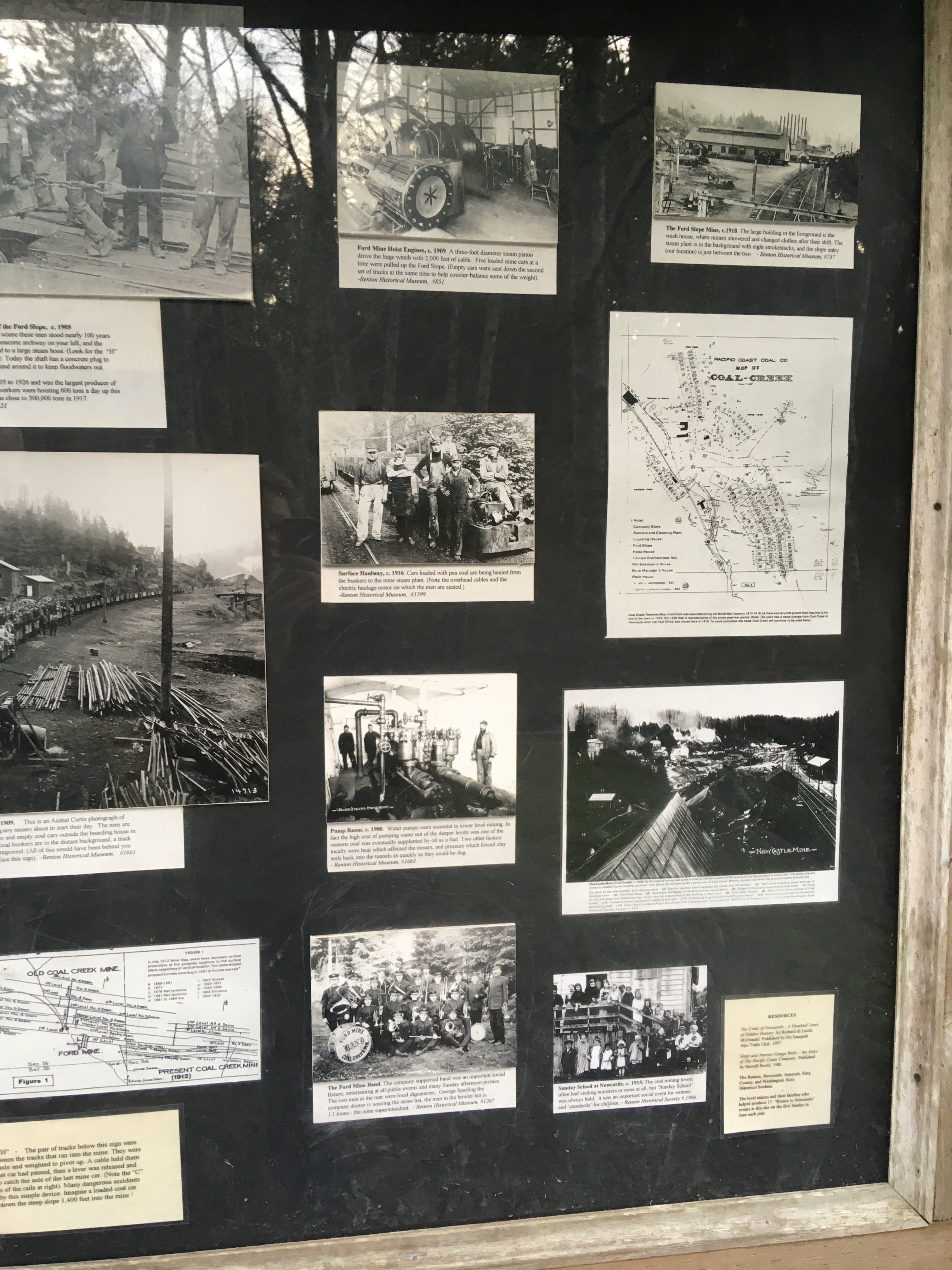
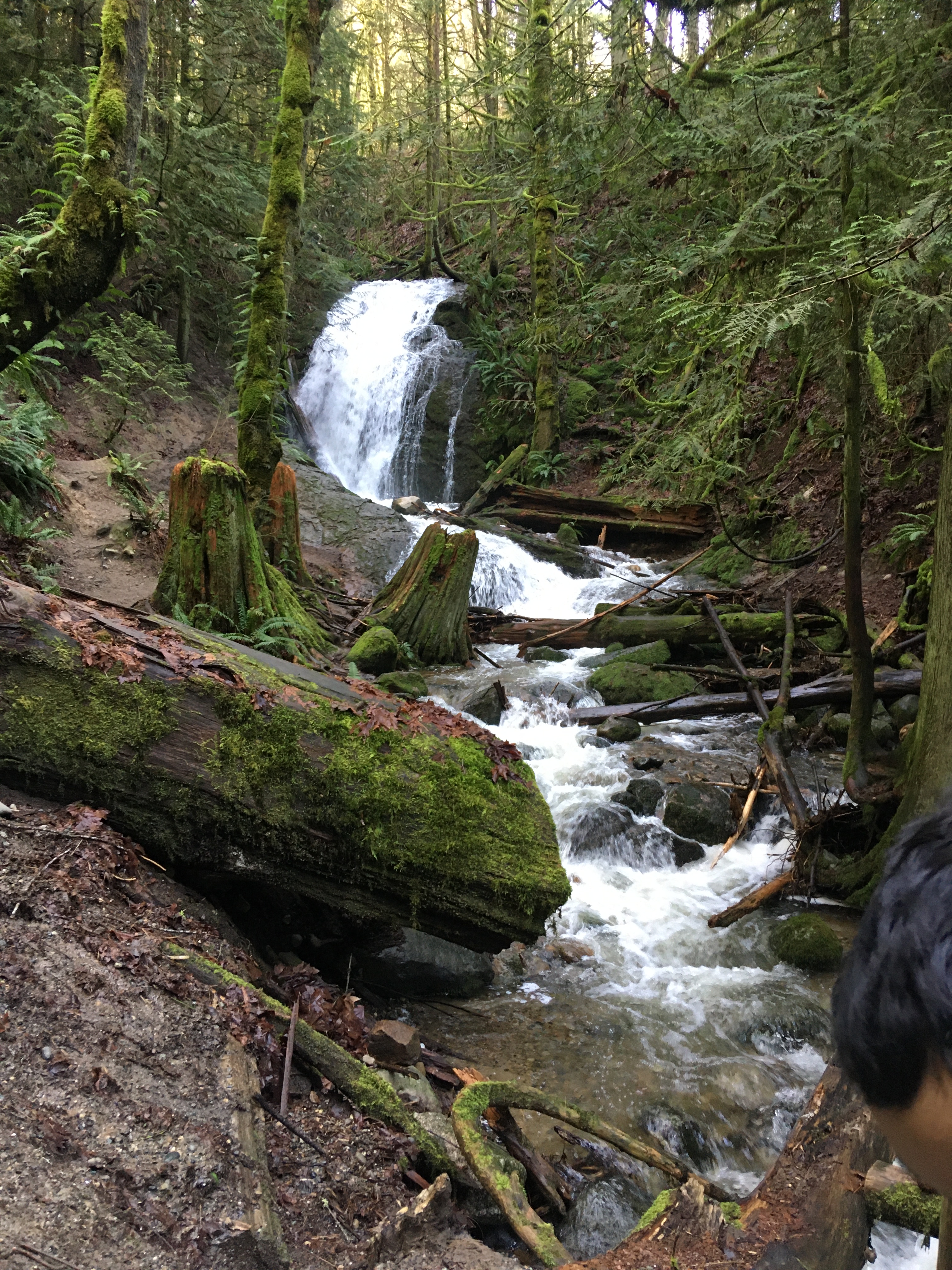
On the border between Bellevue, Issaquah, and Newcastle, you’ll find the Coal Creek Trails in Cougar Mountain Regional Park. It’s a beautiful nature hike with lots of native plants, and view of Coal Creek, with the added bonus of ruins from old coal mines, and interpretive signs about their history. There’s also an old Nike missile installation, but not a lot to see there. (Learn more here.) I wrote up a guide to the science of coal formation and the history of coal mining in the area when I took an elementary school age class on a field trip there. You can read it here.

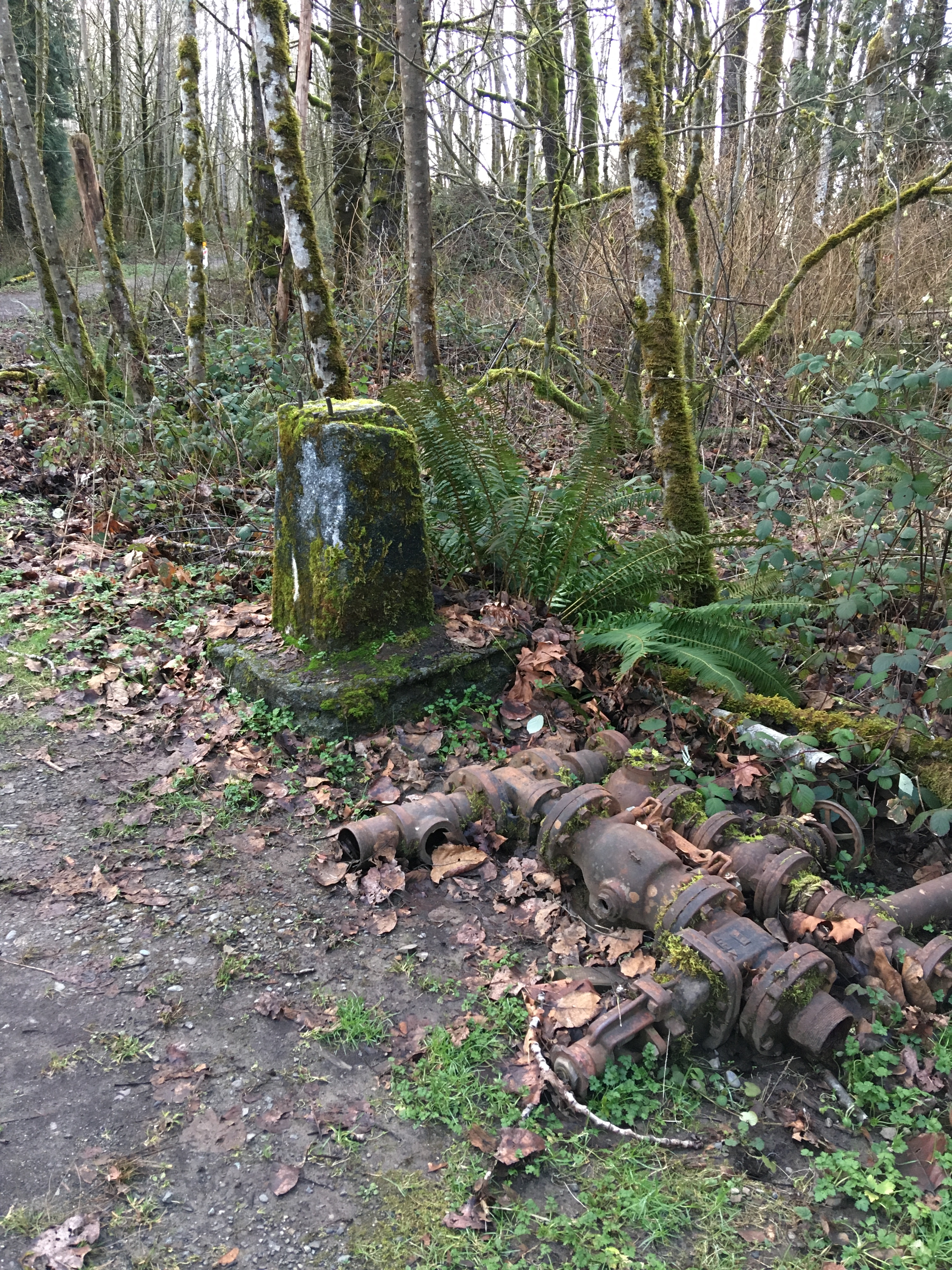
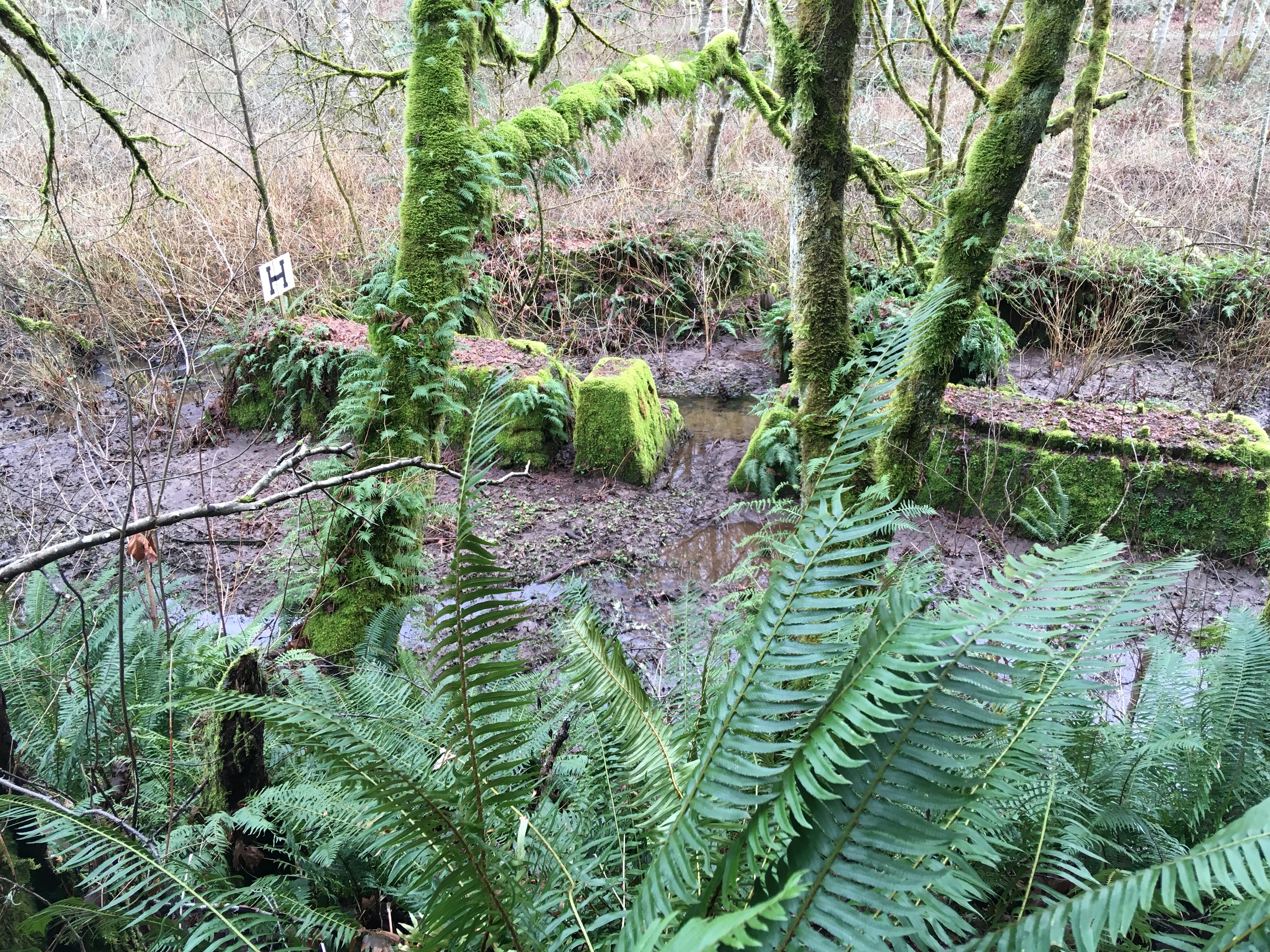
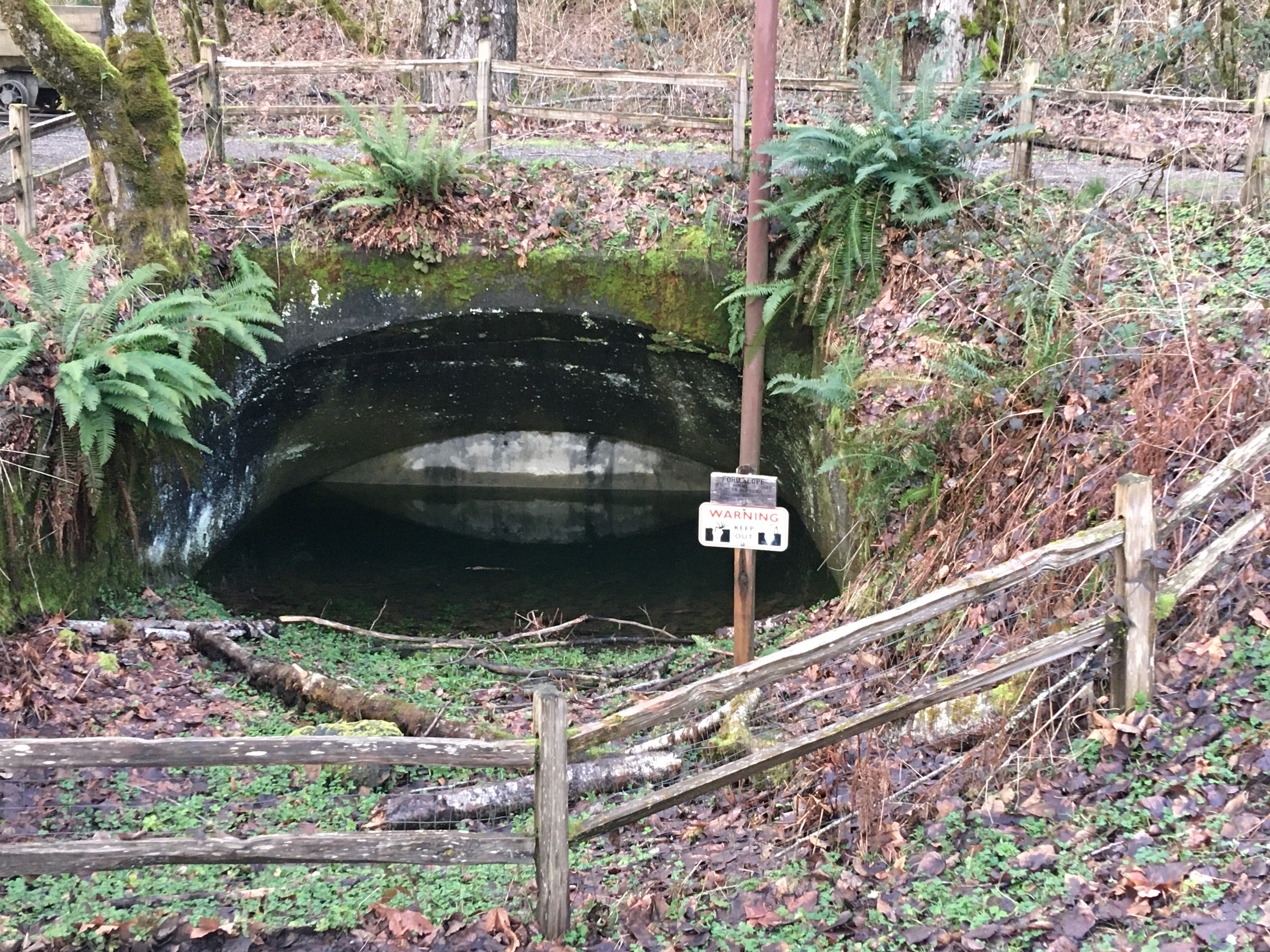
Here’s a trail map of the zone I’d recommend hiking. Walk Wildside trail to Steam Hoist trail to see the Steam Hoist. If the path isn’t flooded, go around the Steam Hoist trail loop to see the info about saw mills. Use Steam Hoist trail to get back to Ford. At Ford Slope, view a rail car (picture here), machinery, a closed mine shaft, swamp gas vents, and the 1920 (bridge??) just up the hill. If you still have lots of energy, hike up Rainbow Town (steep) to Red Town, then down Bradley Seam Trail back to Wildside to trailhead. If you have some energy, then you can duck back down Wildside just a bit, go UP Bradley Seam, and then walk down Red Town. On Bradley Seam, you’ll see an exposed coal seam and be able to pick up and examine lots of coal samples along the side of the path.

This is around a mile and a half hike without a a lot of elevation gain. Parts of the trail are wide gravel roads, some are more challenging terrain. I hiked it with 5 – 9 year old kids who did great. With younger kids, it would be trickier, and you’d need to make sure they were stating safe. (More about the hike.) The hike to Coal Creek Falls is beautiful, but it’s 3.5 miles with 350 feet of elevation gain and some tricky terrain, so not the best for a novice hiker. (Full Trail Map.)

Directions: Start at Red Town Trail Head parking lot, Cougar Mountain Regional Wildland Park. From I-90 take exit 13 and drive south on Lakemont Blvd SE for 3.1 miles. Parking lot is to left (east side) of Lakemont. (Watch for the park sign and a dirt parking lot). The trailhead parking does fill up from about 9 – 2 on sunny summer weekends.
Snoqualmie Falls

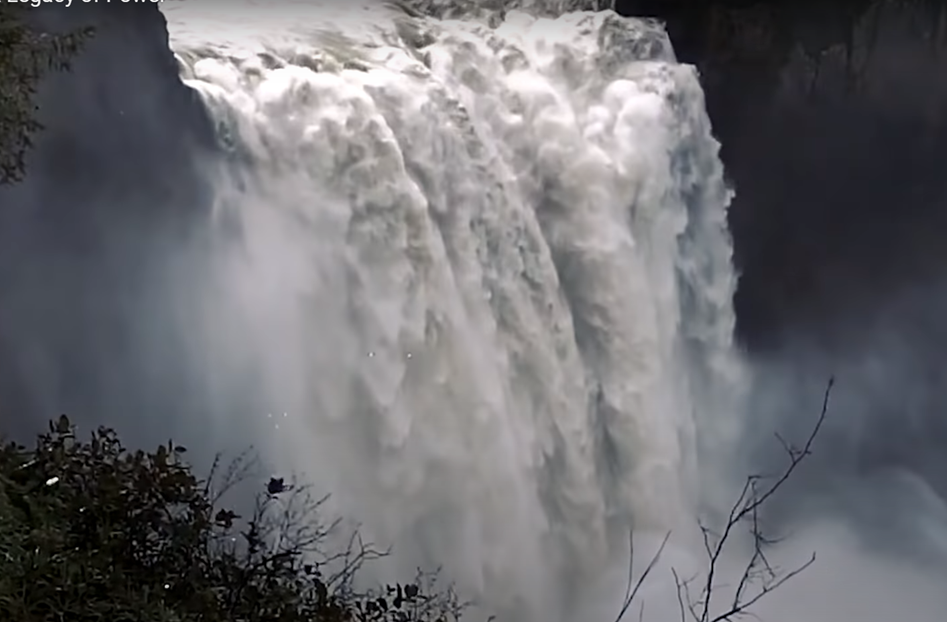
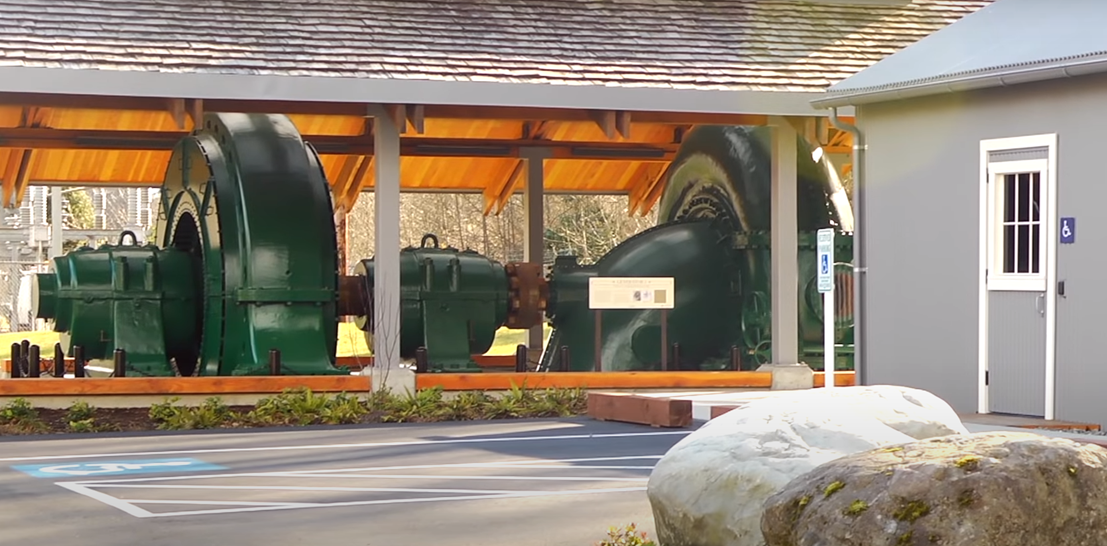
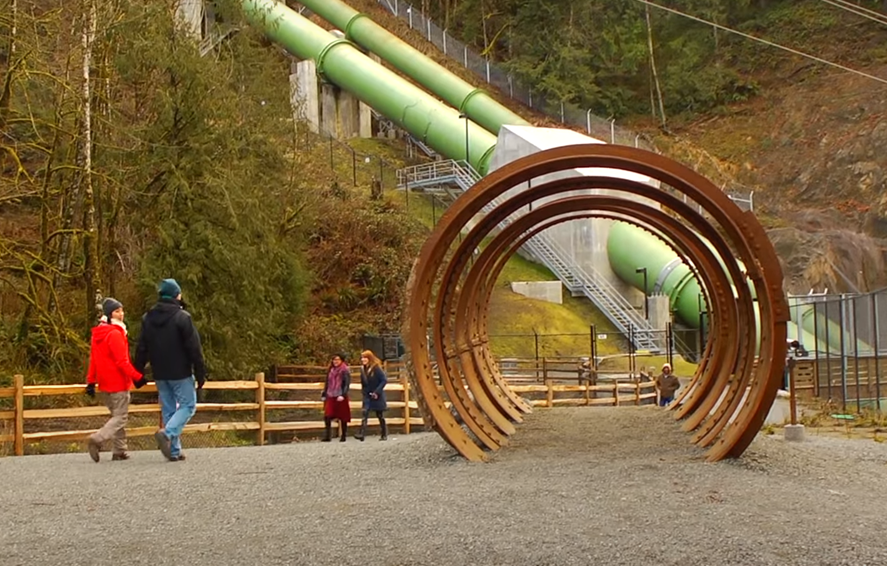
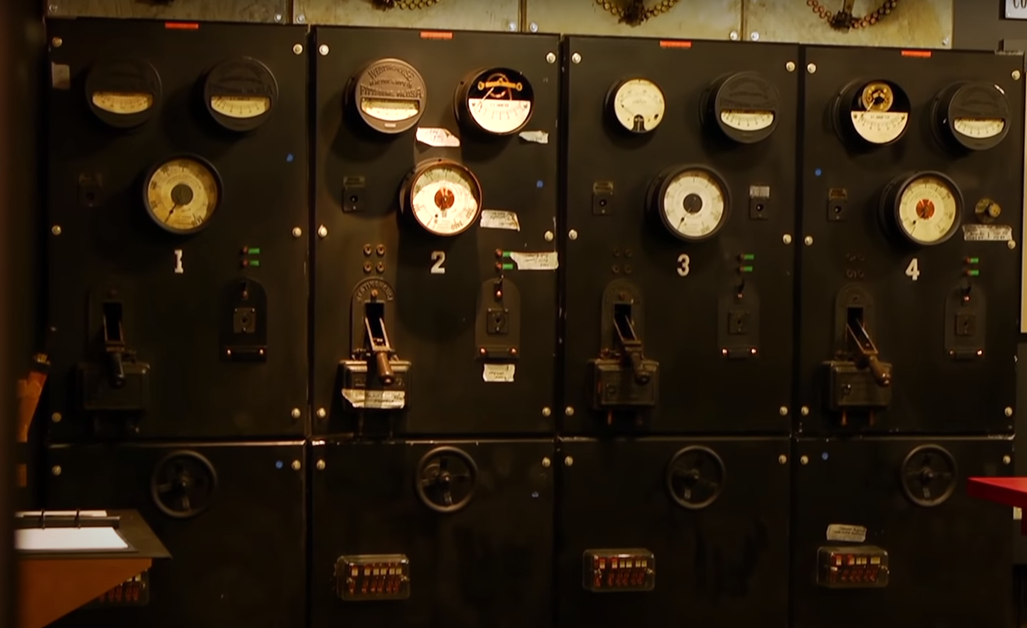
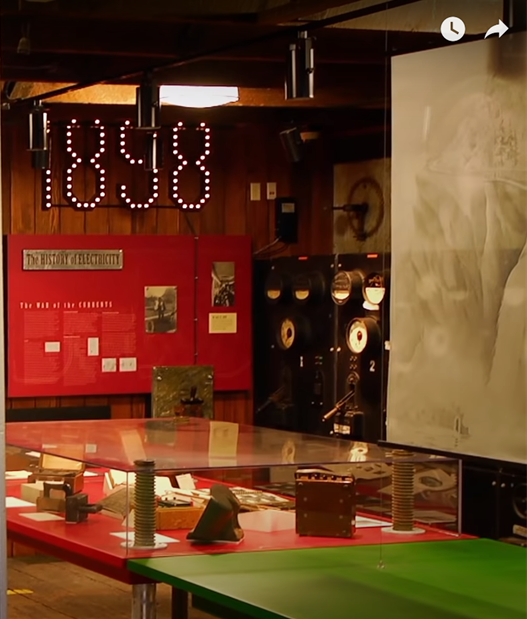
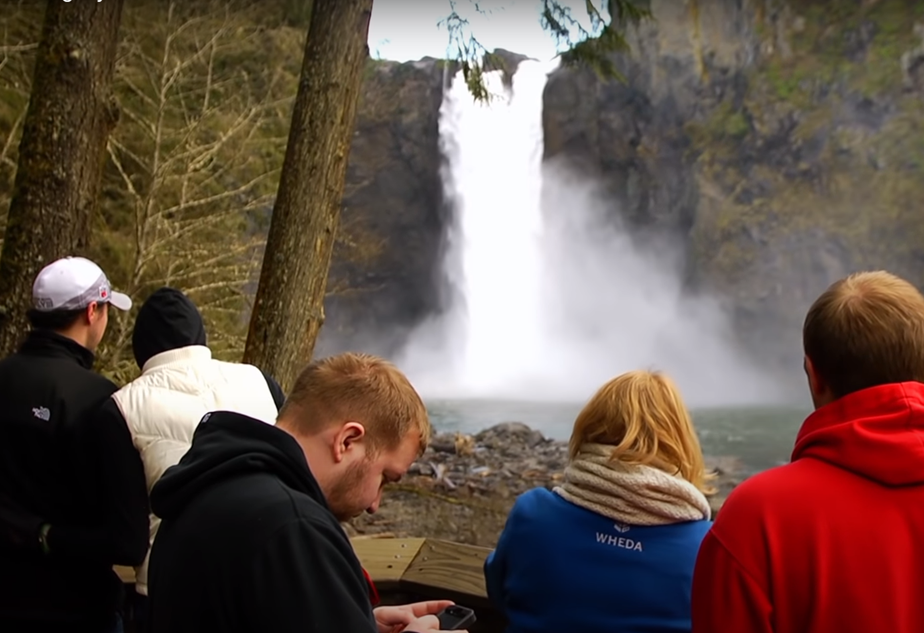
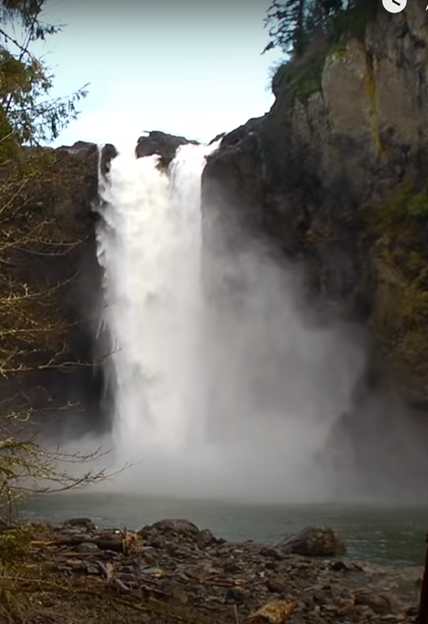
The falls are gorgeous –  268 feet high with the width ranging from 50 to 150 feet, depending on water levels. When the water level is high, they’re really LOUD and powerful feeling. This is also the site of Snoqualmie Falls Hydroelectric Project, built in the late 1890’s. It is one of the Pacific Northwest’s oldest hydropower facilities and the world’s first hydroelectric plant built completely underground. The museum (closed during pandemic) houses exhibits about hydroelectricity. Here’s a virtual tour video covering the history.

Near the top of the falls, next to the Salish Lodge, you’ll find two observations decks (aka “cliffside observation areas”) with great views of the falls, a gift shop and concessions. The observation deck is wheelchair accessible. There is a very steep trail down to the base of the falls. There is also a lower park area, with a hiking trail through forested wildlife habitat, a kayak and canoe launching area, historic interpretive displays and an observation platform for viewing the Falls.

Here is a map of the park and the parking areas. The parking lot by the gift shop is paid parking. The other 2 lots are free. The falls are lit up after dark.
Fort Casey on Whidbey Island

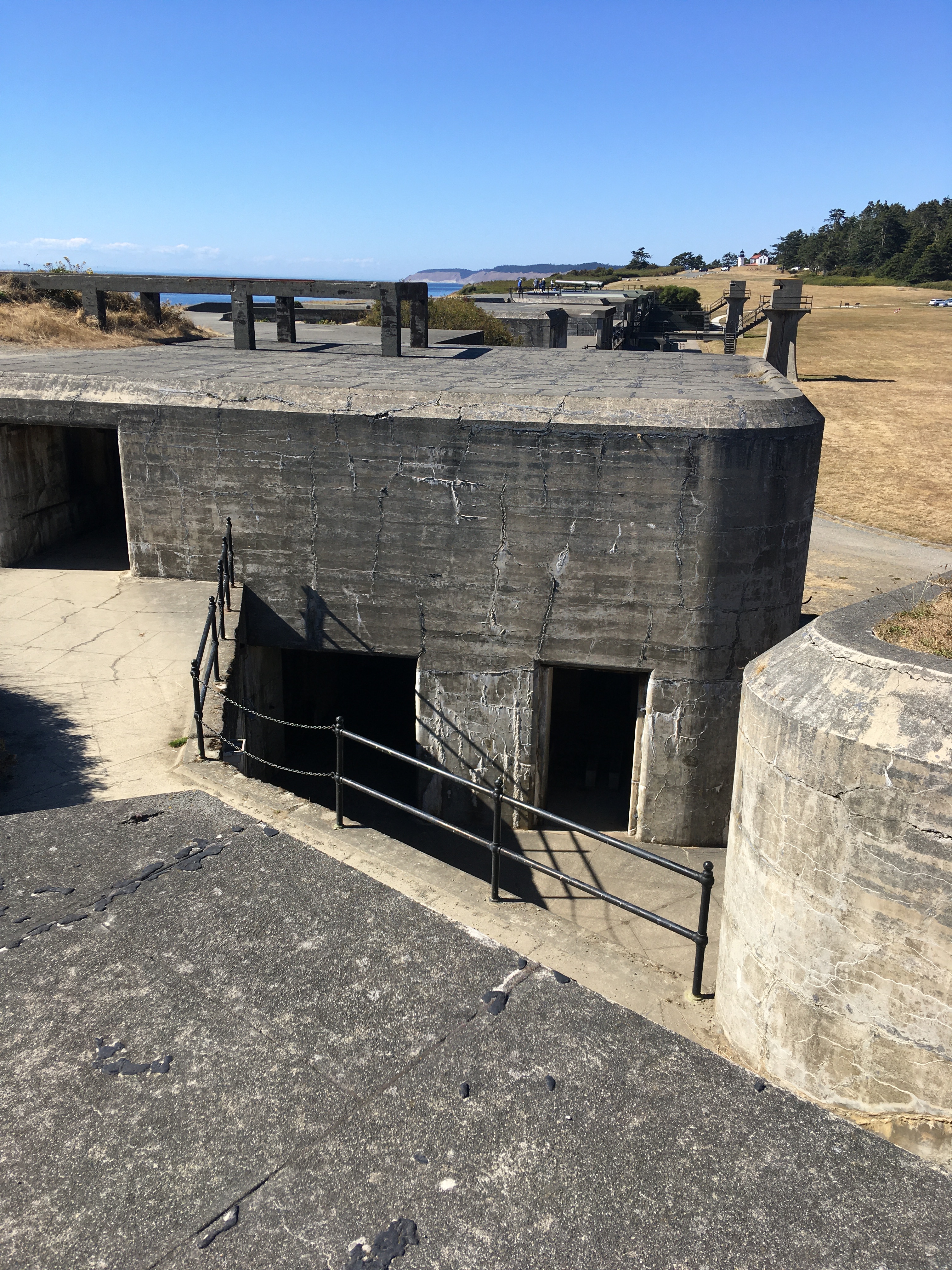
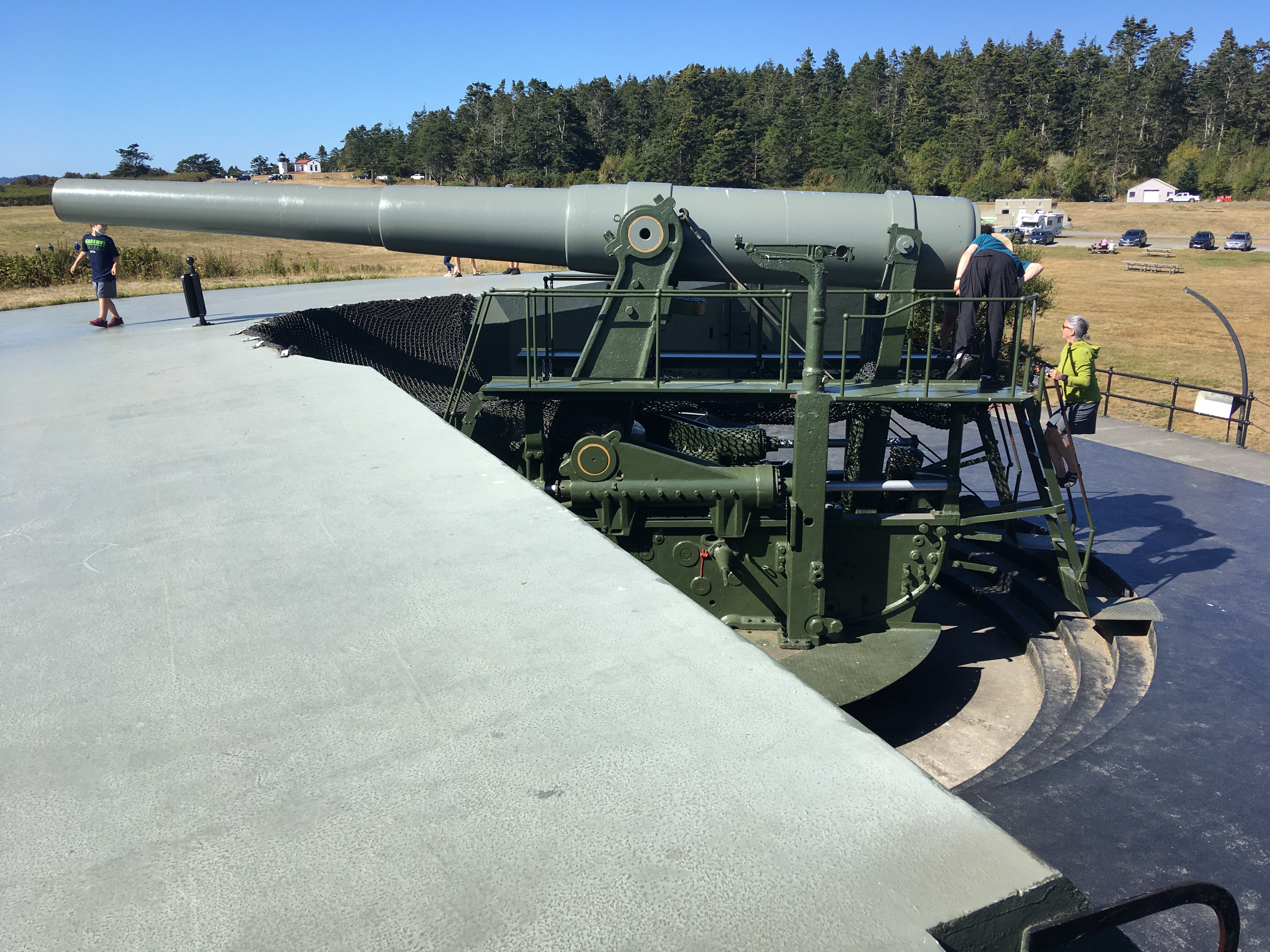
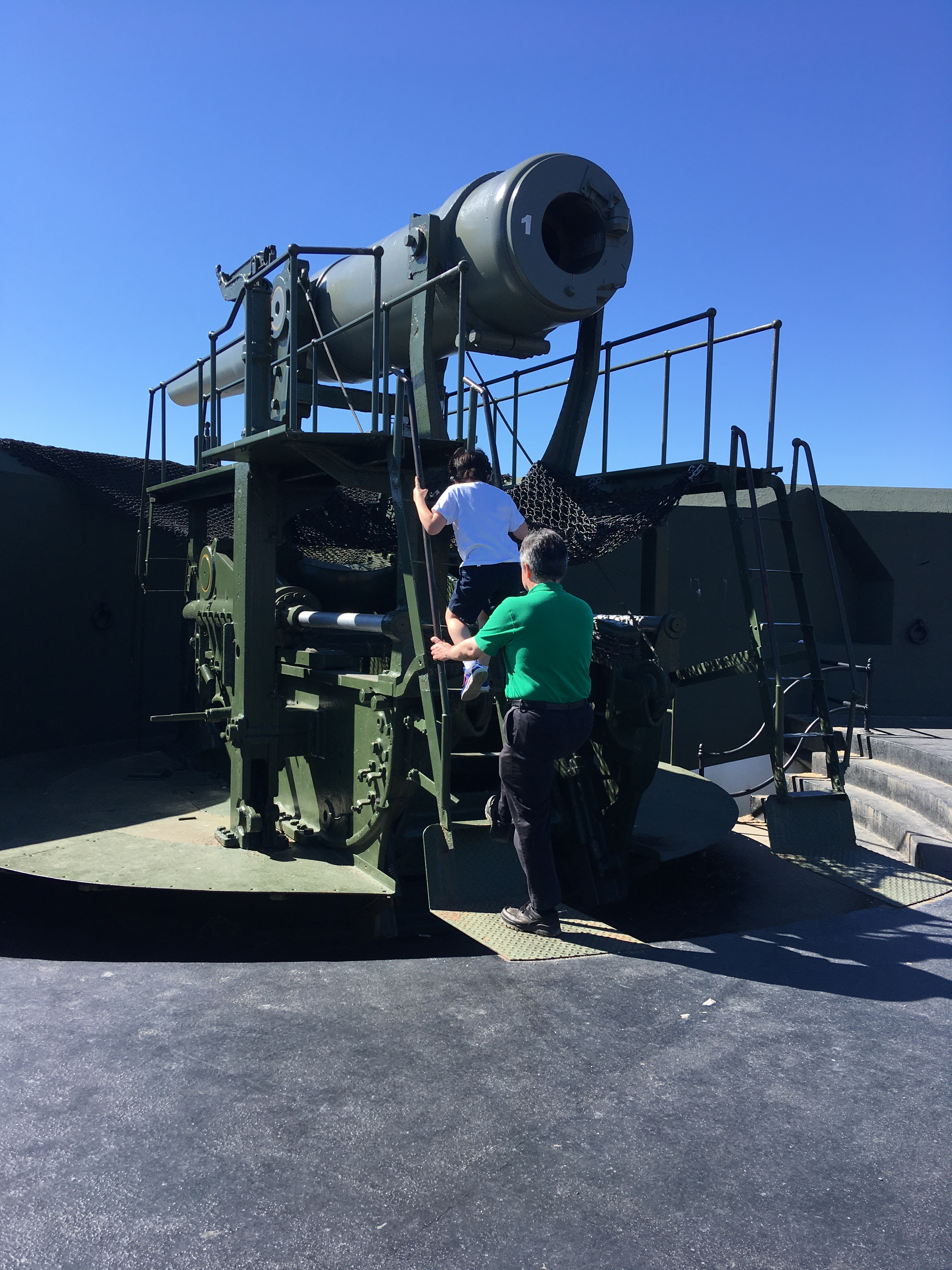
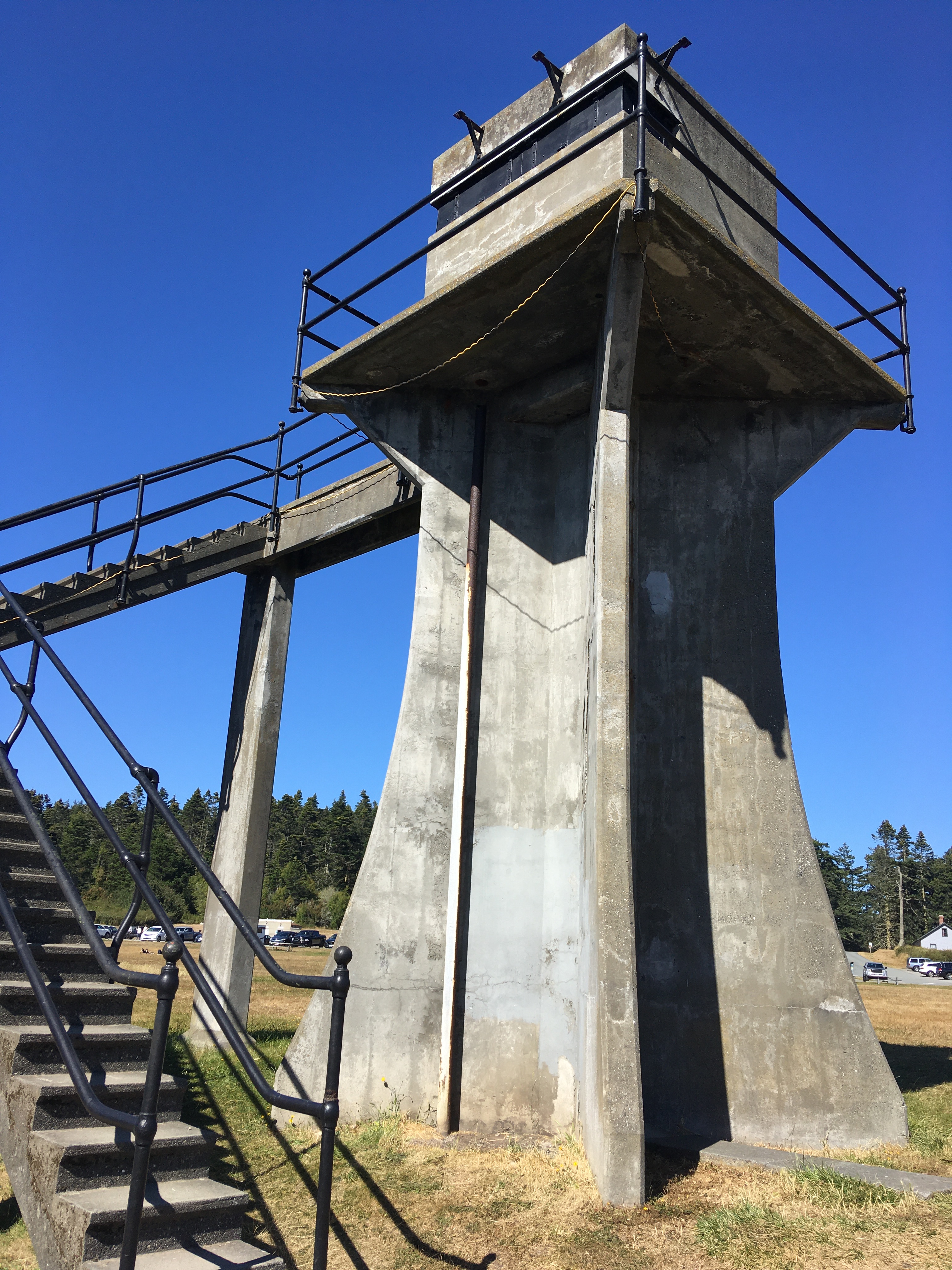
Fort Casey is a Washington state park. The fort was constructed in the late 1800s, equipped for seacoast fortification in the early 1900’s with large “disappearing guns.” Unfortunately the guns were quickly made obsolete with the advent of airplanes. The guns you see there now were transferred from the Philippines in the 1960’s. The Fort was used as a training facility up to the mid-1940s. (More history.)

You can climb the batteries, peer into catacomb like bunkers (bring a flashlight!) and climb up for a close look at the guns. You’re given pretty much free rein of the facility, without a lot of protective barriers. It was great for my 9 year old, but if you have little ones, they’ll need close supervision. (More on what it’s like to visit.)

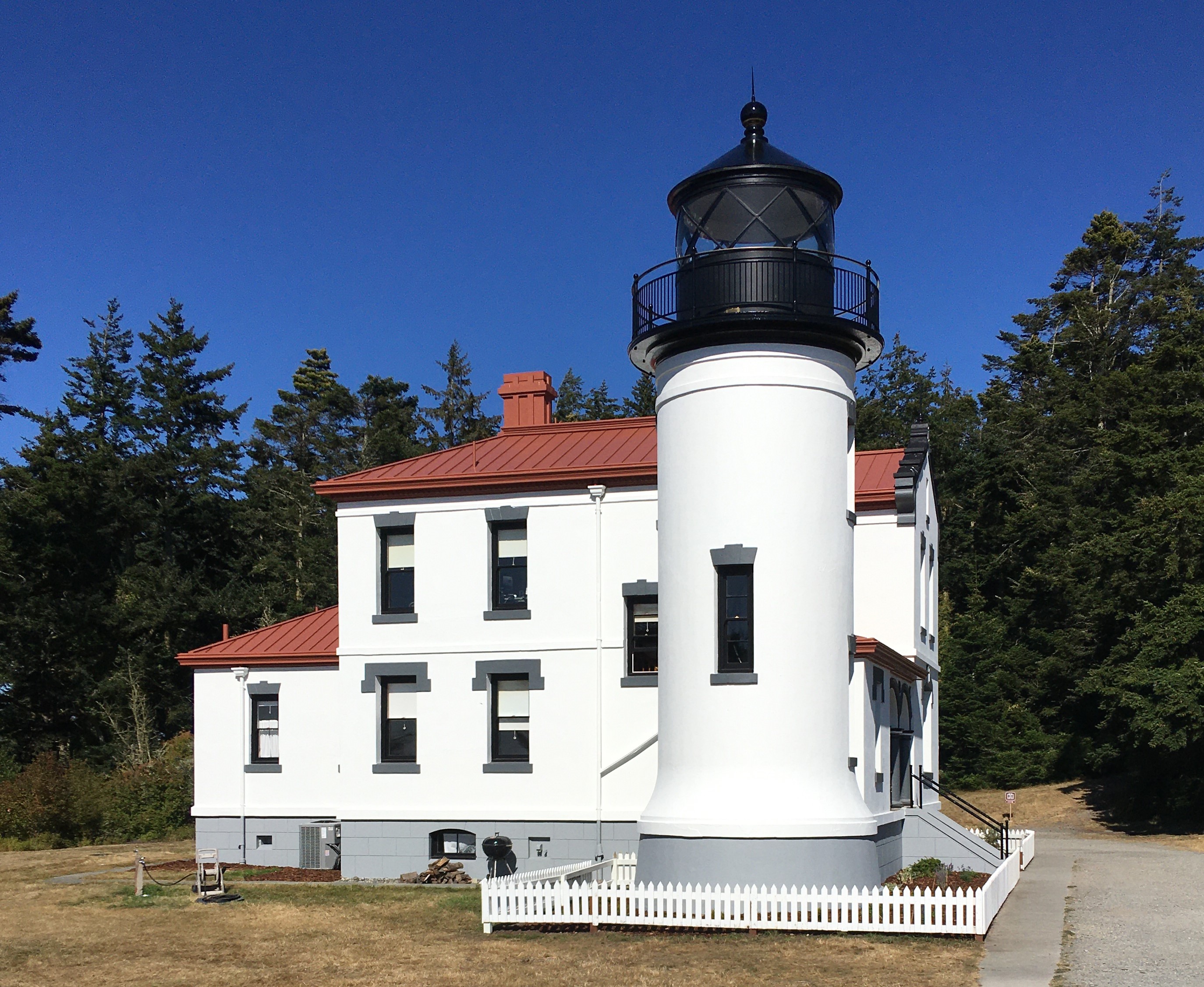
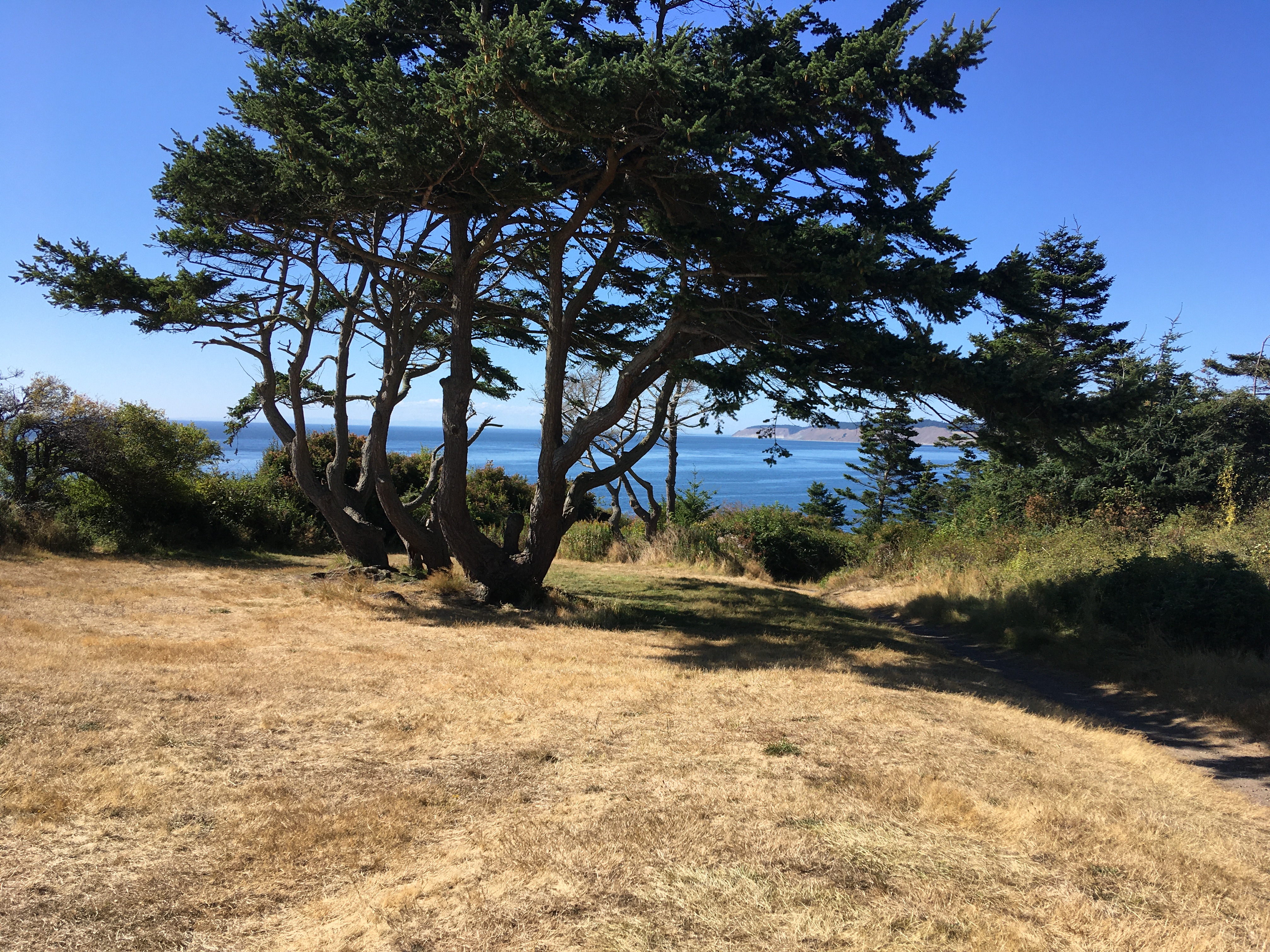
There’s 1.8 miles of hiking trails (part of the 1200 mile Pacific NW National Scenic Trail) and amazing views of Admiralty Inlet which connects the Strait of Juan de Fuca with Puget Sound (expect it to be windy!!). We went there in the summer of 2020, and after being isolated at home for a long time, it was lovely to be in a wide open space, where we could see families out enjoying the day from a very distanced social distance.

A bonus for the mechanically-inclined (a downside for those who like the quiet of nature) is that the U.S. Navy does flight training at the nearby Naval Air Station Whidbey, with 100,000 takeoffs and landings per year, day and night. With noise levels of 100 decibels, you won’t miss them!

You can camp at Fort Casey’s 100 acres, or you can stay in their historical buildings of the Fort Casey Inn. (Read about the experience.)
Ballard Locks

Find info about their visitor center and museum at: https://ballardlocks.org/

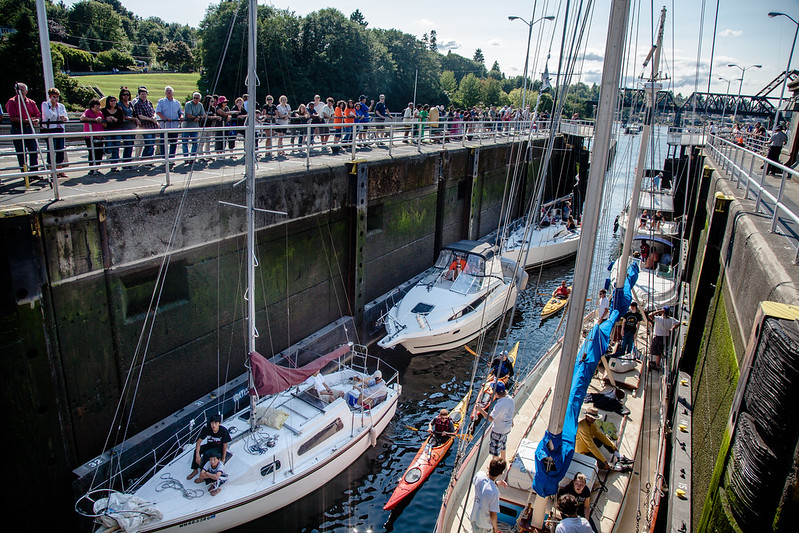
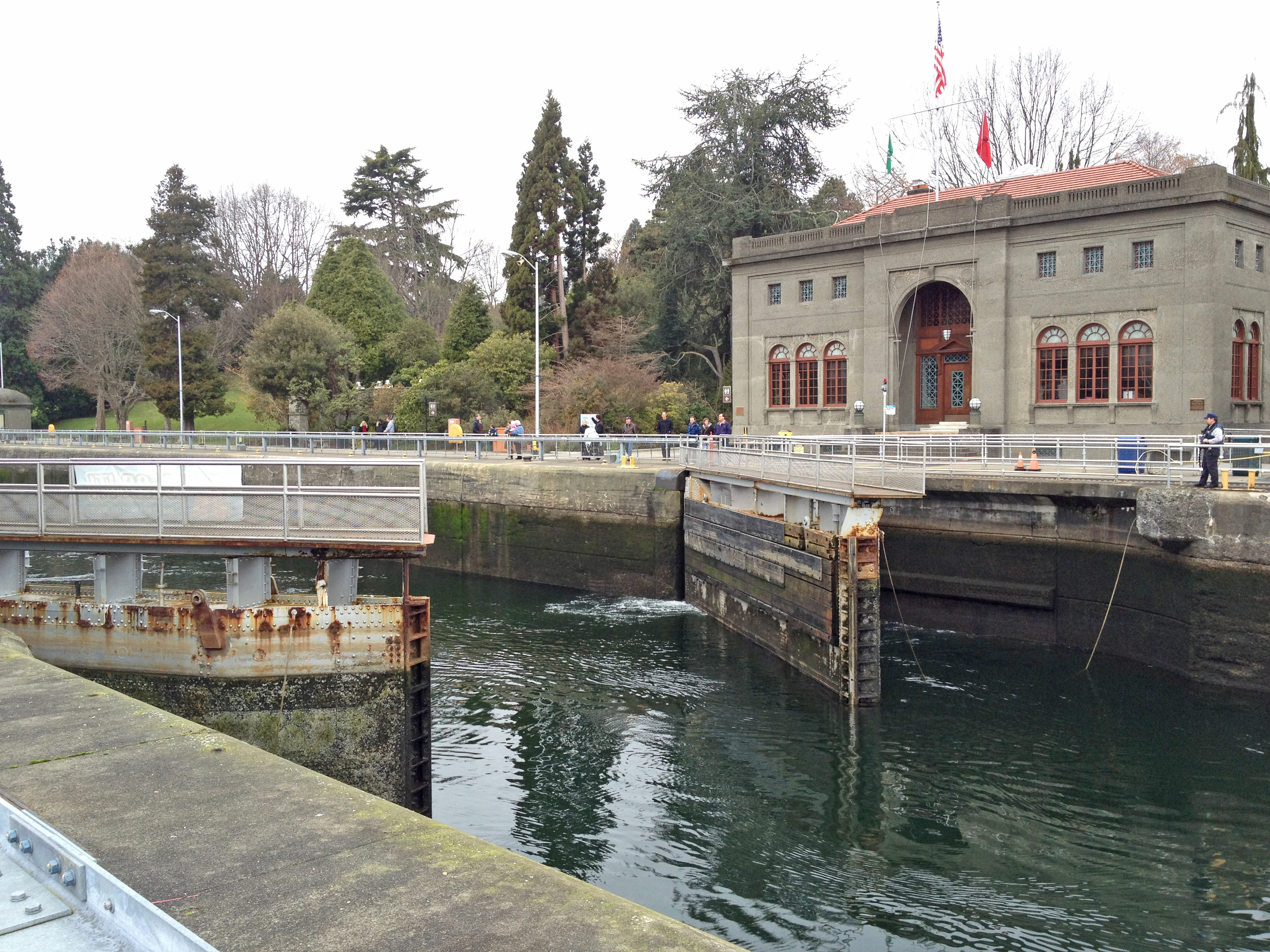
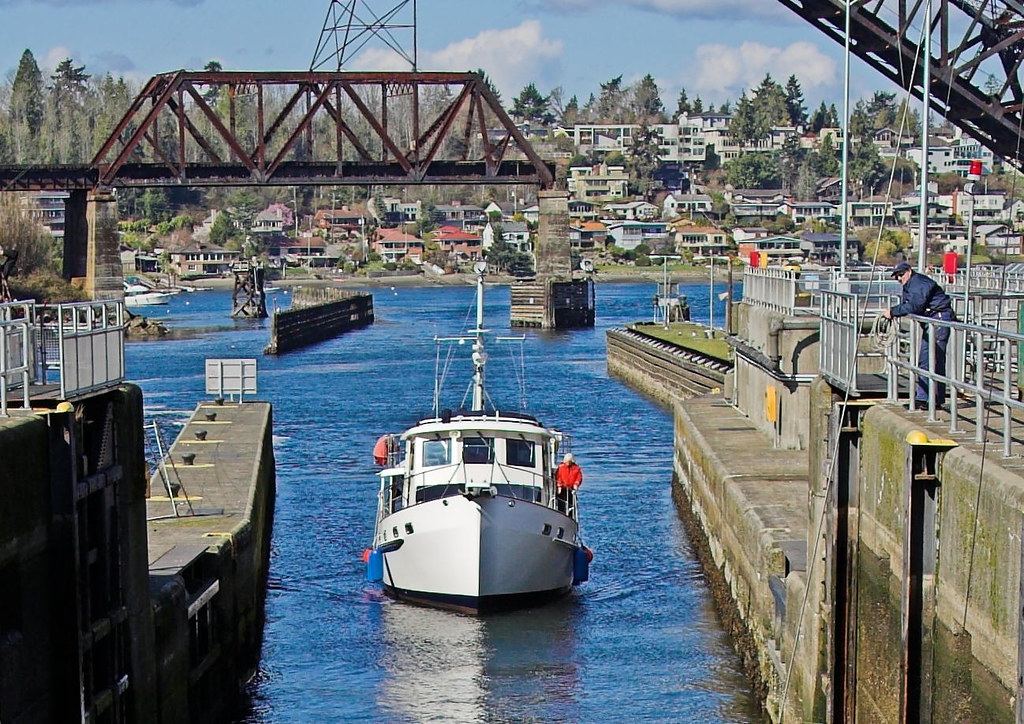
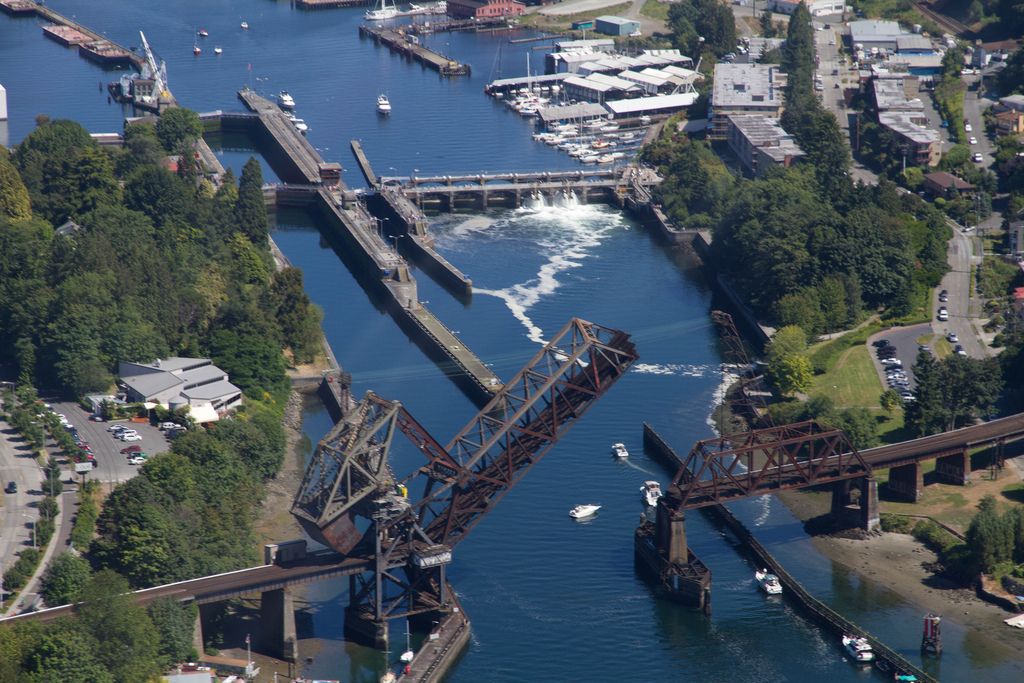
The Hiram M Chittenden Locks, completed in 1917, connect Lake Washington with Puget Sound. They carry more boat traffic than any other locks in the U.S. Boats ranging in size from one man kayaks to 760 foot boats can travel through there. When a boat enters the locks from the lake, the water level is lowered 20 – 22 feet before a boat makes its way into the Sound. You can find a lot more about how the locks work and about their history on the WIkipedia page.

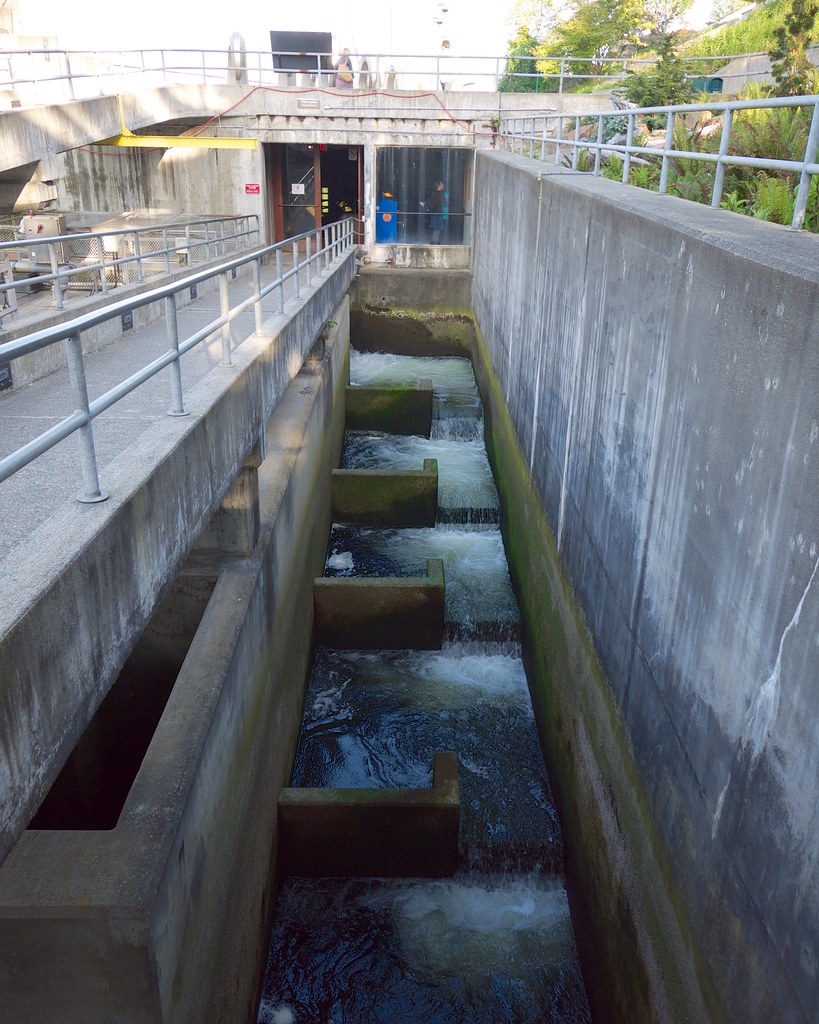
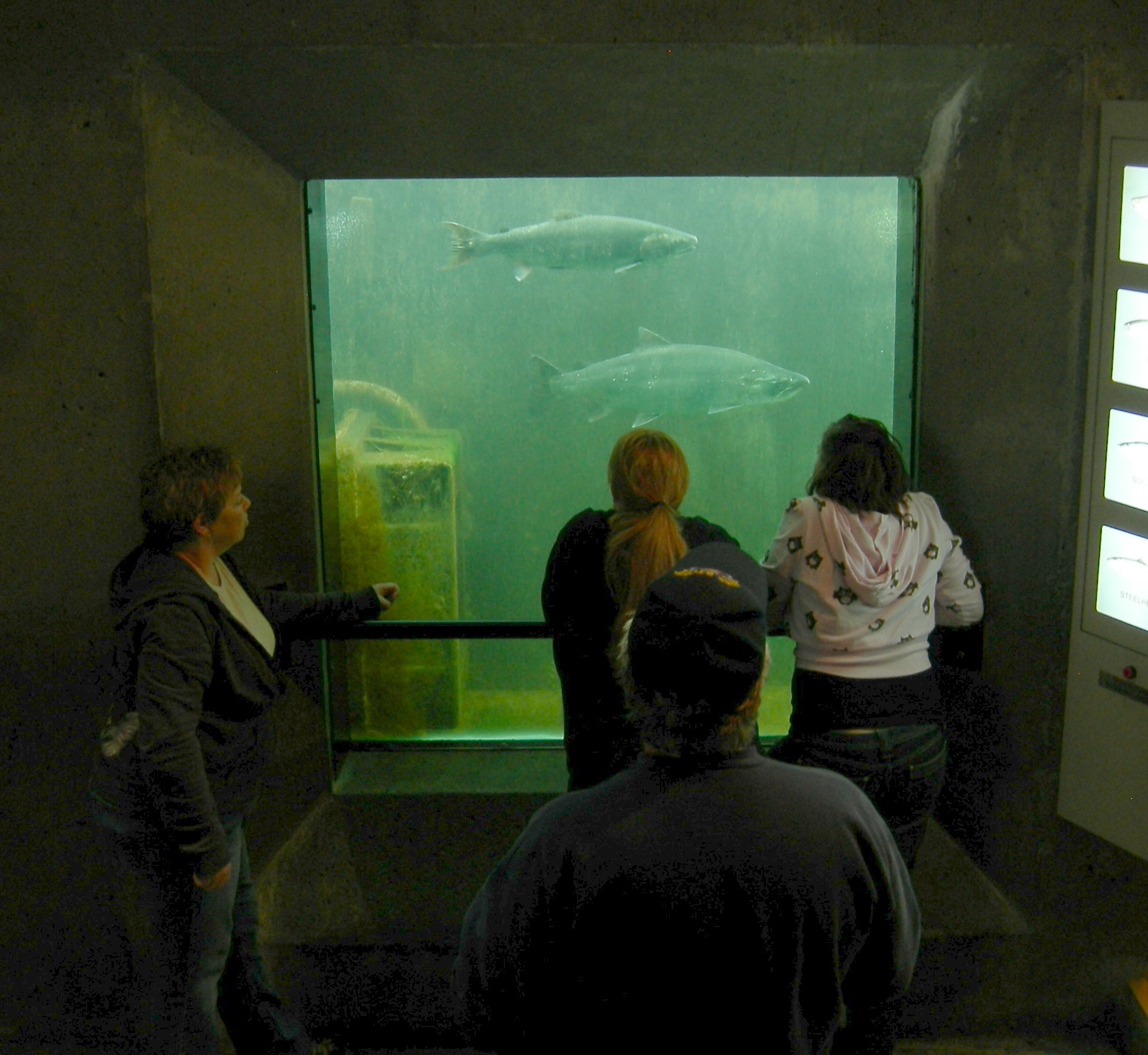
From June to September, you may be able to see salmon on the fish ladders. There is also the Carl S. English Jr. Botanical Garden, a beautiful nature oasis. Read visitor reviews. More photos.
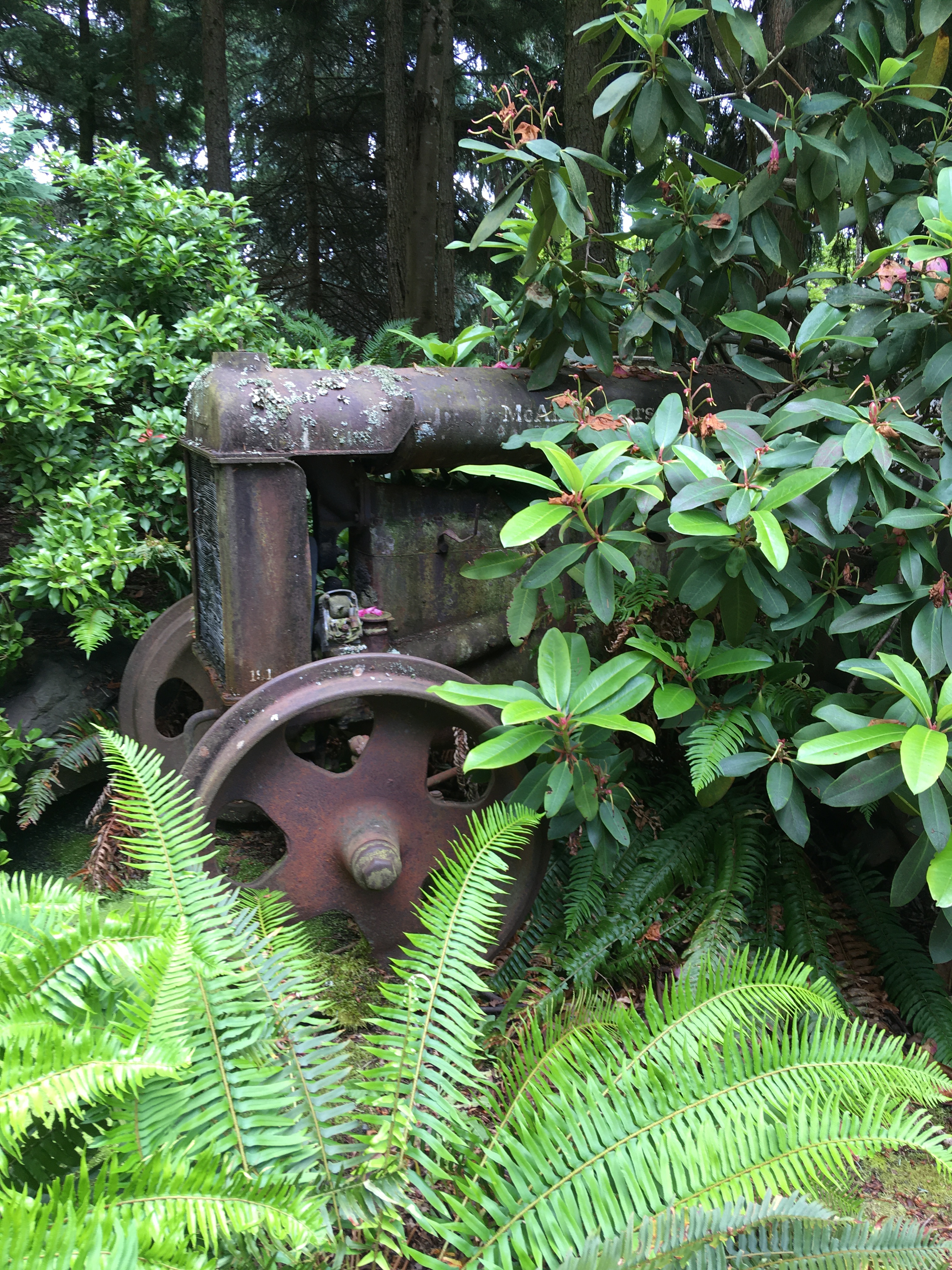
McAuliffe Park in Kirkland

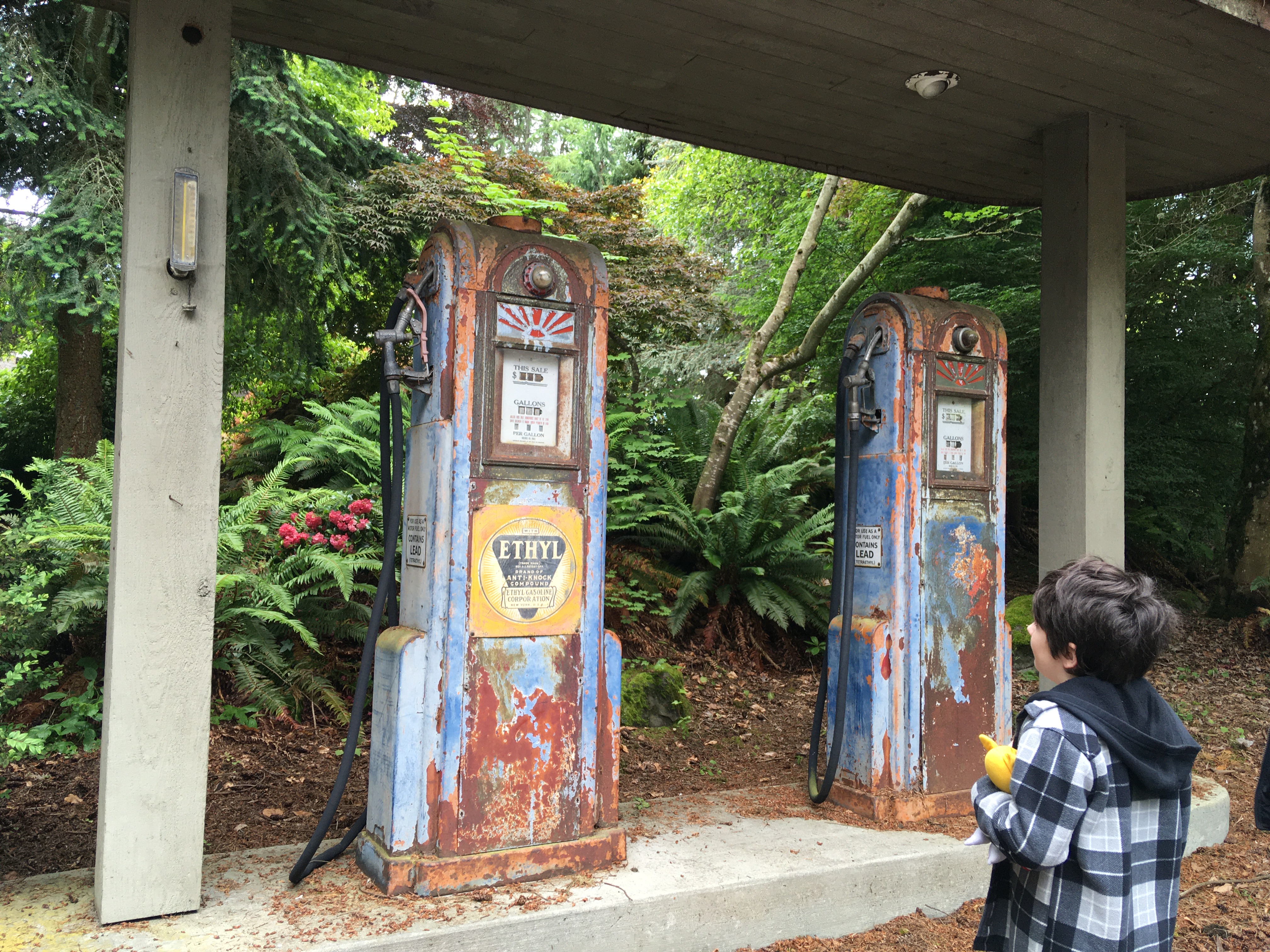
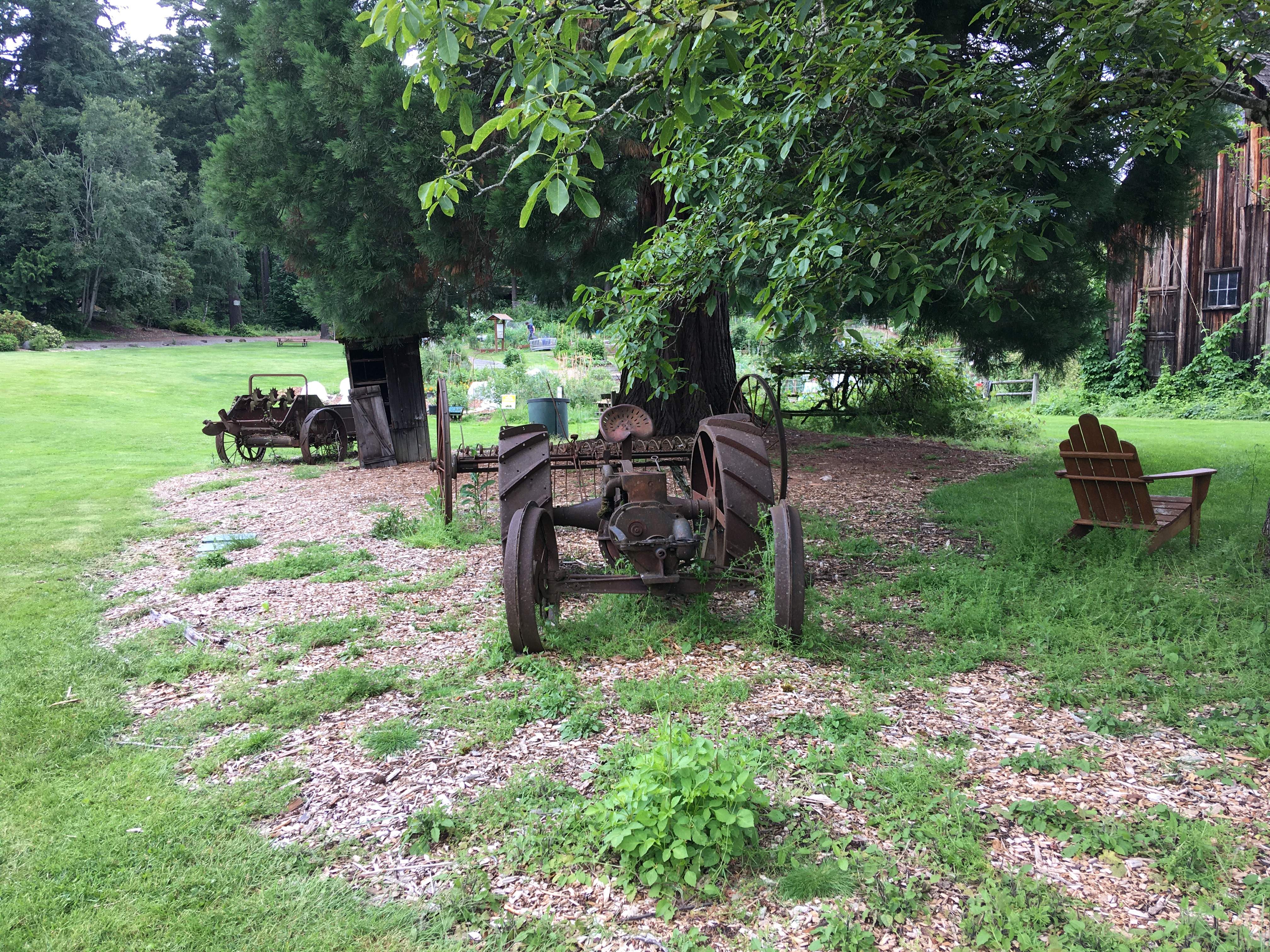
This old farm homestead has windmills, old gas pumps, old farm equipment and large pea patch of working gardens. Read my whole post on McAuliffe Park. Also, as you walk, keep your eye out for Kirkland Rocks.

Monte Cristo Trail

You may also be interested in the Monte Cristo hike in Snohomish County. “Remnants of an old railway turntable … a group of boys pushed one end of the rusty girder, swinging it in circular fashion.” “Rusted-out bed frames, mining tools and pieces of railroad track and railway cars, among other relics, are randomly strewn around, as if they’re props for a play. “

Related Ideas

All playgrounds are full of simple machines. You can point out to a child the inclined planes (slides, ramps), the screws (spiral staircases or ladders), the levers (swings, seesaws), and the wheels on axles (merry go rounds).

If you’re looking for an excuse to go on a quest around downtown Seattle, check out this guide to all the public clocks in Seattle.

This Seattle Times articles shares a few hikes with fun discoveries at the end.

If you know of other great opportunities in the Seattle area for combining some time in nature / the great outdoors with something mechanical or engineering related, please add a comment below!

More Local Parks

For the nature lovers, you may also want to check out these posts:

Fun with Toddlers – Animal Theme

Crafts to Do

Make a clothespin creature: With clothespins, pipe cleaners, cardstock, googly eyes, pompoms and more, there are so many creatures you can create! (You can find sources for all these ideas on my Pinterest page at www.pinterest.com/bcparented/clothespin-creatures/)

Do animal facepaint and/or make animal costumes. Read the book Fraidyzoo by Heder. (It’s available at the King County library) It’s all about making crazy animal costumes out of materials you have around the house or can find in your recycling bin. See what animal costumes you can create!

Invitations to Play

Put out a collection of toy animals, and materials to build a habitat with or build a zoo or farm. This could be a playdough activity, or you could put items in a sensory bin with beans or rice, or could be nature play with sticks and rocks, or combined with building toys such as Duplos.

Learning Activities

  • Sorting. There are so many sorting activities you can do with toy animals. Put them in a pile, and ask your child to sort: farm animals from zoo animals, or mammals from non-mammals, or things that climb trees from things that swim, or sort by color or size.
  • Animal Sounds. Show your child pictures of animals, and teach your child animal sounds. Then ask your child “what noise does a cow make?” Praise them when they say moo. And so on. Children can often make recognizable animal sounds before they have much language, so it’s a fun way to see how much your child really understands. If you want your child to speak multiple languages, ask the question in other languages (like “Que dice la vaca?”). They will learn the answer is also moo. This helps them start making connections between meaning in the different languages.

Songs to Sing

  • To the tune of Wheels on the Bus: “The lions at the zoo say roar roar roar, roar roar roar, roar roar roar. The lions at the zoo say roar roar roar all day long.” Repeat with any animal sound you want.
  • Old McDonald. Old McDonald had a farm. E I E I O // And on that farm there was a cow. E I E I O // With a moo moo here and a moo moo there. // Here a moo, there a moo, everywhere a moo moo. // Old McDonald had a farm. E I E I O
  • Three little monkeys. Three little monkeys jumping on the bed. One fell off and bumped his head. Mama called the doctor and the doctor said: “No more monkeys jumping on the bed”.

Books to Read

  • Dear Zoo by Campbell. Fabulous lift the flap. “I wrote to the zoo to send me a pet…” See what they send!
  • Good Night, Gorilla by Rathmann. A charming (mostly) wordless book about a gorilla escaping its cage.
  • Brown Bear, Brown Bear, What Do You See? or Polar Bear, Polar Bear What Do You Hear? by Carle. Great repeating rhyme and rhythm. Children love to predict what will be on the next page.
  • Poke a Dot: Old MacDonald’s Farm. This is a counting book. Each page has plastic dots you can “pop”. I’m normally not a fan of “gimmicky” books, but I think this one is great for learning one-to-one correspondence, an essential math skill.
  • Who’s Like Me? This is a lift the flap (uncover and discover) book, where one animal says something like “I’m a bunny. I am furry and breathe air. Who’s like me?”

More Animal Themed Activities

Check out my Fun with Toddlers posts on Zoo Theme and Farm Theme. Or check out my preschool STEM posts about Animal Classification, Adaptations, Habitats and more.

Failing to Meet Your Own Expectations

Before we have children of our own, we typically form a lot of expectations about what it will be like to have children, and expectations of what kind of parent we plan to be. When those expectations bump up against the reality, we may need to take time to re-evaluate and re-adjust our own definitions of what it means to be a successful parent.

What did you expect?

Our pre-parenthood expectations may have been unrealistically optimistic, filled with the sorts of happy, active families having lovely active outings that you see in all the commercials for medications and new cars. We may have imagined that we would always love spending time with our children, and that we’d teach them to love all the things we love, and that they would achieve things we had not achieved.

Even if we saw other people’s children being challenging or difficult, we may have reassured ourselves that our children would be better, because we would be better parents – we believed that if we just did things right, it would all work out.

Within a few days after a baby’s birth, we typically discover that the reality does not meet our expectations. Even if we “do everything right”, our babies still cry and they still spit up all over us. And often we don’t do things right. We make mistakes all the time as we try to manage this new full-time job we weren’t adequately prepared for. Parenting is hard work! And it’s made harder by the contrast between our expectations and our realities. (That contrast is a significant predictor of postpartum depression. Parents with very high, even unattainable, expectations are more likely to experience mental health challenges.)

For parents of infants and young children, it’s worth taking some time to reflect on what expectations you hold for yourself, and making conscious choices about adjusting those expectations to make them more realistic and compassionate.

What expectations did/do you have that don’t serve you?

Let’s examine some common types of thinking that parents may have which are not helpful.

  • To be a good parent, do you need to be happy all the time? Fully functional, with a clean house, healthy home-cooked meals, and festive decorations for holidays?
  • Should you always know exactly what your child needs? Should you always be able to meet all their needs? Always enjoy spending time with your child? Never speak harshly to them?
  • Is your self-worth tied to your achievements or your child’s achievements? Are you afraid that if anything goes wrong, you’ll be blamed? If you’re coming from a successful long-term career, do you expect to be just as successful at your brand new job of parenting?
  • What criteria do you judge yourself on? Should you never make mistakes? Should you do all the things that other parents show themselves doing on social media?

Are you putting any of these pressures on yourself with these sorts of messages?

How would you like to adjust those expectations?

If you find yourself often thinking you’re not a good enough parent, maybe it’s worth re-defining what it means to be good enough.

  • Can you assess your own personal values so you can prioritize putting energy into the things that matter most to you, and let go of the high demands in areas that aren’t that important?
  • Can you role model resiliency for your child? We can’t always control whether bad things happen to us, but we can control how we respond. We don’t always get everything we want, but we can find ways to be happy despite that.
  • What do you want you child to remember from this time? Do things have to be perfect to make good memories?
  • Can you embrace messy moments when things go badly as learning opportunities? Can you remind yourself often that not everything will go as planned, and it’s OK to make the next best choice?
  • Can you admit that sometimes you’re exhausted and overwhelmed and that it’s OK to ask for support? OK to take breaks? OK to prioritize self-care?
  • Can you let go of your not-enough story? Let go of doing things because you think you need to prove your worth, and start believing in your inherent worth.
  • Instead of setting vague goals – “to be a better parent” or unattainable goals – “to never yell at my kids again”, can you set up clear and achievable steps in the right direction?
  • Can you practice self-compassion? I often urge parents to remember the power of the word YET. Instead of thinking your child will never do something, just think “they can’t do it YET.” We can do the same thing for ourselves – we can hold ourselves to high standards AND forgive ourselves for the times we aren’t yet meeting those standards.

I created an exercise you can do to examine your expectations, and to re-frame them into more reasonable, achievable goals. You can do either art or some creative writing of a “job description” in this exercise.

A Day Trip to Play in the Snow

10 days ago, our son heard the weather reports that there was a chance of snow in the Seattle area over the next few days. Well, the week came and went, and no snow! He was so disappointed.

But we told him that all winter long, snow is just a short drive away. And that when he’s hankering for a spontaneous snowball fight, it’s easy to make that happen.

We proved it on Sunday. We left our home in Kirkland after lunch, at 1:00. It took a little less than an hour to get to Snoqualmie Pass. We parked, jumped out of the car and played for about an hour, hopped back in the car, and were home by 4:00. No money spent, other than gas money, in exchange for fun in the snow.

Playing in the Snow

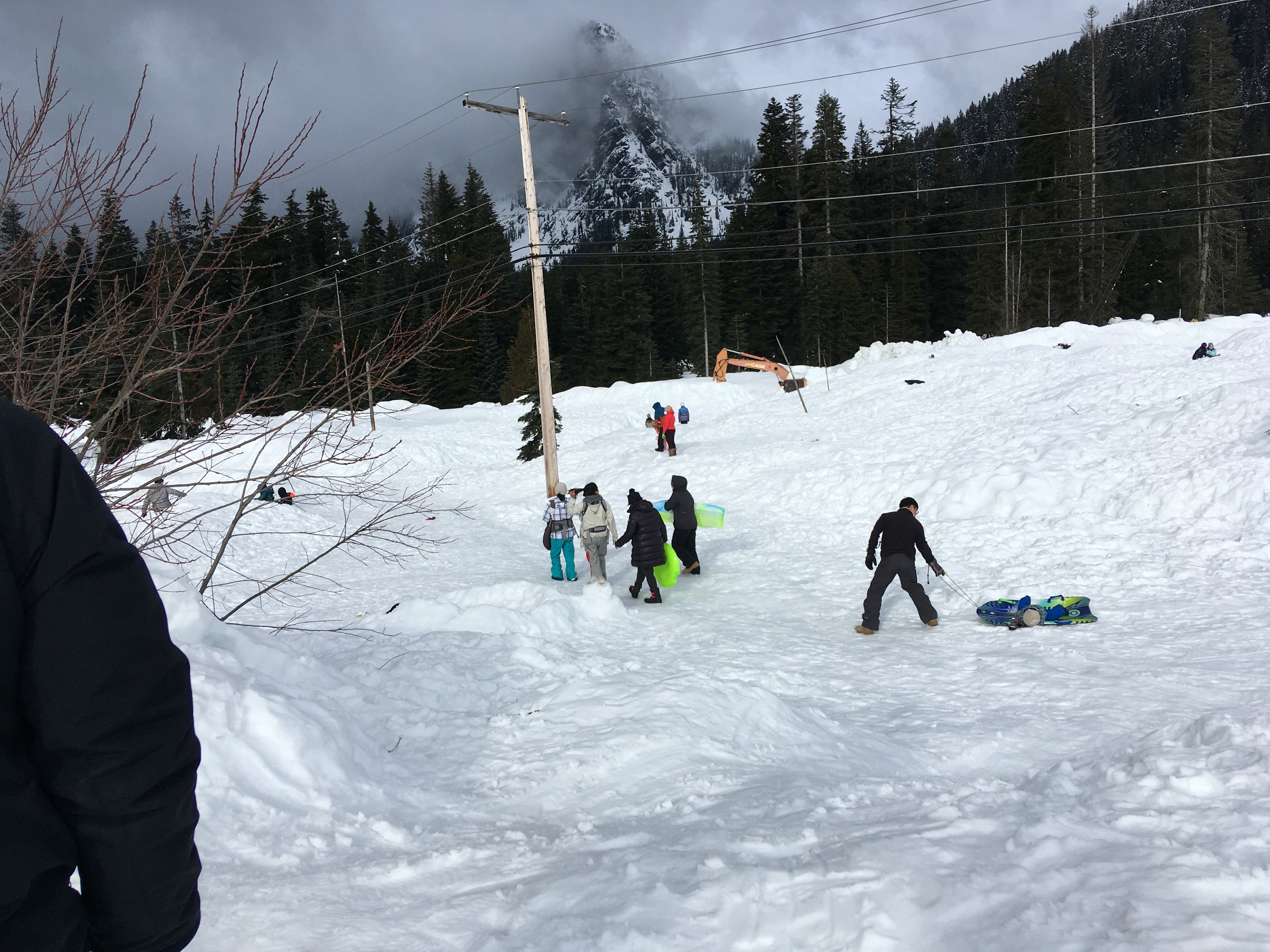
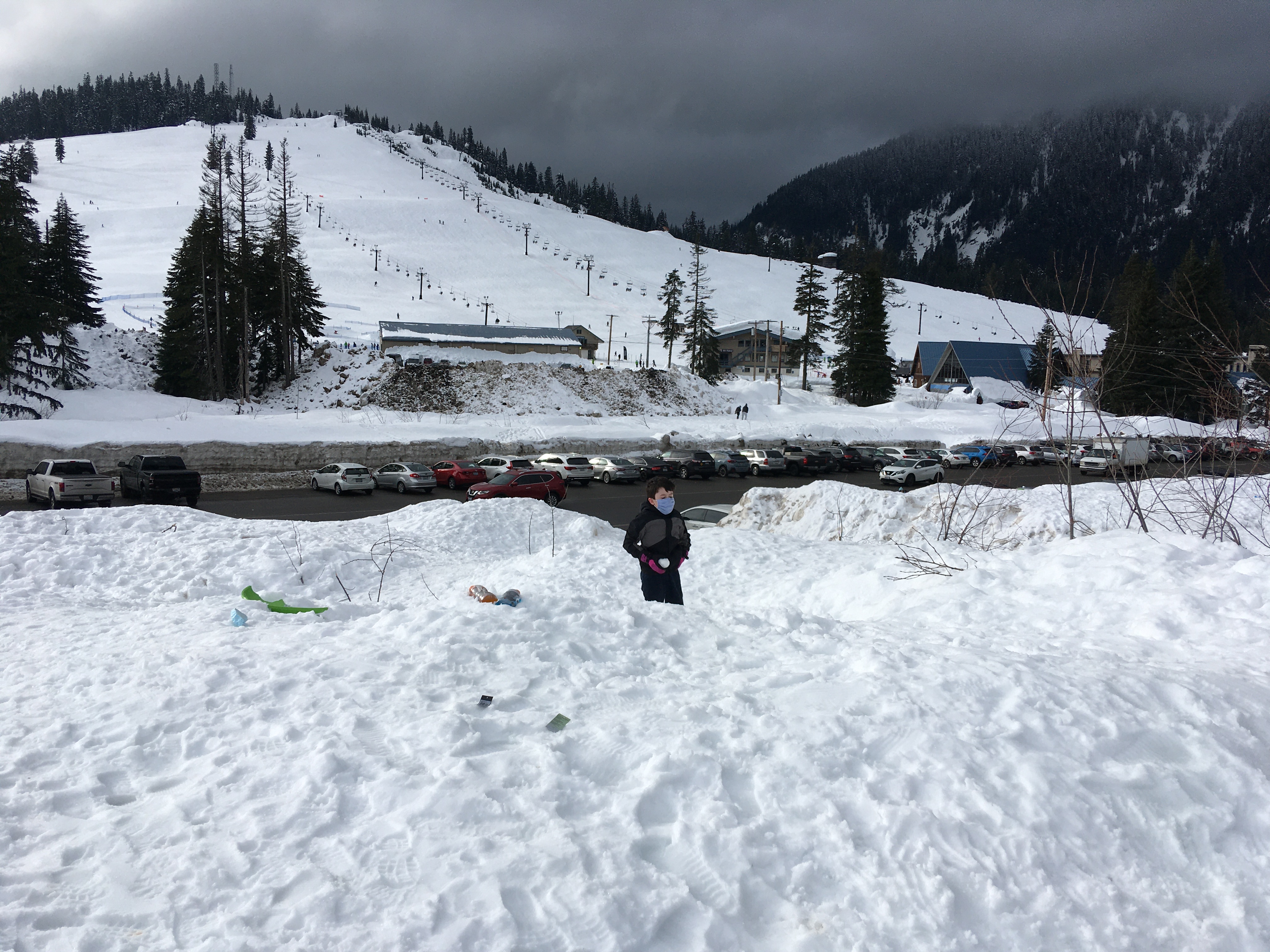
Across the street from the Summit West ski area there’s a huge field of snow. There were maybe 10 – 12 other families out there when we were, but there’s plenty of room to spread out.

There are lots of rolling hills, so it’s easy to find places to hide behind to build up a pile of snowball ammunition for snowball fights.

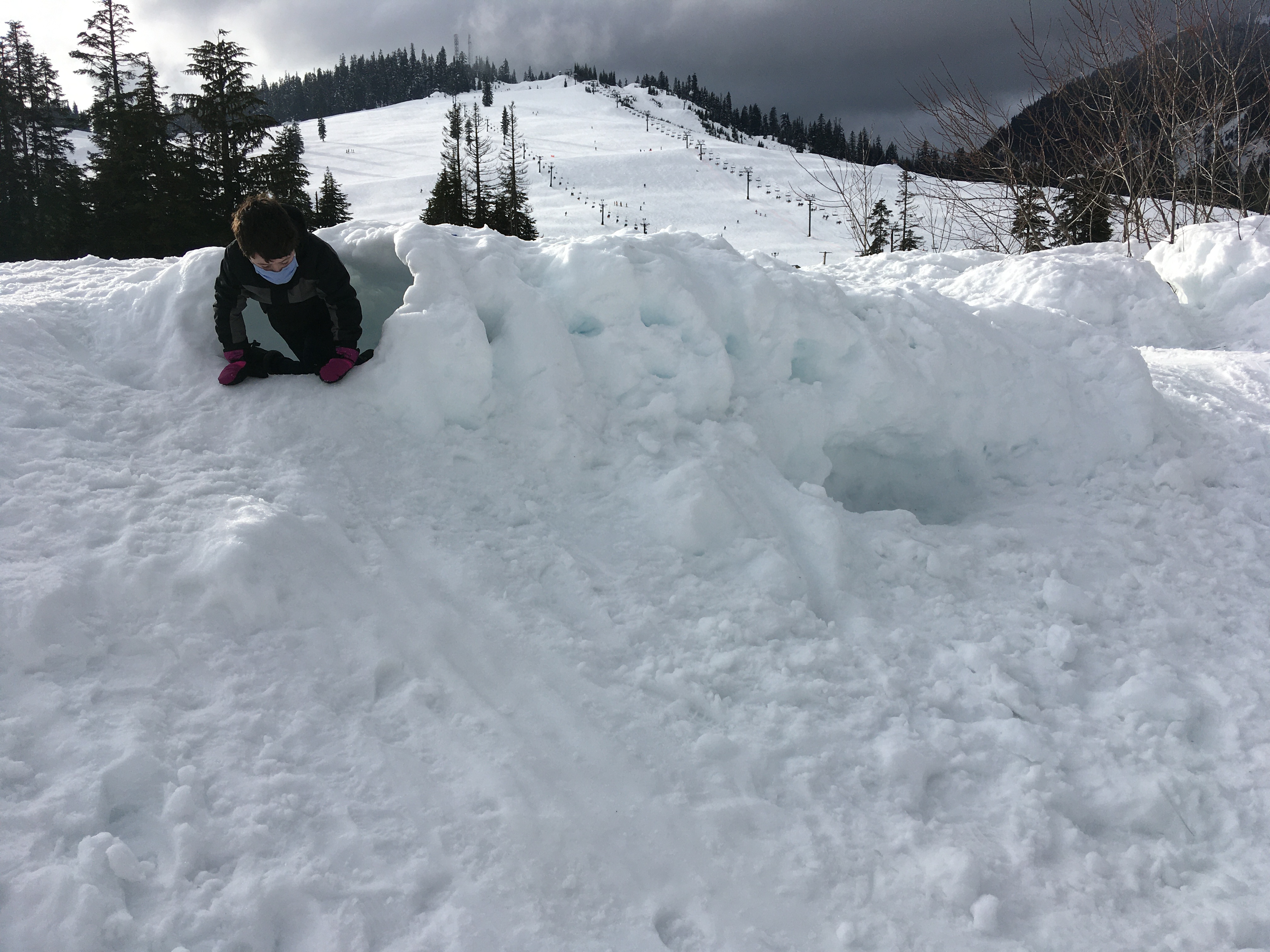
Previous visitors had made some fun snow caves to crawl into (see picture at the top of the post.) There are lots of little sledding hills – most are only a few feet long, but still fun little slides.

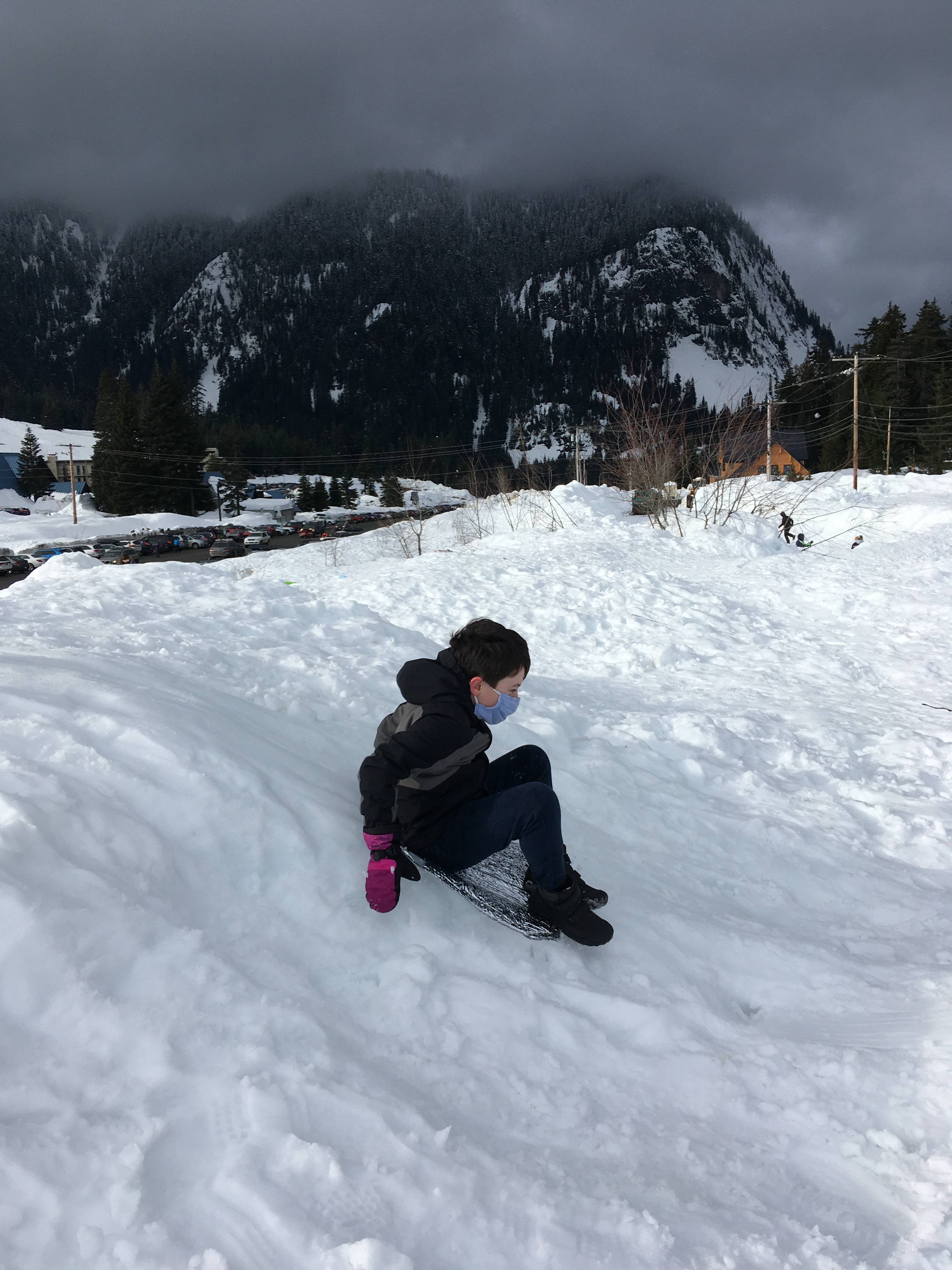
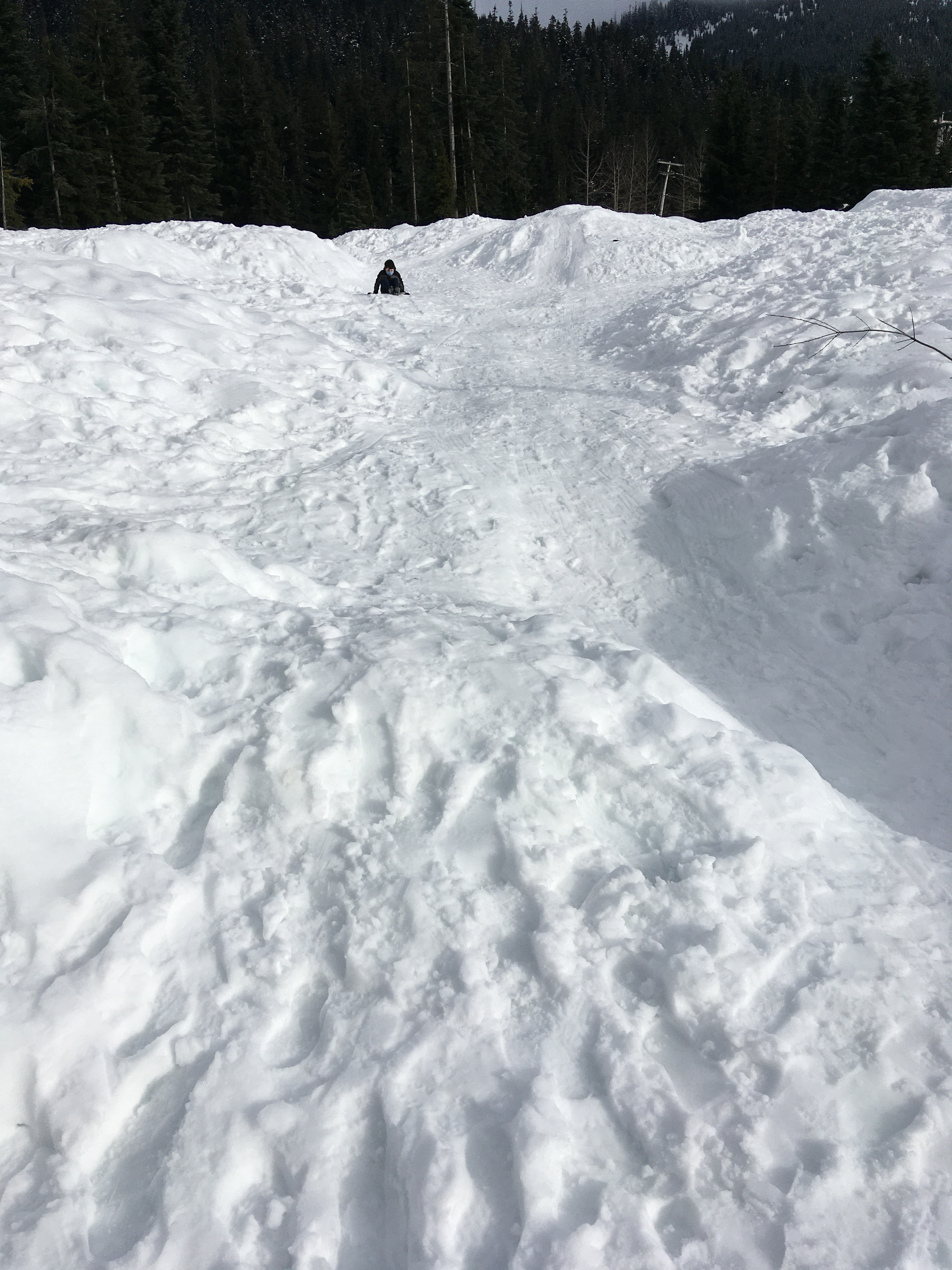
There was one nice long run, but it wasn’t quite steep enough. Our son would slide about six feet, scoot for a foot, slide for six and so on.

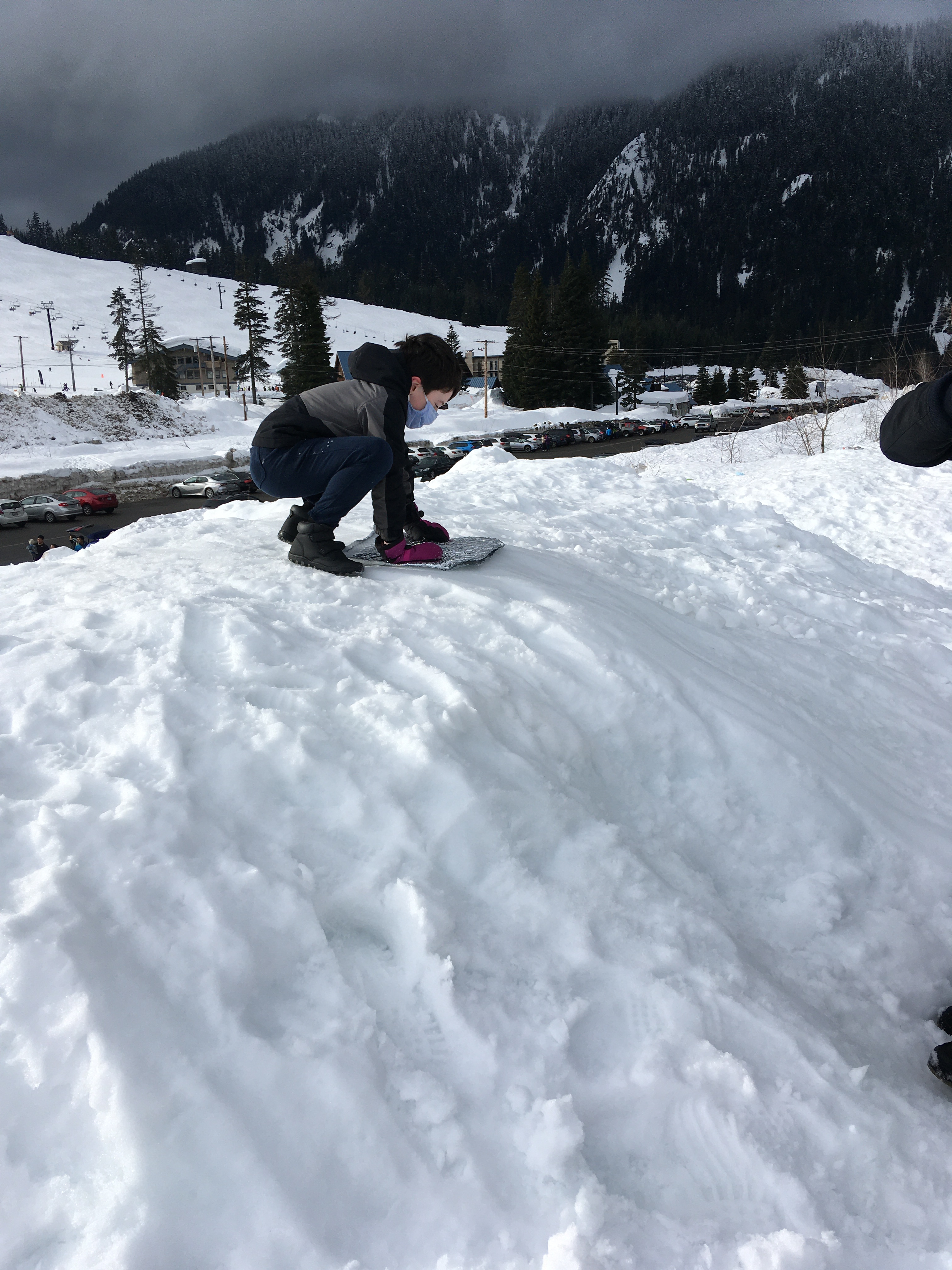
We hadn’t brought a sled along, but we improvised. He used an insulated bag that we keep in the car for restaurant takeout and it worked great!

If you want a much bigger production with more ambitious sledding, check out the Tubing park at Snoqualmie. It is super fun for 6 – 10 year olds. But, you do have to reserve in advance, and it’s $35 for adults and $12 for kids and was more than we needed for just our little day trip.

We’d decided we would go up and play for exactly as long as we wanted and then quit, and that’s what we did.

We did not do anything special to prep for this… we own ski clothes – snow pants, long undies, ski mittens, the whole deal, but we didn’t bother to dig them out. We just grabbed our regular boots, coats and gloves from the closet, and threw an extra pair of sweatpants in the car for my son. After he was done playing, he just changed to dry pants in the car.

Bathrooms? Food?

So, there are no bathrooms in this field. I might guess there are some at the nearby gas station. I don’t know. During COVID, we prefer to avoid public buildings, so we just made sure to use the bathroom at home before heading out.

The Summit Pancake House said they were open for takeout only. There were also, I think, a couple places you could get hot chocolate after playing. We just headed home and had hot chocolate at home.

Travel details

We drove I-90 to the pass. We listened to great podcasts in the car. We got off at the West Summit exit (I think it’s exit 52). Across the street from the ski area there’s a field of snow. We parked near there. (No fee.) We were there at 2:00 on a Sunday afternoon, and there was plenty of available parking. We’ve heard it can be bad, but that wasn’t our experience.

We did not experience any traffic, going up at 1 on Sunday and heading back down the mountain at 3:00.

It is important to check road and weather conditions before going. https://www.wsdot.com/Traffic/passes/snoqualmie/. On the day we went, there was no snow at all on the side of the road until we got just a few miles from the pass. At the pass, the roads were bare and wet. The temperature was 35. So, easy drive and pleasant weather. The forecast was possible light snow flurries, but we didn’t have any.

We would probably not have done this trip if there was a chance that there would be a lot of snow on the roads and chains would be advised. We are from Wyoming and Massachusetts, and are comfortable putting chains on tires and driving in the snow; however, we drive a Prius and they are not great in the snow!

But: we DID have chains in the car, and we did have blankets, water, and some food, because we keep them in our car all winter every winter. Just in case.

All in all, this was a really fun and easy afternoon outing in the middle of COVID where we got to get out and play!

Note: On February 5th, the state announced they have opened new snow parks you could check out as an alternative to this location. Includes Easton Reload, which looks like it’s about 15 miles past Snoqualmie Pass and has 60 parking spaces off I-90 Exit 71. Here’s the article: https://www.seattletimes.com/life/outdoors/spurred-by-overcrowding-washington-state-parks-creates-3-temporary-new-sno-parks-near-seattle/

Here are a few other posts you may be interested in:

Choosing the Best School / Preschool

On a regular basis, I see posts on social media from parents asking for advice on choosing “the best” preschool, or the best private school in the area, or asking which is the best public school as they plan a move. (And, of course, parents of older children agonize over what is the best college.)

There truly is not a “best” school. There are LOTS of great schools, and some mediocre ones, and a very few bad ones. What’s best is the school that best meets your family’s unique needs and goals, and best suits your child’s unique learning style.

Here are some steps to take to figuring out YOUR best option. (Note: you may also want to check out my post on public school vs. private schools.)

Step 1 – Needs Assessment

Before you bother researching all the options, and before you fall in love with an option that won’t meet your needs, let’s start with the pure nitty gritty essentials:

  • Schedule: Are you looking for full-time or part-time, or are you flexible? If the regular school day isn’t long enough, do they offer extended day care? What days do you need? What wouldn’t work?
  • What times could work for you and what just doesn’t work? (e.g. if you’re not a morning person, choosing a program that starts really early may not be a realistic bet)
  • Location: really think through the commute and whether it will work – I can’t tell you how many parents have chosen what they thought was a great school, but by October were miserable about having a cranky kid in the car in never-ending traffic)
  • Cost: there is a wide range in costs – be realistic about what’s affordable for you. If you stretch your budget, then it can make any little frustration with the school really stressful as you think – “I can’t believe we’re paying this much and this is happening!”
  • For children under age 5 are you looking for drop-off or stay? For younger children, there are often parent-child options where you always stay, or co-ops that are drop off some days and have you work in the classroom on other days. These are generally cheaper than drop-off programs and also allow you to be closely involved in your child’s education.

Step 2 – Goal Setting

What do you hope your child will get out of the experience? Are you hoping for academic development? Social-emotional skill building? Art? Music? Physical education? Science? Religious education?

Are there things that you know you could do a great job of teaching your kids? If so, then it may not matter whether the school covers that well. Is there something you think you won’t be good at teaching? Choose a school that does it well.

Do you prefer a very structured teacher-led program? Or more of a play-based or inquiry-based program where the teacher works the lesson plans around the children’s interests? How do you feel about homework – are you happy to guide practice time at home for them to improve on their skills? Or would you like out of school time to be free choice for your family?

Is the school’s approach to learning compatible with yours? When our oldest was little, we looked at one school which discouraged use of technology and screens, and actually discouraged reading before age 7, instead focusing on things like oral story-telling. This did not work for our tech-heavy family and also didn’t make sense because my kids all learn to read by age 3 or 4. (Not because we drill them… but because we love books so much in our family that they couldn’t wait to read themselves.) We looked at another school where there were only non-fiction books on the shelf in the kindergarten classroom, and I asked “where are the story books?” They disdainfully said “they have plenty of time for that sort of reading at home…” I knew that wasn’t the school for us!

Take a good look at your child’s temperament and learning style. I had a very social chatty child, and we looked at one school where the children were expected to work quietly and independently and not talk with each other. Not a good match for that child. I had a high energy child who tended to get overstimulated in indoor classrooms, but stayed calm and happy outdoors, so we sent him to outdoor preschool. You want to choose a school where your child will feel competent and valued, not one where they never fit in.

During goal setting, it’s also worth asking: What do you hope to get out of their school experience? Some preschools and schools offer parent education and support. Some actively work to encourage community building amongst families. Cooperative preschools and home school co-ops are the ultimate example of involving parents in school in meaningful ways. On the other hand, some parents may prefer to outsource school, and have a pretty hands-off approach, and there are certainly schools that will also support that.

Step 3 – Learn about Your Options

OK, now it’s time to turn to the internet and social media.

In Facebook groups for parents, you probably don’t even need to ask a question – you can typically search the archives for preschool or school, because probably 50 people before you have asked “what’s the best school” and you can just read through all those answers! Once you have really specific questions about a program, these groups can help connect you with parents who know that answer.

You can look at Yelp and Google reviews and such – but, as always with reviews, you’ll see a lot of 5 stars and a lot of 1 stars and nothing in between. People only bother to write reviews when they’re really happy or really mad. So, reviews never tell the whole story. But, they can give you some hints of what to watch for. For elementary schools, you may be able to find school rankings, which compare them and purport to rate the best ones highest. Always be aware of what criteria they use in their ratings and decide whether it is relevant to you. And if their primary criteria is standardized test scores, please know that high test scores are tightly correlated to high income parents who may fund enrichment classes and private tutors for their child and those scores may not indicate the quality of the school itself.

Look for directories, and look for school fairs and preschool fairs, or special issues of local parenting magazines. For example, in the Seattle area, for preschools, you’ll find the directory for the ParentMap preschool fair and the preschool night at Lake WA Toddler Group. For private schools, here is the directory for NW Association of Independent Schools and Puget Sound Independent Schools.

Once you’ve got the names of schools, it’s easy to do lots of internet research on them. Check out their websites. Don’t just read the words, but also look for what’s NOT said. (For example, in my experience, if they don’t tell you the tuition up front, it’s probably high.) Look for what the pictures show, and what’s missing in the pictures. (For example, many schools try to portray diversity in their photographs to let folks know that everyone is welcome, but sometimes you’ll notice that it’s the same few kids appearing over and over in several photos. That may mean the school is welcoming of diversity, but when BIPOC kids came, there may not yet be many peers for them.)

Look at ads. But note: you may see a ton of ads for one school that make you think they’re great, but it could just be they’re a big school with a big marketing budget (and likely high tuition to support that). Some really great small schools never run ads, because they’re trying to keep costs low to increase accessibility for families. They count on word of mouth – current and alumni families who had great experiences and tell their friends and family.

So, that leads to your best source of options: word of mouth. Ask friends, family, co-workers, neighbors, parents at the park! If you ask on social media, instead of just saying “what’s a great school”, be specific. For example, say “we’re looking for a part-time, play-based, affordable preschool – what do you recommend?” Or whatever other criteria you want to state. That makes sure the recommendations you get are relevant to you.

Step 4 – Questions to Research

What do they teach? What would your child learn there?

What is the daily schedule? How is time divided between activities? Play time? Quiet time? Outdoors? Snack? Young children have short attention spans for structured activity, so it’s best in short doses, with plenty of unstructured time in between to explore and discover, and quiet time to process what they’ve learned.

How do they teach it?

A couple big picture ideas: A teacher-led curriculum means the teacher always prepares the lessons in advance (and may use a standardized curriculum) and sticks to them. A child-led curriculum (a.k.a. emergent or constructivist) follows the children’s interests and adapts to what the children want to do.

A structured class might use group time, worksheets, and formal instruction to teach particular skills. Students may be drilled in the basics, or asked to practice things over and over. A play-based class typically has multiple stations set up and allows children to move between things when they choose. The teacher moves around the room, making suggestions and observations, and asking questions to further the learning.

Who are the students?

  • How many students? How many teachers? The number of kids matters as much as student to teacher ratio. A 8 student class with 1 teacher (8:1 ratio) feels very different from a 16 student class with 2 teachers (8:1). And a 24 kid class is really different from a 6 kid class no matter the ratios.
  • What is the age range of the class? Some parents prefer that all the kids be as close as possible in age, but many programs tout the benefits of multi-age classrooms. The oldest kids have a chance to lead and mentor, and the younger ones benefit by the presence of an older role model.
  • What are the cut-off dates for age? Your child will do best when they’re in the middle of the recommended age range. If your child is a fall baby (born in September or October), I do NOT recommend trying to push them ahead… if they’re the youngest child in their class, they’ll always feel small, slow, and socially behind, even if they can keep up academically. (Learn more.) Let them be the oldest – it’s a confidence booster. If they need more academic challenge than their classmates, most teachers are happy to give extra challenges to kids who can handle it.

Who are the teachers?

  • Training and experience: Where and how did they learn the content that they are teaching in the class? Where did they learn about how to teach? Do they participate in continuing education?
  • Longevity / turnover. As a general rule, the longer the teachers have been there the better. (Unless you get the sense that they’re burned out and only there due to inertia….)
  • Do they enjoy kids? Do they sit on the floor with the kids, smile, and engage with them? Or are they standing on the edges talking to other adults, occasionally calling out instructions to a child?
  • How do they handle discipline?What are their rules and how do they reinforce them?

What is the learning environment like?

  • Is the environment clean? Safe?
  • Is there a wide range of materials and supplies? Are materials in good condition?
  • Vibe:  The most important thing you’re “looking” for is something you can’t see. How does it feel? Is it warm, nurturing, full of exciting learning experiences, and full of happy children and teachers? Or is it cold, institutional, uninvolved?

What is the parent experience?

OK, now it’s time to go back to social media with specific questions: “We’re trying to decide between X School and Y School. We’d love to connect to parents who have recent experience with them – we’re especially curious about _____.”

Step 5 – Go With Your Gut

We know from the science of brain development that children learn best when they feel safe and are happy, so look for a place where they will be happy and engaged. Look for a place where you would feel great every time you drop them off to spend time there. Our family has been lucky to participate in some schools where I just felt blessed to have found that environment for my child.

So, all the steps above are logical and focus on practical evaluations. But I think this final decision point often comes down to what feels right to you? That’s the best school.

Learn more: